2020 unleashed a whole host of twists and turns for the hospitality industry, challenging the professionals who specialize in bringing people face-to-face. Most were forced to pivot and innovate in order to continue connecting people over a shared meal. That resulted in some creative solutions that may just be getting started.

Following are the lessons we at Wolfgang Puck Catering (WPC) learned for adapting food and beverage service that we think will continue into 2021: 

1. Enhanced hospitality experience.
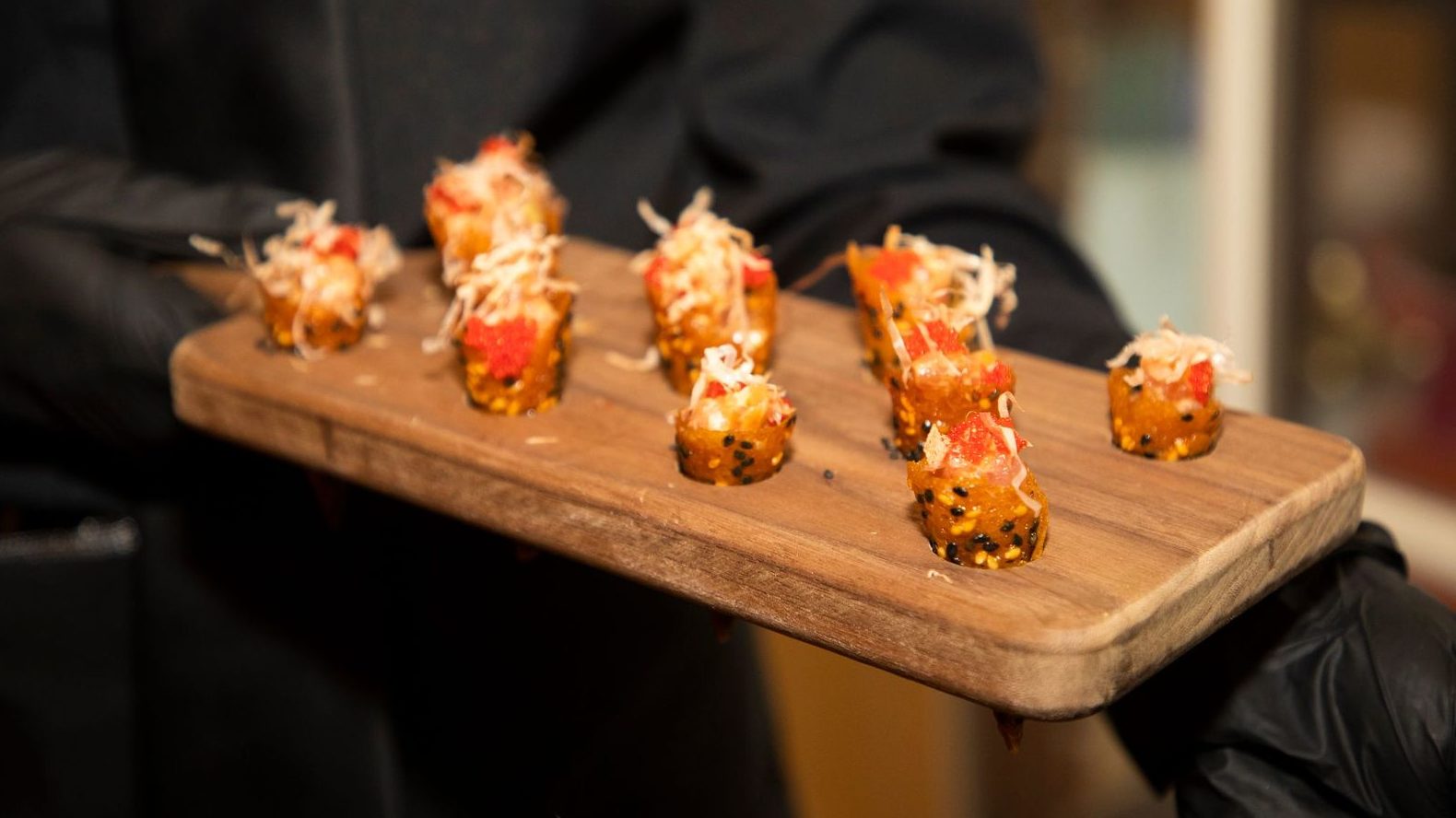
Health and safety service modifications have been integral to sustaining events during the pandemic, which increased the need for making small moments and human interaction matter even more than before. The enhanced guest experience will remain well into 2021. That includes self-service buffet stations replaced with station attendants serving guests, offering an additional moment of conversation and hospitality, extra hospitality training for staff so they understand hospitality, which translates into heightened empathy and compassion. 

2. Paradigm shift in space usage and service styles.

Pre-COVID, a full room and crowded event was a successful event. The pandemic has forced a paradigm shift here, most of all—a successful event now is a safe event, so spreading your points of service out with multiple food stations serving 1 or 2 items each and breaking up your menu across the entire space; or, set multiple stations serving complete, composed plates. As we navigate through the next phases of the pandemic, we, as hospitality professionals, must recognize that our guests will remain sensitive to their sense of “personal space” beyond the pandemic, and maximizing real estate will continue into 2021.

In the ongoing, pre-emptive action of mitigating crowding, mixing up the service styles will also enhance the guest experience. Tray pass concurrently with access to open food and beverage stations rather than the previous approach of “rolling” service (tray pass, then stations, then maybe tray pass again or something to-go). The goal is to provide a natural environment for social distancing, so guests do not feel awkward and can naturally avoid gathering around service areas. 

3. Think inside the box.

F&B trendsWe continue to move forward with innovating what can and cannot be successfully boxed, shipped or locally fulfilled. Food and beverage gifting will continue into 2021, and I think will continue beyond the pandemic.

MoreSmart Style: Your 2020 Holiday Gift Guide

Following a decade of “greening” our industry, the pandemic has forced a setback in terms of sustainability with the return to single use disposables and individual packaging. There are ample options for compostable disposables or single use plastics made from recyclable materials. Use these so that current altered services do not negate the great strides we have made to reduce landfill waste. For a recent “open house” event for a new exhibit opening in Atlanta, Wolfgang Puck Catering featured tray passed sushi rolls and mini tacos individually packaged in compostable wooden containers. It was safe, the natural palette of the vehicle enhanced the food presentation and it was environmentally friendly.

The reintroduction of individually packaged items does offers a variety of branding opportunities for both social and business event clients whether through labelling, burnishing, incorporating logos and/or color schemes into the food and beverage items themselves. That trend may continue to grow in the coming year.

4. Emphasis on quality.

As face-to-face events return through 2021, planners, hosts and guests will inevitably experience a lot of anxiety transitioning back into outside group activities large and small. Do not sacrifice the quality of what you are serving; every delicious bite and tasty sip sets your guests more at ease. Our future event guests in 2021 will also return us to more of an educated experience about food and beverage, thereby adding a greater appreciation for quality and craftsmanship. Many have been watching cooking and mixology videos via Tik Tok and Instagram, participating in virtual cook alongs, experimenting at home, having restaurant take-out and otherwise delivery expanding their palates. The future event guest will be looking for an experience, a spark of joy or curiosity and higher quality. 

5. Comfort and nostalgia.
F&B trends

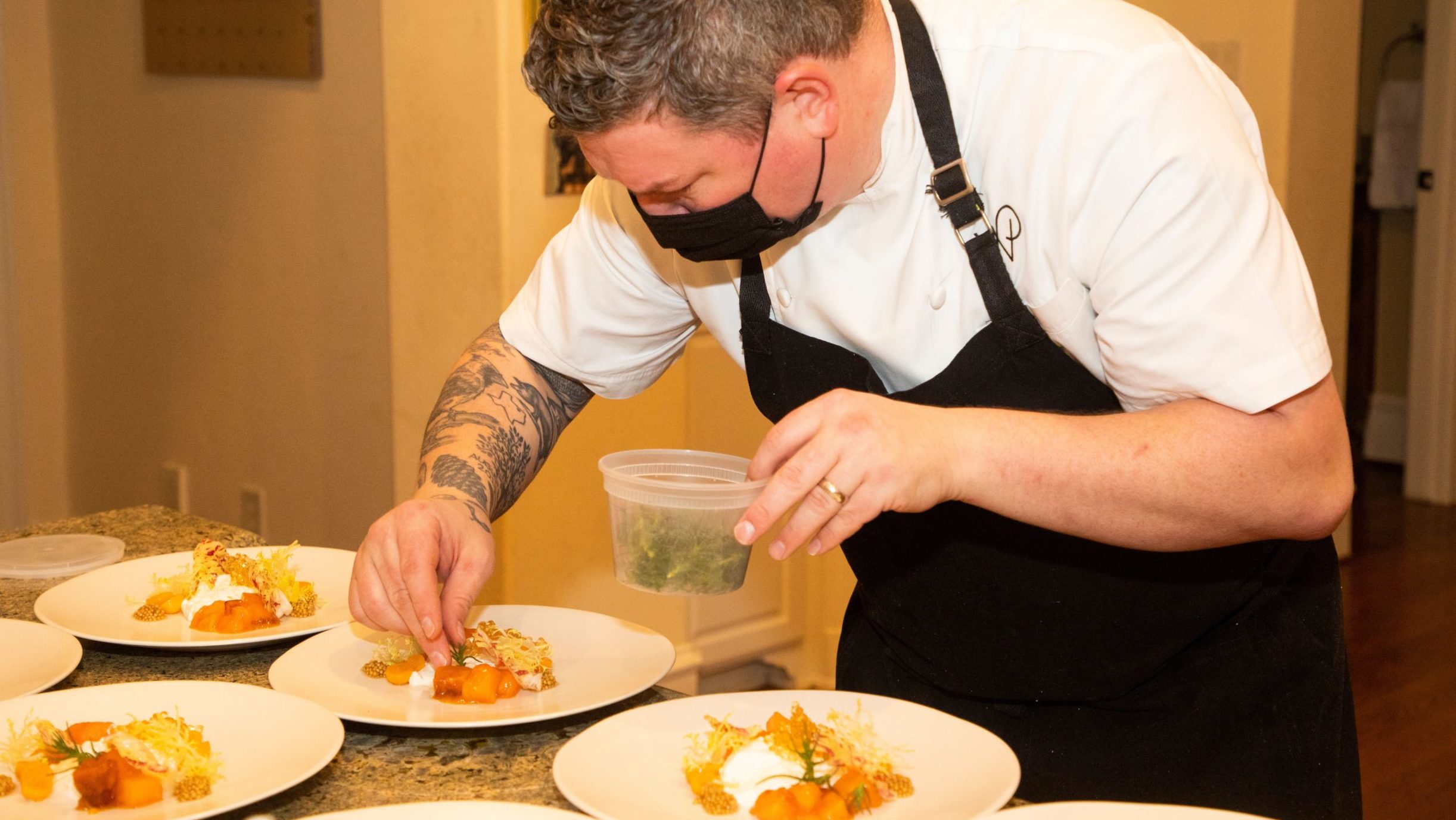
Our 2021 guests will need extra attention paid to making them feel comfortable in public settings again. The food and beverage experience should include delicious, recognizable nostalgic items that are cleverly presented and of high quality.

6. Online experiences.

Virtual and hybrid events have evolved as the new fixture for future-forward entertaining. Businesses of all types and genres who have fought to remain relevant through virtual and hybrid entertaining have learned that a) they can broaden their audience through a virtual component, and b) increase touchpoints with their audience through virtual and hybrid events. WPC’s Virtual Chef and Private Chef experiences coupled with On The Go options for dining-along together will continue into 2021 and beyond as options for bringing people together over a shared meal, whether face-to-face or via a computer screen.

Wolfgang Puck Catering continues to strive toward exceeding expectations whenever our guests gather for a meal – whether an intimate dinner for 10 or 30,000 festival-style, shipping provisions for a virtual cook-along with a WPC chef, or packaged meals for contactless pickup or delivery so guests can make new delicious memories at home with their families. 

Mary Cline is regional director of catering sales for the East Coast with Wolfgang Puck Catering.

If producing hybrid events were an Olympic sport, most meeting professionals would have no trouble qualifying as amateurs. By experimenting with their own events, they are inventing what the future of meetings will look like. To jumpstart that process, along came EventHack Hybrid Games—an attempt to raise the proficiency of the industry by fielding teams of meeting professionals (72 participants in all) against each other.

Over seven weeks from September to November, teams pitched creative ideas to a rotating panel of judges on topics as diverse as audience engagement, sponsorship, networking, event flow and design. As Corey McCarthy, chief marketing officer with the event technology platform Socio, explained, “This is where the industry’s best and brightest come together to battle it out until we figure it out.”

In full disclosure, I was a judge one week, ranking competitors along with the audience based on innovation, applicability and hybrid strategy in a Shark Tank-style format. Picking the winner was made difficult, especially since we judges agreed what we really wanted to see was an approach that merged cool ideas from all the competitors.

However, at the end of the competition, the winning competitor was Craft Masters, a group that focused on the attendee journey.

Socio—which just launched an integrated streaming solution using StreamYard to easily brand livestream, add colors, logos, lower-thirds, commercials and pre-recorded video—produced the competition, along with Will Curran, Chief Event Einstein of Endless Events and host of the popular podcast Event Brew.

Time to Bulk Up

Digital consultant Nick Borelli co-designed the campaign and shared suggestions meeting professionals might want to consider when approaching their own hybrid events.

“Be flexible; shift to design thinking,” he advised. “That will allow you to be a problem-solver and change agent. Throw out everything you thought you knew and find inspiration from outside sources.” Those sources could be as diverse as esports, Peloton and Netflix. “We get to write the rule book for virtual. That is exciting,” he said.

Borelli compared the push to master the virtual side of hybrid events to a strategic exercise program. “Think about it like lifting weights. We have had arm days for years but neglected our legs. We have to build new muscles for virtual.”

Borelli explained that both physical and virtual events have weaknesses and benefits. In-person events excel at experiential aspects because they are rich in sensory experience. But the opportunity in streaming content is the power of emotional storytelling—because you control the eye with the lens.

“One is a tactile world of trust-building; the other is an emotional pull. That is why a 30-second commercial can bring a tear to the eye but shaking someone’s hand and getting a business card at a trade show doesn’t,” he explained.

Hybrid creates a community that engages both of those things and cross-pollinates. Play into the strengths of each so the people on both sides want what is on the opposite side.

“We always needed both, but it took this pandemic scenario to force us to use it,” he concluded. “You don’t innovate when things are good. Evolution doesn’t happen without pain. Now we have a reason to create the future of experiences in hybrid.”

https://twitter.com/socioevents/status/1324751025882935301

Editor’s note: On Aug. 2nd, 2023, AI cloud communications company RingCentral acquired Hopin’s Events and Sessions products and rebranded them as RingCentral Events. The article has been updated to reflect this change.

What is the most-asked question on all those virtual happy hour calls after “Can you hear me now?” When discussing how a streaming event went, it’s almost always: “What platform did you use?” With so many Zoom alternatives out there, how do you choose? We jumped in, Smartie-style, to examine four of them with a focus on giving attendees what they miss most about IRL events—autonomy and engagement.

Hubb

Origin story: Hubb founder and CEO Allie Magyar is known as the Event Tech Maven. Her 20 years in the business started by accident when she organized a car show. She went on to be president and CEO of Dynamic Events and launched Hubb in 2015 to help manage technology for planners.

Engagement philosophy: Serendipitous human connections give events their magic, and virtual events are full of opportunities for people to connect. Attendees need to be able to meet outside of sessions in virtual happy hours, brainstorms, expert meetings and a whole bunch of other formats. There is a real opportunity for networking and creating new connections.

“Next year is all about developing new ways to build that human connection and drive value for sponsors. The challenging environment that we’re in is pushing us to innovate in new and exciting ways to move the industry forward,” Magyar says.

Interactive features: Described as a full suite of event management tools to power the backend, the Hubb platform enables planners to manage speakers, sponsors, staff and executive meetings. Meeting professionals can also create a virtual convention campus that creates an emotional reaction and brands the space.

Partial user list: HubSpot, Consumer Technology Association and CEMA Summit 2020, which included a virtual playground with interactive games, a walking challenge, yoga classes, online image consultation, cooking and mixology classes, a live singer-songwriter experience and a tech showcase.

Shindig

Origin story: Steve Gottlieb, founder of Shindig, is a former music company executive who packaged everything from compilations of television theme songs to Nine Inch Nails and the rapper Snoop Dog. He lived through the revolution that took control out of the hands of the label and gave power to consumers downloading just the pieces they want, when they wanted it.
In the ‘90s, Gottlieb realized video-streaming options such as Skype were little more than a party call limited to how many could participate and what they could do. What has come to be called Zoom fatigue is actually the result of being forced to be passive, he believes, comparing the experience to forcing everyone to take a cross-country trip in the passenger seat and slapping their hands whenever they try to change the station on the radio.

“Autonomy wins out in the end. We are done with top-down control,” he declares.

Engagement philosophy: Attendees are craving the interaction and live immersion of first-person games where the view changes based on choices they make. Success requires galvanizing grass-roots movements to serve superfans and giving them experiences that will result in word of mouth.

Interactive features: Attendees can meet in private chats, hang out in a lounge, participate in Sli.do polls, play music, dance or take the stage. It is integrated with streaming for YouTube and Facebook Live. The platform is customizable and can be made to look like a stadium, branded or whatever planner imaginations can create.

Partial user list: Amazon, The Gartner Group, Accenture, Bill Gates and a Harvard University reunion of 600 people with everyone empowered to take the stage or create private chats.

Bizzabo

Origin story: Since being launched out of a garage in 2012 by Boaz Katz, Alon Alroy and Eran Ben-Shushan, Bizzabo now has more than 150 employees in its New York and Tel-Aviv offices and has enabled thousands of events globally. When COVID-19 work-from-home requirements started rolling out across the world, the company quickly pivoted to supporting virtual and hybrid events with high-quality broadcasts and on-demand video at scale.
It recently won People’s Choice Award for the fifth time at the 2020 Event Technology Awards. The guiding principal: “We are on a mission to bring people together and to make events more rewarding for everyone involved.”

Engagement philosophy: Exceptional event experiences hinge on networking. A linked platform and event app use intelligent and intent-based personalized engagement to create event communities that connect to LinkedIn and offer one-on-one messaging, live polling and session integration that starts before the day of the event and continues long after the last session has closed.

Interactive features: All-in-one event software offers registration designed to maximize attendance, customized design, live and recorded content delivery and robust analytics. It can be integrated with 2,500 other platforms, including Salesforce, Marketo and Slack.

Partial user list: Forbes, Dow Jones, Bloomberg, HubSpot’s INBOUND, Salesforce, Teach for America, Siemens.

Hopin

blue circle and blue and orange letters that read "ringcentral"Origin story: London-based Hopin was started in June 2019 as an alternative to traveling by Johnny Boufarhat, a man with an immune deficiency who missed the random connections that can happen at conferences. The company just raised $125 million and has a valuation of $2.125 billion.

It reports 3.5 million users and over 50,000 groups that host events using its software. On Aug. 2nd, 2023, Hopin’s Events and Sessions products were acquired by AI cloud communications company RingCentral and rebranded as RingCentral Events.

Engagement philosophy: The goal was to reimagine virtual events from the ground up and make them so good they become a mainstream destination, not a sideline option. “We chose to focus on engagement more than content—we wanted people to not just watch but be the experience themselves,” Boufarhat explains.

Interactive features: The platform facilitates live video chat for small audiences or groups in the thousands. A discovery tool pairs people in one-on-one video conversations for live group breakouts, including a feature called “chat roulette.” Participants can share virtual business cards to continue the conversation later. Expo areas deliver a vendor-booth experience with either live or prerecorded content and chat rooms. The branded experience includes everything from registration to ticket sales and analytics.

Partial user list: Dell, Slack, Adobe and a recent UN Global Compact’s Leaders Summit that was designed as a 26-hour Chasing the Sun conference with 500 speakers.

Editor’s Note: 11/20/20 Updated with details for SPINCon 2020.

Just because the events world has gone virtual, doesn’t mean it’s not spinning on. Many annual industry conferences have pivoted their live events into hybrid experiences, streaming keynotes and happy hours to attendees across the country—and in some states, welcoming in-person attendees for expanded itineraries. Check out what’s new and coming up down below.

SPINCon2020

Dec. 1-3

As the only conference promising no murder hornets, Senior Planners Industry Network is offering a virtual workshop around the impact of COVID led by Haute Dokimazo, pajama bingo and laughter.

ASAE TEC 20

Dec. 7-9

Technology professionals will share how they’ve approached tech challenges during the pandemic and learn about the latest tools for empowering associations on the path forward. Learn more. 

IAEE Hybrid Expo! Expo! 2020

Dec. 8-10

While “the show of shows” is still expected in person at Kentucky International Convention Center in Louisville with reduced capacity and -foot distancing, the three days of education and marketplace will also be accessible as a streaming experience.

IBTM World Virtual

Dec. 8-10

Originally planned for Barcelona, IBTM World Virtual will include one-to-one meetings and targeted education sessions.

Learn more here.

CalSAE Seasonal Spectacular 2020

Dec. 15-16

California Society of Association Executives (CalSAE) announced that the tradeshow and educational event, Seasonal Spectacular, normally held in Sacramento will be virtual with registration opening in October.

Interested in 2021’s hybrid conferences? Check here.

Happy streaming!

The news this week that PCMA was acquiring Corporate Event Marketing Association (CEMA) might be the first of many similar merger and acquisition announcements that will be made in the coming months and year according to industry watchers.

PCMA’s official statement about the purpose and timing of the merger pointed to the COVID slowdown. “The pandemic has impacted the events industry at all levels and has been challenging in many ways. During challenging times, you are often forced to think differently, think about new opportunities, and a new path forward.” The same logic could be true for many other associations, DMCs and hotel properties.

Read more about state of the hotel and events industry.

Ripe for Buyouts

Smart Meetings asked for context from Chris Meyer, who retired from his job as vice president of global sales for Las Vegas Convention and Visitors Authority in October after 20 years there to start his own global merger and acquisition consulting company ChrisMeyerGlobal. “The devastating impact of the pandemic makes the industry ripe for buyouts after a frothy 2019,” he said.

Chris Meyer
Chris Meyer

First, he put the market for buying and selling in perspective. A year ago, companies were selling at nine and 11 times earnings before interest, taxes, depreciation and amortization (EBIDA), sometimes higher. “Unless there is an outstanding growth opportunity or some other factor at play, that is a lot to pay, so few deals were getting done,” he explained.

Fast forward to today and the selling price is down about 300 percent with price tags about three or four times earnings. “That is when you know the market has reached the bottom and is a reflection of the reality that a lot of associations, hotels and event companies are really hurting right now,” he said.

Associations

For many associations, events generate 50-90 percent of their annual revenue. Add to that harsh reality the fact that IRS guidance encourages nonprofits to not keep more than two years of operating expenses on the books, and most only have enough in reserves to survive 16-18 months without new revenue. Virtual events are not filling the sales funnel and the community is not getting the value they expect and/or they can’t afford dues because their industry has been impacted and they lost their job. Pile on the possibility that major sponsors may no longer able to support them and you have a precarious situation. “It is not their fault. No one saw COVID coming and it would have been tough to plan for this scenario. But they are desperate,” he concluded.

Read more about PCMA President and CEO Sherrif Karamat. 

In a world where an estimated 27,000 associations currently serve up education, networking and professional development, Meyers predicts there will be a lot of consolidation in the first quarter of 2021 as many start running out of cash and larger competitors absorb niche groups.

He also suggested that some private equity companies and event production companies could buy the event arms of associations that have powerful brands to give the group cash for a product that could show returns in future years. The good news is that if it is a partner with deep pockets, that could breathe new life into the event.

“Some groups will be looking for a lifeline. Some will just go out of business,” he said.

CVBs

Also at risk are convention and visitors bureaus, many of which laid off as much as 70 percent of their staff at one point. “DMCs were hit big time,” Meyers said. Their revenue streams dried up as transient occupancy taxes dwindled, hospitality members and city budgets struggled. “Their role may be changing as the business model shifts to advocate for the local community and overall business development,” he surmised.

One big ugly secret is that airlines have reduced the number of planes flying. Six months from now, when a vaccine is widespread, they won’t be able to just snap their fingers and put planes back in the air. “Smart DMCs are advocating now for lift to their cities. Travel will come back, but it will look different,” he said.

Hotels

Meyers warned of massive carnage to come for hospitality properties. A lot of hotels simply won’t open again or won’t open under their existing flag. Some new, highly leveraged properties might not open for five years. Many will be purchased at those new, lower prices, by investment banks and even SPACs (special purpose acquisition companies also known as blank check shell corporations).

new survey of 1,200 members by American Hotel & Lodging Association (ALHA) found that seven out of ten (71 percent) will not be in business in six months without further federal assistance.

“Now it is a waiting game and an opportunity for folks picking up assets,” Meyers concluded.

Say what you will about meetings going virtual, but one unintended consequence has been the exalted status of the TED-style keynote. For planners, the benefits are several—marquee names can be booked without travel, hotel and F&B costs; these names can boost and broaden attendance, since no geographic barriers apply; and the TED standard of under 18 minutes works perfectly within the new normal of short-attention-span online formats.

There are hundreds, if not thousands of TED and TEDx speakers to choose from. How can planners separate the wheat from the chaff? What is it that makes the most popular speakers…popular?

To probe this very question, VBQ Speakers conducted research to uncover the most searched-for TED speakers in five English-speaking countries.

More6 TED and TEDx Talks to Make Time for this Week

What was discovered may surprise you. The most searched-for speakers weren’t the ones who tell us how to get rich or win in office politics. They weren’t any of the most bizarre, like the neuroscientist who choreographs a cockroach leg or the guy who details what happens when you donate your brain to science.

In fact, the most popular TED speakers share one trait—they speak to harnessing human spirit and emotion.

The research found that Brene Brown topped the list, with an average of just over 9,000 worldwide searches per month over the period analyzed. She was also the most searched-for in the United States. A research professor at University of Houston, Brown shot to fame when her talks on the power of courage, vulnerability, shame and empathy became viral hits.

More: 5 Reasons to use a speakers bureau

Her popularity was confirmed in another study of 2,550 TED talks published on the blog Towards Data Science by Tomer Eldor. He looked at variables such as the number of comments, number of languages translated, duration of the talk, number of tags, and day of the week it was published online, and compared these to the number of views. In his study, Brown was fourth most popular.

In the VBQ research, Simon Sinek was in second place. He was also the most searched-for speaker in New Zealand, Australia and Canada. Sinek, an American author and motivational speaker, talks about how great leaders inspire action—particularly through demonstrating empathy. He seeks to learn lessons from the leadership styles of figures like Martin Luther King Jr. and the Wright brothers, as well as global brands like Apple.

More: 2021 trends for hiring keynotes

Overall, according to VBQ, the 10 most popular TED speakers were:

  1. Brené Brown
  2. Simon Sinek
  3. Wren Weichman
  4. Sam Hyde
  5. Elizabeth Holmes
  6. Cole Bennett
  7. Sam Harris
  8. Shawn Achor
  9. Tim Ferriss
  10. Elon Musk

“Human psychology and emotional well-being appear to be the most popular topics,” said VBQ Speakers founder and director, Leo von Bülow-Quirk. “This is perhaps to be expected during a pandemic but could also be a reflection of our perennial desire to try and understand the human condition.

“Controversy and infamy also seem to attract audiences, as suggested by the popularity of Sam Hyde’s prank TED talk and that of Elizabeth Holmes, former founder of discredited health-tech firm, Theranos,” he continued.

This month, Destinations International published a study on equity, diversity and inclusion (EDI) throughout destination organizations. The study was led by an EDI committee established in 2017, when the organization representing convention and visitor bureaus worldwide decided to make EDI a strategic priority.

President and CEO Don Welsh opened the study with a call to action, saying, “Our industry must be a leader in cultivating an environment where everyone is welcome, where there is equitable access for all, and where everyone’s voice and perspective can be heard.”

2020 Survey Results

The first survey was conducted in 2019, gathering baseline data from destination member organizations by examining demographics of board leadership, executive leadership and general policies. The 2020 study questioned 718 individuals in the international membership, examining the member workforce by age, gender, title, racial ethnicity, sexual identity, religion, ability and military veteran status. It then gathered individual perspectives on the destination’s current EDI policies.

MoreHow to Start a Diversity Conversation that Echoes Beyond the Ballroom

Responses in a range of “strongly disagree” to “strongly agree” were tabulated for statements such as: “Our destination organization has provided training programs that promote understanding and mitigation of unconscious bias.”

Most agreed or strongly agreed with statements such as: “I want to see more cultural diversity in our destination organization,” “people of all cultures and backgrounds are respected and valued at our destination organization,” and “our organization is committed to diversity and inclusion,”

However, opportunities for growth also emerged, underscoring a need for more education on EDI.

MoreHow to Do Diversity Differently

There were a substantial number of disagreement responses, for example, to statements such as: “There is cultural diversity among the employees at our destination organization” and “our destination organization has provided training programs that promote understanding and mitigation of unconscious bias.”

Additionally, responses indicated organizations can better implement EDI practices beyond permanent staff. When asked if diversity is a criterion for vendor selection for their organizations, over 70 percent said no.

Business Case for Diversity

The study also highlighted research that made a fiscal case for diversity. Summarized by CEO Welsh: “A diverse and inclusive workplace is central to our industry’s ability to attract, develop and retain the talent it needs to remain competitive, drive innovation and maintain relevancy.”

Other recent research has arrived at similar conclusions. A May 2020 report, “Diversity Wins,” by McKinsey & Company examined the financial impact of a company’s diversity across multiple industries. The massive study reviewed over 1,000 companies in 15 countries. The report found that companies in the top quartile for racial and ethnic diversity were 36 percent more likely to have financial returns above their respective national industry medians. That study also gathered specific insights into the multifaceted puzzle. For instance, it found the likelihood of outperformance was higher for diversity in ethnicity than for gender.

The Destinations International survey noted academic research indicates diverse teams are better equipped to target and serve diverse customer markets, such as women, ethnic minorities and LGBTQ+ communities. These groups represent an increasing share of consumer purchasing power and are often left out of marketing considerations—as confirmed by the 30 percent not in agreeance with the survey statement, “Our destination organization utilizes diverse representation in our marketing and media promotions,”

Extra Perspective

In June 2020, Trade Shows News Network asked Jason Dunn, chairman of  National Coalition of Black Meeting Professionals and group vice president of diversity sales and inclusion for Cincinnati USA CVB, what the meetings industry gets wrong about diversity. He had some advice:

“We should stop exploiting the word ’diversity‘ and seek the fullness of equity and inclusion. You cannot celebrate diversity when your budgets, staff, board, sponsorships and partnerships do not reflect what you’re communicating.”

Indeed, a SearchWide Global study found that destination organization boards are typically dominated by males over 56 years old; additionally, 65 percent of destination organization CEOs felt there was not enough ethnic diversity on their boards.

The Big Picture: Industry Resilience

Center for Equity and Inclusion

Destination International’s EDI committee reiterated that equity, diversity and inclusion best practices would be critical for the recovery and growth of the industry following the devastating impact of COVID-19.

In 2021, the EDI committee plans to continue its work by establishing an actionable CEO pledge for destination organizations to solidify commitment to implementing EDI strategies. It also plans to launch an EDI Toolkit to support and provide Destinations International members with resources to implement best practices.

The committee will also continue to benchmark metrics to measure progress as destination organizations make use of these resources to enact new standards.

Until then, resources abound to explore best practices and initiate conversations. For example, Center for Equity and Inclusion, founded in 2015, works to “bring a comprehensive approach that is both personal and beneficial to organizations of all kinds.” Its methodologies are meant to jumpstart—and maintain—long-term organizational change in communities across sectors.

Much has been written about the devastation COVID-19 has had on our industry. I would like to share an event and hospitality leader’s perspective on how those at all career levels and roles can emerge stronger than ever. The actions taken now will prepare you for success in the new events world. Believe it or not, numerous opportunities exist today for young leaders who want a rewarding career in this dynamic and ever-changing industry. post-covid

Opportunities

To enhance/diversify your experience and position yourself to be at the forefront of what comes next, you will need to embrace the following realities:

Transferrable Skills

Meeting and event professionals would be well served by promoting their project management skills. Those can apply in almost every industry.

MoreEtiquette Tips for Job Hunting on Social Media

If you have not yet acquired virtual event production skills, do! Hundreds of production jobs are opening up for those who understand the unique requirements of delivering value for streaming audiences.

Alternative Experience

If you are new or newer to a career in events or hospitality, you may have the flexibility to pivot and more easily accept different/changing roles, thus broadening your experience. Be willing to work in any and many roles. This time is a fantastic opportunity to broaden your resume.

If you are currently unemployed, consider some similar industries, even if only temporarily. Event and hospitality experts are sought after by numerous verticals due to their service orientation and profit-making skills. Your knowledge about producing live events could be transferrable to:

  • Apartment communities, vacation rentals, and the ski industry for operations and leasing/sales.
  • Country club management is hot. According to Matt Peterson, managing director with Aethos Real Estate: “In this current environment, clubs are capturing more of their members’ time by elevating F&B offerings, providing entertainment, fitness and social events while maintaining social distancing and safe protocols. There is no better time than the present for hoteliers to broaden their career mindset to include private clubs.
  • Restaurants are an obvious option however opportunities may be limited.
  • Retirement communities and senior living facilities have had success hiring hotel leaders at all levels.
  • Adventure/experiential travel i.e. glamping.
  • After school programming & camps.

Unconventional Career Hacks

Don’t limit yourself to the obvious career choices. Securing a job quickly may require thinking outside the full-time job box. Consider:

  • Seasonal resort managers and staff have long led nomadic lives following the business to locations that are in peak season. This work is short-term, but it is work! Examples include:
    • New England—in summer opportunities are at beaches; in winter at ski resorts
    • East Coast—in summer seek out resorts and beaches; in winter, head to Florida
    • West Coast—opportunities abound at resorts in mountains and deserts
  • Leaders/managers/trainees willing to travel could remain with current employers, expand their experience and prepare themselves for the future. If your company offers you a task force or temporary assignment, accept it if your circumstances allow—even if it is in a lesser role or in an area you have no experience. It might provide multiple benefits.

Think Positive

Being at the front line of an event and hospitality industry reinventing itself can provide valuable experience for those committed to a career in this dynamic industry. It can also provide accelerated career advancement opportunities. We recommend having a better than positive attitude at work. This represents an awesome chance to “bring positive energy” and show your leadership.
The new models of events and hospitality will require new standards, practices, procedures and job combinations in order to adapt and absorb the additional costs hotels, resorts and restaurants have to face. Operating models are evolving to drive efficiency while providing a safe environment that gives guests the confidence they are seeking as travel ramps up and properties find new ways to deliver great experiences.

Patience

Do not expect to find your dream job right now. It probably does not exist today but based on what you do now, it very well may tomorrow. Give the industry 12-24 months to come back. You just have to make it to the other side.

We predict a talent shortage of epic proportion within two years. So much talent has been absorbed into other professions. It will be great to be in events and hospitality when we recover!

Scott Hermes is the former President of Irvine Company Resorts and an executive with Starwood, Hyatt, and Marriott Hotels. Carl Winston is Director of the Payne School of Hospitality and Tourism Management at San Diego State University.

Over three days this week, Financial and Insurance Conference Professionals channeled all the education, networking and breakout sessions that were planned for Washington, D.C., into FICP Reimagined, a virtual event experience, bringing thought leaders to screens all over the country.

Bonus: The association made recordings of those sessions available for up to 30 days so attendees can revisit at their leisure. And the 19th Annual Silent Auction raised more than $50,000 for the Above & Beyond Foundation, which offers grants to hospitality employees who have lost their jobs due to the pandemic slowdown.

Read more about how to support the hospitality and events industry. 

To set the stage, four women with very different perspectives—Katty Kay, BBC World News America anchor; Julie Coker, president and CEO for San Diego Tourism Authority; Tori Emerson Barnes, U.S. Travel Association executive vice president for public affairs and policy; and Stephanie Linnartz, Marriott International group president of consumer operations, technology and emerging business—came together on screen to share their hot takes on where the industry is now, and where it is going in the coming year.

Let’s listen in.

Vigilantly Optimistic

FICP

Julie Coker: We are optimistic. In California, where we are unable to host any meetings at the moment, we are hopeful that we will start seeing smaller meetings by the end of this year or beginning of next year and then gradually start moving back into citywide conventions. Meetings are 30 percent of travel business and not having them translates into 200,000 travel-related jobs lost. People are sitting on their couch right now because they don’t have the demand.

Tori Emerson Barnes: The country is starting to see pickup of leisure, but it is different in different states and mandatory post-travel quarantines are a big deterrent. We need the right testing and layers of health and safety protocols in place. The industry is focused on doing things in a safe way that demonstrates that meetings are different than a social gathering or going to a bar or restaurant. The good news is that once someone gets out and experiences a flight or a hotel or a meeting, they are more inclined to repeat the experience.
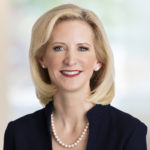
It would help to see a more standardized approach to opening broadly, and consistent messaging. And we need relief. Congress passed a bill in March, which feels like 12 years ago, but the industry needs broad relief. There was no understanding at that time how large and broad the downturn would be, particularly for the travel and meetings industry. Now that we are in a lame-duck session in Washington, D.C., we are hopeful for an extension of PPP that can bridge into January when we will see a more substantial stimulus. Our industry could lose another million jobs if no help arrives before the beginning of the year.

Stephanie Linnartz: Marriott has taken cleanliness to an entirely different level by working with health experts, incorporating electrostatic sprayers, launching mobile check-in, instituting blanket mask requirements for staff and lots of messaging so people know what to expect.

We saw meaningful improvement from the second quarter, largely driven by drive-to leisure travel. China is only down 20 percent from last year and is getting back to live. Other parts of the world are dependent on flights resuming.

Business and group travel is dependent on the state of the pandemic, performance of the underlying economy, and longer-term implications of remote work and digital tools. Group business is an important part of Marriott’s business mix, particularly in the United States. Not having people meet has been very painful. Hybrid meetings can get us going in the right direction, but we need meetings to come back to make our company successful—and companies need meetings to come back to meet their goals.

Pent-up Benefits

All had their eye on the recovery. “When we have control of the virus, we can quickly get back to traveling,” said Marriott’s Linnartz. “I am a big believer that the world is better when the world is traveling.”

See alsoFICP Chats Answers Your Q’s about the Future of Meetings

AHLA Survey: 71% of Hotels Won’t Survive Without Relief

How dire is the fallout from the pandemic slowdown for the hospitality industry? A new survey of 1,200 members by American Hotel & Lodging Association (ALHA) found that seven out of ten (71 percent) will not be in business in six months without further federal assistance.

More than three out of four (77 percent) said they would be forced to lay off more employees is an extension of PPP loans, expansion of Main Street Lending Program or similar is not forthcoming. That is on top of the fact that almost two out of three (63 percent) of hotels have less than half of their typical, pre-crisis staff working full time. Even more devastating, almost half (47 percent) said they would be forced to close hotels and a third would be facing bankruptcy or be forced to sell by the end of the year.

“Every hour Congress doesn’t act, hotels lose 400 jobs,” said Chip Rogers, AHLA president and CEO. ““We need Congress to prioritize the industries and employees most affected by the crisis. A relief bill would be a critical lifeline for our industry to help us retain and rehire the people who power our industry, our communities and our economy.”

He pointed to predictions that seven in ten Americans will curtail travel over the holidays, a trend that will result in a difficult winter for the hospitality industry. According to STR, nationwide hotel occupancy was 44.2 percent for the week ending November 7, compared to 68.2 percent the same week last year. Occupancy in urban markets is just 34.6 percent, down from 79.6 percent one year ago.

Perceptually, 2020 has proceeded more slowly for meeting planners than any other year that most of us can remember. My goodness, routines have been so thoroughly revamped. Instead of meeting live, much of the time we’re only focusing on virtual conferences. Some days go by so slowly, it seems like the year will never end.

Since mid March, being at home more often and for more days in a row than we care to count, might prompt us to lose track of how precious each day is. Thoughts of how the rest of our days might pass linger on. And how many total days do we have in our lives? 24,000 to 32,000? Whatever the total, for many people, it’s more than our counterparts of a generation ago. Indeed, in 1900 the median lifespan in the U.S. was 49 years old. By 2000, the median lifespan had risen to 77. Today, it’s common for people to reach their late 70s, 80s, or even 90s.

Each Day is Precious

No matter how many days you have on this earth, it’s vital to appreciate each of them. Think of it, there have been eons of sunrises and sunsets since the earth first formed out of congealed gases. Your time on earth is a minute fraction of that.

Ever since the oceans first formed, the tides have been rising and falling. What’s more, the earth is home to tens of thousands of species, many of which have still not been identified and classified. When you awake each morning, opportunities await. A day is such a long time when you ponder the possibilities.

In one minute or less, you can throw water on your face, dry off, stretch intently, engage in a mini meditation, have a big drink of water, close your eyes, take a quick walk, visualize a pleasant scene, check for messages, look at photos, sit up or stand up straight, write a thank-you note, yawn, straighten up your desk, review notes, change your seat, have a pleasant thought or phone someone.

In five to 45 minutes, you can meditate; check for voicemails, texts, and email messages; catch the news on TV, radio, or the Internet; lay your head down for some quick rest; take a rigorous walk; balance your checkbook; water the plants; vacuum; straighten up the interior of your car; review what’s in the trunk of your car; have a brief meeting with staff members; jog; clean your bathroom; take a shower; and get dressed.

Also, you can deal with today’s mail, organize half of a filing cabinet drawer, take a nap, run a PC diagnostic program, download many large files, mentally rehearse a major presentation you’ll be giving, proofread a report, comfortably eat lunch and listen to several of your favorite songs.

In two to 24 hours, you can watch a movie in the theater or at home, attend a local sporting event, spend quality time with someone else, read several chapters of a book, completely redo your file drawer, reorganize your closet with time to spare, clean your whole house, visit a good friend, attend religious worship, write a report from start to finish, or visit a park or other area of nature.

You could catch up on your sleep, enroll in a rigorous online course, watch several steaming movies, read a book, renew your relationship with a friend, clean your home or start that huge project.

Optimize, Not Maximize

Your quest is to optimize, but not maximize your day. You’re not trying to jam pack your time with activity. What would be the point? Having optimal days means there is a balance. Some work perhaps, some leisure. Enjoyment of your meals. Time for friends. Time to reflect. The ability to get out and stretch or exercise, maybe vigorously.

A sense of the power of nature, the appreciation of higher forces, a sense of being reverentall of these can go into the optimal day.

No matter how trying or exhausting some days might be, invariably some good can be extracted from such days. If you are the type who is motivated by quotes and slogansif they help to lift you when you’re down or raise you up further than you arethe Internet provides an infinite number of such resources. Songs, as well, can spur you on. If Don’t Worry be Happy works for you, play it. If What a Difference a Day Makes nourishes your soul, listen to it.

Movies can be uplifting as well. On any given day, you can watch inspiring movies. If Chariots of Fire or Silver Linings Playbook work for you, watch them. Poetry, light verse, stirring novels, and inspiring biographies can make a difference in your day. Access to written works has never been more available than it is today.

Take This Day

At some point in your day, there will be time to drop back and punt. In other words, give yourself permission to relaxto simply be. Reverse the old axiom, “Don’t just sit there, do something,” to, “Don’t just do something, sit there.”

For however many hours there are left in this day, and however many days you have left on this earth, recognize that they are all gifts: Gifts to be experienced, and enjoyed.

So, take this day, and love it.

Jeff Davidson is “The Work-Life Balance Expert®” and the premier thought leader on work-life balance, integration, and harmony. Jeff speaks to organizations that seek to enhance their overall productivity by improving the effectiveness of their people.