Fraught with inconceivable levels of caution and concern for public health and safety, the inauguration of America’s 46th president was a colossal feat of planning and production. As our stressed-out, anxious nation came together to watch, the stalwart members of CANVAS were taking notes.

For the January 21 edition of CANVAS Conversations, a group of more than 20 executive-level event professionals shared observations and emotions from this extraordinarily irregular and thoroughly inspiring event.

  • Congratulations to the Presidential Inaugural Committee (PIC). Already faced with the daunting and peculiar task of staging a unifying, joyful event amid the relentlessly surging pandemic, the PIC was left with exactly two weeks to start all over. After the storming of the United States Capitol on January 6, 2021, 25,000 National Guard members were deployed to ensure the safety and security of everyone in attendance—setting the event in a grim, military-occupied Washington, D.C.
  • Oh, how we loved the “field of flags”—nearly 200,000 of them—representing those who could not attend due to Covid-19 restrictions and security concerns. This installation marked the moment with elegant and patriotic symbolism that will endure in pictures for generations.
  • Although it appeared sparsely attended, the event had a global audience—watching on TV and fully engaged online. Call it 2021’s biggest omnichannel digital event…so far. The official event site, bideninaugural.org, featured several pages of content, some of which included “Get Involved,” “Schedule,” and “Day of Service.” The “Get Involved” page offered instructions on hosting a virtual watch party and provided a digital swag bag containing coloring pages, social media graphics, printable photo booth props and a special inauguration playlist. These elements created a unique opportunity for at-home viewers to participate in the event and could be adopted for any virtual or hybrid event. The platform also showcased a store where attendees could purchase branded items including champagne flutes, buttons and T-shirts. CANVAS members took note that this was a creative way to garner event sponsor ROI.
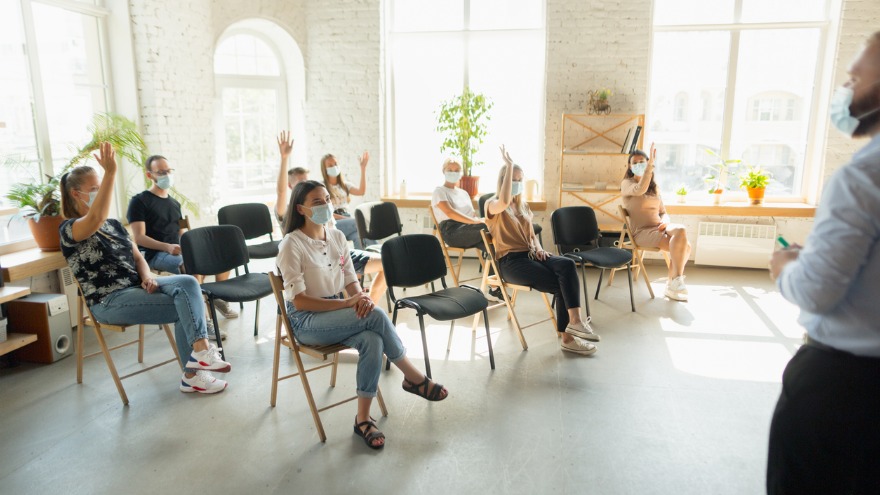
  • During the live ceremony, all seats were socially distanced, and attendees were required to wear masks unless presenting. A safety officer was stationed on stage to clean the podium between speakers, and ushers released the crowd in small sections to maintain safe distances.
  • Diversity, equity and inclusion were at the forefront of the ceremony, virtual parade, and primetime special. The Pledge of Allegiance was delivered by an American Sign Language interpreter who recited the pledge verbally and in sign language. When asking the crowd to stand, the language used was, “Please stand if you can.” For event professionals, this was a blueprint on presentation inclusivity.
  • The diverse lineup of artists, including Lady Gaga, Jennifer Lopez, and Garth Brooks, performed classic Americana ballads, many of which took on distinct meaning in these historic circumstances. The wide range of talent across genres, was a smart strategy to attract a diverse audience and underscore the event’s optimistic theme, “America United.”

  • A spellbinding supernova arrived with the appearance of the nation’s first-ever youth poet laureate, Amanda Gorman, whose delivery of the poem she wrote for the occasion instantly earned her a forever home in our collective consciousness.

  • The “Parade Across America” was a welcome celebration of culture, and each prerecorded video was scheduled to keep the show flow engaging. Lower thirds were utilized throughout to provide titles and descriptions of the prerecorded video, offering another moment of accessibility.

  • Inauguration Day ended with the “Celebrating America” Primetime Special. Hosted by Tom Hanks, the 90-minute program featured diverse talent from artists like Foo Fighters, Bruce Springsteen, and Justin Timberlake, among others. The broadcast was candid with its use of the “live” badge in the lower corner of the screen to identify live performances. The pre-recorded numbers favored heavy design, choreography, and music video-level production values over the more typical illusion of “live” remote concert performance.

  • As ever, the emotional impact of the event was found in content. Even in these once-in-our-lifetime circumstances—and even with an audience eager to take in all the patriotic pageantry and celebration it could find—screen fatigue persists. The program had to be powerful and inspirational to hold the attention of its millions of viewers. And so, it was. From Kamala Harris taking the oath as the first female, first Black, and first South Asian vice president, to Joe Biden repeating his passionate pledge to be a “president for all Americans,” the messages of unity and hope were ever-present throughout the day and into the evening, up through the final moments in which a zillion fireworks lit up the night sky.

When it was over, our nation—and event planners everywhere—exhaled.


Cindy Brewer is founding principal of CANVAS, a new way to network. Featured photo from Biden Inaugural Committee. 

Do you wish you could sit down with the heads of hospitality companies and industry associations and ask them how they got where they are and what advice they might have for blazing a trail in hotels and travel? lessons from leaders

Michael J. Lyons, actor, author and Smart Meetings TV host, did just that for his Lessons from Leaders podcast series. Maritz Global Events President David Peckinpaugh, Carnival Cruise Line President Christine Duffy, U.S. Travel Association President Roger Dow, IMEX Group CEO Carina Bauer and many more candidly shared the personal stories of their career journeys.

In turn, he shared the big lessons from the year of conversations with the Smartie community in an exclusive webinar.

Experience the full Webinar Lessons from Leaders Podcast 2020 Highlights.

Modest Beginnings

None of these leaders started out at the top. PCMA President and CEO Sherrif Karamat was born on a little farm in the rain forest of Guyana, South America, one of 16 biological children in a family that took community literally. They adopted more children, built a school and a medical center and instilled a sense of service in young Karamat at an early age. The lessons they taught him about the power of education and curiosity served him well.

U.S. Travel Association CEO Roger Dow started as a lifeguard at the sixth Marriott hotel in the world and is now talking to elected officials in Washington, D.C. regularly, making the case that the hospitality industry needs support so it can help restart the global economy. His advice when pursuing difficult goals: “Be persistent, never give up.”

As a young woman, Christine Duffy had her heart set on a career as a flight attendant but was told she was too short. Undeterred in her dream to be in the travel industry, she started off as a receptionist in a travel agency and worked her way up.

Along the way, there was a willingness by all to take risks. Almost everyone featured moved jobs and cities multiple times. While it can be challenging to balance family life in the midst of career changes, those who took advantages of opportunities that arose found it paid off.

Even for Carina Bauer, who started washing cups in her father’s coffee shop before she shifted to working with him in the other family business at IMEX. She recalled that she put pressure on herself and pushed herself harder because she didn’t want to let him down.

Strong Personal Brand

Whether we know it or not, each of us has a personal brand based on our actions, attitude, accomplishments, how we work and interact on a daily basis, even how we dress and appear on Zoom. It is what people collectively think about you that in large part determines your trajectory, Lyons said. These people were aware that they were putting themselves out there every single day and the slightest interaction could determine whether they are portrayed in a negative or a positive light.

David Peckinpaugh

For David Peckinpaugh, matching up with the culture, ethics, purpose and values of an organization is essential. How else can you leverage your passion to bring about change? He is known as an untiring advocate for the industry because he genuinely cares about the people in it and the people they serve.

Roger Dow applied the same concept to managing employees. His philosophy is to focus on people’s strengths, to amplify and play off them instead of trying to fit a square peg into a round hole. “Nobody knows everything, so if you surround yourself with strong people, empower them, let them do their job, and give them the freedom to make decisions, it just makes for a much stronger team and a better organization,” he observed.

Carina Bauer focused on the importance of setting clear expectations with everyone, defining those expectations and communicating them clearly. On the other side, she suggested seeking out constructive criticism. “You can’t grow as a leader, unless you’re getting regular feedback,” she said.

Relationships

Michael J. Lyons

People do business with people they know, like, trust and have confidence in. If you don’t have confidence that someone is going to follow through, you probably won’t hire, promote or do business with them. These leaders knew how to earn the confidence of their peers and supervisors by being dependable and following through on their word.

“Credibility matters,” Lyons said.

Your vibe attracts your tribe. Most of the people featured in the 2020 season of the podcast know each other. Peckinpaugh, ALHI CEO Mike Dominguez and Caesars Entertainment Chief Sales Officer Mike Massari all co-chaired Meetings Mean Business. Duffy serves as vice chair of Dow’s U.S. Travel Association and has been a strong supporter of women’s leadership in the travel industry. Karamat is a director on Destinations International’s board.

They have collaborated and worked together on boards and in associations. “They sought each other out and became true friends,” Lyons said.

A Proactive Mindset

Mike Dominguez

Don’t wait for things to happen. Have a plan and be ready to act in advance of the crisis. Even with Covid. Instead of waiting to see what it means for the industry, these leaders are actively planning for the upside. Dominguez is co-chairing the EIC APEX Covid-19 Business Recovery Task Force. Karamat had lived through the SARS epidemic in Toronto, Canada, and realized quickly he need a plan for having his team work remotely and supporting his members through the crisis.

When leaders see an opportunity, they act. They get back to people, delegate and move on. Duffy, for example, is known as an incredibly good time manager, an important skill to avoid feeling overwhelmed. Even at a company that serves 5 million guests a year and employs more than 40,000, she is known for her people-first philosophy.

“She’s extremely accessible and approachable,” said Lyons, who worked with her at one point.

Compelling Communication

Christine Duffy

Being able to motivate others in person, in presentations and in writing are critical cornerstones of a successful career, in good times and bad. During crisis, the ability to listen and express empathy becomes one of the most crucial communication skills, said many of the leaders.

Duffy was put in a difficult position during the pandemic shutdown as cruises were shut down. She made a point of updating what was happening on the corporate level in a very transparent and authentic way. “You have to take the lead and be decisive, but you also have to get people involved in the decision-making process. Then you have to communicate clearly and compassionately without sugar-coating it,” she said.

Bauer found the same approach useful when she had to cancel IMEX Frankfurt—twice, not to mention IMEX Las Vegas 2020. She was forthright and honest about the business reasons and the struggle. The response was overwhelmingly supportive.

Conclusion

Looking back, Lyons found that some had a grand plan, and some didn’t. All had strong work ethics and have faced numerous crises. “The biggest lesson is that none of us can ever stop learning and never think that we know enough,” Lyons concluded.

Oh, and take the time to write personal notes the old-fashioned way, on paper. It is unusual today, and that makes it more powerful. Listen to your mother about that one.

Remember conferences and events before COVID-19, mask wearing and social distancing? Let’s take a stroll down memory lane, shall we?

You would fly into the city and arrive at the event just in time for the opening reception. After waiting in an extended hotel line, you’d check into your hotel room to drop off your things. You would then enter a crowded elevator and wind your way toward a packed hall where you stood in line for several minutes to get a drink. After hobnobbing with several acquaintances, you went upstairs to get a good night’s sleep.

The next morning, outside of the general session was another gathering where at least a dozen people probably handled the coffee and a display of fruit, pastries and yogurt before you plated your food.

You get the picture. Vastly different from today.

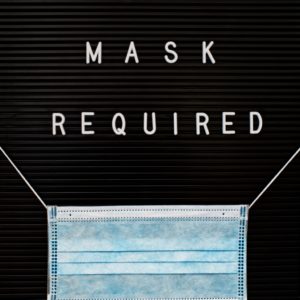
We all know masks help save lives—but here’s the clencher—are you willing to wear your mask the entire conference time? We turn to our friends in the Far East, South Korea and Japan, for insight into masking up.

See alsoAre You Responsible for Mask Policing at Events?

COVID-19 Deaths

As of today, the deaths linked to coronavirus in South Korea, Japan, and the United States are as follows:

  • South Korea: 1,300 or .000025 of their population
  • Japan: 4,680 or .000037 percent of their population
  • United States: 402,000 or .oo12 percent of our population

You may be wondering why there’s such a large discrepancy?

If you might recall, Asian countries have been hit hard with flu viruses that the U.S. has mostly missed. Bird Flu broke out in 1997, followed by SARS in 2003 and Swine Flu in 2009. Most countrymen own N95 or surgical masks, which are more effective than cloth masks.

Asian governments have emphasized strong adherence to self-quarantine in the case of travel or exposure. It has apps to help with contact tracing, something the United States resists due to privacy concerns.

Because South Korea, Japan and other Asian countries are densely populated and rely heavily on public transportation, from 2009 to the present day, it has become the norm to wear masks in three general situations:

  • When traveling on public transportation or attending events where social distancing cannot be accomplished (i.e., a concert, movie, trade show)
  • When you are sick, even if it is only with a common cold
  • On the days when the air quality index is high (meaning smog or pollution is hanging overhead)

With the cases in all countries rising, South Korea has implemented even stricter policies:

  • You must always wear a mask at a wedding, school, stores, restaurants and 23 other places
  • If you are caught failing to wear a mask, you are fined $90 while business owners receive a $2,700 fine

In Japan, a survey of 2,000 residents found:

  • 87 percent wash their hands upon entering their home
  • 84 percent wear masks when they are within six feet of another person
  • Only 2 percent go wherever they want, whenever they want, without worry about masks

What U.S. Meetings Could Look Like [Way Outside of the Box]

When it comes to meetings in the Asian market, they look vastly different. For one thing, they are smaller and shorter. Networking is not a priority; education is the focus. Food and beverage service are not expected; it is assumed attendees eat at home or in their hotel room. And, the mask never comes off.

What are the most significant risks with U.S. meetings? There are three glaring ones—no real social distancing at tables, it’s impossible to wear a mask when you are eating or drinking, and people are meeting outside of their community.

To fix these problems, here are a few creative solutions:

  • Attendees check-in and open their hotel door with their phone. When they arrive in their hotel room, dinner or an appetizer and drinks are there. The cocktail hour is gone, and the hotel bars are either closed or close early. A goody bag has disposable wipes, hand sanitizer and disposable masks within it.
  • Room service is repeated the next morning, an hour before the general session. There is a text message that it’s outside the room, keeping the meal contactless.
  • Attendees arrive at the general session, where each person’s temperature is checked via a self-standing iPad. A greeter escorts them to their table, where there are two people per table and each table is spaced six feet apart. On the table are hand sanitizers, wipes and disposable masks.
  • Lunch is served back in each attendee’s hotel room. If your meeting location is in a warm climate, attendees are welcome to get their lunch and meet in a designated outside space.
  • There are individuals trained and designated to enforce the mask-wearing. As individuals come in from meals or breaks, the enforcers will correct the action if someone is in violation (even wearing it wrong).
  • During breaks, the PA system reminds attendees about the importance of mask-wearing, washing their hands and social distancing.
  • If an attendee has to cancel because they are sick, or they get sick during the conference, all monies are returned to them, no questions asked.
  • Plan local—there is a much lower risk of spreading COVID-19 if events are held within one’s community.

Positive Impact on the Hospitality Industry

Yes, you will still be booking meeting space, ordering AV equipment and providing food and beverage. It will just look different. Attendees will interact differently, too. They may still network, but at a distance. They will eat, but it will be alone or outside. Everything will be touchless. But if everyone accepts these parameters, event venues will not have to close their doors, employment will stabilize and attendees will feel safe.

We have to change our planning and execution tactics, or all may be lost for another year.

De-de Mulligan is a regular blog contributor for Rentacomputer.com, a nationwide provider of laptop rentals for work from home needs. As a former meeting planner who has received Ohio MPI’s Planner of the Year award twice (2006 & 2012), she brings a unique perspective. You can find her on Twitter and LinkedIn, where she welcomes followers and connections.

Meeting professionals know in their gut that people get more out of in-person, F2F meetings, but how do we prove it to the decision makers in our companies and in our attendee’s home offices? We asked a pair of brave entrepreneurs from new destination and event management company Ethos Event Collective for advice on how get back to building communities that deliver real-world results.

Principals Joe Fijol and Sharon Purewal are industry veterans with decades of experience covering numerous previous disruptions, and while they predict that safety and security will remain top of mind for many years to come, they are also certain that growing fatigue surrounding screen-based experiences and an increased desire for personal connection will result in the opportunity for improved attendee engagement.

“When people can meet in-person again, the excitement and enthusiasm for these experiences will be higher than ever,” said Fijol.

She believes that destinations that are proactive about taking measures to create safe places for groups will capitalize on pent-up demand for human connection and interaction.

But how do we get to that point?

Transition to a Hybrid World

Sharon Purewal

“In the short term, hybrid will be the best of all worlds,” said Purewal, who is based in Northern California. The hybrid format can offer opportunities for companies to leverage their live meetings and events to reach more people, with the benefits of the human element.

Effectively meeting the goals of the event in both worlds could bring a steeper price tag, she warned. Shipping items to people’s homes so they can participate in a welcome reception or a team building has to be weighed against travel and F&B costs.

“Creating a connection between in-person and hybrid attendees isn’t easy. You must take the time to explore new creative ideas and production enhancements. How you bring the groups together must feel organic, not forced. We must also think through how to design spaces that accommodate virtual attendees but don’t compromise the in-person experience,” she said.

The rule of thumb is that an hour of streamed content requires four hours of rehearsal, preparation and production. And very few people today are experts in pricing virtual platform costs. Those expenses have to be considered.

Fijol predicted that a lot of meeting producers will do away with streaming dozens of breakouts because filming in all those small rooms will be cost-prohibitive. “A deep understanding of meeting and event technology can create some efficiency; however, there is absolutely an additional cost when more room is needed per person and for the production and rehearsal costs,” he said.

The Power of Meaningful Data

Jack Phillips

When balancing all those expenses, understanding what is important can be difficult, particularly for planners new to virtual production. That is where Purewal and Fijol rely on data to determine what is essential.

Jack Phillips, co-founder of ROI Institute, says most planners rely on just a few indicators to determine if a meeting is successful. The primary ones are number of attendees, hours they were in their seats and their reaction to the program based on surveys of perceived value. Those numbers can look very good for virtual meetings, especially when compared to the costs.

But true ROI must also consider what was actually learned, the skills, competencies and contacts gained. Then it has to measure how that knowledge was applied and whether it changed behaviors. And finally, meeting producers have to think about the impact of the program on things such as revenue, productivity, innovation—the true goals of the event. Only then can the benefit-cost ratio be calculated.

“If you start with the end in mind, once you have objectives, you can design for success,” Phillips said.

Big-Picture Thinking

Fijol, whose home base is in the tourist-dependent state of Florida, argued that one of the benefits of an in-person meeting is the impact it has on the community. “This crisis has raised awareness about the vital need to support our local communities,” he said.

“This business is resilient and fills an important need—it will come back,” Purewal predicted.

In the meantime, the pair took solace in the fact that meeting professionals are adding tools to their Swiss Army knife resumes, so they will be prepared to explain the value of what they do and deliver when the time is right.

As new requirements for Covid-19 testing are being announced for international travel, hotels, airlines and tech companies are stepping up to smooth the process and ensure everyone does the responsible thing.

Indian airline IndiGo, for example, has teamed with Stemz Healthcare to allow COVID-19 RT-PCR testing for both domestic and international travel.

Animesh Kumar, director of travel and tourism and automotive consulting at GlobalData, suggests implementing “negative-only” flights on popular routes during the holiday season.

“Customers in India are postponing their travel plans as they are concerned about getting infected by the virus in the closed environment of an aircraft cabin. If airlines offer rapid antigen tests at the airport and ensure that only those who have tested negative are allowed to board, it will help in elevating the consumer confidence,” Kumar says.

United Airlines will be doing something similar. Beginning Nov. 16, the airline will offer passengers free COVID tests on select flights between Newark Liberty International Airport (EWR) in New Jersey and Heathrow Airport (LHR) in London, as part of a four-week program. Administered by Premise Health, the rapid-results tests will be available on United Flight 14, which departs Newark at on Mondays, Wednesdays and Fridays.

The tests will be available only to fliers departing from Newark, and everyone above the age of two boarding the Heathrow-bound flight will be required to take the test. Passengers who test positive for COVID will be isolated and not allowed to board, and those who do not want to take a test will be required to take a different flight. Despite the testing, passengers will still need to wear a mask while on board, as well as follow the 14-day quarantine rule currently in place in the United Kingdom.

The airline recently launched similar testing on flights to Hawaii, which allowed passengers who tested negative to avoid quarantine upon arrival.. According to United, bookings jumped 95 percent on that route in the first two weeks.

Hotels are Following Suit

Hotels have hopped on the testing train as well, offering free tests to departing and arriving guests.

Melia Hotels’ 10 hotels, which operate in Mexico and Dominican Republic, will also offer free, on-site COVID-19 antigen tests for guests who’re required to show negative results prior to entering their country of residence.

Grand Hyatt Baha Mar in Nassau, Bahamas, also offers on-site RT-PCR and rapid antigen COVID-19 tests. As part of the property’s Safe Travels package, guests can receive 2 RT-PCR tests on the day of their departure, with the option to purchase more at a discounted rate.

As part of larger health protocol options, Marriott International has stepped into COVID-19 testing as well, which meeting professionals can choose to include for group meetings at certain Gaylord Hotels and Resorts in Florida, Tennessee, Texas and Colorado, beginning this month.

Iberostar Group will offer guests free COVID-19 antigen tests across its properties in Mexico, Jamaica, Dominican Republic and Brazil for U.S. travelers reentering the States, following the news that they will be required to provide negative COVID-19 tests beginning Jan. 26. Guests interested in taking a PCR will be able to do so, at a cost.

After these many months, do you still feel unsettled working from home? Maybe not feeling as productive as you should be? Meeting professionals are trained to focus on the needs of others, so it can be easy to overlook small things that could make your own work life easier, more productive and more satisfying. work smarter

So, in the spirit of “there’s always room for improvement,” simple fixes could be just a few adjustments away.

Dress the Part

Research published in Journal of Experimental Social Psychology suggests that professionals perform better when wearing clothes with “symbolic meaning.” Researchers found when tracking doctors’ performance, they were more focused when wearing a lab coat.

For meeting planners, donning appropriate attire could boost productivity, and make you feel more “authoritative, trustworthy and competent,” as respondents stated in a study by Joy V. Peluchette and Katherine Karl in Human Resource Development Quarterly.

Have a Dedicated Workspace

You know all too well that working from home can blur the line between home space and workspace—and making your bedroom your workspace is the worst of all. Working in bed can confuse the brain, says Lauren Holliday, founder of Freelanship. “After repeatedly using something for a certain purpose, our brains begin to associate an object with a purpose,” she says.

MoreImprove Your Work Space with Feng Shui, Plus Science

To “reinforce the mental association between your bedroom and sleep,” Harvard Medical School’s Division of Sleep Medicine recommends keeping TVs, computers and work materials out of the bedroom.

Get a Comfy Chair

If you’re anything like the average planner, you may be spending 7-9 hours a day in a chair. Being in a seated position for long periods of time can bring about a host of bodily problems, such as increased blood pressure, high blood sugar and abnormal cholesterol, according to Mayo Clinic, not to mention just general discomfort. Sitting in a bad chair will just exacerbate these problems.

Kitchen chairs get the job done, but a real work chair can not only give you comfort but offers back relief like no other. Standing while working is a proven beneficial option, as well.

Stretch it Out

wellnessWorking from home frees up a lot of time that was once spent commuting or chatting with coworkers. Why not spent it engaging in healthier activities, whether outside or in a makeshift space in your home? Mayo Clinic recommends 30 minutes of daily moderate physical activity.

More8 Exercises You Can Do at Your Desk Every Day

Taking breaks to get up and get active is not only good for improving health and well-being, it can also increase your ability to focus, according to researchers at University of Chicago. Whether it’s your living room, kitchen or even the front yard, taking time to stretch out those stiff muscles will be well worth the time invested.

Increase Your Internet Bandwidth

A survey by Stanford found that only 65 percent of Americans had fast enough internet to handle video calls, with 42 percent of those working from home. Meeting planners are often juggling several things at once, making a premium internet connection a necessity.

Having slower internet not only means it takes longer for things to load, but it leaves you open for distraction during the waiting game. Granted, not everyone can afford to make this upgrade, but you won’t regret it.

When Mike Dominguez, president and CEO of Associated Luxury Hotels International (ALHI), looks in his stained-glass crystal ball, he sees clear trends looming. The Smart Meetings Editorial Advisory Board member and co-chair of EIC’s Apex, Covid-19 Business Recovery Task Force shared the shape of things to come with the Smartie community in an exclusive webinar last week.

“We will be seeing more face-to-face meetings in 2021, specifically towards the back half of the year,” he said confidently. Hybrid and automation will still be around. Oh, and look for state-of-the-art air filtration everywhere and temperature checks to continue for a while, at least.

But what does that mean for meeting professionals long-term? Dominguez referenced the myriad of meetings large and small already happening for examples—40,000 people in Indianapolis for NCAA March Madness basketball championships; 650 in Grapevine, Texas, for MPI’s World Education Conference; a series of meetings ALHI has staged for the industry to learn by doing; and Smart Meetings Experiences in Colorado Springs at The Broadmoor and at Grand Hyatt Nashville.

The way only he can, Dominguez brought out the charts and graphs and ran through the data, showing that even if some changes are short-term, the next 18 months will bring significant changes.

Listen to 2021 Hospitality Predictions on demand.

Sharp Comfort

The psychological and safety needs of attendees will be at the forefront for a while, he predicted. Job One will be helping people feel comfortable getting on a plane and standing in a room of people. That is a big shift.

A Global Business Travel Association survey found that 52 percent of people rated an effective vaccine as the most important piece to start moving forward. That is good news. But it takes a smooth rollout of the vaccine to get back in the ballroom. Right now, all states are starting the process, although some are moving faster than others, Dominguez’s research shows.

Until herd immunity is reached, health screenings such as temperature checks and self-evaluations could remain ubiquitous for a while. Dominguez advised thinking through the plan and have resources available if someone tests high.

Another factor helping people literally breathe easier in hotels is commercial jet-standard air filtration tricked out with HEPA filters and UV light for sanitation. “This is going to be a necessary for us moving forward,” he said.

Read about MPI’s WEC Reunite for Recovery Conference here.

Hotel automation—QR codes, mobile check-in, contactless payment—has been around for a while, but adoption has been fast-tracked. “If there is any silver lining to the last year, it’s that it has forced people into these behaviors, and that’s a good thing for us moving forward,” he said.

Omnichannel Everywhere

Virtual and hybrid meetings have also been in play for a decade. TED Talks is a great example. Now it is time for meeting professionals to catch up with true omnichannel experiences. The challenge will be making sure the right content is being driven in each of those channels—in-person, streaming digital—and that all the channels connect, he said.

Read about an ALHI hybrid meeting that showed what an engaging omnichannel could look like.

The emergence of satellite meetings makes planning even more complicated when you are running multiple locations at once in addition to the digital feed. Four locations would require five runs of show with a mix of prepackaged and live material. A producer has to pull all of that together.

“That’s the next step, especially in the short term,” Dominguez observed.

Read about PCMA Convening Leaders Satellite Conference.

Calculating Distance

Dominguez warned that keeping people at least six-feet apart is a complicated math problem that requires an understanding of density, geometry and division. Room setups may require creative seating arrangements to make the angles work, stylish barriers to direct traffic and sound.

Creating vignettes with comfortable seating and tables that are assigned for the duration of the event—and fogged during breaks—allows everyone to feel taken care of individually.

That same care and attention to detail extends to food service. Whether it is elegant grab-and-go with clear traffic flow or 72-inch rounds with three chairs and covered, plated meals served individually, being safe doesn’t have to be boring.

Crowd control is essential. That could mean releasing people for breaks in groups, as MPI did, by giving everyone colored dots; or by rows to reduce choke points.

“We have to keep everyone safe, including team members,” he said.

The year that shall not be named brought lots of questions. Smart Meetings quizzed experts for answers as part of our monthly Smart Chat feature. Looking back, we realized it was time for an update since things are changing so fast. Did their responses pass the test of time? How are they answering the new challenges since their time in the spotlight? You can go back and read their original interviews at the link for old-time’s sake and then check out our follow-up questions for a more informed 2021.

February: Robert Strong, chief magic officer, Robert Strong, The Comedy Magician
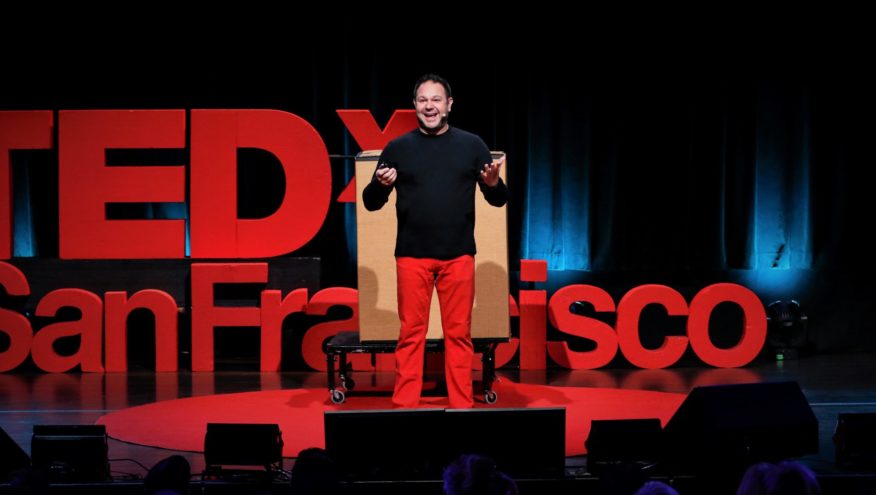
How can the tools of magic (such as managing assumptions) help people process the year we just had?

We all have an ‘identity’ and we are constantly looking for evidence to reinforce that identity (cognitive bias). For example, I am in the Live events industry. I make money and am successful when I am in a ballroom and not when I am at home (see how that changed this year).

Magicians exploit these cognitive biases and assumptions people make about how the world works to create delight and joy. Magicians are aware that our own identity is illusory and can be reshaped and redefined at a moment’s notice. We are constantly reinventing ourselves to create amazing experiences in that very moment.

So, when the pandemic hit, our identities were challenged and change is scary. Personally, I took a look at what skills are needed now and realized that my degree in filmmaking and my highly interactive approach to entertainment are overlapping the demand for quality engaging virtual content. I knew that we were not going to be hosting any guests any time soon, so we converted our guest bedroom to a production studio. I was up and running and creating content by March 12th (6 days after my first gig cancelled). I filled my calendar because I adapted quickly and had the solutions before the demand was even realized. Best of all, I have done it all from a room in our home that was being underutilized!

Are “wow” moments still possible with virtual meetings and if so, what are some tricks to incorporate them in agendas?

Yes! My virtual show had early success. The reason I did well was because others were pretending there was nothing wrong in the world and everything was normal. I, on the other hand, spoke to my audiences honestly and genuinely. I wrote humor about performing in what used to be a guest room and how I missed real laughter and applause. They could relate and our time together was cathartic. I could not perform most of my magic because it just would never work over Zoom. So, I started from scratch by making a list of what our shared experience would be and invented new magic by predicting what people will type based on our conversation. In another case, we get Zoom bombed, but the bomber turns out to be my alter ego. Viewers are left to wonder if the internet freezes as I am pouring a drink, or my drink freezes while it is being poured. My dog barking interrupts the show, or does my dog bark the exact number of times matching the number the volunteer secretly wrote on a piece of paper. There is a saying in magic: “If it can’t be fixed, put a bow on it.” So, I create original magic and humor to point out how absurd our interaction together is. I made the magic current and relevant.

How will captivating attention be different when we all get back into the ballroom?

I assume Disney and casinos will figure it our first. I am watching them closely to see what they do. Obviously, there will be all kinds of adaptations to keep us safer when we have in person events. Clearly, there will be hybrid events. But, the demand for quality and, most importantly, interactive virtual entertainment is forever. Tech companies in the Bay Area are already reconfiguring their spaces so that people can work from home and teams can meet for the occasional on-sites to collaborate, celebrate, and to connect in more meaningful ways.

March: Kimberly Gishler, president and CEO, CEMA (now part of PCMA)
What did you learn from your online event about the best way to facilitate peer-to-peer learning?

At CEMA, we’ve always worked to have subject experts lead our Summit and other educational sessions. They can speak from both strategic and creative perspectives and about real in-the-trenches experiences. Another key quality of our peer learning sessions is generosity—the willingness to share expertise freely and even offer to mentor others who are wrestling with similar issues. Fortunately, those aspects of our live events translated well into the digital format. The online platform added new dimensions—real time participant interaction and feedback via chat, and the ability to offer sessions on-demand throughout and after the event. Another useful element of the digital event is the wealth of data we have on attendance, participation, engagement and attendee experience.

What are the benefits of the merger with PCMA? What will be different for CEMA members?

Joining PCMA allows CEMA to leverage PCMA’s organizational and financial strength to stabilize our financial position and put us in an optimal position to pursue our strategic growth and regional expansion goals while at the same time creating even better engagement and experiences for the membership of both organizations.

In terms of changes, CEMA will maintain its name, membership and association management, as well as our educational and networking programs, including CEMA Summit. We gain access to PCMA’s substantial business infrastructure, shared administrative services and logistical support resources. In addition, we will continue to collaborate on content and new event opportunities. Our members will continue to enjoy everything they love about CEMA and look forward to even greater experiences and value. We’ll keep our non-selling environment, and we will retain and continue to nurture our unique, wonderful culture. We’ll enjoy the same exceptional member experiences, same warmth, camaraderie and collaboration…but bigger, stronger and smarter.

What do you think is the most essential shift meeting professionals need to make to be successful in the future of the events industry?

Clearly the most essential shift is towards hybrid events. Nothing will ever replace live, in-person events. There’s no substitute for a real face-to-face encounter with people. We also love the energy of live—it helps drive the experience. But we’ve been able to do a lot of great things online that would be really hard to create in the real world, and we need to focus on unique digital experiences—not just trying to replicate live experiences online. So, as we begin to move back towards live in person events, we have the opportunity to create something new and different, that works even better than what we’re doing today.

July: Peter Leyden, founder, Reinvent
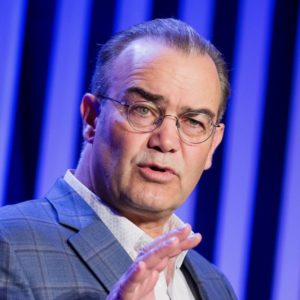
How will we ever get beyond this coronavirus crisis? How will we dig ourselves out of this economic hole?

Most of us are trapped in the anxiety-provoking present and fearful of a future that we can barely see. We find it hard to see that we might actually be part of a bigger-picture story that is much more positive and is making progress on solving all those daunting challenges. We can’t believe that we may be heading toward a better future that’s playing out over the long-term but just at a slow and steady historical pace that’s hard to detect day to day.

If only we could pull back and see how new technologies emerging now could scale up and make a positive impact in the coming years. If only we better understand how many long-term trends inexorably making progress in our economy and society and culture could come to fruition in the decades ahead. Or get a better sense of all the innovators working on new ways forward that hold great promise to reinvent the world in myriad ways. If only we could somehow see how all these encouraging developments could come together to largely solve our big challenges in the end. Then we might be able to move out of the debilitating present and do the right thing to help build that better future now.

You start the process of a positive scenario with what I call the positive reframe. You look back on the last decade or so and identify new technologies that are starting to scale, encouraging trends that are building, progress that’s actually happening but being missed. You seek out innovators who are trying to bring about positive developments that can’t be clearly seen yet. You then work through how all those positive driving forces could build on each other and play out in the future. Finally, you build a plausible story that helps people see how this world could come about and eventually work. Much of the value is in connecting the dots between seemingly disparate developments in order to see how the whole could be much greater than the sum of the parts. It’s a way to better see the forest for the trees.

Read more about The Inexorables (universal connectivity, ubiquitous AI, accelerated innovation, clean energies, electric mobility, biological engineering, burgeoning capital, generational shift, mew majorities and more here.

August: Anh Nguyen, founder, Spark Event Management
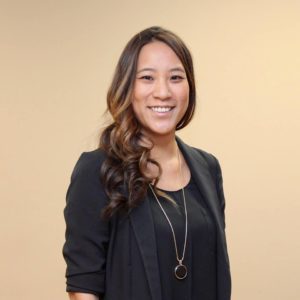
What was your biggest lesson from the GMID Goes Virtual experience and aftermath?

I learned how powerful a group of people can be if they are driven and motivated by a shared vision. The entire experience helped me grow as a leader and forced me to hone my delegation skills. Because of the short time frame and the size of the team, I had to become very comfortable with trusting the team to do their jobs without much guidance. That has always been a hard thing for Type A, control freak me to do but the GMID Goes Virtual experience showed me how impactful it can be to create a team where everyone feels ownership of the project. It was very inspiring!

How have you adapted in the last year?

Along the lines of the above, I have learned how to make decisions amidst great uncertainty and letting go of the illusion of control. 2020 has forced all of us to make decisions and plans based on so many unknown factors and without all the information we’d like to have and it’s forced us to learn how to let go. I’ve become much more comfortable with ambiguity and making decisions based on the information we currently have available.

October: Tori Emerson Barnes, executive vice president for pubic affairs and policy, U.S. Travel Association
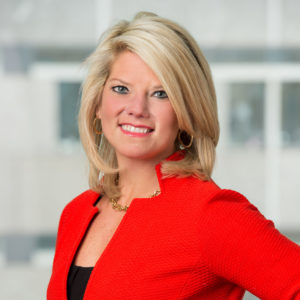
What were you most happy to see get into the December relief bill and what still needs to be addressed?

We fought hard for many long-overdue provisions. Among them: a second draw on Paycheck Protection Program funds for the hardest-hit businesses; expanded eligibility of PPP loans to non-profit and quasi-governmental destination marketing organizations; assistance for airports and concessionaires as well as airlines, and enhancements to the Employee Retention Tax Credit. Given the extraordinary declines across the travel industry, these measures alone won’t be enough—but it’s a welcome bridge until a new package is considered in the new Congress.  

What is the prognosis for liability protection?

If businesses do not have the confidence to reopen, America’s recovery will be delayed even longer. Unfortunately, protection from COVID-related lawsuits was ultimately left out of the December relief bill. We will continue to press the importance of immediate, temporary, and limited liability protections for businesses that make a good-faith effort to reopen responsibly.

What is the trajectory for getting back to the economic level of 2019?

After one of the worst years on record, we look forward to seeing some recovery as the meetings sector continues to restart. Organizations have begun safely adding in-person options to their virtual business and educational conferences by redesigning meeting spaces to maintain physical distancing for delegates, mandating mask usage and limiting attendance, in addition to other health and safety protocols. As those of us in the industry already know, nothing replaces the magic that happens when you have a face-to-face meeting. We have a long road ahead of us, but we expect to see steady improvement over the next few years. By 2024 travel spending on meetings, events and trade shows is projected to reach $105 billion. Unfortunately, that will still be 14 percent below the $122 billion spent in the sector in 2019.

November: Heather Mason, founder & CEO, Caspian Agency

You said that you think there will be more jobs in 2021 for strategic thinkers and producers. Do you find that planners are embracing the new roles and where are they getting their experience?

Some are. Some are “not liking virtual” which I’ve heard said, and that’s not a choice. I don’t like email, but that wouldn’t be helpful in having a meaningful career, or a lucrative one. Many are taking online courses, reading and attending as many online events as they can. Being self-taught is the key, and those who embrace learning will have a fantastic career. Organizations are wondering where to go next and still struggling, so be their hero!

What are executive expectations for how meetings will move forward and how they will measure ROI?

I would say there’s a hesitancy on behalf of executives because the windfall of cash hasn’t been as evident in sponsorship and attendance fees, as it had been for in-person. Again, this opens up a big opportunity for event strategists to build the value proposition. This can be done in a way that shows short-term gains. long-term strategy, upsells, subscription models, even a layaway version looking towards the in-person events that will eventually happen. Executives are looking at ROI with multiple lenses, depending on if they’re trying to maintain customers, upsell them, or add new ones to their base. All of those goals can be met through extreme targeting which can be done effectively in the online world.

What was the best example of the new way of planning you saw in 2020 and what are you looking forward to in 2021?

I attended TEDWomen and thought it was very well done. They created a custom interface that was modeled much more like an enhanced YouTube, which is what I’ve been preaching. Use what’s online and be more like it, rather than looking to events and try to be like them. The enhanced YouTube had the content stream, chat box, but also a way to take selfies and post, as well as a post-it area to store your thoughts, and see other’s takeaways, and there were also breaks where you could be speed matched to have conversations with attendees. I met more people at this TEDwomen than probably the last 5years combined!

I’m looking forward to folks taking what were experiments in 2020 and starting to hone in on what works and make these formats even better. We were all throwing spaghetti against the wall in 2020, now it’s time to see what sticks.
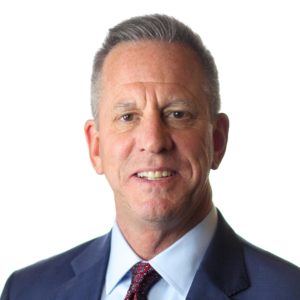

Megan Baughman

Baughman is events director for Next Events in Cincinnati, Ohio. Prior to this position, Baughman was event manager for Emerald Expositions in Kentucky. She also worked with ST Media Group in Cincinnati and Marriott International as event manager.

John D’Angelo

Wild Dunes Resort in Charleston, South Carolina, named D’Angelo director of resort operations; he will also oversee operations as Boardwalk Inn, Residences at Sweetgrass and Sweetgrass Inn, which opens this summer. D’Angelo previously worked with Grand Hyatt Nashville as opening general manager. Before that, he was opening resort manager at Grand Hyatt Baha Mar in The Bahamas and helped open Hyatt Regency Denver and Hyatt Regency Trinidad in the Caribbean.

John Muehlbauer

John Muehlbauer

IHG Owners Association named Meuhlbauer CEO. He has been with the company 13 years in several roles, including distribution, sales and marketing, loyalty and corporate planning. Muehlbauer also spent a dozen years with Delta Air Lines, where he held positions in corporate planning, IT sourcing, consumer and product management.

Stephen Blackford

Blackford is general manager for Pendry Chicago. He recently worked with St. Jane Hotel Chicago as managing director. He was also general manager for The Ambassador, The James and Affinia Hotel, all in Chicago.

Dieter Schmitz

Schmitz is general manager for Adero Scottsdale in Arizona. Before his move to the Southwest, Schmitz was opening regional general manager for Riggs Washington DC. During a stint with InterContinental Hotels Group, he helped open Even Hotels, Hotel Indigo and Crowne Plaza hotels in New York City.

Kylie Ranger

Ranger is director of sales and marketing for Hotel Emblem San Francisco. Before this, Ranger was director of sales and marketing for Viceroy Hotels & Resorts’ Hotel Zetta, Hotel Zelos and Hotel Zeppelin, all in San Francisco. Before joining Viceroy, Ranger held event roles with corporate, leisure and entertainment organizations in Los Angeles and 8Hotels Collection in Sydney, Australia, her hometown.

Gail Hunter

Hunter, who works as a global events director in the Bay Area, has been added to the board of directors for San Francisco Travel Association; she will also serve as chair of SF Travel’s Public Policy Council. Hunter previously worked as vice president of public affairs, arena operations and event management for NBA’s Golden State Warriors.

Editor’s note: The lawyer quoted in this article is not providing legal advice. If you are seeking legal advice, consult with a professional.

If you spent 2020 talking about force majeure clauses more than you ever had in your career, you are not alone. Tests. Vaccines. Data. Security. There’s much to consider legally to get in-person meetings truly going again. Smart Meetings got in touch with an expert about what meeting professionals should be thinking about when face-to-face meetings resume.

In speaking with Ty Sheaks, attorney at McCathern, LLC, we found out how meeting professionals and venues are reacting to the fluctuating legal landscape of safety protocols and signage, as well as what questions we should be asking moving forward.

Waiving Responsibility

Over the months, Sheaks noticed more hotels and venues using liability waivers, along with enhancing safety protocols, revising contracts, signage and training. “But the legality and enforceability of those will largely depend on compliance with state specific laws,” he notes, “so they should be drafted carefully and with the help of legal counsel. Those efforts are hampered by the extreme reduction in budgets for most folks, so it’s a tightrope walk on what to do and how to do it effectively.”

MoreHow Not to Get Sued If Someone Gets Sick When You Get Back to Planning

An increasing number of states have been enacting business liability protections. “Last time I checked, in October, there were approximately 37 bills in 20 states that had been adopted or enacted addressing liability issues,” he says. While some of those bills are geared toward first responders, a number offer broader protections to all businesses, similar to what is commonly known as “safe harbor” provisions, meaning it doesn’t prevent a lawsuit from being filed, but provides greater legal burdens to establish liability for a claim.

Sheaks notes there’s been a lot of negotiation at the federal level about whether the stimulus bill with another round of Paycheck Protection Program funding will include similar liability protections. “We’ll have to watch that closely,” he says.

Questions to Consider

Marriott International just began rolling out virus testing as part of its Connect with Confidence program. This is great news, but there could be significant legal implications in requiring attendee testing, according to Sheaks.

“There could be important legal data and security issues to requiring testing of attendees that really just opens Pandora’s box on potential legal issues. Not to say it can’t or shouldn’t be done, it just has to be done thoughtfully and carefully to ensure you don’t run afoul of applicable laws,” he says.

There are several questions to think about before requesting tests from attendees. According to Sheaks, you should ask the following.

  • Who should be required to take the test?
  • How reliable is it?
  • Who keeps that data?
  • What if someone paid to attend but fails the test?

Sheaks’ strongest recommendation is to look at what’s being done by larger companies like Disney and AHLA, airlines and restaurant organizations like National Restaurant Association. Lessons can be learned from successful events, such as those that have taken place in Texas, Florida and Colorado, to see what they did and what they would do differently.

“Then engage legal counsel if you decide to take action one way or the other to ensure you do it correctly and legally to try and avoid issues on the back end,” he says.

NCSL is a great source for meetings planners who want to keep up on ever-changing legislation across the country.