It is time to recognize your favorite property or destination by nominating them for Smart Meetings’ 16th annual Platinum Choice Awards. This prominent awards program honors remarkable standards of excellence in service and amenities, including ambience, amenities, breadth of resources, facility quality, guest services, recreational activities, dining options, technical support and more.

Did the staff at a hotel or CVB exceed expectations and elevate the quality of your event—or save you from possible disaster? Tell the world about them by submitting their name now. Editors will review your descriptions and feature the stand-out winners in the December edition of Smart Meetings print and digital magazines. The cutoff for nominations is September 16, so share your favorite partner today and you will be automatically entered to win a $250 gift card.

Learn more about last year’s winners of the 2018 Platinum Choice Awards.

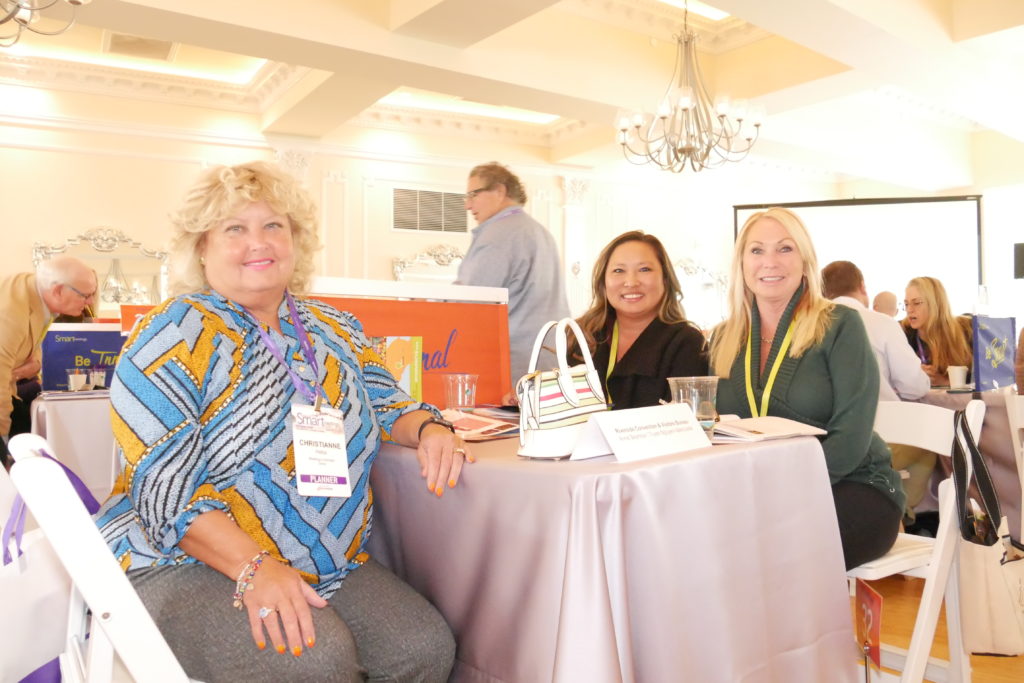
Last week, a select group of meeting professionals found themselves at a spirited Smart Meeting National 3-Day at Stanley, a Grand Heritage Hotel, in Estes Park, Colorado. The property has a famous history: Stephen King wrote The Shining there, making the famed room 217 a destination in itself; scenes of Dumb and Dumber were shot here as well, after which Jim Carrey experienced something in that very room that convinced him to never go back (you’ll have to visit yourself to find out why).

The Space

The Stanley features 41,000 sq. ft. of meeting and conference space. The look of the spaces vary, from 8,000-square-foot Pavilion (where Smart Meetings one-on-one meetings were held), with a 250-seat floor-to-ceiling windowed auditorium that offers a beautiful backdrop of Rocky Mountain National Park and the more than 8,000 sq. ft. of banquet space that accompanies it. The 5,200-square-foot MacGregor Room (where breakfast and dinner took place) served as the perfect airy space for planners to meet and network over whiskey cocktails, which the property had in abundance.

The Speakers

When planners weren’t eating, mingling or sharing stories about possible paranormal activities from the night before, they were listening to three powerful keynote speakers.

Ben Nemtin
Ben Nemtin

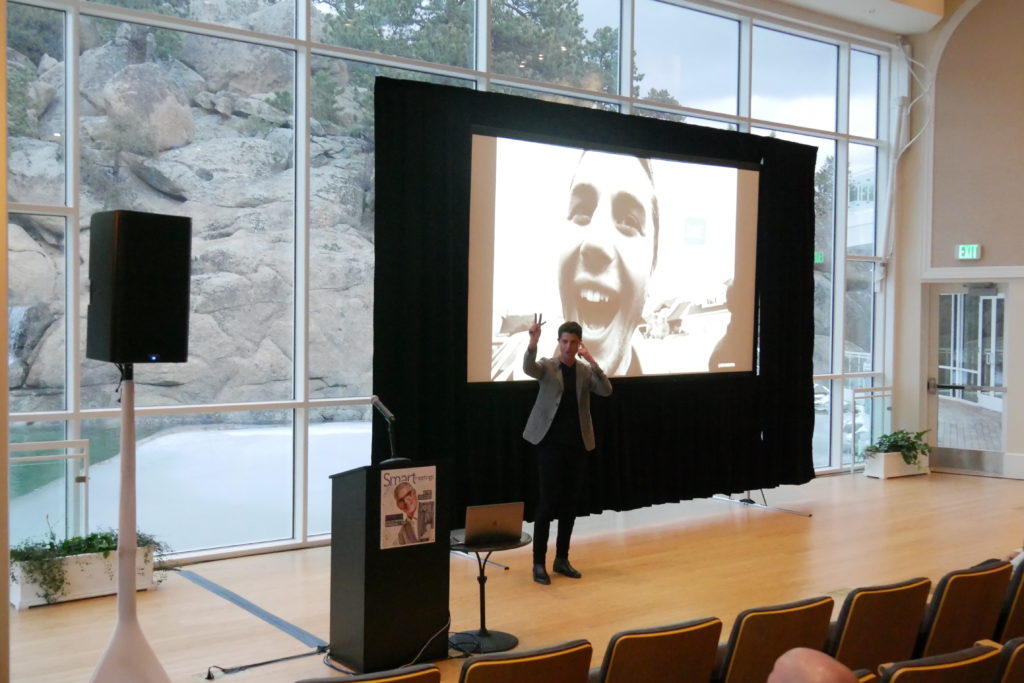
Ben Nemtin, a Canadian producer, writer, speaker, TV personality and co-founder of The Buried Life, had much to say about the importance of living life to the fullest, and not reaching the end of life with regret for the things never done. When Nemtin was in his early twenties, he and his three best friends set out to do the unthinkable: scratch off every item on their bucket list, of which there were 100. That promise to himself was the beginning of a journey of things unthinkable, from playing basketball with Obama at the White House to having a beer with Prince Harry. Even though these bucket list items sound like fun and games, the message to take away is that anything is possible if you want it bad enough.

Mike Dominguez, CEO of Associated Luxury Hotels Incorporated, is always an audience favorite, giving speeches around the globe. Dominguez’ strategies for staying relevant were applicable to all in the room. The world is changing rapidly, and Dominguez really drove home the importance of adaption. In the next five years, 40 percent of individuals will be irrelevant if they can’t change fast enough, Dominguez warned. He also cited research that showed a 1.9 percent increase in hospitality supply and a 1.6 percent increase in demand in 2020, all great news for the hospitality sector.

Steve Jones is the author of the book, “Brand Like a Rockstar,” and has 30 years in the music industry. In his keynote, he laid out how rock stars used branding to become who they are today. One example Jones used was a band named Wicked Lester; he told the story of how when this band first started out they couldn’t seem to catch a break. They considered splitting up, but before one more try with a new name: Kiss. The rest is history

The End

After three days at 7,800 feet of elevation, it was time to wind down and head home. Connections were made, business conducted and everyone left with a renewed appreciation of the industry. The Stanley now has something else to add to its list of memorable events: a historic Smart Meeting National 3-day.

A lot has changed since our January 2020 issue (with the elegant balancing ballerina on the cover) hit mailboxes. We asked the rhetorical question then whether this would be “The Year of the Planner?” We talked to experts about the supply-and-demand balance in the hospitality industry and examined business trends in the live-events space. Little did we know that a global pandemic was on the way to knock us all off our toes.

Marin Bright

As Smart Meetings founder Marin Bright said in her Bright Perspectives column in the August issue, all the changes happening right now can be unsettling. There is just so much uncertainty. And when we think we have the new rules down, something changes, and we are rebooking the rebookings. She prefers the term “pirouetting” rather than “pivoting” for the scramble to deliver value to homebound audiences as meeting professionals adjust to the new realities as gracefully as humanly possible.

To help refocus toward the next act, we thought this would be a good time to update the trends identified eight long months ago.

1. Essential Event Tech

In that fateful report, we identified technology as one of biggest challenges. Even in pre-pandemic days, our surveys showed that most meeting professionals were adopting event tech in an attempt to be greener, more agile and more engaging.

ReadTake Care: How an Expert Communicates During a Pandemic

Now, even the technophobes in the crowd are embracing touchless registration and virtual streaming options for their in-person meeting plans. Companies that had hung their hats on recording keynotes are now hybrid meeting “experts.” Everyone has Zoom fatigue. And we are all waiting for the consolidation that will lead to a seamless experience that can bring all the facets of the virtual meeting together, and solves the streaming cocktail party conundrum once and for all.

2. Sustainable Setbacks

We happily reported that meeting professionals across the country were flexing their green muscles, ditching plastic straws and recycling lanyards. More that 50 percent of respondents to our survey said they are shifting to earth-friendly practices because “it is important to leave a livable planet to future generations.”

Now all those good intentions are being threatened as fears of a lethal disease may override concerns about global warming for the short term. Reusable is perceived as scary (even if properly cleaned, such items aren’t), and disposable everything, including the accessory du jour, plastic masks, are everywhere—including in the oceans.

As Senior Editor Gary Diedrichs shared in his August piece for the Complete Smarties Guide, “How to Protect Ourselves—and Mother Nature,” this pandemic could be only a dress rehearsal of coming climate disruptions. That is why smart meeting professionals are taking the long view and ditching the cute little individual sanitation bottles for refillable, touchless dispensers, vapor cleaners and air filters.

“Ask yourself if the venue’s offerings enhance the health and wellness of both humans and the planet,” he suggested. That could be the new Holy Grail for 2020 and beyond.

3. Out-of-the-Box Cuisine

F&BWe identified the 2020 uber-trend in F&B as healthy eating. Four out of five planners said they were offering healthier options. Now that wellness is literally a matter of life and death, healthy has taken on new meaning. With self-serve buffets going the way of the passed hors d’oeuvre, chefs are getting creative about how they package individual meals. Lobster in a box, anyone? Gloved, masked servers behind breath guards could be the new normal in the ballroom for some time to come.

ReadTouchless (and Matchless) F&8

The upside is that all the waste from overflowing buffets will no longer go to landfills. Plated meals make it easier to control serving sizes. And all those hybrid meals will rely on attendees to monitor their own mulching or recycle as much as possible from the delivered meal from the local deli.

4. Well, Well, Well

The 2019 survey also identified healthy activities as a priority. Adding options for wellness into agendas was a growing trend, with walking breaks, robust hotel gyms, healthy menu choices (there’s that trend again), meditation and spa appointments among the popular options—even if many planners admitted they didn’t personally take time to use any of these when on the road.

More good news: Even virtual and hybrid meetings are including marathon challenges, plus yoga and meditation breaks. Technology makes it easy to count miles and stream world-class instructors.

5. Screening Mandates

pandemicKeeping everyone safe at an event has always been a priority, but while the concern at the beginning of the year was around live-shooter attacks and natural disasters, health concerns have become front and center. Our photo of a security camera in that story would now be swapped for a thermal reader.

Even way back then, many said they rely on hotel partners to do the heavy lifting when it comes to creating security plans. Now, many are looking to convention teams (once they are back from furloughs) to help with room setups that allow for six-foot buffers between attendees, and local medical experts who can help with screenings.

The new top trend may be creating code-of-conduct documents that require attendees to do their part to keep everyone safe by staying home if they feel sick, wearing a mask in situations where it is required and resisting the urge to hug when we are all back together again.

6. Messaging Matters

This may have been the most prescient trend identified. “Meeting professionals also must ensure that attendees feel safe.” While we pointed to the presence of security guards and dogs at the doors and baggage checks, the COVID-era equivalent would be signage about social distancing and pre-meeting calls to talk about sanitation protocols at the property. The scent of disinfectant could take the place of signature floral scents at hotels near you.

ReadDo Post-Pandemic Setups with Panache

We are sticking by our final line in that story: “In the end, only so many measures and precautions can be taken, and there is shared responsibility among all parties, including attendees. But planners still must be ready to take care of their attendees in case of an attack or emergency.”

Event management platform EventGeek relaunched under the new name Circa. Initially designed to help event marketers coordinate mulitple in-person events, Circa adds capabilities for virtual event management, allowing event planners and sales teams to combine data across all events, whether in-person, virtual or hybrid.

Since the advent of COVID-19 in March, Circa has helped event marketing teams transfer more than 40,000 live events to virtual events and webinars, according to a company press release.

New features announced by Circa include:

  • Ability to manage in-person, virtual and hybrid events in one place
  • Ability to manage hosted and sponsored events in one place—including conferences, exhibit booths, workshops, webinars, roundtables and meetings
  • Support for thousands of events and meetings within an enterprise
  • Support for marketing teams to enable them to measure engagement for events the same way they do for other digital marketing programs—for instance, measuring conversion from attendees to sales opportunities
  • Ability to integrate with virtually every well-known video conferencing tool, such as Zoom and On24, as well as databases, such as Salesforce and Marketo, so marketers can use engagement data in strategy and event planning.

“The move away from in-person to 100 percent virtual events has thrown off many marketers who traditionally relied on in-person events to fill their pipeline,” said Alex Patriquin, founder of Circa. “Circa turns this sea change into an opportunity for marketers, by giving them the tools they need to successfully engage customers in virtual events, better integrate data, and measure and manage these events as they would any other digital marketing program.”

He continued: “With Circa, they can see all their event data in one place, and use that information to craft and execute more effective events that move prospects through the pipeline more quickly.”

One Place to Track It All

Liz Kokoska, senior director of demand generation for North America at Okta, a San Francisco-based identity and access management company, said that the company is seeing more demand for content from the community now than before the shelter in place orders went into effect. Oktane20 Live Virtual Identity Conference in April that traditionally drew 6,000 people to Moscone Center had 20,000 registrations and streamed using the Intrado platform. “We have a captive audience now and we are seeing a lot less attrition,” she said.

For the developer workshops, lunch and learns and roundtable discussions Kokoska’s team manages for the sales organization, they have seen an evolution since the virtual shift occurred in March. “At first we were doing experiential things like happy hours with ingredients shipped to people’s homes, but now it is much more about the content,” she said. They keep the presentations short, an hour and a half max, include contests, and polls to keep people engaged. “Zoom fatigue is real,” she attested.

Kokoska’s team can manage their 400+ events a quarter because they use Circa. “Circa gives us one place to track all the details,” she said.

If you are an event manager planning a hybrid event, there’s dual responsibility to your in-person and virtual online audiences that must be met with proper execution and planning. The way you communicate with both audiences must be seamless and carefully thought out in order to effectively engage your attendees. From rehearsals to social media engagement, these tips and practices can help you prepare for a successful event.   Continue reading “10 Tips and Good Practices for Planning a Hybrid Event”

Have you been tasked with designing your first virtual event? You probably have questions. As a meeting professional, you know trying to replicate your in-person agenda on a streaming Zoom call isn’t going to get the job done. Following are some FAQs you might want to consider before hitting play on the planning process.

1. Afraid attendees won’t want to participate in a virtual event?

Ask them! But when you do, make it clear that you are going to make it easy for them. Understanding the “WIIFT (What’s In It For Them)” mentality and addressing it up front is important, as is showing them what they would be rewarded with should they participate. Also, make your presentation exciting! Instead of using simple, templated PowerPoint slides, spice them up with vibrant and exciting infographics as well as audio and video material.

Consider creating a TV news-like broadcast with the ability for everyone to be interactive with one another. Assemble a studio with branded backdrops to make your conference look professional. Closely track your RSVP’s so you can guarantee your team has the bandwidth to support the program, allowing it to run seamlessly.

2. Afraid your attendees won’t be able to navigate a virtual event?

Teach them! Explain the ins and outs of the platform you would like to use. Create quick “how-to” videos using a screen grabbing app on your computer or tablet. During your conference, it may be wise to include an emcee to help attendees navigate your platforms and to further explain the conference themes.

3. Afraid sponsors won’t see value?

This is an opportunity to get even more creative with your sponsorship packages! Consider offering commercial breaks to sponsors where they get to pitch their product directly to the attendee in the few minutes prior to a session beginning. If time allows, mail out the swag that sponsors typically offer at an expo table or in a registration bag to the attendees’ home or work addresses (with their permission, of course). And, remember to show the sponsors WIIFT as well!

4. Afraid that your speakers won’t be able to engage attendees?

Ask them for their thoughts on this before assuming they aren’t up for the challenge. If your speakers are engaged and dedicated, then it is likely your attendees will be too. Ensure that your speakers include pause points during their speeches so the audience can chime in, if need be. A Q&A session could also be a welcome addition to provide engagement among your attendees.

Another clever addition could be including a guest speaker. Get a well-known professional speaker or person of interest to come to your conference to keep interest up. It could also be a motivational speaker, as a source of inspiration. With no travel costs or in-person appearance fees to shell out, high profile guests are more obtainable than ever. Make the ask, the worst thing they could say is “no.”

5. Afraid of burning out your attendees?

Offer shorter sessions or stretch the program out over a few days. Give your attendees time to take in all the information you’re providing. Include interactive features such as live polls and chats to keep your attendees engaged outside of the conference. It will be seen as a breath of fresh air.

For example, execute a Spirit Days for your conference. Create a calendar for days attendees can dress up in special hats, jerseys, backgrounds for their video chat and other ways to increase morale. Even if the attendee has their video turned off, have them post a picture of their outfit and create an impromptu social media challenge.

For better or worse, people are getting used to taking in information in a digital/virtual format. So, if an organizer follows simple tips to make their content and delivery more engaging, they can host an event that is just as impactful as the one they were forced to cancel in person. Facilities have invested in technology to provide presenters and attendees with a fun and engaging experience from the comfort and safety of their own home. Don’t be afraid to ask.

Amelia Barry has been a part of Albany Capital Center‘s Sales Team in New York for four years. Prior to coming on board at the ACC, she was a Public Relations Coordinator at the Albany County CVB. She prides herself on her ability to organize just about anything and loves working with clients to help individualize their events.

Everywhere you look, there is change across the events industry. Against a backdrop of technological and physical disruption due to the coronavirus, a shift in the dynamics that define the relationships between brands, agencies and consumers is taking place. It can be overwhelming to navigate through this change and to identify what conference delegates find valuable and what is just hype.

To help, I’ve listed out my four top tips when it comes to making online events a success.

1. Identify time saving technologies

It’s astonishing to see just how many event organization apps there are now on the market. But while there are plenty of innovative ideas, the reality of using apps that have to be integrated, populated and rolled-out for each event can be time consuming and tiresome for both organizers and end-users.

However, event organizers need to make sure that the right technology is rolled out. We know that delegates, particularly younger attendees, not only feel more comfortable using technology, but they increasingly expect it. In fact, delegates often won’t engage with companies and organizations at all that haven’t adapted to their offering.

When identifying which technologies to use for your event, ask yourself what the central goal of the event is, what the expectations of attendees are, and how the technology can help attain both of those goals.

Look at the demographics of your attendees. What are their interests? Are there any cultural considerations? Do they have the necessary tools in place to effectively navigate the venue and make connections with speakers?

Moreover, does the technology you’re considering using reduce administrator time, save costs, improve the event layout or enhance the user experience? If the answer is yes to one or more of these criteria, it’s worth considering.

2. Your event should flow well and remain succinct

Technology has facilitated the rapid exchange of ideas. We’re able to obtain information in real-time and on-tap via our smart devices. One of the consequences is that consumers—and therefore event delegates—want to get straight to the point, and quickly.

At the same time, the way in which we receive information and engage with others has changed. We’re used to obtaining data from multiple sources in a less structured way than we might have before the digital age.

Consider how you might reflect this in your event. What elements of your event are unnecessary? Get rid of them. How might you convey information in a meaningful way that encourages participants to interact?

3. Personalization is key

When it comes to personalization at events, expectations have changed. It’s no longer good enough to take a one-size-fits-all approach. Because companies have much better insight into consumer behavior, today’s consumers take a personalized approach for granted. Work your way backwards by getting to know your audience. You can do this by drawing up persona profiles to establish the unique interests and expectations of your delegates.

Are their needs catered to? How can you ensure they will feel comfortable in the environment of your event? By asking such questions, you can take your event to the next level.

4. Be aware of international delegates

All too often we are seeing that international events are offered in a single language.  This discourages engagement, limits attendance and is off-putting for speakers and delegates alike who, in today’s digital era, expect a personalised and technology-enhanced response to these challenges.

Platforms hosted in the cloud can provide remote, simultaneous interpreting for one-to-one meetings, roundtables, corporate events and large-scale conferences, in as many languages as required.

Cloud platforms allow interpreters to work remotely and participants to use their smartphones as receivers by downloading an app. And, because interpreters need not travel and no AV equipment and interpretation booths on-site, cost savings compared to conventional interpreting technology are substantial.

These four tips are designed to take the stress out of event management. With the help of technology, we can open up events to living rooms, offices and anywhere else in the world—all in a language of their choice.

The technology is there—we just have to use it!

Kim Ludvigsen is CEO and co-founder of Interprefy. He grew up in Denmark, lives in Zurich, has a degree in civil engineering and an MBA from INSEAD.

I’ll be honest. After being grounded for five months, the idea of flying across country to experience innovative strategies for physically distanced meetings—face to face and in the flesh!—had a certain appeal.

When Mike Dominguez, president and CEO of Associated Luxury Hotels International (ALHI), extended the invitation to attend the Executive Women in Leadership showcase event at Naples Grande Beach Resort in Florida at the end of July, I saw it as a chance to go beyond the endless stream of venue protocol documents I have been reading. I decided to live the new way of meeting and report back to the Smartie community.

If I had fears, the ALHI team was eager to address them. A Zoom call explained the approach of strictly following CDC guidelines, with fewer than 50 hotel and meeting planner leaders. The goal: arm attendees with the tools and relationships to lead the return to meetings.

I was on board with all those things. So, I signed the code of conduct statement, promising to wear a mask when required, follow distancing guidelines and not attend if I felt ill or had been in contact with someone who was sick.

I was ready to shake the dust off my suitcase.

Act 1: In the Terminal to Arrival
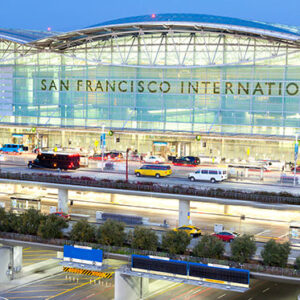
I boarded Delta flight 960 at SFO and was greeted by packaged sanitary wipes, open middle seats and a baggie with a pre-packaged water, cookies and more wipes. Messaging on the seat-back screen proclaimed, “All of our aircraft are ventilated with fresh, outside air and any air that is recirculated passes through high-grade HEPA filters, which extract more than 99.99 percent of particles, including viruses such as coronavirus.” So far so good.

Norma Dean, director of specialty sales with Delta Air Lines, later joined the group and explained the company’s commitment to people over profits in these perilous times. “We are flipping Maslow’s Hierarchy of Needs on its head and attending to the psychological need to feel safe first,” she said. The company has hired sanitation officers, is retooling restrooms with self-cleaning treatments as part of a partnership with Lysol, and is making cleanliness protocols just as important for safety as the operation of the aircraft.

Once on-property at Naples Grande (83,000 sq. ft. total indoor and outdoor function space), registration was as easy as finding my name on a table that included my name badge, a safety kit from Boundless Collection with a pair of branded masks, more sanitizer and a face moisturizing mask to combat all the chemicals.

Act 2: Meeting the Ensemble

The opening session was short on pre-dinner cocktail time and sprinkled with the storytelling that would be the theme of the event. An icebreaker phone call in advance with Vicky Hettleman, senior vice president of sales with ALHI, and a subgroup that would be seated in the same area, ensured everyone knew a handful of other people and could have a meaningful discussion.

While all the diagrams I had seen of 72-inch rounds with three lonely little chairs poking out seemed sterile, special touches made all the difference. Low, floral centerpieces around the talking point of storytelling allowed everyone to see eye-to-eye.

It occurred to me that when the same table hosted 10 people, most conversations involved only the couple of people immediately around me. And I always wondered if those seated across the way were having more fun than me. Triangulating like this actually seemed more intimate, in a way.

Savory Mediterranean-themed food from Chef Ali Bader spiced up the evening even more.

Act 3: Untamed Encounters
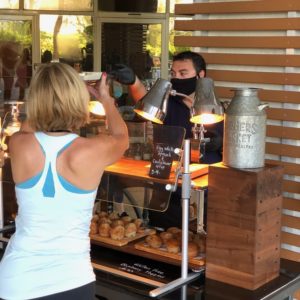
A surprisingly large percentage of the group was up bright and early to start off the next day with a poolside stretch with instructor Raquel Bueno, followed by an al fresco breakfast with stations featuring individually labeled pastries, fruit parfaits and empanadas behind breath guards. We pointed, and a gloved and masked server plated and handed our selections over the top. Coffee was prepared by a dedicated barista, with a cold-brewed and traditional tap made to order and handed over with another gloved hand.

I was eager to see what the meeting room would feel like. I had seen pictures of a grid of straight-back chairs spaced out like bumpers in a pinball machine. This was very different. The light, warm space was filled by Global Works Events & DMC with a variety of comfortable soft seating, padded bucket chairs and side tables that were assigned for the duration of the conference with name tags, just as you would see a at a fancy dinner. Rugs and plants added even more warmth.

The stage was equally low and intimate, and when keynote speaker Glennan Doyle, author of the bestselling memoir Untamed, took the stage, she immediately shed her beige pumps and perched on the plush rose chair to tell her story of finding herself again at age 45. “What we need right now is more women who are full of themselves,” she declared. Her message obviously connected with the women in the room.

“We have to learn to trust our gut,” Doyle said. Nodding all around.

That conversation was followed by an interactive session with personal coach Brenda Bertrand, who helped us break into even smaller groups (masked-up when not in our personal spaces) and reflect on our losses, celebrate the gifts the global pause has given (yes, we identified some important ones) and identify what is worth pursuing in the future.

Act 4: Safe Dining
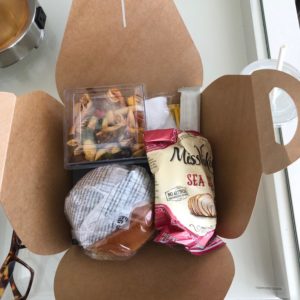
I think everyone is trying to figure out what upscale, sanitized food service will look like. The night before, we saw plated service in the conference space and would get another taste of it at a private event that took over the hotel’s signature restaurant, The Catch of the Pelican. Lunch was outside, a grab-and-go with style. Prepackaged sushi, tempura shrimp and herbs were appealing to the eye and palate. The line was staggered to avoid bunching up. We picked up the packaged goods and found a place, three to a table again.

Even the group photo was staged so everyone could stay in their safe spaces and be photographed in the round from the stage. As we struck a distanced pose, I realized I had been holding my breath all this time. I had wondered if it would feel strange to be around a group of people. And would we have the discipline to do the right thing?

But these women understood the importance of compliance and the significance of taking baby steps, so they can report back to their clients about what worked—and what didn’t.

Someone had to go first.

RSVP for Your Return to Meetings

The Smart Meetings team has been buying acrylic sheets by the pallet and is getting ready to put all the lessons to work that we have learned reporting on safety and hygiene protocols for the last seven months. We will host a pair of events in September. Smart Meetings Experience Colorado is Sept. 28 at The Ritz-Carlton Denver, followed by The Smart Woman Summit on Sept. 29. These boutique experiences will showcase upscale, contactless F&B, safe one-on-one meetings and an intimacy borne of sharing ideas, rather than close quarters. Register on SmartMeetings.com today to see for yourself how to get your group back in the ballroom.
 

On Friday, Eldorado Resorts announced it had received all regulatory approvals required to complete the purchase of Caesars Entertainment Company, a $17.3 billion deal that will create the largest casino and entertainment company in the United States. The combined company, which will adopt the Caesars name, will now own and operate more than 55 casino properties globally, including eight on the Las Vegas Strip with extensive meeting space. The company will be headquartered in Reno, Nevada, where Eldorado is based.

Caesars owns or operates casinos and resorts in 16 states, including Nevada, Colorado, Missouri, Iowa, Florida, Mississippi, Louisiana, Ohio, Illinois, Indiana, New Jersey, Pennsylvania, Arizona, North Carolina, California and Maryland. Most operate as Caesars, Harrah’s and Horseshoe brands. Eldorado owns and operates 21 properties in 11 states and counts more than 11,200 hotel rooms, including Silver Legacy Resort Casino Reno, Circus Circus Hotel Casino Reno and Tropicana Atlantic City.

In making the announcement, Caesars Entertainment CEO Tom Reeg pledged to “welcome all team members” to the combined company and extend Caesars Rewards loyalty program, which counts 60 million members, to all the newly joined properties. He also highlighted the company’s longstanding commitment to corporate social responsibility and promised an even greater emphasis on diversity and inclusion programs, as well as gender-equity initiatives.

The deal, which includes assumption of debt, was announced in June of 2019 and took more than a year to win governmental go-ahead. Since the announcement, both companies have had to deal with effects of shutdowns to slow the spread of COVID-19, which delayed the opening of Caesars Forum, a 550,000-square-foot conference center that welcomed its first guests in July after properties in Las Vegas reopened in June. In the interim, Eldorado Resorts sold Montbleu Resort Casino and Spa in Lake Tahoe and Eldorado Shreveport Resort and Casino in Louisiana.

The final approval needed came from New Jersey Casino Control Commission.

In these uncertain times, who wouldn’t want to reduce unwelcome surprises and enjoy seamless planning for a return to in-person events? All-inclusives may just be what you’re looking for.

In the latest Smart Meetings Accelerator “Expert Tips for Maximizing All-Inclusive Events,” three leaders in the hospitality industry expounded on the benefits of all-inclusives, top destinations and what’s changed in this industry segment in response to COVID-19.

Ease of budget, value, flexibility, no financial surprises and overall experience for attendees are some of the incentives you and your attendees could enjoy at all-inclusive properties.

Not to mention that attendees can easily make their visit a staycation. “People that are very busy don’t have time for a vacation,” says Janek Rattinger, corporate director of group sales at Blue Diamond Resorts. “This is the perfect time to enjoy extra days at the hotel.” He points out that busy attendees can bring their family and be charged at the cheaper group rate.

Top Destinations for All-Inclusives

There are numerous all-inclusive destinations worldwide to choose from. Some of the most popular for the North American market that John Gaca, president of DMI Hotels, sees currently are Mexico, Jamaica, Dominican Republic, Costa Rica and Cuba. Top destinations for stays of four nights or more include Caribbean locations, such as Saint Lucia, Antigua, Grenada, Barbados, Tobago and Saint Martin.

“We discourage our clients with three-night programs or less to go to the [Caribbean] destinations because of the amount of time it takes [to get there]. They don’t get to maximize time on the island,” he says.

What’s Changed Since COVID-19?

All-inclusives, like hotel and resort properties everywhere, have put a lot of structure and rigor around prevention of COVID-19. And, of course, national and local governments throughout the world have established their own regulations and restrictions, which change frequently. As a meeting planner and attendee, you must keep up to date with these—and mindful that where you’re coming from may affect your ability to be admitted at all, or without quarantining.

All-inclusives are also seeing virtual site inspections gain popularity. “Sometimes, people don’t have the ability to travel down to our destination, especially those that need to stay overnight,” Rattinger says. “We normally invite the general managers to conduct the virtual site inspection, and this can be live or even recorded, and it will always be [tailored] to the group needs. It will not be a generic inspection. It will be strictly to the points that are of interest to the group.”

Another change these resorts are currently seeing is room butlers and possibly other staff staying overnight to limit outside exposure. “We have high-level clients. They don’t want to interact with people who are interacting with people outside the hotel, so hotels are being proactive. These staff members are not on a 24-hour call right now, but they will be available from 7 p.m. to 9 p.m., or whenever it is required,” Rattinger says.

Pre-COVID, all-inclusive resorts typically offered multiple dining options every day. Many resorts are now alternating opened restaurants so they can properly clean and sanitize those that are closed.