By any measure, March was devastating for the hospitality industry. San Francisco Travel Association reported at its Annual Visitor & Lodging Forecast Forum, which was streamed this morning, that international visits—the most lucrative segment of the travel sector—were down 67 percent. RevPAR (revenue per available room), airline flights and hotel occupancy posted similar declines. But all is not gloom and doom. As early as April, those numbers started bouncing back, according to Adam Sacks, president of the hospitality analytics company Tourism Economics.
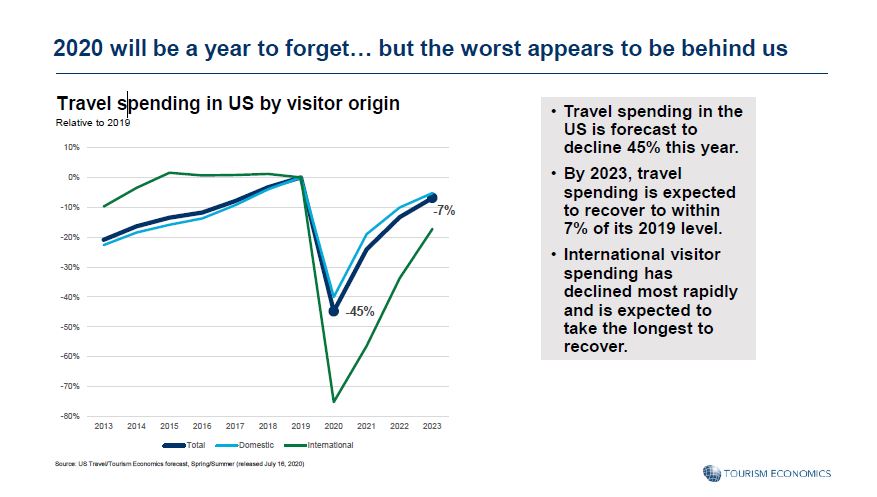
“We are in the midst of a recovery, even if it doesn’t feel like it,” he said. Many of the losses recovered to about 50 percent of normal and hit a bit of a plateau, in anticipation of news such as a treatment or a vaccine that would get people traveling again, he said. “The good news is that once travel resumes, we can recover quickly because there is pent-up demand.”

Sacks described a return to growth that starts with domestic tourists (San Francisco and Los Angeles will be the largest markets in California for the short-term), expands to small meetings and essential business travel in Q1 of 2021, then to international visitors and larger meetings in Q2 of 2021. Revenue numbers could slowly ramp up to 2019 levels by 2024.

Meetings are essential to the recovery,” he said.
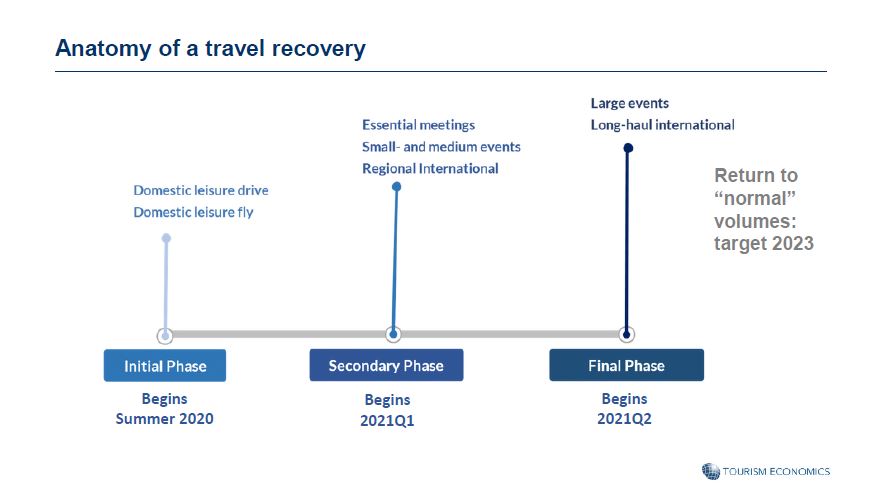
The future could be even brighter, he predicted. The company models different scenarios based on the possibility of a second wave of the virus, government relief and other factors and then rates them with different probabilities. The most probable in Sacks’ estimation is that the San Francisco Bay Area will experience a 4.2 percent decline this year and a 3.9 percent increase in 2021. One of the factors that will determine the trajectory of the industry is the ability to replace lost international room nights with domestic stays.

On the other side of the country, Greater Miami Convention & Visitors Bureau reported similar results, with the percentage of hotel rooms sold in Miami-Dade County hitting a low of 13.6 on April 10, and floating up to 41.1 on July 2, according to data from STR.

Corporate Confidence
Marriott International CEO Arne Sorenson had a similar message for investors in the public company’s earnings call this week. “The worst is now behind us,” he said after reporting that global RevPAR dropped 84.4 percent (69 percent in North America) in the second quarter. “Since April, occupancy levels have increased each month in every region around the world, albeit at varying rates,” he reported. “There’s still no visibility around when RevPAR could return to 2019 levels; however, the global industry trends experienced over the past couple of months give us confidence that people will continue to increase their travel.”

Only 9 percent of Marriott properties worldwide are closed, down from a high of more than 25 percent in April. Occupancy rates are now averaging above 30 percent.

Marriott executive vice president and CFO Leeny Oberg was optimistic about hotels reopening. “So far, we’ve seen really strong capabilities on the part of the owners to be able to find access to the liquidity they need to keep the hotels going,” said Oberg.

Similarly, Hilton Worldwide Holdings, Inc. President, CEO and Director Christopher J. Nassetta reported last week that the brand experienced 81 percent overall RevPAR declines. Yet nearly 80 percent of the properties that closed have reopened, including all hotels in China and the majority in the United States.

“In terms of demand, we’re seeing meaningful improvements off the lows in April, with monthly sequential increases throughout the quarter and into July,” he said. System-wide occupancy rebounded from a low of roughly 13 percent to approximately 45 percent currently, with all major regions improving.

Tellingly, in Asia Pacific, both leisure and business travel are rebounding and occupancy is now more than 60 percent.
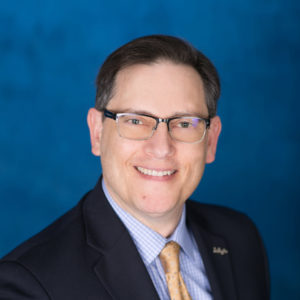

Adam Burke

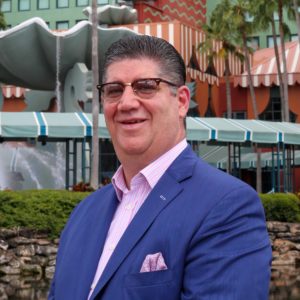
Los Angeles Tourism & Convention Board appointed Burke president and CEO. He was named interim president and CEO in April after Ernest Wooden Jr. announced his retirement. Burke joined Los Angeles Tourism in 2016 as chief operating officer. Before that, he worked as senior vice president of customer loyalty for Hilton Worldwide.

Dina Fenili Niekamp

Niekamp is director of brand and marketing for Miraval Resorts; she will oversee operations for Miraval Arizona in Catalina; Miraval Austin; and Miraval Berkshires in Lenox, Massachusetts. She recently worked as director of sales and marketing for Kimpton Gray Hotel in Chicago.

Sean Verney

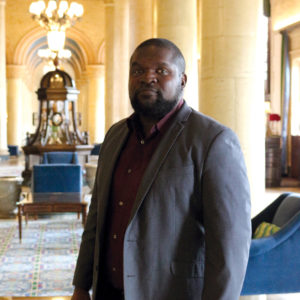
Walt Disney World Swan and Dolphin Resort named Verney area general manager. He spent the last decade as general manager for numerous hotels in New York and New Jersey, including Sheraton Parsippany Hotel, Westin New York at Times Square and Sheraton New York Times Square. In 2017, Marriott named him Eastern Regional General Manager of the Year.

Debbie Glenn

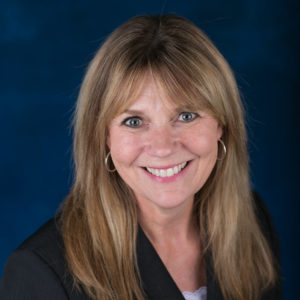
Glenn is national sales director for Long Beach Convention & Visitors Bureau. Her hospitality career began with Canadian Hotels & Resorts in Toronto, Canada. For the last 14 years, Glenn worked as sales director for Los Angeles Tourism & Convention Board. Glenn was also in sales for Wyndham Baltimore for nine years.

Sam Francois

The Biltmore in Coral Gables, Florida, named Francois director of marketing and communications. Before The Biltmore, Francois was director of ecommerce and onboard marketing for Carnival Cruise Line. He’s received numerous accolades, such as the IAMCarnival Leader Award and Product Launch of the Year from Wire and Cable Magazine.

Carmine Iommazzo

Iommazzo is general manager of The Westin Anaheim Resort, slated to open in October. His experience spans across the United States and Australia, and he recently worked as general manager for The Kahala Hotel and Resort in Honolulu and Makena Beach & Golf Resort in Maui.

Pennelope Wright

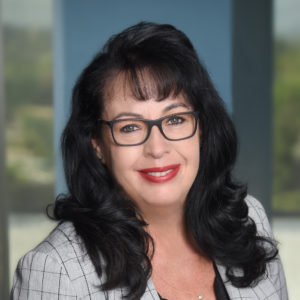
Pennelope will work as assistant general manager for The Westin Anaheim Resort. Previously, Wright was general manager for La Quinta Inn & Suites by Wyndham LAX, in Los Angeles, and director of operations for Hyatt Regency Los Angeles International Airport.

When hosting a physical event for executives, the emphasis is often on creating a relaxing atmosphere where C-level leaders feel comfortable enough to share their thoughts and experiences. Exclusive environments in private dining rooms with the finest wines featuring key participants make the networking opportunity valuable for all participants.

Now that all that interaction had to be moved online, Hannah Hodkinson, marketing director at The Ortus Club, which produces executive knowledge-sharing discussions around the world, had some suggestions for how meeting professionals can use the same elevated attention to detail to engage a time-strapped audience.

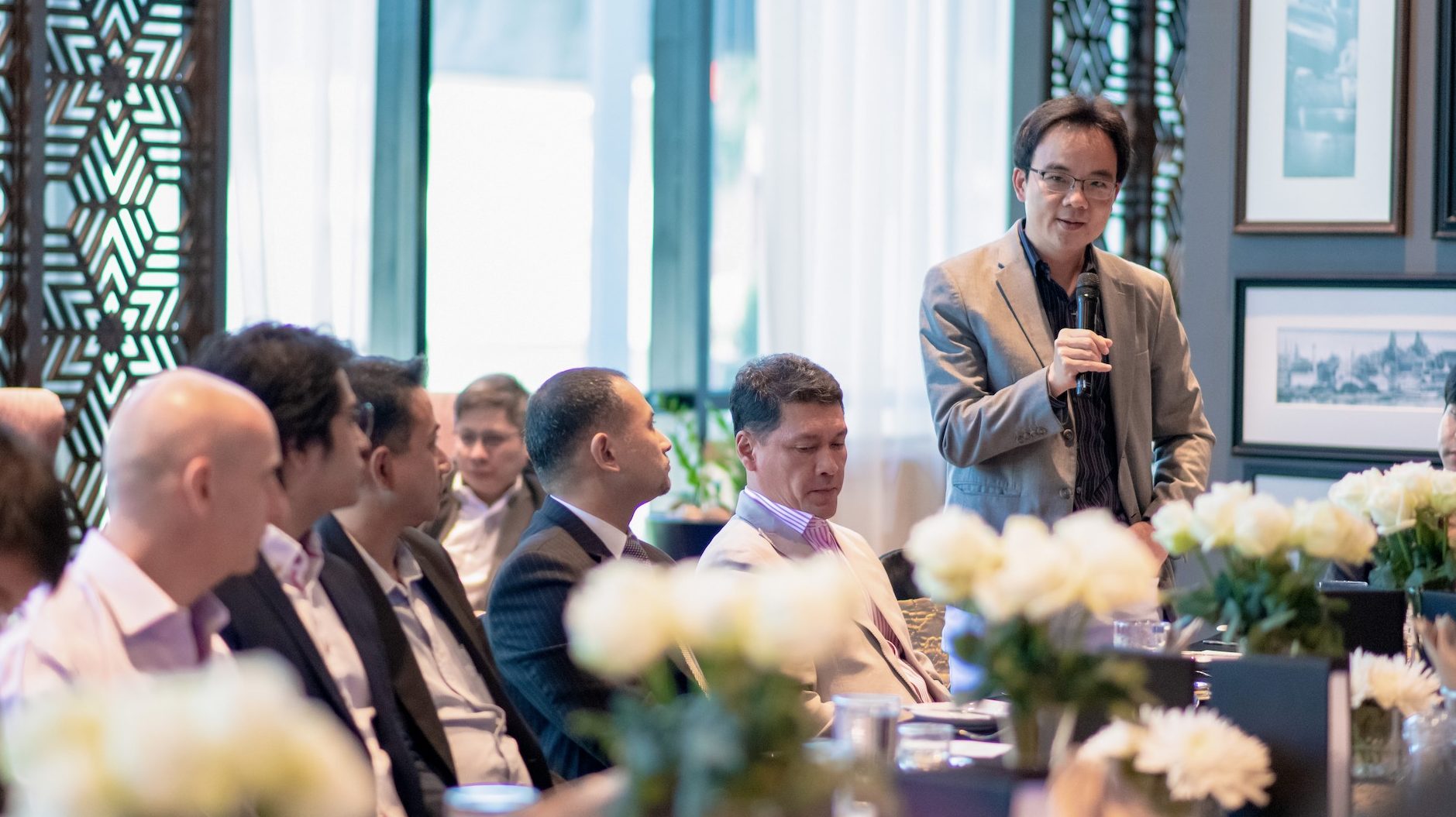
The RPA Luncheon in Bangkok in November, 2019

Different ways of engaging c-level audiences for physical and virtual events:

Physical Events Virtual Events
Cocktails and canapes Icebreakers using platforms such as Kahoot
Welcome packs on each seat (brochures, name tags and menus) Welcome packs sent via mail (virtual roundtable guidelines and postcards)
Social media engagement (Posts after each event, LinkedIn groups, etc.) Social media engagement (Posts after each event, LinkedIn groups, etc.)
Photographer or videographer at the event Live illustrator taking meeting minutes
Brainstorming on whiteboards Brainstorming on Zoom Pen and Paper
Moderator moving around the room Live polls
Physical gifts during the event E-gifts and charity donations

After the initial lockdown and the wave of events cancellations and postponements, The Ortus Club worked fast to turn things around, proposing virtual event options to all their clients.

Read more about Virtual Icebreakers.

Although virtual events have been functional for The Ortus Club, they too have experienced firsthand the challenges that come along with them. A shorter and stricter program, the need for more planning time, a decreased engagement and personal touch, and the need for more staff—just to name a few. This is what Hodkinson has learned:

Staff up

Virtual events required double the staff to manage the numerous technical tasks, stricter agendas and participants seeking assistance. The Ortus team grew from 12 to 28 people in only 2 months by hosting multiple virtual interview sessions.

Shorter and stricter programs

Ortus had to revise their program to last no longer than 1 hour sharp, adapting to participants’ busy schedules. Presentations and long monologues were entirely removed from all events, and the focus remained on the actual knowledge-sharing discussion.

More time for event preparation

Each country brings different connectivity and platform restrictions, requiring every virtual event needed to go through a dry run with the client to ensure that the presentation, platform and time allotted was produced perfectly.

Innovative guest engagement

Keeping guests engaged virtually is much harder than holding their attention in real life. Ortus quickly came up with features to replace their usual cocktails and canapes to keep people entertained. Live illustrators, personalized waiting rooms, interactive breakout rooms, challenging polls and fun icebreakers were added to each discussion.

Personal touches

The Ortus Club started sending out physical welcome packs to each participant, elegant booklets containing explanations on how to access the event, what the timeline would look like and further details about the topic. The package can also include gifts such as wine, tea or chocolates!

What does the future event landscape look like? Virtual events allow guests to participate from the comfort and safety of their homes, anywhere in the world. Physical events leave behind strong connections and fond memories that build relationships over time. So, particularly for executive events, combining both will be the new norm.

Learn more about knowledge-sharing discussions with The Ortus Club by emailing [email protected]

With incentive travel on hold right now, it’s time to dial up the dreaming of what the future holds. Business Events Australia has just the thing. Meet Australia Next, Australia’s new magazine packed to the brim with inspiration to plant the seeds for future incentive trips Down Under.  From supporting the native wildlife to underwater hotel suites on the Great Barrier Reef and Australian culinary inventions which make foodie headlines, let’s take a peek at some of the ideas inside.

Things that make you smile: Adopt a wild koala

During the heat of Australia’s bushfire crisis last summer, many wildlife organisations, including the Port Macquarie Koala Hospital in regional New South Wales on Australia’s east coast, provided essential assistance in triaging and sheltering vulnerable animals. Run by a team of dedicated volunteers, the Koala Hospital relies on outside support. “Adoptions through the ‘Adopt A Wild Koala’ program play a vital role in our ongoing fight for wildlife conservation,” says President Sue Ashton. Through an online adoption, your team will be able to support the care of a sick or injured wild koala. A worthy cause to help these furry Australians get back on their paws.

Things that make you Instagram: Reefsuites, Great Barrier Reef

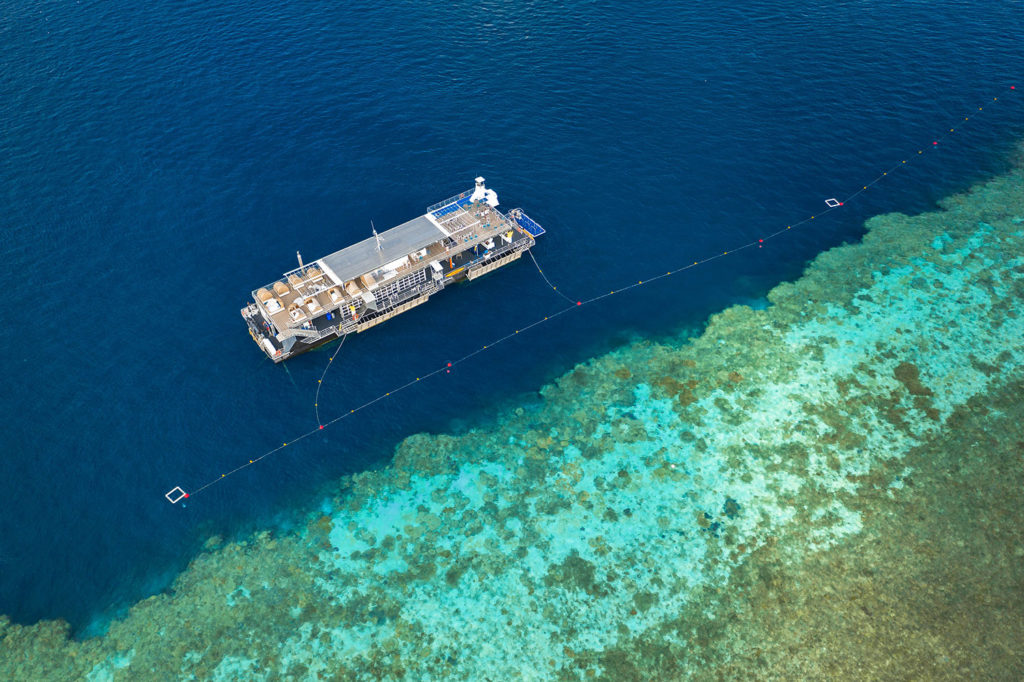
The team at Cruise Whitsundays has revamped and re-launched a unique and exclusive eco-experience that will send your camera into overdrive on the Great Barrier Reef. Reefsuites is Australia’s first underwater ocean accommodation that has you sleeping 13 feet below the surface on Hardy Reef, located 40 nautical miles off the tropical Queensland coast. The two suites can accommodate a maximum of four people and offer underwater windows onto the fish and green sea turtles darting below. Above deck is an expansive pontoon where you can enjoy your all-inclusive meals and drinks packages. On the deck, there are 12 Reefsleep luxury Australian bedrolls – also known as swags – for a night under the stars. Stays include a guided snorkel and semi-submarine tours. Helicopter transfers are available upon request.

Dishing Up: Quay, Sydney

What’s new

  • One of Australia’s most famous restaurants has reopened following a AUD4 million reinvention.
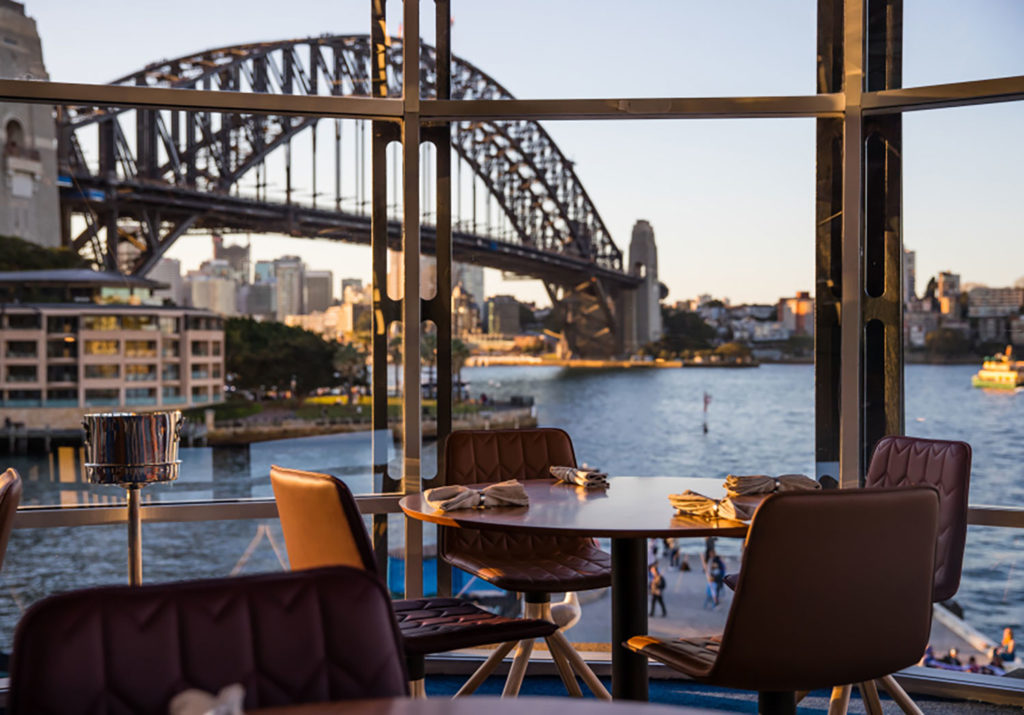
  • Located at Circular Quay, every seat in the house now offers views of the Sydney Harbour Bridge and/or the Sydney Opera House.
  • Australian celebrity chef Peter Gilmore has replaced his signature Snow Egg dessert with a new creation, White Coral.
  • Quay was named 2019 Restaurant of the Year in the Gourmet Traveller (Australian magazine) Restaurant Awards.

The vibe

  • “Ultimate bragging rights”
  • Digital artwork, Australian timbers, stingray leather room dividers and deep blue carpets create a refined, quiet space in which to savour the degustation menus and harbour setting.

The space

  • Private dining room for up to 10 seated guests.
  • Upper Tower, for up to 20 seated guests, with floor-to-ceiling windows to take in the panoramic views.
  • The Green Room seats 100 guests or 180 for a cocktail event.

Good to know

  • Wait staff are assigned no more than three tables, to ensure attentive service.

Read the digital edition of Australia Next now or email Business Events Australia to receive a printed copy delivered directly to your door.

On Tuesday, Marriott International released new resources for getting back to meetings that Tammy Routh, senior vice president of Global Sales at Marriott International, called a combination of expert guidance and meetings industry insight.

Confidence Builders

The resources now available on MarriottBonvoyEvents.com include animated videos of an event planner’s journey, best practices to help hosts, organizers and attendees plan and execute meetings. The goal is to help everyone feel comfortable about stepping back into the ballroom, or as Routh says, “connect with confidence.”

“Marriott International continues to work in collaboration with industry organizations, such as the Events Industry Council, to find ways to instill trust and confidence in meetings and events,” said Routh. “We look forward to welcoming back customers and guests for the exceptional experiences that our company is known for in a safe and clean environment.”

Expert Guidance

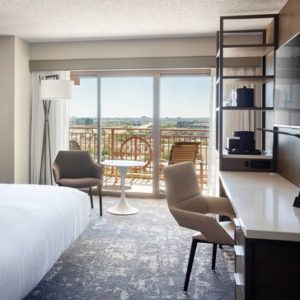
Marriott Phoenix

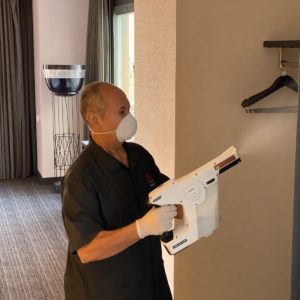
In April, Marriott released its Commitment to Clean guidelines that focused on hygiene and infection prevention operations in the hotel public spaces and guest rooms. The measures, such as enhanced, hospital-grade disinfectants and electrostatic sprayers, were developed by a newly appointed Marriott Global Cleanliness Council. It included in-house and external experts in areas including hygiene and infection prevention, who have been working to develop a new generation of global hospitality cleanliness standards, norms and behaviors for our more than 7,300 properties around the globe.

The Council is chaired by some of the company’s top leaders including Ray Bennett, chief global officer. Also giving input as advisory members are Dr. Ruth L. Petran, senior corporate scientist for food safety and public health at Ecolab; Dr. Michael A. Sauri, infectious disease specialist at Adventist Healthcare; Dr. Richard Ghiselli, head of the School of Hospitality & Tourism Management at Purdue University; and Dr. Randy Worobo, professor of food microbiology in the Department of Food Science at Cornell University.

Enhanced Meeting Guidance

covid-19
Marriott

The Council’s practical understanding of how meetings and food service play out in the real meetings world was applied to guidance from Centers for Disease Control and Prevention to develop the resources distributed this week. Because infection rates and policies are different in different areas of the world, the guidance was varied to fit the reality on the ground.

In North America, the Caribbean and Latin American, Marriott requires associates and guests to wear face coverings. Seating capacities have been reduced to meet local government regulations and outdoor venues are encouraged. As part of more in-depth cleaning protocols, high-touch areas such as elevator buttons, doorknobs, and handrails will be disinfected as often as every hour. Hand sanitizer stations are provided throughout meeting spaces.

F&B Best Practices


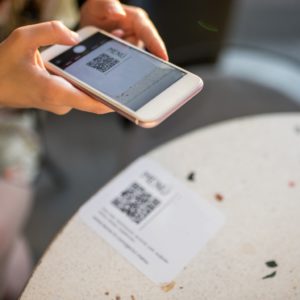
Redesigned food and beverage experiences follow recommended standards of service and food safety. Both meals and breaks are to be set in dedicated, socially distanced spaces reserved for a specific event and its attendees to prevent co-mingling with other groups. Catering menus are also being adjusted to include a selection tailored to group size, including new options for individually pre-packaged meals, canned and bottled beverages, and plated service. Buffets will also be modified to include servers, shields, hand sanitization and queue management. Hotels are also leveraging technology and digital solutions to create contactless service where appropriate, such as the use of QR codes and digital menus. Non-essential items, such as linens, pre-set plates and glassware and decor will also be removed.
As the situation changes, the guidance could be updated to reflect variations in best practices over time. “The pandemic has reinforced our organizational belief that success is never final. We will continue to innovate and test new methods to provide the best possible experience for our customers and associates,” Routh said. “As things evolve, we’re also staying in close contact with our customers to understand their needs and continually looking for ways we can address them.”

Inspiring Stories

marriott

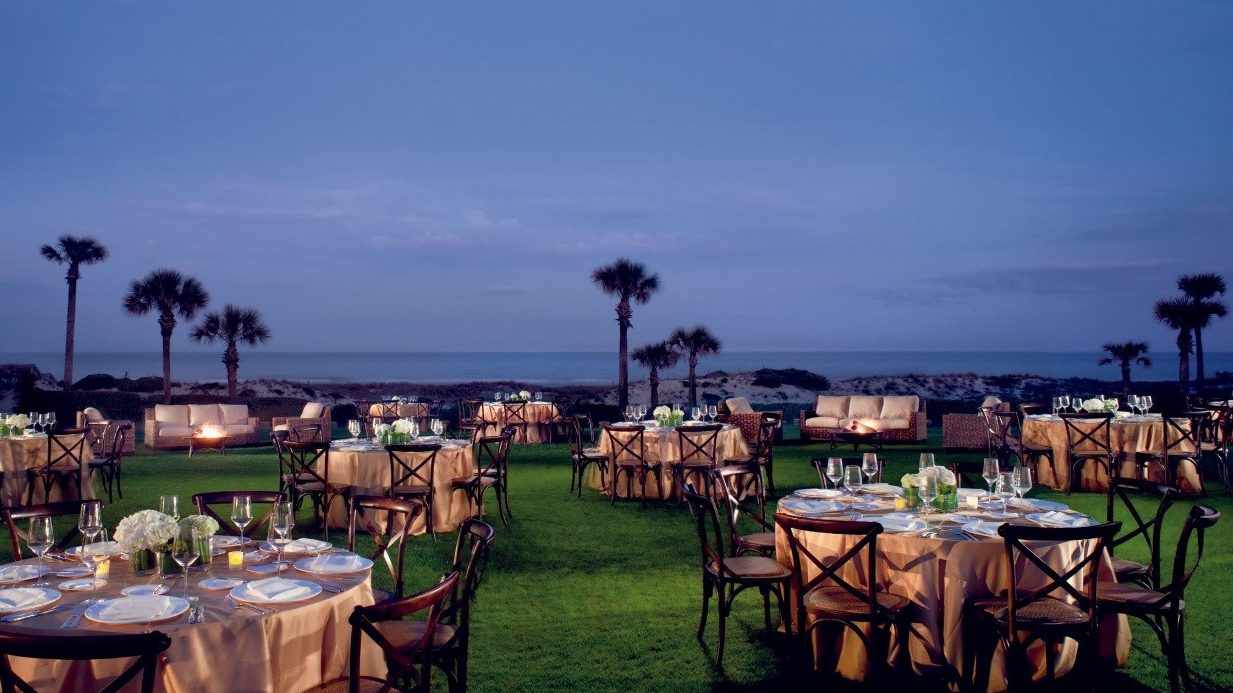
To make it even easier to envision what a physically distanced, but socially connected event might look like, the MarriottBonvoy site includes an Inspirational Stories area with case studies and testimonials to demonstration of best practices. For example, The Ritz-Carlton Amelia Island recently held an association meeting which employed many of these enhanced offerings and guidelines including a virtual board meeting, physically distanced ballrooms, chef-attended action stations behind plexiglass shields and plated and served meals and the introduction of digital programs (in lieu of paper documents). A popular bourbon tasting event was directed by signage, stanchions and floor clings leading to an individual taste experience with the distiller. The group also worked with the resort to move some of their larger events to Ocean Front Lawn with views of The Atlantic.

Scott Berglund, director of meetings and special events with the property saw the adjustment as a net gain for the event experience. “Outdoor venues can wow guests and provide a comfort level to attendees who will appreciate having more space to leverage during an event.”


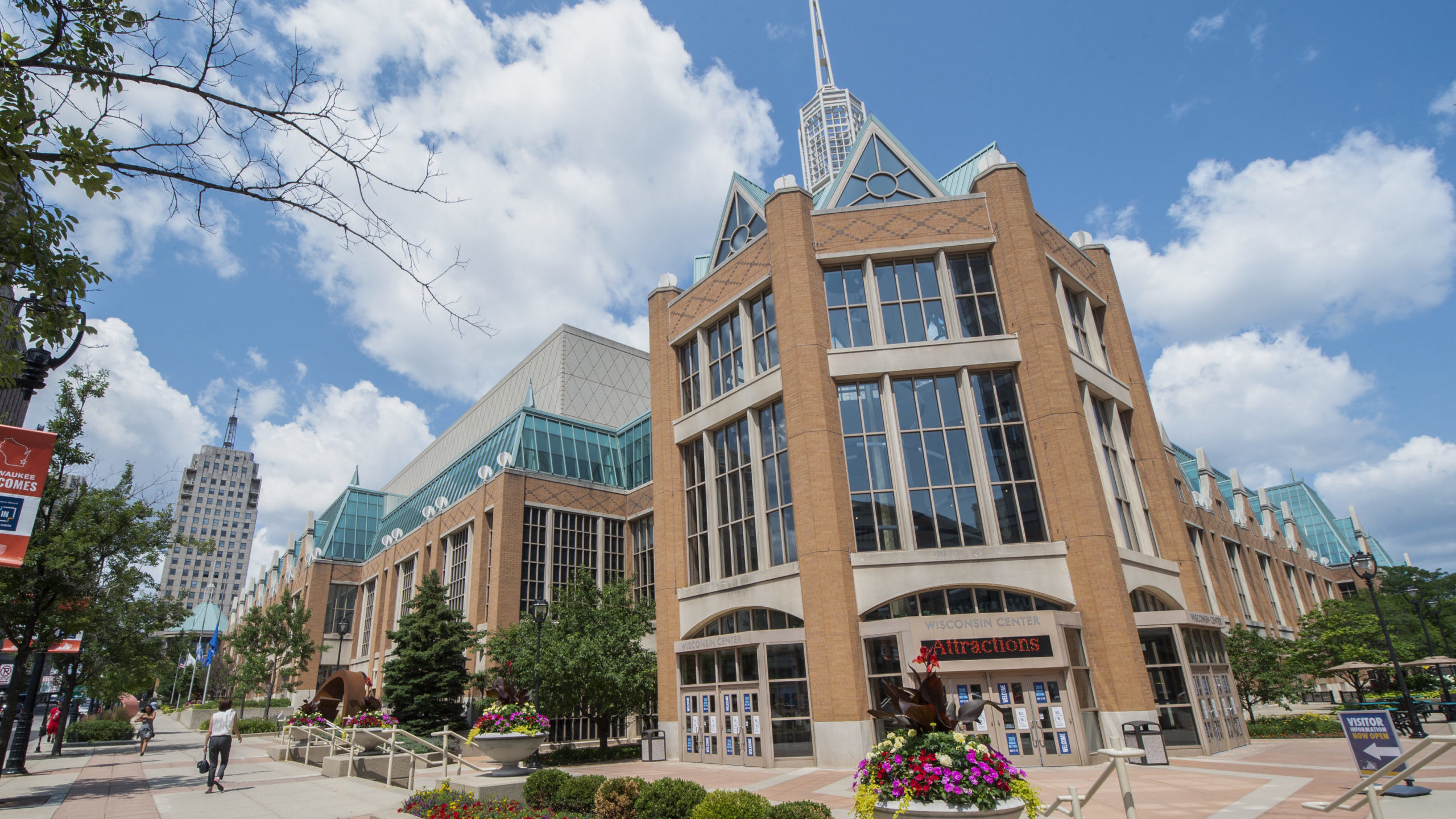
With a $420 million expansion approved and the Democratic National Convention (DNC) on the horizon, 2020 was off to a strong start for the Wisconsin Center District (WCD). Milwaukee and the WCD were poised to be featured on national and international stages—it was a big opportunity. Then COVID-19 hit and the world as we knew it changed dramatically. How could we forge ahead with a major expansion project and a huge event in the middle of a global pandemic? By staying true to our vision, we are making it happen.

Employees Bring Vision to Life

Marty Brooks

When I started at the WCD in 2018, my main focus was to breathe new energy into the organization and implement industry-wide best practices. I knew that this focus would be an evolution over time, and I knew that I would only be successful if I started with the staff. Employee engagement became my top priority. Employees are our most important asset, especially in the hospitality and entertainment industries. As the first faces that greet visitors when coming to the convention center, arena or theater, they are responsible for creating experiences our guests won’t forget. A lot rests on their shoulders. I wanted employees to be proud of where they work and look forward to coming to work each day. That same energy needed to be felt by our visitors too.

I distilled my vision for the WCD and our employees into three key pillars—Be Bold. Be Proud. Be Experience Obsessed. Over the last year, our employees embraced this vision and truly brought it to life in the services they provide to our visitors. You could feel the energy and excitement at any event we hosted and we received positive feedback from our board and guests.

Tremendous Highs and Devastating Lows

After winning the bid to serve as a venue for the DNC and securing board approval for the expansion, 2020 was shaping up to be one of the biggest years ever. Then the pandemic hit and I faced the most challenging financial landscape of my over 40-year career. We were forced to close all three of our venues—The Wisconsin Center, Miller High Life Theatre and UW-Milwaukee Panther Arena. To date, more than 90 events have been postponed or canceled.

Safety Is Part of the Experience

Wisconsin Center

In late June, we received news that the Wisconsin Center would be the exclusive venue for the now reimagined DNC in August. This announcement gave us a concrete timeline to begin planning and bringing our staff back to the office. The safety of our staff and guests is our top priority. We spent Q2 speaking with local and national industry partners and health officials to develop a comprehensive and thoughtful plan for reopening our facilities. Our COVID-19 Readiness Guidelines include, but are not limited to:

  • All cleaning staff received detailed training on pathogen remediation and proper use and disposal of personal protective equipment.
  • Employees are required to complete training sessions on guidance related to COVID-19 prior to first shift back to work.
  • An even higher-frequency cleaning and disinfecting protocol for all surfaces, equipment and technology has been established. Previously, cleaning would occur before and after an event. Now, cleaning will occur hourly, even during events, while working closely with clients to ensure planned activities are not disrupted.
  • We have purchased electrostatic Clorox 360 cleaning equipment which disinfects all sides of surfaces, killing 99.9 percent of bacteria within 5 seconds.
  • Staff will complete a daily health screening and temperature reading prior to starting work in any of our facilities.
  • During the DNC, all staff will be tested at the client’s request.
  • All cleaning staff within the facility will be required to wear a hospital-grade face mask or face shield and nitrile gloves. And due to state and city masking policies, all staff are require to wear cloth face coverings inside the building.
  • All food service staff will be required to wear eye protection, face masks and gloves at all times.

Bold, Proud and Experience Obsessed—In-person or Virtually

Milwaukee has an opportunity to capitalize on the global spotlight of the DNC. The convention will introduce Milwaukee to entirely new audiences. While DNC representatives and guests will be joining us virtually, we want to make it a memorable experience and ensure that they feel welcome. We have the added challenge of bringing our vision to life for people who are not stepping foot in our building. In partnership with Visit Milwaukee, our convention and visitors bureau, we are working to make sure the city comes across as beautiful on the screen as it does in person. I am confident in our ability to show the nation that we are bold, proud and experiences-obsessed—no matter the scale of events that take place in our building or virtually.

This time in the spotlight will open doors that haven’t been opened before. We have the chance to show off our city and all that it has to offer through all forms of media including video, live stream, print, social and more. As people watch the convention from the comfort of their homes, we want them to remember the WCD and Milwaukee.

Seizing an Opportunity

The WCD has a tremendous opportunity to demonstrate our leadership in the hospitality industry. We’re hosting one of the nation’s most notable events since the beginning of the pandemic with a new set of standards in place. With the hard work and planning that has gone into the DNC, we can show others how to successfully host a large-scale event live, virtually and work with national safety experts to protect employees and visitors alike. Hosting the 2020 DNC is a huge honor and our team is dedicated to making it an unforgettable event.

Marty Brook is president and CEO of Wisconsin Center District.

What’s America’s longest-running sporting event? Nope, not America’s Pastime, baseball (though its critics say every game is the longest-running sporting event.) It’s the Kentucky Derby, which would have been held in May for the 145th year. Until you-know-what happened.

But Sept. 5, it’s off to the races again, coronavirus version.

There will be crowds in the stands at Louisville’s storied Churchill Downs. Ladies will don their fascinators and other fancy hats. Mint juleps will be in evidence.

And yet.

The crowd size will be reduced to less than 23,000 fans, with reserved seating only. That’s 14 percent of the record crowd of 170,513 in 2015.

Face masks will be mandatory. Fans will be provided a mask, hand sanitizer and a personal stylus pen to use at betting terminals.

Guests and staff will answer medical questionnaires and be temperature-screened upon entry.

Fans will be restricted to the section in which they are seated, with hundreds of floor decals and signs to remind about social distancing and mask usage.

Pre-set served meals will replace self-service food. Beverages will be served with wrapped straws and bartenders will not open cans upon serving them.

There will be no red-carpet entrance for celebrities.

https://www.facebook.com/KentuckyDerby/videos/1173507649691590/

The final Derby plan was produced in consultation with Gov. Andy Beshear’s office and state and local health officials, Churchill Downs said.

This marks the second time in Derby history that it has been delayed from the traditional first Saturday in May. The first time was during World War II, when the race took place in June following Germany’s surrender to the Allied Forces.

Because of all the new rules and restrictions placed on this year’s Derby running, perhaps it’s only fitting that Tiz The Law, who won this year Travers Stakes by more than five lengths, is the early favorite to take home the winner’s purse.

Americans are feeling a little better about travel, according to the most recent study by Destination Analyst. Every week since March 15, the company has surveyed more than 1,200 U.S. travelers about their thoughts and feelings regarding travel.

The latest study reports increased enthusiasm, driven by younger travelers, for near-term travel and an openness to travel at levels last seen in early June; concerns for safety have seen a slight decrease, and there was a small increase reported in travel readiness.

While staying safe from illness remains a priority for Americans of all ages, many younger travelers are placing higher emphasis on tending to psycho-emotional needs, such as escaping stress, and finding emotional well-being, happiness and relaxation. Baby boomers are placing less emphasis on those. The study found that, overall, six in 10 believe that planning a vacation sometime in the next six months would bring them happiness.

When asked if they would avoid any aspects of travel, such as crowded destinations, areas hit hardest by the virus, cruises and air travel, respondents are less wary than in a few months ago, according to the study. When asked how they would feel if their desired destination required mask-wearing, 67.4 percent responded they would be “happy” or “very happy.”

Almost three-quarters (74.1 percent) of respondents said they have “somewhat developed” plans for travel, yet one-third of those surveyed said they will need a lot more time before they’re ready to travel again, and 30.1 percent don’t see air travel in their future until “sometime later in 2021.”

Despite being hotspots of coronavirus cases in the United States, beach destinations such as Florida (17.9 percent), Hawaii (13), California (12.8), as well as the urban lure of  New York City (12.1), are the destinations respondents would most like to travel to in the next 12 months. Other top destinations include Colorado, Arizona, Alaska and Texas.

The percentage of American travelers with plans to attend a convention, conference or other group meeting between now and 2021 remains small (14.1 percent), but more than half (60 percent) of this cohort say such travel will take place this year. More than half (57.9 percent) of convention travelers trust their fellow attendees to behave in a way that will prevent the spread of coronavirus.

Sentiment is a little more positive in Europe, according to a poll by Global Business Travel Association (GBTA) which found that 70 percent of their European members expect domestic travel to return in the next 2-3 months, as compared to 26 percent in North America. European members are also more likely (20 percent) to expect international travel to resume in the next 2-3 months than their North American members.

It is time to recognize your favorite property or destination by nominating them for Smart Meetings’ 17th annual Platinum Choice Awards. This prominent awards program honors remarkable standards of excellence in service and amenities, including ambience, amenities, breadth of resources, facility quality, guest services, recreational activities, dining options, technical support and more.

Did the staff at a hotel or CVB exceed expectations and elevate the quality of your event—or save you from possible disaster? Tell the world about them by submitting their name now. Editors will review your descriptions and feature the stand-out winners in the December edition of Smart Meetings print and digital magazines. The cutoff for nominations is September 30, so share your favorite partner today and you will be automatically entered to win one of three $100 gift cards.

Learn more about last year’s winners of the 2019 Platinum Choice Awards.

Someone had to be first. While everyone else is talking about the pros and cons of different virtual meeting streaming platforms, Imagine, Create & Celebrate (MC&A) Destination Management Company hosted a social spacing soiree July 8 for 75 guests to honor the Hawaiian island of Maui’s first responders. “The purpose of this event was to have a real, live, in-person event to show our clients how an event can work, and may look, moving forward,” said Jamie Lambert, director of sales with MC&A. At the same time, the company wanted to give back to the community by honoring 50 EMTs, doctors, nurses and members of the Maui Fire Department.

Read about an in-person event in Florida in July.

Protocols were developed based on the current national and local health safety guidelines in place, as well as industry standards. The event followed CDC restaurant guidelines and since the venue, Sugar Beach Estate, technically falls under the restaurant category, they were limited to 100 people including staff and entertainment.

pandemic

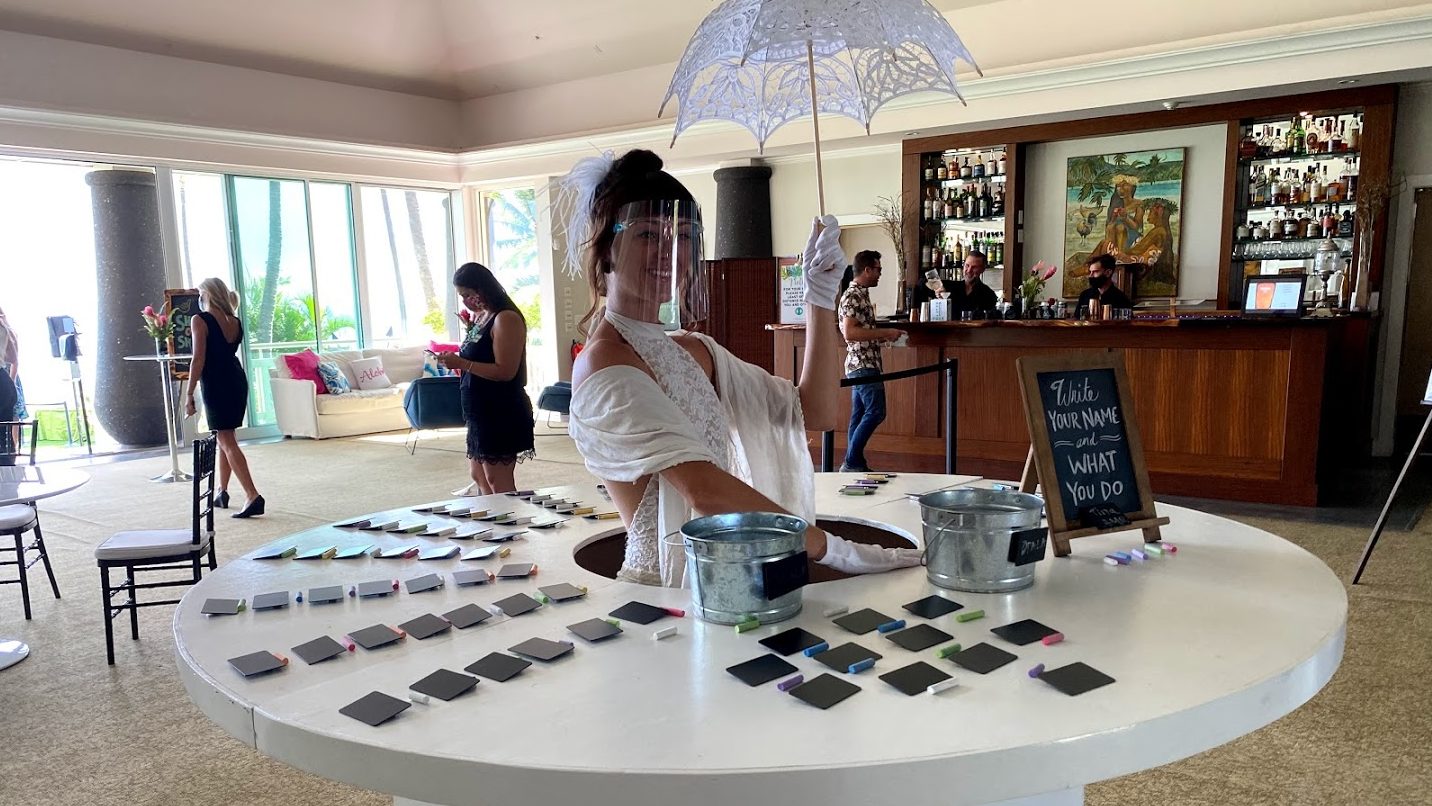
Upon arrival, guests were given thermal checks at the door and then sanitized their hands using one of the many hands-free sanitizing stations available throughout the event. Large, free-standing shelves helped to divide seating areas, yet still allowed the attendees to still see the entire event and enjoy the beautiful scenery. Linen-less tables, which allowed for constant cleaning and wiping down by the dedicated Safety Protocol Staff. Fun, custom chalkboard signage reminded guests about safety measures and social distancing. Entertainment included an aerialist performing safely away from guests, while an “undercover” Caricaturist sketched unsuspecting guests from afar!

pandemic

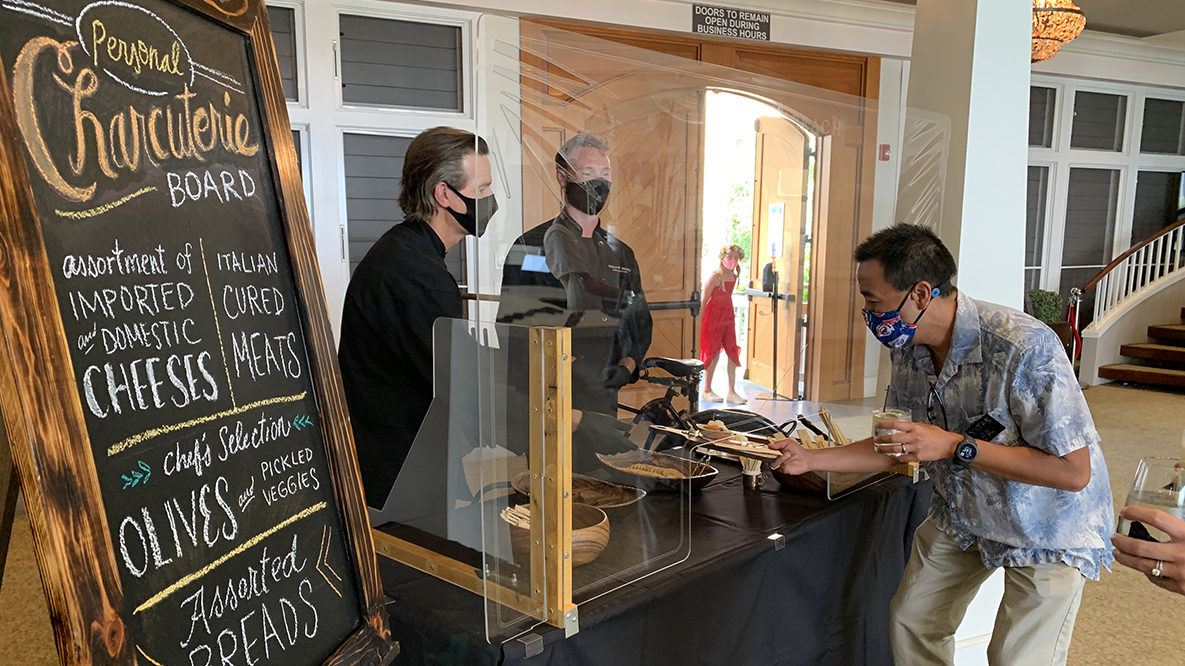
Chef/action stations were employed to hand each guest their own individual portion. For example, for the Charcuterie Station, a charcuterie plate was created by the chef station attendant for each guest and handed through the custom plexiglass divider. For the Dim Sum Station, bento boxes kept portions separated.

For the cocktail portion of the event, custom plexiglass drink trays covered the tops of the beverages and were handed out individually. Guests wore masks when moving about the event and walking to or from the bar, but they could remove them while standing or sitting at tables.