Cisco’s announcement in November that it was buying the virtual interaction company Slido may have been a foreshadowing of event tech mergers to come in 2021, including the marquee deal by online event platform darling Hopin on Jan. 7 to acquire fellow startup StreamYard. That could be good news for meeting professionals looking for new features and end-to-end solutions, according to industry experts.

In the Hopin-StreamYard example, the video technology could be better integrated in the digital platform, a win for users of both products, according to Alex Wilhelm at TechCrunch.

“This is the time where larger, more well-funded companies will buy up smaller companies that are struggling,” said industry watcher Corbin Ball. “I am surprised that there hasn’t been more of this in the past few months,” he confided.

In February, SaaS event marketing company Banzai announced that it had acquired the webinar platform Demio in an attempt to assemble a complete, open end-to-end virtual event solution. The package includes targeted lead generation, virtual hosting and streaming functionality. The webinar platform is designed to be easy-to-use without the need for downloads. This is an example of two companies with a shared approach where 1 plus 1 really could equal 3.

Big Fish Getting Better

Eight-year-young, Slovakia-based Slido was emerging as the ubiquitous Q&A and polling platform at events. The company reported use at more than a million events all over the globe (7 million participants a month), including SXSW and in events for Asana and Oracle. That functionality will allow Cisco’s Webex product to be more competitive with the market dominator, Zoom.

Webex was not new to the video conferencing game. It launched in 1995 and was acquired by Silicon Valley-based Cisco in 2007. Usage had grown to nearly 600 million participants by October of 2020, almost double the number from the previous March according to company statements.

The acquisition was seen as a way to make the Webex experience more interactive. Or, as Abhay Kulkarni, vice president and general manager of Webex Meetings explained, it will “enhance Cisco’s ability to offer new levels of inclusive audience engagement across both in-person and virtual experiences.” He cited a recent study that estimated 98 percent of people expect future meetings to include remote participants, a trend he dubbed “global everything.”

At the same time, Cisco pledged to continue to run Slido as a standalone platform that will be supported as it is integrated into the Webex product once the acquisition is official, probably some time in May, 2021.

The bottom line for meeting professionals and attendees? “The combination…will make seamless collaboration and inclusivity a reality for meetings and events…to help everyone work smarter and be more productive whenever and wherever work happens,” according to Kulkarni.

Also in the big fish swallows startup bucket, New York City-based Verizon closed the deal in May to buy California-based cloud video conferencing and event platform BlueJeans Network. IT plans to integrate it into the telecon company’s high speed data offerings. “By combining BlueJeans’ innovations in video with Verizon’s innovations in 4G, 5G and Mobile Edge Computing, we expect to be able to open up new use cases and expand our ability to serve customers in new and exciting ways,” explained BlueJeans CEO Quentin Gallivan in May.

Partners Get Closer

In November, St. Petersburg, Florida-based Community Brands, a cloud-based software solution popular with associations and nonprofits, announced that it was purchasing Seattle-based Pathable, a mobile app company that had gone all in on web-based virtual events. The two had partnered in years past on an event management product and the merger was billed as an end-to-end solution. Customers can now access customizable, online agendas, private meeting scheduling, interactive trade show experiences, gamification, event marketing, continuing education tracking, badge scanning, social networking and lead retrieval. The deal also comes with a dedicated Event Happiness Manager to help meeting professionals through the process.

“We know the attendee experience shouldn’t stop and start within the event dates,” said Jordan Schwartz, CEO of Pathable, in a statement. He started the company as a social network. “With the Community Brands all-in-one event solution, we will help event planners create and execute the most rewarding event possible and help attendees make meaningful and lasting connections.”

Another example of a partner making the relationship official was San Francisco-based self-service ticketing platform Eventbrite’s acquisition of Los Angeles-based ToneDen in November. The two had been working together for three years as part of PaidSocialAds product that allowed customers to create and manage Facebook and Instagram ad campaigns form their Eventbrite account.

What does this mean for meeting professionals? “We believe that combining the deep attendee insights and global scale of Eventbrite with ToneDen’s intuitive marketing automation technology will allow us to create an unmatched solution that helps you run more targeted, effective marketing campaigns inside an all-in-one platform for growing your live events business,” according to an Eventbrite statement.

Ball described some deals as simple bargain-hunting, but said mergers such as Community Brands with Pathable are more like alliances. “The major focus this year is to build virtual and hybrid event capabilities.”

More to Come
Corbin Ball

Ball explained that the explosion of innovation in 2020 has understandably occurred in the streaming/virtual meeting/hybrid meeting space with lots of funding and software development. “This will be a major driver for change in the future of meetings,” he said. “Since most F2F meetings have been on hold due to Covid, there hasn’t been as much action in other areas (although there has been some), but this will pick up when F2F meetings return. When this happens, I think there will be lots of development in audience engagement technology, AI, matchmaking, and analytics.”

He lauded the “huge progress” made this year in the virtual and hybrid meeting space and said more is still to come. “This will forever alter the meeting planners’ toolbox to bring people together.”

Peter Leyden, founder of Reinvent predicted in Smart Meetings in July that, “We need integration of tools so there is a seamless and intuitive way to combine keynotes, networking and commerce. Then we need to enrich the environment with virtual reality, which is not quite ready for prime time, but it is coming.”
Big things are happening in Louisville, Kentucky. Starting at Louisville Tourism, where Karen Williams, a 30-year veteran, will retire as president and CEO on June 30, and the current chief operating officer, Cleo Battle, will take over. Before becoming chief operating officer, he was executive vice president.

This isn’t the only change happening in the city.

In 2019, Louisville Tourism hired Jones Lang LaSalle Americas, Inc. to lay a vision for how the city can increase visitors from a current level of nearly 16.5 million to 25 million by 2030. The plan includes the participation of more than 2,500 industry and community stakeholders, and even more private and public agencies will be involved over the next five years.

Areas of priority are mobility and connectivity, workforce development, product development, Louisville’s bourbon connection, neighborhood preservation and development, economic development, and policies for sustainable tourism growth.

Before the pandemic, visitor numbers were trending in the right direction. Longwoods International reported that Louisville’s overnight visitation increased three percent in 2019 from 2018, and visitor spending was up nearly seven percent.

Despite Covid, 2021 will be year of significant growth for the city. Of the top 15 projected events, all pending state approval, most have an estimated impact in the tens of millions. Not surprisingly, the Kentucky Derby, with a projected economic impact of just under $200 million, leads the pack. Some 6,000 new hotel rooms are either coming soon, proposed or were added in the past 18 months.

“As we eagerly look towards 2021, the return to regular meetings and travel is imminent. We know this has been an extraordinary challenging time, as many people truly miss travel,” Williams says. “Whether they have been unable to visit family and friends, explore new cultures or make business connections, there is newfound realization just how critical our industry is—especially to those that rely on the hospitality industry for their livelihood. As one of the worst-hit industries, we are optimistic the return to travel will give our once 60,000-strong Louisville-area hospitality workers the vital boost needed for economic survival.”

Vaccines are rolling out, meeting professionals are becoming streaming production experts, but the return to meeting may look a little more like a slow-motion sunrise than the flip of a switch. restart

That’s why Smart Meetings brought an esteemed panel from all corners of the meetings industry to address the issues required to get back to meeting. 

Your experts for this discussion are Jason Dunn, group vice president of diversity sales and inclusion for Cincinnati USA; Kelly Knowlen, executive director at Hilton; Kristen Horstman, senior director of strategic events with Salesforce and co-chair of EIC’s APEX Covid-19 Business Recovery Task Force; and Will Curran, chief event Einstein at Endless Events.

Let’s talk about best practices for doing it all better. 

Listen to the entire discussion here.

When and How?

eventreadyThe million-dollar question is not only when will we get back to the conference center, but what will it look like?

“We know that in-person events will come back, but we’re looking at hybrid events in the short term due to cost, travel, time and caution,” explained Knowlen. Her customers said they needed a blueprint for doing that safely, so the brand created Hilton EventReady Hybrid Solutions to help them get started with case studies and IT checklists. That led to the Hilton EventReady Playbook and Flexible Cancellation with the Hilton Express Meeting Agreement.

Planners of the massive Dreamforce event are still eying the virus warily. “When it’s going to go away is the number No. 1 question we ask every day,” said Horstman. “We are hoping that in summer we will all come out and bloom, but for the first half it will still be more virtual and hybrid.”

Curran, a self-proclaimed pessimist, said, “I like to plan for the worst and hope for the best, but the decision about when to open up really has to be made by the medical professionals and scientists. They’re the ones who are going to say when it’s safe to come back.”

It won’t happen all at once or smoothly, he warned. “It’s going to be mismatched, dirty, convoluted, complicated.”

Dunn envisioned a regional start to the return but advised against turning away from hybrid experiences. “Frankly, they have expanded opportunities for people to engage and to broaden the impact of meetings. It helps empower organizations.”

How Much?

Will hybrid experiences double the price tag because they require two runs of show? Perhaps it depends how you define it. For Curran, a true hybrid meeting is when the virtual and in-person audience enjoy the same quality of experience. “It’s not just sticking a camera in the back of the room and live streaming,” he said. “I want them to comingle and interact. I want them to almost become one audience.” His vision: scheduled pods that pair in-person and virtual attendees for meaningful discussions.

That is the good news. The bad news? “That definitely means budget has to go up, especially when you are adding in PPE and cleaning more than we have ever cleaned before,” he said.

Knowlen predicted the quest for integration will require some difficult choices. “Elements of live will probably have to go away so you can shift your money,” she said.

Dunn was on team win-win. “I don’t look at hybrid as a cost-prohibitive piece because it allows you to raise money in ways that you traditionally didn’t sell sponsorships.”

Who Is Included?

Dunn also addressed changing expectations about inclusion. “The ability to have very honest, emotional discussions about race and diversity is heightened, and we should continue that discussion—not because it’s the right thing to do, but because the country is browning; and once we get on the other side of it, everybody collaboratively will grow from it, and their bottom line will spike in a good way.”
 The experts agreed that making everyone feel comfortable is now Job 1 for meeting professionals.

Knowlen focused on setting the right expectations for guests before they arrive. “We needed standards so people can understand what they are going to experience. That will help them feel comfortable going,” she said.

Curran shared his aha! moment about inclusivity. A few months ago, he produced a virtual event he has been doing for five years. Afterward, an attendee sent an e-mail saying it was the first time he could attend because he is in a wheelchair and going virtual meant he could finally participate in the program.

“It blew my mind because I had never thought about how we were, potentially, designing an event that left even one person out.” And how do you know if people are feeling left out? “Listen to your attendees,” Curran advised. 

Four new and renovated properties in London, Dubai, Melbourne and Shanghai for your international exploration.

Nobu Hotel London Portman Square

One of the latest additions to the Nobu franchise now adorns a corner of Marlybone Portman Square, offering 249 rooms in the brand’s Japanese-inspired, minimalist aesthetic. An airy, high-ceilinged lobby awash in natural light sets the stage for design throughout the property. It also features a lounge and bar, a year-round terrace and a fitness center—in addition, of course, to a signature Nobu Restaurant. The property will also include a 600-person ballroom to be completed in 2021.

Sheraton Grand Dubai, United Arab Emirates

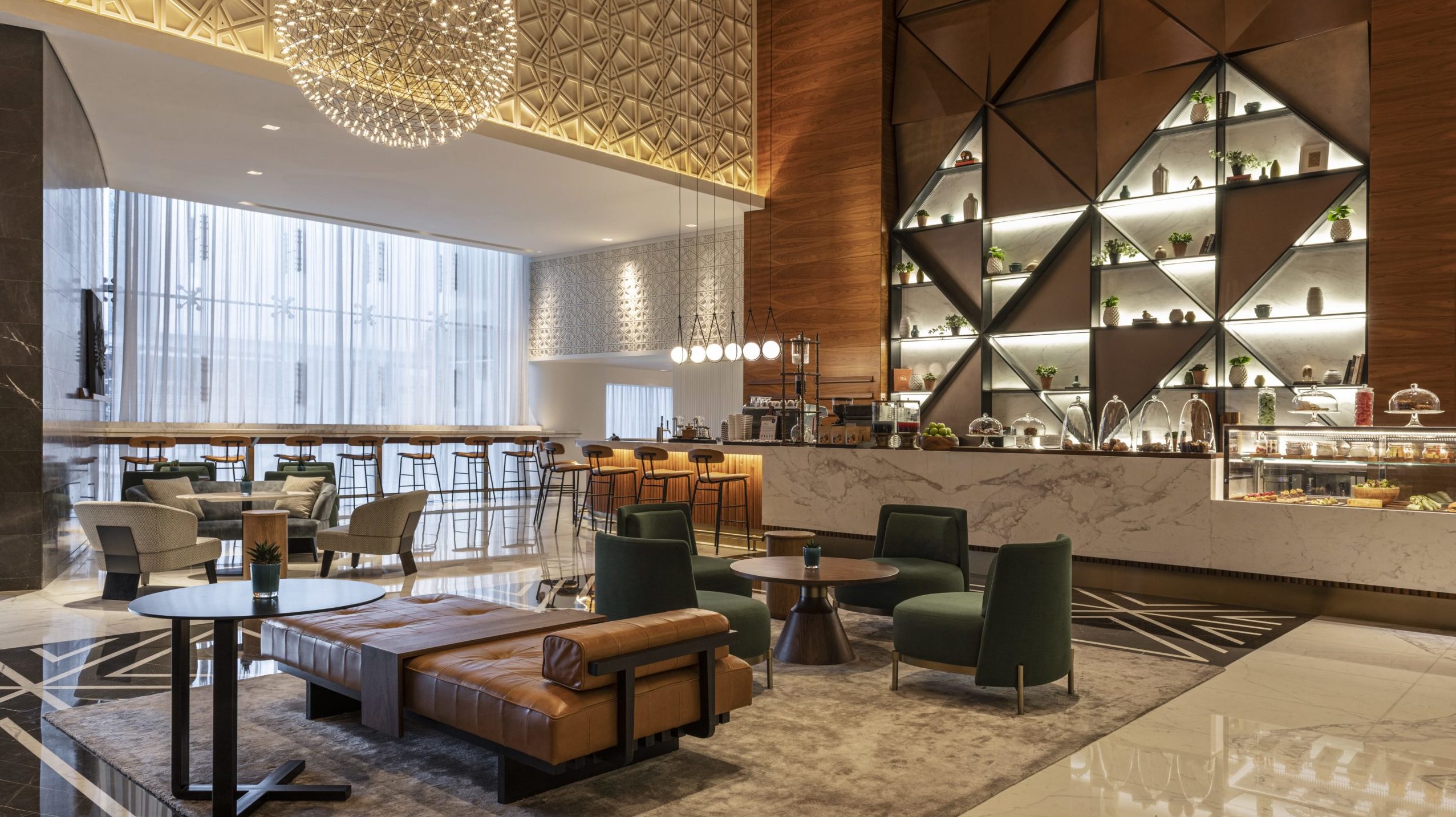
Sheraton Grand Lobby seating with Cafe’ and bar chairs

This metropolitan hotel is new again after completing the contemporary redesign being rolled out at Sheraton properties worldwide. One new concept for the brand is the “Public Square,” a lobby space designed as a central point of energy and community. Sheraton Grand Dubai has 596 guest rooms, now with flexible workspaces and layered lighting, to foster productivity or relaxation as needed. The hotel features over 10,000 sq. ft. of event space, including a ballroom that accommodates up to 400 guests.

W Melbourne, Australia

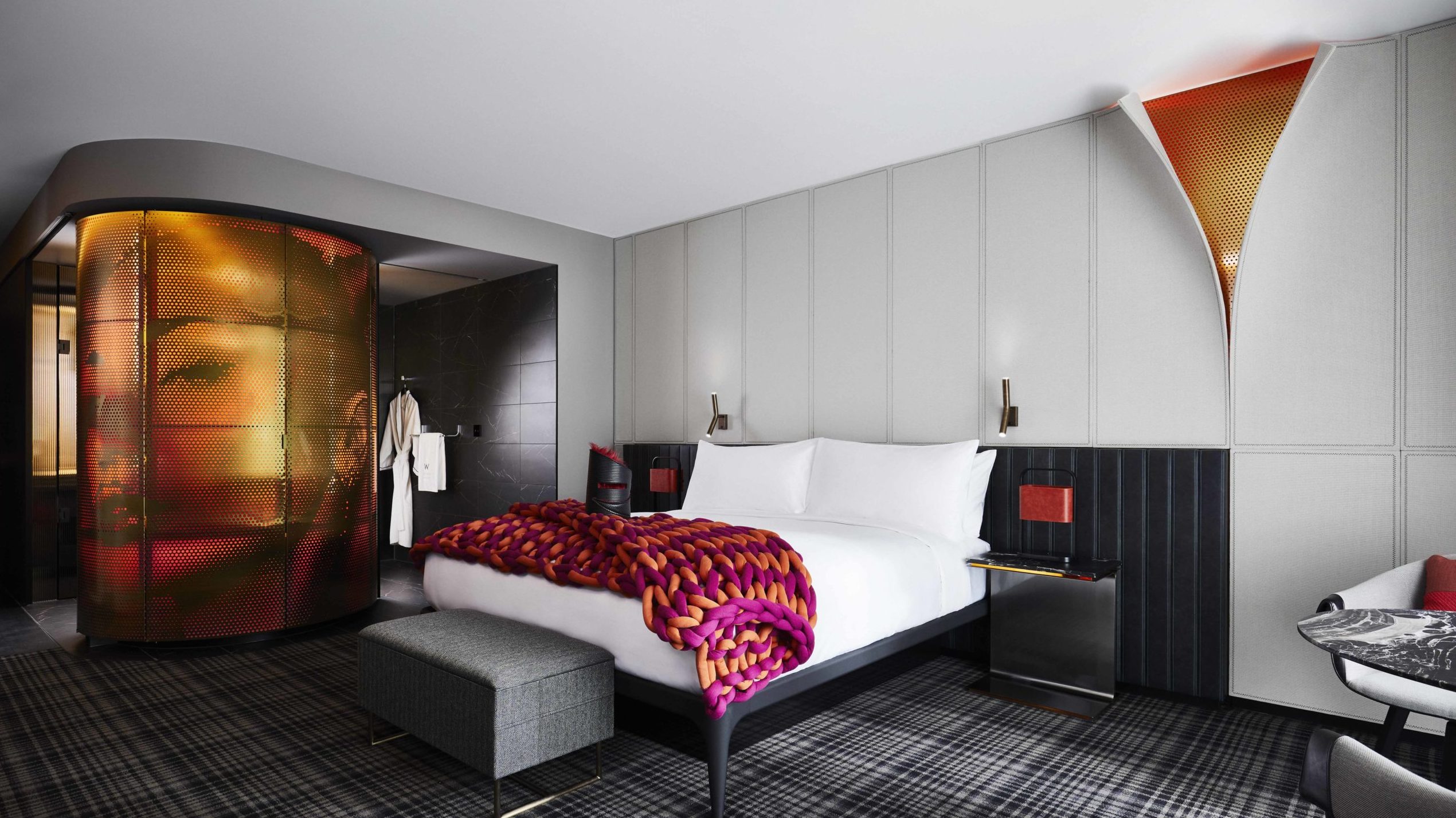
The new W down under boasts 294 guest rooms and 29 suites with floor-to-ceiling windows—categorized into Wonderful, Fabulous and Mega, in homage to Aussie newspaper kiosks of the 1960s. Over 8,900 sq. ft. of meeting and event space is tech-enabled to host your gathering. Post-meet, vibe into Melbourne’s cafe culture at Culprit, featuring a vermouth tasting tray and ceiling-high charcuterie display. Then get your workout in at FIT, the property’s super-modern fitness facility, or take a dip at WET, a gold-roofed indoor pool with a poolside bar and DJ booth.

JW Marriott Shanghai Fengxian, China

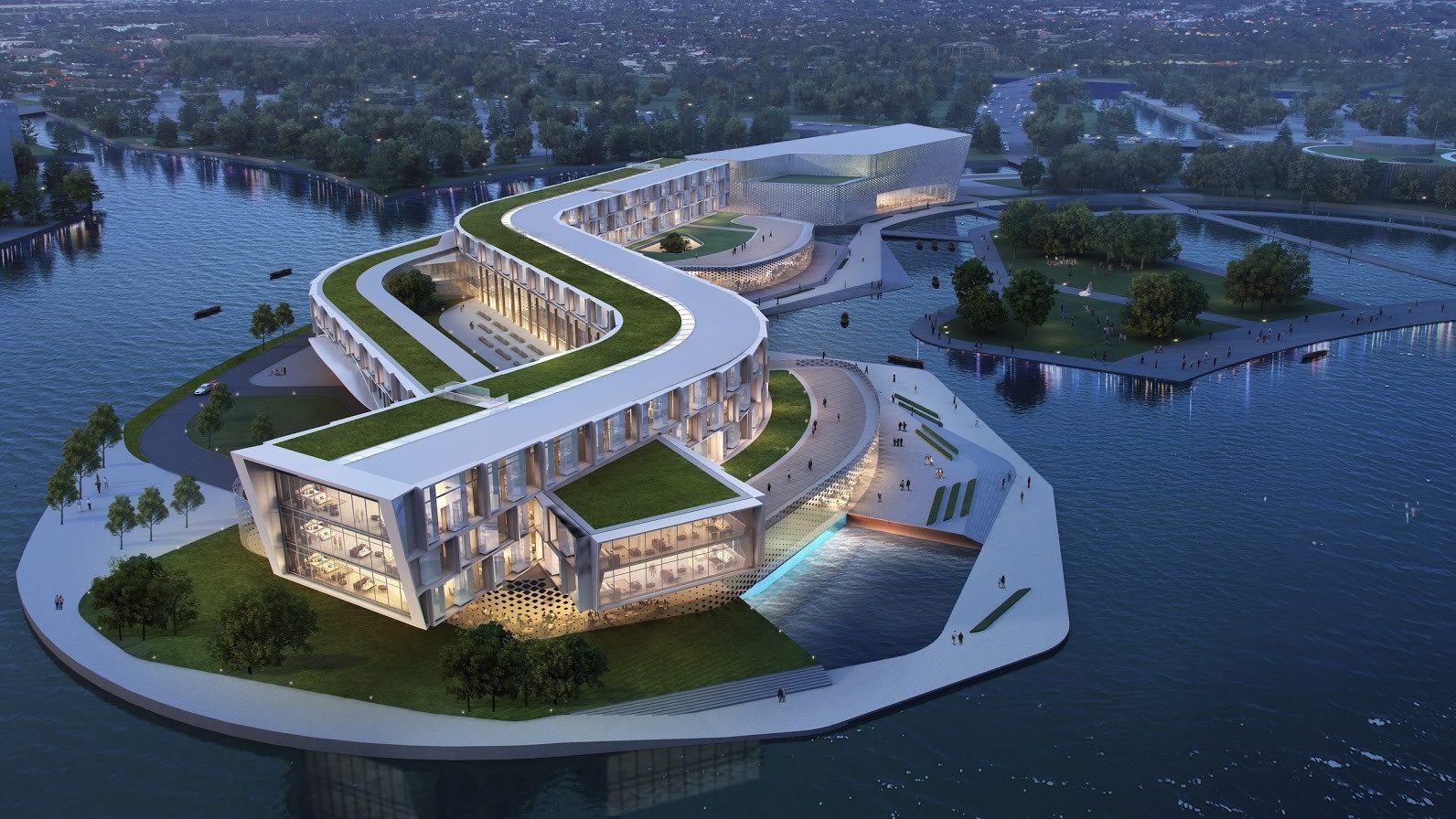
The 50th Marriott International Hotel to open in Shanghai debuted this month, located on Hangzhou Bay in the suburban district of Fengxian. It has 265 guest rooms in hues of sable and blue, each overlooking either Jinhai Lake or the atrium garden. Three onsite restaurants—with cuisine ranging from Cantonese and Shaghainese delicacies to fresh crustacean dishes—all use produce from the hotel’s own JW Garden. For meetings, there’s a 9,600-square-foot banquet hall as well as several smaller multifunction rooms.

The Tampa Bay Buccaneers claimed Super Bowl LV victory over the Kansas City Chiefs in their hometown Raymond James Stadium yesterday in Tampa, Florida. The specacle televised by CBS, was the event we were all anticipating—a potential playbook for large gatherings in the first half of 2021.

CBS and the National Football League sought to create a sense of unity and normalcy. However, even with 22,000 fans at Super Bowl LV, including 7,500 vaccinated health care workers invited for free, the limited attendance was palpable. Still, the NFL moved forward with careful consideration of safety and style, and the unfaltering members of CANVAS were taking notes.

MoreSports Bring Business Back to California’s OC

So, what worked and what didn’t? CANVAS, a group of more than 50 executive-level event professionals, shared observations and highlights from this extraordinarily irregular championship game.

Highlights:

  • In the weeks leading up to the championship game, Lowe’s partnered with the NFL on the live activation component of the game—the Super Bowl Experience at Julian B. Lane Park. The interactive football theme park was free and accessible to the public and featured virtual meet and greets with players, Lombardi trophy viewings, and a virtual autograph scavenger hunt. The activation acknowledged safety protocols, including mandatory masks, health screening technology, social distancing efforts, and “fan managers” (safety officers) throughout the park, an idea that could be borrowed for conventions.
  • Guests reserved time at the Super Bowl Experience by using the NFL OnePass app, which was another highlight of the in-person component. The app included “Ask Vince,” an NFL Concierge, schedule of events, sweepstakes entry, transportation information, weather, maps and gamification. Users could earn up to 27 badges by exploring the park and sharing user-generated content—a savvy technological choice to adopt for one’s next event.
  • The NFL, CBS, and many advertisers pursued the theme of unity and inclusion. We heard from young phenom Amanda Gorman, first-ever National Youth Poet Laureate, and Warren “Wawa” Snipe, the man who so passionately performed the national anthem in ASL. We also appreciated the multi-colored waving hands used in lower thirds.
  • The use of Vince Lombardi’s hologram to bring the “virtual” at home attendance into the stadium was a creative idea, but it ultimately left viewers confused. Without clear identification, many younger fans were left wondering, “What just happened?” The visual may have been more successful on the field but did not translate well on an LED screen for at-home viewers.
  • 30,000 cardboard cutouts filled the stands during the game, which has been a common strategy to make up lost ticket and concession sales throughout the regular NFL season. The NFL recouped more than $3 million in revenue by selling seats to cardboard fans for $100 per ticket during this year’s Super Bowl.
  • The high-resolution videography was a major highlight of the game, creating varied on-field perspectives. Some have even likened the 8K experience to video game technology. We appreciated the use of LED lighting throughout the experience and the use of the smaller satellite stage for H.E.R.’s performance.
  • Corporate synergy was a key player at SBLV, but at times, the mergers seemed to go rogue at moments. (Let us not forget the Nickelodeon-themed half time report.) CBS’ studio team faced a few struggles in mastering these partnerships, and some of their transitions felt awkward and jarring.
  • CANVAS members took special note of the Pepsi and Mountain Dew campaigns. Viewers could scan their Pepsi can for access to VIP content, and Mountain Dew is offering $1 million dollars to the first person who can tweet the number of bottles used in their commercial—a clever guide to presentation gamification and on-demand content sharing.
  • Televised by CBS and headlined by the Weeknd, the PepsiCo. Half Time Show certainly did not fumble this year. The use of empty seating in front of the stadium screen created a dynamic choral, cityscape theme. The varying camera perspectives, background visuals, and firework displays added grandiosity to the show, and we appreciated the creative and intentional set design. The background support, dancers, and performers were socially distanced or masked without being obvious, and the multi-level lighting was an excellent choice. We loved the Funhouse feel and the efficient use of the field without hauling in a large stage. Anyone else channeling Michael Jackson?
  • We could not go without mentioning Verizon’s Big Concert for Small Businesses. Hosted by Tiffany Haddish and featuring performances from Alicia Keys, H.E.R., Jazmine Sullivan, Luke Bryan, Miley Cyrus and more, the afterparty concert was a successful endeavor in charitable contribution.

In an impossible year and an even more-impossible football season, CBS and the National Football League pulled off a stellar show. Although this year’s championship game is likely to be remembered by many as the “COVID Super Bowl,” we are inspired to continue moving forward toward our return to live events, together.

Cindy Brewer, founding partner and moderator with CANVAS, compiled the responses from the interactive group. To learn more about CANVAS please visit www.meetcanvas.com.

Ryan Simonetti

The hospitality and meetings industries have been forced to adapt, innovate and evolve, which has strengthened us as we come out of this time of crisis. We saw 10 years of digital transformation in less than 12 months, which has resulted in incredible outcomes. Although our future remains uncertain, I believe that forecasting what’s to come helps us be proactive in creating the future we want. With that in mind, here are my predictions for the top hospitality meeting trends in 2021.

1. The majority of meetings and events will be hybrid moving forward.

We will cover the most obvious one first. Hybrid meetings and events that combine in-person and remote experiences are gaining traction rapidly and will last long after the pandemic. I expect us to primarily meet and host events in a hybrid format once venues open up again. Hybrid meetings are a testament to the broader shift toward leveraging virtual technology and to including remote attendees. What this means for meeting professionals is a broader range of innovative tools and methods to engage attendees and produce high quality events. For now, it’s worthwhile to record and store catalogs of virtual event content, because it can be reused to save time in planning events and building out agendas in the future.

2. Increased localization of meetings and events.

I expect more meetings and events to be held locally as people remain averse to the “one meeting business trip.” Air travel not only is seen as posing health risk, but is a large expense for most companies. Virtual technology solves that problem for one-off business meetings or events. At the same time, I expect companies to book venues near to where their people are to bring them together for regular meetings, which will introduce much-needed foot traffic to local businesses.

3. The scale and reach of events has forever improved.

This new event landscape and the advantages of improved technology have forever changed the size and scale of meetings. Over the summer, I was invited to speak at the Collision at Home conference, which drew 30,000 virtual attendees—the same number of in-person attendees they usually saw. Since then, clients using our new Virtual Meetings product have been seeing 1, 2, and sometimes 3x the number of attendees that they would typically get in person. This proves that people still want to attend events to learn, meet new people, and enhance their skill sets, and now they’re willing to do so from home.

4. The meetings and events industry is even more resilient.

While every business has been impacted by the pandemic, the meetings and events industry was decimated by this crisis. Our peers have faced incredible hardships over the past year and, unsurprisingly, the community has rallied to lift each other up. Not only have planners learned a new skill set to deliver virtual events in a matter of weeks, but they’ve transformed the industry for the better in doing so. Meetings and events have been reimagined, with technology accelerating the industry’s transformation. We’re excited about the new trends we’re seeing and looking forward to the road ahead. This industry is leading the way in innovation, which is a bright spot for meeting and event planners during an otherwise difficult time.

5. Technology will be harnessed for both good (and bad) in meetings and events.

Lastly, we’ve also seen the growth of virtual and hybrid experiences as they’ve become integral to how we meet and work safely. This has drastically changed how we plan events and this shift has happened all around the world. At the same time, people are craving human interaction, connection and the ability to network with their peers more than ever before. As we’re more reliant on technology and engaging in less face-to-face meetings to achieve business, I suspect that the quality of our interactions have decreased and studies are showing that too much screen time is having a negative effect on our attention spans. This is only going to increase the demand for a more balanced and thoughtful approach to having both in-person and virtual interactions when it’s safe to do so.

The stakes are high for sustaining company culture, keeping employees engaged, and customers satisfied while the challenges of virtual relationship building are still relatively new. With the launch of virtual and the development of our hybrid meetings product, we have focused on including a full range of physical and digital solutions that allow our clients to create engaging meeting experiences with networking opportunities and more meaningful engagements with event content, whether they’re in person, or on the other side of the world.

I look forward to a more balanced, and hybrid, meeting and working experience so we can enjoy the benefits of being together again. In the meantime, I’ll see you at the next virtual event.

Ryan Simonetti is co-founder and CEO of Convene, a premium work experience platform that includes a network of meeting, event and office locations, digital meeting technology, and solutions to reimagine the use of commercial real estate. Simonetti has been recognized on Real Estate Forum’s 50 Under 40 list, Inc. Magazine’s “30 Under 30,” a list of America’s Most Promising Young Entrepreneurs, was named “Top Entrepreneur” by Crain’s New York, and a finalist in Ernst & Young’s Entrepreneur of the Year® New York Awards.

From enhanced guest experiences to the power of reserving your parking spot in advance, smart technology is becoming more common in the hospitality industry. Apps that anticipate guests’ needs help hotels and planners design events that deliver more of what people really want.

“Simple integrations like Netflix on the television and Alexa in the room make people feel more comfortable. Additional technologies like online check-in, mobile room keys and other perks only contribute to that. In a world where event planners are constantly struggling to fill room blocks, technology is yet another attraction,” said Liz King Caruso, CEO and chief event specialist of Liz King Events.

More: To Draw Millennial Attendees, Pick a Tech-Savvy Hotel

Below are the top smart technology trends in the hotel industry that will benefit meeting professionals and their attendees.

1. Guest Experiences:

Guest data can be used to better accommodate each person’s needs throughout their stay. For instance, occupancy sensors can ensure attendees aren’t bothered by maid service while in their rooms. Smart guest experience technology will allow hotels to predict multiple guest services based on previous visits and aggregated guest data, creating a more personalized experience for your attendees.

2.Reserved Parking:

Smart sensors and hotel apps will allow guests to not only reserve parking spots ahead of their visits, but to also have their spot assigned at their arrival. This will give your guests an effortless experience from the minute they pull up.

3. Remote Check-In and Check-Out:

Enabling guests to use their mobile devices to check-in and out can give planners more time for event details. Remote check-in can notify hotel staff when guests arrive, offer the appropriate upgrades and provide each guest with an individualized experience. For check-out, guests can enjoy a self-check-out experience and arrange their own preferred transportation to their next destination without relying on the front desk.

4. Mobile Room Keys:

A smartphone app that provides guest room access, eliminates the problem of attendees losing their key card or the environmental impact of countless plastic cards. This could help your corporate social responsibility image. It’s a win-win!

5. Room Service:

Hotels will be able to push menu notifications to guests’ smartphones when they are in their rooms using smart occupancy sensors. They can also schedule texts tailored to fit their preferred ordering times, including personalized menu suggestions based on previous orders.

More: 8 Outdated Conferencing Technologies That Are Impacting Your Business

“Of course, a great event technology strategy starts by setting goals so while there may be interesting technology available at a particular hotel, it’s really important to focus on any pain points you have currently with your event and the goals you are hoping to achieve,” said Caruso. Focusing on your goals will help you figure out what technologies will provide the most value for your event. For instance, if your agenda is super packed, finding ways to enhance the check-in and check-out experience might be very important for your attendees.

Case Study: Accor Going Keyless

Another hospitality giant announced its own innovation to smooth the return to meetings. Paris-based Accor says it has begun a global rollout of a digital key solution that will include not only access to guest rooms in its hotels, but also to meeting rooms and elevators.

A smartphone digital key app, Accor Key, will activate on check-in and deactivate on check-out.

Accor Key will be delivered through a partnership with STAYmyway, a cloud-based access management tool. Faustino Fernandez, the software company’s founder & CEO, cited a recent Deloitte study that shows 60 percent of travelers are more likely to stay at a hotel that allows contactless check-in, and 16 percent say it’s a “must have.”

Following pilot programs in North America, Europe and Asia, the rollout will start in all new Accor hotels opening in 2021 and then extend to existing properties, with a goal of equipping 500 hotels with Accor Key this year, and at least half of all rooms across the company within the next five years.

Accor notes that the initiative will also reduce the amount of plastic used for traditional key cards and cardboard for the key holder.

InterContinental Hotels Group (IHG) is beginning the year anew as IHG Hotels & Resorts. The brand’s stated purpose is “True Hospitality for Good,” and this renewal is designed to reflect that.

“The travel industry has faced challenges like never before, and while adapting to new realities we’ve also stayed true to our roots,” says Claire Bennett, chief customer officer for IHG Hotels & Resorts. “We have an incredible family of brands, centered around connecting people—strengthening family bonds, forging business partnerships, uniting far-flung friends and engaging with our communities.”

With 16 brands and nearly 6,000 properties across 100 countries, the company is focused on “how it engages guests, hotel owners and colleagues, and better promoting the breadth of its portfolio,” states a company press release.

Key elements of IHG’s rebrand follow.

  • IHG added the “Hotels & Resorts” descriptor to its trade name, reiterating the company’s collection of 16 brands.
  • The IHG Hotels & Resorts visual brand identity has been given a makeover to appeal to a younger demographic of consumers, as well as hotel owners, colleagues and future talent around the world. Through new colors, photography and font, the company says the design is intended to showcase the brand and hotel experiences in a more engaging way.
  • IHG Rewards has a corresponding new look and feel. The word “Club” has been removed from IHG Rewards. Going forward, IHG Rewards will be visible more often and in more places.

In addition, IHG’s 16 brands are now grouped into four collections.

The Luxury and Lifestyle Collection

IHG describes these as “defined by legacy, distinctive design and unforgettable service.”

  • Six Senses Hotels Resorts Spas
  • Regent Hotels & Resorts
  • InterContinental Hotels & Resorts
  • Kimpton Hotels & Restaurants
  • Hotel Indigo

The Premium Collection

The Premium Collection consists of properties that focus on guests’ well-being.

  • HUALUXE Hotels & Resorts
  • Crowne Plaza Hotels & Resorts
  • EVEN Hotels
  • voco Hotels

The Essentials Collection

“Always there and just what travelers need,” reads the press release.

  • Holiday Inn Hotels & Resorts
  • Holiday Inn Express
  • avid hotels

The Suites Collection

This collection has a home-like feel and is designed for longer stays.

  • Atwell Suites
  • Staybridge Suites
  • Holiday Inn Club Vacations
  • Candlewood Suites

We’ve all been to virtual events before—conferences, webinars, online summits, or fairs. Some were great, others—not so much. When a virtual event is effective, it can help with sales, building a reputation and expanding a professional network. When it’s bad, the viewers are disengaged or even upset that they’re wasting their time.

The script is what drives the flow of a virtual event. It keeps you organized and ensures that you always have something to share. Here are five tips to write an effective script.

1. Write Like You Talk

Merriam-Webster Dictionary defines virtual events…”

Take you back to the college years, right?

Speakers who use this tone risk losing attendee interest in minutes. If a script sounds like a research paper or an HR report, many will feel like they’re listening to a lecture. This style is unengaging. More difficult to understand. Impersonal.

MoreVirtually Engaged: Ban Boring Events from Your Agenda

The best way to make a script for a successful virtual event is to write the way you speak. Seriously, imagine you’re having a conversation with someone you know and use the style you’d use in that conversation.

This style would be simple, natural and personal, which means you can:

  • Keep incomplete sentences, start sentences with “and, or “but,” and use simpler versions of words
  • Speak directly to viewers. Use “you” and “your” when making your speech.

 2. Give a Proper Welcome

The greeting sounds too obvious, sure, but getting it right is a must. A strong, confident and informative greeting welcomes viewers the right way and sets expectations for the entire meeting.

Here’s a common and effective formula for delivering a welcome message:

  • “Hello everyone, and welcome to today’s meeting.” It’s a straightforward greeting that works across time zones and regions
  • “My name is [your name here], and I am a [professional and experience].” Introduce yourself and give some background details to establish trust with the viewers. For example, you can mention where you work and your responsibilities—basically what makes you an authority on the meeting’s topic
  • “A recorded version of this meeting will be available to stream on demand.” Answer one of the common questions that attendees have right at the beginning. Tell them where the webinar will be accessible and when
  • “A Q&A session is coming at the end of our meeting.” Let the audience know that you’ll be accepting questions, so they can write them in the group chat. Make sure to activate the feature allowing viewers to ask questions.

Get started by writing some ideas around these four key points. Make sure that this intro doesn’t exceed two minutes of the speaking time.

📍 Smart Tip: Use Speech in Minutes to estimate how much speaking time it takes you to make an introduction. Enter how many words you have, indicate the speed of talking, and you’ll get an automatic estimation of the speaking time.

3. Outline the Topics

The agenda of the meeting is what follows the introduction. It shows the real value of the webinar and is usually presented as a bullet point list.

Keep things short when introducing the agenda for the first time. Make a bullet list of the main points from the topic and announce them. Also, consider adding numbers and stats where possible to improve viewer engagement. For example, if you’re talking about live chat in customer support, share a statistic from a company that improved customer satisfaction scores with this method.

4. Mention a Personal Story

A revealing personal story is an excellent way to grab the attention of the viewers and make the experience more memorable. If you have a story that’s relevant to the topic and can help viewers learn, go for it.

The best stories are personal stories from your experience, so make sure to brainstorm when planning the virtual meeting. Here are some examples to inspire you:

  • A story of how you overcame a major challenge
  • A relatable reason why you started your company or an interesting project
  • A story about how the problem you’re talking about came to life

A major benefit of using the approach shows how you obtained some wisdom through a series of complex projects and obstacles. A good example could make you more relatable and confirm your expertise.

You can also share client success stories. A real-life example can keep the viewers interested in the content and give it more credibility. To make this idea work, be sure to mention figures, goals, and other specifics.

5. Avoid Reading the Script During the Meeting

“I prefer virtual meetings. Their beauty is that I can use my script to guide me, and no one will know.”

That might be true in some cases. Still, it’s a bad idea to rely on the fact that you can read the script. The audience can tell if a speaker is reading, which is not a good way to impress them.

Referring to the script is totally fine, but only until it makes a speaker lose eye contact with the viewers. Instead, try reading and practicing your script as much as you can. This simple strategy will help you memorize more points and avoid outright reading.

Summary

Use these tips, and you’ll be a much better virtual event speaker. You’ll get the tone right, make yourself more comfortable with the text, and speak confidently.

Hey, you already are a better virtual event speaker. Here’s why—you’re looking to prepare the script ahead of time. A well-prepared script will keep you focused and make the whole thing run smoother.

Jessica Fender is a copywriter and blogger at GetGoodGrade with a background in marketing and sales. She enjoys sharing her experience with like-minded professionals who aim to provide customers with high-quality services.

There’s nothing that brings people together—family, friends and strangers alike—quite like sporting events. As we know too well, this closeness and camaraderie came to a screeching halt when the pandemic began, not only preventing fans from watching their favorite amateur and professional sports live, but dealing a disastrous blow to the communities where these events are held.

But things will soon be turning around for one location in California: Orange County. More popularly known as The OC.

Orange County Sports Commission (OCSC), a countywide coalition of DMOs and partners that books and promotes sporting events, and which includes Visit Anaheim, Visit Huntington Beach and Knott’s Berry Farm, has confirmed 16 sporting events, amateur and professional, for 2021. These events are anticipated to draw more than 155,000 attendees and bring $53 million into the local community.

Eleven of these events were booked since the pandemic started in 2020, demonstrating that strong demand for events is unwavering.

“Our team continues to work efficiently to bring new events to the destination and remains focused on supporting our local tourism industry in its recovery efforts both now and later,” says Jay Burress, president of OCSC. “For 2021, we hope these confirmed sports events will help jumpstart our economy and make it possible for local hotels, restaurants and other tourism businesses to start rehiring their workforce.”

The OC’s first such event, United Spirit Association’s Varsity USA Spirit & Dance Nationals, is scheduled to take place April 30–May 2. Other confirmed dates will bring USA Curling’s Curling Night in America, ESPN Event’s Wooden Legacy Basketball Tournament and USA Curling Mixed Doubles Olympic Trials.

“OCSC has enabled our region to usher in a new era of opportunity and unity for sporting events in Orange County,” says Tim Ryan, chairman of OCSC. “This commission is allowing Orange County to emerge as a premier sports destination and is paving the way to capitalize on the number of different world-class venues in the area.”

A total of 22 sporting events have been confirmed by OCSC for future years in Orange County, with a projected economic impact of more than $60 million.