As event professionals know, even the best-planned gathering can fall flat without the right marketing. To maximize the impact of and business results from your online or real-world event at a time when some people might be hesitant to travel, it’s vital to start with a comprehensive event marketing plan. This plan outlines the different components your event marketing will need (like a website and content strategy that addresses any concerns prospective attendees might have) and enables you to build a marketing timeline that will attract the maximum number of guests to your event.

Here’s an effective eight-step approach to creating a marketing plan for your event.

1. Plan for a Strong Web Presence

Your web presence will be the core of your event marketing strategy (particularly for online events). Your event’s website and social media accounts host essential event information ranging from the basics—when it’s happening, where and how long it will last—to details about specific panels and event offerings.

A solid website will also be key to managing other aspects of your online marketing strategy. You’ll want an easy-to-navigate website—with a look and feel that reflects your event theme—to deploy content and landing pages for campaigns on email, search, influencer marketing and social media.

In the age of COVID-19, you’ll also want to include a section on your venue’s health and safety precautions. Focus on specifics—like if you’ll provide masks and sanitizer or increase cleaning prior to the event.

2. Prepare to Advertise Your Event’s Mission, Speakers and Partnerships

Once your website is up and running, the next step is to formally announce your event. You should plan to have a few things ready before you do.

First, ensure that you have a blog post and press release that outlines the mission and purpose of your event. You should also use your website to promote speakers and sponsors, and announce partnerships as they come onboard. You can highlight these announcements with posts on social media and email blasts.

Once you’ve nailed down the basics for your event, you’ll also want to advertise the venue. For example, if it has a third-party certification—like the ISSA’s GBAC Star, a biorisk accreditation—you will want to include the logo on your website.

3. Have a Serial Content Strategy Ready

Build anticipation with a serial content strategy and steadily promote content leading up to your event. This content strategy can help you highlight the key benefits of attending your event while also showcasing the panels and speakers to potential attendees.

While content will become more important as you get closer to the event, it’s a good idea to begin building your content strategy early. This will give you a significant archive of content resources to draw on in the weeks leading up to your event.

If possible, this content is a great place to leverage visuals and information from previous events. If you have footage, photos or panel audio, you can use it to demonstrate the potential value of the event.

You can also use your relationships with speakers and influencers to strengthen your content strategy. Testimonials from influencers who will be there can help assure guests they won’t be the only ones venturing out into the world.

4. Take Advantage of All Advertising Channels

Social media, online marketing and email campaigns can all be effective at spreading the word about your event by showing off the speakers, panels and resources you have lined up. Email campaigns can be an especially powerful tool for helping you nurture leads towards deciding to attend your event.

MoreTake Your Email Marketing to the Next Level

You should also take advantage of newer advertising methods. For example, you may want to advertise on podcasts relevant to your event. If you’re working with influencers, they can help spread the word on platforms like TikTok, Snapchat and Instagram.

Offline advertising methods can also be very effective at spreading the word about your event—especially if you’re trying to target less plugged-in demographics who aren’t always easily captured by online marketing. A range of print advertising options can help you reach these people.

5. Find Ways to Personalize Your Marketing

A one-size-fits-all approach to marketing your event may not be the best strategy. You can use event personalization to create a more unique and targeted marketing strategy. Start by collecting data about attendee preference with surveys and web analytics, then use it to personalize email blasts and other advertising.

For example, some guests may be more interested in specific speakers and topics than others. You can use information on their preferences, collected from surveys or other sources, to highlight the aspects of your online or live event that are likely to be most relevant to them.

Survey data can also be useful in finding out how comfortable potential guests are with travel right now. Some may be more interested in traveling later in the year, or want assurance that certain health and safety precautions are in place. You can use this information to plan your advertising and scheduling.

6. Connect with Your Speakers

Your speakers will be invaluable in helping you market your event and develop your content strategy. They can use their expertise to help you communicate the unique benefits people can receive or information they will learn by attending your event. They can also help promote it through their network of contacts, who likely have audiences or know people who will naturally be interested in attending your event.

7. Let Attendees Know About Security Checks

As live gatherings gradually resume in the COVID environment, it’s becoming common for events to expand their security check-ins to limit the spread of disease. Many events are creating checkpoints where they quickly screen for symptoms, like fever, in addition to performing typical security checks that events were already using to prevent trouble.

You don’t want your attendees to be caught off guard by these checks. Communicating with your attendees via available advertising channels—especially email and social media—will help them prepare.

If they know about the checks in advance, they can factor in the check-in delays when scheduling how they’ll spend their time at your event. Knowing that such screening is in place may also make prospective guests more comfortable attending your live event.

8. Plan for Last-Minute Promotion

Your marketing strategy will need to ramp up the closer you get to your event. In the final weeks, prepare one last email blast and set of social media posts. This last-minute promotion is one of the best ways to build and take advantage of guest FOMO.

If you have any influencers or speakers you haven’t reached out to, get in touch before it’s too late. You may be able to leverage these contacts and their networks for some last-minute marketing.

Creating Your Event Marketing Plan

More than ever, your comprehensive event marketing plan will be key to the success of your event. Start with laying the foundation for your marketing by building a web presence, formally announcing the event and putting prospective attendee minds at ease. Then, you can move on to content marketing and leveraging your contacts to spread the word. As the event approaches, you can use last-minute promotion to drum up some additional excitement and secure the biggest audience possible.

Lexie Lu is a freelance designer and blogger from Williamsport, PA. Her ideal morning includes some HTML code and a cup of coffee. She writes on Design Roast and can be followed on Twitter @lexieludesigner.

Fourth of July may look a little different this year. From secret fireworks shows to masked celebrations and hot dog eating contests, this year’s Independence Day is a lesson in creative event planning.

In addition to the pandemic, recent strides for the BLM movement have highlighted the importance of diversity in every event planning process.

Fireworks and Hot Dogs

Stringent safety measures don’t mean that New York City will let the Fourth of July pass without a blast. The city has approved Macy’s fireworks, which will light up the sky periodically for a whole week starting June 29. The spontaneous shows will be kept a secret until the fireworks begin so as not to attract crowds. “In reimagining this year’s show, the idea of bringing elements to many parts of our hometown resonated with our team and partners in the City of New York,” said Susan Tercero, executive producer or the aerial display.

New York City has also approved the annual Nathan’s Hot Dog Eating Contest. The competitive eating competition will look different this year with the implementation of safety protocols and fewer contestants; about 5 women and 5 men instead of 15 and 20, respectively. George Shea, co-founder of Major League Eating, stressed the importance of staging the 2020 competition. “I think people need this…New York needs it and…America needs it,” he said.

Masked Celebrations

On the other side of the country, any July 4 celebrations in public will have to be accompanied by face masks. Oregon, Nevada and California passed laws recently requiring masks to be worn at all times outside the home when six-foot distancing is not possible. Other states with similar mask requirements include New York, Michigan, Illinois, Delaware, Massachusetts and Maryland. So, Independence Day events and celebrations will have to be accompanied by a facemask in some states, but you can always decorate yours with red, white and blue to combine spirit with safety!
Staying Local and Outside

Last year we reported on the record-breaking number of travelers expected around the July 4 weekend. Flight reductions, COVID-19 related concerns over flying and mandatory two-week quarantine for people traveling to and from certain states means travel will look a lot different this year. Staying local doesn’t mean staying home. U.S. Centers for Disease Control and Prevention recommends staying outdoors if you are gathering. Luckily, barbeques, beaches and camping are already synonymous with the Fourth of July so keeping up Independence Day traditions should be a breeze. Just bring the masks, spread out the chairs and stay home of you don’t feel well.

More Inclusive

The Fourth of July this year will be celebrated during a time defined by more than just a global pandemic. The call for social reform led by the Black Lives Matter movement culminated with calls to make Juneteenth a national holiday last week. While many celebrate the Fourth of July as a symbol of American independence and freedom, the history of the holiday is controversial. The Atlantic quotes former slave and famed Black abolitionist Frederick Douglass saying in 1852: “I am not included within the pale of this glorious anniversary!…This Fourth [of] July is yours not mine.” This sentiment has been widely shared recently. The Chicago Reporter claimed in an article last year that “most Americans don’t think about how painful and complicated our Independence Day can be for Black people to whom it never applied.” A similar piece by John Sloan, co-lead organizer of BLMDetroit, reveals Sloan’s personal struggle with the holiday.

This increased awareness is a mandate to prioritize including diverse perspectives in Independence Day—and all holidays—going forward.

As restrictions ease and people begin flying again, what will the airline landscape look like? To help get more insight into flight trends in the travel industry and how that will impact meeting planners, Incentive Research Foundation hosted a panel of airline experts from American Airlines, United Airlines and Etihad Airways to find out what safety precautions airlines are taking, how they believe group travel will change and details about the travel experience.

Safety and Cleaning

“What’s interesting about safety is it used to be about the safety of the planes flying, whereas now it’s cleanliness that’s come to the forefront,” Pierce says. United has teamed up with Clorox and Cleveland Clinic to create “Clean Plus,” which includes Plexiglass at checkout counters and temperature checks for employees. Clean Plus also introduced touchless check-in.

See alsoThe Future of Air Travel: Here Comes Sanitized Flying

United now informs passengers if flight capacity is more than 70 percent, giving the option to change flights; American provides the same feature, informing passengers three days in advance and at the gate, after which passengers can choose another same-day flight free of charge or choose another flight date.

What’s Trending in the Industry

“What we’re seeing is that international travel for the MICE market is going to be a little [longer] to get back where it was, as opposed to corporate markets,” Leung says. One trend she is seeing for groups and incentives is more bookings for premium cabins, because “people get a little more room on board.”

How Airlines are Helping

The executives started out by talking about the good their companies have been doing while normal passenger travel is at low ebb.

Amanda Leung, director of business development and sales for Etihad Airways, based in United Arab Emirates, says even as the airline is embarking on its largest maintenance program since its inception in 2003 in order to combat the virus, it has done 2,500 special passenger and humanitarian flights to 100 destinations to repatriate citizens and deliver medical supplies.

Alynne Hanford, global sales manager for American Airlines, says her airline has moved about 200,000 tons of seed, mostly from Argentina, as well as medical supplies to various locations around the world. She says there is great “pent-up demand” for air travel, to which American Airlines will respond by rolling out more flights as that actual demand increases. “We’re seeing a lot of intake, a lot of bookings…we’re prepared to get the aircraft back in the sky,” she says.

United Airlines has flown more than 90 repatriation flights and roughly 20 flights per day to provide medical supplies to destinations in Australia, Asia, Europe and the Middle East, according to Tyler Pierce, sales manager of meeting and incentive sales for United. Both United and American have been providing free round-trip flights for medical professionals to locations where COVID-19 cases have been highest in the U.S..

When restrictions are lifted, Hanford anticipates a lot of incentive flying to Hawaii and Mexico, in particular.

United is welcoming suggestions for destinations. Through Jetstream, United’s online portal, meetings customers and corporate agencies who have a program with the airline can submit a request for where they think the airline should fly and why.

Hawaii is saying aloha and welcome back—if you can prove you’ve tested negative for COVID-19. Beginning Aug. 1, visitors can bypass the state’s mandatory 14-day quarantine upon arrival by presenting a negative COVID-19 test.

The new program, announced by Gov. David Ige earlier this week, has not been finalized. But according to a news release from his office, Hawaii’s health department says out-of-state visitors will likely need to undergo an a nasal swab test from a lab certified by the FDA’s Center for Medicare and Medicaid Services.

“Travelers will be required to provide printed or emailed pre-test certification as evidence of a negative test result,” the release said. “Travelers will be responsible for the cost of the pre-travel test.”

The decision tries to balance the needs of the state’s languishing tourism sector and the health of Hawaiians. According to reports, only 300-400 people are arriving in Hawaii each day, compared to the usual 35,000.

Travelers to Hawaii will have to obtain a negative test for coronavirus no more than 72 hours prior to arrival. The program is said to mimic requirements imposed by the state of Alaska but unlike that state, which provides a testing-on-arrival option, Hawaii will require arriving passengers to have completed one at their destination of origin. Officials said it “wasn’t practical” for the islands to offer testing on arrival. Those who do not get the test will still be permitted to fly to Hawaii, but will be required to quarantine for 14 days.

The state has been vigilant in enforcing the quarantine and has arrested tourists who have violated it.

In addition, the state will use thermal cameras at the airports to detect anyone with a fever, as well as focus on contact tracing should infections occur, according to a report in Forbes. Officials conceded that the new protocols were not foolproof but said they will help protect Hawaii and allow the islands to “live with the virus.”

“For the state of Hawaii, we have approximately 240,000 unemployed people,” Honolulu Mayor Kirk Caldwell said. “We’re not going to see a return to a level of employment that we had before unless we open up to visitors.”

A successful offsite meeting requires much more than hot coffee and a basket of pens. In order to truly engage your team, professionals need a place that offers dynamic experiences around the clock, both in and outside of the meeting room.

If you want your colleagues to come home from your next professional event with a newfound sense of wonder and connection, then it needs to be at Lake Tahoe. It needs to be at Edgewood Tahoe Resort.

Here are three ways that Edgewood Tahoe Resort will make your next professional event unforgettable:

Alpine Adventure

Nestled in a private enclave between majestic Lake Tahoe and the soaring Sierra Nevada mountains, Edgewood Tahoe Resort offers easy access to a world of alpine activities that move people in more ways than one.

Kayaking, hiking, boat rentals, cruises, and on-property golf, for example, offer unique laid-back opportunities for uninterrupted outings while colleagues take in the serene views of Lake Tahoe.

For those looking to mix adrenaline with business, the verticality of the Sierra Nevada mountains means that you and your team can bomb black diamonds on mountain bikes, snowboards, or skis, regardless of the season. Mountain biking trails and ski slopes are just a short shuttle ride from the resort.

Pristine Places

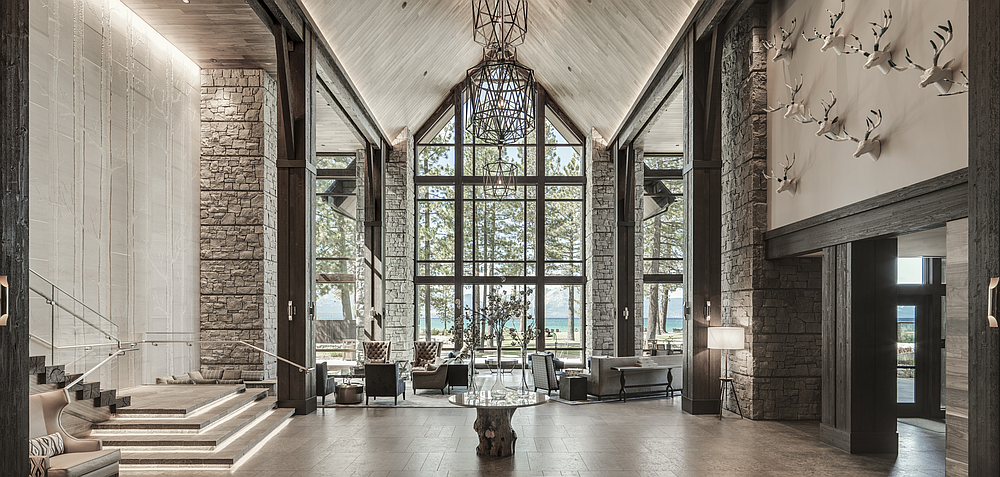
Edgewood Tahoe Resort boasts impeccably designed meeting rooms and venues that blur the line between nature and architecture, creating an ambiance for your next meeting that is both inspiring and energizing.

The resort’s lakefront Clubhouse, for instance, offers breathtaking lake and golf course views along with indoor and outdoor deck spaces that can be adapted to professional events both large and small.

For spring and summer meetings, Edgewood Tahoe Resort’s beachfront lawn, framed by the resort’s award-winning Lodge and towering pines, is ideal for catered events with an unbeatable lake view.

Along with its award-winning spa and trio of unique restaurants, Edgewood will take care of you, so that you can take care of business.

Top Tech

Lake Tahoe provides the natural splendor and Edgewood Tahoe – by way of PSAV – provides the cutting edge technology that elevates business events to the next level.

One of the largest audiovisual companies in the world – boasting top-of-the-line equipment that has been rigorously tested to perform seamlessly at events large and small – PSAV ensures that the technical side of guest events goes off without a hitch.

From LED walls and multiple circle screens to video mapping, PSAV can turn your next professional event into an unforgettable multi-sensory experience that will both engage and resonate with your team for years to come.

Submit an RFP or take a look at Edgewood’s Meeting And Groups Guide, list of amenities and services, floor plans, and more at edgewoodtahoe.com/meetings-groups

The hospitality industry is about to get graded on how well it is embracing minorities. On Friday, Destinations International, the global association for convention and visitors bureaus (CVBs), announced a partnership with the National Coalition of Black Meeting Professionals (NCBMP), a nonprofit organization dedicated to development of Black hospitality professionals. The two organizations will collaborate to “educate, uplift and unite the hospitality industry in an equitable way.” Advocacy efforts will use data to speak to the projected disparities within the destination organization ecosystem.

See alsoBLM Resources for Meeting Planners

Jason Dunn, NCBMP board chair, called it the first step in the right direction. “We must be bold and innovative to create change.”

Initial projects include:

  • Creating, supporting and publishing a annual destination organization report card that measures diversity and inclusion in the broader hospitality industry
  • Establishing a five-year partnership that invests in an annual leadership academy focused on an executive leadership track for diverse/Black candidates, to diversify executive level candidates
  • Leveraging the partnership to position the “We’re Here to Help Campaign,” to unite the meetings and events industry
  • Diversifying and increasing the use of ethnic subject-matter consultants, supported by Destinations International and the NCBMP network
  • Developing, implementing and sustaining an advocacy strategy to support the above goals through innovative programming and comprehensive approaches

“Destinations International is committed to listening and engaging in conversations and working with members and partners in our industry to be a catalyst for change,” said Don Welsh, president and CEO of Destinations International.

See alsoBLM Action Items for Meeting Planners

“Destinations International has answered the call of helping us point the moral compass of the hospitality ecosystem toward equity and empowerment,” Dunn said. “The foundation of this partnership is cemented in gaining the understanding of where our industry is currently and establishing measurable KPIs in a sustainable way.”

Apps to Ease Air Travel

Despite the growing number of airplane delays and hiked passenger fees, today’s travelers are able fly with a sense of convenience and ease. Without mobile apps to ease air travel, flying could be a serious headache. Now you can book your flight with a few taps, discover nearby lounges and dining areas, find out how long your flight is delayed or even met someone new before boarding the plane.

Here are 13 apps to keep you informed, relaxed and entertained on your next flight.

GateGuru (free) – TripAdvisor launched this app to provide detailed itinerary information, including security wait times, flight delays, gate changes and layover adjustments. You can also access maps, forecasted weather, rent a car and more.

Entrain (free) – Finally, there is a cure for jetlag. Researchers from the University of Michigan devised a set of lighting schedules which correspond to time zones around the globe. Entrain allows users to monitor their circadian clocks and adjust to new time zones much faster.

PreFlight (free) – Next time you’re in a rush to reach the airport, rest assured that your parking needs are taken care of. With this app, you can reserve a parking spot, collect reward points for parking, cancel reservations or find maps and directions to parking lots. The app is currently available at eight U.S. airports.

USA Today AutoPilot (free) – For every itinerary need, this handy app does it all. USA Today AutoPilot consolidates your itinerary and brings you relevant content about your upcoming trip. You can access flight details, including on-time status, gate information and current weather conditions at your destination.

LoungeBuddy (free) – Exclusive airport lounges are a thing of the past, with this innovative app that points you to a selection of accessible lounges. LoungeBuddy offers photos, hours, location, amenities, cost and reviews before you pay for entry. Glimpse more than 2,000 lounges in over 600 listed airports.

Lounger (free) – Once you enter your lounge of choice, perhaps you are looking to meet a special someone? There’s an app for that too. Lounger is marketed as the Tinder for travelers by bringing strangers together for socializing, or even more.

TripIt (free) – One of the top apps for planning trips, TripIt creates detailed itineraries out of forwarded travel confirmation emails. Merge hotel, airline, car rental and restaurant confirmations to organize all your plans in one place. You can even sync trips with calendars or email. It also integrates other travel apps.

Hopper (free) – This flight scanner program recently unveiled a booking component, which lets users reserve plane tickets within the app. Hopper analyzes billions of flights to tell you when to purchase tickets for the best deals.

Airport Maps (free) – This is a simple, yet useful aid for finding your way through more than 60 North American airports. Easily locate the next gate for your connecting flight, airport lounges or places to eat and shop on the way. No need for a signal—maps come built-in.

iFlyPro ($4.99) – iFlyPro offers a similar package, except it has detailed coverage of more than 700 airports worldwide. However, terminal maps do require GPS connectivity.

FlightView ($0.99) – This app is a popular flight tracker that offers real-time information on any flight. Track flights on a map with flight paths, receive alerts for your flight’s status, see where a flight is coming from or even find alternative flights.

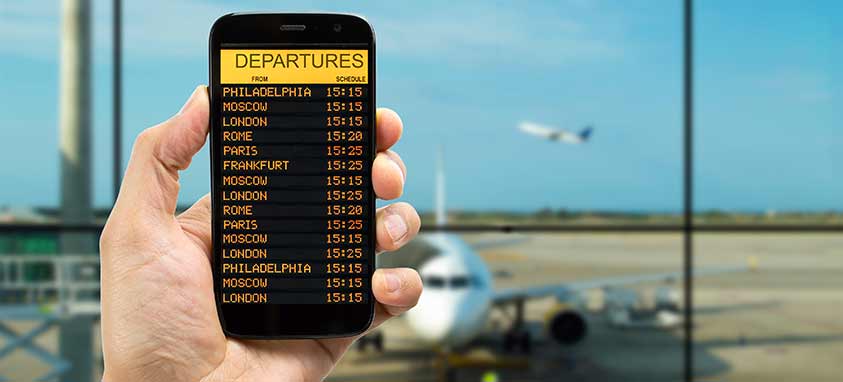
-FlightBoard ($3.99) – Turn your mobile device into an arrival/departure board for almost any airport in the world. Access any flight time from more than 3,000 airports and 1,400 airlines. The interface is updated every five minutes and can be shared via Twitter, Facebook or email.  FlightBoard is modeled after the boards used at Charles de Gaulle Airport in Paris.

-Trakdot ($49.99) – Check your bags with peace of mind, thanks to Trackdot, a device powered by GSM-based technology that tracks your belongings. The device syncs with an app on your smartphone to report its position on the ground or inside the plane.

Editor’s Note: This is part of a series reporting on FICP Chats about the future of meetings. You can read previous reports here, herehere, here and here

Meetings and events professionals, and the hospitality professionals they work with, are accustomed to taking care of clients, executives, colleagues, qualifiers and other stakeholders. However, the destabilization of our industry and the uncertainty around what lies ahead can have a negative impact on our own mental and physical health that extends beyond the current shelter-in-place orders. That means we should each devote time to taking care of ourselves daily, especially in the current environment.

In the sixth of FICP’s new virtual education series, Financial & Insurance Professionals (FICP) Chats, more than 150 participants discussed tips for staying healthy while working remotely, with a focus on exercise, nutrition, sleep, mindfulness and maintaining a work-life balance.

More3 Mindfulness Mantras for Busy Planners

Staying Active

Many participants had already incorporated walking into their daily routines to both help replace other fitness activities and provide much-needed breaks from sitting in front of a computer. They recommended setting a schedule and walking with a friend–in a distanced manner or with someone located elsewhere–and having a call with that person while walking. This added accountability and much-needed social interactions with others into the walking activity and helped vary the routine. Some participants chose different walking routes each day and brought family members along to hunt for different aspects of their environments.

See also5 Resources for At Home Wellness Routines

Setting goals for each day; incorporating exercise or step-counting apps; joining online workout programs; mixing up types of exercise; setting an alarm to force activity breaks; hosting a walking challenge with colleagues, friends or family members; and staring the day with exercise were all noted as additional ways to help participants create and maintain exercise routines.

Eating Well

With easy access to the kitchen throughout the day, participants noted a need to change both food-consumption behaviors and the types of foods they’re keeping in their houses. Keeping healthier snacks at home, including more fresh fruits and vegetables, shopping around the perimeter of the grocery store where healthier foods are more prevalent, going to the fridge instead of the pantry for snacks, tracking food consumption via an app, and locating home offices away from the kitchen, were all tips for stocking up and accessing foods that were higher in nutritional value and lower in calories.

More7 Super Snacks for Your Next Event

Other suggestions for developing better eating habits included using meal services that specialize in nutritional recipes, which could also help to improve comfort and skill with experimenting in the kitchen.

Participants noted nutrition-related benefits of sheltering-in-place such as eating fewer higher-calorie restaurant meals, having the opportunity to eat family meals together and participate in meaningful conversations, engaging children in healthy meal planning and preparation and the opportunity to try new recipes.

Staying Asleep

While participants noted they usually didn’t have trouble going to sleep at night, getting a restful, full-night’s sleep was elusive for many on the Chats. Nighttime was when many felt the stress most strongly associated with isolation without a clear end date, and they’re finding themselves up in the middle of the night.

As a result, participants were turning to a variety of vitamins, supplements and other remedies such as essential oils, lavender oil, melatonin, CBD balms and oils, magnesium, warm milk, and chamomile tea, in an effort to sleep more peacefully. Participants also recommended white noise machines and misters to help create a calming and quiet environment for better sleep.

Remembering to disconnect from electronics at least 30 minutes before bedtime, eating dinner early, not drinking alcohol late at night, not watching the news or reading other anxiety-inducing information before bed, and writing down weighing thoughts on a piece of paper before bedtime were additional ways that participants could prepare their bodies and minds to stay asleep all night.

Staying Balanced

Changing our mindset won’t just result in a better night’s sleep, it can help us feel more relaxed throughout the day and improve our overall mental health. Journaling and writing down (on paper) what you’re grateful for each day were techniques participants suggested for helping you to stay focused on the positive aspects of life, even during challenging times. Some participants had also been using meditation and yoga to help maintain a healthy mindset.

MoreFree Meditation Apps for Event Planners on the Go

To help participants maintain balance between work and personal responsibilities, participants offered many suggestions, starting with creating a daily routine. Preparing for a workday as if you were going to the office, getting showered and dressed and going to a dedicated work station that is set up similar to the one in the office were go-to solutions.

Set aside dedicated work and recreation times and be fully present in both spaces, making sure that you give yourselves breaks in your day from work–and encourage your direct reports to do the same. Consider using transition times at the start and end of the day, as you may have used a commute in the past, to change your focus from work to family and vice versa. In that transition, call a friend or colleague on a non-work-related matter, read for leisure or walk the dog.

Most importantly, participants emphasized the need to be gentle with themselves during this time giving themselves permission to not always do the “right” things (those noted above for health and wellness), forgiving themselves when they make mistakes and being comfortable with not living up to the behaviors or activities of peers witnessed in social media feeds. Remember, we are not just working remotely, we are doing so during a health crisis that is impacting all aspects of our lives.

Jennifer Squeglia, CMP, is a member of FICP Board of Directors. In the next FICP Chats, taking place during the 2020 FICP Education Week (June 22-26), our community will revisit meeting and event plans for the rest of 2020. Learn more about upcoming FICP Chats, part of FICP Anytime.

Society as a whole–including meeting planners–failed to prepare effectively for the COVID-19 pandemic. You probably experienced extreme stressors ranging from sudden event cancellations to uncertainty about how to protect future meetings. As a neuroscientist whose expertise is in disaster avoidance, decision making, strategic planning and risk management, I have some strategic suggestions for how meeting planners can best adapt to and plan for the long-term impact of the pandemic.

Why Our Brain Causes Us to Be Underprepared for Major Disruptions

First, we need to understand the causes of the initial failures to evaluate accurately the probability and impact of COVID-19.

We suffer from many dangerous judgment errors that researchers in cognitive neuroscience and behavioral economics call cognitive biases, which undermined our ability to address the pandemic. These mental blind spots result from a combination of our evolutionary background and specific structural features in how our brains are wired.

Specifically, you need to watch out for three cognitive biases.

  1. The normalcy bias causes our brains to assume things will keep going as they have been—normally—and evaluate the near-term future based on our short-term past experience. As a result, we underestimate drastically both the likelihood of a serious disruption occurring and the impact of one if it does occur.
  2. When we make plans, we naturally believe that the future will go according to plan. That wrong-headed mental blind spot, the planning fallacy, results in us not preparing for contingencies and problems, both predictable ones and unknown unknowns.
  3. Last but not least, we suffer from the tendency to prioritize the short term and undercount the importance of medium and long-term outcomes. Known as hyperbolic discounting, this cognitive bias is especially bad for evaluating the potential long-term impacts of the COVID-19 pandemic.

Realistic Pessimistic Pandemic Preparation

Gleb Tsipursky

To address these cognitive biases in relation to the pandemic, you have to adopt a realistic, even pessimistic perspective. We have no way of coping with the pandemic save a combination of shutdowns and social distancing. We could see wave-like periods of tight restrictions that result in less cases, then loosened restrictions with spikes of cases, and then again tightened restrictions.

Such waves will last until we find an effective vaccine and vaccinate at least the more vulnerable demographics. If things don’t go perfectly, it might be more like 2023 or 2024. In more pessimistic scenarios, we might not have an effective vaccine until 2027 or even later.

Does that feel unreal to you? That’s the cognitive biases talking. We still don’t have an effective vaccine for the flu, as our current version is only about 50% effective in preventing infections. But we still meet. We just take the risks into consideration.

Fundamentally Change Your Meeting Model

You need to be realistic about what will be possible in the meantime and that may require a shift to virtual meetings. Yet the vast majority of meeting planners have little experience with streaming. So, how can you provide high-quality, cost-effective meetings in virtual settings? Neuroscience suggests two important areas to address—novelty and emotion.

First, ensure that your virtual meetings involve novelty, a positive sense of something new and surprising. Neuroscience research shows that novelty improves audience experience, helping them remember the information they gained at your event. Novelty also encourages audience members to explore new opportunities and concepts.

To create novelty, break expectations (in a good way), without overwhelming people with too many surprises. Audiences are used to PowerPoint presentations at virtual events. Find ways to positively surprise them. To help them explore new ideas, combine novelty with audience engagement tools that enable exploration.

Second, develop a clear emotional arc for your virtual meetings. Studies show the critical importance of emotional involvement for making a powerful impact on audiences. It’s especially helpful to make the event personally emotionally relevant to audiences, so that they identify individually with the speaker, story or topic.

One of the easiest ways to create an emotional line is to develop a story for the meeting. Imagine your audience member as the hero of the story. What do you want them to feel as they go through the story of your event? Consider every step of the process, from the initial marketing and registration process to the activities in the event itself, to the post-event follow-up materials. Create the kind of experiences that would help the audiences feel what you want them to feel.

Conclusion

Of course, you’ll want to adapt these broad guidelines to your own needs. When you revise your strategic plans in a way that accounts for the cognitive biases associated with COVID-19, you’ll protect your meeting planning strategy from deeply inadequate gut reactions in the face of such slow-moving train wrecks.

Dr. Gleb Tsipursky is an internationally-recognized author, behavioral economist, cognitive neuroscientist and academic on a mission to instill leaders with the most effective decision-making strategies. He is the author of several books, including Never Go With Your Gut: How Pioneering Leaders Make the Best Decisions and Avoid Business Disasters (Career Press, 2019), and has over 550 articles and 450 interviews in publications such as Inc. Magazine, Entrepreneur and Fast Company. Contact him and register for his free Wise Decision Maker Course here.

Hispanic Market

The Hispanic market is a growing segment of the American travel industry. According to the U.S. Census Bureau, the Hispanic population increased by 15.2 million between 2000 and 2010; it predicts the number of Hispanics living in the United States is expected to grow to 66 million by the year 2020. Hotelnewsnow.com points out that Latinos currently comprise more than 16 percent of the population in America; that is expected to rise to 19 percent by 2020. The Hispanic market is clearly growing, and the hospitality industry is eager to welcome them.

Hispanics Like to Travel

A ThinkNow Research study on Hispanic travel trends found that nine out of 10 Hispanic traveled in 2014, and that they spend more money on average than non-Hispanics on domestic vacations. This may be because they tend to have larger families, and/or take extended family members such as grandparents with them on vacation.

On average, ThinkNow found that Hispanics spend $2,359 on domestic vacations, compared to $2,006 for non-Hispanics. California, Texas and Florida are the most popular drive-to domestic leisure destinations for Latins—nearly three-quarters of Hispanics surveyed visited one of these states during their past two domestic vacations. Nevada and New York are also popular destinations for Latino travelers.

Hispanics also travel regularly outside the United States. The Caribbean, Mexico and South America are the top international destinations for Latin travelers. On average, they spend $5,693 on international vacations.

The ThinkNow survey found that Hispanics are not particularly brand loyal when it comes to hotel s. The most popular hotel chains among Hispanic travelers are Holiday Inn, Best Western Hotels & Resorts and Hilton Hotels & Resorts, followed closely by Comfort Inn, Marriott and Days Inn.

Tips for Welcoming the Hispanic Market

Although Hispanic travelers don’t want to be singled out, there are certain things that hoteliers who want to cater to the Hispanic market should be aware of.

Hispanics are more likely than non-Hispanics to work with travel professionals when booking trips. They view securing the services of a travel professional who understands the unique needs of Hispanic travelers as more important than price or loyalty programs.

They appreciate demonstrations of hospitality. For example, Cuban travelers like to be offered a cortadito (a Cuban espresso) when they arrive at their hotel.

Actively promote or feature events that might appeal to the Latino market, such as cultural dances or family-friendly activities.

Oftentimes Latino vacations are built around shopping sprees at fashionable stores. In fact sometimes they will choose properties based on their proximity to shopping. Hotels may want to provide complementary transport to malls or offer personal shopping in their hotel suite. At the very least, be sure to provide ample storage space in the hotel for guest purchases.

To reach Hispanic travelers, advertise in the Spanish press and target Spanish-language websites.

Make sure there are bilingual employees stationed at the front desk in order to welcome Spanish-speaking guests in their native tongue, and address any particular concerns they may have.