Each issue of Smart Meetings features stories about intriguing destinations that offer outstanding hotels, facilities, restaurants, attractions and events for meetings groups. It’s always a challenge to pick the best of our destination stories—and many others could have been included—but we’re confident these 12 stories easily fit the bill.

Australia (January): Drawing inspiration from the recent visit to Australia by the Duke and Duchess of Sussex—Prince Harry and Meghan Markle—in “The Royal Treatment in Oz: an Australian Meetings Itinerary for a Duke and Duchess,” we decided to show how groups meeting there can experience many of the same exciting things. Experiences range from catching a show at Sydney Opera House to meeting koalas and joeys at Traonga Zoo Sydney.

New Mexico (February): This stunningly beautiful state offers plenty of wow experiences for groups, but they’re not all simply fun and flash—many of them are transformational, and even life-changing. In “Taking Wow to a New Level: The Land of Enchantment Offers Oodles of Exciting Transformational Experiences,” we describe some of these opportunities, including visits to Taos Pueblo, where groups can immerse themselves in tribal culture during one of the 13 annual Feast Days, and Meow Wolf in Santa Fe, which creates immersive and interactive experiences that transport groups into fantastic realms of story and exploration.

Virginia (February): Virginia features a variety of landscapes, including rolling green hills and valleys as well as stunning, mystical mountains. Its urban centers are also diverse, ranging from the bustling, high-rise avenues of Norfolk to the clippety-clop of horses’ hooves on the 18th-century streets of Colonial Williamsburg. Planners can choose from a diversity of destinations when planning a trip in Old Dominion. In “Virginia Has You Covered: The Commonwealth Has a City, a Landscape and a Meeting Place for Every Need,” we describe the best of the best.

Northern New England (March): The talented community of craftspeople in this region—with its commitment to technique and a strong brand identity—can provide inspiration to meeting groups that carries over into their own work. This story, “Engaging Master Classes for Attendees: Lessons from New England’s Artisan Community,” covers not only how groups can learn skills and work ethic from these craftspeople, but also have hands-on workshop experiences that enable them to gain a more deeply personal awareness.

Louisiana (March): The Bayou State boasts a very distinctive culture that isn’t at all limited to culinary treats such as jambalaya and gumbo, and legendary music traditions including jazz and zydeco.  These and a wide range of other intriguing Louisiana traditions are on full display at annual fairs and festivals throughout the state. “Let the Good Times Roll: Louisiana’s Buoyant Festivals Enhance Meetings” provides a glimpse at some of the most vibrant, pulsating events throughout the state.

New York State (April): New York City is so dominant that it’s easy to forget about other cities and regions in The Empire State. But many of them offer attractive alternatives—including unique settings, more intimate experiences and a slower pace—that some groups eagerly welcome. “More to Love: Upstate New York’s Charm and Substance Attract Groups” highlights the many offerings of Albany, The Adironacks, Hudson Valley, Oneida County, Rochester and other areas.

Colorado (April): We are all personally affected by seasonal changes, especially in places such as Colorado, where they are very distinct and vivid. So, attendees experience this amazingly colorful state differently each season. By attuning to the unique qualities of each season, groups can have meetings that harmonize with their surroundings, and therefore, are potentially more productive. In “Blending with Nature: Each of Colorado’s 4 Distinct Seasons Offer Unique Options for Planners,” we describe, season by season, the offerings of Colorado’s major cities.

Island Time (June): Resort islands provide meeting groups with built-on opportunities for productivity and play. They boast some of the world’s leading resorts, with plenty of indoor and outdoor meeting space, as well as a plethora of water sports and other activities. But that only begins to tell the story: Resort islands also offer attendees an opportunity to slow down the pace of their lives, thereby breaking usual routines, becoming replenished and gaining a fresh perspective. “Set Your Clock to Island Time: Island Meetings Offer Enhanced Opportunities for Work and Play” delves into the offerings on some of the most spectacular islands in the Americas.

Central Florida (August): The opening of the Star Wars: Galaxy’s Edge exhibit at Walt Disney World in Orlando and the announcement of an upcoming $650 million upgrade of Orange County Convention Center were among the many exciting developments in this region in 2019. Plus, Orlando-Kissimmee, America’s most visited destination area in 2018, is in the midst of its biggest guest-room expansion in more than two decades, which will add 9,300 rooms in 2019–2020. In “New Adventures Abound in Greater Orlando: Epic Meeting Venues in the Heart of the Sunshine State,” we reveal the new possibilities this growth phase will offer to planners.

Hawaii (August): Ancient Hawaiians developed beliefs and rituals that flowed from their concept of aloha, used today as a greeting, but more generally referring to the spirit of unconditional, universal love. The aloha spirit can be experienced in the Hawaiian Islands’ healing and wellness customs, including lomilomi (the classic island massage) and laau lapaau (using native plants in healing). In “True Bliss-Aloha Style: Rejuvenation Awaits in Hawaii,” we describe many of these experiences that are available to attendees.

Northern California (September): It’s no coincidence that Northern California is both one of the world’s top meetings destinations as well as having one of its leading foodie cities. One of the main joys of groups gathering in this region is experiencing the rich, diverse, cutting-edge culinary scene. A whopping 59 Bay Area restaurants—as well as one in Sacramento and another in Mendocino County—earned Michelin stars this year, and many others are arguably just as deserving. In “Meeting and Eating in Northern California: Arrive Hungry, Because the Bay Area is Steeped in Culinary Options,” we describe places where groups can have not only a superb meal, but also an unforgettable overall experience.

Texas (December): The Lone Star State often turns up atop the list for planners seeking a destination for sports-loving groups. The large cities boast fervent fan bases, championship-winning teams and historic stadiums and arenas, while the smaller markets typically feature gorgeous golf courses, first-class minor-league sports facilities and plenty of outdoor recreation. Regardless of the Texas destination they choose, groups inevitably find exciting sports activities to participate in or watch—and most sports facilities offer outstanding team-building and/or meeting options. “Texas for the Win: The Lone Star State’s Elite Sports Scene Creates a Competitive Advantage” provides the details.

Milena Maksimova

Maksimova was named general manager of The Inn on Fifth & Club in Naples, Florida. She first joined the property in 2012, when she began working as a front desk agent. Maksimova was later promoted to reservations, followed by another promotion to front office manager, her most recent position.

Keith Steigerwald

W San Francisco appointed Steigerwald director of operations. Most recently, Steigerwald was director of restaurants for Marriott Harbor Beach Resort & Spa in Fort Lauderdale, Florida. He’s also had stints at Denver Marriott City Center, where he served as director of food and beverage, and The Lodge Sonoma Renaissance Resort & Spa in California.

Sloan Dean

Remington Hotels promoted Dean to CEO and president. He previously served as chief operating officer. Dean is a former board member of Hospitality Sales and Marketing Association International.

Brett Woods

The Lytle Park Hotel, Autograph Collection, in Cincinnati named Woods area managing director and general manager. He most recently served as area managing director and general manager at Cincinnati Marriott North, while also overseeing Marriott Dallas/Fort Worth South and Hilton Boston Woburn.

Paul Telford

The Shore Club Turks and Caicos selected Telford as its new general manager. A native of Bermuda, he was managing director of Rosewood Bermuda prior to joining The Shore Club. His experience in hospitality spans the globe, including positions in the United Kingdom, Washington, D.C., Hawaii and Mexico, where he worked at Four Seasons Hotels & Resorts and Rosewood Hotels & Resorts.

Duncan Wall

Wall is now regional director of sales for LBA Hospitality. Before joining LBA, Wall served as director of sales for Marriott and Hilton. He spent almost a decade in various sales positions throughout Florida and Washington, D.C., including Hyatt Place Washington DC, where he served as director of sales for a team that received the 2015 Hyatt Sales Force Partnership Award.

Jason White

The Ritz-Carlton Residences, Waikiki Beach in Honolulu appointed White director of operations. Prior to joining the team in Waikiki Beach, White was director of rooms at Grand Hyatt San Francisco. He’s also held leadership positions at other Hyatt properties, including director of operations at Hyatt Regency Santa Clara in California and assistant director of rooms at Hyatt Regency Lake Tahoe Resort, Spa and Casino in Nevada.

A new California law that ensures data privacy of all residents is the strictest of its kind in the United States and will have major implications for professionals and companies, including those involved with the meetings industry.

Last week, Gov. Jerry Brown signed the law, the California Consumer Privacy Act of 2018 (CCPA), which contains provisions that echo those of the European General Data Protection Regulation (GDPR) legislation that was enacted in May.

The new Golden State law will go into effect in 2020. It will affect companies with more than 50,000 annual customers, those acquiring more than $25 million per year and those gaining 50 percent of revenue by selling customer information. Companies fitting that description will have to disclose personal information obtained, allow the deletion of data and abide by customer refusal to have personal data sold to third-party companies.

Is your event marketing plan GDPR-ready?

The scope of said “personal data” is broad. It can include anything that identifies or relates to a consumer or household. Examples include real names, aliases, passport numbers, driver’s license numbers and Social Security numbers.

The bill summarizes personal information as “inferences drawn from any of the information identified in this subdivision to create a profile about a consumer reflecting the consumer’s preferences, characteristics, psychological trends, predispositions, behavior, attitudes, intelligence, abilities and aptitudes.”

“There’s a whole new meaning to what privacy is about in this era of the internet,” said state Sen. Robert Hertzberg. “We in California are taking a leadership position with this bill. I don’t think there is a question this will be the most far-reaching privacy bill across the country. I think it will serve as inspiration across the country.”

GDPR sets stringent guidelines for data collection and processing, protecting citizens from being exploited by large companies. Because the guidelines are extremely similar to those of GDPR, this means event planners and hoteliers will most likely have to exercise even more caution. This is despite the bill being mostly aimed at internet and technology companies.

6 Steps to Protect Your Social Media Data

There are some differences, though. The California law allows users to opt out of data collection and trading. On the contrary, EU citizens must actively and explicitly opt in. GDPR simply requires the data controller to explain to the “data subject,” in plain language, what the data will be used for. The CCPA says a link on the company’s website should be apparent and readily offer the consumer a chance to opt out of data selling.

Each violation of the new act could warrant a $7,500 fine from the attorney general and an up to $750 fine from class-action lawsuits. Under GDPR, awards to individuals are not guaranteed.

However, this might not be all bad news for companies. The bill allows businesses to offer financial incentives to internet users who allow their data to be sold. Another section, confusingly written, bars businesses from charging customers choosing to opt out differently for goods and services. But at the same time, there’s nothing stopping businesses from doing so if the price difference is “reasonably related” to the value of the customer’s data. Further litigation is expected to take place before 2020 and will hopefully mitigate some of the muddy language. A period of public consultation will be held by the State of California.

Other states could begin to see the effects of the law, as well.

“It’s going to be impractical for companies to maintain two separate sets of privacy protections—one for California and one for everyone else,” Cynthia Larose, a cyber security expert at the law firm Mintz Levin, told Associated Press.

Technology is creating a new normal for business and in leisure travel, with more changes on the way. A recent study by Agoda Research shows that, among the many technological advancements, one app for all travel needs, passport-free travel and mobile-app check-in will impact the hospitality industry the most in the next decade.

Many brands, Marriott and Hilton, for example, have already implemented mobile check-in at properties across the globe. Look for more properties to adopt opening the door with your phone programs in the coming years.

The study found that Southeast Asians are much more hopeful about the potential technological advancements, as they expect the previously mentioned changes to make their travel experience even better in the next decade. While most U.S and U.K. respondents don’t expect these tech innovations to be used by the majority anytime soon.

Half or more than half of respondents in Indonesia (56 percent), Singapore (54 percent), Malaysia (53 percent) and Taiwan (50 percent) are considering seamless travel apps to be the norm in the 2020s; the Philippines and Thailand follow behind at 48 percent. Only a third of respondents from the United Kingdom and United States believe they will see these features in most hotels they visit in the next decade.

Singapore (50 percent), Vietnam (47 percent), the Philippines (45 percent), China (44 percent) and Australia (41 percent) are the top regions most likely to see a future with passport-free travel. In the United Kingdom and United States only 1 in 5 expect to see this advancement. Half of Southeast Asians view mobile check-in as an impending norm in 2020.

Travel is Becoming Even More Eco-friendly

2019 was the year people started to talk seriously about overtourism, partially as a result of cheap international flights and millennials seeking out engaging experiences abroad. And as it turns out, people want to increase their travel in the decade to come. Surprisingly, many want to explore more within their own country, which 40 percent of respondents reported, while 35 percent of respondents said they planned international travel in their future.

What’s not so surprising—as this year, people focused much more on sustainability—is that a quarter of respondents want to make more eco-friendly travel choices, a decision which travelers from Singapore, Thailand and Indonesia are anticipated to spearhead.

Those in the 35–44 and more than 55-age range are more likely to want to explore their own countries, 40 and 42 percent, respectively. Respondents from China, Indonesia, Japan, Malaysia, the Philippines, Taiwan, Thailand, United States and Vietnam included destinations inside their home country in their top three lists for the 2020s.

Many athletic competitions don’t take place in stadiums, and are open to anyone. The meetings industry is seeing a trend toward places—including the following—where attendees can play, instead of watching others do so…and still have productive meetings.

Topgolf

This Dallas company now has 54 locations in the United States, with eight more now under construction. Topgolf realizes there’s a lot of business to be had in the corporate meetings market, and its facilities are built accordingly.

MoreWant Excitement? Get out of the Office

Some Topgolf facilities have three or four elevated levels of golfers teeing off into the night sky. There’s plenty of food and drink, often drawing on local culinary favorites and craft beers. Each facility has several venues for groups, among them conference rooms, lounges and terraces, and each one is available for buyout. Topgolf also offers team-building activities emphasizing trust, cooperation and strategic thinking.

Bowlmor Lanes

Bowlmor, owned by New York City-based Bowlero Corporation, now has more than 300 venues, almost all of them in the United States. This company, too, sees great business opportunities in the meetings market, and is taking steps to embrace the possibilities. There’s bowling, of course, and plenty of food, in a festive atmosphere that emphasizes team building. In addition, Bowlmor Lanes has its own event planners, who can work closely with other planners to accomplish their goals for the event.

Pinstripes

This restaurant chain, with 11 restaurants concentrated mostly in the East and Midwest, and three more on the way, bills itself as “Bistro. Bowling. Bocce.” This concept’s most unique feature is that it brings back the old game of bocce, which developed into its present form in Italy. Pinstripes has planners who work with you to combine food, games and fun, with the goal of helping to make your team more cohesive and more focused.

Read more about the options sports facilities offer in Steve Winston’s story, “Game On: Many Sports Venues are Creating Big Wins for Meetings Groups” in the January issue of Smart Meetings.

Hawaii wants your group to visit, but not your invasive species. Nonnative plants and animals can wreak havoc in the fragile ecosystem of the world’s most isolated archipelago, and a great way your group can give back is to help root them out. Here are ways to do just that on the biggest of the islands, Island of Hawaii.

Himalayan Ginger

Non-native plants such as Himalayan ginger may seem harmless, but in reality the plant is among the world’s most invasive species, dominating landscapes and disrupting the growth and nurturing of native plants. Originally found in moist tropical forests in the eastern Himalayas, Himalayan ginger has naturalized in other areas of the globe, including the Hawaiian Islands. Visitors can help protect native species and their habitats on the Island of Hawaii by volunteering with Hawaii Volcanoes National Park’s Stewardship at the Summit program.

Volunteers can help park staff clear Himalayan ginger and other invasive plants near the summit of Kilauea volcano. These include the faya tree, Australian tree fern and strawberry gauva tree.  This allows allow native plants such as ohia and olapa trees, amau ferns, hapuu tree ferns, painiu and kawau to flourish.

Sandalwood Trees

To re-establish native sandalwood trees on its lands, Puakea Ranch in impossibly scenic Hawi recently enhanced its sustainable and regenerative practices via a partnership with the nonprofit Hawaiian Reforestation Program (HRP) and its founder, Mark Hanson. Puakea Ranch will make a cash donation to HRP for every visitor to its property to directly fund seedlings and the germination of trees. Guests can also volunteer with HRP on tree planting days, a great way to explore island landscapes while making a difference. Additionally, Puakea Ranch is collecting seeds and seedlings, which guests are invited to help plant on the property.

Cultural Tour

Many native plants in Hawaii have ancient cultural significance. At Fairmont Orchid, a AAA Four Diamond luxury resort on the Kohala Coast, a new cultural tour will be offered in 2020 by Kaiulani Blankenfeld, the resort’s director of Hawaiian culture. Na Mea Waiwai O Milokukahi is a walking exploration of the property, visiting its fishponds, tidepools, honu (Hawaiian sea turtles), petroglyphs and beehives. The tour is designed to encourage participants to be good stewards of the aina (land), and honors Hawaiian history, stories and culture. The hour-long tour is open daily to guests of Fairmont Orchid. It culminates at Ahu a Kupuna, a traditional altar honoring Hawaiian ancestors.

Have you ever been confused about navigating the dress code for a big event, or been stressed primping for a party?  Even if your invitation to the Academy Awards gets lost in the mail, it’s the prime season for fundraisers, galas, corporate events and other celebrations. Your clothing and presentation in these atmospheres can exemplify your best qualities, helping to mold first impressions and affect how your coworkers and new contacts perceive you. Your dress can also convey things you don’t intend—like carelessness or insecurity!

Take It from a Pro


Smart Meetings caught up with William Squire, author, speaker and celebrity stylist. He’s also a former runway model and has been the premier makeup artist for brands like Chanel and Yves Saint Laurent—it’s safe to say he knows his material. Currently, Squire hosts his trademark Your Signature Style events all over the world for everything from cruises to corporate events, teaching people how to exude confidence through aesthetic presentation in any atmosphere.

“I teach things like posing for photos, walking with confidence, finding the palette for your skin type. My Poise, Presence and Power events guide both men and women on how to bring confidence through style for work and presentations.”

Squire emphasized that it’s not about putting attendees on the spot or pointing out what they’re doing wrong. “So many women were almost frightened by the idea of the event—but it’s about how we make you feel the best—it’s not about how you’re supposed to be.”

Why It Matters

“Dressing appropriately is important for a few simple reasons. First, we only get one chance to make a first impression. The first thing we see when someone enters the room is their physical characteristics. Taking your time to dress for an event shows that you not only care about yourself, but also your hosts, your family, business associates, friends, whoever it may be—it conveys that they are worthy of you making an effort.”

Planning Your Look

First, consider the type of event. Is it indoors or outdoors? Is it a garden party where you’ll be walking on the grass, requiring wedges or flat shoes? Will you need a layer for warmth?

Comfort is a factor on all fronts. Are you comfortable with the cut or will you be pulling your dress down all night? Is it uncomfortable to sit down in? Knowing you can move freely and won’t be afraid of wardrobe mishaps is a base necessity, so you can enjoy the event and the connections you’ll make.

Plan an outfit ahead. Don’t open your closet the day of the event looking for something to wear. It’s about removing the stress. “Try everything on ahead of time!” Squire entreated.

Tips for Finding Your Signature Style

Once you know you will be comfortable, you can start playing—what appeals to you and evokes your personality. He also applauded trying new things out. “Try a strip of lashes or a bright red wintry lipstick. A classic red is full of confidence and looks good on every skin tone. And don’t be afraid of sparkle and shine! Winter events are a great time to try out shimmer and effervescence,” he said.

Squire said that finding your style is an ongoing process that requires exploration and making mental notes of what you feel best in. Do you look great with a high collar, a peplum top or a wide neckline? Do you feel most confident in A-line dresses or in fits that hug your curves? Keep the tried and true in mind.

Blur the Lines

When asked about the biggest “mistakes” he sees most often, Squire didn’t hesitate. He listed the wrong color foundation, heavy eye makeup and too much blush as the culprits for too-done makeup.

“People see the Kardashians and they try to copy the style, encircling the whole eye with lots of black. Heavy liner is not a flattering look for most!”

It’s the same story for blush—don’t overdo it. “If someone compliments you on the color of your blush, it’s too much! Blush is meant to be lightly swept across the cheeks and temples—it should be a healthy glow like you’ve just worked out,” he said.

Trying trends

“Don’t try too many trends at once,” he cautioned. “When I dress women for events, I do a lot of the classics and throw in a little trend. Think 80 percent classic, 20 percent trend.” He recommended trying a hot seasonal color or a trending shoe or an in-style print—just not all of them at once.

Better than Buying

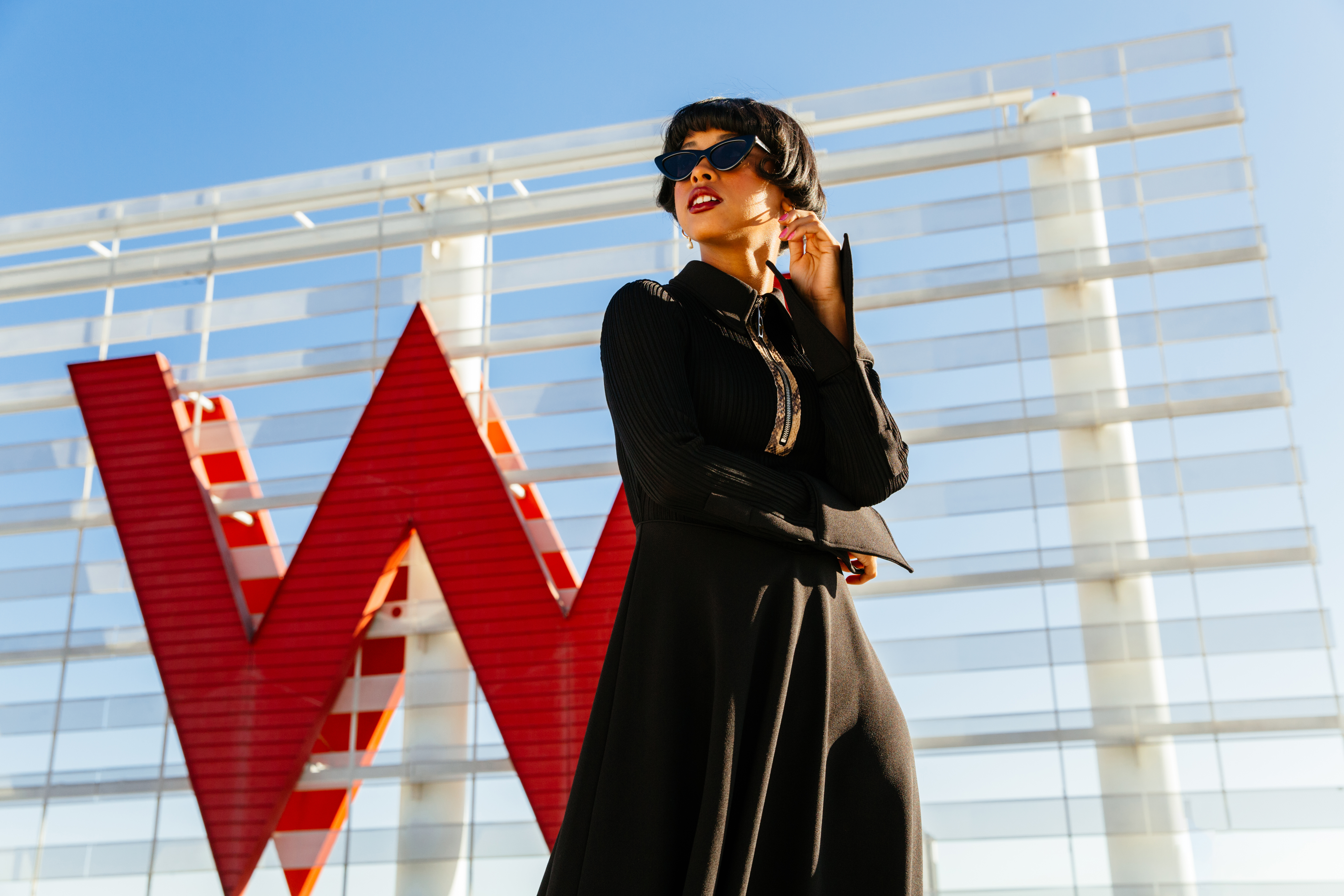
W Hotels x Rent The Runway Closet Concierge – Credit Ethan Gulley for W Hotels

William raved about the benefits of rental fashion services like Rent the Runway. “I love them. Half of the women I dressed for the Emmys used Rent the Runway!”

Such services allow you to try out things you might not be comfortable buying, rotate your wardrobe seasonally at affordable prices, and add to that knowledge of what makes you feel the most confident.

Also, if you’re staying at W Aspen, Colorado; W South Beach, Miami; W Washington D.C. or W Hollywood, Los Angeles, you’ll really feel like a star taking advantage of their new Rent the Runway Closet Concierge, which allows you to choose from destination-specific attire and have it delivered right to your hotel room.


A 118,000-square-foot, column-free exhibit hall will be complemented by a 28,000-square-foot ballroom, 18,000 sq.ft. secondary hall/ballroom, 2,100-seat theater and 46 breakout rooms for a total of 300,000 sq. ft. Anticipate only-in-Memphis touches, including a glass-walled board room, floor-to-ceiling windows bringing in natural light and Mississippi River views, and an outdoor terrace overlooking downtown Memphis and the river. The modernized facility will also offer free wifi in public areas.

Give your delegates the Memphis Experience

In our current Experience Age, delegates expect that meetings will draw on the unique character of the host city. In Memphis, one of Frommer’s “Best Places to Go” and a Cvent Top 50 Meeting Destination, that means you can:

Discover legendary music attractions that double as meeting and event venues

Meet on the grounds of Elvis Presley’s Graceland, then tour the mansion—followed by a concert at the new Graceland Soundstage. Chase music legends at the birthplace of rock ‘n’ roll—Sun Studio, the epicenter of the soul explosion—today’s Stax Museum of American Soul Music, and attractions including the Rock ‘n’ Soul Museum, Memphis Music Hall of Fame and the Blues Hall of Fame. (Our music attractions host meetings, private dining and breakouts, too.)

Immerse delegates in a city where play is just as important as work

In this music mecca, live music rocks seven nights a week. America’s most iconic street, world-famous Beale Street, is a sound place to start—or, let the music come to you. Memphis Tourism can help you book live, local entertainment for your event. But Memphis tempts delegates in many ways:

  • Experience the Mississippi River on a riverboat cruise, kayaking excursion or by viewing Mighty Lights, a new nightly light show that illuminates two bridges over the river.
  • Hear the powerful stories told at the National Civil Rights Museum.
  • Catch professional baseball and soccer at AutoZone Park or NBA thrills at FedExForum.
  • Visit award-winning Memphis Zoo (great for off-site events, too).
  • Choose your own adventure—from zip lining to paddleboarding—in the oasis of Shelby Farms Park, home of the FedEx Event Center.
  • Discover more live music—and Memphis’ diverse, delicious culinary scene—in vibrant neighborhoods. We may have 100+ barbecue joints, but Memphis is also home to James Beard-nominated chefs, craft breweries and a local distillery, Old Dominick, with a buzzy rooftop gathering space.

Find hotel options as unique as the city itself

Memphis is a river city on the rise, currently on track to add 2,000 new hotel rooms downtown. That includes a second convention center hotel with 500 rooms (the Sheraton Memphis Downtown will continue to offer 600 rooms directly connected to the convention center). But Memphis is also home to:

  • Bass Pro at the Memphis Pyramid, featuring a glass-bottom deck overlooking the Mississippi River, an aquatic-themed bowling alley, two restaurants on-site—plus meeting space and accommodations
  • The Peabody Memphis, the Best Historic Hotel according to USA Today’s 10 Best. It’s a prime spot to enjoy cocktails, summertime concerts and views of Mighty Lights.
  • The Guest House at Graceland, a AAA Four Diamond hotel on Graceland grounds

Benefit from the service that’s always been a trademark of Memphis

Maybe it’s just Southern hospitality, but Memphis has a reputation among planners and delegates for being:

  • Affordable, with discounted hotel, activity and food & beverage rates
  • Accessible: Memphis lies within a 6- to 8-hour drive of 85% of the U.S., while Memphis International Airport (MEM), currently undergoing a $245M modernization, services 100 flights daily.
  • Unmatched service, with a dedicated meeting and events staff, plus integrated management between Memphis Tourism and the Renasant Convention Center
Here’s to all the early risers, late-night typers, plane catchers and meeting makers. We see you. According to the Bureau of Labor Statistics, job growth for meeting and event planners is expected to grow, a lot. Growth is expected at a rate of 11 percent from 2016 to 2026. Compared to the total expected growth of 7 percent, event planners appear to have a bright future ahead of them on the job market. In honor of the effort you put into the strength, prosperity and well-being of our country—and really, of people around the world—we’ve put together a career resource guide with industry news, useful videos and tips for growing your career. Thanks for all you do!

Are helicopter tours safe? Yes, usually. Can they be safer? Yes, apparently.

Those are preliminary assessments being made in the aftermath of last week’s helicopter tour crash that killed six tourists and a 69-year-old pilot on a remote mountaintop on the Na Pali Coast of northern Kauai, Hawaii.

Even as the tragedy is being investigated by the National Transportation Safety Board, adherents of such tours are pointing out that the chances of dying while in the air may be roughly equivalent to being killed by a falling coconut. According to TripSavvy, there have been more than 50,000 helicopter tours on Kauai over the past 15 years, with well over 100 flights a day at times. According to Hawaii Helicopter Association (HHA), the Aloha State has the most regulated air tour environment in the country.

Nonetheless, this latest airborne crash brings the total number in Hawaii in the past 40 years to 60, nearly 20 with fatalities, reports BeatofHawaii.com. More than 50 passengers and 11 pilots have died.

FAA to Blame?

At least one Hawaiian official is putting some blame on the federal government—in particular, the Federal Aviation Administration. Ed Case, a Democratic congressman from Honolulu, issued a statement calling the state’s tour helicopter and small aircraft operations “not safe,” saying “innocent lives are paying the price.”

See alsoSouthwest to Cancel Additional Boeing 737 Flights

He continued: “We know this not only because of repeated fatal accidents and other incidents over the years, but because the National Transportation Safety Board, responsible for analyzing all such accidents, has placed safety improvements for such operations on its highest priority list. We further know that the Federal Aviation Administration, responsible for regulating our nation’s airspace, has not taken the NTSB’s concerns seriously.

“Finally, we know that the tour helicopter and small aircraft industry itself is completely incapable of self-regulation,” Case said.

Case called for “required FAA adoption of NTSB recommendations such as the ‘sterile cockpit rule’ required of commercial airlines (pilots must focus only on aircraft operation and safety; no tour duties).” A bill he introduced in September includes such a provision.

After a chopper went down on Oahu in April, State Representative Cynthia Thielen asked that the FAA ground all tour flights until an investigation was completed, but that didn’t happen.

An FAA spokesperson said the agency conducts regular oversight on all Hawaii air tour operators and ensures companies address any issues, the Los Angeles Times reported. An FAA proposal would require that pilots maintain a minimum altitude of 1,500 feet in order to avoid mountain peaks that are obscured in mist.

Hawaii isn’t the only state with checkered airborne tour concerns. A tour helicopter crash in New York City killed all five passengers in March 2018 when the aircraft fell into the East River. The Grand Canyon has seen numerous tour crashes, the most recent being a sightseeing helicopter that went down in February 2018, killing three.

Should You Fly?

Helicopter tours are among the most popular activities in Hawaii, and for good reason—much of the islands’ most dramatic beauty can only truly be seen and appreciated from the air.

Low visibility in rain and clouds has been responsible for 32 percent of all chopper tour crashes, according to BeatofHawaii.com, so avoiding tours on all but the sunniest days seems to be a sensible precaution (even though weather conditions can change quickly and vary dramatically on several parts of the same island). HHA is calling for a statewide weather cam network.

Doing due diligence on tour operators’ websites may offer peace of mind, at least. Blue Hawaiian Helicopters, for example, states that it was the first company in the U.S. to be certified under the Tour Operators Program of Safety and has instituted its own Safety Systems Management Program in cooperation with the FAA.

Kaui also has tour companies that fly fixed-wing planes, which have even better safety records.