IMEX America, the mega annual event for the meetings industry, always generates excitement as professionals from throughout the world gather to do business, learn, socialize—and have a blast doing all of it. This year’s event delivered on its promise, with plenty of cutting-edge experiential activities—including innovative offerings of C2 International, one of the leading B2B events companies.
Our Smart Meetings team hit the expo floor running at IMEX America, which ran Oct. 15–18 in Las Vegas, to keep you informed and inspired every step of the way.
Consider this your #IMEX18 highlight reel.
Plus, keep scrolling for breaking news and inspirational content, from puppy posts and Facebook Lives to Q&As with the masterminds behind the so-called Super Bowl of the meetings industry.
A record number of business cards changed hands at the eighth annual IMEX America in Las Vegas as some 70,000 formal appointments took place at Sands Expo in a complexly refreshed Venetian Palazzo experience. That number included 64,000 individual appointments, an increase of 7 percent. A total of 70 percent of those appointments had RFPs attached, according to reports from the closing press conference of the three-day event this week.
Overall, 13,000 people donned the IMEX badge, including 3,300 hosted buyers. As part of a partnership with Meeting Professionals International (MPI), 850 people arrived a day early to attend educational sessions at Smart Monday. Additionally, MPI Foundation raised $400,000 for scholarships and programs, thanks in large part to the successful Rendezvous event at Drai’s Nightclub. Association for Women in Events hosted five 2018 Women in Events Hall of Fame inductees on the trip and honored them with the help of IMEX Group CEO Carina Bauer at a Women in Events Happy Hour.
Partnerships were the order of the week as ASAE drew 120 association executives for The Association Leadership Forum and SITE Young Leaders Conference brought 1,000 meeting professionals with the goal of advancing their careers.
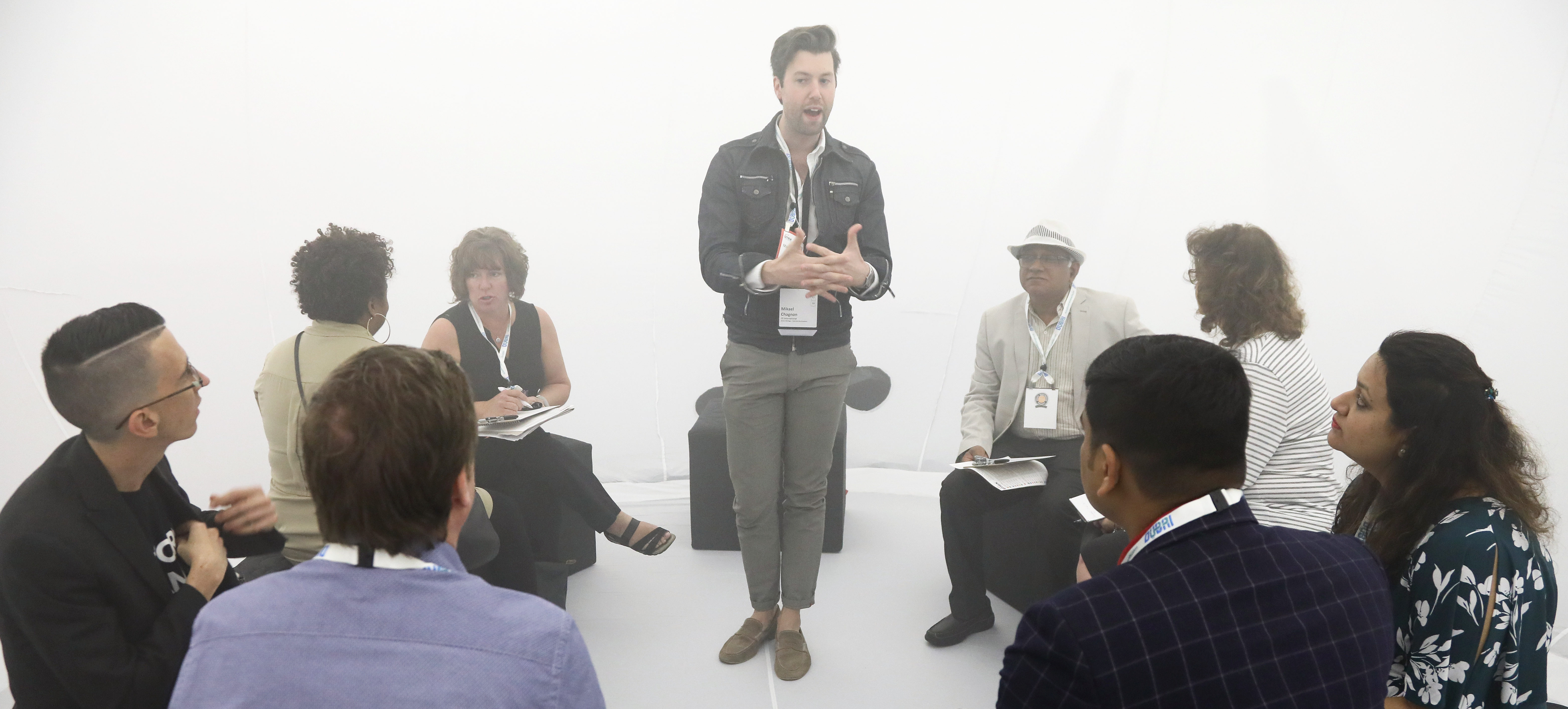
As IMEX founder Ray Bloom explained, the numbers don’t tell the entire story. IMEX America is just as much about the connections and the legacy left by the experiences that occur when that many people come together to brainstorm new ways to touch audiences. A partnership with C2 International brought Cloud Lab—an example of a human-centric design that C2 Executive Director of Business Development Jessica Gibbons uses to help people learn, connect and “have one hell of an experience.”
Learning and connecting in the mist of the C2 cloud lab
The Live Zone, Zen Space and interactive Tech Zone were also added to the expanded event floor to offer more inspiration to planners looking for new ways to interact with attendees and streamline processes. Intimate educational sessions were housed in blow-up igloos, with participants wearing headsets and asking questions through the Slido platform.
All of this business being done meant that the announcement at the gathering by the Events Industry Council of a new report showing that the meetings business generates more than $1 trillion worldwide in direct spending—a number on par with the consumer electronics industry—probably didn’t come as a shock to anyone in the building. However, Bloom called it the “best kept secret that needs to get out.”
For the 4,800 attendees at PCMA Convening Leaders in Pittsburgh—including more than 900 Live Stream attendees and 980 first-time attendees—the surprises around every corner added up to a treasure trove of rich insights worth putting to work right away. Here are some ideas from day two that you can steal.
We were lucky enough to have the incomparable @ThisIsSethBlog on our main stage to open #PCMACL today. Hear a quick clip of his thoughts on building the best audience for you! #eventprofspic.twitter.com/iXZqcZcJLl
The opening session with author and marketing pioneer Seth Godin pulled some of the most “aha-moment” insights from his 18 books, including this observation: You wouldn’t send a mass email to all possible people you might want to share a romantic dinner with; similarly, you need to customize your invitation to attendees.
“We don’t sell breakout sessions,” Godin said. We sell the way it feels to be in the room and seen. We are in the business of making change happen.”
Not everyone has the same problem, however, so business event strategists must learn what makes each person special and speak to that.
Godin advocated for sawubona, the Zulu greeting for “I see you and your desires and fears.” Help people feel seen.
Cultivate Smart Feelings
A new era emerged at #PCMACL as leadership announced initial attendance numbers-4,800 (including more than 900 on livestream). PCMA Foundation totaled $664K in scholarships and grants. pic.twitter.com/91EUNAY62a
A couple of hours later, the results of a shared PCMA and Marriott International study echoed the need for emotional intelligence when designing conferences.
“One size fits all is dead,” said Kate Fairweather, senior innovations consultant for Fahrenheit 212. Planners need to know what makes attendees tick. By learning their hobbies and passions and proactively creating personalized experiences based on those insights, they can show every attendee they are special.
Other insights from the report included the value of embracing orchestrated serendipity—scheduling freedom and surprises—and embedding an overarching message in all aspects of the agenda.
The five trends that can help planners deliver better conferences will be covered as part of the Marriott Convention and Resort Network (CRN) Mastermind program. The peer-to-peer communities of small groups of planners will launch in March, leveraging Marriott mentors, subject matter experts and a digital lab with video resources—”:60 Smarter” and “Meetings. Made Here. A Marriott CRN Travel Show.” Senior Marketing Manager Amy Popper announced that in addition to five-month programs of monthly virtual discussions, a partnership with PCMA will allow groups to meet in person.
Be Data Wise
How do you safely acquire and manage all that information about your attendee’s deepest desires? Freeman is glad you asked. The brand-experience company announced the launch of Freeman Data Solutions, a real-time, comprehensive data capture and analysis solution.
This is an end-to-end service that combines Freeman and other data platforms with human and artificial intelligence benchmarks in a seamless experience for the attendees and planners, explained Ken Holsinger, Freeman vice president of digital solutions. “It gives event organizers the ability to make better and more informed decisions,” he said.
A report from The German Convention Bureau released at PCMA Convening Leaders in Pittsburgh found that yes, event professionals are, in fact, movers and shakers. The Future Meeting Space project, which was funded by Professional Convention Management Association, surveyed planners about strategies for a successful event, and the top answers were: knowledge transfer, disruptive elements and customized content for different personas.
“Attendees are happy with events if they learned something new that they can apply in their everyday work and if events surprised them or triggered changes,” the authors said.
Day 3 of PCMA Convening Leaders was filled with transformational surprises. Here are some ideas you might want to steal.
Speakers who have overcome obstacles to accomplish great things motivate others to follow in their footsteps. After hearing author Steve Pemberton’s journey from a negligent foster home to a successful corporate career, thanks to a couple of people who believed in him and encouraged him, who wouldn’t leave inspired to be there for our teams and attendees when they need us most?
Similarly, the founder of Periodcon, Gen Zer Nadya Okamoto, who runs a nonprofit that provides menstrual hygiene products to the homeless, left the audience thinking about how it could bring up issues that need to be addressed. And one of the most famous gender disruptors of all, tennis superstar and equal rights champion Billie Jean King, made a plea for working as teams regardless of gender, race or sexual orientation while telling her life story.
King counselled participants about the wisdom of nurturing relationships, lifelong learning and embracing the role of problem solver—three things torn right out of the event professional playbook.
Attendees are handing over control of their most valuable resource—their time—to event professionals when they enter the convention center. The faster planners can gain their trust, the more successful the event’s business objectives will be. Two speakers addressed the quickest routes to getting people to let down their guards.
Rohit Bhargava, founder and chief trend curator at Non-Obvious Company, suggested telling the truth, and not just the pretty parts. “Show the work,” he said. “Give the behind-the-scenes view and let them know went into producing the show. Then they will appreciate all you did for them.”
Meanwhile, over on the Elevate Stage, Sourabh Kothari, CEO of IntentWave, advised using neuroscience to drive behavioral change. “Neurons that fire together wire together,” he said. Only when the content resonates with something an attendee cares about will it be relevant enough to associate with a memory. “Find a way to address the attendee’s future self,” he said.
The final day of PCMA Convening Leaders at David L. Lawrence Convention Center in Pittsburgh was the exclamation point on the message that business event strategists can and should be a force for good in the world.
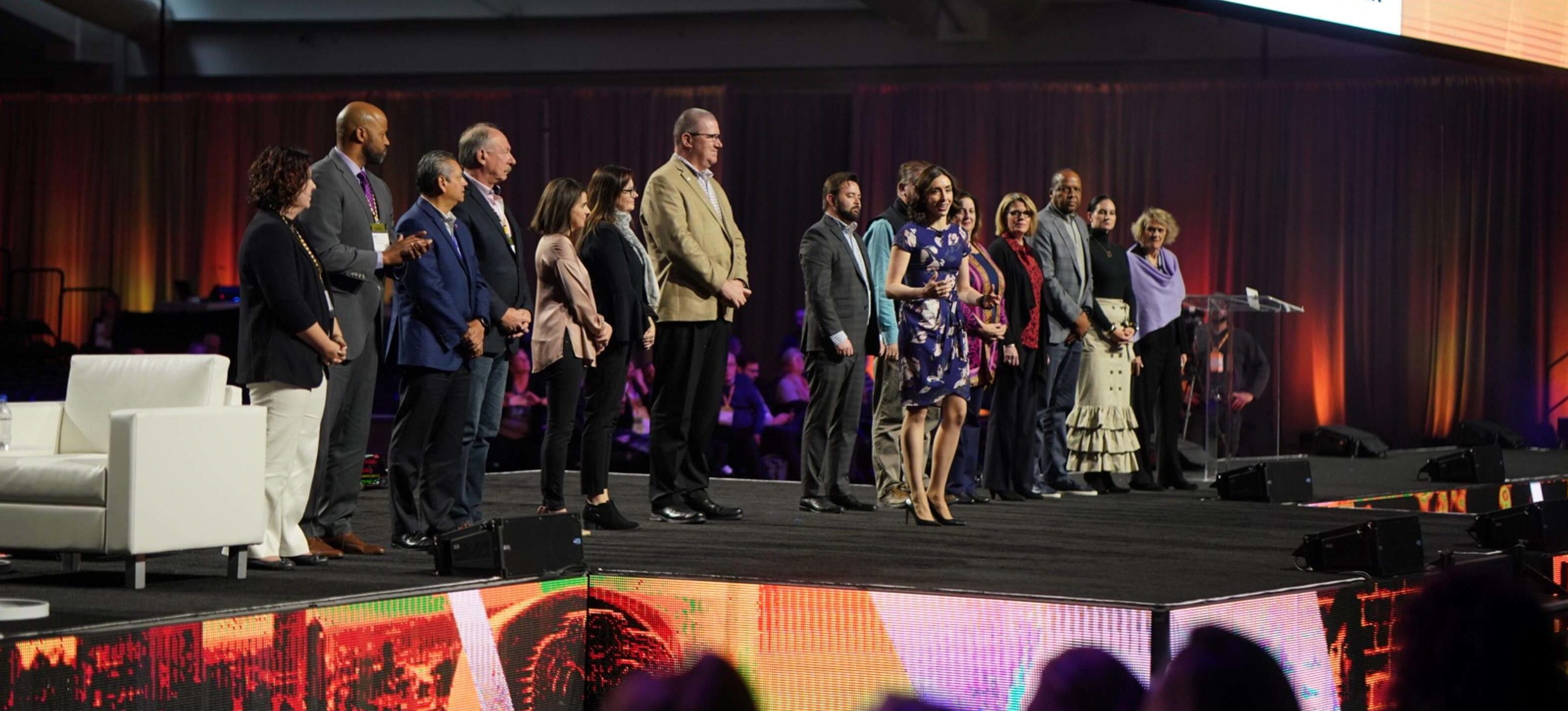
“No economic good will be successful if we don’t have social good,” said Sherrif Karamat, PCMA president and CEO, in a small breakout room before the final speaker (more on actor Geena Davis later) took the stage to address the approximately 3,800 people who traveled from 36 countries to be there for the flurry of networking and education sessions. More than 900 also watched parts of the presentations on livestream.
“Doing good” may sound like a stretch when event managers are already turning themselves into pretzels dealing with so many other challenges, including navigating rising costs, managing risk and picking a registration technology platform—all topics covered in Convening Leaders sessions, by the way. Karamat broke the challenge down into specific steps and demonstrated how it is done by taking some chances.
Partner on the Tough Issues
Karamat is not shying away from big problems, but he is also not trying to boil the ocean alone.
In May, he challenged the biggest players in the industry to sign The Ascent CEO Promise, a pledge to be more inclusive in their workplaces and events. This includes working to ease tensions around gender, sexual orientation, race, ethnicity and disabilities. So far, 130 companies, including Hyatt Hotels Corporation, Greater Miami Convention & Visitors Bureau, Destinations international and National Restaurant Association, have signed on. Those companies now have access to webinars and training materials designed to overcome unconscious bias and will be part of the conversation about how to continue to make workplaces work for everyone.
Cultivate Empathy
IMEX sponsored a series of VR booths designed by Stanford Virtual Human Interaction Lab and Columbia University to help people experience realities very different than their own—those of a homeless person, a minority and a degrading ecosystem. The simulations, associated sessions and after-chats (new agenda items developed at a previous hackathon to help people better process and take action on presentations) leveraged technology to address very human problems.
“Event professionals play a powerful role in bringing people together around the world, sparking conversations one person at a time,” Karamat said.
Put Resources in Right Hands
Word count: 0
Last edited by Sofia Wright on October 8, 2019 at 9:58 am
PCMA Foundation, which raises funds through Party with a Purpose and other vehicles throughout the year, collected $644,000 in scholarships and research grants to support the professionalization of the industry.
Another issue PCMA Foundation is tackling with the help of others in the industry is human trafficking. “It happens everywhere, in hotels and airports, and we are uniquely positioned to say something if we see something,” Karamat said.
At the signing of The Code of Conduct for the Protection of Children from Sexual Exploitation in Travel and Tourism, PCMA Foundation Chair and President of Maritz Global Events David Peckinpaugh and incoming chair and Executive Vice President of Smith Bucklin Carol McGury explained that by partnering with ECPAT-USA, PCMA can achieve more together than if the organization tried to develop all the resources alone.
“As an industry, currently worth over $150 billion, we have the power of advocating and raising awareness of the human trafficking epidemic, and have a stronger voice for the vulnerable, whose opinions and opportunities have been taken away from them,” said Peckinpaugh, who presented a session devoted to the issue.
As the organization continues to grow in the Americas, Europe (where knowledge exchanges are delivering resources and which will host an influencer summit in Barcelona in September) and Asia-Pacific (where the organization has a growing presence in Singapore and is planning a conference in Macao in November), Karamat hopes PCMA can be an even greater force for good around the world.
“Business events are a platform for economic and social progress—that doesn’t have borders,” he said.
Choose Speakers Wisely
The people on stage set the tone for the discussions at the closing reception, on social media and back in the office. Being intentional about putting a variety of faces representing a variety of ages, genders, races and points of view allows the diverse audience members to feel represented and welcome.
Karamat went beyond the industry to find people whose stories inspired others because they did the right thing when it was not the easy thing.
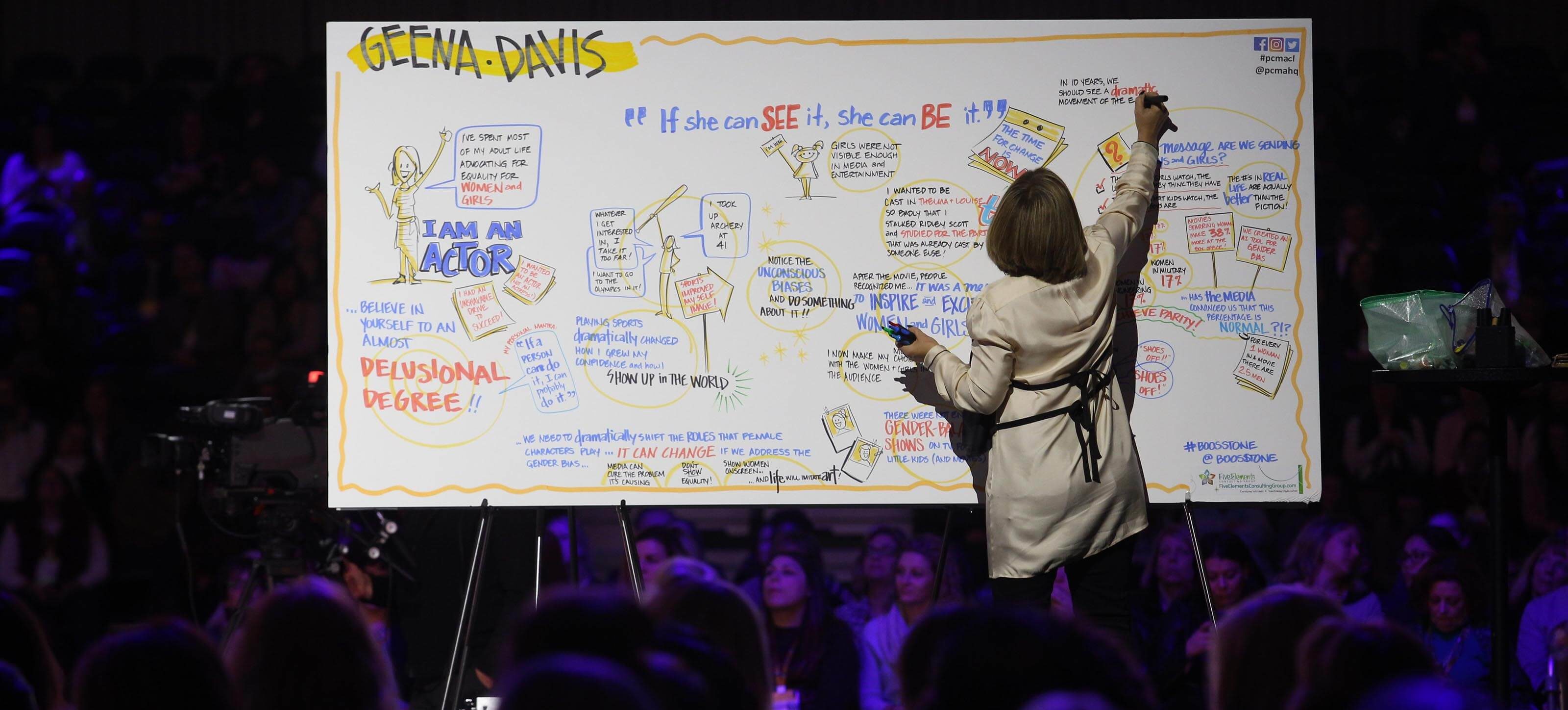
In addition to marketing guru Seth Godin, diversity expert Steve Pemberton, millennial entrepreneur Nadya Okamoto and tennis legend Billie Jean King, Karamat brought in some Hollywood star power—Geena Davis—to talk about the power of raising awareness (I told you there would be a Thelma & Louise moment). After a career playing role models that included a gifted baseball player in A League of Their Own and president of the United States in Commander in Chief, she realized how lopsided views of women were on the big screen and started Geena Davis Institute on Gender in Media, focused on collecting data on children’s programming. Her studies found that male leads outnumber female leads 2-1. Don’t get her started on the types of roles they get to play. And the statistics are even worse in cartoons, where the mother is almost always killed off right away and princess seems to be the only job worth pursuing. This is despite the fact that statistics show movies with strong female lead characters make 38 percent more revenue.
Davis blamed this misrepresentation for creating unconscious bias that keeps girls from going into math and science careers, and said the first step is awareness. “If she can see it, she can be it,” Davis said.
That is why Karamat thinks event strategists are in the perfect position to bring about change. “The first step is awareness of a problem, followed by ownership—that is a difficult one—and then you can move to action,” he said.
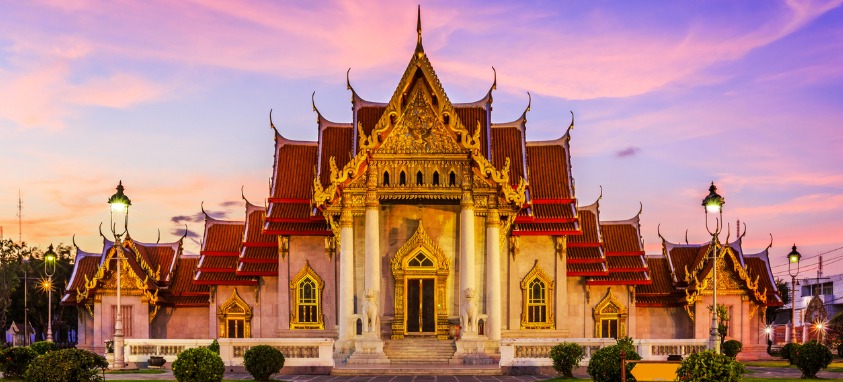
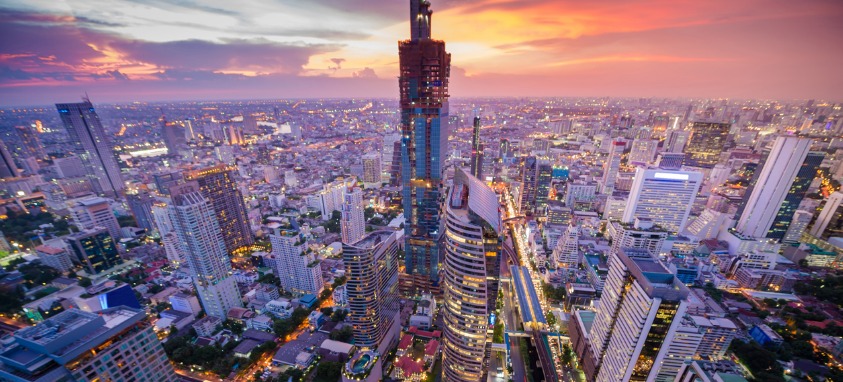
Social responsibility and relationships must be central to incentive travel planning, according to a document crafted at SITE’s Global Conference in Bangkok in January.
The Bangkok Manifesto started as a series of workshops with SITE’s international board of directors, trustees of the SITE Foundation and a cohort of global experts in the field of incentive travel, facilitated by Martin Sirk, former executive director of ICCA. The final 10 statements of The Bangkok Manifesto were then crowdsourced with the full conference assembly using Slido, the online, audience engagement platform.
SITE CEO Didier Scaillet called the resulting list a core reference point for incentive travel professionals. “SITE’s voice needs to reach out beyond our membership and our industry, and into the business world and society itself, positioning incentive travel as an extraordinarily effective tool for improving business performance and travel as a transformative agent for positive change in communities and society at large,” he said.
Ciara Gallagher, manager of Meet in Ireland, which sponsored the report, cited incentive travel’s role as the fastest-growing sector of MICE, with highest-per-person spend and widest reach across the destination supply chain, as the reason the principles needed to be captured in a shared document. “Incentive travel delivers significant economic benefit for destinations like Ireland, along with the wonderful boomerang effect. Satisfied clients tend to return again and again and generate great ‘word of mouth’ for the destination” she said.
A print collateral piece, complete with commentary from incentive industry thought leaders, will be launched at IMEX Frankfurt in May 2019. The Vancouver Manifesto will be crafted at SITE’s annual conference in January 2020.
The Bangkok Manifesto
Following are the basic principles of a healthy incentive industry, according to attendees of SITE Global Conference 2019.
Every stakeholder in the incentive travel community should embrace social responsibility as a core part of their business philosophy and recognize that our business practices and policies will define how that responsibility is exercised.
Relationships and teamwork build business results, not isolated individual effort. And nothing creates and strengthens relationships more effectively than shared incentive travel experiences.
Incentive travel contributes significantly to economic growth, partnerships within and between organizations, and innovative thinking by both participants and the organizations that create the programs.
The interests, aspirations and perspectives of incentive program participants should be placed center stage in our industry’s strategic thinking and advocacy work.
The definition of luxury has changed. The era of logos and brands is ending. Luxury, in the future, will be defined by authentic, unique and personal experiences.
Incentive travel helps to create corporate cultures that are fueled by motivation and focused on future success.
Our industry must encourage more second- and third-tier cities and nonurban destinations to embrace incentive travel as part of their business mix, highlighting that success in our business is not dependent on massive infrastructure or investment.
Incentive travel drives human capital excellence and innovation within destinations, with profound benefits for other targeted business segments.
Emerging destinations that include incentive travel in their strategic plans will experience faster economic growth and human capital development than would otherwise be the case.
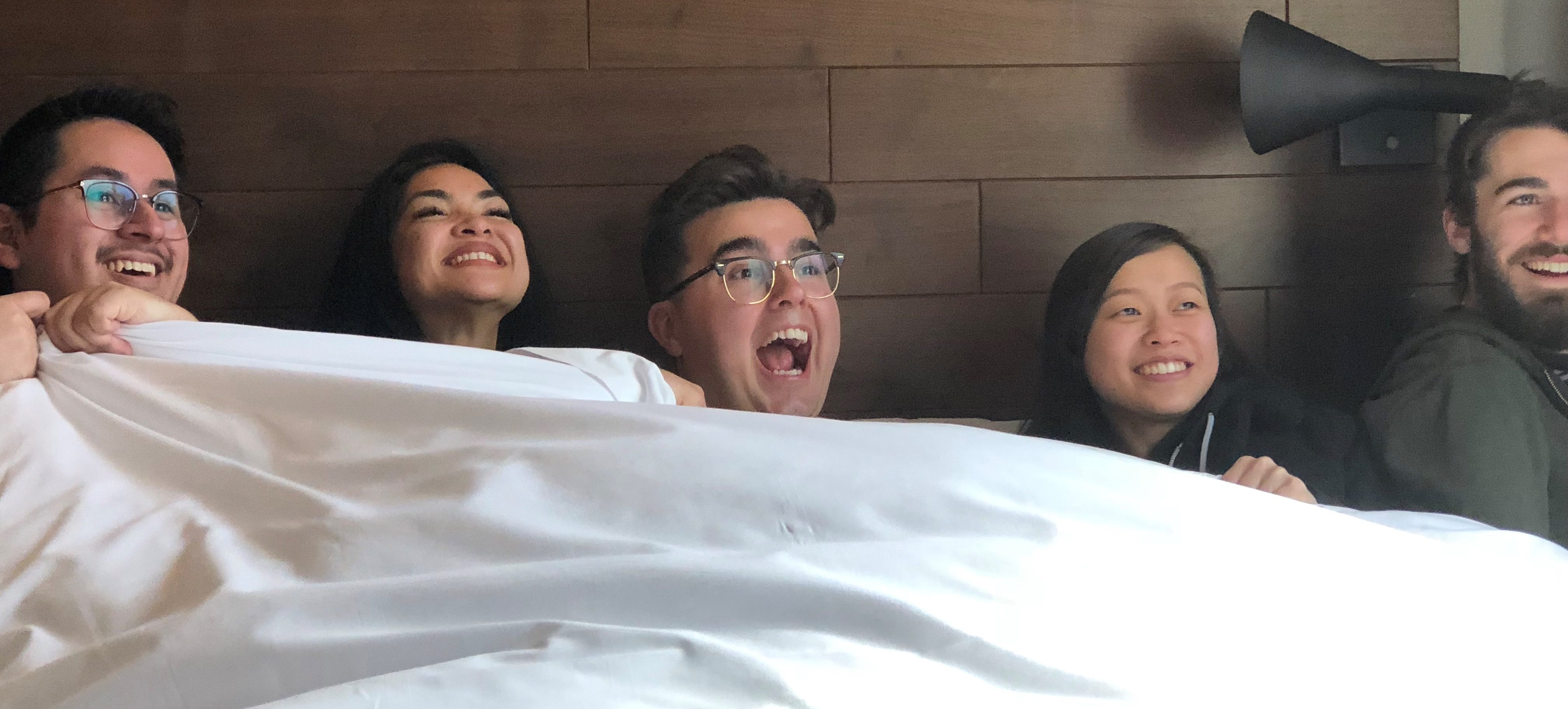
What can event professionals learn from participants in a 48-hour filmmaking challenge in a luxury hotel in Vancouver, British Columbia? Crafting compelling movies and planning meaningful events both require a lot of the same skills sets—storytelling, creativity and dedication. Smart Meetings went behind the scenes at a two-day competition with four teams of up-and-coming filmmakers inspired by randomly assigned spaces in The Douglas, an Autograph Collection Hotel and the adjoining JW Marriott Parq Vancouver.
Following are some of the lessons learned that event professionals can focus on to take their event journey to the next level.
Go Where the Talent Lives
It was only natural that the challenge was held in the third-largest filmmaking destination in North America, explained David Shepheard, Vancouver Film commissioner and one of the judges of the competition. Vancouver has become known as Hollywood of the North. The concentration of special effects talent is a resource for event professionals looking to add wow to a meeting.
Speakers from Industrial Light and Magic, which produced special effects for Star Wars and Harry Potter movies, and EA Sports, which has 2,000 people bringing gaming to life, live and work in British Columbia. “A film town like Vancouver can help make something ordinary into something more special,” Shepheard said.
Form Your Own Dream Team
Each team recruited a writer, director, producer and videographer. Over the course of the challenge, each of the different roles had its own deadlines and curve balls to field—decisions about equipment to “purchase” using the $2,000 budget allowed, talent to “hire” and ways to incorporate required elements (any ideas for riveting plot twists involving maple syrup?).
Planners face similar choices on the fly. When they evaluate sourcing a property, they are looking beyond the physical space to the team that will be working with them to come up with creative solutions. Planners often have a dream team of suppliers, audiovisual experts, linen companies and speaker sources who have proven that they can deliver even when challenges arise at the last minute.
As Director Christian Mejia from the short film competition calling itself Team Pineapple said, “For both moviemaking and meeting planning, you have to have a final vision, a great team, good communication and a flexible attitude.”
For Marriott’s Convention and Resort Network (CRN), that means 100 properties designed for large groups with staff trained in accommodating the special needs of conferences and events. These people do more than take orders: They act as partners, building on ideas, coming up with new solutions and suggesting the unexpected.
advertisement
“We like to collaborate,” said Amy Popper, senior marketing manager at Marriott’s CRN. “It is fun for us when planner partners want to completely transform a room. Instead of thinking theater style or classroom, we think art gallery or office? We love creating special meeting moments.”
That love of being challenged was echoed by Amy Ballard, director of sales and marketing for both properties in Parq Vancouver. “Hotels have very interesting spaces outside the traditional meeting space,” she volunteered. “Ask your partners to show them atypical spaces, such as suites, hidden corners and outdoor spaces. Let’s start creating spaces that surprise and delight attendees.”
Adapt to New Reality
Veteran event professionals know that expecting the unexpected is a way of life. You can plan and create spreadsheets and tabbed binders all you want, but on the day of the conference, someone’s flight is going to be delayed or a speaker will call in sick. The same is true in a filmmaking challenge. Sure enough, one team was delayed coming into town from Los Angeles and had to make up time when it arrived.
In the end, planners and producers often have to work with what they have, rather than what they wish they had. In this case, the teams were randomly assigned rooms for their scenes—a meeting room turned into an art gallery using items repurposed from other parts of the hotel, a penthouse suite with a literary den theme or a hotel room. However, they quickly learned that what they were given had much more to offer than might originally have appeared.
Team Cinema Roll, which won the competition with a 10-minute piece they called “Nut Job,” credited a love of making stories for their success. Will Osland, the team’s writer said, “You have to love the scramble.”
Mejia added this nugget of wisdom: “Be calm; you also have to enjoy it.”
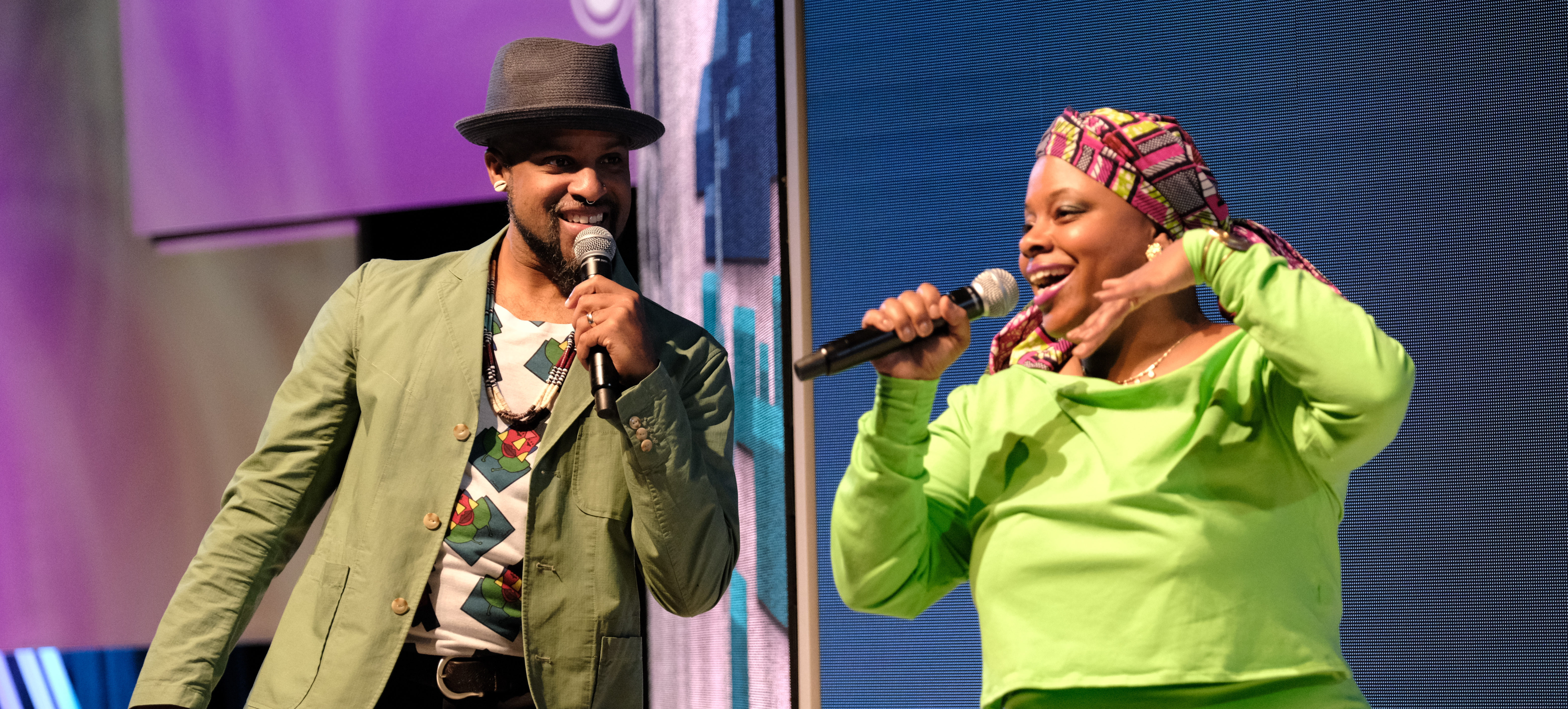
Attendees returning this week from ASAE’s Experience Design Project (XDP) at Gaylord National Resort and Convention Center in Maryland brought with them lots of ideas for leveraging the power of play and personalization in creating agendas. The experimental program prioritized modeling new ways of making attendees the center of attention. From Stanford University improvisation professor Dan Klein to UnMarketing President Scott Stratten and Broadway actor Alton White, humor and flexible thinking were intertwined.
Alton White
“The importance of play comes down to neuroplasticity—the behavioral flexibility and growth potential of the brain,” explained Rhonda Payne, ASAE Chief Learning Officer. Different types of play (there are seven kinds) stimulate our brains in healthy ways, improving cognition and memory. Play trains our brains for adapting to the unexpected. A balanced lifestyle with enough play, social connection and downtime is vital for human health, and its vital to the work association leaders and event strategists do every day, she concluded.
From self-defense classes to self-selected #myxdp experience agendas along three tracks—community, experience and strategy—the two-day event tried to offer something that would appeal to everyone. This was particularly important as, once again, attendees had the opportunity of naming their own price of admission after seeing how much value was delivered. While it is too early to know what people will ultimately decide it is worth, following are nine ideas worth stealing.
1. Listen to Your Audience
Collect feedback and make adjustments in real time. This can be done in the form of surveys or personal phone calls. “Always design with your audience in mind,” said Krista LeZotte, associate director of meetings operations and special events. Balanced agendas allowed ASAE to meet the immediate needs of attendees. By including white space, downtime, ASAE made it possible for those who are not extroverts to escape the crowd for a little bit of one-on-one or alone time.
2. Really Partner
Talk to sponsors about how they can be integrated into the event with things such as tours and content, rather than simply standing behind a booth. Partners are not just walking checkbooks.
3. Use “Don’t-Make-Me-Think” Design
“Remove as much friction as possible,” said Amy Ledoux, senior vice president of meetings and expositions. This requires extreme communication (err on the side of providing too much detail in the form of clear signage about where to go for everything from coffee to sessions and verbal instructions about the agenda). Answering these nagging logistical questions before they come up will give attendees clear heads to absorb the lessons of the event, she said.
4. Model Creativity
Every event faces challenges. Whether it is a speaker going AWOL or running out of space, you can turn that problem into a teaching moment by innovating on the spot. Set up a group discussion in a hallway or landing and you have a fun pop-up space. Call on an attendee to lead the discussion and you have a meaningful session. Problem solved.
5. Celebrate Engagement
Encourage your audience to actively participate by incentivizing action,” said Ledoux. ASAE held a drawing for luggage in exchange for crowdsourced ideas and it worked. Badge stickers and other special recognition can make attendees feel special and encourage others to step up.
6. Start a Conversation
Once someone registers, that should be the beginning of a meaningful relationship. An intentional engagement plan with weekly emails and social media exchanges can heighten the sense of anticipation. To make it even more fun, provide attendees with a buddy code so they can bring a friend.
7. Make Programs Meaningful
If you are going to kill a tree to create a printed program, include valuable information people will want to keep and refer to later, rather than tossing in the recycling bin on their way out of the convention center. Include exercises, places for notes and inspirational posters. That way the event lives beyond the closing session.
8. Plan for Surprises
Not everything has to be announced in advance, says LeZotte. Announcing additions to the schedule at the event keeps things fresh. Apps make pushing that information out easier. Prizes can also add to the sense of delight.
The event ended with FriYay Experience featuring Nina West from RuPaul’s Drag Race. By not taking themselves too seriously, it freed up time to get to the important business of delivering a great event.
Anne Hamilton received the Industry Leader Award at MPI President’s Dinner. Photo credit: MPI
Celebration was in the air at #WEC19 as some 2,600 attendees gathered in Toronto to share experiences and learn from each other.
MPI President Paul Van Deventer christened the event the largest in a decade and said the focus on sharing, inspiring and incorporating local elements built on last year’s event in Indianapolis.
MPI focused on involving volunteer leaders, chapter networks and the power of the MPI Academy to deliver value.
Incoming Chair Annette Greg, senior vice president with PRA Business Events, said she is eager to engage all the communities within MPI, including administrative planners, association planners and women.
Member Focus
MPI celebrated outstanding members with the RISE awards. Joe Marcy, regional sales executive with Monterey County Convention and Visitors Bureau in California, received the Member of the Year Award. Julia Spangler, founder of Sustainable Events Consultants, was honored with the Young Professional Achievement Award. Gary Murakami, director of global sales for MGM Resorts International, received the Meeting Industry Leadership Award.
On Monday night, members came together to celebrate Anne Hamilton, who received the Industry Leader Award at MPI President’s Dinner. Hamilton, a long-time Walt Disney Company veteran, started her hospitality career at the age of 10 in her family’s hotel before joining Hilton Hotels & Resorts. Between the dinner, Rendezvous and a silent auction, MPI Foundation raised more than $220,000 for research and scholarships.
Constant Vigilance
Outside Metro Toronto Convention Center, 2 million people poured into the streets to celebrate the Toronto Raptors’ NBA Championship win. Just before 4 p.m., a shooting there left four injured and sent thousands running. Some streets and hotels were closed, interrupting transit to and from the convention center and associated events.
Van Deventer said his team was prepared, as they always have emergency protocols in place. They locked down the facility until they knew it was safe, then began communicating through the app and other means to let people know the best way to navigate the busy streets.
Photo credit: Jacob Slaton Photography
When 950 event professionals came together at JW Marriott Los Angeles L.A. Live in June for the annual PCMA EduCon, they left with more than swag bags—although there was plenty of that in the L.A. Amenity room. The event was designed to create connections and tell stories.
To do that, PCMA consciously kept the number of attendees more manageable than at the annual Convening Leaders event, which will be in San Francisco in January of 2020. “Although it is the largest EduCon we have ever had, the intimacy of the conference allows you to visit rather than growing it so big that you only pass people in the hallway,” said Greg O’Dell, PCMA Board chair and Events DC president and CEO.
Storytelling is an art and we forget how powerful it is, even in business, said Sherrif Karamat, PCMA president and CEO. “Telling true stories about how we arrived where we are is how connections are made,” he explained.
John Ondrasik; Photo credit: Jacob Slaton Photography
John Ondrasik, singer and songwriter behind Fighting for Five and the songs “Superman (It’s Not Easy)” and “100 Years” explained his 20-year struggle leading up to his “overnight success” and the battle to stay out of the one-hit wonder club. He credited his success to a desire to get the little things right, making himself uncomfortable by putting himself in new situations and listening—often to his children who have a way of helping him be in the moment and focusing his mind on what is really important.
“You have to trust your gut and ask yourself what kind of world you want,” he said. “What would you do if you were creating an event for yourself?” he asked.
It helped that his insights were punctuated by snippets from his hits that immediately had the audience nostalgic for when they first experienced “Chances” from the movie “The Blind Side.”
A Call for Authenticity
Photo credit: Jacob Slaton Photography
Diversity and inclusion expert Ritu Bhasin shared her story as proof that the path to an empowered career and life is rooted in the courage to be, if not your completely authentic self, at least an adapted self that still contains elements of what makes us unique. “When we submit to performing and adapt to what we think people want us to be, it is disempowering and unhealthy,” she explained.
As the daughter of Indian immigrants, Bhasin experienced extreme physical and social bullying as a child based on her family, clothes and religion. “The feeling of isolation was the worst,” she said. That led her to try to adapt the dominant way of dressing, talking and acting to fit in to her career as an attorney. It also was not healthy.
Only when she embraced her true self and was able to bring all of her creativity and insights to her clients was she able to look forward to going to work—at least most days. Now, she helps corporations go beyond saying they are inclusive and shift to actually valuing differences. “Authenticity is the antidote to exclusion,” she said.
Sounds Like a Superhero
Sherrif Karamat; Photo credit: Jacob Slaton Photography
Tamika Catchings, superstar player for the WNBA Indiana Fever, was also a victim of bullying as a child because of a hearing problem that required her to wear hearing aids and made speech difficult. She worked relentlessly to express herself in the language of sports and welcomed a team around her that was there for the good and the bad and succeeded beyond her wildest dreams.
“Embrace any opportunities that come your way,” she advised.
Tamika fought adversity an average person might not think about—a hearing disability, Karamat explained. “She tells about her journey in a way that is effortless and resonates. You are there rooting for her. That is the power of storytelling,” he said.
Experience Stickiness
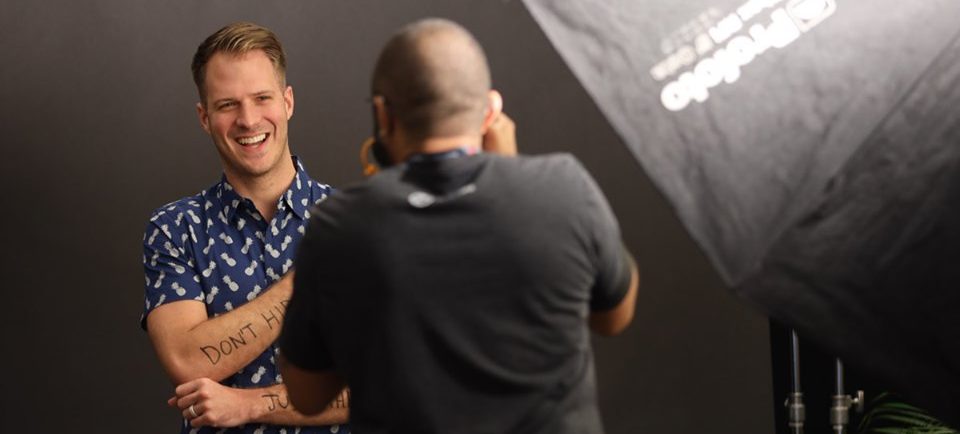
At the end of the conference Karamat shared his own Dear World story written on his arms and expressed as, “The day the yellow flower bloomed.”
He described the goal of the conference as an agenda designed to create emotional impact because touching hearts is how people learn. “Meaningful experiences create stickiness,” he said.
Not all the storytelling was verbal or from the stage. An Instagram-worthy greenhouse of juices shared the story of wellness. Stories of failure used as learning experiences were told from a boxing ring that brought people outside to experience the Southern California sun.
“PCMA is willing to experiment and take small risks; we act as Guinea pigs,” he said of the different learning environments based on all the different ways people learn. “We may only retain 7 percent of what we hear, we remember 90 percent of what we see or experience,” he said.
“We will continue to try to raise awareness of what business events do for communities, for social good and for everyone’s personal and professional development,” he said.












 It was only natural that the challenge was held in the third-largest filmmaking destination in North America, explained David Shepheard, Vancouver Film commissioner and one of the judges of the competition. Vancouver has become known as Hollywood of the North. The concentration of special effects talent is a resource for event professionals looking to add wow to a meeting.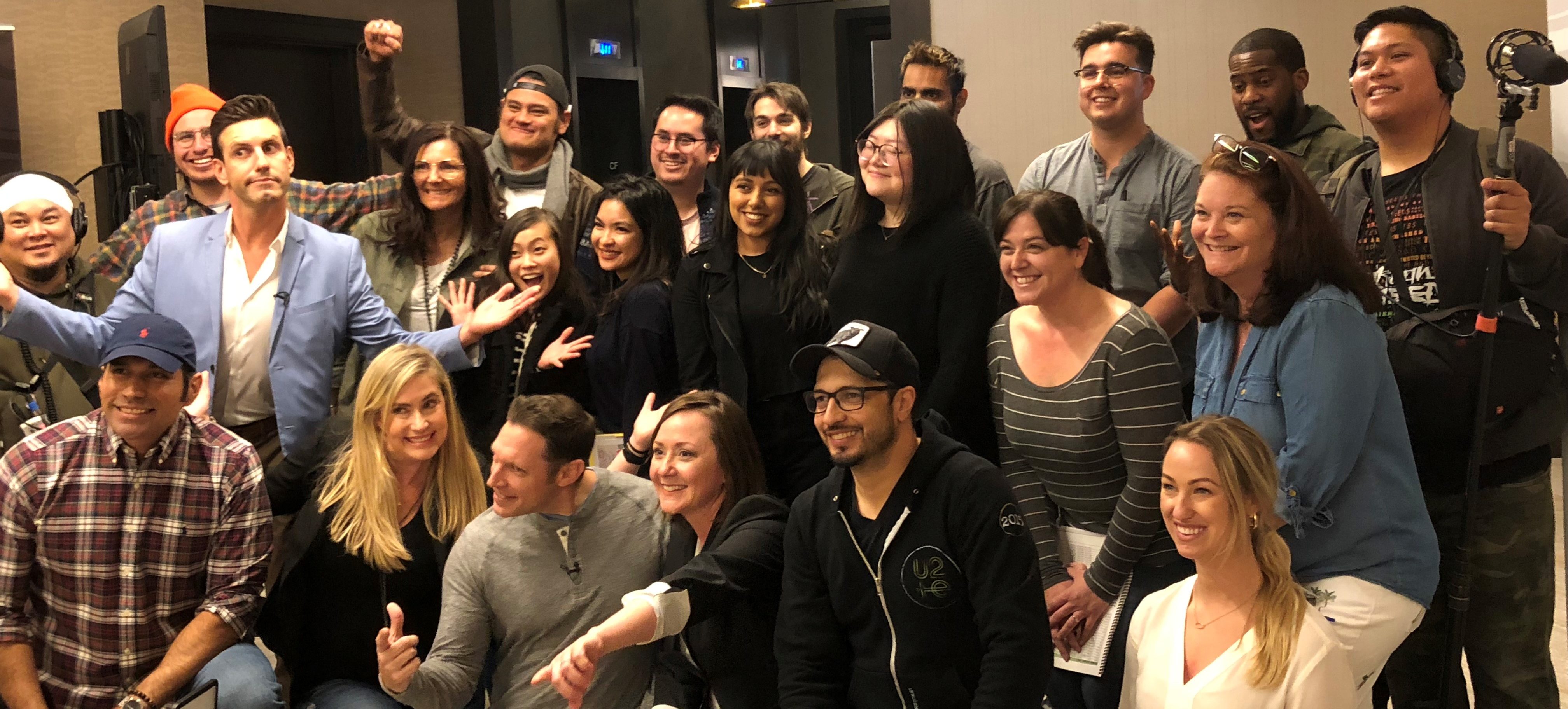
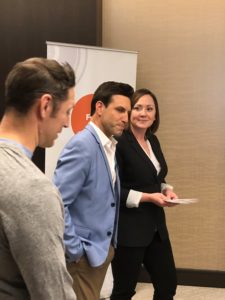 Veteran event professionals know that expecting the unexpected is a way of life. You can plan and create spreadsheets and tabbed binders all you want, but on the day of the conference, someone’s flight is going to be delayed or a speaker will call in sick. The same is true in a filmmaking challenge. Sure enough, one team was delayed coming into town from Los Angeles and had to make up time when it arrived.