Destination Showcase could become even more relevant for event professionals in the coming years due to a new collaboration between Destinations International and PCMA.
At Destinations International’s Annual Conference 2019 at America’s Center Convention Complex in St. Louis this week, company President and CEO Don Welsh and PCMA President and CEO Sherrif Karamat announced that the two organizations would work together to “evolve and elevate.” That’s the theme for the #AC19StLouis event—the annual Destination Showcase, a one-day event that connects business event organizers with convention and visitors bureaus each February in Washington, D.C.
The new joint venture will tap into the educational offerings of PCMA and the commerce opportunities of Destinations International. In 2021, the event will be redesigned with an emphasis on being more interactive.
“We are thrilled about this new element of collaboration with our long-time partner, as it will further Destinations International’s work in communicating the extensive services that our members provide to meeting planners throughout their event planning process,” Welsh said.
“We have had a history of collaboration, so this is a natural evolution of our relationship,” Karamat said.
At Destinations International’s 2019 Annual Convention at America’s Center in St. Louis this week, the organization for the development of destination managers focused on evolving and elevating to make everyone feel included. After all, destinations can best serve event professionals and their attendees when all resources in a community are represented.
The year 2018 was big for Destinations International. Outgoing chair William Pate, president and CEO of Atlanta Convention & Visitors Bureau, proudly announced that the organization retired $2.1 million in debt and completed its third clean audit in a row. This was achieved through the establishment of a new dues structure and increase in partnerships. “We are on a strong financial footing,” he announced.
At the same time, the organization grew. In 2018, 45 new domestic and five new international members joined. The group is now 563 destination organization members strong and has a 96 percent membership retention rate.
More Educational Opportunities
Incoming chair Craig Davis, president and CEO of Visit Pittsburgh, pledged a focus on education. He is an instructor in the leadership course, and pointed to record attendance at the summits and certified destination management executive courses. The destination marketing accreditation program is growing with a new category for those who have qualified “with distinction.”
— Destinations International (@destintl) July 25, 2019
Reducing Bias
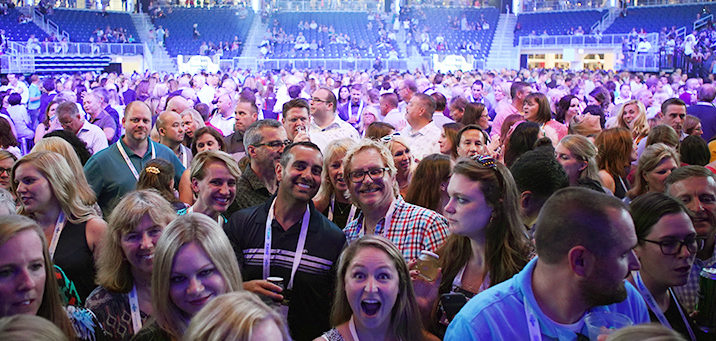
Destinations International took time at the gathering of more than 1,000 destination leaders to shine a light on the importance of developing a culture of real inclusion. Al Hutchinson, president and CEO of Visit Baltimore, explained that “diversity” means everyone is welcome, “equality” means equal access for all and “inclusion” requires that everyone’s perspective and circumstance is considered.
Keynote speaker Arwa Mahdawi, a diversity consultant, explained the difference between going through the motions and really leveraging the power of letting everyone contribute in their own way. “Tokenism is diversity without inclusion,” she said.
How can we finally move beyond talking about inclusion without resorting to a rent-a-minority startup? @ArwaM says just streamlined hiring to make more efficient and fairer has side effect of overcoming unconscious bias. #Raise the bar #AC19StLouis#MeetSmart#transparencypic.twitter.com/8LtHeJXtBa
“We have to start by reducing unconscious bias,” Mahdawi said. The challenge is that humans are wired to look for the familiar, and even taking people out of the equation isn’t a silver bullet because software developers have coded biases into artificial intelligence hiring systems in many cases.
The secret is to streamline the recruitment process and as a result, remove the tendency to insert preferences. “By making the system faster, more efficient and fairer, it actually tends to increase diversity. Contrary to the argument, you are actually raising the bar by removing the biases that work in favor of white men named John,” she said.
Mahdawi stressed the importance of being transparent about efforts, being honest and constantly reviewing whether the push to include more points of view is working and if people are staying. “Be patient; it takes time. Remember, it is about numbers. It’s about making everyone feel welcome,” she concluded.
Photo credit: ASAE
The Center for Association Leadership (ASAE) started its 100th-year celebration by bringing 5,476 people to Greater Columbus Convention Center for the organization’s Annual Meeting and Exposition—28 percent as first-time attendees. That number included 1,866 exhibitors. Some 600 local volunteers were on hand to help everyone find their way to the sessions and vendors.
Interim ASAE President and CEO Susan Robertson said leaving the city better off was one of the group’s mandates. “Our attendees love volunteerism and love getting involved with community,” Robertson said. Volunteers worked with veteran groups and raised more than $30,000 for family support and health agencies facilitated through The Columbus Foundation.
ASAE Foundation’s fundraiser to support research and programs, The Classic, featured Ohio native John Legend and drew the highest attendance and revenue in the history of the event—in fact, it sold out before the doors even opened.
Because 86 percent of attendees had never put on an event in Columbus, Robertson predicted that at least 20 percent of them would return with programs in the coming years, now that they have seen all the great infrastructure in place and the new projects on the way.
A Canopy by Hilton Columbus Downtown Short North opened across the street from Greater Columbus Convention Center with 167 guest rooms days before the event. During the gathering, Hilton Columbus Downtown, which is connected to the convention center, broke ground on a 468-room tower that will bring the total number of rooms at the property to 1,000. Also in the pipeline are the 171-room The Graduate Columbus, set to open in September; Moxy Columbus Short North, with 116 guest rooms, in September; and AC Hotel at 511 Park St. with 160 guest rooms, in 2021.
Immersive Education
In addition to all the content on the main stage, Robertson saw ASAE events as a model that could inspire association event professionals for their own programs—in fact, the staff offered behind-the-scenes tours to talk about everything from registration software to small bites on conveyor belts so that attendees could create their own custom box lunches.
She pointed the group’s XDP program, which has been retooled to be built with components that even small groups could implement. “We are very transparent about what went into setting up the parallel learning labs, with the headphones and the pay-what-you-want offer,” she said.
To help planners—and all of those who work in associations—ASAE is launching a 2020 Centennial Research Initiative project that will collect stories and data to show the scope of the work they do. “I hope it will give people a sense of pride in our industry,” she said. “This is important work and we especially want younger people to see the impact of the career.”
ASAE also deliberately made social issues—inclusion and diversity—a central part of the event as an extension of the “Power of A” advocacy work they do. “Associations are uniquely positioned to promote and practice civil discourse. Associations represent all points of view, but are all about people coming together,” she said.
International Growth
ASAE has been working with associations all over the world, and each country grapples with different challenges. Outside the United States, there is a struggle to separate the economic impact of business events from tourism. Dubai Association Centre is supporting groups in the United Arab Emirates and has a program with professionals that draws an international audience. Canada hosts an annual ASAE leadership forum. That will continue to expand, Robertson said.
The finale for the yearlong celebration will be Aug. 8–11, 2020, at Mandalay Bay Resort and Casino, Las Vegas.
IMEX America, the Super Bowl of the meetings industry, always generates excitement as professionals from around the globe gather to do business, learn and socialize. This year’s event delivered on its promise, with a Discovery Zone full of innovative ideas and a record number of participants and booths.
Our Smart Meetings team hit the expo floor at Sands Expo and Venetian Meetings in Las Vegas, to bring back all the news and inspiration you need to be brilliant.
Consider this your #IMEX19 highlight reel.
Plus, keep scrolling for breaking news and inspirational content, from puppy posts and Facebook Lives to tips for imagining “What if?”
No visit to Houston—aka Space City—can be considered complete without an astronaut, and the International Congress and Convention Association (ICCA) did not disappoint, as James Rees, executive director for ExCel London, took to the stage after Day Two’s luncheon to introduce Scott Parazynski, a veteran of five Space Shuttle flights and seven spacewalks. He also climbed Mt. Everest, by the way. Parazynski described his incredible adventures and “the value of multidisciplinary teams who can come at challenges from very different perspectives” when things do not go as planned.
He was referring to his final mission to the International Space Station in 2007, when he made a dramatic, unplanned spacewalk to repair a live solar array that had been damaged and was a threat to the space station’s survival. The untested repair method was improvised by NASA from available materials.
Afternoon sessions included “The Future of Hospitality,” led by Tim Jones, cofounder of Future Agenda, a think tank and advisory firm. Based on global research, Jones’ organization has identified hospitality insights for the coming decade. He revealed the top 12 of these.
Flexible spaces—hotel rooms and public spaces will be reconfigured for different times of day and uses.
Guest adventures—millennials and Gen Z travelers will demand to go beyond curated experiences.
Chinese super apps—Chinese conglomerates will accelerate their impact across hospitality via mobile phone apps.
Algorithms and analytics—newer hotel chains will leverage cloud data with AI and BI (business intelligence) to make better use of all their assets.
Automated hospitality—more robots at hotels, especially in back-of-the-house functions, such as car parking and laundry.
Facial recognition—this controversial technology will find a place with “friction-less” interactions in hospitality.
Rising cybersecurity—more frequent, larger hacks and sophisticated cyber threats will continue to heighten anxiety over being connected.
Waste reuse—there will be heightened focus on sustainability, especially water and excess food reuse.
Flight shame—as guilt mounts about the environmental costs of long-distance flights, look for local destinations to promote “just as good as” alternatives.
Anti-tourism—as over-tourism becomes more widely recognized as a serious problem, more destinations will discourage—or restrict—visitors.
Communities of the moment—Desire for purposeful human interaction will drive a trend to live, shared activities such as cooking classes.
New forms of ownership—traditional business models in hospitality will be joined by shared cooperatives and guest/membership funding.
A session on security featured ICCA members who presented case studies they had experienced. For example, Tamara Bernstein, international sales manager for Expo Tel Aviv, and Noa Sapir, head of Tel Aviv Convention Bureau, detailed security measures for 2019 Eurovision Song Contest, which was hosted in May in Israel for the first time in two decades. Just prior to the event, the city suffered a rocket attack from across the Gaza Strip, yet the event was successfully held without incident.
“When it comes to event security, there is no one responsible party,” said Ulrike van Lonski of World Petroleum Council. “It’s not the organizer; it’s not the venue; it’s everyone.”
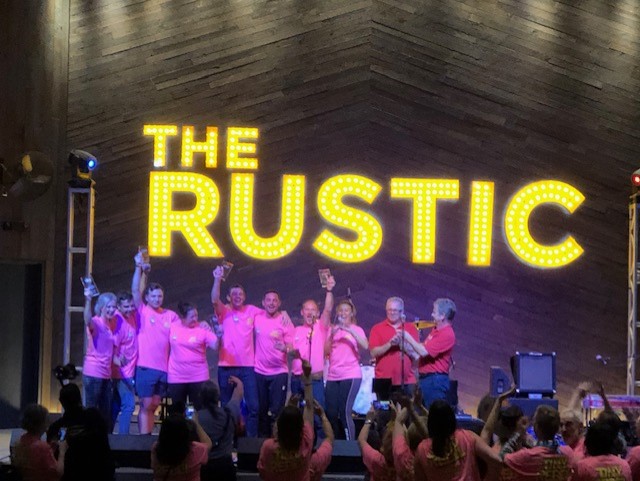
The day concluded with a Western-themed party at The Rustic, a downtown restaurant and music venue, where Tex-Mex food, a rodeo-style barrel race (with humans in horse costumes) and a country western band gave the international attendees a taste of Texas.
Paul VanDeventer, CEO and president of MPI, discussed how MPI has always encouraged other companies’ meetings and events to try something new—and believed it was time for MPI to follow their own advice. He acknowledged the risks and challenges that come with trying something new, but has been proud of the result. “It’s all about designing experiences,” he explained.
Mike Dominguez Advocates for Authenticity in Leaders
Mike Dominguez, chief sales officer of MGM Resorts, gave a speech on leadership, a topic he is passionate about. Take-home messages to leaders include putting yourself second to your team, providing a sense of hope and delivering authenticity—people will connect with humanity more than perfection.
Visit Indy CEO Leonard Hoops Takes Pride in his State
President and CEO of Visit Indy Leonard Hoops talked about the success of Indianapolis, which is a dream city for planners for a multitude of reasons: USA Today named it as their number one convention city; Indianapolis International Airport was named best in North America for the sixth year in a row by Airports Council International; there are 12 hotels that are connected to its convention center; and there are currently 11 hotel projects in the works.
Amanda Armstrong on MPI’s New Certification Program
In her new role as chair of the international board of MPI, Amanda Armstrong, CMP and CED, spoke about the exciting new Event Design Certificate Program from MPI, which “is about managing stakeholders,” and goes in depth on how to make sure everybody comes away from an event feeling satisfied. She also spoke of #MeToo and commission cuts within major hotel groups, and how it’s critical to connect with chapters’ leaders to create a strong community.
With risk-taking and reimagination coming to the forefront to create a strong, fresh event, Marin Bright, CEO of Smart Meetings, acknowledges all that has gone into building this. The creativity does not go unnoticed or unmentioned by Bright, who applauds their risk-taking.
Cruising Around Visit Indy’s Indy 500-Inspired Booth
Mike Lyons is thoroughly enjoying himself in the Visit Indy booth, which features a neon green and blue racecar decked out in Visit Indy’s website.
Scott Feight: “All Attendees are Artists”
Scott Feight, executive director of Foundation for Hospital Art, has set up the foundation’s shop on the tradeshow floor, with plenty of participants sitting down to paint in between sessions. They aim to “change the way hospitals look and feel,” and attendees’ paintings will help to decorate hospital walls in Indianapolis.
Puppies Warm Hearts and Hands of WEC18 Attendees
Mike Lyons handed over treats to a puppy named Macy (who politely refused to perform tricks) on the floor of MPI WEC.
Paws for a Cause Sets Up (Pet) Shop on the Floor
Kara and Katie spoke about how they have been working with Paws for a Cause with the past five years. Paws for Cause partners with TheraPets, a local organization which connects emotional support animals with those who need them, in hospitals and offices alike.
Photo credit: IMEX America
You just unpacked your suitcase full of swag from IMEX Frankfurt last month, and the world’s largest matching organization for event professionals is already teasing you with glimpses of the creative connections that will await you Oct. 16–18 at IMEX America in Las Vegas.
Free attendee and hosted buyer registration opens online today for IMEX America No. 8. The show is set to shine with innovation and ingenuity in its usual setting—the Sands Expo and Convention Center at The Venetian/The Palazzo, with Smart Monday, powered by MPI, set for Oct. 15.
Once again, there will be an enormous range of opportunities to do business; discover new destinations, hotels, services and technologies; learn about the latest ideas and trends; and make connections with industry contacts.
There will also be some eye—and mind-opening innovations to extend and disrupt traditional concepts of meetings and events. In Frankfurt, one observer described the lineup of new formats and experiences as a “cascade of cool.” With IMEX America expanding into larger halls for 2018, IMEX partners and exhibitors will have plenty of room to demonstrate their inventiveness and flex their marketing muscles.
C2 International to Make Las Vegas Debut at IMEX America
With experiential events dominating this year’s business landscape, IMEX America will showcase a wealth of new ideas to planners, who are constantly under pressure to deliver new thinking and fresh design. One of the outstanding proponents of these radical, challenging and inspiring new experiences will be C2 International, the groundbreaking experts in innovative business conferences. As a result of a new partnership with the IMEX Group, C2 will bring its Learning Labs to Las Vegas, providing a further indication of the IMEX commitment to encourage creativity in the industry.
The show will be preceded by Smart Monday, powered by MPI, when a vast number of meetings professionals will arrive in Las Vegas for a day full of professional development events. Association Evening, Executive Meetings Forum, PCMA Business School and Association Leadership Forum (created by ASAE) are among the activities which, along with an extensive program of learning arranged by IMEX strategic partner MPI, will provide educational sessions to suit many needs and specific interests.
IMEX America is well-known for providing plenty of networking opportunities at popular collocated events, including the Shamrock Invitational, SITE Nite North America, Events Industry Council Hall of Leaders & Pacesetters Awards Celebration and MPI Foundation Rendezvous.
For more information on IMEX America 2018, visit imexamerica.com.
Happy GMID! This year’s celebration finds the industry and its members at a critical crossroads. GMID is the perfect springboard for planners worldwide to raise our industry to a caliber of professionalism, effectiveness and respect that is long overdue.
Christy Lamagna
The movement to step up and lean in is here. Taking charge of one’s destiny is empowering and creates an uncontainable energy. Imagine the momentum and power that would be created by an entire industry leaning in for a common goal.
That’s the challenge I’m putting out to the meetings industry. Let’s put an end to the misconception of who we are and what we do and raise awareness of the power of meetings. To do this, we must evolve in the way we think, plan and present ourselves by evolving from event planners to event strategists. If we unite around a shared goal, vision, vocabulary and plan, the magnitude of our efforts will be unstoppable.
It starts with perception—how we view and conduct ourselves as professionals. Then comes our story—how we convey our value and meetings’ significance. Our story shapes how others perceive and treat us. Many of our professional stories are told from the perspective of event planners. If we shift that to reflect our work to become event strategists, everything changes. By learning to plan strategically and telling that story, we pave the way for a future where what we do is valued. Here is an example of a script that can take our industry to the next level.
I create goal-driven, strategic experiences. Companies that want to drive sales, accelerate growth and turn their event spend into an investment rather than an expenditure need me. By understanding the intrinsic value and power of meetings, I influence what target audiences think, say and do, creating a desired behavior change and the resulting outcome.
The first step in planning a strategic event is working with key stakeholders to identify and define the event’s goals, the attainment of which shapes the organizations’ go-forward plan. Our target audience is most often the people who move the needle. Determining what that audience needs to hear to effect change is an integral component of my job. Strategic events answer the critical question, “What’s in it for me?”
Strategic events accelerate sales cycles and are the only three-dimensional embodiment of a company’s marketing message. They bring sales and marketing efforts to life and enhance an organization’s bottom line.
As a strategist, I am an integral part of the entire process. The sales, marketing and events departments have interwoven goals, with events being the vehicle that accelerates growth. I am an essential part of my organization and my work is recognized as a meaningful driver of success.
Time to Commit
Does that sound like your story? If not, commit to evolving from an event planner into an event strategist and making it your story. Learn more about how to produce strategic events and how to share your talents, voice and ideas with those committed to the strategic movement. Together we are unstoppable!
Let’s celebrate our impact on Global Meetings Industry Day and every day.
When more than 750 financial and insurance conference professionals converged at JW Marriott Orlando Grande Lakes the first week of November for FICP Annual Conference 2018, the message that event professionals need to move from simply managing logistics to helping people make meaningful connections was loud and clear in word and deed.
By exploring innovation, possibilities and imagination, speakers shared the science and best practices behind creating experiences that impact people’s lives. The agenda also demonstrated the power of helping people connect.
Are you ready to step up your meeting outcomes? Here are four ideas you can steal from a Florida gathering worthy of celebrity-influencer status.
1. Provide Positive Initiation
When 50 first-time attendees showed up, the conference design team, chaired by Joe Scully, senior director of meeting and event management at John Hancock Financial Services, made sure they were given ribbons to alert others of their status. They were also registered for First Connection, an orientation that paired them with ambassadors and the other newbies.
Ambassadors are recruited during registration and receive a tool kit, group assignments and directions on how to connect with their first-time attendees even before they arrived. The on-site meet-up activity fosters further personal interaction and concludes by having them walk into the first session together. New this year was a group photo booklet and the option of appointment-setting during network times to help build a stronger sense of community.
FICP Marketing and Communications Director Vickie Crews-Anderson called the annual practice intentional. “Heading straight into a general session room full of more than 800 individuals, your first conference can be intimidating,” she said, adding that, in addition to removing the fear of not knowing anyone, ensuring a good first conference experience can lead to more engagement and longer membership with the organization.
The smaller is better rule was used in several creative ways beyond the orientation group. Janet Sperstad, CMP, program director for meeting and event management at Madison College, explained in her breakout session, “Driving Deeper Meaning and Insights,” that inserting visual cues about shared tribes resonates with a core human instinct to band together in groups. The effect is even more powerful when the groups are a manageable size, so that attendees can look out for one another. “It’s just how we are wired,” she said. “We can’t maintain intimate relationships with 1,500 people, even online.”
Shared nametags, unusual experiences, a new Meeting Zone, Experience Zone and icebreaker activities help people feel they are part of something bigger than themselves. “Our job is to help people meet people they would not normally meet and experience things wouldn’t normally experience,” Sperstad said. “It is not about information; it is about meaning.”
Sperstad drew on findings from behavioral science to guide decisions planners make every day. “We are social animals, and social selection is essential to well-being,” she said. Putting subconscious cues in place to tap into brain habits developed over centuries helps people feel a sense of belonging. That can come in the form of music, branding, even encouraging shaking hands and fist bumping, which triggers the release of dopamine from physical contact.
Breaking people into subgroups warms up the social brain, creating micro-moments to allow for more meaningful connections.
The good news is that these strategies work regardless of the age and demographics of the audience. “Brain function is universal to all people, regardless of industry, race, gender and how they dress,” she said.
3. Make Meeting a Team Sport
Mel Robbins
A similar divide-and-succeed tactic was used during a corporate social responsibility exercise in which attendees were randomly broken into teams by team-building coaches from Wildly Different. They were given colored bandanas to compete in an exercise to build and decorate wagons that would be filled with toys and sent to Orlando Health Arnold Palmer Hospital for Children, a local hospital.
Crews-Anderson reported that, including money raised in a silent auction on the event app, the event raised a record $90,029 for Orlando Health and two other charities: Boys and Girls Clubs of Central Florida and United Against Poverty.
The 5 Second Rule author and keynote speaker Mel Robbins foreshadowed the power of that exercise by sharing her effectiveness trick she calls Be a Fan. “Life can only get better when you decide to become the number-one fan of yourself and the people around you,” she said.
Sperstad agreed. “CSR helps us feel empathetic,” she said. What could be more meaningful that that?
4. Apply the Peak-End Rule
Another quirk of the human brain is that we remember how something ends more vividly than all the things that come before it. That is why closing a conference with a dramatic celebration—or at least a sweet dessert course—is so important.
FICP delivered with receptions to end each day that made attendees feel special, including exclusive access to three of the hottest rides at Universal Studios—”Jimmy Fallon’s Race Through New York,” “Fast and Furious: Supercharged” and “Harry Potter and the Forbidden Journey.” A police escort delivered busloads of attendees to the much-anticipated after-hours venue, and the path through the park was lined with creative food and drink stations anchored by a neon-flashing, mobile DJ car.
Not to be overshadowed, Tuesday night transformed the patio at JW Marriott into a tiki party worth Instagramming. The closing session drew on the humor and metaphor-rich talents of The Passing Zone, the popular juggling and inspiration duo of John Wee and Owen Morse, for an interactive session called “Teamwork: The Power of Partnerships.”
“Long-term memory is anchored in the emotional section of the brain,” Sperstad said. FICP gave attendees something they will remember long beyond their Instagram pictures.
It’s vital for suppliers and planners to make the most of every second by truly engaging each other, emphasized industry veteran Gary Hernbroth in a keynote at Smart Meeting South Central National in New Orleans on Tuesday.
Suppliers and planners from around the country are meeting one-on-one as part of a jam-packed agenda at the event, which began Sunday at The Jung Hotel.
“We make up our mind a lot about something in 10 minutes,” said Hernbroth, chief motivating officer for Training for Winners, in his talk, “S.P.E.E.D. Dating—Your 10 Minutes to Glory.” He noted that 10 minutes can seem like very little time or a lot of time—little when we’re told there’s 10 minutes left in our spa treatment, and a lot when we’re informed our root canal will last another 10 minutes.
“In your appointments, are you ready to have 10 minutes of spa or 10 minutes of root canal?” he asked.
Hernbroth stressed that suppliers need to zero in on planners’ needs from the get-go and to be creative in their presentations.
“I believe the world’s best sales people are the world’s best storytellers,” he said. “They don’t tell everything about the hotel. Be a painter of words when telling your story.”
He said that feelings motivate people more than facts. So, he advised suppliers and planners not to bombard planners with numbers and other information that aren’t relevant to them.
“You have a short time to create powerful images—determine what’s cool,” he said. “How do you make your property or group stand out?”
He briefly summarized his message to all participants: “Make it easier to do business with you.”


 A session on security featured ICCA members who presented case studies they had experienced. For example, Tamara Bernstein, international sales manager for Expo Tel Aviv, and Noa Sapir, head of Tel Aviv Convention Bureau, detailed security measures for 2019 Eurovision Song Contest, which was hosted in May in Israel for the first time in two decades. Just prior to the event, the city suffered a rocket attack from across the Gaza Strip, yet the event was successfully held without incident.