In June, organizations across America were excited about the return of in-person events, and the enticing potential of hybrid events. How quickly things change.

By late July, Covid-19 cases were again spiking across the United States. Corporations, universities, government agencies and associations abruptly began rethinking the structure of their conferences and team-building events for the remainder of 2021.

The result is a chaotic, volatile environment in which meeting and event planners are struggling to optimally balance their meeting objectives with attendee preferences and safety, constantly changing guidance from the CDC and local government rules restrictions.

What are planners to do? Here’s a look at the current state of popular options, plus the only wrong choice.

Live In-Person Events

The current status of in-person events varies widely from state to state, and even city to city, based on several factors:

Local case loads: While virus cases are increasing across the country, the impact is uneven. Some states are seeing fairly modest increases in positive tests, while others are seeing more widespread outbreaks. Many are focusing more closely on hospital capacity, but those statistics can change quickly.

Local regulations: Regulations also vary considerably from place to place. While some communities are still imposing capacity restraints and mask mandates, others are mostly open. The governor of Nevada recently announced, for example, that large venues can do away with mask mandates as long as attendees are fully vaccinated and raised the attendance limit to 4,000. 

Community standards: Not only from place to place from organization to organization, different groups of employees have a different comfort level with the risk/reward calculation for live gatherings.

The venue also matters. Recent research from the UK concluded that “mass events can take place safely” if held outdoors and with reasonable precautions.

The near-term outlook for in-person events is impossible to forecast. Tomorrow’s news may bring new concerns over the Epsilon and Gamma variants—or show new cases declining again as they did in other countries.

Virtual Events

Regardless of what happens with live events, “virtual events are here to stay,” according to Steve Gottlieb, CEO of event software provider Shindig. “The cost savings are just too compelling, and online events are less disruptive.

Virtual or hybrid events enable organizers to greatly expand the number of participants. And with the right technology, the networking and interaction in online events can mimic the natural mixing and mingling of in-person gatherings.”

Meeting and event planners recognize these benefits, and are taking advantage of significant advances in virtual event technology over the past 18 months. The possibilities have dramatically expanded beyond the limitations of lecture-style webinars and boxy “Hollywood Squares” type interfaces in a short time.

Scott Flynn, CEO of team building provider Best Corporate Events, says his company saw a surge in bookings for live events in June only to see interest pivot back to virtual events more recently. Now, in late August, Live events booking are surging again.

“We’re agnostic about the format,” he notes. “Pretty much any team building program, from corporate social responsibility (CSR) to professional development to game shows, escape rooms or physical activities can be delivered in virtual, in-person, or even hybrid environments.”

More4 Social Media Tricks for Showcasing Virtual CSR

Whether for team building, other corporate events or even fundraising galas, Tracy Fuller of InnovativEvents, an event planning firm in Des Moines, Iowa, is seeing the same shift.

“We’ve had game shows and galas that have far outreached their regular live audience with virtual events, and this means more donations for their charity and more awareness as well. It’s a win/win,” she says.

Hybrid Events

Throughout the first half of this year, hybrid events were generating tremendous buzz. Then planners began experiencing the increased costs and challenges of actually executing hybrid events, and skepticism set in.

Li Hayes of speaker management agency Go Leeward argued here in early August that hybrid is dead. “The primary barrier is return on investment,” she wrote. Describing a large event that went hybrid for one year, “the organizers said, ‘Never again.’ The cost of production, between software and other resources needed to pull off a simultaneous virtual immersion experience, increased their budget by more than 30 percent and the work to plan a hybrid was like planning two entire events at the same time.

“But the financial return wasn’t there… even with an overall increase in attendees, the added expense wasn’t covered. Their conference planner decided that in the future, events will be either all live, or all virtual, but not a combination of the two.”

Yet despite those arguments and increased skepticism, hybrid is not in fact “dead.” Event technology consultant Brandt Krueger argued just two weeks later, in Debunking Hybrid Event Myths, that concerns over increased complexity, higher costs, lower security and cannibalization of in-person audiences, are overblown.

“A decade ago, I was extremely lucky to be around the early pioneers of hybrid events, and I saw early on the benefits they could provide, including expanded audience, increased accessibility, creating connections between people in locations around the world, and serving as a tool to promote and encourage people to attend in person,” he wrote. “Almost all the hard-learned lessons from those early days still stand as best practices today.”

The bottom line, according to Bryan Burns, COO of team building apps provider SmartHunts, is that hybrid is definitely a viable option, even if not always the best choice.

“With the right technology, team building activities like scavenger hunts, games and CSR programs can work in any format (live, virtual or hybrid), and often indoors or outside. What’s most important is for meeting planners to explore the capabilities of the technology, then determine the best way to align their objectives with what the technology can deliver.”

“I think hybrid events are here to stay,” adds Tracy Fuller. “Why wouldn’t they be, having more reach and more impact with a small amount of additional cost to larger funds raised? It just makes sense.

“I don’t think you can discount the ability to reach more people with your message either. This last year, as things loosened up with Covid rules, we saw many watch parties take place for some of our charity events and galas. Small groups of people got together to watch the gatherings on-screen in a home or office, essentially creating their very own hybrid event. And it worked.”

The Only Wrong Choice

Clearly, the current environment is fluid. In-person events may be a viable option, particularly for outdoor activities, but there are many factors to consider. Live events have come a long way since early 2020, as the technology has advanced, organizers have honed their skills and audiences have grown more comfortable with online participation. Hybrid events still present challenges, but offer unique benefits as well.

So what is the only wrong choice?

“Doing nothing,” says Roy Charette, co-founder of higher-education focused provider of team building programs Best Collegiate Events. “The only bad choice organizers can make right now is to allow the uncertainty of the current environment to paralyze their decision making, leading them to postpone or cancel events.

“Students, as well as corporate employees crave connection, possibly even more so now. Businesses need team building events to integrate new employees with existing teams in light of turnover and market changes.

“Colleges and universities, of course, turn over roughly a quarter of their student body every year,” he notes. “And with more schools requiring vaccination, in-person team building events are a great way to welcome new students and provide healthy activities for upperclassmen.”

The fluidity of the current environment for team building and other events makes choosing the best format difficult. For virtual events, one key is to avoid over-reliance on a single technology platform and instead choose the best tool for every type of event. For hybrid events, it’s determining how to manage and minimize the unique challenges. And for in-person events, the best guidance may be, as they used to say in broadcast TV, “check your local listings” for the latest updates on your planned location and venue.

Tom Pick is a digital marketing consultant who works with corporate team building provider Best Corporate Events to share the company’s insights and knowledge with corporate event and meeting professionals.
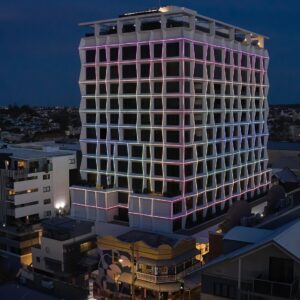
IHG Hotels & Resorts (formerly InterContinental Hotels Group) launched luxury and lifestyle brand Vignette Collection, the company’s 17th brand in the more than 100 countries in which the company has a toehold.

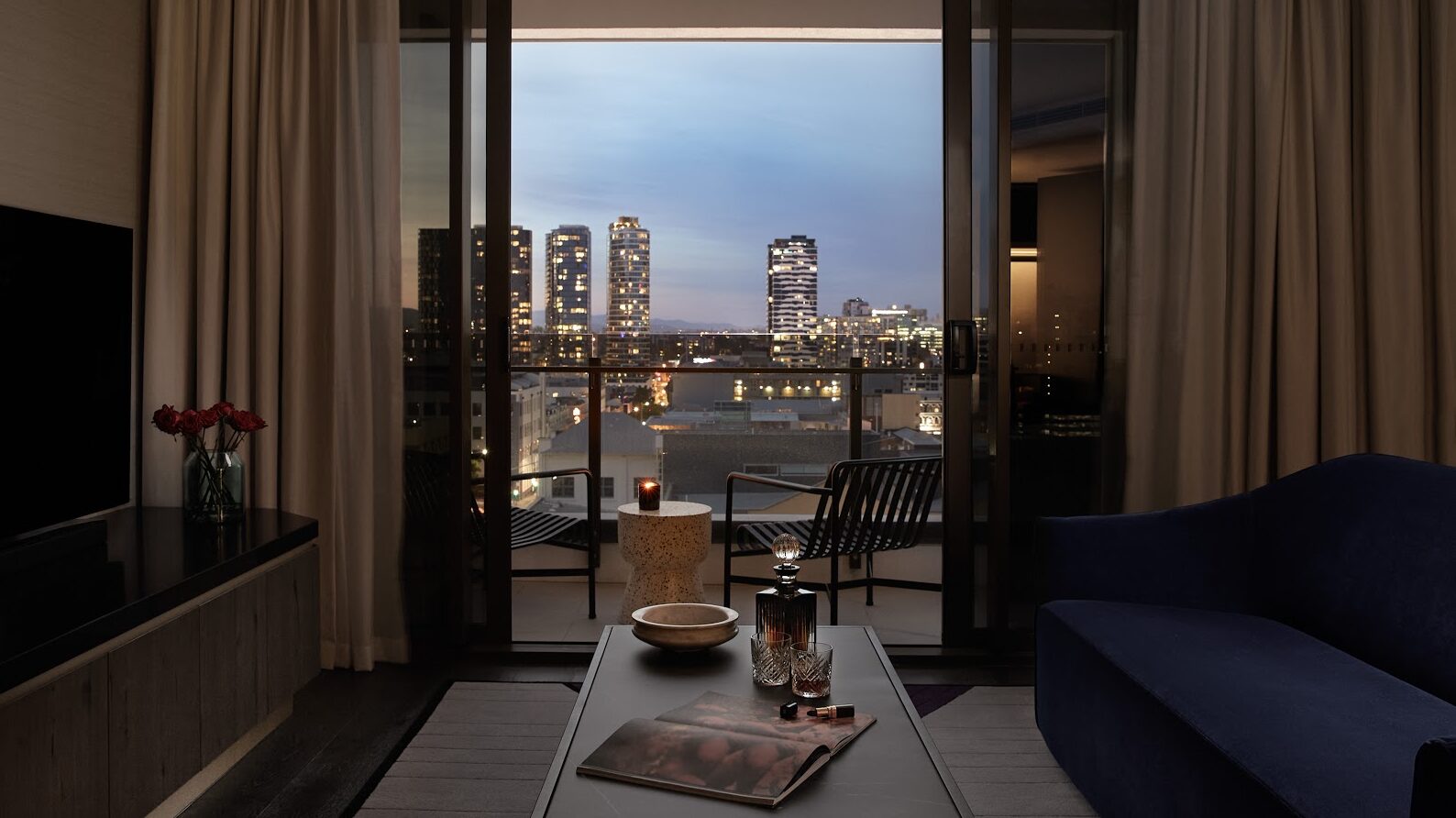
Hotel X

In a statement by IHG, the London-based hospitality giant said the “soft” collection will allow owners of “world-class independent hotels to retain their distinctive identity” while also being under the Vignette flag.

The first properties to join Vignette Collection will be Hotel X in Brisbane, Australia, and Pattaya Aquatique in Thailand.

“We’ve been strategic with the enhancements we’ve made to our luxury and lifestyle portfolio in recent years, which at more than 400 hotels and 100,000 rooms is the second largest in the industry,” said Keith Barr, IHG’s CEO, in a statement. “We’ve built on the heritage and global success of our InterContinental brand with the rapid international expansion of Kimpton and Hotel Indigo and acquisitions of Six Senses and Regent. The [new] brand will be key to delivering our ambition of industry-leading net rooms growth.”

IHG predicted that Vignette Collection has the potential to capture 1.5 million guest rooms and 100 hotels globally over the next decade.

Conversion Brands Are Hot, Hot, Hot

Hotel X

This isn’t IHG’s first conversion brand—in which hotel owners convert from one brand to another. Voco was created in 2018 and currently has 19 properties around the globe in countries as varied as the United States, Saudi Arabia, the United Kingdom, Australia and Austria. At the brand’s conception, the plan was to open around 200 hotels by 2028.

In 2015, a study by PKF Hospitality Research found that 1/3 of U.S. hotels had been converted from one brand to another. The well-known DoubleTree by Hilton, for example, recently added 4,406 guest rooms to its portfolio in just one year—and 96 percent of them were converted from other brands, according to The Wall Street Journal.

In that same year, 2015, Marriott International, which became the world’s largest hotel brand after purchasing Starwood Hotels in 2016, acquired Canada-based Delta Hotels and Resorts, one of four of Marriott’s conversion brands, in an effort to take on DoubleTree, which had converted many of Marriott’s branded properties at the time. Delta Hotels currently has 89 properties globally, mostly in North America, with 43 in the pipeline.

The conversion trend itself goes beyond just converting existing hotels into brands owned by hospitality conglomerates. Some properties are converting buildings which previously served other purposes.

In 2017, Choice Hotels International Inc., for instance, began looking to convert vacant Washington, D.C.- office buildings into Cambria Hotels, a search that later petered out, but this vacant-building-turned-hotel concept made its way elsewhere. To the U.S.’s West Coast, for one, in the form of Cambria Hotel Los Angeles–Spring Street, formerly a parking garage and headquarters of Los Angeles Police Department’s Vice Squad.

Featured image from Hotel X in Brisbane, Australia.

The most recent tool being embraced by meeting professionals looking to safely bring groups back together while protecting sensitive data is third-party health verification. Companies such as InHouse Physicians and Clear Health Pass are offering pre-event vaccine verification and wellness tests along with on-site temperature monitoring and screening. But meeting professionals are still tasked with designing the level of screening required and communicating expectations appropriately. Following is a case study of how health verification was used and tips for managing expectations effectively.

A Healthy Bubble

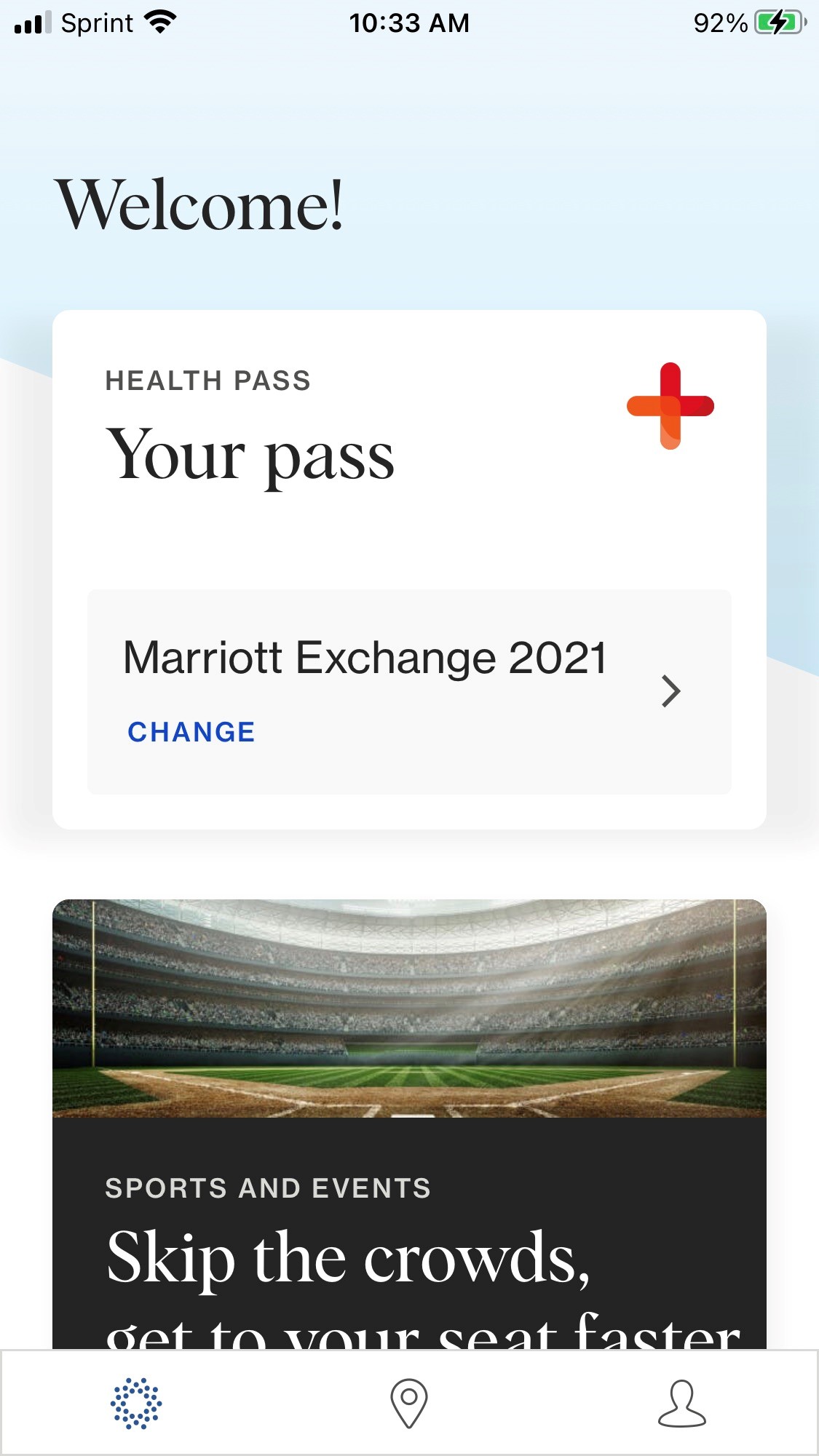
This week, at The Exchange, a Marriott International event for 800 association and corporate partners and associates at Walt Disney World Swan and Dolphin resorts in Orlando, Florida, attendees were instructed to download the Clear Health Pass app and enter either their Covid-19 vaccine type and date details or proof of negative Covid-19 test results within 72 hours of the event starting. Each day, they were asked to fill out a short health survey on the app and show the green screen with a QR code and their face to the attendant at the entrance to the event space where “All for One” was the theme.

Walt Disney World Swan and Dolphin Resort Complex

That process created a bubble of people who had been cleared in the space, something Resort Area General Manager Sean Verney explained the hotel pioneered when it hosted Major League Soccer (MLS) in 2020. “These tools and resources allow us to conduct safe, productive meetings, bring people back to work and support the local market and beyond,” he said. “It takes a village.”

More: Read more about destinations requiring proof of vaccination. 

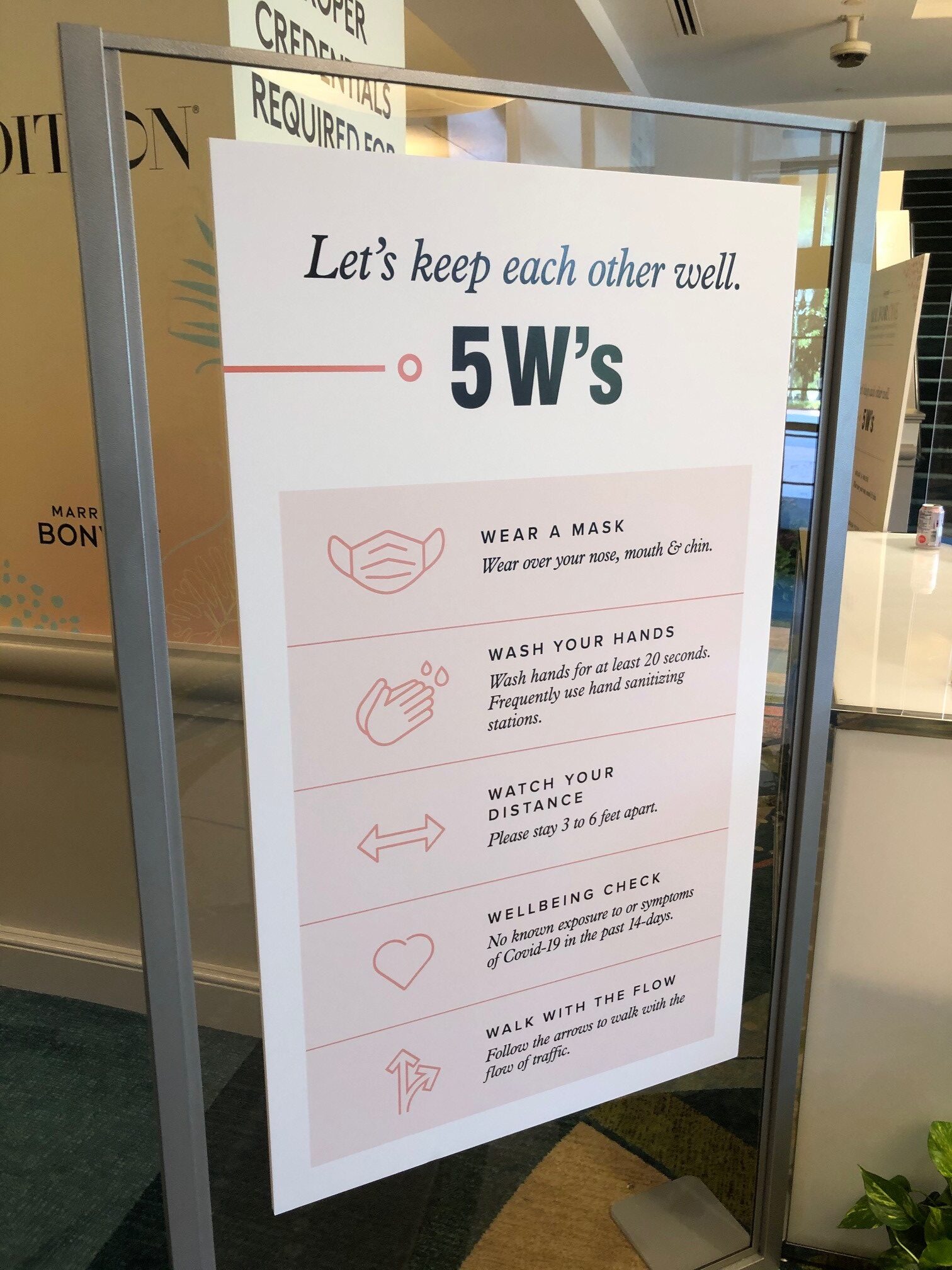
Early in the pandemic, Verney’s team identified that the layering of social distancing, masks, verification and planning for how to handle positive cases if do occur, as the best way to protect attendees and cast members (employees). “We can still have creative food and beverage offerings that are enjoyable without hampering the quality and service; we can still be creative,” he said, pointing to the 5,000 meals a day served during MLS season. Those protocols and been adapted over time as vaccines rolled out and case number fluctuated. “Work with the hotel where you are meeting,” he advised. “They have tools and resources to help you execute safely.”

Bespoke Screening Tips

Verification is not a one-size-fits-all endeavor. Chris Meyer, former vice president of global business sales for Las Vegas Convention and Visitors Authority and a strategic advisor with Clear, explained that the technology can be configured to whatever level is appropriate for the type of group and reality on the ground at the time of the event.

Clear’s program builds on the biometric data used to move millions through airport screening over the last ten years and millions more admitted to sports stadiums in partnership with the National Hockey League and National Basketball Association.

The technology links to registration programs and can be set up to require answers to questionnaires, copies of negative Covid-19 tests or vaccine cards or a combination of the above, depending on the desired protocols. Vaccines are then verified through Clear’s network with healthcare systems to eliminate fraud. The facial recognition based on 128 data points from a face scan can be used on its own or paired with temperature screening, as was done at The Exchange.

Bringing medical professionals on-site to handle any exceptions that arise with instant testing makes it easier to separate possible cases from the rest of the meeting population proactively. Daily color-coded stickers on badges allowed everyone to see at a glance that they had been cleared without scanning the QR code on the app more than once a day.

More: Learn more about what travel trends mean for meeting professionals.

The process is HIPAA compliant and removes the need for meeting organizers to manage healthcare data as they simply need to check for the green screen.

While interest in the service has followed the roller coaster of case numbers across the country, Meyer sees digital screening as a touchless, frictionless way for organizers of all types to move people into a space without long lines. Clear offers support personnel to set up and monitor with charges based on usage. A DIY version is in the works.

Set Expectations

Because smooth scanning of large groups of people requires much of the information be input before attendees arrive on-site, Meyer emphasized the importance of clear communication so people know what to expect.

Send the link to download the free app in advance with clear instructions on what is required and the benefits. If vaccines that haven’t been approved in the United States won’t be allowed, tell them, especially if you are expecting international guests. “You have to communicate so people know what to expect and there are no surprises,” Meyer said.

Marriott International rolled out a series of “What to Expect” emails and held a video call to walk through the protocols and take questions. Glenn Stress, Marriott senior director of global B2B marketing explained, “We need to come together to protect ourselves and each other. We are committed to demonstrating the spirit of respect and care and this is our highest priority.” He stressed that, “Well being is everyone’s responsibility.”

To ensure that all attendees understood what was expected, they were required to fill out a Walt Disney World Health Care Waiver using DocuSign in advance of the event.

Though price may be the first thing we notice to assess our flight options when booking a trip, that’s an unwieldy metric these days. Flight fares have spiked over the last few months as the effects of the pandemic continue to affect the availability of staff and workers that impact takeoff, from airline flight attendants to truck drivers delivering the fuel that gets you off the ground.

Mercurial ticket prices aside, anyone can gauge flight costs with a simple Google search. To help consumers make evaluations beyond dollar signs, Wallethub ranked 11 airlines across a slew of metrics, including canceled flights, mishandled baggage, denied boardings and in-flight amenities.

Drumroll, please. Alaska Airlines came in “best overall” with a ranking of 56.54 out of 100, though Delta Airlines and Spirit Airlines were close behind with 55.98 and 55.76, respectively.

The Metrics

The 17 metrics spanned four categories: baggage, departures and complaints, weighted at 50 points; safety totaling 30 points; in-flight comfort and cost amounting to 15 points; and animal incidents at five points.

The four most heavily weighted metrics were delays (17 points), denied boardings (11), price (10), and complaints (nine). At the low end of consideration were on-board Wi-Fi, entertainment options and complimentary snacks and beverages, each a single point.

Wallethub analyzed 2020 flight data from the U.S. Department of Transportation to determine its conclusions, with a few exceptions.

Fairness in Scoring

Airlines were not dinged for factors outside their control. For example, points awarded for canceled flights (with highest points possible for the lowest number of canceled flights) excluded flights canceled for inclement weather or security reasons. The number of flight delays assessed received the same consideration.

Safety Factors

The safety category considered aviation incidents and accidents from 2014-2019, as well as occurrences of fatalities or injuries within those accidents, whether or not the airline is currently blocking middle seats or reducing capacity to encourage social distancing, the availability of face masks for passengers and crew, and the airline’s average fleet age (older planes are more prone to technical glitches and operational issues). Alaska Airlines was awarded “safest airline” with 20.55 out of 30 possible points. Envoy Air, a Texas-based regional carrier, was runner-up with 18.6.

Key Findings

Southwest was determined “most reliable,” with the lowest rate of cancellations, delays, mishandled luggage and denied boardings. Spirit Airlines grabbed “most affordable,” with the cost of airfare ranked at an average of $3.37 per mile, compared with the most expensive airline by this metric (at $9.23 per mile), American Airlines.

JetBlue (at $7.62 per mile, by comparison) came in on top for onboard comfort. Its free amenities such as Wi-Fi, extra legroom and complimentary snacks and drinks earned it the full five points in comfort categories, while Spirit came in lowest with a 0.5 of five score.

The consumer complaint category examined complaints per 1,000 passengers, gathered from 2020 data. Envoy came in first place with just 0.64 per 1,000, while Frontier Airlines had the most complaints at 49.9 per 1,000.

Of the possible nine points awarded in this category (more points for fewer complaints), Southwest received 7.67—the best ranking among national airlines.

Expert Opinions

Wallethub also presented key questions related to the data to a panel of aviation industry experts.

When asked about the easiest measures airlines could implement to increase passenger comfort, two responders cited seat pitch (the distance between seats, including leg room) as a big factor. Ben Baldanza of George Mason University offered a different take, asserting that “passengers want low fares more than comfort. I have not seen data suggesting that most customers think airlines are uncomfortable.”

When asked how they think the pandemic has specifically affected the airline industry, experts acknowledged the hardship the industry has faced, but spoke with admiration for its resiliency and recovery tactics. The complexity of the issue was mentioned, with one panelist saying, “In my opinion, this is a question that will require a dissertation.”

Despite the obvious challenges, from fuel shortages to staffing issues, overall prognostications were hopeful, both financially and on a large scale. David Macomber, chief flight instructor at Andrews University in Michigan, noted, “Transportation has always been tied to economic activity, so it should have no problem rebounding as the economy begins to recover from the shutdowns.”

Assistant Professor Daniel Kwasi Adjekum at John D. Odegard School of Aerospace Sciences at University of North Dakota shed an appreciative light on the role of the aviation industry outside of travel. “There [were] lessons learned about the ability of the airline industry to be innovative and their contributions to society. Airlines displayed great flexibility by using innovative approaches, such as taking passenger aircraft and converting them to cargo operations to meet demand. Additionally, airlines played a key role in the delivery of much-needed medical supplies and the distribution of the vaccine. The pandemic showed the critical role airlines play in addressing this global pandemic.”

Diversity in the Future of Flight

When asked about measures to diminish pilot shortages, Adjekum shared his enthusiasm about hiring developments in the future of aviation. United Airlines Aviate Flight Academy, he said, plans to train 5,000 pilots by 2030—half of them women or people of color.

MoreWTTC Aims to Aid Travel Recovery with ‘Inclusive & Accessible Guidelines’

“They are the first major airline to own and operate a flight school and have committed financially to support these efforts,” Adjekum continued. “They are investing in flight training, which is a sign of the times, an indication of pilot demand. Most impressive is the fact that United is targeting to have 50 percent of the students at the flight academy from underrepresented groups in aviation. This target by United Airlines is a big and bold commitment to enhancing diversity in the aviation industry.”

About 15 percent of the world’s people live with a form of disability. And who among us will not experience disability at some point in life? WTCC

“It is therefore imperative that we are inclusive,” says Gloria Guevara, president and CEO of London-based World Travel & Tourism Council (WTTC).

To that end, her organization has issued new “Inclusive & Accessible Guidelines.”

“We look forward to seeing these guidelines make real change within the workforce,” Guevara says, adding that providing accessible travel is both a social imperative and a business opportunity. Helping travel become more welcoming and available to people with disabilities will aid the sector’s recovery from pandemic losses, she notes.

See alsoHow to Accommodate People with Disabilities at Meetings

The guidelines were created after WTTC gathered insights and “frameworks developed by private sector leaders” in travel and tourism, as well as travel and disability experts, and research from intergovernmental organizations.

One of the contributors is Peter Kern, vice chairman and CEO of Expedia Group. “Travel opens minds and drives better understanding between people from different cultures and identities, but sometimes travel isn’t inclusive of or accessible for people with disabilities or accessibility needs. We are proud to have collaborated with WTTC on the creation of ‘Inclusive & Accessible Travel Guidelines,’ a resource we will continue to collaborate on in future development, use in our own business and advocate for their adoption across the travel and tourism industry,” he says.

Divided into four pillars, the guidelines follow a similar structure to the “High-Level Inclusion & Diversity Guidelines” and “Mental Health Guidelines” released by WTTC over the past six months.

The four key pillars are the following.

  • Developing an inclusive and accessible system
  • Creating safe spaces
  • Designing an engaging and relevant system
  • Exemplifying inclusion and accessibility

Among the most important aspects of the new guidelines are training staff on disability awareness and how to support travelers with disabilities, as well as collaborating with other businesses in areas where there are gaps in accessibility knowledge, experience and services.

The guidelines also emphasize the importance of fostering a respectful environment, specifically reminding staff that their attitude towards people with disabilities plays an integral role in making that customer feel welcome and included.

WTTC also believes it is imperative that accessibility features be clear, overt and do not require special assistance from staff to use. Beginning from the booking process, businesses should regularly and proactively engage travelers with disabilities in the creation of accessible products and services to make sure these meet their needs.

MoreAccessibility Rules: How to Make Everyone Comfortable at Event Venues

The WTTC says staff should also be empowered to address customer concerns as they occur, and inclusive marketing should be developed to dignify representations of all people and authentically represent them.

“People with disabilities (PwDs) have historically encountered many accessibility challenges while traveling. Browsing, booking, flying, sightseeing, relaxing and sleeping all present their own specific obstacles,” says John Sage, president of Accessible Travel Solutions and author of the guidelines. “Consequently, many PwDs must spend many hours handling their own travel details, or they stay home.”

WTTC’s new guidelines, he says, “are an important step forward in bringing accessibility into the mainstream, thereby making travel accessible for all.”

To read the “Inclusive & Accessible Travel Guidelines” in full, click here.

Julie Holmen

Destinations International appointed Holmen to lead the organization’s membership engagement strategies. Holmen recently worked as director of strategic alliances for MPI. She also worked as area director of sales and marketing for Shangri-La Hotels and Resorts’ properties in Toronto and Vancouver; before this, she worked with Destination Toronto as director of citywide sales and event management.

Larry C. Jones Jr.

Westdrift Manhattan Beach in California named Jones director of sales and marketing. Jones comes to Westdrift from Long Beach Convention & Visitors Bureau in California, where he was national sales director. He also previously worked as director of sales for The Garland North Hollywood and The Ritz-Carton, Marina del Rey, both in California.

Dave Nostrand

Nostrand is general manager for Omni Bedford Springs Resort in Pennsylvania. Nostrand previously worked as director of sales and marketing for the property. Before Omni, he was director of full-service brand development for Hilton Worldwide Holdings Inc. Nostrand also worked in marketing and sales roles for Marriott International. In 2008, Nostrand was named one of the Top 25 Extraordinary Minds in the industry by HSMAI.

Wendy Haase, CDME

Haase is president of newly formed Travel Santa Ana in California. Before this venture, Haase was vice president for Destination Irvine in California. She also worked as director of public relations and communications for Terranea Resorts in Rancho Palos Verdes, California. Haase is a current board member for California Travel Association.

Diego Oviedo

Oviedo is general manager for Botanika Osa Peninsula, Curio Collection by Hilton, in Costa Rica. Oviedo recently worked as resident manager for Gran Hotel Costa Rica, Curio Collection by Hilton. He also held roles as front desk manager and operations manager at Hilton Garden San Jose La Sabana, and front desk supervisor for DoubleTree Cariari San Jose, both in Costa Rica.

Courtney Reeves and James Miller

Miller (left) and Reeves (right)

Reeves is director of sales and marketing and Miller is general manager for Kimpton Armory Hotel in Bozeman, Montana.

Before joining Kimpton, Reeves worked as director of leisure sales for One&Only’s Mandarina and Palmilla resorts in Mexico. Before this, she was director of leisure sales for Terranea Resort, A Destination Hotel, in Rancho Palos Verdes, California, and director of sales for The Villa by Barton G. (formerly Versace Mansion) in Miami Beach.

Miller comes from Ana Intercontinental Manza Beach Resort in Okinawa, Japan. Before this, he was hotel manager of Ana Intercontinental Tokyo. Miller also worked as hotel manager for a Rembrandt Hotel & Suites property in Bangkok. While in Bangkok, he was chairman of American Chamber of Commerce’s travel and tourism committee.

Shannon Licygiewicz, CEM

Licygiewicz has been promoted to general manager of Albany Capital Center (ACC) in New York; she was previously director of sales. Before ACC, Licygiewicz was senior operations manager for Rhode Island Convention Center and Dunkin Donuts Center.

What diversity, equity and inclusion (DEI) plans did you make for your next event? Perhaps you want to but don’t know where to start or what exactly you should be including.

To this concern, Jil Dasher, managing director for Corsica Partners, responds with with laconic poise: “Just start.”

Dasher, in addition to Nathan Chin, senior product manager for Cvent; and Phil Saims, vice president of sales for Federal Conference, led the latest Smart Meetings webinar, “Designing Your Event Program for Diversity & Inclusion,” where they tackled the not-always-straightforward topic of DEI.

See alsoWhat Meeting Profs Get Wrong About DEI—and How to Start Fixing It

They discussed how to bring DEI into your next meeting, questions you may not be asking and the reality of hospitality employment demographics.

Bringing Belongingness

Jil Dasher

“Bringing diversity and inclusion into your workplace, or events is a journey; a thoughtful, meaningful, inclusive process is essential,” Dasher said.

“It isn’t a quick fix,” she continued. “It all begins by making the effort and trusting the process along the way.”

In 2020, nearly 2/3 of global speakers were men, and 35-40 percent of panelists were black. Of meeting planners, 68.3 percent are white, 8.6 percent are black, and 6.2 percent are Asian; no reporting or statistics are available on the number of meeting planners with disabilities.

When you think about events you’ve planned or attended recently, does this ring true? Dasher asked.

Dasher conceded that in her own experience as a third-party planner leading meeting and management teams that are often stretched thin in time and resources, recycling content or event design is a byproduct of streamlining work versus a taking deep dive into questioning if the event is truly one where people feel welcomed, safe and a sense of belonging.

“People tend to have an inherent desire to belong and to be an important part of something greater than themselves,” Dasher said. “[Meeting professionals] have the unique ability to create meetings and events that offer an opportunity to belong, through thoughtful consideration of content, language, collateral, venue, destination, agenda, session and design.”

Three Ways to Close the Diversity Gap

Figuring out what you need to make your events better and more welcoming for everyone is no simple task but just asking the question how is already a great first step. Dasher shared three ways meeting professionals can begin to close the DEI gap: creating diverse planning teams, looking for aligned partnerships and asking your stakeholders and attendees what they need.

“Does your planning team reflect the community and audience that you are serving?” Dasher asked.

Don’t fret, she provided a workaround for those who have a planning team that doesn’t. “[Reach] out to your human resources or culture keepers to find out what employee resource groups may want to lend support to the planning efforts,” she suggested. “[Ask] if there are employees who have different abilities or unique backgrounds that could share their experience or ideas on how to make the event more accessible to all.”

More8 Steps for Building Back a More Diverse Workforce

The goal, Dasher said, is to give the attendee with the most challenges or hurdles to overcome to attend the most access to the most people.

Secondly, who are your vendors, suppliers, partners and speakers for your event? Do they support your DEI efforts? “You can look to black-owned LGBTQIA-owned, women-owned businesses and ensure they share your goals towards inclusivity,” she said.

If you don’t have anypartners or speakers in these spaces, Dasher provided resources. For one, search for suppliers that qualify as a minority business enterprise (MBE) or a women business enterprise (WBE). This certification goes to businesses that are 51 percent owned, operated, capitalized or controlled by either women,; or black, indigenous and people of color (BIPOC).

Another really important consideration, Dasher said, is making sure your venue shares your inclusivity goals. “We’re looking to them to [help] create best practices to offer accessible spaces and sessions,” she said. “Share your DEI event goals at the onset of planning and ask your venue to help identify any potential hurdles in your agenda, your sessions, your space, even the rooms that could be addressed [for accessibility] during the planning process.”

Nathan Chin

Lastly, Dasher suggested checking in with your attendees and stakeholders and asking for authentic feedback. Then be open to a new formula to implement your planning. “This goes well beyond food allergies; it could be a survey about pronoun preferences, accessibility needs, religious considerations and so much more,” she said.

“No effort is too grand nor too small,” Dasher said. “It really is about making the effort and sticking to the process along the way. In reality, diversity and inclusion should be a priority for events, as it will deliver a much more powerful and valuable experience for all.”

Chin and Saims continued the conversation with equally thought-provoking insight. Watch the entire webinar to learn more.

Figuring out how to best recover and rebuild in Oakland, California, following the pandemic is how Peter Gamez, Visit Oakland’s new president and CEO, will be spending his first 100 days.

“This city has so much to offer visitors—vibrant arts, culture, museums, sports, recreation, beautiful hotels, dynamic meeting facilities and a mind-blowing culinary scene—but it’s about more than just things on a map,” Gamez said in a press release. “Through our diverse cultures, people and thinking, Oakland can inspire, challenge and change the way people see things.”

Gamez will also aim to align the city’s and his staff’s demographic makeup; to do this, he will make a concerted effort to expand the DMO’s diversity. “Using the census as a guideline, I will make sure that our board of directors and staff reflect our community, including Black, indigenous and people of color (BIPOC) and female leadership,” he said.

Through partnering with Visit California and nearby DMOs, such as San Francisco Travel Association, Gamez also plans to expand the city’s reach to the community at large. Gamez served as a board member for SF Travel and was chairman in 2018 and 2019, so this partnership looks like one of promise.

In 2019, he started Hunter Hospitality Consultants, where he worked with hospitality developers, owners and hotel management organizations. Gamez has worked in leading sales positions with Two Roads Hospitality, Commune Hotels + Resorts, Joie de Vivre Hospitality, Pan Pacific Hotels and Resorts, and Kimpton Hotels and Resorts.

“I want to be more than a DMO president. I want to make Visit Oakland the best organization of its kind to work for in the country. I believe that all of us have a higher purpose or calling to impact others positively,” Gamez said. “I want to lead our staff to help them find that higher purpose, which will in turn create a greater positive impact for the community.”

Gamez continued: “One of the first places I worked had a mission statement that simply said, ‘Create joy.’ Sometimes the simplest goals have the greatest impact.”

The first-ever hybrid ASAE Annual Meeting last week reached 3,200 association professionals, consultants and industry partners—500 at 10 half-day Community Pop-Ups and the rest through a virtual portal—with education, engagement opportunities and powerful keynotes.

“ASAE is proud to have debuted a meeting model for its 2021 Annual Meeting that was all about creating more choices for our members, partners and other stakeholders,” said ASAE President and CEO Susan Robertson, CAE. “With the uncertainty of COVID-19 and its variants, we’ve learned to be very adaptive and creative in how we present our learning and networking opportunities. Hopefully the 2021 ASAE Annual Meeting can serve as a model for other associations working in the midst of this uncertainty and change to serve their members and advance their own industries and professions.”

Relive the 2020 ASAE Classic.

ASAE Community Pop-UPs were hosted by Atlanta CVB, Visit Charlotte, Choose Chicago, Destination Cleveland, Experience Columbus, Visit Dallas, Destination DC, Greater Fort Lauderdale CVB, Discover The Palm Beaches and Discover Puerto Rico.

In-person and online attendees accessing through the Intrado platform learned from author, activist and comedian Baratunde Thurston, “How to Deconstruct Racism, One Headline at a Time.” Thurston is an Emmy-nominated host who has produced for The Daily Show, advised the Obama White House and written the New York Times bestseller “How to Be Black.”

Michele Sullivan, the closing keynote is a Fortune 100 business executive, author, motivational speaker and strategic business advisor, who shared insights on “Turning Obstacles into Advantages.” Sullivan, a former president of Caterpillar Foundation, is the author of the book “Looking Up: How a Different Perspective Turns Obstacles into Advantages.”

Association Solution Demos featured 40 product and service presentations from 33 companies providing tangible solutions and the latest technologies to increase productivity. And Association Solution Chats featured morning conversations from expert industry partners. Association Exchange conversations showcased the benefits of a strong partner-client relationships. The new repurposed Association Solutions Marketplace featured nine business-focused kiosks for attendees to collect resources, share ideas, and chat based on job function or interest. Learning lab sessions, Association Solution Demos, Solution Chats, Association Exchanges and Partner Playground sessions will be available to attendees on-demand through Sept. 17.

The Fellows class of 2021, new CAE credentials, the DELP class of 2020-2022 were recognized. Honors were also given to recipients of the Exceptional Leadership award: Michelle Mills Clement, CEO of Chicago Association of REALTORS, Donald Dea, co-founder of Fusion Productions, digitalNow; and Vicki Deal-Williams, chief staff officer for Multicultural Affairs, American Speech-Language-Hearing Association.

Cancelled Programs

Robertson announced at a press conference during the event that the Great Ideas and XDP (Xperience Design Project) conferences would be “retired” as they were not financially successful. ASAE’s Summit Awards Dinner is still planned for Sept. 30 at National Building Museum in Washington, D.C., at a reduced capacity of 600.

Michelle Mason, most recently president and CEO of Association Forum, will take over the role of ASAE CEO in September.

The 2022 ASAE Annual Meeting & Exposition will be held August 20-23, 2022 at the Music City Center in Nashville, TN.


The pandemic has been a very rough time for the nation’s destination marketing organizations, as it has for the hospitality and meetings industry as a whole. On the West Coast, at least, their response has been unprecedented: working together. It’s a modern version reflecting what Benjamin Franklin is said to have advised his fellow signers of the Declaration of Independence: “We must hang together or surely we shall hang separately.”

“One of the many positive things that happened during the pandemic was that all of us smaller DMOs in Southern California came together to share best practices (and have some group therapy within peers),” is how AnaLaura Becerra, CMP, CTA, director of corporate sales for Destination Irvine put it.

A total of 15 DMOs—second- and third-tier markets, but also majors like L.A. Tourism and San Diego Tourism Authority, and even one Nevada destination, Visit Henderson—participated in an hour-long Zoom road show this week. Each destination presented a quick overview of its allures, but also reinforced the overall value and resources of DMOs for planners.

See alsoStories from SoCal’s Reopening

“DMOs always are in touch with what’s hot, what’s new and what’s happening,” in the words of Mariles Krok, CMP, CMM, CTA, vice president for meeting and partnership sales at Visit Anaheim. She was a co-anchor of the road show and also helped to present her destination.

Keeping Eyes on the Screens

Raffle prizes—gift cards from Amazon, Visa and Southwest Airlines—were awarded at three junctures during the broadcast.

The other lure to retain viewers was a live interview with celebrity chef Bruno Serato, owner of Anaheim’s venerable Northern Italian Steakhouse, White House. Serato’s many honors over a long career include being knighted by the Italian government and cited as a CCN Hero for his charitable foundation, Caterina’s Club. Named for the chef’s mother, it was launched in 2005 and today serves warm meals to 5,000 needy children daily in 20 locations at 62 locations. The nonprofit offers affordable housing assistance and hospitality job training to homeless and low-income families throughout Southern California, as well.

Noting the current difficulty in finding workers in his industry, Serato said, “We have to be the mentors.” More than 250 teens “who might have joined gangs instead” have been trained to date. Some have gone on following the after-school program to intern at White House and one was hired into the kitchen.

Chef Serato also told the story behind (and attendees will receive the recipe for) one of his signature dishes, Salmon Chocolat, with white chocolate mashed potatoes.