On Florida’s Paradise Coast, the answer to the question “Business or pleasure?” is always “Both.” That’s because we offer world-class meeting spaces, adventure and tropical elegance, making it easy to combine work and play—even in the same day. So as you plan your upcoming events, start with the destination that’s sure to impress and delight every attendee: Naples, Marco Island and the Everglades.

Meet Well in Paradise

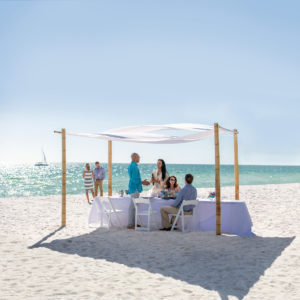
It’s not everywhere that lets you see miles of white sand beaches from your seat in the meeting room. But Paradise isn’t any ordinary place. It’s home to luxurious beachfront resorts. Charming boutique hotels in the heart of downtown Naples. Unique venues like NGALA, an extraordinary wildlife preserve where exotic animals are part of the scenery. No matter your group size or budget, you’re sure to find a meeting location in Paradise that’s unforgettable.

Eat Well in Paradise

Florida’s Paradise Coast is fast becoming a favorite among food lovers, and the reasons why are obvious. When you combine award-winning restaurants with fresh, locally sourced ingredients and creative chefs, you get a dining destination that’s sure to make mouths water.

Naples, Marco Island and the Everglades are home to a variety of delicious dining opportunities. You won’t want to miss our fresh-from-the-Gulf seafood—especially our world-famous stone crab claws. This local delicacy is only available from October through May, and is served chilled with a side of tangy mustard sauce.

Enjoy the Outdoors

Sunshine is on the menu nearly every day in Paradise. When your meeting’s over, your attendees will love teeing it up at one of the area’s many championship golf courses. If they’re looking for adventure, they can take a guided charter to explore the world-famous Everglades and Ten Thousand Islands, where they can go fishing or observe the area’s stunning nature and wildlife.

Get on the Water

The newly renovated Naples Princess luxury yacht offers several ways to impress groups of any size. Step aboard a sightseeing cruise through the waters around the spectacular mansions of Port Royal, where playful dolphins make frequent appearances. Kick start a productive week with an impressive spread of hors d’oeuvres and desserts in air-conditioned luxury during a sunset cruise. Or treat your group to a dinner cruise, where they’ll enjoy delicious, fresh fare with a side of stunning natural beauty.

Relax in Luxury

Your attendees can wrap themselves in pure decadence at one of the area’s many full-service spas. With indulgent treatments for mind, body and soul, their daily obligations will take a much-needed backseat to bliss. Afterwards, they can take a refreshing dip in a mineral pool, or head to the beach and soak up the sun, salty breezes and good vibes that make the Paradise Coast the perfect place to relax and recharge.

With work-life balance on everyone’s minds, the Paradise Coast easily checks both boxes. Start planning your best meeting ever at MeetInParadise.com.

As we begin anew, here’s where to start…

My trusty Outlook calendar is telling me it’s time to count down the top hospitality trends of this almost-past, whirlwind of a year. After another 365 days of fresh ideas, hundreds of thousands of steps on expo floors and too many app updates, we distilled it all into the most notable things we saw in the world’s ballrooms this year—and added suggestions for how to make the most of these trends at your next meeting in the new year.

Give us a shout out at #SmartMeetings if you agree—or have spotted something that should be added.

See 25 Pivotal Hospitality Trends for 2018 here.

25. Photobombing

Insta-worthy spots became de rigueur this year, so staging a picture-worthy set at an event is now as much a requirement as a hosted bar.

Now What? The trick is to disrupt the photo op and make it surprising by incorporating light painting, stop action or themed costuming in a way that will compel people to post and tag.

24. Bleisure Everywhere

While the term is now officially a decade old, the practice of tacking on vacation days to business trips has grown at an estimated 7 percent a year, thanks to those trendsetting millennials.

Now What? Today, conference-goers are looking to blend conferences and pleasure by asking that local experiences be included in the agenda during the event. Give them what they want. Schedule a tour of a museum or “unschedule” an evening so attendees can discover the destination for themselves.

23. Increased Anti-Trafficking

Ending Child Slavery at the Source (ECPAT-USA) announced that while more than 70 percent of companies have anti-human trafficking policies in place—including training and contract language addressing the issue—more can still be done.

Now What? Learn the signs and look for suppliers who have signed the code.

22. Sober Curious

In a post-#metoo world, attendees want alternatives to alcoholic beverages beyond water and a Roy Rogers. Some are abstaining for health or religious reasons, others because they need clear focus in the morning.

Now What? Give them something that is just as fun as a signature cocktail—without the downside. That could be a cocktail made with fermented kombucha or a themed alcohol-free beverage. Make sure the one ingredient not missing is joy.

21. Story-Living

The smart folks over at George P. Johnson Experience Marketing have identified an evolution of storytelling in which attendees co-create the experience. Staging as messaging coupled with sensorial immersion make participants feel seen and understood.

Now What? Use technology such as AI to create “depersonalized personalization”—in short, put to work what you already know about attendees from their registration profile.

20. Redefining Gaming

Meeting in stadiums has long been a trick for adding that spirited homefield advantage to an event. But giving attendees the thrill of meeting in arenas of fun and sport is expanding.

Now What? The definition of sport can include games of chance, video egaming and board game tournaments. All these games have spawned development of new, modern venues that cater nicely to groups of all sizes. Get in on the action by considering a location outside the ballroom.

19. Unconference for Good

From Haute Dokimazo’s spontaneous think tanks to Jamie Murdock’s event hackathons, meeting professionals are finding new ways to help attendees crowdsource solutions to their biggest problems. When a conference is so unstructured that attendees don’t even know where they are going until they get on the plane (as was the case with Haute’s Secret Family Reunion to Tuscany), the creative process opens up in ways a traditional conference can’t.

Now What? Try asking your attendees what they would like addressed at your next conference and what they have to contribute. You might be surprised.

18. Economic VEx

What do you get when you marry experiences with new technology? IBTM World Trends Watch Report says the offspring will be the Virtual Experience Economy, which will “change the meetings and events landscape and what new opportunities it presents.”

Now What? Mixed reality could be in your future. Just make sure you are adopting the technology to enhance the goals of the conference, not just to say you did.

17. Beyond Busing

Getting attendees from point A to point B is getting way cooler. Construction started this year on tunneling for a two-loop tunnel in Las Vegas that will shuttle high-occupancy, autonomous electric vehicles at speeds of up to 45 mph. The futuristic journey starts at Las Vegas Convention Center and could eventually extend to McCarran International Airport (LAS) and Los Angeles. Above ground, driverless shuttles are being tested at Austin-Bergstrom International Airport (AUS) and in Columbus, Ohio; Pittsburgh and University of Michigan.

Now What? Look for ways to leverage existing public transportation and hotel shuttles to streamline logistics and shrink greenhouse footprints.

16. Welcome All Y’all

Inclusiveness is the new normal. Whether it is accommodating special diets, physical aids such as wheelchairs and hearing aids or those with sensory processing challenges, planners are being urged to consider the needs of more than the cohort sometimes referred to as TABs (temporarily able-bodied).

Now What? Often the difference between feeling welcomed and singled out is training. Make sure everyone on your team and your suppliers are well-versed in the fine art of meeting the needs of all who come through the door.

15. United Independents

While 2018 was the year major hotel brands announced they would cut commissions from 10 percent to 7 percent, this was the year the 30 percent reduction hit the bottom line for third-party planners. Alliance of Independent Meeting Professionals (Originally Meeting Planners Unite) formed in the wake of those decisions and is positioning itself to support planners in many ways, including health care, education and philanthropy.

Now What? Check out the group’s website and stay up to date on its advocacy work. Oh, and when you get a chance, hug a planner.

14. Holistic Health

Keeping attendees and yourself healthy goes beyond including a bowl of apples and a map of local jogging routes. A new study by CWT found that a growing percentage of business travelers actually eat healthier than before while on the road and stick to their exercise routine. More planners are also including mental health in their agenda in the form of meditation sessions.

Now What? Attendees don’t necessarily want to be required to eat well and exercise, but they appreciate being given healthy options, including enough time for rest. Keeping that in mind when picking a property and designing the agenda can go a long way to keeping everyone in top shape.

13. High-Def Audiovisual

Move over boom box and disco ball. New tech is making everything clearer. Messaging is now accessible to everyone via streaming services, so attendees inside and outside the room can control from their phone what they hear and in what language. LED screens have made high-impact presentations possible and transforming a room easy.

Now What? Partner with your AV company to get the biggest emotional bang for your meeting dollar.

 12. Zero Waste

Meetings have gone beyond recycling to encompass reducing the amount of packaging and shipping, increasing food donation and composting, and eliminating single-use plastics from dining and the guest rooms. Straws, sporks and plastic water bottles are now endangered species. Say goodbye as well to little bottles of shampoo and conditioner.

Now What? Gifting branded, refillable water jugs is the rage, and communicating your efforts to shrink your footprint helps turn attendees into active conservationists.

 11. Futureproofing

Hotels have come a long way in the 100 years since Conrad Hilton opened his first property in Cisco, Texas, and attendees now expect all the comforts of home—and then some—when they open that guest room door with their smart phones. Cristina Villalon, principal interior designer at Alvarez-Diaz & Villalon Architecture & Interior Design, thinks guests are looking for more personalized spaces with a connection to the outdoors (think waterfalls, living walls and lots of plants), augmented by plenty of technology. Marriott International is paving the way for what it calls “mind travel” by creating social and private spaces where guests can reach their full creative potential.

Now What? Look for hotel partners that have invested in modular design to maximize flexibility and plenty of connections, or as David Lambert, director of sales and marketing for the brand-new Grand Hyatt at SFO, says, places that are “lit up.”

10. AltHealthy

A wedge of iceberg lettuce slathered in blue cheese dressing no longer qualifies as a balanced diet (if it ever did). Kimpton Hotels & Restaurants 2020 Culinary & Cocktail Trends report points to the healthful yearnings of alternative milk (oat and hemp), fermented foods (tempeh, infused vinegars and probiotics) and plant-based meat-alternative everything.

Now What? Work with the culinary team at your host hotel to craft menus that offer something for the gluten-free, vegan and Keto guests in your midst. Then label it so people know what they are putting into their bodies.

9. Bigness Rules

Mergers continued to consolidate the industry as companies joined forces to leverage synergies—while narrowing choices for the rest of us. AEG Facilities and SMG formed ASM Global, the largest facilities management and venues services company. Eldorado Resorts bought Caesars for $17.3 billion to make it one of the largest gambling and entertainment ventures in the United States. MGM Resorts International sold Bellagio to a real estate investment trust. STR found that due to mergers and funding issues, fewer independent hotel properties are available.

Now What? The consolidations could be good news for those who want to manage multiple contracts across properties, but finding that one-of-a-kind partner may require more hunting.

 8. A Long Road

According to a study by WiH2020 (women in hospitality), progress toward narrowing a lingering pay gap has been slow—a 0.4 percent annual decrease in the pay gap between sexes across hospitality, travel and leisure. Average salaries for men are still 7.6 percent higher than for women.

Now What? Join groups such as AWE in a quest to build a community that inspires women and helps everyone accelerate careers.

 7. Uber-Data Privacy

For those who still haven’t accounted for the data-sharing requirements in Europe’s 2018 General Data Protection Regulation (GDPR) laws, California brought the issue home with California Consumer Privacy Act (CCPA), which goes into effect January 1. It requires disclosure of privacy practices and an easy way for attendees to opt out of any sharing.

Now What? Being 100 percent transparent about how you protect and use your lists is a best practice no matter how many new acronyms might be enacted by legislatures around the world. Treat your attendees and their information as you would like to be treated.

6. Flight Shaming

In the wake of Greta Thunberg’s epic trek across the ocean to speak out on behalf of future inhabitants of the planet, some have pointed to airline travel as an eco-unfriendly waste of resources. Others are pushing for greener venues.

Now What? Event professionals are responding by pointing to offsets in the form of CSR activities and the massive return on investment meetings have. Meeting f2f helps to cure diseases, advance technology and get business done.

5. Journeymapping

Conference attendees embark on an experiential journey the moment they hear about an event. Every piece of communication, interaction during the registration process, hotel stay, speaker interaction and follow-up email sets or reinforces an expectation. Smart event professionals leave nothing to chance and use technology to remove friction wherever possible. From data mapping to facial recognition and live polling to determine audience engagement in real-time, guests expect bespoke messaging.

Now What? Start by getting to know your attendees and aligning this info with your company’s goals. Ask questions and make priority decisions based on your findings. That kind of strategic thinking is what elevates meeting professionals’ careers.

 4. Safety First

The age of the live shooter has put everyone on edge, including meeting professionals who are tasked with keeping attendees safe wherever they are. One veteran planner started a Coalition to Prevent Gun Violence at Events. More venues require metal detectors and security guards for access control. But threats come in many forms—and often when you least expect them.

Now What? The planner’s secret weapon when it comes to natural and man-made emergencies is communication. Work with partners to create a plan, share essential details with attendees and stay calm when the worst happens.

3. Rideshare Segregation

It was the best of years for travelers looking for a ride to the terminal. It was the worst of years for finding that ride to the hotel, as airports across the country acted to ease congestion near baggage claim by forcing Uber and Lyft pick-ups to isolated areas. In Los Angeles, ride shares are now relegated to an area called LAX-It that is a shuttle bus ride away, even if it does offer food trucks and toilets.

Now What? Call (or Google) ahead to see what policies are at your destination and communicate that to your attendees. Or, when at JFK, check out the new Uber Copter taxi that makes the trip to Lower Manhattan in eight New York minutes.

 2. A Social Manifesto

CSR has been making its way onto more agendas as backpack stuffing and bike assembling brings groups and local communities together.

Now What? The incentive industry stepped up this year with a pledge to embrace social responsibility as part of SITE’s The Bangkok Manifesto. As communities face more challenges related to increasingly scarce natural resources, shifting weather patterns, overtourism and the negative impacts of a disposable culture, travelers around the world have greater responsibility than ever to consider solutions. “Travel can and should be a force for good,” said Denise Naguib, vice president of global sustainability and supplier diversity for Marriott International.

 1. $2.53 Trillion Mission

Meetings Mean Business doubled down on the job of letting the world—including elected officials—know how much impact events have on economies, scientific developments and the welfare of everyone involved.

Now What? Get ready to celebrate the good work you do every day on Global Meetings Industry Day Tuesday, April 14, 2020.

Videoconferencing Advancements

Videoconferencing has been around for years, but like all things tech, videoconferencing products are getting better by the day. New products that feature a 360-degree camera and speaker, and intelligence systems that use voice and facial recognition, let remote attendees feel as though they’re right in the room.

Hotels Going Even More Tech

This was a year in which hotels integrated technology deeper than ever into the fabric of their operations: room keys, room service and check-in/check-out can now all be accessed via smartphone. Smart guest technology allows hotels to predict guests’ service needs based on previous visits, hopefully gifting planners more time to get creative.

Better Audio for Live Events

Audio is one of the most important elements of the event space—and one that can easily become a headache. High-quality, low-cost audio is something that Mixhalo, an event audio software company, introduced this year. Look for this service to be available at conferences, festivals, trade shows and more.

Event Automation

If there’s one thing event professionals will learn to love—if they don’t already—it’s automation. Event automation lets planners automate tasks and create workflows, thus cutting costs. You can even measure the success of event activities, making it more likely that even more successful and effective events will follow.

Hybrid Events

Hybrid events—events that are both physical and virtual—have been gaining traction recent years, and 2019 has been no different. But does incorporating live streaming into events result in a decrease in live attendance? It seems the answer is no. Digitell found that 30 percent of people who attended virtually a live-streamed event signed up for the physical event the following year. Expect more of these hybrids in 2020.

Virtual Reality Tours

CVBs, convention centers and VR software companies are increasingly implementing virtual reality (VR) tours, saving planners both time and money. Available on mobile, desktop and VR goggles, not only are event professionals able to take virtual tours, but they can also view unique floor plans in 3D. Some offer mobile check-in and guest-list management in the mix.

Big Data

When it comes to planning, the more data, the better. With new and expanded data now available regarding attendee behavior, attendee engagement, which sessions were the most attended, which booth drew the most traffic and more, event professionals will be able to create even better events in the future. Big data is here, or will be coming soon, for the events you plan.

Not so long ago, sports venues’ only offerings for groups consisted of games, basic stadium tours and modest gathering spaces. They now include a wide range of unique, personal experiences as well as highly imaginative meeting areas.

Here are some of the top options for groups in two of America’s leading stadiums.

Marlins Park, Miami

The 37,446-seat home of the National League’s Miami Marlins sits on hallowed ground. It’s on the former site of the Orange Bowl, a Miami icon since the 1930s and for many years home to the Miami Dolphins and University of Miami football teams.

Marlins Park, built in 2012, is comfortable and roomy, and like the city in which it sits, its design is cool, colorful and eclectic.

Meeting and event attendees are encouraged to engage with Marlins baseball before, during and after their events. Special events tours are offered every day, and they’re customizable, in terms of marketing and branding. In addition, attendees can walk out on the field and into the batting cage or locker room, and visits by current or former Marlins players can also be arranged.

Team-building exercises include special events such as sensory experiences in The Club and interactive batting practice inside the Marlins clubhouse.

In all, there’s 150,745 sq. ft. available to planners. The Legends Level is perfect for corporate training and breakouts, and the First Base and Third Base dugout clubs are luxurious spaces for social events. The Clevelander is a Miami icon, an open-air Art Deco watering hole in the outfield with fantastic views, multiple bars and even a swimming pool.

Weather is never a factor there, because Marlins Park is a state-of-the-art ballpark with a retractable roof; it’s the first retractable-roof structure in the world to earn LEED Gold certification. In fact, 49 percent of the stadium’s content is recycled, including rubber flooring in the clubhouse that’s composed of recycled Nike sneakers.

The stadium sits on the edge of downtown, with stunning views of the Miami skyline.

Banc of California Stadium, Los Angeles

When it opened on April 18, 2018, Banc of California Stadium became the first open-air stadium built in Los Angeles since 1962. Holding 22,000, it’s the home of Major League Soccer’s Los Angeles Football Club, and it brings more than $350 million in private investment to Southern Los Angeles.

Banc of California Stadium offers premium amenities and hospitality spaces throughout, among them a chef-driven international food hall, event rooftops and specialty bars. It’s equipped with state-of-the-art technology and sightlines that create an intimate, close-up experience for fans.

There are 4,800 parking spaces on-site, and dramatic views of the downtown skyline. Meeting attendees can enjoy customized tours of the facility and walk onto the field—or even conduct team-building exercises on it.

Event spaces include the Field Club, seating 575; the Founders Club, seating 450; and the open-air Sunset Deck, seating 350.

Read about more sports stadiums and arenas that feature excellent options for groups in Steve Winston’s story, “Game On: Many Sports Venues are Creating Big Wins for Meetings Groups” in the January issue of Smart Meetings. Coming soon.

2019 was a year chock full of fun. With events (our own, as well as the many we’ve attended) across the United States and Canada, the Smart Meetings team both witnessed and learned a lot, whether it was about the ever-changing landscape of the meetings industry or how to keep attendees engaged in the 21st century. Here’s to another year of inspiring brilliant experiences.

Smart Meetings Northern California 2019

Held at Fairmont San Francisco, Smart Meetings Northern California 2019 was an event filled with billiards, DIY wine blending, tarot card readings and a bunch of tech gadgetry.

Mark Cooper on Meetings Industry Challenges

Mark Cooper, CEO of IACC Meeting Venues, spoke with Smart Meetings about two of the main issues discussed at IACC Americas Connect held in Toronto April 11–12: the need for the convention and meetings industry to enhance sustainability efforts, and to be more creative and inventive in addressing challenges in general.

Smart Meetings West National 2019

Smart Meetings West National 2019 was held over three days at Planet Hollywood in Las Vegas. Whether it was psychic readings, an evening of elegant dining at the Chateau at Paris Las Vegas hotel or teeing off at TopGolf Las Vegas, there was something for everyone.

How Do You Get Attendees Engaged?

Engaging attendees is never easy, especially now, with distraction all around us, vying for attention. Mike Lyons of Smart Meetings TV asked planners how they keep attendees engaged in the Internet Age.

Want to be a Sustainability Expert?

Mariela McIlwraith, director of industry advancement for Events Industry Council, sat down with Smart Meetings to discuss benefits of the 2019 Sustainable Event Professional Certificate Program, offered this month at Cobo Center in Detroit.

IMEX America 2019: Day 2 Highlights

Held in Las Vegas at Sands Expo Convention Center Sept. 10–12, IMEX America 2019 was the place to be. Mike Lyons was on the floor for Smart Meetings TV, checking out everything on offer.

Mid-America National Recap

The last Smart Meetings event of the year ended with a bang. It’ll soon be another year full of brilliant experiences; be sure to see our events page to check out all the wonderful events we’ll host in 2020.

In the realm of F&B, the last year of the second decade of the 21st century was one of innovation and rediscovery of the basics. Overarching was a continuing emphasis on health, well-being and sustainability. Here’s a menu.

CBD On the Rocks

With the legalization of marijuana in an increasing number of states, how could craft brewers and mixologists resist thinking, “Oh, wow”? We called this trend beer, cocktails and 420: a love story.

Food as Fuel

When we eat, we satisfy many cravings. Hunger. Fun. Variety. Secret Desires. But we’re paying more attention than ever to foods that satisfy our nutritional need to be our best. In short, what’s for lunch? Improved productivity!

Healthier Alcohol

Is there poison in your glass, we asked? Because we want to know where our food comes from, it’s only natural that our due diligence should extend to what we drink. Thus, we presented  the case for organic wines.

Forage, Gather, Hunt, Fish

Cutting-edge chefs around the country are turning to Mother Nature for “new” ingredients and fresh flavors by foraging and gathering in the wild, fishing and hunting. It’s all about a culinary movement to get primitive.

Elevated Bar Chow

Sure, you can still find stale packaged pretzels and deep-fried inedibles at bars around the country. But in the hipster enclaves, especially, look for bars that elevate their F&B.

Mission Impossible

When great tasting but meatless burgers spread to Burger King and your neighborhood grocery, you had to know we have entered the era of fake chews.

Seafood That Isn’t

Our oceans are in trouble and overfishing is endemic. So we asked the question: Will plant-based fish be the next big thing?

Alcohol-Free Yet Way Cool

Bartenders are making inventive, alcohol-free cocktails a big deal (with prices to match). But don’t call them mocktails.

Classics Endure

It’s comforting to know that, in this time of warp-speed change, some things are still worth preserving. The world’s most popular cocktail—and one of the few to originate from Italy—was hailed in our salute to 100 years of the Negroni.

As we enter a new decade and you set goals and intentions for the new year, why not check in with your career goals? Consider how you can continue working toward them—and amp them up—in 2020. Over the past twelve months, Smart Meetings has offered up advice to help you make small changes that will have big impacts for your career. Here are some of our best tips for making this your best year yet.

Random Acts of Career Development

Smart Meetings started out last year with some great advice on career development, based on a survey by UFI, the Global Association of the Exhibition Industry. The survey found gender discrepancies between “soft” skills (communication, patience and organizational skills) and possession of power.

5 Ways to Find Freedom in Freelancing

With advancements in technology making freelancing ever easier and ever more popular, we also focused on career advice for freelancers. Tips such as going out to work, giving yourself benefits, hiring other freelancers and making sure you have strong networking skills can help you be the best freelancer you can be.

Using Titles and Certifications to Your Advantage

While things like business cards may seem minor in the vast realm of career development, first impressions are still important. How you present yourself to clients, and potential clients, remains significant. Knowing when and how many certifications and titles to use is an important way to make sure you are putting your best foot forward, and a simple way to boost career opportunities.

Secrets of a Productive Mentorship Program

Entering the big wide professional world can be intimidating. A great way for young planners to jump-start their careers is reaching out and finding a mentor, who can offer invaluable insight based on personal experience. But a productive mentorship program or relationship can be difficult to find. We offered advice on gaining and maintaining strong mentor-mentee relationships—and why you should invest in one.

How to Get a Seat at The Power Table

“Event planner” is still too often a misunderstood and undervalued title. Among planners’ greatest challenges is progressing their careers to the point at which they have real power within the companies they work for. Howard Givner, founder of Event Leadership Institute, gives advice on ways planners can take that step towards winning a seat at the “power table.”

How to Realize Your True Meeting Potential

According to informal research done by motivational speaker Thom Singer, 70 percent of people are not realizing their full potential. To help meeting planners realize what they are capable of, we offered sage advice on ways that you can reach higher and succeed like never before. Spoiler alert: focus on the four “P’s”: plans, passion, purpose and people.

The Joys of Generational Differences

While generational differences in the workforce are not new, rapid changes in technology and the way we conduct business may make them seem starker than ever before. Young CEOs, for example, have become commonplace in this age of start-ups. While generational differences may seem like a minefield of different opinions and varying approaches, they can actually be a big asset in the workplace when innovation teams with experience.

When was the last time you attended a meeting you found exciting? According to Rachele Vincent, regional director of sales at Topgolf, who shared engagement strategies at a recent Smart Meetings webinar “Get the Office Out of the Office,” it probably didn’t take place inside your office space. Vincent, who has 10 years of experience building teams and relationships, is passionate about taking the meeting outside of the traditional space.

Vincent offered a brief overview of what makes off-site meetings impactful, what tools you have at your fingertips, as well as tips and tricks to get the most return on your investment.

Create a Cohesive Environment

It turns out that most offices have an average of five generations under the same roof. That’s not only many personalities, but vast differences in behavior, tastes and level of activity. “You have to create a cohesive environment if you have any shot of catering to that type of diversity,” she said.

See alsoOver-the-Top Team Building

For on-site meetings, far too much time is spent traveling from one meeting space to another, because booking one room for an entire day is often difficult, something that Vincent refers to as the “meeting room hustle.” Meetings held on site often face a multitude of distractions: unexpected visitors, incessant phone ringing and tasks that take longer than they should.

Employees now spend much of their time in virtual meeting rooms. And while meeting virtually offers flexibility, Vincent knows that the flip side of flexibility distraction. “There is at least one or two of you on this session right now that has had a toddler screaming or a dog barking in the background, some of you are driving and if you are not, you probably have more than one screen up and have projects and emails active on those screens.” Multi-tasking is what humans do. “Whatever environment we are in, we take advantage of it,” she said.

All these distractions don’t exist when meeting face-to-face. The presenter is physically present and has control of the environment, which demands audiences’ undivided attention. In person, the presenter is able to observe the engagement levels of the audience and can adjust their presentation accordingly, allowing presenters to communicate with their audience more effectively.

The Payout

“In business, we have to prove the pay out: what’s in it for me, what’s in it for them, what’s in it for the company,” Vincent said. In fact, 96 percent of small business owners say that in-person meetings are worth the investment. As a result of meeting face-to-face, there is increased retention, improved communication, communal strategic thinking and deeper trust.

“Meetings and events account for over $325 billion in direct spending and is responsible for 2.5 million jobs. Why? Because it pays off,” Vincent said. “Delivering a message that actually resonates with your workforce is basically priceless.”

3 Must-Haves for ROI

Pre- and post-meeting work are of the utmost importance. And of all the factors that go into setting an agenda, the most important one is to be realistic. Setting an agenda well in advance of the meeting is the best way to make sure that everyone will stick to the plan. Vincent recommends carving out time for brainstorming, a portion of meetings that could potentially take up more time than planned.

“We see many off-site events fail because participants are overloaded with data-dense content,” she said. Vincent recommends moving this data review to prereading to save time for meaningful dialogue.

Vincent says, “it’s vital when building your program that you give attendees a true sense of purpose.” For instance, if there is a big problem that attendees have been trying to tackle, communicate this goal with attendees to help them connect emotionally.

Real engagement translates into ROI. Vincent recalled a time when she had content that she thought would hit well with her attendees; much to her dismay, attendees were not engaged, and she was disappointed. A few months down the line, she used the same content but with a different speaker, who added a new spin. Attendees were excited and even congratulated Vincent on a job well done. Why was it that attendees were bored at one point but engaged at another? Different voice. A voice that people hear every day doesn’t have the same impact as an outside one does. And if it’s new content, then that’s even better.

When attendees have the opportunity to do something for others—something as small as a toy drive—it reminds attendees that the company cares and has a positive impact on the community.

In 2019, the obsession with elevating experiences grew exponentially. Hotels are not simply somewhere to sleep after a long day of travel and meetings—even the biggest brands are boutique-ing their style and offerings. The celebration of local artisans was prevalent, from furniture to food, as was the desire to make hotels more like your hip home-away-from-home. Integrating visitors with locals and business with pleasure through programming and communal offerings were big themes on repeat, and we expect more to come. Here’s a 2019 round-up of some of our favorite new and re-vibed places to meet and find momentum.

Curated Charm for Mid-Size Meetings

Sometimes smaller is better. In this batch of new hotels are 4 properties with just 100 to 150 rooms, and modest square footage for meetings and events. While you won’t house 300 guests at these hotels, what you will find is strong design and a rooted sense of the hotel’s surroundings reflected within. History, local culture, an artistic disposition and homage to old world beginnings are amongst the charms awaiting visitors of these confident venues.

Luxe New Landmarks of the East and West

Each of these properties has a little something extra. One provides the luxury of a hundred options, another the luxury of high-end hospitality’s marriage to sustainability, and two more the luxury of opulence. Take your time to indulge, whether it’s in the endless array of activities at JW Marriott Desert Springs, or by taking advantage of rare in-room caviar service when staying suite-style at the Conrad New York midtown.

Restored from Antiquity

You can’t fit a building in a blue bin, but you can still recycle it. All these properties take up residence within walls that once lived another life. A YMCA, a railway building and an old office tower in Los Angeles are reborn to hospitality, while a 95-year-old structure in Detroit that originally housed jewelry-makers escapes demolition to turn hotel.

Oh, So Experiential

You’ve noticed the trend that people are no longer satisfied with a place to rest their head—they want an experience. This means a focus, something unique to observe, making it hands on, or getting giddy in the details. From a culinary museum and art installations to goat milk cheese-making, these properties are as much about their extracurricular offerings as they are about the thread count in your sheets.

Port City, Sunny City: New Hotels in Coastal States

Get thee to the coast—even if you’re not one for sandy beaches and a whiff of sunscreen, there’s just something about the coastal breeze, sweet with winds from distant shores. Whether on the river, in white sands, or pulling in to port, these properties all share the adventurous bent of status in a coastal state. Experience a Florida resort’s boutique offering, get hip and communal miles from the warm SoCal waters, or wake to a brisk salty sun at the hub of a traditionally sea-faring town.

The end of a decade, and another year in the books; people are travelling more than ever. According to the World Tourism Organization, the number of international tourist arrivals went up to 1.4 billion in 2018. With this year being consistent in that, and with the meetings and events industry projected to have increases across the board, what better way to prep for the new year than to take a look back.

Smart Meetings covered the biggest travel stories of the year, from saving consumer capital to saving a consumer’s time. Here are three that will have implications for not just years ahead, but for the next decade.

1. The U.S. Grounds Boeing 737 Max Flights

The Boeing 737 Max was the fastest-selling airliner in Boeing history, selling over 5,000 aircraft over a few years. But in April and May, Boeing sold zero. It was a popular plane due to its price and size, until a particular sensor became a problem, which eventually led to two fatal crashes in five months, killing everyone on both flights: 346 people total. When the second of the two tragedies occurred in March, President Trump announced that the U.S. would ground all Boeing 737 Max 8 planes.

Since then, there has been a worldwide grounding of the 737 Max, lawsuits from pilots and from families affected by the crashes, congressional hearings and a criminal investigation launched by the U.S. Department of Justice. Boeing took a long time to address the issues, which only seems to have made things worse. With modifications to the plane’s software underway and hopes that it will fly again soon, the question remains: Will Boeing be able to bounce back?

2. United Saves 40,000 Customers from Missed Flights

Through advanced technology, ConnectionSaver from United automatically scans flights for customers who are making tight connections to determine whether a flight can be held or not. This is done along with ensuring already-boarded passengers arrive at their destination on time.

ConnectionSaver also sends every connecting customer (who opted to receive text notifications) directions to the gate of the connecting flight and an estimated time of arrival to the gate. According to USA Today, flights held were delayed an average of six minutes.

3. Prepare for a New LAX Rideshare Experience

Death, taxes and LAX traffic. To try and cure the headache that is being stuck-in traffic, specifically getting in or out of LAX, launched was LAX-it. On Oct. 29, LAX-it was implemented, making ride-share curbside pickups a thing of the past at LAX. Instead, Ubers, Lyfts, and Taxis have their own designated area to pick up patrons. The change will create a dedicated lane for shuttle buses on the lower arrivals level that will take passengers to a new pick-up lot

According to Forbes, the shuttles are scheduled to arrive every three to five minutes during peak hours. LAX staff will be available at each shuttle stop to assist you. And if you don’t want to wait for the bus, or if you’d like to stretch your legs, you’re welcome to walk to LAX-it. The lot, adjacent to Terminal One, is said to be around twenty-minutes or less by foot.

Smart Meetings got to experience the new system during its first weekend of being implemented. Though the area makes sense and is actually only a few minutes’ walk from terminals that house Southwest and other common domestic airlines, there are logistical problems. Later than noon, the area swells and traffic seeps into the surrounding streets. Though that was a few months ago, the system could be more efficient now.