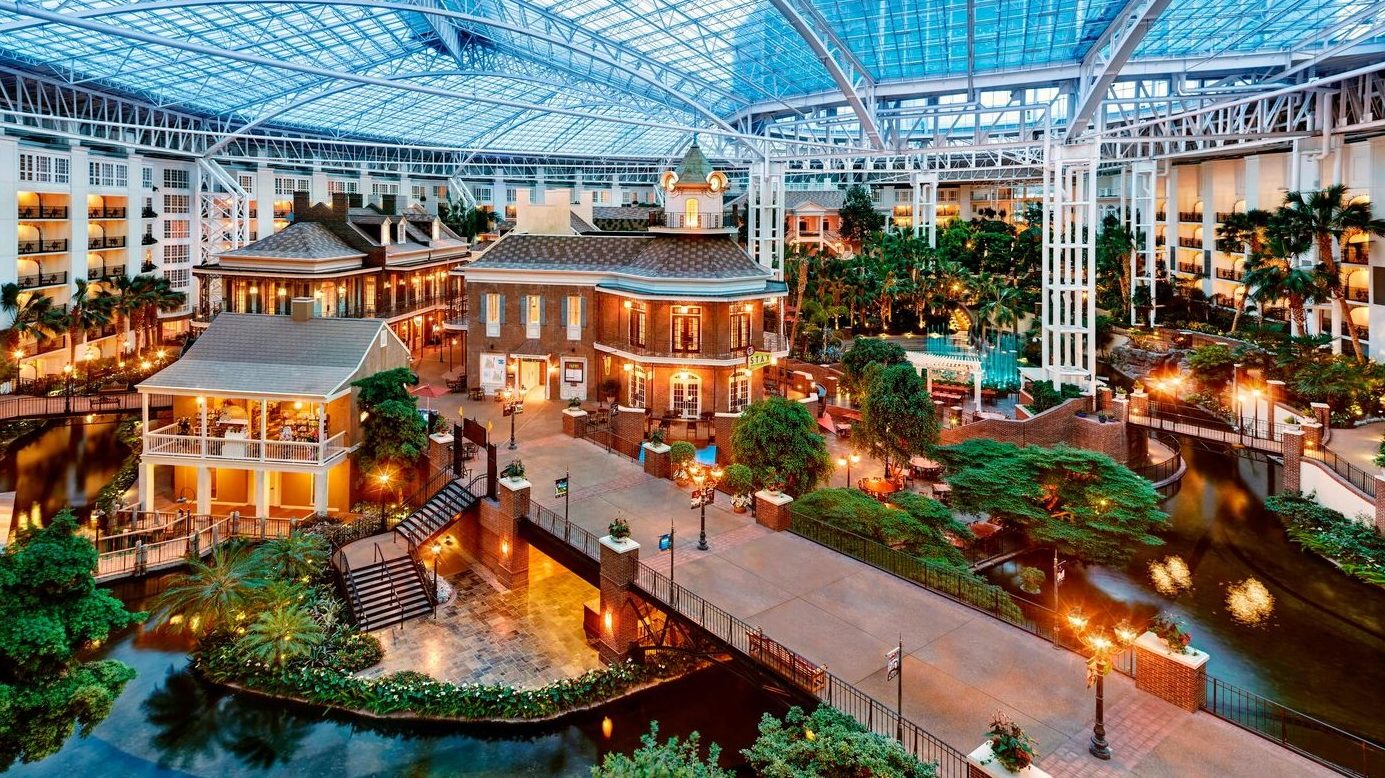
How do you gather 650 meeting professionals in one place and simultaneously stream the action to more than 1,100 people watching at home? Paul Van Deventer, president and CEO of Meeting Professionals International answered by doing just that—very carefully. From the opening reception on Main Street in Grapevine, Texas, to the general sessions at Gaylord Texan, the emphasis for the “reunite for recovery” event was on demonstrating how protocols could be followed while still learning and networking.

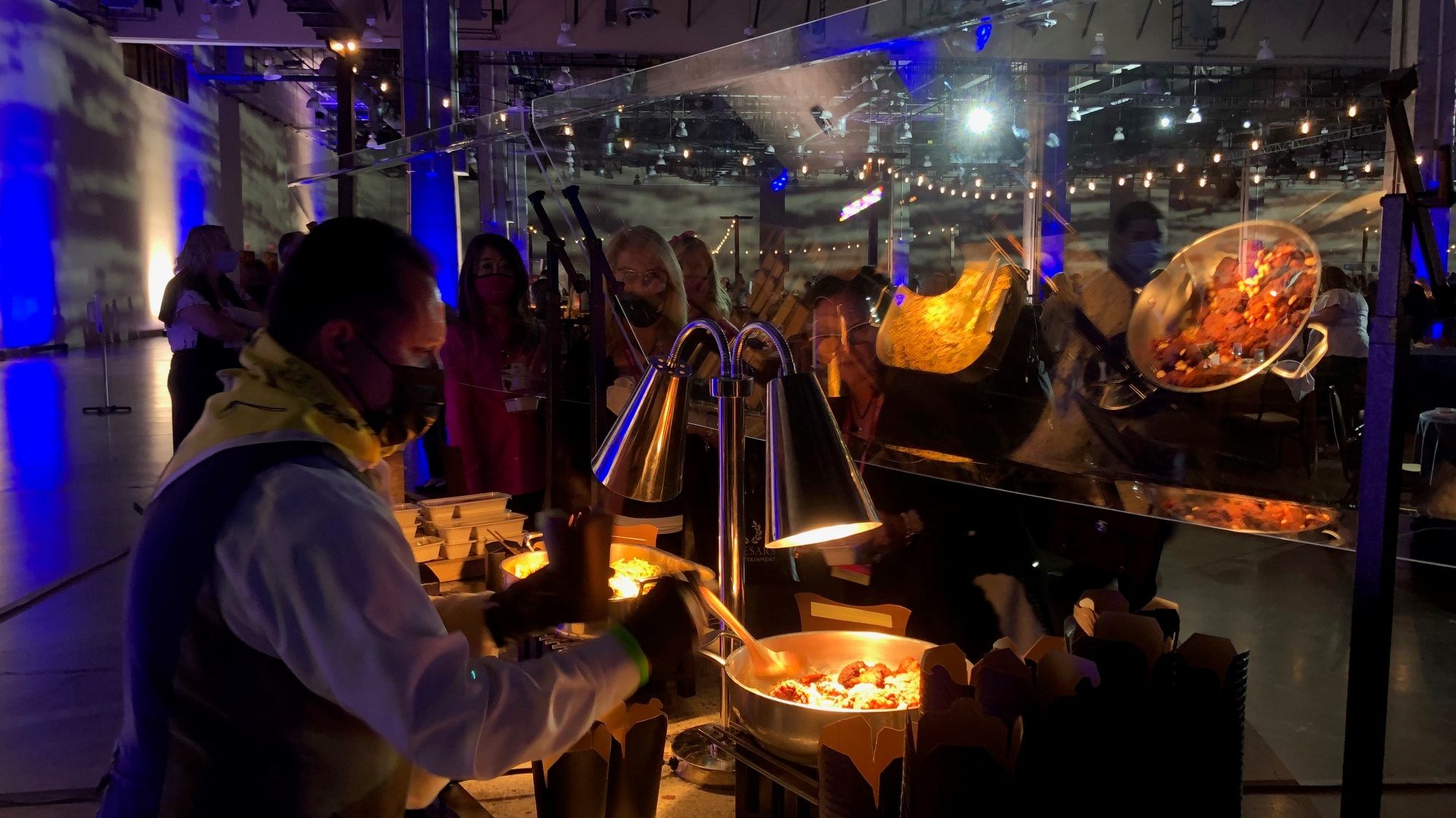
Attendees filled out daily health checks that were managed by InHouse Physicians and had their temperature checked before they could enter the events. Masks were required unless actively eating or drinking and the 72-inch rounds were set with four people per table. “The world is watching; we have to do this right,” Van Deventer said.

“Our role is to model practices for safely and affectively hosting live business events,” he stressed in his remarks from stage during the opening session. To that end, the streaming portion of the hybrid event was done completely live with nothing prerecorded. The virtual audience was included in comments read from the stage and some were brought onto the big screen monitor to answer questions for the live audience. The two groups had parallel journeys.

The simulcast included a keynote that from a remote speaker, Shabnam Mogharabi, who co-founded the inspirational web site SoulPancake and shared a Joy Toolkit. For those who didn’t get a chance to play along at home, the main tools are expressing gratitude; connecting with vulnerability; living for a cause, not applause; and starting today. “Being intentional about bringing joy into your life is an act of rebellion. It allows you to deal with life’s circumstance, no matter what they are,” she said.

The Road to Recovery
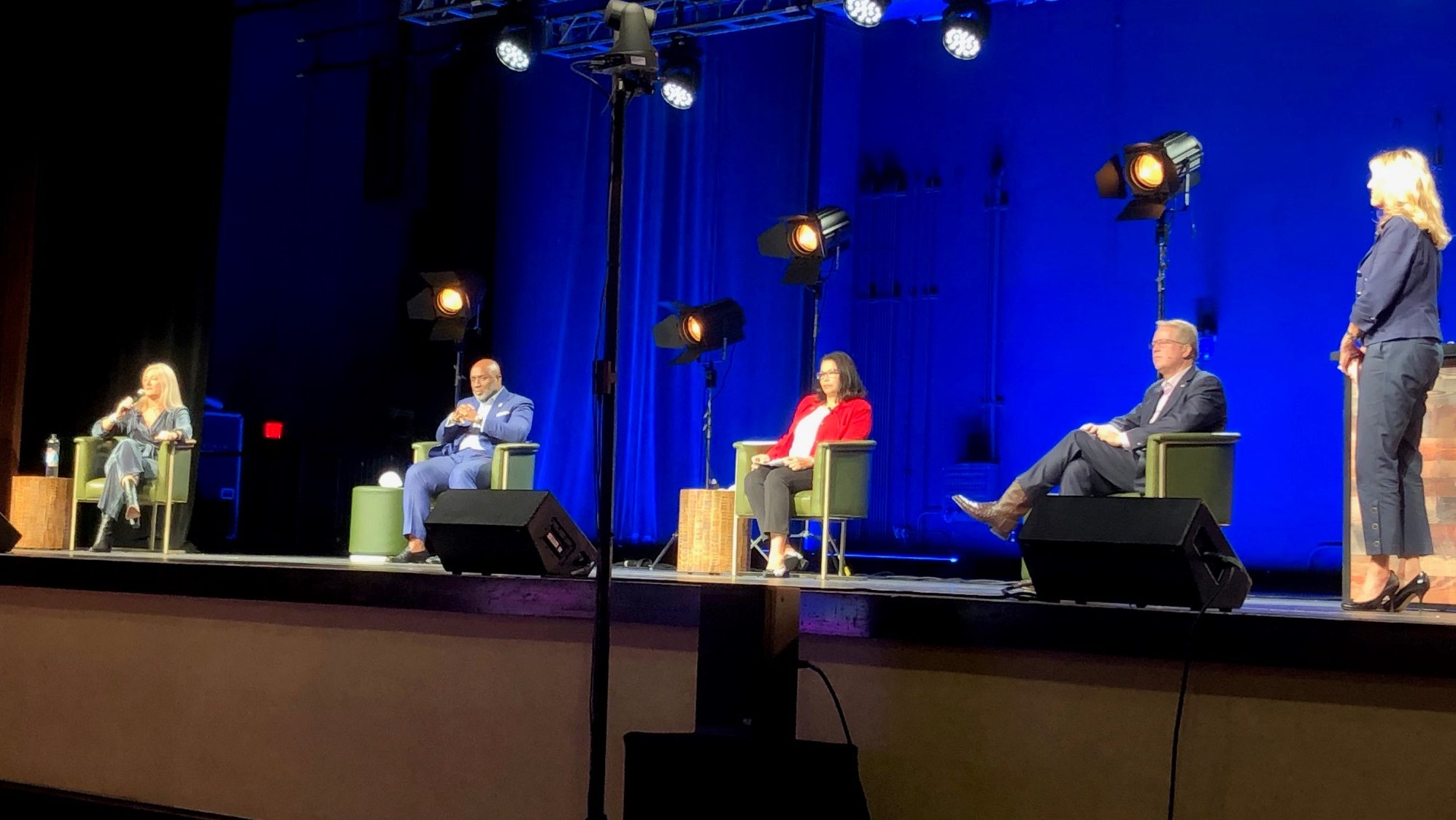
A panel discussion looked ahead to how the industry will get back on its feet after the crippling blow of being shut down much of 2020. Amy Calvert, CEO of Events Industry Council, which is gathering best practices through APEX COVID-19 Business Recovery Taskforce, explained that the crisis is an opportunity to reflect on what was taken for granted pre-COVID. “We have a moment as an industry to think about why we do what we do and reconnect with our purpose,” she said.

Nan Marchand, managing director of the Meetings Mean Business Coalition, called for presenting a unified voice, particularly to elected officials who can help with the recovery. “The economy can’t grow without this industry. We will come back stronger because we have learned,” she said.

At the same time, Jason Dunn, chair of the National Coalition of Black Meeting Professionals, called on meeting professionals to take this opportunity to collaborate and “add more chairs to the Thanksgiving table.” He explained that empathy will help to balance the human and business sides of the industry. “We will get through with passion and perseverance,” he said.

Van Deventer was optimistic that the industry would be appreciated more now that companies had to operate without the marketing, sales and collaborating power of in-person events. “They know they need it and we have to bring it back for them,” he said. “We need a new experience for a new normal because when we meet, we change the world.”

Open for Business
Cities from across the country shared updates about how they have continued to draw crowds during the pandemic and plans for even more group business in the coming years. Many of the presentations included their GBAC STAR certifications and videos of their sanitation foggers. They also shared practical advice they have learned from the sporting events and regional corporate meetings that have started to return. Being a drive-in destination was seen as a draw. Similarly, having the ability to manage traffic flow to serve up programming (and meals) in waves with plenty of room to spread out was the key in many instances. Access to outdoor spaces helped, too.

Maura Gast, executive director of Irving Convention and Visitors Bureau, reported that a half dozen meetings have been held at Irving Convention Center at Las Colinas since the pandemic was announced. New equipment, including Clorox sanitizers, touchless access points and temperature screening stations, is now in place to welcome more visitors safely. To aid compliance, the venue is offering double the space groups normally would book at no extra charge through June of 2021.

Susie Townsend, vice president of visitor experience at Visit Indy, mourned the fact that no one is kissing bricks at Indianapolis Motor Speedway today as they did when MPI was in that city in 2018, but they are meeting. A total of 21 live events brought 50,000 attendees for medical and corporate meetings and sporting events. The community has come together to support each other and beef up pandemic responses by installing touchless entry throughout Indiana Convention Center and upgrade the building’s air filtration system. And in a bid to draw hybrid meetings, prices were cut on WiFi access and AV services and equipment rental. Looking forward, a 143,000-square-foot expansion is planned to begin in 2022 in parallel with the building of a new, 800-room Hilton Signia hotel, which will be connected by skywalk and completed in 2025.
Brad Dean, CEO of Discover Puerto Rico, explained that after the hurricanes and earthquake that devastated the island over the last three years, the destination has a Ph.D. in resilience. And the experience made them stronger. The U.S. territory has invested in power, internet and meetings infrastructure over that time. For hybrid meetings, a production studio can be set up in any of the meeting rooms in Puerto Rico Convention Center. And a new five-acre El Distrito San Juan entertainment venue is opening next door.

Keith Talbert, director of sales with Visit Oklahoma City, Oklahoma, reported that the up and coming destination hosted 83 events and 414,519 attendees between May and August and has no set limits on occupancy. With a new convention center and a 605-rooom Omni Oklahoma City opening at the beginning of 2021, the city will be on a lot more meeting planner radars.

Todd Bertka, director of Waco Convention Center & Visitors Bureau, shared a glimpse of what awaits groups in the heart of Texas when they return to the city. Five hotels are currently under construction totaling 607 guest rooms. Another 5 projects with 950 rooms, including an AC Hotel by Marriott, have been announced.

Waco natives Chip and Joanna Gaines from the television show Fixer Upper have opened Magnolia Market at the Silos and are in the process of opening a hotel. And a burgeoning craft beer scene has taken root.

Waco Convention Center’s 144,000 sq. ft. Are open at 50 percent capacity and incentives are being offered for bringing groups to the area.

Tammy Routh, senior vice president of global sales with Marriott International, said a lot of meetings are still happening. The company is documenting cleanliness standards, F&B solutions and suggestions for managing traffic flow at large events on Marriott Bonvoy Events so planners can learn from each other. “Everyone has a role and every meeting is different,” she said. “That is why we are getting creative.”

People are traveling less, more cautiously and more domestically. But will it be this way much longer? Maybe not. Recent findings from Berkshire Hathaway Travel Protection offers insight into how travelers are feeling about hitting the road again.

Americans Are Taking Fewer Trips

Researchers at Berkshire Hathaway have been doing these studies for six years, and this is the first time they’ve seen such a high rate of cancelled trips and so few trips taken.

Family travel was the most common type of trip taken, and the most common trip cancelled, in 2020. Travel spending is down 23 percent from 2019 to 2020. More than 60 percent of respondents said they spent $5,000 or less on travel in 2020; it was 40 percent in 2019.

Millennials and High-income Travelers are Spending Twice as Much

Millennials and high-income travelers (earners of $100,000 or more) have spent between 64-188 percent more on travel than the average person in 2020. Millennials say they will spend an average of $15,964 on travel in 2020—63.9 percent more than the typical traveler. High-income travelers say they’ll spend $20,649 on travel—118 percent more than the average traveler.

While the data isn’t clear on the type of travel being favored by Americans, the boom in RV and domestic travel makes it is likely that a significant portion is being spent there.

High-income travelers and millennials are also much more ready to travel. According to the research, more than half of high-income travelers and millennials are ready to cruise in the next six months, as compared to 1/3 of all travelers.

People Want to Travel, but Aren’t Sure Where

Ninety-two percent of respondents plan to travel in the coming year. Most people plan on road-tripping (82 percent) or camping (79). Right now, less than 1/3 feel comfortable taking a road trip, and more than 2/3 feel they’ll have to wait 18 months or more before feeling safe enough for a cruise.      

Some Good News brings you the best industry updates to keep your spirits up during the pandemic. This week, we highlight current hotel packages that are geared toward keeping you—and your groups—safe, productive and pampered. From tropical buyouts to WFH luxury, these hotels offer solutions to the COVID crisis that don’t keep you confined to the home office (or even mainland U.S.).

Privacy Please

Planning an executive retreat or a companywide meeting? A beachside buyout at one of these established hotels comes with great perks—in addition, of course, to above-average safety, privacy and social distancing. Book along with private travel for a stress- and COVID-free experience.

Rosewood Miramar Beach Montecito

Corporate and group travel meets responsible luxury at Rosewood Miramar Beach in Southern California. The oceanfront resort launched a new Beach House Buyout program for groups looking to book all 26 accommodations at the Beach House. Perks include private group fitness classes, poolside cabanas, waived resort fees, bocce ball tournaments and more.

Brazilian Court Hotel

Historic Brazilian Court Hotel in Palm Beach, Florida, is offering complete buyouts for group travel through April 2021. The 80-room boutique hotel allows up to 150 guests to enjoy an exclusive executive retreat with 3,500 sq. ft. of indoor and outdoor event space, meeting space with built-in videoconferencing, event planning services and catering services overseen by award-winning Chef Daniel Boulud.

Hyatt Regency Maui

As Hawaii just recently began reopening for tourism, so has recently renovated Hyatt Regency Maui Resort and Spa with complete and partial buyout packages. Choose from the Hyatt Regency Maui to Yourself package for 810 rooms starting at $1,500,00—and Hyatt Regency Maui (Almost) to Yourself package for 232 rooms starting at $525,000. Both packages include food and beverage for three nights, as well as hula lessons, Hawaiian cooking lessons, luaus, paddleboarding, stargazing experiences and Hawaiian cocktail classes. Book the buyout at 808-667-4932.

Workcation Inspiration

If you’re working remotely and need a change of scenery, several hotels are offering complete work-from-home staycation packages.

Amara

Amara Resort and Spa in Sedona, Arizona, launched a new “Work From Here, Learn From Here” program that offers a 750-square-foot office space, essential office supplies and an on-call executive assistant included in the standard resort fee. Also included, a dedicated concierge for outdoor wellness activities in the desert, like hiking, biking, guided meditations and yoga. Rates start at $188.

InterContinental Barclay

The 702-room InterContinental Barclay reopened in New York City last month with new packages for workcationers. Book The Offices at Barclay’s traditional, lounge or comfort packages for rooms starting at 250 sq. ft. with complimentary Wi-Fi, printing services, in-room cold brews and exclusive access to fitness rooms and entire floors.

Michael Mina is a Michelin-starred chef whose culinary empire of more than three dozen restaurants spans the country and reaches as far as Dubai. Like restaurateurs everywhere, the pandemic has hit him hard. His signature Michael Mina San Francisco offers only take-out and delivery right now (from another of his city locations), and its counterpart at Bellagio Hotel & Casino in Las Vegas remains shuttered.

Yet in the midst of COVID-19, not to mention this year’s horrific wildfires in California’s wine country, Mina has opened a brand-new restaurant, Wit + Wisdom, in the city of Sonoma.

We thought it was only fitting to ask chef Mina if he was crazy or what. And, more seriously, what lessons the experience might offer for planners and others in the hospitality world, who are enmired in their own pandemic struggles.

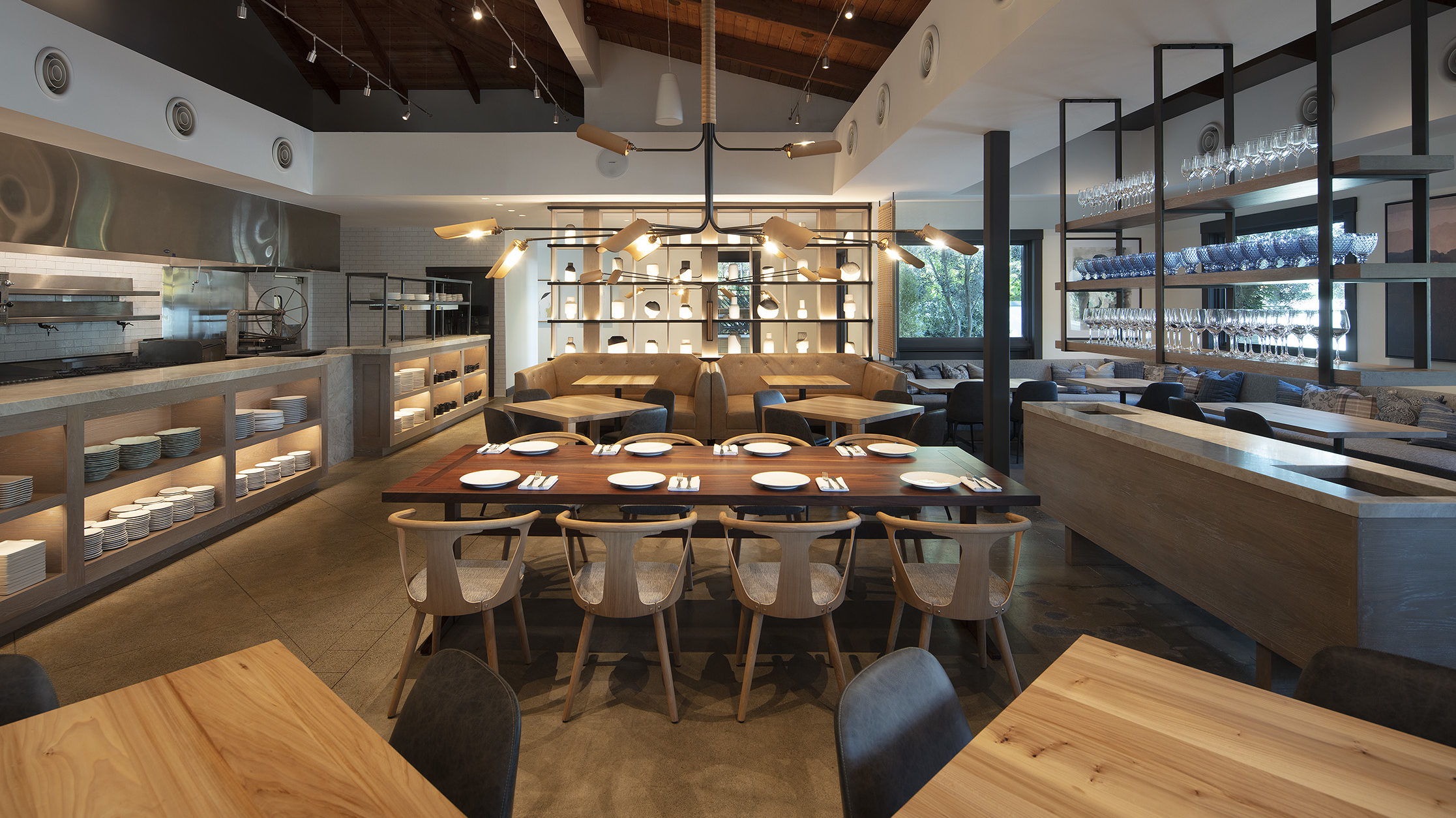
Wit + Wisdom is Mina’s first outpost amid the world-renowned vineyards north of San Francisco. It’s located at The Lodge at Sonoma Renaissance Resort & Spa, a few blocks from the city’s main square. The name, and interior decor, are a nod to one of Sonoma’s most famous residents, author Jack London, whose former ranch is now a state historical park in nearby Glen Ellen. But arriving guests now barely get a peek at the handsome indoor space before being escorted for seating in a spacious outdoor patio with a firepit and bocce court.

The menu, which draws on local farms and wineries, is relaxed and wide-ranging, from upscale comfort dining (a lobster pot pie features brandied-lobster cream and black truffle) to a gourmet burger and wood-fired pizzas.

The evening we visited the patio was busy—though everyone was properly distanced, and the server speedily excused himself when his mask slipped off his nose while he was storytelling the menu.

“Honestly, it’s been a tough year,” Mina said in a subsequent interview from Las Vegas. “But it really was nice to open a brand-new restaurant, and not just do a re-opening. It was therapeutic for our whole team. And we have such an amazing amount of good outdoor seating, so that obviously worked.”

Hotels and restaurants in smaller cities and exurban locations have led the way in regaining business, including small groups. “It’s not like being in a big city,” Mina agrees. Asked what he’s learned during these challenging times, he laughs and says, “We’ve gotten extremely good at telling people how to reheat food. It could never happen again that you have all these great chefs thinking about how to make to-go food. From that, you also see fun concepts emerge. All the rules are in play.”

His kind of uber-fine dining will make a comeback, he believes, and so will restaurant dining in general. “People want to go out to eat. In other markets where the restaurants are open, people are going. But will there still be more delivery? Absolutely, no doubt.”
What lessons can a world-class chef who perseveres despite major challenges to his livelihood offer to meeting and other hospitality professionals?

Mina takes a few moments to answer. “What we’ve done, we’ve used this time to really focus on avenues we wanted to explore but didn’t have the time before,” he finally replies. “When you talk about life, the one thing you can’t buy is time. During the pandemic, we actually got a lot of time back. The nontravel and doing things remotely has given us time back, as well. And that’s the silver lining. You’ve got to use it wisely. It’s going to be the ones that use the time best now who will do the best going forward.”

When COVID-19 first hit major international news, many of us initially thought we’d be back to business as usual by August. As cases continue to rise and states reverse re-opening and go back into lockdown (as France and Germany have recently done country-wide), we have had to accept the fact that “business as usual” will not return until (hopefully) some point in 2021. morale

Major layoffs and recent work from home extension announcements by tech giants like Google, Salesforce and Atlassian have sent new waves of uncertainty around the globe. Now is the time to use the tools at our disposal to boost employee morale and get back to doing business, even if it looks a little different.

Here’s how to do that:

Step 1: Secure Your MC, Entertainment or Activity

Whether it’s a professional master of ceremonies or a member of leadership, you need to have a dedicated host for virtual events who can quickly (and effectively) read the zoom (room), and keep the program moving while energizing attendees.

See our November cover storyVirtually Engaged: Ban Boring Events from Your Agenda

Entertainers are chomping at the bit to get back on stage and perform, so now is the perfect time to negotiate an incredible deal. Whether you’re after a chart topping artist or iconic band, author, magician or comedian, now is the time to reach out to an act you might have previously thought was out of reach—or budget!

If you’d prefer something hands-on over a performance, team building activities that translate well virtually include a cooking or cocktail class with a celebrity chef or bartender; chocolate, wine, whiskey or beer tasting; art classes, trivia, bingo or a variety of game-based challenges.

Step 2: Schedule It

Using Zoom or your preferred webinar platform, schedule the call three weeks out from the event with attendance required. Ensure your subject line and invite copy is positive and upbeat. With layoffs happening daily, the last thing you want is to scare your employees.

Step 3: Plan A Surprise Delivery

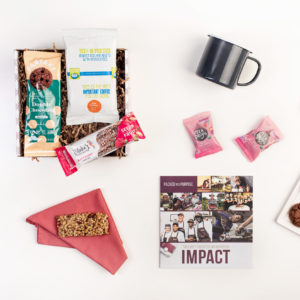
A little extra effort goes a long way. Work with a local specialty store or promotional products agency to coordinate the creation and couriering of gift packs containing all of the ingredients and/or items required to participate in the activity.

See alsoGifting in the Age of Virtual Events

If you selected a band or artist, send a variety of snacks and beverages to be enjoyed during the show and some branded merchandise. While cheesy and maybe a little embarrassing, if your team gets into it, this will make for awesome pics during the show.

Work with your HR department to pull the list of addresses for all employees who are invited to attend. With many people opting to work from vacation homes or relocating to remote locations during this time, this list is a great starting point, but may not be 100 percent accurate. Ask each manager to reconfirm the current address for each member of their team and forward any changes to one centralized person.

More: Your 2020 Holiday Gift Guide

Pack items in a sealed box with clear instructions on the outside that it should not be opened until you are live on the video call.

Step 4: Go Live

Smart Meetings CEO and Founder Marin Bright

Keep the call tight and high-energy—just like you would an in-person program. Kick things off with an upbeat, popular song that ties into your theme to get everyone in the spirit while you’re waiting for the rest of your team to join the call.

At the end of your opening song, have your CEO (if it’s a company-wide event) or the highest ranked member of your leadership team (if it’s department-specific) welcome everyone and introduce the host and/or MC. As part of their opener, the MC should invite everyone to open their gift packs, introduce the entertainer or activity and hand the call over to them to facilitate their activity or commence the performance.

NOTE: Ensure someone is on camera (aka screenshot) duty to capture epic moments throughout the event—you’ll need these images to deliver the final step.

At the end of the activity or performance, ask your host/MC to shift the focus back to employees by encouraging them to thank the artist(s), celebrate or showcase their creation. The CEO or member of leadership should then be welcomed back on screen to thank everyone for participating and end the call.

Just like the rest of the event, keep this tight to avoid an awkward lag at the end.

Step 5: Execute One More Surprise

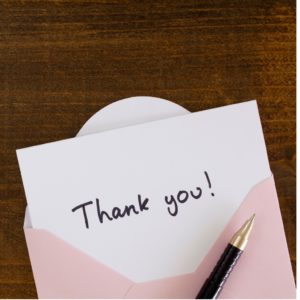
Because one surprise (your pre-event gift package) is never enough, you should have a second one in the hopper to go out after the event. (Don’t worry, this isn’t a major budget item like the first one.) Send a personalized, handwritten card to every member of your team, or have managers send to each member of their team if this is a company-wide event, acknowledging the difficult circumstances they’ve been operating in and thanking them for their continued contribution to the company.


If you were able to take any cool pics during the experience, use these images to create a collage for the front cover for your card. This will be the perfect little home desk decoration until everyone is back in the office and together again.

This is a logistical feat to pull off, but it’ll pay off in spades. Employees need to know you are still focused on creating a work culture for them, especially while they are remote. Keeping them engaged will translate into better performance of each person and as a result, the company overall.

Plus, with COVID19 shutting down most in-person corporate events, I can guarantee there is an event producer with a little extra time on their hands who is ready, willing and more than able to manage the entire experience for you.

Melissa “Mel” Park is an award-winning global event producer who has utilized her engaging personality, unending energy and attention to logistical and design details to build a business that included HSBC Bank’s Chinese New Year Gala Dinner Tour across three major Australian markets and Asia-Pacific’s Incentives & Meetings Exhibition.

The Volusia County Ocean Center, located steps away from the world-renowned sands of Daytona Beach and surrounded by outdoor adventures and incredible attractions and accommodations, is a modern, state-of-the-art facility that offers events the space, features, and attentive service they need to exceed expectations. From an arena capable of holding more than nine thousand attendees to a 93,028-square-foot exhibit hall, as well as multiple meeting rooms and ballrooms, find the space to host events of all shapes, sizes, and needs. Whether you’re looking to book a convention, conference, sports or esports competition, competitive arts event, or something else, the Ocean Center has the space and flexibility to make it happen.

Thanks to an incredibly attentive staff, each event feels like a big deal, no matter its size. Unlike competing convention centers, the Ocean Center makes even the smallest meetings or events feel like the center of attention. We pride ourselves on providing a high level of personalized service other convention centers can’t offer.

And beyond the walls of the facility, activity awaits. With outdoor adventures, exciting attractions, waterfront dining and accommodations, and miles of wide, open beach, there’s plenty to see and do when the day’s events wrap up. Whether you’re a thrill-seeker logging high-speed laps on the same track as the NASCAR greats at the Daytona International Speedway, an outdoor enthusiast enjoying the natural beauty of the beaches and springs, or a foodie ready to discover your next great bite, there’s something for everyone.

And getting here is a breeze! The Ocean Center is located just minutes from Daytona Beach International Airport, where travelers can catch a flight on Delta Air Lines or American Airlines year-round, with seasonal service to Toronto, Canada on Sunwing. And for road warriors, Interstate 4 and Interstate 95 offer convenient travel to the destination.

No matter what you’re planning, the Ocean Center’s state-of-the-art technology, ample and unique event spaces, and attentive staff will ensure your event is the most important thing happening in Volusia County. Book today and let our team make you the center of attention!

Learn More

Editor’s Note: As part of Back Light, a series of articles sharing illuminating insider observations, we asked CEO of the Event Leadership Institute, the engine behind Smart U, to share his observations of how industry leaders are managing during epic COVID disruption.

Howard Givner

Let’s set the scene. You’re the owner of an event business. (Agency, independent planner, venue sourcing company, or other supplier; take your pick.) It’s the end of December, 2019, and you’re toasting to another fantastic year. Another record year. Business is good, and it’s been good for a while now. Your biggest problem, in fact, has been keeping up with the increasing flow of RFPs and new inquiries, on top of all the repeat event work.

Fast forward to March of 2020. Everything has ground to a halt. Everything. You’ve never seen anything like this before. No one has. Sure, there are a number of wildly optimistic industry cheerleaders who continue to insist that all is well. You’re desperate to believe them, but deep down you know they’re ignoring the tsunami slamming into the industry, like the Kevin Bacon character at the end of Animal House shouting “Remain calm! All is well!” while the homecoming parade has disintegrated into chaos. A more mainstream view, however, is that this is temporary, that things will be back to normal in the summer, the fall at the latest. You hang your hopes on this view, as you stare at your revised budget projections, which now have zeros–ZEROS!–in the revenue line for the next four to six months.

How the *@^*# could this happen, you keep asking yourself. One minute you’re on top of the world, the next minute your business is on life support. The only consolation is that everyone else is in the same boat as you. How are they coping? Glad you asked.

Coping Strategies

In mid-March I pulled together a closed-door group of around two dozen owners of event agencies from across the U.S., U.K. and Canada to provide a forum to share how they were handling the pandemic, exchange ideas and resources, brainstorm solutions and generally offer peer-level support for each other. The group met weekly through the end of June, and ranged in size from small to large companies, provided diverse service offerings, and served different client types, but everyone was facing the same brutal business climate.

Here are some of the key strategies that emerged from those group calls, which business owners would be wise to embrace.

1. Big Picture: The Come-To-Jesus Moment

  • The Sooner You Face Reality, the Better. Without question, business owners who accept the new reality are faring far better than those clinging to rosy but unrealistic assumptions, like predictions of a return to normal in the winter, spring, etc. If the rosy predictions turn out to be right, the worst-case scenario is you’ve tightened your belt and will emerge a leaner and more focused business. If they’re wrong, however, you’re dead in the water. You need to be brutally honest with yourself so you can plan accordingly. And the brutal truth is…
  • There Will Be No ‘Return to Normal. The event industry of 2019 is never coming back. Yes, face-to-face events will return eventually, in greater and greater numbers, but it will likely take several years, and when it does, the landscape will have been altered dramatically. The biggest transformation is that organizations have seen what they can accomplish with virtual events, and that genie is not going back in the bottle. But in-person events will also usher in significant changes, such as much shorter lead times, lower guest guarantees, smaller deposits, more client-friendly cancellation terms, to name a few. Most importantly, there will be no “all clear” signal; in-person events will return in fits and starts, as businesses adapt to the unpredictability of the pandemic.

2. Finance: Cash Is King

This has been a key tenet of business management forever, but the consequences of not having adequate cash have never been more stark than when the pandemic literally zeroed out revenue for months on end. Many small businesses have never had to weather a downturn, and a flush economy can cover up sloppy cash management. This has been especially hard on companies with challenging payment models, like venue sourcing firms who often don’t get paid for their work until months after the event, even though that work was performed months if not years prior. Business owners need to build a realistic cash cushion to weather the storm, such as 6-9 months of operating expenses, in the bank.

      • Cut Expenses Early & Aggressively: Many owners tried to hold on to as many of their employees as possible, for as long as they could, only to have to shutter the company later when things didn’t improve. While this may seem compassionate and well-intentioned, it’s really not in anyone’s best interests. If the business dies, there are no jobs for anybody, now or when things recover. And it doesn’t necessarily mean firing or furloughing people; you can institute salary reductions. While labor is usually the biggest cost in our industry, owners should also be looking to renegotiate their lease—or eliminate the office altogether—which is often the second biggest expense.
      • Tap Your Full Credit Line Before the Bank Can Call/Pull It. Many businesses have lines of credit that are usually not fully tapped. Most agreements allow the banks to “call” those credit lines at any time, so in a crisis like the current one, business owners should tap the full amount available to them, before the bank has a chance to change its mind, especially with interest rates being at historic lows.
      • Talk to Your Clients About Better Payment Terms. Convince them to keep the money they’ve paid you as a credit for other/future services, rather than having to refund any deposits. Many client businesses are doing fine and have a vested interest in making sure a reliable vendor like yourself, who knows them well, survives.
      • Cancel Your Company Credit Card. Then get a new one. This prevents vendors who have your credit card info on file from charging it without your specific approval. You don’t want to be caught in a situation where a client has cancelled an event but your vendor proceeds to charge you for services related to that event.
      • Negotiate More Favorable Payment Terms with Suppliers. With little to no revenue coming in, you need to take control of outbound payments, and slow the pace of money going out the door.

      3. Personnel: Leading Your Team

      • Be Brutally Honest and Transparent with Your Team. Winston Churchill is famously credited with his outstanding leadership of Britain during World War II, particularly during the daily German bombings of London. His secret boils down to two parts, the first of which is frequent and honest updates with his constituents. Following this approach with the remaining team will go a long way toward easing their fears of sudden, unexpected layoffs. This is a unique situation because the entire industry is in the same boat, so it’s no reflection on your company. These are extenuating, unpredictable circumstances, not the result of mismanagement.
      • But Offer Realistic Hope and Inspiration. The second part of Churchill’s brilliance was providing realistic reasons for hope, giving staff something to believe in. In a crisis, people want to be soldiers, not victims. This approach basically says, “I’m not going to sugar-coat it: we’re in for a tough fight. But we’re going to get through this together and emerge stronger. Here’s how and why.”

      4. Strategy

      • Pivot: Find Out What Your Clients Need. Reimagine What You Can Provide. This is a good time to explore pivoting your business offerings, the most obvious of which is to virtual events. Most event agencies—particularly those involved in production, sponsor cultivation, attendee engagement, content development, etc.—are well-suited to migrate those services to virtual events. And meeting pros are racing to get upskilled in virtual to do just that, evidenced by the 2,000 event professionals who got certified in our Virtual Event & Meeting Management since April.

        But don’t blindly follow the crowd there; make sure it fits with your core strengths. Perhaps the most underappreciated assets event businesses have are their client relationships, and you should reach out to as many as possible to see what their new needs are; you might be surprised at what you find.

        A good example is Wendy Ferber and Andy Nadel’s swag business, Pride Products, which had built a loyal corporate clientele over the years, particularly with the recruiting and HR departments. When the promotional products side of the business dried up, they called over 80 clients and found a glaring need they had: team building and maintaining culture when people can’t physically be together. So they created an entirely new business: ConnectRCentral, providing a variety of virtual team building activities.

        • Rebalance Your Pricing Model. Many event companies use pricing models that don’t sync up with when they perform the work. If your pricing is tied to the event budget in some way (e.g. using a markup, percent of budget, commission, etc.) and the event is cancelled, you may get nothing, or much less than the work you’ve performed to date would warrant. Much of the work being done takes place way before the event, so consider shifting to a consulting-type pricing model, where you’re compensated for the work you do, as you do it.
        • Use This Time to Up-Skill Your Staff and Hone Internal Processes. Once you’ve tightened your belt and gotten your costs down to a sustainable level, now is a great time to do all the things you always wanted to do, or should’ve done, but never made time for. Things like fine-tuning your internal processes and onboarding protocols, updating your website, etc. and training and education courses to add new skills for yourself and your team, such as mastering Technical Meeting & Event Production, Venue Sales, Social Media Marketing, Accounting for Event Businesses, or Pivot Tables in Excel, to name but a few. We’ve been hearing about the need for lifelong learning in today’s economy; it’s time to go beyond lip service and put those plans into action.

        Howard Givner is founder and CEO of the Event Leadership Institute and has previously owned, managed and advised a number of event agencies over the past 25 years.

        Marcela Ceccacci

        Ceccacci is director of sales for Virgin Hotel Dallas. Previously, Ceccacci worked with Live! by Loews-Arlington, TX as director of sales and marketing. She’s also worked in similar roles for Westin Galleria Dallas and Omni Charlotte Hotel in North Carolina.

        Maxwell Spangler

        Charlestowne Hotels promoted Spangler to corporate technology and systems manager. Recently, Spangler was Charlestowne’s corporate operations manager, part of his seven-year stint with the company. Spangler also founded Groupify, a hospitality software application that manages and increases Charlestowne’s group business.

        Teresa Savage

        Savage has left her position as vice president of sales with Visit Napa Valley to become vice president of business development for Monterey County CVB. She’s also worked at Monterey Marriott Hotel, during which she served on the marketing committee for Monterey County CVB.

        Katie Leonard

        Leonard is director of sales for Grand Traverse Resort in Acme, Michigan. Leonard began working with Grand Traverse in 2010, where she began in the F&B function of the golf department; the following year, she became golf and spa sales manager. She rose to national sales manager, and was subsequently named interim director of sales.

        Michael O’Donohue

        O’Donohue is general manager for Fairmont Grand Del Mar in San Diego. O’Donohue spent nearly five years working as general manager for Pendry San Diego. Before that, he spent 10 years working in various leadership positions for Starwood Hotels & Resorts, the most recent being general manager of W San Diego. He is a board member of San Diego Tourism Authority and vice chair of California Hotel Lodging Association Hospitality Foundation.

        Derrick Morrow

        Morrow is area vice president and general manager of Hyatt Regency Atlanta. Morrow’s career with Hyatt began in 1991 with Hyatt Regency Atlanta, as associate director of sales. He recently worked with Hyatt Regency Crystal City at Reagan National Airport as area vice president and general manager. He’s also served as general manager for Hyatt Regency Tampa, regional vice president of sales for Hyatt’s Midwest region and director of marketing for Hyatt Regency Chicago.

        Max Childs and Stacey Washburn

        Childs and Washburn are additions to Cambria Hotel Sonoma Wine Country in California.

        Childs is the company’s general manager. Before working to open Cambria Hotel, Childs was general manager for Hotel La Rose in Santa Rosa and Hampton Inn Petaluma, both in California. He also held roles at Courtyard by Marriott Santa Rosa, where he worked as director of sales, and, later, as general manager.

        Washburn is director of sales and marketing for Cambria Hotel. She previously worked with Marriott International in several managerial roles, including sales manager for the Western Mountain Pacific region and sales executive for Marin County and Emeryville. She also worked as sales manager for Oxford Inns, Suites & Hotels.

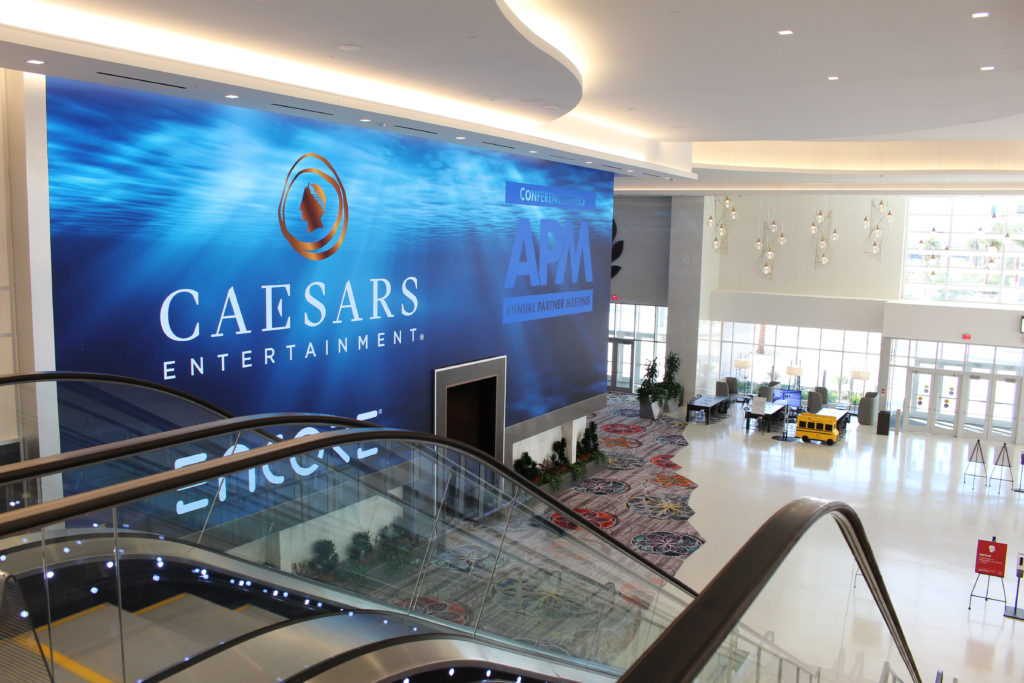
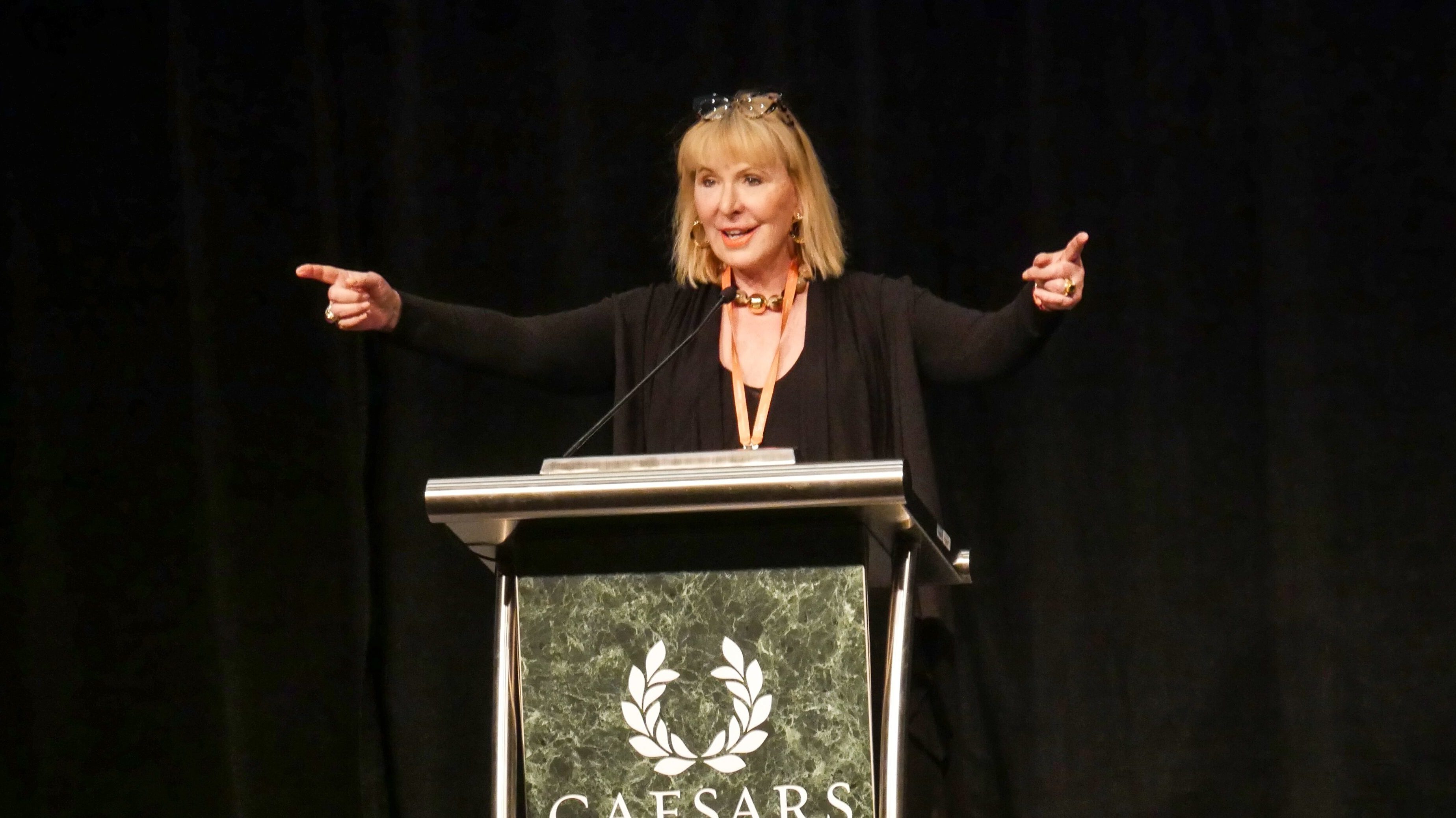
        After months of postponing, ConferenceDirect brought its Annual Partner Meeting to the new $375 million CAESARS FORUM this week as the first live event in the 550,000-square-foot conference center located in the heart of the Las Vegas Strip. “We were proud to take the leap and partner with Caesars to serve as an example of how we can safely get back to meeting,” said J.J. Wills, senior vice president of marketing programs and business development with the global meetings solution company.

        Read more about CAESARS FORUM groundbreaking. 

        The event preserved many of the elements of the program that was originally planned for May, including education, a trade show, awards banquet and reception, but made some strategic adjustments to keep everyone safe. Willis and Don Ross, Caesars Entertainment vice president of catering, conventions and events, agreed to share some of the lessons learned during the four-day hybrid event.

        Size and Timing Matters

        FORUM originally planned a March opening and had a full calendar for the year before the pandemic arrived with other ideas. ConferenceDirect first postponed to August and only 30 days before the October 26 event did Nevada Governor Steve Sisolak adjust the guidelines to allow 250 people to meet in the state. “We always knew that when it was legal, we would come,” Wills said.

        While she would normally bring 900 people, she instead created a program for 130 in the 110,000 sq. ft. pillarless ballroom (one of two that size along with two 40,000 sq. ft. spaces and a row of well-appointed boardrooms) with a virtual component managed by AV partner Encore Productions. “Everyone has their own comfort level and we wanted to accommodate that,” Wills said.
        Diane Schroder, a director of global accounts who attended virtually, praised the value of the event. “ConferenceDirect now has experts in virtual/hybrid meetings and a newly launched Meeting Marketing team that can help all client make the transition from face to face meetings to virtual meetings, to hybrid meetings (most likely for 2021) and then back to the face to face events for years to come.”

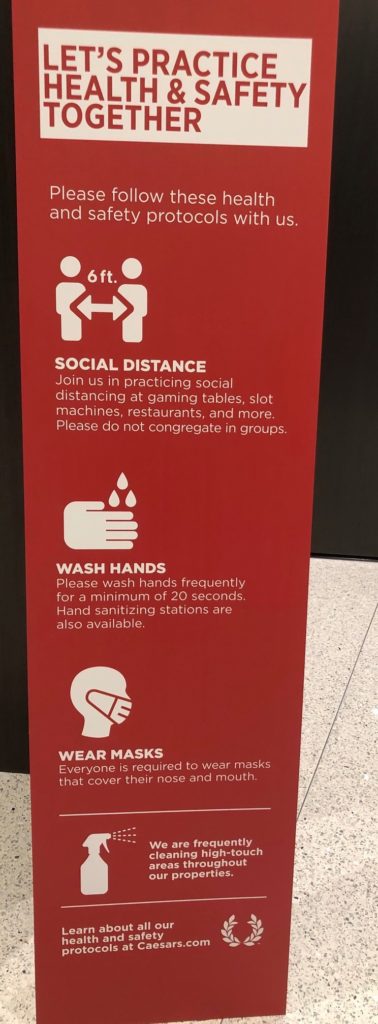
        Communication and signage are key, Ross said. “We started writing protocols as soon as this started and we have done some groups in other properties, so we were ready.” The partnership was enhanced because Wills previously worked for Caesars and the teams understood each party’s strengths.

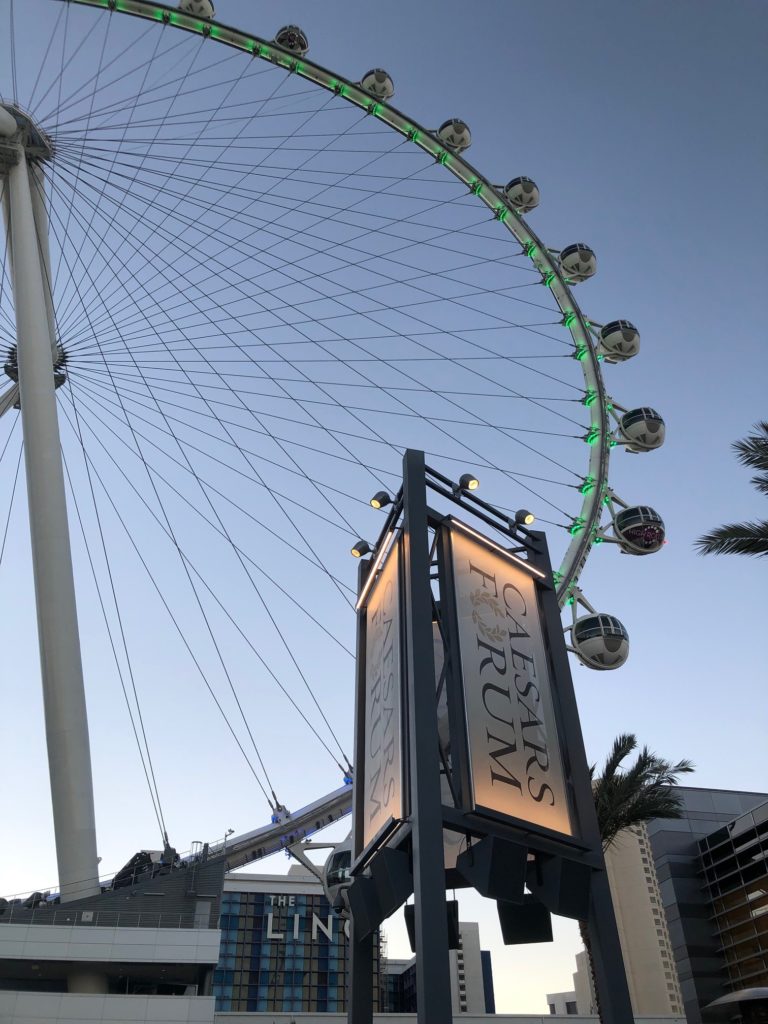
        FORUM had the added bonus of minimizing transportation logistics because it is connected by a bridge to 8,500 hotel rooms at Harrah’s Las Vegas, LINQ Hotel + Experience and Flamingo Las Vegas.

        Ensure a Healthy Start

        Initially, Wills was hesitant to take on the responsibility of “getting into people’s medical business,” but eventually she embraced the concept by partnering with Health Shield to have people answer daily screening questions and temperature checks before entering the space.

        “It helped people feel comfortable that everyone there was healthy,” she said.

        The team drafted a plan that included a holding room and protocols in case anyone had symptoms and a dedicated EMT on call. “We didn’t need it, but it helped knowing we had a plan in place,” she said.

        Ross said that hotels have always been focused on safety, but now that work is very public and visible.

        Together Apart

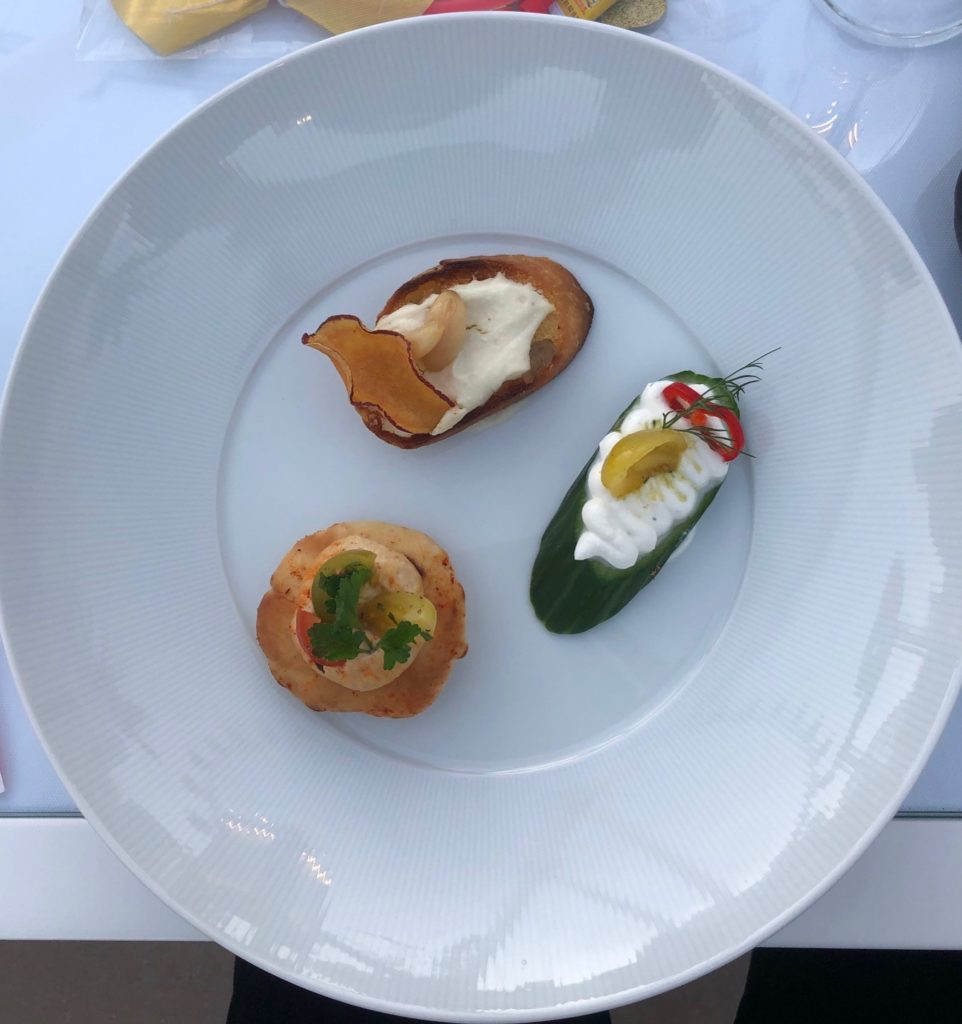
        One of the features of FORUM is the dedicated kitchen and culinary team lead by Chef Eric Vaughn that provides restaurant-quality meals based on fresh, seasonal ingredients. For the awards ceremony, which honored Caesars Entertainment Chief Sales Officer Michael Massari with the President’s Award, the ballroom was set up with 130 assigned “tables for one,” each six feet apart. The vignettes with a chair and small draped round allowed everyone to take their mask off and relax during the presentations, but still talk to the people near them.

        Similarly, the trade show allowed people to meet at 10-foot tables with wide aisles by appointment so there were no lines.

        “Having so much space allowed us to really spread out and conform to the protocols,” Wills said.

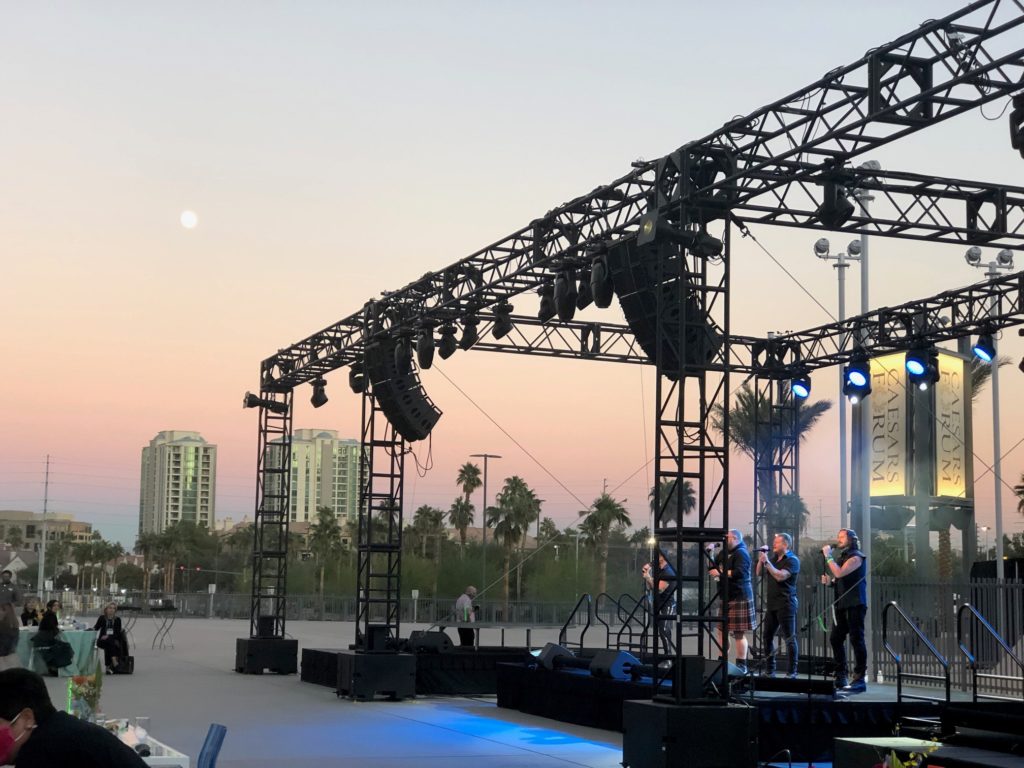
        For the closing session, everyone moved through the wide-open wall to the expansive patio that was lit up for the occasion. The building is equipped with branding opportunities from all angles. The massive LED wall inside can be programmed with dynamic video content and even the roof on the one-story expanse can be fitted with a message that is visible from the flight path at nearby McCarran Airport (LAS).

        Masked waiters brought food and beverages to guests seated outside at tables of four with each of four courses uncovered with a flourish after it was delivered. Servers only touched clean plates and did not bus tables. No one could self-serve so even coffee was touchless.

        That level of service required enhanced staffing, but Ross said it was essential for following protocols. Even chef action stations would have required people to stand in line masked and distanced for drinks and bites, then wait until they sit down and take off their mask to take a sip. “Serving them removed that natural tendency to walk and talk and drink.”

        Offer Plenty of Fresh Air

        FORUM incorporates biophilic design, natural touches of plants, dynamic lighting and materials from nature to provide a grounding backdrop. Chelsea Lavell, partner and director of interior design with the contractor KGA, described the abundant natural light through the roll-up glass walls, living walls and seasonally themed spaces as a way to counterbalance convention-goers’ “plugged in” reality.

        That final reception on the 100,000-square-foot Forum Plaza under the 550-foot High Roller observation wheel brought some of the only in Vegas talent to the outdoor stage (set 25-feet away from the tables) under the dusky desert sky.

        “We have such beautiful climate and not a lot of outdoor areas that aren’t used during the day as pool space, so this will really help to get groups outside,” said Ross.

        Breathe a Sigh of Relief

        At the end of the day, he reported that the team was just delighted to be able to get to work. They were chosen for their customer service skills at the end of last year in anticipation of a March opening and it was a relief to break out the boxes of silverware and plates and do what they have been planning to do.

        Wills agreed. “It just felt good to have some semblance of normal,” she said with a smile (partly hidden behind her mask).

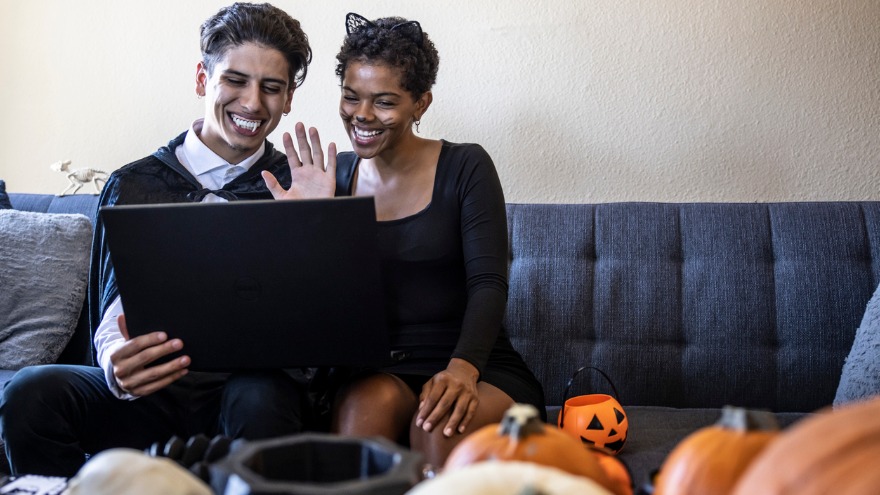
        It’s been a year of tricks and treats, but this Saturday the spooks are intentional. Whether you’re throwing a spooky Zoom meeting, hosting a small group or heading out into the world this Saturday, here are some ideas for safely celebrating Halloween during a pandemic.

        Know the Rules

        The CDC has released updated recommendations for Halloween gatherings. Avoid any health scares by taking these extra precautions.

        • Host dinner parties outdoors if entertaining guests from multiple households.
        • Stay local, especially if in an area with high community spread of COVID.
        • Avoid crowded indoor haunted housesopt for outside experiences instead (like these!).
        • Keep the scares to a minimum if you’re not wearing your mask. Screams and shouts are high risk.
        • Halloween costume masks do not substitute for cloth masks. Check out these themed options to stay safe and within regulation.
        • Don’t let guests in and out of areas where food is being prepared—or order catering.
        • Leave individual goodie bags out for trick or treaters in lieu of traditional candy bowls.

        Zoom Ideas

        Keeping Halloween virtual? Attending a remote costume party with your team? Enjoy these fun and festive ideas to keep everyone engaged.

        • Host a virtual costume contest with a special prize for winners.
        • Utilize Zoom’s breakout room feature to designate teams that can particpate in an online scavenger hunt.
        • Explore the Winchester Myster House orParis Catacombs with spooky virtual tours.
        • Share ghost stories,
        • Send your online attendees some special treats to enjoy together.
        • Have everyone decorate their Zoom rooms with spooky and festive backgrounds.
        • Experience remote team building via a virtual escape room.

        Treat or Treat

        Gaylord Opryland Resort & Convention Center, Nashville

        No tricks here. Hotels are stepping up to help visitors and families celebrate Halloween safely and healthily.

        Kimpton Hotels & Restaurants is spreading the Halloween spirit with special treats at all its restaurants through Oct. 31. Guests staying at the Kimpton can tell any restaurant staff the secret password—“trick or treat”—to receive classic candy, Halloween-inspired macaroons and more. The hotel company also announced its biggest sale of the year, with 35% off your stay through Sept. 30, 2021.

        Gaylord Hotels is celebrating the holiday at properties throughout the country with scavenger hunts, pumpkin decorating and craft cocktails for the adults. At Gaylord Rockies in Colorado, visitors can (responsibly) gather for local, historical ghost stories and movies under the moonlight; Gaylord Opryland in Nashville offers group arts and crafts with wines from Jackson Wine Estates; and Gaylord Texan in Grapevine, Texas has a Halloween-themed escape room and pumpkin decorating events for groups. Each resort is offering special packages between $179 and $259 a night that include Halloween amenities for kids.