“Do you think my friends have PTSD?” This is the question Melissa Majors, leadership speaker and consultant, posed to Dee O’Neill, licensed professional counselor and founder of NeuroCognitive Fitness, after countless conversations with event industry colleagues who displayed signs of Post-Traumatic Stress Disorder—insomnia, hopelessness, anxiety, increased alcohol consumption, etc.

MoreHow to Support the Mental Health of Event Planners

Almost every human on the planet is experiencing shades of depression due to the pandemic. However, the trauma that event professionals face is unique. Given that they have one of the world’s most stressful jobs, according to CareerCast, it isn’t a stretch to compare their mental state to other high-stress professions like military personnel. In contrast, soldiers returning from battle at least have the security of a paycheck and benefits, which unfortunately isn’t the case for many event professionals.

The COVID pandemic has decimated the hospitality industry along with many event professional’s livelihoods, benefits, perceived purpose and future job opportunities. The cumulation of these stressors is wreaking havoc on the industry’s mental state. The purpose of this article is to acknowledge the trauma and start the healing process.

See the video of Stu Greenoff, an events industry professional, who shares a raw account of how poor mental health almost cost him his life.

A framework of why, what, and how might help us tackle this very complex topic and show the way toward coming out the other end more resilient, happier and possibly even positively transformed.

In Dr. Tim Sharp’s podcast “Habits for Happiness”, he brings up the topic of reconsidering PTSD as post-traumatic growth, highlighting how adversity can ideally be overcome and ultimately used as a catalyst for optimization.

Why

So many “whys” here, right? From “why are we in this position,” and “why me” to “why am I feeling this way?” The latter is the only one that may have some actual answers.

When we experience any stressful event, the natural and normal response is for our bodies and brains to go into panic mode of sorts to assist us as best it knows how to get through it.

Think about the last time, pre-COVID, you were in a high pressure, stressful situation. What did you notice and feel happening in your body and brain? Likely, your heart rate increased significantly, your breathing got shallow, you may have felt sweaty or clammy and cognitively you may have noticed a very heightened sense of acuity, all senses firing, or possibly the inability to think clearly at all. These are ways our body and brain react when we sense a threat and transition into high gear in response. This physiological reaction of the nervous system is helpful when we are in brief, short term, acute situations such as having to run from a bear that has stumbled in front of you on a hiking path or when your child almost falls off a chair and you lunge to catch them.

But, when we are in chronic, long term, unremitting stressAKA all of our current COVID circumstancesthis stress response is in overdrive. After being in that gear for extended periods, we, of course, reach a point of fatigue, burnout, and utter exhaustion. It is no surprise to all of us trained therapists and brain scientists that we are in the early stages of a pandemic of mental health crisis. Unremitting stress reactions inundate our bodies and brains, and the toll will be enormous if we are not able to begin to mitigate and radically focus on ways to allow our bodies and brains to recalibrate, rest and recharge.

Just like your phone needs to be regularly recharged, so do our physical and mental nervous systems.

How

The first step in any path of healing begins with clarity and awareness of the underlying cause of concern. One of the most useful frameworks is the SCARF Model from the NeuroLeadership Institute (N.L.I.) by Dr. David Rock, a brain-based model typically helpful for collaborating with and influencing others. It has extended relevance into how our brains are wired to respond to the many threats in the current environment, particularly for anyone who has lost their job, health benefits and financial stability.

This model suggests that it’s very possible for all of the 5 domains to be under severe threat currently. The stress event industry professionals are facing during this time is very real. The impact to brain health and overall well-being will be harmful without some intentional and deliberate ways to address.

What
We curated some of our favorite tools and tactics for you. Based on Dee’s book, Brain B.A.S.I.C.S. here are the most fundamental things for keeping our brains and bodies in as healthy a state as possible.

  • Breathing—Under stress, we take shallow breaths, decreasing oxygen to our most vital organ: our brains. By practicing various focused breathing techniques such as box breathing, we can activate the vagus nerve, which flips the switch from our sympathetic/stress response into the parasympathetic/rest response. Try inhaling for a count of four seconds, holding for a count of four seconds, exhale for four seconds and again holding for four seconds, repeating the cycle until you notice a subtle reset of your nervous system to a calmer rhythm.
  • Affirmations—Focusing on “positive thinking” can seem trivial during a crisis such as the one at hand. Still, our brains can benefit from reframing an overly stressful thought pattern to one less startling to our nervous system. When you find yourself saying or feeling “I am stressed,” merely restating it to “I am stretched” or “I am being challenged” allows our psyche to feel a little more in control, perhaps releasing less toxic stress hormones.
  • Sleep—Getting eight hours of sleep is crucial to allow our brains to flush out toxins that build up over times of stress, especially the cycles of R.E.M. (rapid-eye movement) that occur every 90 minutes or so.
  • Intake—Eating with our brains in mind can help build resilience. Check out the MIND Diet for guidance.
  • CardioExercise, particularly aerobic activity that gets our hearts pumping oxygenated blood to all of our organs, is crucial for optimal physical and mental health. Making time for about 30-60 mins of even just a brisk walk each day can be beneficial.
  • Social—This may be the hardest one to fulfill during quarantine and social distancing guidelines, but we are social animals wired for connection. Loneliness and social isolation can take a toll, so finding ways to still feel in touch with your loved ones, whether via phone or video calls, will continue to be a top priority.

There’s so much out of our control, however, we do have control over our own thoughts and emotional responses. We hope this article sparks awareness and recovery for all in the events industry.

Dee O’Neill, M.S. is a keynote speaker, licensed professional counselor and board-certified fellow in Neurofeedback Certificate in the Foundations of NeuroLeadership HeartMath Certified Trainer. She is also founder of NeuroCognitive Fitness, a concierge brain fitness assessment and training practice to help clients better understand how their brain works and how to make it work better.

Melissa Majors is CEO of Melissa Majors Consulting, an inclusive leadership speaker and consultant. She brings deep expertise in improving profitability and innovation, boosting organizational performance and optimizing inclusion strategies.
See the previous Smart Moves here.

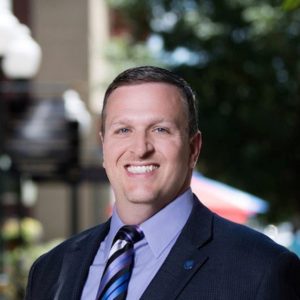
Matt Barba

Barba has been promoted to vice president of operations for Charlestowne Hotels. Previously, he worked as regional director of operations, a position he held for four years. Barba also worked as general manager for Deer Path Inn, during which the property was named No.1 Resort Hotel in the Midwest by Travel and Leisure for two consecutive years.

Kelley Douglass, CMP

Douglass is director of client services for Agenda: USA. Since 2008, Douglass has worked as an event producer in New Orleans, working with DMCs and corporate clients in the region. Before this, she was special events sales manager for Audubon Nature Institute in New Orleans. She has been on the board of MPI since 2017.

Jason Outman, CDME

Outman is president and CEO for Branson/Lakes Area Chamber of Commerce and CVB in Missouri. Jason comes from Experience Columbia SC, where he worked as executive director for the last six years. His tourism career began with Georgia World Congress Center in Atlanta, and he later became director of sales and services for Midlands Authority for Conventions, Sports & Tourism in Columbia, South Carolina.

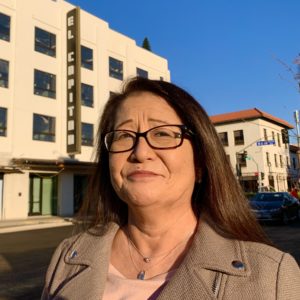
Susan Gregory

Gregory is director of sales and marketing for El Capitan, a Joie de Vivre hotel; Mainzer; and The Tioga, all in Merced, California. She recently worked for Monterey Tides Hotel in Monterey, California, and before this, she ran a consulting firm that provided sales, marketing, operations and catering services to properties across California, including Two Bunch Palms Spa Resort in Desert Hot Springs and Fairmont Newport Beach.

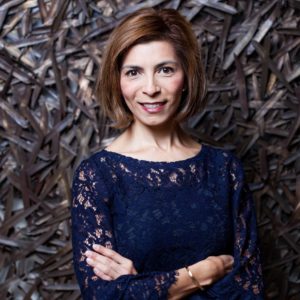
Michelle Caporicci

Caporicci is general manager of Montage Big Sky in Montana, scheduled to open in 2021. Caporicci recently worked as general manager and regional vice president for Auberge Resorts Collections, overseeing Madeline Hotel & Residences and Element 52 in Telluride, Colorado, and Hotel Jerome in Aspen, Colorado. Before this, she was managing director for St. Regis Langkawi, Westin Langkawi and Langkawi International Convention Center in Malaysia.

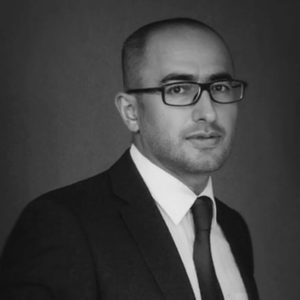
Ilkin Ilyaszade

Ilyaszade is vice president of operations and preopening services for General Hotel Management. Ilyaszade has opened 10 hotels and resorts across Asia and the Middle East over the past 15 years. He recently worked as regional director of APAC operations for Compass Group; before that, he was vice president of corporate hotel operations and new hotel openings for Pan Pacific Hotels Group, both in Singapore.

Arsen Khodosov

Khodosov is director of sales and marketing for the first dual-branded Hyatt Place and Hyatt House in Tampa, Florida, set to open in early 2021. Before joining Hyatt Hotels, Khodosov worked as task force director of sales with Crescent Hotels & Resorts, working with brands such as Hilton Hotels, Marriott International and InterContinental Hotels Group.

The hotel giants want group business back, and Marriott International is rolling out new options for planners to reassure meeting attendees that in-person gathering can be safe again. As part of its Connect with Confidence program, Marriott will be offering new health protocol options at certain of its brands beginning in January—including COVID-19 testing before and during an event.

The first Marriott brand to provide these protocols for meetings and events are Gaylord Hotels and Resorts in Florida, Tennessee, Texas, and Colorado. In the weeks that follow, the company said, the health protocols are expected to be available at certain other Marriott-branded hotels throughout the United States.

Planners can consider several offerings from Marriott, including the following.

  • Self-administered COVID-19 tests taken by the guest prior to travel
  • COVID-19 testing administered by a third-party testing provider on site at the hotel
  • Daily and/or prearrival health screening questions via a dedicated mobile application
  • Daily temperature checks to enter the event area

“These new health protocols provide options for meeting professionals as they plan and host meetings, conferences, and events,” said Tammy Routh, senior vice president of the Global Sales Organization for Marriott. “Building upon the work of our Global Cleanliness Council, we engaged industry-leading experts and through a thorough review process, identified third-party providers capable of offering the health protocols that meeting professionals want and need for future events.”

In August, Marriott announced digital content and best practices to help meeting professionals execute future events. In November, the first in a global series of hybrid virtual and in-person events was held in Virginia, demonstrating how to Connect with Confidence.

“The event showcased Marriott’s reimagined processes and meetings spaces, while reinforcing the company’s commitment to help meeting professionals in light of the COVID-19 pandemic,” according to a press release.

Caesars Entertainment, parent company of Harrah’s New Orleans, announced a $325 million renovation and construction project that will transform Harrah’s New Orleans, which made its debut in October 1999 near the French Quarter. The plans presented to New Orleans Building Corporation detailed massive changes, including redesigned interior and exterior elements, a new 340-room tower and a bevy of new dining and hospitality concepts.

Tom Reeg, CEO of Caesars Entertainment, called the reinvestment “a testament to the company’s continued commitment [to New Orleans],” while city officials lauded the benefits of the project for the local community.

“We will continue to move this city forward and fuel our economic recovery, moving important projects that put people to work and entertain residents and visitors alike,” said LaToya Cantrell, mayor of New Orleans. “We are excited that this expansion will mean hundreds of construction jobs during the project and hundreds more in sustainable and new jobs, post-construction. The addition of Caesars New Orleans will strengthen our city’s position as the top cultural and entertainment destination city in the nation.”

In June 2019, Caesars Entertainment was granted an extension to its operating contract in the city until 2054. The company said the casino project will create 600 construction jobs and an additional 500 permanent jobs once the construction is complete—a welcome economic boost at any time, but one that sparks extra enthusiasm in the wake of the global pandemic.

Caesars Entertainment is the largest casino company in the U.S., its origins dating back to its first property in Reno, in 1937. For more information and project updates, click here.

Hotel hygiene and health safety certification is all the rage, and understandably so. That’s why Forbes Travel Guide teamed up with digital health company Sharecare to offer Sharecare Health Security Verified with Forbes Travel Guide.

Hotels around the world have already been awarded this certification, including Waldorf Astoria Las Vegas, The St. Regis San Francisco, Fairmont Grand Del Mar in San Diego and Baccarat Hotel New York in Manhattan. Sharecare requires hotels to verify health protocols on more than 360 expert-validated standards, including cleaning products and procedures, ventilation, physical distancing, guest experience, and safety communications with guests and employees.

Participating hotels also have the option to track employee screening results and provide clinical health screeners information and updates on that facility’s compliance.

“Restoring guest confidence is a critical objective for the entire global hospitality industry, especially hotels and resorts,” says Filip Boyen, CEO of Forbes Travel Guide. “To their credit, hotels have invested heavily in setting up health safety procedures, but they have placed the burden of assessing their programs—and assuring individual properties are following them—onto the guest or travel advisor. This conflicts with the guiding principles of hospitality, not to mention the carefree joys of travel.”

Planners and hotel guests will be able to identify a Sharecare certified property from a seal of approval on property and its websites.

“By earning the verified badge,” Boyen went on to say, “hotels now have a credible way to broadcast that they are following comprehensive, consistent procedures to heighten health security, certified by a third party.”

See alsoConvention Centers Add GBAC STAR Accreditation as COVID-19 Assurance

If the meetings industry gets back to business before vaccines are distributed, COVID-19-protocols—masks, distancing and sanitation—will still be required. But whose responsibility is it to ensure everyone follows the rules? responsible

We asked a pair of venue safety experts, and the consensus was that it will remain a team sport, with the meeting professional, facility and attendee all playing their positions.

The ultimate key to success: consistent and frequent communication.

Early and Often

Codes of conduct need to be communicated before, during and after the event. From the first email to the web site, signage and directions from the stage, messaging must reinforce that attendees are responsible for assuming the risk of gathering and with complying with protocols. That messaging starts long before they enter the facility. Once there, attendees need visual reminders each step of the way.

MoreHow Not to Get Sued If Someone Gets Sick When You Get Back to Planning

You’re probably familiar with that drill: floor stickers about where to stand, poster boards suggesting handwashing in restrooms and distancing in the meeting space.

That doesn’t mean you have to be a bootcamp sergeant. Some fun signage has popped up in workplaces and on social media that take a whimsical approach. “Wash your hands like you just cut habaneros and have to take your contacts out!” or “Stay 12 pizza slices away from each other!”

However, Russ Simons, chief listening officer and managing partner with Venue Solutions Group, says the important thing is that these mental two-by-fours be abundant. “You can’t remind people too much. It takes multiple messages to get action,” he said, channeling his inner marketing director.

Sometimes even those reminders aren’t enough. The best-intentioned attendee may instinctively put out a hand for a shake before remembering and drawing it back.

As the architect of Walmart’s Black Friday crowd management plan and member of the Department of Homeland Security’s Public Assembly Facility Sub-sector Group for Commercial Facilities, Simons has spent the last eight months considering how to create an expectation for compliance. One tactic he pointed to, based on behavioral science studies, is having everyone sign a pledge before they are allowed into an event. That simple ask can have a significant effect on their actions.

Consistent and Coordinated

Corporate meeting planners can learn a lot from what sports and theme parks are doing, advised Mark Camillo, a retired U.S. Secret Service special agent who has experience protecting four presidents and their families and was a security coordinator for the 2002 Salt Lake Winter Olympics. He is also an expert on critical infrastructure protection and emergency preparedness.

In his role as chair of Department of Homeland Security Commercial Facilities Sector Coordinating Council and faculty member with International Association of Venue Managers-sponsored Academy for Venue Safety and Security, he is listening in on the audibles being called as facility managers are driving forward to accommodate business while keeping everyone safe. “The strategy is changing almost daily,” he said. What he has found to be effective is a consistent, unified message that is actively enforced.

For those who choose not to comply, it is the responsibility of the facility to alert them and take action up to and including charging them with trespassing for noncompliance and being escorted out by security. Resistance could also result in calling in law enforcement. “It is critical that you take action against anyone who is not in compliance,” Camillo said. “There can’t be a double standard.”

Simons agreed that those not complying must be asked “in a guest-friendly way” to follow rules. Meeting planners and others involved in events may feel uncomfortable acting as mask police—after all, they’re used to playing a hospitality role—so Simons stressed the importance of training in de-escalation strategies.

“We have to give people the tools they need to be effective. Otherwise, the conversation reaches a tipping point, and you have to take action to proverbially kick someone off the plan or lose the trust of everyone else in the room,” he said.

Simons also suggested appointing a compliance coordinator. Everyone else is busy and may not notice as standards start to slip, but that person is dedicated to the task.

At the end of the day, everyone has to take the responsibility seriously. “This is not checking a box,” Simons said. “You either manage compliance or compliance manages you.”

2020 is almost over—unless we’re about to find out we’re Bill Murray in Groundhog Day, but on a 365-day cycle. If we do wake up in January to find the year on repeat, fret not:  At least we get to reread the best of Smart Style, in which we cherry-picked useful, interesting products to gift, give and share.

February: Double Charged

A handheld espresso machine that delivers crema on the go, a bracelet that doubles as an emergency phone charger and an artisanal tea sampler all made the list in our last pre-Covid gifting roundup—plus a portable white noise machine to put you to sleep (after all that caffeine).

April: The First Masks

Bridging the gap between memories of WFW and the new WFH, April featured refined silicone straws with a chic keychain case, a tiny disc that tracks the location on easy-to-lose items, sustainable socks that give back to the homeless population, and a two-in-one scarf/mask combo that comes in pretty colors.
May/June: The Summer of Self-Care

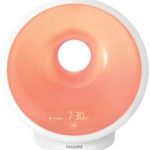
Smart Style Summer 2020 was all about wellness, with a gently waking alarm that works with your circadian rhythm, a streamlined, recovery-focused wearable, a low-alcohol canned cocktail and an all-natural sanitizing spray for anything you might have to touch “out there.”

August: Settling In

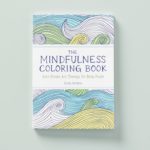
By August, you could tell we were getting used to that cozy home life with our Smart Style, which gave off work-top-with-pajama-pants vibes. A how-to-infuse book to spice up home kitchen life, satin sleep masks for that commute-free extra shuteye and an adult coloring book to fill the minutes between meetings with mindfulness.

October: Spooky Spotlight

When that fall chill came on, we started getting our masks and scarves tangled, realized it worked better if you put the scarf on before the mask, and then made these festive gifting recommendations. We showcased an ethically and sustainably conscious gift box, warming socks, artisan chocolates and a device for lighting up that office Zoom when they made you wear a costume.
Can you say, “Virtual happy hour?” Chances are it was never in your lexicon before late March, when offices throughout the country began to empty out…and the new realities of F&B during COVID set in. Did you even know how to spell that plastic barrier between you and a buffet server before? Plexiglas or plexiglass?

Looking back over our coverage of how planners, hotel chefs and caterers adapted to a changed world, here are highlights.

Here’s Looking at You

Zoom F&B, you could call it. From sending prepackaged food and drink for attendees to share simultaneously from the safety of their undisclosed locations to simply asking everyone to raise a glass of something in a cybertoast, this was how we keep team camaraderie alive.

”Engage people on a personal level,” advised Mark Roberts, chief marketing officer for collaboration and communications company PGi, in an April post. “Don’t limit a virtual meeting to business; host a live virtual happy hour and invite your pets or share a video of your meeting location to increase human interaction and make sure you’re connecting with your audience.”

Of course, we got tired of that pretty fast. It didn’t match up to the real, in-person thing. But it was better than nothing.

Hybrid Noshes

F&BWith many more months of hard-won experience under our belts, Roberts weighed in again in November, when smaller, regional meetings had resumed in some places but with a twist—there was a hybrid component that allowed other attendees to drop in from anywhere on the planet.
“If an in-person session would typically have time for lunch, why not deliver a meal to attendees so they can join in from wherever they are?” he asked. “Send them a bottle of Champagne for a toast or a bag of tchotchkes so that they ‘go home’ feeling like they received some added value.”

Safety—but Appeal, Too!

F&B trendsUsed to be, food safety meant proper kitchen and service cleanliness. Now, of course, it also means protecting attendees and kitchen staff from each other. That’s where the Plexiglas (or plexiglass, your choice) comes in. And out went the shrimp bowl, the self-service buffet and the breadbasket and iced-tea pitcher preset on the six-top round.
Mary Cline of Wolfgang Puck Catering and other experts filled us in on touchless, yet matchless, COVID cuisine.

Anything Goes

chef michelinWe know chefs and caterers are big on creativity. Every planner has a Top 10 of pieces de resistance like fantastical ice sculptures, desserts disguised as works of art and so on. Yet the pandemic has been the real test.
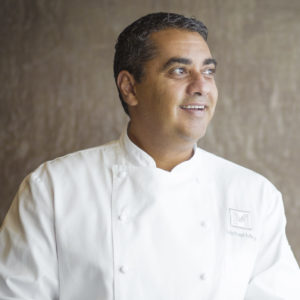
As he dared to open a new restaurant in this uber-challenging time, Michelin-starred chef Michael Mina reflected on these past nine months.  Asked what he’s learned during these challenging times, he laughed and said, “We’ve gotten extremely good at telling people how to reheat food. It could never happen again that you have all these great chefs thinking about how to make to-go food. From that, you also see fun concepts emerge. All the rules are in play.”

May the best F&B win.

Editor’s Note: This story was updated on Dec. 14 with news that LVCVA will acquire Las Vegas Monorail Company.

A planned Vegas Loop originally designed as a one-mile underground transportation solution to take people from one side of Las Vegas Convention Center to the other side of the expanded facility could expand to the entire city after Las Vegas Convention and Visitors Authority announced that it was acquiring assets of the Las Vegas Monorail Company.

The 3.9-mile elevated monorail moved nearly 5 million people a year and had fallen into bankruptcy. The sale will ensure that the monorail will continue to operate with key staff in place and make way for elimination of the non-compete that could have limited expansion of the Loop.

Wynn Las Vegas and Resorts World Las Vegas—a new megaresort scheduled to open next year—both announced plans in October to connect to Las Vegas Convention Center (LVCC) via Elon Musk’s underground tunnel system. The proposals will add new connector tunnels to The Boring Company’s Loop system, allowing guests to travel between the respective resorts and convention center campus in under two minutes—in all-electric Tesla vehicles, of course.

MoreWork Set to Begin on Las Vegas’ Futuristic Transportation Loop

The current underground transit project will whisk attendees between exhibition halls as part of LVCC’s expansion and is expected to be completed by January 2021

See alsoAn Advanced Look at the LVCC Expansion

For the $4.3-billion-dollar, 3,500-room Resorts World Las Vegas, the proposal is an important part of its identity as a tech-forward casino-hotel.

“This innovative transportation system is a perfect match for Resorts World Las Vegas as we design our resort to be at the forefront of progressive technology,” said President Scott Sibella. “Guests would no longer have to worry about long walks or gridlock traffic around the convention center—they could take the transportation system to Resorts World Las Vegas for lunch, meetings or personal appointments, and be back to their conference or expo in minutes.”

For Wynn Las Vegas, which debuted its sustainable, 430,000-square-foot meeting and convention expansion in February, the transportation system is an important step in its quest for eco-friendly gatherings and gaming. The property holds the highest certification from the Green Building Initiative and features a Zero Carbon, Zero Waste event service.

Construction on each project is expected to begin this year.

A new proposal submitted Oct. 13 calls for stretching the underground expressway as far north as downtown Las Vegas, throughout The Strip corridor and as far south as Allegiant Stadium.

“The Vegas Loop will be a game changer for our visitors seeking to quickly access world-class attractions and resorts throughout the destination in a fun and convenient way, said Steve Hill, LVCVA president and CEO.

Normally an occasion to gather and celebrate, this New Year’s will be full of celebration—at last, we’re exiting one rollercoaster of a year!—but less gathering. Sure, celebrating the new year should still be fun and games, but it’s only fun if you make it into the next year safely. best cities

And if you want to go into 2021 without a scratch, it’s best to know where to go.

Based on key factors, such as safety and COVID-19 cases, quality food options, crime rate, walkability and costs, WalletHub compared 100 of the largest U.S. cities to discover which are best to ring in the new year. Each city was rated on multiple metrics, culminating in an overall rating.

Virginia Beach

The findings noted that Honolulu had the fewest COVID cases in the past week, at 1,544.12 per 100,000 residents, followed by San Jose, California, and San Francisco. Gilbert, Arizona, has the lowest property crime rate, at 12.03 per 1,000 residents.

People have their individual New Year’s traditions, but imbibing is one shared by many. And if this is your thing, Miami is your place, as it has the most beer, wine and spirits shops, according to WalletHub’s research. Indianapolis is home to the lowest wine price, $3.63 (but you probably wouldn’t want to drink it).

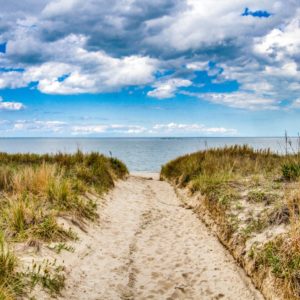
Virginia Beach, Virginia, ranked No. 3 in safety and accessibility, 57th in entertainment and food, and No. 1 overall. The remaining top 10 follow.

2. Honolulu
3. Plano, Texas
4. Fremont, California
5. Irvine, California
6. Chula Vista, California
7. Lincoln, Nebraska
8. Santa Ana, California
9. San Diego, California
10. Anaheim, California

Looks like California may be the place to be, at least according to WalletHub. You can check out the full list here.