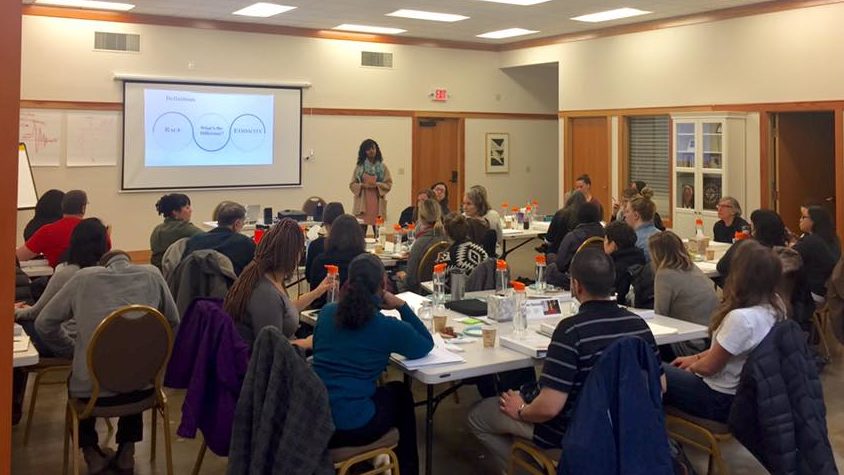
“The winner during disruption is not the smartest or the strongest. The most adaptable wins,” journalist and author Thomas Friedman declared during the opening keynote at PCMA’s omnichannel Convening Leaders conference on Wednesday. A total of 3,500 people from 36 countries registered to watch the content online through the Juno AI platform, interacted in The Kitchen conversations and as part of micro-communities and satellite gatherings.

The event moved from its planned location in Houston to Singapore, with 19 official network partners hosting watch parties from United Arab Emirates, where Abu Dhabi Convention & Exhibition Bureau held an experience, and Las Vegas, where Caesars Entertainment debuted the new CAESARS FORUM, to a Marriott International gathering in Denver and a Hilton event in Dallas.

“The guidance was changing fast, and we saw that Asia-Pacific was coming out of lockdown faster, so we made the decision to host 300 people there, with network partners hosting groups of 50 or so in other locations,” said PCMA President and CEO Sherrif Karamat in a press conference on Wednesday. “It has been a massive learning curve even though PCMA has been doing digital for years,” he said.

Innovating and Growing
The Professional Convention Management Association took Friedman’s words to heart over the last year and after its most successful annual conference in January 2020 in San Francisco (5,300 attendance/ 4,450 on site), it spent this painful year putting tools in place to support members who could no longer plan meetings as they had in the past.

The organization offered free memberships to those who had lost their jobs and about 500 applied, largely on the supplier side, according to Karamat. It ended the year with more than 8,000 members, a record, which came both from nurturing young (Gen Z) meeting professionals—a focus for the last two years—and from acquisition.

PCMA acquired Corporate Event Marketing Association (CEMA) in November and Incentive, Conference & Event Society Asia Pacific (ICESAP) in 2017.

“2020 was a black swan event, but I am proud of the way we were able to pivot,” said Stuart Ruff-Lyon, 2020 PCMA board chair and vice president of events and education for Risk Management Society.

In addition to disruption from the pandemic, he pointed to the group’s reaction to social unrest. PCMA staged 150 Community Conversations to help members work through their next steps, increased content in the Digital Event Management curriculum to help with reskilling, and formed a Black Lives Matter Task Force to build on progress made with the Ascent CEO Promise in 2018 and to develop suggestions for making the industry more diverse.

Due to the “unprecedented” year, Ruff-Lyon announced, displaced workers would be honored with the Chairman’s Award.

Valerie Sumner, chair of the 2020 PCMA Foundation and owner of VRS Meetings and Events, reported that the foundation invested $900,000 on individual grants, industry support and chapter support. “We are trying to move forward the event field,” she said.

Kirsten Olean, director of meetings with Cystic Fibrosis Foundation, is PCMA board chair elect and Angie Ranali, vice president of sales for the Midwest region with San Diego Tourism Authority, is foundation chair elect. She announced a new Groundbreakers Award in 2021 to recognize trailblazers who have advanced inclusion and equity.

More F2F Planned for 2021

Karamat said face-to-face meetings are starting to come back, although he is seeing more planned activity in the third and fourth quarters of the year, with full recovery in 2023. “Recovery is on its way, but we can’t expect to go back to what it was. We have changed, and we have to help people face that new reality.”

In the meantime, he said PCMA is looking to have a more physical presence this year. EduCon 2021 is planned for JW Marriott Desert Ridge in Phoenix, June 6-9. And a new omnichannel Convening EMEA developed out of the European Influencer Summit will be hosted in Lausanne, Switzerland, Oct. 17-19.

More Friedman Wisdom
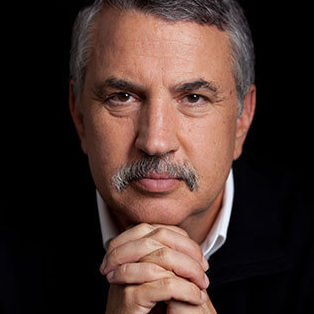
“Baby, the world is flatter than ever,” said the author of the 2005 bestseller, The World is Flat: A Brief History of the Twenty-First Century. The resulting lack of buffers will cause disruption that will require innovation. Look for more changes AC (after coronavirus), he said.

Human adaptation was tested with a geopolitical crisis on 9/11, a financial crisis in 2008, a medical pandemic in 2020—and next comes a climate disruption. “Each starts with a warning and then shakes the whole world,” he said.

Rebuilding the events industry will require meeting professionals to take responsibility to reskill themselves. “We can’t assume someone will do it for us. We have to create a learning ecosystem,” Friedman said.

He saw some cause for optimism. “We will see an explosion of creative destruction, creative destruction will be on steroids,” he said. More people have cheap tools of innovation and access to high-powered computing through the cloud. Money is almost free due to low interest rates, so more businesses will be launched.

The downside? The half-life of skills will get smaller. “The usefulness of what you know today will be relevant for a smaller amount of time as technology development accelerates.

“We need just-in-time education by employers and developers. We have to change the model from ‘learn, work, retire’ to ‘learn, work, learn, work, repeat,” he said.

He predicted that companies will be seen as platforms, with some tasks done by employees, but others farmed out to gig workers. “We will need problem finders, not problem solvers. The iPad and iPhone were examples of things we didn’t know we needed until Steve Jobs told us we couldn’t live without them.” He suggested people who study humanities might be better at that than those with computer degrees in a world of no-code software.

Despite all the changes, Friedman predicted that in-person events will not go away. “Yes, you can reach more people in virtual talks, but if don’t go, you don’t know. The experience of being there and talking to people is what helps us learn and see new points of view. You have to be where ideas collide.”

A Message of Encouragement

Among the regional gatherings was Oklahoma City. Today, a keynote livestreamed the horrifying but ultimately uplifting story by Amy Downs, who survived the 1995 bombing of the city’s federal building. A teller in a credit union in the building, she plummeted three stories as the nine-story building collapsed and was trapped upside down in rubble for hours. Eighteen of her coworkers died.

“I remember wondering if I was dead or alive,” she said.

Now, she is CEO of the same credit union and has successfully completed an Ironman competition.

“Hope is simply having a goal, being clear about what you want. Constantly visualize the finish line,” she advised meeting professionals in the in-person and virtual audience. “Keep your eyes on that finish line. Break it down into steps. You really will make it through. You’re here seeking out information for how to navigate. So, my bet’s on you. You got this.”
Marriott Dallas Uptown, Texas

Opening late January 2021, the new property will bring 255 guest rooms to the DFW area with the latest generation of Marriott room design, including energy-conserving features and space-efficient room layouts. A streamlined facade is made of stone and glass, complementing tree-lined streets and elevated pedestrian walkways. It boasts 13,000 sq. ft. of meeting space, an all-day lounge and cafe, fitness center and a pool deck with panoramic views. The hotel is within walking distance of downtown Dallas and multiple hubs of retail and entertainment.

Yotelpad Park City, Utah

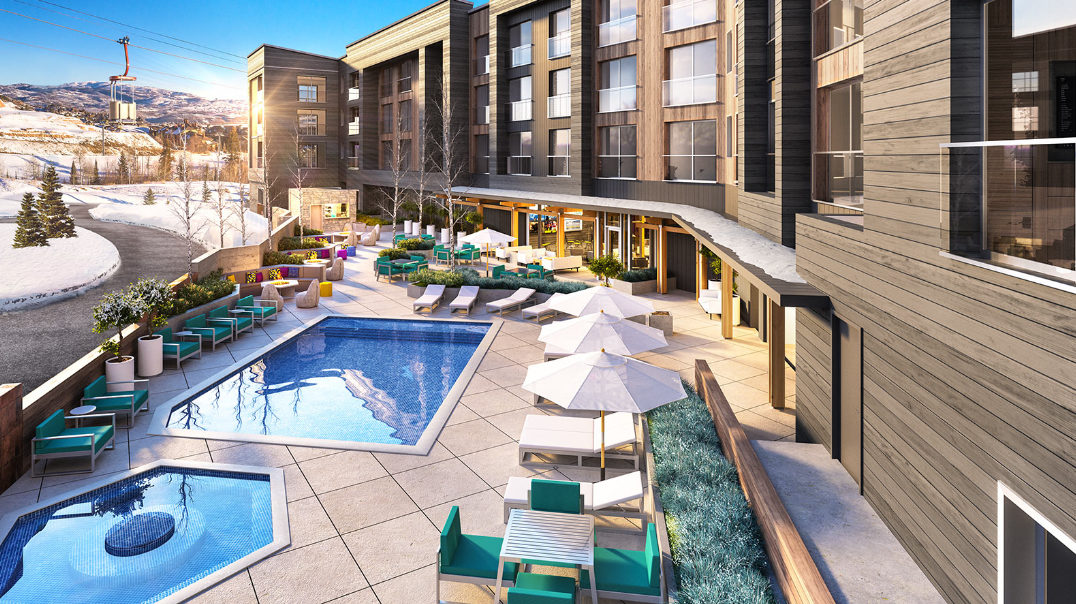
London-based hotel group Yotel opened this first property under its Yotelpad concept this month. It offers 144 “pads” at the base of the largest U.S. ski resort. Pads come in various sizes and arrangements, the largest housing up to seven people with an innovative setup, including multiuse furniture so guests can reconfigure the space for the use they wish. The tech-equipped hotel features a 24/7 gym, a farm-to-table grab-and-go kitchen, and ski valet service.

Kimpton Marlowe Hotel, Boston, Massachusetts

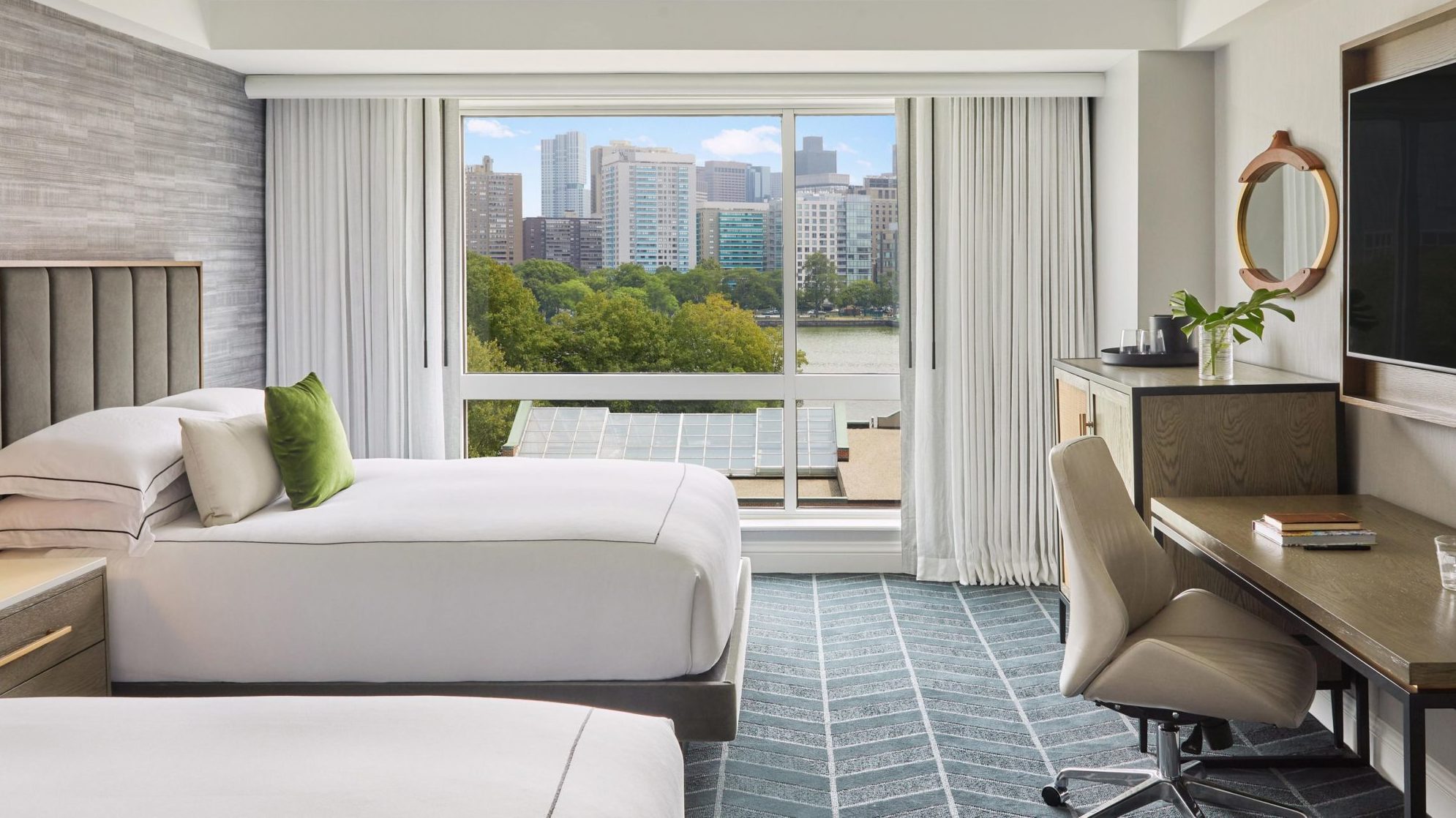
This East Coast hotel recently completed a renovation of all 237 guest rooms, re-evaluating decor for functionality, simplicity and a modern design that reflects the spirit of both Cambridge and Boston. Wave-patterned blue carpet mimes the Charles River, which guests can also admire from their abodes—all guest rooms boast floor-to-ceiling windows—and literary nods harken to the area’s academic history. The property plans a like-minded revamp of the common areas, lobby and meeting spaces in Phase Two.

Waldorf Astoria Xiamen, China

The brand’s fourth property in Greater China has just opened, with 245 guest rooms and suites. Discerning guests can request their chosen design palette, as some rooms are decked with lush blues recalling the coastal landscape while others are grounded in the warmer hues of earthy tones. The lush garden mansion highlights botanical features, creating a serene space that blends local heritage and international culture. Three dining concepts span from Fuijan cuisine to Western and European dishes, and a promenade down the grand staircase yields afternoon tea at Peacock Alley.

Meeting professionals will have to wait a little longer to clink glasses at IMEX in Europe. IMEX Group CEO Carina Bauer and Chairman Ray Bloom announced Monday that they would be canceling IMEX Frankfurt, scheduled for May 25-27 due to the global nature of the event and lack of international travel.

“We know the timing of our announcement comes as a blow so early in 2021. More than anything, and like you, we’re eager to deliver some good news and mark a fresh start,” the father-daughter executive team said. “We still believe wholeheartedly that a resurgence will come, but sadly we do not believe it will happen in time for us to deliver a strong and successful event in May.”

Read the story behind Planet IMEX.

Las Vegas is Still On

Bauer and Bloom said they were optimistic about the industry as a whole and were actively planning for IMEX America in Las Vegas, scheduled November 9-11. “The vaccine roll-out and improvements in rapid testing programs give us great confidence for the prospects of our industry and of travel in general. We are very confident that we’ll be able to deliver a successful IMEX America; as well as the 20th anniversary edition of IMEX in Frankfurt in 2022 (April 26-28).”

In the meantime, they are planning the next iteration of Planet IMEX, digital activations and experiences that unite and advance the business events industry to educate, innovate and help make powerful connections.

“We remain at the service of the industry and cannot wait to see all our industry friends again in person. When we do deliver another IMEX show—you can count on it being one worth waiting for,” they said.

Australian executives are getting more comfortable with the idea of returning to the meeting room according to surveys by Tourism Australia. A pair of studies done in August and October with 459 meeting decision makers found that the proportion of Australian businesses currently planning events in the country in the next six to 12 months has increased from 48 percent to 59 percent. Even more promising is the response that the percentage currently planning events in Australia in the next 12 to 24 months has increased from 66 percent to 73 percent.

“Businesses continue to show intent to start running larger events soon, especially state-level or national conferences,” said Penny Lion, executive general manager events with Tourism Australia. More than half (54 percent) said they were planning state conference with 44 percent said they had at least one national conference in the works and 38 percent were producing a board or executive meeting.

The reason they are moving forward with these gatherings? Again, more than half (57 percent) said team building or connection was the top goal while 51 percent were planning incentive trips to reward employees and 44 percent needed to reinforce company culture.

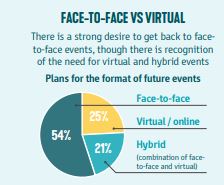
“There is also a desire among businesses to get back to face to face events although they recognize the need for virtual and hybrid events. More than half (54 percent) said their plans were for a physical meeting compared to 25 percent who are planning a virtual or online event and 21 percent who described it as hybrid.

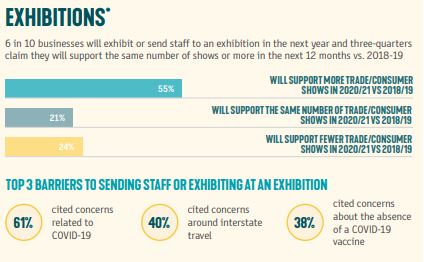
In fact, 6 out of 10 respondents said they would be exhibiting or sending staff to an exhibition in the next year with three out of four saying they will support the same number of shows or more in the next 12 months compared to the same period in 2018 and 2019. Tellingly, 71 percent (a 4 percent increase since August) said they will run the same number or more events after Covid compared to the period before the pandemic.

Meetings Have Started Again

Domestic events have already returned in some parts of the country. Western Australia’s capital city of Perth has hosted events for up to 900 people while Brisbane Convention and Exhibition Centre hosted an event for 1,800 in October of 2020. International Convention Centre Sydney has also recently been approved to host business events for up to 1,500 by the New South Wales State Government.

Lion predicted that some international markets will return before others. A one-way Safe Travel Zone has already been established between Australia and New Zealand granting travelers from New Zealand quarantine-free entry to Australia. These arrangements are expected to become reciprocal in early 2021, which will enable international events from New Zealand to return. The Australian Government has also signaled that talks have been underway with several other countries about travel bubbles. “Depending on how the health situation continues to evolve around the world, we may see a staggered return of international events in Australia,” said Lion. The balance of international customers have indicated they may return in late 2021 or early 2022.

Innovative Changes

When meetings return, Lion expects to see an increased focus on safety and hygiene—temperature checks, increased cleaning, more attention being paid to managing movement of visitors around indoor spaces and smaller capacities for venues and experiences to allow for physical distancing.

“We’re seeing greater interest in accommodation offerings which can be bought out for exclusive use and Australia has lots of those, which are often set within vast—and beautiful—Australian landscapes,” said Lion. “Our space is an asset in times like these.”

Other innovations in the works include Smart Badges, an offshoot of Australian production company Harry the hirer, which facilitate social distancing at events and capture real-time contract tracing data as well as monitoring room capacity limits.

Recovery Focus

The hospitality industry from Down Under is recovering from two crises. The bushfires in 2019 and the beginning of 2020 generated negative publicity and dampened tourism even before Covid hit.

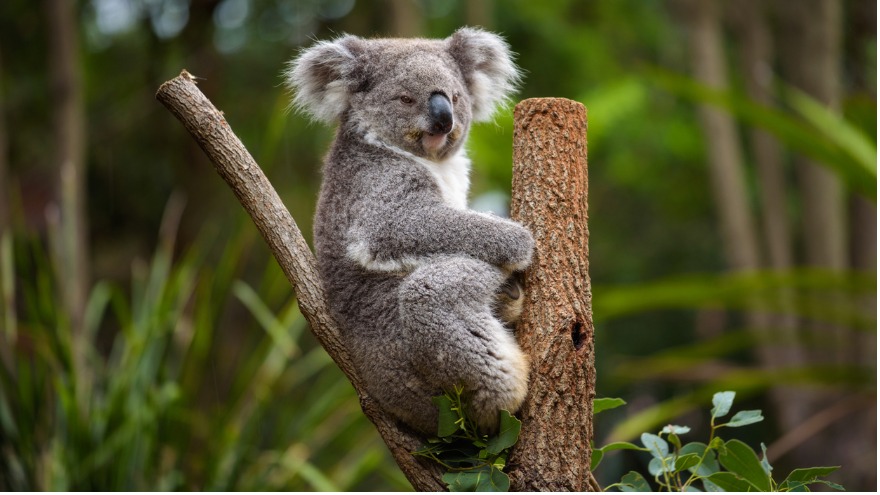
Now the country is getting creative about how to welcome visitors back. New CSR activities include endangered koala rehabilitation and re-release, enhanced sustainability practices at some boutique properties, even winemakers using smoke-affected grapes to reimagine beverages. “Conscientious travelers can make an impact,” said Lion.

See also: Better Than Sustainable: Regenerative Travel

Tourism Australia is providing practical information about what’s currently permitted for events. To help both domestic and international planners navigate the changing landscape for what’s allowed as restrictions on gatherings ease, Tourism Australia manages a Coronavirus information for business events webpage with regularly updated guidance for each Australian state and territory. The page also provides highlights about what venues, hotels and operators are doing to enhance guest safety.

Meanwhile, Australia Next features incentive ideas for each market. And the Business Events Australia Instagram account allows meeting professionals to dream before they book. “When international meetings return, we want planners to have plenty of ideas for how their groups can enjoy the incredible and diverse business events offering we have in Australia,” said Lion.

As 2020 continued to evolve, it became increasingly clear that Cisco IMPACT, a three-day, multi-venue corporate event traditionally held each August in Las Vegas, would not be able to take place in person due to COVID-19 closures and restrictions. The Cisco Global Events IMPACT team began the process of reimagining how to convene their nearly 20,000 attendees in a digital environment that would have the power to inspire and connect them in new and meaningful ways.

Responsible Meeting

In recognition of the countless endeavors that have been forced to radically innovate and adapt across the globe, the theme of this year’s event was appropriately titled: Reimagine Possible. Cisco IMPACT distinguished itself out of a host of high-profile 2020 conferences migrating to digital by embedding sustainability and corporate social responsibility across the attendee experience.

“We had spent the past five years refining a method of accounting for and reducing nearly every environmental impact connected to our physical production,” said Desiree Hamilton, operations manager at Cisco Global Events. “Abandoning that commitment to our sustainability values, principles and legacy simply because we moved to a digital event seemed wrong.”  This was particularly noteworthy, as during the outset, Cisco planners and event leadership were not 100 percent certain what components comprised a “sustainable digital event” in terms of design and metrics. But they were willing to try.

It became clear, through convening virtually, that climate impacts would be significantly reduced. According to Hamilton, “We have been working towards carbon neutrality at our events for years, but one of the unexpected benefits of meeting in a digital format, was that offsetting our emissions became more feasible than ever before.” To help facilitate this goal, Cisco neutralized 100 percent of virtual attendance and event production impacts by planting 1 tree for each attendee via the Tentree Climate+ program. Trees naturally “sequester” and absorb carbon and this planting, over the next 10 years, is expected to retire an estimated 1,800 metric tons (MT) of CO2 through science-based reforestation. Given that the carbon reduced from these efforts exceeded event emissions by such a significant degree, by virtue of unique accounting circumstances, Cisco IMPACT 2020 can technically be considered “climate net positive.”

Drive Positive Impact

Similarly, Cisco took bold steps in its attendee appreciation strategy. “Historically, our attendee giveaways have been the product of some form of circular economy. Our giveaways have aligned closely with our sustainability or social responsibility efforts themselves, such as backpacks created from up-cycled water bottles, however, this cycle was the perfect time to try something different,” adds Hamilton. Instead of traditional material items, Cisco attendees were offered the opportunity to help direct financial donations to causes such as the Cisco Fighting Racism and Discrimination Fund, Clean the World, and World Central Kitchen. Additionally, in 2020, “experience-driven” prizes replaced physical ones, and centered around one-on-one time with Cisco’s Executive Leadership team, sharing a personalized virtual experience based on their individual hobbies.

In addition to material reduction, Cisco sought to fully leverage the design and content of their digital platform to comprehensively promote sustainability education. This included ensuring attendees had the opportunity to access sessions and tools dedicated to enhancing diversity and inclusion, equity and accessibility, good health and well-being, and healthy communities. In just one example of the many transformative resources available, Ibram X. Kendi’s Antiracism: A Different Conversation was viewed by thousands of  attendees across six continents. According to Hamilton, “Our challenge was to provide a portal for our stakeholders that would not only successfully accomplish our business objectives, but also authentically drive positive impact in our people, society and planet.”

Navigating the Future

As planners and industry professionals continue to search for fresh ideas in the realms of digital and hybrid connectivity, the work of Cisco IMPACT 2020 offers a compelling roadmap forward for reimaging possible in sustainability and events. For more information about Cisco sustainability please visit this link.

Eric Wallinger is director of sustainability at MeetGreen, a sustainable event agency that helps companies produce events that deliver targeted business results.

The long-awaited $900 billion pandemic relief package Congress is preparing to approve includes funds for some hospitality interest groups—including CVBs—that were not in the former bill, even if it isn’t everything the industry hoped. As part of a $2.3 trillion bill to keep the government operating, AP is reporting that the compromise deal will look like a scaled down version of the $2.2 trillion CARES Act that passed on March.

It is coming at a particularly challenging time for the travel industry, as Tourism Economics projected that 50 percent of all travel-supported jobs will be lost. The most recent round of restrictions across the country and news of an even more contagious virus strain in Britain makes the unemployment benefits particularly welcome.

What is in the Bill

AP is reporting that the package includes:

  • $600 stimulus payments to millions of American adults earning up to $75,000
  • $300 in supplemental federal unemployment benefits for 11 weeks including gig workers and freelancers
  • $284 billion for the Paycheck Protection Program for small businesses, including eligibility for nonprofit organizations and destination marketing organizations
  • $15 billion for performance venues, independent movie theaters
  • $15 billion for payroll relief for the airline industry
  • $69 billion for the distribution of a COVID-19 vaccine and $22 billion for states to conduct testing and mitigation

Industry Reactions

Mike Dominguez

Mike Dominguez, president and CEO of ALHI, sounded a positive note. On his LinkedIn, he praised it, saying “Details of the bill are positive for our Industry with aid directed at airlines, rail, small business support, venues and—as we have so many that are still unemployed—unemployment benefits will be quite impactful.” He further called it a positive sign for the future. “This is some good news as we end the year and will help for Q1 support as we start to slowly move forward.”

U.S. Travel Association President and CEO Roger Dow was similarly optimistic. “Washington is delivering a huge holiday gift to U.S. businesses and workers after an incredibly challenging year.”

Roger Dow

He described the process of getting a follow-up bill as a long one. “It’s been a difficult road to get another round of much-needed legislative relief moving in Washington. We applaud the bipartisan group of senators that drove progress forward, and the congressional leadership for striking a bipartisan agreement to produce this desperately needed assistance. The agreed-upon provisions will give many suffering businesses a bridge to 2021.” Destinations International, which worked with U.S. Travel Association and others to lobby for CVBs being included in the funding, said the funds “will be important to helping rebuild communities around the country.”

Dow also cautioned that this is not the end of the story. “More will be needed to restore the 4.5 million travel jobs lost in the travel and tourism industry, but the process that produced this agreement is hopefully a positive sign for what will be possible to achieve in the next Congress.”

ASAE President and CEO Susan Robertson, CAE, vowed to push for legislative solutions such as the Pandemic Risk Insurance Act and the Investing in Tomorrow’s Workforce Act in the next Congress to help associations and protect them from future disruptive events. “ASAE recognizes that this legislation came together only as a result of bipartisan compromise and congressional leaders were forced to accept a deal both parties described as imperfect to produce emergency relief measures for a nation in acute crisis. We’re thankful Congress has recognized that associations are deserving of access to federal relief programs like the PPP. This year-end relief package qualifies as progress. However, there are many deserving associations that will find themselves still unable to qualify for PPP loans as a result of the conditions set in this bill. No legitimate, well-purposed association should be left in the cold simply because they exercise their First Amendment rights to advocate on behalf of the industries or professions they represent.”
American Hotel & Lodging Association President and CEO Chip Rogers greeted the deal as “a vital step” toward helping the hotel industry survive the crisis. “This will provide a critical lifeline for hotels and other businesses that have been decimated by the pandemic,” he said. “Other hotel industry priorities include a one-year extension for Troubled Debt Restructuring (TDR) relief so that banks can continue working with borrowers to gain additional forbearance and debt relief, business meal deductibility through 2022, and expanded Employee Retention Tax Credit.”
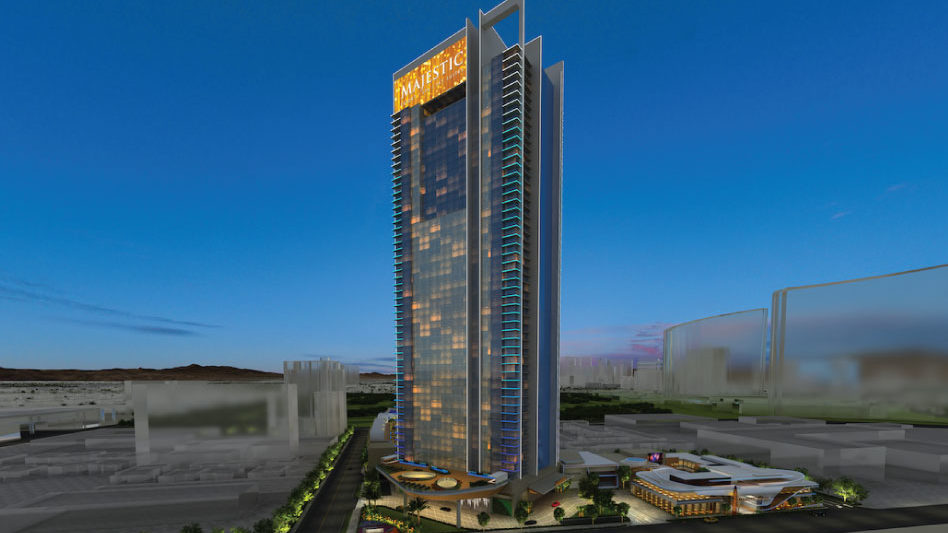
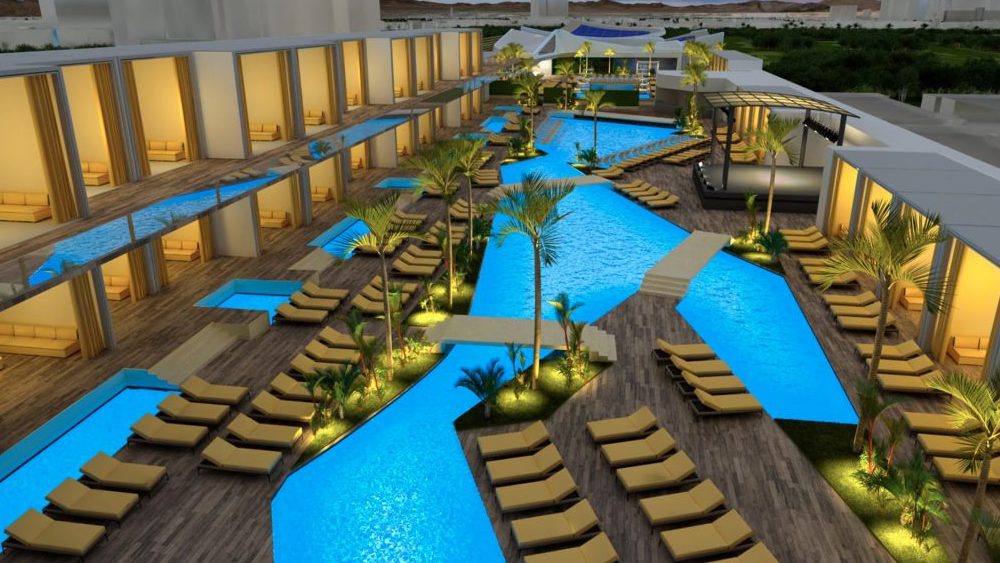
 

A press conference this week introduced plans for Majestic Las Vegas, a no-gaming, no-smoking, luxury 720-suite property with a targeted focus on health and wellness—the first of its kind—that will stand 620 feet tall and directly across from the newly expanded Las Vegas Convention Center. It will offer 35 Majestic Sky Suites on its top floors for use as corporate headquarters, convention and showroom space, with 16-foot-high ceilings and panoramic views of the Vegas skyline.

“There’s a lot of very healthy people in Vegas,” developer Lorenzo Doumani told Fox Business. “It’s not just the casinos and the smoke and all of that.”

Doumani acknowledged that Covid-19 will continue to affect tourism for some time, but said he expects a return to normalcy by the time Majestic Las Vegas is complete, in 2024.

The new hotel will stand on the site of the former Clarion, one of several names the building held during its history, including a temporary naming after its former owner, the late actress Debbie Reynolds. Following bankruptcy, the hotel was bought in 1998 by Worldwide Wrestling Federation (WWF), which planned to turn it into a wrestling-themed hotel. That concept was never brought to fruition, and WWF sold it in 2000. Doumani bought the hotel in 2014 and imploded it the following year to make way for a new structure. He said he expected to break ground last year, only to have plans halted by the worldwide pandemic.

The hotel piazza will host five world-class restaurants, live entertainment, a state-of-the-art fitness center and a 70,000-square-foot wellness center that features a medical spa offering executive physicals, fitness, and nutrition counseling.

The project is expected to break ground this summer.

New Orleans & Company announced today that although Mardi Gras parades will be banned this year due to Covid. New Orleanians will still celebrate with some creative adaptions.

The notification, which came on what is known as “Twelfth Night,” the historic start of the Mardi Gras season leading up to Fat Tuesday on February 16, was issued as an edict from Rex, King of Carnival. It focused on keeping the Carnival tradition in New Orleans that started in 1872 alive—and the industry that supports the annual tradition at work.

Other organizations are helping to Laissez les bons temps rouler as well. PRA Business Events offers “Mardi Gras where you are” activations that include glitter shoe sessions and a 610 Stomper experience (trust us on this one. You have to see it for yourself).

Read more Planner Lessons from an Epic Mardi Gras Krewe Ride.

Creative adaptations include:

“The Rex Royal proclamation continues a carnival tradition more than a century old,” said Stephen Perry, president and CEO of New Orleans & Company. “Although Rex and other organizations will not hold their traditional parades through the streets on Mardi Gras Day 2021, we join Rex in inviting visitors to come enjoy New Orleans—safely within the guidelines—and learn about the majesty of our Carnival traditions.”

You might say sustainability was thrown to the wind in the rush to battle the spread of the coronavirus. In the beginning of 2020, there were pushes from big hotel brands like Marriott, who pledged to eliminate single-use plastics. Then the pandemic hit—and by mid-March even reusable grocery bags were a no-no. In our 2020 stories on sustainability, we explored the importance of keeping it green during the pandemic, debated the safety of single-use items, and explored future impacts of an industry U-turn on things eco.

Biophilic Design Brings the Genius of Nature Inside

“In choosing meeting venues and designing spaces, biophilic design elements can play an important role in creating much welcomed, authentic experiences and a sense of place for your groups.”

Take a look at the design trend that’s here to stay. Part intrinsic desire for nature, part millennial push to break the cubicle mold? Learn how meeting planners and designers can incorporate the five senses into the guest experience. Never underestimate the power of a house plant.

Live Events Beyond COVID-19: Sustainability Matters

“Overall, 54 percent of respondents said it matters to them if conference organizers incorporate “eco-friendly dining practices, such as compostable dishware and/or locally sourced menus, into the event.”

Dig into a Promoleaf study about sustainability concerns by age bracket, learn what attendees expect in terms of going green, and read up on rethinking your swag choices.

Better Than Sustainable: Regenerative Travel

“What’s the new and higher bar? It’s being called regenerative travel. And basically, the idea is that travelers should do more than no harm—they should contribute to bettering the places they visit.”

Leave it better than you found it. That’s advice for being a good house guest, a good camper—and a good traveler. Overtourism is a real issue that can devastate natural habitats and local communities, but preventing it isn’t enough.

How to Protect Ourselves—and Mother Nature

“In our urgency to defeat the virus, collateral damage is being done to sustainability. All that additional packaging, the throw-away masks, the toxic cleaning chemicals.”

Did you know disposable masks made with plastic will take about 450 years to break down? Have you considered that your next in-person event might smell like a Lysol factory? We took a closer look at what industry and sustainability leaders are considering when it comes to protecting ourselves against coronavirus.

How Zero Waste Can Survive COVID-19

“’No disposable package is sterile,’ rejoins Tom Szaky, the founder and CEO of TerraCycle, in an interview with Grist. Unless a product is labeled as sterile, bacterial contamination is present.”

What can planners do in the era of hyper-sanitation to keep attendees safe and still keep it eco? Find out here. You’ll also get a rundown of the five “R’s”—yes, now there are more than three.

2020 may not have been the year of perfect sight, but the vision is getting clearer. The common thread in all our conversations this year about diversity, equity and inclusion (DEI) was this: solutions are individual, because only individual responsibility can translate to change on public, social, governmental and corporate levels. In these stories, we spoke with leaders in the industry who are calling out the BS, changing the language and demanding accountability. It is one thing to talk the talk, but another to walk the walk. Challenge your own perspectives and read on for ways to structure your own discussions, in the workplace and beyond.

Beyond Diversity: CVBs Take EDI Pledge

“While many U.S. destinations have focused in recent years on the importance of creating environments that look more like populations they serve, and are welcoming to those with different backgrounds, many still have work to do, according to a pair of recent studies.”

Read here for introduction to the Destinations International Study on EDI, an MMGY study on the Black U.S. leisure travel market, and the impact of Covid-19 on minority populations within the travel industry.

Destinations International Study: Equity, Diversity and Inclusion Opportunities, Now and Beyond

“A diverse and inclusive workplace is central to our industry’s ability to attract, develop and retain the talent it needs to remain competitive, drive innovation and maintain relevancy.”

Destinations International started a committee on equity, diversity and inclusion in 2017, and in 2020 they released a detailed survey of 2 years of findings, with revealing statistics on the benefits of a diverse workplace. 

How to Do Diversity Differently

“It is time to confront the bias. Diversity isn’t us vs. them and it isn’t about loss. The world is changing and we have to be intentional to move forward.”

Smart Meetings catches up with Risha Grant, our keynote speaker at the Smart Meetings Virtual Mid-Atlantic event, about her no BS approach to fostering inclusion.

Destinations International Partners to Address Industry Diversity Gap

In summer 2020, a partnership between Destinations International and National Coalition of Black Meeting Professionals was announced. Jason Dunn, NCBMP board chair, called it the first step in the right direction. “We must be bold and innovative to create change.”