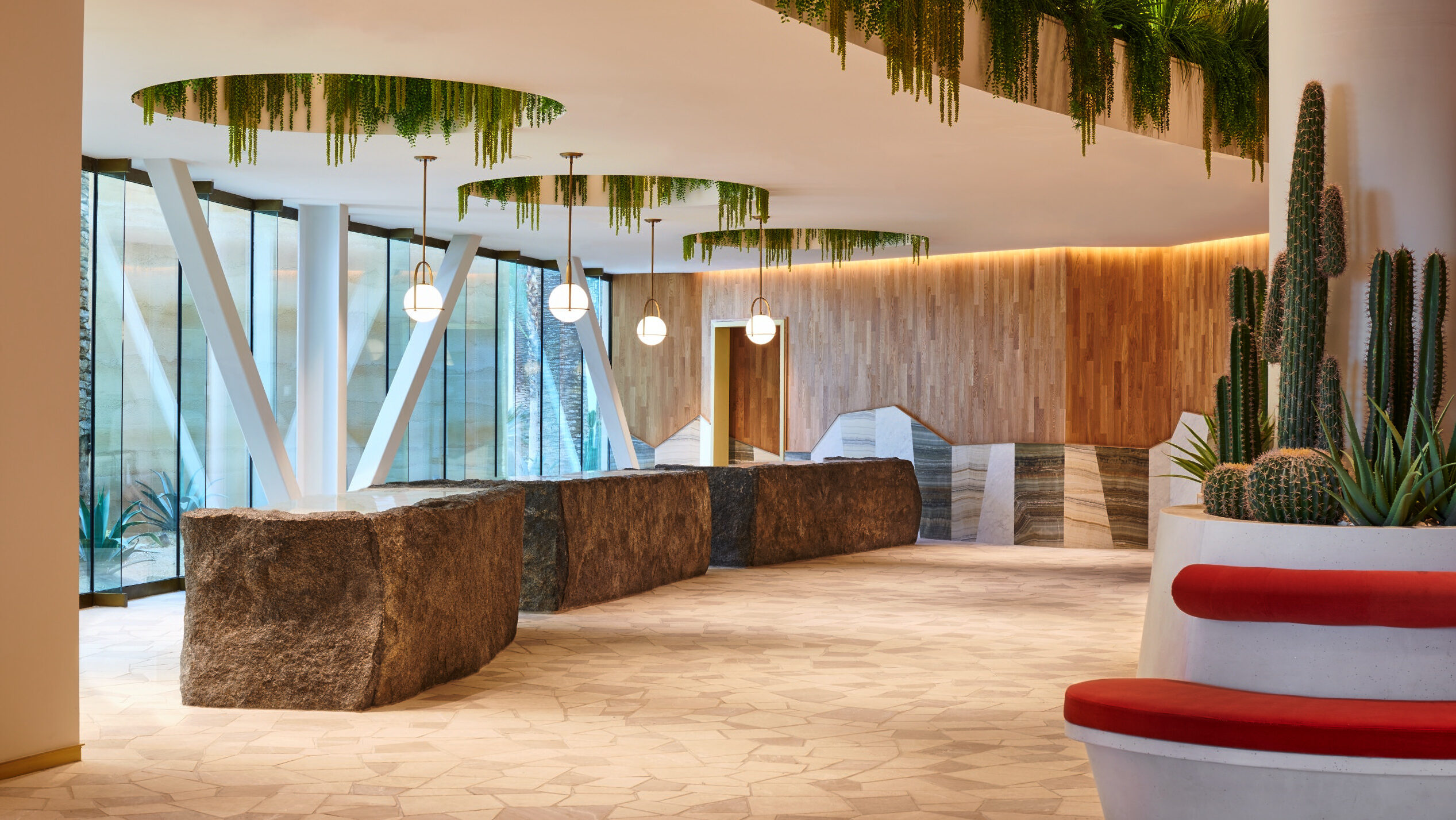
It happened. Resorts World Las Vegas, the first triple-branded hotel (and so much more) on the Las Vegas Strip, is open for your business.

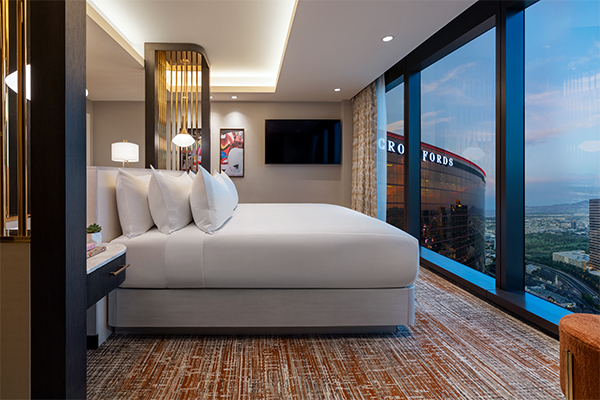
In the largest multibrand deal in Hilton Hotels & Resort’s history, Las Vegas will be the first city in the United Stated to host all three Hilton luxury brands: Hilton Las Vegas; Conrad Las Vegas at Resorts World; and Crockfords Las Vegas, LXR Hotels & Resorts. The Conrad is the largest of its kind in the world, accounting for 1,496 of the property’s 3,500 rooms, and Crockfords is the second U.S. location for the LXR brand.

More: Tales from Las Vegas: Jewelry Trade Shows and LVCC’s Comeback Convention

Resorts World features a whopping 250,000 sq. ft. of meeting and banquet space, including 50 meeting rooms and six ballrooms, one of which is a 23,000-square-foot, Strip-facing ballroom with floor-to-ceiling windows.

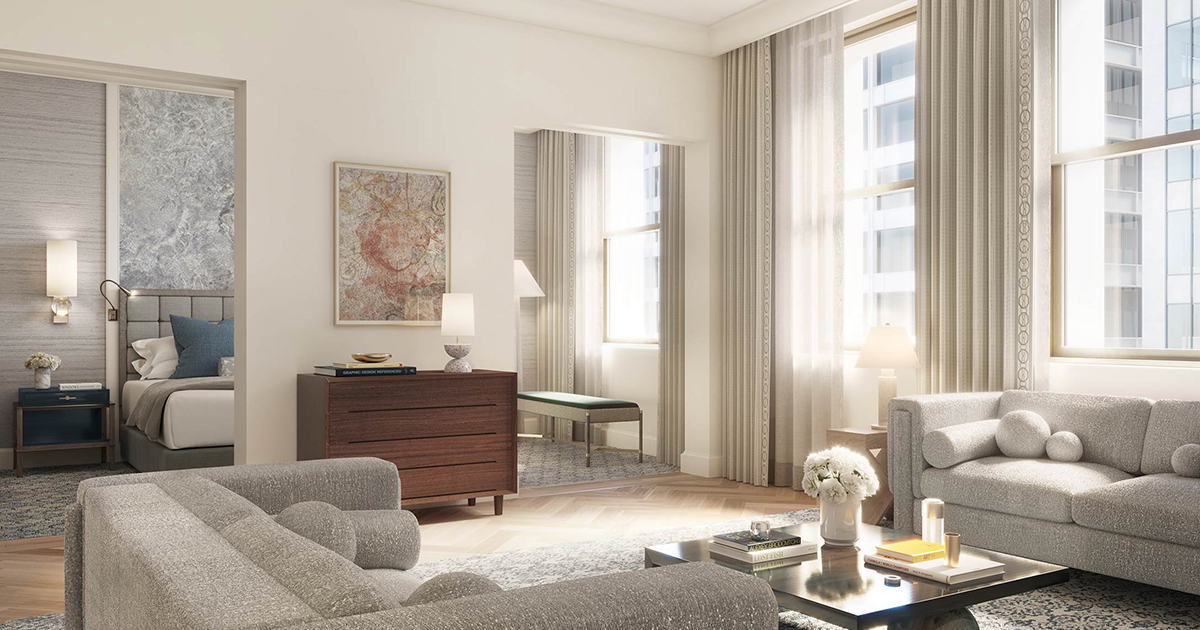
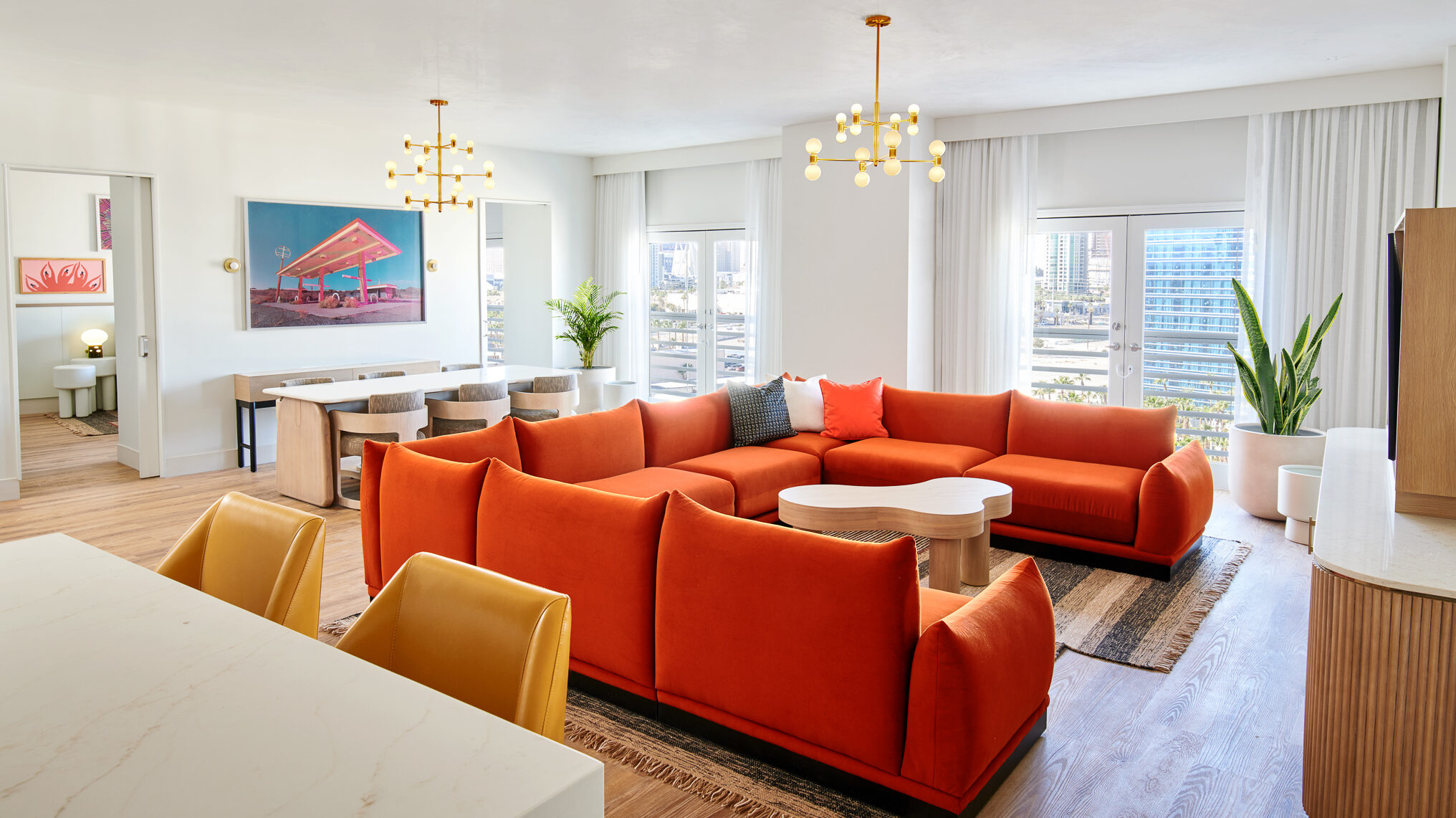
Hilton Suite

When fully built out, Resorts World will house more than 40 F&B options, touching on nearly every type of food you and your group could possibly want, from sugar boba milk at Tiger Sugar and Singaporean snacks at Mamak to Chef Ray Garcia’s Latin cooking at ¡Viva! and Italian fare and signature negronis at Brezza. Included in these expansive options are nine bars—be sure to caution your attendees not to go to crazy in their explorations.

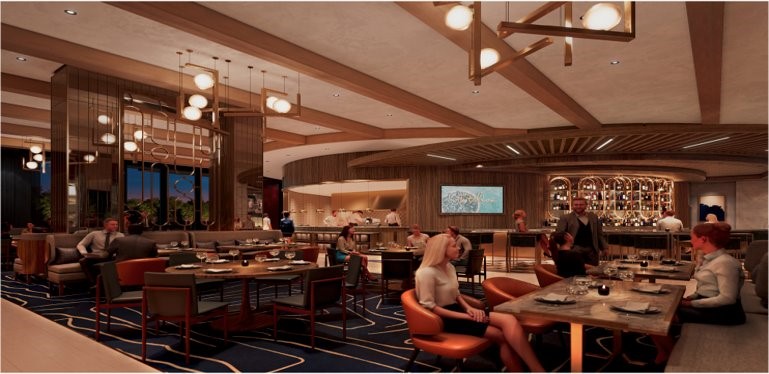
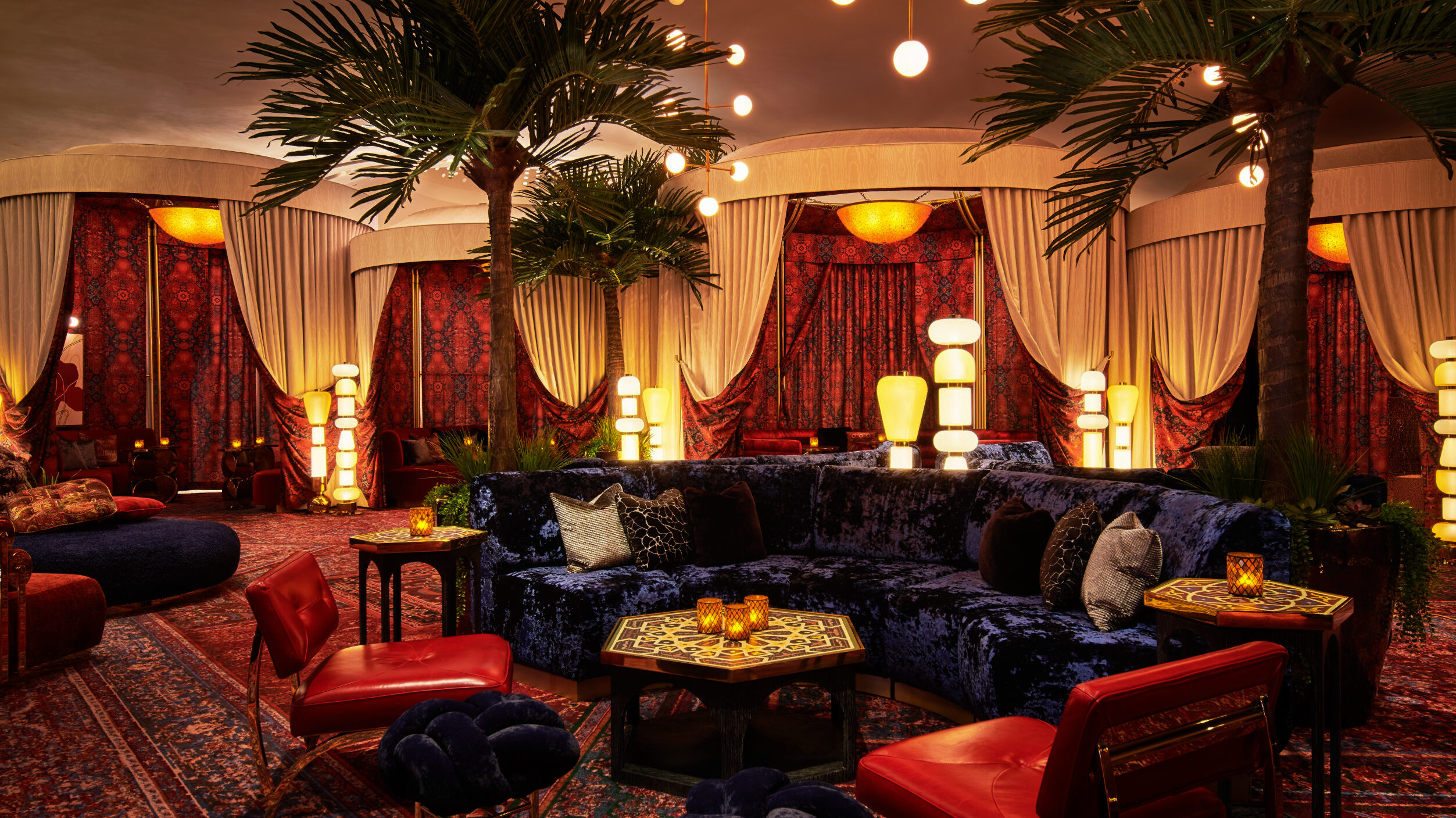
Brezza (rendering)

Many of the dining facilities feature private dining rooms and full buyout options. Brezza, for instance, can host up to 50 in a private dining room and allows a full buyout for up to 375.

More: Meet Smart; Meet Responsibly in Las Vegas

Resorts World also claims a first in the room service realm, as the first resort to partner with GrubHub. A customized food app, On the Fly at Resorts World, lets guests order up the property’s F&B and retail options for delivery to their rooms and the resort’s 5.5-acre pool complex.

More in Store

Hilton may have hit a milestone but it’s shooting for more. The company is scheduled to have more than 30 hotels and 11,000 rooms across 12 brands in the Las Vegas market by the end of the year. This includes the recent opening of Virgin Hotels Las Vegas, Curio Collection by Hilton, just outside of The Strip.

Beyond that, Hilton will add seven more hotels and nearly 4,000 guest rooms across five brands by 2023.

“Hilton helped create the Las Vegas we know today—the entertainment capital of the world grew as we invested in unparalleled hotels, dining, entertainment and design,” says Chris Nassetta, president and CEO of Hilton. “Now we are raising the bar again, offering brands for any style of travel with a renewed focus on premium and luxury hotels. Las Vegas has been an especially bright spot in our global growth strategy, and we are excited to open thousands of rooms there just as people begin traveling again.”


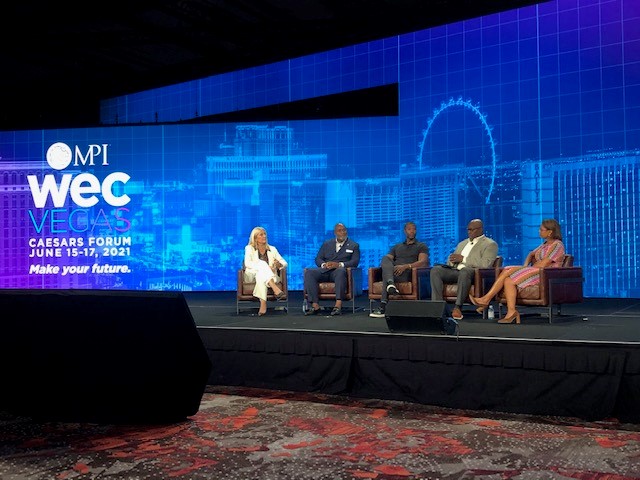
“This is our mission, to get out of bed every day, to work with organizations to make sure they’re a great place to work all of us. For more than the money…because we’re talking about people. The most important subject,” said Michael C. Bush, CEO of Great Place to Work and author of A Great Place to Work for All: Better for Business, Better for People & the World, during MPI WEC Las Vegas 2021.

Delusional, a term often connoted negatively, Bush wears with a badge of pride. The type of person who doesn’t see the world as it is, but as they want it to be. “For all of us who are doing these remarkable things, this is our approach. We’re a little bit delusional and it’s a really good thing,” he said.

Bush’s company, which surveys more than 10,000 companies—14,000 in 2020—and more than 10 million employees annually, found that six out of 10 people who have a family member who is emotionally, psychologically or physically disabled don’t tell their employer. Secrets are often kept at workplaces such as this because it can be a hindrance to career growth. “People will decide, based on their assumptions, what you can and cannot do,” Bush said.

In talking with Bush about a tough work situation in a challenging environment, an employee explained their tough situation could be attributed to their boss. The boss-employee relationship is a crucial determinant behind an employee’s work choices, and whether they choose to remain at a company. “People don’t quit a company. People don’t quit a brand. People quit a leader,” Bush said. “They quit because of a feeling that they’re not being cared for as a person and are being cared for just as an employee.”

According to Bush, this is the time when leaders should care the most about their employees. “People have had 16 months to rethink their lives and they have choices they want to make and they want to know if their leader is going to demand things from them without having a conversation with some consideration,” he said.

What Type of Leader are You?

About four years ago, Bush and his colleagues conducted a survey of more than four million leaders and found characteristics that leaders often harbor and how employees react to them.

The first is the “unintentional leader.” Less than 30 percent working for this leader reported having a positive experience; unfortunately, 62 percent of leaders surveyed fell into this category. These are people who should not be in a leadership position. Bush gave two reasons people end up as this leader. First, compensation schemes pay more, placing them in that position because they make more money. The other reason is many of these types are early in their careers—a lot of millennials. “The feeling of working for them is unintentional because it’s inconsistent.” After feedback, coaching and more experience, they may move into the next category, the “hit-or-miss leader.”

Fifty percent of employees surveyed had a positive experience with the hit-or-miss leader. An important factor in becoming this type of leader is receiving feedback, which a lot of employees don’t receive. “There are a lot of people, particularly in small businesses, that are really bad at giving feedback,” he said. He recommended leaders to give praise where it is due, but by that same token, to tell those who aren’t doing a great job that very thing. This lack of connection and feedback is the main issue with the hit-or-miss leader. “These are leaders that were usually ahead of schedule, under budget, great performers…but they need to work on the connection they have with people,” Bush said. If this leader masters the connection aspect, they’ll then move up the ladder to the “good leader.”

With the good leader, 80 percent of people reported having a positive experience. There are three important behaviors which contribute to the making of a good leader: listening, thinking and speaking. In speaking, the important thing is letting employees know how their role links to the organization’s purpose, whether they’re in housekeeping or finance. Thanking people is equally as important.

Next comes listening. “If there’s one leadership skill that you need to do, it’s listening,” Bush said. “That’s the ability to empty your mind when someone else is talking.” This power of listening is something that should be granted to all, no matter their position, something Bush said many have difficulty doing. “There are some who are really great listeners when their boss is talking, but they listen to other people differently if they aren’t in a powerful role. That’s not good listening.”

About 20 percent of leaders surveyed were “for all leaders.” With this type of leader, “a person who has been with the company for six days is treated the same as a person who’s been with the company for six months or 16 years. These leaders treat you the same, because they’re meeting a person,” Bush said. The for all leader places less emphasis in finances and focuses on the symbiotic relationship of organization, employer and the impact both have on the world.

“What we’re searching for is a high trust culture. [People] want to be respected by the person they work for,” Bush said. “You want to have pride in your work, you want to care for the people you work with and feel like they care about you. This is what drives high performance, not bonuses. Those things are temporary.”

Destinations International (DI) unveiled its 2021 Hall of Fame inductees and Destination Organization Leadership Award recipient.

Created in 2017, DI’s Destination Organization Leaders Award is “among the association’s most prestigious honors, recognizing those outstanding individuals who, through their exceptional work and achievements, have made a significant contribution to the destination marketing and management industry and a profound difference in the communities they serve,” reads a press release by the organization.

MoreDestinations International Rising Stars Share Their Covid Lessons

The Hall of Fame, created three years before the Leaders Award, recognizes individuals who made notable contributions to the advancement of the hospitality industry. “These visionaries have been responsible for the evolution of our industry and have had a profound impact on its healthy future,” said Don Welsh, president and CEO for DI.

Destination Organization Leadership Award Recipient:

Elliott Ferguson

Destinations International Hall of Fame Inductees:

  • Wayne Chappell, former executive director of Baltimore Convention & Visitors Bureau; former president of Kansas City Convention & Visitors Bureau; and former chief operations officer and vice president of Tradeshow Relations of Greater Houston Convention & Visitors Bureau

While event organizers are getting good at planning in-person, hybrid and online events, booking the right speakers and keeping attendees engaged are still some of the biggest challenges. With online events especially, attendees can get distracted by looking at their phones or trying to multitask during presentations. Moreover, attendance rates for online sessions can be low: Registrants are less likely to show up, as they may get pulled into meetings or simply forget to add events to their calendar. That’s why securing an exciting, engaging speaker and creating a compelling, concise agenda is even more critical than for in-person events.

Here are six tips from the team at video communication company Livestorm to ensure your event delivers engagement.

1. Find knowledgeable, diverse speakers

Similar to in-person events, online events typically consist of solo presentations, panel discussions and fireside chats. Without audience interaction and engagement, solo presenters have to be experts in their fields who can share personal experiences and stories to keep the audience interested. Speakers should also be diverse and reflect the audience’s makeup, keeping in mind that online events tend to attract an international audience.

2. Keep your event topic and session descriptions very specific

If you’re looking to attract the right audience for your sessions, keep your topic focused. Each title of each session should be clear. Professionals are being pulled in many directions and are invited to multiple events and webinars every day, so it is crucial for them to know exactly what they are going to learn during the session or they will ignore your event. To ensure your event topic matches the audience’s expectations, you can directly ask attendees what they want to see! If your company creates recurring online events, send out a poll to the audience at the end of the event to ask them what they would like to learn about in the next session. Event organizers will then be able to deliver an event agenda that easily responds to their audience’s expectations.

3. Structure the flow of your agenda to keep your attendees engaged

If there are multiple sessions, set them up in order to keep a deeper, heavier presentation or workshop at the beginning of the day when participants are fresh and active, and plan for a lighter topic towards the end of the day. Fireside chats tend to work well toward the end of the day with a more informal, lighter subject as people’s attention span tends to dwindle. It’s also recommended to keep sessions short, around 30-40 minutes.

4. Create interactive content during sessions

Once you get attendees logged into your session, keeping them interested throughout the presentation is the challenge. We recommend launching polls at key moments of your speaker’s presentation on a specific topic. Speakers and event organizers can start the event with a poll, asking questions to attendees at the beginning of the event to create initial engagement, but also all along the session to keep them interested. Allow yourself to digress and have a proper conversation with your audience either by responding to them, bouncing back on the polls or even asking them to join the stage. For example, the speaker can invite everyone to draw on a Miro board in order to add a bit of fun to the session.

Organizers should also brief the speaker to react to the polls and adapt the presentation based on the results. Planning a 15-minute Q&A session at the end of each presentation is also a great way to make the conversation a two-way street. Choosing a platform that allows attendees to upvote the most interesting questions for speakers to answer first can help to keep a lively conversation going.

5. Go social

Build excitement for your speakers and sessions by creating a buzz on your social channels. Create hashtags that are close to the title of the event and easy to promote on social media. They also serve as a good reminder to people who have already registered to show up for the event. After your event ends, you can also host an afterparty on social media to chat with attendees in real time. You can take this time to answer any leftover questions and build relationships with your audience.

6. Use tools from your online events platform to boost attendance and attention

Ensuring a high attendance rate, especially for online events, can be a hurdle for event organizers. That’s why it’s important to adopt an end-to-end platform that has all the integrated features to send reminder emails to all registrants. At Livestorm, we recommend sending a reminder one day before the event and another email one hour before the event starts to make sure that most registrants will tune-in.

Add visuals from your event platform like photos, graphs, charts, video clips or use a digital whiteboard to create visuals, write notes or highlight things during your events. All of these will help you to keep participants engaged.

Finally, follow up with your attendees consistently. Send out an email thanking them for coming and include a survey where they can provide their feedback on the event. This information will be essential when you’re planning future sessions. These emails can also go out to no-shows, especially if you can provide them with the replay of the event.

Online events should continue to be a draw for people post-Covid. From a logistics and cost perspective, they have a clear advantage over in-person events because they can attract a wider, more diverse international audience. But the engagement piece is still a challenge because of all of the distractions of participating remotely and trying to pay attention behind a screen. Exciting speakers, very targeted content, and a tightly crafted agenda is crucial, as much as using tools like online polls and interactive Q&A to transform the attendee experience during online events.

Gilles Bertaux is CEO and co-founder of video communication company Livestorm, which was co-founded in 2016 with Robin Lambert, Tom Forlini and Vincent Garreau. He raised $30M in series B to accelerate Livestorm’s presence in Europe and the U.S.

The Beatrice, Providence, Rhode Island

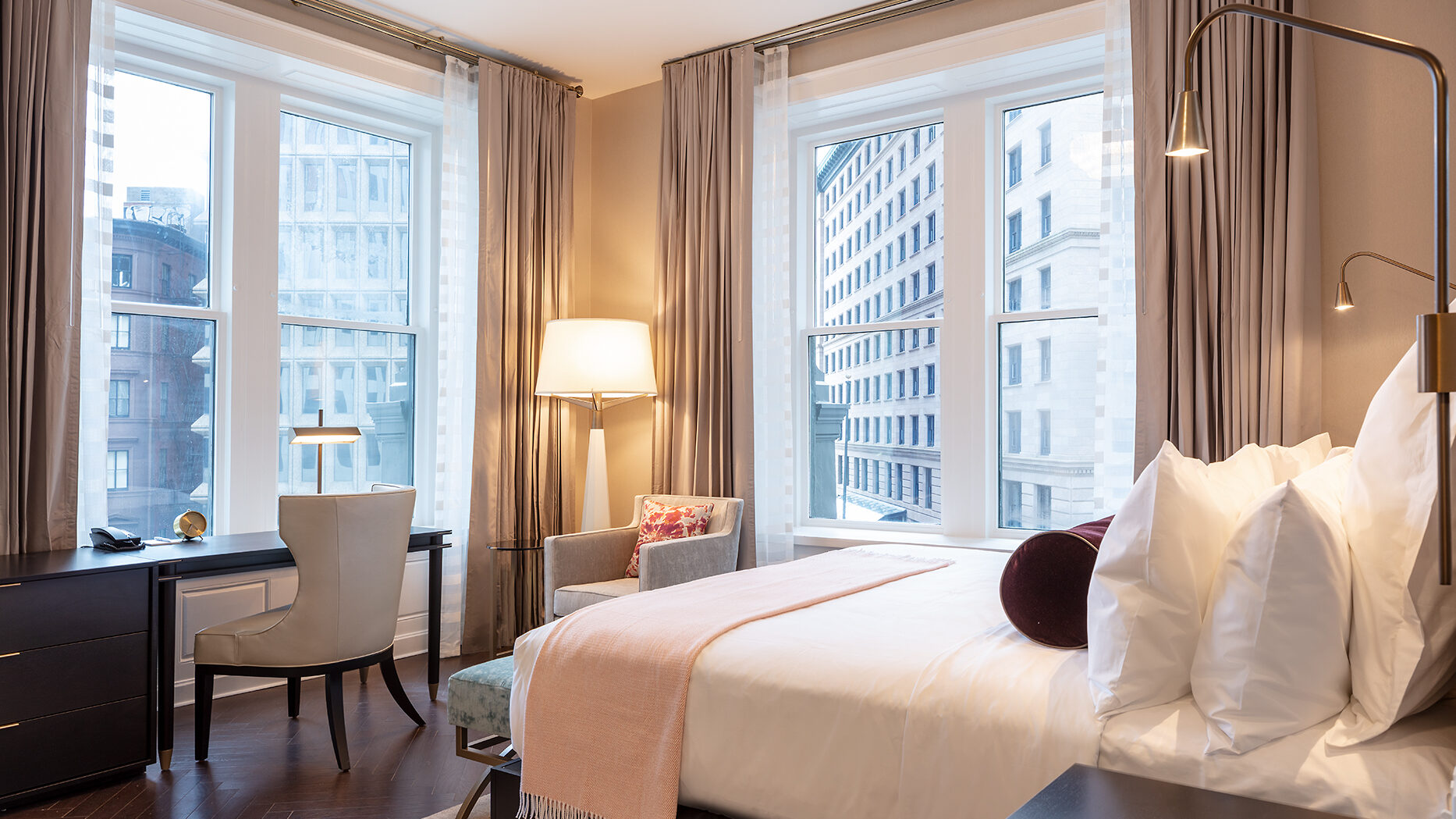
The 47-room boutique hotel opens in downtown Providence this summer, named after the hotelier’s mother and honoring her dedication to the city with a discerning and philanthropic spirit. Taking residence in the 1887 Exchange Building, the property honors its 19th-century heritage with refined decor complemented with luxury amenities like Mascioni linens and BeeKind organic care products. The hotel will feature Bellini Restaurant, the first of its brand from Ignazio Cipriani, great-grandson of the man who invented the namesake peach-and-bubbly cocktail for famed Harry’s Bar in Venice.

Mar Monte Hotel, Santa Barbara, California

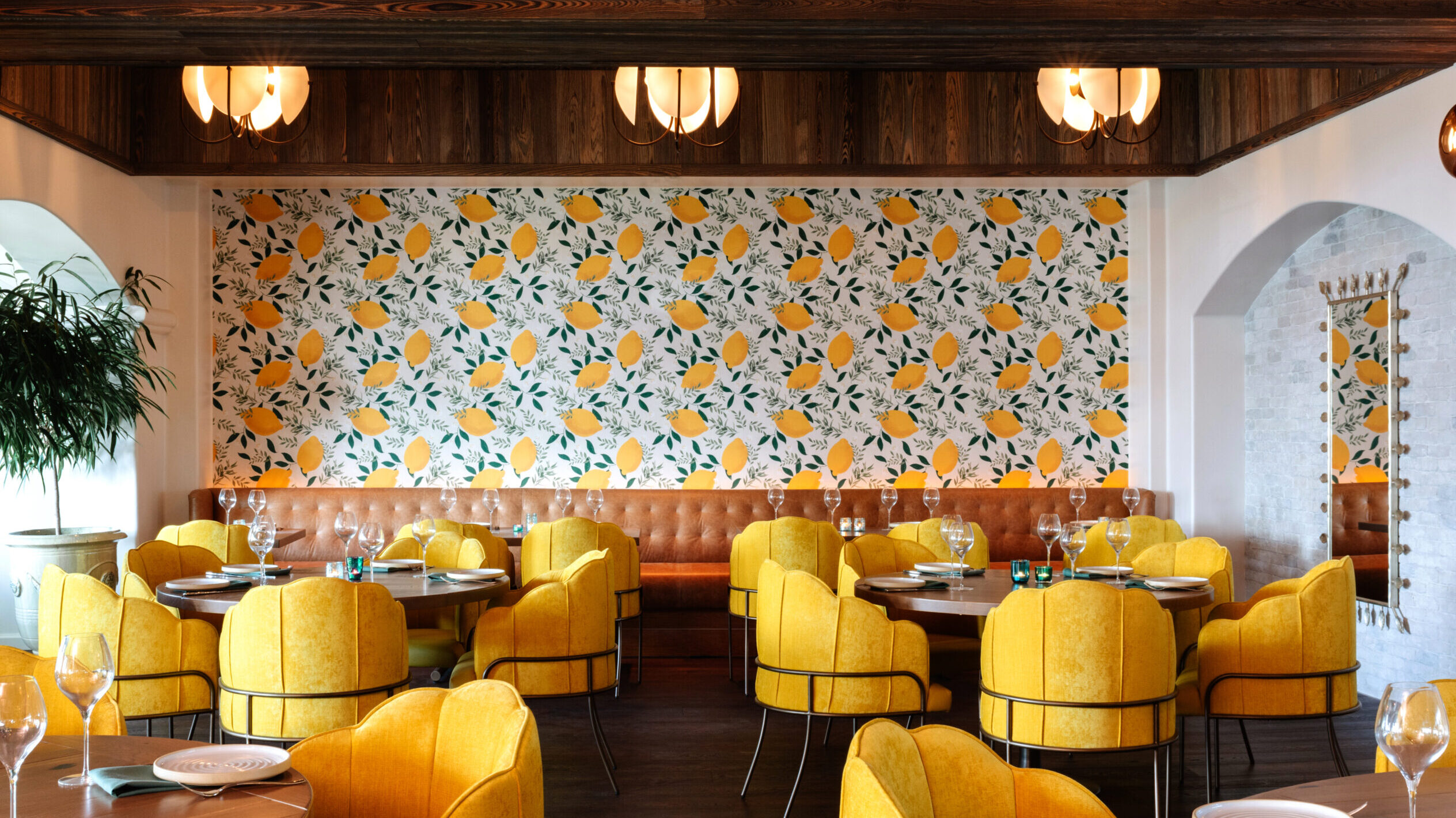
This reimagined Unbound by Hyatt property just completed renovations to 200 guest rooms, and added new programming and a second onsite eatery. The seaside stay has 10,000 sq. ft. of event space, from oceanfront ballrooms and outdoor terraces to the warmly wooden lobby living room. Food is a focus there, with newly added Costa Kitchen and Bar featuring a hyperlocal, seafood-forward menu; at the fresh and poppy Cafe Lido, enjoy artisanal breakfast items (like French toast with Oxnard strawberry compote) while perched atop azure leather booths and lemony suede chairs.

The Wall Street Hotel, New York

The luxury property is set to debut this autumn in Manhattan’s Financial District, with 180 rooms and suites in the historic, 18th-century Tontine building. The concept is headed by the Paspaley family, known as the source of the world’s finest South Sea pearls. The hotel will offer 4,800 sq. ft. of space for events, a (soon-to-be-unveiled) restaurant, a gym outfitted by Rogue Fitness, a rooftop terrace and a double-height lobby lounge and bar that gushes with Old New York elegance. Plus, Velosophy bikes are complimentary to guests looking to wheel around FiDi.

Hotel Indy, Indianapolis

Opening this October, Indiana’s first Tribute Portfolio Hotel by Marriott revives a 1969 office building with 90 guest rooms in downtown Indianapolis. The lifestyle design will showcase Indy icons, involving the community in curation of local products, from coffee to programming. A 95-seat rooftop bar is the first in the city, while the sixth-floor Cannon Ball Lounge offers guests 180-degree views of Indianapolis Artsgarden. The boutique stay has more than 1,500 sq. ft. of meeting space.

After a postponed 2020 annual event for more than 700 people last November, Meeting Professionals International (MPI) brought its World Education Congress (WEC) back to Las Vegas this week with more than 1,200 people live for a series of firsts.

See alsoTales from Las Vegas: Jewelry Trade Shows and LVCC’s Comeback Convention

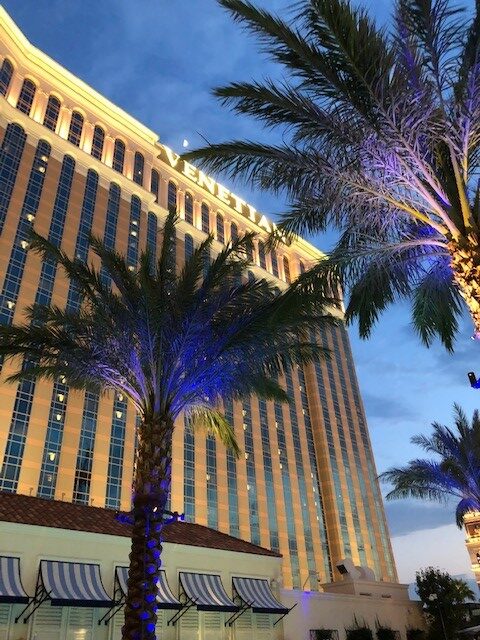
The three-day experience, themed Make the Future, was about half the size of 2019 attendance in Toronto, but was the first major conference in Caesars Forum, the 550,000-square-foot conference center that was completed just as the world shut down. The welcome reception was also the first major industry event on the field at Allegiant Stadium. The President’s Dinner was the first major event in the theater at the new Virgin Hotels Las Vegas. The closing reception was planned as the first event on the new pool deck at The Venetian.

After the CDC, the state of Nevada and Clark County Commission updated guidelines that said vaccinated people didn’t need to wear masks indoors, MPI changed its duty of care to say that those who are unvaccinated, immunocompromised or uncomfortable should wear a mask. The association continued to require daily self-health affirmations and temperature checks using InHouse Physicians.

Fancams and Live 1:1 video chat connected in-person and streaming audiences for a more robust virtual experience. A daily WEC Today broadcast and virtual-only education optimized the experience for those following along at home or office.

A Challenging Year

“We were right all along; face-to-face is more powerful than a lot of people realized,” said Paul Van Deventer, MPI president and CEO, at a Meetings Mean Business board meeting. Unfortunately, it took a global pandemic to test the hypothesis.

Back in the media room, he explained that the devastation that decimated meeting professionals when the events stopped also took a massive toll on the industry that serves them. MPI lost 35 percent of members worldwide.

“We are moving away from a focus on counting members and more on an engaged community,” he said. Despite this shift in focus, numbers grew. A record 10,000 people logged in for Global Meetings Industry Day Virtual in 2020 and consumed 40,000 hours of education when the academy was opened up for free for three months. “That will lead to more members down the road as people now understand the value of associations,” he said.

Resources were designed to serve the whole planner. More than $1 million from MPI Foundation and partners such as IMEX Group, Visit Canada and Giants Enterprises was spent to help 3,100 members through membership and attendance grants and chapter support. “We offered support for career and mental wellness, that will continue,” he said.

Attendees saw a taste of that from stage as panels addressed the issues of diversity, equity and inclusion and women in the industry along with emotional intelligence and creating positive workplaces.

“I don’t think a lanyard will be taken for granted ever again,” said Don Welsh, president of Destinations International, from the stage. “The silver lining is that there has never been greater collaboration of industry working with cities and local communities. Leisure travel is a good start, but we need business to return for a true recovery.”

A Robust Rebound

The event kicked off on the day that California lifted most restrictions and Las Vegas was filled with tourists eager to travel again. Roger Dow, president and CEO of U.S. Travel, was eager to speed up the shift from talking about leisure to business travel. He credited the “Let’s Go There” initiative with creating 2 billion impressions and said three-quarters of Americans plan to travel this summer.

Next is a “Let’s Meet There” campaign that stresses the unique ability for professional meetings to control the setting and offer safe F&B practices in ways other gatherings cannot. “We need to solve the problem of a patchwork of rules from state to state. We need clear and consistent guidance to bring back the recovery,” he said. “We need to build back from a physical health, economic and mental health crisis.”

The plan is to lead with data to make a case for support from government leaders and C-suite executives who will decide whether employees can travel. Dow is also eager to see international travel open up again. He shared the adage: “If you are walking the floor of a trade show and don’t hear multiple languages, you are yesterday’s news.”

WEC will be in San Francisco June 2022 for its 50th anniversary celebration.

Editor’s note: On Aug. 2nd, 2023, AI cloud communications company RingCentral acquired Hopin’s Events and Sessions products and rebranded them as RingCentral Events. This article has been updated to reflect this change.

The “inevitable” event tech consolidation trend that started in 2019 is on steroids in the late pandemic era as bulked-up platforms infused with venture capital are racing to offer one-size-fits-all, end-to-end options for meeting professionals looking to streamline their virtual and hybrid meetings while startups emerge to solve specific meeting professional needs.

The announcement yesterday that London-based virtual streaming giant Hopin (now partnered with RingCentral as RingCentral Events) was purchasing New York-based physical event services company Boomset was another step in the direction of an end-to-end hybrid meeting solution. The company had already purchased video service StreamYard and mobile app company Tobi. “Our goal is to empower event managers to succeed with any event format,” the company said in a post. The acquisition came on the heels of LinkedIn’s investment in the company, which was most recently valued at $5.65 billion after raising $400 million in March.

But Microsoft’s LinkedIn is not alone in big tech companies moving into the space. Recall that Cisco, which offered WebEx before streaming was cool, purchased Socio and just closed the deal on Slido last month in an attempt to make engagement on the platform seamless.

Last year, wireless service provider Verizon purchased video conferencing company BlueJeans in an attempt to provide a “unified communications portfolio.” The platform recently announced that it can host up to 50,000 attendees. Vice President and General Manager Eric Spadafora said he is seeing requests for conferences for 100,000 or more people. “These are not just big video conferences, but actual events,” he said. But he sees size as only one important element. Audio quality and easy integration of engagement features such as polling and moderated chat for Q&A are just as vital. “Long-term, we are attempting to fuse virtual and physical together so it is organic.”

Read more about event tech consolidation in Tech Mergers Could Simplify Virtual Meeting Management.

Meanwhile, the 800-pound gorilla in the streaming meeting space, Zoom, announced this month that it is launching Zoom events, an all-in-one platform that will include a “build your own event hub,” ticketing and registration and a management dashboard for multi-day and multi-track conferences.

Event tech consultant Corbin Ball explained that the explosion of innovation in 2020 occurred in the streaming/virtual meeting/hybrid meeting space thanks to an influx of funding. “This will be a major driver for change in the future of meetings,” he said.

“The big players want to expand their offerings and have the funding to do so. There is space for quality smaller players as well. The problem is that there are more than 100 virtual/hybrid event platforms out there—many having started up during the pandemic. Not all will survive,” he warned.

Is Bigger Better?

As the biggest companies get bigger, will they realize planner dreams of an easy, off-the-shelf solution they can plug and play? Or will a lack of choice force event designers to compromise to fit into the box? Some compare the dynamic happening in event tech to the proliferation of social media apps settled into the big four: Facebook/Instagram, Twitter, Linkedin, Google/YouTube. And we are still waiting for an edit feature on Twitter. But even with those dominant companies leveraging their size advantage to squash or buy out competitors, more continue to up to fill a need from time to time as seen with the popular audio-only platform Clubhouse and video platform Twitch.

One of the needs begging for a solution is virtual networking. Many figured out early on how to deliver education seamlessly, but translating the synchronicity of a cocktail party or hotel lobby into something accessible through a computer screen has been challenging. Lawrence Coburn, CEO and co-founder of twine, compares the intricacies of designing an engaging event to construction in the real world. Professionals call on a toolkit of best-in-breed solutions. “It’s very similar to whether you have a swiss army knife of specialized tools, or one butcher knife that doesn’t do everything, but it’s good enough,” explained the entrepreneur who in a previous career built the mobile event app company DoubleDutch into a leading position and sold it to Cvent in 2019.

Twine, which announced a $3.3 million funding round and cyber café produce today, is described as Twillio for Networking. It plugs into any technology stack to spin up virtual networking rooms for one-on-one conversations. The new product, which is in private beta until July, will allow groups of up to five people to engage in a pop-up break out room conversation around a given topic.

“Meeting and networking with new people has always been one of the most important aspects of industry or company events, and twine built a simple way to do that from any virtual or hybrid platform,” said Clint Chao, General Partner at Moment Ventures, who led the recent financing round. “As we come out of the pandemic, event organizers and companies have a tremendous opportunity to integrate this capability into their workflow.”

Similarly, Twigged, the event app company launched by Matt Coyne, grew out of a pain point the major event tech companies weren’t fixing. The veteran of GES and co-founder of AMMP digital content production company was looking for a way to simplify the registration process, particularly for people who are serial meeting attenders. The simple interface asks three questions and allows the information to be accessed in the future, turning what can be a chore into a one-minute check box. It integrates with any system, creating a global events wallet controlled by the attendee.

Another start-up digital experience platform, Juno, is focused on connecting people from events to create 365-day communities. “Expectations have changed. The future of events is changed. Everyone must rethink how to bring their communities together and recognize the role technology should play,” said Dana Freker Doody, JUNO’s VP of Marketing & Communications.

This was also the month that hybrid event technology company MeetingPlay announced that it received a $75 million investment from Sunstone Partners. The platform focuses on attendee engagement, event attendance, customized virtual environments and broadcast-quality programming and is used by companies such as Marriott International, Databricks and Autodesk.

Conclusion

In the end, investors may decide who is the biggest event tech company, but individual meeting professionals will determine which pieces work for their specific needs and if one—or more—platforms have the flexibility, integration and features to rule them all.

You know that feeling of sparked intrigue? When you can’t help but look, marvel and try to understand. When a hotel property is so different from the norm, it’s hard not to.

Virgin Hotels Las Vegas does just this—it  demands your attention—and looks good doing it.

Divided into three separate towers—Canyon, Ruby and Opal—the 1,500-room (“chamber,” in Virgin speak) property’s versatility in its meetings space is something to admire. Virgin Hotels LV, formerly Hard Rock Hotel and Casino, encompasses 60,000 sq. ft. of dedicated meeting space, ranging from a theater that can host live music performances; to the 15,720-square-foot Primrose Hall; to eight studio boardrooms.

Canyon Chamber

Unlike many hotels in Las Vegas, when guests enter Virgin Hotels LV, just off The Strip on Paradise Road and Harmon Avenue, they aren’t immediately met with slot machines and tables. “The whole thing behind Virgin was a sense of arrival when you come into the hotel. Not to run right into a [gaming] table,” says Mike Rowland, executive director of group sales.

Add the property’s nontraditional space, and you’re looking at about 150,000 sq. ft. of space. One space in particular meeting professionals may appreciate is the intimate, mostly hidden and somewhat 70s-chic Shag Room, which is perfect for receptions and accommodates 120. “This has been a very popular spot. So far, we’ve sold this space more than anything else,” Rowland says.

Shag Room

The theater, which can seat 1,200, is something planners will be hard-pressed to find anywhere else in Las Vegas. “This is what makes us popular with convention groups—you won’t find a room like this anywhere else in the city that can be considered intimate that comes with two LCD screens, the stage wash and the built-in stage,” Rowland says. So far, he adds, this space has been used more for business and meeting groups than for live entertainment.

The Manor, formerly a retail store, is one of the newer spaces. Seating about 200 on its own, adding the adjacent outside patio rounds out that number to 300; add the event lawn and that can bring capacity up to 1,200.

Virgin Hotels LV also has two faux beach pools and Elia Beach Club (opening June), a day club venue which will present musicians; there’s also a spa and 24-hour fitness center.

Dining opportunities are wide-ranging and include The Kitchen at Commons Club; One Steakhouse, owned by brothers David and Michael Morton, sons of Arnie Morton, cofounder of Morton’s Steakhouse; Thai-serving Night + Market; seafood specialist Nobu; Mexican-themed Casa Calavera; sports betting club and restaurant Money, Baby!; and Kassi Beach House. The last three mentioned will feature patios with views of Elia Beach club. California-based Afters Ice Cream and Mediterranean Todd English’s Olives are also both scheduled to open in June.

Virgin Hotels Las Vegas may not be right on The Strip, but the first wave of visitors and guests don’t seem to mind a bit. “The No. 1 thing is customer service,” Rowland says. “We aren’t as large as the other hotels, but we still have the same amenities and have guests walking out of this building happy that they got to stay here. That means a lot.”

“The reopening of California has allowed our industry to take a giant step toward recovery,” says Jay Burress, president and CEO for Visit Anaheim.

A recovery it is, as Visit Anaheim in California confirmed the city has 55 events for the second half of 2021. These events will bring more than $231 million in local economic impact and generate roughly $2.9 million in tourism occupancy tax for the city.

In the next six months, Anaheim Convention Center has 19 events scheduled, anticipated to draw more than 105,000 attendees and occupy more than 62,000 room nights. Some of the booked events include VidCon, Specialty Advertising Association of California, Evolution of Psychotherapy and American Association for the Study of Liver Diseases.

Visit Anaheim will welcome 187,000 attendees and procure more than 95,000 room nights. As the city continues to capture more business, these numbers are only expected to grow.

visit anaheim
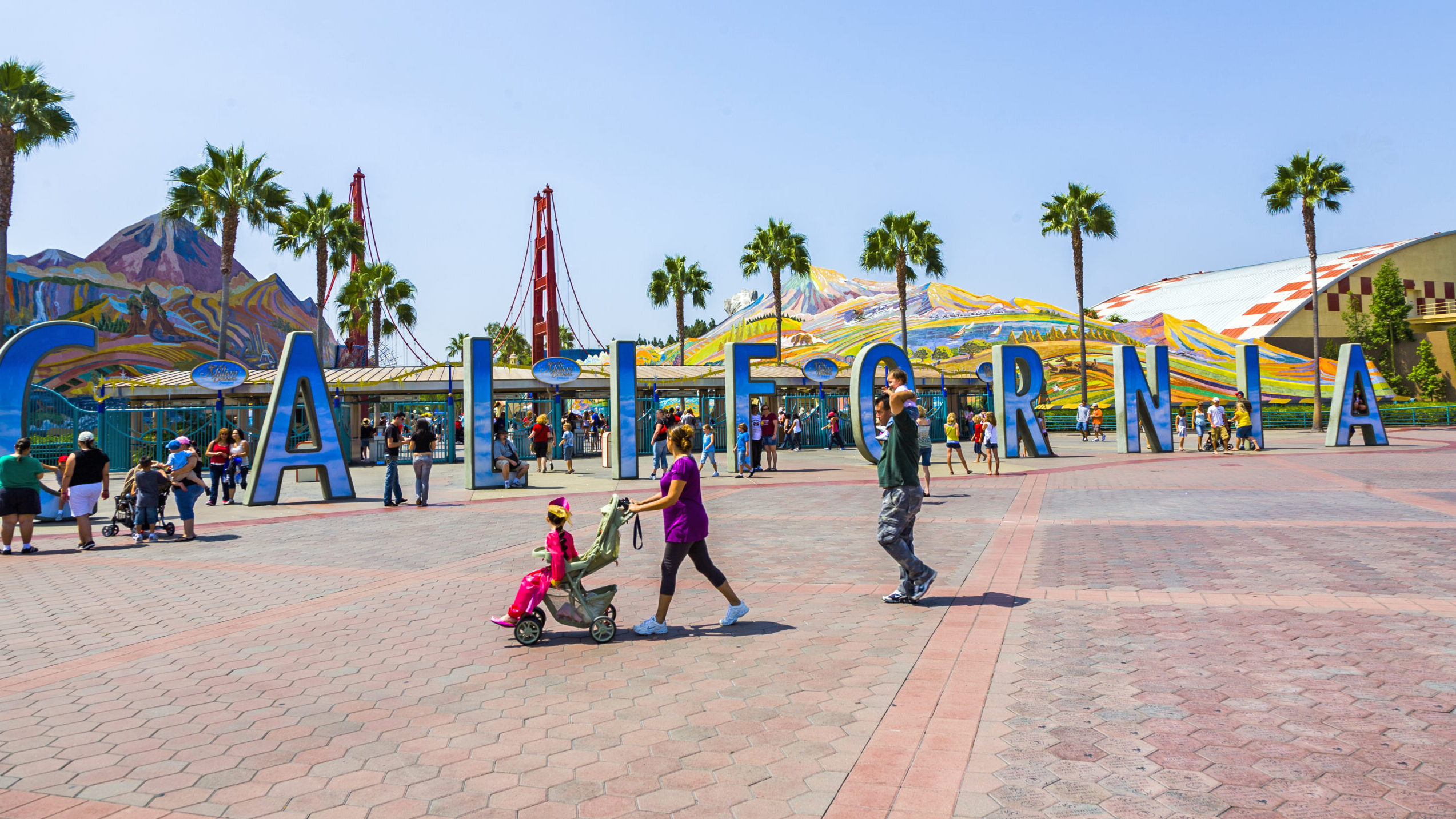
Anaheim, USA – July 29, 2008: people visit disneyland and walk over commemorative bricks with names in terracotta in Anaheim, USA. The bricks with individual names were sold for 150 USD a piece.

“Despite the pandemic, our destination has seen tremendous development in the last year, including the opening of three new AAA Four Diamond hotels, the first outside of Disneyland Resort,” says Junior Tauvaa, chief sales officer for Visit Anaheim. “These luxury offerings expand Anaheim’s hotel portfolio and attract a new wave of clientele.”

In addition to no longer requiring masks, physical distancing or temperature checks, Disneyland also opened itself up to out-of-state visitors, a restriction it had in place since reopening April 30. Certain attractions, rides and restaurants will be returning over the next month, but others will remain closed for an indefinite period.

In the first half of 2021, Anaheim welcomed 33 events to the destination, which will mean a total of 88 events for the year, bringing in $248 million in local impact. “After 15 months, events are once again occupying the halls of the Anaheim Convention Center and bringing in much-needed business to our hotels, restaurants and attractions,” Burress adds.

Call it king. Call it queen. Just don’t call unimportant. Whatever it is, content is arguably the dominant force behind events, especially virtual events. What your content comprises is crucial, as it determines engagement, retention and attendee return rates. This is the name of the game in the latest Smart Meetings webinar, “Backstage Pass: Producing Compelling Content That Drives Engagement,” which was also part of Cvent’s Bigger Future Ready webinar series.

Hosted by Alyssa Peltier, senior manager of industry solutions, and Julie Haddix, senior director of industry solutions and customer marketing for Cvent, along with expert tips by two industry professionals, a discussion was had about the word’s relation to the event marketer, what it really means to create compelling content and how to make creative layouts.

Defining the Ambiguous
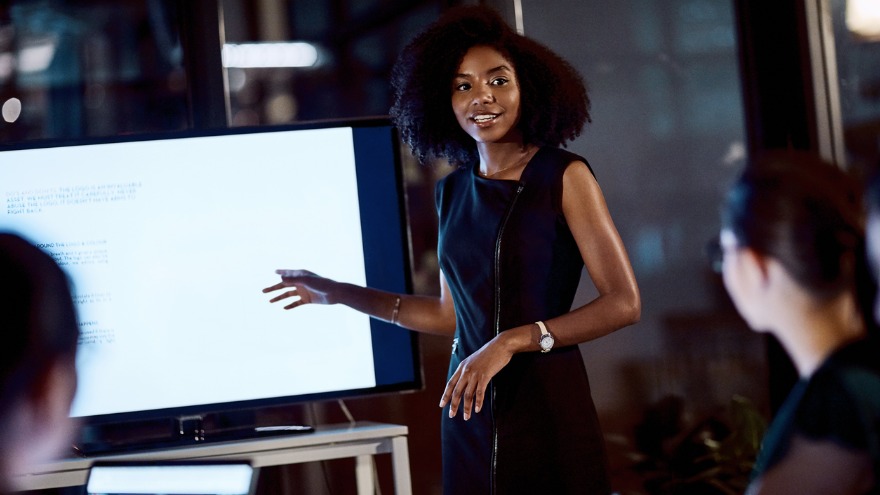
Peltier began the webinar by asking what the word “content” even means. “It’s quite an ambiguous term and yet we tend to use it a lot in our conversations,” she said.

“When most people say it, they’re thinking about the deliverable, whether it be a blog post, webinar presentation or your session within an event,” Haddix said. “But when you think about content, you really have to start back a few layers and think about what your objective is or what the story is that you’re trying to tell your market.”

“Make sure that you understand why you’re saying what you’re saying, what you’re saying, what you want to say and what you want your audience to come away with, and that’s really what your content is,” Haddix continued.

“Content is a word that we all throw out,” Peltier said. “Everybody has responsibilities in terms of content; we all have our preconceived notions of what it is and what it could be at an event. It’s not just about words on paper. It is about how we bring that content to life.”

As the content creator for Cvent, Haddix admits she thinks differently from the event planner, which makes collaboration and communication crucial. “How I want the message to get delivered is impacted by our planning data, so it’s really important that we work together and make sure that we’re on the same page,” she said.

Tips from Experts

Britney Faustine

Faustine, senior manager of professional services for Cvent, talked about her experience working for Cvent’s professional services team and how to evolve beyond the PowerPoint presentation: “For the past year, I’ve been charged with not only pivoting our on-site team to facilitate virtual events, but I have also zeroed in on the advanced production part of our role, assisting clients in elevating their meetings and creating meaningful, memorable experiences.”

One of Faustine first encounters was with Cvent’s 2020 Connect. “I worked behind the scenes as a producer, knew all of the creative specs and scripts associated with our run of show, but when the day came and I watched Reggie [Aggarwal, president and CEO of Cvent] speak for the first time from my converted dining room table, I was blown away by just how engaging he was. This was not like a Zoom meeting. This was a performance. I laughed at his jokes. I got goosebumps when he talked about the resilience of our industry. It was a conversation over coffee. It was a celebration over drinks.”

Since then, Faustine has been working with customers to evoke the same feelings for their audiences. She calls it going “beyond-the-grid.” “Whenever I get on the phone with clients, I ask them what their goals are, and their answers are always the same: We don’t want our event to feel like a Zoom meeting,” she said.

Creating a virtual meeting that feels like more requires going beyond content. “I produced a session at [Cvent] Connect that was chock-full of animated graphics and funny GIFs. It was one of the most watched sessions, not only for its content, but for its comical one-liners and its supplemental imagery. Everyone loves a good meme,” she said.

Ashley Stewart
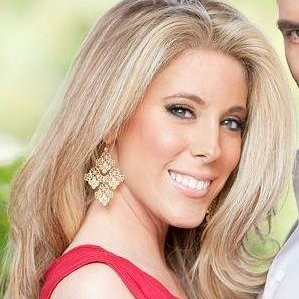
Ashley Stewart, freelance executive producer, has worked with companies such as Google, Oracle, Miss USA and Cvent, and has worked with Connect in some capacity since its conception.

“I think both planners and producers of live events learned a lot,” Stewart said. “We realized we can no longer choose specific sessions and presentations to highlight the [virtual event]. We learned how to showcase all our sessions virtually. We learned that we needed to create more clear, concise and riveting content,” she said.

Stewart believes there was a need to focus on delivering content that was worthy of our virtual audiences’ time. “We all had to start thinking about how we could make this engaging, so our audience tuned in, where they wouldn’t want to walk away and finish the dishes or jump up as soon as the doorbell rang to get that package at the door. Through this, we really started to master this virtual world.”

Luckily, we have now mastered the two components, live and virtual events, so there’s no need to create an entirely new plan, she said. “We simply need to modify the one that we already have with a special focus on each of our audiences.”

As for hybrid events, Stewart listed her priorities.

“The first is that the production value has to be there. While it is appropriate, in some instances, for our presenters to join from their homes spaces and focus on delivering the content, you should consider bringing on a producer or a production team to help these presenters with not only their recordings, but their live presentations,” she said. “They need help ahead of time, understanding how to use the technology in the best way possible. In many instances, your presenters need help adjusting their camera angles and their lighting. Working on their audio is well worth the investment.”

There are more ways to get creative in how you showcase your presenters, Stewart added. “Consider investing in roving cameras, gibs and cranes, and don’t always feel like you have to shoot straight on.”

Stewart’s second piece of advice was to not try to take on all the responsibility. “I know that both event planners and producers have personalities and skill sets that really allow us to think that we can do anything and everything. We always find way to pull off the impossible.”

And while not impossible, Stewart advised against having one individual or team focused on both audiences. “It’s really important to have two teams that are giving their full dedication to the audience. Those teams will then need to come together and ensure the plans for each audience are complementary. You want to make sure you are staying in your lane, but that you also come together frequently to share ideas to make sure your goals are in line,” she said.

Lastly, Stewart recommended finding elements that will engage both the in-person and virtual audiences, so you’re not duplicating all the work. “You don’t necessarily need a completely different run of show for your virtual audience and another one for your event audience. Just add some columns and make sure that what you’re doing complements [the other],” she said. “Make sure that some things that you do are exciting for both audience segments and remember that sometimes your virtual audience actually has a better seat in the house, and they’re getting a better view based on those camera angles you use and how you’re producing the event.”

Through the chaos, at least new skills were learned, much to Stewart’s delight. “I don’t think a lot of event planners or managers were producers, and I don’t think a lot of producers had experience managing and planning events,” she said. “This past year, we have all had to learn a new skill set. Why I’m so excited for hybrid events is because now we have a whole new respect for one another. We speak each other’s language and moving forward we’re going to have the opportunity to work better together because our worlds collided.”