Pittsburgh International Airport (PHL) has become the first major airport in the world to be completely powered on its own.

A microgrid—an independent, autonomous electricity source fueled by natural gas and solar energy—serves as the airport’s source of energy. The microgrid, which continues to maintain connection with the traditional power grid, consists of five natural gas-fueled generators and nearly 10,000 solar panels able to produce 20 megawatts, enough electric to power more than 13,000 homes, well over PHL’s peak demand, which is about 14 megawatts.

“Pittsburgh International Airport is now one of the most site-hardened public facilities in the world while at the same time becoming more sustainable. That’s a tribute to the innovative culture of our team, and we hope this project can be a model across the industry,” said Christina Cassotis, PHL’s CEO, in a statement.

As large-scale carbon footprint creators, the tourism and hospitality industries have been making increased efforts in sustainability, such as MGM Resorts International’s new 100-megawatt solar array, to lessen their impact on the world. The goal is to have sustainable energy be the norm in the near future.

“I am happy to report we have turned the corner. It’s now time to bring in the sound and lighting.” -Spencer E. Geissinger

In my nearly three decades of producing and executing events worldwide, the last sixteen months has been, well, let’s just say trying. Like many in the events world, we all know companies that have shut down or had to lay off dozens if not hundreds of employees. The Covid-19 pandemic was not their fault, but business is business.

We saw event production contracts go from thriving to nearly all events cancelled, scaled way back or transformed into virtual in a matter of hours or days. It was catastrophic. But this is America. We in the event industry are survivors, so we dusted ourselves off and figured out quickly how to produce and execute events in a new way, virtually.

Stronger and More Innovative

Spencer E. Geissinger

I am happy to report we have turned the corner. It’s now time to bring in the sound and lighting.

The event industry is coming back stronger and more innovative than before, albeit different. As in all difficult times, I try to find a silver lining. In this case, I see that clients and event producers have learned new, creative ways to execute events and get their message out to interested constituencies and customers. New technologies have been invented, new compelling ways of interacting globally over the internet have kept the wheels on the economy and some businesses have continued to thrive.

It’ll never be the same as it was before Covid-19. The event world as we have known it for most our careers has changed and will likely not return to pre-pandemic levels and scopes.

Any in-person events going forward will likely be “hybrids” with a smaller in-person live audience with a larger virtual or remote audience. This will require solid production, formatting, timing and execution in order to include the remote audience and participants in a coordinated, seamless and inclusive way. It’ll be critical to avoid the long pauses, bad internet signals, and poor visual presentation quality from remote participants that leave the impression the remote audience and participants are afterthoughts.

Essentially, live events with remote audiences will need to be produced TV shows. That’s relatively new and hard to pull off.

Winners and Losers

Big B2B conventions and trade shows may become a thing of the past, at least in the near term. Most big corporations cancelled them during the pandemic and then realized their bottom-line sales number weren’t really affected while they save the huge marketing budget spend. If they do make a return, it’s probably not until 2022.

That said, I believe that C-suite level events will start happening again because the dealmakers will want to re-engage sooner than later. These will be high-touch, high-impact, high-quality events. The best of the best so they can make their deals. Smaller in size of participants, but cutting edge in production value and perfectly executed.

Another area of events poised take off are experiential marketing events, which are more of an experience than a typical event. It feels like the days of listening to someone drone on from the podium with a blue drape and a banner behind them are over.

Our attention spans have been greatly reduced and most are so bored of Zoom meetings or listening to long-winded presentations that events will need to be more of an experience and less of a presentation.

Nonprofits will need new and creative ways to raise money and host their constituents. Associations will need new ways to attract new members and ways to take care of their existing ones.

All of this is great news and allows us to pitch new and creative things that gets the juices flowing for our clients. Everyone is coming out of hibernation, and they will be looking for big impact stuff.

For an event pro like me, this is a very, very exciting time as we have the opportunity to reimagine the future of events in the present.

Spencer E. Geissinger is vice president of Susan Davis International.

In April, Discover The Palm Beaches partnered with the Incentive Research Foundation (IRF) to host an in-person event to discuss what factors are driving buyer decisions for incentive travel. The event simultaneously demonstrated how effective safety protocols could be implemented from start to finish without sacrificing on experience.

The roundtable discussions that followed the event gave participants the opportunity to share their insights on factors affecting their clients’ decisions to reinstitute incentive travel. The elements influencing these decisions were complex due to the many sectors of impact; individual concerns, company reputation, geographic demographic of attendees and travel destination were some of the cross-linking factors considered.

Companies looking to reinstate incentive travel also considered the industries of prospective participants in the incentive programs. Groups of employees already working in a public setting were mostly open to the thought of travel, while companies with successful remote setups, such as those in tech and finance, were typically more cautious.

When it came to geographical demographics, the willingness of participants was influenced by whether those individuals were from “open” states with fewer restrictions or from places that experienced higher infection rates and longer shutdowns.

There were also highly individual considerations for prospective incentive travelers. The surveys showed family members playing a much larger part in the decision to travel. Vaccination status, the vulnerability of extended family and changes in home/work life schedules were all impactful variables.

Conference Confidence

The Palm Beaches, Florida

Event professionals who joined the Palm Beaches conference reported that its small size and clear communication of safety protocols (such as mandatory pre-event testing, daily health screenings, socially distanced transportation and masks at indoor events) all contributed to their decision to attend.

Attendees agreed that creating a sense of comfort and confidence was critical to any event going forward. Clear and unambiguous communication ahead of the event contributed to this—as did initial recognition that the location was following the communicated protocols.

Attendees also represented a segment of population that is simply ready to move on. In the words of one third-party incentives provider, risk aversion had to do with “the passage of time, not protocols…you are either comfortable or you are not.” Another attendee expressed frustration with the testing requirement, given the number of individuals who were already vaccinated.

Attendee Insights

Multiple incentive professionals shared the importance of broader communication than normal; trips needed to be considered from start to finish, including elements such as air travel that are not directly handled by the company providing the incentive. Providing resources on local regulations of the destination and what to expect was suggested, as well as fostering understanding when stricter protocols were in place by reminding attendees these protocols are temporary and chosen to enhance safety for all.

See also: Contract Negotiation: Post-Pandemic Clauses You Need to Know

One professional shared that incentive travelers were reminded to be “kind and patient” with all other travelers, as expectations and concerns vary wildly between individuals. It was deemed beneficial to understand and empathize with the spectrum of attendees, from the more cautious to those ready for a return to normalcy.

Surveys indicated that for companies providing incentives, ample outdoor space, the ability to buy out venues and control the spaces, consistency concerning health and safety protocols, flexible airlift options and high service standards were top practical considerations. Companies were also considering reputational risk: They didn’t want to be seen as either moving too quickly or not moving quickly enough.

Third-party planning organizations expressed a desire for a clear set of recommendations from DMOs and CVBs in incentive destinations, including suggested protocols based on the local market and vendors. It was also suggested that having a member of the operations team dedicated to wellness services—with access to health and safety screening providers and urgent care partners—would be a big inducement in choosing a destination.

Editor’s Note: The following is not legal advice. If you need legal advice, please consult with a legal advisor. post-pandemic clauses

“The answer will always be ‘it depends,’” Ty Sheaks, attorney, author and faculty legal advisor to International Association of Venue Managers, began the latest Smart Meetings webinar, Post-Pandemic Contract Clauses You Need to Know. As unsavory as that answer is, in the world of federal, state, county and city guidelines and their differences in rules, this is the way it is.

Clauses Galore

“Your force majeure clause is [usually] going to have one or two versions. There’s the long form and the short form,” Sheaks says. In a long form, “there’s a big, long definition in there and a big block that lists out everything and anything people can think of that could possibly be considered force majeure. Your tornadoes, earthquakes, hurricanes and fires.”

MoreThe Most Prepared States for Natural Disasters

Short form usually just has catch-all language; broad descriptions of reasons the activities covered by the contract make them impossible, impractical or illegal to perform.

If you don’t have a force majeure clause in your contract, you can add it through a rider or addendum to the contract already in place. Sheaks advises against being too specific. “If you’ve got a force majeure clause you revise, and you just add Covid-19 and then the next variant of Covid-20 comes along, legally you wouldn’t be covered,” he says.

Other keywords that Sheaks has included in the new or revised definition of force majeure include “governmental actions,” “emergency declaration,” and “any law or action taken by a government or public authority.” That’s to cover restrictions and edicts issued by entities like the CDC; make sure the language is broad enough to cover every contingency.

When you’re dealing with larger hospitality properties owned by one of the big players—a Marriott, for example—its team of in-house lawyers may not be as open to renegotiating, in Sheaks’ experience. A franchisee, he adds, may be more willing to deal with you or make changes to the contract.

If your force majeure list doesn’t include the new things, such as a viral outbreak or pandemic, that’s the stuff you need negotiate, Sheaks says.

Another key item Sheaks says to look for is the “choice of law” clause. What that means is, what state’s law will apply if you’re unable to hold up your end of the contract? If you’re a meeting planner booking a meeting for a different state, do you want your home state or the hosted meeting’s state law to apply? “Choice of law will govern whether your force majeure clause is going to be valid or not,” Sheaks says.

Pay attention to notice requirements, as well. This section of the contract spells out the medium through which you’re to notify the other party if necessary—typically, a specific e-mail or postal address. “This was a huge issue for all the business interruption claims [made to insurance carriers] and why a bunch of those got denied initially,” Sheaks notes. “They weren’t notified properly.”

The last question to ask is, is it better to suspend or terminate the entire contract? Sheaks says to keep in mind that some states terminate clauses only.

Common Law Principles

“Frustration of contract,” a common law principle, is also available in most states. There are usually three main requirements, depending on state law.

First, the triggering event must render the contract impossible to fulfill or cause fulfillment to be radically different from what was contemplated when the contract was entered into.

“A lot of the times when [the venue lawyers] say, ‘No, it doesn’t count,’ it’s because people were scared [they] were going to lose money,” Sheaks says. This isn’t reason enough to bail, even for common law.

A second major requirement is the event that caused the change cannot be due to either party.

The third requirement is not having a force majeure clause or contract law that spells out what would happen if the show can’t go on.

Other Contractual Considerations

When you’re looking at contracts to redo or if the contract for an event you’ve pushed is now back on, here are things Sheaks says to make sure to take a close look at.

The limitation of liability clause is a huge one, he says. “This refers to who’s going to be responsible. Is it you, or are you passing the responsibility to another party as part of the contract?” he says. “Depending on how this clause is written, it may be you.”

If you’re booking bigger events or concerts and venues, make sure the contract includes terms and conditions from third parties. If Ticketmaster or SeatGeek is handling your ticketing, for example, they may have their own terms and conditions. “You can simply write a little addendum to your contract stipulating that all third-party terms and conditions are incorporated as part of the contract,” Sheaks says.

Backlogged Lawsuits Require Alternative Measures

The pandemic has clogged the courts with lawsuits, and what would once take a couple of years to find its way on the court docket may now take five years. For this reason, Sheaks suggests an alternative. “Think about dispute resolution clauses or maybe an arbitration. Maybe an early mediation requirement before a lawsuit can be filed,” he says.

Sheaks likes to include those in the draft contract for his own clients, as it’s sometimes easier to work it out just between the affected parties. “If we can’t [work it out], then we do an early mediation with an agreed mediator; then, if [that doesn’t result in an agreement], you can either file a lawsuit or go to arbitration.

Arbitration is usually more confidential. “Anytime you file a lawsuit, that’s going to be on the public record,” Sheaks says. In state and even a federal court, you run the risk of airing dirty laundry in public. “Are you willing to deal with that blowback?”

Who Makes the Rules?

Finally, Sheaks also shed light on who takes priority when it comes to guidelines.

“I would arguably say it’s your federal regulations, which constantly refer to the CDC; if the CDC says, ‘yay’ or ‘nay,’ that will typically trump your lower-level things,” he says. “But not in all cases.” Sheaks gave the example of Texas, where the state said venues could be open at 50 percent capacity, yet Dallas County said it wouldn’t follow the state guidelines.

Sheaks’ advice: “If you’re in Dallas County, better follow Dallas County. I mean, you’ve heard about those people that went to jail for trying to reopen their businesses. The safest bet is to figure out all the different regulations that apply, try to comply with them all, and then if there’s a difference between them, work that out with your event host. Then you guys can collectively make a decision.”

Four new and renovated coastal properties in Florida, Georgia and California.

Kimpton Goodland Fort Lauderdale Beach, Florida

Opened in April, the first boutique hotel experience in Fort Lauderdale is a block from the beach, with 96 rooms in a breezy mid-century style. All the usual Kimpton perks are in swing, from complimentary tea and coffee service in the morning to free bikes for cruising the shoreline. Ground-floor restaurant The Botanic promises a creative cocktail program and locally sourced ingredients for shareable plates with Latin and Caribbean beats. A rooftop pool (opening in fall) with sweeping views of the intracoastal waterway is the perfect place to sip a frozen craft rum concoction.

Hotel Citrine, Palo Alto, California

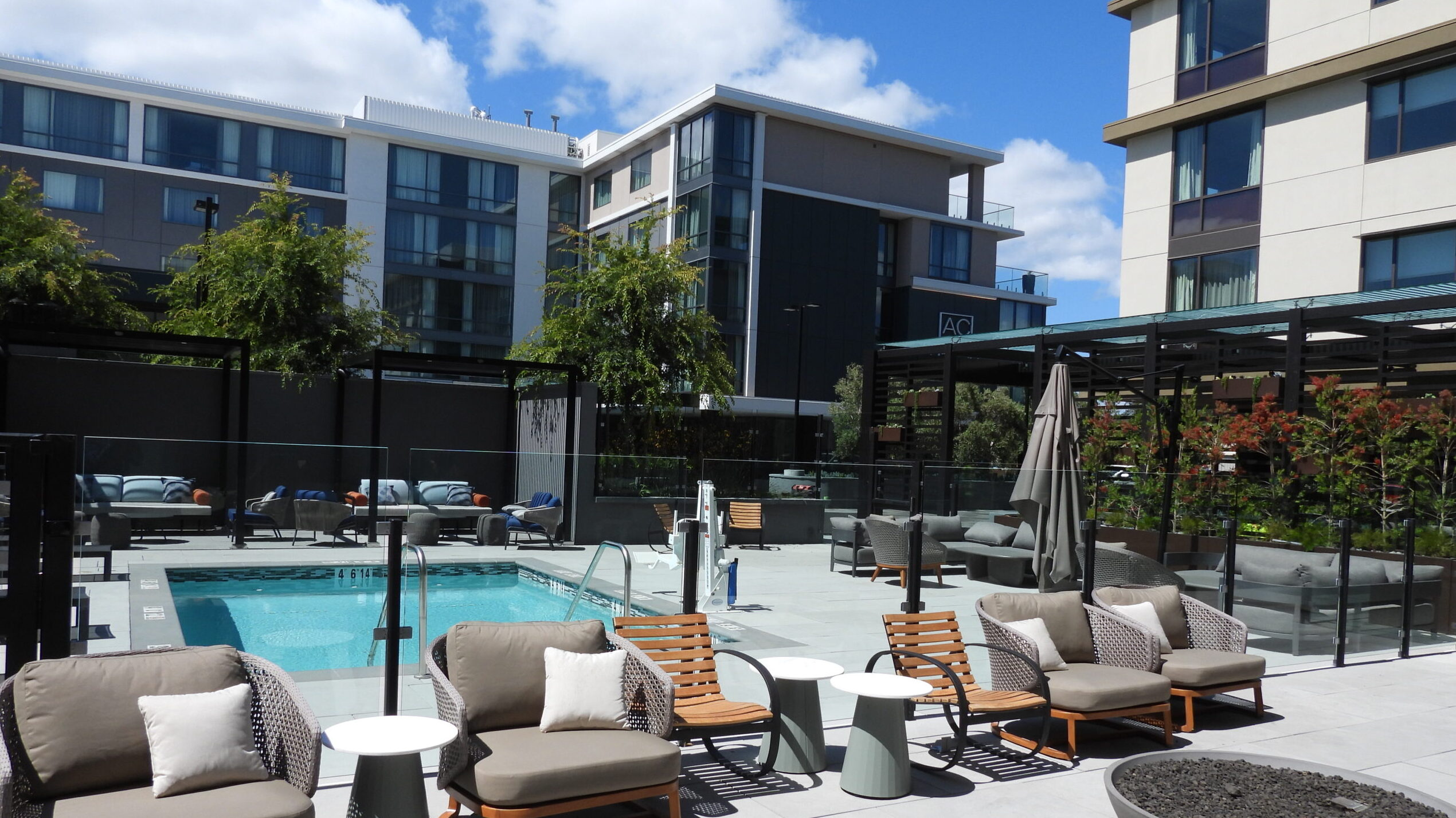
This Tribute Portfolio hotel opens this week with 150 guest rooms on the same campus as AC Hotel Palo Alto, just minutes from Stanford University and a 22-minute drive from SFO. Rooms feature plush chairs, brass fixtures, rain showers, luxurious natural-fiber linens and Parachute bath robes. The spot is suited for small meets, with 1,400 sq. ft. event space. Local wine, beer and elixirs pair with inventive California cuisine at Wild Onion Bistro and Bar, while partnerships with local purveyors like The Midwife and the Baker, T2 Teas and Equator Coffees make for an elevated teatime.

Mission Pacific Hotel and The Seabird Resort, Oceanside Beach, California

These adjacent beachfront properties opened this month, with a bevy of joint ventures with local companies to entice guests. To start, public spaces and guest rooms are curated by Oceanside Museum of Art, featuring 289 total pieces and installations across both properties. Post visual delights, give your workout an upgrade and celebrate SD’s unique sport culture with lessons from a professional surfer or an Olympic skateboard coach, depending on preference for wheels or waves. Other elevated amenities range from water stations with alkaline systems by Oceanside-based URBN WATER CO.  to cold-pressed bevvies from Suja Juice. Mission Pacific Hotel has 161 guest rooms and 13,000 sq. ft. of oceanview event space, while The Seabird Resort boasts 226 guest rooms and 20,000 sq. ft. of room to rendezvous.

Residence Inn and Courtyard by Marriott, Jekyll Island, Georgia

The dual-branded beachfront property opened this June with 120 guest rooms at Residence Inn by Marriott and 89 rooms at Courtyard by Marriott. Courtyard guest rooms feature flexible design for a seamless switch from productivity to relaxation, while Residence Inn suites are designed for longer stays, featuring studios and one-bedrooms with full kitchens and residential-sized appliances. The property features a heated, freshwater pool, an indoor/outdoor restaurant and bar, a fitness center and 2,600 sq. ft. for meetings; the island is also home to Jekyll Island Convention Center, with 128,000 sq. ft. of event space.

Melissa Green

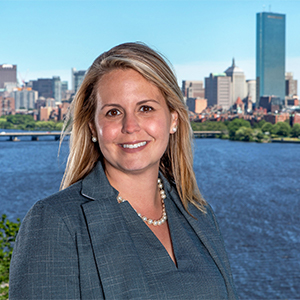
Green is general manager for Hyatt Regency Boston/Cambridge in Cambridge, Massachusetts. Most recently, she worked as dual general manager for Hyatt House/Hyatt Place in Colorado. Green has also worked in a handful of roles with Denver Marriott Westminster, including general manager and director of event management. She received multiple Mustang Awards from White Lodging and Marriott International.

Lisa Arias

Arias is director of sales and marketing for The Shay, a Destination by Hyatt Hotel, in Los Angeles. Arias previously worked as regional vice president for Hyatt, and before this, as director of sales and marketing for Hyatt Regency Century Plaza in Los Angeles. During her time with Hyatt, she was honored as Director of Sales of the Year for convention hotels.

Amila Handunwala

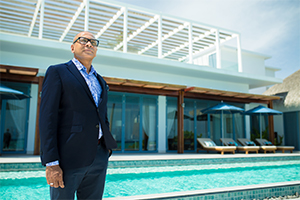
Handunwala is general manager for Raffles Maldives Meradhoo. Most recently, Handumwala worked as executive assistant manager for St. Regis Maldives Vommuli. He also worked as director of business development; before this, he served in the same capacity at Waldorf Astoria Ras Al Khaimah in United Arab Emirates.

Ashlyn Pulvermiller

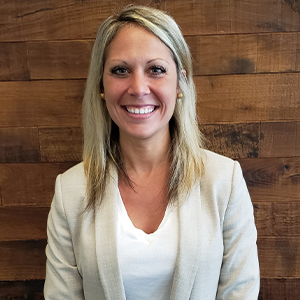
Pulvermiller is general manager for Marriott Owings Mills Metro Centre in Maryland. Pulvermiller previously worked as general manager for a Marriott International property in Upstate New York. She was also general manager for two Hilton Hotels properties in Syracuse, New York, and general manager for St. Lawrence University’s on-property hotel, conference center and golf course in Canton, New York.

Rhanee Palma, CDME, and Laura Byes

Palma (left) and Byes (right)

Palma is chief sales officer and Byes is director of meeting partnerships for Face2Face.

Palma recently worked as chief sales officer for Visit Oakland in California. Before joining Visit Oakland, Palma worked as director of sales for Hilton San Francisco Financial District and as a sales executive for Oakland Marriott City Center and Courtyard Oakland Emeryville. She is a member of MPI’s Northern California Chapter.

In Byes’ more than 30 years of leadership experience, she has created planning processes that have been incorporated into more than 30 nonprofit organizations. Byes is a successful grant writer, having amassed more than $100 million of funding that has benefited organizations such as Head Start, Migrant and Seasonal Head Start, and AmeriCorps.

Patti Hunt

The Westin Tempe in Arizona named Hunt general manager. Hunt served as opening general manager for several Marriott International properties, including AC Hotel Tempe and AC Hotel Residence Inn Dallas by the Galleria; she also worked as regional general manager for these two properties, as well as for AC Hotel New Orleans and AC Hotel Irvine in California.

Ryan Thompson

The Alida in Savannah, Georgia, named Thompson director of sales and marketing. Thompson comes from The Westin Grand Cayman Seven Mile Beach Resort & Spa in the Cayman Islands. He also worked as national accounts director for Turnberry Isle Miami, as well as group sales manager for Sonesta Resort Hilton Head Island; other positions in South Carolina held by Thompson include tournament sales director for The Heritage Collection on Hilton Head Island and director of sales for Westin Hilton Head Island Resort & Spa.


U.S. Travel Association believes professional meetings and events (PME) suffer from being lumped in with other gatherings—and is working to change that.

Relying on the most current travel-sector data from The Ohio State University and Tourism Economics, U.S. Travel Association has kicked off its “Let’s Meet There” campaign, unveiled at MPI’s WEC 2021, to further propel the comeback of PMEs.

What the Studies Say

Covid restrictions and disjointed reopenings across the United States and abroad will slow full recovery of the travel industry until at least 2024, according to Tourism Economics.

While domestic leisure travel is anticipated to reach 99 percent of its prepandemic levels in 2022, business-related travel is not expected to recover for an additional two years. Currently, about 35 percent of U.S. businesses are engaging in business travel.

While some meetings are back, and the CDC has lifted restrictions for fully vaccinated people, it “continues to express concern about large gatherings,” states the Ohio State white paper, which notes that while CDC defines large gatherings as “events that bring together many people from multiple households in a private or public space,” a distinction should be drawn between PMEs and other large, informal gatherings, such as sporting events, festivals and concerts.

“PMEs have the additional advantage of being structured and well-organized large gatherings where mitigation factors can be enforced to protect the health and safety of those in attendance,” the document avers.

Indeed, scientific modeling by Exhibitions and Conferences Alliance and Epistemix found that in-person PMEs pose minimal risk of Covid-19 transmission to attendees: a mere .001 percent, to be precise.

What’s to Be Done

According to U.S. Travel, drawing this distinction between professional meetings and events, and other gatherings will protect PMEs in the future or in the event the current battle against the pandemic necessitates a resumption of restrictions.

Relying on guidance from the CDC and Journal of the American Medical Association Network and Health Affairs, Ohio State makes several key recommendations, including continued masking, prepackaged meals and promotion of healthy lifestyle behaviors among attendees that can boost the immune system.

“A thriving travel industry—and the broader U.S. economy—are dependent on the return of business travel and PMEs. Americans are eager to reconnect with colleagues in person via business meetings, conferences and conventions, and these scientific analyses and recommendations make clear it is possible and safe to do so,” says Roger Dow, president and CEO of U.S. Travel Association. “A consistent approach to reopening PMEs, including guidance from the CDC that differentiates PMEs from other large gatherings, is critical to infusing confidence and optimism into this key sector of our economy.”

Record hot temperatures in the Pacific Northwest. Strange clouds in Warsaw, Poland. The Earth’s climate keeps surprising its inhabitants with anomalies—and the hotel industry isn’t happy. MGM Resorts

MGM Resorts International took a major step in its own battle against climate change with the launch of its 100-megawatt solar array in the Nevada desert, enough to power an average of 27,000 U.S. homes annually and produce up to 90 percent of MGM Resorts’ Las Vegas daytime needs.

Covering 65 million sq. ft., 13 properties and more than 36,000 guest rooms, including Bellagio, Aria, Mandalay Bay and MGM Grand, this marks a milestone in MGM Resorts’ long-term plan of reducing the company’s emissions by 45 percent per square foot by 2025.

“With MGM Resorts’ significant scale and resources, we’re positioned to make a meaningful difference in the fight against climate change, and we recognize our responsibility to build a more environmentally sustainable future,” says Bill Hornbuckle, MGM’s president and CEO. “We’re marking a significant step forward in our environmental sustainability initiatives in Las Vegas and our long-term vision to protect the planet and achieve an enduring, positive impact in our communities worldwide.”

In addition, the company unveiled two new goals following guidance from Science Based Targets initiative, a partnership between CDP (Carbon Disclosure Project), United Nations Global Compact, World Resources Institute and World Wide Fund for Nature: Reduce direct emissions from its owned or controlled sources, such as diesel fuel for vehicles and indirect emissions from the generation of purchased energy. MGM’s target is to reduce its overall greenhouse gas emissions by 50 percent by 2030, and source 100 percent renewable energy in the United States and 80 percent globally by 2030.

“MGM Resorts has long been Nevada’s largest private employer and has shown a clear commitment to using their size and scale to lead on important issues like climate change, renewable energy and sustainability,” says Nevada Gov. Steve Sisolak. “This solar array is among the most significant steps our industry has taken in terms of tackling climate change and promoting renewable energy. Powering so much of The Strip with clean, renewable energy sends a powerful message about Nevada’s role as a national leader in renewable energy and our commitment to fighting climate change.”

In 2018, a Nature Climate Change study found that global tourism, an industry growing faster than international trade, accounts for eight percent of global greenhouse gas emissions. Other hotel conglomerates have set ambitious goals to reduce emissions, as well. Marriott International aims to reduce water usage by 15 percent and waste by 45 percent, and use at least 30 percent renewable energy by 2025; Hiltons Hotels & Resorts’ goal is to cut its carbon footprint in half by 2030.

“Don’t be boring.” A couple of months ago, I coached a virtual classroom full of ten-year-olds on developing the speeches that every kid needs to create annually. I gave them just that one piece of advice in my 15-minute talk. Sure, I’ve got about 200 other ideas for them, but “don’t be boring” was the one that was going to have the greatest impact on their talks.

Jason Thomson

I’m giving you the same advice. You already know that disengagement levels are at all-time highs in virtual, hybrid and live events. In a world where TikTok reigns, audiences simply don’t have the interest or bandwidth to stick with you for your 60-minute state of the union address. In fact, they have a tough time paying attention for just 15 minutes.

See alsoAdd Some Oprah and Michael Scott to Corporate Presentations

It’s easy to decry the shrinking attention span as a symptom of a hyper fast culture, but come on…if you stood in front of me at a cocktail party and pummeled me with a 20-minute magnum opus of numbers, my eyes would glaze over, too.

Instead, your opportunity is to figure out how to use, and embed the right tools of engagement to keep your audience riveted, attentive, curious and ready for more. There are the obvious tools like storytelling and recognition, but my favorites are the less-used skills that you sprinkle throughout any talk—TED-level keynote, coffee shop pitch, bi-weekly numbers update or cocktail party chat.

1. Headlining: Bring high-value context in fewer words.

I create a lot of content every week, and my constant companion is the ability to create headlines that help you understand and navigate every blog post, infographic, presentation and email message. In fact, I did it right there at the top of this paragraph with a boldface description of “what” I was talking about, followed by context. If you just read that headline, you’d understand what I was trying to tell you and why it’s valuable to you. Great headlines don’t just describe “what,” they deliver “how” and “why.” They belong in your email subject headers, at the top of every PowerPoint slide, and whenever you’re guiding your audience through the segments of a presentation.

Do this: Place headlines at strategic places in your communications as a way to help someone scan your content.

2. Hyper empathy: Make everything about them.

People care more about what you’re saying when you make it as applicable as possible to them. We know this, but the idea often gets lost when you get on a roll about what you want to say to an audience. Stay on target—create stories where the audience can see themselves, use language from their industry or world, surface questions/objections/insights that are less about what you want to say and more about what they want to hear.

Do this: Use more personal pronouns to direct your content to your audience. “Saying ‘you’ instead of ‘audiences of people’ grabs your audience more effectively.

3. Process: Your presentation is the finishing school.

While you’re being empathetic, give your audience something of value—an insight, a resource or a process. I’ve given talks on presentations for more than a decade, but when I organized my thoughts into a 5-step approach to any talk, audiences really started to light up. In our busy world, we’re looking for any approach that helps us grow and get better. Why not include that approach in your talk?

Do this: Look at the content you want to deliver and ask, “how can I deliver this in a linear way that creates a process for success.”

4. Navigation: Teach your audience how to learn.

One of the best things I’ve added to my own keynotes over the last two years is a section called “Here’s how to get the most out of today’s presentation…” I deliver it after my opening story and explanation of the talk’s central point. In it, I commonly show a slide of thumbnails from one section in the presentation I’m about to give. What I’m doing is showing the audience what’s most important and how to follow the talk effectively. Skills here include listicle countdowns, callouts where I’ll say, “If you’re writing anything down today, this is what you want to pay attention to…” and a summary at the end of each section that reinforces key points. It eats up time, but it ensures my content is more memorable.

5. Co-creation: We activate what we generate.

I saw a talk recently that said the most successful pitches are the ones where the audience is invited into the conversation to improve the pitch. It’s a common sight in Hollywood film chats where your audience asks, “Have you ever considered…” That back-and-forth makes the audience invested in the outcome, which makes them listen harder and contribute more. You can do this, too. Call on audience members where you can. I interview possible attendees before a presentation to understand their questions and tailor your talk.

Do this: Soft interactivity is a simple, fantastic tool for virtual events. Ask your audience a question and get them to shout the answer back at you, just like an episode of “Dora the Explorer.” The simple act of shouting at the screen (make sure they’re muted first) gets them involved and invested.

Don’t be boring. Find as many ways as possible to engage your audiences throughout your presentation to keep them interested, accept your content and take the action you want.

Jason Thomson is an events content and creative director who coaches and trains on improving your presentations, content and communications. He’s helping leaders this summer in a new masterclass that delivers a five-step approach for every presentation.

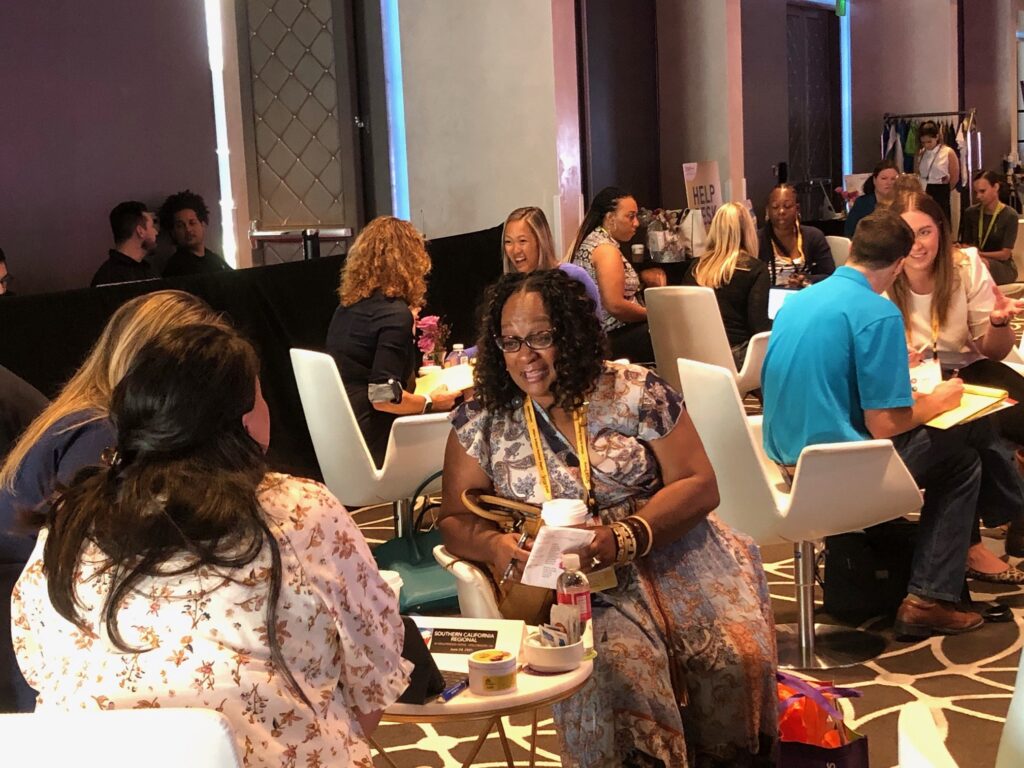
As California opened up to unmasked gatherings for those who have been fully vaccinated, Smart Meetings was in Southern California at W Hollywood Hotel for a 1-Day Experience that rolled out the red carpet for top meeting professionals. The 305 guest rooms and 30,000 sq. ft. of meeting space at the iconic property offered an abundance of chances to step outside on meeting room patios and luxurious suite balconies. Starting in 2022, new General Manager Mark Manzari is planning a renovation for the property that has been the site of numerous movies, television shows and sound recordings. Following are some of the highlights from our recent visit.

Reserve your seat at an upcoming Smart Meetings Experience today.

Bright, Shining Networking

Business MeetingsBusiness meetings are always more productive when the relationship is based on mutual trust. That is why every Smart Meetings Experience starts with The Amuse Bouche, a taste of the hospitality spirit yet to come. Where better to gather than the WOW Suite’s outdoor balcony overlooking Pantages Theater at Hollywood and Vine? The sweet sounds of a house DJ and the chill gelato and sorbet flavors spinning at Nuvo Olive Oil attracted star quality, including a certain blonde bombshell. This “how-do-you-do” greeting was the kick off for an immersive art experience from Sawubona that featured meaningful hotel memories displayed at The Buzz, the grand finale of receptions where all the new best friends from the day said their au revoirs.
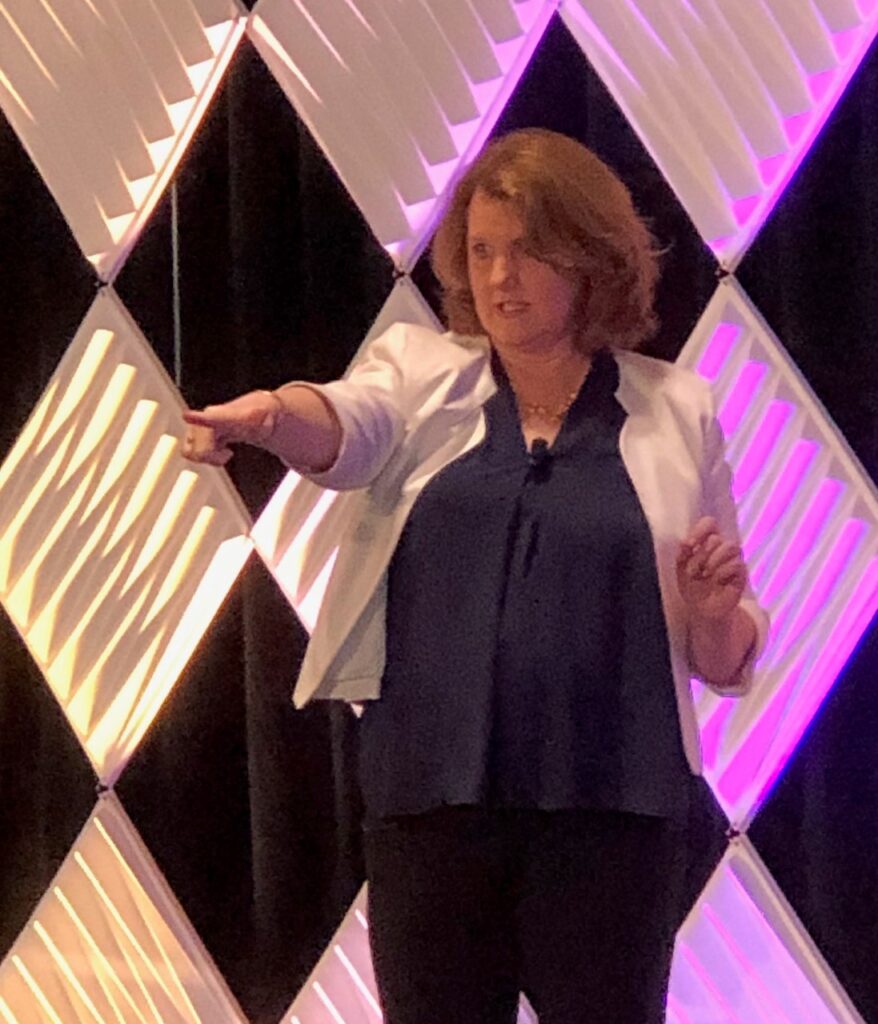
Ask Outrageously

Linda SwindlingIn addition to creative ideas for booking and engaging hybrid and in-person events and even a few RFPs, meeting professionals left armed with fresh new strategies for negotiating everything from contracts to relationships care of the bold Linda Swindling, author of Ask Outrageously!: The Secret to Getting What You Really Want. “Forget the crap sandwich [framing the difficult item in complimentary verbiage], state the reason you are there up front and be the first to ask,” she said.

Read more negotiating tips from Linda Swindling here.

Meeting professionals, in particular, are often good at asking for someone else, but falter when asking for what they personally need, Swindling observed. The solution is to consider who else might benefit from you getting your needs met if that makes it easier to speak up. The same goes with knowing your superpower and sharing that with others. If they don’t know, you can’t help them.

Marilyn MonroeFinally, she counseled everyone in the room to get comfortable with hearing the word, “no. “As we begin signing contracts again, we may all have a lot of boxes that need checked for a successful return.

“If you aren’t hearing the word no, you aren’t asking for enough,” she said. The trick is to follow that “no” with a request for more information. “I heard you say, no, but can you tell me more about that?” Only then can you find their real bottom line and discover win-win solutions that work for all parties.