Meeting planners are uniquely positioned to influence the global discussion of race—in ways that go far beyond watching protests on television and posting on social media. That’s the view of Faith Morris, chief marketing and external affairs officer with National Civil Rights Museum, who is looking forward to the aftermath of the recent street demonstrations and hopes gatherings will look and feel different as a result.

See alsoASAE Diversity Executives Define Leadership During Health and Race Crisis

Faith Morris

“There is an urgency now, and event planners can be catalysts,” she says.

Change won’t happen by itself, Morris continues. Planners can add this to their checklists: make change happen in the composition of audiences, panels and teams. “There are folks of color who have something to offer on all topics, but often they are overlooked in favor of what feels comfortable. Step outside the norm and explore, not in a contrived way, but in an open-minded way,” she advises. “When all those faces in the ballroom, on stage and in the Zoom boxes don’t look alike, then the experience is much richer.”

MoreHow the Meetings Industry Can Be More Accessible and Inclusive to People of Color

Coming Together

National Civil Rights Museum in Memphis, Tennessee, is a commemorative space on the site of Lorraine Hotel, where Martin Luther King was assassinated, and is dedicated to the change he sought to bring. In the last week, it has become a public square, where protests gather and, on Thursday, 400 people attended a civil disobedience training course led by groups that had been divided before but have united behind the cause. The training covered ways to safely and effectively prepare protesters.

For Morris, the sight of these people coming together on that historic square has been heartwarming. “It is beautiful to see rage when it is warranted. It is beautiful to see comradery and collaboration anywhere,” she says.

The museum’s message is simple: We stand in solidarity with those who fight for justice and anti-racism. Our museum is a monument to what can be achieved with persistence, tenacity, determination and courage…Until our country values all people regardless of race, ethnicity or socio-economic status, we will be less than what we can be. The time is now. The fight is ours, in peace and solidarity.

Listening

How can meeting professionals make commitment to inclusion long-lasting, and something that goes beyond the cliche? Morris suggests another tactic that is easy to say but can be hard to do in the real world: “Listen.”

She suggests starting with the form of expression that has encapsulated the challenges of the oppressed for decades. June is African-American Music Appreciation Month. “The message is in the music. You just have to listen,” she says.

Morris also suggests talking to employees and co-workers, particularly people of color. “Say, ‘I may not understand what is going on, but I want to know more,’ and then listen,” she says, cautioning that when you start genuine, sensitive conversations, you have to be ready for real answers. And you must be willing to support them.

When it comes to the meeting space, Morris puts the onus on the planner to create content that is comfortable, relevant, transparent and real. “It doesn’t have to be heavy, but it needs to be caring and sensitive.”

In the era of the pandemic, one sign that a meeting that is welcoming to diverse audiences is the requirement to wear a mask, she notes. African Americans are falling victim to COVID-19 at higher rates than other demographics, so a mask is a message that the organizer cares about their health.

“Good guys are wearing masks now,” Morris says with a laugh.

https://www.facebook.com/NCRMuseum/videos/312204599459215/

Valerie Bihet of VIBE Agency wants planners to go back to the future to safely start bringing people together for product launches, sales kick-offs and corporate social events. She also has insights about why you should shape the future of virtual events according to a familiar but underutilized blueprint—broadcast television.

Her in-person “innovation” is a throwback in time: the classic drive-in theater. It’s an opportunity that has already been percolating in the ozone. BizBash reported that 15/40 Productions and CH Cre8tive, a pair of event companies in Southern California, are planning to rent drive-in theaters for entertainment premieres. And the NFL’s Miami Dolphins announced last week that it would turn its empty playing field into a drive-in theater that can accommodate up to 230 cars for events such as concerts, graduations—and, of course, movies.

Bihet noted VIBE has already done drive-in events for corporate incentives. One involved renting cars for a team of more than 100 who went on a road trip, then stopped in the evening at a meeting point for a viewing party complete with a DJ and dancing. She thought about the wider applications when her fifth-grade daughter was disappointed about missing her middle school graduation. Why couldn’t the graduation be held at a drive in, with each child getting on stage as they would have, while respecting social distancing measures? She started pitching the idea to school superintendents—and to some of her clients.

Customized drive-in events offer the built-in benefit of physical distancing through cars. They also provide a bevy of exciting possibilities for branding and social engagement through technology within the event, Bihet thinks.

With event goers tuning in to a low-wattage FM radio channel, a stage set up for panel discussions or speakers, and the use of social media (think prepanel TikTok challenges to break the ice and interactive app features), the atmosphere could provide the energy missing without face-to-face, while adhering to necessary safety precautions. Bihet notes the possibilities aren’t relegated to current drive-in structures, either—a huge parking lot or a sports stadium could easily be converted into such an arena, a la the Miami Dolphins.

Rev Your Engines

She says timing is an important factor in moving forward with such a plan. Lockdown restrictions vary from state to state and county to county, and some locations may not presently allow a drive-in gathering. From planners to clients, everyone is still in the awkward position of being without a timeline. “This could work for events that were meant to happen in September and October”, she said.

She cited a kind of Maslow’s Hierarchy of Needs for her client companies affected by the virus.

“First we were all in a crisis phase—what do we have to do urgently for the next couple weeks? Then it was survival—what do we have to do to survive for the next six months? When we have figured that out, it’s about the new challenges due to the changed environment beyond that, and how we will rebound,” she says. “I’m checking with my clients to find out what phase they’re in first. If they’re still in survival mode, it’s obviously not the right time to plan an event. But I’m seeing some movement now. The mood is that we will have to get back to work at some point, and we are getting ready.”

Bihet urged that this was the time to think outside of the box. Meetings depend of marketing budgets. What companies can you work with which are not as heavily impacted by the pandemic, or were even strengthened by increased need for their services? Some food and tech companies have boomed due to ramping up their offerings and services. See where new collaborations can take place, she advises.

Lights, Camera, Action

Live events are still on hold for the near future; they’ll need modification and careful planning to accommodate social distancing when they are allowed. This means virtual events are still very much needed. Bihet had much to share on this point, too, and cinematic themes are still at play.

“My philosophy on virtual events and meetings is to think of them like broadcast television. There needs to be a narrative. Visual storytelling and seamless pacing are crucial,” she says.

Why is it that we are overtired by a few hours of Zoom calls and Google hangouts, yet we can watch TV for hours on end? The set, sound and lighting and a scripted narrative bring us visual and mental variety, Bihet notes. All these elements are designed to keep our attention. Contrast that with, for example, Bihet’s virtual nightmare: ““When you see webinars with one slide and half a speaker in the corner, and they stay like that for one hour—come on, we’re event planners!”

As virtual events continue, thinking about planning them with the same attention to detail as a live event will bring higher engagement and richness to the platform. Depending on the event, she says, think about guests, changing camera angles, and scripting the whole process out. To stoke engagement, the liveliness, use of the element of surprise and the overall careful planning of a televised event should be the new future of remote gatherings.

Bihet pinpointed another area the industry must to work on. “There needs to be clarification about virtual event language. Everything is a virtual event, and it’s confusing for the client. A webinar, Zoom meeting and remote event are all called virtual events.”

See You at the Movies

In lieu of Bihet’s recommendations about approaching virtual events from a broadcast mindset, our homework becomes clear: Maybe all those quarantine hours on Netflix and Hulu are research, after all.

We are relying on technology now more than ever to host virtual meetings, connect with teams and keep the MICE industry thriving during these trying times. But not all of us were born event tech experts. So, to ensure you are making the most out of virtual meeting tools we talked to Dacast, a streaming solution platform.

Here are some smart tips from COO Greg Ellis to optimize your next streaming or hybrid event.

1. Audio and Quality Lighting are Important

Ellis compares large audience virtual conferences and meetings to remote television broadcasting. However, where basic production quality is a given in remote television broadcasting, it is often lacking from virtual conferences and meetings. A positive first step would be to invest in a directional mic or at least an inexpensive USB computer-connected microphone.

As for lighting, natural glow on the front of the face is always best. However, if you can’t sit by a window or you’re working past sundown, low-cost equipment can make a big difference in quality.

2. Think About Production Location

At face-to-face events, venue choice is critical. Obviously, venues are not as important in virtual meetings, but that doesn’t mean they aren’t important at all. Ellis suggests that you try to make your space feel as close to a studio as possible. He points out that a bed in the background doesn’t look very professional and downloadable backgrounds can be distracting. Go for simple, plain and classy–you want your attendees to focus on your content, not your unfolded laundry.

3. Leverage Encoder Equipment

For those who can’t make your event in real time, it is good practice to record, edit and upload a copy of your event for VOD (video on demand). This also gives you the potential to reach new audiences and allows your content to continue performing at its maximum capacity. An archival copy also allows you to “reorganize the clips based on performance and remove any potential hiccups, such as the infamous Zoombombers,” Ellis said.

4. Use a Converter

If you have multiple speakers at your event, Ellis suggests having a professional video up-converter to ensure your conference screen is HD quality before encoding. Converters, such as Ensemble Designs, work to seamlessly convert a range of video formats. Simply, they ensure that the video for your virtual event, even if it is recorded by different people on different devices and in different places, is high quality.

5. Allow Attendees to Communicate

To facilitate an organized Q&A session, or just to allow attendees to communicate with one another, check to see that your conference or event has a chat function. Ellis suggests one of the many low cost professional chat applications available or embedding a private Twitter feed to simulate a traditional moderator circulating the room during Q&A sessions.

I recently asked my team what, if anything, they learned about themselves during the coronavirus (COVID-19) quarantine lockdown. Responses varied, but the point was to acknowledge the unimaginable situation we are in and how we might use such a time for change.

Jennifer Collins

As event professionals, our industry has literally changed overnight. Having gone through the 9/11 terrorist attacks and the 2008 financial crisis, there’s no doubt this situation is far worse for our industry. But in the spirit of managing change, there are a few ways we can endure the crisis and set the stage for a strong comeback.

Reinvent Your Role

There are some who are waiting for the old ways to return. This is totally understandable given the shock and severity of the pandemic crises. However, consider focusing on how to reinvent your role. Live events are on hold for now, but how can you still deliver value? Is it through shifting to digital events or developing trainings or maybe a podcast series that showcases your thought leadership? The point is to reimagine your expertise so that it could fill a gap and turn into a present and future opportunity.

Market Thought Leadership

Often in a downturn, one of the first activities to stop is marketing. However, instead of eliminating it, ramp it up. At JDC Events, we have been producing hybrid evens for more than a decade. When the pandemic hit, we shifted our services to all-digital events. As part of marketing our services, we created a “Digital Debriefs” webinar series to help those who may not be as experienced in producing digital events. We also produce a steady stream of thought leadership on blogs and other social media channels. The key is to be a resource and stay top of mind among your key stakeholders or clients. If you work within an organization, this means to continue to share your organization’s content and the value it holds.

Continue Your Education

One thing the coronavirus pandemic has revealed is that our industry will forever be transformed. This means we’ll need new learning, new strategies and new ways of producing events whether live or digital. So, now might be a good time to get that certification you’ve been meaning to get. Or what about pursuing podcasts, online classes or other teachings to build and sharpen your skillsets. It’s important that you remain abreast of the changing industry trends or strengthen leadership skills since the industry is going to need it.

More: Smart U: Meeting Professional Online Classes

While we continue to grapple with our public health and economic uncertainty, we should focus on those things we can control. Take some time to care for yourself and those around you. Strengthen your skills or develop new ones. The most important thing will be to keep moving as we will eventually come out on the other side.

Jennifer Collins is president and CEO of JDC Events in Washington, D.C. She was a 2018 Smart Women in Meetings Award winner in the Entrepreneur category.

With summer approaching, peak tourist season in many countries will look very different this year. Yet quarantine restrictions in many countries and states have begun to loosen to allow residents to go the beach, travel internally or go back to school. Interstate and inter-European travel is picking back up—even as international travel is still prohibited in most countries. Last week, we began updating you on U.S. hotel reopenings.

Here is your guide to popular city and country reopenings.

NORTH AMERICA

europe reopening

Canada

The Canadian-American border has been closed since Mar. 21 and will stay closed until June 21 (although this date may be pushed back). While some travel between provinces is being allowed, the country remains on lockdown, and the border remains closed.

Mexico

Tourism is one of Mexico’s biggest revenue sources, so the country is eager to restart its visitor industry. Some Mexican states, including Quintana Roo, home to Cancun, were set to reopen June 1, but that state’s governor has pulled back the welcome mat until at least June 8.

California

California has implemented a regional reopening plan subject to county approval. While some restaurants, shops, industries and parks have reopened, much of the state remains largely closed. San Francisco has set June 15 as the opening date for outdoor, distanced dining at restaurants and beach reopenings, but bars aren’t set to open until July or August. Los Angeles has similarly begun to ease restrictions, although the state has said that large gatherings are not expected to be permitted until a vaccine is created.

Texas

With one of the shortest quarantine periods in the country, Texas reopened most of its economy in May. While there are still capacity restrictions, restaurants, malls, shops, bars, water parks, pools and hotels have reopened. Travel restrictions have also been lifted, so the Lone Star State will likely be among the first to host events this year.

Nevada

Nevada’s stay-at-home order expired May 9, and restaurants, parks, malls, shops, entertainment services, outdoor recreation, places of worship and beauty salons have all opened since then. Casinos and gaming are set to reopen June 4, along with some resorts and hotels, including Bellagio, MGM Grand, The Venetian and Caesars Palace.

New York

One of the most affected areas in the country, New York City remains on lockdown due to COVID-19 until June 8, although other regions in the state began lifting restrictions in mid-May.

EUROPE

europe reopening

France

While lockdown in France is slowly lifting, with beaches reopening and citizens now being allowed to travel by car up to 100 km, restrictions remain in place for international travelers. June 2 saw the reopening of some cafes, restaurants and hotels, and the government is encouraging travel within the country to keep the tourism industry afloat. Restrictions for those coming into France from outside the EU will remain in place until at least July 24, with a two-week quarantine mandatory through that date.

Germany

Despite a cool and restrained initial response to the coronavirus, Germany has been one of the first countries to reopen, and critics say it has been too hasty. Since mid-May, schools, restaurants, shops, churches and businesses have or are on the brink of reopening. The country is set to reopen its borders to other EU countries on June 15.

Italy

The first European country to go into lockdown, Italy was the tragic frontrunner on coronavirus cases and deaths for some weeks. With strict stay-at-home orders, Italians were able to flatten the virus curve, but there are fears the tourism industry will have a difficult time rebounding. The country is opening its borders to unrestricted travel June 3 for citizens coming from any of the 26 “Schengen countries,” which make up the bulk of Europe.

Spain

Spain followed in Italy’s footsteps with strict lockdown measures. As of yesterday, there were no new coronavirus deaths to report, a first since lockdown began. The country has begun to slowly ease restrictions and reopen beaches, in the hopes of welcoming back tourists in July.

United Kingdom

While restrictions are being eased, the U.K. looks much different than its continental neighbors. School is actually back in session, in a staged reopening for all students except those who are vulnerable or children of essential workers. Citizens are also allowed to meet in groups of up to six in private, outdoor settings like gardens. Hotels are set to reopen in early July. As for tourism from overseas, the U.K. is actually increasing restrictions, requiring travelers entering the country to quarantine for two weeks as of June 8. Travel by U.K. citizens to Europe and other countries also remains restricted. These policies will be reviewed every three weeks.

Editor’s note: The lawyers quoted in this article are not providing legal advice. If you are seeking legal advice, consult with a professional.

When you begin planning in-person meetings again, the last thing you want is for an attendee to suddenly become ill and blame you for it. In the post-COVID-19 world, you must protect yourself not only physically, but also legally.

The coronavirus has forced the creation of new policies and placed emphasis on legal clauses that were once just the fine print. And numerous new procedures are being implemented by hotels, such as Marriott International and Hilton Hotels, that planners and attendees must henceforth abide by, such as six-foot distancing, wearing protective equipment and temperature checks.

The World Health Organization’s planning guide for mass gatherings lists what to do before, during and after the event takes place, which could significantly reduce the chances of one of your attendees getting sick.

There will likely be attendees who do not fully abide by all the new rules, so being protected on all fronts is a must, legal experts warn.

Protection vs. Privacy

It’s a thin line between being proactive in protecting your attendees and overstepping privacy or personal boundaries. Ty Sheaks, partner at McCathern, PLLC, says knowing where to draw this line is a bit tricky and depends on laws in place where the event is occurring.

“There’s a balance between privacy concerns for folks attending versus your [need to protect yourself] as planner, as well as ensuring adherence to whatever current health and safety recommendations are in place from local, state, federal governments and related agencies,” Sheaks says.

If an attendee gets sick at your event (or shortly thereafter), what do you do? Sheaks says it comes down to how well you’ve covered yourself contractually. “Short of whatever liability [or] business immunity legislation may pass at the state or federal level, the best way to try to address this is to cover yourself contractually on the front end and hire good lawyers on the back end. Just be able to ‘tell your story’ for mitigation of any potential liability,” he says.

See alsoHow to Write Force Majeure to Protect Your Meeting from the Next Pandemic

Meeting sponsors are also worried about being held liable if an attendee comes down with the virus, according to John S. Foster, CHME, an attorney with Foster, Jensen & Gulley, which represents event sponsors and meeting professionals.

He says meeting sponsors are now requiring attendees to sign a form acknowledging the risks involved in attending public gatherings, thus waiving their rights to hold anyone liable should they become infected. Foster says if attendees refuse to sign the waiver, they must be barred from attending.

“In our litigious society…this new waiver is a must,” he says.

Do You Have to Have a Force Majeure Clause?

Force majeure has become a hot legal topic since the onset of the pandemic. You should know how to write this clause to protect your meeting from the next pandemic or other disruption. But there also exist common law principles that are similar to the force majeure clause, and they come under different guises, such as “impracticability,” “impossibility,” “frustration of contract,” or “frustration of purpose,” depending what state you’re meeting in. Much like force majeure, these common law principles can render a contract null and void when something happens that is outside of either party’s control.

For example, there are three requirements for “frustration of contract” to apply:

  • Event must cause contract to be impossible to execute or make it radically different from when the contract was signed
  • Event that caused the change cannot be due to either party
  • Contract doesn’t provide what will happen as a result of the occurrence of the event

“Most of this stuff is probably already in current contracts, but it doesn’t hurt to take a look or have counsel review agreements planners make with venues [or] sites to ensure any such issues are addressed,” Sheaks says.

ASAE’s newly minted 2020-2022 Diversity Executive Leadership Program Class is stepping up during a historic and challenging time in the association community and the larger world. ASAE President and CEO Susan Robertson welcomed a dozen members and called them “part of a legacy of talented association professionals who have used their unique sets of knowledge and experiences to make positive changes in the association community.”

Smart Meetings asked these scholars for their definition of leadership at a time when the world is both paused due to a global pandemic and taking to the streets to protest injustice. Their responses illustrated why they were honored with the designation and gave us hope that the right people are in place to help us navigate all types of challenges.

Tiki Ayiku

Assistant Vice President for Professional Development
NASPA

What a simple and yet most challenging question. Given this time of crisis and social injustice and unrest, I would define leadership as a collective experience where a person or group of people stand in the void to do what is right and just and fair, even if doing this is unpopular. Currently, I am in daily conversations with my team, my community and my friends, leading discussions about how to support black staff, what white allies can be doing to help, and how we all need to continue to educate and re-educate ourselves because the work we need to do is ongoing. It is no longer enough to be non-racist, but folks need to be actively anti-racist. These conversations are difficult, dismantling deep-rooted systematic inequities is daunting, confronting internalized and operationalized biases are scary. But if we are to move forward together as an industry and a nation, we must stand up and step forward to make change happen.

Ben Yzaguirre, M.Ed.

Director of Faculty Development and e-Learning
American Dental Education Association

I define association leadership right now as being able to adapt to unprecedented circumstances given the coronavirus. So many of our norms in associations have been disrupted and this is especially true as it relates to educational events and revenue streams. The silver lining of this pandemic is that it’s allowing for creativity and for association leaders to reimagine what a meeting looks like—what are the possibilities for hybrid or virtual scenarios? Rather than episodic events, can we look at meetings as a continuation of activities over time and utilize virtual delivery to help facilitate that? As an instructional designer, I’m excited to see how we might use this opportunity to space learning and provide long-term value to our members.

Liz Jones, CAE

Chief Revenue Officer
Online Lenders Alliance

Associations have a unique opportunity to spark positive change during crisis. During this time of uncertainty, I believe the most defining characteristic in leaders is compassion. I’m trying to exhibit compassion to my colleagues, family and friends above all else. From compassion, leaders can work from a healthy foundation to inspire their teams to achieve unprecedented results.

Anikia Brown, MS

Marketing and Communications Manager
National League for Nursing

I believe that true leadership is servant leadership and is structured with leaders at the bottom who are charged with serving and meeting the needs of others before their own. Ken Blanchard famously explained: “Servant leadership is all about making the goals clear and then rolling your sleeves up and doing whatever it takes to help people win. In that situation, they don’t work for you; you work for them.” Servant leaders are serving instead of commanding and through diversity and inclusion, are always looking to help others unlock their potential and spark innovation and creativity that drives change. They understand the value of empowering and trusting others to make decisions and take action that helps them grow as individually and collectively.

As marketing and communications manager at National League for Nursing, my goal is to equip my organization with the right communication tools that help us effectively address the impact that Covid-19 and the most recent acts of racial injustice are having on our members. With these tools, we aim to equip nurse educators with enough confidence to courageously approach these unparalleled challenges and affect change in nursing education and their communities. As president of Association for Women in Communications (AWC), DC Metro Chapter, I aim to encourage my members—and all communications professionals—to listen and help amplify the voices of underserved, underrepresented and unheard communities. I recognize that lending an ear and voice will not alone solve these challenges. However, I am optimistic that these acts will empower and compel communication leaders in associations and across other industries to confront the uncomfortable and unspeakable truths in our country, create communities that are truly inclusive and collaborative, and be active embracers of a better tomorrow.

Tia Perry

Director, Business Development and Partnerships
Associated Builders and Contractors

Leadership requires communicating with empathy and seeking to understand, then to be understood—especially now as our country fights the COVID-19 pandemic and the injustices toward people of color. Personally, and in my professional role leading diversity and inclusion initiatives at Associated Builders and Contractors, I will continue to listen to the concerns of my peers, not shy away from having the tough conversations and lead from a place of unity and understanding.

Alexis Redmond, JD, MA, CAE

Director, Career Management Resources
American Speech-Hearing Language Association

Leadership requires empathy, foresight and stewardship. Leaders listen, process to understand, continually probe, and then take action to achieve progress. Now more than ever, leaders must be nimble to the changing landscape that affects those we work with and serve. In my role with the American Speech-Language-Hearing Association, I work to be responsive to our members’ career needs. I serve on teams to help develop resources to support their careers, mental health and wellness. Leadership also requires us to ensure that diverse perspectives are shared and heard. I work to achieve this in my role as a member of ASAE’s Young Professional Advisory Committee (YPAC), where I advocate for young professionals by providing opportunities, resources, and getting young professionals invited to the “table” within the association space.

Andrew T. Dailey, MDiv., MS

Director, Minority Fellowship Program
American Psychological Association

I view leadership as the process through which one empowers others to reach a shared destination. I am currently leading development efforts for APA’s initiative entitled #EquityFlattensTheCurve. Through this initiative, we are promoting equity for marginalized populations as the central issue in the pandemic response.

Ernest J. Barrens, CAE

Director, Chapter Relations -Northeast Region
American Inns of Court

To me, leadership is establishing a vision or direction and sharing that vision with others. Leaders should inspire by modeling behavior and offering encouragement, instead of simply managing others. Leadership means finding solutions to challenges or addressing shortcomings in society and offering an approach that helps others embrace those solutions.

During these unprecedented times, I look for opportunities to motivate our members to look outside of themselves and their past practices to deliver experiences that promote the organization’s mission. Additionally, I offer guidance and share insights with colleagues, as well as educate myself, on ways to better serve our members in an effort to support the continued growth and relevance of our profession.

Nate Wambold, CMP

Director, Meetings & Conferences
American Anthropological Association

Right now, leadership to me must mean active, attentive listening. As a leader with a limited, privileged perspective, I must become a better, more focused listener to and of those I lead. It’s my responsibility to see and hear them. When the moment demands experience and perspective I do not possess, I must look to my community and elevate and support the voices of those who are most able to lead alongside me. Using what I learn, I must distill from that a strategy to chart a path forward that advances all of us, equitably.
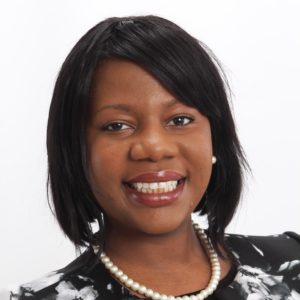
Shameka Jennings, MTA, CMP

Director of Meetings and Partnership Development
National Coalition of STD Directors

I define leadership right now as using the resources you have, no matter how little or large, to act and make a difference or a positive change in the space around you.

During this challenging time, I am empowering more leaders who look like me to step up and speak out and join discussions they were not asked to be a part of and lead uncomfortable conversations. I am asking partners whose leaders’ faces do not look like my own to reflect on how diversity, inclusion and equity can be shown across the top of their businesses. I am creating communities and safe spaces for people to share their feelings and experiences to navigate the tensions and stress of the racism felt in America and the pandemic felt across the world. I am seeking more black faces and people of color to spotlight and uplift in the work that I do to diversify the voices shared. I am compiling a list to share of minority-owned businesses who can be supported by industry colleagues. I am shining a light on those who have been kept in the dark to move the industry forward.

Editor’s Note: This is part of a series reporting on FICP Chats about the future of meetings. You can read previous reports here, here and here.

While most meetings professionals agree there’s no replacement for an in-person meeting, our current circumstances find them delving into relatively unchartered waters and finding ways to take upcoming or rescheduled meetings virtual, in part or entirely, and pursuing new virtual options for planning future meetings and events. More than 250 participants in the May 21 Financial & Insurance Professionals (FICP) Chats agreed mastering virtual meeting tools will require new skills, flexibility and creativity from everyone involved–presenters and participants–and this education is just beginning.

In the fourth of FICP’s new virtual education series, focusing on virtual meetings, participants discussed how meetings professionals need to adapt practices to ensure successful virtual meetings and how hospitality partners can support virtual and hybrid meetings and events.

Virtual Platforms

Role clarity when selecting a virtual meeting platform was an area where participants noted an opportunity for improvement within their organizations. They believed information technology (IT) colleagues should be consulted on topics such as information security, home office bandwidth and the ability to download and use a platform, but meetings professionals should provide direction initially around meeting objectives and must-haves so that both partners and internal stakeholders could identify the right resources to achieve those objectives.

See alsoThe Online Meeting Resource Guide

Participants noted they had leveraged a range of platforms for early meetings, including Zoom, but security concerns persist at some companies about the use of that specific platform (although Zoom is consistently introducing new features addressing security concerns). Other platforms cited included On24 and Intrado.

Virtual Event Preparation

While some presenters or company executives may not see the need for a rehearsal, a rehearsal is critical to the success of a virtual event, according to participants. In fact, technical rehearsals and presenter rehearsals should be considered to help ensure all aspects work properly–lighting, sound and platform–and all participants know the flow of the event.

MoreVirtual Event Genius Resources

For executive presentations, participants recommend recording those in advance and incorporating live elements around them. Executives could be provided lights, webcams and other materials to help ensure the recording looks and sounds high-quality.

A lead facilitator should be assigned, who knows the event flow, and can help transition between presenters and activities. As with a live event, having a contingency plan is important when you cannot control for every possible problem.

Engaging Virtual Participants

More than one-third of participants indicated that attendee engagement and collaboration was their biggest challenge when shifting from in-person to virtual meetings and events. Ideas for helping virtual meeting attendees engage not only with content but with each other included trivia or TV-style games, wine tastings, custom cocktails, entertainer cameos, interactive projects or lessons such as floral arranging or cooking, corporate social responsibility (CSR) components and icebreaker activities.

It was also suggested that wellness activities such as live yoga, breathing exercises or stretching could be used during scheduled breaks to help reinvigorate attendees. Many of those interactive activities allow for event sponsors or hosts to send kits to participants in advance. Those seeking to use music and other existing content were reminded of the need to ensure proper licensing was in place beforehand.

Planning with Hospitality Partners Virtually

With the traditional site visit or FAM trip off the table in the short term, hoteliers and other suppliers are turning to virtual options with their meetings professional clients, using tools like FaceTime or Zoom and a phone or tablet to walk through event spaces. More video recordings are being provided by supplier partners to help showcase venues and destinations as well. Those same partners are creating new resources to help meetings professionals calculate maximum capacities in light of distancing guidelines. Both parties should discuss how that same contracted space can be used differently to achieve objectives and get creative with “shifts” of general sessions, simulcasts, outdoor space and similar ideas.

Meetings Professionals Re-Education

Participants also acknowledged that planning a virtual experience or hybrid in-person/virtual meeting brings new considerations throughout planning and execution phases, including some outside of their areas of expertise, and felt the need for additional education on those topics. A handful of those in the chat were pursuing virtual event management or digital event strategist certifications to help better equip them for the future of meetings.

Jennifer Squeglia, CMP, is a member of FICP Board of Directors. In the next FICP Chats, our community will focus on virtual meetings. Learn more about upcoming FICP Chats, part of FICP Anytime.

How many times have you wished you had a template to plan each event? Have you struggled to manage the many details of the process?

Here are three tips that can make this a seamless process. Picking your partner, the right products, and the right method will help your event go off without a hitch!

Tip 1: Pick a Partner Who Manages It All!

Continued growth and popularity of on-site gifting experiences is contributed to the availability of more and more premium brands in the space and more companies marketing gifting services.

There are some questions to consider when choosing the right partner for your event gifting needs and to ensure you are going to have a successful experience:

  • Do they understand what you are trying to achieve?
  • Do they carry the premium retail brands that you want to give?
  • Can they work with your event budget?
  • Will they manage it from the beginning to the end?

Tip 2: Preselect your Products!

Finding a gift for an event can be challenging. Everyone may appreciate the gesture, but the gift they continue to use daily will be the one they remember.

Product selection is very important when planning your next event. At Links, we aim to have our gift offerings reflect what brands are offering at retail. This means communicating with the brands on new product releases and updating our gift packages accordingly.

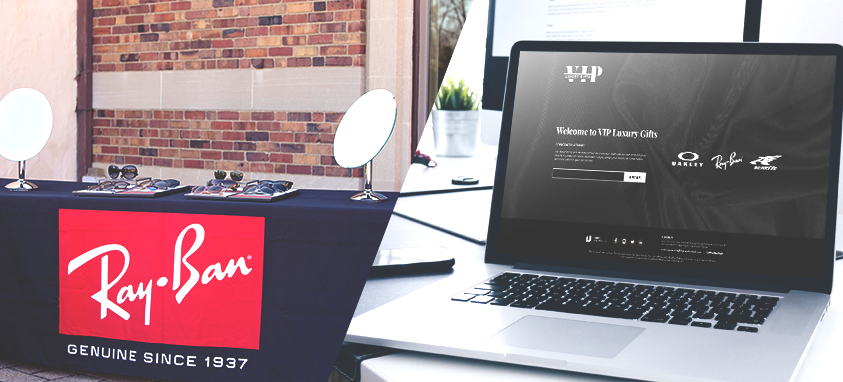
“For example, giving a pair of Oakley sunglasses at an event located at a golf course or a pair of Beats headphones or a S’well bottle for a beach event. These are gifts that are sure to be a hit because they can be used right away, and who doesn’t need a pair of sunglasses, a new pair of headphones, or an insulated water bottle?” Bret Williams, Director of Global Events said.

Tip 3: What Method Works for Us?

The experience method delivers an end-to-end solution that provides your guests a unique and personal gift within your event.  Your guests will be able to sample, try on, or listen to the gifting product at an on-site branded gifting station. This unique selection process ensures the person walks away with a product they love and a lasting positive impression about the company. Links will work with you to identify a pre-selected package that will work best for your event. For example, each sunglass package offers you multiple skus and an expert team works with you to find the best package for your upcoming event.

In addition to the event experience, Links has developed a web redemption gifting solution, which is a great option for international events. The Web Redemption method delivers a fully functioning website that visually allows your guests to select the gift of their choice online. An event URL along with unique redemption codes are given to you that you will distribute to your guests. The landing page will guide your guests on how to redeem the code for their gift. “Links Unlimited offers 100’s of skus and a wide variety of categories and brands to choose from including Ray-Ban, Oakley, Beats, Tile, S’well and many more to give customers a variety to choose from,” Williams added.

Whatever budget you have, making sure you follow these three tips is crucial to any successful event!

A stampede of hotel companies has recently made announcements to tack hygiene onto their brand images, and the latest in the race is Hyatt. But this Chicago-based company, which has long touted wellness as a core value, wants to come from behind to take the lead.

Its Global Care & Cleanliness Commitment, which was announced this week, tackles the nose-to-tail hotel experience—from health and hygiene to food and beverage safety, to technology and even how spaces will henceforth be designed.

See alsoMarriott Unveils New Global Cleanliness Council to Fight COVID-19

Mark Hoplamazian, Hyatt president and CEO, said the announcement “is an important expression of our purpose to care for people so they can be their best—now and in the future.”

Measures to be undertaken include:

  • Accreditation by GBAC STAR at Hyatt’s more than 900 hotels worldwide.In May, the company plans to introduce this “performance-based cleaning, disinfection and infectious-disease prevention program.” GBAC is Global Biorisk Advisory Council, a division of ISSA, the worldwide cleaning industry association, and is composed of leaders in “microbial-pathogenic threat analysis and mitigation, designed specifically to deal with biological threats and real-time crises like the COVID-19 pandemic,” according to a Hyatt press release. The company is the first hospitality brand to announce its global pursuit of this
  • A working group of trusted medical experts and leading industry professionals from organizations like Georgetown University Medical Center, American Airlines, Ecolab and Global Wellness Institute. Other advisors include representatives from Johns Hopkins Department of Medicine, Maritz Global Events, technology company Sofinfi and Gensler, the architecture firm.
  • Hygiene managers appointed at every Hyatt hotel by September whose job it will be to train staff; oversee enhanced disinfection with hospital-grade products; implement stepped-up food safety and hygiene protocols for its restaurants, group meetings and events, and room service; provide protective masks and other equipment for hotel staff; make sure social distancing is observed in public areas; and explore devices for air purification.

Hyatt also intends to share safety and hygiene learnings with American Airlines.

MoreWhen Venues Reopen, How to Know They’re Safe

“As a key part of our loyalty collaboration with Hyatt, we are committed to looking at the holistic experience of our customers with a special focus on their well-being,” said Julie Rath, vice president of customer experience, innovation and delivery at American. “The benefit of this collaboration is that we can share insights from our enhancements to cleaning and protective procedures while applying best practices from Hyatt to elements of our operation.”