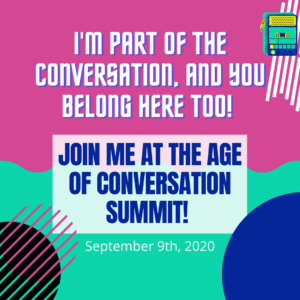
Just when meeting professionals are growing hoarse from bemoaning that COVID has changed everything, one group came along to show that the fundamentals are still the same. “We were hoping to remind marketers and event producers that conversation and connection is an important part of events, and that includes virtual,” said Liz Lathan, CEO of Haute Dokimazo, producer of the September one-day virtual event The Age of Conversation Summit.

MoreHaute Dokimazo: Putting the “Un” in Reunion

The entire experience, complete with retro theme and fun graphics, is now available on-demand for $20 and an eBook outlines the behind the scenes stuff—tech stack (they used QiqoChat), roles and responsibilities, checklists and takeaways from the dozens of presentations along multiple tracks, including career and job hunting, social media and “unlocking your inner entrepreneur.”

Smart Meetings asked Lathan and event content manager Carrie Abernathy for lessons learned from the six-week push that recruited event professionals looking for virtual meeting experience to experiment with new ways of doing their job while keeping the human element at the center.

Creating Meaning—and Work Experience—Out of Nothing at All
“There are ways to add in human connection to events and create meaningful connections between attendees,” Lathan said. Now she has proven the power of playing on the humanity of shared pop culture touchstones and authentic presentations, the next experiment is to see if the energy can be maintained on in the group Slack channel.

Lathan’s second big hope was to help event professionals get experience running a virtual event. “This is what I’m most proud of,” she enthused. More than 100 event professionals were granted access to learn helping the team run the event so they have real experience. She hopes hundreds more benefit from the behind-the-scenes revelations so they can see how it was accomplished and “replicate it or do it better!”

Her biggest lesson? “Marketing is more important than you think,” Lathan said. She called audience acquisition the hardest part of any event. She suggested dedicating a team to that workstream from the beginning rather than throwing it on at the end.

Abernathy agreed. “If content is queen, marketing is king,” she said. “Compelling content is amazing, but if there isn’t a solid structured marketing plan and target audience in place—your great content will not reach anyone.”

You Can Sometimes Get What You Want

Lathan also got a lesson in compromise. “I also learned that even though I really wanted the event to be live conversation, some conversation leaders were just not comfortable doing it that way and needed to pre-record their sessions and just be available for live Q & A and I had to be okay with that if I wanted them to be part of the event.”

The same goes for accommodating audience schedules. “People are busy and sometimes just can’t make that day work, so it was imperative to have the recordings available for them,” she said.

That was where the idea of the eBook came in. The shared Google document is where participants took notes on the sessions to create a type of CliffsNotes for participants who want to see which speakers they should go back and watch recorded. “I watched and listened to over a dozen sessions this weekend to add in more notes and OMG…these sessions were incredible!” One section on Virtual Engagement Ideas is filled with 12 entertainment activities to add to virtual events. The original content was organized in tracks called “Shift Happens,” “Is This Thing On?” and “Unicorns + Rainbows.”

Double Vision

A fun AV trick added to the energy for Rachel Sheerin’s keynote, “The One Where You Reinvent Yourself” (everything had a “the one where” theme as a nod to the sitcom “Friends”, a cultural touchstone that extended to the Central Perk breakout room for after-conversations). She had to tape the presentation in her living room because of logistical challenges. To keep everyone engaged, she changed the angle of the camera and herself every few minutes, even turning her head upside down to deliver a few lines. “In this moment of time for virtual events, I think it matters more than ever to bring lightness and smiles to people, plus some surprise and delight,” she explained later.

Her dynamic presentation was the vehicle for a frank presentation that focused on self-confidence beyond title or external judgement. “Loving your work is an American tradition,” she said in the description. “The majority of Americans gain most of their identity from their work, title and position in their companies. But what about when roles change?” That is when a change in the way you look at yourself comes in handy.

Remember the Time

Abernathy was still taking a deep breath in the days after the last attendee clicked off. Six weeks was “far from the ideal amount of time” to pull together concept, content, speakers and marketing, she said. She would have preferred to have at least 8-10 weeks to better flesh out attendee experience, vendors, sponsorships, look and feel of the event and marketing.

Virtual attendees also seem to work on their own clock. “They tend not to sign up until 24 hours prior to the conference,” she reported. At least a quarter of attendees signed up in the 24 hours prior. “With our changing schedules, work from home atmosphere, and our daily lives getting in the way and forever changing—people cannot make commitments as easily,” she reasoned.

Sophie’s Choice

Some of the early decisions about platform, theme and partners paved the way for the engagement and experience on event day. Just as viewers have many choices when it comes to video programming, meeting professionals have a buffet of options for virtual meeting platforms.

“Do your homework,” advised Abernathy. “It is not one-size-fits-all.” In fact, she suggests that meetingprofs challenge platform designers to try things that may not exist on their system…yet. “Sometimes they can make it happen or find solutions or work arounds within your timeframe and budget,” she said.

In the debate between live or Memorex, OnDemand is the way to go, Abernathy concluded. “A single day event is great, but many people may miss out on sessions.” Having recorded options allows for attendee engagement far after the event is through.

Pro tip: Get permission from speakers and attendees to record them.

“Variety is truly the spice of virtual life,” Abernathy said. In addition to pre-taped sessions, The Age of Conversation offered Zoom-optional virtual experiences and discussions.  The band SongDivision led a virtual happy hour where people created their own lyrics. A “Romper Room” space offered entertainment throughout the day so that people could step away for a brain-break without leaving the conference entirely. “It was truly an exercise in ‘choosing your own adventure,’” she said. “Attendees didn’t want to leave! That is a great problem to have—virtual or live!”


The latest Events Industry Council (EIC) APEX COVID-19 Business Recovery Task Force Accepted Practices Guide created a place where those affected by the pandemic slowdown in the meetings and events industry can go for help. The new “book” on Workforce and Wellness covers everything from finding a new job and learning the skills to advance in their current positions to a Dr. Brene Brown segment on coping with grief, fear and anxiety during corona.

Johnnie White

Through case studies and shared tools from around the world, the 28-page document collects the wisdom of the industry in one convenient location. It builds on the two reports already released—“Health and Safety for Hotels” and “Meeting and Event Design” by starting with a Duty of Care standard that outlines success as being a combination of responsibilities that belong to the meeting planner, the individual and other providers.

Smart Meetings Zoomed with the co-chairs of the task force, Johnnie White, MBA, CAE, CMP, executive vice president and CEO of American Society of Appraisers; and Rachael Riggs, wellbeing leader at Maritz Global Events (who is currently on furlough); and Amy Calvert, EIC CEO, on the day results were announced to talk about the path forward.

“This vision is based on our fundamental belief in the power of the industry based on trust, community, equity and innovation,” said Calvert.” It aggregates and curates under one umbrella everything people needed when going through a time of transition.

Career Resources

One of the outcomes of the task force was an enhancement of EIC’s Career Centre with new job opportunities, including project work. This is also where those who are in the process of “pirouetting” to another role or career can find financial support and scholarships for the transition.

As the force behind the Certified Meeting Professional, CMP, and Sustainable Event Professional Certificate, career education has long been a focus for EIC. In addition to pointing to valuable webinars, courses and online events, this job hub now also points to designations for:

American Hotel & Lodging Association (AHLA)

ASAE (CAE)

International Association of Exhibits & Events (IAEE’s CEM)

Meeting Professionals International (MPI’s CMM)

Professional Convention management Association (PCMA’s DES)

The document outlines the importance of reskilling and restarting. “Some people want to go to another level by getting a certification and adding tools to your toolbox,” White pointed out. Those certifications can help them do that. “When changing careers, courses and mentorships with people who are doing what you want to do can help.”

MoreGet Smart! There Was Never a Better Time to Up Your Game

Five models are offered in the guide for educational investments that will get people where they want to be.

Another practical set of links is designed to help the newly unemployed navigate employment, insurance and the workforce development system. “A lot of people are just overwhelmed by amount of paperwork that needs to be done,” White said.

Wellness

Rachael Riggs

White explained the joining of the two “W”s as something that he quickly realized made sense through the process of creating the resource. Those who are affected either because they were laid off or having to manage an increased workload in an uncertain environment are struggling with enormous stress. “A lot of people are depressed and dealing with it in different ways,” he said. “We need to give them tools.”

See alsoHow to Support the Mental Health of Event Planners

“The challenges affect all dimensions of our lives—physical, social, financial, career and environmental,” said Riggs. Those all have to be balanced. “We need to take care of ourselves before we can take care of everyone else. That is a departure for us,” she said.

This document focuses on the whole person, Calvert explained. “This industry has long been concerned with creating meaningful experiences. Now we have to have honest and vulnerable conversations about what we are going through.”

“Sometimes our job is just to let people talk,” said Riggs.

The resources included draw from the best from all over the world, including EventWell, a UK-based company that is focused on supporting the emotional and mental health of individuals.

An Empowered Future

Amy Calvert

When faced with the possible loss of talent in the industry as a whole, White said veterans need to step up and create awareness that there are enormous benefits to careers in this industry. He called on everyone to mentor the next generation and share how many different paths there are—logistics, finance, HR, marketing. “We have to show the breadth of the industry. If we continue to do that, we won’t lose them,” he said.

“I am optimistic about our industry’s ability to move forward with innovation and empathy,” Calvert said.

Upcoming guides will cover transportation and destinations.

If you’re one of the many people who sit at a desk all day long and can never seem to find the time or energy to exercise after work, don’t worry, there are ways you can sneak some workouts into your work day.

Here at Smart Meetings, we’ve compiled a list of exercises from yoga, health and fitness experts that you can do right at your desk so you can stay fit and flexible without spending hours at the gym.

More: Simple Practices to Encourage Wellness at Your Next Meeting

  1. Seated Leg Raise: Sit upright in your chair and straighten your left leg so it’s parallel to the floor. Hold it for 10 seconds. Now, do the same with your right leg. Do 15 repetitions for both legs. Once you get the hang of doing them you can add some weights to your legs and keep it going. Your purse or briefcase are perfect weights that you already have hanging around the office.
  2. Chair Dips: You may look a little funny doing these but they’re a great workout. Scoot to the very edge of your chair and position your legs out in front of you. Put your hands at the sides of your hips on the top of the chair with your fingers pointing towards your legs. Next, grab the edges of the chair with both hands. Then, use your core to raise your body up and off the chair so your rear goes towards the floor. Finally, push yourself back up. Repeat these 15 times. Remember: use a chair without wheels, you won’t want it to roll away mid-workout!
  3. Swiveling Abs: This exercise will make you feel like a kid again (maybe). Sit upright in your swivel chair and lift your feet up and off the ground. Gently hold onto your desk with your fingers – but not too tight, you don’t want your arms doing all the work. Next, use your abs and core to swivel your chair left, right and back again. Do 15 repetitions in three cycles.
  4. A-shaped Wall Pushup: This one sounds weird but it’s sure to make you feel your triceps. Stand with your hands against the wall so that your body is slanted like one side of the letter “A” (hands over your head, pressed against the wall and your feet a few feet from the wall). Next, touch your elbows to the wall. Then, repeat! It’s that simple.
  5. Moving Wall Sit: This exercise works your upper legs, calves and arms. Start in a regular wall sit position (press your back against a wall with your knees bent at a 90-degree angle, like you are sitting in an imaginary chair) with your upper legs flat enough to hold a tray. Then set your timer to 30 seconds and lift and lower your heels and arms. Your arms should go up and over your head to touch the wall and then back to your knees.
  6. Back Twist: If you have tension in your back, this exercise is for you. Start by sitting in your chair, placing your right arm behind your right hip. Twist to the right and hold for 10 seconds. Then, repeat with your left side. Do three on each side for maximum tension relief.
  7. Foot Drill: Your coworkers may get annoyed, but this is a fun workout! Just like football players move their feet at practice, try doing the same thing at your desk. While sitting in your chair, aim to move and tap your feet for 30 seconds or longer at a time.
  8. Shoulder Raises: Got neck tension? No problem, try this exercise. Raise your shoulders up towards your ears and hold for 10 seconds. Then, relax. Smart Tip: If you’d like a bigger stretch, do each shoulder one at a time, alternating five times each.

More: 3 Easy Tips to Jump Start a Wellness Program

Lara Pavloff & Chawnacee Bryan

Lara Pavloff has been promoted to director of golf and Chawnacee Bryan is now director of spa and fitness at The Biltmore Hotel in Coral Gables, Florida.

Pavloff’s promotion was preceded by positions as head golf professional, tournament director and assistant golf professional. Throughout her tenure at The Biltmore, she has worked on PGA of America’s apprentice program and is now a Class A member of PGA of America; she is also a Titleist Performance Institute-certified gold professional.

Bryan began her career at a five-star resort in Boca Raton, Florida, and worked at various locations with a focus on spa and wellness, such as Cinzia Spa in Myrtle Beach, South Carolina; Maui Spa and Wellness Center; and Red Door in Fort Lauderdale, Florida.

Jeffrey G. Chirinos & Matthew Smith

Chirinos is director of F&B and Smith is executive chef for The Westin Anaheim Resort in California.

Chirinos will oversee The Westin Anaheim’s five dining outlets. Before this position, Chirinos worked as general manager of The Villas at Pelican Hill Resort in Newport Beach, California. He was on the opening team at Fontainebleau Miami Beach and also worked at Conrad Miami, The Westin Alexandria in Virginia and JW Marriott Houston Downtown.

Smith has returned to the mainland after 15 years in Hawaii as executive chef for Grand Hyatt Kauai Resort & Spa and Hyatt Regency Maui Resort & Spa. Previously, Smith held several roles at Grand Hyatt Seattle and Park Hyatt Los Angeles.

Ricardo Lujan

Lujan is executive chef for Azerai Can Tho, set in the Mekong Delta in Vietnam. Lujan has had stints in Bali, Indonesia; Yangon, Myanmar; and Mexico City. Most recently, he worked as executive chef for Six Senses in Bali.

Christian Ojeda

Montage Deer Valley in Park City, Utah, promoted Ojeda to executive chef. Ojeda joined the luxury property as chef de cuisine at Apex, a fine-dining restaurant, and three years later became executive sous chef. He’s also worked at Calistoga Ranch in California and Four Seasons Rancho Encantado Santa Fe in New Mexico.

Bryan Dillon

Dillon is director of chef and B—a hybrid of executive chef and director of F&B—for Adero Scottsdale in Arizona, scheduled to open Oct. 15. In his more than 30 years in culinary operations, Dillon has held many leadership roles, most recently as director of food and beverage and executive chef for Morongo Casino, Resort & Spa in Cabazon, California. He’s also worked for Morton’s Restaurant Group, Starwood Hotels & Resorts and Red Rock Casino Resort and Spa in Las Vegas.

Kantima Chompoolad

Thai national Chompoolad is wellness manager for Melia Koh Samui in Thailand. For a decade Chompoolad worked as spa manager at Hansar Samui.

Tony Trujillo

Trujillo is executive chef for The Glenmark, Glendale, A Tribute Portfolio Hotel, in California. Trujillo has worked in several culinary roles; most recently, he was chef de cuisine for Cucina Enoteca in Irvine, California. He’s also worked at Montage Laguna Beach in California, Church & State in Los Angeles and Bourbon Steak Orange County (formerly Michael Mina Stonehill Tavern) in Dana Point, California.

To pay or not to pay (for virtual events), that is the question. And the answer? Well, the debate is ongoing. Event organizers and meeting planners are still exploring how they should monetize their virtual events. But, the question behind paid or free isn’t just a monetization question—it ties into every step of the event marketing journey and has a major impact on long-term event and organizational strategy.

Event marketers promote paid and free events differently. They present fundamentally different value propositions and pain points associated with converting new attendees. From a strategy standpoint, audience expectations are ever-changing and the potential fallout from moving a paid in-person event to a free virtual event is a scary thing to consider.

Fear-inducing as some of these questions might be, let’s take a look at the value behind charging for a virtual event vs. running it for free.

Paid Events

Show me the money, the bread and butter behind paid virtual events. Let’s be real—it isn’t free to run a virtual event and it’s not always feasible to deliver a high-quality digital experience without some upfront cost coverage. The simplest way to offset this cost is to charge an entry fee, especially if your content backs up the cost.

As Dahlia El Gazzar, founder of Dahlia+ Agency, says, “There is a value to your content. If you give it away for free, you immediately reduce the perceived value and will struggle to monetize your content in the future.”

Learn more about what not to do at a virtual event from this dynamic webinar cheat sheet. 

Monetize with attendees

The value behind directly monetizing the audience is two-fold. First, revenue is directly tied to the success of your event marketing. If you have a strong attendee base with high retention rates and lack of direct competition, the event is likely to succeed. Acquisition for your virtual event will be directly related to year-over-year retention and your marketing efforts won’t need to be hyper-successful for the virtual event to be well attended.

The second value behind monetizing the audience directly is revenue scalability. Assuming there is no attendance cap, the potential to scale revenue into perpetuity is based upon the ability to acquire new attendees. In this model, revenue is not tied to single-sale items like sponsorships—it’s entirely based upon the success (or failure) to convert attendees.

Set expectations and create exclusivity

They say your perception is your reality. And they’re right! Charging for an event helps create the sense of exclusivity and value before an attendee ever signs onto your platform. Framing the marketing content accordingly will not only help justify the cost of the virtual event, it also helps demonstrate that the virtual event has content that isn’t available anywhere else!

Charging for a virtual event also tempers expectations going forward. Most of us have pivoted to the virtual side of things out of necessity, not out of a true desire to change. We want a return to in-person and we don’t want to cannibalize our own registrations with a free virtual alternative. For many meeting planners, they see virtual as a temporary stepping stone—it doesn’t make sense to reset expectations and provide their content for free.

Free Events

And there is the issue of commitment. Garth Jordan, CEO of American Animal Hospital Association, may have put it best. “If it’s free, it’s for me, but I may not show up.”
Delayed gratification—the free model! Going free with your virtual event presents an entirely different proposition than staying paid. Rather than collect cash from attendees, you’re monetizing them through sponsorships. That means you’ve got to meet sponsor expectations first (hint: they want more eyes on them).

Monetize with sponsorship

When you don’t charge your attendees, there’s got to be another way to monetize your event. There are two main schools of thought on how to do this. The first is to focus on your sponsorship sales and generate revenue through a larger overall attendee base. Digital sponsorships are trackable and more flexible than their in-person counterparts—they provide a more cohesive marketing opportunity. And the more attendees you capture, the more your sponsorships are worth!

Monetize with data

The second way to monetize your free virtual event is through your event data. You don’t need to convert a paid attendee right away, sometimes a free option works like a try-before-you-buy. Think of the freemium model we see in the SaaS vertical. Once you’ve captured them as a virtual attendee, it becomes much easier to convert them down the road. The concept involves lowering the barrier to entry, proving the value at a free virtual event and then converting as a paid attendee for a future event.

The Verdict

The jury is still out on this one. Whether you’re looking for a paid strategy or running a free virtual event, the water remains muddy. Industry experts are still searching for their secret sauce that will help them continue to grow and monetize their event in this world of virtual.

Rachel Stephan, Snoballer-in-chief with Snöball event influencer marketing, suggests starting with the strategic questions. “Ask yourself, ‘What value does my event bring to my stakeholders?’ Once you’ve answered that, communicating it to your audience consistently and clearly should shift the focus from price to perceived value. That is priceless.”

To bring more clarity to the debate, Matchbox Virtual and Snöball are bringing in a team of experts to take sides and duke it out. The Great Virtual Event Debate: Paid vs. Free Virtual Events is coming up on Oct. 2, 2020 from 1-2 pm EST/ 10-11 am PST. The debate teams will break down both free and paid virtual events to help event and association professionals hit the virtual ground running. In the meantime, pick a side and take a stance! Join either #TeamFree, #TeamPaid or #TeamUndecided and get ready for a debate.

Arianna Rehak, founder of Matchbox Virtual described the event this way: “Since so many are simultaneously making decisions around their monetization and delivery strategies, we’ve built this as an opportunity to learn from each other. This session is about bringing together the collective brain to gather perspectives and insight.”

Welcome to our Some Good News feature. We’re bringing you the best industry updates from the week, every week, to remind you that we’re all in this together—and things are looking up. Here are some highlights.

U.S. Travel Starts Industry-Wide Campaign

Need help inspiring visitors to travel to your state? U.S. Travel’s Let’s Go There campaign allows businesses and organizations in the travel industry to market their destination to visitors with safety-first messaging and easy-to-follow toolkits complete with supplied logos, graphics, inspiring sample copy and more. Its goal? To stimulate the economy and lift the industry out of its depression by getting Americans interested and confident in traveling again.

Click here to join the campaign.

Caesars Entertainment and ESPN Open New Studio

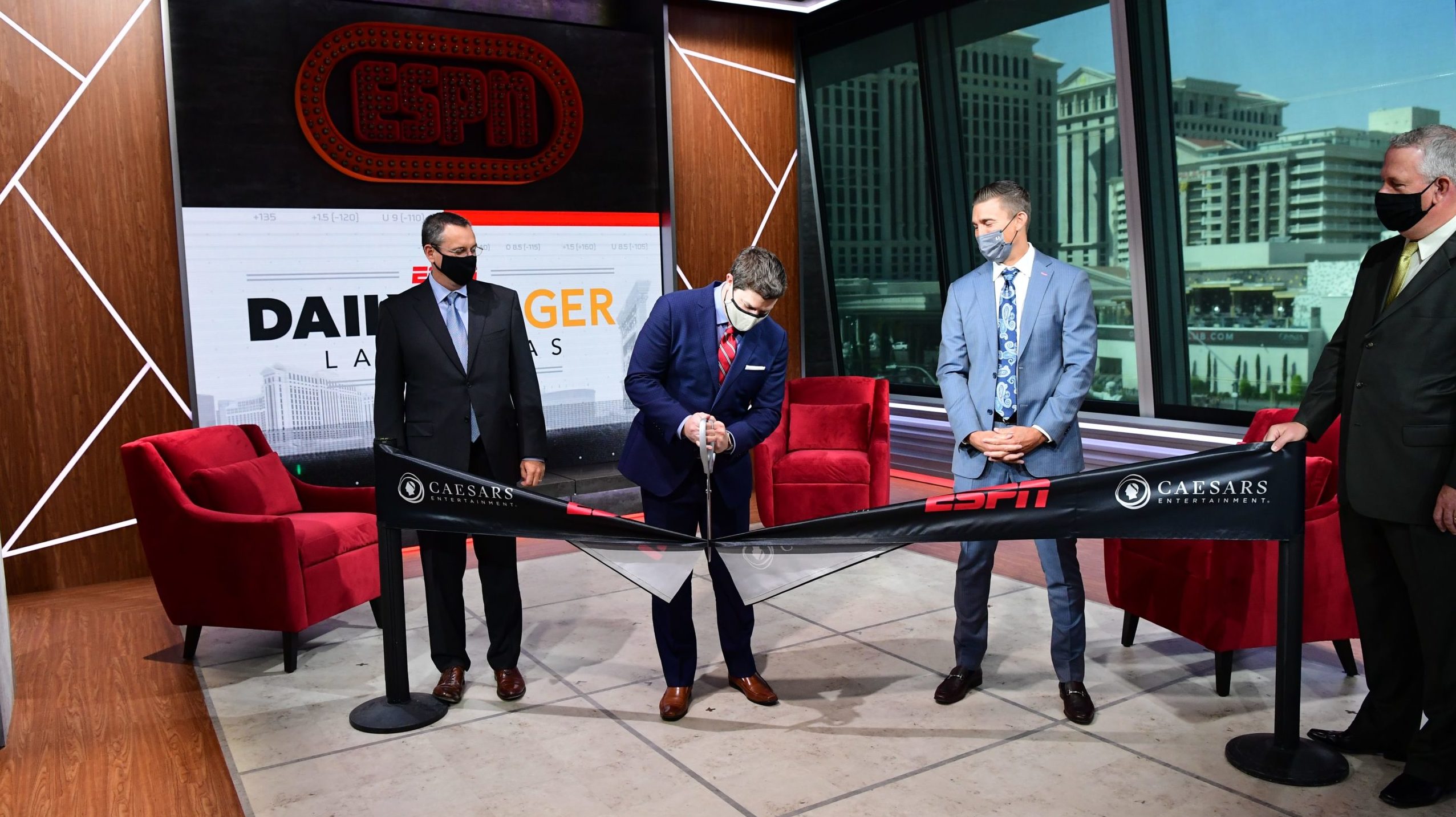
Just in time for Friday night football. Caesars and ESPN launched the new The LINQ Hotel + Experience studio with a ribbon-cutting ceremony in Las Vegas this week. The new studio will be the epicenter of ESPN’s sports betting, with Vegas-exclusive content, production and a new betting-themed digital show coming this fall.

“This is an exciting day for Caesars Entertainment as we not only get to celebrate the physical ESPN Studio space here at The LINQ Hotel + Experience, but also are able to showcase Las Vegas as it’s transformed into a true sports city with the addition of the Las Vegas Raiders and Vegas Golden Knights,” said Caesars Entertainment CEO Tom Reeg.

Virtual is Working

All that time you’ve spent mastering Zoom and Facetime meetings has not gone to waste. According to a survey by speakers bureau VBQ Speakers, more than two-thirds (68 percent) of business leaders will continue hosting company-wide meetings and conferences virtually in the future, citing saved costs, convenience and equal productivity as benefits. In other words, the sweatpants and button-down look is here to stay.

“While I think it is highly likely live events will return, the research indicates we may be seeing the start of a new normal in the industry, with virtual events replacing some live ones, and most having at least a virtual element,” said VBQ Speakers founder, Leo von Bülow-Quirk.

Indy is Building Again

On Monday, Indianapolis received unanimous approval to expand Indiana Convention Center and add a new convention headquarter hotel. The convention expansion will add 143,500 sq. ft. of event and function space and a 50,000-square-foot ballroom for a total of more than 1.1 million sq. ft. It will also connect via skywalk to the approved $300-million, 800-room Signia by Hilton convention hotel in downtown Indy. Construction on both projects will begin in 2022, with plans for opening in 2025.

“Some may be surprised by the decision to move forward with a project of this magnitude during these times of uncertainty but our city leaders are bullish on the convention and event industry not only recovering but thriving. Frankly it’s a very Indy thing to do. We didn’t become USA Today’s #1 ranked convention city by accident,” said Leonard Hoops, president & CEO of Visit Indy, in a press release.

Fasten your seatbelts, it may be a bumpy ride: Meeting professionals who have been forced to deliver their award-winning programs digitally are getting a crash course in the right and wrong ways to design a virtual event.

Some are learning hard lessons about the pitfalls of trying to copy and paste a 3-D agenda into a format that’s delivered through a flat screen.

To make the landing a little softer, we gathered three innovators—Brandt Krueger, Smart Meetings event tech correspondent and owner of Event Technology Consulting; Sarah Reed, director of global strategic events for Zendesk; and Timothy Simpson, brand and engagement chief strategist for Design Studio by Maritz Global Events—on a video call and asked, “What should meeting professionals absolutely, positively, not do when planning their next virtual event?”

Listen to the Webinar on Demand here.

Don’t Start with the Platform

What topped the list of mistakes for all three? “Never start with the tech.”

Admittedly, it’s tempting to ask, “What is the best platform?” But it’s not the right question because there is no silver-bullet, unicorn technology.

Reed fesses up that, in the beginning, she defaulted to what she was most comfortable with, webinar technology. “In most cases, that just doesn’t work for the experience we’re trying to create. So, yeah, we fell into that trap, I think, like everybody did out of necessity, and also because we just didn’t know what we didn’t know.”

Now she backs into the technology decision by starting with the experience she needs to create. For the specific audience. The feeling. The emotion. “Those are things we took for granted in the physical space, and they’re really challenging to do in a webinar format.” Often, achieving the desired outcome requires cobbling together tech solutions—for a hybrid virtual, if you will .

Simpson points out that organizational transformation starts with people, process, strategy, policy—and then technology.

Don’t Be Afraid to Fail

Reed’s events are all about customer support—specifically, creating customer-service champions. She was loading in for a big user conference in Miami the first week of March, an event for about 2,800 people her team had been planning for 18 months. Three days before people were to begin arriving, they decided the risk was too big and called it off. Three weeks later, they hit start on their first virtual event.

“Six months later, we’re still figuring out the strategy. This is all new territory, and no one is an expert in virtual events. We all have to come to terms with that,” she admits. “The reality keeps changing, so we learn and evolve after each event.”

Simpson’s focus is on mapping experiences to business outcomes. He quickly realized his clients needed help in right-sizing their strategies.

“I love some of the insights we’ve gained—the surprising moments where organizations say, ‘Maybe there is a better way to approach this,’” he says. His advice is to go back to the drawing board and rethink the approach. “One thing hasn’t changed. Every organization is different, and the people we are designing for are different, so they need different solutions.”

Don’t Try to Do Too Much

Reed realized, pretty early on, that the company as a whole was planning too many virtual events. There were events on top of events. “Anyone with a Zoom account was throwing a virtual event,” she says. “We were overwhelming our executives with asks, our customers and our prospects with too many invitations, and we were overwhelming ourselves keeping track of things. We had to put some governance in place.”

Content at the meetings that did happen had to be dialed back, too.

Meeting professionals are so accustomed to giving audience members everything at a physical event—networking, big celebrity keynotes, dozens of breakouts, training, meetings with executives, the list was endless. “Well, in the virtual space, nobody wants that. And you don’t have to do it all,” Reed confides. “Don’t overcomplicate it and shove it all into one technology that wasn’t made for that.”

Simpson starts with the business dynamics for that organization. What is it we want to accomplish? What are the tactical, measurable business outcomes we want to design for? What impression needs to be made? Is the goal 10 percent growth? If so, attendees had better leave the meeting with a clear understanding of what they need to do to drive 10 percent growth.

Here’s the only way to get to that: By understanding the personas of the people who are attending—based not on hunches, demographics, archetypes or segments, but on their behavior, motivations, learning styles and preferences.

Next, consider tolerance levels—how much time can this audience actually sit behind the screen? On average, it might be 15 to 30 minutes; it just depends. You must really understand who you are designing for. And then create an “empathy journey map” of the experience that improves it for that audience.

A survey isn’t going to get Simpson to that level of detail. “I’ve never met a satisfaction survey that’s given me any good insights,” he quips.

Don’t Forget the Touchy-feely Aspect

Reed knows that some of her personas are motivated by social impact and company values. That means she had to take the CSR component that was part of the physical meeting into the digital space. “That has been a big challenge,” she admits.

In contrast, some things fell away—important in physical meetings but not in the new reality. Grouping people based on geography, for instance, makes no sense online. Before, regional user conferences made sense because they were easier logistically, but now divvying them into groups based on common challenges or other factors makes more sense.

“That was this weird, massive ‘aha’ for us after the fact,” she says.

Krueger warns that the reason for having the virtual meeting can get lost in the checking of boxes. He tells of a fundraiser he attended that sent a cold meal from a local restaurant to his house because the usual gala included dinner. Organizers showed a YouTube video of someone feeding a bird, and there was a celebrity appearance because that is what they always did. But at no point during the meeting did anyone ever mention that the auction was going on to raise money for the cause.

Don’t Allow Boring Speakers

Don’t just gloss over the design of your agenda. Simpson likes to ask how each speaker will bring the desired experience to life. “What are they communicating? How do we set that person up for success? It’s not just as simple as having them showing up anymore. We expect dynamisms in digital presentations,” he says, emphatically.

Reed points out that digital events make diversity even more urgent. If all the speakers look the same, that’s even more noticeable when you can see them all on the screen at the same time. “We won’t do that again,” she says with a grin.

Don’t Get Stuck in a Rut

virtual“I remind our team all the time we’re not stuck in time,” Reed says. “We have a chance right now to take risks we never really could before.” She has used the virtual format to make changes quickly and flip formats constantly, experimenting with new ways of reaching people, including spreading out content to reach people in different time zones.

Simpson sees the unique opportunity virtual events offer to extend the experience so people can recall and relive it. “You create memory markers based on emotional moments that you can now capture—to remind people and bring them back to that moment.”

The ability to record and curate event content could bridge the gap with a company’s marketing strategy in a purposeful way. The shift to virtual could be an opportunity to elevate the strategic relevance of events within organizations by reaching more people, starting conversations and advancing the company’s goals.

Don’t Forget the Bottom Line

Simpson likes to answer logistical questions with strategic questions. So, if the question is, “Should we charge for our event and if so, how much?” the corresponding question is, “What is the problem you are trying to solve for?”

If the answer is, “We want to create a perceived value, so people take it seriously and show up,” then he suggests looking at the alternatives. In this case, charging would be a preventative measure to trigger loss prevention behavior. The alternative is promotional motivation. Convince attendees they are getting something truly valuable. “If you give people really good reasons to be there, they’ll come; you don’t need to make them pay,” he says.

If, instead, the problem you are solving for is cost, then the options are charging for attendance or selling sponsorships or a combination of the above. Even though virtual events bypass the costs of a venue, travel and catering, they still come with expenses in terms of technology, AV budgets, marketing and time.

One trick: Use the design principles of scarcity and exclusivity. Offer experiences within the greater experience that require a whole different level of commitment and charge for those.

Reed offers a novel suggestion. Look at partners as solution providers instead of strictly revenue sources. Then they are getting involved on the content side—the fun, experiential side. And will more likely be loyal partners into the future.

There were a lot more unanswered questions, so I followed up with Reed and Simpson. Check it out below:

During times of crisis, people come together. Here are the uplifting tales of how destinations, hotel properties, planners and neighbors have come together to help their communities during the COVID-19 (coronavirus) pandemic. Plus, an opportunity to put your planner skills to work in the fight against the virus.

How the Events Industry Is Helping Itself Get Back on Track

Some 75 people showed up to George R. Brown Convention Center in Houston this week to call on Congress to pass the RESTART Act, which was introduced in the U.S. Senate in May and has yet to be passed. This act would offer much-needed economic relief to those working in the live events industry

How to Meet Live During a Pandemic for a Good Cause

While everyone else is talking about the pros and cons of different virtual meeting streaming platforms, Imagine, Create & Celebrate (MC&A) Destination Management Company hosted a social spacing soiree July 8 for 75 guests to honor the Hawaiian island of Maui’s first responders.

A Coronavirus Silver Lining?

So what’s the coronavirus silver lining? An uptick in virtual meetings; improved online meeting tools; and a greater appreciation for face-to-face events. Adrian Segar, author of Conferences that Work, goes in-depth with readers on why.

healthHow to Support the Mental Health of Event Planners


Mass meeting cancellations have wrought financial and personal havoc in the events industry. Just when we need the support of our peers the most, we are banned from coming together. Smart Meetings reached out to three emotional health experts for suggestion on the best way to support our teams until we can come together again.

DMODMOs’ Creative Marketing Boosts Consumer Ties During Coronavirus

Stuffed teddy bear hunts for locals, and virtual cooking and visits to Harry Potter filming locations for out-of-towners, are among the creative approaches that destination marketing organizations throughout the world have been taking to engage people during the coronavirus pandemic.

help pandemic7 Ways Meeting Professionals are Uniquely Suited to Help During Coronavirus Pandemic


In a matter of weeks, the world flipped upside down and daily life changed for meeting planners. With hotels closed, events postponed and financial strains increasing anxiety levels, a little bit of time from list-making pros can go a long way toward helping a community cope.

coronavirusDestinations Lend Support During Coronavirus Slowdown

Destinations are finding creative ways to help their communities and industry during the disruption of meetings due to social distancing. Louisville Tourism is working with local hospitality teams to donate food while properties are vacant.

Humanity Rocks: Helping Each Other in the Time of Coronavirus

As you may soon discover, being confined to home offices and virtual meetings can feel…limiting. Fortunately, times of crisis also tend to bring out the better instincts in people and corporations. Cynics can attribute some of the following wholly to smart marketing—but a more hopeful interpretation is that we have begun the process of coming together again.

covid-19At Last, A Little Good News About COVID-19

Even in health emergencies and natural disasters, there can be silver linings. After the general public was barred from watching a major sporting event in Columbus, Ohio, because of fears of COVID-19, a satisfying meal appeared for more than 2,000 first responders in tornado-stricken Tennessee.

For more, head to our all-encompassing Coronavirus Resource Guide.

The COVID-19 pandemic has brought one aspect of the meeting industry to the forefront of every planner and professional’s mind: Virtual events. What started as an emergency response to being banned from convening in large groups has turned into a staple of the future of meetings, with benefits such as greater outreach and lower costs. Of course, virtual events come with their own challenges, too. From inspirational success stories to step-by-step guides, here is everything you need to know to plan engaging, effective virtual and hybrid events today and in the future.

How to “Unlame” Your Virtual Meeting by Adding Visual Artists

Break out of the gray boxes at your next virtual or hybrid meeting by bringing in illustrators who can add color and capture the reason for the Zoom. Visual artists have long been popular at conferences and brainstorming sessions. We asked animating professionals for tips on how best to make use of a graphic recorder in the era of COVID.

virtualSmart Meetings Virtual Experience: Best Options for Working, Learning and Meeting in a Virtual World

Some 80 meeting experts learned first-hand that while virtual events may not be exactly the same as toasting signature cocktails in person, business, learning and fun can still get done. The second Smart Meetings Virtual Experience had attendees test driving simulated meeting room software.

Expert Tips for Creating Virtual Experiences

Virtual events have graduated lately from a minor topic to being at the center of all discussion. Meeting planners are now trying to meet the new challenges that come with navigating the digital landscape. In the latest Smart Meetings Accelerator, three virtual-event experts weighed in on the elements of successful virtual experiences and how to create ones that resonate.

virtual3 Innovative Ways Industry Groups are Going Virtual

When precautionary measures stemming from the COVID-19 pandemic made large conferences “impracticable,” some industry leaders got creative. The Center for Association Leadership (ASAE), Destinations International and IMEX Group are pioneering new ways to ensure that guests remain connected and are still able to hear from speakers and industry partners in real time. Learn the tricks for your hybrid meetings.

hybrid virtualHow to Prepare for a Hybrid Event Future

The future is hybrid. In an informal survey held during Global Meeting Industry Day in April, 62 percent of event planners said their events will be a hybrid-style moving forward, while 18 percent said there will be a greater demand for virtual-only events. This is what you need to know to make the shift to hybrid events successfully.

More Eggs, More Baskets: What Live Events Will Look Like, Post-coronavirus

There is a new model for live events that makes sense in the post-coronavirus world. That is, fewer mega events with thousands of delegates descending on you from all over the world. Instead, focus on more small- and mid-sized events that tour around a geographical region, where attendees can also join via digital channels.

First Virtual Smart Meetings Experience Amplified Human Connections

The debut of the virtual Smart Meeting Experience launched in a succession of simulated meeting rooms that felt refreshingly like the face-to-face encounters of a few months ago. Smart Meetings partnered with Conference Solutions (CSS) to provide a platform that mimicked the tables and chairs of a meeting space and agendas that matched planners and suppliers who could help each other plan for a future where we are all in the same physical room again.

GMID 2020 Drew Virtual Record Attendance

Sheltering in place to slow the spread of COVID-19 made coming together to celebrate Global Meetings Industry Day (GMID) 2020 impossible, but meeting professionals got creative. An attempt to break the Guinness World Records title for largest audience for a virtual conference by #GMIDGoesVirtual brought an unofficial 12,500 for a half-hour presentation. Get inspired at the link.

digital meetingsVR Site Inspections Keep RFPs Moving During Coronavirus Down Time

Virtual site inspections make it possible to experience a ballroom while still practicing social distancing. Smart Meetings asked the experts about how realistic VR tours are today—and what to ask when setting one up.

Taking a FAM in My Pajamas

The idea of virtual FAMs has been out there for a few years now, but nearly all have been pre-packaged video tours of destinations, and they’ve been offered in the name of convenience, not necessity. An increasing number of DMOs also offer livestream and video tours of neighborhoods or specific venues on their websites.

2020 has been a bumpy ride. To help meeting professionals manage developments during the pandemic, we are bringing you the latest news and stories about how the industry is pulling together as part of this Coronavirus Resource Guide. Bookmark it for regular updates and join the conversation @SmartMeetings on all social media platforms. We are #HospitalityStrong.

latestCOVID-19: Latest News

From industry reactions to the newly approved federal stimulus bill to the latest lockdowns, furloughs and events gone virtual, stay up to date on the coronavirus pandemic’s progression and its effects on the meetings, travel and hospitality industries.

pandemicCOVID-19: Planning During a Pandemic

The coronavirus (COVID-19) pandemic has thrown meeting professionals in an unprecedented position with cancellations, postponements and venue closures affecting the course of the next few months, at least. From tips on how to move forward with scheduled events to filing your taxes under the new deadline, we’ve got the answers to your burning questions.

how to helpCOVID-19: Good News and How to Help

During times of crisis, people come together. Here are the uplifting tales of how destinations, hotel properties, planners and neighbors have come together to help their communities during the COVID-19 (coronavirus) pandemic. Plus, an opportunity to put your planner skills to work in the fight against the virus.

virtual meetings mistakesCOVID-19: Tips and Tools for Remote Work

Consider this your tool box for staying sane, productive and occupied during the sudden switch to remote work under the coronavirus (COVID-19) quarantine. From Smart U Masterclasses to virtual book club, home exercises and the best tools for online meetings, we’ve got you covered.