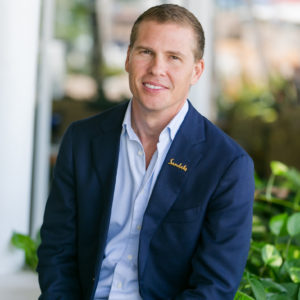
Joe Luck

Luck is vice president of business development for Sandpiper Hospitality in Richmond, Virginia. Previously, Luck worked with Hospitality Management Corporation, where he was senior vice president of business development. Before that, he spent 14 years as vice president of franchise development for Wyndham Hotel Group; and prior to that, as vice president of franchise sales and development for Red Roof Inn.

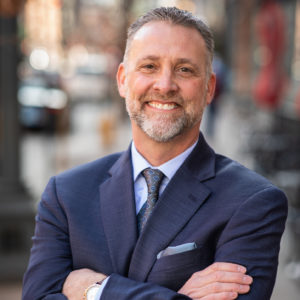
John Schafer

Schafer is managing director for Hyatt Regency Houston. Schafer joins from Grand Hyatt New York in Manhattan, where he worked as general manager and area vice president. Schafer’s more than 40-year relationship with Hyatt has led him to Manchester Grand Hyatt in San Diego and Hyatt Regency Chicago as well as Hyatt Regency and Grand Hyatt properties in Denver. He has received many accolades in his career, including General Manager of Year in 1997 and 2007 from Hyatt Hotels.

Adam Stewart

Sandals Resorts International named Stewart executive chairman. He recently worked as deputy chairman; and before that, as CEO. In 2016, Stewart was given the national honor of Order of Distinction, Commander Class, by the government of Jamaica. Stewart is also founder of Sandals Foundation, which helps communities through education, health care and environmental protection.

Nicole Rogers

San Francisco Travel has added Rogers to the team as executive vice president and chief sales officer. Over the past 20 years, Rogers has worked at Marriott International properties, including Marriott Union Square in New York and Marriott Fisherman’s Wharf in San Francisco, in leadership positions such as director of sales and marketing, area sales leader, and account sales leader and regional director for the United States and Canada.

Steve Contos

Davidson Hotels & Resorts has launched Davidson Resorts and has chosen Contos to lead the team as executive vice president. Before joining Davidson, Contos worked as senior vice president for Marriott International, overseeing resorts in the Caribbean and Latin America. He also worked as area vice president of North America’s southern and eastern regions, as well as general manager for five properties that included Orlando Grande Lakes Resort.

Ed Blair

Blair has been promoted to area general manager for Sage Hospitality Group, overseeing The Crawford Hotel, Denver Union Station, The Oxford Hotel and The Oxford Club, Spa & Salon, all in Denver. Blair was recently general manager for The Curtis—DoubleTree by Hilton. He also worked as general manager at Embassy Suites Denver Downtown, during which he was honored with the Sage Passion Award in 2017.

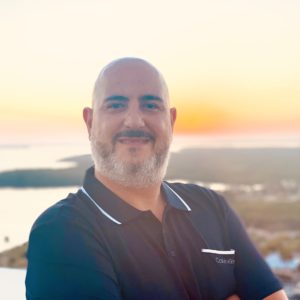
Marwan Haddad

Haddad is director of hotel sales for The Westin Cape Coral Resort at Marina Village, in Florida. Before joining Cape Coral Resort, Haddad was sales leader of international, airlines, tour and travel U.S. account sales for Marriott International.

Even if you know Orlando is open for business, would you go? Or, more to the point for the folks at Visit Orlando, would you plan your return to in-person meetings there?

To convince planners that Orlando is taking “trailblazing steps” to safeguard meetings-goers was the challenge, and Mike Waterman, chief sales officer for Visit Orlando, says it was met during a virtual FAM that took place over three days last week.

More than 600 planners logged into the Zoom gathering from as far away as Canada, Brazil, Costa Rica, India, Japan, Monaco, Peru and the United Kingdom, Waterman says. They watched presentations and video from 26 venues, ranging from Orange County Convention Center and Orlando International Airport (MCO) to a panoply of hotels and resorts.

“We have successfully hosted live meetings in our hotels and resorts as well as our attractions,” Waterman says. “We’ve shown that we can have safe, productive meetings.” Florida currently has no restrictions on meeting sizes, nor does Orange County, which includes Orlando. But Waterman notes that “most hotels and parks have their own”—typically, 35 to 50 percent of space capacity.

In addition, Visit Orlando was eager to underscore that the convention center, airport and many hotels are GBAC Star-certified in safety and hygiene. And that the DMO has partnered with Orlando Health to offer complimentary consultation to planners from a “medical concierge.”

Each of the three days offered a half day of content, with breaks made fun by the team-building company Play With a Purpose that included virtual game shows that incorporated fam trivia, as well as ‘80s and ‘90s music, movie and theme park trivia. Participants were able to join via a QR code on their phones or via a weblink.

No FAM is complete without swag, and giveaway prizes provided by participating Visit Orlando members included gift baskets and complimentary hotel stays, spa treatments, golf, dinners, attraction passes and airline tickets.

Waterman says about a third of the agenda was prerecorded, and chief among the lessons learned by the experience is to get even more in the can beforehand. “That way we have it already done, and we can just roll with it,” he says.

Overall, he judges the FAM “an overwhelming success.” And if the feedback from Lyn Podolski, senior buyer for Meetings & Incentives Worldwide, is any indication, he’s right. “I thought the way it was done was great,” she says.  “Having the interactive games in between really kept things fun and interacting. The team did a great job with keeping everything on time; some days were even shorter than listed on the agenda.”

Hybrid is the new black. And Hilton wouldn’t be caught dead without it. To meet anticipated demand by planners and attendees as in-person gatherings ramp up, the hospitality company has debuted Hilton EventReady Hybrid Solutions.

The new suite of offerings, which Hilton says will continue to evolve, directs event planners to Hilton’s hybrid-ready hotels while also providing them with planning resources—including an expanded “Hilton EventReady Playbook” and customer offers.

The initial rollout focuses on an in-person component of 20 or fewer attendees, though Hilton says the program will grow as people return to their ballrooms in greater numbers.

“Hilton EventReady Hybrid Solutions were born out of our continued commitment to excellence—from accessing the capabilities of our global portfolio to rolling out a suite of extensive event planner resources and introducing team member training to ensure we can deliver the optimum overall event experience,” said Martin Rinck, executive vice president and chief brand officer at Hilton.

Hilton EventReady Hybrid Solutions has already begun rolling out globally. An expanded hybrid events chapter of the “Hilton EventReady Playbook”—featuring case studies, pro tips, a glossary of hybrid terms and more—is also available in English for customers working with any of its hotels.

Hilton’s hybrid-ready hotels, it’s promised, will offer the “baseline requirements that customers should expect when hosting a small hybrid event.”

  • IT readiness: Each hotel will have completed an evaluation to make sure available IT bandwidth and infrastructure meet the requirements of small hybrid events and can provide easy access for virtual attendees.
  • Multisite offering and express agreements: These are incentives for planners to book the in-person portion of their events at multiple hybrid-ready Hilton locations, as well as to create a “more seamless contract experience,” says Hilton.

In partnership with Hilton, Encore (formerly PSAV) is offering several event technology packages created for small hybrid events at participating hotels, in addition to Presentation Stages, a production-ready event solution equipped with broadcast technology and staging equipment for a high-quality online event. Hilton properties with this event technology can accommodate up to six on-site presenters and 50 in-person attendees.

2020 was the year of functionality. 2021 is the year of user experience, according to Howard Givner, founder and executive director of Event Leadership Institute (ELI). This prediction came during a webinar hosted by ELI, “State of the Event Industry 2021.” Attended by more than 1,500 event industry professionals, Givner shared more than 25 predictions for the meetings and events industry.

In addition to Givner’s insights on the future, he shared what he believes meetings professionals should set their sights on—and what they should look out for.

Hybrid Events and In-person Unpredictability

Givner has a misgiving about the initial return to in-person events: unpredictability of attendance. “I think you’re going to see attendees wanting to wait until the last minute to register; they’re going to wait to book travel; and of the people you do register, you may get a lot more no-shows than we are used to.”

He thinks the counterbalance could be increased attention to virtual events. “There’s a ton of money being put into virtual events platforms,” Givner says. He referenced Hopin, a virtual venue platform that raised $100 million over the last two months, to show just how much confidence there is in the future of virtual meetings.

Such funding should significantly increase the production value of the virtual event landscape. “It’s really going to make a big difference in terms of what the user experience is,” he says.

And with this should also come a different experience for the at-home attendee. “When you look at hybrid events, the remote audiences are going to start to get unique, exclusive content that the in-person attendees are not getting. This is where a lot of hybrid events fell short in the past,” Givner says.

He used sporting events to underscore his point: Post-game interviews and highlights are seen by at-home audiences and not by live attendees, giving a totally different and immersive experience the live audience can’t get. Meeting professionals, he says, should ask what they can borrow from this to make their virtual experiences something special and different, too.

The Flipping of Hybrid Events

“Hybrid event planning is going to be flipped,” Givner predicts. Meaning what exactly? Long story short, it was traditionally the case that meeting in person was at the center of event planning, and cameras and virtual attendance were afterthoughts. “Moving forward, I think we’re going to start with the virtual event first, as the base.” This could mean that cancellations, COVID-related or otherwise, will be less likely. Once everything subsides, the in-person component may become the add-on.

Givner admits to having mixed feelings about the current shift in room setups. “I appreciate organizations trying to make this work, but just because you can do it doesn’t mean you should do it,” he says. Spreading out as far as we can to be socially distanced “isn’t really even that effective,” according to Givner.

“What not enough people are talking about is venue economics,” he says—in other words, allowing 100 people in a room designed for 1,000. That decrease in people often translates to a decrease in revenue. While it may work for the time being, Givner questions its sustainability.

Virtual as a Marketing Opportunity

Howard Givner

For organizations whose primary revenue source is not the event but its products, going virtual is an incredible marketing opportunity, Givner says, but what’s needed is a shift of mindset from viewing your event as a revenue source to that of a marketing vehicle.

As an example, he cites a Microsoft event in 2019 that was held in person (at $2,400 a head) and had 6,000 attendees. Microsoft’s events lean toward its products, so the more eyes, the better. In 2020, when this same Microsoft event went virtual, it garnered attendance of 197,000 people—but entry was free. As the focus was less on generating revenue, the company reaped a huge spike in potential customers.

A Strong Demand for In-person Meetings

Despite the many positives of going virtual or hybrid, many planners—and clients—still can’t wait to be face to face again, as evidenced by another participant in EIC’s webinar, Eric Altschul, CEO of Global Services, a subsidiary of the recently assembled Etherio Group, a meeting, event and incentive provider.

While Altschul is certain his organization will keep events hybrid, he and his team are trying to figure out the best way to execute. “There are a number of trends that are going to stay with us, even as the pandemic passes. The most obvious is ensuring in-person meetings have a hybrid component. However, what is less obvious are the ways in which we will incorporate those who aren’t in person into the meeting, so they are able to connect with their colleagues,” says Altschul.

Altschul says Etherio’s 2021 has already started strong, with “incredibly strong demand” from many of its clients who are asking a return to in-person or hybrid meetings for later this year and early 2022, an auspicious sign.

Altschul believes we’ll also see more domestic incentive trips and a strong return to incentive travel in late 2022. “We are seeing a trend of senior leadership teams looking to reconnect, and the best, safest way they can do that is through takeovers of small, exclusive hotels and resorts,” he says.

Editor’s note: One of the best ways to learn how to host a pandemic-era meeting is to learn from others who are doing it. That is why we asked Desi Whitney, senior vice president of sourcing operations and industry relations with HPN Global to share lessons learned from their annual event.

At HPN Global, we host a partner event annually. Originally scheduled for October 2020 at the Hard Rock Los Cabos, Bill Kilburg, CEO, decided to ‘Lift and Shift’ Cabo to 2021 and ‘Stay Home for 20’. The event was moved to HPN’s hometown and hosted at Omni Scottsdale Resort & Spa at Montelucia from Dec. 6-9.

The group was comprised of 170 sales executives from HPN Global, hotels from across the U.S., DMCs, CVBs, and other industry partners–about 30 percent of the typical size for this conference. Director of Meeting Services Kiersten Perry and I went to great lengths to plan and showcase what a safe meeting looks like for the current time.

As is appropriate with today’s meeting landscape, we also included a virtual component. Planning for a hybrid event, plus adding on Covid health and safety protocols created new and immense aspects to the workload. However, it can be done! For maximum efficiency and efficacy, we suggest designating someone to take on each segment individually: the live event, Covid health and safety protocols and the virtual component. HPN Global partnered with Emergency Concierge International (ECI)—an All-Hazards Emergency Management company for meetings to review the agenda, identify potential hazards and offer Covid-related planning expertise.

A large focus in our planning phase was around thoughtful attendee communications. We received many inquiries about what protocols we would put into place which would lead people to decide if they felt safe attending. Virtual attendees were included and addressed in all communications so they could actively see what the live event component would look like.

In all communications, attendees were reminded to not travel if they felt ill or had anyone in their household feeling ill or testing positive for Covid-19 or the flu. Here are the protocols we shared with our attendees so they knew what to expect:

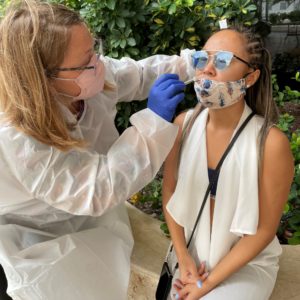
  • Onsite Covid-19 Rapid Testing upon arrival
  • Registration separated by plexiglass, with appropriately distanced lines
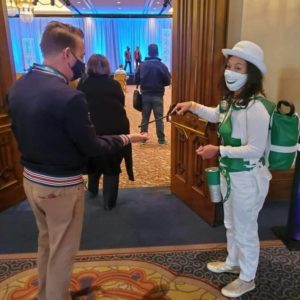
  • Attendees to complete a health questionnaire and have their temperature checked daily via kiosk to receive the bracelet of the day which would give access to each portion of the event
  • Masks required at all events (even outside and during receptions)
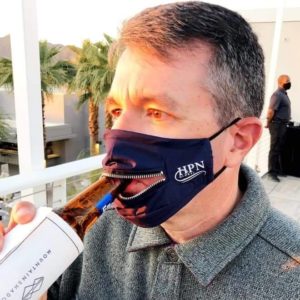
  • Receptions supported with a ‘keep your mask on unless in the act of taking a sip of your drink’ protocol
  • Crowd monitors to remind attendees of mask requirement
  • Reminder signage clearly stating protocols
  • Physical distancing reminders
  • Hand sanitizer placed throughout the event
  • Outdoor spaces used when possible
  • Meeting sets appropriately distanced
  • Hand sanitizer provided during the 1:1 appointments
  • Traffic flow management to avoid bottlenecks
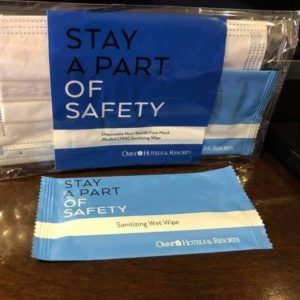
  • Omni Scottsdale Resort & Spa at Montelucia increased sanitization on high touch areas (Omni has a robust Safe and Clean program called Stay A Part of Safety. You can read about it in detail here.)
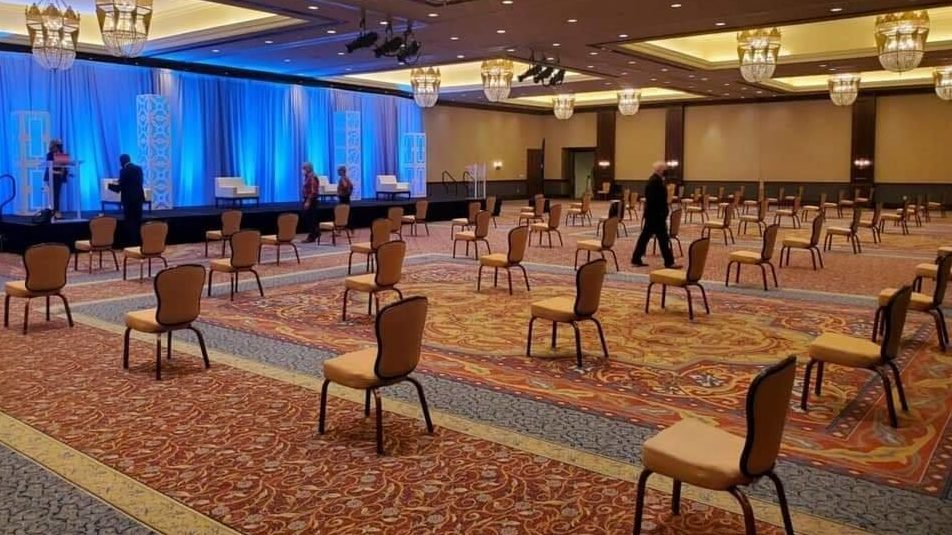
General session in socially distanced theater

In this group, about 2/3 of the attendees were experiencing their first in-person Covid-style meeting. We joked about how funny the theatre-style seating looked six feet apart. During the general session, we hosted a panel interview with industry experts that we sat 6 feet apart from each other which required us to have a rather wide stage. Bill and I had lecterns set on the opposite ends of the stage which made a comical back and forth talking to each other from 48 feet apart to keep our distance from our panelists. The first row of chairs in the audience sat 8 feet back from the stage.

The in-person 1:1 appointments were spaced 6 feet apart with attendees on opposite sides of a schoolroom table. Attendees were asked to not be in the room unless actively engaging in an appointment.

Food and beverage functions were successful (and delicious!) with physically distant buffet lines served by attendants behind sneeze guards. Tables were set for 4 to allow for distance between the attendees.

We included a bingo teambuilding component outside. Cornhole was also a success, with bags refreshed between use and hand sanitizer encouraged. It was clear from this event that people are in great need of being together and networking.

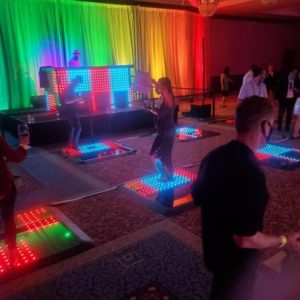
For the grand finale of the program, we hosted a New Year Party complete with a physically distant LED dance floor—a great way to have a fun dance party and keep everyone safe. Dancing with a mask on is a game-changer; prepare to get your cardio on!

Signage could not be overdone. As human beings, we need constant reminders when trying to change behavior. Attendees received text messages throughout the program to set expectations about wearing masks at all times. If you’re someone who hasn’t had to wear a mask for an entire day, prepare and maybe even practice wearing a mask for a long duration before attending your next live meeting.

MoreWill Constant Mask Wearing Save the Meetings Industry?

To say that everyone was excited to attend would be an understatement. The energy created from gathering in person is unparalleled. Our friends at Omni came together in a big way and executed flawlessly. There was a definite buzz coming from everyone involved.

With the right team in place, time and thoughtful planning, safe meetings can happen. We can’t wait to get back to the business of meetings in 2021.

Check out the video recap HERE.

When members of the Smartie community reach out with an idea, we listen. So, when Megan Finnell, director of meetings and conferences with MGMA, pinged me with an invitation to join Clubhouse, I jumped on it.

For those who haven’t had a chance to sit in on some of these high-energy conversations on what is billed as a drop-in audio chat social media platform, the iPhone-only, invitation-only feed seems to be popping up everywhere, including an exclusive announcement from Elon Musk about Dogecoin (another cryptocurrency for those not yet in the know). It now numbers more than 2 million members, and that FOMO while you wait for an invitation is only part of the appeal.

The good news is, no silly TikTok dance videos or Bernie mitten memes.

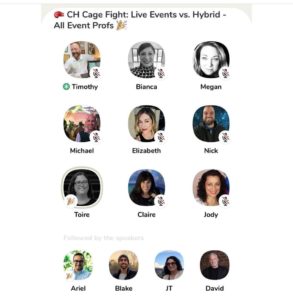
Like an in-person event, the quality of the content is as good as the people in the room. Rooms are formed based on topics listed in the “corridor” of the app feed and sent out in push notifications to those who follow topics or members. Speakers are “on stage” in the top part of the screen and audience members below can raise their hands to be called up to share their expertise or ask questions. Moderators keep the conversation moving.

When I saw a notice for a room opening up called “CH Cage Fight Live Events vs. Hybrid” featuring Smart Meetings Planners of the Year Timothy Simpson (brand and engagement chief strategist for Design Studio by Maritz Global Events) and Elizabeth Sage (associate director of events and trade shows with Illumina), I had to listen in.

Michael Greto, founder of The Chatt Hill Company in Atlanta, who was one of the moderators for the session, explained later that the ability to hear the nuance and tonality in people’s voices makes it a far better platform for connecting than text-based Twitter or Facebook.

“People are more vulnerable, and there is immense breadth and depth of information being shared here,” he said. He suggests that newcomers (who are designated with a celebratory hat on their avatar) start by listening to learn. “You don’t have to be the loudest voice. Don’t be afraid to ask a question,” he said.

Conversation-Based

Similarly, Rachael Green, who bills herself as a virtual mixologist and hosts “Rach Green Cocktails” for interactive streaming sessions, has fully embraced the platform. She received her invitation just before Christmas and now spends six to nine hours a day there. It has become her sole avenue for research, sales, marketing and networking. “It is the most influential platform for moving the needle because it is based on conversation,” she said.

“As you build your tribe, you can find people aligned with your interests. It creates a sense of family,” she explained.

Green called the platform a natural fit for meeting professionals and compared it to a convention center with many events inside. Planners design an event by creating a room, choosing a compelling topic, inviting interesting speakers, moderating the discussion and calling people up on stage.

“It has the value of podcasts, but with the added benefit that you can listen passively or raise your hand and join the conversation,” she said.

A Lovefest

In the session I attended, speakers were assigned “pro virtual” or “pro in-person” positions and asked to argue their side to the death. One of the “fighters,” Nick Borelli, who is the new director of marketing growth with Allseated, joked afterward that the cage fight turned into more of a love fest as everyone agreed we just want to get back to meeting in person.

Until then, we have Clubhouse. Now, when I am “doomscrolling” and see the notification about a planner talk pop up on my phone, I almost always click, even if I only have time to listen in for a moment before poking my head into the next room.

An International Water Cooler

UK-based event manager and speaker Juliet Tripp explained in a blog post what she learned in her first 24 hours on the platform she thinks could replace those “water cooler moments” in the work world.

To start, she suggested putting some thought into a bio and picture that represent who you are and coming up with an elevator pitch quickly so you can explain your product or service when called. Following people will unlock more conversations and rooms. Tripp also advised experimenting with different times of day to check out what happens across different time zones.

“Say yes, figure it out later! To speak, to host a room and moderate—dive straight in and get involved,” she urged. Then champion others by giving them a shout out or invite them up on stage.

Also, “Don’t be afraid to walk away from rooms and from people—if they don’t make you learn, inspired or feel good,” she said. The “leave quietly” button is there for a reason.

Tripp sees Clubhouse as a valuable experience, but also just the beginning. She suggested following people who inspire you on other social media platforms to keep the communication and collaboration going.

Meeting professionals are eager to know not only when meetings will start happening again in the flesh, but what they will look like. More hybrid meetings? Tests for immunity? COVID screening? Branded facemask giveaways? We asked the experts to peer into their crystal balls.

Visions of a Cleaner, Busier Future

Although Jan Freitag, senior vice president of lodging insights at STR, calls the current economic state of the hospitality industry “dire,” and has the numbers to prove it, he is an optimist about where the industry goes when the bans are lifted.

First, where we are now: The weekly data is showing year-to-year RevPar (revenue per available room) down more than 80 percent. That is the steepest decline recorded in the 30 years hospitality data analytics company STR has been tracking heads in beds—more than after 9/11 or during the recession of 2008.

“It implies that meetings and conventions have come to a complete standstill,” he said. Corporate travel has evaporated, and leisure travel is nonexistent. He attributes the 21.6 percent occupancy recorded last week to first responders who can’t go home to possibly infect their families, airline crews, truck drivers, people in transitions and homeless people who are being housed in hotels to limit the spread of the disease. Even that activity varies by region and is mainly taking place at economy properties.

“The numbers could look like that for the foreseeable future,” he said.

That was the bad news.

The better news is that, based on what he is seeing in China, “the impact is finite.” The good news for the 665,000 hotel rooms in the United States currently closed is that hotels reopening in Asia are seeing guests arrive fueled by what is being called “revenge consumerism” or “venge tourism.” Pent-up demand is taking the form of aggressive spending and travel.

Freitag predicted that corporate travel, the second leg of the hotel occupancy stool, will take a little longer to recover, as CEOs and their legal departments weigh the liability of asking employees to expose themselves to risks that might still be out there, even as their sales managers itch to make up for lost time.

He was also optimistic about the third vital source of income for hotel room demand—group travel. “If all the meetings planned for the fourth quarter happen as planned—even if attendance is a little light—and a portion of the meetings planned for the second quarter are moved into the fourth quarter, that could result in compression and an uptick in room prices,” he said.

Freitag cautioned that U.S. recovery could take longer than China’s upswing because not all states sheltered as aggressively as in the tightly controlled Asian country. That means that the disease could linger here longer.

Along with the regional differences, Freitag identified two new demographics to consider in the traveler profile. Those who contracted the disease and recovered now have presumed immunity and may feel more comfortable traveling, while those who did not catch COVID-19—or were unaware of having it because they had no symptoms—may be more hesitant about being around crowds again.

That dynamic could change how hotels and events market themselves. Whereas spas and shared group experiences were highly desirable amenities pre-COVID, brand attributes of cleanliness and safety could engender even greater loyalty, at least in the near term.

A Sci-Fi Solution
COVIDHoward Givner, founder of Event Leadership Institute, agreed that the recovery will not be like flipping on a light switch. “There isn’t going to be an all-clear signal,” he said in a note to subscribers. “No giant bell that will be rung to usher in a recovery.”

He predicted that post-COVID meetings may retain a significant digital component. “Now that we are comfortable having virtual beers with colleagues, we know that while it may not be a true substitute to meeting in-person, it’s a lot closer than people thought.”

In fact, he predicted that streaming might be that necessary baby step. “Virtual meetings will lead us out of the storm. They are a risk-free option that requires less lead time, has a lower price tag and a higher ROI.”

How will we know when the technology has matured? Look for new virtual events being announced (as opposed to in-person events turned into virtual), charging for virtual events, experiential marketing and event agencies engaged in planning and execution. That is when you know they have hit their stride.

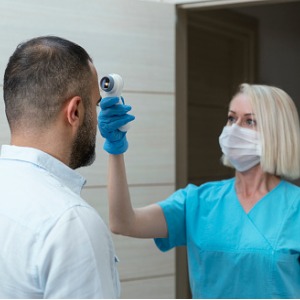
What would really get people back meeting? Givner suggests that instant testing could allow venues to set up screening stations, similar to metal detectors now at most public buildings, to ensure that only healthy people are in the building. “It may sound like a scene out of a dystopian sci-fi movie, but this may very well be our reality in the short term.”

Some tech platforms are making COVID screening as simple as a few thumb taps on your phone. JobSiteCare recently introduced TextBadge, a technology that works with all mobile phones and lets employers screen for symptoms and verify its COVID lab testing results before interest with fellow employees.

Red Level’s COVID ClearPass app, which will let employees screen for COVID symptoms and share information vital for the protection of fellow coworkers before entering the workplace. Clearpass also makes it easier to manage the number of employees in any one location to comply with local regulations.

When in-person events do come back, Givner predicts that they may be smaller and more regional, as some parts of the country reopen before others. “Improved hygiene is a given, staggered seating in general sessions and breakout rooms could be more common, but how to stay distant at a cocktail party?” he asks. This will largely be a process of trial-and-error. Event organizers will learn what works in which situations.


Solving Last-Mile Anxiety

COVID screening

Humphrey Ho follows trends in China for U.S. destination clients, including Travel San Francisco, and he was heartened by the dramatic increase in travel as soon as quarantines were lifted in Wuhan, particularly in outdoor areas. Search traffic shows great pent-up demand, leading him to believe that when the rebound comes, there will be a net increase in trips to the United States—California, in particular, due to the tragic coronavirus news coming out of New York. “That is a coastal change, as New York City is almost always the most-searched destination in the United States,” he said.

Ho predicted that airlines, hotels and convention centers will make health safety part of their branding by talking about medical-grade air filters in rooms and on planes, putting sanitizers in plain view around venues and promoting the frequency of cleaning in public spaces. That will assuage any “last-mile anxiety,” he said.

“The United States already has a reputation for having stringent standards and transparency about things that go wrong, and Chinese audiences appreciate that. They have an innate trust in American products, and that will translate into a desire to visit the places they missed when they couldn’t travel,” he said.

Ho is looking forward to a U-shaped recovery in the United States that accelerates when antibody testing or a vaccine is in place.

Like many others, he thinks some things will change for good. He envisions more robots in hotels, more app-based communication and use of alternative spaces, such as presidential suites, to host smaller groups at big conventions.

Rethink Operating Terms
COVID screening

Ian Cummings, vice president and global commercial leader of CWT Meetings & Events, has been weighing all the possible rebound trajectories—from the most optimistic to the “black swan” scenario, in which life will never be the same. “The hospitality sector seems to be leaning towards a Q4 recovery, where we start to see bookings return and postponements delivered in October and November,” he said. He thinks this may be plausible based on how the industry behaved post-SARS, 9/11 and other major disruptions.

“It’s encouraging to see China beginning to emerge from the crisis and inquiries starting to happen again, but it’s early days, and companies and agencies that survive will be moving forward with caution,” he said.

A lot will be different when we begin to return, he cautioned. It’s likely group sizes will be much smaller, more events will be local, there will be less travel, meetings will be shorter and, hopefully, wider audience will be reached via digital. He also envisioned more hybrid meetings and health screenings for mass gatherings involving sports, music and events running into the thousands of attendees.

Safety and security of our attendees will be more important than ever,” he said. Meeting professionals will need to follow all health guidelines for gathering, small or large, and be clear on the value and ROI to justify the gathering. Live streaming could make up the difference, while reaching wider audiences with hybrid meetings and exceptional content creation.

Cummings suggested a reset of some standard parameters within which the industry previously operated, such as cancellation terms, payment terms and deposits, to ensure that meeting professionals are doing the right thing for customers, suppliers and attendees.


Editor’s Note: Special correspondent Kate Patay recently traveled to Atlantis Paradise Island, Bahamas, to host a strategic board planning meeting for the industry nonprofit SEARCH Foundation. We asked her to share her experience door-to-airport-to-pool. 

There was an underlying current of frenetic energy as I boarded a flight at Reno-Tahoe International Airport (RNO) with my passport in hand. I was taking my first international business trip in nearly a year. All the planning, all the what-ifs, everything I had been preparing for….it was here.
This wasn’t a nervous energy. This was excitement! As someone who has traveled over 100,000 miles annually for over a dozen years to work with hospitality professionals around the globe, I can see just how hard our entire industry is working towards recovery in a safe, responsible manner so people will feel comfortable meeting F2F again. While it is still early days in moving the needle forward for meetings and events, I felt it was important to test the risk mitigation plans for myself to see what really works.

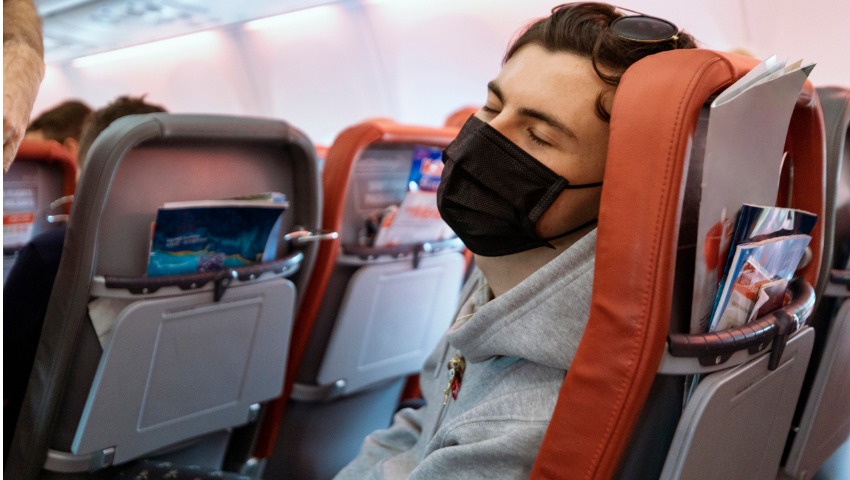
I’ve taken a handful of domestic flights this last year when what we needed to do could not be accomplished with a Zoom meeting, so I was aware of what the airport experience would be. If you haven’t yet been back in air, I can tell you that this is the cleanest, most sanitary I have ever witnessed. In fact, it’s one thing I hope we keep up with long term. If we’re trying to find silver linings from Covid, this is one of them.

📍 Smart Tip: Bring multiple masks so you can change them throughout your flight. It’s much more comfortable than wearing the same mask for that length of time.

Island Conditions

I flew into Lynden Pindling International Airport (NAS) in Nassau, Bahamas, a few days early to gather information and confirm that things were being done right before I welcomed in a dozen of our board members for a strategic planning retreat. The long list of pre-arrival safety protocols were thorough, to say the least.

  • New visa requirements: To travel to the Bahamas you now need to apply for a visa ($40-$60 depending on your length of stay) and upload your passport and a negative Covid PCR test that was taken within 5 days of arrival. Bonus: the visa covers both any medical-related expenses and follow-up Covid tests every 5 days, which Atlantis offers on-site in their beach tower.
  • Safety bubble: Atlantis Bahamas has created a “safe zone” on Paradise Island where employees are tested regularly. An on-site health clinic and strict protocols on-island ensure a stay that is as safe as possible.

I located my driver and he extended the typical Bahamian warm welcome and thankfully helped with my heaviest bag. Mask, gloves and plexi were all present. I’ve always enjoyed chatting with drivers as they offer great insight on the destination, but I have to be frank…it’s not so easy with a partition and both of us wearing masks. In time we’ll all adjust, but my ears have not yet acclimated to mumbled mask conversations yet. #RealTalk

📍 Smart Tip: Keep a printed copy of your dated negative Covid test handy, as you’ll need to show it to get through numerous control points until you’re through the security checkpoint at Atlantis. The paper version is easier for people to read from a distance than looking at the screenshot on your phone screen.

Arrival Experience

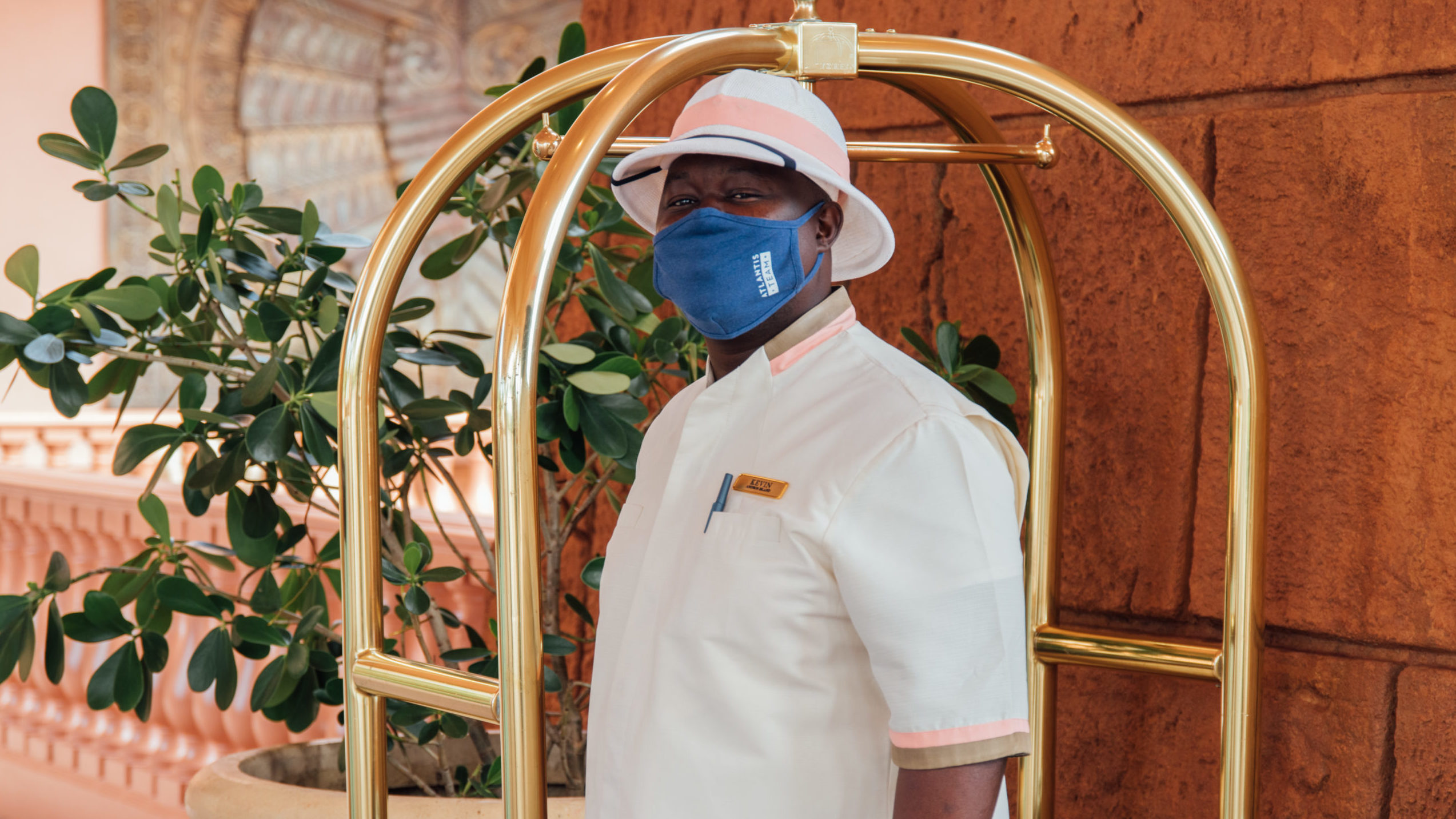
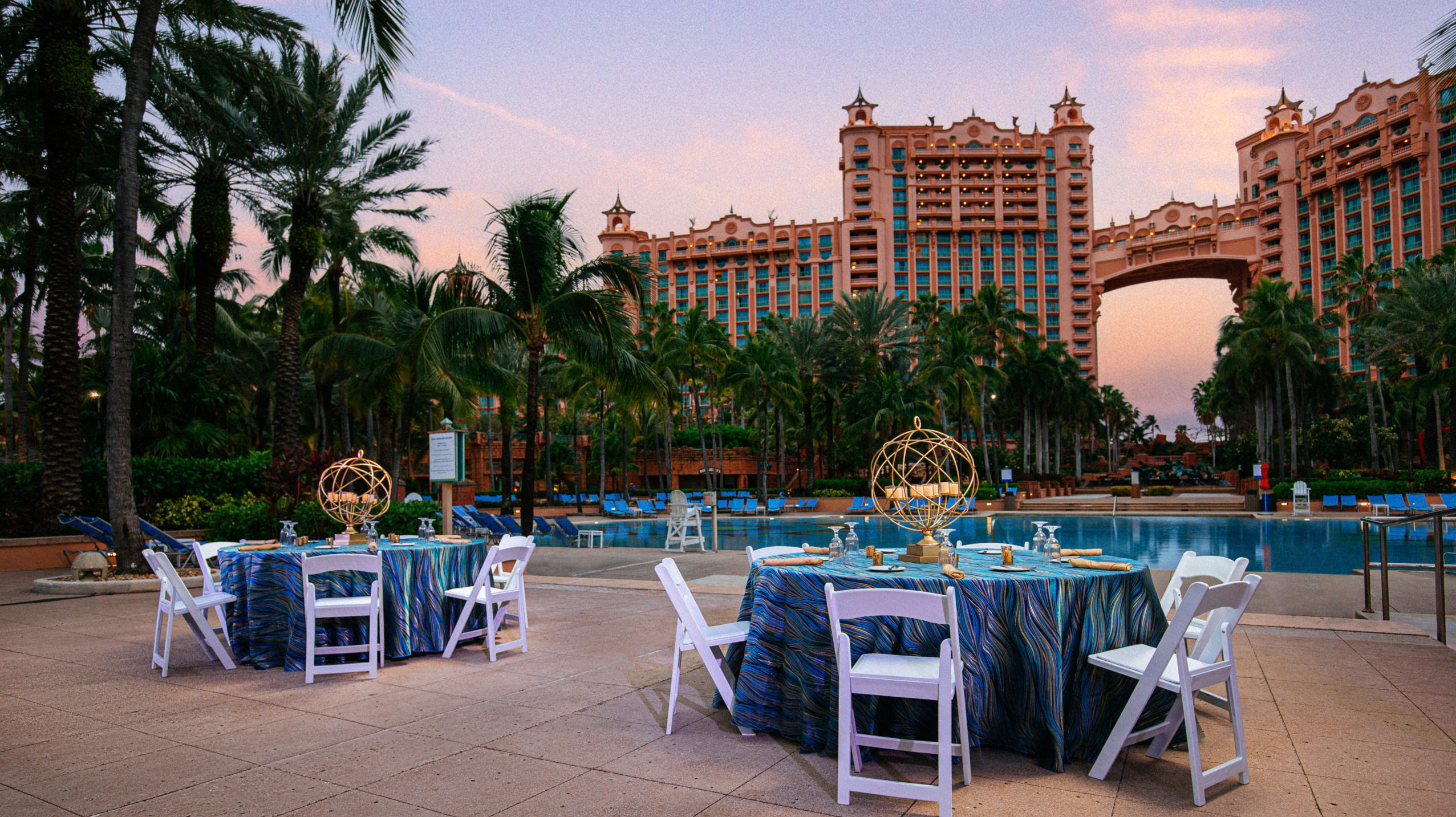
Upon arriving at the Royal Tower, I was greeted and escorted to the front desk, from 6-feet away, of course. Bell services are still offered, and you can see them trading out clean carts, sanitizing regularly and wearing PPE. Upon entry I went through a thermal scan before approaching registration, which was outfitted with clear line demarcations, each with hand sanitizer conveniently located prior to queueing. As I approached the discreet plexiglass partition, I could see the smile in the agent’s eyes, welcoming me back to the property. There was a genuine feeling of hospitality and warmth exuded, even through PPE. The property and its employees are genuinely happy to be welcoming guests back and they take safety precautions incredibly seriously. You can tell they’ve been trained on the importance of following guidelines so we can continue to reopen and recover. There’s a bona fide air of courteousness and respect for following the guidelines, which helps to put guests at ease and feel like they are part of the solution.

MoreWill Constant Mask Wearing Save the Meetings Industry?

The rooms in the Royal Tower have been remodeled and they’re beautifully appointed. While I was there, finishing touches were being applied on a refresh of the Cove and the Reef so everything is new, updated and clean. The property has also managed to discreetly work in sanitizing stations at nearly every turn. Upon entry to any outlet, you’re asked to both sanitize and scan QR codes for menus to keep interactions as touchless as possible.

This quote from Bryan Gay, senior vice president of Group Sales at Atlantis Paradise Island, was the tipping point that made my decision to hold the gathering here an easy one: “Atlantis is working to set a standard in meeting safety with extensive health protocols in place, from innovative disinfection technology and contactless and alternating check-ins for high-volume groups, to reimagining our spaces for social distancing—all while maintaining the integrity of service and high-quality guest experiences the resort is known for. Authenticity and a sense of place continue to lead us, especially as folks have gotten used to being at home and traveling less, and we aim to deliver that through our authentic Bahamian hospitality and new local, bespoke experiences that are intimate and unique.”

A Clean Green Focus

An exciting new initiative, which will carry over into meetings and events, is continued sustainability efforts. Upon check-in guests receive a branded aluminum water bottle. Filling stations throughout the property advance a plastic-free initiative.

With so many sanctuaries on site for marine life and conservation, Atlantis Bahamas has always worked toward minimal waste and a reduced carbon footprint. That is more apparent now in F&B options for both dining outlets and catering.

Event with a Purpose

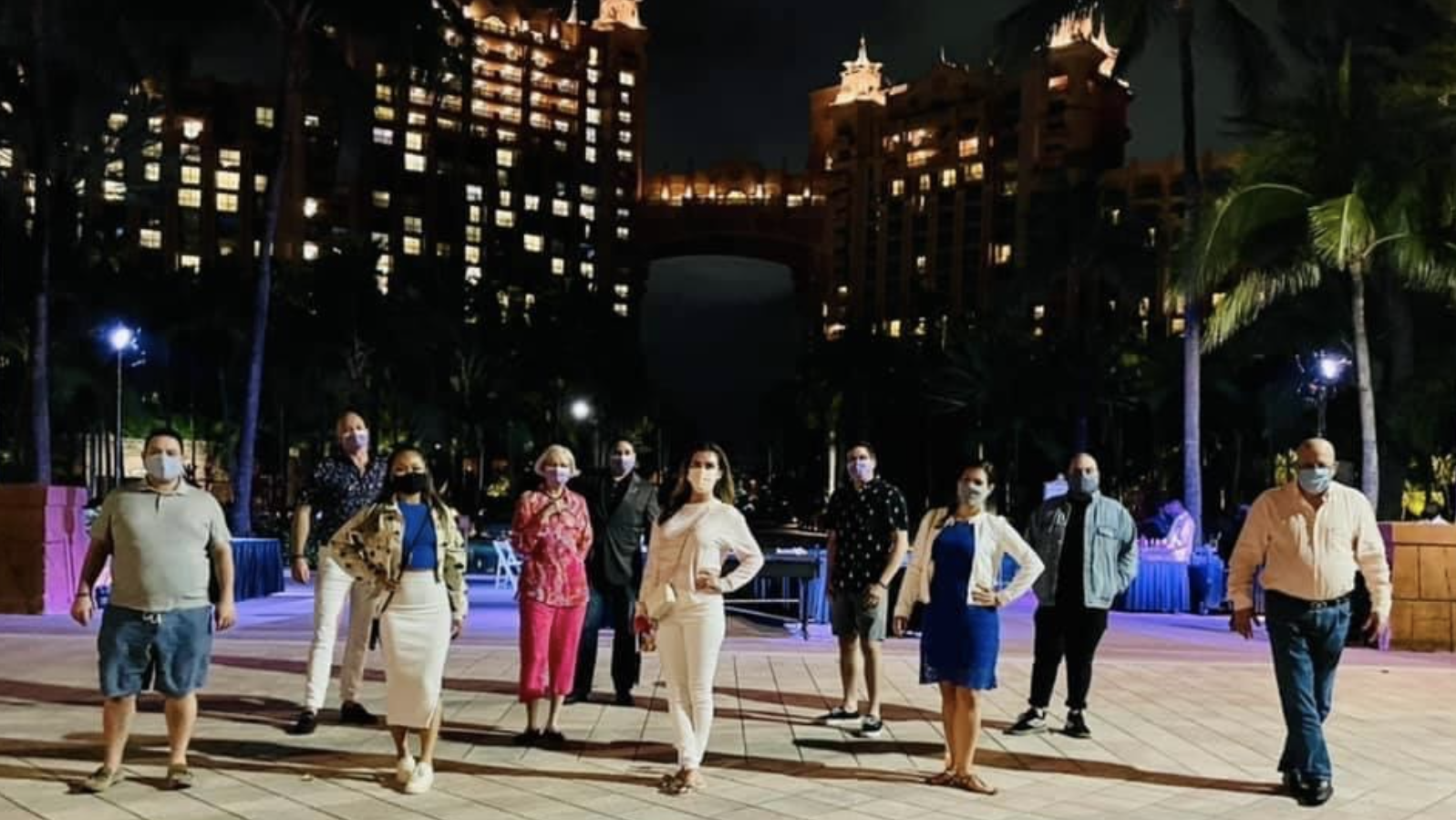
SEARCH Foundation’s annual strategic planning meeting Jan. 13-15 was the first group business welcomed back to the property since it reopened December 10. Not only did we have a lot of work to do to as a foundation to identify ways to continue to provide crisis relief to industry individuals in the midst of the largest crisis any of us have ever seen, but we had a group of some of the smartest professionals in the industry that could provide feedback and solutions for continuing to find ways to safely host in-person meetings.

SEARCH is a 501(c)3 that provides funding to hospitality industry individuals in crisis, with an average increased application rate of 48 percent annually. To date we have funded 100 percent of qualified cases and 2021 is on track to yet again distribute a record amount of grants, so increasing revenue streams and the generosity of our industry is paramount to our continued legacy of giving. This meeting helped significantly to identify these crucial resources, realistically budget and plan upcoming fundraising campaigns, events and partnerships while onboarding three new board members. Because not all 19 board members could attend, we provided a hybrid option for virtual attendees to still engage and feel connected.

Lessons Learned

Hosting a physical meeting during a pandemic was a measured risk, but there are some key takeaways we learned from this experience:

We will never be able to replace the value of face-to-face meetings. Our industry was the first to pivot to virtual and provide technology solutions to stay connected, but the amount of work that was accomplished with an in-person meeting was tenfold. The team was better connected and more enthusiastic. There is no replacement for authentic human connection, and seeing my colleagues and friends interact in such a heartfelt manner showed me yet again just how valuable our F2F meetings are.

This is our chance to shine. When we bring back our teams, it will be important to train them in the art of elevated hygiene and service. Every staff member personally impacts the guest experience. This trip was one of the highlights of the last year for me because I truly felt appreciated by the staff for visiting. They were genuinely happy to welcome all of us back and were properly trained on how to interact with guests through PPE and still be gracious and warm.

Our livelihoods rely on finding the solutions to get us back to work, and this team was “all in” and showed their gratitude. Linda, Clement, Ted, Bryan and every staff member I interacted with made a lasting impression. They are just as committed to getting back to work as we are, and I appreciate that about our industry.

There is a (much needed) hyperfocus on sustainability coupled with healthier options. The last few years were full of buffets and displays staged with a more-is-more mentality. Covid is giving us the opportunity to reexamine these options and make better choices for the environment and for ourselves. Areas for examination and improvement include:

  • Portion control
  • Sustainable serviceware
  • Healthier options
  • Less waste

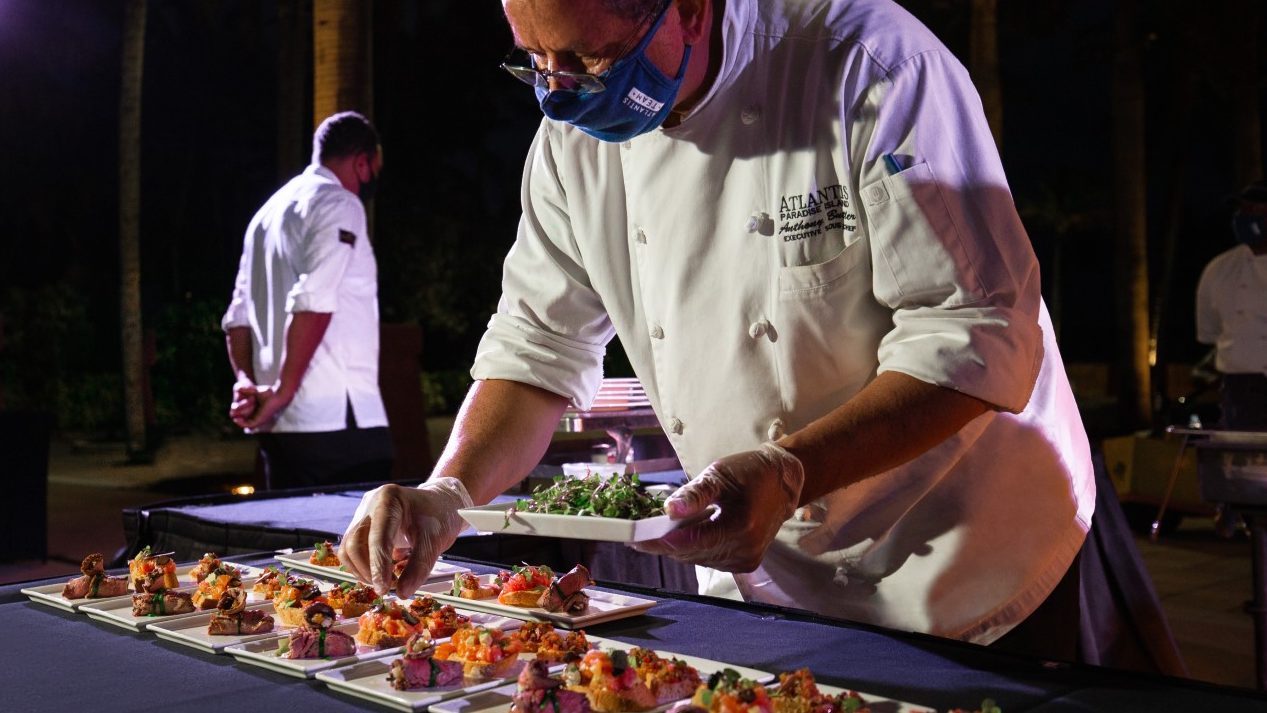
All things we should have taken more seriously are now non-negotiables. Investing in interesting serving vessels that are either reusable or compostable was one of my favorite things to see. As a former catering manager, I wanted to scream, “yes, finally!” As a guest, I felt like I was truly being catered to.

Invest in your tech. Have a point person. Check connectivity and signal. Build ways for the virtual guests to still have a VIP experience and feel connected with those sitting together F2F. We sent gift cards for food service delivery to virtual participants to join us in meal service and we conducted FaceTimes and Zooms during informal gatherings.

Allowing for smaller groups to break out together and have focused conversations on a specific topic before rejoining the group again was a key to the success of this hybrid event. It allowed for the virtual attendees to steer the direction of the conversation so they were active participants instead of semi-engaged bystanders.

Think outside the ballroom. While there was ample space in the ballrooms to meet, we’ve been given the opportunity to reimagine meetings. I think back to my first TEDx experience and how invested in the speakers I was when I was sitting in a beanbag chair instead of a ballroom chair. I was comfortable and relaxed, so they had my full attention.

We had meetings on patios, in a restaurant that wasn’t open until later in the day, near fish tanks, and breakouts were on beach chairs. This team was more productive than any board I’ve worked with and I’m so proud that SEARCH Foundation is on track to yet again raise and distribute a record amount of funds for meeting and event industry individuals in crisis this coming year.

Safety. Planning. Communication. We tested it all: temperature scans, daily health screening from 42Chat, consistent monitoring from the Health Ministry, PCR and rapid tests, sanitizer, branded masks, wipes, color coded wristbands, best practices guidelines, liability waivers, a compliance manager and more. We were constantly watching to see where human nature bottlenecks us. We made open communication a priority so anyone can safely convey their comfort levels, preferences and give everyone ownership of properly following guidelines.

Were we perfect? No. Can we learn from this and make our recovery stronger? Absolutely.

I chose to bring a group on an international trip because I see the fatigue in our eyes during Zoom calls. I see us slowly disconnecting in small ways. I see the despair and need for people to want to help be part of the solution and get back to work safely. I trusted this group and this property to do it right…I was not disappointed. We are #HospitalityStrong.

Kate Patay is a hospitality consultant and international speaker with a focus on strategy and client relations. She is chair of SEARCH Foundation and ambassador for Meetings Mean Business. Follow her on LinkedIn for practical advice and Instagram for behind the scenes looks at her travels. Contact her for more information on speaking or consulting.

We can be certain of two things. Firstly, the power of human connection will drive us together again; and secondly, that meetings will restart small and regional, and then grow in scale. Regional will be followed by national and finally global attendance. But what if we could kickstart that process?

In June, IACC broke from the hype of hybrid, to focus on multi-location events and developed IACC MultiPOD. The initiative is not a new product or single service, but instead a research- and development-led collaboration that brings venue, production, audiovisual, technology and content design together into an approach meeting organizers can embrace.

Working with Encore, Electro-Media Design and MindMeeting, IACC gathered the best informed, prepared and equipped venues alongside onsite technology teams and national partners to present a cross-venue technology solution that allows attendees to experience the same seamless event across multiple destinations.

Benefits for Event Attendees

  • Convenience, less time traveling
  • Reduced cost with less travel, making the meeting more affordable
  • A compact format that allows for deeper relationship-building between attendees
  • A broad outreach to other locations—offers a unique experience
  • Live networking and online networking with people further afield
  • Easy interaction and co-creation, both in groups, between groups and between individuals

Opportunity for Meeting Professional Arranging the Meeting

  • Less travel, less time commitment, lower cost
  • Potential for more attendees as a result of reduced cost, travel and time commitment
  • Less travel cost for presenters and speakers
  • Less risk than larger group gatherings
  • Smaller sustainability footprint
  • Lower risk of food waste associated with smaller groups
  • Broad outreach to other locations 
  • Offers participants intimacy in their own POD 
  • Easy interaction and co-creation, securing participant engagement
  • Unique participant experience
  • High-quality standardization between PODs
  • Regional uniqueness of each POD’s location
  • Easy multiple venue sourcing process supported by IACC 
  • Working with venue teams who are interconnected in the planning process
  • Access to IACC-endorsed hybrid technology providers
  • The best hybrid meeting technology platforms 
  • Venues collaborate on details such as event timings, break and mealtimes
  • Ability to strengthen the ‘one-event’ concept through inter-POD audience participation and gamification

An Industry in Denial

Up until the fall, most organizations, including associations and societies, remained hopeful that they would be running their 2021 annual conferences just like they did before. Many have now moved their thinking and expect that attendees will, at worst, be able to attend a regional meeting and, at best, a national one, with little chance for overseas travel.

With post-pandemic travel considerations, the multi-location meeting will take it place in the staple of meeting types.

Reaching Further than Before

Our past concerns about virtual attendance diluting live attendance are in the distant past. Now, there is clear evidence that virtual event attendees take on the FOMO mantra and yearn to experience the next event in person. Virtual offers a first taste and for many, in-person regional or national locations is the next step.

Howver, it is perhaps too simplistic to say that when we can travel again, we will travel again. At least to the degree that we did before. Instead, conference attendance may be more of a careful consideration as it relates to time away, cost and value. A multi-location meeting can easily include a virtual POD, or location, as the technology infrastructure is in place.

For those who gain value from traveling further to embrace new culture and ideas that come with long-haul, they will be able to do so, as multi-location means you can attend any location, not just your closest one!

Mark Cooper is CEO of IACC.

IMEX America may look different for a lot of reasons and Planet IMEX probably won’t be returning. A week after IMEX Group CEO Carina Bauer and her father, Chairman Ray Bloom, announced that they would be cancelling the May live gathering of IMEX Frankfurt, Bauer explained the thought process behind the decision, why the online presence for the rest of the year might look a lot different than the Planet IMEX experience launched after Frankfurt was cancelled last year, and what is in store in Las Vegas in November.

Value-based Decisions

The debate about if and when to cancel the annual European gathering of up to 14,000 event industry players hinged on the response to one question. “Can we create value for buyers and suppliers?” If you can’t deliver on your core purpose, then you are putting the future of the event in jeopardy, Bauer said. In the case of IMEX Frankfurt, even a slimmed down version would have brought 10,000 people from 150 different countries. Many of those suppliers start planning and investing months in advance so she didn’t have the luxury to wait and see. “As much as we want to deliver events to show they can be done safely, we have to look at the heart, what is your event for and whether you can deliver on that.”

Online Opportunities

The same question about how to deliver value in a changing environment is driving the decision about what to build online. Bauer needs her team to focus on IMEX America in Las Vegas in November and can’t afford the time required to build another Planet IMEX-scale online endeavor. “It will probably be completely different, smaller with a curated audience, not a scaled down version of last year,” she said.

The team is currently hosting focus groups and sending out RFPs to determine what shape the online version of a hybrid presence might take. “We also have to consider what the online needs will be once people can start meeting in person again,” Bauer said. “Those needs may be changing quickly in light of all the online fatigue.”

She is focused on how to create value for buyers and suppliers in the online world when people can’t be together in person. “We want to instigate business and peer to peer connections,” she said.

The other goal is to experiment on behalf of the industry. “If we can’t experiment now, when can we?” she asked rhetorically.

Bauer is even questioning the meaning of the word hybrid. “It just means ‘mixed’, right?” she asked with a chuckle. Yes, it can mean sharing content from a live event, she allowed, but also it can mean connecting between live events to keep the community and the connections going.

She is looking for something IMEX can do in a digital environment that might have value in the longer term when live events return. “Planet IMEX would not fit well with a live event,” she said.


A Natural Focus

Whatever the delivery platform looks like, some things will stay the same. “We will probably take the bigger content issues and dive deep into those,” she said. The theme for this year is “Nature Positive” and the goal is to advance the issues raised in The Regenerative Revolution Report.  The focus on the next generation of sustainability, not just reducing impact, but looking at the life cycle of everything and leaving a better place after an event will be key.

Another familiar note? Bauer plans to continue leveraging partnerships with associations that help everyone shine while sharing content.

Las Vegas Pivots

“We want to focus on getting the live show fantastic and there is a lot that needs to happen to do that,” said Bauer.

IMEX America will be different because it will make the long-planned shift to Mandalay Bay Resort and Casino, Las Vegas, where there is a lot of space to spread out exhibits and education and keep everyone comfortable. “We are focusing on the flow,” she said.

Bauer expects the largest industry gathering of the year to be smaller than IMEX America 2019, which brought 14,000 people to Sands Expo. “But we don’t expect it to be very much smaller,” Bauer said. Despite budget considerations, she reported that suppliers are saying they want to be there, they want to see everyone and promote themselves. “People want to come back.”