Michelin and Visit Florida have jointly announced that the latest expansion of The Michelin Guide, the bible of gourmands everywhere, is coming to the Sunshine State. The vaunted guidebooks, published since the early 1900s when French industrialist Andre Michelin and his brother Edouard wanted to stimulate road tripping—and thus the tires they manufactured—have driven chefs to both agony and ecstasy. And ever since, foodies have indeed traveled great distances in planes, trains and automobiles to sample the creations designated by Michelin as the best.
Currently, countrywide guides are published in Europe in nine editions. Regional guides span European cities, the United States, Brazil and several Asian destinations. In the U.S., the culinary havens of New York City, Chicago, Washington, D.C., Los Angeles and San Francisco are reviewed.
Las Vegas, which strives to go bigger than anywhere else—and is in continual competition with Orlando for meetings and events business—used to have its restaurants rated by Michelin. And with so many celebrity-chef outposts, deservedly so. Yet apparently that guide sold so poorly it was discontinued. The last guide covered 2008-2009.
Now Orlando appears to have an edge, at least on the Michelin Man front.
“Having the Michelin Guide inspectors visit Orlando to experience and rate our restaurant offerings will raise the visibility of our destination’s culinary superstars on a global scale,” said Casandra Matej, president and CEO of Visit Orlando in a press release heralding the news.
The inaugural edition of the Florida Michelin Guide will appear in 2022. And every year thereafter.
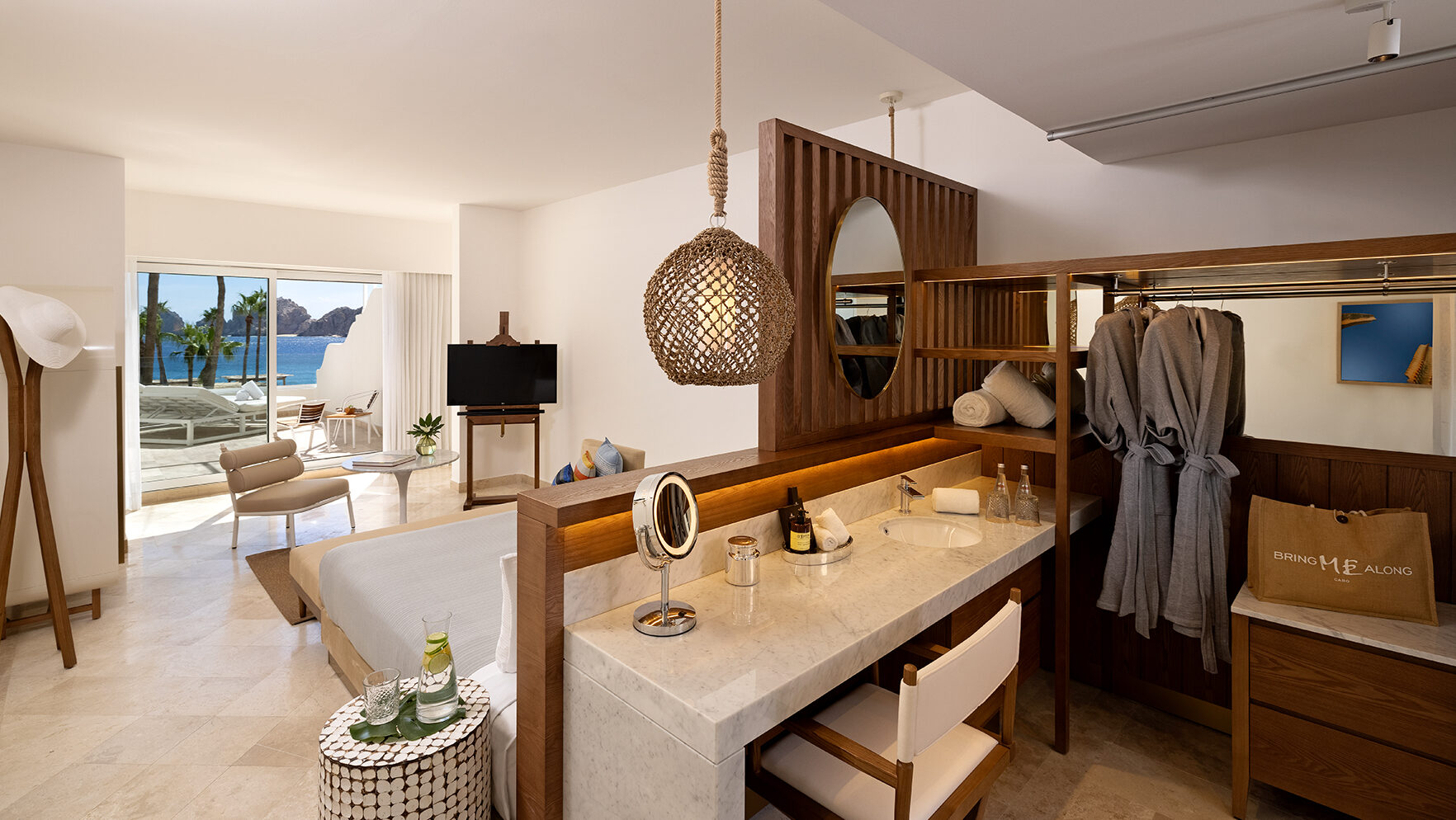
This 170-room property has reopened after a top-to-bottom renovation and the addition of four new restaurants. Confessions Skybar & Tapas, one of the new adds, is a rooftop bar and lounge that can host up to 500 guests, in addition to hotel’s previous 2,500-person event capacity, including the 1,225-square-foot Evolution Meeting Room. The property’s other dining selections include Funky Geisha, Taboo Beach Club & Restaurant and Mamazzita Mexican Soul.
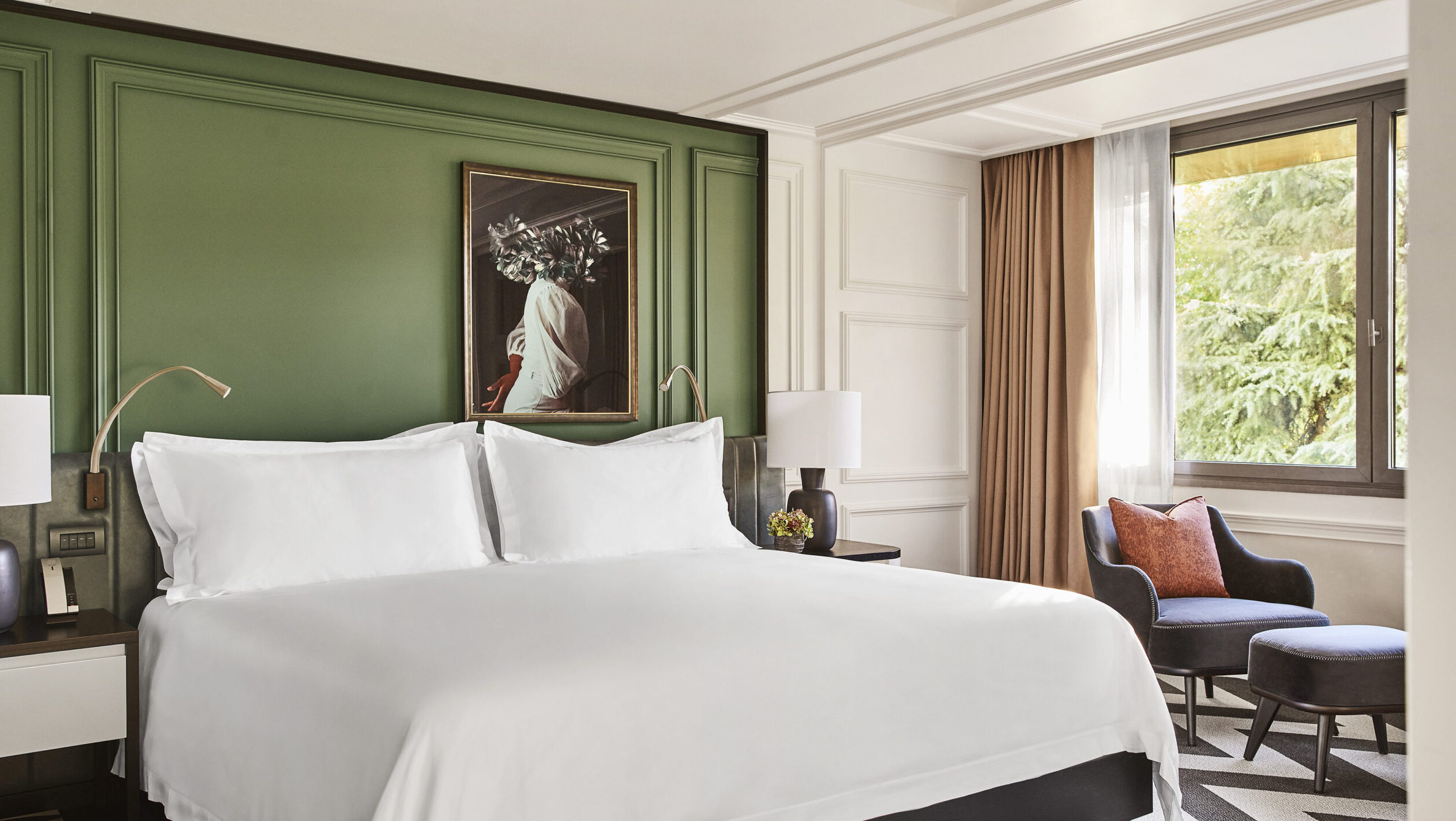
Rosewood’s first property in Spain, in Madrid’s Salamanca district, features 154 guest rooms, including 49 suites and four signature suites, and 11 meeting venues, the largest of which can host up to 500 attendees. This hotel is home to four indoor-outdoor F&B options, including Amos, inspired by Northern Spain’s Navarre community; and bar and lounge Tarde.o, reminiscent of an English club.
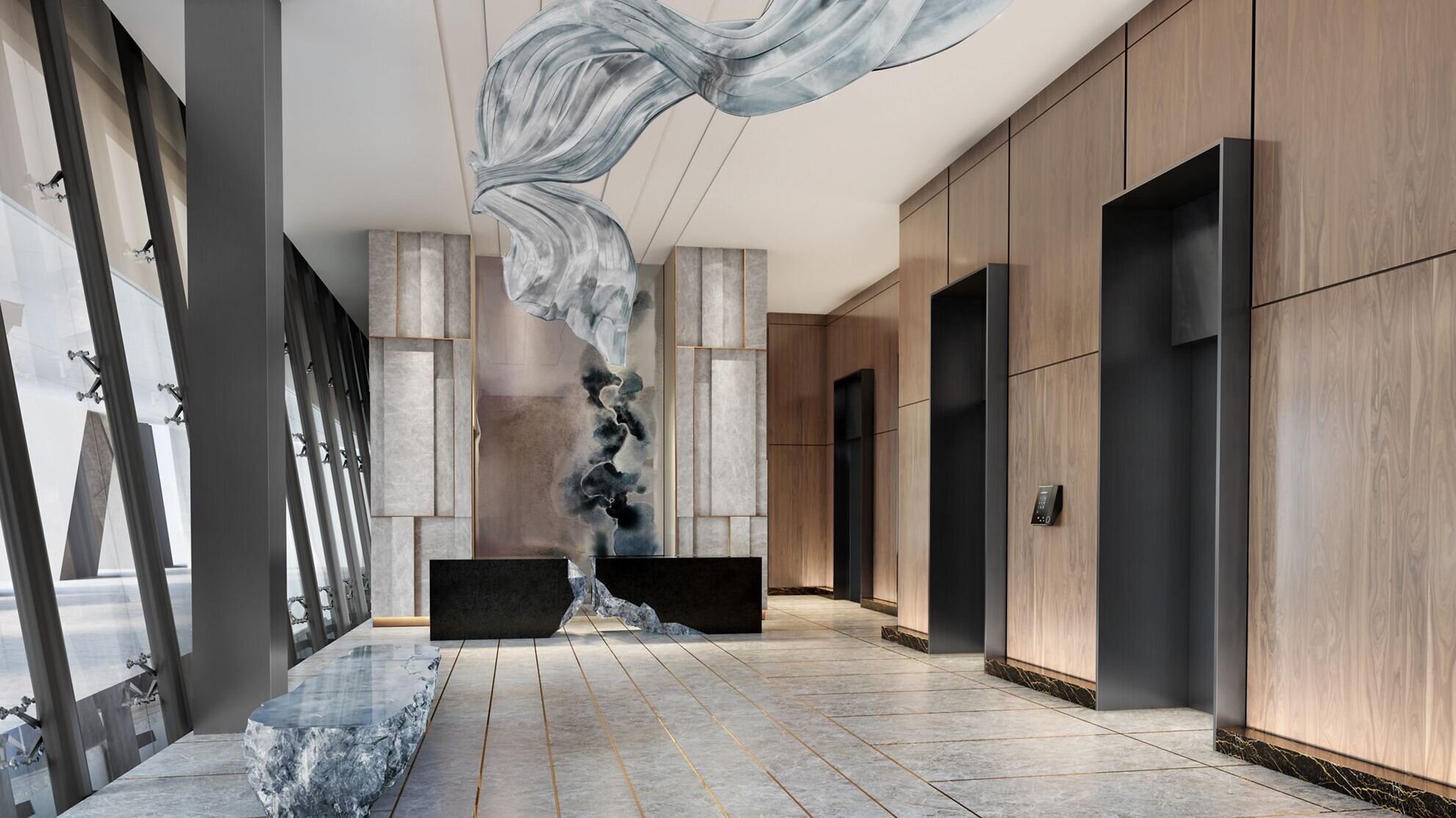
At 58 stories, the latest addition to Mexico’s capital sits among the tallest buildings along iconic Paseo de la Reforma. The property features 153 guest rooms, more than 5,300 sq. ft. of meeting space—overlooking Chapultepec Park—and its 38th-floor restaurant, Samos, where guests can treat themselves to Eastern Mediterranean dishes and handcrafted treats from the resident chocolatier.
Located near the Cancun Hotel Zone, this all-inclusive is the latest for the Hyatt Ziva brand. Guests will find 438 guest rooms, boasting Caribbean views and rainfall showers; 17 dining choices, ranging from American classics at La Parrilla to Caribbean catches at Balik; a two-story Zen Spa and more than 51,000 sq. ft. of meeting space. There are also many water-based activities to be had, such as Aquaerobics, water volleyball and water sports; on firmer footing, there are also Spanish lessons, cocktail classes and wine tasting, live shows and entertainment to be had.
The word “crisis” was not invented in 2020. Emergencies have hit meeting and catering professionals since the first ballroom was constructed. That is why in 1997, the nonprofit Special Event Assistance, Relief & Crisis Help (SEARCH) Foundation was established to help when a neighborhood is hit with flood or wildfire, a routine check-up results in a difficult phone call or a car accident leaves an event professional unable to work.
Unfortunately, the need has only increased in the last 24 years. The role of the board of directors is to plan and execute fundraising events, facilitate partnerships and raise funds and awareness so the group can continue its important work. Because the board is volunteer, all proceeds raised go to the fund.
The 2022 SEARCH Foundation Board of Directors is being announced this week.
“We look forward to expanding the reach of the organization with this strong and capable team, including the addition of nine Ambassadors,” said board chair, Kate Patay, CPCE of Patay Consulting. “Our ability to assist those in need will benefit immensely from the joint influence of this board and our supporters within the industry.”
2022 Board of Directors
Chairwoman: Kate Patay, owner, Patay Consulting
Vice Chair: Patrick McMichael, director of business development, Denon & Doyle
Treasurer: Larry Green, owner, International Event Products
Secretary: David Lombardo, owner, Lombardo’s
Immediate Past Chair: Rick Turner, event consultant, Forward Hospitality Group
Executive Advisor: Joann Roth-Oseary, president, Someone’s in the Kitchen
Directors: Nick Borelli, director of marketing growth, AllSeated; Judy Brillhart, director of catering and event management, Sheraton Commander; Evan Carbotti, designer and concept development partner, Carbotti Experiences; Mark Catuogno, CEO, MC Event Consulting; Thuy Diep, senior experience designer, Haute; Bobby Dutton, director, GBM6; Stephanie Jayko, president and CEO, Knockout Productions; Jolie Oree-Bailey, executive chef, Low Country Quisine; Michele Polci, director of citywide catering sales, Caesar’s Entertainment; Frank Puleo, owner, Framboise Catering; India Rhodes, partner, Wilkinson Rhodes; Thomas Whelan, director of banquets, Levy Convention Centers; JC York, president and COO, Classic Entertainment.
“SEARCH is pleased to have such dedicated leadership that represents many facets of our industry
overall,” says Patay.
The first regional SEARCH event is being planned in Boston on January 25, 2022.
You have planned a big online event. Now you need to market it and entice people to come to your event. A killer virtual event description is necessary to convince people to attend your event. Without this, no one will know your event is taking place. What are some ways to write an effective event description that will drive event attendance? Below are eight tips to keep in mind while creating your online event description.
1. Align event branding
“Your event represents your company and as such, the event is a brand” says John Hutchinson, a writer at State Of Writing and Assignment Help. Your event description markets your event and therefore your brand. Make sure your event ties into your company values. Your overall mission as well as the brand logos, colours, voice, fonts and images should all be reflected in your event description.
2. Know your attendees
You need to learn as much as possible about your attendees. Who are the people you are hosting this event for? What do they want and how will they best feel heard? Using past surveys and conducting new surveys is a great way to get to know your audience. Do you notice any trends? For example, is networking the main expectation of your attendees? Highlight networking opportunities in your event description. This entices attendees to want to buy tickets to your events and it keeps them coming back for more events.
3. Include a great picture
After visiting an event listing, people usually rush to Google Images and YouTube. Why? They’re looking for photos and videos of your event to determine if it’s worth their time. Humans are visual creatures. People don’t just want to read the event description; they want to see it in action and make sure it looks as good as it sounds in the written word on a screen. A captivating, interesting picture can help tell the story and promote your event. Post videos on YouTube of last year’s event where possible.
4. Search Engine Optimization
Creating a page that ranks at the top of a Google search will help boost your event ticket sales. Boost your Search Engine Optimization (SEO) by writing your description using words that people might use to search for your event. Here’s what else you can do to make sure your event is easily searchable:
Use key descriptive words that relate to your guest speakers, subject matter and brand.
Optimize your event listing for mobile searches.
Use different content for your event listing and your website—Google rewards websites for having their own unique writing.
5. Make it Easy to Read
Writing clean, neat copy for your event is essential for establishing rapport and driving ticket sales. “Do not overuse adjectives or add superfluous words to your event description,” warns Marianna Holmes, an event writer at Essay Services and Revieweal. Your attendees want information that is accurate and easily read and understood. Organize your writing and make sure it’s skimmable. Use subheads and bullet points to add to the readability of the event description. It’s important to edit and proofread your event descriptions so they look professional and are free from spelling and grammar mistakes. Using tools like Simplegrad, UKWritings, OXEssays and Essayroo can help polish and refine the content of the description.
6. Use Your Tools
It’s not a secret that event management platforms can help you write a description for your event, plan your event and so much more. If you are not well versed in hosting virtual events, it makes sense to use one of these tools to help you do the job right.
7. FAQs
Your event listing should include necessary information, such as location and date, however, a dedicated FAQ section can house all the other important information that your guests may need such as cancellation policy, dress code and facility details. Sort through emails that you have received, note the common questions you’re seeing and add them to your page, but be sure to only add what is most important.
8. Ask for feedback
Get feedback on your writing before it impacts your sales. Ask someone from your audience demographic to review the copy and have them describe their thoughts and feelings. Are they interested in attending your event? This information will help you determine if your copy is effective and help you edit it if it needs some fine-tuning.
Having a concise, well-written event description will help you attract attendees to your event. These eight tips will vastly improve the writing quality of your event description. This will lead to a better overall turnout, ultimately promoting your company and your brand, leading to future success.
Blog writer, Lauren Groff works at Lia Help and Academized Reviews. She focuses her writing on event industry. When she is not writing, she works as an editor at Research Paper Online writing service.
Jeremy Heyes
Heyes is managing director of the London office of design firm WATG. He joined the company in 1992 and has held his position as senior vice president since 2009. He is also serving his third term on WATG’s board of directors. In his 35 years in planning and architecture, Heyes has led the concept design and development of major hotel properties, including Emirates Palace in Abu Dhabi, Claridge’s Hotel in London and The St. Regis Astana hotel and residence in Kazakhstan, among others.
Megan Martin
Martin has joined the team at JUNO, a software and virtual education company in Dallas, as an account executive. Until January of this year, Martin was partner events manager for RingCentral, and before that, she was senior meeting manager for National Conference of State Legislatures, both in Denver. Martin also spent four years as a senior specialist meeting planner and administration and governance specialist at American College of Rheumatology in Atlanta.
Stacey Kokosinski
ADERO Scottsdale, Autograph Collection hotel in Arizona has named Kokosinski its director of sales and marketing. Previously, Kokosinski directed sales and marketing teams at several other Arizona properties, including The McCormick in Scottsdale, The Hermosa Inn in Paradise Valley, Wyndham Buttes Resort in Tempe and Sheraton San Marcos Golf Resort in Chandler. She also spent ten years at the Arizona Biltmore in Phoenix as their director of Northeast sales and was a two-time recipient of a Sales Superstar Award.
Ryan Shafi and Irma Salinas
Shafi is director of operations for the AC Hotel Miami Dadeland, and Salinas is now the hotel’s food and beverage manager.
Before moving to South Miami, Shafi worked in the hospitality industry in New York City. Shafi has excelled among his coworkers at hotels such as Manhattan Hilton Garden Inn, Moxy Square Times, DoubleTree Suites by Hilton Hotel New York City and the Cassa Times Square Hotel New York.
Salinas moved to the U.S. in 2011 from San Pedro Sula, Honduras, and attended Le Cordon Bleu of Culinary Arts school, from which she graduated in 2013, becainge chef tournant at The Ritz-Carlton Hotel Coconut Grove, Miami.
Markus Laahanen
Palmaïa–the House of AïA, Riviera Maya’s beachfront wellness retreat in Mexico, appointed Laahanen as its general manager. Laahanen has held executive positions at Six Senses Hotels and PGA Catalunya Resort in Girona, Spain, and enters this position with decades of international experience in hospitality management and luxury wellness.
Brett Archer
Archer is general manager for Tenaya Lodge at Yosemite in California. Before beginning his position at Tenaya Lodge, Archer was general manager for Sequoia & Kings Canyon National Park in Three Rivers, California. Archer has been in the industry since 1993 and previously held the position of assistant general manager there.
David O’Donoghue
Ireland-native O’Donoghue is the new executive vice president of hospitality for Cabot, developer and operator of luxury residential, resort and golf destinations, including Cabot Cape Breton in Nova Scotia, Canada. With 22 years of experience in his field, O’Donoghue most recently was the president and CEO of Palmetto Bluff development company in South Carolina. He currently sits on the Beaufort Board of Directors at University of South Carolina, the board of directors for Palmetto Bluff Conservatory and is a Travel Experience Council Member with Urban Land Institute.
Roger Huldi
Huldi is general manager at The St. Regis San Francisco. Huldi has spent almost 30 years working and innovating in the hospitality industry and has worked with Marriott International and Starwood Hotels & Resorts. Before his new position, he was general manager of W San Francisco Marriott Hotel for eight years; under his leadership, American Hotel & Lodging Association named W San Francisco the 2016 Hotel of the Year.
Nevada’s Clark County Commission made a decision that may forever change that way travelers traverse the Las Vegas Strip.
The commission unanimously approved a special use permit and 50-year franchise agreement for a proposed 29-mile tunnel system under The Strip, to be designed by Elon Musk’s The Boring Company. This permit only allows The Boring Company “to apply for and receive building permits to construct the proposed tunnels,” a press release reads. The Boring Company still needs a separate franchise agreement with Las Vegas for the construction of the system that will run under the city.
“We are very excited to take the next steps, working with Clark County leaders and our partners throughout Las Vegas to build a fast, safe transportation system for this incredible destination,” says Steve Davis, president of The Boring Company.
There are 51 planned stations for the Vegas Loop throughout the Strip and Clark County, including all resort properties on Las Vegas Boulevard, as well as a connection to McCarran International Airport (LAS).
“Las Vegas continues to innovate and transform itself. The Vegas Loop will be a game-changer for our visitors in moving them around our exciting destination quickly, conveniently and in an entertaining ‘Only Vegas’ way,” says Steve Hill, president and CEO of the Las Vegas Convention and Visitors Authority.
The plan is for the first five to 10 stations to be completed within six months after construction begins, Davis told Las Vegas Review. Thereafter, 15 to 20 stations are to be built annually until the project is complete. Total construction is projected to take three years.
The new Vegas Loop will connect to the existing loop under Las Vegas Convention Center (LVCC) and will operate similarly, in that passengers will travel in Tesla vehicles. The current loop, which made its debut in June, operates as a 0.8-mile tunnel, carrying up to 4,400 passengers per hour. Capacity for the larger loop is planned to be 57,000 people per hour. While the transport under LVCC is free of charge, the new development will be fare-based for riders.
The projected start date of construction and cost have not been announced, although press reports say development costs will be paid for by The Boring Company and passenger stations by respective property owners.
Pssst.. Check out all the fun photos from the event here!
Negotiating for the Win-win
From the first moments of the three-day reunion of top meeting planners and their potential hotel and destination partners, the emphasis was on getting what you need to deliver what audiences want.
Ryan Dohrn
Ryan Dohrn, president of Brain Swell Media, reframed the art of negotiation as a basic skill that can be improved with practice and perspective. “Negotiation is not an act of war, it is an act of discovery,” Dohrn explained.
The idea of treating someone the way you would like to be treated doesn’t work when the person on the other side of the table or Zoom screen has a different negotiating style—be it ego, emotional or logical, he noted. Instead, he urged planners to research that other person’s background to find commonalities with which to build trust—and then listening closely to understand the other person’s needs.
It also helps to be honest about your goals and ask for what you need. “Start with the dream and not the budget,” he counseled. Give the people you are negotiating with the power to fix your problems by asking open-ended questions such as, “What ideas do you have to accomplish this outcome?”
You have been negotiating since you were born—for what else is a cry to get fed? “Why not take the time to do some intentional practice and get better by developing a negotiation consciousness?” he asked.
Pause, Play, Perfect
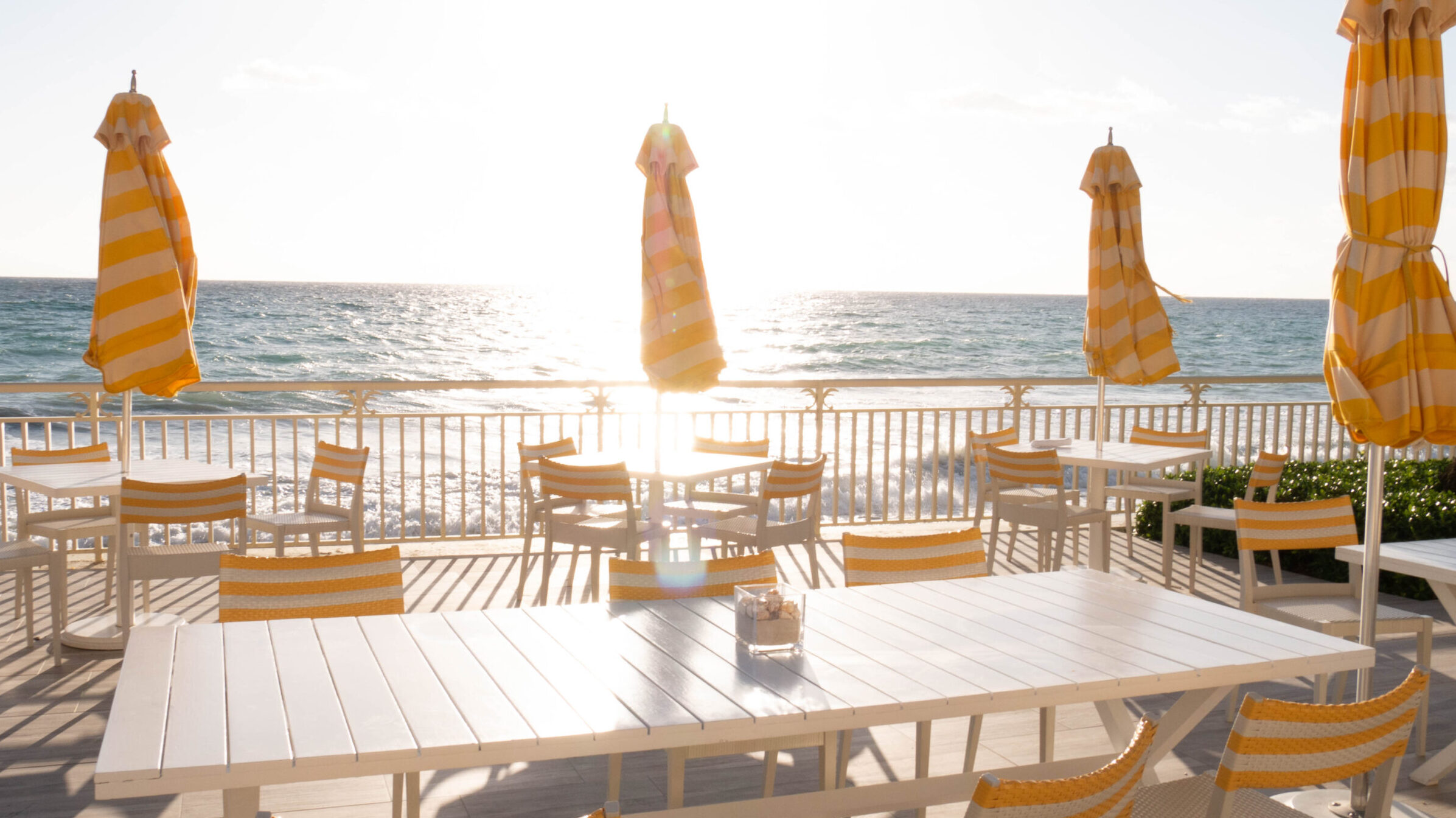
Not all connections happen in the ballroom. Smart Meetings CEO Marin Bright understands that and always provides robust, memorable receptions and team building. Eau Palm Beach and its oceanfront location were the perfect backdrop for the brand of self-indulgence that is more cupcakes and champagne than discipline and wheatgrass shots. The Jonathan Adler-designed interiors channeled luxury with a pop of whimsy. The property is refreshing its dining options and will soon add a coffee shop, ice creamery and Italian restaurant.
The experiences reflected that bright, unexpected vibe. The opening night reception was on the pool deck with personalized hat gifting via Global Gifting and Revo sunglass experiences from Wet Paint Group. The fresh sushi and carving stations were the dinner portion of a surprise synchronized swimming show. Dessert followed, progressive dinner-style, in The Self-Centered Garden of Eau Spa, where a neon-lit drummer and sax player riffed from the reflection pool while guests savored chocolate-covered marshmallow on a stick and chocolate mousse.
The second night, a trip to Grandview Public Market with the team from Discover The Palm Beaches gave guests choices, ranging from soul and Greek food to poke bowls and curry tacos. Performance artist John Bukaty channeled the mood accompanied by DJ Logic and a cadre of dancing meeting profs on the open-air patio in the emerging neighborhood of West Palm Beach.
Extraordinary Teams
Lee Rubin
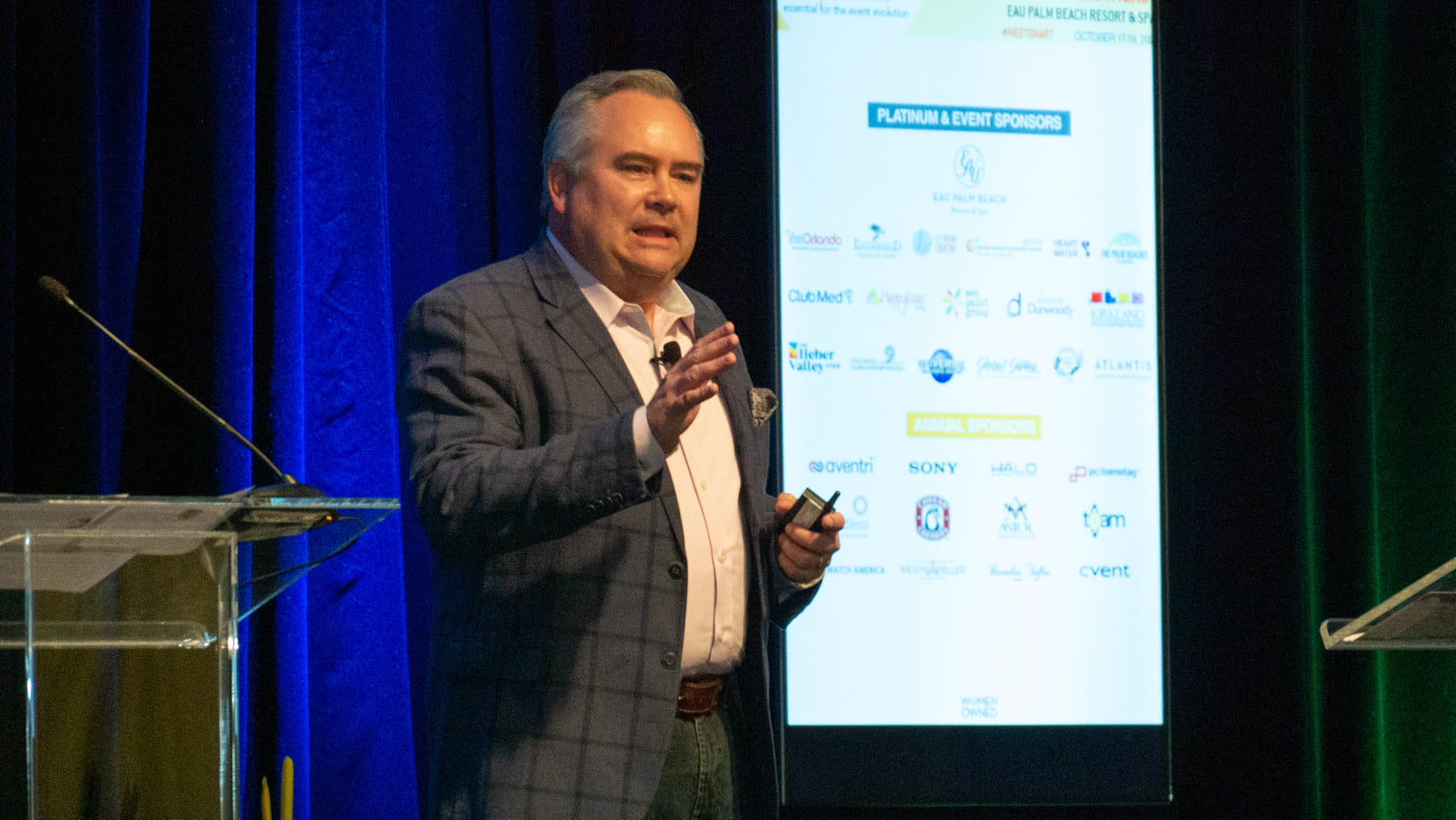
Planning an event is a team effort. Luckily, leadership coach Lee Rubin was on hand to share the “Five Cs” of successful teams.
They are comprised of competitors—people who have a passion for winning and hate to lose. “That passion drives action,” he explained.
But these achievers aren’t focused just on beating their competition. They are driven to reach their personal potential. “It’s not about being the best, it’s about being your best!” he said. Extraordinary teams have common goals and that means everyone is willing to make personal sacrifices for a shared win.
Another sign of top organizations: They communicate. True communication requires honesty and enthusiasm. That means celebrating fellow team members with the same level of intensity with which we would want to be celebrated. That type of group-think builds trust.
“Where there is no trust, there is no team, Rubin warned.
Extraordinary teams also have chemistry. Science tells us the strongest bonds are formed under heat and pressure. “The same stuff that tears businesses apart is the force that brings extraordinary teams together,” Rubin said.
Finally, extraordinary teams are consistent. That requires practice. “We are what we repeatedly do; excellence is not an act, but a habit, he concluded.
Open for Business
While meeting professionals from across the country were in the Sunshine State, Smart Meetings took a moment to ask the experts for updates on what they learned from programs that safely happened in Florida over the last year-and-a-half.
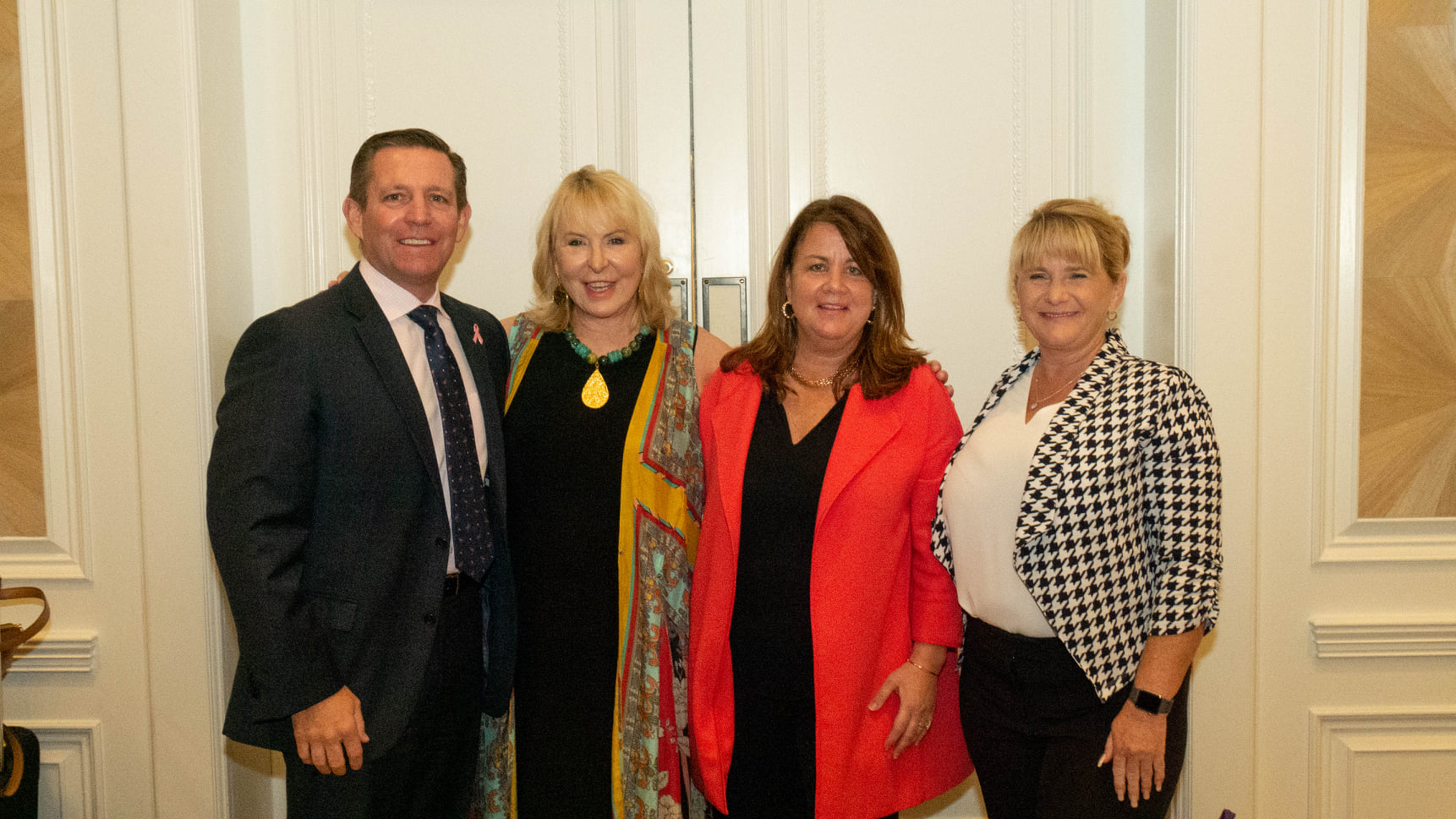
Freddie Peterson, general manager of Miami Beach Convention Center; Kelly Cavers, senior vice president of Discover The Palm Beaches and Stephanie Naegele, vice president of sales operations from Visit Orlando, explained how they created safety bubbles for professional sports teams, opened facilities to youth competitions and safely fed thousands using new protocols in certified-safe venues.
The trio even went so far as to predict trends that will continue beyond the pandemic times.
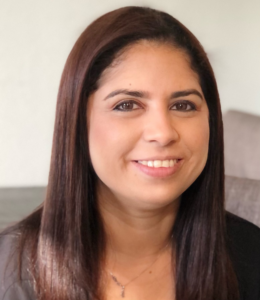
For Cavers, wellness was the enduring shift. “Health and safety will evolve into wellness—physical mental and environmental,” she said.
Peterson pointed to increasing demand for outdoor spaces as planners think outside the box and leverage the area’s beautiful weather for meetings and dining.
Naegele linked both those trends, packaging them as a permanent focus on energetic experiences. “Experiential meetings allow people to remember the time they spend together,” she said.
What does the future look like to you? Does it involve space travel? Social media glasses? Teleportation? How will all these new developments shape the events industry? This is the tantalizing topic Brian Ludwig, senior vice president of sales for Cvent, tackles in Smart Meetings’ most recent webinar, “One Step Ahead, Predicting the Future of Event Technology.”
“It’s been an amazing journey to watch how the event landscape and all the underlying technology has evolved,” Ludwig said. “I’m not talking about next year [or] even the following year. I’m taking a much further-out view—five, 10 years.”
Ludwig has been doing presentations on the future of event technology “for many, many years.” Five years ago, he showed images of a trade show heavily invested in hybrid. “I proclaimed at the time that the future will consist of hybrid events, where both options are available and that events will no longer be confined to the four walls of a hotel ballroom or a convention center,” he said.
Of course, he was right.
In this webinar, Ludwig touched on three developments he sees on the horizon for events.
• Tech advances to help attendees get to the event
• Exciting changes to the venues and environments in which we meet
• Cutting-edge tech that will provide a new set of event experiences for your attendees
“Cars, trains, planes; these are well-known modes of transport,” Ludwig said. “Here’s something just slightly different.”
He meant a concept called second-level public transport. “If this becomes reality, you can get to the airport on the highway, despite traffic,” he said.
This second-level transport will have the ability to travel above the roadway on a special steel rail. If traffic is deadlocked because of an accident, for instance, this transporter will be able to raise its legs to pass above stand-still traffic and many other obstacles.
Ludwig shared another example of future travel. Uber has unveiled a flying-taxi concept in partnership with Hyundai that is capable of transporting passengers up to 60 miles at speeds of 180 miles per hour. The transport disrupter says this concept is set to begin construction in 2028.
“We all knew Uber was going to get into helicopters, right?” Ludwig said. Something a little bit more unexpected is a self-driving car that can also take to flight, making use of roads and air.
“Bottom line: Transportation options in the future may mitigate much of the travel inefficiency experienced today, and it’s that inefficiency that currently deters many folks from going to in-person events,” Ludwig said.
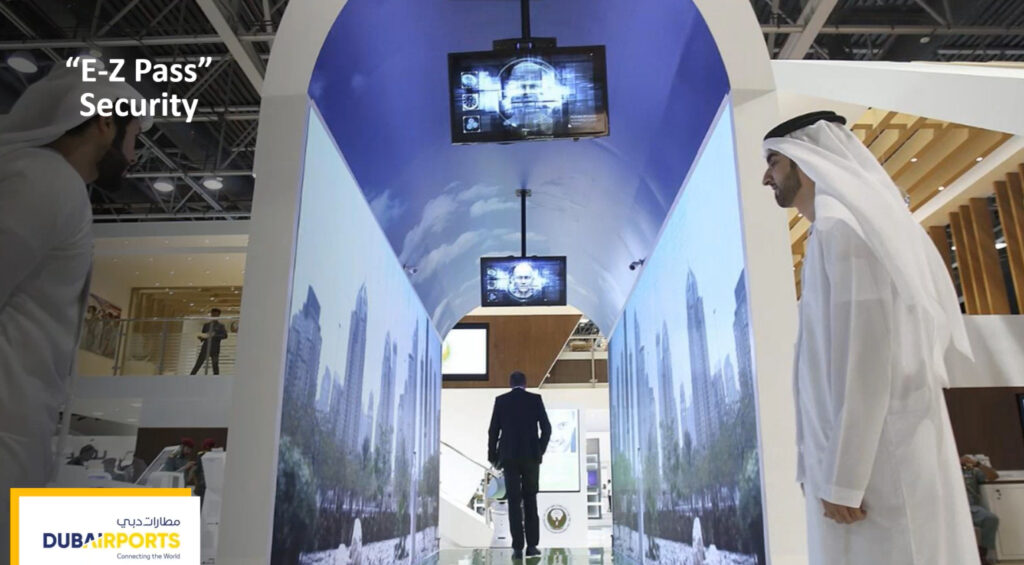
“If you’re sticking with traditional transportation, and you’re going to fly from an airport, we think that’s going to be more efficient, too,” Ludwig continued. “What if security was a pleasant walk through a tunnel, like E-Z pass?”
A trial at Dubai International Airport (DXB) demonstrates how passengers can walk through a virtual cityscape or an aquarium tunnel as it scan their faces or irises. Developers are working to enable these tunnels to effectively scan baggage and bodies, as well, Ludwig said, adding, “Imagine the positive impact this would have on security lines at airports of the future.”
Self-directed luggage to relieve you of hauling bags through the airport—or, at a trade show, attendees with personal robotic assistance following them around the show floor—are two other predictions Ludwig shared.
During the wide-ranging webinar, Ludwig talked about even more potential transformations the industry could go through in the next decade. How about kinetic energy harvesting concrete, robotic surrogates and detecting attendee sentiment via computer mouse?
I know what you’re thinking: What about privacy concerns? Ludwig goes into that, as well, and you can watch here.
Spies have come in from the cold and into the ballroom. The first talent agency to offer real spies is now a reality. The skills and lessons learned by these experts in intelligence can be fascinating—and useful in the nonespionage world—and now many of these specialists from the CIA, FBI, KGB and Mossad are for hire for your next meeting or training session for keynotes, corporate training and team development.
Spyex, the company behind this, just officially launched but has been partnering with a handful of corporations over the last eight months. What began as podcast series True Spies, which debuted in 2020, and later, as a planned introduction of Spycon (postponed until 2022), a convention designed to bring these experts together with Hollywood and Silicon Valley, has shapeshifted into a venture meeting professionals will love.
“Through the recruitment of experts for the podcast series and the development of both B2B and consumer programming for Spycon, we discovered that these unique experts have skills, knowledge and experience that translate very effectively in the business world,” says Lisa Paul, senior vice president of Spyex.
It’s a niche in the world of business training waiting to be tapped into. “We discovered that no one had ever gathered [these experts] to bring their incredible training expertise to the private sector, nor [showed] how to apply their world-class agencies’ methodologies and best practices to help win in business,” she says. “These people can distill tens of billions of dollars’ worth of government training and development and pass on the key practices.”
Spyex has nearly 100 intelligence experts ready for deployment—“adding more every day”—including a senior advisor at CIA’s National Counterterrorism Center who put Osama bin Laden on CIA’s radar and a KGB officer who secretly served U.S. counterintelligence for 10 years spying on Russia during the Cold War. The agency also provides activities and workshops designed to improve collaboration, effective communication and “innovative, outside-the-box strategizing.”
Also available are hackers with experience in breaching organizations and defending against cyber threats, investigative journalists, undercover filmmakers and historians with expertise in the world of secrecy.
By tapping into best practices from the top intelligence agencies and organizations in the world, Spyex offers training courses such as “Turning Good Leaders into Great Leaders,” “Protecting Intellectual Property,” “Safeguarding Your International Business Travelers” and “How to Maintain Focus on Your Core Business.”
“Our speakers are experts who have worked at the highest levels of security clearance and lived through mind-blowing experiences,” Paul says. “Event and incentive program planners can now set themselves apart with unforgettable keynotes, unique guest appearances and coveted instructional workshops. The opportunity to have unique, once-in-a-lifetime experiences—especially those that educate and enrich employees professionally—can very positively impact a company’s brand where recruiting and retaining top talent is concerned.”
Via Spyscape, Spyex’s parent company, meeting professionals can also host events in a high-tech, 60,000-square-foot facility in New York City. In this venue, attendees will have the opportunity to engage in challenges designed and led by a former head of training for British Intelligence. Guests will also be able to test their spycraft chops and receive a detailed profile listing skills and attributes like empathy and risk tolerance, physical agility and the ability to detect lies.
Now that most parts of the country are on the downslope of the whiplash Delta variant, meeting professionals are reassessing what their future programs will look like. For a preview, we asked Eric Holmen, CEO of Splash, the event marketing software company that powers tens of thousands of business events each month, for trends in how organizers are adjusting their programs. Spoiler alert, it could be smaller, more tech driven and hybrid, but not in the way many expected at the beginning of the year.
A Hybrid Shift
Eric Holmen
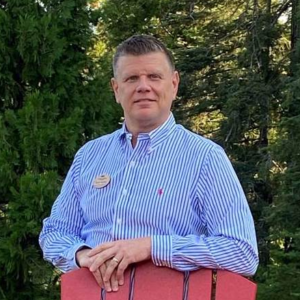
“We saw a lot of hybrid experimentation when live events started coming back in June and July,” Holmen said, after sifting through keywords and calendars of customers using the platform to promote their programs.
Those hybrid meetings are coming in lots of different shapes and sizes. Some large groups are throwing a camera in the room to capture the presentations for an extended remote audience. For smaller groups a progression of virtual content sharing followed by some in-person workshopping and closing a few days later with virtual lessons learned might be more effective. “I think in the future we are going to see more mixing it up rather than simulcast,” Holmen said.
By definition, hybrid meetings are a mixed bag. The addition of a virtual option allows for dramatically higher registration rates, which can help build a marketing funnel. But Holmen’s data shows that attendance rates are much lower. At events held between mid-July and mid-August, only four out of ten people (39.5%) who registered for virtual actually attended compared to almost seven out of ten (66.6%) who committed to going in-person. “It is not the same level of engagement and intimacy, but it is a good database-building activity,” he conceded.
The result of this best of both worlds approach could be increased ROI as the incremental additional cost of virtual streaming technology could pay off in greater reach. “Think of it, unlike a physical ballroom, there is no limit on how many people can attend virtually,” he said. “You will come out ahead when you consider all the numbers in the pipeline.”
Best Practices
Some hybrid events are engaging better than others. “The best engagement across platforms takes a lot more work up-front, a lot of preparation,” said Holmen. The most effective events allow attendees to get to know each other in advance, matching people with commonalities based on LinkedIn and other profiles like a good dating site. “That way you can cut through the noise and get a much better connection,” he said.
The best hybrid event producers have also gotten much more comfortable using customer relationship management tools to maximize the data being generated about who is attending, what is resonating—and what isn’t. “Event marketers need to get good at being part of the data flow,” he said.
An Adrenaline-Filled Future
Holmen predicts that now that vaccination rates are rising and infection rates are declining in most of the United States, there will be a “normalization period” where hybrid becomes a norm. During that time, the total number of virtual events could decline, but the value of each one will increase. “There won’t be one every week, but there will be more preparation around each one,” he said.
The future for virtual and hybrid could be as an augmentation to promote an in-person road show or workshop.
When they are less ubiquitous, Holmen expects attendance will go up and about half of those who sign-up will actually attend.
“In-person is like the roaring 20s right now,” he said on a phone call from an event he was attending. The smiles all around him proved what the data was already saying. The percentage of his customers’ events that were in-person rose steadily from April 2021 through August 2021, indicating that, at least prior to the Delta variant disruption, in-person events were coming back.
“You get all the endorphins, energy and adrenaline, it’s great,” he enthused. For at least the first year, he sees in-person as the preferred way to connect and consume content because people missed the interaction so much. But those high-fives might be planned in parallel with programming for those who can’t attend or want to make the most of their precious time together.
“We are in for an exciting couple of years ahead,” he concluded.
How to Prepare for a Hybrid Evolution
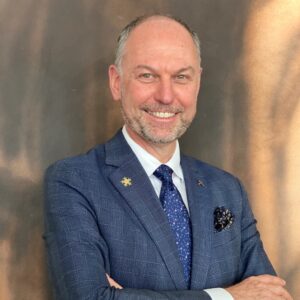
Hybrid may be in the eye of the beholder. Scott Frankel, president of Animatic Media & Conference-On-Demand +LIVE, predicts an evolution of hybrid events. “The tricky thing here is that the term hybrid is somewhat ambiguous. If you were to ask 100 planners what hybrid means, you will get 50 different answers and they are all correct,” he says.
Scott Frankel
Whether you define a hybrid event as bringing in outside speakers through a stream and playing it in front of an in-person audience or streaming out a presenter at an in-person event to an external audience or any combination of both of these, you are right.
For many meeting professionals, a hybrid program is equivalent to a safety net during uncertain times. If you are planning on an virtual component and there is a resurgence of an outbreak, or any other occurrence that might hinder attendance at an in-person meeting, you have a hybrid or virtual solution baked in. “It is much easier and cost-effective if you plan for hybrid even if you don’t use it as opposed to trying to add it in last minute,” he explained.
Also due for a comeback? Session/slide recording of content. Frankel reported that Animatic Media’s Conference-On-Demand service for posting in a post-event portal has seen an increase of over 40 percent in the past few months. This classic streaming option makes content available for attendees who didn’t make the trip to the in-person event or want to see more content they may not have gotten to see onsite due to their schedule. “Plus, organizers can choose to charge for their content,” he added. Win-win.
The next big thing? Frankel’s money is on Augmented Reality or what he calls “Enhanced Content”. Conference attendees could soon hold up their smart devices to elements around an event that will superimpose enhanced content. This content may be on screens in a session room, monitors around the event, printed show graphics and signage as well as exhibit booth materials. By holding the device over a graphic a layer of interactive content will be displayed, links can be clicked, etc. Some common uses are linking to premier sponsor websites, bios and links to presenters LinkedIn account and even video playback.
This is a two-step win as there are sponsorship and content revenue opportunities for show management as well as more of a “touchless” environment to limit the amount of printing waste and hygiene touch points.
Other Covid long-tail impact could include a sensitivity for procedures to protect staff, attendee and speakers using a health “passport”. “You will see more integration of automated temperature testing with automated notifications to show management and touchless registration,” he predicted.
“My greatest hope in 2022 for the AV industry is that the amazing people with worlds of knowledge are able to adapt to the new environment,” Frankel said. “I am hopeful that there will be a new sense of appreciation which will, in turn, manifest itself to amazing service provided by vendors. I hope this pushes our leader to think more creatively and be more proactive in coming up with new ways of doing things.”
As we win the battle against Covid, corporate travel bans will be lifted and the industry will boom once again, he concluded.



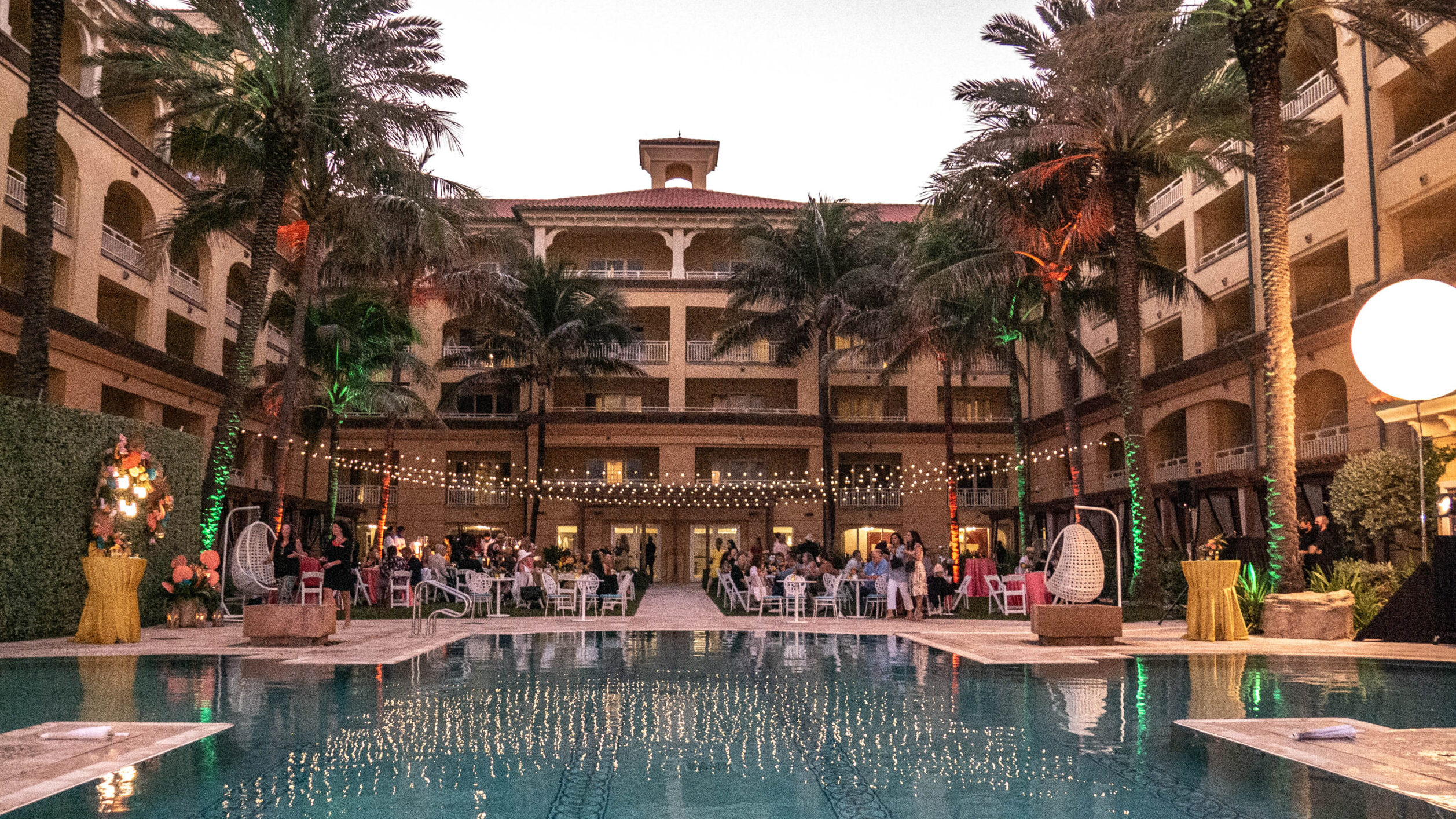
 The experiences reflected that bright, unexpected vibe. The opening night reception was on the pool deck with personalized hat gifting via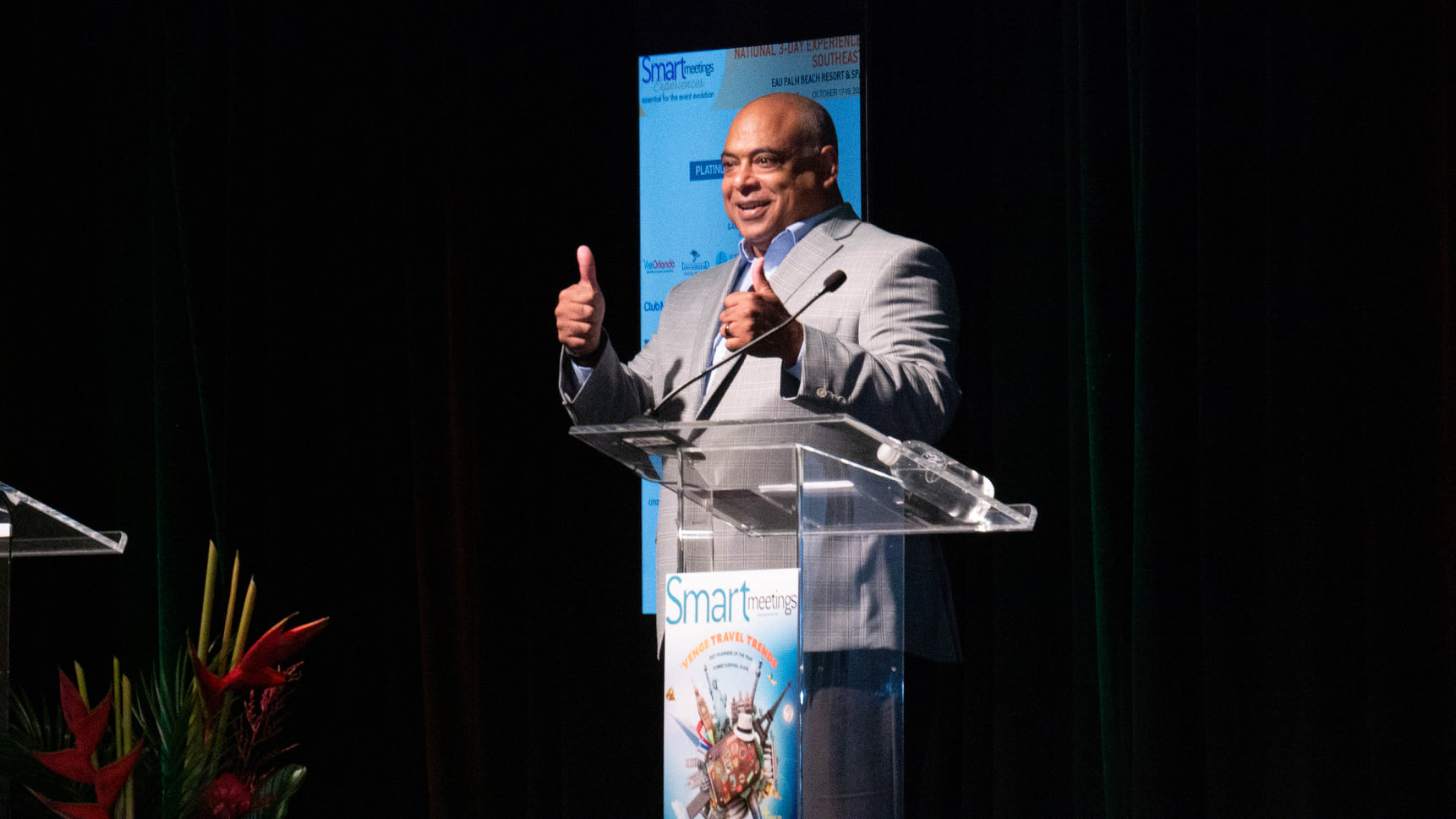
 For Cavers, wellness was the enduring shift. “Health and safety will evolve into

 Holmen predicts that now that vaccination rates are rising and infection rates are declining in most of the United States, there will be a “normalization period” where hybrid becomes a norm. During that time, the total number of virtual events could decline, but the value of each one will increase. “There won’t be one every week, but there will be more preparation around each one,” he said.