imex-america-2016-virtual-reality-travel

It’s hard to choose one overarching theme at IMEX America 2016. Destination representatives from all over the world are offering games, prizes, demonstrations and food to intrigue the waves of attendees that pass by their booths as they move from one appointment to the next. But there is one common trend that has continued popping up all over the trade show floor and even the afterparties, and that’s virtual reality.

VR has been on the “trends to watch” list for some time now in the meetings space, but the amount of destinations who are actively using it to showcase their venues and cities has seemingly blossomed overnight.

Here are some of the places VR made an appearance at IMEX.

Meet L.A.

At a media breakfast hosted by Meet L.A., Los Angeles’ official convention and visitors bureau, the team announced the launch of Virtual Discovery L.A., a new virtual reality travel platform that provides meeting professionals with immersive 360-degree viewing experiences on both mobile and desktop that will allow visitors to view more than 50 venues all over the city.

One look at the site and you’ll see it’s more than just viewing a 360-degree  view of each meeting room. The program, which was developed by partner XplorIt, allows users to see a broad overview of the city, check highways and travel routes, and even experience the subway system. They can select a particular neighborhood and then see the options they have for venues.

Distinct “only-in-L.A.” venues include L.A. LIVE, Walt Disney Concert Hall, Getty Center, The Studios at Paramount, Warner Bros. Studio Tour Hollywood, Petersen Automotive Museum and L.A. Memorial Coliseum. It’s the wide range of not just venues, but restaurants, cultural attractions and entertainment that can be explored that makes this the most comprehensive virtual tour of any destination.

A menu of icons in the corner of the screen make it easy for meeting planners to navigate the site and see specs such as capacity and square footage.

Virtual Discovery L.A. can be viewed directly on a smartphone, desktop, or tablet, or used with a VR viewer such as Google Cardboard or Samsung Gear VR.

The tourism company also announced a new app coming in November that will also offer the virtual platform.

Singapore

Though it wasn’t present at IMEX, Singapore filled us in on their recent accomplishments using VR. At Asia-Pacific Incentives & Meetings Expo (AIME), held in Melbourne, Singapore Tourism was recognized for having the most innovative booth. The booth featured projectors that displayed 4-D images on every wall so that attendees could walk up, select a space, and view the space as if they were there.

The reaction from attendees was so positive that the tourism group anticipates using this technology at future events to showcase their destination.

Radisson Red

Raddisson Red–the newest brand within the Carlson Rezidor Hotel Group umbrella– launched in Brussles in April and is opening its first hotel in the U.S. in November in Minneapolis. The line is catered toward the millennial generation, offering the newest tech such as mobile check-ins and keyless entry, and design elements that reflect music, art and fashion.

The new brand hosted a party at IMEX to showcase it’s offerings, and guests everywhere wandered the party with VR headsets to check out renderings of the Brussels location. Guests glided through a vibrant red hotel lobby and into meeting spaces and guest rooms.

A third Radisson Red is expected to open by December in Campinas, Brazil, followed by Portland, Oregon and Miami in 2017.

Las Vegas

It may sound like a bit of a lost cause for Las Vegas to be offering a virtual experience to people who are physically in Las Vegas for IMEX–but if you’ve ever been to the city you know how difficult it can be to navigate, especially when you’re inundated with options.

The Las Vegas Convention and Visitors Authority gave away DodoCase VR viewers–similar to Google cardboard–and invited attendees to “Enter the Vegas VR Experience.”

Like Google Cardboard, DodoCase VR is a thick cardboard viewer that allows you to slide a smartphone in front of the view finder to experience virtual reality. See it for yourself or check out the demo below.

Site Inspections vs. VR

Will VR replace site inspections if it becomes available for every venue? The short answer is no. Darren Green, senior vice president of sales for L.A. Tourism, said the technology isn’t intended to replace a real onsite property inspection, but what it does is narrow down a planner’s options.

“Following last year’s launch of our acclaimed meetla.com website, L.A. Tourism continues to elevate the destination’s meeting planning process with an immersive virtual travel experience for all generations of the meeting community,” said Green.

Kaaren Hamilton, vice president of global sales for Carlson Rezidor Hotel Group, echoed a similar sentiment about the VR capabilities for Radisson Red. She pointed out, however, that site inspections aren’t nearly as common for small groups, and that’s where a VR tour of the property can come in handy.

What a way to kick off 2016. Smart Meetings Northern California took place at Levi’s® Stadium in Santa Clara on Jan. 6, giving planners and suppliers a glimpse into the LEED Gold certified event space that has taken Silicon Valley by storm.

There were close to 600 one-on-one appointments that matched top meeting planners and event decision-makers with suppliers, including luxury resorts and convention and visitors bureaus. The one-day event also included keynote addresses by Michael Dominguez from MGM Resorts International and Steve Sisgold, business coach and author.

Hilary Barlesi works in special event sales for Levi’s® Stadium, home of the NFL San Francisco 49ers and 20 different indoor venues. Levi’s 501 Club is where the Smart Meetings Event took place. It features floor-to-ceiling windows that showcase Silicon Valley on one side and the football field on the other side. There are nine clubs being used for special events among the 180,000 sq. ft. of indoor event space at the stadium.

“I love how out of the box it is,” Barlesi said. “We have unique venues. It’s not your stuffy ballroom.”

Levi’s® Stadium has become a very popular event venue for nearby Silicon Valley tech companies, accommodating everything from board meetings to mega events. Cisco hosted one of the coolest events thus far, treating 30,000 to concert performances by Keith Urban and Christina Aguilera.

It was great to network with so many hospitality providers during the Smart Meetings Event. Here’s a look at a few of the suppliers who participated, updating Smart Meetings and planners with news and programs aimed at meetings and events.

Silicon Valley Meets Here

The influence of Silicon Valley can be felt up and down the California coast. Chaminade Resort & Spa in Santa Cruz is one of the properties that hosts many tech events thanks to its ICCA-certified conference center. With 156 guest rooms and 12,000 sq. ft. of event space, this luxury 300-acre property offers the perfect blend of rustic and contemporary ambience. Chaminade will complete an $8 million renovation in March, according to Lydia Bates, senior sales manager for the resort.

Seascape Beach Resort in the Monterey Bay town of Aptos is another Silicon Valley getaway. Heather Boruta, senior sales manager, says her favorite component of the resort is its commitment to sustainability. Not only does Seascape have solar panels, but it blends in with the seaside environment less than an hour away from Silicon Valley.

The newest luxe meeting property on California’s Central Coast is InterContinental The Clement Monterey. The eight-year-old property is located adjacent to the marine sanctuary and next to Monterey Aquarium. “It’s steps from absolutely everything,” said Larisa Godick, senior sales manager.

Race to Sonoma County

North of the Golden Gate Bridge in Sonoma County, Simraceway Performance Driving Center offers an adrenaline rush and wine-country experience just 45 minutes from San Francisco. Laura Rateaver, senior director of operations, says there’s lots of options for team building, including the use of the center’s fleet of Audis that can be gunned on Sonoma Raceway or taken out for group cruises to the coast. (The center is located across from Ram’s Gate Winery, so groups can conveniently have lunch or a reception at a vineyard after a few hours racing around.)

Suzy Montes of Sonoma County Tourism said that her region has seen a 17 percent increase in international visitors in the past year. The DMO has been reaching out to international markets for the past eight years and the efforts are obviously paying off. If you’re considering holding a meeting in Sonoma County, which is larger than Rhode Island, book early. Demand is starting to surpass availability.

Be Inspired

James Brown, director of sales for Zermatt Resort in Midway, Utah, says his property is currently making a push to establish itself as a learning center, where wellness and team building are designed specifically for groups. “We want to be more than a venue,” Brown said. “We want to help employees become inspired.”

Stacy Copeland, regional sales director for Greater Fort Lauderdale Convention & Visitors Bureau, came to the Smart Meetings Event to remind planners how much her city has changed. Upgrades include the new runway that opened at Fort Lauderdale-Hollywood International Airport a year ago and several new hotels . “There are a lot of people who don’t know how much we’ve changed,” Copeland said.

Spring Creek Ranch in Jackson, Wyoming, is in the heart of town and offers amazing views of the Grand Tetons. Stephanie Buelow says that Spring Creek’s location less than two hours from Yellowstone makes her resort an ideal destination for incentive trips.

Stephanie Hannah from Beach Retreat & Lodge at Tahoe in California says being waterfront is a big reason groups like to meet at her property. There’s a new 3,054-square-foot conference center, with 1,800 sq. ft. of additional space coming by summer. Right now, about 12 percent of the lodge’s business is group oriented, but the goal is to up that to 20 to 30 percent this year.

Focus on Food

One of the neatest things I learned was that Tucson, Arizona, has recently been designated a City of Gastronomy in the Creative Cities Network by UNESCO. The recognition calls attention to the region’s rich agricultural heritage, thriving food traditions and culinary distinctiveness. Brooke Sauer, national sales manager for Visit Tucson, attended the Smart Meetings Events and shared this news with me during the closing reception. The UNESCO Creative Cities Network includes seven areas: Crafts and Folk Art; Design; Film;  Gastronomy; Literature; Media Arts; and Music.

Tulio Baruch of Nizuc Resort & Spa outside Cancun, Mexico, says his property is known for its amazing food. There are six restaurants and four bars. Besides great food, the 274-room Nizuc, which opened in 2014, has a private beach, lighted tennis courts and meeting space for up to 400.

Don’t Overlook These Guys

Marna Willmott from The Orleans Hotel & Casino in Las Vegas pointed out that her property has everything a group needs, including a location just off The Strip, which some planners prefer. There’s also 40,000 sq. ft. of meeting space, a 9,000-seat arena and 18-screen theater. Buyouts are possible at the 1,885-room property.

Akemi Shapiro from Crowne Plaza Ventura Beach in California shared that her property is an affordable option for groups seeking a beachfront venue. Crowne Plaza will begin a multimillion dollar renovation in March, starting with the conference space, and expects to remodel its 255 guest rooms by the end of 2016.

Stefan Cattarin from Visit Billings in Montana came to the event to remind planners about his city’s motto: Billings is Montana’s trailhead. “They come to Billings because they want to visit Montana,” Cattarin said. “Billings can launch you into all the adventure that Montana has to offer.”

Christopher Mora from Korea Tourism Organization says he understands that most planners looking to meet in South Korea will lean toward Seoul. But Mora says that Busan is another option that should not be overlooked. It’s a major cruise port and gateway to ancient discoveries.

Thanks to all the suppliers who attended the event. I learned so much in a day of networking that I can’t imagine how planners can settle on just one venue for an upcoming event. Join us at the next Smart Meetings Event to do a little research of your own if you’re a planner or tell your story if you’re a hospitality provider.

airbnb-targeting-meeting-groupsAfter establishing itself as a force to be reckoned with by the hospitality industry in general, Airbnb is increasingly targeting business travelers, including meeting groups.
Airbnb and meetings industry organizations are formalizing products and partnerships to enable planners to incorporate Airbnb listings into their programs. This is a significant development, because most planners and conference organizers have been reluctant to include Airbnb and other room-sharing companies due to concerns about billing and payments, security, insurance and room block managements, among other things.

While Airbnb often has been regarded as a secondary option for groups due to lack of available rooms in hotels and resorts, it now is positioning itself as a primary option, and is experiencing some success. The room-sharing company often imbeds its listings in conference websites and promotes its options in attendees’ convention materials.

Airbnb points to several reasons why it’s an excellent option for meeting groups:

• It provides attendees with an alternative, personalized travel experience.
• It’s often regarded as most suitable for young travelers, but many others use it; 33 percent of business travelers using Airbnb are 36 to 50 years old.
• Traditional hotels often can’t match its rates.
• Airbnb’s Business Travel Ready program, launched in November, uses a badge to identify listings that are suitable for business travelers. To earn the badge, units must provide items such as an ironing board, fire alarm and CO2 detector.
• It might create a meeting planner section on its website in the future.

Experient, Maritz Travel’s global meeting planning and event management company, is one of the main firms to begin including Airbnb listings in its room-listing offerings to meeting clients.

“We teamed up with Airbnb to really assist our customers, especially in major markets with condo and apartment dwellings downtown close to the convention center,” said Gary Schirmacher, senior vice president of industry presence and strategic development, in an interview with Skift. “It’s a really good option for our customers when there’s significant compression where the blocks are sold out. And then some customers are really looking at it when they have a segment of attendees who might want this kind of product. It’s been a good option for us to date.

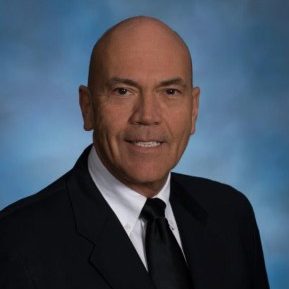
Meet AC, in Atlantic City, New Jersey, appointed Larry Sieg president and CEO, a position he will begin July 13.

The 30-year hospitality veteran joined Atlantic City Convention and Visitors Authority (ACCVA) in 1998 as director of communications and marketing. Shortly after, Sieg rose to vice president of marketing. New Jersey legislation dissolved ACCVA in 2011 and responsibilities held by ACCVA were given to Casino Reinvestment Development Authority (CRDA), where Sieg now works as director of communications and marketing.

More: Atlantic City Boasts Eclectic, Lip-Smacking F&B in Hotels and Beyond

Sieg is an Atlantic City local who is deeply involved in the tourism industry within the city, holding positions on boards for organizations such as Greater Atlantic City Chamber and The Greater Atlantic City GLBT Alliance. He also serves on the board of Destinations International, Educational Seminar for Tourism Organizations, American Bus Association and Historic Organ Restoration Committee.

MoreHitting the Wellness Jackpot in Atlantic City

“Being someone who lives, works and plays in Atlantic City, I understand it has always been a place of great importance regionally,” Sieg said. “I look forward to the challenge we face as we settle into a new normal and have our destination be top of mind for meeting planners throughout the country.”

Sieg will succeed Jim Wood, who left the organization at the end of 2019.

Nine out of ten attendees at a Northeast Convention Visitors Bureau Representatives’ (NE CVB) webinar said they would be more inclined to use CVBs and DMOs post COVID-19. NE CVB brought together representatives from cities around the country to share what’s in store at favorite destinations. Attendees learned about recovery plans, hotels and convention centers in five of America’s meeting hot spots.

The Destinations

San Francisco

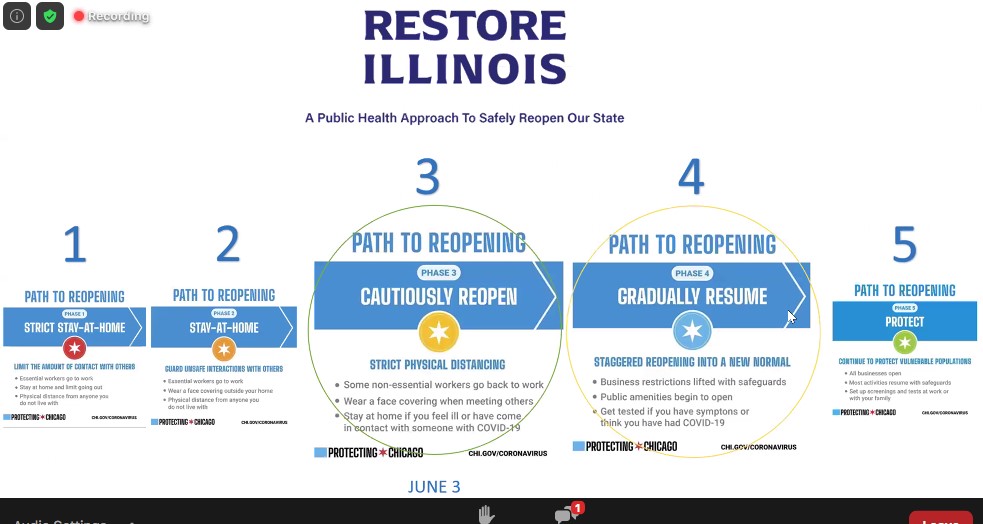
Susanna Flores from SF Travel kicked off the session and touched on the city’s cautious reopening plan. San Francisco will likely begin to welcome “nonessential” hotel guests—leisure and business travelers, as opposed to health-care workers or those in quarantine—in mid-July. Although the state allowed hotels to open for nonessential guests on June 12, California’s approach to recovery is regional, and San Francisco has chosen a more cautious timeline.

Chicago

Choose Chicago representative John Sklencar spoke to the quick and proactive approach Lori Lightfoot, the city’s mayor, took to COVID-19. He credited this early action with helping to keep Chicago’s COVID-19 case numbers low even though O’Hare International Airport (ORD) is a major gateway in and out of the country. McCormick Place, the nation’s largest convention center, will reopen for business Aug. 21.

New York

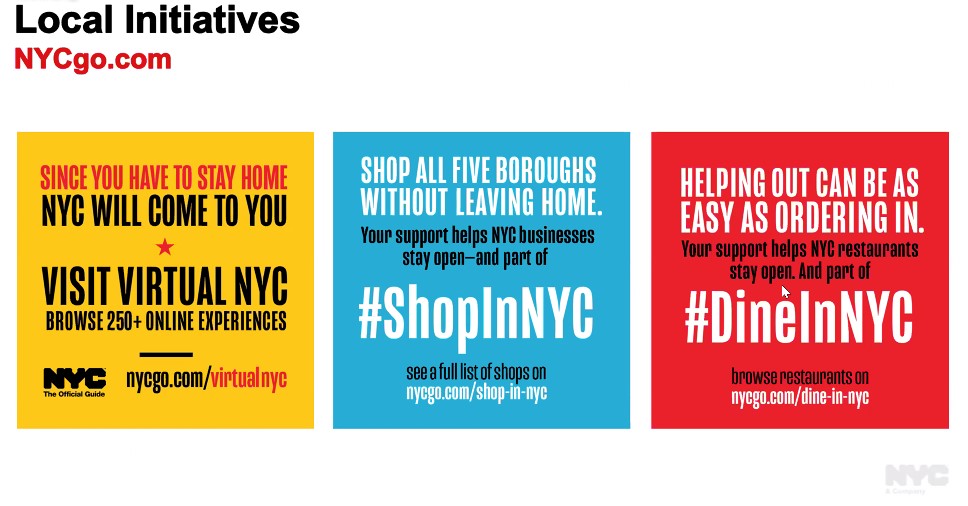
On the Atlantic Coast, New York City is currently in phase one of its reopening plan. Matt Schechter from NYC & Company spoke about initiatives that are underway until live events can resume. These include a curated list of spaces and hotels offering virtual site tours and local initiatives such as #ShopInNYC and #DineInNYC to encourage city residents to support local businesses. Schechter mentioned a silver lining of getting take-out in the Big Apple in recent months: He’s been able to try some amazing restaurants which are usually really hard to get reservations at. The city lockdown has also been an opportunity to speed up ongoing expansion of Javits Center, which will include a 1-acre rooftop farm and an upgraded air filtration system along with increased meeting space.

Fort Lauderdale

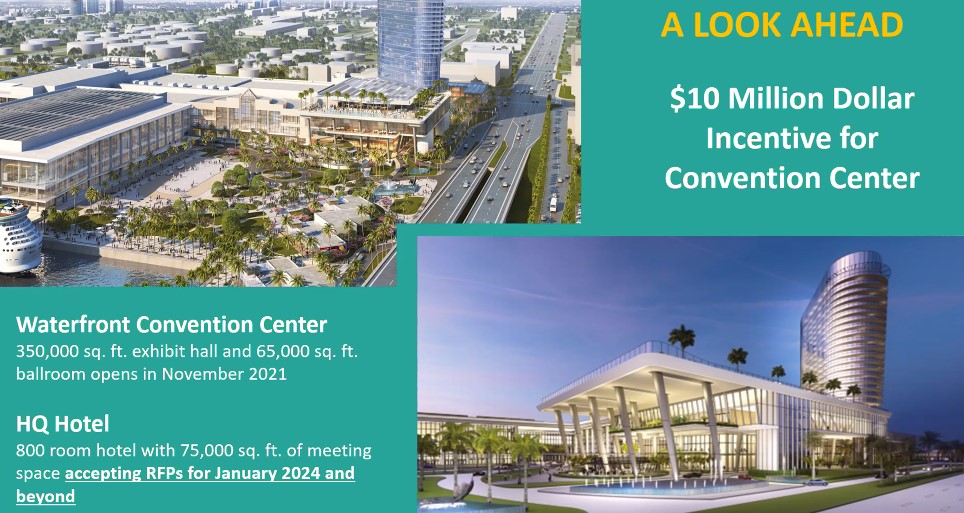
Greater Fort Lauderdale is “open for business!” according to Jennifer Sena from that area’s CVB. All restaurants and hotels in the area will be open by the end of July. Flight traffic has already begun to pick up, with hundreds of departures per week. A new waterfront convention center with a 350,000-square-foot exhibit hall and 65,000-square-foot ballroom will open November 2021.

Puerto Rico

The island’s official reopening will start on July 15, and Rita Lopez from Discover Puerto Rico reminded the webinar attendees that U.S. citizens can head to the Carribean and leave their passport at home when traveling to her island. Puerto Rico shut down early when COVID-19 hit, and the spread of infections was limited. Citing outdoor activities from kayaking to ziplining and diving, Lopez joked,“We do social distancing naturally!” San Juan will have a new 5-acre entertainment district located right next to the convention center. A music hall, unique food and beverage experiences and a digitial playground in the central plaza will open in Q4 of this year.

The Survey

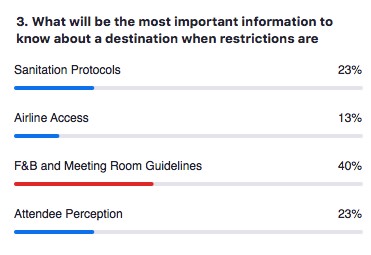
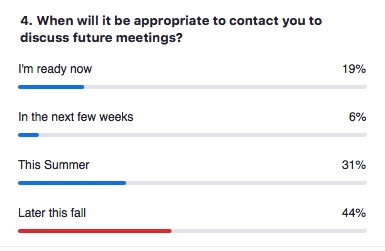
The webinar ended with a short survey. The hosts asked if guests typically work with a DMO/CVB when sourcing a destination. Sixty-nine percent of respondents said yes. However, when asked if they would be more inclined to do so after the COVID-19 crisis, 90 percent of respondents said yes. Attendees also indicated that F&B and meeting room guidelines are important, and that they would be ready to plan future meetings later in the fall.

Virtual meetings require careful design to keep attendees engaged and deliver value for the hosts. But how do you translate the energy and insights from a face-to-face meeting through a computer screen? Marteen Vannest, senior consultant at Meeting Design Institute, which produces a free masterclass and certified training on producing online meetings, suggests starting with the “why” of the meeting.

1. Quality Eats Quantity for Lunch

One of the main reasons for business events or meetings is to deliver some kind of information. Attendees come to events to learn something. However, it is important to remember that content is just one part of the meeting paradigm. When designing an online event, content must be both engaging and relevant—and rightsized, not too much. The number of speakers at live events is constrained by travel and location, and while online events offer a solution to that problem, that doesn’t mean you should flood your event with too many speakers. Choose quality over quantity. This will also leave time for other important aspects of meetings.

See moreVirtual Events Genius Resources

2. Give Them Space to Learn

Another valuable component in the business-meeting paradigm is networking. At live events, time is often set aside for networking, but participants can also make connections naturally by chatting to people during coffee breaks or discussing a presentation while in line for lunch. Therefore, making sure attendees have ample time for networking is important at online events. Vannest suggests scheduling break-out sessions of six to seven people frequently (think after every speaker or even every hour) In addition to pure networking opportunities, it will enhance the educational factor as attendees can learn just as much from discussions with other attendees as they can from a PowerPoint on stage. Learning in business isn’t linear; it often happen in the hallway. Your job is to give attendees the space to make those connections and enable that learning in a virtual environment.

3. Work Around Their Schedule

One of the benefits of online meetings is that they are more convenient than in-person meetings. Attendees do not have to travel, book hotels and take days off to attend an event. They can instead take three hours in their pajamas from anywhere in the world. That being said, it is important to make sure your online event is indeed convenient. One way to do that is to make sure attendees can attend your event regardless of what time zone they are in. This could mean asking speakers to hold repeat sessions or scheduling a multi-day event where attendees can log in whenever they like and view content on-demand.

4. Make a Profit

While COVID-19 has meant large revenue losses for many industries, online events can be profitable. Vannest said making money at online events comes primarily from opening the event up to more people. Without travel or venue occupancy constraints, online events can cater to many more people at once. Online events are also cheaper to plan, organize and carry out. While they should obviously not cost as much as traditional live events; Vannest says that he has seen online events make a bigger profit than their live counterparts due to a reduction in costs and increase in attendees.

5. Borrow Bonding Exercises from the Ballroom

Finally, people want to have fun at events! That is why planners spend so much time choosing great destinations, organizing after-meeting events and pampering attendees with great food and beverage options. While online fun might look a little different, that doesn’t mean it’s impossible. To ensure your online meetings are unique and enjoyable, borrow bonding exercises from the ballroom. You could teach participants a few words in sign language to make communicating more fun, for example. Let your imagination be your guide.

Just because COVID-19 has halted in-person events doesn’t mean you should stop planning. In the latest Smart Meetings Accelerator, “How Planners and Suppliers are Coming Together to Plan Meetings Now,” Marin Bright, CEO of Smart Meetings, spoke with Sandy Hammer, cofounder and CMO of Allseated, which specializes in digital floorplan design.

In the webinar, Hammer addressed the difficulty that planners face in trying to keep everyone rule abiding. “Every state has different guidelines. Every country has different guidelines, and some people are abiding by them and some are not,” Hammer says. “It’s up to event organizers to make it clear that when we’re running events, we’re going to go by the guidelines.”

What Hotels are Doing

Hotels are doing more with more—splitting attendees up and spreading them out to reduce the chances of infection, for example. “Hotels are running events in groups now, so instead of having 400 people in one space, they might be splitting people up by the hundreds,” Hammer says.

MoreNot So Close! New Distancing Tool Eases Transition to F2F Meetings

Hammer also weighed in on what planners can do to keep attendees feeling safe during events. “People are still a little apprehensive about being inside for many hours. Maybe you can switch things around, so [attendees can] stay inside one hour, then go outside the next,” she suggests.

The overall hotel scene will look a lot different. “There’s going to be a lot of room service, and it’s going to be as low touch as possible. You’re also going to have the option to go down to the kitchen and pick up your own box [of food], so that it hasn’t been touched by so many people. They are also introducing more people. For example, there’s going to be somebody standing by the elevators to make sure that not too many people can go in. There will be round circles in the elevator that you stand on, so that only three people can go in the elevator [at one time]. They’re going to be monitors on [each floor], so if you need something, you’ll see a familiar face. That person can perform tasks for you,” she says.

F&B, Pre-packaged

Food and beverage service at events will be less hands-on than before, according to Hammer. “There’s going to be a lot of individual carving stations. Hotels are thinking about having waiters come out and put food down [on a table], where you can go and take the [plated] food yourself. It’s not going to be buffet style.

“They’re going to have a lot of stations with somebody behind Plexiglass. Bars are going to be nonexistent for now, and drinks will be bottled. Everything’s going to be prepackaged,” Hammer says.

How Allseated is Helping Planners

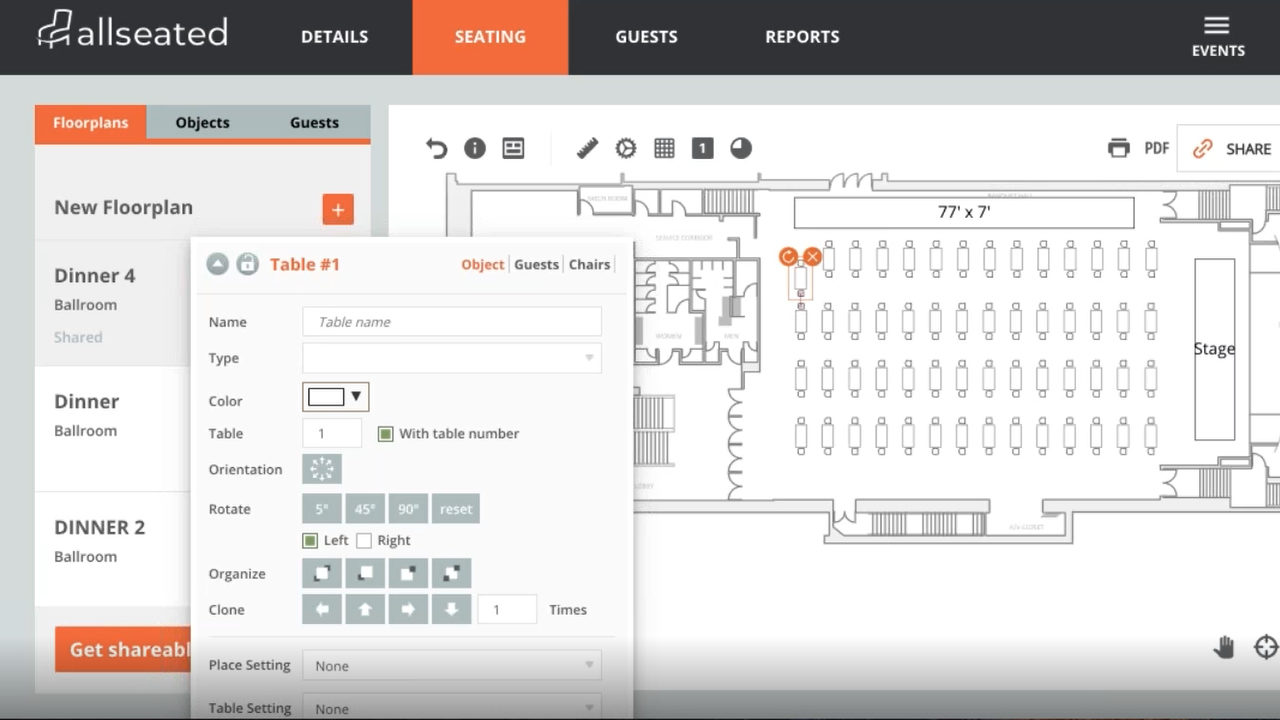
While demonstrating how Allseated works, Hammer unveiled one of its newest features, which lets planners measure the distance between chairs. “When you bring chairs too close, you’re going to see a red line pop up. You have to start backing off until the red line disappears, indicating sufficient distance,” Hammer says.

Hammer underscored the importance of measuring distances between doors and tables, something she says planners often forget.

Hammer also called out Allseated’s 3-D option. “When you put 3-D on, you can immediately see how the room feels. When you ‘walk the space,’ you can show clients the six-foot distance between all the aisles, and that people can walk [around freely],” she says.

A Post-COVID Planning World

Hammer believes in-person events will reappear in droves as soon as a vaccine is found, but that there will also be continuing emphasis on the virtual world. “Hybrid is going to give us an opportunity to make a lot more money. Even when [events] go back to having the usual 500 or 1,000 people, you are not going to want to give up those 5,000 people virtually joining you as well,” she says. “Years ago, people were very scared about technology. Today everyone’s digitalizing.”

Hammer is optimistic about what lies ahead for the planning world after the pandemic ends. “Once we get back to our normal world and have the interaction between the virtual world and the real world, that is going to feel really incredible. I think people are going to make more money at their events, sponsors are going to be able to meet much wider audiences, and we’re going to be able to track more because the cloud will give us a lot more data, which is what sponsors really want,” she says.

In countless cities around the world, June is normally marked by festivals and parades that celebrate the LGBTQ+ community. This year, however, things look a little different. To see how meeting professionals are celebrating Pride month, we checked in with Derrick Johnson, secretary/treasurer of the LGBT Meeting Professionals Association (LGBT MPA).

June 2020

When asked about the obvious challenges facing those wishing to celebrate Pride this year, Johnson began by saying, “Our community celebrates Pride 365 days a year.”

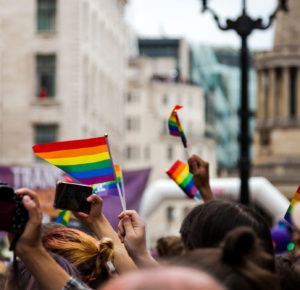
Although traditional parades have been cancelled, many cities around the globe will join a Virtual Global Pride on June 27 instead. San Francisco usually hosts one of the biggest Pride parades in the world, and this year, on what would have been the parade’s 50th anniversary, the city was expecting upwards of a million attendees. The shift to a virtual Pride will offer planners interesting insight into engagement and attendance levels at virtual events.

More: This is what Pride month looked like last year.

From Riots to Rights

In light of BLM protests that continue to sweep the country, Johnson reminds us that “the first Pride parade was a riot, and in the wake of the BLM movement, it’s been important for the LGBTQ+ community to stand with, and support, the marginalized to help shape an accepting and inclusive world.”

Johnson continues: “As a black gay man, one of my personal goals is to help cultivate the relationship between the LGBTQ+ and black event community. We must strengthen all minority voices. It’s vital for organizational leadership to be diverse and be inclusive of all people.”

So, June is still a month of opportunity for the advancement of LGBTQ+ rights. This week’s landmark Supreme Court ruling protecting sexual orientation and gender identity under the Civil Rights Act is an example of the opportunities that still exist for advancement of minority rights and the intersectionality of black and LGBTQ+ lives under the Civil Rights Act.

“The meetings and events industry,” Johnson says, “has the power to drive social and economic transformation within communities, and it’s time to leverage that for the good of humanity.”

Going Digital

As Pride planners are busy making this month’s celebrations virtual, LGBT MPA is launching a new digital strategy to increase member engagement and provide its partners with a platform to disseminate relevant and timely information.

One such aspect of this platform is a new podcast series, SPIN. An upcoming SPIN episode, “Have a Little Pride…Or Not,” was designed to showcase the importance of Pride events to global communities and simultaneously serve as a how-to for canceling and then reimaging large-scale events. In a conversation with the Copenhagen pride committee, LGBT MPA will discuss how events as large and elaborate as a Pride parade will go virtual, especially considering the importance Pride events play in revitalizing support for the LGBTQ+ community every year.

Ever-evolving

Within the meetings industry, LGBT MPA acts as a locus of sorts for LGBT meeting professionals. Founded just a few years ago, the association has grown tremendously during its short existence. Nonetheless, as Johnson notes, “We still have a long way to enhance the industry impact and influence we’d like to have.”

While this month will be sadly lacking in the glittery, extravagant events that have the ability to bring people together, the real importance of Pride month is more pertinent than ever. From widespread LGBTQ+ support of BLM to the Supreme Court ruling, June 2020 has already been a month full of action—which is, after all, what Pride month, and the meetings industry, are all about.

SITE Crystal Awards, which recognizes memorable and creative incentive programs, are now open for submission.

Companies that have offered incentive travel experiences between April 1, 2019 and June 30, 2020 are invited to submit their programs, showcasing how they’ve made the world of incentive travel a better place.

Several categories will be honored:

  • Best destination-based experiential incentive travel program
  • Excellence in incentive travel (Africa/Middle East, Asia Pacific, Europe, North America, Latin America/Caribbean)
  • Most effective incentive marketing campaign
  • Most impactful effort toward corporate social responsibility as part of an incentive program or most environmentally sustainable incentive experience
  • Most creative solution deployed at a time of crisis (new award for 2020)

Resubmissions for programs held between April 1, 2018 and June 30, 2019 that did not win an award at the 2020 Crystal Awards Ceremony are also welcomed.

“The travel industry is undoubtedly one of the sectors most drastically affected by the COVID-19 pandemic. However, it is also one of the most resilient. By recognizing the brilliance of incentive industry professionals both in the good times as well as in the face of adversity, the SITE Crystal Awards offer a joyful, energizing reminder of ‘Yes, We Can’,” said Ellie MacPherson, CITP, senior vice president of Canada Operations for Creative Group and chair of SITE’s Crystal Awards Committee.

“The show must go on, and these awards serve to acknowledge extraordinary programs, as well as to act as a beacon of inspiration for those who are struggling under current conditions,” she continued.

Registration closes Aug. 14. Winners will be announced at the Crystal Awards Ceremony, which will take place during the SITE Global Conference Feb. 5-8, 2021.

These are winners of 2019 Crystal Awards:

For more information, visit siteglobal.com.

As COVID-19 continues to depress revenues in the hospitality industry, hotels have been forced to make tough decisions. Yesterday, Hilton Worldwide Holdings announced that it is laying off 22 percent of its corporate workforce, the equivalent of 2,100 employees. The company also announced a 90-day extension of existing furloughs of corporate staff originally sent home in March.

Additionally, over the next 90 days Hilton executives will continue to take a 50 percent pay cut, and CEO Christopher Nassetta will forgo his salary for the remainder of 2020.

According to Forbes, the laid-off Hilton workers will receive severance pay and “access to an expedited recruitment process when travel resumes.”

In a press release announcing the decision, Nassetta said he was “devastated that to protect our business, we have been forced to take actions that directly impact our Team Members,” especially because “hospitality will always be a business of people serving people.” Nassetta noted that “never in Hilton’s 101-year history has our industry faced a global crisis that brings travel to a virtual standstill.”

Such staff reductions are not unique to Hilton. In March, Marriott International cut its corporate staff by about two-thirds. Tens of thousands of Marriott employees were affected, with the furlough period set to last until October. Furloughed staff at Marriott are still getting health-care benefits, and corporate employees are being paid 20 percent of their salaries.

More: Marriott, MGM, Hilton to Furlough Tens of Thousands of Employees

The effects of COVID-19 on hotels have been nothing short of devastating. In March, Marriott stated that “the COVID-19 pandemic is having a more severe and sustained financial impact on Marriott’s business than 9/11 and the 2008 financial crisis, combined.” Forbes cited data from American Lodging and Hotels Association that hotels in the U.S. have lost $33 billion in room revenue since mid-February.

Although many states across the U.S. have begun to reopen their economies and travel is picking back up, the decision made by Hilton yesterday underscores that many businesses in the hospitality industry are not out of the woods yet.