A lot has changed since 17 inspirational meeting professionals were profiled last year in our annual Planner of the Year feature. The last five months have challenged everyone to find new ways to deliver safe, meaningful experiences when bringing people together was not practical—and in some cases illegal.

Now, Smart Meetings is looking for nominees who exemplify the creative, resilient spirit of the industry. We will share their stories in the September issue as examples for planners looking for ways to move forward.

Nominate your favorite meetings professional now! Deadline is July 24.


Changes in the events industry are so palpable you’d be able to touch them—if it weren’t for social distancing. A changing age demographic of meeting professionals, the increasing role of technology in the industry and the need for stronger cybersecurity are among the major shifts causing meeting venues to rethink their strategy and role in the planner-venue relationship.

This evolution was evidenced in “Meeting Room of the Future” by IACC, in which global venue operators and suppliers across three continents were surveyed to help meeting planners gain insight into how their changing needs will be met.

It’s All About Experience

Meetings are all about the experience these days, as every planner knows. But whose job is it to make the experience memorable and relevant, planner or supplier? According to the study, more operators now feel that role rests in their hands, as 94 percent of venue specialists believe they need to provide a “memorable experience” for clients and their attendees, compared to just 57 percent in 2018. The remaining 6 percent believe it’s “sometimes” their role.

This change can be traced in large part to the widening gap between event budget and cost. The study reads, “As event budgets stay relatively stagnant while costs are on the rise, meeting professionals are relying more heavily on their venue partners to help make choices that maintain the integrity of their brand experiences and education programs.”

Venues have responded by offering a wider variety of off- and on-site amenities and activities to help with creative elements of meetings. Team-building exercises, inventive meeting rooms and innovative F&B have become much more widely offered. For example, destinations such as Greater Orlando are home to venues and hotel properties that offer plenty of fun team-building exercises and F&B experiences, such as fly-fishing and falconry school at Grande Lakes Orlando, and The Stockroom, a speakeasy exclusively created for groups, at Orlando World Center Marriott.

Doing More with Less

Stagnant budgets and higher costs are forcing hard choices, and two-thirds of venues say planners are sacrificing experiences to stay within budget. In addition, planners are increasingly placing greater importance on technology, frequently at the expense of F&B.

Meeting Rooms and Productivity

Planners want spaces that are conducive to productive meetings. Venue operators agree. The study found that both operators and planners want their spaces to be “open,” “flexible,” “bright,” “fun” and “well-equipped with technology.”

Fortunately, open and flexible spaces are precisely what is needed in the COVID-19 era.

Nature and Productivity

Nature also plays a huge role in facilitating productivity. A study by Steelcase Event Experiences found that humans inherently want a connection with nature—a phenomenon called biophilia—even during meetings; elements such as fresh air, greenery and natural lighting can increase productivity and improve general well-being.

Of those surveyed, 73 percent said they provide opportunities for connection to nature. Respondents said they offer maps of walking and running trails, ambient soundscapes and outdoor spaces for events and/or recreational use.

Digitalizing the Meeting Space

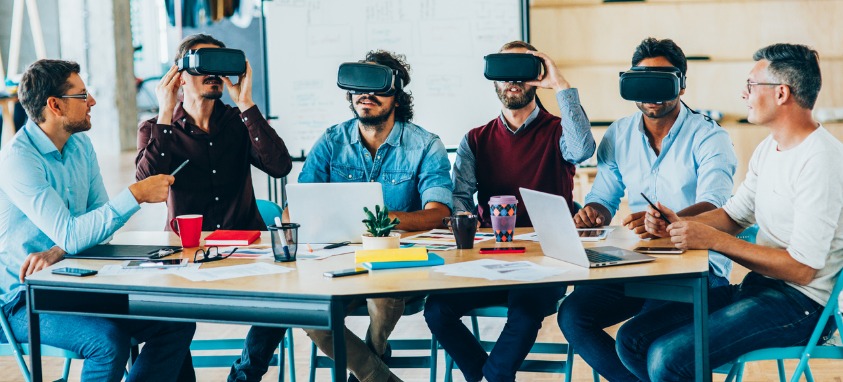
Virtual reality (VR) tours have been trending in recent years and only show signs of increasing in popularity. VR tours cut out need for travel, turning what can take a few days into only a few hours. Thirty-two percent of respondents already offer VR tours and 46 percent plan to offer them within the next 12 months, according to the study.

VR tours require a lot of bandwidth and up-to-date internet infrastructure, something which nearly three-quarters (73 percent) of participants have invested in over the past two years.

COVID-19 Considerations

Many of those surveyed believe some types of face-to-face meetings will see a quicker recovery than others. More than half (55 percent) of respondents said small local and regional events will thrive before national and international groups gather, especially as long as United States citizens remain barred from entering Europe and other countries.

Editor’s Note: This is part of a series reporting on FICP Chats about the future of meetings. You can read previous reports here, hereherehere, here and here

In early May, 82 percent of meetings professionals and hospitality partners within Financial & Insurance Professionals (FICP) had one or more in-person event scheduled for the remainder of 2020. In late June, that number had decreased to roughly half (52 percent) of the community. Those changes were due to a host of considerations, not all of which were apparent even seven weeks ago, including state and local regulations, corporate travel policies and individual comfort with travel.

In the seventh of FICP’s new virtual education series, Financial & Insurance Professionals (FICP) Chats, more than 250 participants agreed that while it will take longer than originally anticipated for meetings to return to pre-pandemic levels, there are positive indicators about a recovery, and people will truly appreciate those in-person interactions when they do occur. There is much work that can be done to facilitate the recovery in the meantime.

Lead by Example

Participants noted that the full return of meetings is dependent upon individual comfort with all the activities required to participate in meetings and events, including getting on an airplane, going to a restaurant and staying at hotels. As hospitality and meetings professionals, participants can help create positive perceptions about these activities. It was recommended that they support the industry by trying the activities they are personally comfortable with (“leisure up”) and telling friends about positive experiences when they venture out.

Understand and Apply Best Practices

new trends

Participants on the call were eagerly awaiting recommendations from the Events Industry Council APEX COVID-19 Business Recovery Task Force. In the interim, a number of smaller groups have formed to share ideas and best practices in place to help ensure compliance with Centers for Disease Control and Prevention (CDC) recommendations, local guidelines and corporate protocols.

Reliable sources such as state and local health departments, the CDC and local business partners should be leveraged frequently to understand the situation in a destination and how it may be different than the situation where attendees may be traveling from.

Seeing is Believing

With so much uncertainty about meeting and travel experiences, the more case studies and examples that can be communicated, the sooner confidence can be built around those new experiences. Some hotels and airlines have created videos, PowerPoint presentations and similar materials that show new, no-touch elements of check-ins and ways to provide more physical distance so travelers have a better idea of what to expect.

The photos and videos are important to provide meetings professionals who are accustomed to site visits, but may be unable to conduct them due to corporate travel bans, the opportunity to witness an experience first-hand. For example, one DMC mentioned on the call is filming an evening event with first responders as their guests to show how they are executing those events to local guidelines. Those materials can be used by meetings professionals in communications to their stakeholders about health and safety considerations, as well as their own planning efforts.

Stay in Touch

While the preference for most meetings professionals and event attendees (especially incentive qualifiers) is an in-person experience, participants noted the importance of staying in touch with those stakeholders during this time of uncertainty. Virtual group games (like trivia or adaptations of popular game shows), corporate social responsibility (CSR) activities, gifting and similar activities allow meetings professionals to keep their future attendees engaged and informed, and recognize performance. By providing first-class experiences now, participants noted you can also build greater anticipation for future events.

Start Small or Local

Due to local and state guidelines, only small group gatherings are allowed in most parts of the United States. These limited capacities, combined with travel bans, have prompted some participants to start with regional or local events in fall 2020 that allow participants the opportunity to drive to the event. Plans for these small events have included surveys to prospective participants to determine their comfort with attending in-person. With these early successes, it will be easier to expand efforts to larger groups as regulations permit.

Provide Virtual Alternatives

Since meetings and hospitality professionals may feel more comfortable with attending events than their stakeholders, they should ultimately be mindful and respectful of the fact that health issues and other considerations may cause some attendees to resist a return to travel and in-person meetings. So that the organization is not discriminating against those individuals, hybrid events and virtual education and networking offerings should be provided in conjunction with in-person events in the short-term. Live streams, recorded sessions and other options are being investigated by the group to accommodate these stakeholders.

While it may be time consuming to stay abreast of current conditions, partner and corporate responses, and changes to protocols and regulations, meetings professionals will be more prepared to host upcoming meetings with confidence by doing so. Remember to update your standard operating procedures and playbooks regularly in the coming weeks and months, and stay connected to all your stakeholders while you wait.

Jennifer Squeglia, CMP, is a member of FICP Board of Directors. In the next FICP Chats, taking place July 23, our will explore sustainability in future meetings. Learn more about upcoming FICP Chats, part of FICP Anytime.

Amy Overstreet

The Virginia Beach native will be right at home as the new sales manager for Virginia Beach Convention and Visitors Bureau. Before joining the city’s CVB, Overstreet worked as director of sales and marketing at Ramada Plaza by Wyndham Virginia Beach Oceanfront. In addition to managing state, regional and national government associations and organizations for the city, Overstreet will also manage associations outside of vertical markets in Washington DC and Northeast locations.

See our previous Smart Moves here.

Nick Solomon

Solomon is general manager for Amara Resort and Spa in Sedona, Arizona. He served as preopening and task force leader for nine The Ritz-Carlton properties in destinations such as, Puerto Rico, Hawaii and several hotels in Southern California.

David Pearson

Meadowood Napa Valley welcomes Pearson as managing director. This is not a new landscape for Pearson, as he’s been working with family-owned wineries since the early ‘90s. Before joining Meadowood, Pearson was chief executive officer of at Opus One, a position he held for the last 16 years; before that, he worked with Robert Mondavi winery, both in Oakville, California.

Marlyss Auster

Auster, president and CEO of Visit Ventura in California, has been chosen as at-large director on the board of California Travel Association. Auster has been with Visit Ventura since 2012 and will serve on the board for two years. Auster has served on the boards of several organizations, including Central Coast Tourism Council and Ventura County Lodging Association.

Martin Koerner

Koerner is commercial director of Alma in Cam Ranh, Vietnam. Koerner previously worked at The Anam in Cam Ranh as director of sales and marketing and was later promoted to group director of sales, marketing and distribution. Before The Anam, he was director of marketing for HG Holdings, and public relations and marketing manager for European International School Ho Chi Minh City in Vietnam.

Dean Winter

Swire Hotels chose Winter as managing director of the company. Winter joined the company in 2006, during which time he managed operations for The Opposite House in Beijing, The Upper House and EAST in Hong Kong. He became general manager for The Upper House in 2009.

Amanda Walker

Walker has been promoted to meeting sales manager for Visit Sarasota County in Florida. Before her promotion, Walker was leisure group sales manager. Before joining Visit Sarasota County, she was sales coordinator for The Ritz-Carlton Sarasota.

Two convention centers have stepped up to model best practices for meeting during a pandemic. Georgia World Congress Center (GWCCA) in Atlanta announced at the end of June that it was the first convention center in the country to achieve Global Biorisk Advisory Council (GBAC) STAR facility accreditation. The more than 4 million-square-foot facility documented each step of its procedures for cleaning, disinfection and infection prevention.

“Although events will look different moving forward, our commitment to our customers, show attendees and team members that the highest cleaning and disinfection protocols are being implemented at GWCC hasn’t changed,” said Frank Poe, executive director of Georgia World Congress Center Authority. He described the step as assurance for planners and exhibitors that venues are doing everything they can to provide a safe, clean environment.

Two weeks later, Anaheim Convention Center (ACC) announced that it had also filed its plans with ISSA, the trade association for the cleaning industry that manages GBAC. Tom Morton, executive director of Convention, Sports & Entertainment for the city of Anaheim, described going through the process as “an important step in the eventual, safe and responsible reopening of Anaheim Convention Center.”

Jay Burress, president & CEO of Visit Anaheim, pointed to the accreditation as proof that the facility is prepared to safely reopen. He reported that his team is continuing to sell and book events in the Southern California city as far out as 2028. The destination announced in June that since March 1, it has booked four conventions and 43 meetings at ACC for 2020 alone.

Read more about Anaheim’s plans to enhance the sports and entertainment district.

“With the threat of coronavirus still high in many areas, people want assurance that facilities are taking extra precautions to enhance cleanliness and safety,” said ISSA Executive Director John Barrett. “Whether an organization has space for millions or just a few employees, GBAC STAR will continue to be an important indicator of a facility’s thoroughness around cleaning, disinfection and infection prevention.”

The program’s 20 elements cover everything from standard operating procedures and risk assessment strategies to personal protective equipment and emergency preparedness and response measures.

One Accreditation Fits All Sizes

The accreditation is not just for large buildings. Dinner in a Dash, a Monroe, Georgia, to-go food service operation with six employees and 1,500 sq. ft. of space announced it had received the certification in June.

Brett Mitchell, general manager of Overland Park Convention Center in Kansas, reported at a meeting of International Association of Venue Managers COVID-19 Task Force that his team is using the document filed by GWCCA as a template for certifying its 25,000-square-foot ballroom and 60,000-square-foot exhibit hall. “It is a very different facility, but many of the elements are similar,” he reported. “This allows us to get running faster.”

How can you provide a safe and secure environment for your attendees in the midst of the COVID-19 pandemic? It begins with confidence.

Many meeting planners are looking to someone else to tell them the right way to plan a successful and safe event. However, as a meeting organizer and expert at your craft, you’ll deliver a better and safer experience if you have the confidence to take the lead and instruct your venue, hotel and vendors with your own individual COVID-19 contingency planning requirements.

Plan Like an EMT

First responders don’t arrive at chaotic scenes and traumatic events hoping someone knows how to treat patients, secure the area and deliver the most positive outcome among a challenging circumstance. They rely on years of training, pre-planning, practice drilling and refining their skills. So, by the time they show up on the scene, the team members each have a role and know it well.

For contingency planning at events, conscientious planners review what risk can be removed from the environment. When we switch over to emergency preparedness, we look at what we can do to minimize the risks. As much as we’d like to, we can’t remove the risk of COVID-19 completely. However, we can minimize the risk with proper emergency preparedness education, and a pre-plan of how to execute your next meeting.

For charts and graphs, seeCoronavirus (COVID-19) Medical Contingency Plan Version 2.0

The challenges surrounding COVID-19 bring up a common theme: Uncertainty. Uncertainty typically drives people into a state of fear. Anyone operating from this state will find themselves in a position waiting for answers and solutions to feel more comfortable.

Unfortunately, COVID-19 is certain. We know how it spreads; we know what kills it and we know the right things to do to prevent the spread. We also know COVID-19 will be a challenge for the foreseeable future.

The education piece is more in-depth than checking the latest guidelines from the CDC. When looking at the suggestions for the mitigation and preparedness phase, many of the recommendations from the CDC (Centers for Disease Control and Prevention) haven’t changed. The key focuses for minimizing risk are social distancing, hand washing, decontamination of highly touched areas and is wearing masks to reduce the spread.

Act Like a Confident Leader

Moving forward requires taking on the role of a confident industry leader. Attendees are craving direction. By providing guests with the tools to be successful, we are helping them feel more comfortable. We have to be willing to take calculated risks without being reckless or dismissive.

Learn more at Emergency Concierge International.

We plan events during hurricane season by analyzing the information, take a calculated risk and create a contingency plan. The same approach works with an epidemic.

The following checklist is a starting point for building confidence to plan for your next meeting:

  • Develop an Emergency Plan that includes a response to All Hazards—not just COVID-19 (Read our blog to see what an Emergency Plan is…and isn’t.)
  • Determine the local public health requirements that need to be implemented
  • Check for updates from local public health resources frequently
  • Work with hotel or venue to define their guidelines
  • Be informed of the sanitization schedule and confirm the schedule is being followed
  • Decide in advance the guidelines and boundaries you plan on implementing and communicate details with attendees
  • Develop a clear communications strategy for attendees
  • Consider your enforcement plan and decide who will be enforcing any guidelines and boundaries that are agreed upon and enforce in a comfortable way for attendees
  • Promote proper wearing of masks; all staff and attendees should be wearing the proper PPE (personal protective equipment)
  • Get creative—you can put proper precautions in place without sterilizing the look and feel of your event.

10-Step Preparation and Response Action List

To support the meetings industry and further boost your confidence during planning, ECI has developed a COVID-19 Medical Contingency Plan. Included in this plan is a 10-step Preparation and Response Action List:

  1. Communicate organizational preparation to attendees
  2. Educate self and staff on factual COVID-19 information
  3. Gather local resource information
  4. Discuss response strategy with venue and staff
  5. Gather necessary supplies
  6. Implement mitigation and preparedness techniques
  7. Monitor crowd health and dynamics
  8. Respond to suspected incidents
  9. Manage communications
  10. Complete after-action review

With this free plan, you can reduce the risk and provide a safer environment for your attendees.

Click HERE for your copy of the comprehensive COVID-19 Medical Contingency Plan.

Desi Whitney is president and co-founder of Emergency Concierge International (ECI), an All-Hazards Emergency Planning company for meetings. We blend our team’s skills and experience of first responders and emergency managers with the meetings and events industry to provide positive outcomes among challenging circumstances.

Until English venues are cleared to host large international groups again, many are focusing on catering to domestic corporate and incentive business, according to feedback from a recent VisitBritain roundtable. Representatives from Scotland, Wales, London, England and Northern Ireland came together during the Meet GB forum to discuss how the United Kingdom is preparing to bounce back from COVID-19.

The Value of CVBs

Despite the challenges COVID-19 has posed for the meetings industry, the group painted a picture what future events will look like. Tracy Halliwell, MBE, director of Tourism, Conventions & Major Events at London Convention Bureau praised the hospitality spirit. “Together, as an industry, we need to have a voice and we need to have one voice saying the same thing. People who are serious about doing business in the future will now see the value of CVBs and associations.”

Eimear Callaghan, business solutions manager with Tourism Northern Ireland spoke to the role that destinations will have in becoming content managers to ensure successful hybrid events and maintain attendee engagement. “As destinations, we have the knowledge of the right people through our Conference Ambassador program and can tap into the connected networks and pull out ideas for content to ensure the hybrid model is a success.”

Read more about the value of CVBs here.

A Focus on Incentives

In a conversation with Smart Meetings, Callaghan expanded on what incentive trips will offer in a post-COVID-19 MICE market. “We envisage the growing need for travel with more meaning and purpose, programs that motivate, educate and have a transformative impact on the explorers.” As travel is sure to be limited in the months to come, quality and meaningful experiences will be more important than ever. Destinations will have to provide a reason for attendees to get on airplanes again. Callaghan cited several experiences, including guided meditation with horses and stargazing through glass-roofed glamping pods as examples of how Northern Ireland is preparing to entice international clients.

Opportunity for Improvement

While the swift shift to online meetings this year was unexpected, the lessons learned during COVID-19 will make the industry stronger according to representatives from across the pond. The use of data to track engagement and the innovation and creativity that has driven online experiences recently will make live events all the more impressive when they return. The increase in technology used by planners could lead to more connected venues. As Neil Brownlee, head of business events at VisitScotland observed, investments in tech were already happening pre-COVID-19. The pandemic has simply increased the speed of innovation. Halliwell similarly mentioned large amounts of investment in venues and hotels in London and said the new importance placed on tech will only add value to event spaces. While the UK and Northern Ireland might not be open for U.S. business quite yet, destinations across the countries are confident that lessons learned during this difficult time will only improve the future of meetings and events.

Remember back in the good old days, when things used to be so much easier? Back when your inbox was overflowing, your day was filled with meetings you had to attend and toilet paper was the last thing on your mind? Yes, I’m referring to a month ago.

How fast things have changed! As if being a leader of people isn’t hard enough, now you have to worry about leading people during a global pandemic. How do you keep your team motivated and productive? What do you need to do differently? What needs to stay the same? Here are five tips to get you through the next four weeks…and beyond!

1. Be flexible and ask for help.

Things are different now, and they may never be the same. Companies without a “work from home” policy were forced to implement one on the fly. Essential employees are asking for unusual work accommodations to stay safe, like medical masks or even their own office to limit interaction with others. Policies that seemed permanent, like the number of hours one must work to maintain benefits, are changing because it’s the right thing to do.

The challenges coming your way can be overwhelming, but remember to stay flexible and openminded. You may not immediately know the answer, but it is out there. Now is the time to tap into your network, whether at work or online. Someone has the expertise to help you figure it out…if you ask! (And isn’t that the hardest part? Stop thinking that asking for help is a sign of weakness or a lack of knowledge. It’s actually a sign of a great leader.)

2. Keep it real and avoid the spin.

Do you know what employees really hate? Guessing. What’s going on behind the scenes? What does this mean for my job? Why is my boss so quiet?

As a leader, you’re probably privy to a lot of insider information. You know how meeting cancellations are affecting your company’s bottom line. You know there’s talks of furloughs or pay cuts. You’re feeling the stress, but trying not to show it.

You might not be able to share it all, but share what you can. Authenticity is one of the best ways to build trust with your team, and trust leads to greater engagement and productivity. There’s nothing worse than when the boss says “everything is great,” when everyone knows it’s not.

What does it look like to be authentic at work? Be real. Let your team know when you’re having a bad day. Give them constructive feedback, even when it might hurt their ego. Let them know about your failures, and what you learned from them. The most impactful and memorable leaders know that real always wins.

3. Set up structure to regain a sense of normalcy.

Humans are creatures of habit. In the last two weeks, I’ve eaten more and worked out less than I have in years, and it’s because my normal routine was shattered.

The same can happen at work, but instead of gaining a few pounds, you might see a decrease in motivation and productivity. To avoid the downturn, establish a routine for a new sense of normalcy. Team meetings and one-on-ones are a great place to start.

Weekly Team Meetings: Use Zoom or the video conference call tool of your choice to get your team together weekly. Start out with a social check-in, but end with what each person commits to accomplishing that week. It’s a great way to keep up team dynamics and morale, but it’s also way to increase accountability.

Weekly One-on-Ones: Again, I recommend Zoom for this one! One-on-ones are a time to discuss each individual’s projects, goals, opportunities, etc. It’s also a perfect time to do a mental “check-in” with each person. Whether your team is sheltering in place or still coming into work, COVID-19 is a lot to handle.

You may want to begin each one-on-one with this simple question: What’s one thing we can discuss today that will make this meeting worth your time? Let them lead the way. For more questions to ask during a one-on-one, check out this great agenda from Quantum Workforce.

4. Ask for feedback…and act on it!

This one really is as simple as it sounds. Give your team permission to give you feedback that’s both positive and constructive. You might ask:

  • What am I doing well?
  • What do I need to change?
  • What do you personally need from me?

This small action goes a long way in establishing trust and respect, and it’s a way to begin creating a culture of feedback.

That said, how you receive feedback and what you do with it matters. Your team will be watching, and getting defensive will break their trust in you. As this HBR article points out, humility is key, and while it’s okay to ask questions to dig deeper, resist the urge to defend your actions.

For example, your subordinate might say that you need to change your communication style. A good response might be: Thank you for sharing that. Could you be more specific? Could you give me an example?

Once you have clear feedback, you can begin to implement changes.

5. Offer recognition, gratitude and personal development freely.

According to research by OCTanner, 79 percent of employees who quit their jobs cite a lack of appreciation as a key reason for leaving, and 65 percent of North Americans report that they weren’t recognized even once last year.

Most of us think we do a great job of recognizing our teams, but the stats say otherwise. How can we fix it?

6. Look for the good and express gratitude daily!

Find things to thank people for each day, even if they’re small. Offering to take notes for the team during the meeting? Taking a last-minute phone call at 6:30 pm? Both are worthy of a thank you!

7. Personalize the way you provide recognition.

Everyone is different, and while some love public praise, others find it embarrassing. (Hint: If you don’t know what your team prefers, ask!) Maybe you say thank you in an email where you copy your boss. Maybe you write an old school handwritten note delivered by snail mail. Maybe you say it on a team call. No matter what you choose, make sure it works for the individual!

8. Allow your team the time and budget to expand their skill set.

Professional development is another form of recognition. It shows you believe in your team enough to invest in them. It doesn’t have to be expensive either! Free or low budget options are everywhere online, especially now. If you have a small training budget, sites like Udemy.com are a great resource. (This article lists even more!)

Team training can be done in person or virtually.

Courtney Ramsey is a keynote speaker and trainer who helps businesses achieve better results, reduce turnover and increase engagement.

As the meetings and events industry looks for ways to bring attendees back to conferences, there is much talk about contactless processes from the parking lot to their seats in the convention center.

While the timeline of a COVID-19 vaccine or herd immunity is unknown, there remains a strong desire for people to meet once states allow for mass gatherings. Even moving events to the fall or winter months will most likely still require following the guidelines set down by the CDC and WHO.

What is an event planner to do?

Below, are several ways to keep your next event as touchless as possible.

Creative Contactless Solutions

  1. Advanced registration and payment: You and your staff can avoid the use of paper, setting up self-check-in kiosks, exchanging money/credit cards or registering walk-in attendees by establishing this process. Once registration occurs, remind attendees there will be no materials given out, including name badges. Send them your policy on mask-wearing, social distancing, and anything else COVID-19 related.
  2. Hybrid sessions: Even when the “all clear” is granted for big events, there will be a subset of your members who will wish to participate remotely. Providing a hybrid approach (at a cost) will ensure greater meeting participation.
  3. Contactless check-in: Create or use an app that asks a series of COVID-19 screen questions that they must answer before checking in. Once completed, provide a QR Code to scan at a kiosk that will confirm they are registered.
  4. Hand sanitizing and temperature screenings: Temperature screening monitors can be rented to detect a fever without touching the participant using heat map technology. UV-C sanitizing charging lockers, touchless hand sanitizers and UV-sanitizing shells are also available for rental. Attendees can wand phones and other personal items over some of these stations during the course of your event to kill coronavirus molecules that might be on the surface.
  5. Sensors: Event organizers can control the following through a smartphone app: lighting, room temperature and the number of attendees in each room.
  6. Touchless presentations: Everything from turning on and off the LCD projector to the advancement of slides to adjustments of the large monitor will be controlled through your smartphone.
  7. Laptop and tablet rentals delivered to hotel rooms in a sterilized container: Rather than handing out these rentals at the check-in area, each device will be placed in the attendee’s room. For one-day events, individuals can pick up their devices in a specified conference room.

Key Takeaways

Fear of the unknown, confusion about what to believe, and health concerns about contracting COVID-19 are testing the limits of the hospitality industry.

As event organizers, you are tasked with creating a safe environment for every one of your meeting participants. What creative solutions have you discovered? Share with [email protected].

De-de Mulligan is a regular blog contributor for Rentacomputer.com. As a former meeting planner who has received Ohio MPI’s Planner of the Year award twice (2006 & 2012), she brings a unique perspective. You can find her on Twitter @DedeMulligan or LinkedIn.

Two new developments will likely make Anaheim, in southern California, an even hotter spot for meetings and events. The 820-acre area that includes MLB Angels Stadium and Honda Center, known as Platinum Triangle, will soon become a district for sports and entertainment, full of restaurants, parks, retail stores, hotels and meetings space.

The 153-acre Angel Stadium site’s development plans encompasses two new hotels, offering a total of 943 rooms; a five-acre park; 5,175 residential units; retail stores, restaurants and places for live entertainment.

Honda Center’s 115-acre OC Vibe will be home to a host of options for events, including a 68,000-square-foot food hall, restaurants and retail stores; two hotels with a total of 650 rooms; and a 30,000-capacity live entertainment center, including a 6,000-seat concert venue.

As a result of the pandemic, many meeting planners are turning to open, outdoor spaces, which these planned developments offer in abundance. At OC Vibe, there will be a 3-acre park plaza and a nearly 5-acre park in front of Artic, the city’s transportation center. There will also be a 5-acre park outside of Angel Stadium.

“These two developments are things we only dreamed about,” says Jay Burress, president and CEO of Visit Anaheim. “Together, they can [become] the entertainment capital for Orange County, if not Southern California. The offerings [they are] going to have for entertainment and dining is something we’ve long wanted in Anaheim. It’s very exciting for us and our visitors, but especially meetings and conventions attendees.”.

As a city best known as home to Disneyland, Burress is excited to have new offerings for visitors—1 million sq. ft. of new offerings. “We’re proud to be the home of Disneyland. Yet there are a lot of clients who never see Disneyland or get close to it; they’re looking for other entertainment or dining experiences like they get when they go to other destinations, and this is going to cover that,” Burress says.

The 1.15-million-square-foot Anaheim Convention Center is the largest exhibit space on the West Coast, and it figures prominently in about 50-70 citywide events annually. These two new sites will “add to an already great product,” Burress says.

Like the rest of the industry, Anaheim has been busy keeping and shuffling events derailed by COVID-19. “We’ve been busy rescheduling conventions for March through September. At the convention center, we still have some groups on the books for October, November and December and into ’21. [Groups] still want to come. There’s a lot of positive feelings about ’21 and beyond, so we want to keep that momentum going,” Burress says. “Anaheim is looking to the future.”

The first phase of this project will be open to the public in 2024 and is set for completion in 2028, the year Honda Center will host indoor volleyball for the Summer Olympics. Construction for the Angel Stadium site is set to begin in 2025 and will continue through 2050.