Few industries were more impacted by the COVID-19 pandemic than the events industry. Event planners, speakers and attendees all saw their calendars cleared out last March, returning slowly with virtual events and only now showing a glimmer of hope for the return of live conferences.

Like other industries, though, competition for attendance and participation is fierce, so event planners must take a page out of the corporate playbook and focus on attendee experience as a key differentiator.

Competing on price is a loser’s game; just ask the local gas station that has its competitor right across the street. One lowers the price of gas by a penny and the other follows. It eventually ends in an impasse or them both giving away gas for free. Similarly, reducing ticket prices for events has downstream implications on budgets for speakers, entertainment, lighting, food and beverage, giveaways, and other key elements of the experience.

Competing on product is also getting tougher and tougher, as even the most innovative companies in the world—like Uber or Snapchat—eventually get copied.

So what’s left? The experience. And fortunately, the experience is delivered by human beings for human beings, so by definition it will be unique.

Here are some ways you can make attendee experience a differentiator for your next event:

Communication
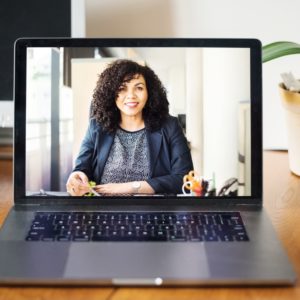
Every time you communicate with customers is an opportunity to create an experience, yet most of the time this critical aspect is ignored or just phoned in. Communication channels include the event website, registration page, confirmation/welcome emails, pre-event instructions, event signage, nametags, programs and table tents.

One particularly overlooked communication channel is the dynamic hold screens that are displayed to the audience before the event begins each day or in between sessions. Are they showing basic animated graphics with boring instrumental music, or a curated video of the cocktail party the night before accompanied by an upbeat, sing-along music playlist?

What is the experience you would prefer as an attendee? That should be the guide for determining the experience as a planner.

A Killer Emcee

Nothing will suck the energy out of a room faster than a dull emcee. Think of the teacher calling attendance (“Bueller? Bueller?”) played by Ben Stein in Ferris Bueller’s Day Off. If that’s what your emcee is like, the entire vibe of your event will be ruined. The best emcees energize the crowd, keep them attentive and get them excited for the next speaker.

The emcee should generally not be an executive, a vendor or anyone who is not a trained public speaker. It is a critical role in making the experience memorable.

The Best Speakers
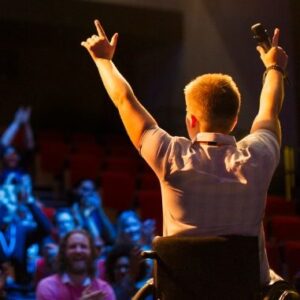
Even before the pandemic, corporations were taking a harder look at travel and entertainment expenses and demanding that conference attendees return to the office with actionable learnings. So it’s more important than ever that the speakers at an industry conference keep the audience’s attention and prevent them from reaching for their mobile devices.

Yet too often the speaker selection process is managed by the sales and marketing teams, and it usually identifies people in two major categories–sponsors and big corporate logos.

The sales team wants to fund the event with corporate sponsors, so they offer up speaking opportunities as a “carrot” to those willing to shell out thousands of dollars to have their name on the wall and in the program. The marketing team wants big corporate logos so they can show them to prospective attendees in hopes of impressing them with the quality of other people attending the event.

What’s missing is any filter to determine if these people can actually communicate effectively from the stage.

Public speaking is a developed skill, and it requires the person on stage to maintain the audience’s attention while educating them and hopefully entertaining them at the same time. You wouldn’t want an untrained airplane pilot flying you across the country; why would you want an untrained speaker in front of your paying customers?

The best speakers have a “speaker’s reel” so planners can view actual video of them presenting, have simple slides that put the focus on the speaker rather than tiny, unreadable charts or paragraphs, and a willingness to engage with the audience before, during and after the presentation.

Make It Shareable

The best way to generate buzz about your event is to have those participating share it with friends and business colleagues. So why do so many events make it hard to do so?

Make sure the event hashtag (you do have an event hashtag, right?) is prominently displayed on all signage and in the program. Also be sure to include the speakers’ Twitter handles in the program, in any handouts, and preferably on screen during the presentation. This makes it easier for those of us who love live-tweeting events as a means of taking notes and sharing key takeaways with our social media followers.

Fun design elements like the conference hashtag in giant blocks, or selfie stations with frames and costumes, or screens displaying live social media streams—are additional ways to generate sharing.

What’s At Stake

Remember that customer experience includes every single interaction a customer has with a brand. So for an event, that means the location, transportation, meals (and the lines to get to them), snacks, Wi-Fi, charging stations, networking, entertainment, hotel rooms and swag bags all contribute to the overall attendee experience.

One bad element can ruin an otherwise great experience at a conference and cause an attendee to reconsider returning the next year. But when they all work together to provide a fluid, consistent and remarkable experience, people won’t just return—they’ll bring others with them.

Dan Gingiss is an international keynote speaker, author, podcaster and customer experience coach with a 20-year professional background at companies like McDonald’s, Discover and Humana. His newest book is The Experience Maker: How To Create Remarkable Experiences That Your Customers Can’t Wait To Share which is releasing in September. For more information. 

As the world opens up and Covid restrictions are lifted, we will not return to business as we knew it before, largely because of lessons we learned about the benefits of communicating digitally. For example, marketers, human resources professionals and event planners will continue to leverage the advantages of virtual communications, including massive logistical efficiencies, the ability to extend the lifecycle of an event and the use of advanced analytics to maximize ROI. So, while events are beginning to offer physical options, the future of events will be inclusive of hybrid events, offering a vibrant digital overlay to the in-person experience.

So, how can marketers create impactful hybrid events that resonate with physical and virtual attendees while delivering ROI for hosts, sponsors and exhibitors? The answer is to understand both your in-person and virtual audiences while creating powerful experiences for both.

Today’s successful hybrid events celebrate and amplify the offline physical event online. In this new era, event organizers must develop strategies for each audience.

Tapping into The Differences

It’s no secret that the bread and butter of virtual events is compelling and engaging content. Without it, attendees lose interest and log out. Physical events, on the other hand, rely on “the experience” and surroundings. With that in mind, event organizers need to marry the best of both of these worlds to create a hybrid event that is enriching and unique to attendees.

Consider speakers for your hybrid event. It goes without saying that keynote speakers often resonate much better in person and, therefore, should likely be giving a presentation from the main stage. With this in mind, consider invitation-only status to influential attendees and speakers for the in-person portion of the event.

When thinking about virtual and in-person attendees collectively, consider offering a few limited sessions to both physical and virtual audiences together while largely focusing on separate sessions for virtual and in-person attendees. The point here is to create the right impact for each audience. In other words, the organizer can zero in on the key stakeholders/attendees in person and make that personal connection while creating top-of-the-funnel leads via the virtual environment.

Integrating Emerging Technology

In recent years, virtual and augmented reality have become increasingly popular and integral to meetings and events, as organizers leverage these technologies to add an experiential dimension for virtual attendees that can enable them to feel immersed in the physical experience.

MoreEvent Tech: Survive and Thrive Guide

Augmented reality, in particular, is easy to execute and can enhance both the speaker and virtual attendee experience in myriad ways. For example, if you are selling or presenting a product through a barcode, you can have the entire product in a physical room—even virtually. What’s more, if you are introducing a new model or design, consider adding in a layer of AR to pique attendees’ interest further.

With the use of a headset, virtual reality can also be used to create a dynamic experience for attendees. With virtual reality, exhibitors can create a virtual room where virtual attendees can see not only the event but also be a part of the physical environment. From a product perspective, VR allows virtual attendees to see beyond the physical assets into its manufacturing, look-and-feel, and user experience—all while participating from the comfort of their home. Leverage VR to take attendees beyond a product demonstration and create a product experience.

The Future for Hybrid Events

Hybrid events have helped eradicate limitations that came with physical events—limited budgets, resources, time, space, accessibility, availability and more.

As we look ahead, hybrid events are poised to become the backbone and de facto format of the meeting and events industry. Hybrid events bring the ultimate flexibility, cost savings, and reach while allowing brands, sponsors, and exhibitors to capitalize on business objectives and generate maximum event ROI. And, it also has a longer shelf-life; along with capitalizing on the returns of the physical event on the scheduled date, you can still continue capitalizing on the returns of it for the same event virtually for days post it. Today, event platforms also offer you white-glove client success teams that lend support before the event, during the event, and post the event to ensure complete event success, leading to delivering the easiest and most immersive and engaging events that drive business results.

Vaibhav Jain is founder and CEO of the virtual and hybrid event technology company Hubilo. A graduate from Dhirubhai Ambani Institute of Information and Communication Technology, Vaibhav has 10 years of marketing, operations, finance and sales expertise in the Information Technology sector.

How can meeting planners be part of the solution in the movement to defeat unconscious bias? First, you need to know what it is.

Unconscious bias (also known as implicit bias) refers to unconscious forms of discrimination and stereotyping based on race, gender, sexuality, ethnicity, ability, age and so on. It differs from cognitive bias, which is a predictable pattern of mental errors that result in us misperceiving reality and, as a result, deviating away from the choices that would most likely reach our goals.

Cognitive biases impact all sorts of decisions, not simply the way we evaluate people. For example, as this study reveals, these biases harm our shopping choices as consumers. In other words, from the perspective of what is best for us as individuals, falling for a cognitive bias always harms us by lowering our probability of getting what we want. Despite cognitive biases sometimes leading to discriminatory thinking and feeling patterns, these are two separate and distinct concepts.

See moreHack Your Incentives: The Meeting in Your Attendee’s Head

Cognitive biases are common across humankind and relate to the particular wiring of our brains, while unconscious bias relates to perceptions between different groups and are specific for the society in which we live. For example, I bet you don’t care or even think about whether someone is a noble or a commoner, yet that distinction was fundamentally important a few centuries ago across Europe. To take another example—a geographic instead of one across time—most people in the United States don’t have strong feelings about Sunni vs. Shiite Muslims, yet this distinction is incredibly meaningful in many parts of the world.

It’s incumbent for meeting planners both to understand and to overcome unconscious bias. Doing so not only helps you create more inclusive events; it helps you run the business side of meeting planning most successfully.

The most important pair of cognitive biases for meeting planners in addressing unconscious bias are the halo effect and the horns effect. The halo effect refers to the fact that when we like one aspect of someone, we overestimate their other characteristics. Usually this liking stems from a similarity between us and the other person. Conversely, if we dislike one aspect of a person, frequently due to a difference between us and them, we’ll tend to underestimate all of their other characteristics.

Say you’re choosing a caterer. Did you know you’re more likely to select the one whose sales rep you perceive as more aesthetically pleasing even if the sales rep doesn’t do the catering itself? Research suggests you’ll unconsciously find reasons to talk yourself into selecting the person, even if they would not be the first choice by objective measures.

Or say you’re considering how much time and effort to invest into minimizing the prospect for microaggressions toward minority event attendees. Unless you’re a member of that minority, you’re likely to underestimate the impact of such discrimination on the minority attendees. Thus, you’ll misallocate your resources to the detriment of that minority.

Such unconscious bias by meeting planners, or by attendees who discriminate against minority attendees, is often unintentional—that’s why we call it unconscious bias. The discriminatory behavior results from unconscious, implicit thought processes that the meeting planner would not consciously endorse.

Fortunately, research shows that you can overcome these mental blind spots to make the best people decisions. One way to overcome cognitive biases involves using a decision aid, such as this website that narrows our choices to the top 10. An externally-vetted list by a trusted third party, such as a highly credible publication, will minimize the impact of your own unconscious biases.

Another strategy involves specifically focusing on observing differences and similarities between yourself and other people or groups. Notice whether the difference makes you feel more enthusiastic/optimistic/positive toward these people or more cautious/skeptical/negative toward them. Then, as you’re making choices about who to work with or how much resources to invest in each, deliberately lower your estimates of the former and raise your estimates of the latter. This skill gets much easier over time with practice and can help you learn about and address your own unconscious bias as a meeting planner.

Dr. Gleb Tsipursky is an internationally recognized author, behavioral economist, cognitive neuroscientist and academic on a mission to instill leaders with the most effective decision-making strategies. He is the author of several books, including Never Go With Your Gut: How Pioneering Leaders Make the Best Decisions and Avoid Business Disasters (Career Press, 2019), and has over 550 articles and 450 interviews in publications such as Inc. MagazineEntrepreneur and Fast Company. Contact him and register for his free Wise Decision Maker Course here.

They say you don’t know what you have until it’s gone. But meeting professionals are different: They know what they have, know that it’s liable to change and when (not if!) it does, this resilient pack gets to work.

If further proof was needed, the latest Smart Meetings webinar, “Event Tech Survival Guide,” should be next on your to-do list. In a virtual roundtable, Shameka Jennings, CMP, director of meetings and partnership development for National Council of State Tourism Directors; Lindsay Martin-Bilbrey, CMP, CEO of Nifty Method; and Brandt Krueger, owner of Event Technology Consulting and Smart Meetings events correspondent, shared stories of problem solving, predictions, and how we can thrive, not just survive.

Doing Things Right But Still Coming Up Short

To kick things off, JT Long, moderator and editorial director for Smart Meetings, asked the guests to share event tech horror stories.

Krueger began by recounting a virtual event hiccup that occurred despite doing all the necessary preparations.

Krueger

Brandt Krueger

I came home and described to my wife that this was possibly the most stressful thing I’ve done in 20 years. We did everything that we should have. We had backups. We came in the day before. We set everything up. We left everything on. It was one of those things where we did everything you’re supposed to do. The next morning, we came in hours in advance, so that we were all tested and ready to go—and none of the links worked.

We were unable to connect to the platform from our remote location where we were broadcasting. We’re bouncing around from support to support. We were getting a lot of, “Oh, it looks good on our side,” from the platform team. Maybe 10 minutes later one of our computers connects. We’re able to get the livestream up and running, but we’re running on one machine with no backup for most of the morning.

Jennings

Shameka Jennings

At a two-day virtual conference that I managed, we had yoga on the second day. The yoga began at 10 a.m. We have a yoga instructor on, and everything is ready to go.

As 10 a.m. comes, she moves into position, and all of a sudden, she’s frozen, and we can’t see her. We’re thankful that the day before we had yoga as well, and we recorded the session; I had [IT] replay that session. She was so excited about doing it, and we did not see any of it. I’m a huge fan of prerecording for such a reason.

Prerecorded vs. Simulive vs. Live

Jennings

As I’ve said, prerecord. Especially when it comes to the big things where you don’t have the technical support. Prerecording those type of sessions and also sessions that might not have a lot of engagement activities, such as yoga.

I don’t fault doing yoga live; that’s what the person I was working with wanted to do. However, since there is not a lot of interactivity, those types of events could be prerecorded. I think that’s the great thing with virtual: People can watch things on their own time.

Krueger

When we’re looking at the spectrum [of virtual], a lot of it has to do with interaction. A lot of event tech companies that are going to do well are the ones that were doing polling, Q&A and interactivity beforehand, and then added the video capabilities.

It’s not just a matter of getting a platform that has Q&A, polling and things like that. That’s an important part of it, but we want to design connections between the audience; design opportunities for the audiences to interact.

Martin-Bilbrey

Lindsay Martin-Bilbrey

As a follow up to that, it’s really important to remember the adage, “There’s not one ring to rule them all.” Because an event tech ecosystem for a hybrid event is going to have lots of things going on; you have your broadcast tech, you’ve got your AV tech, you’ve got your community tech. There can be one platform that does maybe 60 or 70 percent, but the ones that are out there advocating that they do it all, and they do it all very well, are lying to you.

Thriving, Not Surviving

Long

One of the things that [Jennings] pointed out earlier is that we are reaching more people than ever. Let’s talk about how this has helped planners—how now that we can measure everything and we have so much data, we’re actually going to thrive and not just survive.

Krueger

The big fear is that if we start doing more for hybrid and start giving it away for free, [attendees] are not going to come to our events now that they’ve had a taste of what it’s like to stay home. But the evidence is to the contrary.

What we saw going from year-to-year of putting on hybrid events is that in-person numbers either stayed the same or went up, like, 86 percent of the time. I would argue that the remaining 14 percent were probably the ones where the camera was placed in the back, they called it hybrid, and it was a bad experience [for virtual attendees]. You gave your online audience the worst seat in the house and expected them to be happy with it.

Jennings

How we’re thriving is with DEI (diversity, equity and inclusion). Providing accessibility is a space that we haven’t talked about; people really haven’t focused on it when it comes to the importance of virtual and hybrid.

We haven’t gotten to a space where people find it worthy to pay out of pocket to go to their meeting. Having this space, and opportunity where people can participate who might not normally have access to the platform or conference they would attend in person, has really made a wealth of difference.

People will get back to going to in person, without a doubt. I’m keeping this virtual space available to those that don’t have the support but still need what’s offered.

Predictions and Surprises

Jennings

First, I believe the virtual aspect is here to stay. It offers accessibility to attendees who may not have the funding to attend, as well as an easy buy-in for potential attendees to get involved with a meeting without a lot of investment.

Secondly, this is going to be a hospitality family affair. While we see event tech shining to support the transition to virtual and hybrid, I foresee our hotel and CVB friends getting into the action, too, which will make the planning of these meetings a family across the hospitality board. Lastly, there is value in virtual. I predict seeing the use of virtual to build momentum to, during, and after in-person events.

I’ve been surprised by the innovation. Give us planners a bottle of wine, and we can do anything. My prediction for hybrid meetings is how I plan to do them: taking one community in person and one community online and finding the ways that I can tie them together, but still trying to create unique experiences for both parties.

Krueger

On the event technology side, event apps are going to be the ones to watch. I think that cross-functionality is going to help us bridge as we return to reincorporating our in-person audience. We’re going to see a lot more remote presentations where we’ve got a nice, controlled environment, with lights and cameras. We’re seeing a lot of investments being made in venues to do that in hotels and train stations all over the world.

Lastly, I think we learned over the course of the last year that not every event and meeting needs to be in person. Don’t get me wrong at all, I appreciate and love the in-person events; there will always be in-person events, but we’ve learned not each one needs to be.

Martin-Bilbrey

Slow and steady is going to win the race. I’ve talked to some very large enterprises that we work with, and they believe hybrid is here to stay. This is not something that’s going away.

Another prediction is communities making a resurgence. Whether you’re a corporation, association or somewhere in between, that aspect of having that 365 experience is going to be a valuable asset. Not just the producers you’ve been working with over the last year, but thinking about the community managers who can tend to seeds that you planted at the in-person, hybrid and virtual events so that the conversation can be 24/7.

My final prediction is that our teams are going to continue to be remote and distributed. Having those pop-up abilities and the ability to talk about your event deeply, as well as widely, is going to be incredibly valuable from a stakeholder perspective.

The thing that surprised me is the resiliency. It’s been said a lot, but we always knew this was a group of people and an industry that could really roll with the punches. You can’t do what we do and not be okay with surprises, even though we hate and try to control for them. But the joy that these people continue to bring, even when things are going terribly, horribly wrong! They are out there supporting and lifting each other up and continuing to make the fabric of our industry stronger.

Plan with Confidence

In DC’s Wine Country®, your group can tap into the best of both worlds – from rich farmland and rural charm to the innovation and industry knowledge that fuel the Dulles Technology Corridor. Home to farmers and entrepreneurs, to esteemed equestrians and renowned thought leaders, Loudoun has long been a place where ideas are cultivated and business thrives.

For groups looking to branch out and meet face-to-face, Loudoun offers a fresh take on meetings. Discover a mix of unique venues – and unique advantages for planners and attendees – in this scenic and inspiring setting, just 25 miles west of Washington, DC. You’ll find standout venues to host any activity, from business meetings to team-building events.

Vineyards, Wineries & Breweries

Sipping wine on a terrace with vineyard views is an ideal way to unwind with colleagues after a productive day of sessions and meetings, but your group could spend a day or more soaking up vineyard vibes. Stone Tower Winery in Leesburg offers a variety of event spaces and strong connectivity for corporate meetings. Their Harvest Barn has two levels of flexible rustic-elegant event space with a comfortable indoor/outdoor flow.

You’ll find abundant venues for pairing wine and craft beverages with flexible outdoor spaces. The award-winning Sunset Hills Vineyard in Purcellville features two outdoor decks with mountain and valley views, while Bluemont Vineyard’s spacious deck offers views of rolling hills as far as the eye can see. At The Barns at Hamilton Station Vineyards, a stone cellar opens onto a large patio overlooking the sprawling grounds and vineyard. You’ll find plentiful outdoor space at Vanish Farmwoods Brewery near Leesburg, which rests on a 63-acre farm and offers a “seed to sip” experience.

Resorts & Conference Centers

In Leesburg, Lansdowne Resort & Spa is a AAA Four Diamond property featuring the innovative “Thinking Center” and 55,000 square feet of meeting space, not to mention superb amenities and accessibility. Nearby, the National Conference Center is an expansive complex with 265,000 square feet of flexible function space in a retreat-like setting on 40 wooded acres. In Middleburg, the heart of horse country, the Salamander Resort & Spa offers a casually elegant luxury experience and one-of-a-kind amenities including an Equestrian Center, falconry and ziplining.

Historic Estate Gardens

Groups can get immersed in history and natural beauty at Morven Park in Leesburg, which offers wide-open fields and gardens ideal for a variety of events. Nearby, Oatlands Historic House and Gardens offers another picturesque setting with outdoor spaces, barns and a grand pavilion.

 Beyond Venues: Advantages of Meeting in Loudoun

 The venues are just the beginning. You can also expect to find:

  • Elevated Food & Drink. Loudoun is full of epicurean delights. Find farm-fresh, locally sourced and creatively crafted food and drink all around the county.
  • Curated Experiences. Teams can learn how to make sangria, cocktails or chocolate delicacies; try archery or axe throwing; stroll outdoor trails or dial up their senses on a full moon hike. TopGolf offers a tried-and-true experience.
  • Convenient Access. Enjoy easy access to Dulles International Airport and Washington, DC. The Metro’s Silver Line will soon connect DC and Loudoun.
  • Incentives. Learn about Loudoun’s Meetings Incentive Program, which offers rebates on actualized room nights for eligible meetings.

Ready to branch out in Loudoun? Find more information and contacts at VisitLoudoun.org/meetings.

According to Booking.com, 69 percent of U.S. travelers say sustainable travel is important to them, and 53 percent said they were more determined to make sustainable choices when traveling again in the future. 

Or should we simply say, Happy Earth Day!

In the hospitality sphere, meeting professionals have an outsized impact on sustainability—by making mindful choices among venues and vendors—and by intentionally modeling (and storytelling about) Earth-friendly practices.

Here’s a sampling of what your colleagues and suppliers are doing to mark this day.

For over 15 years, not-for-profit Positive Impact Events has provided engagement, collaboration and education to create a sustainable event industry. The group urges event profs to become a Positive Impact Ambassador and join its Earth Day Campaign to support creation of a carbon framework of the event sector.

***

Events Industry Council (EIC) will be sharing Earth Day-related posts throughout the day on its social channels, urging meeting professionals to endorse the EIC Principles for Sustainable Events and to learn about its Principles for Recovery.

***

Hilton Hotels & Resorts reminds planners that, through its Hilton LightStay program, it offers event client-tailored reports, including the Meet with Purpose sustainable meetings program and Meeting Impact Calculator.

***

Fairmont Kea Lani

Accor hotels throughout North and Central America are marking the global event (and every other day) with initiatives employees and guests can partake in. Here are examples from its Fairmont brand.

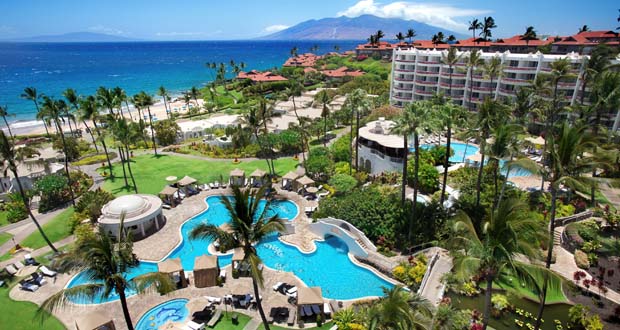
At Fairmont Kea Lani on Maui, visitors can embark on a mindful exploration of the island and earn a free night. The package encourages guests to help mālama (care for) the environment by engaging in a self-directed beach clean using a 4Ocean Clean-Up kit to pick up waste or debris found along the coastlines as they explore Maui. The property has a photovoltaic project that produces enough energy to power 150 homes and encourages staffs to monitor nesting of critically endangered Hawksbill Sea Turtles and participate in ongoing beach and reef clean-up initiatives.

In partnership with Oceanus AC, Fairmont Mayakoba in Riviera Maya, Mexico, actively participates in reef restoration through a dedicated coral restoration site. Fragments of healthy coral are transferred so they can regenerate and be replanted in Oceanus AC’s coral nurseries in Puerto Morelos National Park.

Every guest of Fairmont Sonoma Mission Inn & Spa, an iconic California Wine Country resort, finds a complimentary bottle of Trinity Oaks Wine in their guest room, regardless of the time of year. Trinity Oaks Wine plants one tree for each bottle of wine sold. To date, over 1 million trees have been planted as a result of this verdant partnership with this resort.

Just in time for Earth Day, Claremont Club & Spa, A Fairmont Hotel, a grande dame in the hills of Oakland, California, has partnered with local Bee Ranchers to unveil several on-site hives. Joining numerous sister hotels, the resort will leverage the apiaries to promote sustainability and incorporate honey into their menus, while raising awareness for the particular challenges bees face today.

Nestled on 300 acres in the heart of Quebec, Canada, woodlands, Fairmont Le Chateau Montebello is inviting guests, colleagues and locals to take part in a forest cleanup. The property has also worked with David Suzuki Foundation to plant milkweed plants for Monarch Butterflies to pollinate.

The Planet 21 program is Accor’s platform that encourages the hospitality industry to curb its environmental impact as well as inspire a new sustainable model that brings about enduring changes to the environment. More about Accor’s Planet 21 commitments here.

***

Moxy Times Square, Moxy Chelsea and Moxy East Village  in New York City are celebrating Earth Day by planting one tree for every reservation that falls between Earth Day and April 25, 2021. In partnership with One Tree Planted, seeds will be planted in California to help regrow the destruction caused by  recent wildfires.

***

In honor of Earth Day, Preferred Hotel Group—which operates Preferred Hotels & Resorts and newly launched Beyond Green—announces launch of I Prefer Points for Good, a new way for travelers to give back to the planet by donating points they have earned through membership in the brand’s I Prefer Hotel Rewards program.

The initiative allows I Prefer members to donate their points at cash value to the Ocean Heroes Network, a global nonprofit organization that supports emerging youth leaders by equipping them with the tools to transform their passion for ocean health into tide-turning careers.

Beyond Green is a new purpose-driven hospitality brand that embraces travel as a force for good. It has a global portfolio of 27 hotels, resorts, and lodges (including Carneros Resort and Spa in Napa Valley, California) that exemplify sustainability in action.

***

Shinola Hotel, a luxury property located in downtown Detroit, has just partnered with Clean The World—an organization that collects discarded soap and other hygiene products from hotels and gives them new life by donating them to people in need. In every shipment, Shinola Hotel donates roughly 1,000 bars of soap and 800 shampoo and conditioner bottles. Clean the World takes the donations, sanitizes and grinds the soap, then cuts new bars ready for distribution.

***

The Glen House, a 68-room hotel at the base of Mt. Washington in New Hampshire’s White Mountains, is celebrating Earth Day throughout the rest of the year by offering a Root for the Earth package that includes a $20 donation to plant 20 trees in the White Mountain National Forest. The hotel, built with sustainability in mind, is heated and cooled by a geothermal system, among many other green features.

***

Banyan Tree Mayakoba

Banyan Tree Group, whose properties include Banyan Tree Mayakoba and Banyan Tree Cabo Marques in Mexico, is rooted in its corporate ethos of “Embracing the Environment, Empowering People,” a sustainability approach emphasizing building in harmony with nature and contributing to the growth and development of the community where each of its hotels is planted. This Earth Day, Banyan Tree Group is launching a “Restore our Earth” campaign aligned with Earthday.org’s theme, which includes the following. 

  • “Stay for Good” program in partnership with The Canopy Project, where Banyan Tree will donate one sustainably planted tree for every night booked throughout the campaign
  • A voluntary pledge centered around energy conservation for visitors and future guests to take part in
  • A global clean-up, so individuals can experience firsthand the extent of our world’s single-use plastic problem, and begin to recognize how systemic our pollution and waste challenges are 

***

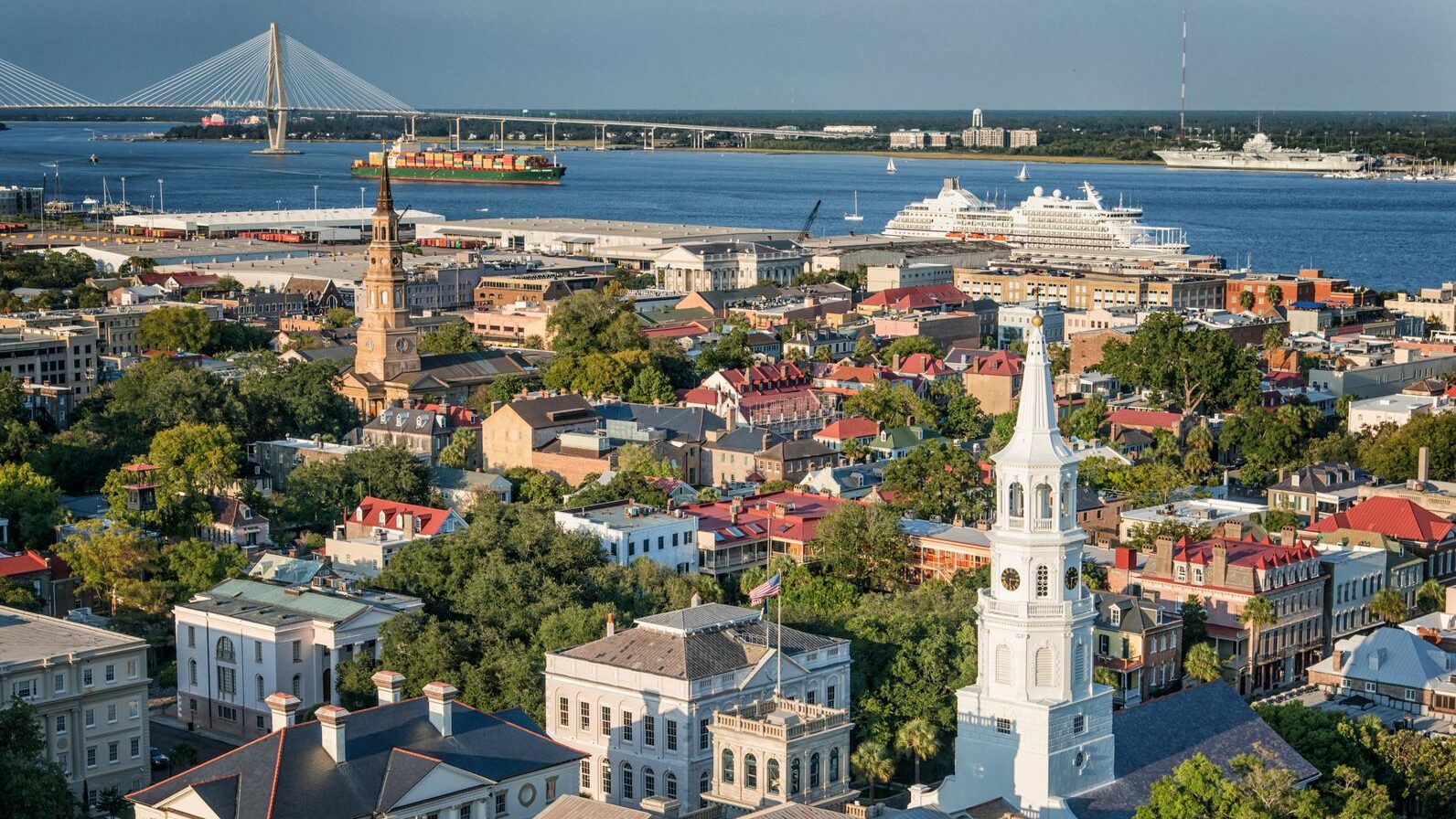
The Spectator Hotel in Charleston, South Carolina, is pledging to divert 100,000 plastic water bottles from landfills by partnering with Proud Source to supply the hotel with a sustainable aluminum alternative. Sister property French Quarter Inn, just footsteps away, is also making the same pledge.

***

The Ritz-Carlton, Half Moon Bay, a Forbes Five Star resort in Northern California, honors Earth Day with the launch of a new “Coastal Treasures” sustainable art program. The program was developed in partnership with Santa Cruz-based ocean artist Ethan Estess, who has gained national recognition for his show-stopping artwork made with reclaimed ocean materials such as plastic, fishing line, golf balls, and more. The resort will showcase Ethan’s ocean-inspired artwork made from recycled coastal “treasures,” including reclaimed fishing line from Half Moon Bay.

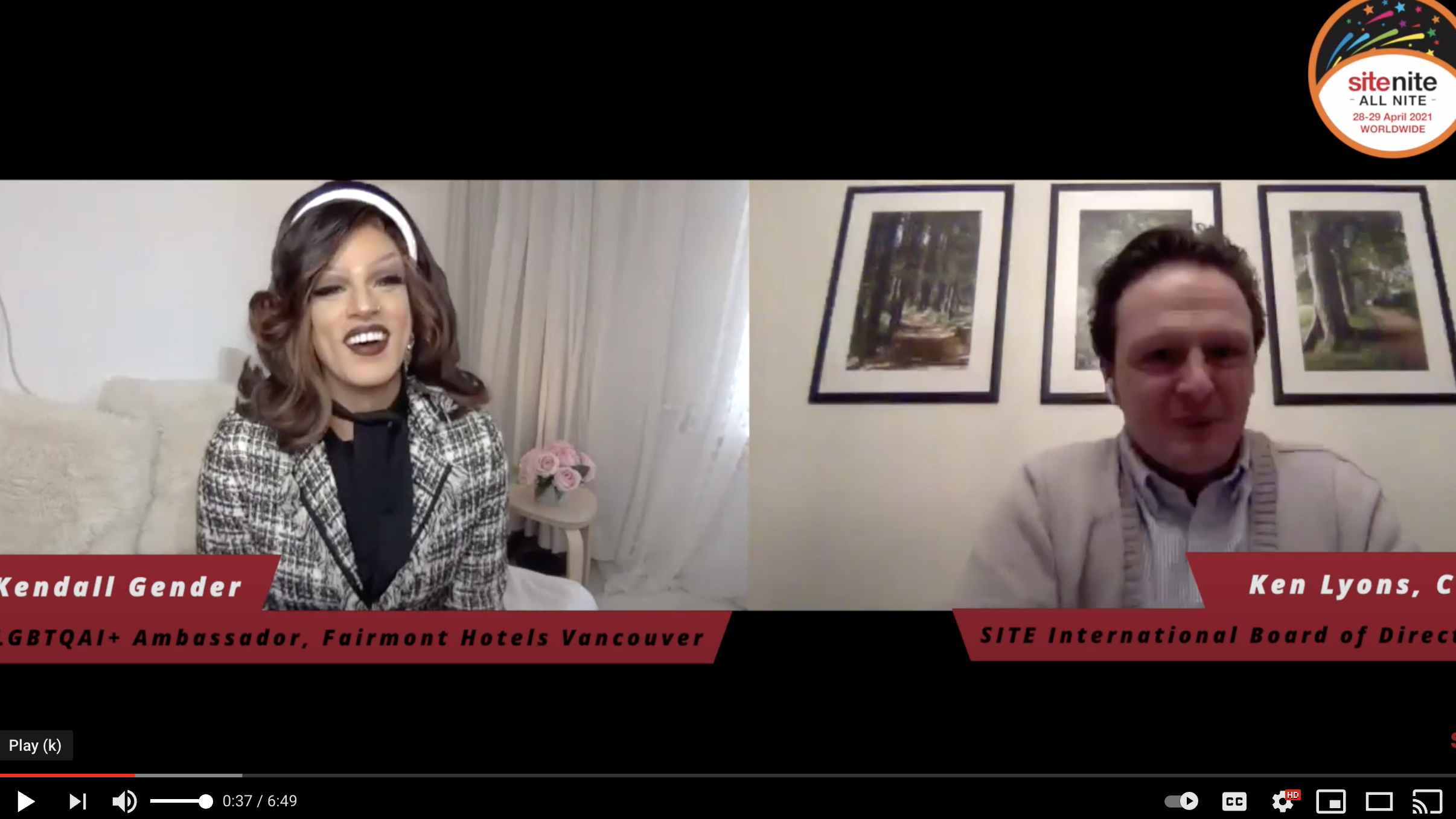
Editor’s Note: As part of Back Light, a series of articles sharing illuminating insider observations, we asked Tahira Endean, head of events with SITE Global to share the decision-making process behind last month’s SITE NITE all NITE and the lessons learned.

Why SITE NITE all NITE?

When IMEX Frankfurt was cancelled this also meant SITE NITE Europe would be cancelled, again. In 2020 we hosted a 2-hour event featuring the talent found within SITE, our first in what would become a series of digital events. The challenge with this is it only captured a fraction of our membership awake. We knew that in April 2021 we would still be unfortunately in various stages of open to stay-at-home for our members on six continents, and that our passionate and resilient community still needed each other.

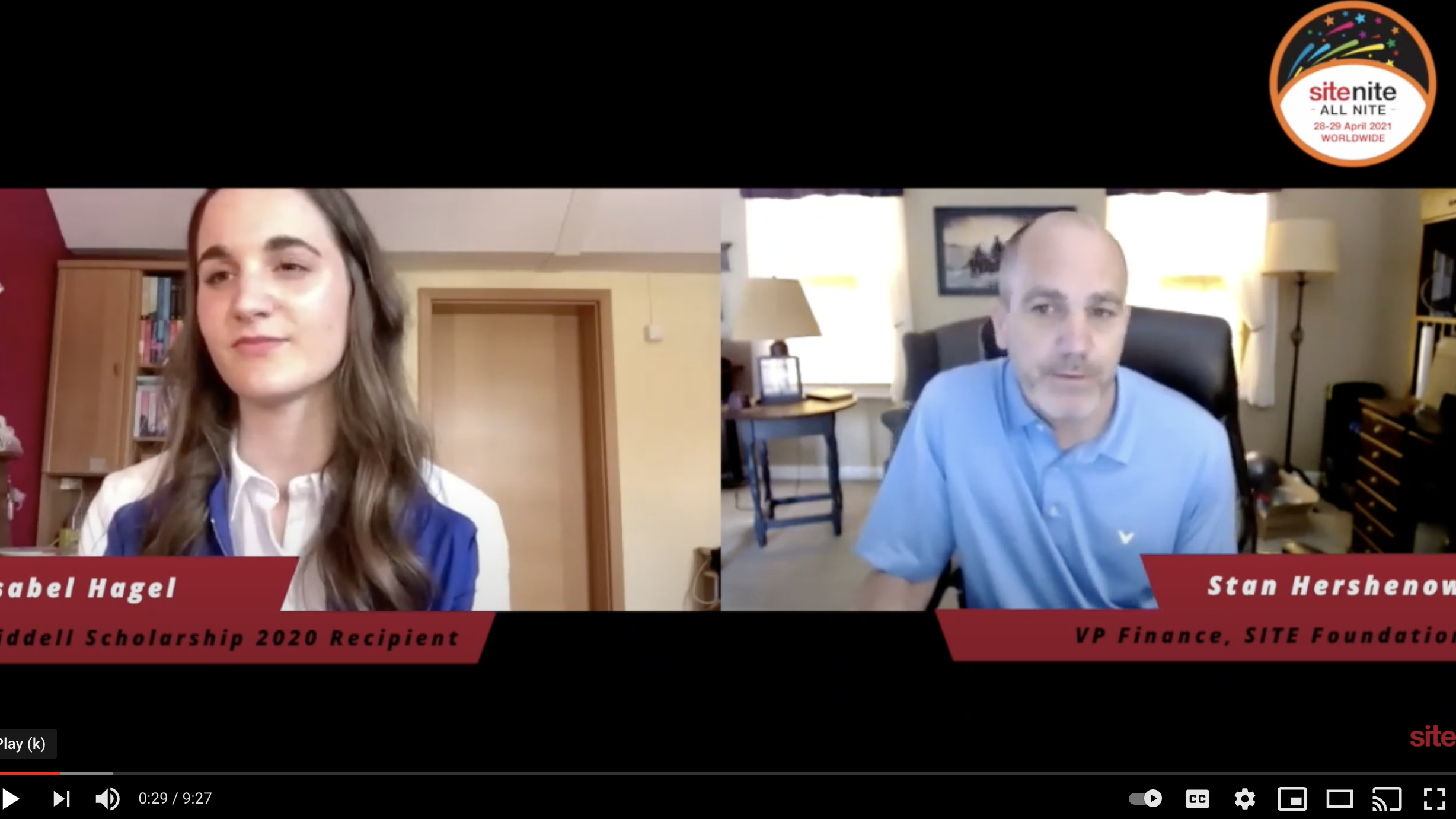
“How to connect our entire community” became the driving purpose. This event is also a fundraiser supporting the work of the SITE Foundation. We also wanted to continue allowing our members to get to know our trustees better, something the previous year’s talent show accomplished.

How Did We Do It?

We knew only our fantastic technical team at Meptur Destination Business Services would be awake for the duration, so we created a master time zone map of all our chapters and began assigning “15 minutes of fame” to each. We asked them to not just send a destination video, but to remember that we are colleagues and friends and to share their Extraordinary Stories, Places and People.

It had to be easy to attend so we chose the simplest platform, Zoom. Once registered, participants could come in and out in one click. What we saw was those in our Asia Pacific and Australia/New Zealand chapters joined us both in their evening and again in the morning, while those in the Americas could come in and out throughout their working day or early evening. While the language of SITE is English, we recognize that sometimes it is nice to follow along in a home language and for this we worked with Wordly.ai who provide real time text or audio translation into 15 languages. Over the course of the event, we had a running average of 175 to 200 people always active in the chat while they learned with our bite-size education, (re)discovered destinations around the globe and connected with the serendipitous networking of Twine.

Marketing (aka Nothing Comes for Free)

It was also important that while we created incredible value for the 892 registered participants, that it be possible for everyone to attend. This meant we needed to keep our expenses down and find some revenue. With key sponsors IMEX, Abu Dhabi, Delta, Slovenia and Naples/Marco Island/Everglades and support from strategic partners we were able to offer this at no cost to everyone.

Our raffle and auction team pulled together 19 incredible prizes and we were able to raise more than $8,000 for the Foundation. As this was primarily an event for and by our members, we focused our marketing on our internal chapters and via social media. We put it on our chapter calendars in February and launched registration 2 weeks prior, recognizing that with digital events this is when a majority register anyhow!

Lessons Learned

What they say: If you are hosting a digital event of more than 2 hours duration, build in a break.

What we did: All the content was built in 2-minute to 15-minute increments with hosts linking the elements.

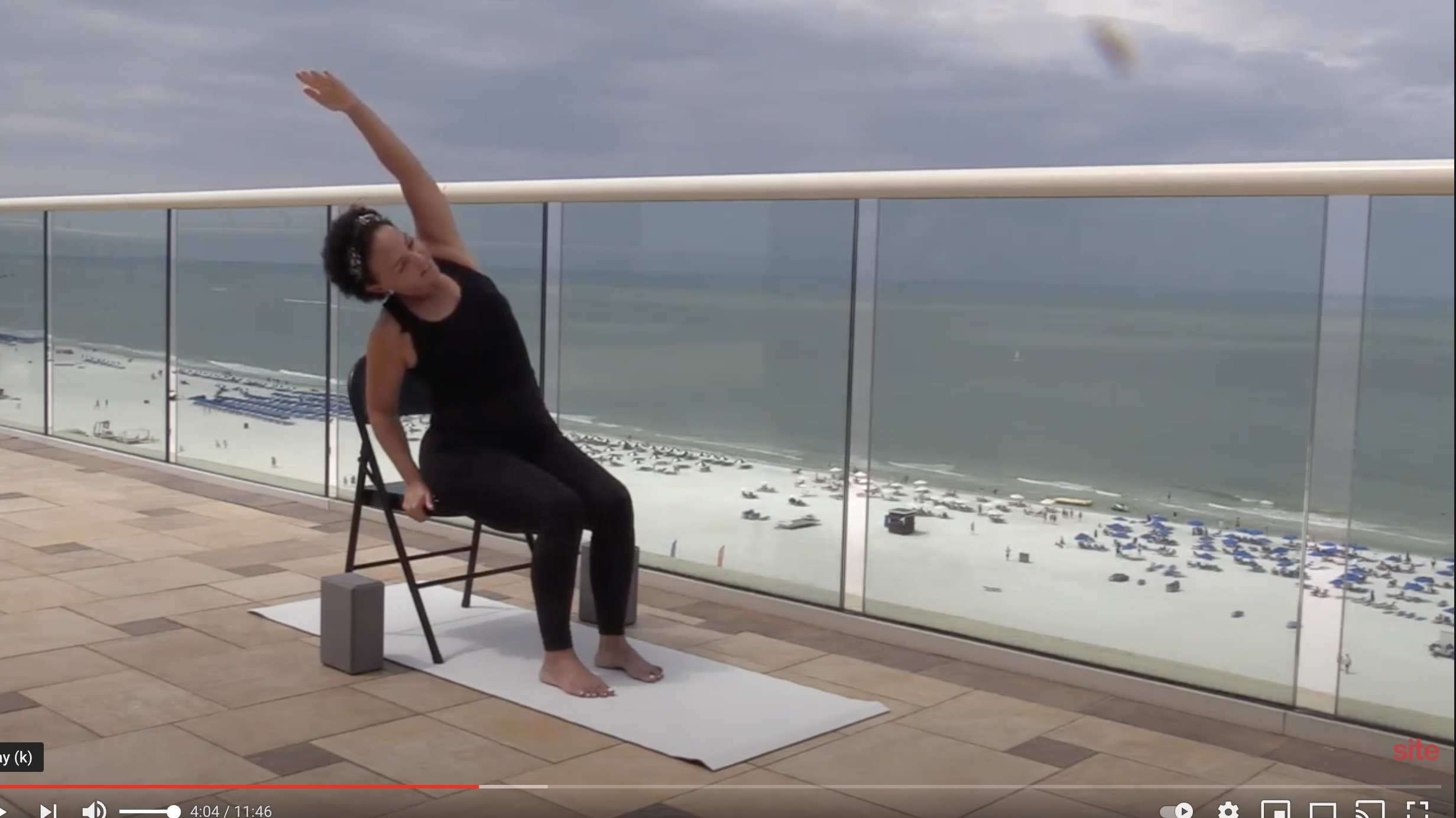
For that reason, rather than building in breaks, participants could select what they watched and when they took breaks. Hosts Gerrit Heijkoop, Sky Capriolo and DJ Lee (HeyMisterDJ) brought stories from our members, updates, trivia and fun, thus tying it all together. SITE member Maura Zhang led wellness segments and there were even occasional dance breaks.

Did we run on time? Absolutely not, and in fact we ended up nearly one hour behind. The lesson learned here is that if we ever run a telethon marathon event again, build in more host ‘white space’ to allow us to catch up when needed; five minutes per hour would have done that.

Bonus Lesson

What they say: Content is King!

What we did: In addition to the stunning chapter and sponsor content all making us long for travel again, we reached into our network and addressed topics that matter to them right now. This included brand new data from our Corporate inSITEs research with U.S. corporate meeting planners surveyed 2 weeks prior to this event.

We gasped in the deep dives with our Women in Leadership covering everything from being a working mother during the pandemic to leading a team through furloughs. We cried and laughed with stories from the front lines on Diversity, Equity and Inclusion work within Accor. We covered looking for work and updating your personal and digital brands and heard from our chapters on their effort in achieving sustainability certifications from around the world. Our Young Leaders and Past Presidents shared stories from the trenches and introduced what to expect at their live YL event in November.

Success Metric

The plan was to have great content and community available in any time zone so we could see and learn from our colleagues from all six continents—and for this, it worked.

Now, on to planning a live event, and we can’t wait!

Tahira Endean is head of events with Society for Incentive Travel Excellence (SITE) Global and a 2021 Smart Woman in Meetings Award Visionary winner.

So, what’s in store for swag, now that in-person events are slowly, steadily returning to the landscape? While physical events were stalled, business was anything but normal for promo companies. They had to get creative, switching focus to PPE-related items and constructing swag boxes for shipping to virtual attendees and WFM employees.

Will anything that changed during the pandemic endure? What’s most in demand as live events return? We reached out to prominent promotional companies PMSI, iPromo, Wet Paint and Halo to find out.

Work and Home Life Intertwined

During the shutdowns, tumblers, earbuds, desktop accessories and all things WFH were all the rage. Companies looked to swag for morale boosters, and corporate gifting became a physical way of uniting remote employees. Leo Friedman, CEO of iPromo, says his company saw many clients shift gifting to higher-end products to make up for missed company parties, sales meetings and office perks. He expects this trend to continue as hybrid events continue alongside hybrid work situations for employees.

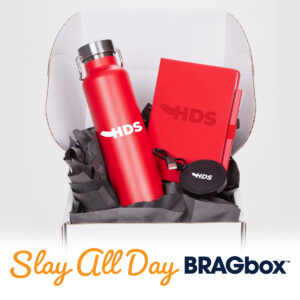
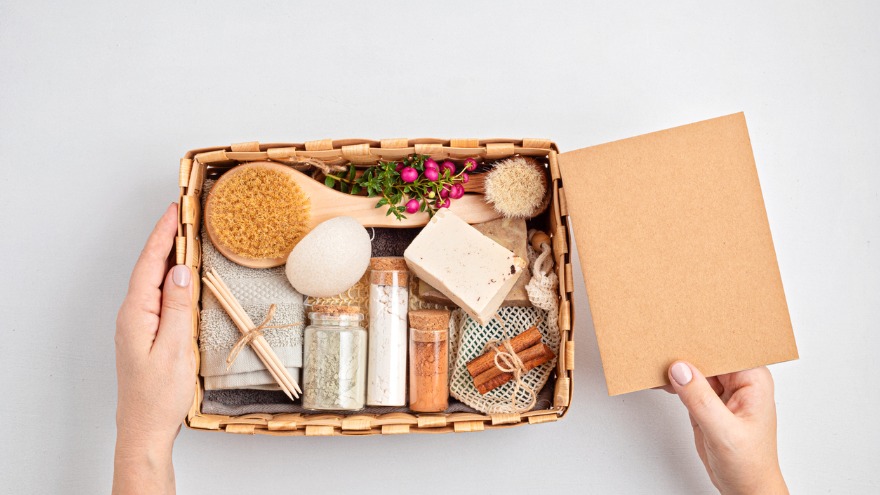
Swag boxes were a star item, growing in popularity so much iPromo came out with signature BRAGBoxes—ascompletely customizable, branded gift boxes. Doug Chorpenning, founder of Wet Paint Group, seconds that development. “We are now a gift box and ecommerce company as much as an on-site gifting agency,” he says.
During the pandemic, home and work life intertwined—and gift givers became conscious of ever-present family members. Boxes included games and activities for kids, movie night kits and cooking kits. PMSI President Marty Bear notes that puzzles were a big item during the shutdown months, to keep the youngsters busy after parents commuted from the breakfast table to the home desk.

Chorpenning says his clients wanted to send unique items that were relevant in home life.“Riley Land handmade wooden products were a hit—cutting boards and other kitchen items,” he says.

Another trend was finding ways to bring team spirit into the WFH atmosphere. Laurie Amigo, strategic branding director at Halo, notes that apparel branding expanded to shirt collars and shoulders so that company and event logos were visible for virtual meetings. “Halo sent out virtual national sales meeting pre-event boxes which included a jacket, a polo and branded pajama bottoms to over 600 account executives. We all wore the pajama bottoms at our Virtual 2020 Awards Ceremony in January!”

The Comeback

When asked about the resurgence of orders for in-person meetings, PMSI cites large orders for in-person events from May to August, with nearly all events including a virtual component (and shipping swag items to virtual attendees as well). iPromo seconds the continuing demand for items to supplement virtual experiences. While Halo is currently working on registration gifts for multiple events in September—with over 1,000 physical attendees expected–most of its gift boxes are still for virtual events, Amigo says.

For events where people are gathering, PMSI notes that antimicrobial items have surged in popularity, especially journals, tote bags, pens and mousepads. Even safer than antimicrobial is when a virtual item can replace a physical one: iPromo has been pitching clients the Popl, a virtual business card which allows for easy, noncontact transfer of contact information.

Forecasts

iPromo lists outdoor and golf products as items that will likely see a surge over the coming months, with outdoor summer events and the return of some incentives. PMSI predicts the ongoing hybrid environment will bode well for  self-care items such as candles and stress relief oils for working from home.
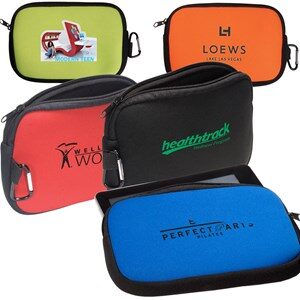
Amigo of Halo believes gifts with mobility for hybrid work schedules, employee appreciation and work-at-home gifts will continue to trend into the holidays. She adds that clients are thinking about the return of travel, too. “One of our top sellers is a neoprene airline pocket sleeve that acts as a tray cover and then coverts to an airplane pocket to hold all your electronics.”

Trending: Good Vibrations

What trend not only survived the pandemic, but picked up steam? “Items that are eco-friendly, sustainable and products with a purpose,” Friedman says. “People want to feel good about their swag, and companies can satisfy that by purchasing items with giveback programs.”

Three of the four companies interviewed mention rising client interest in gifts that align with Corporate Social Responsibility (CSR), the concept that companies should direct their resources in ways that enhance society and the environment.

“CSR and giving back has been more important than ever,” Chorpenning shares, noting that both clients and recipients appreciate the emotional connection forged through gifts that do good. All brands from Wet Paint’s options have a charitable component, which the company calls “Gifting with Giveback.”

In sum, swag took on more meaning during the pandemic. Items focused on supporting personal safety, enriching home life, and acknowledging greater responsibility to the world around us. Items were symbolic, with delivered objects often standing in for familiar faces and comforting routines during a time of distancing and uncertainty. These trends and their continuation are something the MICE industry can surely celebrate—maybe even with a customized gift box.

Hyatt House Atlanta Perimeter Center

The Hyatt property opened in March in Atlanta’s medical district, with 4,630 sq. ft. of space for small events, full audiovisual capabilities, and a dedicated meeting support staff. Its 186 guest rooms are residentially styled spaces, perfect for extended stays. An outdoor lounge space features a firepit and barbecue area for a cocktail gathering featuring some of that famous Southern barbecue.

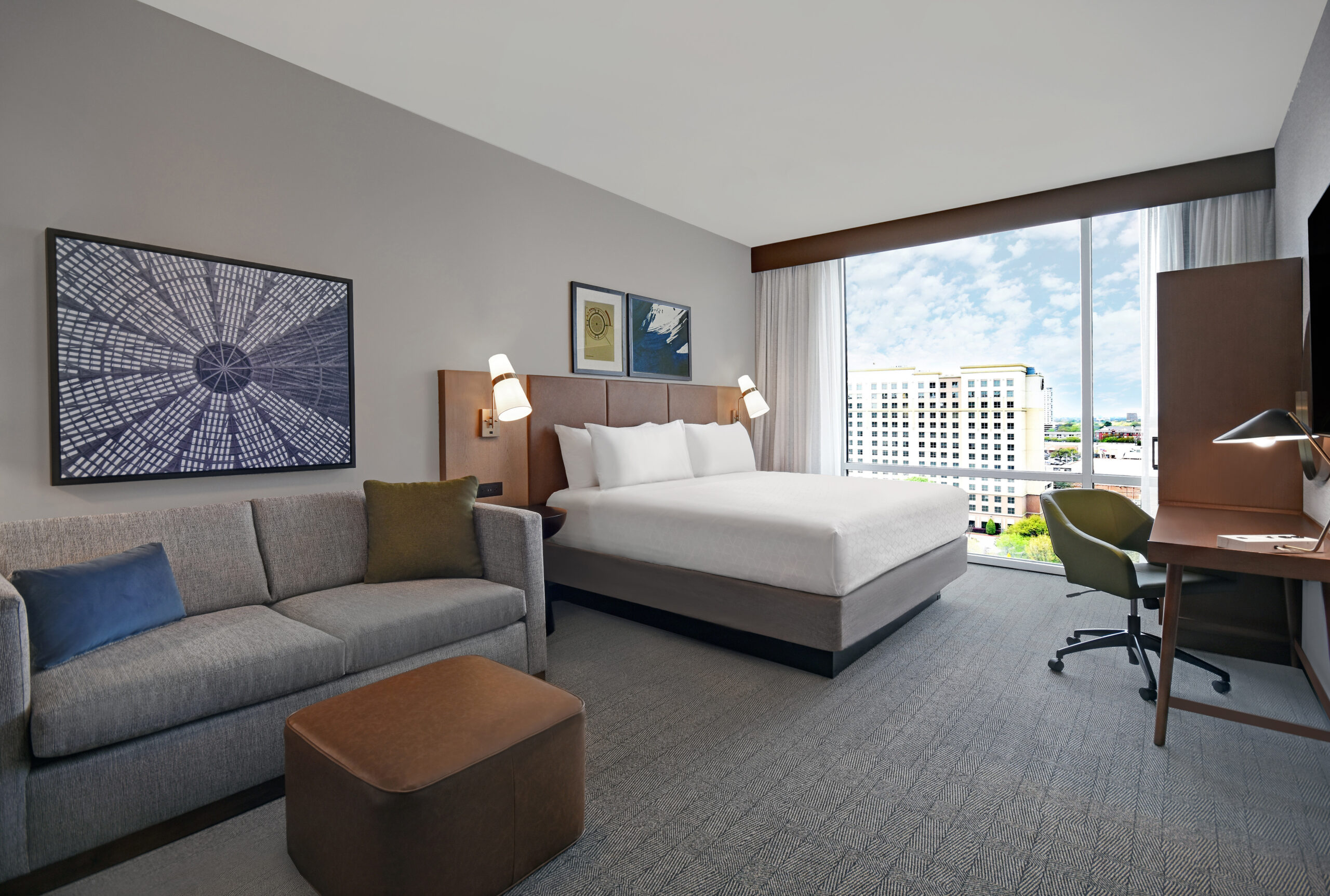
Holiday Inn Express Houston and Staybridge Suites Houston-Galleria Area, Texas

Staybridge Suites

The dual-branded property offers two Intercontinental Hotel Group experiences under the same roof. Staybridge has 150 abodes catering to longer-term stays, while Holiday Inn Express offers 169 guest rooms. The property shares 2,600 sq. ft. of meeting space.  While each hotel has its own verve, both offer complimentary breakfast, high-ceilinged guest rooms, an expansive fitness center and on-site guest laundry.

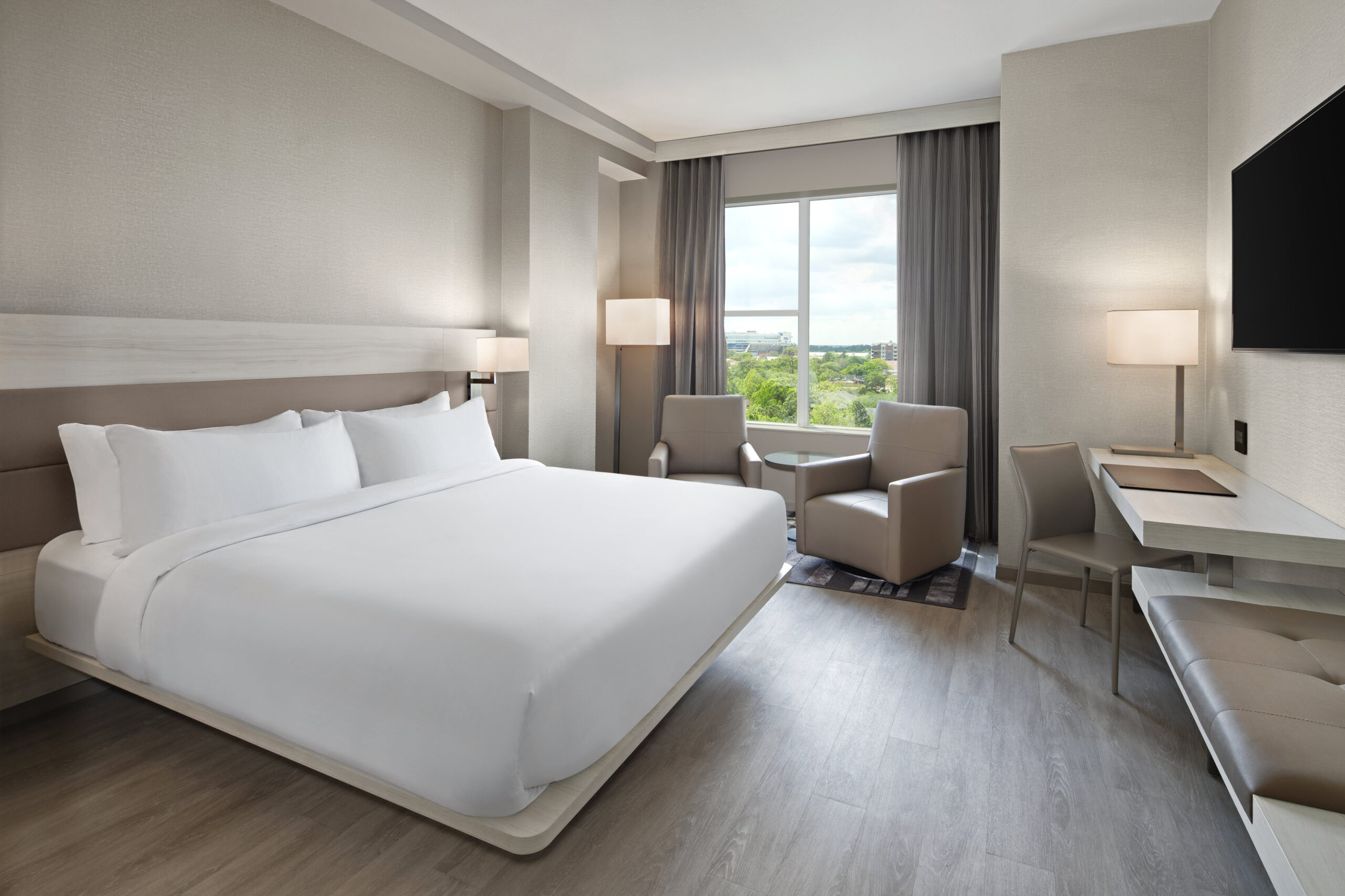
AC Hotel Fort Lauderdale Sawgrass Mills/Sunrise, Florida

The 174-room hotel opened at the end of March in the Sawgrass Mills shopping complex, giving guests next-door access to over 350 retail experiences. Expect the brand’s simple but luxe, European-inspired design, along with handcrafted cocktails and Spanish-style tapas in the AC Lounge. Setting the tone for inspiration are pieces from local nonprofit Art Serve. The property is best for cozy gatherings, with 1,675 sq. ft. of meeting space.

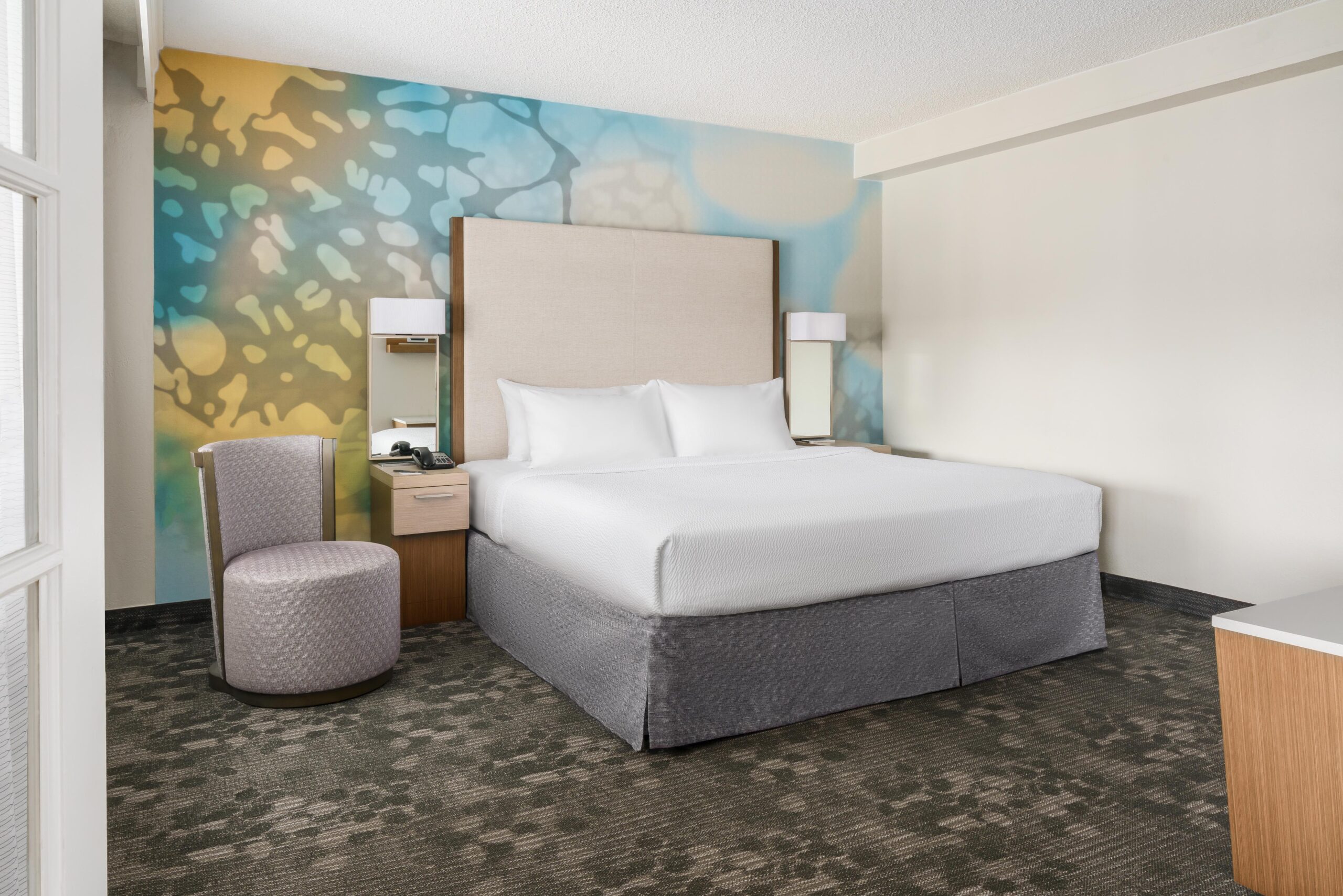
Courtyard by Marriott Lake Buena Vista at Vista Center, Orlando, Florida

MCOBN,Courtyard by Marriott Orlando Lake Buena Vista at Vista Centre, Lake Buena Vista, Orlando

Located on Palm Parkway in the heart of Orlando, the property recently underwent a $9 million full renovation of its 308 guest rooms, 86 suites, lobby, bar, restaurant and pool areas. The hotel features a 24-hour fitness center—or you can stretch your legs on the short walk to dozens of nearby restaurants. The property has nine multifunctional event areas. If you’ve got a meeting with a famous mouse, take advantage of a complimentary shuttle to Walt Disney World.

Editor’s Note: This is part of a monthly series  on the planning process for producing IMEX America Nov. 9-11 at Mandalay Bay in Las Vegas.

While plans begin in earnest on the physical structure that will comprise IMEX America in Las Vegas in November, Carina Bauer, CEO of IMEX Group, today launched IMEX BuzzHub, a series of industry conversations starting with the power of community.

The free portal to monthly conversations, speakers, networking and some fun surprises is powered by Swapcard. It was the outcome of lessons from PlanetIMEX and feedback from users and partners.

“We want to extend the content, conversation and the connections that happen at a physical show through the digital experience,” said Bauer. She was quick to point out that the platform won’t replicate a trade show in a digital space. “People still want to have the connections and business that is done on the trade show floor, but the conversations can be extended,” she said.

In the next few months, her goal is to help people reconnect with each other and have deep conversations on topics of mutual interest, including the recently released Nature of Space report. The white paper, developed in partnership with Marriott International, looks at how meeting professionals can shift from delivering knowledge to helping people connect in a more meaningful way with content and each other. It is filled with practical tips about lighting, use of space and even F&B.

“That leads into IMEX America, where we can have the pinnacle experience and homecoming party,” said Bauer.

Excitement Building

Back in the physical world, plans have progressed rapidly over the past month, Bauer reported in our monthly call. “The change in mood in the U.S., UK and Europe due to the reduction in Covid case numbers and increase in vaccination rates has led to an increase in inquiries for exhibitors,” she said.

For many, IMEX America will be the first time their teams have come together and the first time they have attended at a large event in over a year. “It will be a moment of coming together,” she said.

Bauer’s team is now diving into details of the design of the show and the experience. “It was a shift from planning mode to doing—for us, exhibitors, stand constructors and general service contractors,” she said.

A major focus: the arrival experience, including flow and spacing of the show to give people comfort and space as they enter. The floorplan now includes perimeter aisles, wider walkways, experience areas and themed seating for relaxation breaks. “We are really looking at entrances and traffic crunch points,” she said.

To eliminate lines and smooth the entrance, registration will be via at-home badge printing. “Traffic management may not sound difficult, but it has to be thought of carefully when you have that many people,” Bauer said.

Because Mandalay Bay already has an advanced ventilation system that replaces all air many times an hour throughout the resort, Bauer feels confident in the ability to offer a safe environment. “Science has shown that surface transmission is rare, and ventilation is the most important thing to keep people safe. That gives me comfort,” she said.

Additionally, MGM Resorts is vaccinating staff and their families and offering creative outdoor spaces. “We are looking for ways to get people out into nature and fresh air with walking, talking education,” Bauer explained.