Las Vegas felt almost pre-Covid over the long holiday weekend as pandemic restrictions eased in Nevada and the Centers for Disease Control and Prevention updated guidance on domestic travel to low risk for the fully vaccinated. AAA Travel named Vegas the top road trip destination over a Memorial Weekend the company predicted would rebound to more than 37 million traveling significant distances nationwide. That would be a 60 percent increase from the same weekend in 2020, but still 6 million fewer than in 2019.

Another 2.5 million Americans were planning air travel over the three days, according to AAA statistics, six times more than in 2020, but 750,000 fewer than the same time in 2019.

Conventioneers Return
Many in Southern Nevada saw the return to higher leisure occupancy levels as practice for when conventions re-open the trade show doors this month. World of Concrete (WOC) will be the first major group in the expanded Las Vegas Convention Center West Hall. In previous years, 60,000 attended to mingle with 1,500 exhibitors sharing the latest in rental equipment, precast and processing equipment. WOC is working with Informa AllSecure to develop safety and hygiene measures, including non-contact registration, 3-ft. distances and recommended face coverings.

In place for the arrival of these conventioneers is the new Convention Center Loop underground tunnel system, which will whisk attendees from one side of the massive facility to the other in dedicated Teslas.

Making its debut at one of those Tesla stops just in time for WOC will be the massive new 3,500-room Resorts World Las Vegas. Jason Glascock, vice president of sales with the tri-branded Hilton property (Conrad Las Vegas, Crockfords Las Vegas and Las Vegas Hilton), says the massive, immersive LED walls will be lit to welcome conventioneers to the first major new property on The Strip in a decade.

Around the corner, the newly reimagined and rebranded Virgin Hotels Las Vegas welcomed its first guests in March to 1,502 “chambers” and 130,000 sq. ft. of indoor and outdoor meeting space, including an array of quirky, unique spaces for more intimate gatherings, including The Shag Room and The Manor. Elia Beach club is primed to open this month.

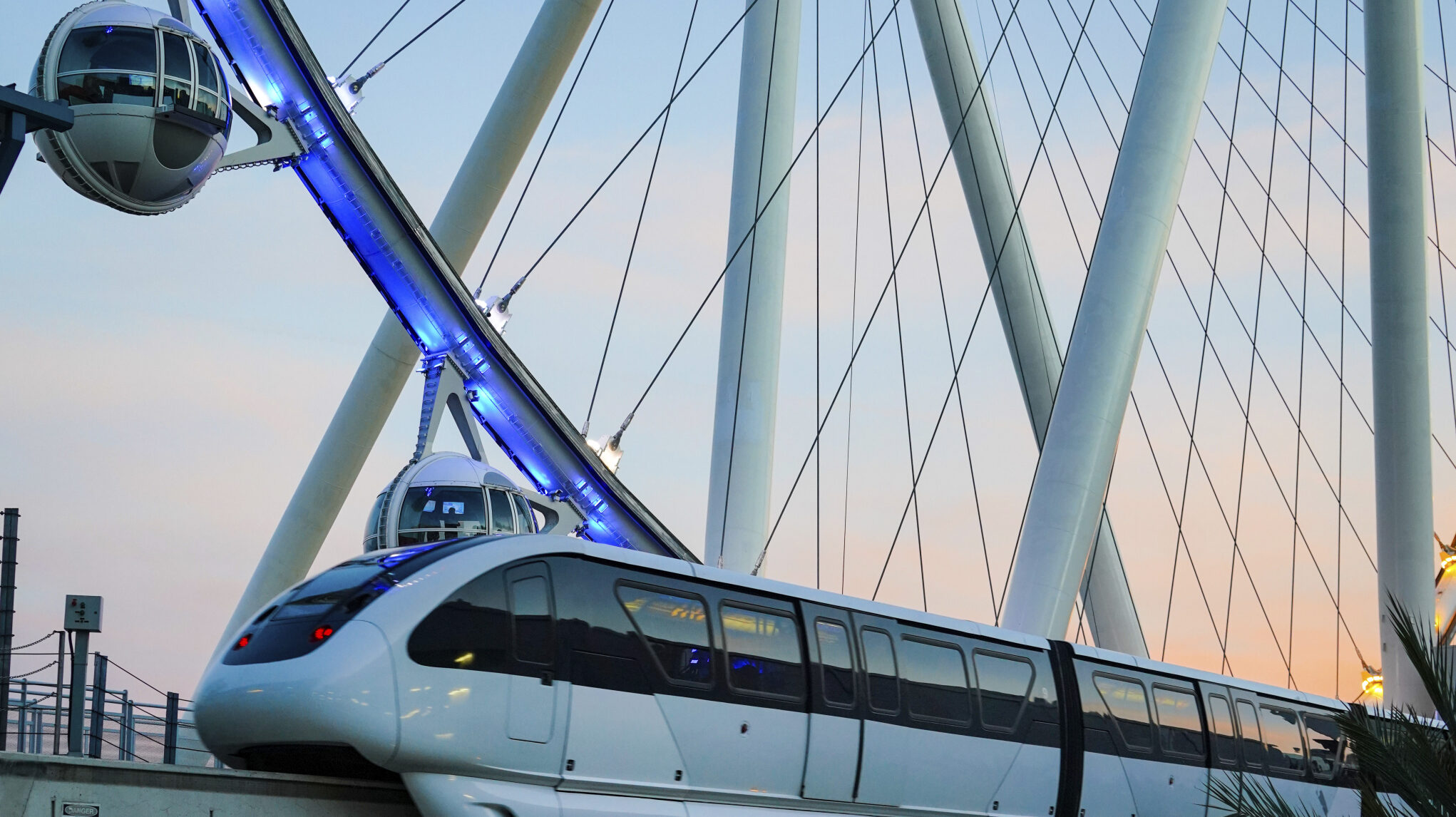
Las Vegas Monorail, which is now owned and operated by Las Vegas Convention and Visitors Authority, has also restarted. The 3.9-mile elevated system along the Las Vegas Strip enables passengers to travel the length of the resort corridor in less than 15 minutes.

MPI’s World Education Congress will open at the new 550,000-square-foot CAESARS FORUM conference center the following week. Name badges will be mailed in advance, InHouse Physicians will conduct temperature checks and barriers will be in place for meeting spaces.

Those groups will be followed in quick succession by returning and new programs, including Waste Expo at Las Vegas Convention Center at the end of June, International Security Conference West at Sands Expo & Convention Center in July, International Pizza Expo at Las Vegas Convention Center in August and, just announced, SEMA Automotive Trade Show in November. The SEMA Car show is usually one of the largest to visit the city each year.

Proven Safe
Mike Massari

Las Vegas properties have already hosted hundreds of small groups successfully since June 2020. Most have their own branding for their safety practices, but all include increased cleaning, mask requirements and most have access to testing and vaccine tracking if requested. Now they are preparing to expand to larger groups.

“We are executing safe meetings all around the country and we are quite capable,” said Michael Massari, chief sales officer with Caesars Entertainment, at an industry first look gathering in April at Las Vegas Convention Center that brought leaders from five different properties together on stage to share their preparation plans.

“Meetings will feel a little different for the rest of the year, but when we look to the back half of the year it is very strong with a lot of pent-up demand,” said Chandra Allison, senior vice president of sales and marketing at The Venetian Resort Las Vegas and Las Vegas Sands.

Ready for Fun

Over at MGM Resorts’ 13 Las Vegas properties, Stephanie Glanzer, chief sales officer and vice president of sales at MGM Resorts International, reminded meeting professionals that while events are big business and need to be safe, they also need to be fun. “We are in the hospitality business. People meet to connect, communicate and improve their business. That is the reason they happen. We have to remember why we do this.”

MGM is, at its heart, an entertainment company. “We don’t just provide rooms to sleep in and rooms to meet in. We also have world-class chef experiences, entertainment and sports,” she said. That was true pre-pandemic and it is true now. “While health and safety is always going to be a priority, we want people to leave saying they had fun and enjoyed themselves. Smiling is healthy after all.”

Wired to Go
MGM Park Ideation Studio

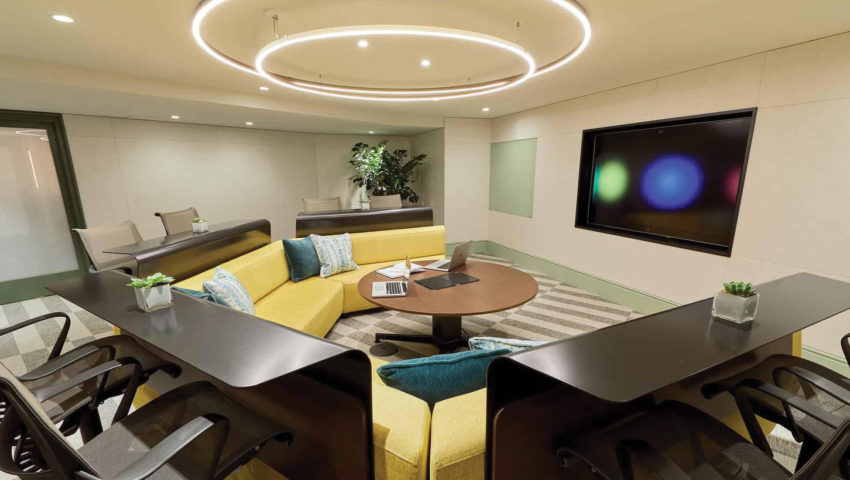
Another pre-Covid truth that will be a constant into late-stage pandemic recovery and beyond is the need for technology in meeting rooms. “Digital transformation was already a focus prior to March of 2020, Glanzer said. Things such as digital check-in and reservation were expedited during 2020, but the inventive meeting spaces such as The Ideation Studio at Park MGM powered by Cisco Webex were built in 2018.

Now, MGM is focusing on the return of IMEX, which for the first time will go down at MGM’s Mandalay Bay Resort and Casino, Las Vegas. “This will be the occasion of the first large international industry event after a challenging year,” Glanzer said. The goal is to streamline the experience for the in-person and digital audience. “We are preparing for a better world after we come out of this,” she said.

MGM’s Convene with Confidence will give planners of IMEX and other returning events the flexibility to offer high-accuracy rapid PCR tests in partnership with CLEAR Health Pass. “It is not mandatory, but it is simple and easy to add if a group wants that added protection,” she said.

Over at the new property on Freemont Street downtown, Circa Resort and Casino announced it is leveraging Hewlett Packard’s Aruba ESP-based network of wired, wireless and security solutions to power top bandwidth speeds in the property’s 777 guest rooms with connected lighting and IP televisions, Stadium Swim outdoor sports amphitheater and Garage Mahal transportation hub (because it wouldn’t do to lose connection with your Uber driver). “Delivering today’s socially driven premier entertainment experiences in Las Vegas is a 24/7 endeavor,” said Paul Ballard, CIO at Circa.

A Strong Comeback
Tara Russell

Down the strip, Tara Russell, senior vice president of sales, catering and conference services at The Cosmopolitan of Las Vegas, reported that the town and property are poised to come back stronger than ever. Las Vegas’ leisure travel is strong, but FIT and .com business is leading the way according to the numbers she is seeing.

“The meetings and conventions industry in Las Vegas has overcome hurdles in the past; this segment will also rebound as we are already seeing a strong uptick for the remainder of the year,” she said.

Moving forward, she is focused on building confidence through the message that in-person events and meetings hold significant value that virtual events just don’t carry. “People really love The Cosmopolitan brand, which can only be fully experienced by being present at the resort. Trade shows and exhibits afford the touch and feel element that buyers yearn for.”

The Cosmopolitan is preparing for a confirmed, short-term event for July that will fill more than 3,500 rooms. “Our team prides ourselves on creating a customized experience for each group by helping design every little detail to bring the event’s purpose to life.” For this particular group, that includes installing touchless beverage stations in the exhibit hall.
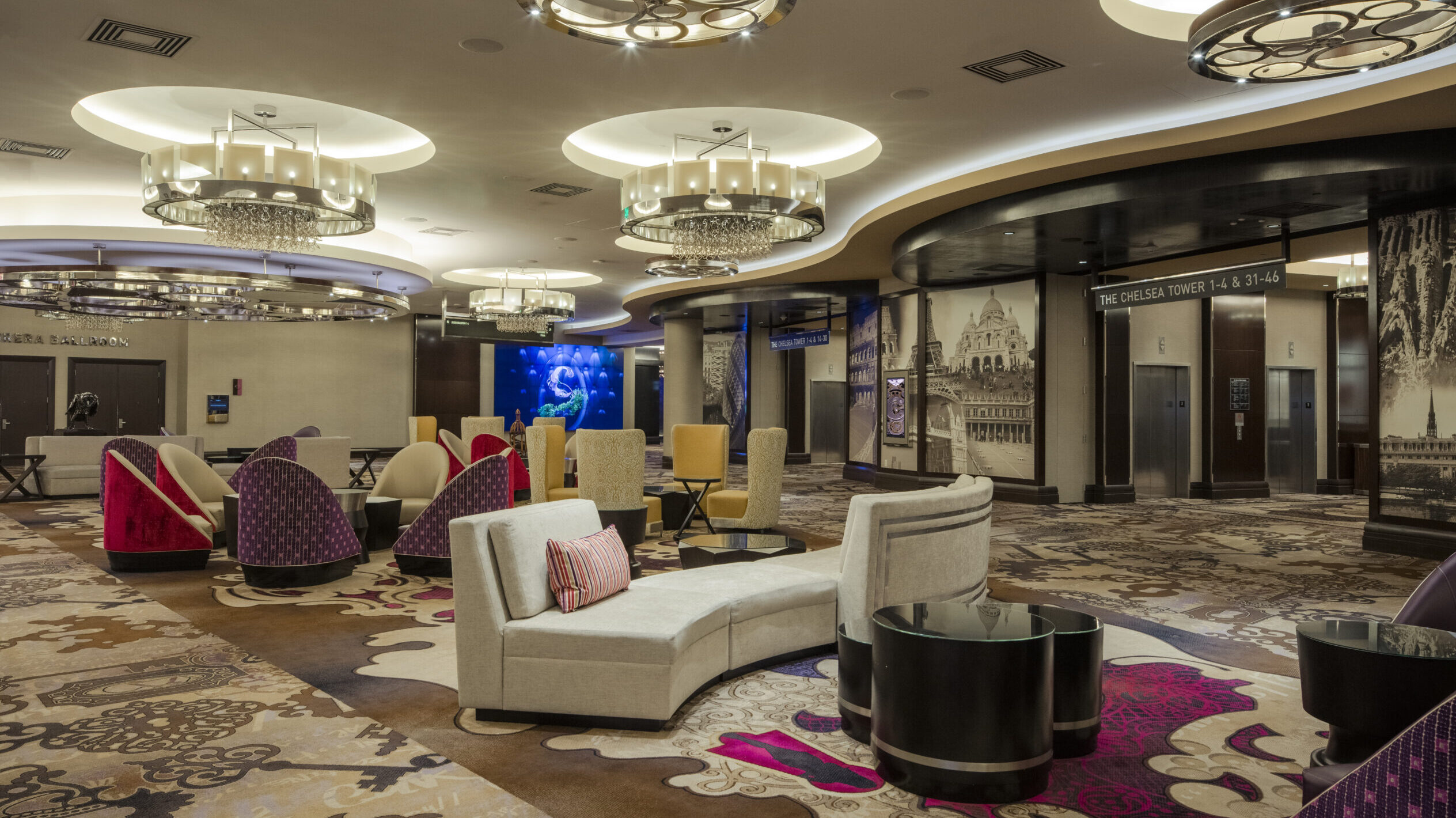
The Cosmopolitan

2021 marks The Cosmopolitan’s 10-Year anniversary and they are celebrating with the addition of Bāng Bar, Chef David Chang’s popular Momofuku to-go concept, opened inside of Block 16 Urban Food Hall.

Another development that will give meeting professionals more options is the option to buy out Marquee Nightclub & Dayclub space for an elevated setting for receptions. The location touts a dynamic, rooftop pool featuring sweeping views of the Las Vegas Strip skyline.

The Cosmopolitan is also working with partners to make on-site testing and vaccine clearance seamless using in-app capabilities.
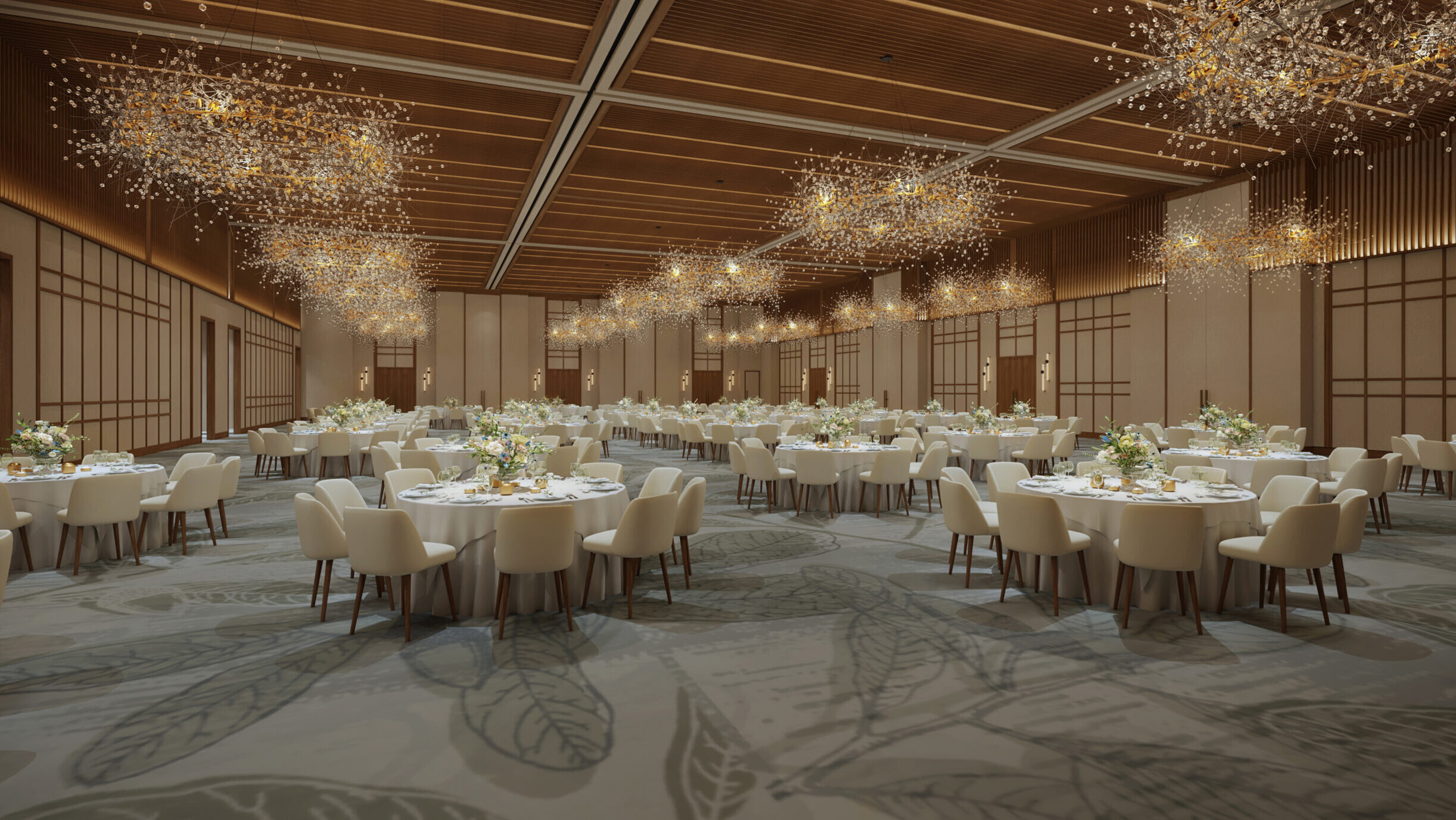
Current president and CEO of Chicago-based Association Forum, Michelle Mason, FASAE, CAE, has been selected as ASAE’s new president and CEO, effective Sept. 1.

“Throughout her career, Michelle has demonstrated a commitment to the association community and ASAE, and a proven ability to drive alignment and results in a complex, multi-stakeholder environment,” said Stephen J. Caldeira, ASAE board chair and co-chair of the organization’s search committee, and president and CEO of Household & Commercial Products Association, Washington, D.C.

This a return to ASAE for Mason, who worked as vice president of strategic and future-focused research from 1998 to 2006. She later worked as managing director of strategy and innovation for American Society for Quality.

Mason will succeed Susan Robertson, CAE, who was the first woman to be president and CEO of ASAE in its 100-year history and was an interim leader after the passing of John Graham in 2020. “Michelle is a strategic thinker, proven consensus builder, effective communicator and fearless advocate,” Caldeira added. “We are confident that Michelle is the right leader at the right time, who will bring visionary leadership to ASAE at a critical juncture in the association’s history.”

“I am honored to build upon the successful foundation at ASAE. I look forward to collaborating with a dynamic board of directors and a dedicated staff team as we create an accessible, inclusive and transformational community for members and industry. A heartfelt thank you to Susan Robertson for her leadership and paving the way for women in the industry,” Mason said in a statement.

In March, the Biden administration passed a $1.9 trillion Covid-19 relief bill, promising to provide much-needed relief to debt-riddled students, restaurants, renters and homeowners, farmers and pensions, in addition to stimulus checks provided to millions of Americans.

Despite all this federal aid being handed out to millions of individuals and thousands of struggling businesses, many in the live events industry are still being left out in the fray, doing everything they can to make ends meet—and having a hard time with it. Many small businesses across the country have barely hung on through the past year, hit with unexpected revenue loss and facing the prospect of not making it to the end of the year.

RelatedHyatt Loves Local…and the Why, Where, How and Who of Ecotourism Today

Associations representing many of those struggling businesses, including American Rental Association, Live Event Coalition, American Society of Travel Advisors, and International Association of Amusement Parks and Attractions, have since formed Economic Bridge Coalition (EBC), with the goal of working with Congress and the Biden administration to help with recovery and rehiring so they can once again get back to business.

“Our members are mostly family owned and bring jobs and economic activity to every part of the country. They have borrowed, used up savings, even mortgaged their homes to stay afloat, but many are about to lose everything,” says John McClelland, vice president of government affairs and chief economist of the American Rental Association. “The hard-working members of our coalition partners are facing the same bleak fates. That’s why we’ve joined together to ask for expansion of pandemic relief programs to those who have been left out.”

Before EBC became what it is, the 12 organizations that comprise it were working independently for months, advocating for legislation that would help their members. “The flurry of attention, including direct requests for meetings with EBC from key members of Congress, has been very noticeable since EBC announced our intentions, and has been net-helpful. We are now closer to having the ‘champions’ we need to get the next aid package passed,” says Dwayne Thomas, chairperson for government affairs for Live Events Coalition and president of Live Events Industry of Oregon.

Many large-scale travel industry players, such as airlines, some restaurants and theater venues, have received aid, and the coalition is asking Congress to expand coverage of these pandemic relief programs to small- and medium-sized businesses. “We believe the government has a responsibility to provide meaningful support to those businesses harmed by its response to Covid-19. Support provided to the travel industry has been uneven at best, especially with regard to less visible sectors of the industry, such as travel agencies,” says Eben Peck, executive vice president for Advocacy at the American Society of Travel Advisors. “Without additional federal relief, our industry faces the prospect of continued agency closures and mass layoffs.”

For many, this crisis has served as a learning platform. Thomas has used this opportunity to enlighten “literally thousands” over the past 14 months about the event industry’s mostly seamless and somewhat invisible operation that goes on behind the scenes. “We’ve created a lot of ‘aha moments’ for unsuspecting listeners in government these past months as we’ve educated them about what the industry really is,” Thomas says. “Almost no one we’ve talked to realized the industry is as large or diverse as it is. They had no idea that when you attend that charity gala, as many as 30 or more separate business entities were involved. The good news is this means we were doing our job all these years.”

Smart Meetings got a sneak peek at the Event Leadership Institute’s (ELI) opening general session of their upcoming Business, Design & Strategy Summit on June 3, The State of the Industry: Where We Are With In-Person Events.

The session features Ken Holsinger, senior vice president of data solutions at Freeman; Gus Vonderheide, vice president of global sales at Hyatt; Rose Horcher, CMM, CMP, vice president of client services at Choose Chicago; and Jessica Malaty Rivera, epidemiologist and science communications lead at the COVID Tracking Project at The Atlantic. ELI CEO Howard Givner will be moderating the panel and invited Smart Meetings to listen in on the pre-event prep call. Below are some of the key takeaways.

  1. Cautious, Ready & Excited: Freeman’s Event Research Report, which has been gauging attendee and exhibitor sentiment every few months since the pandemic started, shows their Confidence Index rising from .75 in February to .81 in April. Positivity sentiment rose from 30 percent in February to 45 percent in April, and by all accounts those numbers have continued their upward trend in May. When asked what one word describes their current emotional state towards attending in-person events, the top word among attendees was “Cautious” followed by “Excited” and “Ready.” Exhibitors similarly chose “Cautious” and “Ready” in equal measure.
  2. Lead Flow: Everyone is reporting strong increases in new inquiries over the past couple of months. Choose Chicago’s lead volume went up 91 percent from April to May, and is forecasting another 50 percent increase from May to June. As of May 25, their Q2 lead volume has already surpassed Q1 numbers.
  3. Who’s Booking: Hyatt is seeing a huge increase in leads from third-party RFP platforms like Cvent, and site selection companies like HelmsBriscoe. Vonderheide oversees the company’s top 60 enterprise clients, and reports that tech companies like Google & Microsoft are coming back faster than finance and professional service companies like Deloitte and PwC, which are currently more hesitant. For the next 3-6 months, many corporations aren’t holding meetings due to company travel restrictions. As for associations, their meetings that would have taken place in the next three months have already gone virtual.
  4. International Attendance Has a Long Way to Go: Groups with large international participation have indicated that their attendance could be strong domestically, however the international contingent may be slow to return due to travel restrictions and lack of vaccines or slow vaccine rollout in their countries.
  5. What They’re Booking: Small meetings and local events are coming back first, followed by regional and then national events. People are “cautiously optimistic” about the small meetings market for Q4 of this year.
  6. When They’re Taking Place: By all accounts 2022 is shaping up to be a very robust year. It’s unlikely to meet 2019 numbers, partly because international travel is taking longer to return, and also because 2019 was a record year for many event industry businesses.
  7. Where They’re Booking: Hyatt’s top destinations are Washington, D.C., San Francisco and Chicago.
  8. What the Pick-Up Is: Convention customers are saying that both exhibit sales and domestic attendee registration is pacing better than anticipated. Where they were initially expecting most shows to experience somewhere between 40-50 percent reduction in both areas, they’re actually finding it averaging closer to 20-30 percent off pace prior to Covid and in some circumstances completely on pace.
  9. Vaccines and Covid: Epidemiologist Jessica Malaty Rivera says “Herd immunity is a dimmer, not an on/off switch,” and that Covid will likely become an endemic virus, meaning that it will have a constant presence which we’ll have to deal with on an ongoing basis (like the flu) rather than a disease we will eradicate (like polio). While the anti-vax group is a relatively small, but loud, minority, the vaccine-hesitant group is larger; getting more of them on board will have a bigger impact. The vaccine-hesitant percentages have been dropping steadily as more information is out and an increasing number of their friends, family and co-workers are getting vaccinated. Freeman’s data also shows that the meeting and event industry is far more likely to get vaccinated than the general population.
  10. Divergent Planner and Supplier Expectations: Suppliers are finding that planners are expecting them to be so thrilled for any business that they’ll provide significant upgrades, service enhancements and concessions. However, most suppliers are still operating at significantly reduced staff levels, in many cases 70-80 percent below their pre-Covid head count, while working more hours.
  11. Loss of Institutional Memory: So many of the people that organizations have furloughed or let go have found other jobs or left the industry altogether, leaving a gaping hole in their institutional memory of clients’ unique needs and idiosyncrasies, a hole that will take some time to refill.

For more details, and to view this session live, along with the other 16 dynamic sessions, register here for the Business, Design & Strategy Summit.

When Phil “Lefty” Mickelson drained that last putt and won the 103rd PGA Championship at age 50 last week, 6.5 million people were watching. That was the largest audience for a PGA final round in three years, with some 13 million tuning in earlier in the broadcast, according to CBS Sports. Those numbers illustrate the popularity of a hybrid experience that is a growing part of the meetings and conventions infrastructure. golf

In addition the recent groundbreaking of a major new facility at Omni PGA Frisco Resort in Texas, award-winning Sandestin Golf and Beach Resort cut the ribbon on Hotel Effie in February and world-renowned Pebble Beach Resort in California is reopening to guests at the new Fairway One accommodations and meeting space.

Players of all ages, led by young golfers such as five-time PGA Tour winner Justin Thomas, learned during that pandemic that when gyms are closed, the open spaces of the greens are a way to get out and interact with people safely. That demand helped convention properties such as Lansdowne Resort and Spa in Leesburg, Virginia, and The Broadmoor in Colorado Springs, Colorado, to remain open and operating most of last year.

More3 Tee-Building Golf Alternatives You Didn’t Know You Needed

New Home for PGA at Omni

Omni PGA Frisco Resort

Lefty Mickelson will probably feel right at home on the greens when the $500 million Omni PGA Frisco Resort opens as “the modern home of American golf” in spring 2023 as part of a partnership with the nonprofit PGA of America, which is moving its headquarters from Palm Beach County, Florida.

However, Dan Surette, chief sales officer with Omni Hotels & Resorts, explained that the development, which will include a 501-room convention hotel, will be just as much a resource for groups of amateur and nongolfers looking for memorable backdrops for meaningful meetings.

“It will be modern, fun and approachable,” Surette said.

The team of SB Architects and Robert Glazier Architects, general contractor Brasfield & Gorrie and interior design team of Jeffrey Beers International were tasked with planning a resort facility with dramatic views of two 18-hole championship golf courses designed by Beau Welling and Gil Hanse.

A 10-hole short course and a two-acre putting green, along with a Topgolf Lounge and PGA Frisco Coaching Center and a practice facility, will drive home the lesson that golf is for everyone. Additional outdoor activities include tennis, pickleball and bocce ball.

The development will include 12 dining outlets, three pools (including an adults-only rooftop infinity pool), 127,000 sq. ft. of indoor and outdoor meeting and event space, and a destination spa. A retail and entertainment district will feature dining, shopping and an outdoor stage that can be activated for concerts and other outdoor programming.

Omni made a commitment a few years ago to focus on the convention space. “We are not just a guest-room brand,” Surrette said. “We want guests to feel that they are having a unique experience at each destination. We are leaning into being meeting- and event-centric, but also [we want to] appeal to the leisure and spa experience.”

To that end, the brand, which is headquartered in Dallas, Texas, sold five hotels that didn’t fit the vision and moved ahead with the development of three other new properties during the pandemic.

Omni Viking Lakes

Omni Viking Lakes opened last September in Eagan, Minnesota, with 320 guest rooms as part of a mixed-use development paired with NFL’s Minnesota Vikings headquarters and practice facilities.

Omni Oklahoma City Hotel

Omni Oklahoma City Hotel opened at the beginning of 2021 with 605 rooms, a Mokara Spa, seven restaurants (including an OKC Tap House and Bob’s Steak & Chop House) and 76,000 sq. ft. of meeting space, including a 20,000-square-foot ballroom. The design is inspired by the expansive landscape of the state and the state bird, the scissor-tailed flycatcher.

Omni Boston Hotel

And Omni Boston Hotel at the Seaport is planning a September 2021 opening with 1,054 guest rooms, seven restaurants (including a signature French restaurant and a boulangerie). Although it is across the street from Boston Convention and Exhibition Center, it will house 100,000 sq. ft. of meeting space on its own.

Outdoor Options at Sandestin

Hotel Effie

In February, the golf mecca of Sandestin Golf and Beach Resort threw open the doors on Hotel Effie, a luxurious 250-room retreat that adds another layer of hospitality to the popular Southwest Florida destination. Hotel Effie includes 20,000 sq. ft. of meeting space, as well as beaches, bike trails and a bayfront that includes 15 tennis courts and four championship golf courses. A state-of-the-art fitness center, luxury spa, full-service restaurant and the only rooftop pool on the Emerald Coast await.

In total, Sandestin’s four championship golf courses sit on 2,400 acres and are getting a lot more attention now that being in the fresh air is cool again. “We’ve seen tons of renewed interest in golf here,” says Sara Materne, the resort’s regional sales manager. “In fact, tee times are harder and harder to get. Because it’s outdoors and distancing is easy, it’s been a great way for guests to work and play together. It’s perfect for team building, too.”

Editor’s Note: This story was updated to reflect new announcements of cruise relaunches.

Passengers are ready to get back on board with cruising. To that end, CDC released a letter promising a resumption of sailing by mid-summer. The pledge comes on the heels of strong response from industry leaders and lawmakers to the CDC’s update on the Conditional Sail Order in early April, which modified safety considerations but had not indicated when cruise ships would be allowed to set sail.

Among those calling for a lift in restrictions was Cruise Lines International Association (CLIA), which represents 95 percent of global ocean-going cruise capacity.

U.S. Travel Association president and CEO Roger Dow seconded the request, saying, “Restrictions have taken a disproportionately heavy toll on the travel industry and our millions of workers, and the rule preventing cruise operations is uniquely specific. We join the calls to identify the way toward lifting the Conditional Sail Order and allowing the phased resumption of cruise operations as quickly as possible.”

Florida lawmakers introduced the Careful Resumption Under Improved Safety Enhancements (CRUISE) Act, which laid out intentions to overrule CDC restrictions and allow cruising to resume from the Sunshine State’s ports as of July 4. The bill was blocked in the state senate in late April but is being seen as a clear inducement for the CDC’s action.

The CDC letter calls for simulated voyages with reduced crew, updates the requirements for port agreements to provide medical and housing contingency plans in case of outbreak, and presents an opportunity to bypass simulated voyages if 98 percent of crew and 95 percent of passengers are fully vaccinated.

Safety Considerations

employeeIn their initial request, CLIA emphasized the safety of cruise travel based on voyages taken from non-U.S. ports during the U.S. ban on sailing: “Over the past eight months, a highly controlled resumption of cruising has continued in Europe, Asia and the South Pacific—with nearly 400,000 passengers sailing to date in more than 10 major cruise markets.”

MoreNavigating in Open Waters with Cruise Meetings

According to the trade association, the very small fraction of reported Covid cases (fewer than 50, based on public reports) is dramatically lower than the rate on land or in any other transportation mode.

Despite assumptions travelers might make that cruising is less safe than air travel due to duration aboard the vessel, some travel experts say group experiences may be easier to safeguard on a cruise ship with strict protocols than on other forms of public transport. So long as pre-boarding measures are stringent, a limited, known number of persons aboard means variables are more controlled, the experts point out. A private charter, especially, offers the benefit of no interaction between unrelated parties, the opportunity for crew to oversee safety precautions continuously, and a heightened ability to keep track of those in contact—unlike in an airport with high traffic and no way to limit interaction.

Guests can also choose voyages that highlight outdoor adventures and excursions, giving more opportunity to stay in the fresh air. And a private cabin with outdoor balcony access is demonstrably better at whisking away contaminants than the advanced filtration system on a Boeing 747.

Most Cruise Lines Will Require Vaccination

Even in the absence of blanket CDC requirements for vaccination aboard ships, many cruise lines have gotten out ahead of the game. Virgin Voyages, Crystal Cruises, Celebrity Cruises, Oceania Cruises, Seven Seas Cruises, Windstar and Lindblad are among the rising number who will require vaccinations for passengers.
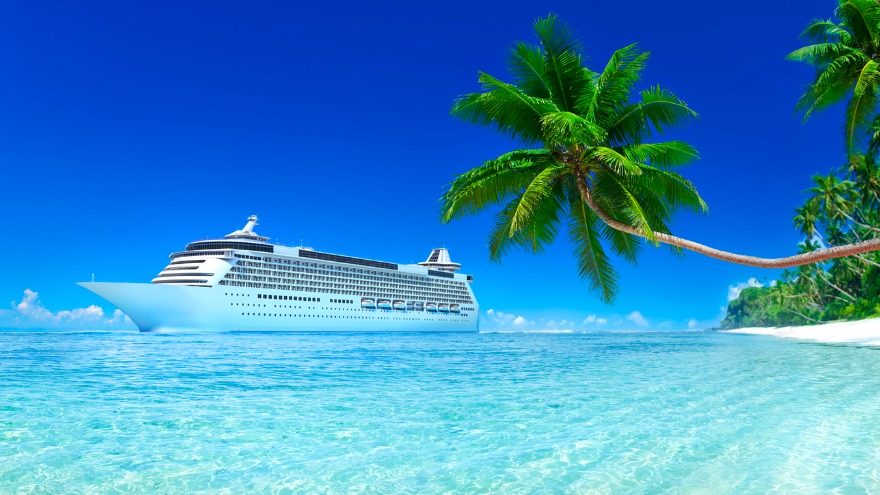

Cruise line representatives cited the vaccination requirement as part of a multi-pronged approach to keeping crew and passengers safe, in addition to implementing CDC regulations, requiring negative testing before boarding and adhering to reduced capacity and social distancing guidelines.

With the CDC’s commitment to swiftly handle applications to set sail by summer, cruise lines have begun announcing dates. Celebrity Cruises announced that the first ship to sail from U.S. waters in more than a year will be a Celebrity Edge cruise departing from Fort Lauderdale on June 26 for a seven-night tour of the Caribbean. The company will resume its voyages to the Galapagos Islands beginning July 4 with its ship Celebrity Flora, with fully vaccinated crew and passengers.

Parent company Royal Caribbean Group also operates Seabourn, which shared plans to make its first departure July 3 from the port of Piraeus, Greece. The Athens port is a popular restart location, as the country announced mid-April it would begin reopening to citizens from five countries (including the U.S.) who are fully vaccinated or submit a negative Covid-19 test. Seattle-based cruise company Holland America, Norwegian Cruise Lines and Silversea all have plans to resume voyages from Piraeus over the summer months, as well. All mentioned cruise lines will require full vaccination for crew and passengers.

High Demand for the High Seas

The collective push by the travel industry that the CDC release the sails is no wonder, as prebooking for cruise travel is booming for late 2021 and beyond.

According to a March article in The Washington Post, Royal Caribbean Group has seen a 30 percent increase in new bookings in the first quarter of 2021, compared to the last two months of 2020.

Luxury line Silversea Cruises had the most successful presale in the company’s history for its 2023 world cruise, themed South Side Story—All the World’s a Stage. The 139-day voyage completely sold out by the day of its general opening. It will span five continents, ferrying travelers to 66 destinations in 34 countries.

Josh Leibowitz, president of luxury cruise line Seabourn, said in a Forbes interview in January that the company was seeing strong interest in late 2021 and 2022 bookings across the board, noting that pent-up demand was evident.

Cruise Compete, a service that connects cruisers to customized quotes via travel agents, forecasted a strong return to cruise travel based on the hassle-free nature of the travel mode—cruises offer streamlined travel to unique destinations with inherently all-inclusive packages. CEO Bob Levinstein shared encouraging statistics with Smart Meetings in an email, noting that advanced bookings for 2022 are level with 2019 by number of cabins pre-booked. Interestingly, he noted, revenue for 2022 reservations is 24 percent higher, possibly reflecting that cruisers are booking more expensive vacations.

Budget Friendly Group Travel

For an all-inclusive, team-building experience or a welcome-back event that aims to ameliorate pandemic frazzle, a chartered ship has advantages, among them “high space-to-guest ratios that create a comfortable travel experience, free of long lines or crowds in public spaces,” as noted on Seabourn’s website.

During the post-Covid era of austere meeting, cruises can be a more affordable way to plan an incentive trip that appeals to all interests. Multiple ports of call take travelers to several destinations in one go—a bit of a bang-for-your-buck mentality.

Another bonus is that accommodation, meeting space, AV needs, food and beverage are all included in a quote, reducing planning time while still providing a fully curated luxury experience. Booking an ocean-bound affair can also satisfy the increasing demand for ecotourism, depending on the voyage planned. Seabourn is the official cruise partner of UNESCO World Heritage, an alliance created to help promote sustainable tourism at World Heritage sites around the world.

In addition to paying careful attention to the safety protocols adopted by specific cruise companies, prospective passengers are also advised by environmental organizations to research their sustainability records. Especially on some smaller ships, progress has been marked, and most major cruise lines are taking steps to become more environmentally friendly. View the 2020 Cruise Report Card by Friends of the Earth here.

Beyond Government Guidelines

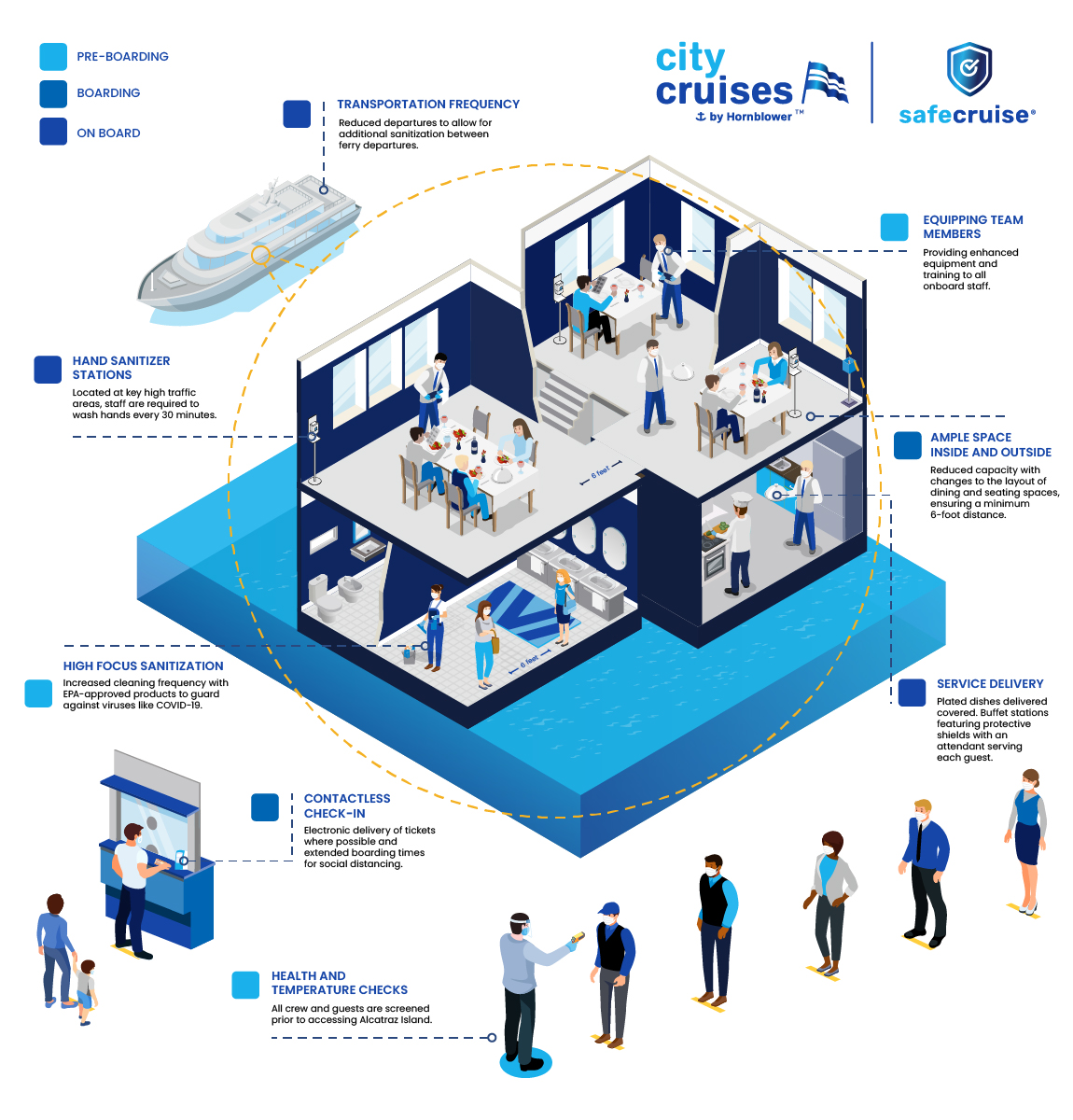
City Cruises, which is operated by Hornblower Group, recently reopened its Chicago vessels, as the CDC order only applies to ships that can carry 250 passengers or more. The brand has developed its own SafeCruise by City Cruises procedures, which include mandatory daily crew member health screening, wearing of appropriate PPE, and revised boarding and ticketing procedures for touchless experiences and proper distancing, among others.

Justine McCleery

The Dominick Hotel in New York City promoted McCleery to general manager; she previously worked as director of operations. McCleery has held leading positions at Trump Soho New York, including director of organizational development. She also worked as guest relations manager for Montage Hotels & Resorts, and training and quality manager for Trump International Hotel and Tower in New York City.

Jaime Moench

Montage Deer Valley in Park City, Utah, named Moench director of sales and marketing. Moench previously worked as market director of sales and marketing for The Ritz-Carlton, Naples in Florida. Before that, she worked as market director of sales and marketing for The Ritz-Carlton, South Beach in Miami Beach. Moench was recognized as The Ritz-Carlton Director of Sales and Marketing of the Year in 2013 and 2019.

Candice Hobson

Hobson is national sales manager for Visit Aurora in Colorado. Most recently, Hobson worked with Renaissance Denver Central Park/Holiday Inn Denver East and Crowne Plaza Denver Airport Convention Center. She also worked for Pyramid Hotel Group as associate director of sales, Crowne Plaza Denver International Airport as sales manager and Crowne Plaza Chicago O’Hare as sales manager.

Julia Simpson

Simpson is president and CEO for World Travel & Tourism Council (WTTC). Simpson is executive committee member for International Airlines Group (IAG) and has served on the boards of British Airways, Iberia and, most recently, chief of staff of IAG. Before WTTC, Simpson worked in senior roles in the UK government, including advisor for the UK’s prime minister.

Charles Harris, CDME, CTA

Harris, president and CEO for Reno-Sparks Convention and Visitors Authority, has been named to the board of directors for U.S. Travel Association. Harris previously worked as commissioner for Travel Nevada and chief marketing officer and executive vice president of public affairs for Visit Anaheim in California.

Roger Pollak

Pollak will work as director of special projects for Island Hospitality Management in West Palm Beach, Florida, after retiring as executive vice president and chief financial officer. Pollak has also worked as senior vice president and controller for the organization.

It’s a trend with many names and faces. From all-encompassing “ecotourism” to the holistic cadence of “regenerative travel,” and the localized “community-based tourism,” to the umbrella of “ethical travel.” Whatever you want to call it, it’s not just a trend but a practice that has steadily evolved from the mere mention of carbon offsets to an ingrained component of the travel and hospitality industries. Hyatt Loves Local 

The AMEX 2021 Travel Trends Report found that “59 percent of respondents are interested in philantourism,” suggesting an increasing awareness among travelers about the responsibility they bear to tourism sites. A worldwide pandemic has further heightened awareness of the often fragile ecosystems of local communities in countries with less stable infrastructures, in which local populations frequently rely heavily on a single industry and can be devastated by its disruption.

While the impacts of tourism don’t get the same media spotlight as the coronavirus, they’re just as volatile.

A two-for-one combo in sustainable travel and personal safety? The AMEX study also found 69 percent of respondents were interested in visiting lesser-known (less crowded) destinations.

50 Shades of Ecotourism

Hyatt Regency Cartagena features Arte Visbal, a shop carrying handmade accessories, home goods and typical Colombian purses.

The encompassing term ecotourism denotes practices that consider the end-to-end impact of trips, from using fewer resources to the effects on the local community and environment being visited. Tenets of ecotourism range from booking trips off-season and visiting “second city” destinations to activities that promote cultural awareness and support artisans and laborers in the community.

Simplified, the goals of ecotourism can be expressed by an edict you might remember from summer camp: Leave the place better than you found it.

An important difference, of course, is that attempts to contribute to a destination aren’t an act of philanthropy—they’re a responsibility, due to the negative-sum effects of irresponsible tourism. That’s why the International Ecotourism Society (TIES) lists minimizing physical, social, behavioral and psychological impacts as a key guidepost for individuals and businesses who want to engage in authentic ecotourism.

It’s true that much of the effectiveness of ecotourism depends on big players in the industry. Only they can fulfill some of TIES principles, such as “deliver[ing] memorable interpretative experiences to visitors that help raise sensitivity to host countries’ political, environmental and social climates.”

How do planners and casual travelers support these practices? Some are a no-brainer: Take public transportation when available, shop in locally owned stores at your destination, consider a stay that puts money into local hands (like an Airbnb). Simply put, anything that diverts your travel expenditures from overseas shareholders and into the local economy is a plus.

Green or Greenwashing?

If you can’t do it directly, just remember, you’re voting with your dollars: Support companies that take this stuff seriously—choose travel partners that make a demonstrable effort to support these practices and are vocal about it. If your travel agency or hotel doesn’t have information available on its website, it’s likely they aren’t doing much. If that’s the case, consider a quick email to the company, mentioning that sustainable practices are guiding your travel choices.

Sustainable travel is here to stay, but it’s also a “trend”—in the way that companies know terms like “sustainable” and “local” are buzzwords they can capitalize on without necessarily backing up the claims. When a brand employs these as marketing tactics but isn’t doing much under the surface, that’s classic greenwashing. And that’s why it’s important to research or ask your prospective travel companies about their practices.

That being said, there are companies that care. Big hospitality brands have their fingers on the pulse, and many are looking for opportunities to address growing concerns about overtourism and the consumptive effects of travel.

Hyatt Loves Local

Rooftop vegetable garden at Hyatt Regency Calgary in Alberta, Canada

A notable example is the re-introduction of Hyatt Loves Local, a global initiative to support and collaborate with small local businesses, organizations and nonprofits impacted by Covid-19. The multipronged program divides sustainable travel efforts into subcategories, such as “The Art of Hospitality,” “Support for Students and Youth” and “Stepping Up For Voluntourism.” The program was introduced in 2020 as an ecotourism initiative, just months before shutdowns began, but was recently reinvigorated with 160 new collaborations at Hyatt hotels across the globe, many of which specifically address the impact of Covid-19 on communities.

More‘Hyatt Loves Local’ Initiative Helps Small Businesses Survive COVID

Voluntourism in Action

Hyatt’s Alila Diwa Goa hotel in India is partnering with the Podhers (local breadmakers) to offer guests the chance to volunteer by preparing authentic Indian breads and learning the traditional art of breadmaking. The program culminates with a donation of goods to feed children at the local community center.

In North America, Hyatt Regency Calgary in Alberta, Canada, has established an ongoing collaboration with Calgary Community Fridge, which provides fresh groceries on a “give what you can, take what you need” model. The hotel is growing its own vegetables to donate to the pantry.

In March, at Park Hyatt Maldives Hadahaa, guests and Hyatt team members collaborated with conservation group Parley to collect over 700 pounds of trash in one day, with additional cleanups planned in future.

Reimagining Hotel Gift Shops

Park Hyatt Zanzibar is hosting a monthly market with sewing cooperative Sasik Pillows and African artisan Zivansh.

The AMEX Travel Trends study also revealed that 77 percent of consumers want to be more conscious about supporting local businesses while traveling. Another aspect of the Hyatt program helps guests to do just that, as Hyatt properties invite local makers and businesses to sell their products on Hyatt properties, which helps to educate guests about local culture as well as having a positive impact on the community.

Taking Action

Along with supporting local communities and eco-driven travel companies, United Nation’s World Tourism Organization (UNWTO) has a handy resource to familiarize yourself with your responsibilities as a global traveler. It also provides great tips.

Example: To reduce overtourism, leave the Taj Mahal to Instagram and visit the ancient Adalaj stepwell instead (and make similar moves in other countries.) If you simply must gaze upon Machu Pichu, consider using a site like Avoid Crowds to plan your trip during off-season. A little research here and a change in itinerary there will go a long way toward making you a true citizen of the globe.

Editor’s note: While much of the world was locked down over the past year, members of ADMEI (Association of Destination Management Executives International) have been busy learning new skills, updating their services, incorporating new health and safety measures, assessing local suppliers, and reviewing current business practices with an eye on improvement, evolution and ongoing business viability. An ADMEI focus group/task force reviewed research and created a vision for the future, with practical tools and guidance to help DMCs evolve in the new business environment. Following is based on the group’s whitepaper.

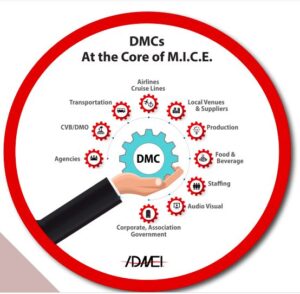
Destination Management Companies (DMCs) are at the core of the MICE industry. They can and often do literally touch every aspect of a program from logistics to safety, from branding and theme creation to providing local experiences. In addition, services they provide bring business to local supplier partners.

As Amy Calvert, CEO of Events Industry Council says, “They’re critical connectors in the overall events industry ecosystem.”

Stephanie Harris, president of The Incentive Research Foundation, adds that “as events return post-pandemic, DMCs will play a more vital role than ever, providing critical local insight for planners. DMCs bring knowledge of the off-site venues adhering to protocols and help deliver a clear understanding of the details of local regulations. They will also know which venues and providers are still operating locally, given the significant changes during the last year.”

DMC Value

A Destination Management Company is officially defined as a professional services company, possessing extensive local knowledge, expertise and resources, specializing in the design and implementation of events, activities, tours, transportation and program logistics.

The DMC industry is often misunderstood in the value, depth, and creativity of its services and the associated costs involved with delivering a program. Much like a design/build construction firm, DMCs act as both the architect and general contractor for their programs.

As the architect, they utilize their unique knowledge and expertise of the destination to design a program “blueprint” which fulfills the client’s needs and goals, optimizes available resources and adheres to the limitations and requirements of the area.

And, like a general contractor, DMCs possess the skills, resources and vendor relationships to “build” the event. They develop the bid, hire and manage subcontractors, relate to all outside agencies for permits, insurance, etc., manage the finances of the job, provide constant supervision on site, and overall project management. They are also versed in their local health and safety laws and requirements.

In July 2020, ADMEI launched its DMC Evolution Survey, in which DMCs from around the world shared their views on the issues impacting the DMC industry. In addition, ADMEI hosted facilitated Owner and General Manager Roundtables, providing ADMEI members the opportunity for peer-to-peer brainstorming, problem-solving, and issue discussions.

Common threads in both the survey and the roundtables were the need to change the proposal process, incorporate a Letter of Engagement to protect the planner and DMC prior to executing a contract, and improve site inspection policies.

Proposal Process

In the past, many DMCs have been expected to develop a comprehensive proposal and complete costing—essentially a full blueprint—without any compensation, contract or commitment. Much like asking an architect to draw up the complete building plans for free.

In an ADMEI focus group discussion, some participants estimated 75 percent or more of their proposals were never contracted. And in the worst cases, proposal recipients used the DMC blueprint to “self-construct” the experience using the DMC’s developed concepts.

Many planners were indifferent to how many RFP requests they sent for an event, as these had no financial impact on them. In similar fashion, RFPs were often presented without budget parameters, requiring the DMC to make assumptions, and often having to re-do a proposal from top to bottom to meet newly disclosed financial criteria.

When DMCs operate instead like other service-industry providers, they are paid for complete detailed proposals in a partnership-based relationship with their clients.

A professionally prepared and formatted initial proposal showcases the DMC’s creative and logistical solutions to a client’s request for services. The planner can evaluate the capabilities, experience, professionalism and reputation of the DMC. It provides an opportunity for the DMC to share how it vets and chooses local vendors, products, agencies and talent.

Letter of Engagement

When a client selects the DMC, a Letter of Engagement or Letter of Intent should be executed. The Letter recognizes the investment of the DMC’s additional time and resources required to fully plot all details of the program.

The letter also sets a time frame for progressing to a contract.

Site Inspections

The site inspection is the perfect opportunity for the DMC to showcase product and destination knowledge, demonstrate experience, strong local vendor relationships, creativity, efficiency and problem-solving. At the same time, it is the ideal setting for the client to determine, first-hand, the DMC’s professionalism, due diligence and duty of care, and to establish a solid relationship that will enable both parties to work together efficiently.

The DMC is responsible for orchestrating all elements of the inspection, and considerable work is involved in creating the site inspection itinerary, briefing involved vendors, planning routes, timings, rehearsals where required, menu tastings and all necessary aspects.

In terms of cost, it is important to say that the first site inspection and subsequent site visits are customarily treated differently. For example, the first site inspection may be considered part of the sales process and may occur before an agreement is executed. Additional site visits tend to be more operationally focused and are managed, treated and charged according to the service agreement’s guidelines.

Reasonable site inspection costs may be considered the “cost of doing business” to some clients, but since the number of site inspections a DMC performs in a year can easily exceed the number of programs a DMC may operate, consistently absorbing site inspection expenses as a “cost of doing business” is unsustainable for DMCs.

Conclusion

Evolution of the DMC industry requires a renewed relationship with clients built upon the following.

  • Transparency, which outlines labor and resources invested;
  • Trust that is forged by a DMC’s ability to deliver an essential service that satisfies clients’ needs;
  • And a mutual understanding of the systems and processes used by the DMC to deliver a professional, safe and flawless program.

For DMCs to not only survive but thrive, utilizing the service industry model ensures both excellence and sustainability in the services they provide. A unified approach will prove to be a mutually beneficial relationship between Destination Management Companies and clients as the MICE industry continues to evolve and adapt to new circumstances.

Meeting profs across the United States are being tasked with increasingly difficult decisions about requiring and enforcing mask wearing after the Centers for Disease Control and Prevention (CDC) suddenly updated guidance for face coverings and physical distancing in Mid-May.

The announcement that “fully vaccinated people can resume activities without wearing a mask or physically distancing except where required by federal, state, local, tribal or territorial laws, rules and regulations, including local business and workplace guidance,” may have been designed to entice people to get vaccinated, but it left event organizers with the task of requiring precautions over and above the measures called for by the government if they had already told attendees they would be part of the protocols or if the venue required masks in common areas. It also begs the question of how meeting staff would verify who is vaccinated and therefore not required to wear a mask.

To make matters even more confusing, not all states and cities are uniformly adopting the CDC’s guidelines. Some already did away with public mask requirements months ago. Texas Governor Greg Abbott threatened to sue cities in the state if they implemented mandatory mask requirements. Others are putting orders in place that supersede the guidelines, extending the requirement for at least a month or more. California’s Secretary of Health and Human Services, Dr. Mark Ghaly, announced that the requirement to wear a mask when inside public places would go into effect on June 15, when the state officially drops restrictions on businesses and a greater percentage of the population is vaccinated. The indoor mask mandate will remain in effect there for hospitals, nursing homes and shelters, as well as for traveling.

In April, another arm of the federal government, Transportation Security Administration announced that it was extending the face mask requirement for individuals in airport terminals, on planes, trains and buses at least until September 13. “The federal mask requirement throughout the transportation system seeks to minimize the spread of COVID-19 on public transportation,” said Darby LaJoye, senior official performing the duties of the TSA administrator. “Right now, about half of all adults have at least one vaccination shot and masks remain an important tool in defeating this pandemic.”

Big Challenges

Respondents to a recent Smart Meetings survey found that confusion about changing requirements is making meeting professional roles even more difficult. “Not knowing what the future holds vis a vis healthy meeting requirements for face-to-face” was named as one of the biggest challenges they face today.

Chip Rogers, president and CEO of American Hotel & Lodging Association, said the group’s Stay Safe guidelines will still call for hotel employees to wear face coverings indoors, with the ability to relax requirements for guests depending on state and local guidelines.

“Like all Americans, we are excited for a return to normal life, which includes travel. The recent CDC guidelines for vaccinated Americans…was welcome news and should help speed up a much-needed recovery. As an industry, our primary concerns have always been guest and worker safety. Throughout the pandemic our Safe Stay guidelines continued to evolve to align with the current environment and CDC guidelines, and the same will be true as we work to reopen.”

Amy Calvert, CEO of Events Industry Council, stressed the importance of getting protocols right. “We all collectively understand the essential role our industry will play in the global recovery and care deeply for the well-being of our event participants and our workforce. We are also keenly aware of our respective roles as hosts, organizers and participants and our long-standing commitment to duty of care as part of the event experience. The global nature of our industry, combined with the variability of the virus and policies across the globe require that we establish the necessary protocols grounded in science that build both safety and trust.”