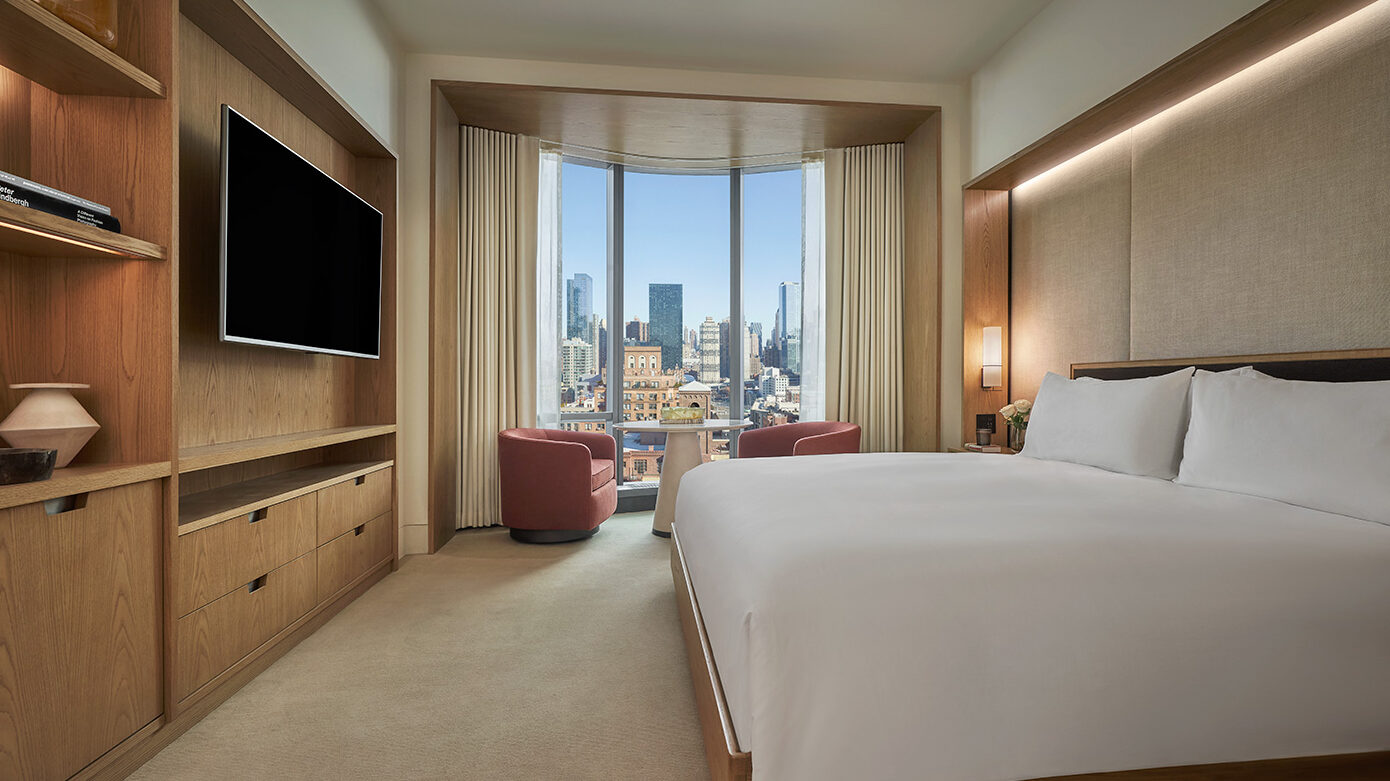
The latest offering from the Pendry brand and the first in New York City, this 164-room property is located in Manhattan West, an eight-acre, mixed-use complex. The hotel features more than 6,000 sq. ft. of meeting space; an art collection of works from New York City- and Los Angeles-based artists; two F&B options, Zou Zou’s and Bar Pendry; and Garden Room, a light-filled, high-ceiling, verdant-infused room designed for guests to sit back, relax and enjoy the day.
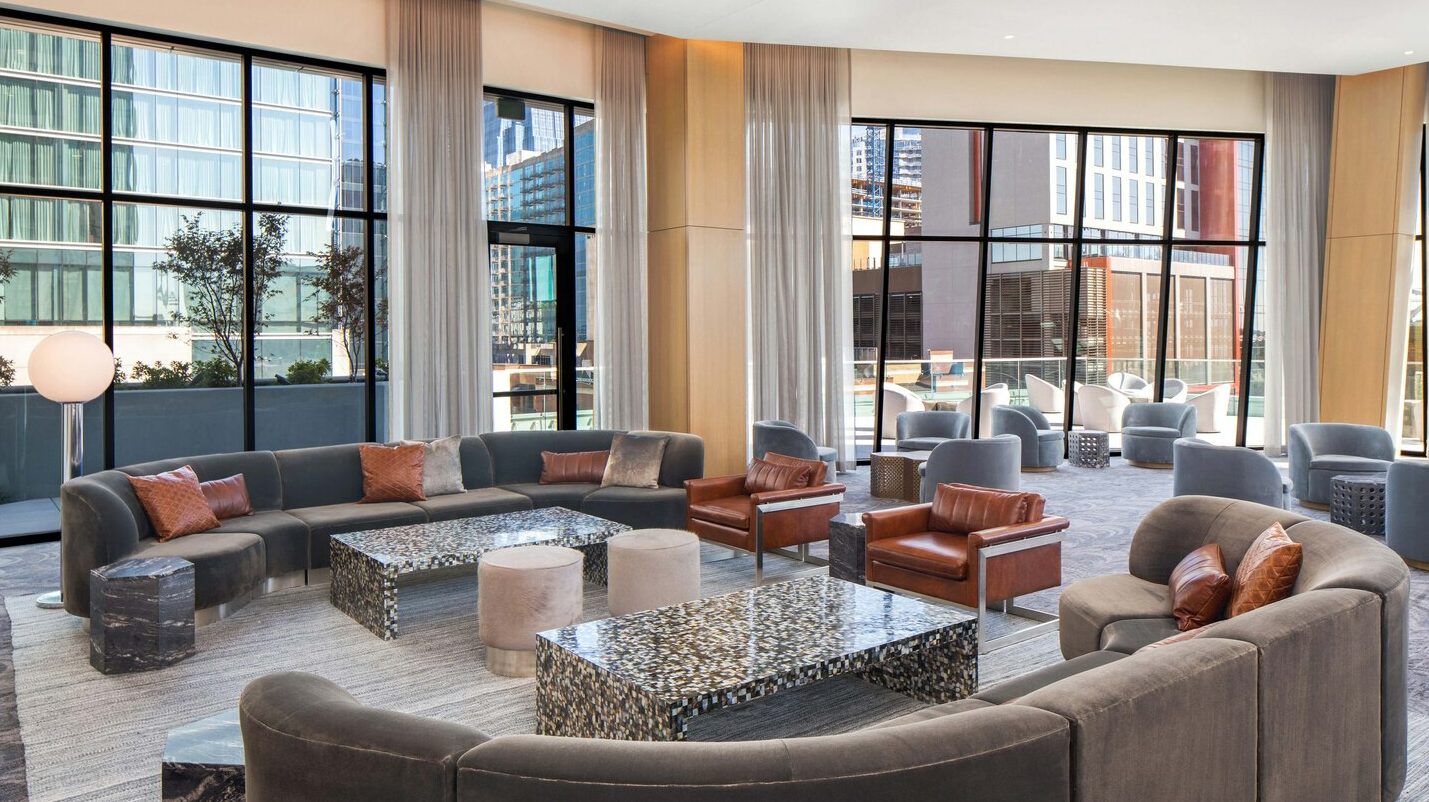
A 21st-floor rooftop bar, 265 guest rooms and 22,000 sq. ft. of meeting space are what guests will find at this new Southern-inspired property. Multiple F&B dining selections, including Denim, which serves American fare, and the soon-to-open Four Walls, are on offer. Its pet friendliness is the cherry on top!
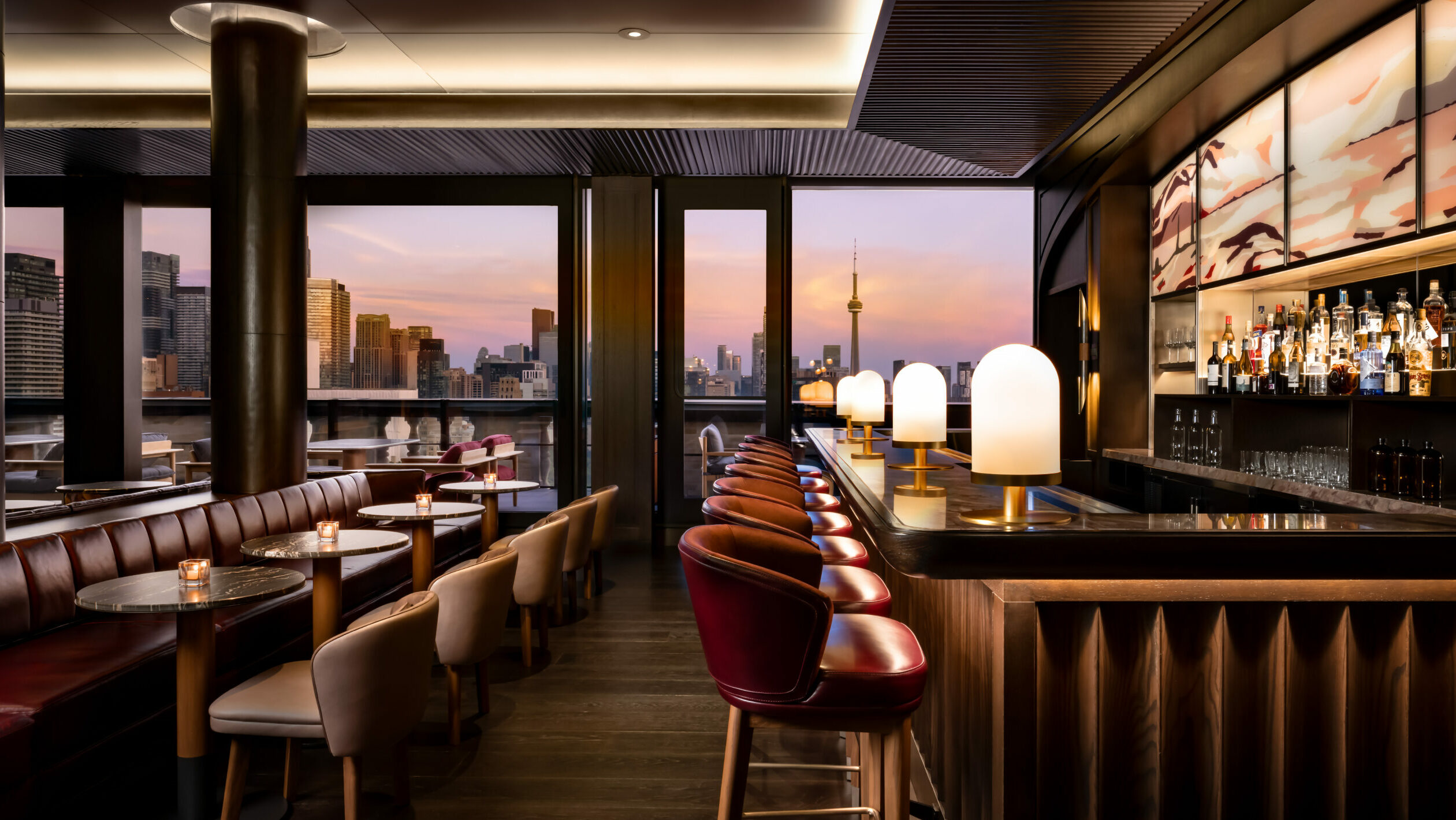
A restoration has been made to this Canada-based property’s 219 guest rooms, including its 40 suites. Its rooftop cocktail bar, Writers Room, which pays homage to the providence’s literary legends, has been made anew, as has The Living Room, a gathering area and bar. A new 6,146-square-foot ballroom has been added to the nearly 13,000 sq. ft. of meeting space. Guests will also find a permanent art collection highlighting pieces from well-known Canadian artists.
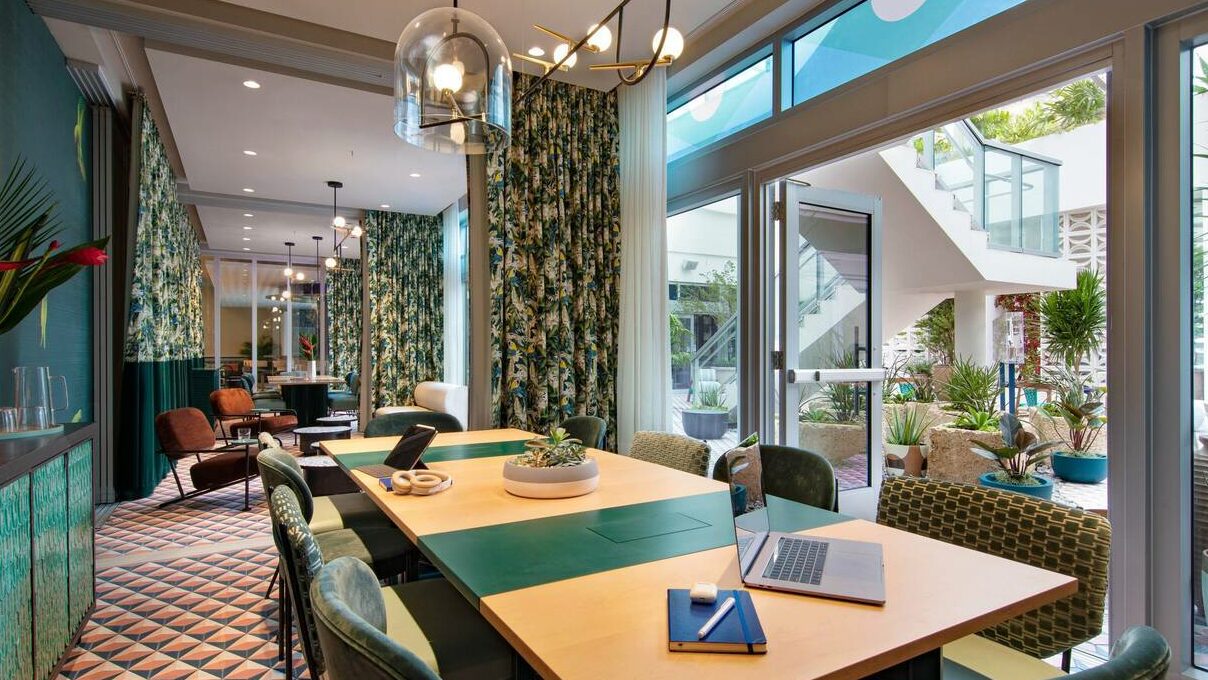
Moxy’s unorthodox approach to hospitality and its position in the cultural hub that is South Beach makes for a perfect melding of excitement for groups. The property boasts six dining options, including Los Buenos taco stand/bodega and Como Como, a marisqueria and raw bar. The 5,020-square-foot Upside Rooftop bar, featuring a shallow lounging pool and multiple seating areas, is included in the property’s 26,591 sq. ft. of meeting space.
Editor’s Note: We asked Amy Calvert, CEO of Events Industry Council, to share her perspective on how meeting professionals are evolving to meet the needs of post-pandemic era events and why professional designations like CMPs are changing to support that shift.
Now, more than ever, we must unite to inspire our workforce and be the “great explainers and advocates” as to why our industry matters. As leaders in our industry, we all have a role to play in advocacy. To build back better we must be anchored to our values and firm in our belief in the purpose of events; to foster human connections, build career pathways and communities, drive innovations, professional development and learning.
This steadfast commitment is at the heart of what we do at Events Industry Council (EIC) and the Certified Meeting Professional (CMP) credential. As we think about upskilling and reskilling and supporting our workforce, we recognize that we have a unique moment in time, given the events of the past two years, to conduct a competency profile project to future-proof the international standards that form the foundation of our accreditation program and of the CMP certification.
EIC is currently conducting the Certified Meeting Professional (CMP) Competency Profile project, a key strategic planning endeavor that takes place approximately every five years to determine the knowledge and skills that define the competency standards for professionals in the global business events industry.
A competency profile is a process to identify and determine, in detail, the job duties, tasks and knowledge needed for competent performance in a specific job role. The results are used to develop test specifications or the body of knowledge (domains) on which the examination is based. The result is a “test blueprint” specifying the number of test questions in each domain or knowledge area.
EIC’s CMP Competency Profile project is critical for identifying the key skills and knowledge required of global event professionals to maximize their strategic value to their organizations in support of a resilient, equitable and sustainable recovery.
To do so, EIC works with diverse, global group of subject matter experts to revise the current exam content outline by defining the specific content areas (known as domains) and competencies needed to practice in the industry as determined by the Competency Profile results. The domains identified in the Competency Profile comprise the CMP International Standards. The domains are then further broken down into more distinct tasks, knowledge, and skills required to perform the job. The job responsibilities developed by the experts are then validated through a survey.
As an essential component of the journey and to ensure the most global relevant focus for this Competency Profile, EIC appointed PSI, a testing and research firm, to undertake research on the global business events industry’s practices. Along with Prometric our testing partner, we will host regional focus groups to ensure that we are gaining the necessary insights into the competencies and the pathways to build a successful CMP journey.
The findings from the Focus Groups and a desk study performed by Prometric will inform the practice areas that will be included in the Competency Profile survey and will be distributed to active CMPs, employers, academicians and others involved in global business events industry practice.
We look forward to sharing more information about this critical project, our findings and how we plan to adapt and innovate based on these learnings to best serve our industry. Please also be on the lookout for exciting announcements around recertification and new CMP education and programming including the launch of our Fellows Programme.
We are grateful for the support of the incredible group of industry leaders that comprise the CMP community and look forward to new and meaningful ways to champion their accomplishments as well as leverage their knowledge, passion and expertise to help our industry prepare for the future engage new professionals to meet the challenges ahead.
Events Industry Council (EIC) is looking for meeting professional feedback to develop a landmark Equity Acceleration Plan packed with tools, resources and recommendations to lead the challenge against discrimination and systemic racism in the events industry. The survey, which closes Oct. 15, takes about 10 minutes to complete and uses an AI-powered chatbot from Culturelytics to make completion easier and more efficient.
The survey is the first phase of an initiative that will focus on establishing a benchmark to measure progress of diversity, equity and inclusion (DEI) across the events industry. The results of this benchmark will inform the development of tools, resources and recommendations in subsequent phases in an Equity Acceleration Plan.
The goal: a framework to turn the EIC Equity Task Force’s vision into action.
By sharing personal experiences and opinions about what is needed to improve the sector, meeting professionals can help point the way to meaningful change, the task force says. Findings will be used as the basis for a report and a series of specially created educational courses, tools and resources to support the industry in its shared goal of a more diverse and inclusive future.
“With over 10.3 million direct jobs and over 1.5 billion participants in our sector, and as the industry that at its heart fosters human connection and collaborations, we have the opportunity and responsibility to be a catalyst for meaningful and measurable change,” in the words of Amy Calvert, CEO of EIC. “The Equity Acceleration Plan will enable us to support event professionals to create more diverse and inclusive environments, develop career pathways, and ensure representation in leadership and supply chains by providing the learning and resources intended to reach and support our community.”
Jason Dunn Sr., co-chair of EIC Equity Task Force, immediate past board chairman of National Coalition of Black Meeting Professionals, and vice president of Cincinnati USA Convention and Visitors Bureau, has this to say about why broad participation is important: “I believe that tourism empowers communities and that business events can be a driver for change. This survey is an important step toward emboldening our global industry to lead and be an example of how to move the moral compass of DEI to the center of everything we do. I’m looking forward to seeing the results and to working with the EIC Equity Task Force to create what will be incredibly valuable guidance and resources for event professionals.”
Mark Cooper, CEO of IACC and EIC 2021 board chair reinforces the point. “We encourage our global community to openly share their experiences and insights so that the Events Industry Council can create the resources and support necessary to drive genuine long-term change.”
New York private equity firm Blackstone Group announced yesterday it will be selling The Cosmopolitan of Las Vegas in a $5.65 billion deal, with MGM Resorts International taking over hotel operations. MGM will purchase the resort’s operations for $1.625 billion, according to the Las Vegas Review-Journal, and will enter a long-term lease with the new owners, which include Panda Express billionaires Andrew and Peggy Cherng, as well as real estate investment firm Stonepeak.
The 3,000-room Cosmopolitan will extend MGM’s presence on The Strip after its sale of Bellagio, MGM Grand and Mandalay Bay properties to Blackstone in 2019, and Aria and Vdara properties to Blackstone in 2021.
“We are proud to add The Cosmopolitan, a luxury resort and casino on the Las Vegas Strip, to our portfolio,” said MGM Resorts CEO & President Bill Hornbuckle in a press release. “The Cosmopolitan brand is recognized around the world for its unique customer base and high-quality product and experiences, making it an ideal fit with our portfolio and furthering our vision to be the world’s premier gaming entertainment company.”
Blackstone stated that the Cosmopolitan’s 3,000 employees will keep their jobs, and that the deal is expected to close in early 2022.
After 18 months of social distancing and remote meetings, teams are eager for opportunities to reconnect in meaningful ways. The bonds created through face-to-face experiences foster teamwork, build trust and cultivate a level of authenticity that cannot be replicated online.
In today’s post-Covid era, meeting and event planners are looking for settings that promote team building while providing a sense of comfort and safety for all involved. The ideal environment offers spacious indoor meeting accommodations paired with outdoor areas that lend themselves to reconnecting. Meeting and event planners are looking for meeting places that blend productive work environments with access to fun and relaxing activities.
Many of the groups we are seeing are looking for unique ways to re-engage their teams after being apart for so long. One group at Margaritaville Lake Resort, Lake Conroe | Houston, for example, recently booked a nine-hole golf scramble. This structured activity really has nothing to do with golf, but it has everything to do with being together—something groups have missed out on for the last year and a half.
Whether it’s enjoying a golf scramble or other structured activity like a scavenger hunt or a cooking competition, one thing is clear: groups are craving connection more than ever. Something incredibly powerful happens when you bring people together to find a common goal and a purpose.
Leaders also are looking for ways to reward their teams. Our lives were turned upside down overnight due to the pandemic, causing businesses and individuals to reconfigure and quickly adjust to a changing environment. Without a doubt, the last year added unique challenges in all of our lives. Now teams are looking for opportunities to unwind.
If groups are not requesting a structured activity as part of their meeting, building in leisure time becomes an important part of the teambuilding equation. Realizing the need to recharge and exhale, through activities such as spa treatments—the Milk & Honey Body Bliss Treatment is one groups may like—fishing, pool time or implementing some down time among work meetings and events, is more of a priority in a post-Covid world.
As teams reunite, they are looking for venues that support a restart of their business goals while ensuring participants feel at ease. They are looking for spacious meeting rooms, allowing groups to spread out, so they can dig in and focus on being productive. Meeting planners are seeking venues that inspire, reinvigorate, and refresh teams to elicit their best work.
Above all else, groups are looking to motivate, reenergize and recharge as we move to the other side of the pandemic. While we learned that teams and businesses could survive behind a screen, to truly thrive they must be together in every sense of the word.
Marriott International has raised the bar among hospitality companies in its commitment to help reduce global warming. On Sept. 25, at Global Citizen Live, the country’s largest hotelier plans to celebrate this milestone of promising to reach “net-zero value chain greenhouse gas emissions” no later than 2050.
Three years ago, the United Nations climate science body warned that the planet was on track to blow past efforts to limit global warming to 1.5°C above preindustrial levels, a threshold it warned would bring catastrophic and irreversible effects of climate change.
Marriott says it’s joining the Race to Zero, a global campaign rallying companies, cities, regions and financial and educational institutions, to reach net-zero, via the most ambitious standard, Business Ambition for 1.5. The company submitted a letter pledging to re-evaluate its practices and properties with carbon reduction in mind to Science Based Targets initiative, which defines and promotes best practices in emissions reductions and net-zero targets. It also provides technical assistance and expert resources to companies who set science-based targets in line with the latest climate science.
“We are driven to make a positive and sustainable impact wherever we do business, and this rigorous climate commitment to reach net-zero emissions is a needed step for us to do our part to help the communities and environments where we live, work and visit remain resilient and vibrant,” said Anthony Capuano, Marriott’s CEO. “Even as we navigate one of the industry’s most difficult periods, we know this ambition will be a challenge. We are proud to join companies and institutions around the world striving to tackle climate change and build a healthier, more sustainable world.”
Marriott hotels have been working to reduce their carbon footprint as part of its existing 2025 sustainability goals. Achieving these new targets, the company says, will require partnering with its employees as well as hotel owners and franchisees.
In a press release, the company lists possible steps it will take, including use of renewable energy, building electrification to maximize renewable electricity, more energy-efficient building standards and installation of automation systems and energy efficiency upgrades (for example, smart thermostats).
Guests and customers will see enhanced focus on existing sustainability efforts like solid waste and food-waste reduction and natural capital restoration, with the opportunity to participate in activities such as reforestation as well as coral and mangrove plantings.
This announcement aligns with the company’s sustainability and social impact platform, Serve 360: Doing Good in Every Direction, “which guides Marriott’s commitment to help take on the world’s most pressing social, environmental and economic issues, delivering value for associates, customers, owners, the environment and communities around the world,” according to a company statement.
Numerous Marriott sustainability initiatives are currently underway.
Reduction of single-use plastics, including replacing tiny, single-use toiletry bottles of shampoo, conditioner and bath gel in guest room showers with larger pump-topped bottles. When fully implemented across the globe in 2022, the company’s expanded toiletry program is expected to prevent about 500 million tiny bottles annually from going to landfills.
Internal food waste prevention and reduction educational campaign to support Marriott’s goal of reducing food waste by 50 percent.
A responsible sourcing guide to help Marriott’s suppliers to responsibly source 95 percent of the company’s Top 10 priority categories.
Development of a certifications database to help properties operate more responsibly and work towards the goal of 100 percent of the company’s hotel portfolio receiving a third-party sustainability certification.
Planting more than 415,000 trees over the last several years, including through being a founding member of the Evergreen Alliance, a group of Arbor Day Foundation partners and collaborators.
Ecosystem restoration and carbon sequestration projects, such as working with The Ocean Foundation to remove and repurpose sargassum seaweed, which has had devastating impacts on the environment.
More details about Marriott’s environmental, social and governance (ESG) efforts and Serve 360 can be found here.
Jenna Darcy
Darcy is director of marketing and communications for Grand Geneva Resort & Spa in Lake Geneva, Wisconsin. Before Grand Geneva, Darcy spent six years with White Lodging Services in Merrillville, Indiana, where she was corporate senior marketing manager. She also worked as director of marketing and retail for Brush Creek Luxury Ranch Collection in Saratoga, Wyoming, and corporate marketing manager at Marcus Hotels & Resorts in Milwaukee.
Jeff Olpin
Olpin is general manager for Kimpton Hotel Monaco Salt Lake City. Most recently, Olpin worked as chief operations officer for Sequoia Hospitality. Before this, Olpin was hotel manager role for Kimpton Monaco. He also serves the local community through his work at Visit Salt Lake, Salt Lake Chamber of Commerce and other Salt Lake City-based organizations.
Efrain Canto
Canto is general manager for Cancun-based Royal Uno All Inclusive Resort & Spa. Canto comes from The Westin Resort & Spa in Los Cabos, where he worked as general manager. In his two decades of hospitality management, he’s opened resorts in Brazil, Costa Rica, Honduras, the United States and Mexico with brands such as Marriott International and Hilton Hotels.
Mary Castellanos
Innov8 Meetings + Events named Castellanos director of global events. Castellanos has experience in sales, marketing and special events; she previously worked as executive director for ODC Products.
Kim Sidoriak, CDME
Sidoriak is president and CEO for Visit Carlsbad in California. She previously worked as chief marketing officer for Santa Monica Travel & Tourism in California. Sidoriak is a member of Visit California’s brand and content committee.
Jill Barrett
Barrett is senior vice president and general manager for Harrah’s Resort Southern California in Funner, California. Barrett previously worked as the property’s vice president of finance. Before Harrah’s SoCal, she was director of finance for Harrah’s Ak-Chin Casino in Maricopa, Arizona, and Harrah’s Reno in Nevada.
Michael Zorn
Zorn is senior vice president of resort operations at Grand Hotel on Mackinac Island in Michigan. Zorn recently worked with Hilton Waikoloa Village in Hawaii as general manager for three resort properties. He’s also worked at Grand Hyatt Kauai Resort & Spa in Hawaii as assistant director of rooms and Hilton Grand Vacations properties, including The Bay Club Resort, Kohala Suites & Ocean Tower in Waikoloa, Hawaii, as general manager.
Mike May said he long believed 50 percent of the meeting planner’s work is expected, the other half unexpected. Last year made him think differently.
Mike May
“Now it’s 80 percent unexpected and 20 percent expected,” he continued. May is president and owner of Bright Spot Incentives & Events, and one of the guests on the latest Smart Meetings webinar, “Meet the Secret Weapon in the Quest to Return to F2F.”
May, along with Desi Whitney, senior vice president of sourcing operations and industry relations with HPN Global, shared their experiences working with attendees and companies as third-party planners—and what makes them the industry’s secret weapon. Many topics were discussed, among them the phasing-out of hybrid and contract negotiation.
Yet managing differing levels of comfort among attendees, not a straightforward topic to broach, is also on many planners’ minds these days.
“When you get to the health and safety aspect of things, the situation is so fluid and evolving; you might change your protocols multiple times before you actually check into the hotel because the destination could change, or the hotel could change their [protocols]. Staying very level-headed about all of it [is important], and so is understanding that things are likely going to change and so there’s no point getting frustrated. That’s just where we are right now,” Whitney said.
Whitney emphasized the importance of early communication. “[Attendees] might decide not to attend based on what you are or are not doing,” she said. “Getting that attendee feedback is significant. That way you can decide with your stakeholders what makes sense. Are you going to have masks required, or is that going to send your audience running?”
When gauging a group’s comfort, May noted the particular industry involved could impact how to proceed. May recalled a construction client who was perfectly fine with meeting. “But technology companies have been a little more willing to sit behind Zoom or GoToMeeting or [Microsoft] Teams,” he said.
May’s clients have reached a tipping point “where people are ready to proceed with life.” Vaccinations, Covid tests, whatever needs to be done, he said. “We had one where if they didn’t do all that, we still let them travel, but we had a health provider on site [who] gave them the test upon arrival as they were getting their welcome kit,” he said. “We’re going to be a little cautious about our personal spacing, but I think people have come to the conclusion this may be around for a little while longer. We’ve just got to proceed with business, we’ve got to proceed with face to face. [Agreement among clients is] not unanimous, but it’s like 80 or 90 percent.”
In the end, May believes it comes down to the individual consumer’s confidence and willingness to get on an airplane at all. “One of the things that’s just fascinating to me is the consumer confidence to travel is much higher than the corporate mindset about being willing to let their employees travel,” he said. “When somebody does decide to postpone or relocate an event, they rarely say, ‘Our people are uncomfortable.’ They usually say, ‘Well, I think our people aren’t.’
“The irony is, the same person that makes the decision to delay the event or move the event or not travel, at the end of the call they’re asking me questions, like, ‘Hey, what do you think about Hawaii or Europe right now?’ They’re traveling on their own,” May said. “It’s interesting that more people are willing to do it personally than the companies are.”
Listen to the entire webinar to hear more of what May and Whitney had so say about their third-party planning experiences and the tug of war between travel willingness and reluctance.
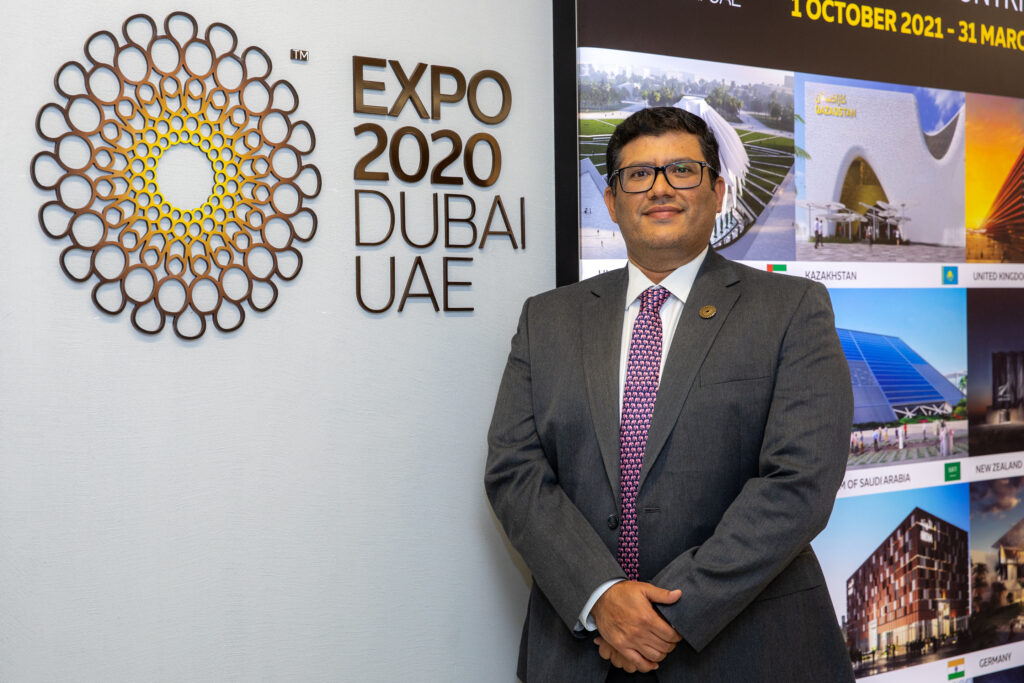
How would you start planning for a once-every-five-year global celebration that brings millions of people and lasts six months? We asked Kailash Nagdev, senior vice president of sales and analytics for EXPO 2020 Dubai, to shine a light on the seven years of work required to coordinate input from 200 stakeholders in 191 countries with the goal of “driving innovation and inspiring action to deliver real-life solutions to real-world problems.” Add to that challenge a pandemic that delayed the festivities for a year.
The theme for the 182-day spectacle starting Oct. 1 is “Connecting Minds, Creating the Future” and it was designed to be the largest and most diverse World Expo ever. “With up to 60 live events planned each day, it will be an incredible experience for explorers, foodies and culture enthusiasts, young people, entrepreneurs, thought-leaders, businesses and government representatives,” Nagdev said. Visitors will be able to explore and savour a spectacular world of entertainment ranging from world-class music, dance and art to insightful talks and vibrant National Day celebrations.
The site adjacent to Al Maktoum International Airport in Dubai South encompasses parks and gardens, performance spaces and iconic architecture. The world’s largest and tallest observation wheel, Ain Dubai will be the latest landmark at 820-feet high. More than 240 million work hours have gone into transforming it from desert to city of the future, with a daily peak of 45,000 workers on the ground. The Expo office workforce numbers more than 1,400 and many more staff—along with 30,000 volunteers of 135 nationalities will help welcome millions of visitors when doors open.
The capital expenditure was $25 billion AED. “Expo 2020 Dubai is an investment in a sustainable, resilient and diversified economy that will spur broader economic impact in key sectors—including construction, transport, storage, communications, travel, tourism, hospitality and business services—in the UAE, the wider region and beyond,” Nagdev said.
As with all major events taking place during the period of global pandemic uncertainty, Expo 2020 Dubai was faced with challenges presented by Covid-19, which included postponing the event by a year. “Our commitment to hosting an exceptional World Expo remains unchanged,” Nagdev said.
“Indeed, given the impact of the global pandemic, Expo 2020’s theme and purpose of ‘Connecting Minds, Creating the Future’ is more relevant than ever before. We strongly believe that now, more than ever, the world needs to come together to create a better future and that Expo 2020 will be a crucial platform for collaboration as we look towards a post-pandemic era,” he added.
The theme is based on the belief that innovation and progress are the result of people and ideas coming together in inspiring new ways. Nagdev explained that three subthemes cover areas designers see as fundamental in shaping and building a better world for everyone:
Opportunity: Unlocking the potential for individuals and communities to shape the future
Mobility: Creating more efficient and effective movement of people, goods and ideas, both physically and virtually
Sustainability: Respecting and living in balance with the world we inhabit to ensure a cleaner, safer, healthier future for all
The nations and organizations that will take part in Expo, and the millions who will visit, can explore the power of connections across these key subthemes. And for the first time in the 168-year history of World Expos, each of the 191 participating countries will have its own pavilion at Expo 2020, giving them the opportunity to showcase their achievements, innovations, aspirations and cultures to the world. Country Pavilions will be organized according to Expo 2020’s subthemes, rather than geographically.
Issam Kazim, CEO of Dubai Corporation for Tourism and Commerce Marketing, reported in a Visit Dubai press release that business event resumed starting in October 2020 and the city immediately saw a healthy pipeline of conferences booking, including Society of Petroleum Engineers Annual Technical Conference and Exhibition, International Astronautical Congress, and now, Expo 2020 Dubai. “The city was among the first in the world to restart its business events sector, providing a vital platform for associations, businesses and organizations to resume their face-to-face meetings and drive knowledge development in key sectors. We understand the importance for the meetings industry globally to restart physical events, and thanks to the efforts of stakeholders across the city, this all continues to be done in environments that prioritize the safety of all delegates, participants and organizers.”
Lessons for Meeting Professionals
Expo 2020 Dubai is a six-month mega-event—one of the first of this size and scale to happen since the beginning of the pandemic. Nagdev described it is a phenomenal opportunity for people, organizations and businesses of all sizes from across the world to come together, form new partnerships and discover new business opportunities. A platform to network with industry leaders and change-makers from around the globe, it will foster a more diversified and resilient global economy, inspire a vibrant business environment, empower robust business connectivity and drive sustainable economic growth.
But an undertaking of that magnitude requires thoughtful planning to achieve measurable results. Expo 2020 Business Programme, known as ‘Thrive Together’ at Dubai Exhibition Centre is a dedicated, business-focused track of Expo’s wider program for people and planet, offering a range of curated events and tailored products and services. It will engage on the United Arab Emirate’s meetings, incentives, conferences and events sector, attracting domestic and international visitors during and after the event, becoming a cornerstone of Expo’s long-term legacy and fueling Dubai’s reputation as a world-class destination for major events and conferences.
Three Global Business Forums, including the first edition of Global Business Forum ASEAN, will welcome prominent speakers, leading decision-makers and industry experts to explore business synergies and address obstacles to growth, driving trade and investment and fostering economic development. Meanwhile, Country Business Briefings will enable each of the Expo’s participants to leverage the presence of their heads of state or government, as well as their business leaders, to showcase their country-specific business and investment opportunities to a global audience.
An AI-powered app will facilitate interactions across geographies and industries, suggesting potential matches for users based on their profiles, expertise, objectives and interaction patterns. An easily accessible business calendar will be updated daily and carry the latest information on inbound business delegations, and all business events taking place across the Expo site, including in DEC, international participants’ pavilions, and the Expo 2020 Business Connect Centre. Sitting at the heart of the Expo site, adjacent to the iconic Al Wasl Plaza, Business Connect Centre will house chambers of commerce and trade entities from across the region, representing more than one million companies, as well as investment houses and venture capitalists.
A premium experience season pass will offer additional opportunities for networking and add-on services to assure a seamless visitor experience, including complimentary enhanced access to the Expo B2B App, a dedicated concierge, entry to an exclusive premium lounge, priority access to a number of networking and thought leadership events.
To ensure that the positive impact doesn’t evaporate when the visitors return home, more than 80 percent of the Expo’s infrastructure and other assets, including DEC, will be repurposed in District 2020, a new urban innovation ecosystem and model global community of the future.
You planned a spectacular event. The venue was perfect and the speakers top-notch. No wonder registrations soared off the charts.
Then along came Delta.
Now, companies are taking a harder line on travel. Speakers want to present remotely, and attendees and sponsors are starting to drop off. Do you cancel or continue with your live event as planned?
The fact is your event deserves to be successful despite all the uncertainties in the market. That’s why I’m sharing best practices for a rock-solid Covid contingency plan. In this article, you’ll find what you need to roll with the punches and plan successful gatherings—even if the situation changes before your event takes place.
The following tips will allow you to leverage technology to:
Run hybrid gatherings without a hitch, even if you never planned one before
Boost ROI with innovative ticketing options
What if travel policies change, and speakers, attendees and sponsors start to cancel?
Know your audience. Do they want to meet virtually or in person? Conduct surveys, analyze behavioral data from past events, talk to registrants and read comments they post in chat. You’re collaborating on a new playbook. Make sure it stays true to audience needs.
Have a back-up plan. For example, enrich live events with prerecorded content by thought leaders. If infections spike and you need to cancel your in-person event, you’ll still have valuable digital content to share with your audience.
Capture the energy of live events. Go simulive and stream pre-recorded sessions as though they were happening live, while speakers connect simultaneously with attendees in chat. After recordings, participants can continue the conversation during live Q&As.
What if registrants are divided? Some want to attend in person, others prefer to join from home.
Incorporate hybrid into your Covid contingency plan. Add a virtual component to your in-person event. You’ll avoid cancellations by people who won’t travel and reduce crowds at the venue to enhance Covid safety.
Maximize all benefits. A good hybrid strategy also expands audience reach and event lifecycle. Plus, you can capitalize on advanced analytics to improve return on investment.
We’ll talk more about ROI in a minute, but first let’s answer planners’ top questions about hybrid events.
How do you make hybrid gatherings easier?
For starters, choose technology that handles virtual, hybrid and in-person events on the same platform.
All-in-one platforms are like an insurance policy on your event. If you need to cancel an in-person gathering, you can switch to virtual easily with a click of the button. Ensure the show will go on, even if market conditions change on short notice.
Consolidating data across in-person and digital activities will:
What if you and your audience and speakers lack experience with hybrid events?
Tip the odds in favor of flawless execution. In the month leading up to your event, invite attendees to a series of virtual preview sessions.
Design previews to feature your speakers and show attendees how to use the technology to full potential. You’ll build excitement for your main event and give speakers a chance to practice using your platform.
After each preview, evaluate what worked (and what didn’t). Make adjustments to keep improving and deliver a polished main event.
How do you handle networking during hybrid events?
This is the question planners ask me the most. The answer lies in your mobile event app. Choose an app that’s optimized for hybrid. With mobile and virtual tools working in sync, attendees can engage with presenters and content real time through live Q&As, polls and chat.
No need to create networking experiences for separate audiences; focus on producing one great event. Integrated hybrid engagement expands opportunities exponentially. Participants in the same room and across the globe connect seamlessly through live video conferencing and chat.
Most likely, hybrid networking will be a new experience for attendees, so encourage them to engage. Arrange for a dynamic emcee to serve as the glue binding both audiences together. Also use gamification that incentivizes virtual and in-person attendees to connect.
How do you keep virtual audiences engaged?
Another big question. Recent research by Aventri shows engagement is the No. 1 way global planners want to improve the virtual attendee experience, cited by 68 percent of respondents. Make sure your Covid contingency plan lays the groundwork for a compelling online experience.
To this end, think like a TV producer. High production quality is vital for delivering engaging digital content, so consider recording key sessions in a studio.
Or use a virtual platform equipped with cloud-based video production software. You’ll get a suite of tools and tech support to deliver quality, TV-like content and reduce the risk that comes with producing these events.
No need for TV-broadcast quality for your entire event. Focus on keynotes and main presentations instead.
Take inspiration from Major League Baseball and the National Football League. They engage fans virtually with the live experience as it happens at the venue.
Add extras to make the digital experience special. Feature live, TV-news-style interviews for your virtual audience while in-person attendees break for lunch. Talk 1:1 with top influencers for commentary on the day’s top issues.
Put your production crew in the limelight, too. Let attendees listen to the producer calling the show and learn something new about how to produce hybrid events.
How do you incorporate on-site safety into your Covid contingency plan?
Make sure your health and safety protocols follow or exceed the latest state, local and federal guidelines. Pre-event, share protocols with constituents often. They’ll be more inclined to attend if they’re confident your event adheres to strict protocols.
On site, the arrival experience sets the tone. Make people feel safe, not only from Covid and its variants, but for the upcoming cold and flu season as well.
Leverage digital badges to cut crowds and make your event as contactless as possible. These badges are accessible through your mobile app. At check-in, instead of waiting in line, attendees can hold their phones up to a scanner and breeze right in.
Multitasking digital badges reduce crowds and shared surfaces throughout events. Use them for quick, contactless access to sessions; payments; contact info exchange; lead capture at exhibitor booths; and access control for physical distancing in sessions and on the show floor.
What if attendees favor paper badges? Choose scannable options to keep check-in touch-free. Speedy, integrated solutions let attendees check in and print badges in just a few seconds.
How do you deliver positive ROI on hybrid events?
In the current uncertain climate, ROI is more important than ever. Your Covid contingency plan may be airtight but to get senior leadership buy-in, make sure it supports ROI.
My advice? Grow your audience. Using virtual and hybrid formats, you can draw attendees worldwide, from Dallas to Dubai. I’ve seen companies charge less per online ticket, but the numbers still worked in their favor when they capitalized on massive audience reach.
Attract new customers. Collaborate with your marketing team to turn sessions into short videos, blog posts, webinars, ebooks and more. Your organization can promote repackaged content to people who are likely to be interested but didn’t attend your event.
Keep growing. Virtual and hybrid conferences are content engines. Generate ongoing engagement and commerce by cultivating a year-round, events-driven community.
Populate this digital content hub with an exhibitor marketplace, sessions, roundtables, chat lobbies and more. Members can connect on-demand with a global community of experts and peers.
Year-round event communities pave the way to a radical rethinking of pricing. For instance, sell conference tickets as part of an annual membership to a community that engages and educates all year long.
Create sponsorship packages combining live trade show booths with digital opportunities that drive ongoing awareness, leads and sales.
What can you learn from event data?
The pandemic has brought the importance of data into full focus. The reason: Critical business intelligence is easier to capture during digital events. Track attendee engagement, such as sessions attended, dwell time, exhibitor booth visits, poll responses and more.
Analyze the types of audiences that engage with your content for a deeper understanding of what works for different profiles. Then personalize the attendee journey like never before.
Data will tell you what worked and what didn’t. Use these insights to improve your Covid contingency plan and make your events program stronger overall.
In Summary
Don’t get caught off guard. Market conditions will keep changing, so develop a plan. Know your audience, stay agile and use proven tools on hand. You’ll bypass the uncertainties and deliver successful events that drive safety, engagement and ROI.
Brad Langley is vice president of channel and enterprise sales at Aventri, a leading global technology provider of virtual, hybrid and in-person events.