When is a user conference more than an outsized demo? When more than 2,000 meeting professionals gather in person in Las Vegas and 10,000 register to stream Cvent Connect to both learn about new products and experience the platform for themselves. That is exactly what happened when Cvent CEO and founder Reggie Aggarwal took the stage at CAESARS FORUM on Tuesday.

The emphasis was on real-world solutions through Cvent’s Attendee Hub that enables digital engagement before, during and after the in-person live event and integrates the content for virtual and post-event audiences. Attendees could share the sessions or talk about how they are adjusting their programs with other meeting professionals through the app.

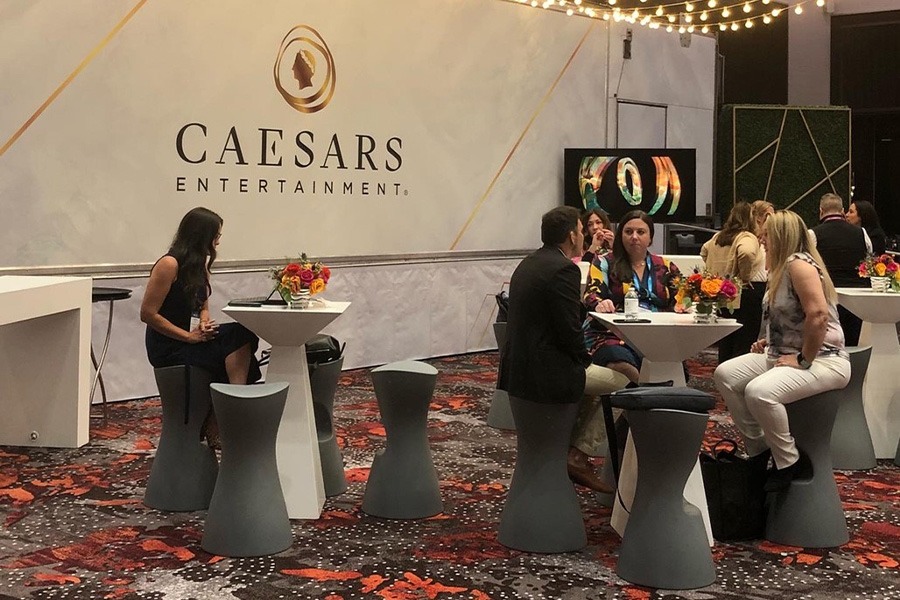
Event attendees sit at small square tables with a modernist design. A Caesars Entertainment banner is behind them.

He promised that all those talking boxes will be more engaging however and whenever they are accessed thanks to Cvent Studio’s focus on enhancing video quality, recording and promotion. Capturing the content produced at an event and leveraging for ongoing communication was one of the marketing strategies being stressed in many of the sessions.

Read MoreHybrid Events: What Cvent Says You Need to Know

An Enhanced Event Marketing and Management Heart

Cvent Chief Technology Officer David Quattrone extoled the advances in hybrid functionality in the last year and predicted that features—and demand—will only improve after the launch of a new Cvent App Marketplace, a centralized location for planners and marketers to find SaaS solutions similar to the tools offered on the Apple App Store.

He described it as a “collaborative ecosystem” for technology partners to develop on top of the Cvent platform and build ready-to-use apps, helping to expand and personalize the platform

A portrait of David Quattrone. He has square glasses and short hair with a black suit.
David Quattrone

capabilities. Opening the development doors to third-party developers will make Cvent’s platform stickier and enable more personalization.

Initial app listings include industry-leading SaaS platforms such as Salesforce, Google Analytics, Adobe Marketo, Uber for Business, American Express and SAP Concur.

Additionally, a Vendor Marketplace integrated into the Cvent Supplier Network that has become a major source for RFP delivery, will allow meeting planners to browse vendors and send requests for information (RFIs) for everything from A/V and production to health and safety providers.

More efficiencies are on the way, Quattrone said, in the way of e-proposals and instant booking for smaller meetings.

Read MoreMergers and Partnerships Advance Hybrid Technology Choices

A Mixed Future Predicted

“We have had accelerated adoption of technology on the event and hotelier side,” Quattrone said. “People have to find ways to do more with less people.”

A portrait of Brian Ludwig. He has puffy brown hair, a short beard and a pink collared shirt under a black suit jacket.
Brian Ludwig

He shared that a lot of customers are designing all of their events as hybrid as an insurance policy in case something happens to limit their in-person attendance. “People are excited to be back in person and our sourcing volume is coming back, but we are also growing the virtual tools because it allows customers to reach more people,” he said.

Cvent Senior Vice President of Sales Brian Ludwig explained the importance of continuing to nurture both audiences through a single platform that captures all the lead data, simplifies experience for the organizer and the attendee and helps with data security. “It is easier to set up and everyone wins,” he said.

Ludwig sees lots of fun new ideas coming to life from chandeliers that clean the air and printed beverages to hyper-personalization and events in the metaverse.

“If not for the pandemic, we might have gotten to the spot we are in 10 years from now, but bright minds have gotten to work solving problems and over next 5 years, I expect a renaissance in event technology with double to triple the innovation of last 5 years,” he said.

Much of the conference insights are still available on-demand.

Speculations circled overhead at the pandemic’s genesis that the business travel industry ought to fear an irreparable nosedive. In the face of doubt, however, business travel has emerged with critical and pivotal strategies for recovery in its pocket and a renaissance of travel in its sights, as evidenced by American Express Global Business Travel (GBT)’s white paper, “Why Business Travel Is the Center of the New Company Culture.”

The white paper, released in mid-May, highlighted the pivotal role business travel is poised to play in building business back. With employees distributed cross-continentally after a two-year hiatus from face-to-face, company cultures have fragmented, said GBT, but not necessarily fractured. Employee needs and priorities have changed, organizations are refocusing their missions and business models and, thus, roles are changing too.

GBT found that business travel is far from crushed under the weight of shifting business goals, and instead, is taking new shape as a prime and prepared vessel for reinvigorating inclusive, successful company cultures.

The Great Reprioritization

How businesses and their leaders rethink and rework business goals, and the initiatives and new policies they enact have the power to draw companies back together, connect employees and restore a sense of unity. New roles have become a byproduct of this collective move to rebuild company cultures—cultures that are valued because they value those who belong to it.

GBT partnered with CULTIQUE for its strategic cultural advisement as the global travel management organization (TMO) guides the morphing industry into becoming a “transformational tool.” “We’ve witnessed the emergence of chief data officers, chief diversity officers and even chief wellness officers—all roles demonstrating a clear reprioritization of new areas,” observed CULTIQUE co-founder Sarah Unger.

The role of the travel manager has expanded, and with it, the role of the planner. For travel managers (and meeting professionals), the job requires agility, delicate planning, awareness, intention over expenses and duty of care. The heightened intensity of some of these nonnegotiable, not even entirely new skills, however, comes from a place of more conscious sensitivity to client and attendee needs.

While “90% of large companies have committed to hybrid work plans [that reduce] the touch points that once conveyed company culture, for all companies, including those which never went remote, unprecedented reports of burnout are signaling that businesses must quickly adapt,” said GBT. Hybrid work plans have come at the cost of connection, but they don’t have to.

With geographically dispersed employees, opportunities for rebuilding both business travel and company cultures are gaining speed.

Read More7 Business Travel Trends Set to Shape 2022

Mobile Careers, Culture and a Strategy That Endures

A person writing in a notebook with a laptop, phone and teacup on the table. A lake is in the background.

We learned quickly how well the remote model worked. The time we saved by not commuting, the work we were able to accomplish in less time—working from home worked, until workers and businesses realized it’s not enough to just have mobile careers. Employees want an expanded, mobile culture, GBT observed.

Employees want to work for companies that align with their values and to connect with their colleagues. Focal to the evolution of company cultures is how inner teams collaborate and how well they collaborate; the execution and demonstration of thought leadership and company values by executives at events and conferences; the onboarding experience for a new employee and how employees interact with clients, as well as the travel industry’s effort to support the regrowth of company cultures.

Business concerns from retention to sustainability are being met with business travel solutions. GBT named travel “a dynamic strategy” for organizations seeking to synthesize employee connectivity and fundamental business goals.

Actionable Takeaways for Organizations and Planners

What’s going to get everyone where they want to go as we move forward is organized, collective efforts to rehabilitate company cultures. GBT found that coherency among new employees, senior leadership and executives regarding values and priorities is integral to building business back from the inside out. GBT’s paper outlines several ways travel can reinforce this movement to revitalize connection and culture in meetings and business, further exemplifying the dynamics of business travel.

Read MoreAt MPI WEC 2021, Michael C. Bush Laid out the Makings of a Great Workplace

Steps Toward New Cultures

According to GBT, travel programs are becoming one of the main ways remote teams meet. “More than a third of executives voice preserving company culture as their biggest hybrid work concern, [and] 82% of business travelers cite the irreplaceable value of in-person meetings,” GBT reported. While remote work has its solutions to in-person problems, employees recognize there is still a need to meet and form tangible relationships.

For instance, Salesforce introduced Trailblazer Ranch this February, a wooded California retreat designed to be an off-site for company gatherings. GBT suggested focusing on building internal team relationships at off-sites and within off-site programming, and having an active company communication channel that markets travel programming effectively.

GBT also speaks to the impact of travel on employee well-being. The corporate well-being market is expected to quadruple by 2026, GBT reported; the difference is in the shift from employee well-being efforts being viewed and treated as perks to them being implemented as reputable business strategies.

“Business trips in the future can be redesigned to demonstrate personal care and lifestyle consideration,” GBT said. The global TMO believes off-sites to be “a must-have” and an effective way to manage burnout before it becomes unmanageable. Expanding vendor deals to utilize spa facilities, wellness-based accommodation and better team training are good places to start.

“On the rise are companies shutting down for wellness weeks and ‘synchronous’ time off, offering free therapy, paying workers extra to take vacation days and partnering with corporate well-being providers,” reported GBT. The global TMO also recommends reinforcing well-being initiatives with new key performance indicators to use travel data to measure the state of employee well-being and burnout.

Moreover, travel can instigate personal development. Financial compensation and job promotions alone aren’t enough to keep employees emotionally and psychologically satisfied with their work environment. GBT listed “digital nomadism,” blended trips, four-day work weeks, sabbaticals and hotel “workspitality” spaces as business and personal development strategies are already in full force throughout the industry. Bolster your bleisure programs, pick your partners wisely by choosing venues that have co-working spaces and consider a sabbatical travel program based on individual duration of employment, suggested GBT.

Travel also increases employee autonomy. Travel doesn’t have to be a highly structured production. “Mainstream and full-time employees have become increasingly averse to strict travel policies,” noted GBT.

Instead, travel managers and meeting planners are urged to focus on minimizing friction during travel. GBT recommended giving your vendors more flexibility during your collaboration, partnering with TMOs, using corporate booking systems and asking for that critical feedback after enacting new policies.

Lastly, travel is always a way to exemplify company values—like sustainability. Values are conveyed through policies and relationships, as well as the sustainability practices of those the company chooses for their vendors, partners, location, food, fuel and tech; who you choose to invest in leaves an ecological and personal impression.

It’s also important to choose regenerative travel methods whenever you can. Diversify your supplier database, take fewer but longer trips in light of climate pressure and when possible, GBT suggested opting for electric, rental or public ground transportation.

Predictions are that 40% of 2022 events are projected to happen online, there will be a 37% increase in companies’ virtual event spending, and 20% of trade shows will remain virtual.

Organizers would expect that all of this translates into more opportunities for revenue.

But the reality is that 80% of virtual attendance is free.

“Virtual events have added layers of data, which have been rarely capitalized on in the past,” says Marco Giberti, founder and CEO of Vesuvio Ventures and co-author of Reinventing Live: The Always-On Future of Events, a book penned during the pandemic. “Understanding that data is a key component in reinventing the business model that’s right for your event.”

Giberti sat down to discuss the biggest revenue opportunities now available because of virtual or hybrid models.

“Events should move from 3 days to 365 days, and from a week activation into a year-long activation with technology being a part of that solution,” said Giberti. “Customers, sponsors, and exhibitors are demanding a different value proposition. Plus visitors and speakers want a different way to engage with the event.”

He also shared a new definition of “Leads as a Service,” evolving from Software as a Service (SAAS). “It’s a business model on how organizers should think about how to keep creating leads as a value proposition,” suggests Giberti.

With a new cohort of planners and organizers, aptly named “The Google Generation” now in event leadership roles, Giberti considers them to be the driving force behind the acceleration of technology in the industry.

Read MoreSurvey: Many Event Marketers Say Orgs Not Effective at Virtual Events

Those less than 40 years of age that have grown up with the internet, combined with the technology growth during the pandemic is what Giberti calls “the perfect storm” for the event business model to change.

“Although the in-person events model worked for decades,” Giberti proposes “it is time for an industry transformation – and not just until in-person attendance comes back.”

“We’ve seen corporate event organizers become dramatically more creative than for-profit organizations and associations.” Giberti advises that “business models for trade shows will dramatically need to change to offer a value proposition to their sponsors and customers in the future.”

Giberti thinks a combination of “innovation and engagement” is finally coming together, but he advises to:

  • “Unlearn what you have learned”
  • “Start small but think big”
  • “Create a new business model, but expect it will need just as much reflection and innovation in another two to three years”.

Explore new business models

Giberti will provide additional business model insights, including subscription and hybrid, during his upcoming session at the one-day virtual Innovation and Growth Summit, organized by the Event Leadership Institute.

The Summit, which is designed to showcase evolving event tech, the science of audience engagement, and the latest innovative thinking from over a dozen thought-leaders, will take place April 20 from 11 a.m. to 5 p.m. EST.

In addition to Giberti’s session, event participants will take a deeper dive into emerging event tech like holograms, drones, and AI, learn tips for maximizing meaningful connections at hybrid, virtual, and in-person events, and gain insights on how to reinvent and reimagine events with an innovation mindset.

Learn more and register here.

See a whole roster of classes available through Event Leadership Institute’s partnership with Smart U here.


Editor’s note: This Week in Travel (TWT) is your essential guide to smoothing the road from here to there for your attendees and yourself.

CDC Extends Transportation Mask Mandate to May

In a move that was widely anticipated, the CDC has announced an extension of the nationwide transportation mask order while they assess “the potential impact of the rise of cases on severe disease, including hospitalizations and deaths, and healthcare system capacity.”

The organization points to the spread of the Omicron variant, especially the “highly infectious” BA.2 subvariant that makes up more than 85% of U.S. cases as a driver in the decision. The organization said they would “continue to monitor the spread of the variant,” citing that since “early April, there have been increases in the 7-day moving average of cases in the U.S.”

The agency said “the TSA would extend the security directive and emergency amendment for 15 days to May 3, 2022.”

This extension means that travelers on public transport (including flights in U.S. airspace and all airports) will continue to be mandated to wear masks.

Not surprisingly, U.S. Travel, Airlines for America and other advocacy groups voiced disagreement with the extension.

U.S. Travel Association Executive Vice President of Public Affairs and Policy Tori Emerson Barnes said in a statement, “Travelers and the travel industry need to hear firm plans to navigate the endemic environment in which the public and practically all other industries are now operating, particularly as the CDC no longer recommends masks for the overwhelming majority of the U.S. population.

“With all of the tools now available to mitigate the virus, it is time for the administration to set a clear end date for federal requirements on mask usage as well as pre-departure testing for air travelers to the U.S.”

In a letter to the CDC and the Health and Human Services Department reported by Associated Press, Nicholas Calio, CEO of Airlines for America, said: “It is very difficult to understand why masks are still required on airplanes, but not needed in crowded bars and restaurants; in packed sports arenas; in schools full of children; or at large indoor political gatherings.”

Many large cities like New York have lifted indoor mask mandates, although Philadelphia has just reinstated its mandate due to rising Covid-19 rates.

CNN reported the city’s Public Health Commissioner Dr. Cheryl Bettigole said at a news conference: “Starting today, I’m asking all businesses and institutions in Philadelphia to dig up those old ‘masks required’ signs and start hanging them in your windows.”

It seems as if a weary public will continue seeing those signs in airports and on public transport for some time to come.

Read MoreShed the Masks and Bring in the Sound and Lighting

JetBlue Bids to Buy Spirit

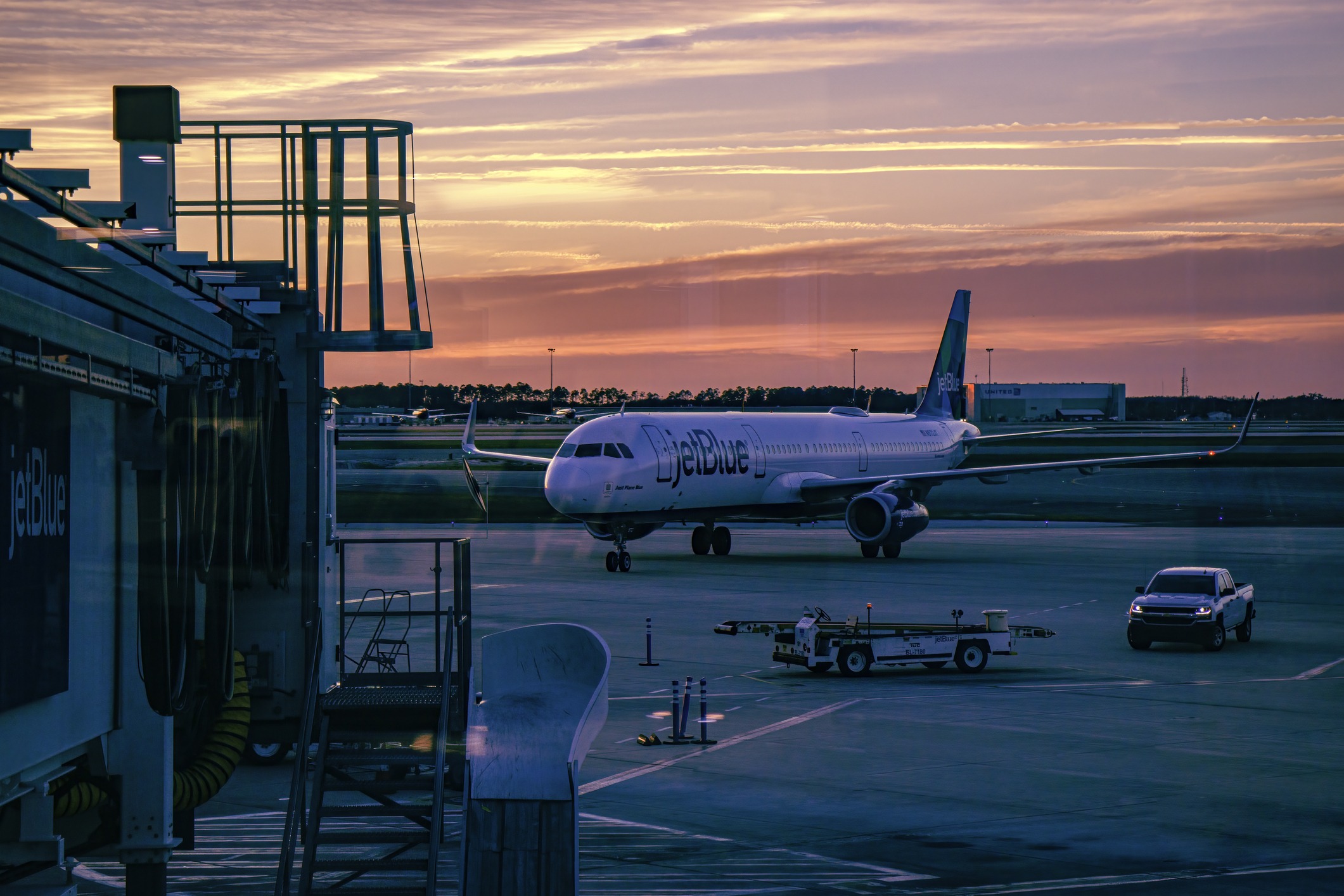
A jetBlue plane on the runway at sunset.

After Frontier Airlines made a bid for Spirit Airlines this February, JetBlue followed up with a surprise bid for the airline on April 6, which Spirit deemed “likely a superior offer.”

There has been no indication that Frontier will fight for Spirit. JetBlue CEO Robin Hayes commented on Yahoo Finance Live that “A bigger JetBlue is profoundly good and better for competition than a Spirit and Frontier combination.”

Some industry analysts like Henry Harteveldt of Atmosphere Research Group believe the merger could be good for consumers. Harteveldt said in a statement to numerous media outlets, “I think if JetBlue is successful with Spirit, there’s lots of potential for JetBlue to expand its route network across the U.S. and perhaps internationally…[but] we’re a long way from that happening.”

The main question most consumers have is: Will an airline known for its customer service and amenities purchasing an airline known for its lack of service produce an improved or diminished airline?

Not all pundits think the result will be a win for consumers.

Consumer advocate Christopher Elliott wrote in USA Today, “A review of the last big airline merger suggests that…a combined JetBlue-Spirit would probably receive more complaints and deliver worse customer service for years to come.”

Jamaica Ends Mask Mandates

As the U.S. extends is travel mask mandate and Philadelphia reinstates indoor masking, Jamaica has announced that effective April 16, visitors to the island will no longer be required to present a PCR or Antigen test prior to arrival. Also, mask mandates in enclosed public spaces will end.

“Eliminating mask mandates and the need for travelers to present a negative Covid test result are important strides toward our continued gradual relaxation of travel protocols as the spread of Covid-19 keeps declining,” said Edmund Bartlett, minister of tourism of Jamaica. “We are optimistic that these simpler requirements will serve to increase the appeal of Jamaica as a premier destination and keep us moving along the road to a stronger recovery for both the tourism sector and the nation’s economy as a whole.”

The CDC has downgraded Jamaica to a Level 1 designation in its latest Covid-19 travel advisory to citizens due to the country having low cases of the virus.

“As we review our Jamaica CARES program and travel protocols regularly, taking these actions was the logical next step to keep Jamaica aligned with best practices globally,” noted Donovan White, director of tourism for Jamaica Tourist Board. “Many destinations in the Caribbean region and around the world have been easing travel requirements, so this change will help us ensure that Jamaica retains its leadership position among the world’s top tourism destinations.”


Editor’s note: This Week in Travel (TWT) is your essential guide to smoothing the road from here to there for your attendees and yourself.

The war in Ukraine broke out just as global travel and meetings were seeing advances in reopening, adding a new layer of complexity to international planning. Issues like closed flight paths (over Russia) and heightened fuel costs have dampened the prospects of a smooth spring and summer travel recovery.

In a public earnings update in March, Lufthansa, Europe’s largest airline, said that Asia detours because of closed Russian airspace would cost “a single-digit-million-euro” amount per month. The carrier said they would need to raise ticket prices to offset the increase in fuel prices and related costs.

Traveler Concerns

A woman with brown hair looks at a board of flight departures and arrivals.

Consumer confidence in travel to Europe has also been affected. A study conducted by MMGY Travel Intelligence found that:

  • Some 62% of U.S. travelers expressed fears about the war in Ukraine spreading to nearby nations as the primary factor impacting their European travel plans. That’s twice the number (31%) who said Covid-19 health and safety concerns were a key consideration.
  • Of those taking the survey, 47% said they’re going to “wait and see” how the Ukrainian situation plays out before they make plans to travel to Europe this year. Twenty percent said the conflict wouldn’t affect their decision to go to Europe this year, while 33% said that it would either likely or definitely cause them to cancel or reschedule their European trips planned for 2022.
  • 50% of survey participants expressed concerns about their flights, trains or cruises getting canceled or delayed, as well as possible border closures.

Another economic effect bound to impact the meetings industry is an anticipated rise in freight costs. The United Nations Conference on Trade and Development reports that “already expensive and overstretched maritime trade will find it difficult to replace these suddenly unviable land and air routes. The impact of the war in Ukraine can be expected to lead to even higher freight rates.”

Read MoreWobbly Steps to Recovery Says AHLA’s 2022 Report

Meetings Industry Reacts

PCMA and other meetings organizations have made public statements of support for the Ukrainian people and vowed to help raise funds for millions of civilians caught in the crossfire.

U.S. Travel Association’s Executive Vice President for Public Affairs and Policy Tori Emerson Barnes told Smart Meetings: “The attack on Ukraine with its immense destruction, suffering and displacement has shocked and saddened us all. Russia’s action injected the global economy with a new source of volatility and uncertainty, and we continue to closely monitor this evolving situation.”

She continued, “That said, the U.S. economy is better insulated against the fallout than other nations, and our current projection is that economic recovery in the U.S. will remain intact. While headwinds like increased energy prices may influence near-term travel decisions, the subsiding omicron wave and improved public health conditions are likely to support a sustained travel recovery in the months ahead.”

Patricia Schultz, author of the travel classic “1,000 Places to See Before You Die,” believes that a traveling public hemmed in and cooped up for two years during Covid-19 will not be easily daunted when it comes to global travel.

“I have not heard anything re concerns about flight patterns or air travel interruptions—only a possible (likely?) increase in air fares,” Schultz says. “What I have heard is that visitors with a pent-up desire to travel now that CV19 seems to be cooperating are wondering if travel in Western Europe will be impacted—canceled departures for organized groups, last minute altered itineraries, etc.

“There are those travelers resigned to wait-and-see who will even risk no availability by waiting too long as the Ukraine situation plays out. Or those merely taking their allotted vacation days and travel funds and heading to destinations perceived as less risky from Colombia to an African Safari.”

After a quiet two years on the events, hospitality and tourism fronts, an experience-driven, diversity, equity and inclusion-devoted (DEI) next generation of talent is pouring through open doors, looking for opportunities to break into the industry.

Events, hotels, business travel and tourism are back in action, and industry leaders are creating ways to invest in fresh faces searching for their place in the professional world of hospitality and global tourism.

Tech companies are partnering with universities, and DMOs, global travel organizations and event agencies are onboarding prospective industry professionals to provide resources, skills and opportunities and to train the next generation of hospitality and events.

Events Is Taking Interns

WRG, a division of The Creative Engagement Group, opened applications in February for a 12-month paid internship specifically designed for those wanting to break into events, exhibitions and the world of experiences. Commencing this summer, Year ONE is built to give its students the skills they need to succeed.

In fact, anyone older than 18 can apply—no college or events experience required. When we asked Managing Director Tim Collett to elaborate on the significance of such a choice, he pointed to how the pandemic has left young talent disadvantaged in their careers: “Our industry saw a significant reduction of investment in new talent and coupled with the lack of available work experience opportunities for candidates, we felt it would be inappropriate to have a detailed list of prerequisites.”

Collett continued, “Our responsibility is to ensure we are encouraging and nurturing the talent who want to make this industry their home.” Collett also reports the organization has been receiving no shortage of applications.

Offering positions in both its U.K. offices and U.S. office in Philadelphia, leaders at WRG are searching for new talent that can bring “soft skills” to the table on day one: curiosity, eagerness, communication, organization, energy, confidence to pitch new ideas and an innovative mindset versed in DEI awareness. “Being able to put forward fresh ideas from different perspectives is vital to ensure innovation and inclusion,” said Collett.

Read MoreWhat Meeting Profs Get Wrong About DEI—and How to Start Fixing It

By the end of the internship, WRG wants to leave its students with knowledge of running product launches, public events, conferences, exhibitions, pop-up installations and incentive travel. While it has its specialty teams to train within—environments, events, technical production and delegate experience—WRG interns will get instruction in all of it. “Interns will have a fully rounded view of what it is like to work at an experiential agency,” said Collett.

Academic Access to Events and Hospitality Grows

Educational institutions like NYU and SDSU are leading the charge to bring access, opportunities and confident knowledge to young professionals emerging in hospitality, events and global tourism.

Investing in the Future

In February, New York University’s (NYU) School of Professional Studies Jonathan M. Tisch Center of Hospitality (Tisch Center) opened its Tisch Center Hospitality Innovation Hub (HI Hub), a million-dollar project born out of the desire to create a facility for undergraduate and graduate hospitality students to master the current technologies of the industry.

Lynn Minnaert, academic director and a clinical association professor at Tisch Center, helped develop the hospitality school’s master’s programs, including its MS in Event Management. Since 2019, NYU’s full academic event program has remained virtually unrivaled, with the exception of San Diego State University’s (SDSU) successful and sought-after master’s in meetings and events. NYU’s events program has even surpassed its hospitality program in interest and enrollment numbers, Minnaert reported, but both typically see 40-50 students each semester.

Minnaert shared with Smart Meetings that the events management program is focused on events and leaving students with knowledge “event professionals wish they had known when they started.”

“People don’t realize how vast the industry is…but the industry is vast, and it’s a whole new world—especially now,” Minnaert reflected. “Events touches every industry. It permeates everything—it’s everywhere,” she continued.

What really excites Minnaert is that NYU is “really bringing tech into the classroom with the people who created it,” and that allows students and professors freedom, and to “go beyond the ivory tower,” Minnaert said.

Carl H. Winston, founding director of SDSU’s L. Robert Payne School of Hospitality & Tourism Management, has spent the last 20 years developing resources for hospitality proteges on the SDSU campus and well beyond.

The SDSU Global Campus effort and programming serve to extend global access to hospitality and tourism skills and professional certifications internationally. SDSU’s School of Hospitality & Tourism Management (HTM) offers an HTM bachelor’s degree and four potential emphases within it, including hotel management and meetings and events.

As for its graduate programs, SDSU offers an HTM master’s degree and was the first university in North America to offer a master’s degree in meeting and event management, notes Winston.

Read MoreSmart Chat: Carl H. Winston

Teaching as a Team

Through collaboration with tech companies and global tourism resources, hospitality students at NYU are being offered opportunities unlike almost any other in the country. On March 4, Tisch Center launched a hospitality talent development initiative with RateGain, a travel and hospitality provider of “software as a service” (SaaS) solutions, which is to take full form in its new HI Hub. RateGain is also to become a founding member of the Tisch Center’s HI Hub, according to a company press release.

“Our students have a tremendous creative drive to contemplate, re-imagine and innovate hospitality solutions,” said Director of HI Hub Experiential Learning Lab, Vanja Bogicevic. Bogicevic expressed excitement over the opportunity for NYU’s students to “co-innovate the future of travel and hospitality business intelligence systems with RateGain.” Optima, Demand.AI and other award-winning intelligence tools will make their way into curricula.

Tisch Center has concurrently announced their collaboration with The Sigmund Project, an open-source platform for global travel and tourism. These two entities will work together through shared networks and programs to foster entrepreneurship and creative solutions for the global tourism industry in education.

D.C. Guides New Talent with DEI Standards

Spaces beckoning the next generation to the hospitality industry don’t stop at universities and private companies. The U.S. capital’s DMO, Destination DC (DDC), welcomed 14 fellows and two apprentices through Tourism Diversity Matters’ (TDM) Apprentice Program to the travel bureau’s DEI Business Fellowship program in February.

DDC President and CEO Elliott Ferguson, II, explained in a statement that the organization is committed to focusing on tourism support for small local business, as well as the image of the industry as young people enter it. “As we look at rebuilding the tourism and hospitality industry that has been severely impacted during the pandemic, we need to do so equitably,” said Ferguson.

“It’s a win-win for DDC to teach them about the travel and tourism industry while providing valuable, paid experiences that can help launch their careers.” Ferguson noted that this effort is especially important, as D.C. is currently experiencing a hospitality labor shortage of 21,000 jobs, according to the U.S. Bureau of Labor Statistics.

TDM’s Apprenticeship Program designated two of its global tourism and hospitality apprentices to join DDC as their host organization and will learn the ropes of the industry through mentorship. When the apprentices complete the program, TDM helps to secure them with full-time positions in the field.

TDM President and CEO Mike Gamble considered this last aspect a crucial one, because “for this apprenticeship program to truly succeed, there must be career planning, ongoing mentorship, support from our industry partners and job placement at the end.”

Winston, who is also director of the Tourism Diversity Matters Board, found that leaders continue to seek non-industry-based soft skills when choosing from pools of applicants. “What are really required are so-called ‘soft skills’ like handling stress,” Winston commented in an interview with Smart Meetings. He went on to add grit, resilience and emotional intelligence to the list. Interpersonal awareness and a keen understanding of the need to diversify the industry through inclusion are key.

“Groups make better decisions when they’re diverse. I’m comfortable with my thinking; but if it’s just me, I’m going to miss something,” said Winston. “If you only have like-minded thinkers, you don’t get to the same level of discourse and outcome.”

DDC also provides scholarships and professional career experience to local college students through its nonprofit American Experience Foundation. The foundation has awarded 42 scholarships in the last eight years.

Looking to leaders and leading organizations to gauge the incoming generation’s interest in hospitality, it becomes clear that there is no slowing down prospective hospitality professionals, increasingly benefitting by investments the industry is making in rising young talent.

Plan with Confidence
These spaces lend a creative flair
If you’re looking for an event space that’ll inspire your guests and spark their creative spirit, Baltimore has you covered. From an actual glassblowing studio to elegant art museums, our city is loaded with artistic venues.
Corradetti Glassblowing Studio & Gallery
Tucked into a historic 155-year-old former cotton mill, Corradetti Glassblowing Studio is practically designed to inspire creativity. The factory setting of this 3,300 square-foot space fuses industrial charm with modern style, including impressive design features like 20-foot ceilings, huge windows that overlook a Roman-inspired pool and exposed brick. The gallery level displays vibrant glass pieces made on site. Looking for a memorable interactive experience? Book a group glassblowing workshop.
American Visionary Art Museum
Immerse your guests in raw artistic talent with a visit to this unconventional art museum, which exclusively features self-taught artists in its permanent and traveling exhibits. The museum makes an impact on first sight thanks to its glittering mosaic exterior. Inside, event spaces include a third-floor banquet room with panoramic views of the harbor and skyline and its Sculpture Barn & Wildflower Garden. The museum’s newest restaurant, Cielo Verde, with Latin American and Mediterranean influences, is available for private events in the evenings and on Mondays.
The Creative Alliance
This nonprofit arts collective, which works to build community by connecting artists and audiences from diverse backgrounds, is housed in the historic former movie theater known as The Patterson. The rentable space, which was fully renovated in the early 2000s, includes two galleries for contemporary art, a 200-seat flexible theater perfect for performances or film screenings, and a lounge space.
The Hippodrome Theatre
Built in 1914 as a vaudeville and movie venue, the Hippodrome is a Baltimore theater institution. Now part of the France-Merrick Performing Arts Center, the grand brick and terra cotta building offers a range of spaces for events that include lounge, cafe and pavilion spaces in addition to the legendary theater stage which can fit more than 2,000 people.
Maryland Institute College of Art
As the state’s largest art school, MICA is brimming with creative energy. Three different spaces offer the right vibe for nearly any event. Go for Brown Center for a modern, glass-filled space with a sleek, minimal aesthetic and access to the adjacent Cohen Plaza for a 300-person reception. Choose Falvey Hall for performance, lecture or screening space best for seminars and presentations, which can fit 520 people seated. Or host in the historic 1906 Main Building, with a magnificent grand staircase, marble columns, mosaic floors, and balconies that fit up to 200 people.
Walters Art Museum
In the heart of elegant Mount Vernon, the Walters Art Museum combines stunning historic architecture with exceptional art. The Palazzo building, which was built in 1909 to house the museum’s collection, was modeled after a 17th-century palace in Genoa, Italy. Events, which fit up to 450 people, are beautifully offset by the museum’s collection of classic, contemporary and community art—tours of which can be arranged for up to 50 guests.

This week, Visit Seattle announced that Tammy Blount-Canavan, FCDME, will be the organization’s first female president and CEO, replacing longtime leader Tom Norwalk, who retired earlier this spring. “This is like a big dream come true,” said Blount-Canavan, explaining why Seattle is the only destination she would have considered coming back to lead.

Blount-Canavan is returning to a DMO role after time as executive vice president and principal at Fired-Up! Culture, a business management consulting firm focused on leadership and culture development. She started in the hotel industry in her hometown of Vancouver, British Columbia, was president and CEO of Monterey County Convention and Visitors Bureau and served in the same role at Tacoma Regional Convention & Visitors Bureau.

She is a past-chair of Destinations International, the international trade association for destination marketing organizations. She was a Smart Meetings Supplier of the Year, was recognized as CEO of the Year while in Monterey, was one of the 25 Most Influential People in the Meetings Industry, and was one of the Top 25 Most Influential Women in the industry twice.

She was recognized as Community Leader of the Year, Sustainability Advocate for the California Travel Association, Leading for Positive Impact by the Canadian Impact Conference, and was the 2019 recipient of Destination International’s Global Leadership Award. During her time at Tacoma Regional Convention & Visitors Bureau, she was the first chair for the Washington Tourism Alliance, now State of Washington Tourism.

Read MoreMaritz Is Reinventing What’s Next in Seattle

Building on a Legacy

As Blount-Canavan considers her priorities after officially taking the role May 9, collaboration is at the top of the list. “Tom left a great legacy,” she said. “As we crawl out of Covid, the number one priority is to work with everyone in the community, industry, elected officials and others to collectively bring back meetings and events.”

Washington State Convention Center (WSCC) Addition (also called Summit) is in its final months of construction and in January 2023 will double the amount of available space.

During Norwalk’s leadership, Seattle set all-time records for tourism visitation and spending and oversaw an effort to increase the Seattle Tourism Improvement Area assessment, which will allow Visit Seattle to competitively promote leisure travel.

Blount-Canavan acknowledged that a new venue is only the shiny new thing for so long and the destination will need to capitalize on the interest to build the pipeline while rebuilding the team. “We have an opportunity to control our narrative about how the country looks at the city,” she said.

Blount-Canavan plans to leverage her political experience in a destination that answered to nine different stakeholders, her connections in the industry sharing what is working in other places and her collaborative leadership skills from Fired-Up! Culture to bring everyone together with a unified voice.

“I am thrilled to welcome Tammy Blount-Canavan to Seattle,” said Carla Murray, president of Marriott International’s U.S. western region. “She has made her mark in Vancouver, Tacoma and Monterey, and I look forward to working with her again in her new role as leader of Visit Seattle. Her skills and expertise will assist us in growing our business well into the future.”


Global Meetings Industry Day (GMID), a celebration of everything wonderful about the meetings industry, is kicking off its seventh year with the theme “Meet Safe,” a redux of GMID 2021’s theme.

While most events across the globe took place virtually last year, more events are now meeting in person. Take a look at how our meetings industry friends are celebrating.

Advocating Voices

Meeting Professionals International is (MPI) kicking off GMID with its State of The Industry Leadership Panel with four of the industry’s leading profs, Paul Van Deventer, president and CEO of MPI; Cleo Battle, president and CEO of Louisville Tourism; Amy Calvert, CEO of Events Industry Council; and Greg DeShields, executive director of Tourism Diversity Matters. For those who couldn’t make it, you can get a free recording for all registrants to download.

MPI chapters across the U.S. are also celebrating in their respective regions. MPI Minneapolis will be meeting in person at Delta Hotels Minneapolis from 1-5p.m. to cover the state of the meetings industry and post-Covid experiences, featuring experts from Meet Minneapolis, Experience Rochester, and local and regional meetings industry associations.

Meeting profs in Charlotte, North Carolina, are meeting at the newly expanded Charlotte Convention Center for lunch, accompanied by a speech by the state’s House Budget Writer Jason Saine and the North Carolina Travel Industry Association lobbying team.

Read MoreAt MPI WEC 2021, Michael C. Bush Laid out the Makings of a Great Workplace

The MPI Meeting Outlook in Charlotte will be presented by Tara Liaschenko, creative executive officer of The Link Event Professionals Inc., followed by a presentation on group travel recovery in the first half of 2022 by Heath Dillard, director of insights for Charlotte Regional Visitors Authority, and a live global broadcast at NASCAR Hall of Fame to finish off the day.

PCMA Canada Chapter West is taking to Vancouver Convention Centre for a breakfast, networking session and a presentation by Kati Quigley, senior director of global industry marketing at Microsoft, titled “How Big Tech Fosters Diversity and Inclusion.”

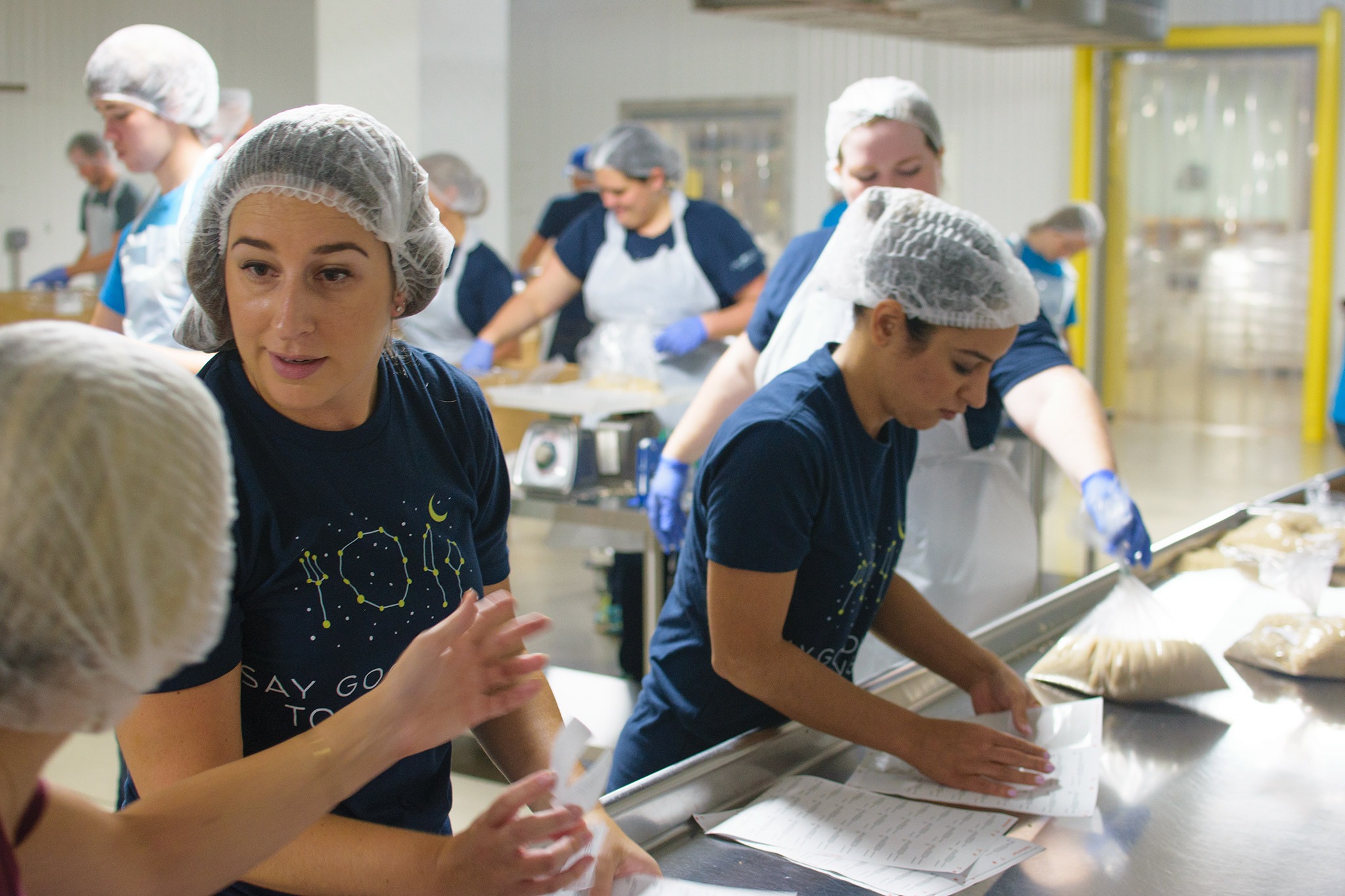
In support of GMID, Omni Hotels & Resorts is donating one meal for every in-house group room during the week of GMID for a total of 50,000 meals to support Feeding America through its Say Goodnight to Hunger program.

Volunteers for Omni Hotels & Resorts' "Say Goodnight to Hunger" program preparing meals.

Omni properties that can host groups include Omni Amelia Island Resort in Fernandina Beach, Florida; Omni Barton Creek Resort & Spa in Austin, Texas; Omni Grove Park Inn in Asheville, North Carolina; Omni Mount Washington Resort in Bretton Woods, New Hampshire; and Omni La Mansion del Rio in San Antonio, Texas.

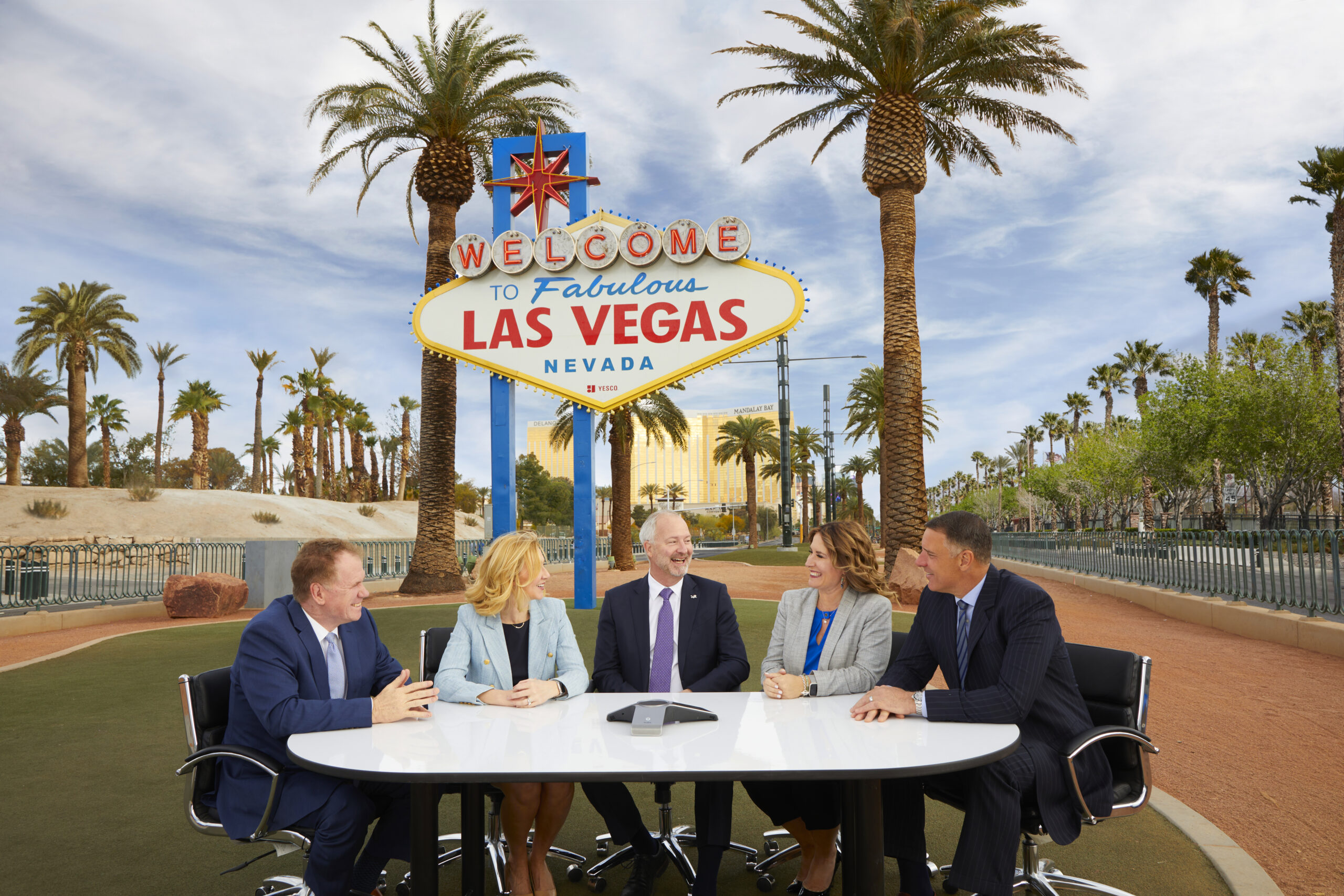
In a Las Vegas-based celebration of GMID, executives got together at the Welcome to Las Vegas Sign to commemorate efforts over the past year. The five included in the gathering are Michael Massari, chief sales officer for Caesars Entertainment; Stephanie Glanzer, chief sales officer and senior vice president for MGM Resorts International; Steve Blanner, executive vice president of hotel sales for Wynn Las Vegas and Encore; and Steve Hill, president and CEO of Las Vegas Convention and Visitors Authority.

Read MoreLive Shows in Las Vegas Are Back and Beckoning

“As co-chair of Meetings Mean Business, I encourage everyone to advocate for the industry,” Massari said. “To bring business back to 2019 levels, we must continue to do what we do best—plan and execute extraordinary meetings and events.”

A series of executives sitting in front of the "Welcome to Fabulous Las Vegas" sign.
Left to right: Steve Blanner, Chandra Allison, Steve Hill, Stephanie Glanzer and Michael Massari

This was a celebration well earned, as an estimated 2.2 million convention attendees were hosted in Vegas since the return of trade shows in June 2021.

Massari continued: “Over the last 12 months, Caesars Entertainment has proudly hosted many conferences at CAESARS FORUM, including PCMA Convening Leaders, Meeting Professionals International’s World Education Congress and Cvent Connect. We look forward to welcoming more meetings and conventions back to the destination.”


Have you heard of Web3? It is the nascent, third generation of the internet. It promises greater democratization through decentralized blockchain technology and token-based economics.

The virtual events platform BuzzCast uses blockchain integration in its core events platform to leverage non-fungible tokens (NFTs) to drive engagement through rewards and incentives. NFTs are any digital assets stored in the blockchain; they may take the form of art, videos, music and even less traditional forms such as tweets.

After a $4.3 million Ayre Ventures-led seed round, BuzzCast was drawn to blockchain technology for a plethora of reasons, including superior scalability, low transaction costs, enhanced security and its transformative potential. The company is in the process of integrating the technology in its native platform, which will allow BuzzCast to create trackable smart digital objects and further enable attribution and the potential for smart contracts.

This is what meeting professionals can learn from their experiences on Web3.

How to Leverage NFTs

“We envision lots of use cases for NFTs and blockchain to make it easier to track and promote content on the platform—allowing sponsors and hosts to set goals to drive users to get the most out of an event and rewarding people for loyalty by being strong participants. Reward people for being good citizens of a community,” suggested BuzzCast CEO and Co-Founder, Ryan Byrne.

His company is creating an ecosystem with trackable, tradable assets that exist within an event to empower creators and organizers alike, while also enabling these digital assets to move beyond the borders of the event itself.

NFT integration is not a nascent concept for Byrne and his team. The CEO’s two co-founders, Luke Peterson and Matthias Thoemme, have successfully employed blockchain-based promotional tools for live events before the pandemic era in a live event-based solution that showed a significant engagement boost to in person festival attendees.

Read MoreVirtual Meetings Are Missing These Two Things, Meta Is Working on a Fix

Overcome Sponsorship Challenges

Blockchain technology and NFT integrations may also solve one of the most pressing challenges for the events space; optimizing sponsor value propositions for hybrid and virtual events. Full or partially virtual events have struggled to replicate the levels of attendee engagement delivered by their live counterparts, inviting concerns about event return on investment (ROI) and thwarting sponsor confidence.

“The problem with virtual events is that compared to live events, where the traditional model is to sell physical interactions with attendees to sponsors, the virtual space struggles to imitate the experience,” said Byrne.

“We think the need is to rethink the model and find new ways to connect people to sponsors and maintain that connection before, during and after the event. We are designing a model that will enable sponsors to reward attendees based on defined series of goals,” he continued. “For example, if attendees meet a certain threshold for engagement or join four of your events in a year, sponsors can reward them as a power user and give them a tangible reward in form of NFTs, such as a free ticket to next event.“

The result is a true digital transformation of the attendee experience that will empower sponsors and organizers cultivate a more engaging, gamified attendee experience.

Address blockchain concerns

The evolution of blockchain technology has also been met with natural scrutiny. The security, costs and scalability of blockchain and Bitcoin have come into question.

“The cost of blockchain and transactions is quite cost-prohibitive, which is why NFTs are largely used for rewards with high ticket value, like art. Transaction costs are a real problem when dealing with smaller rewards or tracking less valuable pieces of content, like video,” said Byrne.

He explained that his team plans to overcome these restrictions by leveraging BSV (Bitcoin Satoshi Vision) technology. “BSV became a powerful solution for us with its lower transaction cost—a fraction of Ethereum’s—and larger block sizes. This means data-rich content like videos can be translated, for a reasonable cost, into NFTs.”

Byrne further explained how ensuring scalability also requires strategic planning—and that NFTs may not be the most feasible option for every use case: “It’s important to understand that NFT costs should be matched in relation to the size of the reward in a way that is not cost-prohibitive. This may entail providing video access through on-demand recordings and issuing only the rewards via NFT. BSV is key for us in achieving this reality.”

Read MoreNew Realms, New Ideas: Virtual Reality Tech Is Transforming Events, Experiences

What’s next for NFTs and events?

Byrne predicts that the marriage of NFTs and events will evolve further, creating new opportunities to enhance the attendee experience and keep people connected.

“Events are essentially a collection of interconnected content with a layer of interaction on top. We see opportunities to take powerful pieces of content, such as highlights of the most-viewed content of an event, and turn them into digital assets with a longer lifecycle. These assets can live on post-event, keeping host, sponsors and attendees connected via those objects.”

He added, “Blockchain and NFT technology adds an entirely new way for contributors, consumers and sponsors to create or receive value for their involvement in these events.”

BuzzCast has a broad vision for NFTs and blockchain technology. The events provider plans to leverage both to keep people connected and take virtual experiences to new heights.