Event planning has often been cited as one of the most stressful jobs out there. Pile a global pandemic on top of that and it is a miracle that planners are still going strong. While we know you are resilient, hard-working and capable, everyone could use a little calm, especially now. Meditation and mindfulness practices can be great ways to reduce stress and re-center intentions. Being the busy bees you are, we compiled a list of the best, free meditation apps so you can practice meditation on the go.

Mindfulness Daily

This app allows you to practice focusing your attention for a few minutes at a time. It will remind you to practice in the morning, afternoon and evening and will track your progress and commitment to a routine. The structured routine is a great place for beginners to start. A few minutes three times a day is doable for even the busiest planner.

See also3 Mindfulness Mantras

Smiling Mind

On Smiling Mind hundreds of free, guided meditations are organized into ‘programs’ including Sleep, Relationships and Workplace. Most practices are 5 to 15 minutes long and the programs allow you to focus on a specific area of your life, meaning you can deep-dive into a practice around work, for example, in a time-efficient manner.

More10 Daily Habits to Increase Productivity

Insight Timer

For more experienced meditators, Insight Timer offers music tracks, ambient sounds and timers so individuals can set their own practice time and tune. However, they also offer guided sessions for those ready to relinquish some control. A big draw for this app is the personalized timer with an option to set gentle alarm sounds that are less jarring than a traditional bell. Plus, setting your own practice time means you can fit it into your schedule. Try a 5-minute practice while waiting for your coffee to brew or a 15-minute one on your commute.

See also10 Apps to Become More Mindful and Stress-Free

Mindfulness Coach

This app was designed by the United States Department of Veterans Affairs to help service members and veterans learn mindfulness practices. While developed for vets, the app is said to focus on “reducing stress, improving emotional balance, increasing self-awareness, helping with anxiety and depression, and coping more effectively with chronic pain.” Stress and anxiety are nothing new for many planners, so this app is a great option for targeting chronic anxiety or pain and everyday stress.

10% Happier

Those unconvinced of the effectiveness of meditation and mindful practices, or by their own ability to sit still for an extended period of time may find this app fits their approach to wellness. The tagline for this app is “meditation for fidgety skeptics” which is what its’ founder, Dan Harris, used to be. A popular review of the app describes it as “using straight talk and a sense of humor to help you focus” on your mindfulness goals.

Headspace for the Unemployed

Perhaps one of the most popular meditation apps, Headspace is offering a free, one-year subscription to Headspace Plus for anyone who has recently become unemployed due to COVID-19. While the free version is still available to everyone, Headspace Plus offers extras such as Move Mode, home workouts and guided runs, Sleep by Headspace for relaxing sleepcasts, and The Wake Up to help you start your day inspired. If you are recently unemployed, click here to sign up for Headspace Plus for free!

The United States maintained its lead as the number one country for gathering last year according to a new 2019 Country and City Ranking list. International Congress and Convention Association (ICCA)’s annual report ranking destinations based on the number of association meetings held over the 12 month period went to members this month and it highlighted the phenomenal growth in meetings over the last decade.

A first, the 2019 report included international meetings statistics over the past 10 years to provide a global trend perspective.

Related: See the 2017 list

Top Meeting Countries

The top five international meeting countries remained the same as the year before, although France overtook Spain for the third spot. The United States maintained its commanding lead as the number one meeting country in the world with 934 meetings in 2019. Germany claimed the second spot with 714 meetings.

  • United States
  • Germany
  • France
  • Spain
  • United Kingdom
  • Italy
  • China P.R.
  • Japan
  • Netherlands
  • Portugal

Related: See Global Top 15 International Meeting Cities

Top Meeting Cities

Paris held on to the first-place spot it gained in 2018 with 237 meetings in 2019, up from 212 the previous year. Lisbon jumped from sixth place in 2018 to second in 2019 while Berlin moved up from fifth place to third.

While not one of the top 10 cities, ICCA praised Valencia and Istanbul as ‘impressive newcomers’ rising 44 and 40 places in the ranks, respectively. Kuala Lumpur similarly jumped from 34 to 22 in 2019. 

  • Paris
  • Lisbon
  • Berlin
  • Barcelona
  • Madrid
  • Vienna
  • Singapore
  • London
  • Prague
  • Tokyo

Related: Three Things to do in Europe’s Newest Hot Spot: Istanbul

A Decade of Growth and Consistency

(ICCA Statistics Report 2019)

In a press release Senthil Gopinath, ICCA CEO, noted the impact COVID-19 is having on the meetings industry. “Given the current circumstances, it is great to once again highlight the consistent growth in association meetings globally. These figures show the need and importance of face-to-face events, and consequently that the industry will be instrumental in the global recovery when the time is right.”

While the U.S. has consistently been ranked as the number one country for number of meetings held over the past decade, Europe has similarly held the number one spot for number of meetings held per region.

2017 broke records with the largest number of meetings held worldwide at 14,068, up from 10,538 in 2010. By the end of the decade that number had dipped to 13,254, but the overall rise in the number of international meetings globally is a sign of growth in the industry.

(ICCA Statistics Report 2019)

A public version of ICCA’s 2019 statistical report will be available mid-June with a full list of country and city rankings.

How are you handling the shift to virtual events? While the meeting landscape is different, it’s also the same. McNeel Keenan, vice president of product management at Cvent, talked about the implications for planners of this and much more in the latest Smart Meetings Accelerator, “Best Practices to Accelerate Your Pivot to Virtual Events.”

For instance, he also shared insight into how to keep your attendees engaged in the virtual world. “That [meeting] room is their living room, it’s their laptop. Now you’ve got to really put yourself in the shoes of a different kind of attendee, in a totally different context. You need to account for that when you’re designing that virtual event experience,” he says.

Different Platform, Same Cycle

Keenan notes that the event cycle hasn’t changed. “A lot of the fundamentals stay the same. When you think of the event life cycle, you still need to market your event. You need to promote it. You need to build that website, capture registrations, guide people through what the experience is going to be and help them build a schedule,” he says.

What is different is attendee attention span.

“Attendee engagement might be a little bit harder to maintain in that you don’t have people in one room facing one stage, with no other activities competing for their attention, like family members or children or their e-mail inbox, or a million other things. The need for compelling content is amplified, and there’s a potential for higher attrition,” he says, adding that he hasn’t seen higher attrition rates. This, he says, could be due to people being much more likely to attend while they’re at home and away from the competing demands of an office.

Keenan cited Salesforce’s recent Sydney, Australia, event, which historically has about 10,000 attendees. After shifting to virtual, 80,000 live viewers tuned in; on-demand content garnered a whopping 2.5 million views.

Hybrid events are something entirely different—and more challenging.

“On the surface, everyone seems to inherently know what [hybrid events are]. Some people are going to be attending in person, some are going to be attending virtual, but what it’s not is just putting a camera in a ballroom, setting it to a stream and go,” Keenan says. “One way you’ve got to think about hybrid events is, it’s almost the equivalent of planning two separate events. You have, ultimately, one audience, but you need to deliver two different experiences.”

More: 6 Great Virtual Meeting Icebreakers

The Four Pillars of Virtual Events

Digital events can be broken down into four components: content, community, sponsorship and analytics.

While content is about the speaker, the message and correct video format, it’s also about creating a shared experience. “That’s the difference between a standard, prerecorded video, and you running an event,’ Keenan says.

That shared experience ties in with community, something that live events have with no effort on the planner’s part. Those serendipitous moments during breakfast or waiting in line when people meet can’t be had organically over the virtual landscape. “Community doesn’t come for free with virtual events… You have to think of new ways to connect people,” he says. This can be through appointments or interactive chats, to cite two examples.

Keenan says, initially, planners were intimidated by the idea of including sponsors in their digital events, as they didn’t know how to demonstrate ROI. But more recently, he has seen many creative ways planners have incorporated sponsors. Among ways to benefit sponsors is by making them a part of the content, by contributing knowledge; and sharing attendee lists, giving them leads.

Tracking analytics helps you know who your audience is and understand what content resonates. This can aid planners in personalizing the attendee experience, during and after the event.

Keep the Ball Rollin’

In many cases, planners are still undecided as to whether particular events will be online or live, and yet, registration dates loom.

Keenan notes that one thing we’ve all realized is that this new reality is still evolving quickly, and what we think we knew last week might have to be disregarded the next. And we continually get surprised.

If you don’t know how your event will be delivered, that doesn’t mean slow down. Keenan recommends working on content. “You’re still thinking about speakers, thinking about abstracts and curating how you actually deliver it. You can worry about everything else later in the game,” he says.

More: Expert Tips for Creating Virtual Experiences

The Virtual Techscape

“When we look across the vast virtual techscapes, it can be a little intimidating,” Keenan says. Much of the terminology can be used interchangeably, but it’s important to know the differences.

  • Video Conferencing

Essentially, a video conference is designed to allow everyone that logged in to speak and be on video, so they can have a conversation as simply as on FaceTime on your iPhone, through tools like Zoom or Microsoft Teams.

  • Webinar

Webinars are similar to video conferencing, but designed for one, or a few, people to speak, to a moderate number of people, 500 or 1,000 at the most.

  • Livestreaming

Livestreaming, typically rooted in the B2C space, will help you reach that mega-audience if you need it—as many as tens of thousands, even millions, of people. You’re also able to stream and produce video at a higher quality, making graphic overlays, interstitials and splicing between multiple video feeds possible.

  • Virtual Conference Platform

This platform is built to mirror the live conference. You can navigate through all the rooms—the lobby, lounge, conference room, etc.—as you would as if you were really there.


The famous American Express ad declared that “Membership has its privileges,” and that’s as true today as it was when it first aired in the 80s. But what good is a membership if your members aren’t getting everything out of it that they can? Too often, individuals and organizations sign up for memberships, only to not realize its value and not renew.

Most membership organizations probably offer things like access to a wide variety of resources, a member directory, and exclusive events. But are there other benefits that an organization can provide that are either low cost or even budget-neutral through the value they provide to members?

One benefit organizations often overlook is the value members find in meeting and helping each other. That membership directory can come in handy, as can in-person or virtual events. But anyone who’s done a little networking knows that it’s not just about meeting people, it’s about meeting the right people. For organizations with hundreds or even thousands of members, ensuring that members connect with each other in meaningful and useful ways can be, well, a real chore. How can they ensure their members are getting the most value out of the connections the organization offers?

The answer lies in artificial intelligence (AI).

Now, when we think of AI in today’s world, we often think of sophisticated data-crunching operations that provide business intelligence or automated natural language customer service chatbots. But the same principles used in these other settings can also be used to fuel and automate introductions between members of an organization.

By asking each member a few simple questions, we can gather interesting and unique data on members and use that as a basis for introducing them to each other. The cool thing is that we can ask literally anything. This could include work-related questions such as:

  • What’s your role at your organization?
  • What are your biggest challenges in your job?
  • What kind of resources do you need to be successful

But it can also include personal questions:

  • What’s your favorite color?
  • What kind of music do you like?
  • Where is your ideal travel destination?

Best of all, organizations implementing such a system don’t need to have any experience in AI development or be data scientists. Platforms like Zenvoy make it easy to create and implement a member matching system that can be up and running in nearly no time at all.

Ultimately, the goal is to provide a means for people to not only connect over what they need, but to provide them with the opportunity to form a closer bond. Too often, networking is only about who else you know and what you can do for someone. By using AI, organizations can help members develop real relationships that can be highly valuable, and thus increase the value of the membership itself.

Learn More

What do you do when everything changes in the blink of a pandemic? Liz King Caruso, CEO of Liz King Events and Ignite, has a suggestion: Pivot. That is what she named the virtual summit she has planned for 10 days in June. The Pivot Virtual Summit is billed as a way of “visioning a new future for the events industry through self-care, innovation and community.”

All that nourishing content is broken out into two hour chunks each weekday featuring more than 30 industry leaders sharing the skills they think will be required to be successful in the future. In this Summit, you’ll learn a range of skills including lessons from the following professionals:

On Self Care

“I’ve spent this pandemic coordinating school for my young girls and running my event business. In order to not be stressed out and fractured all day, I decided early on to block a chunk of time every day (2-5 p.m.) to focus on work, responding to emails and client projects. I let all my clients know that is when I am available and will respond to email. Mornings are for school and time with them.” –Sheila Fox, chief events officer at Event In Site, LLC

“Ask yourself what activities bring you joy and give you energy, and then write down the moments in your day where you are doing things that fill your cup. Being intentional, visualizing your progress and holding yourself accountable with active self-care will leave you feeling more energized, more productive and much more fulfilled.”–Courtney Stanley, keynote speaker, event emcee and career coach

“Take action on one thing each day that’s meaningful to you! It could be anything from starting that passion project to publishing a blog post to cooking a healthy meal for you and your family.”–Mahoganey Jones, speaker, entrepreneur and event producer

On Innovation

“Look down the road to 2029. What do you want the world to look like? Begin that change now.” –Elizabeth Glau, CEO, Event Integrity

“The time for change is now. You cannot wait to see what the end result of a pandemic will be to: 1. Speak to your customers 2. Transfer your skills for the moment 3. Build your network 4. Examine your strength and weakness for change. 5. Change.” –Leslie Short, CEO, The Cavu Group

“Make a list of brands you love, follow them on social media and study how they engage with their followers. Chances are that you share the same target audience so honing in on their effective branding and marketing techniques will influence your company in the short and long run.” –Felix Vargas, creative and branding director, Felix Vargas

“Despite these challenging times, we’re certain that in-person events will come roaring back when the time is right. However, it’s likely that the future of events will more fluidly combine in-person and virtual elements. As event organizers, we should creatively look for opportunities to engage attendees in both environments and leverage event technology that is has hybrid in mind.” –Alysha Parker, event marketing manager, Bizzabo

On Community

“Lean on your support system of colleagues, mentors and partners more than ever. If you didn’t have a strong system before this, now is your chance to cultivate one and look outside our industry as well. A different perspective can be exactly the thing that will help get you to the other side.” –Daniela Grafman, chief amazement officer and partner, Vision Event Co.

“In business (and in life) things will always change. Most of the time, small changes and adjustments. But sometimes, like “Covid”, big changes. The biggest fear is the fear of the unknown. So trust your gut, rely on your community and make decisions as best you can.” –Ramon Ray, CEO, Smart Hustle Media
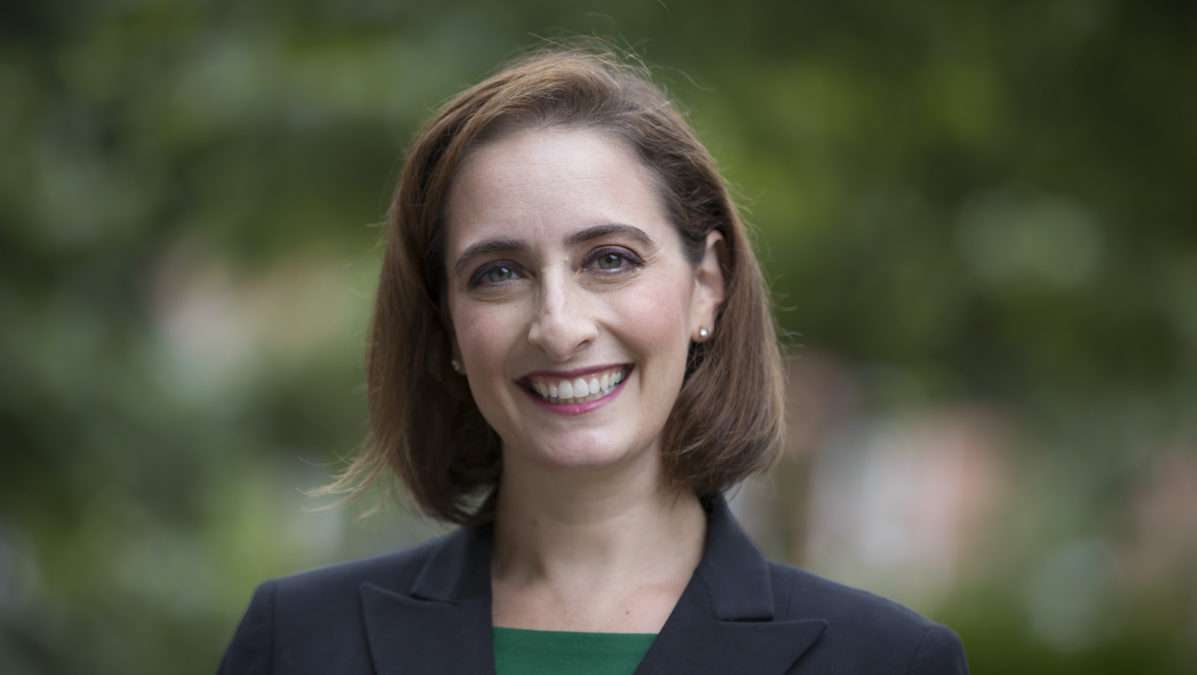


Finally, this from Donvil Collins, president and CEO of Veekast. “Always share all your skills, even if it wasn’t always your main service. In a pandemic, ancillary services can become the most in-demand of services!”

How will attendees know it is safe to attend meetings again? More to the point, how can you as a meeting planner help people feel confident about gathering? Hosts Global brought together industry experts to share best practices for doing just that through their #MeetWithConfidence talk Series. From F&B to security and sustainability, these conversations and accompanying checklists will empower event professionals to take the steps required to return to meeting safely.

See alsoMGM Roars with a ‘7-Point Safety Plan’

Smart Meetings asked the participating experts to name the one thing planners and industry professionals can start doing today to ensure we’re all prepared meet with confidence? These meeting makers were refreshingly honest about what needs to happen, and how venues can partner to find creative solutions.

Back to Basics

Marti Winer

“As industry professionals in an incredibly wide-reaching and impactful industry, we can collectively take a deep breath and think about why what we do matters. If we go back to basics and explore the vision for each event we plan, as well as the objectives that we aspire to achieve, we will be able to find answers on how to do it. A good event design emerges from the clear articulation of the goals and, when we add thoughtfulness and creativity, we will be able to be both safe and inspiring in everything we do.”

Marti B. Winer, vice president, MGM Resorts Event Productions

A Green Focus

Aurora Benton

“This is the perfect time to put sustainability on the forefront. Rather than see it as an add-on you’ll get back to when things are normal, now is a time to recognize that an integrated sustainability program is a point of differentiation that makes your organization truly resilient. Without fail, every single time I’ve worked with people and organizations on their journey to sustainability, they experience unexpected benefits. They go in thinking it’s about plastics or food waste, but soon realize the ripple effects of improved service design and delivery, higher levels of employee engagement, cost-saving efficiencies, and a stronger bond with the local community. And if you need the business case, a recent Bloomberg article shows that, during the recent downturn, stock indexes of companies with a focus on sustainability have far out-performed those that do not.

Dr. Aurora Dawn Benton, founder, Astrapto

Start Planning Now

“Call your event planning manager from your venue now to discuss the spectrum of options you may have for your meeting as it relates to the setup of the event itself as well as the food service options. You might be surprised by the creative solutions they have that you may not have considered. At this stage, with so much uncertainty, its best to develop several plans in tandem that way as the situation achieves clarity you will already have a workable plan ready to go.”

James Filtz, CMP, CPCE, vice president, National Association for Catering & Events (NACE) and director of meetings and special events, The Ritz-Carlton, New Orleans 

Get the Regional Update

“Start the conversation. Connect with your DMC, hotel and supplier partners to understand what actions they are taking to mitigate risk. It’s important to acknowledge and understand that the protocols and meeting expectations will rapidly change across destinations. Alignment with your local experts and the right contingency plans will allow us all to meet confidently.”

Gina D’Angelo, CMP, DMCP, vice president of operations, Hosts Global

Think Different

“Be realistic about events—some of the ‘that’s the way we have done it’ approach just won’t be applicable anymore. Start thinking differently and planning differently—keeping in mind that attendees need to see the benefit of attending your event in person or virtually.”



Kristen Bratkiv, CMP, senior director of special events strategy and operations, Kellogg School of Management at Northwestern University

An interactive, 3-D world that hosted 12,500 engagements in one day and a full curriculum of learning, sharing and a little bit of jogging doesn’t happen overnight. In the case of PlanetIMEX, which launched the third week of May, it took just over two months.

Community Island

The virtual space that was created resembled a cluster of colorful geometric islands that would not be out of place in a theme park.

Pine-studded Education Island offered live education and talking points (podcasts and videos) on how business events can protect, support and celebrate nature. Palm-fringed Community Island added context with news, a DJ mix, #IMEXstillrunning check-ins and links to nonprofits that were giving back to the community. Networking island was an oasis for introductions.

Read more about groups going virtual here.

A Virtual Shift

IMEX CEO Carina Bauer described the journey as a sprint. The conversation about creating such an online event started within days of the cancelation of IMEX Frankfurt, in March. “We felt there was a gaping hole in our lives and in the community. We needed to give back and deliver the connection that was lost,” she said, shortly after the resource went live.

Networking Island

The team also knew it didn’t want to replicate the hosted buyer and trade-show floor with a videoconference. “We looked at each aspect of the in-person event—the gala dinner, education, awards, a sustainability and wellness focus—and debated how to deliver the essence of that in an online world,” she said.

The goal was to create something to deliver value over the span of a week or longer, rather than the one-hit-wonder of an in-person event experience. “It had to be something way beyond Zoom,” she said, although the ubiquitous squares were part of the solution.

See alsoVirtual Genius Resources

It so happened that Bauer had already calendared an appointment with a local tech company that week, so she challenged them with her wish list.

  1. It had to be visually interesting.
  2. It needed to bring content to life.
  3. It had to put a smile on people’s faces.

In three weeks, The Platform Group built the design, using Storyscape 3DGraphic.

Strategic Goals

“It all happened so quickly, we didn’t even know our KPIs, to be honest,” Bauer laughed, “We really didn’t know what to expect.”

Education Island

She did have high-level strategic goals. “We hoped to reach 5,000-7,000 users and ended up with 12,500 engagements just over EduMonday, as more than 5,000 business-events industry colleagues [came together]”, she said. That was followed by Community Day, during which 19 partner organizations offered a mixture of live and pre-recorded sessions. Then, a full week of Conversations with Brella appointments began on Networking Island.

The team made strategic adjustments to the planned live program. They kept sessions short—20 minutes, with 10-minute breaks between—because attention spans are shorter online.

To keep people coming back, a steady drip of content and products continued throughout the week. Features included networking areas, pub quizzes, happy hours and breakouts in round tables to chat and come back.

Plans also included an app to allow people to interact on a second screen with questions and immediate responses.

Lessons Learned

“Planning complex, live, online events is more difficult than you might imagine,” Bauer proclaimed. Platform decisions, marketing, registration—it all must be planned and produced. IMEX built in proactive AV tech support, show callers and shortcuts for communicating remotely (because you couldn’t elbow someone during the show to update with a change).

Bauer is already looking at how the platform will grow and integrate with the live event when everyone is meeting again. Her plan is to include hybrid content before, after and during the gathering.

With many meetings postponed until the fall season, Monterey Conference Center on the Central California Coast will use its space to give back to its community. Beginning in June, the conference center will work with Monterey County Hospitality Association to educate the area’s hospitality community about how to restart business in the aftermath of the pandemic.

“The educational sessions and training will go on throughout the year. With the lack of research and knowledge about the virus, it will be a continuing educational process,” says Doug Phillips, general manager of Monterey Conference Center.

MoreDestinations Lend Support During Coronavirus Slowdown

During the sessions, the conference center will also host vendors who supply products and equipment appropriate to the post-COVID-19 world, including PSAV, which will support virtual and hybrid events; Tricor, which specializes in event-floor planning; and local companies that provide PPE materials.

Phillips says the center plans on hosting the gatherings every Tuesday, the same day as the local farmers market, in hopes of spreading the word not only to the community’s hospitality sector, but to everyone.

Tips on how to socially distance during meetings, including setups for exhibit spaces, meeting rooms and banquets will be provided. It’s unsure what California will require once conference centers are allowed to open, but Phillips says Monterey County is looking at several premeeting preventatives, such as infrared temperature checks, questionnaires on attendees’ health and contact tracing.

Phillips says, short-term, food options will be plated or served via lunch boxes, grab-and-go style. He believes  the buffet will return— “though it may require additional staff to serve [to] avoid multiple people touching utensils and [a] protective shield between the food server and guest.”

Exhibit room setups may look slightly different than before. By accommodating the six-foot distancing rule, Phillips says 75 percent of capacity will be lost. Other options, such as hard-wall plexiglass booths, are being explored to allow no loss in capacity while still following the rules.

“Perhaps the biggest change in exhibit shows will be the flow, a single entry and exit, appointment only or scheduled time on the floor,” he says.

Orlando hotelier Harris Rosen thinks hotels should be given more leeway by the public sector in deciding how best to reopen to the public—but also that national guidelines from the federal government would be welcome.

Rosen hosted a roundtable this week in a ballroom at his Rosen Shingle Creek Resort on how best and most quickly to restart tourism and meetings in the aftermath of COVID-19. Vice President Mike Pence; Roger Dow, president and CEO of U.S. Travel Association; Florida Governor Ron DeSantis and other Florida tourism industry leaders attended.

More: The Art of Raising an Extended Family

In a freewheeling interview following the meeting, Rosen said he told those in attendance that if something isn’t done quickly, “Tourism as we know it in Central Florida would never return.

“But I didn’t want to leave everyone in despair, so I said there’s an answer… You provide an opportunity for every single business to open as quickly as they can or are inclined to. But they must agree to screen every one of their employees, every single day. Number two, they must agree to screen every single client, customer or guest upon arrival. Nobody gains access to the facility without first being screened.”

In general, Rosen says he believes restrictions on business reopenings instituted by state and local authorities are too inflexible. “My inclination,” he said, “would be to waive all restrictions.” He pointed to the example of two Orlando neighbors, Walt Disney World Resort, which just reopened its shopping and dining complex, and Universal Orlando Resort, which plans to reopen its theme park June 5. “Both are screening, screening, screening, and requiring masks, masks, masks and distance, distance. They’re doing it because they think it’s the right thing to do.”

Rosen owns and operates eight hotels in Orlando. “Right now, one of them is open, running at a disgraceful 15 percent occupancy. I’m spending $6 million every month to keep seven hotels closed and one open. I’m also paying a fairly substantial percentage of my employees’ salaries. But there’s only so long I can do that.

“Yet we screen every employee every day; we screen everyone entering the building.”

Asked about not being able to detect employees or guests who have the virus but are asymptomatic, Rosen replied, “It’s not perfect. When you step into your car or into a plane, are you 100 percent certain you won’t crash? Life is full of uncertainties. If we had a test that we could administer that got results in a minute, we would do that in a heartbeat.

“The public sector,” he said, “doesn’t really understand the trauma this has caused. We have to open our economy, or it will be too late.”

Rosen’s vision for the resumption of meetings, in addition to daily screenings, is maintaining the six-foot distancing requirement. “We don’t believe masks are essential with group meetings. It would make things uncomfortable,” he said.

Rosen said he had not heard from Vice President Pence or the other attendees since the roundtable ended.

A press release by U.S. Travel after the meeting related that the latest data shows that travel-related unemployment in the U.S. is now at 51 percent—more than double the worst national unemployment rate recorded during the Great Depression (25 percent).

More: 3 Tips for Managing Coronavirus Fear in the Meetings Industry

“It’s a difficult time in every corner of the country, but the pandemic has been particularly dire for the American travel industry, which before the crisis supported 15.8 million jobs and $2.5 trillion in annual economic activity,” Dow said in the release. “Our discussion with Vice President Pence affirmed this administration’s understanding that travel faces unique challenges but could help power a strong rebound with the right policies in place—including our suggestion of an ‘Explore America’ tax credit the president spoke favorably of yesterday.”

Are you following the rules of Zoom call etiquette? Do you know how to break the ice when face to face with 50 of your closest online meeting pals? When it comes to taking your client and team meetings online—or even meeting a new partner or supplier for 1:1 business—these tips, tools and mistakes to avoid will help you conquer virtual meetings.

icebreakers6 Great Virtual Meeting Icebreakers

Whether it’s a short icebreaker or a team-building activity, icebreakers have become commonplace at virtual meetings and events. But it might make inviting 50 people into your living room by logging into that Zoom call a little less awkward. Here are ideas to get you started.

digital meetings5 Tips for Pivoting to Digital Meetings

Because of travel restrictions and teams working remotely, many organizations have converted in-person events to live webcasting and video streams. As the world shifts to this new approach, some critical lessons remain for businesses taking their events online. To help, here are a few best practices.

virtuallyVirtually There: Tech Meetings

When the Chinese smartphone company OnePlus was ready to launch its flagship product, it wanted an audience larger than any ballroom could hold. The solution? A virtual reality product launch. Traditional event planners can learn from tech companies like OnePlus as they rush to pivot to digital. These best practices will get you started.

3 Ways to Engage During Your Next Online Meeting

The challenges associated with producing a successful virtual event haven’t changed; they’ve been amplified. As we continue to connect through screens, it will take something special to make participants engage with longer-form events. These ideas will guide you as you plan your next meetings in virtual settings.

3 Ways to Kill Your Zoom Meetings

2020 is the year of the Zoom meeting. Making video conferencing work is not a slam dunk, however. It takes much more effort to keep people engaged. Here are tips for making your next Zoom meeting the best one yet.

The New Normal: 3 Tips for Conducting Real Business in the Virtual Space

As meeting professionals continue social distancing, helping teams stay creative and collaborative in their virtual meeting places has become a required skill. The following techniques will help businesses decrease their time in transition and increase their productivity over broadband.

Here’s How Virtual Meetings Can Capture the Business of 1:1

As meeting professionals pivot to virtual, traditional streaming technology is delivering some aspects of the face-to-face meeting more effectively than others. Record the keynote? Check. Poll and ask questions? Sure. But what about the important business function of connecting buyers and sellers in a series of one-on-one meetings? A new solution is on the way.

5 Mistakes to Avert in Virtual Meetings

The coronavirus pandemic has suddenly thrust online meetings into the spotlight as some companies and organizations venture into them for the first time while others rely on them more than ever. Avoid these mistakes to master your Zooms.

4 Tips for Staying Cybersecure in a Remote Workplace

Smart Meetings consulted Douglas Williams, president and CEO of Williams Data Management, for tips on the best practices to protect your company and attendees—including shielding virtual guests from emerging “Zoombombing” attacks.

Best Practices for Just in Time Virtual Meetings

Delivering the value of a conference via a video stream is not as easy as pointing a video camera at the keynote. By starting with goals and objectives and exploring emerging technologies, you can deliver a surprising amount of meaning for your stakeholders. We polled leading event technology companies for tips on what to consider if you are virtual curious.

6 Virtual Meeting Tools to Facilitate Working from Home

While sending everyone home could be an inconvenience, it isn’t as much of a hurdle anymore: It’s even prompting many companies to revive a discussion about making remote work more permanent. If you’re finding communication to be slow with co-workers during this time, several programs could serve as viable solutions.