In December 2020, Forbes Travel Guide and digital health company Sharecare became the latest to develop verification for comprehensive health security within hotels. It’s called Sharecare Verified. Los Angeles Tourism & Convention Board is the latest to announce it will be working towards being certified.
All hotels in Los Angeles with 50 guest rooms or more already must comply with public health guidelines, but the city’s aim is to create a universal health standard across all hotels.
Hotels verified with Sharecare make a commitment to abide by its standards and changing guidelines. The process of becoming verified includes more than 360 standards, including cleaning procedures and physical distancing. Properties with this certification will receive the Sharecare Verified with Forbes Travel Guide badge, which can also be added to their websites.
“Los Angeles has been incredibly deliberate and thoughtful in its reopening, and we are grateful for our ongoing partnership with state and local health department officials in developing appropriate protocols to ensure that we can safely and responsibly reopen our local visitor industry,” says Adam Burke, president and CEO of Los Angeles Tourism. “Our strategic partnership with Sharecare allows visitors, planners and hospitality employees alike to feel confident in our hotel community’s commitment to their health and safety.”
The city expects all participating hotels to be done with their verification process by April 30.
When planning an event, we’ve always had to weigh factors, such as holidays and seasons, that helped determine the best time to host it. Now as pandemic restrictions are being lifted and more people are getting vaccinated, we have to decide not only when to host an event but also whether to host it virtually or live.
A question I’ve been hearing a lot recently is “If we host a live event, will they come?” I believe the answer is yes! People are eager to meet face to face and step out from behind the camera. But, you’ll need to provide attendees with a compelling reason to attend and assure them that you are prepared to host them safely. So, when is the right time to host your event live? Here are five factors to consider.
1. Value
We’ve all gotten used to the ease of virtual. So, for both private and business events, you’ll need to build value and interest that will sway your attendees to toss aside their sweatpants and decide that the benefits of attending your event outweigh any possible travel risk. For some, the value may be the opportunity for personal connections and for others it may be the chance to participate in event experiences that can’t be duplicated virtually. And let’s not forget the power of FOMO—it’s so real, especially now!
2. Attendee Frame of Mind
Consider your attendees’ frame of mind. If they’ve been less restricted with travel or social gatherings, then they probably won’t be as concerned about attending a live event. If, however, your event will be one of their first trips in months, or even a year, then the prospect of getting on a plane and meeting others face to face may make them uneasy. If you don’t know how they are feeling, send your attendees a short survey to ask them directly.
3. Location
If you are restricted to hosting your event in a particular city, the answer may already be decided for you. At the time I am writing this article in early April, in Washington, D.C. events are limited to 50 people for outdoor events and 10 people for indoor events. While in Arizona, all restrictions on organized events have been lifted. If your event has a global reach, you’ll want to consider the travel restrictions in the U.S. and in the countries from which your attendees will be traveling. Depending on the limitations, you may want to consider hosting multiple international live satellite events or even a hybrid event.
4. Duty of Care and Attendee Safety
I recently completed the Pandemic Compliance Advisor for Meetings Professionals training course produced by Health Education Services. The course stressed that meeting professionals have a responsibility to act with a Duty of Care.
Our Duty of Care includes our duty to recommend, plan and inform. For example, do you have the resources (labor and financial) to ensure the safety of your guests? Are you prepared to follow all of the federal, state, and local guidelines? Will you require onsite covid-19 testing and temperature checks? Have you clearly outlined in your pre-event communications what your attendees can expect to see once onsite at the event and a Code of Conduct for them to follow?
Talk with your venue and supplier partners to ensure they are aligned with your position on event guidelines and that they, too, are prepared to mitigate risks. Have you confirmed that your venue has their GBAC STAR Accreditation and that they are prepared to execute cleanliness and safety measures?
A great resource to refer to is the Meeting and Event Design Accepted Practices Guide created by the APEX COVID-19 Business Recovery Task Force. The guide includes “Trust Points” for you to keep in mind when deciding whether to host your event live or not.
5. Finances and Contracting
A discussion about the feasibility of hosting an event wouldn’t be complete without considering your budget. For business events, are your attendees or their companies in a position to spend the necessary dollars to attend? If sponsorship dollars are an integral part of your event income, are your sponsors in a position to invest?
How flexible are the terms of your venue and supplier partners’ contracts if you need to cancel the event? Ensure their commitments to cleanliness and guest safety, including costs and responsible staff, are clearly outlined in their contracts so there’s no confusion later.
It’s ultimately up to you and your clients to decide when’s the best time to host your event live. By being prepared and taking the right steps, your attendees’ will walk away from your event feeling cared for, excited by their experience, and eager to attend their next live event!
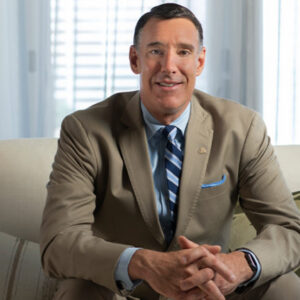
Paul Tramonte, CMP, is a pandemic compliance advisor, principal designer of Paul Tramonte Events, a full-service event management and consulting agency. With experience across market segments in both hotel and third-party event management roles, Paul has concepted and led high-impact global events, including intimate social affairs and luxury weddings to large multi-day conferences, executive retreats, trade shows and experiential brand projects.
Four new and renovated properties for small groups in Georgia, California and Montana.
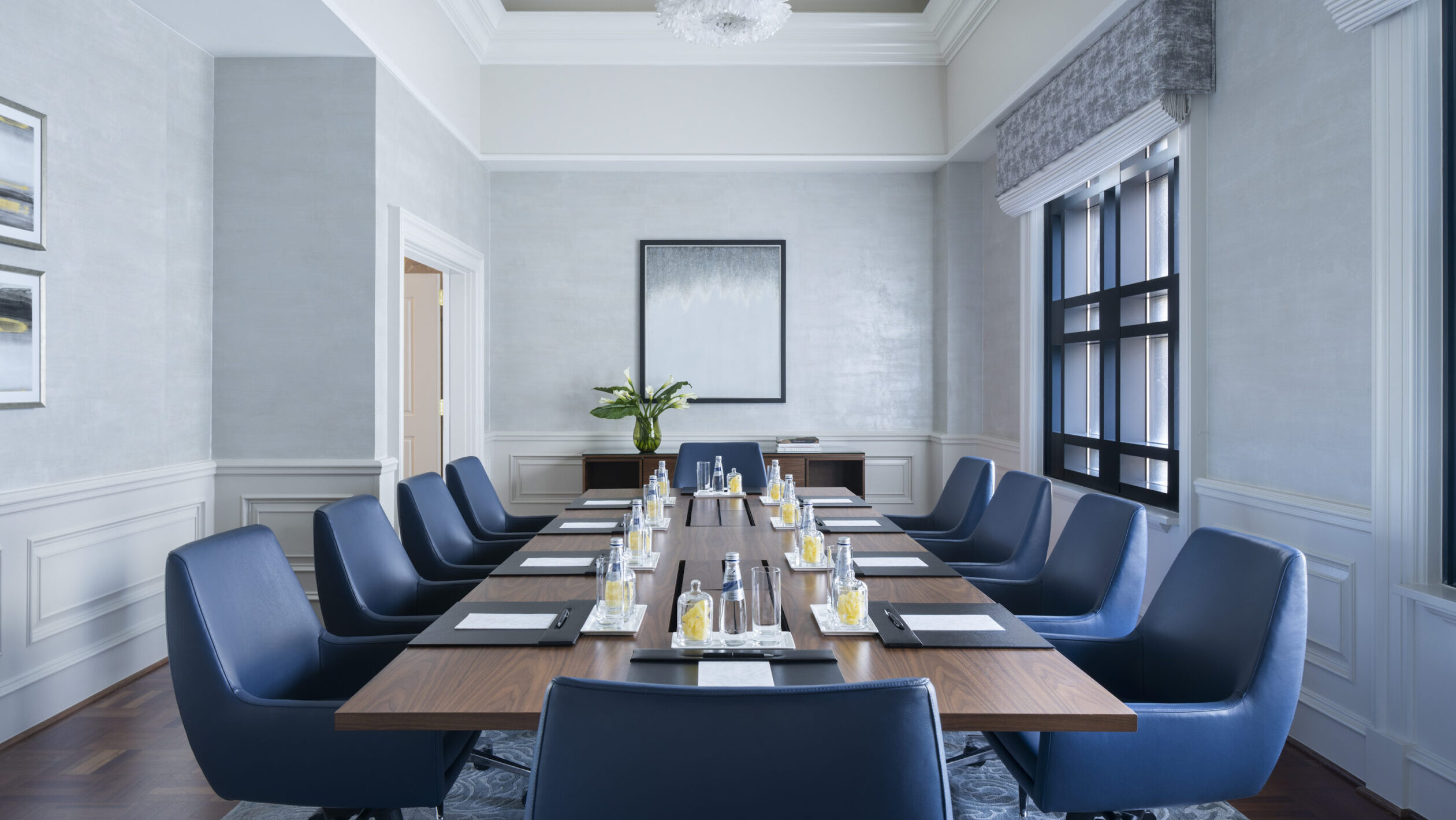
The 244-room hotel completely renovated its fourth floor, dedicated entirely to events and meetings. Soft blues, whites and champagnes bring a newly modern feel to the event spaces, shown off by an abundance of natural light and dramatic windows with skyline views in the Grand Ballroom. Bespoke artwork and custom lighting fixtures bring a fresh feel. On the tech side, each meeting room has been enhanced with the newest AV—from event livestreaming to audience polling and virtual classrooms, the on-site team is prepped to build out the hybrid meeting of the future.
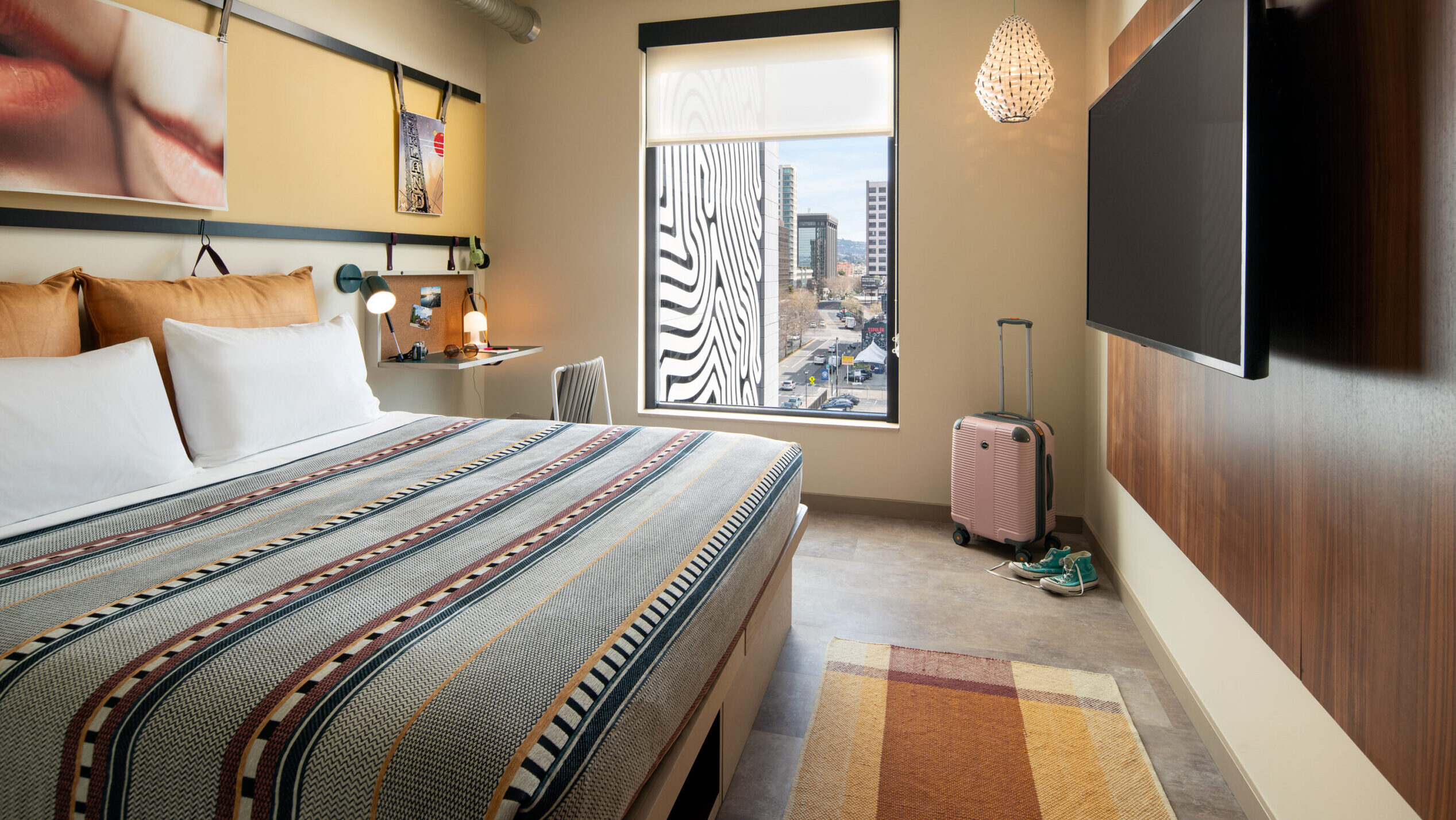
Marriott brings its Moxy brand vibe with the first lifestyle hotel in Oakland, with 172 rooms at the gateway to the Uptown Arts and Entertainment District. Public spaces echo cinematic elements, paying homage to beloved neighborhood Art Deco theaters. In style with the brand, Bar Moxy is a focal point of the experience, featuring garage-style doors that open onto Telegraph Avenue. A second-floor outdoor terrace will serve guests looking for a cocktail and a game of ping-pong, while the 35-seat boardroom across the lobby doubles as an art gallery and the hotel’s private event space.
The new six-story property is just 10 minutes from Missoula International Airport (MSO), situated between Glacier and Yellowstone parks. The hotel has 105 rooms featuring amenities ranging from integrated working areas to rainfall showerheads; it provides for cozy events with about 1,000 sq. ft. of high-tech meeting space. The signature AC Lounge will stay the course with an elevated food and beverage program with locally sourced offerings, while common-area decor highlights the brand’s clean lines and natural textures. Rooftop spot 7R Bar will open this summer to give scenic views of the mountainous region.
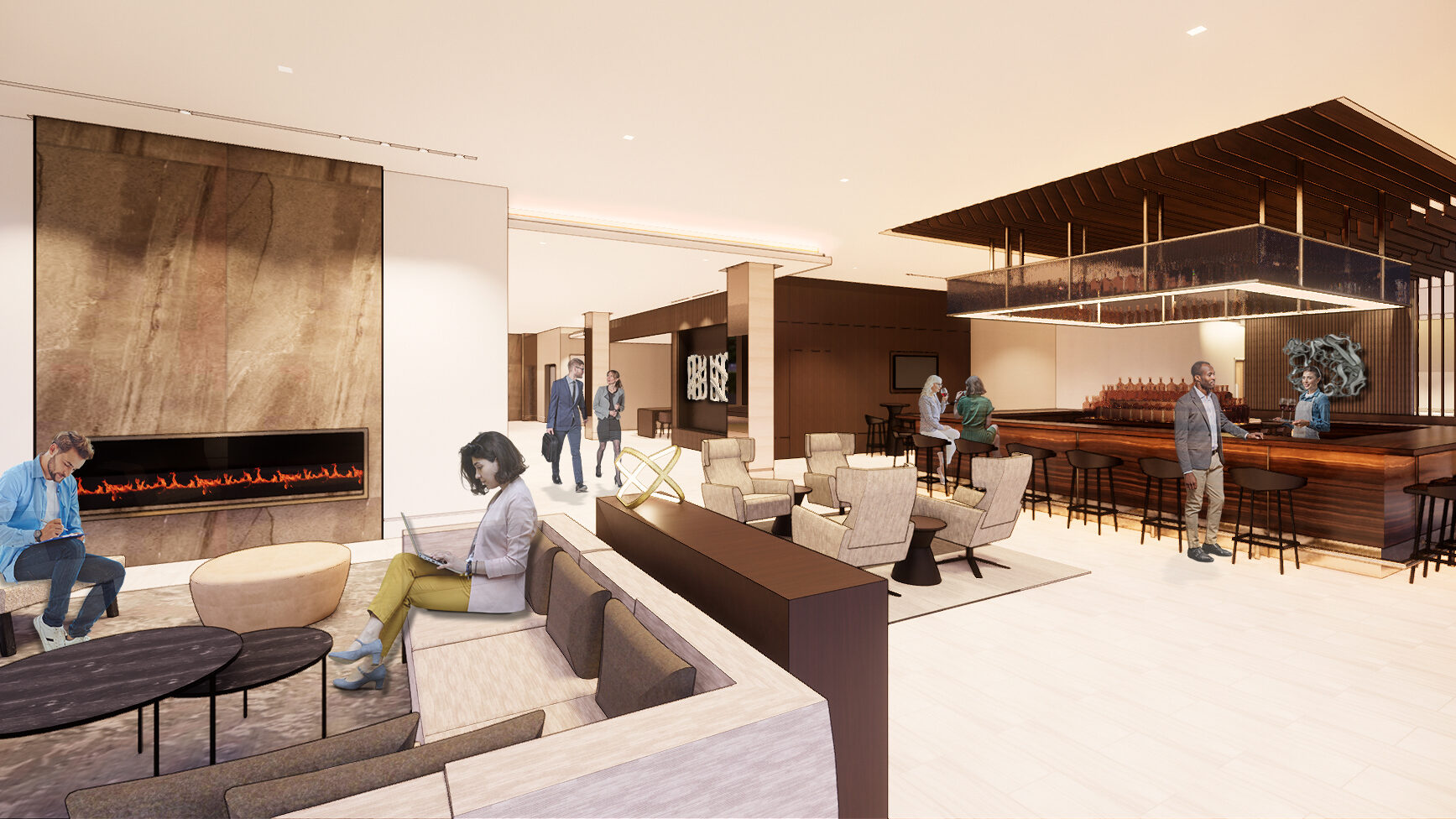
The brand-new Autograph Collection Hotel in Buckhead aims to bring an ensemble experience to guests after a year of solo performances. The reviving lobby will serve as a welcoming hub and photo op, decked out with vivid colors and abstract patterns, while vintage church hats adorning the lobby bar and seating styles mimicking a retro beauty parlor pay homage to Atlanta’s culture and community. A rooftop infinity pool overlooks Peachtree Street. Guest rooms feature snug window seats and wall prints by native Georgian artist Lela Brunet; 10,000 sq. ft. of indoor event space is as spirited as the lavender lobby.
In developing our plan for the 2020 EIC global recognition programme, we were keenly aware that while we would never want to pause on the annual induction of honorees into the Hall of Leaders, we are not operating in a business-as-usual environment. The pandemic catapulted global trends such as global warming and climate change, the need to support and advance an inspired and well-equipped workforce, and shifting learning environments in education. It also raised long overdue questions around equity and human rights and called into question our willingness to share in the responsibility of correcting systemic injustices.
Amy Calvert
We took the opportunity to reflect on the world we are living in, as well as our values and priorities as an industry. We knew it was time to chart a new course and focus our efforts on raising a conversation around leadership.
We asked ourselves tough questions about how we leverage our community of leaders to help us connect with new and emerging leaders, and we considered two new categories around social impact: adaptation and innovations and leading in times of crisis. We worked to ensure that our global recognition programme offered a moment of reflection and hope, which paved the way for an ever-evolving conversation.
Opportunity to Grow
The EIC Hall of Leaders was introduced in 1985, and in 1991 the first woman, Jeanne W. Hayes, was inducted. While I did not know Jeanne personally, I am struck by what it might have been like for her to reach such heights showcasing IAEE’s strong commitment.
The ties that bind all of these leaders, past and present, is the way in which they embraced their commitment to this industry through the spirit of generosity, leaving a broad and lasting legacy impact, and laying the foundation for an industry and a profession. When one scans the past, we recognize the gaps as opportunities, as a path forward that is more inclusive, diverse and a reflection of our community.
Acknowledging these gaps in no way diminishes recognition or the incredible contributions of those who came before; we can hold these two truths at one time and gain inspiration from their work for the road head.
While 2020 was certainly a year—as we have said to ourselves and to one another more often that we would care to admit—a year of disruption, it was also a year of extreme learning, courage, generosity, fierce conversation, mass vulnerability and (most inspiring to me) a willingness to overlook longstanding rivalries in favor of unity…all to support and preserve the global business events industry and its work force.
As we reflect on our awards programme this year and turn our attention to the grassroots celebration that is at the heart of GMID, let’s move forward with a sustained commitment to unity, to equity, to collaboration, to building back better, and to being our own best storytellers, recognizing the effort of those that have left a legacy impact and those that are blazing new trails and lifting up many voices, especially those long gone, unheard, but essential to our future.
The meeting planning process has changed dramatically throughout the past year as we have all found new ways to connect and forge forward during this time. To me, one of the most impactful trends that has come out of the pandemic is that of virtual site tours. In addition to being a great method for seeing a destination in a time when many companies have restricted travel, it is a very convenient and cost-effective way to evaluate multiple destinations for an event.
With planners and destinations becoming more comfortable with virtual site tours, I expect this trend will not go away anytime soon. Here are my top tips for both planners and venues to ensure a successful virtual visit.
Be Specific About Your Needs
When planners schedule a site tour with a destination, it is important for them to be specific about what elements are most important for the success of their program. This will help the venue to customize the tour to ensure it covers the aspects that are most relevant for the meeting.
Ask Questions
I also recommend that planners ask as many questions as possible in order to ensure the venue is the perfect fit for their function. For example, it is important to ask what benefits the property offers that makes them unique from the other destinations that are being considered. Another important consideration: Ask the venue to walk through the changes that have been made due to Covid-19.
Plan Ahead
From the venue’s perspective, it is important to ensure that the logistics of the virtual conference are prepared well in advance. For example, venues need to determine the time the planner has available for their virtual site, and then create a schedule to help maximize the tour. In order to be successful, tours need to have a smooth flow from one area of the property to the next. I recommend that the sales representative conducting the tour do a run through in advance in order to help anticipate any questions or delays.
While nothing can replace the in-person experience of a destination, is important to make sure a virtual site tour is dynamic. For example, at Hyatt Regency Hill Country, we involve colleagues from all departments, from our executive chef speaking about the food experience, to our spa and golf director highlighting our recreational activities. By introducing the planner to members of the team, it helps them to get a feel for the personality of our property and our dedication to ensuring the success of their function.
Have Fun with It
It’s important for venues to make the virtual tours engaging and have fun with the process. For example, venues can add a fun experiential component to the tour that is specific to their property, whether it’s a cocktail demonstration that the planner can follow along with at home, or a special message from the General Manager or Tourism Director, a personalized element can go a long way in making an impression.
Michael Hrabovsky is director of sales, marketing, and events at Hyatt Regency Hill Country Resort and Spa in San Antonio, Texas.
In socially distanced meeting rooms, on marathon webinar streams and through a Clubhouse Parking Lot discussion, meeting professionals came together to celebrate the advocacy, growth and support the meetings industry witnessed during an immensely challenging year for Global Meetings Industry Day 2021.
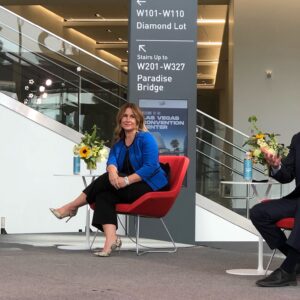
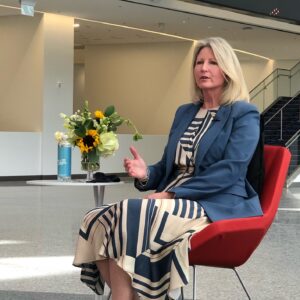
Smart Meetings fanned out to cover celebrations all over the country, including MPI’s 12-hour streaming program, a panel discussion in San Francisco and a group in Las Vegas at the expanded Las Vegas Convention Center West Hall for a panel discussion and watch party. The mood in the spacious foyer, with chairs set six feet apart, was one of relief and optimism. Following is your best-of report.
“It has never been more clear that we have to advocate for our industry, declared Michael Massari, chief sales officer with Caesars Entertainment, who is also serving as Meetings Mean Business Coaliton co-chair this year.
The year of dark conference spaces and the struggle to get elected officials to see the vital economic role of the meetings industry made speaking with a shared voice critical in the struggle to get relief.
Chris Flatt, executive vice president of hotel sales and marketing with Wynn Las Vegas, praised the work U.S. Travel Association has done to tell the story of the power of tourism. “We have been forced to have difficult conversations with customers, but in the end it strengthened relationships,” she said before adding, “and staying positive has been essential.”
Duty of Care
Chandra Allison
During the pause, leaders from all over the industry came together to design the protocols that will keep everyone safe once meetings ramp up again. “We are executing safe meetings all around the country and we are quite capable,” said Massari. Las Vegas has hosted hundreds of small groups successfully since June 2020. Most properties have their own brand for their safety practices, but all include increased cleaning, mask requirements and most have access to testing and vaccine tracking if requested.
Once attendees see all the sanitation and creative F&B in place, they will feel confident enough to return again, so the industry can get back to work hiring employees.
Steve Hill
“Meetings will feel a little different for the rest of the year, but when we look to the back half of the year it is very strong with a lot of pent-up demand,” said Chandra Allison, senior vice president of sales and marketing at The Venetian Resort Las Vegas and Las Vegas Sands.
“By the time the first big group, World of Concrete, arrives in June, everyone, including elected officials, should feel comfortable that enough people are vaccinated,” said Steve Hill, CEO and president at Las Vegas Convention and Visitors Authority.
A Bright Future
While the tour buses were parked in the garage, construction crews were out in full force. Returning conventioneers will find 2 million sq. ft. of new, innovative space in southern Nevada, including Las Vegas Convention Center expansion, a 550,000-square-foot conference center in CAESARS FORUM and the 3,500-room Resorts World, which will encompass three luxury Hilton brands—Conrad Las Vegas, Crockfords Las Vegas and LXR Hotels & Resorts. The Venetian added a VIP dining area, Stella Studio, designed with a natural, light-filled, modern aesthetic. Wynn Las Vegas debuted its new 439,000 sq. ft. of meeting space just before the unprecedented lock down in February of 2020.
MGM Resorts spent the last year focused on digital innovation to improve the attendee experience with contactless check-in and other Covid-proofing measures.
Stephanie Glanzer
Massari extolled the trend toward hybrid as a powerful marketing tool for face-to-face meetings. “People attending virtually will see the in-person activities and will want to be part of the magic,” he said.
Stephanie Glanzer, chief sales officer and senior vice president of sales at MGM Resorts International agreed with Massari’s prediction. “FOMO will play a major role in bringing attendance numbers back to pre-pandemic levels as people go back and talk about their experiences,” she said.
“Now that we have seen what it feels like to have to do without, we will be stronger,” said Hill.
He described the forced break as the impetus for people to look at their programs with fresh eyes. “The industry will have to show that the return on attendance is there; this is an opportunity to create new fans and revenue streams.”
Hill also talked about lessons learned from the social upheaval of the last year. “Las Vegas has always been inclusive, but now we have a new understanding about how to help people bring their best selves to a meeting,” he said.
Chris Flatt
“Our mandate is to take the good things that came out of the last year and be better,” said Flatt.
“We appreciate things so much more than we did last year. My team has become so much closer,” said Glanzer. “We are clear that we do what we do because of the energy of face-to-face, and we know how to have fun at the same time.”
“The last year of supporting each other has humanized a human industry,” Allison concluded.
1/3 Touring @lvcva Las Vegas Convention Center West Wing Expansion. I was last in the building for a hard hat tour in March, 2020. They have been busy. #GMID21pic.twitter.com/UhvwDs2rH2
Meanwhile, in San Francisco, a GMID Bay Area Hospitality Grand Slam virtual event presented an afternoon panel, “Return to Gatherings,” moderated by San Francisco Giants Multimedia Producer and Reporter Amy Gutierrez, and featuring prominent local meeting planners. It was followed by a choice of Zoom breakouts hosted by Northern California chapters of MPI, PCMA and Green Meetings Industry Council.
Panelist Edward Perotti, director of global events at Pure Storage, a data storage company based in Silicon Valley, called this moment in the meetings industry a huge opportunity. “Covid has given all of us in our industry such a gift,” he said. “We have been doing the same thing the same way forever. This is our chance to step back. Our roles really become that of a culture driver for the organization. We now have a say in how that best happens.”
Happy Global Meetings Industry Day! Today #MeetingProfs around the world are highlighting the undeniable value of business meetings, trade shows, incentive travel, exhibitions, conferences and conventions. #GMID21pic.twitter.com/3ldrmIYhrE
His company’s executive team, Perotti said, is turning to him to tell them how to re-engage customers and employees.
“We do tend to do things that are lather, rinse and repeat, so here was the chance to rethink all that,” agreed Leslie Hasvold, director of corporate event marketing at Splunk, a San Francisco-based tech company. “What does everybody need from us? Our sponsors need traffic drivers and flexibility. Customers need our education, our splunkiness [the company culture emphasizes fun, even silliness], but also they want that health and safety. Our executives need each of our community members to walk away thinking they are still part of the community. We need to make sure we are straddling all those lines for all of those stakeholders.”
Asked to share strategies that will ensure success in returning to live as well as continuing hybrid meetings, Hasvold added, “Make sure you’re working very closely with your safety and legal team. We need their expertise now.”
Jody Brandes, group manager for strategic event services at biotech company Genentech, commented, “It is not same old, same old. It’s not going to cost the same, same. But the benefit is, we can be more inclusive; we can invite more people and reach a broader audience.”
— Discover Puerto Rico Meetings (@MeetingsInPR) April 8, 2021
“We’re striving to navigate our leadership, who thinks it’s going to cost the same as a Zoom meeting,” said Perotti. He also sees another upside in an ongoing virtual component. “I can bring speakers in from all over the world,” he said, then referenced a recent virtual meeting: “I was able to remove the white man mentality on stage. It was just a beautiful thing.”
Meeting Professionals International (MPI) celebrated Global Meetings Industry Day, all day, hosting a 12-hour broadcast with panels, activities and resources to move the industry forward. We tuned in to a special panel with Massari, Julie Coker, president and CEO of the San Diego Tourism Authority; Paul Van Deventer, president and CEO of MPI; and IMEX Group CEO Carina Bauer. Below are their highlights of advancements made and the one takeaway for the industry they all agree on.
The 1 Thing the Industry Needs to Achieve in Order to Prevent Another Crisis
All four speakers agreed that the biggest lesson learned in the industry throughout the pandemic—and the biggest goal to achieve in the next two years—is to separate professional business events from other mass events, like festivals. This, Massari says, requires maximum effort and advocacy.
Specifically, the goal would be to gain a faster reopening roadmap for business events that includes international travelers.
“There is a lack of understanding that meetings and events are a controlled situation,” he said, citing planners’ distinct ability to safely track who comes and goes and comply with social distancing and state guidelines.
Van Deventer said a unified voice among meeting professionals is the best way to broaden understand of this critical separation. “We fragmented our voice at the beginning—out of panic and trying to get everything done. We done. We tried to problem-solve instead of saying, ‘How do we come together as a single industry, so that our voice can be heard above all this noise?’” He said the industry needs to unite in underscoring what a controlled environment its events are and what really goes on at its events.
Bauer spoke to the powerful lobbying that happened in Germany in April 2020 to separate business events from mass events. “There is already understanding of the value of the trade show and events industry [in Europe],” she said.
The Disney Meetings & Events team is proud to support #GMID21. We are grateful to be part of an industry where we can create moments that matter – together. Whether you meet with us virtually, hybrid, or in-person, we look forward to your next meeting with us! pic.twitter.com/R63xejH8mY
— Disney Meetings & Events (@DisneyMeeting) April 8, 2021
In San Diego, Coker has seen the benefit of presenting industry facts and figures, including ROI, job losses and revenue, to the government, as California recently announced that it would reopen for meetings with fewer than 5,000 people with no restrictions starting June 15.
Celebrating Wins
The speakers also shared their wins—proving that pandemic disruptions can also be industry advancements.
Bauer: The pandemic hasn’t changed everything; it’s just accelerating aspects like meeting design and experience. What is clear to us is that there is no substitute to what we provide in the real world, but there are benefits to mixing digital and in-person environments. For us, we are focusing on producing an awesome live event in November—but also taking these learnings to see how we can drive connection online in between the big trade shows. There is a small percentage of people that never attended in-person events but are now attending online, so the reach is much bigger for everyone.
Coker: We had to remarket as a DMO. Instead of looking outside to bring others in, we focused on staycations and having San Diegans come stay in local hotels and support local restaurants, while also keeping them informed on safety protocols. While a different position than we are normally in, it helped us create relationships with county health departments and prove to our members that we provide more value than just hotel leads. It has taught us and many DMOs to diversify, and the importance of working with cities to have a reserve.
Van Deventer: In the past five years, the industry focused on terrorism and crisis management. We developed relationships with first responders, and now, with the pandemic, this is just the next step to building relationships, protecting attendees and moving forward.
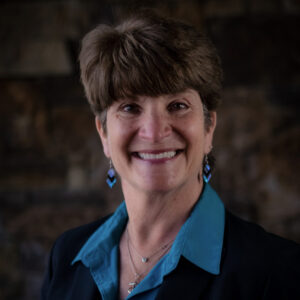
Donna Horii
Horii is national group sales manager for The Charter at Beaver Creek in Vail Valley, Colorado. Horii comes from Colorado Hotel and Lodging Association, where she worked as business development manager; she’s also worked as director of sales for Breckenridge Tourism Office and has held sales positions for Grand Junction Visitor & Convention Bureau, Visit Denver and Keystone Resort & Conference Center. Horii has been an active member of Destination Colorado, MPI and American Society of Association Executives.
Anthony Berkau
Willows Lodge in Woodinville, Washington, promoted Berkau to general manager; he previously worked as lodge manager. Before that, he worked in the property’s F&B department, serving as director of F&B and wine director.
Mary Bennett
Bennett is vice president of marketing and digital strategy for Omni Hotels & Resorts. Before joining Omni, she worked as vice president of brand, marketing and digital for Marriott International. Bennett has held leadership roles with Viceroy Hotel Group in digital and commercial partnerships, and The Ritz-Carlton, leading e-commerce and digital marketing.
Shannon Foster
Holston House in Nashville, Tennessee, named Foster area vice president and general manager. Foster previously worked as corporate director of operations for Davidson Hospitality Group. She also led departments for Kimpton Hotels & Resorts, Fairmont Hotels and Resorts, Sage Hospitality Group and Noelle Nashville, a Tribute Portfolio Hotel, in Tennessee.
Mark Purcell
Purcell is senior vice president of development for North and Central America for Accor. Before joining the team in 2017 as vice president of development, Purcell worked with Starwood Hotels & Resorts, also as vice president of development, during which he helped the company add more than 30,000 rooms to its portfolio. He also worked at Interstate Hotels & Resorts as vice president of acquisitions and development.
Jean-Francois Vary
Vary is general manager for Fairmont Waterfront in Vancouver, British Columbia, following his recent role as general manager of Fairmont Winnipeg, in Manitoba, Canada. In his 25 years with Fairmont, Vary has held roles throughout the brand’s North American hotels, including Fairmont Chateau Whistler in British Columbia, Fairmont Olympic Hotel in Seattle, Fairmont Kea Lani in Maui, and Fairmont Tremblant and Fairmont Le Chateau Frontenac in Quebec. In 2018, he sat on the board of the Fairmont Brand Committee.
Liam Doyle
Doyle is senior vice president of operations for Montage International, which includes Montage Hotels & Resorts, Pendry Hotels & Resorts, and Montage and Pendry Residences. Doyle previously worked for Marriott International as area vice president of the company’s western region collection; before that, he worked as area general manager for the same collection. Doyle also worked as general manager for The Shelbourne Dublin, An Autograph Collection Hotel, and The Ritz-Carlton, Dove Mountain, in Marana, Arizona.
In California, rules for resuming in-person gatherings are finally emerging from a fog of silence. Perhaps at least partially in response to a call to Gov. Gavin Newson by the state’s hospitality industry to lay out concrete plans for reopening, Newsom has announced plans to fully reopen the state June 15, with a few restrictions.
On that date, gatherings greater than 100 people will again be allowed if attendees are wearing masks. Participants at gatherings of 5,000 or more at convention centers, arenas and other facilities will be required to provide a negative Covid test result or proof of vaccination.
The June 15 date is dependent on adequate availability of Covid-19 vaccines and a downward trend of hospitalizations, according to Mark Ghaly, California’s director of health and human services. “Those who are vaccinated [yet contract the virus] generally have seen very mild symptoms. If we continue to see that and see the stabilization in data, then we will move forward with the June 15 date,” he says.
In a call with reporters, Ghaly emphasized that if the state sees any concerning rise in hospitalizations, it will take “necessary precautions.”
Meeting professionals and hospitality leaders in the state were vocal in their disappointment when Newsom announced April 1 that gatherings in California could occur but were limited to 100 people, with no road map for how conventions and trade shows were to resume then or in the future. A study conducted by Oxford Economics estimates that every month conventions are paused, the state loses $1.4 billion in direct spending and $130 million in local and state taxes.
With the long lead times in meeting planning, California travel and hospitality worry that their state is still behind others, such as Texas and Mississippi, whose governors have lifted mask mandates and have allowed all businesses and facilities to operate at 100 percent capacity; despite this, these two states, in particular, have also seen the lowest number of Covid cases in a year.
Newsom also cautions that California could need to reapply restrictions if virus variants cause cases to increase. “We’re always going to be led by data, led by reality and the lived experience on the ground,” Newsom says. “But our expectation is, if we’re vigilant, if we don’t spike the ball, if we don’t announce mission accomplished, and continue to do the good work that we’ve done, that by June 15, we’ll be beyond that blueprint, and we’ll be back to a sense of normalcy.”
Editor’s Note: This story from April 2 was updated to reflect an announcement about plans for opening California up to larger groups June 15.
The Centers for Disease Control and Prevention (CDC) updated its guidance today to say that in light of studies that show vaccinations are effective in real-world situations, fully vaccinated people can travel at low risk to themselves. Those who have received the last recommended dose of the vaccine and have waited two weeks can travel within the United States without a Covid test or post-travel quarantine.
The CDC still recommends taking precautions such as wearing a mask, avoiding crowds, social distancing and washing hands frequently. Fully vaccinated people must still have a negative Covid test result before they return to the United States from other countries, but new guidance did not suggest quarantining if the test is negative. And Unvaccinated travelers should still get tested 1-3 days before domestic travel and 3-5 days after travel.
CDC records show that as of April 1, 2.7 million doses a day had been administered on average in the previous week for a total of 157.6 million doses delivered to 101.8 million people and 17.5 percent of the population fully vaccinated. President Biden pledged that all Americans will be eligible for vaccinations by May 1 and the country will be closer to normal by July 4.
“Vaccines can help us return to the things we love about life, so we encourage every American to get vaccinated as soon as they have the opportunity,” said CDC Director Dr. Rochelle Walensky.
Right Direction
U.S. Travel Association President and CEO Roger Dow said relaxing the guidance on travel for individuals who have been fully Covid vaccinated was “a major step in the right direction that is supported by the science and will take the brakes off the industry that has been hardest hit by the fallout of Covid by far.” He added, “As travel comes back, U.S. jobs come back.”
Dow called the change an important one because it removes a key barrier to domestic travel and said rescinding the recommendation that international visitors must quarantine also is an important incremental step. “The year-long halt on travel has devastated U.S. employment, with travel-supported jobs accounting for 65 percent of all U.S. jobs lost last year, and this is an opportunity to begin reclaiming a lot of what’s been lost. The travel industry’s mantra throughout the pandemic has been to be guided by the science, which clearly shows that now is the right time for this move.”
California Governor Gavin Newsom announced on Tuesday that the state will conditionally reopen on June 15, including permission to hold conventions of up to 5,000 people with larger events allowed if all attendees have been fully vaccinated or Covid-tested. “With the expectation of an abundance of doses coming in from the federal government through the end of this month and into May, we can confidently say by June 15 that we can start to open up as business as usual — subject to ongoing mask wearing and ongoing vigilance,” Newsom said at a San Francisco news conference.
A week earlier, California Department of Public Health announced that it would allow indoor concerts, theater performances and private gatherings starting April 15. The number of people who can gather will depend on what risk tier the county is in on a given day. In all tiers, modifications are required to reduce risk, including pre-purchased tickets or a defined guest list and assigned seating.
Attendees can be tested for Covid or show proof of vaccination. As of Friday, California had administered 18.9 million doses to almost 6.9 million people out of 40 million residents. All adults could be eligible there by April 15.
“We will continue to work with businesses, arts organizations, community groups and others to open carefully, with health and safety top of mind, so that we never have to go backwards,” said Dee Dee Myers, Senior Advisor to Governor Newsom and Director of the Governor’s Office of Business and Economic Development (GO-Biz).
Disney has announced that Disneyland Park and Disney California Adventure will reopen on April 30 with limited capacity to California residents. To buy tickets, contact information for each person will be collected for contract tracing purposes.
Jay Burress, president and CEO of Visit Anaheim called the announcement at the beginning of April a good first step. “We are looking forward to the state expanding the guidelines to include conventions within the next couple of weeks.”
Editor’s Note: As part of Back Light, a series of articles sharing insider observations, we asked Anne deBruin Sample, CEO of Executive coaching company Navigate Forward for tips for planning and hosting a virtual event.
Hosting an in-person event takes time and energy to ensure everything runs smoothly and captivates attendees. But this past year, Covid has caused in-person events to give way to virtual meetings, zoom conferences and an endless slew of online events. These new formats make for unique challenges that many leaders haven’t previously faced. However, the online environment can also make events fruitful, engaging and effective, if done correctly.
After hosting a wildly successful online gathering earlier this year for the Navigate Forward community, I’ve learned and developed a list of dos and don’ts for companies who want to host their own successful events that will leave attendees impressed.
1. Hire a Project Manager
Invest in a special event project manager. A project manager oversees the entire process to ensure no detail is missed. The most effective way to utilize the project manager is to meet with them and the rest of your planning team weekly in the months leading up to the event. This allows everyone to stay on track and minimizes the amount of last-minute planning before the big day.
2. Send Personal Invites, Give a Sense of Exclusivity
In order to get the word out about your event, you will likely need to use your standard mass email platform for invitations. The challenge is that many of these messages end up in junk folders. The best way to reach people is through personalized email messages which can be sent as a follow up directly to those you really want to attend.
These personal invites create a sense of exclusivity to the event and will help to boost attendance. We chose not to make our event public so that it would be special, but we also did not limit RSVP spots. We even allowed people to extend the invite to their colleagues.
3. Plan Ahead for Technical Issues
One of the biggest stress factors in planning a virtual event is the threat of technical issues. We did not have the budget for a large professional event production company. Reaching out to a smaller, local, production company who can be on-site during the event was a game-changer. Even though these virtual platforms are not new at this stage of the pandemic, the platforms update constantly and there are a lot of technological unknowns for the average person. Using a production company can help ensure that your audio and video quality is high so that the audience can clearly see and hear the event.
You can also limit this stress by doing an entire run-through a week before and then again, a few hours before going live. This ensures any technical interruptions that may arise can be dealt with ahead of time.
4. Don’t Exceed an Hour
Timing can be everything when it comes to holding the audience’s attention. The sweet spot is one hour for programming. Anything over an hour can trigger Zoom fatigue and lower the chances of event attendance.
5. The Perfect Blend of Pre-Recorded and Live
Running an entirely live event can bring about its own anxieties and stresses, but an entirely pre-recorded event can be a snooze-fest for participants. The perfect mix? A blend of pre-recorded and live segments throughout the event.
For example, pre-record a keynote speech to make sure there are no hiccups, but then have the Q&A portion be entirely live. This keeps things running smoothly, limits stress and keeps the audience engaged.
6. Shake Up Your Backgrounds and Speakers
There’s a bit of extra work that needs to be done to keep the energy up in a virtual event. One way to achieve this is having multiple speakers as well as settings throughout the event. This helps shake things up and gives the illusion of movement, like a guest moving from room to room as they would in an in-person gathering.
7. Create a Shared Experience
At an in-person event, attendees are all experiencing the same thing: same room, same food, same atmosphere. In a virtual setting, everyone is experiencing the event differently. Doing something to create a shared experience among your attendees can help create a more memorable experience.
For example, partner with a restaurant so people can order the same dish or deliver an event experience bag full of goodies to attendees. Anything that creates a shared experience can drastically uplift the audience’s engagement.
8. Involve Attendees in New Ways
Doing a live drawing is a good way to catch an audience’s attention. When the audience can participate, there is increased engagement and a compelling reason to attend. We have a charitable giving commitment as a firm, so we asked attendees to identify a charity of their choice with their RSVP. We drew “winners” who would qualify for donations from the company during our event. This allowed us to highlight these great causes while also recognizing our attendees who made the nominations, making the attendees as a whole feel more invested in the event.
Maintaining an active chat feature and being active on social media during the event can help make your virtual event feel more interactive. During the event, have someone push content on social channels for attendees to easily share while watching. Have a chat moderator that can bring the chat into the live event and keep the energy up within the chat. If the event has a Q&A portion, have the audience ask questions via chat and consider “pre-seeding” questions in order to cover the topics you know the audience will want to hear.
10. Define Success in Advance
Utilizing these tips can lead to an incredibly successful event; but how do you measure for success? Determining what success looks like to you and your team before the event is key. Discuss with your team what you hope to see or hear from attendees. Having those determined before the event allows for clear and measurable points to reflect on afterwards.
While it may seem that virtual events never stack up to an in-person function, virtual events do have their upsides and can be enjoyable, inspiring and effective. Our in-person events are limited to local participants. Our virtual event included members of our community from across the country. Getting creative with audience engagement and paying attention to the small details will help develop a connection as we adapt to the new normal.