Why not inspire your leadership team with an event at a hotel with ties to historical leadership? Sir Winston Churchill is hailed as one of the greatest leaders in modern history, and many hotels in London have strong links to his presence.

The son of an English Lord but an American mother, Churchill came to North America often, beginning with his first visit as a young army officer in 1895. Later trips in the 20th century brought him to New York, Miami, Los Angeles, Chicago, and many other spots in the U.S. and Canada. Here are four venues in which to catch a Churchillian vibe.

Read House, Chattanooga, Tennessee

Churchill stayed at Read House not once, but twice. You can easily imagine him dining there in the historic surroundings, or dressing down the pesky local newspaper reporter who in 1932 at the tail end of Prohibition snagged an interview that appeared under the headline “Famous Englishman Advocates Sale of Liquors.”

Located three blocks from the Chattanooga Trade and Convention Center, the staff at Read House have been hosting events there since 1872 and a dozen different rooms can be arranged to suit your organization’s needs. Churchill would feel right at home at either of their two restaurants, Bridgeman’s Chophouse or the Bar & Billiards Room and attendees will appreciate 17,000 sq. ft. of renovated event space.

Four Seasons Surf Club, Miami

Just after he delivered his famed Iron Curtain speech in 1946 Churchill headed down to Florida. Although he stayed in a private home, he used the Surf Club beachside cabanas as a space to paint in the afternoons. Winston’s on the Beach is the hotel’s nod to their famous artist in residence, and is one of the many choices available for events at Four Seasons Surf Club.

With 6,704 sq. ft. of total event space, options range from an intimate meeting for 12 in their executive boardroom or a reception for 50 at Winston’s on the Beach, to an outdoor event for 175 at the Lido Terrace or indoor venues for larger groups.

Chateau Frontenac Quebec

You’d be hard pressed to find a hotel with more historic ties to world leadership that the Chateau Frontenac, a 2020 Smart Stars and Platinum Choice-winning property. Originally built as one of the Canadian Pacific Rail hotels and now a part of Accor’s Fairmont Hotels collection, Winston Churchill was there several times for high-level diplomatic wartime strategy meetings in 1943 and 1944, including the fateful discussions with the Canadian Prime Minister and President Roosevelt about the Normandy Invasion.

The 20 different event space options run the gamut, from a Grand Ballroom that can accommodate up to 1,000 for a reception to the Vaudreuil Room in which your leadership team of 12 can plan their own campaigns. Historic Jacques-Cartier Room is named for a famous French explorer and will leave a lasting impression with vintage stained-glass windows, a dramatic fireplace, and handcrafted woodwork throughout.

Millennium Biltmore, Los Angeles

In 1929 Churchill made a Grand Tour across Canada and then his party worked their way down the length of the West Coast, with stops in San Francisco, Pebble Beach, Hearst Castle, and on to Los Angeles where his party of four stayed several days at The Biltmore.  Throughout his life, Churchill had a keen appreciation for luxury, and he referred to The Biltmore as “the last word in hotels.”

One evening he hosted Charlie Chaplin for dinner in his suite, and at one point in the conversation jokingly suggested that the actor should return home to England and run for Parliament. Millennium Biltmore offers up 70,000 sq. ft. of flexible meeting rooms and event spaces which all carry a touch of glamor that extends far beyond the Churchill connection and into the history of Hollywood.

Add a touch of gravitas to your event by booking the world’s premier Winston Churchill lookalike, as performed by “Winstan.” He is available worldwide for corporate events and corporate training.

Gin Sander is the co-author along with Roxanne Langer of Churchill: A Drinking Life, Champagne, Cognac and Cocktails. The two authors speak to groups, sharing amusing and inspirational anecdotes about Sir Winston Churchill’s preferred libations and some of the many historic figures with whom he lifted glass.



Sustainability is a topic of much discussion and will likely remain so for the foreseeable future. A lot of moves in the eco-friendly direction were made this year by many. Meeting venues, airports, car manufacturers and hotels have all been making efforts to tackle the question of climate change and longevity in the hospitality industry.

Check below to see how we highlighted how the hospitality partners are making the industry more sustainable.

Healthy World: Walking the Talk

A vector illustration of two hands holding the Earth

Some meeting venues just dabble in sustainability, while others make it their MO. This Healthy World from the February/March 2022 issue highlights three venues from across the globe that are diving deep into sustainability, from being almost completely powered by renewable energy to trash collection devices that are collecting millions of pounds of plastic waste. Check out how these venues are making sustainability a priority.

Beyond Carbon-neutral Hotels: Evolution of Eco-friendly Hotels

A couch in front of a forest.

In the sustainability world, it began when U.S. hotels moved beyond single-use plastics to recyclable and multiuse soap containers. Now, several hotels have even moved on from carbon-neutral buildings onto “carbon-negative” hotels, offsetting its impact by introducing earth-friendly initiatives. Read on for the latest in eco-friendly properties.

Healthy World: Is Net-zero Enough?

A person touching floating icons representing a net-zero world.

Could the return to F2F result in its demise? That’s the question tackled here. The hospitality industry has joined nations around the globe in an effort to reach net-zero carbon emissions by 2050, and there are two ways that can go. Read on to find out what they are.

Now Boarding at Gate Green…

illustration of green paper airline flying out of a forest

Aviation may not account for much of CO2 emissions—just 2.5%—but until the industry’s technology matures, the sector’s carbon emissions may be hard to combat. Although not many airports have taken on the goal of reaching net-zero emissions by 2050, there are some in the United States and abroad that are making their contribution. Find out who the top players in airport sustainability are.

Healthy World: Add ‘EV Charging’ to Your Checklist

thick smoke coming from industrial chimney

It’s estimated that by 2030, roughly 300 million electric cars will be on the road, accounting for more than 60% of new car sales. As a result, meeting professionals should expect electric vehicles (EVs) to arrive for those drive-to meetings, that may mean it’s time to put EV chargers on that venue checklist.

Editor’s note: This Week in Travel (TWT) is your essential guide to smoothing the road from here to there for your attendees and yourself.

Massive Hotel Aquarium Explodes at Meetings Hotel

The BBC reports that a massive hotel lobby aquarium has exploded in a Berlin Radisson Blu hotel. The lobby design feature was called the “Aqua Dom” and was claimed to be the largest free-standing cylindrical aquarium in the world. It was 82 feet high and held 264,000 gallons of water. The 1,500 tropical fish in the tank were said to have all died—either from the explosion, lack of water or freezing cold temperatures on the street where they landed.

The hotel moved guests from the property after the incident which, BBC reports, was speculated to have been caused by a cold-weather-induced crack in the tank. The hotel, which has three floors of meeting space has been closed following the incident.

Social media was flooded with images of the damage. John Newton, adaptations and translations editor at Conde Nast, said on his personal Facebook page and to Smart Meetings that “Maybe we should rethink using animals to create a spectacle, even in the relatively benign form of an enormous aquarium for a hotel lobby. Maybe some good will come of it if it makes people stop and think about whether they are necessary and add to the guest experience.”

Security Threats Hover Over Business Travel Recovery, Study Finds

International SOS, a global risk mitigation company, has released its annual 2023 Risk Outlook Report, unveiling the top travel trends and risks for business travelers in 2023. The study revealed that 52% of respondents feel that business travel has returned to normal, a significant increase from the 9% last year. However, the study showed that travelers are increasingly concerned about potential security threats as we head into the new year.

  • 43% of respondents expect that security threats will have the biggest impact on business traveler productivity in 2023.
  • While there has been an increase in business travel, 61% of respondents believe travel disruptions will contribute to the loss of appetite for business travel in the next 12 months.
  • Following travel disruptions, 59% of respondents believe geopolitical threats, including security threats, will cause less of a desire for business travel.
  • 83% of organizations expect health and security risks faced by their travelers to increase or remain the same.
  • Alongside the report, International SOS has released its Travel Risk Map revealing each country’s medical and travel security risk and, ultimately, the riskiest and safest countries to travel to in 2023.
  • Preparing employees for travel is not just about the destination risk. Organizations should pre-brief individuals to provide practical support to negate additional stressors. They should also take into consideration Covid impacts, destination medical risks, destination security risks and individual’s profiles when preparing employees for travel.


Business travel threat assessment chart
International SOS

American Airlines Raises the Bar for Gold Status

American Airlines has raised the bar for attaining Gold Status. What used to be a 30,000-mile reward threshold is now going to cost 40,000 miles to acquire.

Once passengers have acquired Gold status, however, the airline is adding more tiers of benefits.

With the new Loyalty Points Rewards coming in March 2023, members unlock their first Loyalty Point Reward—formerly known as Loyalty Choice Rewards—after earning 15,000 Loyalty Points and before reaching AAdvantage Gold status.

These members will receive Group 5 boarding for the membership year and the choice between two Loyalty Point Rewards: Priority check-in, security and Group 4 boarding for one trip or five preferred seat coupons. Higher levels of status earn more Loyalty Points at 60,000; 100,000; 175,000; and 250,000 at six higher tiers. Some of the benefits acquired at higher levels include: systemwide upgrades, Admirals Club one-day passes, trip credits and award rebates for flights bought with miles.


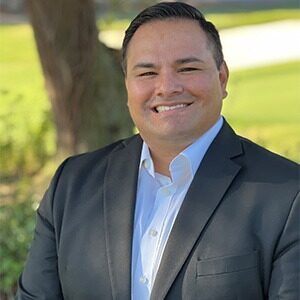
Gilbert Bolivar

headshot of gilbert bolivar in gray sport coat and white dress shirt against background of grass

Bolivar is director of food and beverage for Innisbrook, A Salamander Resort in Tampa Bay, Florida, where he will oversee the property’s five F&B options, as well as its banquet operations. Before joining Innisbrook, Bolivar was vice president of food and beverage operations in the senior living industry, where he led 19 properties in Virginia and Florida. He has also worked with Kimpton Hotels & Resorts, Marriott International, Hilton Hotels, Caesars Entertainment and Waldorf Astoria in New York City.

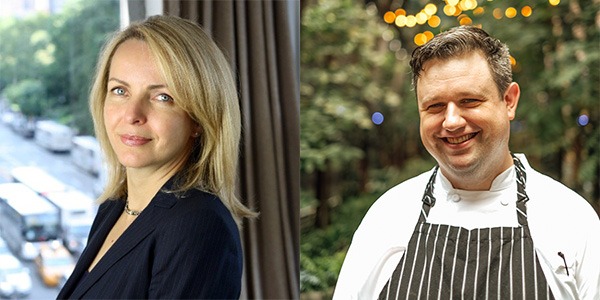
Iwona Luksza and Evan Bergman

two images: iwona luksza on left wearing black blazer and evan bergman on right wearing white chef shirt and black-and-white striped apron
Iwona Luksza (left) and Evan Bergman (right)

Luksza us director of food and beverage and Bergman is executive chef for NoMo SoHo in New York City.

Before joining NoMo SoHo, Luksza was director of bars and restaurants at Arizona Biltmore, A Waldorf Astoria Resort in Phoenix. She has also held leadership roles with The Ritz-Carlton Hotel Company; Mandarin Oriental, New York; The Knickerbocker Hotel in New York City; and Crosby Street Hotel, also in New York City.

Bergman comes from Pine Hollow Club in East Norwich, New York, where he worked as executive sous chef. Other leading roles include working in the restaurants of Charlie Palmer Collective, The Knickerbocker Hotel and LouLou Petit Bistro, all in New York City.

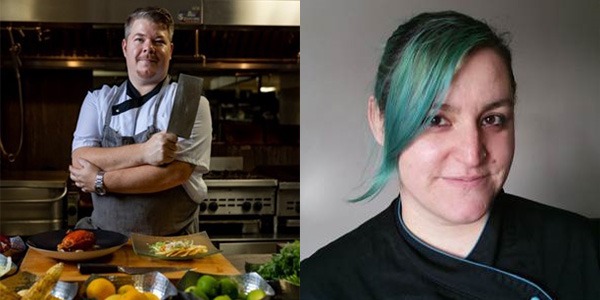
Bryan Hill and Samantha Santiago Torres

two images: bryan hill on left in kitchen crossing arms wearing white chef shirt, samantha torres on right, with blue hair and black chef shirt
Bryan Hill (left) and Samantha Santiago Torres (right)

Bryan Hill is executive chef and Samantha Santiago Torres is executive pastry chef for Ambassador Chicago, a JDV by Hyatt Hotel.

Hill previously worked as executive chef for InterContinental at Doral Miami. He has also worked in restaurants at Marriott Lincolnshire Resort in Illinois, InterContinental Chicago, InterContinental Boston and InterContinental Cleveland.

Torres most recently worked at Thompson Chicago as executive pastry chef. The Spain native began her career in 2012, when she worked in London at a Japanese restaurant. She later moved to Scotland to work in a bakery and later made the move back to London, where she worked in hotels and restaurants. Torres moved to the United States in 2017 and has since held several pastry roles before entering her first executive pastry chef role at LondonHouse Chicago.

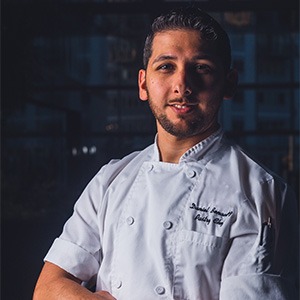
Daniel Benavidez

daniel benavidez in kitchen wearing chef shirt

Benavidez is executive pastry chef at AT&T Hotel and Conference Center in Austin, Texas. Benavidez most recently worked at executive pastry chef at The University of Texas at Austin, where he led the university’s bakery. Before this, he worked at Omni Austin Hotel Downtown, where he most recently worked as pastry sous chef.

Veronica ‘Ronnie’ Claveran

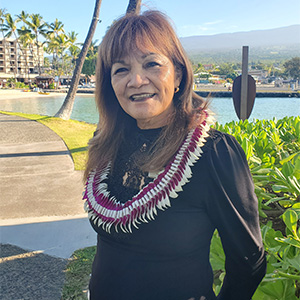
veronica claveran in park wearing white and purple striped flower necklace and black dress shirt

Claveran has been promoted to director of food and beverage for King Kamehameha Kona Beach Resort on Hawaii’s Big Island. Claveran most recently worked as the property’s food and beverage manager. Before joining King Kamehameha, she worked as director of operations for Daylight Mind Coffee Company in Kailua-Kona, Hawaii, and conference service manager for Mauna Kea Beach Hotel and Hapuna Beach Hotel in Waimea, Hawaii.

Read MoreReconnect with the Spirit of Hawaii

Yulissa Acosta

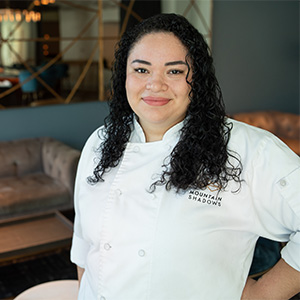
yulissa acosta with black curly hair and white chef shirt

Acosta is chef de cuisine for Mountain Shadows Resort Scottsdale’s Hearth ’61 in Paradise Valley, Arizona. Acosta joined the team in 2017 as a cook and helped open the restaurant; she was later promoted to sous chef in 2019.

Giulio Lombardelli and Francesco ‘Franky’ Bonauguro

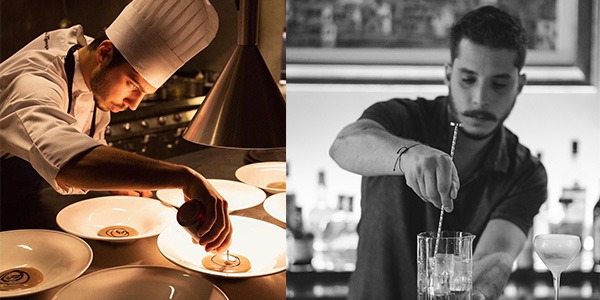
two images: giulio lombardelli and franky bonauguro, both are cooking
Giulio Lombardelli (left) and Franky Bonauguro (right)

Lombardelli is executive chef and Bonauguro is beverage manager for Borgo San Vincenzo in Tuscany, Italy.

Lombardelli has more than six years of culinary experience on the coasts of the Adriatic and Tyrrhenian. He has had stints with Riva degli Etruschi in San Vincenzo, Hotel Admiral Palace in Chianciano Terme and La Menagere in Florence, all in the Tuscany region.

Before Borgo San Vincenzo, Bonauguro worked at Four Seasons Sharm El-Sheikh in South Sinai, Egypt, as beverage assistant manager. He also spent some time in California, working as head sommelier and general manager of Tigelleria Organic Restaurant in Campbell.

In Smart Meeting’s ongoing journey to inspire meeting professionals with the latest tips for elevating the event design process, we worked with the AI app InVideo to bring our content to visual life and allow all viewers to accessibly enjoy content in video form. We hope you enjoy. Please consider following our YouTube channel for more weekly tips and trends for meeting planners.

When Keely Cat-Wells, founder and president of C-Talent, arrived to speak at an event about the importance of diversity and accessibility with her colleague, who was in a wheelchair, the two were met with a startling realization: the room that was booked for the event was entirely inaccessible. The event space was up three flights of stairs and had no available elevator. To make matters worse, there was no video captioning and no sign language interpreter.

Keely Cat-Wells

Cat-Wells approached the event organizers to try to work through these issues and was met with resistance and excuses. The organizers eventually moved the event to a coffee house across the street.

The experience was disappointing, but after the event Cat-Wells remained in contact with event organizers and after some discussion, they were open to putting accessibility on their list of to-dos for future events.

In chatting with Smart Meetings, Cat-Wells offered several important tips that meeting organizers should consider before putting together events in the future.

1. Don’t Leave Disability Out of the Diversity Conversation

“Disability is a chronically left out of diversity conversation,” Cat-Wells says. In 1990, the disability community won a major victory against discrimination with the passing of the Americans with Disabilities Act (ADA). But despite that, Cat-Wells believes the industry can do much more than the baseline.

Read MorePlan a Disability-friendly Event with this Local Accessibility Guide

“I think people rely too much on the ADA. While we absolutely love this landmark legislation, which is incredibly important, it is not the full solution it’s just the basis for the solution has to be built. If there is an ADA accessible space: box ticked. But access is so much more than that basic compliance, we have to go beyond compliance.”

2. Budget for Accessibility, but Don’t Cut Costs

Divvying up a budget is an obvious and important part of any planning process, but planners should be giving their accessibility budget a second look. Cat-Wells suggested that hiring people who understand the needs of disabled attendees will go a long way in improving accessibility.

“Even if you don’t have a big budget for an event, even if it is a small event, prioritizing access should be at the top of one’s list but usually it’s on the bottom,” said Cat-Wells. “It has to be integrated from the very beginning. From the inception of the event, access has to be thought about. I highly believe accessibility should be a line item on the budget. While accessibly should always have space on a marketing budget, it should have space in the production budget.”

One major point Cat-Wells pressed was how accessibility typically gets the short end of the stick during budget prep—failing to realize how important it is. She pointed to the use of AI generated captions that are not as accurate compared to the ones created by humans. “I think a lot of people try to cut costs by saying ‘Oh, we’ll get automated captions or AI captions.’ But cutting costs won’t pay off in the long run. People have to take this seriously now.”

3. Be Open to Change

The biggest frustration that stems from situations like these is some organizers aren’t willing to communicate or have a dialog when they are approached in an educational way.

“I think that’s the most frustrating thing because yes, it is an education process. Accessibility is a journey and it’s new to a lot of people but when you are met with resistance when you do educate, I think that’s the most frustrating thing,” Cat-Wells says.

4. Put Disability Advocates in Leadership Positions

One big factor that could improve awareness of accessibility at events is placing those with disabilities and disabilities advocates in positions of leadership. By doing that, organizations will be able to have more fluid conversation about disability and accessibility.

“A lot of people are just so scared to talk about disability,” Cat-Wells offered, “I think that is such a great place to start. Especially for the events that have diversity panels and diversity conversations. They have to take that opportunity of diversity and disability representation with integrity, and they have to do the work to be able to host these panels.”

5. Universal Design Is Good for Everyone

It is important to remember that creating accessible spaces goes beyond access for disabled. Cat-Wells highlighted that accessibility benefits everyone involved.

Read MoreHow a Special Olympics Event Made Waiting Fun

“I think it’s reminding these organizers of the humanity aspect too and that all opinions and people’s life experience are valuable and will benefit the event. And I think also reminding them that accessibility benefits everyone. The universal design is going to make your event smoother, more efficient and better for everyone and it’s not just a disability issue—it’s an everybody issue.”


The dazzling LED lights that line the ceilings of Albany Capital Center (ACC) are illuminated quite a bit more these days. Electric bill aside, that’s a good thing. Eventgoers and event planners alike are running full steam ahead in this new day-to-day norm we are all living in with the Covid-19 virus. Over 60 events already committed to the book for 2023 and with dozens of holds in place, the ACC is on its way to not having a weekend free until August.

A sharp contrast from 2020-2021 when everything came to a screeching halt. Large gatherings, whether for work or entertainment, were largely on pause. Working from home became commonplace, and that trend hasn’t “completely” reversed. It may never happen.

The good news for the world of hospitality is that most event planners and attendees prefer the in-person rapport that you can’t replicate from those virtual meetings in the home office. People are eager to get back to it, and consequentially, downtown Albany continues to awaken from its intermission. While not “at capacity,” there’s plenty to back up a post-pandemic economic recovery.

Discover Albany, which heads tourism promotion within Albany County, crunched the numbers for 2022, and hotel room revenue and occupancy are up. The third quarter during the summer months proved especially profitable with revenue generated per available room up by nearly $15 as compared to 2019.  This, according to Discover Albany, may very well be a result of an uptick in events at MVP Arena, Albany Capital Center and Empire Live.

Read MoreNew York: Secrets of the Empire State

Mass transportation is always a good metric to go by when trying to gauge how busy a city is. So, if we go by the latest numbers put out by the Capital District Transportation Authority (CDTA), there’s much to be optimistic about. September saw the highest number of riders since the start of the pandemic—1.27 million. That puts ridership at only 15% below pre-pandemic numbers.

For those commuting in, finding a place to park your car can be a bit of a challenge these days. According to the Albany Parking Authority, city lots and garages have increased their revenue by 38% this year compared to 2020, putting it only 10% lower than pre-pandemic levels. Street parking is up 58% in 2022 compared to 2020, also only 10% lower. And music to the ears of meeting spaces and event venues is that event parking revenue is up 25% from 2019, which equals to all of 2019’s revenue in just the first three quarters.

Despite the ongoing economic impact of the pandemic, downtown Albany’s small businesses have pivoted and are adapting. Business owners are reinvesting in themselves. According to “Capitalize Albany,” a nonprofit that facilitates economic development, more than $330,000 has been awarded in Covid-19 recovery small business assistance grant programs along with other available programs that support capital improvement projects to more than 30 downtown businesses. These matching grant awards are leveraging more than $1.3 million in new investment back into local businesses with the completion of all awarded projects.

Another indicator is current and future construction projects within the city. More than $500 million of new investment is under construction with another $350 million-plus in the pipeline.

Downtown’s trajectory is significant, with $44.8 million in new mixed-use commercial retail and multifamily apartments where construction is well underway. That’s not even including the more than $174 million-plus in new investment in the pipeline across several projects which are planned to include over 300 multifamily apartments.

More encouraging are the numbers of residential occupancy. According to the Albany Business Improvement District, occupancy currently sits at 97%, so this would tell us that people aren’t leaving in droves. New apartments are experiencing waiting lists, and apartments are being pre-leased before they’re even completed. Furthermore, the resumption of construction on the 110-room, $36-million Hyatt Place Hotel downtown illustrates the need for additional space for visitors whether for business or pleasure.

Shannon Licygiewicz, CEM, is general manager of Albany Capital Center in New York.

Sustainability and accessibility are now essential ingredients for a meeting menu. Roughly 2% of Americans identify as following a vegan diet free of animal by-products—that is 6.6 million people who require healthy, tasty meat-alternative options for dining at events.

For meeting professionals looking for places that can accommodate this growing population, WalletHub recently released a survey ranking the most vegan-friendly cities in America. We looked at the top places to gather in each of these destinations.

Portland, Oregon: A Vegan Paradise

There’s a reason why WalletHub placed Portland at the top of the list. Type ‘Portland’ and ‘vegan’ in your search engine and you’ll see that the Great Northwest city offers an abundance of healthy food options.

Read MorePortland, Oregon: City of Roses Focuses on Equality

Portland’s Oregon Convention Center boasts over 475,000 sq. ft. of flexible meeting space, 52 meeting rooms, two ballrooms, a terrace view and two grand ballrooms. Levy Restaurants, the on-site catering service, offers a substantial offering of vegan meals, including specialties such as basmati rice and roasted butternut squash salad.

Orlando, Florida: A Vegan-friendly City

Aside from being known as the home of Disney World, Orlando, Florida, is also popular with visitors looking for plant-based diets. In 2019, Orlando landed on People for the Ethical Treatment of Animals (PETA)’s Top 10 Vegan-Friendly Cities list, giving the city of 309,000 some serious foodie street-cred.

Just 15 minutes from Orlando International Airport (MCO), the newly renovated Hyatt Regency Orlando contains 315,000 sq. ft. of meeting space as well as a 20,000-square-foot, sun-drenched rotunda popular as pre-function space. It is conveniently accessible to 7 million-square-foot Orange County Convention Center via bridge spans. Centerplate, the onsite catering company features vegan options such as gluten-free pasta with broccoli and roasted red pepper quinoa with asparagus. Onsite B-line Diner offers attendees several creative vegan options on their breakfast and all-day menus, including a vegan burrito and stuffed avocado.

Los Angeles: Meetings Meets Foodies

If your attendees are foodies, Los Angeles is a solid pick. This Southern California metropolis offers considerable meeting real estate and world-class healthy dining options.

InterContinental Los Angeles Downtown, an IHG Hotel offers 94,977 sq. ft. of indoor and outdoor meeting space, including 33 meeting rooms and two ballrooms. The on-site catering menu has clearly labeled vegan and vegetarian options, including citrus paprika cauliflower steak and sesame crushed tofu. Located in the epicenter of the downtown experience, the property is a quick walk from entertainment venue L.A. Live, home to Crypto.com Arena and Microsoft Theater. For guests looking to venture outside, Mendocino Farms is a five-minute walk from the hotel and has a generous offering of vegan options like The Impossible Taco Salad and Vegan Banh Mi.

Phoenix: Plant-based and Delicious

Heading to Phoenix? Your vegan guests will be happy to know that an abundance of exclusively plant-based restaurants are available. Whether visitors have a craving for an Impossible Burger or taco, there are plenty of choices available!

Read MoreSustainability Is Center Stage in Greater Phoenix

Phoenix Convention Center has a total of 725,900 sq. ft. divvied between the North/West Buildings, South Building and the Canyon on Third location. The Convention Center is located 4 miles from the Phoenix Sky Harbor International Airport (PHX) and is connected to several transportation options, including Metro Light Rail. For vegans, Avenura Catering’s menu offers vegetarian-specific items, including carnival cauliflower steak and sun-dried tomato polenta cake. The menu also offers a wide selection of vegan hors d’oeuvres.

Austin, Texas: Vegan Is Bigger

Everything is bigger in Texas, including the growing vegan community taking root. According to WorldOfVegan.com, Austin is home to over 75 fully plant-based restaurants, including establishments that run the range from on-the-go to upscale. For meeting organizers, this means one less thing to worry about when aiming for sustainability and healthy eating.

Austin Convention Center offers 881,400 sq. ft. of wide-open space stretching over six city blocks. This encompasses five exhibit halls, seven ballrooms and 54 meeting rooms and show offices. Executive Chef Brad Kelly is an expert in southwest cuisine to deliver specialties such as quinoa croquette wraps and vegan fajitas. He also works with 12 local food trucks for an authentic taste of the town.

Seattle: All Vegans Welcome!

Much like its Northwest neighbor, Portland, Seattle has considerable options for Vegans. Guests and planners alike can easily find restaurants specializing in vegan Thai, Mexican and American dishes.

Seattle Convention Center (formerly Washington State Convention Center) with soon double the amount of available space to 434,080 sq. ft. when Summit building opens in January 2023. The glass-walled spaces feature sweeping views of downtown Seattle and the Cascade Range beyond. The on-site catering service contains a wide variety of vegan options on the menu such as tofu tagine and grilled eggplant roll.

Making everyone feel welcomed is an essential building block in the future of the industry. This year, Smart Meetings highlighted these issues by witnessing the steps being taken on several fronts within the meetings industry to support inclusion and diversity.

Steps range from heartfelt communication and vulnerability to hiring a diverse upper management workforce and taking accountability for accessibility.

New DEI and Environmental Action Advocacy Group Launches

illustration of group of people in circle from diverse culture holding hands

2022 welcomed the launch of New Intent, an organization focused on promoting diversity, equality and inclusion (DEI) and environmental advocacy with destinations and event planners. Rory Archibald, the founder of New Intent explains that in order to deal with climate change, a societal change needs to occur first.

New Intent’s plan is to create educational sessions, white papers and knowledge sharing by partnering with events industry supply chain and speaker services. Read how you can help here.

New C-Suite Initiative at National Rights Museum Adds Content to DEI

A midcentury-style sign for the Lorraine Motel.

Smart Meetings headed over to Memphis, Tennessee, to check out the new C-Suite Initiative from the National Rights Museum (NCRM). The C-Suite Initiative is designed to bring awareness of racial inequalities while aiming to increase the number of Black executives in the industry and foster the inclusion of Black representation in C-Suite placements.

One of the courses aims to deal with issues of racism that come up within professional settings. Participants will lean and reflect on the impact inequalities have on the advancement of Black employees. This is what it means for meeting planners.

Smart Chat: Sofia Hyder Hock on Diversity and Understanding Ourselves

A portrait of Sophia H Hock. She is a brown woman with wavy brown hair and a blue blouse

Smart Meetings chatted with Sophia Hyder, chief diversity officer with Destinations International, to find out how being a yoga instructor overlaps with diversity work in diversity and how her own experience in hospitality shaped her desire to spur change in the industry. Hyder encouraged individuals to talk to each other and embrace the vulnerability that comes with it, hopefully leading to growth within diversity and accessibility. This is what you can do.

How to Leverage Destination Accessibility Efforts to Welcome All Attendees

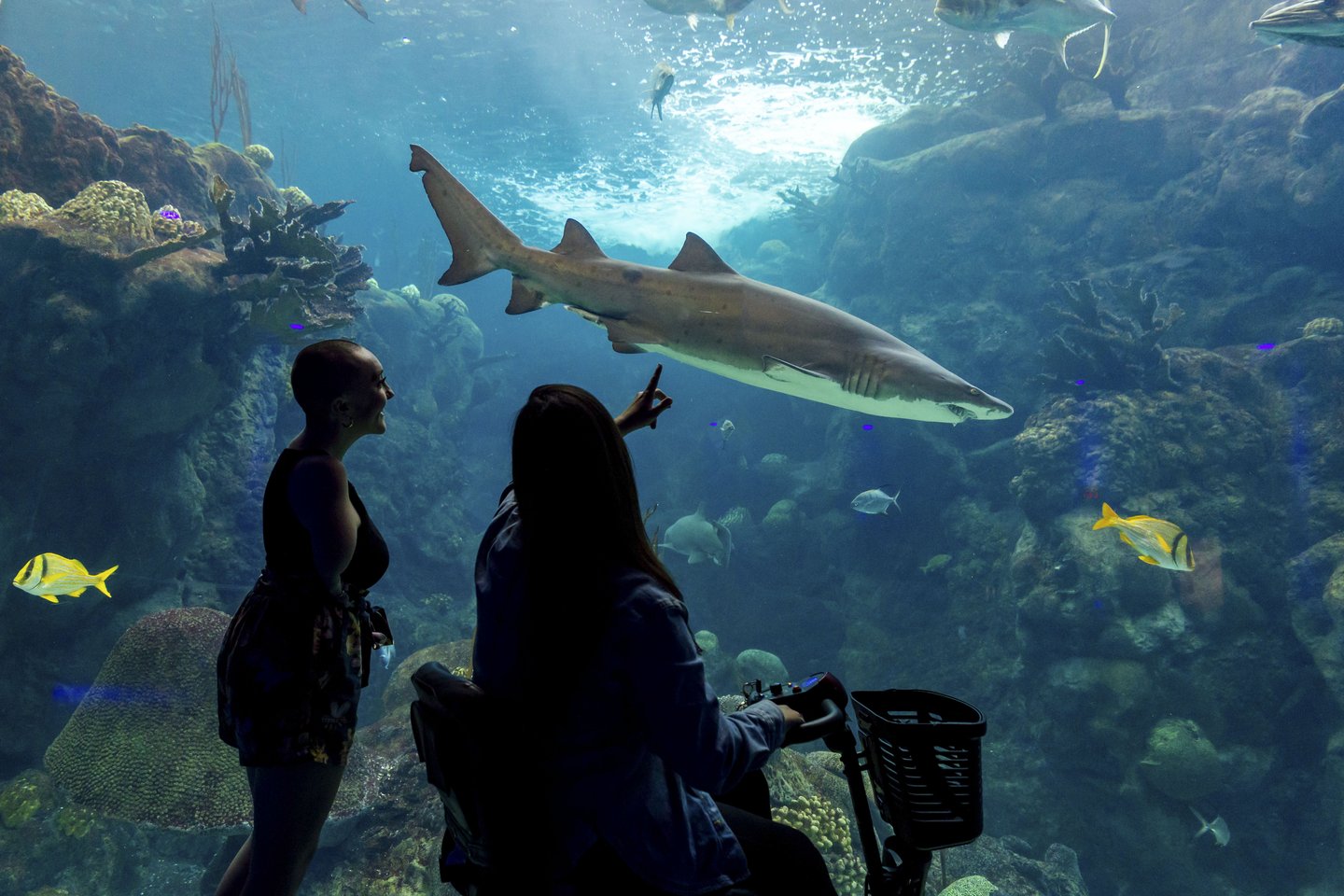
Two of Visit Tampa Bay's disability ambassadors, Emily Rowley and Chelsea Bear, visiting The Florida Aquarium

Smart Meeting asked CEOs of destination marketing organizations (DMOs) for tips on how to be more proactive in being accessible to travelers. Leonard Hoops, CEO of Visit Indy in Indiana, shared his personal experience with his son who sustained a brain injury at birth opened his eyes to the need to include prominent information about destination accessibility on websites.

For Santiago Corrada, president and CEO of Visit Tampa Bay, the moment of clarity arrived during discussions with the Mayor’s Alliance for Persons and Disabilities. He realized he desperately needed to include the disabled community into the scope of people his website provided for. Read on for ways you can make your event more accessible for all.


headshot of Yuvraj Saxena
Yuvraj Saxena

It’s easy to get excited about a product during a sales demo, but it’s important to know your event tech platform’s team will meet your expectations and your event’s needs. Here are the 10 questions you need to ask the event tech vendor before you get started.

What does my post-sale journey look like?

Their answer should provide a 360-degree view of what you can expect after you have contracted with the vendor; you need to know how they will handle your account from signing to the event execution. The event-tech vendor should give you clarity as a customer about the entire mapping and timing of your customer journey from before the event until after it is complete and beyond.

What does the handoff process look like, and how do you conduct a knowledge transfer internally?

Asking this question will preempt the loss of information in the transition between the sales and customer experience teams. The answer you receive will give you two perspectives on your vendor: how effectively the next set of stakeholders are prepared to manage your account/event and where you may need to avoid gaps in the knowledge transfer.

Read MoreHubilo’s MIX 2022 Asked Enduring Experiential Questions

From the customer’s perspective, the ideal answer will include the salesperson staying involved, so you know the information and requirements you’ve shared during the sales process don’t get lost. If there are separate teams at work here, you’ll want the vendor’s assurance that the knowledge transfer will be processed exactly according to your initial communication.

What are the channels of communication to which I’m entitled to receive support? And what is the expected response time?

Many customers expect omnichannel support (think email, text, phone and messaging apps). Ask which channels are the easiest and most timely. Matching the support needed to the timing for a response is critical for choosing the right channel, and it’ll be unique for every company and their teams. In our industry, you particularly need to know where to go for immediate support if your event is facing a day-of problem.

Where can I see “public” reviews or learn more about the customer experience you provide?

Look for one or two platforms that avoid bias and maintain honest reviews; we recommend G2 or Capterra. These sites will give a potential customer a much more accurate picture of the support the vendor actually offers. Asking directly for public reviews may put a vendor in an uncomfortable spot, whereas on an unbiased review website, you’ll receive a much clearer picture of what you can expect from their customer experience teams and how they have been delivering to their existing/past customers.

What are the top five reasons customers reach out for support or need you?

This question will give you an idea of the areas where existing customers of this product require the maximum amount of support. You’ll be enlightened about the product/service’s actual problem areas that may impact you, which can help you anticipate how you’ll use support hours.

For instance, if you had a question about how to take your event ‘live’, the response here should be that the platform is simple enough for you to operate without external support. But if the vendor mentions that customers often reach out regarding the technical support for the event to go live as one of the top five reasons, then you can safely assume the platform may not operate as smoothly as advertised.

What do the titles of designated/dedicated account manager (AM) and customer success/service/experience manager (CSM/CXM) mean? And what value will they bring?

This helps you as a client to understand the roles of the people who will be part of your customer journey and what level of support is available to you realistically. This will also tell you the level of effort and communication required to gain support from the vendor. A good follow-up question is to ask what value these people will bring to your team and your event; a great answer will reassure you that your vendor team has experience managing multiple events and has a wealth of knowledge to share.

What does the structure of the support team look like?

This will verify if the promises made to you are reliable or not. If a vendor promises 24/7 support with one person designated to that account, you know that the vendor is unlikely to deliver this realistically (simply because all human beings need to sleep at some point). However, if the answer reveals that the team structure has ample personnel working in tandem to help as required across time zones, you know you will receive the support promised at the time you need.

What does your availability look like, or how does the 24/7 thing work?

Service providers overuse the phrase “24/7 customer support”; you need to know precisely how support is relayed and what to expect from it. Especially if your event is outside of normal business hours, you need to know that you can expect someone equally skilled and knowledgeable to be available for immediate support via your preferred channels.

What does the escalation matrix look like?

This question is key as it informs a customer about the right person to reach out to. When you want to escalate an issue because you best understand the urgency of your work, you need to know ahead of time how it will be treated rather than finding out in real-time. Knowing the escalation matrix beforehand is helpful as you’ll have all the right contacts you need to speak to if the need arises; this will optimize your efforts to get the desired result from the vendor and ensure that your event runs smoothly.

How do you provide event day support, especially when things go wrong?

The often inevitable and unexpected problems that occur on the day of an event inspire this question, and it’s important for you to know what support will be provided if the worst happens on your event date. An email-ticket system for support will not work when the fastest industry SLA for email is four hours.

The best answer would be that your designated support person or team will be on standby through the event. The majority of issues, 85%, take place in the first two hours of an event; a proactive vendor standing ready to assist will be more beneficial than one using an email-ticket system.

Now that you have a solid set of initial questions to ask an event tech vendor, you’re likely to think of more to ask; that’s great! Every event is different and has its own set of requirements. These questions will help you gauge the vendor’s capabilities and/or pitfalls and give you an assurance that your event will be in the right hands because they have the experience and expertise you need.

Yuvraj Saxena is director of customer experience with Hubilo.


No one ever said waiting in line was supposed to be fun and welcoming, but a production company recently partnered with the Special Olympics USA Games to challenge the way attendees queue up.

In November 2022, edgefactory, a full-service media production company, partnered with the Special Olympics Healthy Athlete Experience in Orlando, Florida, to host and give free health screenings to 12,000 athletes over a seven-day period with the help of 600 doctors. Although many believe those with intellectual disabilities have similar or better access to healthcare, many struggle to access the medical care they need.

What transpired was an example of how design and technology can make even an event as large this one a simple, accessible and entertaining process.

Cue Up the Entertainment

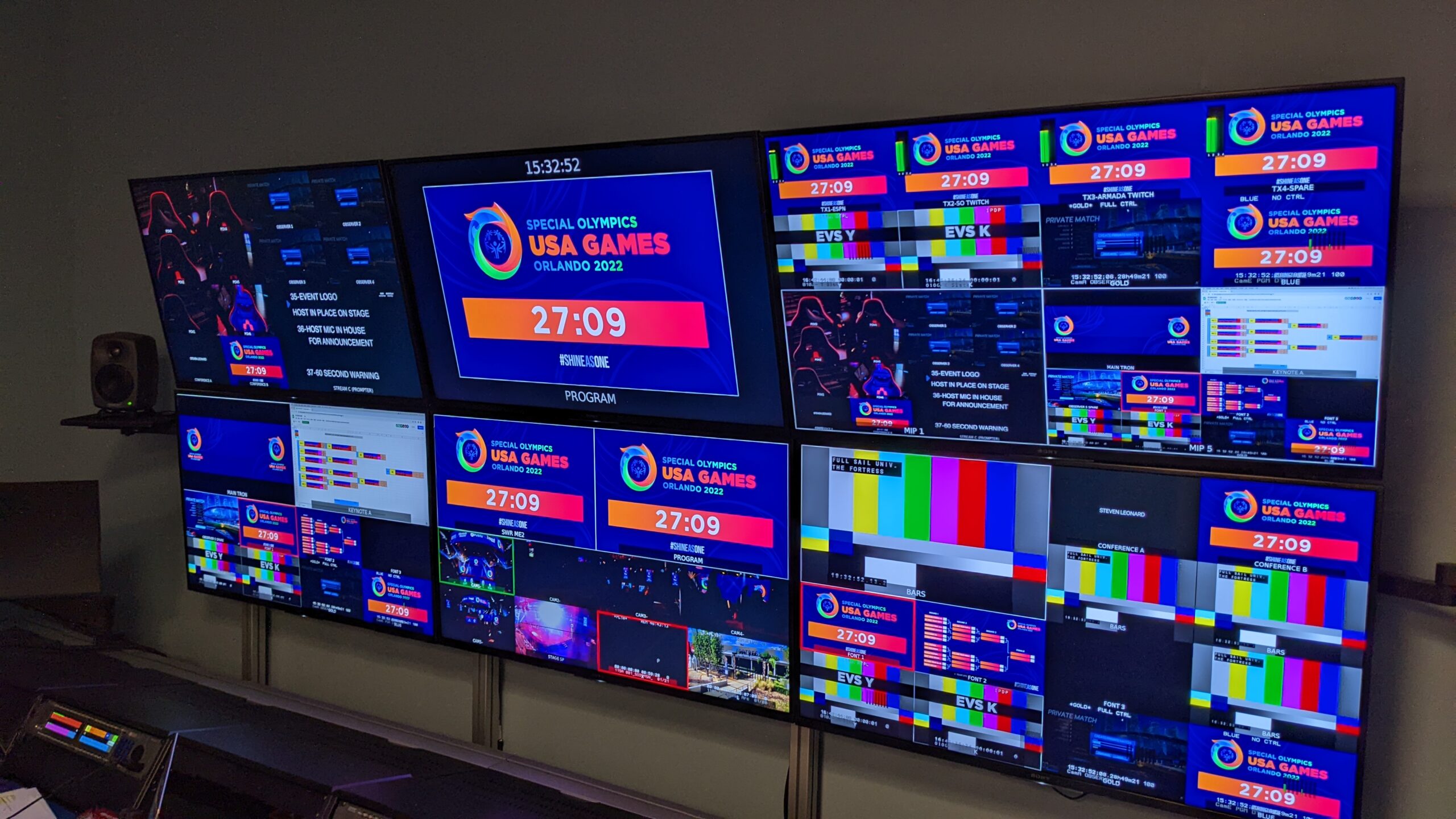
The creation of the event’s multiscreen queue system, using a combination of digital signage on screens, physical signage in the form of colored decals, and audiovisual cues, navigation though the venue was made easy. Screenings were offered in eight categories, such as optometry, podiatry, emotional health and dentistry. When an athlete’s turn was up, a number was displayed on screen, accompanied by a color and icon that symbolized the type of exam underway.

control room at special olympics usa games

To keep the energy up, edgefactory produced its own channel that displayed health, sports and fitness content on TVs around the space, with music playing during the whole event.

Edgefactory partnered with Qmatic to design the queue system, something that Brian Cole, CEO of edgefactory, says was beyond their scope with such a large number of attendees. “Together we were able to turn a typically tedious experience into a streamlined process,” he says. “Sometimes it’s necessary to take what is not working and find a tool, and then make that tool part of the show. Make it seamless.”

“Athletes enjoyed engaging with the video content streaming throughout the event, and the clarity and simplicity of the queue system kept stress levels down,” Cole says. “The Special Olympics USA Game organizers were extremely happy with the outcome of the digital elements of the queue system.”

Lessons Learned

Although many planners work on events of a smaller scale, there are still lessons one can take from this. “Plan plan plan,” Cole says. “Whether it’s a big show or a small one, having an accurate understanding of your attendees needs, and not just meeting them but going above and beyond, will help facilitate a more positive event experience.”

Cole says that while planners don’t need to go to the extent of making a customized queue system in the name of accessibility, what they can consider is how to incorporate accessible elements in other ways. “Even if only one attendee needs accommodations, you should always go the extra mile to ensure that everyone can experience the event, and that the content being shown enhances not hinders the experience.

“Even on a smaller scale, like a 500-person event, there are always opportunities to enhance experiences with well-thought-out content. There’s nothing more frustrating for an attendee than having to wait around, no matter the size of an event. You want to constantly fuel an engaging atmosphere. If you are checking in attendees on the first day of a smaller event, you can still set up signage and TVs with custom content to pump up and engage the audience for the rest of the event.”