Jeanette Stensgaard speaks on including meetings in company strategy
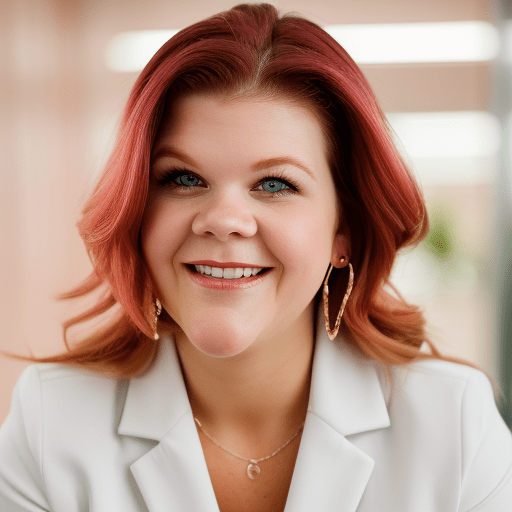
With more than 18 years in the meetings industry, Jeanette Stensgaard, MBA, CMP, HMCC, and Smart Women in Meetings award winner 2023 has entered the independent meetings world as the Chief Brilliance Officer for ShePlans Co. With a passion for revitalizing the ways companies build meetings and events into their overall business strategy, Stensgaard promises ShePlans Co. will offer meaningful, customized services bolstering the company’s long-term success.
“Not a lot of places have meetings as a part of their strategic plan. My hope is that She Plans Co. will really implement some strategic planning in meetings.”
Q: How did you first get involved in the meetings and events industry?
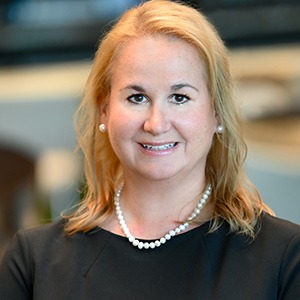
Jeanette Stensgaard
A: I kind of fell into it, which I think is the story for a lot of people. I started with the National Association of RV Parks and Campgrounds as their administrative assistant. There was a woman there who was running their meetings and needed some help. I learned a lot from her, she was so wonderful.
I just fell in love with the logistics of it and putting all the little pieces together to see this great big picture–the feeling of accomplishment at the end.
Q: What are some of the reasons you decided to enter the independent meeting field and start ShePlans Co.?
A: I have been in this industry for going on 18 years and most of my career has been in nonprofits or membership organizations. While I have a heart for nonprofits and I love meaningful missions, there’s really not a whole lot of room to grow there. I wanted the opportunity to really be involved in the hospitality industry and get some of these younger generations really excited about what hospitality can be.
Q: Why is meeting planning so important for businesses?
A: I really thrive on looking at a business as a whole and figuring out how meetings can affect your business outcomes. Not a lot of places have meetings as a part of their strategic plan. My hope is that She Plans Co. will really implement some strategic planning in meetings.
Q: What are some of the ways ShePlans Co. can help with rethinking event strategies?
A: One of the biggest ways is just looking at, “Where do we see ourselves in 10 years? How do we get there?” Those are the biggest questions you ask in your strategic planning process. When you look at [our work with] the Kidney Cancer Association, a door opened where they needed some budget cutting. ShePlans Co. needed an opportunity for growth, and it just aligned. [We] are on a contract basis now to do their meetings and I still get to be part of a really meaningful and important mission.
Q: What were some of the strategies applied when working with the Kidney Cancer Association?
A: We are very data-driven. We are collecting data from every point, from registration all the way to reconciliation. We are going to have that data about who’s attending, why they’re attending, really take those strips [of data] and those survey pieces and build those out to a five-year plan. We are also going to make sure we are getting those registrants who are truly going to make a difference in [the company’s] industry. ShePlans Co. really focuses on making sure we understand who the attendees are and making sure they have more than one reason to attend.
Q: What can we expect in the meetings and events industry for 2024?
A: We’ve really got to start looking at experience as something big. Bringing in those different ways of engagement. People have gotten their education online. That is not why they’re going to our meetings or events. They want to go and have an experience; they want to feel something.
A quest to find sustainable event experts leads to an emerging wine region in California’s Central Coast
It’s not your imagination. The quest to design green meetings often feels like a greenhouse gas-cutting limbo game. At first, it was enough to do away with plastic straws to save the turtles. Then the bar was set on removing single-use plastic bottles in favor of branded, refillable jugs. That was the slippery slope to carpet-free expo halls, plant-based meals and carbon-neutral lanyards—all measured and reported to show “return on environment” (ROE). Finding destinations, hotels and convention centers that had taken the steps to earn LEED certification was the new gold standard in sourcing partnerships. All of these are laudable steps in a world that is getting hotter and impacted by more extreme weather events every year. This is more than a sustainability moment for meetings. Green meetings are here to stay. But when the phrase “regenerative meetings” started getting tossed around, we were curious if that was even possible.
The term “regenerative” when applied to the environment goes beyond reducing harm and extends to actively restoring and revitalizing natural systems by addressing all inputs and downstream impacts.
The idea of designing events that require people to fly on an airplane to a location, house and feed them, produce a show that is impactful enough that they will remember, tell their friends and, ideally, return the next year, while not just minimizing environmental impacts, but leaving the world better seemed daunting. How do we consider the entire event ecosystem and find ways to incorporate restorative processes into our agendas to elevate the people and places we touch?
We decided to see for ourselves with a quick trip two-and-a-half hours south of Silicon Valley to the emerging wine and tourism region of Paso Robles where green seems to be the official color.
A Heart for Tourism
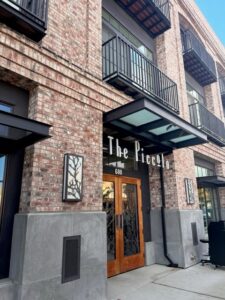
The Piccolo Paso Robles boutique hotel downtown
El Paso de Robles or “Pass of the Oaks” is a city of about 32,000 people in San Luis Obispo County, halfway between San Francisco and Los Angeles. Legend has it that the town was founded by Jesse James’ uncle in 1869. Food & Wine called the region the “Wild West” when it comes to wine production because of the creative approach to growing and blending.
Paso, as the locals call it, sits at the crossroads of highways 101 and 46 and the rolling hills are about a half hour from the Pacific Ocean and Cal Poly’s robust viticulture program. Tourism is a major economic engine as Golden State road trippers and international visitors alike are discovering the charm of the little downtown square, the laid-back vibe and the quality of the wines, culinary scene and venues. Heck, the city is home to five Michelin-ranked restaurants—In Bloom, Six Test Kitchen, The Restaurant at JUSTIN, The Hatch and Les Petites Canailles. That has to be a per-capita record of some sort. It also boasts creative cocktails at Cane Tiki Room, Eleven Twenty-Two Speakeasy & Cocktail Lounge, Pappy McGregor’s Gastropub and Fish Gaucho, all owned by cousins Troy Larkin and Donovan Schmit. Cheers to more than 150 tequila and mezcal choices and locking up your phone to make conversations with strangers more likely.
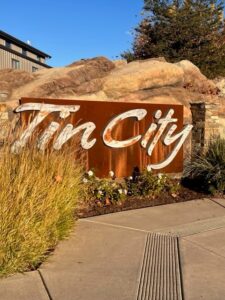
Tin City, an industrial park that doubles as a hub for tasting rooms boasts more than 20 craft producers in a four-block, walkable area. It also features fun breweries such as BarrelHouse Brewing Co. and distilleries such as Wine Shine, which repurposes grape juice from local vineyards to make award-winning brandies.
Stacie Jacob, president and CEO of Travel Paso, reported that transient occupancy taxes totaled $9.8 million in 2022. “Our diverse ecosystem of businesses, including wineries, distilleries, breweries, restaurants, art galleries and retail, keep guests coming back. Once a visitor discovers Paso, they return, which supports our local economy and creates a quality of life for all residents to enjoy,” she said. She continued: “Travel is at the heart of our region, powering a strong economy and strengthening our community’s culture and identity.”
A Wine Revolution
Anyone who has stared down the shelves at a grocery store wine wall will recognize Paso Robles staples such as J. Lohr Vineyards & Wines, JUSTIN Vineyards & Winery, Robert Hall Winery and perhaps even DAOU Family Estates (recently purchased by Treasury Wine Estates for $1 billion). More than 200 wineries dot the diverse soils, elevations and conditions that make up the 11 sub-American Viticultural Areas of Paso Robles AVA, many with small productions of unique grape varieties such as Lagrein, Picpoul in addition to Cabernet Sauvignon and Bordeaux-style varieties.
Due, in part, to the pervasive maverick spirit, the presence of all those Cal Poly enology grads and the reality of farming in an area where water supply can be sketchy, vintners of all sizes have pioneered organic and biodynamic practices.
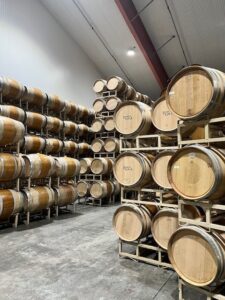
A popular grape-to-glass group tour of the winemaking operation at Robert Hall Winery demonstrates the sustainable steps taken from organic farming practices to minimizing waste materials during the fermenting process in the underground cavern. An experimental program called BioFiltro will employ worm digestive power to filter and recycle wastewater while using castings as a natural soil amendment. Yes, little red wigglers are part of the environmental plan. An e-bike vineyard tour offers a close-up of the biodynamic regenerative viticulture living case study being conducted to compare and contrast farming methods. It ends at the 2,000-square-foot, wood-beamed event room surrounded by patio terraces looking out over the vines.
Tablas Creek Vineyard
Asked about the source of the sustainable winemaking movement in the area, Grey Wolf Cellars and Barton Family Wines General Manager (and former fleet director of food and beverage operations with Princess Cruises), shrugged and said, when one day nothing happens when you turn on the faucet, that is a sign that dry farming just makes sense. Some say the practice of relying on rainwater management rather than irrigation actually results in more flavor-packed fruit. Barton Family second-generation owner, director of winemaking and Cal Poly grad Joe Barton, Jr., expanded the operation to include a food program and event space that has been used to support local community functions, including MUST! Charities for youth mentorship, poverty and hunger. His commitment to giving back to the community where he is raising his family is another example of that regenerative approach to business.
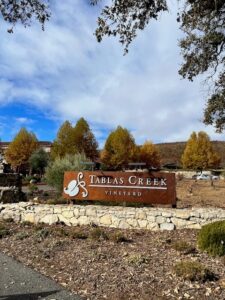
When it comes to regenerative wine practices, the road literally leads to Tablas Creek Vineyard, which sits at the end of windy, tasting-room-lined Adelaida Road. Actually, the earth-friendly story starts much earlier than when the winery was established in 1987. The roots came from the Perrin family that started Château de Beaucastel in France in 1909 and Jacques Perrin pioneered organic farming there in the 1950s. Wine legend Robert Haas imported those fabled wines to the United States and eventually worked with the family to bring Mourvedre, Roussanne, Viognier, Marsanne and other rootstocks to start a winery in an area of California that mirrored the climate and soil conditions of Châteauneuf-du-Pape. Robert’s son, Jason Haas is now partner and general manager, leading the charge that distinguished Tablas Creek the first Regenerative Organic Certified vineyard in the world in 2020. The Regenerative Organic Alliance, which grants the certification, describes regenerative farming as an operation that “respects land, animals, empowers people and restores communities and ecosystems.” Some 15 wineries around the world now claim the distinction.
Patio overlooking vineyards at Barton Family Estate
What sets the practice apart from traditional organic and biodynamic practices is a holistic approach. Haas shared his philosophy on his blog by breaking the effort into four buckets. The first step is to build healthy soils rich in organic matter by including cover crops, grazing animals, compost, biochar (carbon from wood chips, plant residue, manure and other agricultural waste) and employing minimal tilling. The goal is to use natural solutions for pests, weeds and fertility. Water and energy are conserved as much as possible by employing dry-farming methods, steam cleaning, diverting wastewater to a wetland habitat and installing solar panels to capture the abundant sunshine. Haas also hyper-focused on the impact of packaging and shipping choices—something meeting professionals have some control over in the run-up to events. More than half of the carbon footprint of the average California winery comes from making and shipping bottles of wine. Tablas Crrek has shifted to lightweight bottles, kegs for wholesale and tasting room purposes and now, boxed wine!
Visitors to the tasting room may learn another part of his approach to regenerative operations. Tablas Creek invests in employees by paying living wages with retirement benefits and ongoing training. Haas saw the practice as a logical extension of the care taken with the rest of the operation since they are, “the team that has their boots on the ground and their hands on the vines.”
Finally, Haas calls for spreading the word about regenerative practices. “We want to be the pebble that starts an avalanche,” Haas said.
Regenerative Hospitality
Biodynamic farming may be well and good for an agricultural enterprise like growing grapes, but how does that translate into meeting spaces? In Paso Robles, everything is integrated.
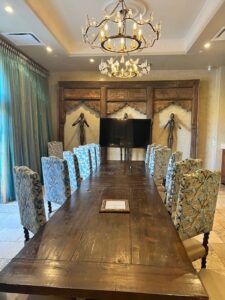
Dylan Boardroom at Allegretto Vineyard Resort
Consider Mediterranean-styled Allegretto Vineyard Resort by Ayres, which includes 35,000 sq. ft. of meeting space, 171 generously sized and furnished guest rooms, a winery tasting room, a chapel and an acclaimed restaurant that is also a favorite for locals. Fourth-generation hotelier Douglas Ayres has filled the property with his favorite art from around the world, references to music in the name of the property (a term meaning to play moderately fast) and the shape of a sound labyrinth (you have to experience it to understand). He was a cello player and the restaurant masterminded by Executive Chef Jeremy Fike bears the instrument’s name. The property also incorporates spirituality. The exquisite gold and blue boardroom is named after Ayres’ son, Dylan, who died in a car accident at the age of 15. The Spa, too, takes a holistic approach to wellness with Chara fitness classes and poolside cabana massages. Events in the Tuscan-inspired Veneto Ballroom and Conference Center often flow out into the courtyard to end the evening in wine barrel chairs by the firepit.
That same blending of business and pleasure happens at Cass Winery, where the family-owned 145 acres is billed as French DNA + Paso Personality. The property is also home to a new Barrel Room event space for 200 situated in the oak trees and eight boutique guest rooms as part of Geneseo Inn, a retreat that includes Cass Farmhouse Experience with three bedrooms and a full kitchen. At this bed and breakfast (local gourmet fare is brought up from the on-site cafe), there is not a ruffle in sight. The modern, amenity-filled rooms are snugged into industrial shipping crates, a feature ubiquitous to winery life. Also natural to the landscape, the addition of Camp Cass, run by head counselor Chase Aldrete, who leads groups through archery, axe-throwing and wine-blending activations in the midst of the vineyard. Horseback and Third Wheel Tours in motorcycle sidecars allow guests to explore the operation in style.
Sensorio Field of Light: Photo from sensoriopaso.com
Need another glowing example? A recent addition to the landscape is Sensorio Field of Light, 15 acres of a former turkey ranch that has been transformed into nightly programmed art light shows. Built into the rolling hills is The Terrace Club where groups can listen to bands from a new stage, enjoy customized menus from Mercado restaurant and adjacent Airstream trailers while watching the landscape come to life. The newest addition coming to the site, DIMENSIONS, will be an interactive experience inviting guests to walk thought the oversized geometric art exhibit.
Meeting Prof Action Items
What can meeting professionals take from this exploration of a place that organically draws on its gritty past to build a future that is richer, healthier and more inclusive by nurturing a taste for unique characters and fresh ideas? We came up with this short list but we encourage you to add your own spin.
Start With Your Root Stock: What makes your event and the community that attends it unique? How can you amplify your distinctive features by giving a voice to your thought leaders at your event or between events?
Take Stock: List everything that will be required to pull off the event from signage and swag to food and flowers and consider how you can either limit, repurpose/reuse or source smarter. What is already in the destination that you can embrace and share with attendees? What can you bring to leave behind that will be seen as valuable?
Blend Purposes: Include your regenerative goals in your RFP. Work with a partner who aligns with your sustainability goals and can challenge you to rethink your approach to creating and handling waste, energy and emissions. Help each other deliver better outcomes for everyone just like the cover crops and the worms in the field.
Think Outside the Ballroom: Consider all touch points from traffic generated and families coping with one parent out of town to housekeepers employed and business supported when designing the program. Can you combine meetings to consolidate trips required, organize a CSR program to help the local community in a time of need, spread the room blocks so as not to overwhelm one staff? Is everyone working on the event earning a fair wage? Can you make it a win-win with some creative problem-solving?
Practice Patience: An award-winning vineyard doesn’t grow in a day or a year. Time, experimentation and passion eventually result in a pleasing product that will still have to be tweaked year-after-year to accommodate for changes in conditions, tastes and resources available.
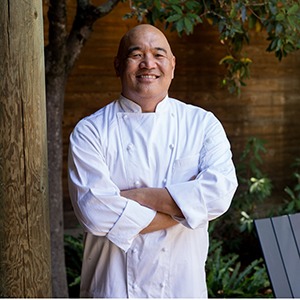
Alan Kwan
Alan Kwan, Alila Ventana Big Sur
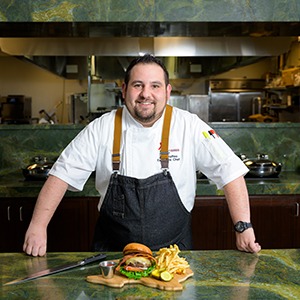
Kwan takes on the role of executive chef at Alila Ventana Big Sur. Born and raised in California, Chef Kwan has held culinary roles around the world and prides himself on his global approach in his menus. He has held numerous executive chef roles and now looks forward to leading the team at the coastal California resort.
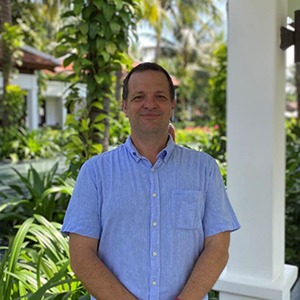
Geoffrey Crabbe
Geoffrey Crabbe, Anam Cam Ranh
Crabbe joins the Anam Cam Ranh as culinary director. Most recently, he served as operational manager and executive chef at The Grand Cathedral Square in New Zealand. Throughout his over three decade career, he has served as an executive chef also in Vietnam, Cambodia, Australia, Fiji and South Africa.
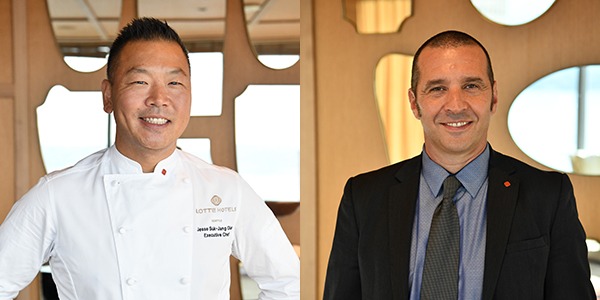
Jesse Olsen and Antonio Giovanni Artale
Jessie Olsen and Antonio Giovanni Artale, Lotte Hotel Seattle
Lotte Hotel Seattle appoints two new culinary masters to their food and beverage team. Olsen will serve as executive chef. Born and raised in Seattle, he has spent his over 30-year career at luxury hotels and Michelin-starred restaurants around the world. Most recently, he served as executive chef at Seattle Tennis Club.
Artale will serve as director of food and beverage. He has managed hotel fine dining across the U.S. in addition to leading numerous restaurants and bars in Sicily. He has served as director of food and beverage outlets at The Chartler Hotel, Curio Collection by Hilton, restaurant general manager at Afuri Izakaya in Oregon and more.
Andrew Caine
Andrew Caine, San Ysidro Ranch
San Ysidro Ranch appoints Caine as director of food & beverage. Most recently, he served as general manager of Michelin-starred Caruso’s restaurant at Rosewood Miramar Beach in Santa Barbara. He holds master’s certification in hospitality management and administration from Cornell University and a WSET Level 2 certification.
Christian Flores
Christian Flores, Café Whitney at Whitney Peak Hotel
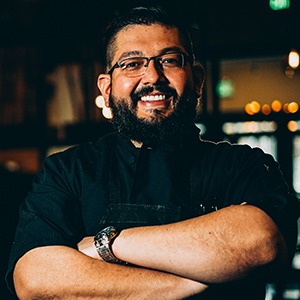
Flores rejoins Café Whitney at Whitney Peak Hotel as executive chef. He will manage the restaurant, kitchen and bar teams, lead menu development and oversee all food and beverage operations in addition to overseeing the menus of special, curated events. He is committed to blending creativity with simple, approachable dishes made up of seasonal ingredients in all his work.
Jonathan Gutiérrez
Jonathan Gutiérrez, Grand Geneva Resort & Spa
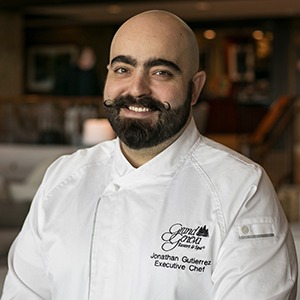
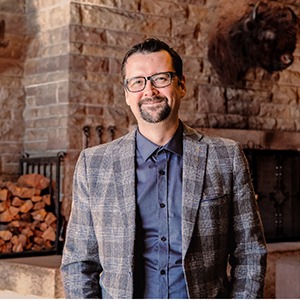
Gutiérrez is appointed as executive chef at Grand Geneva Resort & Spa. Throughout his career, spanning over a decade, he has drawn national recognition for creating whimsical, creative dishes, inspired by everything from popular culture to locally sourced ingredients. He has worked in several notable restaurants and resorts, most recently as executive chef at Omni Rancho Las Palmas Resort & Spa.
Joshua Murray and Stephen Ullrich
Joshua Murray and Stephen Ulrich, Conrad Orlando
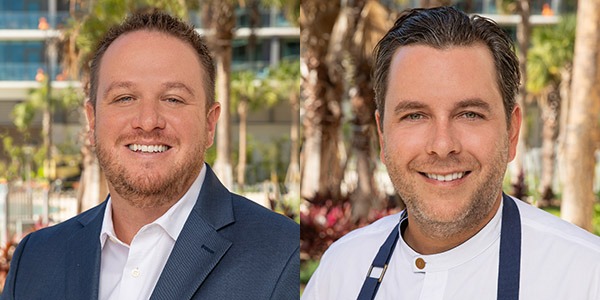
Conrad Orlando welcomes two new culinary executives to their food and beverage leadership team. Murray will serve as director of food and beverage. He brings over 20 years of experience in upscale restaurants, hotels and resorts. He brings extensive experience with the Conrad Hotels & Resorts brand, having served as both director of food and beverage and executive chef at Conrad Washington D.C.
Ullrich will serve as director of culinary. He was educated at the French Culinary Institute in New York City and held roles at many notable establishments while in New York, including Seasonal Restaurant & Weinbar when it earned its Michelin star. He has also served as executive chef at many top resorts as well, including 1 Hotel Miami Beach and Carillion Miami Wellness Resort.
Joseph Graffeo
Joseph Graffeo, Marriott Marquis Houston
Graffeo takes on the role of executive chef at Marriott Marquis Houston. He will manage culinary programming and innovation at the property’s multiple culinary venues as well as in-room dining, the banquet kitchen and limited-edition dining experiences. He is a graduate of the Culinary Institute of America and has held positions at numerous Marriott properties, including in Philadelphia and Phoenix.
Adil Berrady
Adil Berrady, Kimpton Gray Hotel
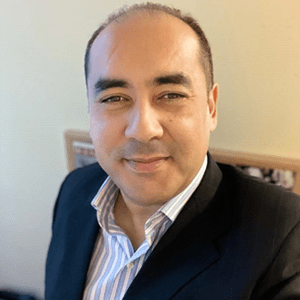
The Kimpton Gray Hotel appoints Adil Berrady as director of food and beverage. He will draw on his over 20 years of experience as he oversees the hotel’s two dining outlets, Vol. 39 and Boleo. He has enjoyed a diverse career, serving in roles from international brand ambassador for Morocco at Walt Disney World Resort’s EPCOT to general manager of multi-unit operations at Chicago O’Hare International Airport, as well as numerous F&B positions.
Jamie Hussey
Jamie Hussey, Fairmont Jasper Park Lodge
Hussey joins Fairmont Jasper Park Lodge as director of food and beverage. He has lived in Jasper for the past four years, so he brings extensive knowledge of local ingredients within and near Jasper National Park and Fairmont Jasper Park Lodge’s environmental stewardship. He has served as executive chef in upscale hotels and golf clubs as well as director of food and beverage roles at numerous local businesses.
How emerging AI and other technology will boost event humanity by putting attendee needs at the center of conference design
Attendees expect more from events today and emerging technology is helping to deliver on those demands. We sat down with the Maritz team to ask what top event technology trends they see for 2024 and how they will fundamentally change the meeting professional’s job. Yes, Generative AI is at the top of the list, but some of the use cases may surprise you. “It’s really a transformational year in terms of how we’re moving and growing,” said Amy Kramer, market and product innovation leader with Maritz.
1. Generative AI Event Content
The generative AI being developed today will do more than take tasks such as creating marketing emails, agendas and registration websites off meeting professional plates so they can do more valuable things. It will also be interactive. Kramer shared some highlights. Attendees will interact with generative AI to ask, “What’s the best use of my time if I want to do A, B and C?” It will automatically plan their agenda and get them booked on a flight and with a hotel that will meet their specific needs.
Intuitive devices could also help capture and extend the usefulness of content streams when humans feel overwhelmed by the deluge of information coming at them day after day. After an eight-hour session, a chat service can record and summarize the main points of a presentation in a handy event recap. It can turn that conversation into a training module and create blog and social media posts.
“We need to build that technology into our events to give them flexibility. It’s a new language of how you talk to technology that has to be embedded in event design,” she said.
The result could be more experimentation. Aaron Dorsey, vice president of product management, information security and privacy at Maritz explained, “When we free up people’s time, that’s when they can be more creative to think about guest needs and making sure the experience is connecting. It opens up so many other previously considered nice-to-have doors.”
2. Metaverse and Digital Event Experiences
After the pandemic, attendee needs changed dramatically, according to Kramer. Shifting generations are looking for immersive experiences like the digital worlds they see in video games with alternate realities and metaverse scenarios to explore. “Kids coming into the workforce now have grown up using virtual reality tools and have an expectation that the world is going to shift how they engage at events, how they engage with other people and how they do their jobs every day.”
“Overall design has evolved,” said Sarah Kiefer, vice president of brand for Maritz. She pointed to the multisensory elements at IMEX Las Vegas this year where audio-visual technology was used to create a sense of place using color, music and even scents. “We need to use different types of approaches to have different impacts,” she said.
Measuring the value of events for the C-suite, the community or to explain what we do to our families, will require new key metrics. “The return on business objective will be front-and-center in 2024,” said Kramer. If the payoff is more than revenue, then we need to find new defining metrics. Is that Experience? Brand presence? At IMEX 2023, Maritz was measuring the “imprint of presence” and the return on that. “We are showing the impact that Maritz has and creating a model that draws insights from the data,” she said.
Technology may even solve the age-old challenge of getting people to take surveys. Facial analysis can determine what people are reacting to and give sentiment reports that are much more accurate than self-reported feelings.
In addition to the business return on experience, technology can even overlay the impact of the event carbon footprint to consider all costs. “We can measure the impact on our organization, or people but also the impact on the destination and the planet,” said Kramer.
5. Creating Community
Kramer pointed out that the evaluation of meeting impact should not stop at the expo hall door. The ROI often extends throughout the year. Technology can help create a platform for community so attendees can interact with people who weren’t even at the original event. It helps extend the results outside the convention center walls. “We need to use technology to measure that,” she said.
6. Digital Event Security
Meeting professionals have a responsibility to use all this new technology wisely. “We need to protect our client event data with an enterprise model that accesses the power of consumer-based tools such as ChatGPT and Google’s Bard AI tool while restricting client data and learning to use that data strategically,” said Kramer.
Loretta Yingling, CMP, entered the hospitality industry at 19 years old, working in front office and operations, not soon after a representative from a hospitality program at a local business school visited her high school and spoke to her class. She had considered becoming a teacher, a veterinarian or even a lawyer, she says, but “Suddenly, I just knew that was my career path. That was over 30 years ago, and I still love my chosen field.”
She worked in hotels for over a decade before entering the world of CVBs. Now, she works as the national sales manager at Visit Raleigh. “18 years later, I can truthfully say I made a good choice!”
Why She Became a CMP
“I believe the CMP designation has helped me especially when I’m working with a planner that I might not yet have a strong relationship with. I feel like we are much closer to being peers in the industry, instead of just planner and supplier, and we have a deep mutual respect for each other,” she explains. “That is extremely valuable to me.”
There’s no question that the designation brings with it a level of professionalism and knowledge. Before she earned her CMP, Yingling remembers, “When I saw those letters after a person’s name, I knew they were someone I could trust to be a professional in our industry. [It] brings with it the knowledge that the individual who has earned the CMP designation worked hard to achieve it and takes our industry very seriously (as I do!).”
The Value of Continuing Education
Yingling considers herself to be a lifelong learner. One of her favorite things about the industry is that it encourages her to learn continuously. “Not one day in my life at work is ever the same!” she says. Any time she has a chance to join an education session at a conference or online, she pursues it. Not only can she earn CEUs for her CMP recertification, but, she says, it’s so helpful for her own professional expertise. “I love exchanging ideas with planners and learning what really matters to them.
“I recently attended a session at a conference that was set up like a fish bowl—which was NOT in the CMP study guide!” she says. “The learning was incredible because it was the sharing of knowledge from the actual attendees—and attendees have so much knowledge.”
She sees continuing education as critical for the success of the industry as a whole and for the individuals within it. “Trends are always changing. Technology is always changing,” she says. “I just keep learning and being open to changing the way things have been done previously. I believe we need to be open to change to thrive in this industry.” As Yingling has explained, the CMP certification is one of many outstanding ways for a professional in the industry to demonstrate their commitment to lifelong learning, flexibility and professional development.
Earning the CMP
The first time she applied to take the exam, Yingling did not have enough points to qualify; however, this only motivated her more. She began volunteering more often, writing articles and planning events on a volunteer basis. “Having it be something that wasn’t easy to achieve made me desire it even more,” she remembers.
This level of work it takes to earn the CMP designation can be intimidating for many. It was for Yingling, too. When she was preparing to take the exam, she says, her director of sales at the time told her, “I know incredible people who have taken the exam and passed, and I know incredible people who have taken the exam and failed, and it was okay. Don’t worry!”
When Yingling joined a study group, there was a member who had previously taken the exam and didn’t pass. This member did not give up, though—she gave it another try, this time with a study group. Each member read and outlined assigned sections of their readings then presented it to the whole group in each weekly session, and Yingling says it was her absolute favorite way she studied.
After all the preparation, studying and worrying, Yingling says, “I’m happy to say that everyone in my group passed.” As for that member who had joined the study group to prepare for her second try on the exam, Yingling says, “She was proof positive to all of us that the study group was key.” This member is also proof that failing the exam is not the end of the world—it is a chance to learn more and to value yourself and your career enough to try again.
Study Tips for the Road
And the study group wasn’t the only way Yingling prepared.
“I read the entire book more than once,” she says. “I was scheduled to take the exam in January, and when my family drove to Ohio from North Carolina during the holidays that year, I literally re-read the entire book in my 18-hour round trip car ride.”
Yingling remembers wondering if she should wait until her children, five and seven at the time, were older. But she found that she was able to balance her home, professional and educational lives with hard work. “I would say to anyone, don’t wait! It is possible to study and take this exam while you are busy with life. Because let’s face it—when are we not?”
She also recommends taking as many practice exams as possible to get a feel for how the questions will be worded on the exam.
Like many of the CMPs featured in this Spotlight Series, Yingling stresses that everyone learns differently, so it’s essential to determine which study methods work best for you.
Importantly, she says, “Anyone preparing to take the exam should try to let go of putting pressure on themselves about passing. I just feel that makes it more difficult and adds anxiety that none of us need. Find peace in knowing that you have prepared to the best of your ability, and don’t be hard on yourself if you don’t pass the first time.”
The CMP Today
Since Yingling earned her CMP 14 years ago, she says things have changed drastically—in the very best ways. She remembers using carbon copy papers to keep track of her CEUs and maintaining a thick folder filled with them. Now, when she attends an event that offers CEUs, she’ll simply receive an email from EIC, and all she has to do is edit the number of CEUs that she sat for in the education sessions she attended.
“I am so grateful to EIC and how hard they’ve worked to put systems in place to make the tracking easier,” she says. When it comes to the actual exam process, she says that it is far easier with modern technology. She had to travel to Washington D.C. from her home in Raleigh, North Carolina to take the exam at a hotel. There, she bubbled in a scantron, and didn’t get her results until eight weeks later. Now, she says, “I have a friend taking the test soon from home on her laptop—talk about change! And this way, you find out immediately whether you passed or not.”
Looking back, Yingling says, “When I think about how different our industry was when I began my career as a 19-year-old front desk agent, I am just amazed at how far we’ve come. How strategic our industry is. How important relationships are. How we have evolved post-Covid. How important diversity, equity and inclusion has finally become. How it’s now standard to do community service as part of a conference in the destination you are in.”
Her favorite quote—Harry Potter fans, get ready—applies to both the industry and life as a whole. Albus Dumbledore said, “Happiness can be found even in the darkest of times, if we only remember to turn on the light.”
“Always turn on the light!” Yingling says. “Be the light!”
Recent Debuts to Host Destination Meetings with Serious Style
The East Coast welcomes spectacular renovations and grand re-openings of unique venues that are certain to invigorate attendees with the charm of their dreamy destination and the distinct character of their storied history. Meet in what was once a vaudeville theater, in the first Hilton property established in Boston or on the edge of the Atlantic Ocean.
To the Theater
Meeting space at Renaissance New York Harlem Hotel
The site that once housed the landmark 1917-established vaudeville venue, Victoria Theater, and later a historic cinema, had gone unused for many years—until recently, when Renaissance Hotels opened Renaissance New York Harlem Hotel. The location in one of Harlem’s original Opera Row venues—only two of which remain today—is one that offers a culturally rich experience. The renovation that transformed the site into a hotel space preserved the original marquee and ticket booth and the extraordinary old-world staircase at the entrance. Throughout the property, black and gold trim maintains an interior design that celebrates the Harlem Renaissance era of the early 20th century. Event spaces implement design elements that pay homage to Harlem’s historical icons and artists.
The opening marks Harlem’s first full-service hotel in a century. 9,000 sq. ft. of meeting and event space across five venues can each accommodate up to 300 people. Event spaces are fully customizable, with the ability to host anything from board meetings to team-building retreats to performing arts.
In the Back Bay neighborhood of Boston, Hilton Boston Park Plaza recently debuted and rejoined the Hilton Hotels & Resorts portfolio. The property was Hilton’s first hotel in Boston when purchased by Conrad Hilton in the mid-20th century, then called Statler Hilton. Today, the property offers 70,000 sq. ft. of meeting and event space, 1,060 contemporary guest rooms and two restaurants—Off the Common and Strega Italiano.
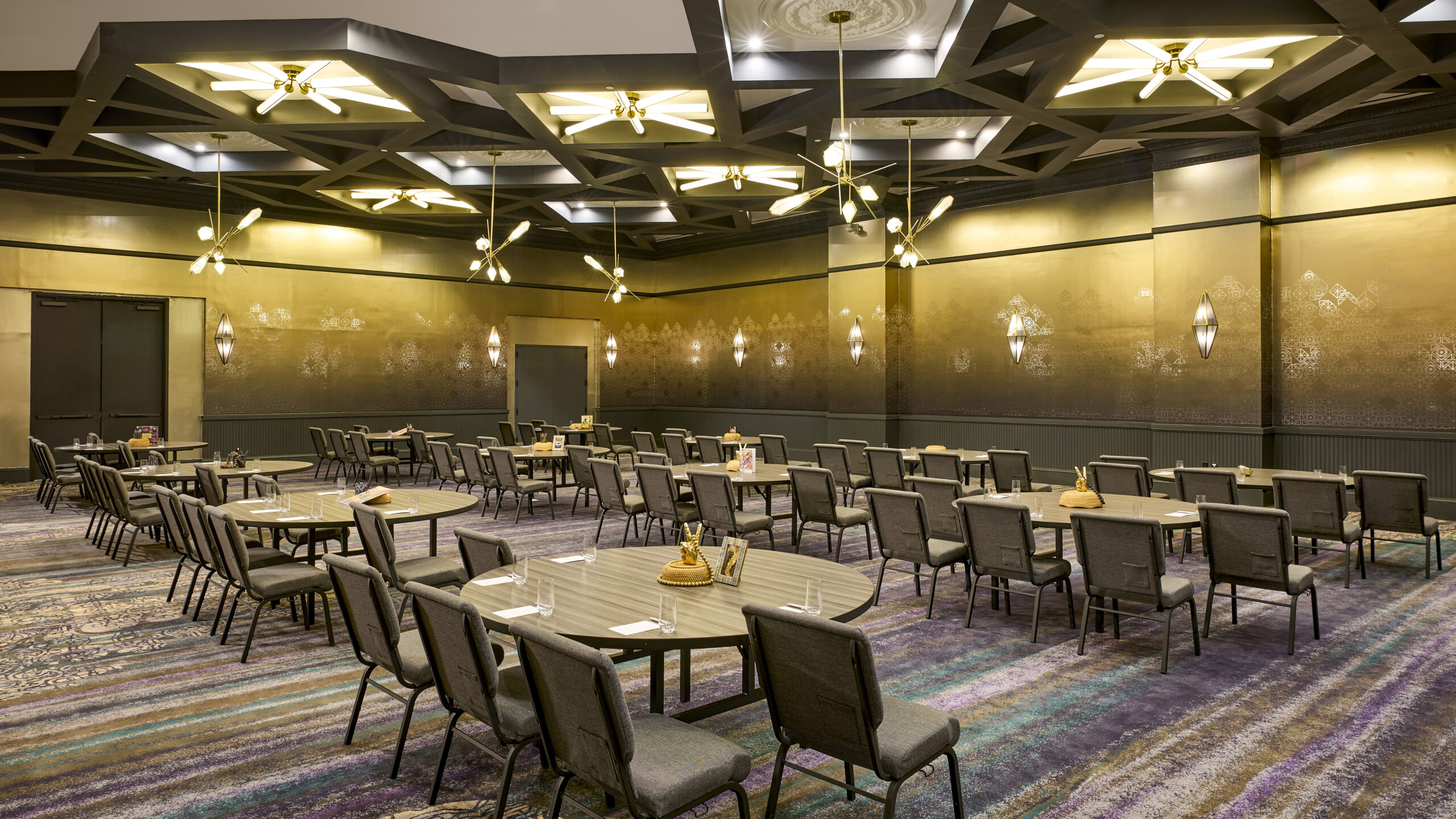
The guest rooms, which include 55 suites, are brightly lit and feature New England inspired artwork and stone-topped cabinetry. The expansive meeting space includes a 13,215-square-foot Grand Ballroom with floor-to-ceiling windows, original Baccarat Crystal Chandeliers and ornate balconies. Avenue 34 and The Square offer a more city-inspired, chic design. With 35 meeting rooms and three ballrooms, planners can design their perfect event, from social gatherings to corporate meetings.
Throughout its over-100-year history, the hotel has hosted numerous U.S. Presidents, dignitaries, celebrities and cultural events. It is conveniently located only four miles from Boston Logan Airport and only a block from the historic public park, Boston Common. It stands near the Theater District and the Arlington T Station, so guests can easily explore the entire city.
Making Meetings a (Sea) Breeze
The Shore Deck at Ashore Resort & Beach Club
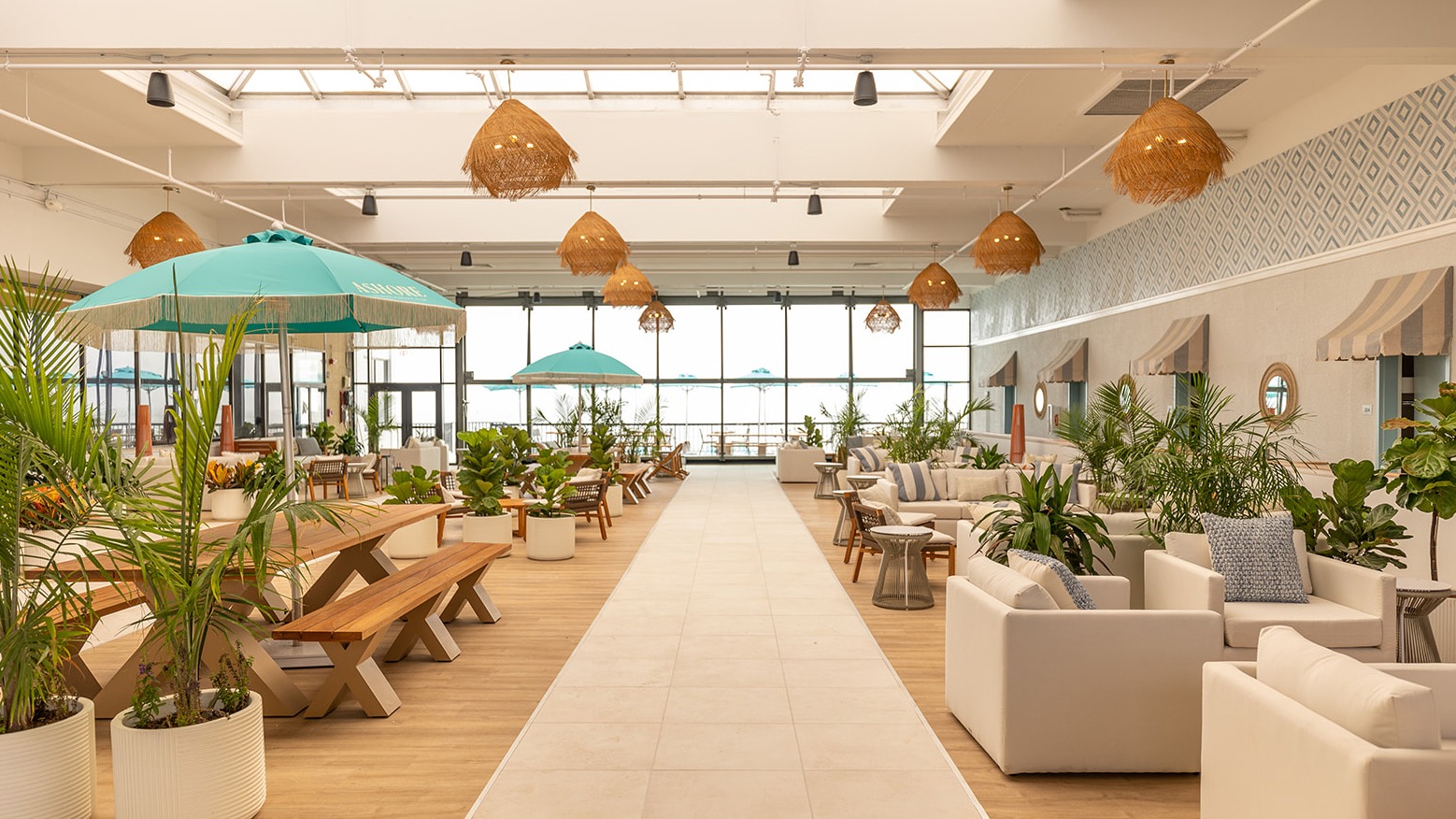
On the beachfront of the Atlantic Ocean is the newly renovated Ashore Resort and Beach Club in Ocean City, Maryland. With 250 guest rooms and 40,000 sq. ft. of event space, the resort’s panoramic ocean views are just one of the many things that draw planners here. The guest rooms all emulate the coastal atmosphere with sea-inspired textures and color palettes and a sliding glass door that leads to a terrace with ocean views.
The resort’s largest conference room spans 7,500 sq. ft., and is only one of 16. The 5,775-square-foot Shore Deck is a pristine beachfront gathering space with skylights and floor-to-ceiling doors that wash the space in natural light and offer easy access to Atlantic Ocean views. A wide selection of seating and standing options, as well as AV capabilities, make for a versatile space that can easily transition from daytime meetings to post-meeting festivities.
Ashore’s signature restaurant, Tide Room, also saw renovations and now features indoor and outdoor seating—also with those spectacular ocean views—and a dedicated event space plus more customizable options.
Major brands are set to debut highly-anticipated hotels in the coming year
2024 brings a wave of highly anticipated hotel openings in some of hospitality’s biggest brands. Some have all the meeting space you can imagine; some are in destinations you dream of meeting in; others are brimming with personality and provide a one-of-a-kind experience for your attendees. Discover the most anticipated openings throughout 2024 at Marriott, Hilton and IHG Hotels & Resorts.
Marriott
AC Hotel Naples 5th Ave
From Old Naples, the gem of southwest Florida, comes AC Hotel Naples 5th Ave, opening early 2024. The property stands on Naples’ unofficial main street with a wealth of shopping, dining, cultural arts and entertainment options. The rooftop pool and accompanying destination restaurant and bar Limón make for all-around luxury in the sunshine.
The property offers 150 guest rooms and 2,500 sq. ft. flexible meeting space between two meeting rooms.
Aloft Orlando Lake Nona
The lively, artistic neighborhood of Lake Nona, in Orlando, Florida celebrates the upcoming grand opening of Aloft Orlando Lake Nona. This space embraces innovative new technology and champions a bustling social atmosphere. Whether guests are enjoying signature cocktails and live music at the W XYZ Bar, handcrafted meals of locally sourced ingredients at Tempo + Grace or playing at the first-floor pool table under ambient lighting, the options to connect are endless.
The property offers 17,032 sq. ft. of meeting space across 6 rooms, an outdoor pool deck and backyard, as well as direct access to brand-new 10,000 sq. ft. Althea Lake Nona Events Center.
Element Albuquerque Uptown
While admiring the picturesque Sandia Mountains, guests at the new Element Albuquerque Uptown will enjoy the endless inspiration of the property’s nature-inspired, sustainable design. Open concept guest rooms welcome in abundant natural light, and during downtime, guests will relish the opportunity to enjoy the hotel’s Bikes to Borrow program to explore the area.
The property offers one 1,000 sq. ft. room, perfect for a small meeting with a breathtaking backdrop.
Hilton
Signia by Hilton Atlanta
The opening of Signia by Hilton Atlanta kicks off 2024. The opening of the property marks the city’s largest ground-up development in 40 years. Along with eight signature food and beverage experiences and a spa, beauty bar and fitness center, guests will be left in awe of the bright spaces across the property.
The 976-room hotel offers over 100,000 sq. ft. of meeting space and the largest ballroom in Georgia. It is also directly connected to Georgia World Congress Center via a pedestrian walkway and is located adjacent to venues such as Mercedez-Benz Stadium and State Farm Arena.
Opening in January 2024 is Conrad Orlando, nestled on the lush 1,100 acres of Evermore Orlando Resort and buffered by a nature preserve. Guests can enjoy five onsite restaurants and lounges and take in the views at the property’s eight-acre crystalline lagoon.
The property offers 433 rooms and 40,000 sq. ft. of indoor meeting space.
Cloudland Lookout Mountain, Curio Collection by Hilton
In February 2024, Cloudland Lookout Mountain, Curio Collection by Hilton, will open its door to offer visitors access to an expansive mountaintop resort on the cliff-edge of Lookout Mountain in Georgia. Views of McLemore Cove and the Blue Ridge Mountains are readily available for guests to enjoy between visits to the spa or rounds of golf.
The property offers 20,000 sq. ft. of meeting and event space with two sub-dividable ballrooms and four meeting rooms.
IHG
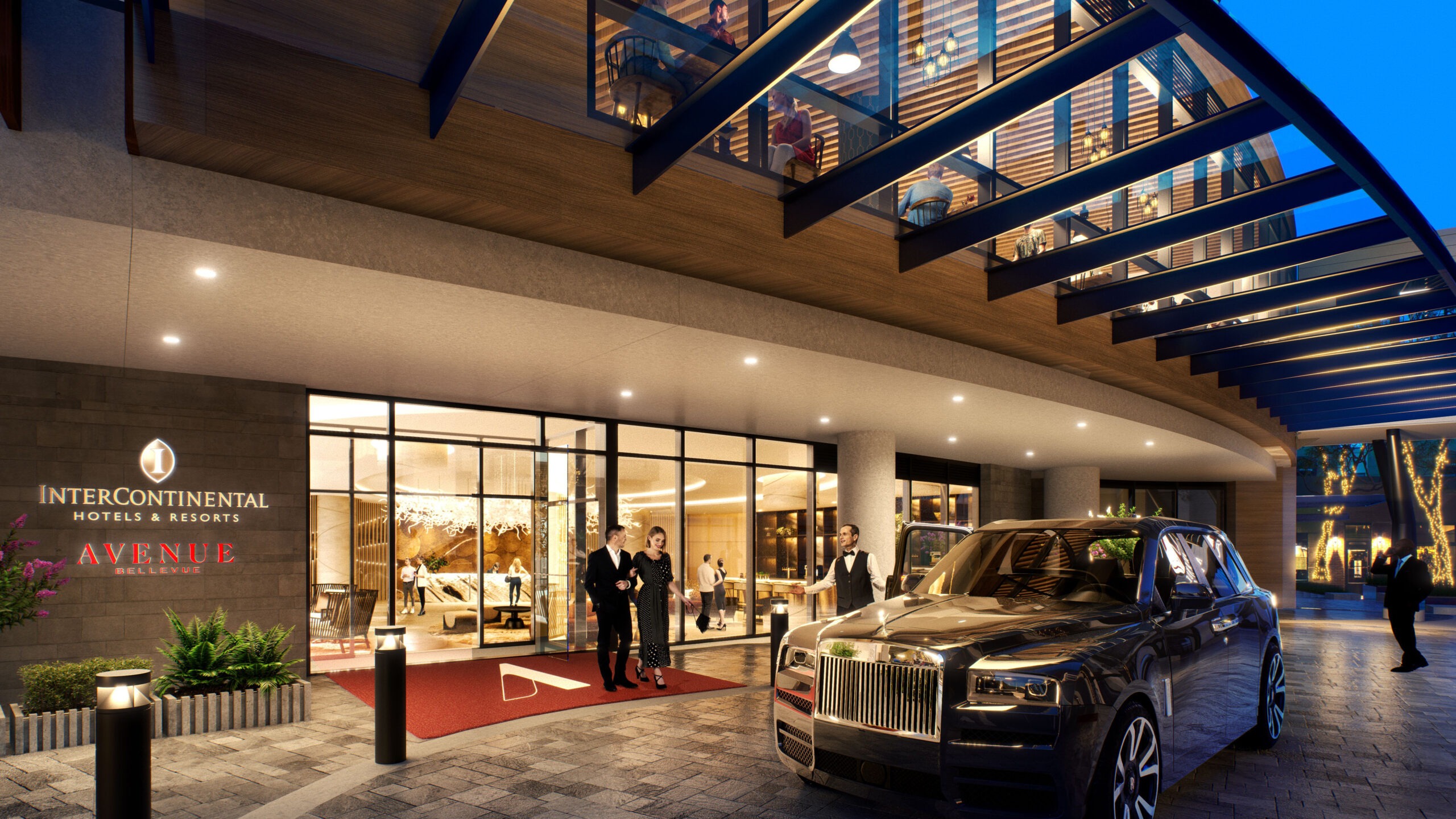
InterContinental Bellevue at The Avenue
The InterContinental Bellevue at The Avenue will span nine floors of a 26-story mixed-use complex in Bellevue, Washington’s retail and cultural district. In partnership with Montclair Hospitality Group, the property will offer international dining concepts and a signature bar. The hotel’s full-service spa and fitness center offer a rejuvenating wellness experience.
The property offers 208 guest rooms and 12,000 sq. ft. of meeting and event space.
Kimpton Claret Hotel in Denver
The spring 2024 opening of Kimpton Claret Hotel will mark the debut of Denver Tech Center’s first boutique hotel. Morning coffee and tea service, evening social hour, onsite fitness center, in-room yoga mats, complimentary bikes and pet-friendly policies make for a well-rounded and engaging guest experience. The 19th-floor rooftop bar and lounge, with indoor and outdoor access, displays incredible Rocky Mountain views.
The property offers 190 guest rooms and four suites, 10,000 sq. ft. of meeting space, and an indoor/outdoor event terrace and ballroom.
Creating experiences, setting the stage for networking opportunities, and fostering connections among colleagues and association members are what the meetings and events world is all about. However, without a proper budgeting plan and contractual agreement with vendors and hotels that play a part in making your event a reality, there’s no event to be had.
Over the last year, Smart Meetings wrote about contract and budgeting tips and trends this year for the event planner who wants to keep on top of their financials, so they can keep creating memorable experiences.
To offer some helpful insight in what legal areas to be on the lookout for, Smart Meetings sat down with Ty M. Sheaks, attorney, author and faculty legal advisor for International Association of Venue Managers to break down the major legal challenges meeting profs should be aware of, like force majeure clauses and why knowing the difference between an employee and independent contractor is important.
Budgets are great for estimating and tracking spending. What they aren’t so great at is considering the nuances in your financial plan. Heather Mason, CEO of Caspian Agency, makes the case for thinking more expansively about your event spend, and shifting your mindset from what your event is to what it could be. In short, think big.
Cheryl M. Payne, strategic partner at INNOV8 Meetings + Events, gives her take on the current marketplace of contract agreements and stipulations and its impact on meeting planners and how to negotiate that next big event contract. Difficulty lies ahead, according to Payne, but luckily, she provides several tips that’ll arm you with the right knowledge to head into that next negotiation well prepared.
“Meeting professional” is a relatively new career track. Heather Mason, CEO of Caspian Agency, says this can be gleaned from the way the government looks at those in the meetings industry. Usually grouped in the broad category of “hospitality,” which can include anything from small weddings to large-scale conferences, can affect meeting profs in the form of legislation that gets passed. Mason lays out what that means and what you can do about it.
As an event professional, you know the strategies of structuring a solid event budget: the setting up, managing and requesting budget increases are all a part of the game. However, shooting for a solid financial model rather than a mere budgeting plan can place you a more advantageous position where everyone is a winner.
Georgina Flores
Georgina Flores, Encore
Encore has appointed Flores to the role of Chief Marketing Officer. In her efforts to support innovation in the customer’s journey, she will provide strategic guidance to the company’s brand, customer insights, product marketing, communications and industry relations functions. Most recently, she served as VP of marketing for commercial and specialty markets at Aetna.
John Ault and Sonia Hammrich
John Ault (left) and Sonia Hammrich (right), Westward Look Resort & Spa
Ault has been appointed to the role of general manager at Westward Look Resort & Spa. He brings years of experience and demonstrated success in the hospitality industry. His areas of expertise include area and property leadership, complete operations management, financial, sales, food & beverage, revenue management and guest relations.
Joining Ault on the executive team is Hammrich, director of sales and marketing. As a professional sales leader for nearly 20 years, Hammrich is prepared to build on the property’s exceptional management, anticipatory service, guest relations and revenue growth.
Olga Schuster
Olga Schuster, Rosewood Vienna
Rosewood Vienna appoints Schuster as cluster director of sales & marketing. She will establish and direct the marketing and sales activities at Rosewood Vienna and also lend strategic support and assistance to the team at Rosewood Schloss Fuschl. She has spent over a decade at Park Hyatt Vienna in roles from senior sales manager to director of sales & marketing.
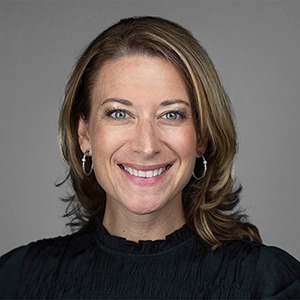
Devine joins the team at Visit Huntington Beach (VHB) as Vice President of Sales. She brings over 25 years of experience in hospitality in the southern California market across sales, marketing and branding. 13 years of her career have included sales leadership for both hotels and destinations. In her new role, she will align the group’s sales initiatives with its new three-year strategic plan to drive year-round group business.
Anne Marie Doyle
Anne Marie Doyle, Pendry West Hollywood
Pendry West Hollywood appoints Doyle as general manager. She brings over three decades of luxury hotel industry experience, most recently coming from her role as hotel manager at Montage Laguna Beach. She will now oversee all operations at Pendry West Hollywood.
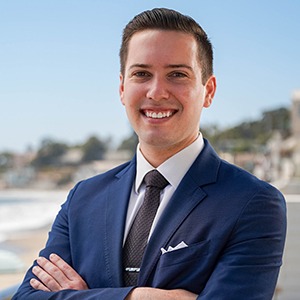
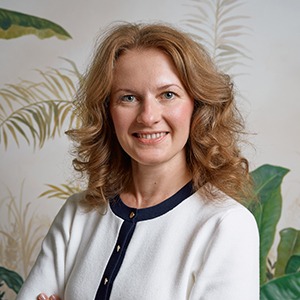
Sawgrass Marriott Golf Resort & Spa promotes Livingston from the role of director of revenue management to the role of director of sales and marketing. Livingston has been part of the team since 2019. She will now lead a team in strategizing and executing all group and leisure sales efforts and marketing initiatives.
Brittany Wartman
Brittany Wartman, Bellmoor Inn and Spa
Wartman is appointed as spa director at Bellmoor Inn & Spa. With nearly ten years of experience in wellness and in managerial positions, she will oversee all spa operations and management, including staff performance, budgeting and sales, services and goal optimization and achievement.
TJ Joulak
TJ Joulak, Waldorf Astoria Maldives Ithaafushi
Joulak has been named general manager of Waldorf Astoria Maldives Ithaafushi. He brings over 25 years of experience in the luxury hospitality industry, across markets Europe, Asia and the Middle East. He will draw on his skills to translate the brand’s strategy into service elements. In both 2022 and 2023, he was named one of Luxury Lifestyle’s Top 100 Hotel General Managers.
David Givens
David Givens, Hilton Waikoloa Village
Hilton Waikoloa Village appoints Givens as general manager. He previously held the position from 2016 to 2021 before serving as managing director and vice president of hotel operations at Virgin Hotels Las Vegas. Throughout his 35 years in the industry, he has established a track record of success in both his earlier time at Hilton Waikoloa Village and his time at numerous other properties.
Lynne Lulfs
Lynne Lulfs, Hawks Cay Resort
Lulfs is appointed to the role of vice president of sales and marketing at Hawks Cay Resort. Throughout her 35 years in hospitality, she has worked at world-class marina resorts, boutique hotels and luxury properties, and has shown through her track record of success her passion for creating excellent guest experiences.
Breaking down the company’s recent sustainability strategy
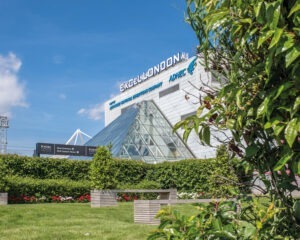
International exhibition and convention center ExCel London is a carbon-neutral venue and an advocate for the path towards green meetings. At over 100,000 sq. ft.—soon to debut over 25,000 more—and hosting around 400 events and 4 million visitors per year, it is the largest event venue in London. Recently, the company debuted a comprehensive sustainability strategy.
ExCel’s Sustainability
ExCel has established a reputation as an organization committed to doing better for the planet. It is a Planet Mark-certified business and a signatory of the Net Zero Carbon Events Pledge—which means it has committed to accomplishing a 50% emissions reduction by 2030 and net zero by 2050. In 2022, the center was the first U.K. venue of its kind to achieve carbon neutrality in the internationally recognized PAS 2060 standard.
ExCel’s long history of sustainability initiatives includes its zero-waste-to-landfill policy, in which all waste is either recycled or sent to an energy recovery facility to be converted to renewable energy. It also is home to the U.K.’s largest wormery. There, over 300,000 worms convert leftover food waste into compost that is used in the center’s green spaces.
In August 2023, ExCel released its pioneering Sustainability Strategy as part of its parent company ADNEC Group’s wider ESG (environmental, social and governance) ambitions and own sustainability strategy. While developing its strategy, ExCel ensured it was in line with ADNEC Group’s, while tailoring its goals to consider the venue’s unique set of material topics and stakeholder needs.
To learn which sustainability issues were most pressing for the company, ExCel held a materiality assessment at the end of 2022. Over 600 stakeholder representatives attended, including event organizers, exhibitors, employees, visitors, event industry partners and the local community.
After the company compiled a list of key material issues based on an examination of stakeholder engagement, internal documents and sustainability frameworks (like the United Nations Sustainable Development Goals, or UN SDGs), representatives at the materiality assessment scored each issue based on its positive or negative effect and scale of impact. Central issues included health and safety, energy and waste management, sustainable procurement, venue accessibility, climate action, compliance and ethics, and a platform for good.
ExCel’s internal working groups reviewed and validated these issues, ranked by their total score. The company’s leadership team approved a final ranked list of material issues from which the company would build its sustainability strategy.
For each of these issues, the ExCel team assessed the related KPIs (key performance indicators), the risk of not addressing, key actions for short- (by 2025), medium- (by 2027) and long-term (by 2030), as well as assessment of what the company already does, the opportunity brought by improving and the departments primarily responsible for each issue.
This assessment led the team to consolidate the identified issues into five pillars, each of which addresses a number of the material topics, outlines clear action plans towards achieving them in the short-, medium- and long-term and KPIs to measure progress towards achievement.
The overarching goal of this pillar is to prioritize action that reduces scopes one, two and three greenhouse gas emissions (GHGs) and an evolution towards net-zero GHGs. To do so, ExCel will work towards reducing its current operational emissions, champion low-carbon events and invest in sustainable technologies that allow venues and planners to achieve those objectives.
ExCel will measure its progress towards this goal with the KPIs of a 75% recycling rate by 2025, a 50% carbon emissions reduction by 2030 and net-zero by 2050. The company has already made significant steps towards this goal with its existing landfill diversion rate of 100%.
The material topics this pillar addresses are energy, waste and water management, climate action, air quality and biodiversity.
2. People, Culture and Safety
This pillar ensures that all employees and visitors at ExCel will encounter a positive culture that makes them feel welcome and safe, and all employees will enjoy a positive experience that inspires them to develop professionally and individually; ExCel hopes this culture will also attract new talent.
The company will invest in training to upskill employees and provide personal career development. It will also ensure that people of all backgrounds are encouraged to join the team or visit the venue and face no fears of discrimination or inaccessibility.
To see material results proving these goals have been accomplished, the company aims to see year-on-year increases in employee satisfaction levels and survey respondents and an increased average tenure of employees. ExCel aims to achieve an accessibility certification by 2025. The company will also provide two apprenticeship programs, with priority for candidates from Newham or the surrounding community.
The material topics this pillar covers include health and safety, an accessible venue, workplace culture, attracting and retaining talent, and addressing the cost of living.
Pillar three sets a standard for ExCel to connect with the local community and maintain a reputation as a platform for positive impact. It hopes that local organizations, schools and charities take pride in using the venue for events and exhibitions. The company will continuously engage with local stakeholders to identify collaboration opportunities, support development that contributes to social value and ensure that clients and organizers using the venue engage with the local community.
Measurable effects will be year-on-year increases in charitable contributions, the venue’s increased financial and social value contribution to the London economy and increased promotion and support of legacy projects for events. ExCel plans to hold a minimum of 12 meetings with local stakeholders annually to support crime reduction.
This pillar covers the material topics of biodiversity as seen in pillar one, addressing the cost of living as seen in pillar two, creating a platform for good and community impact.
4. Clients, Partners and Supply Chain
Because ExCel’s business value is centered on in-person events, it aims to act responsibly by accounting for the impact of these in-person events through its value chain. The company will look to its procurement and will encourage and support clients in making sustainable choices. This effort aims to influence best practices throughout the company’s supply chain and in the wider industry.
ExCel plans to maintain London Living Wage accreditation, a U.K. accreditation from the Living Wage Foundation for employers committed to paying employees a living wage for their area and adjusting it to keep up with shifts in what qualifies as a living wage for the area. The company also hopes to see a year-on-year increase in sustainable procurement of materials and products and in sustainable media products and food and beverage menus offered to clients. It will comply with ESG supply chain criteria and work to continuously reduce its scope three emissions.
Material topics include waste management and climate action as seen in pillar one, addressing the cost of living as seen in pillars two and three, sustainable procurement and food and beverage.
5. Governance and Ethics
Under this pillar, ExCel London aims to uphold the highest standards of ethics and corporate governance by encouraging decision-making that aligns with the interests of all stakeholders. Its policies and practices must operate in line with its values. Transparent rules and goals, in line with sustainability and ethics, mitigate risk and support business goals.
The company intends to always conduct business in an ethical manner that matches its values. It will prevent and plan for potential threats to its continuity and continuously provide high-quality service to customers. To achieve this, the company aims for all employees to complete cybersecurity and compliance training and ethics training. The company will hold four town hall meetings and six ESG focus groups each year and hopes to see a year-on-year improvement in sustainability data quality and a continuous achievement of ADNEC Group’s EBITDA (earnings before interest, taxes, depreciation and amortization) and revenue targets.
This pillar addresses the material topics of workplace culture as seen in pillar two, compliance and ethics, and human rights.
Implementing the ExCel Sustainability Strategy
2019 Adobe Summit at ExCel London
A governance framework within the company will support and coordinate all activities which take place as a result of the sustainability strategy.
The strategy includes a clear internal hierarchy and reporting lines for all involved parties working to achieve the listed objectives. This governance framework will conduct performance monitoring to ensure timely achievement of all the goals and objectives. It will provide reports to both internal and external audiences, including ADNEC Group and stakeholders.
In the full sustainability strategy, ExCel also examined its contribution in the global effort towards sustainability. The strategy is aligned with ADNEC Group’s sustainability strategy. It is also aligned with eight of the 17 UN SDGs, and the company’s net-zero strategy aligns with the U.K.’s net-zero strategy, Build Back Greener, a ten-point plan for a green industrial revolution that keeps the U.K. on track for net-zero emissions by 2050.
In Action
ExCel London feels well-positioned to achieve the strategy’s goals. It made an effort for its action plans to be achievable, yet ambitious. The governance structure provides strong leadership to ensure that the strategy is embedded in all the company’s actions from now on, and will ensure transparent reporting that holds the company to a high standard.
The company plans to repeat the materiality assessment that kicked off the creation of this sustainability strategy every three years to update its targets in a manner consistent with the latest accomplishments and areas of need, as well as to align the business with what is most important to stakeholders.
“By shaping the future of our events into one that is net zero, resource efficient and equitable, we aim to be a sustainability leader within our industry,” ExCel CEO Jeremy Rees says. “I’m proud to say that our sustainability strategy is not only embedded in our business planning process but is fully supported by ADNEC Group, the ExCel Board and the wider ExCel team.”
ExCel has certainly set a standard for companies all over the globe that are seeking ways to be more sustainable. As more venues follow in their footsteps, the world of events will become ever more sustainable and serve as a pioneering industry for the rest of the world in this mission.












 ExCel has established a reputation as an organization committed to doing better for the planet. It is a