The COVID-19 situation has caused many hotel operators to redefine the meaning of cleanliness. Following Marriott International’s unveiling of their Global Cleanliness Council,  various other brands have found ways to upgrade their standard of hotel cleanliness, including Hilton Hotels, Accor and Kempinski Hotels.

Hilton CleanStay

In collaboration with RB, maker of Lysol and Dettol, and Mayo Clinic, the hotel conglomerate is slated to launch “Hilton CleanStay with Lysol Protection” in June 2020. Experts from Mayo Clinic’s Infection Prevention and Control Team will assist Hilton in updated Hilton’s cleaning and disinfection methods, as well as team training development and the creation of a quality assurance program.

MoreWhen Venues Reopen, How to Know They’re Safe

“Our first priority has always been the safety of our guests and team members,” said Christopher J. Nassetta, Hilton president and CEO. “Hilton CleanStay builds on the best practices and protocols we’ve developed over the last several months, allowing our guests to rest easy with us and focus on enjoying the unforgettable experiences we have to offer—while protecting our team members who are on the front lines of hospitality.”

Details of cleaning protocols are still under review and are expected to be announced soon. There are numerous newly developed standards under consideration, including:

  • Hilton CleanStay Room Seal

Room seals will be placed on doors to ensure guests that their room has not been used since being thoroughly cleaned.

  • Extra cleaning of 10 High-touch Areas

Increased disinfection of most frequently touched room areas—such as light switches, door handles, remotes, thermostats and more.

  • Remove paper amenities

Remove paper, pen and guest directory; replace with digital supplement or make available upon request

  • Focus on fitness centers

Improved guidelines for disinfecting fitness centers, potentially closing to clean multiple times a day and limiting number of guests allowed at one time

  • Disinfecting wipes

Provide sanitary wipe stations at primary entrances and high traffic areas

  • Contactless Check-in

Enhanced digital key technology for guests who want a contactless experience. Guests will be able to check in, choose their room, access their room and check out with their digital room key using their mobile device through the Hilton Honors mobile app.

  • New disinfection tech

Addition of new technologies, such as electrostatic sprayers—which uses an electrostatically charged disinfecting mist—and ultraviolet light to sanitize surfaces and objects.

Accor and Bureau Veritas Team Up

Accor recently collaborated with Bureau Veritas, a France-based provider in testing, inspection and certification of hygiene and cleanliness, to ensure that safety standards and cleansing protocols are being met to allow businesses to reopen. This was also developed with the help of various trade associations, including UMIH, GNC and GNI.

In this joint venture, Accor will provide a label—which will show as a Bureau Veritas certification—that sets the sanitary standards to Accor’s hotels, as well as other chains and independent hotels. Proposals have not been approved yet, but after sharing the project with Alliance France Tourisme, Accor and Bureau Veritas hopes to extend it to the rest Europe.

After the sanitary measure pass, guests will be able to check if a hotel has been certified by Bureau Veritas before booking their stay.

“With this label, today we have the ability to meet the new expectations of our society in terms of health and safety. This label will contribute to the hospitality and restaurant industry reopening with confidence. We are proud to work with Accor, at first in France and subsequently in all European countries. This approach will benefit the entire industry as every company could request to be certified by Bureau Veritas,” Jacques Pommeraud, CEO of Bureau Veritas Africa and France, said.

Accor North and Central America launched ‘ALL Stay Well,’ which will focus on new health and safety standards. The program will focus on 20 key points, such as public restrooms, housekeeping, in-room dining, concierge, spa rooms and event spaces.

Another partnership, with insurance provider AXA, which will offer medical support for guests across 5,000 Accor properties globally.

Kempinski Launches “White Glove Service” and Opens in China

Some of Kempinski Hotels properties have reopened their doors, and to ensure guests that their hotels are making safety and cleanliness a top priority, they have launched the “Kempinski White Glove Service.”

Kempinski employees will now be required to don gloves and masks during all guest interactions, in compliance with new government regulations. All furniture in communal areas have been rearranged to abide by the social distancing rule of keeping maintaining a distance of 6 feet.

Various measures will be taken to ensure high-touch areas remain clean, such as sanitizing stations will be placed throughout each hotels, key cards will be disinfected before and after each use and replacing cloth towels in public toilets with one time use, disposable ones.

Following eased lockdowns in China, Kempinski reopened all its hotels in the country. New hygiene and cleaning measures include temporary temperature checks for everyone entering the hotel, daily air purification in dining areas, frequent disinfection of all equipment, complimentary hand sanitizer and masks for guests and employees, and enforcement of social distancing laws in all public areas.

HEI Hotels Extends Safety Protocols

HEI Hotels & Resorts has unveiled a combination of new procedures, changes to hotel spaces and disinfecting technology and PPE equipment for their 80 hotels.

Cleaning protocols have been enhanced. Electrostatic sprayers, which will spray a hospital-level disinfectant, will be used in all spaces. Rooms that have been sanitized will have a seal placed on the door to ensure guests of its cleanliness.

In high-touch locations, such as the front desk and bars, partitions have been placed to separate guests from staff.

Four Seasons Hotels and Resorts

Four Seasons has collaborated with Johns Hopkins Medicine International to create Lead With Care, which includes  real-time guidance from the medical experts.

A hygiene officer will be appointed at each property; public areas will be cleaned hourly and guest rooms disinfected daily with EPA-approved products; Lead With Care kits, consisting of masks, hand sanitizer and wipes will be issued to employees, who will also be given education focused on health and safety.

First Hospitality

First Hospitality, which manages various Hilton and Marriott properties across the globe, has collaborated with Ecolab, a water, hygiene and energy technology solutions company, to bring about the Cleanliness First Plan. The first step of this plan is to place a hygiene specialist at every First Hospitality hotel.

The brand will maintain social distancing rules in public spaces, such as food service areas, restaurants and bars, by arranging furniture to allow for a six-foot radius between guests.

Orange County Convention Center, Orlando

Orange County Convention Center (OCCC) has committed itself to becoming the world’s largest Global Biorisk Advisory Council (GBAC) STAR-accredited facility. In collaboration with International Association of Venue Managers, being accredited with GBAC STAR will mean OCCC has implemented rigorous protocols to eliminate or mitigate  biorisk situations.

This commitment coincides with OCCC’s new recovery and resiliency guidelines, which outline the facility’s five-step plan to keep guests and employees safe and healthy. OCCC’s plan includes:

  • 13 ozonated water-cleaning systems
  • Ultraviolet germicidal radiation to kill bacteria and viruses
  • Industrial-grade scrubbing machines to clean exhibit hall floors
  • 128 hand-sanitizing stations throughout facility

Omni Hotels & Resorts

Omni Hotels unveiled their Omni Safe & Clean program, which features new cleaning guidelines and procedures to keep guests and employees sickness. These guidelines follow what has been set by the CDC and the “Stay Safe” initiative set by the American Hotel & Lodging Association.

Hard Rock Hotel & Casino

Hard Rock’s “Safe + Sound” program adheres to WHO and CDC’s reopening protocols, as well as Atlantic City Casino Industry’s reopening plan. In addition to required masks temperature checks for guests and team members, Hard Rock will also partner with AtlantiCare to focus on contact tracing, proper training and telehealth.

A designated Safe + Sound clean team will focus on the cleaning and disinfecting of surfaces throughout the property, although there will be a deeper focus on gaming areas, hotel rooms, restaurants, pools and public areas. Air filters will be placed around the building to increase the flow of fresh air.

International Air Transport Association (IATA) has shared projections for the global airline industry’s revenue loss in the coming year. Spoiler alert: It’s not looking good. A devastating hit to airlines’ bottom lines, of course, could have huge ripple effect on destinations and tourism.

And to further complicate things, not all airlines are ready to comply with government mandates around COVID-19, which these airlines say will only exacerbate the revenue plunge. In fact, three of Britain’s biggest air carriers have just taken legal action in an attempt to curb government regulations and limit their economic losses.

A Big Hit

Not taking into account the possibility of a second wave of COVID-19, airlines now face losses of $84 billion in 2020, with a further projection of another $15 billion in losses for 2021. Brian Pearce, IATA’s chief economist, projects a ‘V’ recovery pattern for the industry, with the biggest dip in 2020 but big losses continuing in the coming year.

Such a bleak outlook is unprecedented in the airline industry. As reopenings begin around the world, domestic travel is predicted to increase in June and July, while international travel likely won’t pick up until Q4. The vulnerability of the entire industry could mean less connectivity for many places—and many fewer nonstop flights to second- and third-tier destinations.

See also: What New Trends and Issues Will Shape the Tourism and Hospitality Industry Post-COVID-19?

Where weaker airlines going out of business would traditionally mean growth opportunities for the giant carriers, even the most cash-rich airlines may not be in a position to expand and take over new routes. And as Forbes points out, this loss of revenue for the airline industry will impact the whole economy—especially tourism. A loss of air connectivity could have dire consequences for some destinations.

Britain’s Rebuttal

Big British airlines are fighting to mediate the dramatic revenue losses that 2020 has in store. After the British government announced the implementation of a two-week mandatory quarantine for anyone entering the U.K., three of the country’s biggest airlines took legal action. British Airways, Ryanair and easyJet said the quarantine will cripple tourism and the wider economy, including MICE industries, and will prolong the already damaging effects that COVID-19 has had on the industry.

In a joint statement, the three airlines said they want “the government to re-adopt its previous quarantine policy introduced on March 10, where quarantine is limited to passengers from ‘high risk’ countries.”

To help travelers, including planners, figure out which destinations are accessible at this time, IATA has launched an interactive travel restrictions map. Check out which countries are allowing travel and where  you might be able to host future events here.

“There is no playbook for this” was a sentiment shared by Jill Delaney, president and CEO of Discover Albany, during Discover Albany’s webinar on events in a post COVID-19 era. This sentiment brought industry professionals together to discuss what future events might look like. From supporting local businesses to sanitation procedures and food and beverage options, the webinar discussed re-opening procedures and how professionals can come together to create a new, post-COVID-19 playbook.

Figuring it out Together

We all know what a difficult time this has been for the industry. Tourism took a sudden, grueling hit in March. Even though gatherings came to a screeching halt in order to slow the spread of COVID-19, meeting professionals have been busy working together to figure out next steps. Amelia Barry, sales manager at Albany Capital Center, stressed the importance of client conversations. She said that while planners and suppliers normally have all the answers based on experience and insight, in these unprecedented times, “the conversations we are having with clients are just as helpful for us; they are asking questions we haven’t heard before.” In a time where there is no playbook, working with clients can be a learning experience that will be invaluable as the industry moves forward.

Food and Beverage

Owner and President of Mazzone Hospitality, Angelo Mazzone, shared measures his company would be implementing at events to ensure safe conditions without compromising on quality. While Mazzone admitted that factors such as space between tables, occupancy levels and social distancing at tables are still unknown, he does have ideas about food presentation and prep. Lunch options will include a choice of packaged entrees, salads and sides that guests can pick up. This reduces contact between guests and staff and also ensures a fast-moving service.

‘Buffets the way they were are a thing of the past’ according to Mazzone. That doesn’t mean buffets will disappear, but Mazzone predicts that ‘customers will never be able to handle food again,’ meaning that staff will have to serve everything, ideally behind a sneeze-guard. In terms of beautiful presentation, which is an important part of food and beverage, Mazzone suggests keeping non-food presentations the same and working with closed packaging meals to ensure presentation standards remain high.

Apps

To enable venues to remain nimble for future events, Albany Capital Center is introducing an app that would incorporate printed materials, maps and a visitors guide into a virtual landscape. Planners will also be able to upload their own programs and other printed materials to reduce the amount of printed materials that are being given to attendees. Bonus: information will be up-to-date, even if COVID-19 continues to disrupt. If a speaker gets sick or nearby activities aren’t open, you can change your schedule easily and immediately. The ability to stay nimble is a priority for Delaney.

Local and Sustainable

While the focus recently has been solely on COVID-19, supporting local businesses and sustainability is still a priority for planners. Even when planning pre-packaged food, Mazzonne said recyclable materials could make them an earth-friendly choice.

Similarly, Doug McClaine, general manager at Albany Capital Center, prioritizes community resource, opting for a local distillery’s cleaning products instead of a corporate brand.

Editor’s Note: This is part of a series reporting on FICP Chats about the future of meetings. You can read previous reports here, here, here and here. group business

For the short-term, request for proposals (RFPs) do not look dramatically different, if they’re being submitted at all, but there is great optimism that event disruptions and “new normal” considerations will not persist into future-year events.

In the fifth of FICP’s new virtual education series, Financial & Insurance Professionals (FICP) Chats, more than 200 participants explored how to book group business for future meetings, including immediate adjustments for events, and how those were not being written into RFPs for the long-term.

See alsoMeeting Profs Demonstrate Community and Resiliency on #MeetingsChat

Flexibility and open, honest transparent conversations remain a critical asset for both meetings professionals and suppliers to help ensure the ultimate objectives of relevant content delivery and positive attendee experiences are achieved.

Seeing (In-person) is Believing

While much discussion has occurred in recent months about virtual site inspections, few participants were taking advantage of this option. It was deemed “better than nothing,” but if used, it was suggested that this option should accompany a clause in the contract that allows an in-person site inspection at a future date. Based on the in-person site inspection, that clause should allow meetings professionals the option to cancel the contract without penalty.

Uncertainty Persists in the Short Term

Many meetings professional participants were waiting to submit RFPs until they had more information about standards, protocols and guidelines. They believe current disparities in state and local guidelines, hotel policies, and company policies will make it difficult to evaluate and compare responses. They were optimistic that the Events Industry Council APEX COVID-19 Business Recovery Task Force would help create greater consistency across the industry.

For those sourcing events in the short-term, distancing and Centers for Disease Control and Prevention (CDC) guidelines are being built into the RFP, and it is believed there is more room for negotiation now than in future years. These situations are being handled more on a case-by-case basis.

Hotel cancellation dates were being used as one of the guides for making decisions to cancel Q4 2020 and/or Q1 2021 events. There remained much uncertainty around company travel bans, which made regional and local meetings better options for the short-term as well.

Business as Usual for the Long Term

The situation was much different with participants who were sending out RFPs for future-year events. Those are similar to pre-COVID-19 requests, as it was not expected considerations for social distancing or disease transmission would be needed in future years. Some participants were booking events as far out as 2025. The consensus with participants was that a force majeure clause does need to include language around pandemics, including the current one.

Budget Considerations

Participants had not experienced COVID-19-related fees being implemented by hotels, even though the hotel partners will be incurring new or increased costs for additional cleaning staff, sanitation stations and similar measures. Those seem to fall into “the costs of doing business.” While hoteliers are being very flexible, they are not likely to add medical staff due to liability issues, which means groups should budget for their own on-site medical support.

With a shift to hybrid meetings, audiovisual costs are expected to increase to allow for live streaming of sessions for virtual attendees or simulcasts for overflow rooms. Transportation costs due to needing more vehicles to transport the same number of attendees were also noted as areas where budgets will increase.

Concession Misconceptions

Participants felt that the senior executives at insurance and financial services firms may believe that new or additional concessions will be available in light of the COVID-19 pandemic. However, participants recognize that it is still very much a sellers’ market for 2021-2023, which means it will be more difficult to offer further concessions. This will require more internal discussion and education about future contracts

MoreYour Post-COVID Planner Contract Questions Answered

For meetings and events in the short-term, participants may need to be flexible about their definition of concessions. Additional pre-function space, new manners of delivering F&B and other impacts due to regulatory requirements and hotel policies may fall into concessions. With regard to luxury and premium hotels and experiences, many concessions such as valet or turn-down services may not be applicable in light of the current circumstances.

Jennifer Squeglia, CMP, is a member of FICP Board of Directors. In the next FICP Chats, our community will focus on self-care tips. Learn more about upcoming FICP Chats, part of FICP Anytime.

On Friday, the Centers for Disease Control and Prevention (CDC) released guidelines for events and gatherings. The list of considerations came out as many states have begun to re-open their economies and communities begin to plan events again. Here is an overview of the CDC’s recommendations so you can make sure your next event is CDC approved.

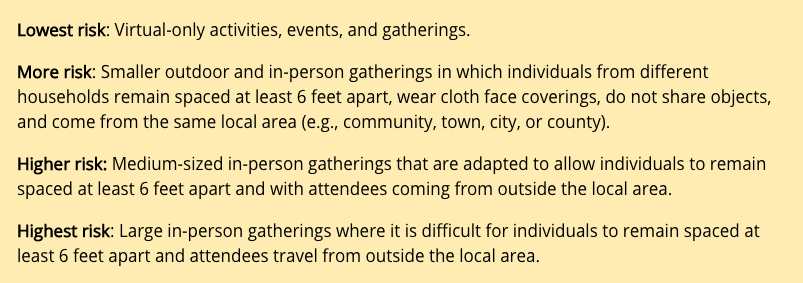
Levels of Risk

Source: the CDC ‘s Considerations for Events and Gatherings

Considerations for Healthy Behaviors

  • Promote healthy behaviors by educating and advising staff and attendees to stay home if they feel unwell
  • Require frequent hand washing, sanitation and covering the nose and mouth with a tissue if sneezing or coughing
  • Require staff to wear cloth face coverings and encourage guests to do the same. Provide guidance on proper use, removal and washing of face masks. Note: Face masks should not be placed on anyone who has trouble breathing, anyone who would be unable to remove the mask on their own (i.e. if they are unconscious) or any child under the age of two
  • Post signs and messages around the venue to promote social distancing and everyday protective measures. Broadcast regular announcements on reducing the spread of COVID-19 and consider developing signs in different formats, such as braille or American Sign Language

Guidelines for Healthy Environments

  • Clean and disinfect shared and frequently touched surfaces between uses
  • Close those areas that cannot be easily cleaned throughout an event (i.e. drinking fountains)
  • Safely use and store cleaning products
  • Use EPA-approved cleaning products
  • Limit the number of people allowed in restrooms and ensure six-feet distancing between individuals in line for, and in, the restroom
  • Ensure sanitation of restrooms and adequate supply of hand-washing products
  • Ensure ventilation operates properly and increase outdoor air circulation as much as possible
  • Modify layouts to ensure distance between guests, use multiple entrances and exits and eliminate lines where possible
  • Prioritize outdoor activities and offer online attendance where possible
  • Install physical guides and barriers such as tape on the floor at six feet intervals and sneeze guards
  • Stagger use of shared indoor spaces such as dining halls, game rooms and lounges
  • During food service, encourage contactless payment options, use disposable food service items and avoid buffets, salad bars and drink stations. For food service at events, follow the CDC’s considerations for restaurants and bars.

Related: Hotels Respond to COVID-19 with New Cleaning Standard

Maintaining Healthy Operations

  • Be aware of local, state and regional regulations and prioritize them
  • Offer alternative options for staff or attendees that are high-risk. This includes virtual attendance, remote work or event set up instead of working during an event.
  • Limit attendees, stagger entrances or rotate shifts and attendance times
  • Encourage transit options that are low-risk such as walking, bicycling or driving
  • Designate a COVID-19 point of contact so information is easily communicated
  • Help out your staff: implement flexible sick leave policies, train staff on all safety protocol, recognize symptoms and have a back-up staffing plan

Preparing for If Someone Gets Sick

  • Tell staff to remain home until they have met the CDC’s criteria to discontinue home isolation.
  • Isolate and transport home anyone who has COVID-19 symptoms or has been in contact with someone with COVID-19
  • Close off any areas touched by a sick person and do not reopen them until they have been cleaned and disinfected
  • Notify health officials, staff and attendees if anyone is sick and advise anyone who had close contact with a person diagnosed with COVID-19 to stay home and follow CDC guidance if symptoms develop.

Check out the full CDC report here and keep up to date on the latest COVID-19 news and its’ effects on the meetings industry here.

Editor’s note: The lawyer quoted in this article is not providing legal advice. If you are seeking legal advice, consult with a professional.

Addendums, amendments, mutual cancellation clauses, “frustration of purpose”—what do they all mean? And when should each be applied? In the latest Smart Meetings Accelerator “Top Planner Contract Questions Answered,” Lisa Sommer Devlin, an expert in contract law at Devlin Law Firm, answers those very questions (and more) for planners.

If a planner wants to make a change to a contract, is it necessary to sign a whole new contract? Or can some of the wording in the original contract be changed? Is this an addendum?

Lisa Sommer Devlin

It’s not an addendum. An addendum is something you add to a contract that is already signed to clarify something.

Let’s say you have a contract to buy 100 bicycles and forget to put what color in the contract. Your addendum would say that 50 bicycles will be blue and 50 will be red. You’re not changing any real terms of the contract; you’re clarifying something that you left out. And it is not something that should be stuck on the back of a contract. You’re supposed to be negotiating one complete document rather than a contract and an addendum.

MoreJ.D. Devlin: Contracts Made Easy

If you sign the contract and everything’s in place, then COVID comes, and you have to change your meeting spaces, that would be an amendment. You’re changing the contract terms. Everything that wouldn’t change, such as indemnification or insurance, you don’t mention them in your amendment, and they stay in place as is.

Will the onus be on venues and hotels to follow and enforce physical distancing guidelines put in place by the state or province they’re in? Is that up to the planner?

It’s kind of a “nobody knows” answer. If there are requirements under the re-opening, and you can only fill half your tables, yet the restaurant is putting people at every table, the restaurant would be responsible for that. It could get in trouble, depending on what the requirements are.

The problem comes in when you move to a hotel scenario, and you’re having meetings. The hotel is still obligated to follow the requirements, but once people get into the room and they’re moving around, it’s not really clear who’s responsible for going up to two attendees and saying they shouldn’t be sitting so close together.

If you’re the meeting planner in the hotel, are you really going to want to get into an argument with somebody over whether or not it’s appropriate to be sitting too close to someone? Those are unanswered questions at this point, but I don’t think that you want to get into those confrontations. Maybe you can to do things such as have a slide that comes up that says, “Just a reminder: Everybody’s supposed to say six feet apart and wear masks,” and then leave it to people to do what they’re going to do.

How do you advocate for clients when hotels and airlines will not waive cancellation fees?

Let’s look at fundamental fairness. Is it really fair for them to keep this deposit, given all the circumstances? If this event was scheduled in May and the entire state was on a lockdown order, is it really fair for you to keep that that money? It’s got to go back to partnership. We’re in this together, and we need to share the burden. [People who have] submitted their deposits could never have known that this was going to happen.

At the end of the day, there will be circumstances where the party on the other side won’t work with you, and you’re going to have to make a decision about whether to pursue legal avenues. That’s fraught with its own peril.

If hotels will not agree to a mutual cancellation clause, is there a formula to come up with a dollar amount the hotel would have to pay if it can’t fulfill the group?

Mutual cancelation clauses should never be signed and here’s why: If a group cancels a hotel, the damages that the hotel suffers, while they’re difficult to calculate, are easy to understand. They’re out the money from the rooms, from the food, [et cetera].

When a hotel cancels a customer, it’s a completely different equation because it may be that the hotel cancels you a year in advance, and it’s in an urban area and you’re able to book the hotel next door, and the terms are the same, and it doesn’t take much time or effort to book that hotel. So, you really haven’t lost that much.

MoreLisa Sommer Devlin on Advanced Hotel Contract Negotiations

On the other hand, they may cancel you two months out, and you’re in a destination location, and you can’t find another hotel to host your event, and this is your primary revenue source for the year. So, you may be out hundreds of thousands of dollars. It can vary widely.

The point is, the amount of loss that the customer suffers is [unequal] to the loss the hotel suffers. Under the law of liquidated damages, the damages are supposed to be a reasonable estimate of the loss that the injured party would suffer.

Are there any contract clauses for hotels that would give an allowance for future contracts being resigned now that could protect planners if social distancing guidelines continue?

I have seen clauses being put in rebooking agreements that say something to the effect that said event is being rebooked on the assumption that we will be able to have 500 people [in the future]. And if there are restrictions in place that would prevent us from having at least 500 people, then the parties agree that we can terminate this rebooking contract without liability.

See alsoHow Not to Get Sued If Someone Gets Sick When You Get Back to Planning

Why is a force majeure clause so hard to enforce?

It’s not that it’s difficult to enforce; it’s that you don’t always have enough facts to know [the true situation], and sometimes customers have a subjective belief that they can’t perform when the hotel disagrees. I think that that’s where the disputes come in. I always say that force majeure is like what the Supreme Court said about pornography: It’s difficult to define, but I know it when I see it.

How can planners protect themselves from liability if an attendee gets COVID-19?

I don’t think pre-injury waivers—where you’re signing away your rights to make a claim before something happens to you—are a great idea, and they are extremely difficult to enforce.

It always varies according to state, but having somebody sign a waiver in advance is probably not going to protect you. It’s going to be impossible for anybody to ever prove how they got COVID-19. If I leave my house, get in an Uber, go to the airport, walk through the airport, get on a plane, how am I ever going to prove where I got COVID-19?

The party making the claim would have to show that you that you did something wrong that exposed them to COVID-19. If you’re encouraging them to follow the applicable guidelines in that state, I don’t think they’re ever going to get anywhere [with legal action]. Your protection is having good liability insurance that will defend you. I don’t think a waiver is going to help you, and I don’t think the risk is as big as people may be worried about.

Can you can you specify any force majeure language around riots or in the event of an air transport or hotel strike?

Under the law, strikes are not a force majeure. As long as the hotel has plans in place to go forward with operations, the fact that people may be engaged in labor disputes doesn’t really prevent the meeting from happening. There should be a separate clause [that says] you get notified in the event that there is a strike. At that point, the hotel advises you what they’re going to do to bring in alternate workers or whatever it might be to continue operations.

When planners put generic strikes in their force majeure, they’re opening a whole can of worms. What does that mean? Does that mean a strike by the hotel workers? Does it mean a strike by airline workers? Does it mean a strike by garbage workers? It’s undefined, and it’s just going to cause you problems.

In terms of riots or civil disturbance, most hotels have something in their clauses saying something about these. I usually try to stay within X radius of the hotel.

When those kinds of things happen, if you’re a hotel in the heart of the city where these protests are happening, and the streets are full of people, and you can’t get there, it probably is a force majeure.

When is too soon to start planning again? People are trying to figure out what to do about December. What’s happening now might not be the same as in three months, so how far out can people be planning and contracting right now?

It depends. If your event is for 20 people, that’s a very different thing than if your event is for 2,000 people. And it depends on where this event is going to be scheduled, and it will depend on the nature of your event. I’m not going to give you a hard and fast answer because we don’t know.

If the hotel is open for business, and they can accommodate your people under the applicable restrictions, then it’s probably not a force majeure, and you’re going to have to pay if you don’t have your event.

What if you can have the event but it’s no longer going to be the same as you originally contracted? Maybe only half or 25 percent of the number. What do you do then?

Several years ago, I was speaking at an event in New York, and a Nor’easter [storm] blew in. They probably had less than 50 percent of the expected attendance because people didn’t want to drive in the snowstorm. [The venue] said to the event organizer, “We’re glad you’re coming. We understand that because of the storm you could have tried to work in force majeure, but you didn’t. We’re not going to charge you attrition.”

MoreNatural Disasters Create New Challenges for Meetings Industry

Now, is every hotel going to say, “We’re going to waive all attrition?” No. They may say, “We’ll cut your attrition in half.” They may say, “We’re going to cut some other kind of deal with you.” As events move forward and venues are re-opening, they are going to be willing to try and work with you because they would rather have an event than have no event. Something is always better than nothing.

What is your opinion on whether “frustration of purpose” is necessary in a contract, and how specific does that needs to be?

These are complicated legal theories, so don’t rely on this as the end all, be all. But frustration of purpose means you could still have your event, but your reason for doing so is ruined.

If you’re contracting to have an event with JT Long as your speaker and JT Long is in the hospital, the hotel is still open, the people can still go there, but there’s no point, because JT Long can’t be there.

The purpose of having the event is then frustrated, and the law would let you out if the parties knew at the time of contracting that that was the purpose of the event. From a meeting planner perspective, the way you can take advantage of frustration of purpose is to make sure that your purpose is part of the contract.

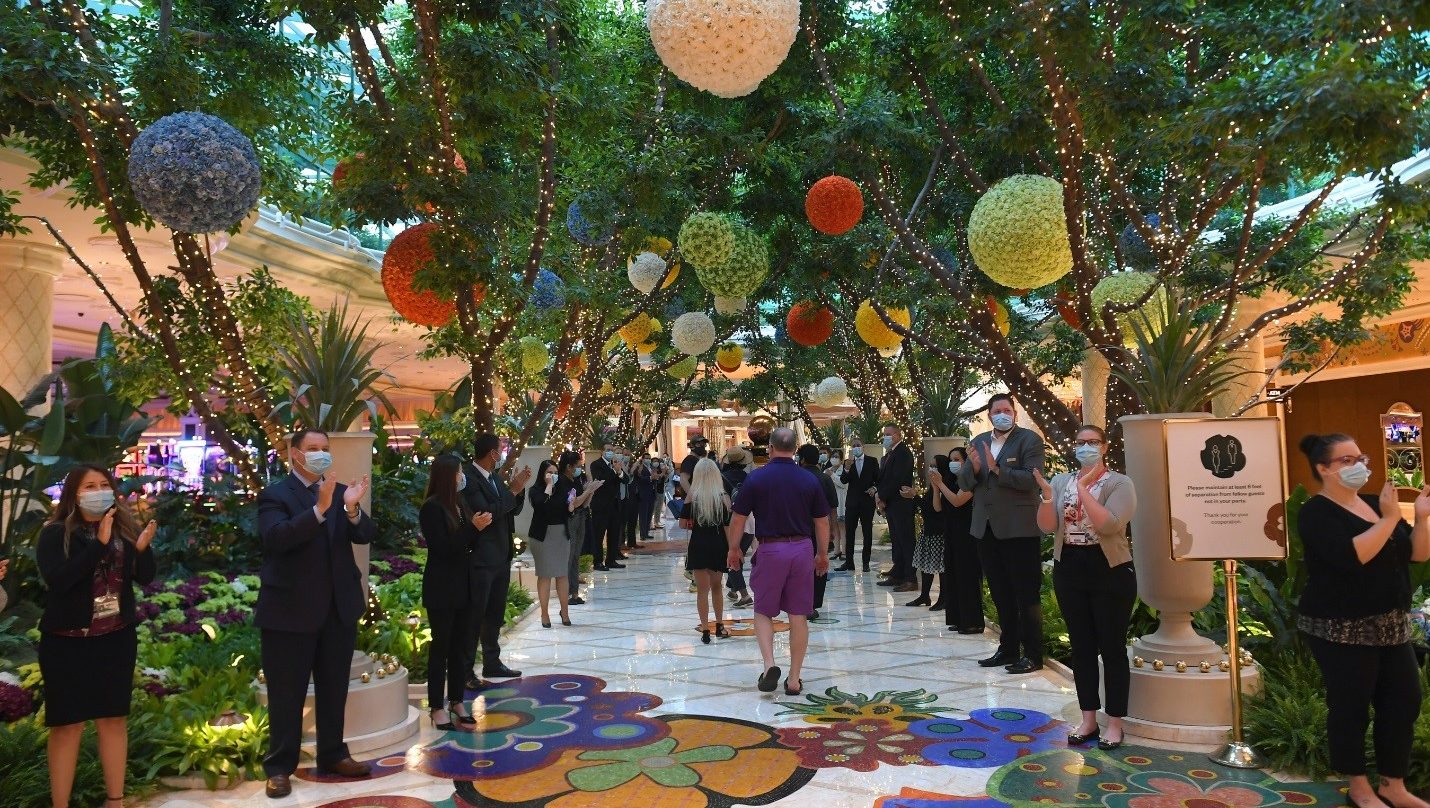
When a flurry of signature Las Vegas casinos threw open the doors on Thursday after more than two months of downtime to help the world flatten the curve on a pandemic, the pent-up demand was evident. Customers were eager to return to a world beyond their homes. Despite reports of overcrowding at some venues in the desert city, brands on The Strip were adamant they would live by letter of safety plans submitted to Nevada Gaming Control Board.

The openings were part of phase two of the Nevada United: Roadmap to Recovery plan.

Steve Hill, president and CEO for Las Vegas Convention and Visitors Authority, stressed the importance of a safe transition back to welcoming visitors. “Las Vegas is a city built on hospitality, and we are thrilled to open our doors on June 4 and welcome visitors from around the country,” he said, while also acknowledging that things may look a little different.

See alsoYour Guide to U.S. Hotel Reopening Announcements

Many properties and restaurants are operating on modified schedules and have spaced out slot machines and poker tables to ensure social distancing. Movie theaters, showrooms, fitness centers and spas remain closed during this phase. And the famous all-you-can-eat buffets were nowhere to be seen.

Open signs were hung out at The Cosmopolitan of Las Vegas; The Venetian Las Vegas; Bellagio; New York-New York; MGM Grand Las Vegas; Caesars Palace; The Flamingo; Wynn Resorts and Encore; Treasure Island; The STRAT Hotel, Casino & SkyPod; Sahara Las Vegas; Plaza Hotel & Casino; Station Casinos (including Red Rock Casino, Resort & Spa); and a number of downtown properties, including Golden Nugget Hotel & Casino, Downtown Grand, The D Las Vegas Hotel & Casino and Golden Gate Hotel & Casino.

“We are very pleased by the enthusiasm we are seeing from guests ready to come back to Las Vegas,” said Bill Hornbuckle, MGM Resorts’ acting CEO and president. “As business demand increases, we are able to open additional properties and bring more of our employees back to work. Getting people back to work, coupled with providing a safer environment for our employees and our guests, are our top priorities.”

That reopening included a Seven-Point Safety Plan with employee temperature checks and COVID-19 testing, a mix of required and strongly suggested masks, handwashing stations on the casino floors, contactless check-in, digital menus and a special email address for guests who test positive after visiting an MGM property.

Modifications

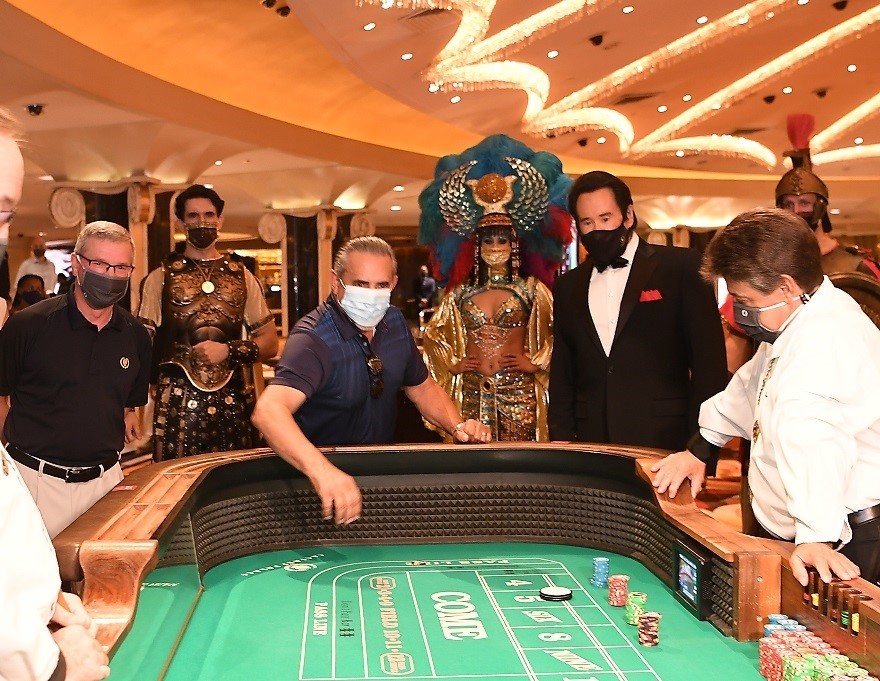
Caesars Entertainment CEO Tony Rodio opened Caesars Palace at 10 a.m. with an assist from a tuxedoed Wayne “Mr. Las Vegas” Newton. Bookings were limited to 75 percent of the 4,200 rooms at the resort and were completely sold out. Caesars Entertainment also opened The Linq Promenade (including High Roller Observation Wheel) Thursday, with a similar reception. Harrah’s Las Vegas followed today with the debut of a new, $200 million transformation of guest rooms, the casino floor and Ruth’s Chris Steak House.

Based on demand and price point, Linq could be the next Caesars property to open, followed by Paris Las Vegas, Bally’s Las Vegas and Planet Hollywood after the Fourth of July.

Lisa Messina, vice president of sales, described the mood as “pure excitement” on the part of not only guests, but also employees, in a city where the hospitality workforce accounts for 60 percent of jobs. “People want to dress up and see if they can still find their dress shoes,” she said.

How to Mix Safe and Fun

(L-R) Caesars Entertainment CEO Tony Rodio cheers on first casino guest Ben Laparne, with Wayne Newton at Caesars Palace in Las Vegas

The Caesars openings were based on rules that called for team members to wear masks and “strongly recommend” that guests do the same, while also maintaining a six-foot distance while in the hotel. In the casinos, the number of people per gaming table is now limited, and in a major departure from pre-pandemic rules that banned face coverings, masks are required.

To make complying more fun, celebrities and celebrity chefs recorded a video demonstrating the practice. Even Real Housewives of Las Vegas star Lisa Vanderpump showed off her sequined mask and exclaimed, “This is what we have to do so others feel safe, and we can get back to business!”

For those who don’t bring a mask and would prefer a fun, logoed face accessory rather than the free plain version offered at check in, an assortment is available at Caesars gift shops.

Just to get into a Caesars building, visitors had to walk past a thermal scanner and go through further screening if they registered over 100.4 degrees Fahrenheit.

“Everyone is taking precautions because we don’t want to see it closed again. People are showing respect on The Strip,” Messina said.

Meetings Indicators

Messina saw the positive response from vacationers as a good sign for meetings. “Leisure travelers are going to set the confidence meter for meeting attendees to travel again,” she said. “When event organizers see that people are ready to travel, they will feel better about moving ahead with events.”

Caesars already has some small groups moving forward with meetings in June, plus a few more sizeable gatherings in July that would fill 800 rooms each with 1,200-1,500 people. In August, ConferenceDirect, HelmsBriscoe and Experion are scheduled. Past Labor Day almost everything is intact. Only two groups have cancelled.

CES has indicated that it is moving ahead with its planned January event, but details about how it will be produced are still being worked out.

“We are just waiting on restrictions to be released,” Messina said.

She is particularly excited to welcome groups to the massive new Caesars Forum, which was set to open just as restrictions went into place in March. “It was devastating, because it had been contracted, so there was not a week open from March to end of year,” she said. “It is this beautiful diamond, and we can’t wait to show it off.”

Messina saw Las Vegas as the perfect place to pioneer the return to meetings. It boasts spaces large enough to socially distance 2,000 people, while still complying with all the regulations and guidelines. “We can work with customers to determine their tolerance for risk and their goals, diagram a solution in the largest pillarless ballroom, and we will all learn what works best together,” she said.

Editor’s Note 6/12: New CDC Considerations for Events and Gatherings remind meeting planners that while we have made progress as a country, the pandemic has not ended and they can promote healthy behaviors that reduce the spread of COVID-19.

As hotels begin to reopen now and in the near future, many hotel companies are announcing new cleaning protocols to adapt to post-pandemic hygiene standards. Bookmark this page to stay up to date and to feel safe and reassured when booking your meetings.

mgm resortsMGM Roars with a ‘7-Point Safety Plan’

With experience reopening its casino resort in Macau already under its belt, MGM Resorts International has released its plan for new health and safety protocols for its U.S. properties and resorts. Its aim is to deter the spread of the coronavirus to MGM customers and employees and rapidly respond to potential new cases. Read to learn what’s encompassed in the The “Seven-Point Safety Plan.”

luxury propertiesHyatt Joins Hotel Hygiene Race—and Wants to Win

A stampede of hotel companies has recently made announcements to tack hygiene onto their brand images, and the latest in the race is Hyatt. Its Global Care & Cleanliness Commitment, which was announced this week, tackles the nose-to-tail hotel experience—from health and hygiene to food and beverage safety, to technology and even how spaces will henceforth be designed.

cleaningHotels Respond to COVID-19 with New Cleaning Standard

The COVID-19 situation has caused many hotel operators to redefine the meaning of cleanliness. Following Marriott International’s unveiling of their Global Cleanliness Council, various other brands have found ways to upgrade their standard of hotel cleanliness, including Hilton Hotels, Accor and Kempinski Hotels.

Marriott Unveils New Global Cleanliness Council to Fight COVID-19

Worried about how safe it will be to check into a hotel in the age of COVID-19? Marriott International unveiled its “multi-pronged platform to elevate its cleanliness standards and hospitality norms and behaviors to meet the new health and safety challenges presented by the current pandemic environment.”

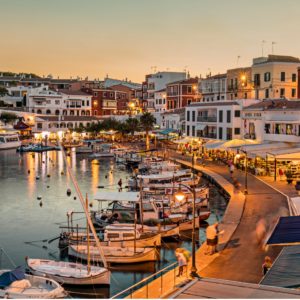
Spain will see an influx of German tourists very soon. Why? During a two-week trial, which begins June 15, Spain will admit thousands of German tourists to its Balearic Islands, which includes Mallorca, Ibiza and Menorca, to test their tourism industry’s new tourism regulations before July 1, when international tourists will officially be able to visit the entire country.

MoreHow Will We Travel After COVID-19?

In collaboration with German-based tourism firm TUI Group, other tourism operators and several airlines, up to 10,900 Germans will be allowed to visit the islands without having to go into a 14-day quarantine.

This news came the same day that Friedrich Joussen, CEO of TUI Group, forecasted that, this year, Spain will see “around half the usual” number of German tourists of a typical summer, or about 5 million. Passenger travel around the world this year has declined by about 95 percent, a dip of $820 billion in revenue, according to a study by Global Business Travel Association.

Germany’s virus death toll has been relatively low compared to other European countries, which is a primary reason why Germany was chosen, says Francina Armengol, president of Spain’s Balearic Islands. Germany was also one of the first countries to reopen, having restarted schools, churches and businesses in mid-March, and it is set to reopen its borders to the EU on June 15.
Other EU countries are not far behind. France will continue to place a two-week mandatory quarantine on incoming travelers, with the exception of EU or United Kingdom citizens, until at least July 24. In the U.K., school is back in session and citizens are allowed to meet outdoors in groups of six but travel by U.K. residents to mainland Europe and other countries remains restricted.

German travelers will not be required to undergo health checks but will be asked to complete an on-board questionnaire to identify anyone who may have contracted the virus. Visitors will then be able to proceed to their respective destinations for a maximum of five nights. Night clubs will remain closed until further notice.

As visitors deplane, they will be required to have temperature checks and will be given information on Spain’s social distancing and mask-wearing rules. Health authorities will also give travelers a phone number to call in case they begin to show symptoms, with tests for both those who are suspected of having the virus as well as close contacts.

While the Balearic Islands opening is just a test, it mirrors the agreement between Baltic countries Estonia, Latvia and Lithuania to create a “travel bubble,” a first-of-its-kind agreement which began on May 15. It allows citizens to travel between the three countries without needing to quarantine, even though travelers from other countries are still required to self-isolate for two weeks. Since then, a similar agreement between Australia and New Zealand has been struck. A travel bubble between France, Germany and Austria is under discussion.

According to Spanish newspaper El Pais, The Canary Islands are considering a similar test, although no specific plan has been agreed upon.

Steven Hiblum

Hiblum is general manager for Shelborne South Beach in Florida. He most recently worked as vice president of operations for Highgate Hotels, where he oversaw three Miami properties. Hiblum also held leadership positions for several Morgans Hotel Group properties, including Clift Hotel in San Francisco, Delano South Beach, Shore Club South Beach and Mondrian South Beach, all in Florida.

View our previous Smart Moves article here.

Patrick Andersen

Anderson is chief commercial officer and president of RoomIt by CWT. He formerly worked as the company’s chief strategy and commerce officer. The 30-year vet has been with the company since 2008. Anderson is also a non-executive member of the Board at Global Minnesota and is on the Board of Overseas for the Carlson School of Management. He was previously a non-executive member of the Board of Qliro Group.

Milos Davidovic

After two decades in the industry, Davidovic is now general manager of Barbary Beach House Key West in Florida. Davidovic recently worked as director of hotel operations at The Gwen, a Luxury Collection Hotel, Chicago. He also worked at various other properties during his eight years in Chicago, including Radisson Blu, InterContinental and Embassy Suites Lakefront Downtown Chicago; and the created his own restaurant, Tuscanos Fine Italian Restaurant.

See also: More international Smart Moves.

Jennifer Sullivan

Sullivan is director of the Mid-Atlantic regional office for the Nashville Convention & Visitors Corp. Previously, Sullivan for Destination Cleveland where she worked in the Washington D.C. market. She’s also had stints with various hotels, including Visit Baltimore and Kimpton Hotels Baltimore.

Robin Donovan

Donovan is managing director for El Capitan Hotel, The Tioga and Mainzer Theater, in Merced, California. She recently worked as area managing director of the Silicon Valley area for two Two Roads Hospitality properties. Prior to Two Roads, Donovan was general manager for Santa Cruz Dream Inn in California.

Barbara Piagari

Piagari is director of sales and marketing for El Capitan Hotel, The Tioga and Mainzer Theater in Merced, California. Before El Capitan, Piagari held the same position The Elizabeth in Fort Collins, Colorado. In her two decades in the hospitality, Piagari held leading positions for Hotel Palomar in Los Angeles; Fontainebleau Miami Beach; Viceroy Santa Monica, Viceroy Palm Springs, Estancia La Jolla Hotel & Spa, all in California.

Eike Clausen

Clausen is general manager of Kempinski Hotel San Lawrenz in Malta, a company he’s been with since 2007. He began working with Kempinski as a sales management trainee at Hotel Adlon Kempinski Berlin and later went into sales and marketing when he moved to China to work with Kempinski Hotel Beijing Lufthansa. He’s also worked at Kempinski Hotel Frankfurt Gravenbruch in Germany and Kempinski Hotel Aqaba Red Sea in Jordan.