Many event planners look for destinations with good food, local culture and plenty of leisure activities for attendees. However, accessibility for wheelchair users isn’t always factored into the equation. To encourage the inclusion of disabled travelers in the event agenda, Marquette County in Michigan’s Upper Peninsula has put together an accessibility guide.
Travel Marquette worked together with the Superior Alliance for Independent Living (SAIL), a local disability network, to assess the facilities of parks, restaurants and hotels. With the firsthand experience of accessible travel blogger Cory Lee, the accessibility guide recommends a wide variety of facilities that anyone can enjoy.
Where to Meet in Marquette County
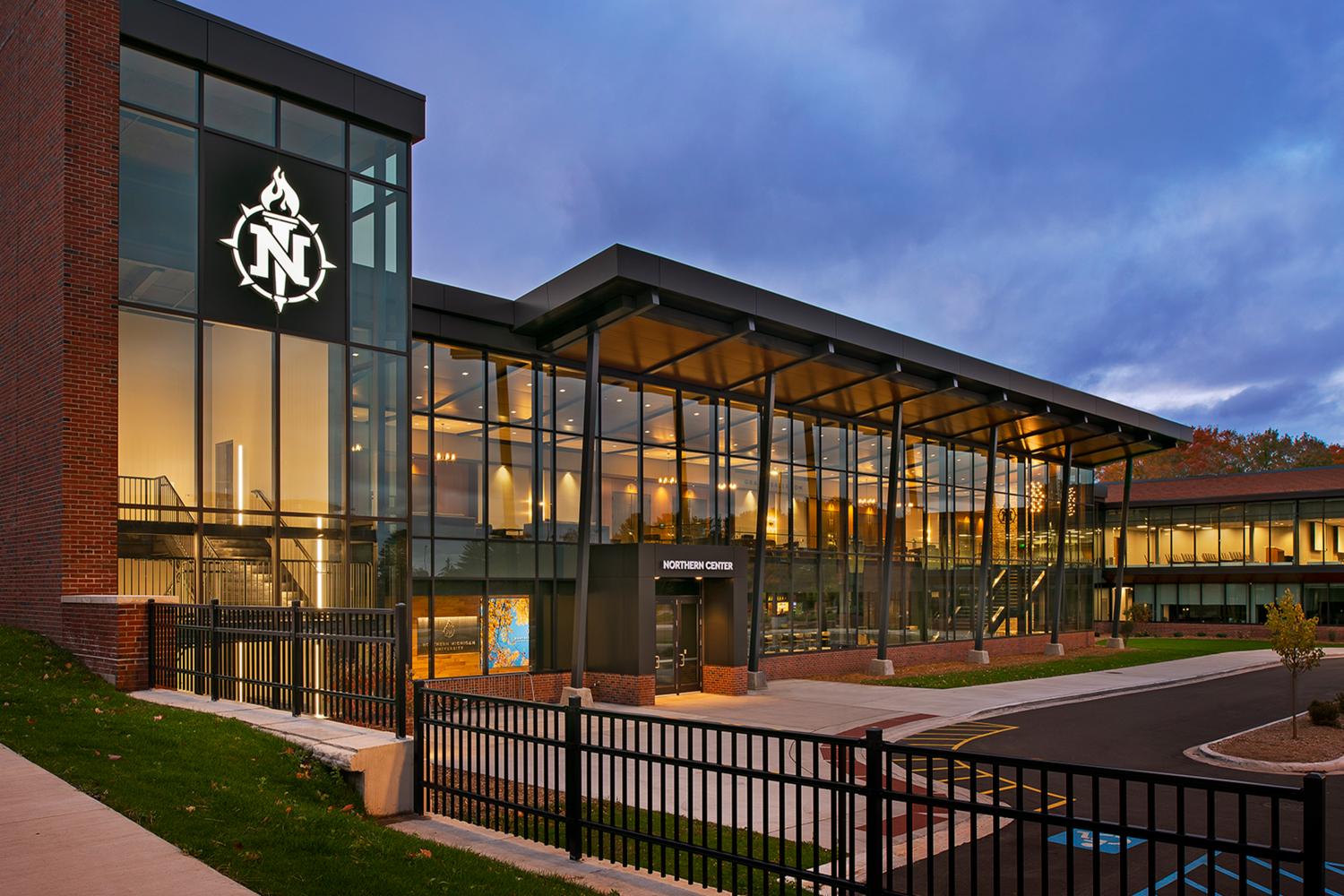
The City of Marquette is home to Northern Center & Event Services, part of Northern Michigan University. Two ballrooms, five breakout rooms and two conference rooms total to 25,000 sq. ft., enough to accommodate over 1,000 attendees at the event center.
A dedicated events team helps groups operate the venue’s built-in presentation technology. Northern Center has catering services available with ingredients sourced from local farms and kitchens. They offer a range of meal options and have staff trained to follow dietary restrictions closely.
Choosing an accessible hotel for your attendees goes a long way to make everyone feel included. Here are two options out of many that downtown Marquette has to offer. Each location has downtown parking, a no-stairs entrance, a low threshold and wide doorways. Open routes through the halls and accessible restrooms make the experience more comfortable for everyone.
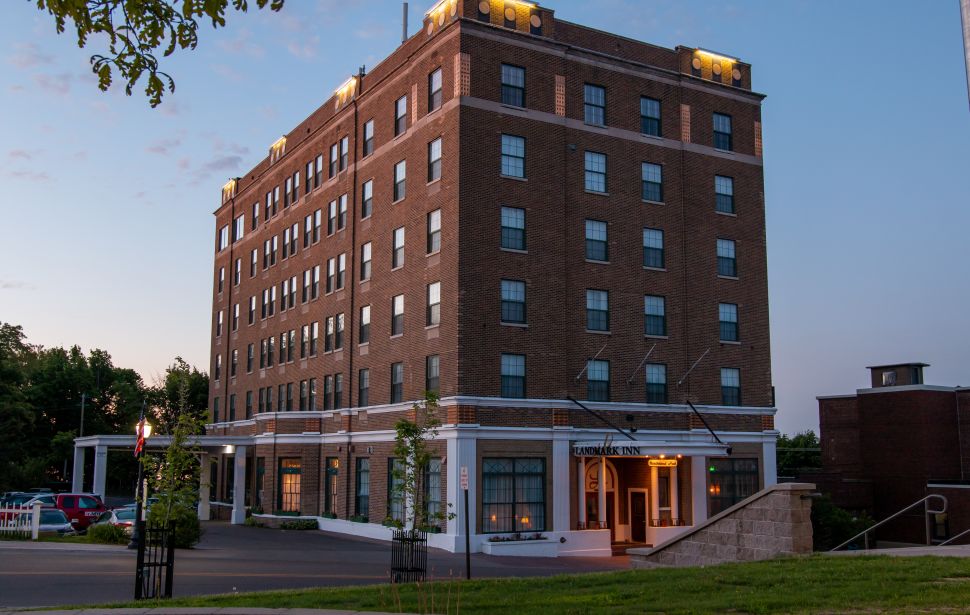
Just north of downtown, the Landmark Inn has been operating in the area for nearly 100 years. Most of its 66 guest rooms and suites overlook Lake Superior, while its convenient location gives guests access to all downtown Marquette has to offer. If you’re planning a more modestly sized event, Landmark Inn can host just under 300 guests in its four event spaces.
For larger groups, Fairfield Inn & Suites has 92 guest rooms right across the street from Lake Superior. The new hotel is owned by Marriott and comes with the benefits of Marriott Bonvoy points and the Marriott Meeting Services app.
Downtown Dining
Finding restaurants that wheelchair users can navigate can be difficult. Here are a few local favorites in the heart of Marquette. Like the hotels, these dining options meet all the accessibility criteria assessed by Travel Marquette, including downtown parking, no-stairs entrance, wide doorway, low threshold, open routes and accessible restrooms.
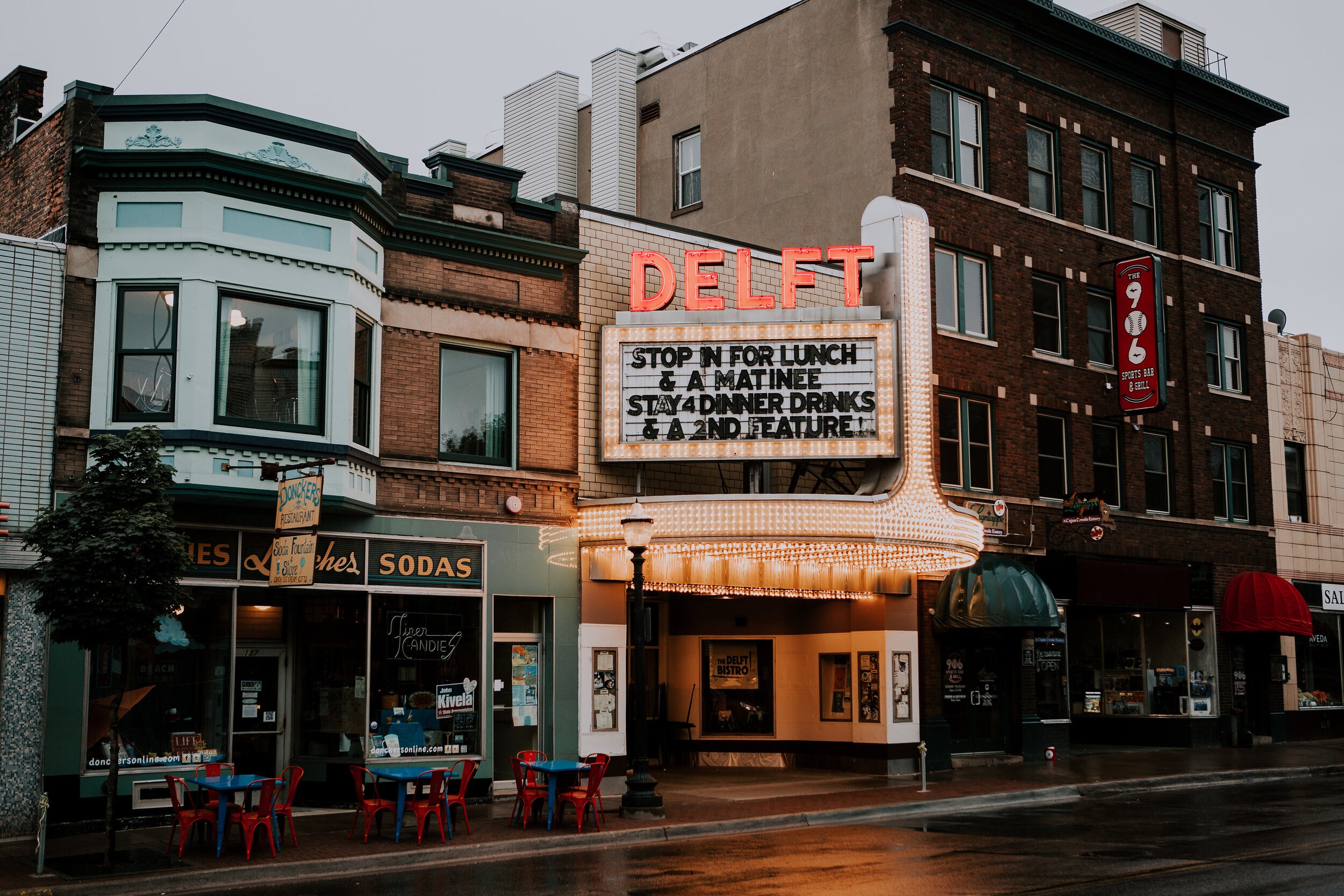
Just a block away from Mattson Lower Harbor Park is Delft Bistro which features new American cuisine with a few Canadian favorites. The restaurant operates inside Marquette’s first theater and hosts nightly movie screenings.
Next door to Delft is Donckers, a breakfast, lunch and candy café with a midcentury feel. After a meal of pancakes and waffles or sandwiches and salads, you can sample their homemade artisan chocolate and caramel. They’re celebrating their 125th year anniversary this year.
If you need a drink, Ore Dock Brewing Co. is just around the corner. They serve a wide array of locally brewed craft beer on tap that can be enjoyed inside or outside. Regular live music keeps the energy high and attracts a local crowd.
Marquette County is right on the shore of Lake Superior and is home to plentiful vistas, trails, waterfalls and forests. These calming activities let attendees wind down after a productive day of meetings. The accessibility guide names the best parks that have wheelchair-accessible routes.
The Iron Ore Heritage Trail stretches 47 miles across the county from Negaunee to downtown Marquette with 5 miles of accessible walking and biking trails. Near the trail’s end in Marquette, there is an EZ Launch for kayaks and canoes. The specialized platform allows wheelchair users to easily slide in and out of their boats so they can participate in water activities. Clark Lambros Beach Park is right across the street with sweeping views of Lake Superior.
Located northeast of Marquette is the 323-acre forested peninsula called Presque Isle Park. Marked parking and accessible restrooms are at the start of a two-mile paved loop. There are a series of lookout points along the trail, but you can see Lake Superior from any vantage point.The picnic area and marina at the entrance offer scenic outdoor eating opportunities.
Downtown Marquette uses Mattson Lower Harbor Park for concerts, events, festivals and gatherings year-round. It has 22 acres of grass for recreation with views of Lake Superior. Like Presque Isle Park, there are marked parking spaces and accessible restrooms.
At the end of last year, National Association of Music Merchants (NAMM) was facing a tough decision. As one of the largest associations in the world with 10,000 member companies from over 100 countries, including manufacturers, distributors and retail music and sound products, the group had canceled their pair of 2021 events and were looking forward to getting back to the bi-annual schedule their members expected with a summer show at Nashville Music City Center and a winter show at Anaheim Convention Center where they have been meeting for 40 years.
Then another Covid wave hit, war broke out in Ukraine and supply chain issues challenged the industry in new ways. Cindy Sample, director of NAMM trade show operations, remembers the moment well. “All of a sudden, it wasn’t looking good,” she said bluntly.
A Desire to Move Ahead
NAMM President and CEO Joe Lamond consulted with the executive committee, influencers, partners and stakeholders and talked through the options: cancel or move? “We didn’t make the decision in a vacuum,” Sample said. “The overwhelming majority of people said they had a desire to move ahead; the industry needs this.”
The team was committed to finding a way to make it happen. That just left the logistics of negotiating, planning and communicating a move from January to June for the 2022 Winter Show in Anaheim, combining with the planned Nashville Summer Show and moving the 2023 Winter Show from January to April to get closer to back on schedule. “There were a lot of moving parts,” Sample said, once again understating the complexity.
Uncertainty was one of the big challenges. For an event that traditionally brought 115,000 people, how many would come on the heels of a Covid wave? How to estimate the number of square feet that would be needed? What sponsors would step up? “We were looking for quality, not quantity, with fewer international attendees as things were just opening up,” Sample said.
Luckily, after 20 years of working together, her team was able to work with partners at Visit Anaheim and the host hotels to find alternative dates. “They squeezed us between Star Wars and the Southern Baptists,” Sample said.
Because of the long history, the change was treated as an addendum to amend the space and fee, no lawyers required. “We didn’t go into renegotiations. They moved mountains to find us space and we worked together to make sure it made sense,” she said.
Hotel partners were also spectacularly flexible, honoring the winter rates, considering that NAMM wasn’t the only piece of business pushing into spring-summer when the destination was already seeing heavy transient demand.
The new dates and footprint required some operational challenges, but Sample reported that the group was just grateful to be able to have the show in a familiar place. “It was good to have some consistency and muscle memory,” she said. “We focused on the positive, more activations outside and enjoying the great weather and seeing another side of the destination during the summer months.”
Sample praised the relationships formed over the years with everyone involved. “What got us through it all was the partnerships we have built up over the years. Everyone was willing to jump in and do whatever it takes. We were all in the trenches,” she said.
Communicating All That Change
Then came the tough part: explaining all those changes to hundreds of thousands of people deciding where to go and when. Although the convention was being moved to June, they couldn’t call it the NAMM Summer Show because that event in Nashville was being canceled.
In the end, everyone worked together to make sure communication was clear and consistent and answered everyone’s questions. There was a lot of hand-to-hand contact,” Sample said. The wording focused on the upside. “Mark your calendars for a once-in-a-lifetime show, combining the greatest hits from both Summer NAMM and The NAMM Show. Join us, June 3–5, for an incredible reunion, uniting buyers, sellers and influencers from all over the globe. We’ll see you in Southern California!” read one promotion.
All communication was also very vocal about the health protocols in effect. They offered masks and optional on-site testing. “We wanted everyone to feel good,” Sample said.
Attendees were evidently feeling very comfortable. Sample told the story of how she ordered green, yellow and red stickers so people could indicate their comfort level for interacting on their shirts. She ordered more red stickers, thinking people uncomfortable with shaking hands would be the ones who would want to be public about their feelings, but she ran out of green because people were excited to share their desire to be close. “I didn’t see that coming,” she laughed.
A Happy Ending
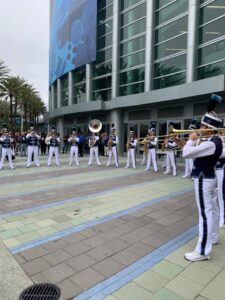
NAMM Band
The consensus, according to Sample, was that it was better than expected with 48,000 showing up in person and more participating online. “We provided options,” she said. When asked, she predicted that the group would probably continue to offer some sort of virtual product to expand their digital reach and monetize the content in a different way. “I’m pretty sure hybrid is here to stay,” she said, praising the group’s in-house technology team and commitment to continuing to learn and adjust the experience.
In the end, the event that almost didn’t happen represented $77 million to the local economy and supported an estimated 26,000 jobs. The NAMM Foundation also makes significant contributions to the community. Over the years, The NAMM Foundation has donated more than $75,000 to Anaheim schools to provide students the opportunity for a well-rounded education that includes music.
Jay Burress, president and CEO of Visit Anaheim reported that the 17 events that came to town in June, including three other citywide conventions, produced the largest TOT (tax generated revenue for the city) in a single month since 2019. This positions “our entire destination for a strong start to the summer,” he said.
Editor’s note: This Week in Travel (TWT) is your essential guide to smoothing the road from here to there for your attendees and yourself.
A new survey from JD Power, US Travel and Tourism Economics (an Oxford Economics company), shows good news for meetings, albeit in tandem with a lag on behalf of corporate to allocate funds for meeting and business travel.
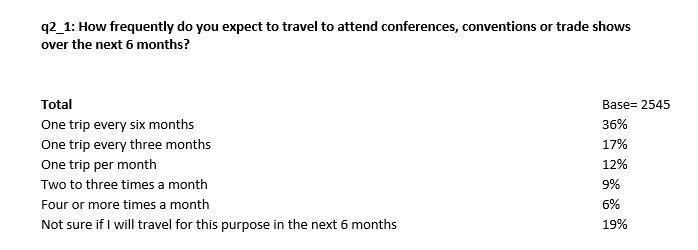
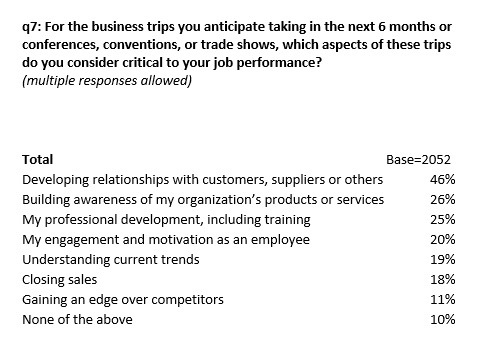
Andrea Stokes, practice lead for hospitality at JD Power, told Smart Meetings that according to data “81% of business travelers expect to travel at least once in the next 6 months to attend conferences, conventions or trade shows, which is good news for the meetings and events industry. Nearly half (46%) of this group agree these events are critical to developing relationships with customers, suppliers and others. One in four (26%) agree these events are critical to building awareness of my organization’s products or services. (These results are on par with our Q1 survey.)”
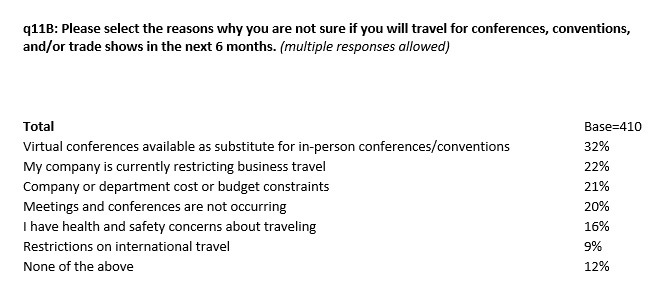
She adds, however: “Among those who are uncertain if they will travel for conferences/conventions/trade shows, 1 in 3 cite availability of virtual events as a reason for the uncertainty. And 1 in 5 cite the fact that these events are not occurring at all due to the pandemic.”
In addition to these findings specifically on meetings and events, the study found that while business travelers themselves were keen on getting back on the road, corporate management was not as enthusiastic due to budgetary concerns. However, these were noted to be short and not long-term cuts.
According to the forward-looking Business Travel Index, business travel activity is expected to increase over the next quarter. Also, according to an accompanying Business Travel Survey for Q2 2022, business travelers expect to resume traveling at a frequency only slightly reduced from pre-pandemic levels, averaging about 2.1 trips per month over the next 6 months. While that seems to be trending in a promising direction, the survey results show that business travelers—particularly those at large companies—remain skeptical that travel will increase dramatically in the near term.
More than two-thirds (68%) of corporate executives expect the company they work for will spend less on business travel during the next six months compared with the same period in 2019. While there are many factors keeping business travel in check, chief among them are corporate policies. Half of executives surveyed say their firms still have policies in place restricting business travel due to the pandemic. The most frequently mentioned policy restrictions include fewer business trips overall (71%) and fewer employees sent per business trip (58%).
One-in-five (20%) employee business travelers say they are unsure they will make a trip for purposes such as a customer meeting during the next six months. The most frequently cited reasons for this uncertainty are video conference substitutes for business travel, company cost constraints and companies restricting employee business travel.
Bigger Companies Mean Restrictions
A bigger proportion of larger companies (45%) continue to have restrictive policies governing business travel in place vs. smaller companies (24%). That is despite the fact that 80% of executives at large companies consider business travel essential (vs. 73% of all executives). More than one-fourth (28%) of business travelers at larger companies have budget constraints to attend conferences, conventions or trade shows.
Executives appear particularly focused on the expectation that reduced business travel may represent short-term savings, but bring long-term reductions in sales (51%), while half of business travelers (49%) perceive reduced business travel will have a negative impact on company financial performance.
Meeting Planner Takeaways: While boots-on-the-ground meeting-goers know the importance of face-to-face meetings, corporate is lagging behind in prioritizing it, preferring a slower return to a “new normal” than otherwise. As this dynamic occurs, meetings participants or want-to-be participants remain entrenched in the knowledge that meeting in person makes a difference both on the bottom line and beyond and will most likely push to influence management to gain a more flexible and meetings-forward point of view.
Here at Smart Meetings, we’re celebrating International Women’s Day all month long. Cheers to these inspiring female event professionals!
This article was created in collaboration with DAHLIA+Agency.
“Carina Bauer— I have watched Carina for several years run her business alongside her father with the utmost class, grace and flawless execution. Carina not only shows up for our industry, but she exemplifies true leadership through her thoughtful decisions, willingness to listen and courage to innovate. As a business owner myself, Carina inspires me to push my own boundaries and exercise my voice for the betterment of the meetings and events industry.”—Sarah Soliman Daudin
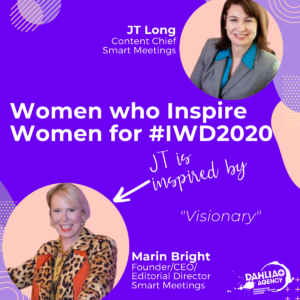
“Marin Bright—She had a vision 19 years ago for a publication that empowers planners with an educational and inspirational publication beautiful enough to be on a consumer newsstand. And five years ago she recognized that while this is a majority female industry, they are not reaching the highest management level. She saw the solution as bringing people together for the first Smart Women in Meetings Summit—a day of networking, innovative resources and celebrating the women who get things done. She has been an inspiration to me and many others.”—JT Long
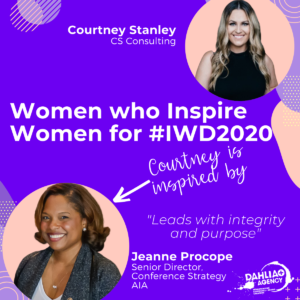
“Jeanne Procope— Jeanne’s style of leadership inspires me daily. She consistently leads with integrity, purpose + the absolute best sense of humor.”—Courtney Stanley
“Deborah Sexton has always inspired me… Her brilliance and support always pushed me to do more than I ever thought possible.”—Carolyn Clark
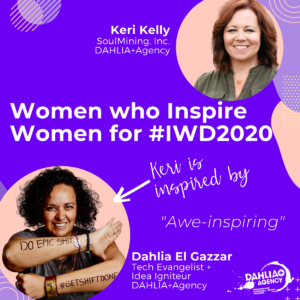
“Dahlia El Gazzar— I’m inspired by witnessing first-hand Dahlia bloom, blossom and thrive from “company employee” to an entrepreneur has been awe-inspiring (and mindstamping, as she says!) for me. She has created opportunities for many other women (and men!) as she has built an incredible team of educators/consultants …this, combined with her infectious personality and warm heart, make her an inspiring, magnetic and just a rock solid WOMAN!”—Keri Kelly
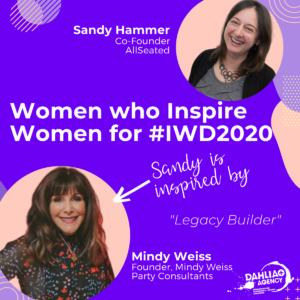
“Mindy Weiss is so incredibly talented and has such an abundance of warmth. I love her openness — she laughs, tells jokes and knows how to work so hard, and yet, finds time to chat and have fun! Mindy’s connection with her clients and the people around her is inspiration, and something to be admired. Yes, her talent tells its own story but it is also about the connections you make and about the people falling in love with you – that’s business and that’s building a legacy.”—Sandy Hammer
“I admire ‘HER’! There are too many women I admire and each for different reasons. The woman founder who is innovating and making #S#itdone, the one who speaks up for the rights of others, The one who juggles family/kids and running on the global stage and boardrooms,… All of them motivate me, inspire me and push me to be a better version of who I am.”—Rachel Stephan
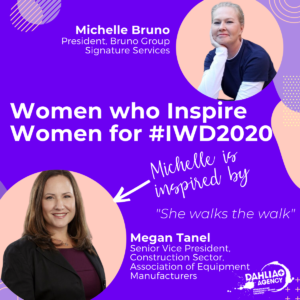
“Megan Tanel inspires me. She’s an executive and a working mom. She leads people as she lifts them up. She’s frank but honest, smart yet humble, sincere and funny at the same time. To a fangirl like me, she walks the walk for events and women.”—Michelle Bruno
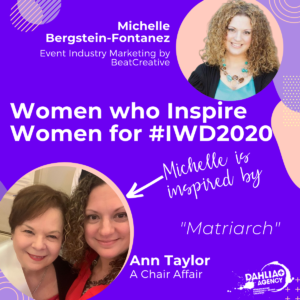
“My inspiration for #IWD2020 is Ann Taylor of @achairaffair – always positive, mothering, and encouraging, Ann is the matriarch of the Central Florida Special event and wedding industry. She loves connecting people with people. She has helped so many local event businesses and individuals grow and I’m proudly one of them. She is also a breast cancer survivor + heart attack survivor.”—Michelle Bergstein-Fontanez
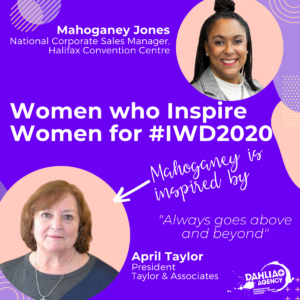
“There are many women who inspire me daily. April Taylor, my mentor, was the one who inspired me to always go above and beyond to service the client without being afraid to challenge their goals.”—Mahagoney Jones
“Claire Smith— a leader and mentor I can look up to and think, someday I want to be just like her, both professionally and as a person.”—Shawn Cheng
“Necoya Tyson— She is climbing heights and making amazing strides, doing it with a smile on her face.”—Sherron Washington
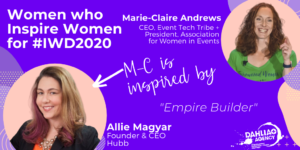
“Allie Magyar for being a non-tech tech empire builder.”—Marie-Claire Andrews
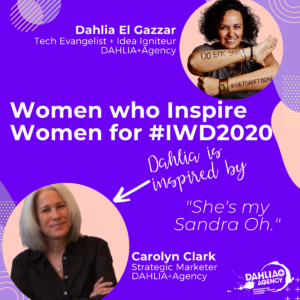
“Carolyn Clark— She continues to teach all around her and motivates with patience, endless knowledge, and is the best devil’s advocate. She’s my Sandra Oh.”—Dahlia El Gazzar
Meeting professionals leading the way back to the convention center are increasingly finding themselves between a pandemic and a hard decision. Whether ‘tis better to brave the slings and arrows of medical data privacy and ask people if they have been vaccinated or welcome everyone and suffer the possibility of infecting someone with a possibly deadly disease (to borrow a framework from Shakespeare)?
As Anh Nguyen, head of community engagement at the serendipitous networking platform twine pointed out in her guest post, “Jury, Judge or…Event Planner?” that “the traditional duty of care is not as clear cut as it was in years past. “As event planners, we’ve always taken responsibility for the safety and security of our attendees while they were in our care. Traditionally, this included clear emergency and evacuation procedures, what to do if the building was on fire, or making sure that special needs and requirements were looked after. It is universally accepted that if the building is on fire, everyone wants to get out, and it was our job as event professionals to have a plan in place for that. But what happens if not everyone wants out of the fire? Or if the understanding of the fire isn’t a universal one?”
On the heels of a rousing #twineTalks on the subject, Smart Meetings and twine joined forces for a Twitter Chat using the hashtag #TheEventVaxDebate on June 1 to find out how meeting professionals are handling the vaccine requirement conundrum.
Legal Precedent
The conversation started out by setting a legal foundation for what is allowed and how to manage risk. “Do you think masks/no masks, vaccines/non-vaxed will or should be an addendum on contracts with venues? Or is it location based, and a mutual understanding between venue and planner?” was an early question.
Do you think masks/no masks, vaccines/non-vaxxed will or should be an addendum on contracts with venues? Or is it location based, and a mutual understanding between venue and planner?#TheEventVaxDebate
While Attorney John S. Foster from Foster, Jensen & Gulley has suggested in the past that hotel protocols and policies for Covid-19 prevention be included in contract clauses, the fact that “prevention” is impossible made following stringent regulations even more pressing.
One option endorsed was the default of assuming no one is vaccinated and putting protocols in place accordingly since people might lie about vaccine status. “As with everything in life, rules/ regulations are in place to address the lowest common denominator.”
Yes, one of the complicated things about events is no matter what protocols or rules you have in place, the trust is still with the attendees to follow them, which might not be what happens. Assuming no one is vaccinated seems like a safe approach. #TheEventVaxDebate
Attorney Chantal Bernier, leading the Privacy and Cybersecurity Practice at Dentons Canada, who spoke at the preceding #twineTalks, reminded us of our obligations under privacy law to minimize the collection of personal information even in the context of protecting public health. One way to achieve this is to provide options to individuals as to the personal information they are willing to share. In the context of Covid- 19, three options for personal information to disclose can be offered: vaccination status, or evidence of a recent negative test result or proof of having recovered from Covid-19. This will also address claims of discrimination against individuals who refuse to or cannot get vaccinated while broadening the options for personal information to disclose, preserving a greater level of individual choice.
During this transition time, a “better safe” option was suggested as prudent.
The long and short of it for me, is we are at a tipping point so asking for either proof or negative test is inclusive while being responsible. #TheEventVaxDebate
When asked who is executing the safety plan, some pointed to making attendees responsible for their actions. A safety pledge and working with the CVB to determine relevant local regulations seemed to be the norm.
We have created a safety pledge regarding our events and meetings. We share what we are doing, and we work with the venue and the CVB regarding the state’s requirements. #TheEventVaxDebate#eventprofs
Having health and safety attendants onsite is one way to reduce the burden on the planner and venue staff. Consultants can also help with data safety issues.
Tech Aids
From distance monitoring, contact-tracing bracelets to thermal monitors and health apps, technology can take some of the work out of screening.
And polling attendees prior to the event about their comfort level could help planners understand what they need to provide to help people make decisions about joining IRL.
When the decision time comes, cost may end up being the determining factor as availability and price of travel could be prohibitive for some.
And we don’t know what airline schedules and routes will look like and whether fares will be affordable for those who want to attend. #TheEventVaxDebate
Is limiting access to those who are vaccinated discrimination? On this point, Chantal Bernier clarifies that discrimination truly results from a distinction that is both arbitrary and hostile to a group. Where it is demonstrably justified in the pursuit of the public interest, the distinction may be legitimate. In the context of protecting against the spread of Covid-19, banning unvaccinated people from events may not constitute discrimination. However, since other forms of protection exist, such as requiring evidence of a negative Covid-19 test or of having recovered from Covid-19, legally it would be preferable to avoid banning unvaccinated people by opening the event to those unvaccinated who can demonstrate to be Covid-free or immune through previous infection.
The legal test is “What is demonstrably necessary to protect public health?” Any measure that is demonstrably necessary is likely to be found on the right side of the law both in relation to privacy and protection from discrimination.
Welcome, Janet! I thought her points around what qualifies as discrimination were so helpful. That discrimination only happens when it’s arbitrary and hostile, so banning unvaccinated people from events is not technically discrimination. #TheEventVaxDebate
Even if people are self-segregating into “cliques” of those who are “open to anything”, “cautious until vaccinated” or “refuse to get vaccinated and therefore don’t come”, are meeting professionals limiting who can participate in events by even asking the vaccination question?
Offering hybrid meeting options may be one way to play all the options, be inclusive and safe.
And on the bright side, Covid has provided a common experience people can talk about when they are together.
Start Planning Today!
Considering Philadelphia for your upcoming conference or event? Whether you’re planning an intimate meeting in a unique venue or hosting a large conference at the one-million-square-foot Pennsylvania Convention Center, here are the top reasons to bring your next meeting here.
Pennsylvania Convention Center
When you hold a meeting or convention at the Pennsylvania Convention Center, you are not just investing in a building or floor space, you are investing in an experience. Located in the heart of Philadelphia, the Convention Center is just steps away from the city’s attractions, restaurants and hotels. Progressive work rules and streamlined services provide our customers with just the right amount of flexibility and independence they need, resulting in greater cost efficiencies and better overall customer experience. And did we mention we have one of the largest ballrooms in the Northeast?
Philadelphia is home to leading hotel brands and properties, ranging from luxurious to economical and offers more than 14,400 rooms located within walking distance of the Pennsylvania Convention Center. Whether your meeting is large or small, our team can walk you through dozens of unique indoor and outdoor venues in historic settings, with Instagram-worthy views, and spaces with indoor-outdoor options.
A Must for Your Bucket List
Condé Nast Traveler added the city to its 2021 Gold List, joining only seven other destinations around the world. Philadelphia also landed on TIME’s World’s Greatest Places list for 2021, which spotlights the new experiences on view at the Philadelphia Museum of Art and a diverse culinary scene that is “vibrant as ever.”
Ongoing Customer Support
Once your event is booked, our experienced Destination Services department is eager to assist you in your planning efforts from onset to completion, including everything from sourcing venues and hotels to host your special event, attendance promotion, recommendations for entertainment, and connecting you with many member contacts and services to meet your needs. Our team of destination experts is standing by to ensure that your Philadelphia experience is a successful and profitable one.
Philadelphia exudes a vibrant character and energy, creating an ideal location for your next meeting. From your initial outreach to the closing session, our team of destination experts are with you every step of the way ensuring your event is a success! With expertise in meetings and conventions combined with their in-depth knowledge of Philadelphia, our experts will be your perfect partner in planning.
Experience the landmark of luxury and service at Rosen Shingle Creek, Orlando’s premier property when it comes to meetings, events or vacationing. This AAA Four Diamond hotel rises along Shingle Creek, the headwaters of the Florida Everglades, nestled throughout 255 acres of enchanted flora. With dazzling meeting venues, exquisite cuisine and suites with expansive views, your stay is sure to be as productive as it will be relaxing.
Driving up the palm tree-lined entrance, immediately you feel you have been transformed into the lap of luxury and begin to understand how Rosen Shingle Creek earned its AAA Four Diamond rating and a Cvent ranking as a top 20 U.S. meeting hotel. Three magnificent, column-free ballrooms highlight the impressive 524,000 square feet of meeting space. The largest, the Gatlin Ballroom, displays 95,000 sq. ft. of state-of-the-art space, stylish décor, and limitless creativity from our experienced associates ready to make your dream meeting a reality. Take advantage of the warm Florida sun and optimize Rosen Shingle Creek’s 136,000-square-foot outdoor terrace. Its picturesque, natural beauty and allows executives a chance to pamper their valued attendees in the open air with plenty of room to wine and dine.” This we need to remove the “and” between “beauty” and “executives”.
Rosen Shingle Creek features 1,501 elegant guest rooms and suites, including 69 Executive Suite Parlors, 37 Grande Suite Parlors, 56 King Suites and three Presidential Suites. They are exactly what leaders look for to wow fellow executives, esteemed guests or even an expansive, yet intimate, place to call home during your event. Oversized windows let sunlight pour in while you enjoy brilliant views of the lush landscape. Go to the next level in the exclusive VIP Lounge, where you can nestle in a plush chair, enjoy personalized concierge service, an honor bar and balcony views from the 14th floor overlooking the pristine golf course, natural lakes, and crystal blue pools.
The brilliant culinary and banquet teams know how to appeal to all palates and craft imaginative, personalized menus for groups both large and small. Indulge in not one, but two AAA Four Diamond dining experiences; A Land Remembered, a steakhouse known for its tender, succulent Black Angus Five Diamond Prime Beef along with a bountiful array of fresh seafood and Florida fare and Cala Bella, serving authentic, Tuscan-inspired cuisine with authenticity that takes you back to the old country. Discover mouthwatering favorites at Café Osceola, handcrafted margaritas at Mi Casa Tequila Taqueria, signature sushi at Banrai Sushi and bold flavors at Headwaters Lounge or any of the 15 dining options. New Executive Chef Michael Dunton elevates every meal or catered event to perfection with his farm-to-table fresh ingredients and menu mastery.
Enjoy breathtaking views as you play 18 holes of championship golf at Shingle Creek Golf Club, designed by the Arnold Palmer Design Company. From tee to green, hole to hole, golfers enjoy a wonderful blend of strategy and variety, reminiscent of the golden age of course design with elevated greens, strategically placed bunkers and fairways that challenge golfers at every level.
Experience the ultimate in relaxation between meetings and rejuvenate your soul at The Spa at Shingle Creek. Relax your muscles with a soothing Himalayan Salt Stone Massage or maybe even a Creekside Citrus and Cedar Massage. Drift away at this elite oasis where highly skilled professionals utilize botanical and aromatherapy-based products to quench your skin’s thirst. Here, there are many soothing, signature wellness treatments designed to leave you glowing, calm and confident to tackle whatever is next.
Rosen Shingle Creek, a unique oasis of style and sophistication with unrivaled meeting space sure to elevate any event beyond expectation.
It seems like not so long ago that everyone was talking about the death of meetings and conventions. There’s no doubt that the global Covid-19 pandemic shook up the industry and left event professionals wondering what the future would hold.
But as we begin to inch ever closer to a new normal, it’s clear that meetings are making a comeback in 2022—with a few changes of course.
Today we’re exploring four ways meetings and conventions are evolving in 2022 and beyond, and what to expect for the future. Whether you’re looking to plan an event or attend one, this is important information to know!
Let’s dive in.
How Covid-19 Impacted Large-Scale Meetings and Conventions
The coronavirus pandemic had a widespread impact on just about every industry you can think of, and meetings and conventions were no exception. In 2020, we saw everything from mass cancellations to virtual-only events, as the world tried to grapple with the new reality of Covid-19.
The events and meetings industry, like many during the pandemic, was forced to adapt, and many event professionals did so in creative ways.
Some moved their events online, while others got creative with hybrid event models that combined in-person and virtual components. And still others found ways to safely host smaller, socially distanced events.
These were all important steps in keeping the industry afloat during a very tough time, and they’ll continue to be important as we move into the post-pandemic world.
What’s Changing for Meetings and Conventions in 2022 and Beyond?
Now that we’re halfway through 2022, it’s becoming clear that in-person events are ramping back up. These days, however, meetings are far from going back to the pre-2020 status quo. Event professionals and attendees are reconsidering how they approach events and reinventing the wheel in new and exciting ways.
Here are four ways group meetings and conventions are changing in 2022.
In-person Meetings Are Back, But a Focus on Health and Safety Is Here to Stay
After a year of virtual events, it’s no surprise that planners and attendees are eager to get back to in-person events. And while there’s still some hesitancy around large gatherings, we’re seeing more and more events taking place in person as the year goes on.
But even as things start to return to normal, health and safety will continue to be a top priority for meeting planners and attendees alike. This means we can expect to see an increased focus on things like contactless registration, temperature checks, mask requirements, and social distancing measures, even as local governments lift restrictions.
It’s safe to say that the pandemic has left society with a healthy appreciation for organizations that keep their well-being in mind when planning and event organizers will want to ensure that they take an omnichannel approach to communicate the precautions they intend to take during an in-person event.
The Great Resignation Will Impact the Corporate Event Experience
Anyone who has visited a restaurant in recent months has already experienced the fallout from what is being called the “Great Resignation.” Employees across industries are quitting en masse, spurred in some ways by the wider availability of work-from-home jobs, challenges in accessing childcare, and other pandemic-era woes. The staffing challenges created by this Great Resignation have serious implications for the events industry, and organizers and guests alike will feel its effects.
Companies rely on events for everything, from team building to marketing, and the loss of experienced event staff will make it more challenging to put on a successful event. Event planners who are used to working with a large staff of reliable, professional event workers may find themselves scrambling to fill positions and dealing with last-minute cancellations.
With fewer experienced staff members available, guests may find that service is slower or less attentive than usual. In some cases, corporate event organizers may even be forced to cut back on amenities or activities due to staff shortages.
Hybrid and Virtual Meetings Will Continue With an Emphasis on Collaborative Experiences
Even as in-person meetings make a comeback, we’re also seeing a continued interest in virtual and hybrid event models.
Still, after a year of Zoom fatigue, it’s safe to say that attendees are ready for an improved and more personal event experience, whether in-person, hybrid, or virtual. Attendees want their voices heard, and meeting planners are taking notice, with many saying that they’ll be placing a renewed focus on the attendee experience and collaborative problem-solving in the coming years.
As companies take advantage of all-hands meetings and other group events to tackle big questions and build buy-in around solutions, opportunities for collaboration will be front and center in the event and meeting landscape.
That focus on collaboration is leading to new and innovative tools and methodologies that seek to engage attendees across departments and silos, helping them effectively work together to achieve consensus.
Organizations like WebStudy Foundation, for example, are leveraging their unique methodology for facilitating collaborative convenings both virtually and in-person to encourage innovation in higher education and lifelong learning — another industry significantly impacted by the pandemic.
“In our experience, bringing all minds on deck is essential for innovating solutions for an uncertain future, especially in a world as tradition-minded as formal education,” says Gisele Larose, Executive Director of the WebStudy Foundation. “Technology-enhanced methodologies like our Facilitated Collaborative Convenings minimize wheel spinning and dysfunctional dynamics, enabling highly diverse groups of attendees to be effective faster, no matter what ‘wicked problem’ they hope to solve.”
Expect More Exploration of Augmented Reality (AR) and the Metaverse
The events industry is no stranger to new and emerging technologies. Event professionals have long embraced everything from social media to virtual reality in order to create moreengaging and immersive experiences for their guests. Augmented reality (AR) and the metaverse are two of the latest technologies to enter the event space, and they offer a wealth of possibilities for event planners looking to take their events to the next level.
AR is a technology that superimposes digital content onto the real world, providing users with an enhanced or augmented view of their surroundings. The metaverse, on the other hand, is a virtual world that exists entirely online. It’s often described as a “shared, persistent, 3D space” where users can interact with each other and with digital content in real-time.
While AR can be used without the need for any special equipment, the metaverse requires users to have some form of virtual reality headset or similar device in order to access it. This means that currently, AR has the potential to reach a wider audience than the metaverse, as not everyone owns or has access to VR equipment.
Still, the future applications of the metaverse are exciting, and event professionals are ready to dive in! One of the most obvious applications for large-scale events is improving virtual networking opportunities and even post-event engagement.
The metaverse allows organizers to create highly immersive experiences that would be impossible to replicate in a traditional video conferencing environment. For example, virtual attendees with VR headsets like the Oculus could experience a real-time view of the live event space, and interact with other attendees in a completely virtual world after the event is over.
The metaverse is already being used to replicate in-person experiences for everything from meditation sessions to socializing, lectures to game-playing. Future-focused event professionals will want to pay attention to this exciting new space.
Final Thoughts
The pandemic has forced event professionals to think outside the box and get creative in order to continue delivering engaging experiences for their guests. While the road ahead is still uncertain, there are many exciting trends and technologies that event planners can leverage to create unforgettable events that meet the needs of today’s attendees. From leveraging data and AI to improve the event experience to exploring new technologies like AR and the metaverse, the sky’s the limit when it comes to event innovation in 2022 and beyond!
From legacy Fortune 100 institutions to inventive start-ups,Ryan Gould brings extensive experience with a wide range of B2B clients. As the Vice President of Strategy and Marketing Services at Elevation Marketing, he skillfully architects and manages the delivery of integrated marketing programs. He strongly believes in strategy, not just tactics, that effectively align sales and marketing teams within organizations.
Are staffing shortages making the difficult job of planning post-pandemic meetings even more difficult? Whitney Johnson, CEO of Disruption Advisors and author of “Smart Growth: How to Grow Your People To Grow Your Company” has some tips for managing the upskilling required to fill in those gaps during this critical time.
You are calling the Great Resignation the Great Aspiration. Why is that and why do you think it is hitting the hospitality industry so hard?
I’d like to start with the ‘why’ behind calling it the Great Aspiration. Resignation tends to be interpreted as people choosing to bow out, to stop. But, while that is happening, I think it generalizes the motivation behind the mass movement of workers. People have been given the opportunity to consider what matters to them, how they want to work, and how they want their time to be valued.
Many are realizing their current positions are not congruent with their aspirations. So, they are finding new opportunities that better align with what they are looking for. People are leaping towards new opportunities—not away from their current positions. It’s a narrow distinction but an important one.
Almost no industry was more impacted by Covid than the hospitality industry. As such, more meeting workers, because they were laid off, furloughed, shifted to remote, or stuck in the status quo while everything around them changed, had their lives disrupted. And with disruption comes innovation and a spark to start reflecting. The industry was not only put in a Covid-induced blender, but while being mixed around, meeting workers were taking the time to think about what they really want in a career.
Now, many of those meeting workers are following their aspirations to new organizations or new positions.
Meeting professionals have had to skill-up fast over the last two years to adapt to the shift to hybrid. How can the S Curve of Learning help to manage growth in times like this?
When humans move without a map or guide, we tend to walk in circles. The same is true when we are asked to grow without understanding the overarching picture of growth. This is what we saw over the last two years. Meeting professionals were up-skilling as quickly as possible out of necessity, but often without a clear end goal. So, it felt uncomfortable and difficult for many, and others ended up in places they never intended to land.
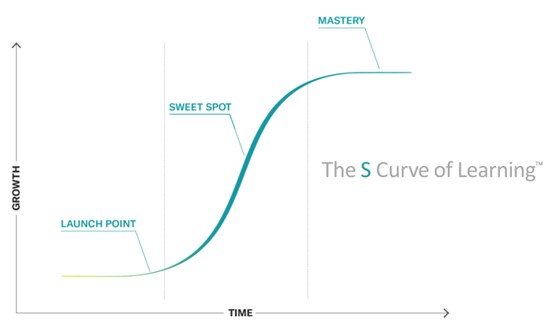
Fortunately, the S Curve of Learning™ provides a roadmap of our growth journey, even during times of uncertainty.
We start at the launch point at the base of the S Curve, move slowly upward, and eventually reach the sweet spot as we gain competence and reach top speed. Then, we begin to slow down and flatten off again as we reach mastery. It’s predictable.
In many cases, the very act of knowing where we are in our growth is helpful. It takes fear away, and it reduces shame because we know what is expected of us at our current stage and what’s coming next. It helps us manage our brain’s reaction to challenges so we can set ourselves up for success.
For example, we know the beginning of a curve, the launch point, tends to feel slow—glacially slow. Each component of a skill or job must be learned, so our brains are constantly trying to keep up. We are consciously aware of all the things we don’t know and all the new things we are learning—so we notice every second of the day. They feel long. But it won’t be like that forever.
One of my favorite strategies to manage ourselves when growth feels slow is to set ridiculously small goals. Following an interview with James Clear on the Disrupt Yourself podcast, I decided I wanted to run a 5k. But I didn’t set my goal for 30 or 15 minutes a day. No, my goal was to run 5 minutes a day for the first week, alternating between running and walking every 30 seconds. Then, I added 10 seconds every day until I ran my 5k a year and a half later.
Setting a small goal allows us to see tangible results. Our brains see progress, even if we aren’t performing at the level we will be in the mastery phase of our S Curves.
For meeting professionals, a small goal might be to watch one minute of video conference tutorials a day. Or to write down one new hybrid meeting idea. Whatever your next S Curve is, break it down until you find one laughably small part that you can complete each day, no matter what else is going on in your life.
For those who manage meeting professionals, recognizing and helping people understand where they are on their personal S Curves is crucial to recruiting and retaining top employees. Individuals at various stages along the S Curve need different types of support, and without having the discussion, it is difficult to know what type of support they need to meet their individual growth goals.
How can leaders in the space help their teams stay motivated and resilient during so much uncertainty and change?
The hospitality industry as a whole is unexpectedly at the base of a new S Curve, and has been at the launch point of several S Curves over the last two years. And, just as individuals find solace and support in the fact that the launch point always feels slow, so too do teams. Creating the space to bring teams together and create connections enhances resiliency and creates opportunity for empathy building.
Think of the work of a team as a hill to climb. When connected to each other, the work feels easier, the climb less steep. This is exactly what social psychology researchers discovered. When people look at the slant of the mountain by themselves, they greatly overestimate the slant. But when people look at the mountain with someone they trust, they don’t overestimate it as much.
So, have conversations. Normalize the feelings that come with growth. Creating a supportive relationship among team members is worth the time and effort.
Provide people with the resources they need. For people at the launch point, what they need from their leaders is support. In the sweet spot, people need help with focus. At mastery, people need to talk about what’s next.
Motivation can be found in celebration. When you celebrate, you are telling your brain—look at this. You did this. You met this expectation. Celebrating releases dopamine—the feel-good chemical responsible for making us feel motivated.
What is there to celebrate? Innovation. The pandemic provided unprecedented restrictions. The way meeting professionals had always done things before wouldn’t work. Justin Ball, president and founder of Bespoke Connects, noted that they, like so many others, had to shift the focus of their work in the digital space.
He said, “Our focus changed from being focused on content to being focused on context. In the virtual environment, we know attendees have distractions from their front door deliveries to kids learning from home, so how we keep guests engaged with context in what they are watching is often just as important as the content we are sharing.” Meeting workers turned constraints into tools of creation, and this should be celebrated.
Stop the daily grind and celebrate all the ways you’ve innovated over the past few years. This doesn’t have to be a big party—though by all means, you deserve it—it can be as simple as looking at yourself in the mirror or your team around the table and saying “victory.”
What tips do you have for meeting professionals who are exhausted from all the starts and stops in the industry over the last two years and looking for comfort?
First, know that the beginning of the S Curve is always slow at the start—you are not alone and you do not have to stay here long. If you create a culture of growth and keep on your S Curves, the speed will pick up and you will reach that sweet spot.
Second, you may be exhausted, but your work is not done. Finding comfort will only come once you start finding success, which can only happen after you embrace the constraints that are causing you discomfort.
How do you embrace constraints?
Step 1: Ask yourself, “How can this obstacle help me?”
Step 2: Reframe from “I can’t because [fill in the blank]” to “I can if [fill in the blank],” “I can accomplish this goal or dream if [fill in the blank].” What’s the thing you need?
Step 3: Once you know what you need, determine who has it. Do they have a lot of it? Then ask, “What do you have a lot of? And who needs it? How can you start to barter?”
Step 4: Activate emotions. There must be a reason why it’s worth it to you. Without this emotion, you will, at best, go to the workaround stage, at worst be a victim to the constraints. Tap into your positive and your negative emotions. Ask, “Why does this matter to me? Why am I excited? And why am I scared?” Hold both of these together. It’s combustible. It’s powerful.
Step 5: Use your emotions to get what you need.
Step 6: Accomplish your goal or dream.
It has been a long, hard few years. Meeting planners were forcibly pushed from the top of multiple S Curves, only to find themselves at the bottom—the launch point—of many more. The launch point can be a hard, uncomfortable place to be. But growth is coming. By using the S Curve of Learning™ as a map, you can navigate into the sweet spot and the comfort and energy that comes with it.
When most Americans think of the Fourth of July, they fantasize about family barbecues, community fireworks and local parades. It’s a time to enjoy the summer weather and celebrate veterans for their service. However, for millions of Native Americans alive today, the day carries a reminder of how their ancestors were gravely mistreated by European colonizers. While we celebrate Independence Day, it’s important to remember the cost of settling in a not-so-new land.
Just a few days ago, the Supreme Court made a new ruling reducing the power of McGirt v. Oklahoma. This precedent established the legal and criminal authority of Native American reservations over their members. McGirt dictated that state and local governments could not prosecute Native Americans for crimes committed on their reservations—An important victory for the “state within a state” status of reservations. Reducing this power was a major blow to the sovereignty of tribal leaders.
There are plenty of ways to honor and support the historical wards of the land we occupy. Learning about the adversity faced on and off reservations ensures that history doesn’t repeat itself. Many of the casinos and resorts operated by local tribes offer meeting and event venues, giving event planners the opportunity to contribute to the financial support of Native Americans.
Native American Celebrations on the Fourth of July
If you live close to a reservation, you may have noticed that there are plenty of tribes that gather in the beginning of July. There’s a historical precedent behind this timing that doesn’t always involve celebrating the country’s independence.
In the late 19th century, the U.S. government began developing the Religious Crimes Code. These involved the Code of Indian Offenses prohibiting any and all ceremonies traditionally performed by Native Americans. Under the enforcement of the federal Office of Indian Affairs, the codes sought to assimilate those living on reservations into Christianity. Sacred objects, feasts, dances and religious practices were destroyed or disrupted across the country.
The Secretary of the Interior enacted the laws intermittently from 1884-1904, then Indian superintendents and agents continued to enforce them for another 30 years. Countless ceremonies were forcefully forgotten with time or only practiced in secret.
To keep their cultures alive, some tribes saw an opportunity to continue their practices on the Fourth of July. Reservation supervisors allowed this under the guise of celebrating the holiday. This tradition evolved into a tribal homecoming and celebration of Native American veterans, who have served in nearly every war waged by the U.S. Powwows, festivals, pageants and dances are just a few examples of summer gatherings that happen all over the country.
State By State
Every region has vastly different tribes with diverse traditions and modern business ventures. We’ll look at how some communities celebrate the beginning of July and what they have to offer meeting planners.
Washington
Tulalip Resort and Casino
The tribes of the Pacific Northwest are famous for their artistry. Distinctive, layered ovals take the form of orcas, salmon, bears and other native species in carvings and drawings. Totem poles stand among evergreen trees and watch over the Pacific Ocean.
In Seattle, the United Indians of All Tribes Foundation (UIATF) holds an annual Seafair Indian Days Powwow. The event includes Native Americans from all tribes and cultures, highlighting cooking, jewelry making, music and dancing. Like many festivals, it was suspended during the pandemic. It will return this year on the third weekend in July and expects up to 10,000 attendees.
Tulalip Resort and Casino brings Native American design into gaming and meetings. The AAA Four Diamond property boasts 30,000 sq. ft. of flexible meeting space, including two divisible ballrooms and a pre-function space and 370 guest rooms.
The Oasis Pool with a glass atrium and waterfall sits next to the meeting area, while the Canoes Cabaret can seat 450 in front of an exclusive stage. Of special interest is the Blackfish seafood restaurant. Its traditional menu and local ingredients reflect the cuisine of the Tulalip Tribes that own the resort.
These Tulalip Tribes are made up of the signers of the 1855 Treaty of Point Elliott. A group of tribes, including the Snohomish, Snoqualmie, Skokomish and others, exchanged their territory for the Tulalip Indian Reservation. Their land once stretched from the top of the Cascade Mountains to Vancouver Island and down to Oregon. They continue to incorporate their cultures into the resort, giving guests and event attendees a taste of local traditions.
Window Rock is the home of the massive Navajo Nation July Fourth Celebration. Since 1938, the fair has showcased Navajo agriculture, fine arts and cultural entertainment. To keep its 15,000 daily attendees entertained for the whole week, it hosts a wide variety of activities and events. A 5k walk and run keeps visitors active; traditional Navajo songs and dancing bring the fun; the PRCA Pro Rodeo shows off some of the world’s most skilled cowboys and cowgirls; multiple concerts celebrate the Fourth of July; a powwow celebrates Navajo culture.
Talking Stick Resort
When it comes to event venues, the Sonoran Desert is home to several Native-owned options. Talking Stick Resort has 100,000 sq. ft. of available indoor and outdoor meeting space. The Grand Ballroom offers 25,000 sq. ft. that can be configured into multiple arrangements, supplemented by unique outdoor breakout spaces. Live entertainment, six restaurants, a golf course and spa will keep attendees occupied between sessions.
The resort is managed by the Salt River Pima-Maricopa Indian Community, made up of two tribes that once inhabited land near the same river. Nearby Red Mountain is the symbol of the tribes’ native land. Within Talking Stick Resort, there are several collections of Native American art. They feature pottery, jewelry, and the hotel’s namesake, a custom talking stick. Today, the tribes have over 10,000 registered members that cultivate the land and operate several casinos, hotels and businesses.
We-Ko-Pa Casino Resort
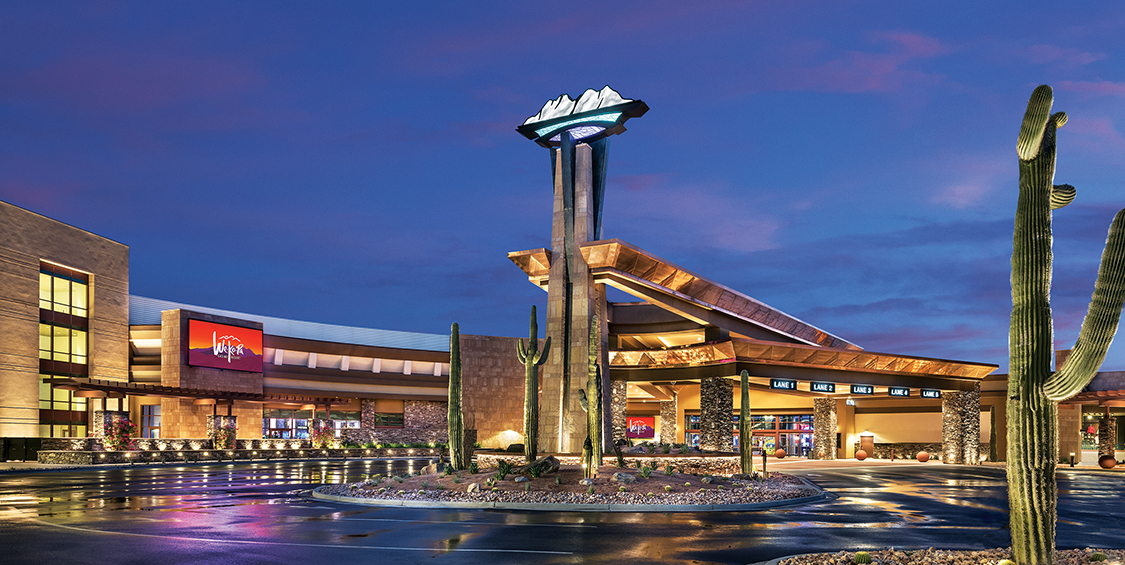
If you need a smaller venue, the We-Ko-Pa Casino Resort in Fort McDowell, near Scottsdale, offers more than 25,000 sq. ft. of meeting space. We-Ko-Pa is a AAA Four Diamond property opened in 2005 with 246 guest rooms and suites. The Wassaja Ballroom can fit 1,800 guests in its 18,000 sq. ft., while the Wassaja Conference Center Courtyard has space for another 275.
Nearby, Fort McDowell Adventures boasts an abundance of group activities and two celebration venues. The former setting for The Amazing Race, the 25,000-acre desert hosts horseback riding and Segway tours. La Puesta del Sol, with a total indoor and outdoor capacity of 1,400 people, sits on top of a scenic mesa, affording guests stunning views of Arizona’s desert sunsets. Rosa’s Ranch can accommodate just under 1,000 guests but will keep your party cozy with fire pits as the Four Peaks Wilderness Range looms in the distance.
We-Ko-Pa is owned by the Fort McDowell Yavapai Nation, which has resided in the Sonoran Desert and Mogollon Rim for thousands of years. Two-thirds of the tribe’s nearly 900 members still live on the reservation established for them in 1903. The community operates several other enterprises while preserving its traditions and values.
Though the Mohegan Tribe of Connecticut doesn’t hold any major events in the middle of summer, their Green Corn Festival has been held in August for over 150 years. Traditionally, the tribe celebrated multiple times throughout the year to thank the Creator, Mundu, for the earth’s gifts. This Green Corn Festival was the most important, as corn provided them with physical and spiritual sustenance.
As tribes were being made to assimilate to European society, Medicine Woman Emma Baker reestablished the festival within the Mohegan Church Ladies’ Sewing Society. Baker helped bring the tribe together through some of its darkest periods. It will be held again this year, with the selling of crafts and food, and reenactments of traditional dances and telling of stories.
The tribe also runs the massive Mohegan Sun Casino & Resort in Uncasville. Multiple convention centers, meeting rooms and breakout spaces make up 275,000 sq. ft. of event space. Attendees can stay in 1,600 guest rooms with access to more than 40 dining options, two pools, luxury spas and constant live entertainment. Mohegan Tribal Gaming Authority working as Mohegan now runs gaming in Washington, Pennsylvania, New Jersey, Niagara Falls, Canada and Nevada, where it is the operator behind the casino at Virgin Hotels Las Vegas. The company has also launched Mohegan Inspire in Incheon South Korea and an iGaming Division with global reach. It is also the owner and operator of Connecticut Sun, a professional basketball team in the WNBA.
In running these resorts, the Mohegan tribe follows the “Spirit of Aquai,” their guiding philosophy. They provide a welcoming atmosphere, mutual respect, attentive service and positive relationships.
New York
Turning Stone Resort & Casino
The Oneida Indian Nation of New York doesn’t have any large gatherings planned in the summer. Their events focus on elder outreach and small community activities.
Turning Stone Resort & Casino in Verona is the business center of the Oneida Tribe. With 125,000 sq. ft. of meeting space, the resort can accommodate large meetings in its Conference Center or featured speakers in the Event Center. 788 guest rooms and suites are ready for attendees, along with an array of restaurants, golf courses, sports options and a hunting and fishing preserve. Premiere among their food options is Wildflowers, a Forbes Four Star and AAA Four Diamond fine dining experience. A monthly-changing menu highlights local ingredients and seasonal specialties.
The owners of Turning Stone are historical residents of Central New York. The Oneida Tribe is a member of the Six Nations, also known as the Iroquois Confederacy, and was a major ally to the United States during the Revolutionary War. There are 1,000 registered members, with half living and working on tribal lands. The community puts a large emphasis on the prosperity, success and education of its members through scholarships, legal services and jobs. With its increased business ventures, it has become one of the largest employers in New York.
No matter where you want to have your next event, there is a Native American-owned venue that can accommodate. Along with a celebration of the country’s sovereignty and our veterans’ sacrifice, the Fourth of July is also an opportunity to support and honor the people who came before us.








 From legacy Fortune 100 institutions to inventive start-ups,