Scott Cochran and Kitty Chau
Scott Cochran on left wearing white dress shirt and Kitty Chau wearing black top
Scott Cochran (left) and Kitty Chau (right)

Cochran is complex general manager and Chau is complex director of sales and marketing for dual-property Le Meridien and Element Salt Lake City Downtown.

Cochran comes from W Aspen in Colorado, where he worked as director of operations. He has also worked as director of food and beverage for Two Roads Hospitality’s properties in Stowe, Vermont, and director of food and beverage  at a Starwood Hotels & Resorts property in Aspen.

Chau previously worked at Aloft Denver Downtown, where she  held the position of director of sales. Prior to this, she worked as area associate director of sales for Marriott International’s Aloft, Residence Inn and Courtyard Denver Airport at Gateway Park.

Juan Samso
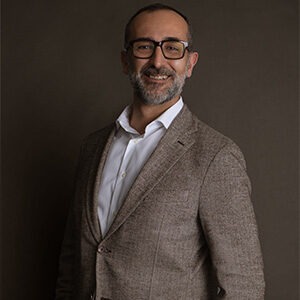
Juan Samso wearing white dress shirt and brown sport coat

Samso is managing director for Qatar’s Rosewood Doha. Samso most recently worked with Marriott International as general manager for JW Marriott Riyadh in Saudi Arabia. He has also worked as general manager for The St. Regis Zhuhai in Guangdong, China, and pre-opening general manager for The Ritz-Carlton Jiuzhaigou in China.

Anya Buitrago
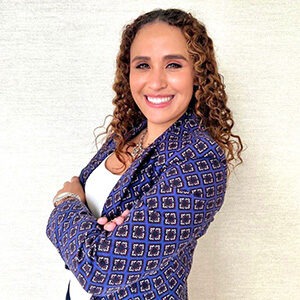
Anya Buitrago wearing purple patterned sport coar and white dress shirt

Hotel La Compania in Casco Antiguo, Panama, named Buitrago director of sales and marketing. Most recently, Buitrago was director of sales for Grupo VerdeAzul in Panama. She has also worked as director of sales and marketing for Sheraton Bijao Beach Resort in Cocle, Panama, and international sales director for Hard Rock Panama Megapolis in Panama City.

Chris Connelly
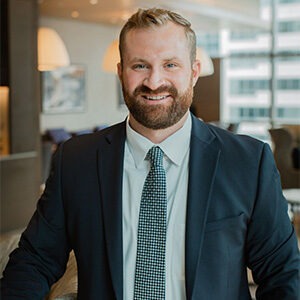
Chris Connelly wearing blue suit

Connelly is senior director of sales for Visit Seattle. Connelly was previously area director of group and transient sales for Hyatt Hotels’ three downtown locations: Hyatt Regency, Grand Hyatt and Hyatt Olive 8. His 11-year career has also included roles with Hyatt in Chicago, San Francisco and San Diego.

Read More: The Evolution of Urban Renewal Takes Shape in Seattle and Portland

Kasey Conner
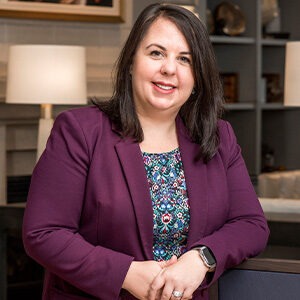
Kasey Conner wearing purple sport coat and colorful dress shirt

Conner is director of sales and marketing for The Ballantyne, A Luxury Collection Hotel, Charlotte in North Carolina. Before this, she was director of sales and marketing at Nines, A Luxury Collection Hotel in Portland, Oregon—in 2020, she was awarded Leader of the Year at the property. She has also worked as area director of sales and marketing for three Remington Hotels properties, as well as five Starwood Hotels and Resorts properties in Key West, Florida.

Heather McCargo

Heather McCargo wearing light grey sport coar

McCargo is marketing manager of communications and events for ATL Airport District. She previously worked as standards and practices editor for Turner Broadcasting and Warner Bros. Discovery in Atlanta. McCargo also previously taught fifth grade at Gwinnett County Public Schools in Georgia.

Victoria McDowell and Nick Guzzetta
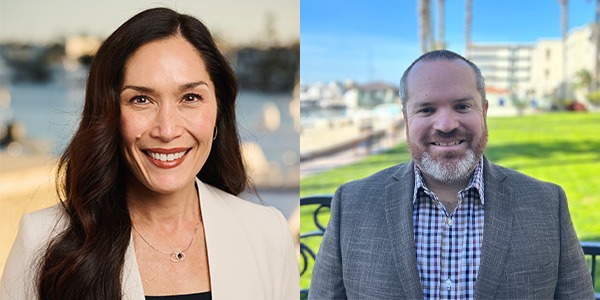
Victoria McDowell on left wearing off white jacket and black shirt and Nick Guzzetta on right wearing plaid dress shirt and grey sport coat
Victoria McDowell (left) and Nick Guzzetta (right), Photo: Balboa Bay Resort

McDowell is director of rooms and Guzzetta is director of banquets for Balboa Bay Resort in Newport Beach, California.

McDowell comes from The Waterfront Beach Resort in Huntington Beach, California, where she worked as director of rooms. She has also worked as hotel manager at Courtyard by Marriott Waikiki Beach in Hawaii, membership sales and service manager for Hawaii Visitors and Convention Bureau, and director of guest services at Turtle Bay Resort in Kahuku, Hawaii.

Guzzetta previously worked at Montage Laguna Beach in California as director of banquets. While at Montage, Guzzetta also worked as director of Hearts of Montage, a volunteer organization that fundraises for the local community.

Rebekah Courtney
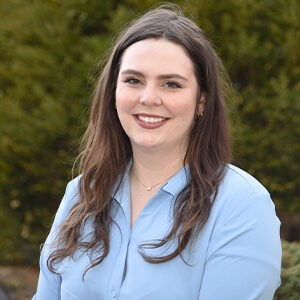
Rebekah Courtney wearing light blue dress shirt

Courtney is convention sales manager for Louisville Tourism. She previously worked as special events and promotions supervisor for Caesars Southern Indiana.

Bayan Sabermanesh
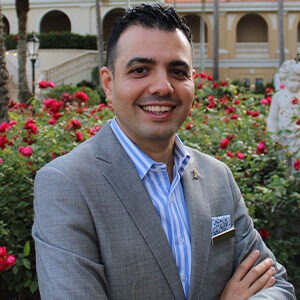
Bayan Sabermanesh wearing vertically lined blue and white dress shirt and grey sport coat

Florida’s The Ritz-Carlton, Sarasota named Sabermanesh executive assistant manager and director of operations, rooms. Sabermanesh worked for The Ritz-Carlton, Atlanta over the last five years as executive director of operations, rooms. Sabermanesh began his career with The Ritz-Carlton in 2004 as a laundry valet for The Ritz-Carlton, Buckhead in Atlanta.

Since then, he has also worked in numerous operational positions, including front house manager at The Ritz-Carlton, Key Biscayne in Florida.

Danielle Kambic, DMCP
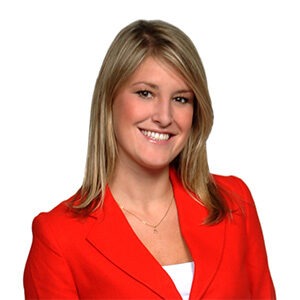
Danielle Kambic wearing red jacket

Kambic is director of sales in Washington, D.C., at CSI DMC. Kambic brings 18 years of experience in destination management, sales and operations to her new role, most recently as senior manager of alliance partnerships for Cvent. She has also worked as general manager for Hello! and account executive for Kuoni,  destination management companies in Washington, D.C.
Would it surprise you to learn that 84% of attendees come to events for networking? Why? Because even the smallest meeting is the best place to find new leads, clients and prospects.

Yet, approaching random strangers can be nerve-wracking, especially for work-from-home or introverted employees. However, there is good news. This blog post offers creative solutions that can be fun, engaging, and, most importantly, allow the shyest attendee to walk away with more connections than before they arrived at your event.

Ten Networking Nuggets

Interesting Nametag Information

Instead of the name and company of each attendee, how about their name and:

  • Their first car or
  • Three words that describe them or
  • The city and state they were born in

These are meant to be conversation starters and work well in mid-sized meetings.

Badge Pull

Don’t hand attendees their nametags.  Instead, ask them to pull one from the basket.  Their mission will be to find the person whose name is on it.  This works well for a meeting with under fifty individuals and where attendees don’t know each other.

Speed Networking

While matching software is available to identify attendees with the same interests, this option doesn’t have to be tech-intensive.  The goal is to meet as many individuals as possible in a structured, timed event.

Read More: Winning at Maximizing Virtual Audience Engagement

Prep attendees by asking them to bring plenty of business cards and have their 30-second company infomercial down pat.

You will need long tables lined with chairs, clear instructions about who moves and who doesn’t, and a timer.  Another thing to remember: If participants are close together, the noise level will rise making it harder to hear each other.  Therefore, this works best in a small group or outdoors where participants can spread out.

Targeted Roundtables

Set up square or round tables that seat four or eight people.  Have stations for one of the following areas.  For example, perhaps you choose the number of years attendees have attended the conference.  You’d have multiple tables with the following at each: First-timer, one-three years, four to seven years, and eight or more years.

  • Job titles (Meeting Planner, Director of Marketing, IT)
  • Geographic areas (East Coast, West Coast, or specific states)
  • Work as a solopreneur, small company, mid-sized or enterprise organization

Let attendees learn about each other without any additional structure.

Question Ball

Develop a series of questions written on multiple beach balls.  Divide up into groups in a circular formation.  Toss one ball into each group and ask the person who catches it to answer the question their right index hand is touching.  Here are a few to get you started:

  • Why are you here?
  • Is this your first time attending?
  • What is your job title?
  • What company do you work for?
  • What’s the most significant work challenge you have?
  • What are your event expectations?
  • Which session are you most excited about?
  • Have you been to this destination before?
  • What’s your favorite place to travel?
  • What was the last movie you saw?

Once answered, they throw the ball to someone else.

Scavenger Hunt

This type of activity can be completed with an app, without one, or delivered as a hybrid offering.  The important thing is each attendee completes various tasks, either independently or on a team, receives points for their efforts, and the team that completes the most tasks wins a prize.

Attendees are to take selfies doing the following:

  • Visit three trade show booths
  • Share a photo of you and your team members on social media that includes the event hashtag
  • Find someone that has the same job title
  • Record an Instagram story about the great time you’re having at the conference
  • Do something fun
  • Try a signature cocktail
  • Eat at one of the many restaurants in the area
  • Find something yellow
  • Find something that starts with the letter W

If you want to use a mobile app, you might check out these 14 scavenger apps.

Bingo

Customize a bingo card so attendees have exciting tidbits in each square.  Ask the person who fulfills the requirement to provide their signature in that square.  The first person to get Bingo wins.  Here are a few ideas:

  • Owns their business
  • Worked for the same company for 10+ years
  • Has traveled to another country
  • Has used new technology at a meeting
  • Has read a business book in the last year
  • Subscribes to Netflix
  • Can play a musical instrument
  • Has served in the military
  • Attended this conference three years in a row

Business Card Collection Contest

Remind attendees before they arrive and throughout your conference to collect as many business cards as possible.  The individual who holds the most cards at the end of your program wins a nice gift basket.

M&M Challenge

When individuals sit at their tables, each place setting will have a small container of M&Ms.  The emcee will ask each person to sort them by colors on their place setting, not eat them.  Once completed, everyone goes around the table and shares the following based on the colors on their plate:

  • Red: Most embarrassing moment
  • Green: Favorite sports team
  • Yellow: Favorite movie
  • Brown: Place they’d like to travel
  • Orange: Hobby
  • Blue: Whatever they’d like to share

Engaging Technology

Take advantage of event engagement rentals as a fun way to include gamification or photo booths into your conference. Small groups will gather around each gaming kiosk or snap their photos with their new found friends!

Conclusion

Including one or more of these ideas will hopefully make attendees feel connected and welcome into your event. Be sure to collect feedback from attendees at the end of the meeting to see what worked and what didn’t.

If you only tried one of the above ideas, perhaps try a different one at your next gathering. Keep testing until you find the ones attendees love doing!

De-de Mulligan is the President and Chief Content Strategist for Mulligan Management Group. As a former meeting planner who has received Ohio MPI’s Planner of the Year award twice, she brings a unique perspective to these blog posts. You can find her on Twitter @DedeMulligan.

Why is hospitality industry sentiment upbeat even as predictions call for economic downturn?


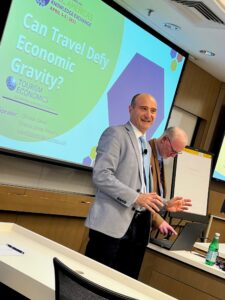
Economists rarely agree on anything, but reports from Moody’s Analytics, Jeffries and The World Bank are in alignment that a recession is coming, probably by the end of 2023. “This is an engineered recession, a recession by design,” said Christian Savelli, director of tourism economics with Oxford Economics, speaking at IACC Americas Knowledge Exchange this week in Durham, North Carolina. He explained that the US Federal Reserve interest rate hikes are purposely depressing the economy in an attempt to reign in inflation. “The good news is that travel is well positioned to withstand any downturn,” he said.


Christian Savelli speaking in front of room
Christian Savelli

Hospitality industry watcher Chris Meyer, who recently returned from SISO CEO Summit Conference in Las Vegas, agreed that conference organizer executives who attended were largely upbeat even though they are looking at the same recession indicators—an inverted Treasury yield curve, shrinking manufacturing and buying power. “The mood was hugely positive even though everyone agreed about a recession coming,” he reported.


Let’s take a deeper dive into why events and business travel might float above the turbulence.


Travel Priorities

First, some history. Oxford Economics’ Savelli explained that during past recessions, room demand overreacted, with sometimes twice as much of a contraction as the economy overall. But this time, he doesn’t see that pattern because families are in good shape in terms of the amount of debt they are carrying. Many paid off credit cards and even saved during the pandemic.

Additionally, unemployment is at the lowest in 15 years. “If there is a slowdown, we are coming from a good position,” he said.

Read More: Mike Dominguez: Hotel, F&B Prices Aren’t Going Down, and Other Predictions for 2023

Consumer sentiment surveys show that while confidence in the economy is high, people are feeling uneasy because of inflation. “Inflation is easing, but there is still some pain,” Savelli said. “It feels like a treadmill with wages and costs both increasing and reducing expendable income.”  Overall, most people are in a good position to weather a short downturn, he concluded. Savelli is not alone in that observation. On a mid-February earnings call, Marriott reported, “To date, however, we have not seen signs of demand softening. Certainly, trends could change quickly, but booking demand and pricing remains strong.”


Savelli also didn’t anticipate the banking liquidity problems that hit Silicon Valley Bank and Credit Suisse will have long-term impacts on consumers. “We expect a recession to be mild because there are no glaring imbalances in the economy. There is resilience,” he said.


United Airlines called the increased desire to travel “a permanent structural change” rather than transitory pent-up demand. Demand is particularly high in hospitality, Savelli said, quoting a February Expedia study that found consumers are prioritizing travel above everything else. “Maybe it’s still the effect of Covid and people realizing there’s more valuable things to do with their lives,” was the comment on an earnings call. Business travel demand is also strong, due in part to the need for remote workers to fly to meet with coworkers and clients. 

In the fourth quarter of 2022, business travel intentions as measured by the Business Travelers Survey found that levels exceeded 2019 and intention to go to conferences was 10% higher than three years prior. “It should be higher than that after three years, but we are still waiting for international travel to come back fully,” he said.


Executive Exuberance


Hospitality business consultant Chris Meyer, CEO of Chris Meyer Global, put the positive outlook of SISO attendees in context. “Live events already took hits during the pandemic and underperformers were shuttered,” he said. Conferences are enjoying a return to participation even if the mega events are smaller. “The industry has already right-sized,” he said.


If or when a recession hits, he predicted that the first thing to go would be leisure travel, which has been propping up mid-luxury product. Business travel is not all the way back yet, so it still has an upside.

That doesn’t mean it will continue to be business as usual. “A day of reconning may be coming for hotels,” Meyer said. “Everyone is upset about paying the same price or more with new fees and not getting the same level of service.”


On the meetings side, regardless of what happens in the larger economy, conference executives are seeing that they need to change the makeup of events they are producing because the audience that is returning is both younger and screen fatigued. “Virtual participation has fallen off a cliff,” Meyer said. Millennials and Gen Z want a curated journey. “Just don’t call it a trade show,” he advised. They have a bad reputation.

Read More: It’s Gen Z’s Way or the Highway 

Word at SISO was that attendees want shorter keynotes that directly talk to their needs. They don’t expect to sit in a classroom all day. The networking is the point. The same goes for sponsors and exhibitors. They want their own journey and event organizers need to bring prospects to them. “Don’t expect people to wander the booth floor,” Meyer said.


When it comes to mergers and consolidation, the two big ones that recently closed—Informa’s acquisition of B2B Events company Tarsus in early March for $940 million and Blackstone’s acquisition of Cvent for $6.4 billion—may not be the beginning of an avalanche of deals. Those were special circumstances, he said. “I don’t foresee association consolidations happening before 2025. Even if a deal can be put together, the volunteer board are not motivated,” he said.

When deals do get done for multi-media companies, “events are the value area,” he observed.


Meeting in Oakland provides a unique flare

If you ever stumble into a Bay Area native—which is unlikely these days—they will probably tell you that Oakland is one of the last cities in the region with some remaining vestige of the freewheeling, creative spirit the Bay Area is known for. Hometown hero and Academy Award-winning actor Tom Hanks famously said, “Life is like a box of chocolates, you never know what you’re gonna get,” and with Oakland’s countless culinary creatives, artists of every ilk and distinct meeting venues—the phrase definitely rings true.

For attendees flying in from out of state, the Oakland International Airport (OAK) is about a 10- to 15-minute drive from the downtown area or the city’s famed Jack London Square with numerous dining options, nightlife and places to meet. In early March, the Port of Oakland Board of Commissioners adopted ordinances that include 10-year space agreements for 16 new retail storefronts at the airport with the intent of connecting travelers with local businesses.

“People are always surprised by the array of activities in Oakland as well as our outdoor space. We are proud to say that It’s easy, it’s vibrant, and It’s inspiring to book events in Oakland. And it is very true! With a great location near three major airports, Oakland is an ideal choice for meetings and events. We are home to beautiful traditional venues, industrial warehouse space, lush park-like settings, outdoor options and attractions,” says Carole Manning-Kim, director of sales at Visit Oakland.

Where to Meet in Oakland

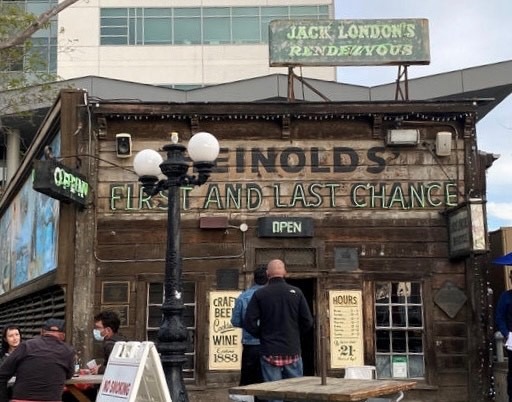
entrance to heinolds First and Last Chance Saloon
Heinolds First and Last Chance Saloon

Jack London once said, “You can’t wait for inspiration. You have to go after it with a club.” But we can swap out the formidable object the famous author mentioned with the more constructive and fun word like “meeting.” Jack London Square proper sits beyond the harbor of the Oakland Estuary on the interior of the San Francisco Bay and is home to innumerable restaurants and one of the oldest bars in the state, Heinolds First and Last Chance Saloon, which was built from reclaimed wood from an abandoned river boat in 1884 and was the preferred watering hole of London during his younger years who died at the age of 40. Heinolds is truly a historic wonder serving premium beers and cocktails fresh from an outpost of Oakland’s past.

Read More: Authentic Experiences 101: A Hot New Hotel and Restaurant in San Francisco

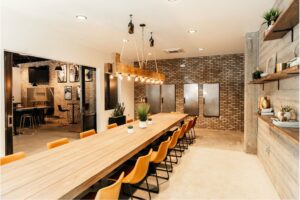
wood-accented Boardroom at Buck Wild Taproom
Boardroom at Buck Wild Taproom

However, beyond Jack London Square proper lies numerous taprooms, wineries and restaurants—many of which are primed to host events. Buck Wild Brewery and Taproom in the Jack London neighborhood is a short walk from the waterfront and features three indoor meeting spaces available for hosting. The main taproom is available for a full buyout and can accommodate 115-130. The brewery’s board room is situated in a private room and can accommodate 16-24 depending on the configuration of tables.

Buck Wild’s Lounge sits adjacent to the Boardroom and can be booked separately or as a combo with seating for up to 50 guests. Buck Wild serves a wide selection of beers and offers a tasty menu of small bites and mains—all of which are gluten-free—making it an extremely inclusive experience.

“Buck Wild is truly unique in that we’re California’s original gluten-free craft brewery, says Mike Bernstein, founder and CEO of Buck Wild Brewing. “Our taproom is beautiful—it’s located in a 1946 industrial space with concrete floors and beautiful exposed wood ceilings.”

Located a few blocks away from Jack London Square is the Brooklyn West Winery (named for the fable that Oakland was once known as the Brooklyn of the West)—a smaller upscale and chic tasting room serving small-lot, handcrafted wines sourced from Sonoma’s Alexander valley. Guests can enjoy flights served at Brooklyn West that include a selection of reds and whites. The tasting room consists of a single room measuring 1,400 sq. ft. and can accommodate 16 for a seated boardroom meeting and up to 35 for a standing reception.

Just a stone’s throw from Jack London Square in Oakland’s uptown area in the multiuse complex known as The Hive. Drake’s Dealership has embraced the area’s former professional disposition as “auto row,” serving customers various styles of hand-crafted beers from its extensive library. However, while the beer served at Drake’s may be the main attraction—the brewing company also offers a delicious selection of wood-fired pizza, sandwiches, salads and more.

Groups can meet in one of three rustic, brick-lined spaces. Drake’s Alley Bar is perfect for intimate gatherings in an outside space and comes equipped with heaters and two auxiliary speakers, allowing guests to play music of their choosing. The Alley Bar can accommodate up to 30. The Beer Garden offers five rows of picnic bench seating that can accommodate up to 75 with heaters readily available. The indoor Utica Room is designed in the vain of a beer garden, featuring two 50-inch HD TVs for presentations or entertainment and can seat 70 or accommodate 90 for receptions.

Get in Where You Fit in

In addition to the vast array of food and entertainment options available in The Town, Oakland is also home to an assortment of high-end lodging options. “Oakland has 40 hotels with 5,000+ guest rooms from first-class hotels and boutique properties to the top names in lodging,” Manning-Kim says.

Located 10 minutes from Jack London Square by car in Oakland’s Arts and Entertainment District, Moxy Oakland Downtown, which was completed in 2021 under the Marriott brand, offers guests a complimentary beverage upon arrival with rooms boasting high-end amenities. Meeting professionals can take advantage of 172 guestrooms and 3,284 sq. ft. of event space spanning four meeting rooms and one breakout room. The Moxy also has space for attendees to blow off some steam after a day of meetings at Bar Moxy, which consists of a blend of social lounge and office space.

Centrally located in Downtown Oakland, the 494-room Oakland Marriott City Center is connected directly to the Oakland Convention Center. The property includes 37 meeting rooms spanning 102,992 sq. ft. of event space. The property is also home to Iron and Oak, a restaurant specializing in a mix of American classics and globally influenced fare. The Iron and Oak Topgolf Swing Suite provides an entertaining way for groups to relax, have some fun and grab a drink—all in a casual environment.

The Courtyard Oakland Downtown, located on Broadway directly across from Oakland Marriott City Center, offers planners access to 157 guest rooms and 1,330 sq. ft. of meeting space with three meeting rooms and provides the same easy access to the convention center and surrounding attractions with blocks available starting at 10 rooms.

New PURE Local Services tool builds RFPs for activities, decor and transportation

What if sourcing activities, decor and transportation were as easy as checking boxes to produce an RFP for a venue? That is the vision of Fiona Volmrich, CEO of PURE Local Services, based in Park City, Utah. When Covid hit, this serial entrepreneur started building a database of local services in cities around the country tied to a platform that would inspire, organize and help planners be more efficient by producing editable presentation-worthy proposals with photos, fun facts, contact information and detailed costing auto populated in as little as 20 minutes.

Fiona Volmrich smiling for image
Fiona Volmrich

Since then she has expanded the number of cities to 12 with help from associates in each location who keep offerings current and are always searching for fresh, seasonal ideas. She plans to expand to 25 by the end of the year.

She has been building the platform by using it for her DMC clients and soft launched to others. “As more people use the tool, the ideas and credibility grows,” she said. She envisions access to case studies and reviews so planners know what worked for others in the area and what they say they would do different next time. Thinking of a Coachella theme for a Palm Springs event? She has pictures of the cute seating right down to the rainbow throw pillows so it is easier for the CEO to envision.

Read More: Year of the Sustainable RFP

Sounds like a third-party planner’s secret weapon, right? Just as you might make a look book for the top three or 10 destinations with images, square footages and prices, this makes it easy to show what is popular, creative and available when the client needs it. The Artificial Intelligence engine can drill down as detailed as the cost for the bus per person per hour or as high as the bottom line only and can be adjusted easily on the fly as the number of attendees or price of chicken changes.

“When you aren’t wasting time formatting your margins on the proposal, you can think the big thoughts creatively,” said Volmrich.

Volmrich explained that the time has come for a tool like this. She stressed that it isn’t a big marketplace of third-party sellers. It is a functional, curated package generator to manage data, information and vendors. “I don’t think you can do it by hand anymore,” she said.

“Millennials, who will largely be the buyers of the future, make all kinds of decisions based on the advice of perfect strangers, this speaks to that desire for authentic feedback,” she said. The platform makes it easier to support small local vendors, an authentic touch a lot of planners—and attendees—are looking for right now.

The tool also satisfies the compression of the planning window now being felt in the events world. “You no longer have two weeks for a proposal because Google stepped in the way of that,” Volmrich said.

She is adamant that big tech companies aren’t going to be able to come in and build something that captures the nuances of what meeting professionals need, all the little things they have to consider every day. “Automation is littered with the bodies of technology companies that don’t understand our unique industry,” she said.

Trend Spotting

One side effect of the evolving database is that it tracks what is resonating with groups. We asked Volmrich to share the trends PURE Local Services is seeing.

Read More: 25 Pivotal Hospitality Trends from 2022

1. Authentic and interesting activities: Participants want something new and different and really like being connected to the local community. Giveback programs are very important to clients.

2. Flexible decor budgets: Highly themed events, especially outdoors or at off-site venues with classy, textured linens or natural tables and lush low centerpieces. Photo vignettes with subtle, branded custom backdrops are very popular.

3. Palm Springs and Denver are smoking hot as destinations, and while groups seem to be a little bigger, meeting length is often a little shorter and no weekend travel.


Why the future workforce may require more gig workers and regional meetings

All those workers who disappeared from event services, housekeeping and meeting staffs over the last three years are not at home watching soap operas according to author and speaker Eric Termuende. In fact, Covid isn’t the be-all reason for the lack of responses to hospitality help-wanted ads. “It was a catalyst, and it caused the shift to happen faster,” he said.

Eric Termuende wearing black shirt
Eric Termuende

The full answer is complicated. The workforce has indeed shrunk. People are retiring at twice the rate as before due to the demographics of the workforce. We are producing fewer new workers and immigration has slowed down.

Read More: The Great Hospitality Restart

The pandemic also sped up technology development. The number of businesses created over the pandemic is about four or five times what it was prior to the pandemic. The people who have left our teams are often building businesses online. “They aren’t just opening an Etsy store. They are creating something brand new with technology that didn’t exist five years before,” Termuende said.

It is also worth mentioning that the generation retiring has more money than ever before and they are passing a lot of that down, enabling younger generations to work less. “It is no secret that interest rates are high, cost of living is high, healthcare and childcare is expensive. So, a lot of people—particularly women—are staying home to take care of their families.

Attracting Elusive Hospitality Workers

The unemployment rate is lower than it has been since 1969, which was when the labor market was half the size it is today.

One trend Termuende predicts is that full-time employees will start falling off drastically and contractors and freelancers will be hired more frequently. “Contractors will be very good at the niche skill set they do and you only pay for exactly what you need when you need it and when you aren’t putting on the event that requires that skill set, you aren’t paying for someone to ride the bench,” he explained.

There are challenges that come on both sides, he acknowledged, but as accounting gets automated and referral networks grow, more people could make a living as skilled contractors.

Some hospitality companies looking for full-time employees are offering signing bonuses and benefits. “Perks and benefits attract talent, but culture is what keeps them,” said Termuende. He pointed to a study that showed as much as 80% of people who left during the pandemic kind of want their old job back. “That tells me that they love those signing bonuses, but now they miss the community,” he said of these boomerang employees.

Read More: Marriott Plans to Win War for Talent by Emphasizing Culture

The cautionary point is to invest in the people you already have and give them the tools and stories to tell their network to attract like-minded people.

More Event Demand in Forecast

Termuende advised against just waiting for the supply-demand balance to change. Most of these shifts are long-term. The layoffs in the tech industry have dominated the headlines, but the sensational stories don’t mention that those same companies grew 30% or more over the last three years. Even if they laid off 15% of their employees, that is still up from where they were in 2019. “The hiring just doesn’t make headlines,” he quipped.

Meanwhile, the events business is booming and he predicted demand will only increase, particularly for smaller meetings.

Because only 50% of people are back in the office full-time, companies are realizing that camaraderie, connection and community are just as important, if not more important than in the past. “I think we will see more smaller, regional meetings that bring people together beyond learning and development. They will have fun elements, maybe not axe-throwing, but laughing and coming together. While there might be some fear for the huge conventions, I am optimistic about the smaller, 150- or 200-person events. We will see more of that in the years to come,” he predicted.

Love What You Do

Termuende advocates for adopting a servant mindset and aligning with others who do the same. That will lead to more joy at work. Then, just because there is a talent shortage across the country, that doesn’t mean there will be a talent shortage at your company.

“Work can be something we get to do instead of something we have to do. I am really optimistic about the future of work and really optimistic about our meetings industry,” he said.

Annual conference center gathering in Durham addressed staffing, sustainability and collaboration

A nine-year average drop in the age of the meeting/hospitality professional since the start of the pandemic translates into a loss of nine years of collective knowledge. Mark Cooper, president and CEO of IACC, a global association representing top conference center professionals, kicked off the annual Americas Knowledge Exchange in Durham, North Carolina, intent on rebuilding some of that collective wisdom. “Knowledge is what helps you handle the unexpected,” he said.

Read More: IACC Meeting Room of the Future Report

To that end, the conference was a forum for sharing ideas around everything from new technology solutions for keeping breakout rooms serviced appropriately, motivating teams and making the most of the resources available.

“Small meetings are powerful,” explained Susan Liston senior vice president for growth with Aramark Destinations and IACC Americas board president. She suggested that attendance at conferences in general be allocated to Human Resources budgets rather than marketing because they are powerful tools for employee development, retention and mental health.

Be Deliberate to be Creative

Led by credibility and innovation speaker and coach Amy Climer, PhD, the group pursued “valuable novelty.” “The best solution doesn’t have to be the biggest or the sexiest; it may be the one that can actually be implemented,” she advised from stage. And rarely is there only one solution, so ask those impacted early and often, “What might we do?” and respond to suggestions with the improve staple: “Yes, and…”

The conference started with a primer on how to empower teams to come up with divergent solutions before narrowing down to a path forward. It ended by going through a creativity exercise addressing five industry challenges, including, how to make the hospitality industry more attractive to people outside the industry.

“As leaders and humans, we have an obligation to be creative; inventing solutions is how we serve,” Climer said.

F&B as a Competitive Sport

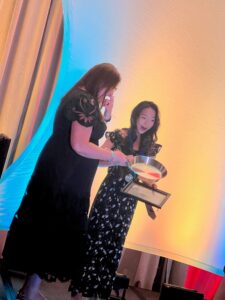
Global Copper Skillet winner Katie Keith, Deloitte
Global Copper Skillet winner Katie Keith, Deloitte University

One of the centerpieces of every IACC Knowledge Exchange is the culmination of a Global Copper Skillet competition that brings together the four best conference center chefs from across the world for a cook-off styled after television cooking shows. The timed dish-making is judged based on food safety, waste (all discards are put into a small bowl and evaluated at the end), presentation, taste and creativity.

The idea of evaluating and holding catering dishes to the same standards as fine cuisine is a testament to how far the group dining scene has come. Tracy Stuckrath, founder of Thrive! Meetings & Events, provided the color commentary and noted the care in the form of fresh ingredients and sophisticated techniques. “The pressure is intense and yet the dishes look and smell amazing,” she said at the end.

Innovation as a Product

Another session aimed at surfacing the best of the best was a judged pitch competition for solutions to the challenges venues of all sizes face in delivering service in a post-Covid, understaffed world. Reducing food waste was an area of focus that was addressed with help from dehydrators, refrigerators stocked with leftovers for employees to take home and massive composters. The winning solution presented by Wyboston Lakes Resort in the United Kingdom resulted in 5,000 trees planted on the property and nourished by mulch from kitchen remnants.

The Next Generation

Candace Hemingway on left, Riley Pittman in center and Kemmia Ghodrat on right sitting down
Candace Hemingway (left), Riley Pittman (center) and Kemmia Ghodrat (right)

Another area of focus was attracting employees to the industry. Appropriately, since the event was held on the Duke University Campus at JB Duke Hotel and Durham County is also home to University of North Carolina at Chapel Hill Rizzo Center, a panel of hospitality students shared why they chose the industry, what they are learning and what they expect when they graduate.

“I didn’t pick hospitality; it picked me,” said Candace Hemingway. “I am treating the industry like a buffet and trying everything twice to see if like it.” As a nontraditional student returning to education after working food and beverage, she is getting safe-food-certified, learning about hospitality finance and travel planning. She is eager to get back in the market and put the skills to work in the field. “You can’t learn to drive in a parked car,” she said.

Student Riley Pittman saw the inclusion of more diverse candidates and audiences as important to filling the staffing pipeline. She said she is learning risk and facilities management as part of her curriculum and sees a hybrid work schedule as ideal. “The connections with coworkers is hard to do on a Zoom call; I missed in-person during Covid,” she said.

Student Kemmia Ghodrat advised potential employers to promote their social justice work. “Sustainability is a priority; we look for employers that support that and will allow us to help make change,” she said. She is studying technical writing and communications along with her understanding of the hospitality industry and is planning to pursue a masters to round out the soft skills she has learned.  

Once she graduates, work-life balance will be a priority, she said. “For mental health reasons we may need to import the European model of not working crazy hours.”

The 2024 IACC Americas Knowledge Exchange will take place in New Jersey at Verizon Basking Ridge.


Political discussions can turn ugly when people meet. Here’s how to keep your meeting neutral in a Red State/Blue State world.

Even in the best of times, political discussions are not always the grease you want in a meetings’ wheels. In today’s hot-buttonissue climate, political discussions can easily flame into arguments, something that can diminish an event’s atmosphere, create bad will and shift the focus from a meetings’ issues at hand.

How can meeting planners steer participants away from political arguments or discussions or, at best, make sure that such discussions are collegial and don’t take attention away from the reason the group is meeting in the first place?

Staying Civil

Christopher Kirbabas, director of programs, Society of Architectural Historians (SAH), says, “SAH neither encourages nor discourages conference participants from discussing political topics, but we do expect those conversations to be respectful of all points of view.”

He added, “We do send all conference attendees the link to our SAH Personal Conduct Policy and it does include text about discrimination of any form including political affiliation.”

Michael Dalton, senior vice president strategy, LEO Events, says the goal is to “bring people together.”

Embrace Neutrality

“We stay focused on the event’s tactical objectives. Even in a less-charged atmosphere than today’s, current events and breaking news are usually polarizing, fraught and impertinent to the experiences we set out to designwhich are inherently uplifting and politically neutral. We provide opportunities for connection. We look for ways and places to add additional visibility and volume to inspiring ideas, and we continue to celebrate the people making positive contributions.”

Stay Focused

Jack Johnson chief advocacy officer, Destinations International, remembers on a trip many years ago to England: “The travel guide I read said to avoid talking politics or religion in pubs.  And yet, when I went into pubs it seems like that was all they wanted to talk about. And it seemed safer than talking about football (U.S. soccer).”

“My advice to meeting planners is to have a very clear agenda for the meeting and stick to it,” Johnson says. Avoid going off-topic, especially if it involves political discussions. If someone brings up a political topic, politely redirect the conversation back to the agenda.

“However, if politics is to be discussed, remember that respect for each other is key. Encourage everyone in the meeting to listen to each other and express their opinions respectfully. Someone should act as a neutral moderator so that if someone starts to get heated or hostile, remind them of the ground rules and ask them to refocus on the agenda.

“Finally, and perhaps most important, people need to understand that everything we know in this world falls into three buckets: Things known to be true; things known to be false; and things not yet proved false (theories that are often taken as truth until proven otherwise). That last bucket is the largest. People need to understand that in all our arguments there are a small number of facts and a lot of opinions, beliefs and theories that may be true but still might not be. That is why respect for each other is so important and why even if you disagree with someone, you need to carefully listen to everything that is said and separate those things known to be false and those things not proven false and concentrate on those. That is where interesting conversations are had, and learning can happen.”

Some other points to consider include:

1. Hold a space apart for politics

If a major election or other political event is on participants’ radar, consider having a delegated media room where meeting goers can check in with results. The separate space encourages keeping the issue apart from the meetings’ major focus and allows planners to encourage participants to keep discussions limited to that area.

2. Diffuse or lose.

If a Q&A with speakers covers or includes areas of “hot-button” political views, make sure speakers have a “diffuse” strategy statement. “Thank you for your opinion, we value your ideas but let’s keep our focus on XY or X.”

3. Put politics into perspective.

Consider the mix of your meeting in a regional context. If your meeting is in a state that is currently in the news for a political issue, think about asking participants to keep out certain topics beyond the limits of the meeting and make that statement at the beginning of the event.

Read More: The Weaponization of Travel

With some mindfulness and forethought, politics and hot-button issues need not separate and alienate meeting-goers and their hosts.

Force Majeure clause and employment classifications changes coming for MPs

The legal nuances of meeting planning can be a bit overwhelming even for the seasoned planners. To offer some helpful insight in what areas to be on the lookout for, Smart Meetings sat down with Ty M. Sheaks, attorney, author and faculty legal advisor for International Association of Venue Managers to break down the major legal challenges meeting profs should be aware of in 2023.

Force Majeure Clauses

As we all learned over the last three years, force majeure clauses focus on liability when unforeseen circumstances impact the ability for one or both parties to perform the contracted activities.

Listen On-demand: Top Legal Challenges for 2023

“It is something you couldn’t foresee, something totally out of your wheelhouse i.e. Covid,” said Sheaks, “This makes performance basically impossible.”

What’s the difference between long and short form force majeure clauses? A lot. “The short form is basically saying any Act of God will be counted as a force majeure. There’s no definition for Act of God,” explained Sheaks.

However, the more vague the wording, the harder it will be for those looking to cancel or terminate an event contract.

Sheak continued, “The short form is usually not advisable. Because there’s too much gray area and especially after Covid, courts really cracked down on this. Look, if it wasn’t in there, this doesn’t cover it. You can’t get out of your contract under the force majeure clause.”

“The long form is the exhausted list. A lawyer gets giddy and writes out everything that could go wrong. Acts of terrorism, floods, earthquakes and biblical plagues. This is the one that is preferred.”

Your choice of words could determine liability. Words like prevented, impeded, hindered or delayed, are preferred rather than less specific all-encompassing terminology that may be too general in legal terms.

Read More: Ty Sheaks on Force Majeure Contract Clauses

“Now that we have all experienced the cancellation world of Covid, meeting planners should be sure to reference cancelations with the phrases: disease, viral outbreak, epidemic. Simply stating Covid-19 will not be enough if your event is impacted by something completely different.” Also, be mindful of including refences to ‘governmental actions’, ‘emergency declaration’ or ‘any law of action taken by the government or public authority’ in case the reason for the event cancellation comes a different source.

Rutgers University uses the following example of a force majeure clause in the reference paper “Expecting the Unexpected: Force Majeure Clauses and the Covid-19 Pandemic”.

Force Majeure. Neither party shall be held responsible for any loss, damage or delay suffered by the other party owing to any cause that is beyond the reasonable control of the defaulting party and cannot be attributed to negligence or willful nonperformance of its obligation. Such causes include wars, terrorist acts, embargoes, riots, civil disturbances, fires, storms, floods, hurricanes, earthquakes, strikes and labor disputes and government acts and restrictions.”

Independent Contractors vs Employees

The U.S. Department of Labor is updating regulations about when a worker should be classified as an employee and when they qualify as an independent contractor. “The rules are changing to be slanted to reclassifying people as employees. Why is this important? If they’re employees, then you have to pay more attention to the overtime rules, time rules, pay scales, pay requirements. It gets way more into the weeds,” Sheaks said.

Tracy Judge, founder, and CEO of Soundings, a company that works to connect businesses with qualified staffing, has been preparing for this change as well.

Listen On-demand: Tracy Judge’s Independent Planner Emergency Kit

“There’s a lot of things that go into consideration when you’re classifying a worker. Each state has different laws. It’s getting harder to be a 1099 than it was before. If you’re out on your own and you’re not plugged into someone that can W2 you as an employee, then it’ll be much harder to get work because larger organizations are going to start cracking down on who can be a freelancer and who needs to be an employee,” said Judge. “We look at this from both sides, because talent is our customer, as well as our clients.”

In 2022, Soundings began running workers’ classification compliance checks before staffing any project. If a worker cannot be legally classified as a 1099 independent contractor, Soundings classifies them as a W2 employee. 

Judge sees these new classification rules having an immediate impact on the staffing industry.

“It changes our relationship with talent. For instance, most travel directors/on-site staff who were paid a day rate as a 1099 must now be classified W2 employees to be compliant. We are dealing with changes to how we have to pay talent and, as a result, how we have to charge our customers.”

Judge predicted independent contractors will also get hit hard by these new rules, “Companies are going to be drilling into what is needed to actually be 1099, and a good majority of independent contractors will not have the proper business set-up, licenses, and insurance to comply.”


While centennial legends like The Hollywood Sign, The Biltmore Los Angeles, and the LA Memorial Coliseum stand as architectural testimonies to Los Angeles’ romance with history, it’s LA’s next big things happening that solidifies the destination’s endless love affair with not only ‘what once was’ but also … ‘what’s next?’


The Capital of Creativity, LA has an appeal to meeting and event professionals that extends beyond Downtown’s core and into its distinct regions – including Los Angeles International Airport (LAX) and the surrounding Beach Cities. From exciting activities popping up to multibillion-dollar improvements progressing, here’s what’s Now Playing in the Beach Cities and LAX region.

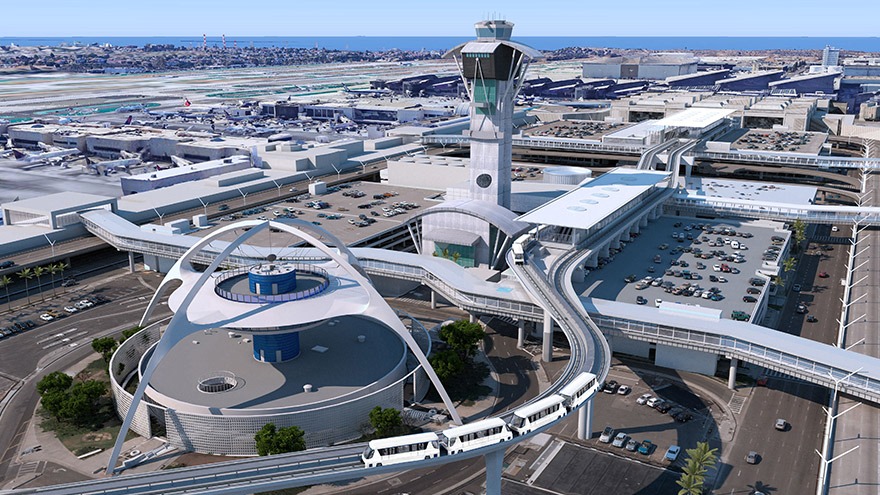
Major transformations continue to make headway at Los Angeles International Airport (LAX). The $14 billion modernization program allows for significant updates to the West Coast’s largest airport, including modernized terminals and lounges (like the new Delta Lounge), a new 15-gate facility, a consolidated Rent-A-Car facility, and the highly anticipated Automated People Mover Train System – the monorail that will connect all terminals of the airport to public transportation and allow for greater ease of travel to and from the rest of the city. (The People Mover is expected to open this year).

And as the gateway to LA, the highest concentration of hotel rooms outside of Downtown are in the LAX area. Besides being only a few miles from the beach, one of the greatest advantages of booking a meeting at an airport hotel is the proximity to Hollywood Park. Venues like the all-new SoFi Stadium, YouTube Theater, and Kia Forum are within proximity to the LAX Corridor.

Seeing is believing. Take a virtual detour to see just how connected everything is.


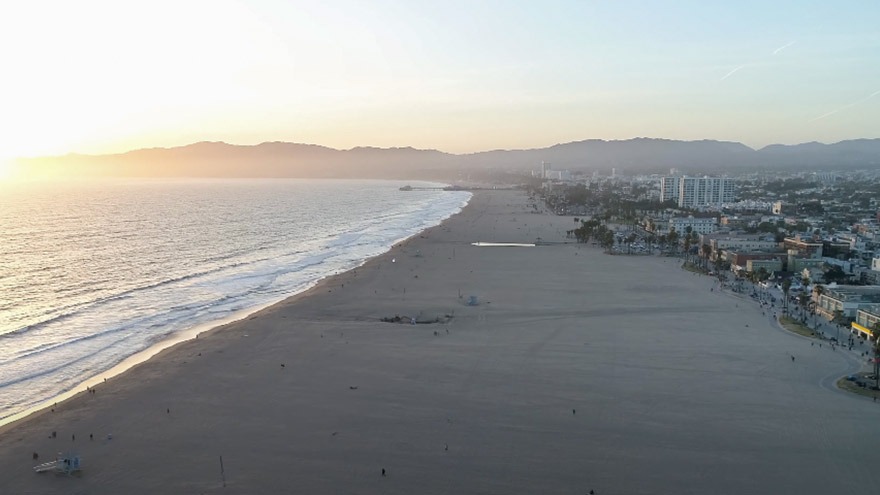
And if the connectivity of LAX isn’t enough, planners can look to the stunning coastlines of the Beach Cities to offer their attendees that feeling of an endless Southern California summer. Think sunny days and balmy evenings filled with post-session plans and activities like shopping, delicious dining, horseback riding, wine tasting, and much more.

Bookending the region’s many offerings are some exciting highlights happening in the Cities. In El Segundo, Topgolf is settling into its new surroundings, and most notably, the NFL’s Los Angeles Chargers will have a new $270-million training facility and headquarters campus in 2024. The complex will have event space, a hospitality club, eSports gaming and content studios, and a 3,100-square-foot media center. Nearby in Redondo Beach, “the largest beach party” is happening this summer during BeachLife Festival. This annual event begs the idea of an extended stay among attendees and festivalgoers alike.

Still curious about Los Angeles? See what else is Now Playing for your meeting, convention, or event.