culture
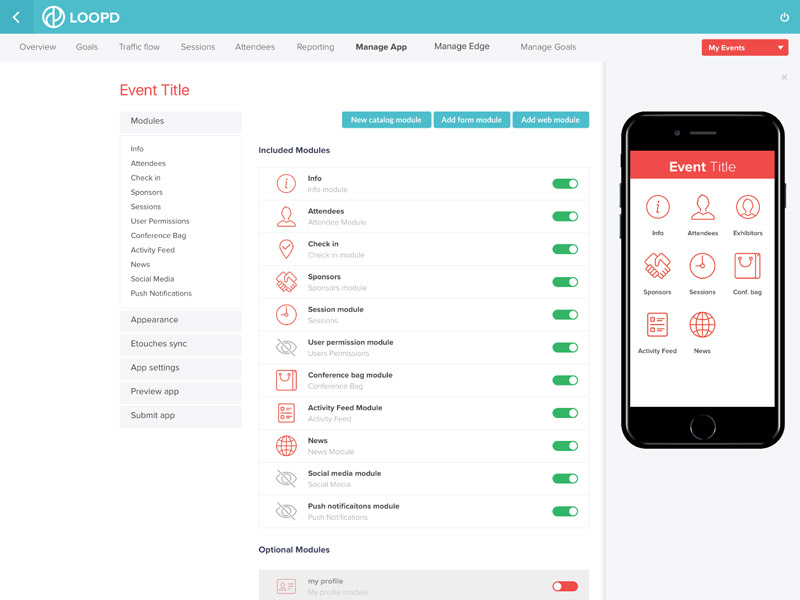
Riviera Nayarit has a rich and diverse heritage comprising four different ethnic groups—Huicholes, Coras, Tepehuanos and Mexicaneros—still living in the region and practicing their distinct customs. The mix of their longstanding traditions underlies the region’s culinary traditions, folklore, shopping, art and handicrafts.

The first settlement in the Puerto Vallarta area occurred in 1851. At this time, the region was called Las Penas. It wasn’t until 1918 that the region would be designated as a municipally and receive the official name “Puerto Vallarta” to honor Don Ignacio L. Vallarta, a revered state representative at the time. During the 20 years after its naming, Puerto Vallarta functioned as a small fishing village.

La Paz was discovered by Hernan Cortez in 1535. At the time, the area was populated by the Pericues tribe, who were “civilized” by Jesuit conquerors who established missions throughout the Californias (from San Jose del Cabo to Oregon). La Paz remained a port for centuries, and was regarded as a strategic point for ships carrying supplies such as spices, silk and seeds of tropical trees.

culture

Fresh Food by the Water 

In Bucerias, almost a dozen beachfront restaurants let you dine with your feet in the sand, while small towns nearby feature tents on the beach where fresh grilled fish and salads are served.

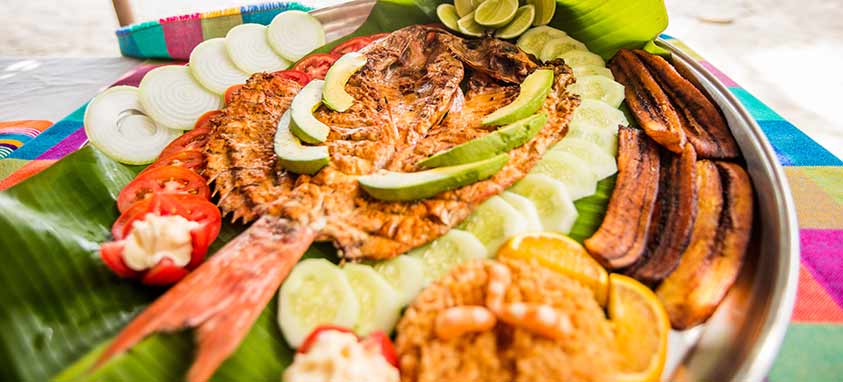
Huachinango Zaradeado (pictured) is the local dish of Riviera Nayarit. The chile-marinated red snapper is grilled over mesquite chips. Many local restaurants serve this delectable seafood dish.

Puerto Vallarta has many unique and even immersive culinary experiences. DeuxMec—by Swedish chef Andreas Fischer—features a casually sophisticated ambiance. To elevate classic dishes, the finest domestic and imported ingredients are applied to old favorites. The menu is altered every two weeks to ensure novelty.

Further Reading:

A Meeting Planner’s Guide to Mexico’s Pacific Coast

Riviera Nayarit only recently celebrated its 10th anniversary, but it has already been heralded one of Mexico’s finest destinations, appealing to even the most discerning guests. Riviera Nayarit has been visited by Bill Gates, Lady Gaga, Rihanna and many other famous people. Its 192-mile stretch of white-to-black sand beach is framed by the lush, rainforest-covered Sierra Madre Mountains.

Deep-Sea Fishing

The region is home to a spectacular array of marine life. Each year, more than 500 humpback whales migrate to Nayarit to mate and raise offspring in Banderas Bay. Riviera Nayarit is known for being a year-round deep-sea fishing destination. Fishing charters await so that visitors can match wits and stamina with blue and black marlin, sailfish and yellow-fin tuna.

Find the Hidden Beaches

Marieta Islands, off the state’s coast, preserves one of the rarest hidden beaches in the world. The protected sanctuary of land continuously calls to the wildlife. About 80 percent of North American migratory birds visit the islands each year. The secluded land can be visited only by taking a boat and then swimming through a cave at low tide.

Eco-Adventure Tourism

Riviera Nayarit’s ecotourism has cultivated a plethora of new activities that involve interacting with surrounding nature, including whale-watching, dolphin- swimming, bird-watching, subtropical jungle canopy tours and excursions in the Sierra Madre Mountains. The increase in adventure tourism has resulted in a broader offering of more challenging activities. A few popular choices are scuba diving and snorkeling along the coast and in the Banderas Bay, Sierra Madre safaris and survival-skills training.

Further Reading:

A Meeting Planner’s Guide to Mexico’s Pacific Coast

Indiana Pacers Bikeshare

The largest cities in Indiana are Indianapolis, Fort Wayne, Evansville and South Bend. They’re all great places for companies and associations to meet. South Bend, Fort Wayne and Evansville have major universities where academia professionals share notes and corporate recruiters find talent.

Indianapolis

Indianapolis was named the No. 1 convention city in the United States by readers of USA Today in 2014. Thanks to Indianapolis 500 Speedway, the Indiana Pacers and Indianapolis Colts, it’s also the most well-known city outside of Indiana.

Indiana Convention Center and Lucas Oil Stadium, Indianapolis

As a destination for meeting planners, Indianapolis offers the Indiana Convention Center and Lucas Oil Stadium, which has 566,000 sq. ft. of event space and played host to the 2012 Super Bowl. More than a dozen hotels, with a total of 4,719 guest rooms, connect to the convention center. An additional 7,100 hotel rooms are in the heart of downtown, according to Visit Indy, the city’s CVB.

“Visionary civic leaders and decades of investment developed Indy into the most connected convention and event destination in the state,” says Daren Kingi, senior vice president of sales for Visit Indy.

Kingi attributes the city’s rise as a meetings destination to “vibrant neighborhoods, picturesque gathering places and a burgeoning local food scene that puts more than 250 dining options within walking distance.”

The Children’s Museum of Indianapolis is dubbed the largest kid’s museum in the world. For the Sports Legends Experience, the museum partnered with local sports legends—IndyCar and the Indiana Pacers—to develop 14 interactive exhibits that promote health and active play.

Evansville

Evansville is growing. Recent completion of the Ford Center Arena is attracting sporting events and music stars. Later this year, Tropicana Evansville will complete a $50 million land-based casino that’s expected to offer 45,000 sq. ft. of gaming space, new restaurants and entertainment venues.

Old National Events Plaza, the city’s convention center, has 280,000 sq. ft. of meeting and event space with ballrooms and a 2,500-seat theater.

The city’s downtown vibe, charming shops and friendly people reinforce Evansville’s reputation as a traditional Midwestern town. “Our major asset is our people,” says Laura Libs, director of marketing and communications for Evansville Convention & Visitors Bureau. “Friendly, warm, good-natured folks share our own special brand of southern Hoosier hospitality.”

Libs points to Haynie’s Corner Art District, where historic homes on tree-lined streets are being renovated. Artisan shops and restaurants are emerging, as well. She suggests Madeline’s for fusion cuisine; Sauced for Italian/American fare; and Penny Lane Coffeehouse, a local favorite.

Evansville Transportation Museum

Museums are popular in Evansville. USS LST 325, a WWII warship, is docked along the Ohio River. Other attractions include Evansville Transportation Museum, African American Museum, Angel Mounds State Historic Site, Reitz Home Museum, and Children’s Museum. There’s also Mesker Park Zoo and Botanic Garden.

Evansville African American Museum, Indiana

The city is accessible from Evansville Regional Airport (EVV), with connecting flights from Atlanta, Chicago, Dallas, Orlando and Charlotte, North Carolina.

Fort Wayne

With a $100 million riverfront development underway in Fort Wayne, the state’s second-largest city has plenty of business activity in its future, including five hotels under development.

With a population estimated at about 250,000, the city is an attractive venue for business travelers. To accommodate them, Grand Wayne Convention Center offers 225,000 sq. ft. of meeting space. It’s located downtown and has two full-service hotels attached—Courtyard by Marriott and Hilton Fort Wayne.

Allen County War Memorial Coliseum has 100,000 sq. ft. of exposition space, including a new conference center (30,000 sq. ft.) and 10,000-seat arena. Fort Wayne has new restaurants within walking distance of the coliseum. The Golden, Tolon, Club Soda, Wine Down and GnomeTown Brewing Co. are a few. Later this year, a Ruth’s Chris Steak House will open downtown.

“Fort Wayne is known for big-hearted hospitality,” says Kristen Guthrie, director of marketing at Visit Fort Wayne, the city’s CVB. “This is clear in our meeting facilities and amenities. The friendliness, cleanliness and accessibility are unmatched.”

The city is currently focused on its riverfront redevelopment project and coming hotels, but it’s the Fort Wayne Children’s Zoo that’s garnering national attention. Consistently named one of the top zoos in the United States, it’s a must-see attraction for kids—and adults.

Further Reading:
Meetings of the Heartland: Ohio and Indiana

stress management habits

Stress management is a hot topic for meeting planners—and for good reason. Working in a profession that reliably ranks in the top five of Forbes’ annual Most Stressful Jobs list requires this skill. While in the midst of a stress storm, cultivating new habits can seem impossible. So learn and reinforce these constructive strategies now, because there will definitely be a time when they come in handy.

1. Learn to identify the issue

Learning to find the root of your distress is crucial to solving it. To assess, simply answer the following:

  • What triggers negative emotions during your day?
  • Have any big changes occurred recently?
  • How is your physical health?
  • What is going on at work?
  • Is there anything you’re avoiding?

2. Review the three As

Depending on the issue at hand, there are basically three healthy ways of dealing with it.

Avoid: This is not to suggest hiding from your problems, but when a situation calls for it, remember that things can be avoided. For instance, negative people, additional work/favors and vices are all major stressors that could be eliminated if you refused to be around them.

Adjust: Instead of tolerating a stressful situation, embrace flexibility. Be proactive and be open to finding some middle ground through compromise.

Adapt: When you’re faced with a rigid obstacle, it’s time to start working on your perspective and approach. Always take a look at the bigger picture by considering how something will realistically affect you in six days, six months and six years.

3. Break it down

Typically, a daunting project or event cannot be taken down in one sitting. Instead of endlessly chipping away, break it into digestible pieces. Find mini-goals and deadlines with some wiggle room. This way, you will have the necessary leeway and time to celebrate small victories along the way.

4. Get into a rhythmic activity

Engaging in a repetitive motion is extremely calming, plus physical activity is a well-known stress-buster. Pay attention to your breathing while walking, dancing, cycling or performing a similar activity. Big bonus points if you can take it outdoors.

5. Maintain good physical health

Physical and mental health are very much intertwined. When your body is suffering, it’s challenging to feel OK mentally. Then it starts a vicious cycle of health issues. Get a sufficient amount of sleep, don’t self-medicate and strive to derive energy from nutritious food, activity and natural supplements. Try to avoid relying on the unnatural peaks and valleys of caffeine.

6. Practice mindfulness

Luckily this trend has exploded, so there are lots of available resources to facilitate mindfulness, whether it’s classes, reading materials or apps. Meditation, yoga and visualization are excellent methods. Still, anyone can practice mindfulness by unplugging or tuning out with music or sounds. Establishing your own empowering yet comforting mantra can also help.

7. Do something for you

Do something that’s purely for personal enjoyment at least once a day. As humans, we need this to get by. Even if it’s just cooking a meal, chatting on the phone or watching a TV show, you must allocate time for amusing yourself.

8. Interact with others

Stress can keep you trapped in your own head. Consequently, you may quickly forget the value of interacting with others. Never expect someone to be a solution, but it’s fair to ask them to listen to your troubles. If that’s not an option, or something you feel comfortable with, then strike up a conversation about something else. Just having that human interaction can be surprisingly uplifting.

9. Treat yourself with honesty and kindness

There’s really no use in lying to yourself—and sometimes people are unaware that they’re doing it.  A great tool for self-expression and gaining an accurate outlook is journaling. If it’s time to take action, whether by making a big change or seeking professional help, you should allow this to happen.

10. Find a way to laugh

Laughing out loud is one of life’s all-time greatest simple pleasures. The benefits are infinite and pretty much everyone can do it. Find what appeals to your comedic side and make sure you prioritize this joy for instant relief. Also remember to laugh at yourself. Few things in life are too grim to find humor in. So dial-down the serious, find your playful side and unwind.

trump hotels scion

Trump Hotels has announced the launch of its new midscale hotel brand, American Idea. According to the company, American Idea hotels will be positioned as an alternative to “run-of-the-mill offerings” from other midscale hotel brands. The hotels will also focus on providing guests with a truly unique experience “that pays respect to the unique culture of each destination.”

President Donald Trump’s global hospitality company has signed three agreements to open American Idea properties in the Mississippi Delta region.

“Trump Hotels is recognized for unparalleled service, meticulous attention to detail and iconic properties in world-class destinations,” said Trump Hotels CEO Eric Danziger.  “While we will continue in pursuit of this mission for our luxury Trump Hotels brand, we look forward to leveraging our expertise and experience across the various segments of the hotel business and bringing our trademark hospitality to many more guests, owners and markets across the nation.”

The move is part of an ambitious expansion strategy from Trump Hotels, which last year announced the launch of its millennial-focused Scion hotels. Scion is being marketed as an upscale lifestyle brand. Despite some controversy about conflicts of interest, the Scion brand has secured the name and location of its first property: Scion at West End in Cleveland, Mississippi. The property will include 100 guest rooms and suites, a 5,000 square-foot event hall and two acres of outdoor event space.

With Scion and now American Idea, Trump Hotels appears to be making a strategic shift, as its two newest brands are the first in the collection to steer clear of the Trump namesake.

What really creates a luxurious experience? Is it the champagne and caviar or breathtaking views? In an effort to pinpoint the exact characteristics, global travel deals publisher Travelzoo®and the Global Hotel Alliance collaborated on a survey involving more than 4,800 people from their respective membership bases.  The results were pretty astounding.

Richard Singer, Travelzoo president, Europe, discussed the findings at the recent Ultratravel Forum in London, saying, “It’s easy to assume that consumers are looking for sophisticated perks and indulgences when seeking a luxury travel experience. What our research suggests is that people really value getting the basics spot-on. The ability to properly recharge in a restful environment far exceeds other considerations, such as endorsements from famous people or high-tech gadgets. We can also see just how important gold-standard service is when it comes to luxury. In a commoditized world, travel brands should focus on this and on creating spaces for people to relax properly and switch off.”

Overall, the ultimate luxury experience isn’t that complicated. In fact, people prioritize basic amenities such as cleanliness, comfort and good service. Here are the survey’s major findings.

First-class is all about the recline  

It’s not the glitz and the glam that attracts people to first-class –it’s the seats. The survey found that the main incentive for splurging on the elite section was the ability to recline and therefore get some shut eye. This was true regardless of disposable income or average spend on travel.

Only 2 percent of British respondents, and 4 percent of Germans, listed better food and drink as the reason to go up a class. One in 10 Americans prioritized better food— still a negligible amount.

Emirates is up-and-coming

Apparently, Americans don’t feel too much loyalty toward their homegrown airline brands. Only 4.4 percent of U.S. respondents preferred American Airlines and 3.2 reported United Airlines. Emirates was mentioned the most in all markets when it comes to luxury airlines. A whopping 21 percent of U.S. respondents pointed to Emirates when questioned about luxury air travel. In England this was 31 percent, and in Germany 29 percent.

Luxury through and through isn’t necessary

More than half of all survey respondents said that they were open to “mixing and matching” when it comes to luxury, i.e. flying economy and then staying at a luxury resort, or vice-versa. Convenience was ranked as a higher priority, especially for short-haul flights. For long-haul travel, however, things were slightly different. High-income respondents cared about traditional carriers that are thought to be more luxurious for longer flights.

Celebrity influence is pretty minor

New celebrity styles may drive sales at the mall but this isn’t the case with travel. Less than 5 percent of respondents in all markets said that a celebrity sighting was an influential factor in booking a trip. Instead, American, British and German travelers stated that the most defining luxury amenities are exemplary service followed by an ideal location. For Americans, a luxury bathroom comes in third while a sizable room is third for Germans and Brits.

Cleanliness and sleep (again) matter

Unsurprisingly, respondents reported that the biggest luxury turn-off is an unclean hotel. They also reiterated their appreciation for sleep, as thin walls that prevent sleep came in second place as a luxury turn-off. Meanwhile, Germans had their own complaints, such as being most frustrated by expensive Wi-Fi.

Rolls-Royce is the queen of luxury travel

Rolls-Royce received the most mentions in an unprompted question about the ultimate luxury brand across all sectors of consumer goods and services. The runner-up was Rolex.

celebrity-owned hotels

Celebrity-owned restaurants are a well-known phenomenon. It’s exciting to see how these almost mythical figures project their visions. But how many celebrity-owned hotels are you familiar with? It turns out that a pretty remarkable list of celebrities owns properties, and your personal idol might even be on it.

How much fun would it be to visit, or better yet stay at, Leo’s eco-friendly hotel or Hugh Jackman’s wellness resort? Plus, there’s the possibility for celebrity sightings. Next time you have a meeting or an event in one of these locations, check out these celebrity properties!

The Big Sleep Hotels—England, Thailand and Malaysia (John Malkovich)

The American actor, director and producer is the primary investor in this budget-friendly chain. The Big Sleep Hotels was credited as “the U.K.’s first design hotel for budget travelers,” by Travel Trade Gazette.

Costa d’Este Beach Resort & Spa—Vero Beach Florida (Gloria Estefan)

Cuban-American singer Gloria Estefan and her husband, Emilio Estefan, own this Miami-styled beachfront hotel on Vero Beach. The luxury property oozes with sophistication, class and top ratings.

Sundance Mountain Resort—Sundance, Utah (Robert Redford)

Considering that Redford is the founder of Sundance Film Festival, this ownership makes a lot of sense. Sundance Mountain Resort is the largest celebrity-owned hotel property. Situated on the slopes of Mount Timpanogos, local outdoor activities include river rafting, horseback riding, fly-fishing and skiing.

Gaia Retreat & Spa—New South Wales, Australia  (Olivia Newton John)

In a joint partnership with three others, the Grease starlet owns Gaia Retreat & Spa, a wellness resort. Retreat packages feature spa treatments, activities, organic cooking classes, meditation, clay sculpting and more.

Bedford Post Inn—Bedford, New York (Richard Gere)

As a Westchester resident himself, co-owner Richard Gere resides close to Bedford Post Inn. The eight-room luxury inn is in a rustic and delightfully quiet setting.

Gwinganna Health Retreat—Queensland, Australia) (Hugh Jackman) 

Hugh Jackman was originally a guest at Gwinganna Health Retreat while training for the film, The Wolverine. Although Jackman planned for a brief stay, he ended up spending two months there before deciding to co-own it.

Mission Ranch Hotel—Carmel, California (Clint Eastwood)

The Mission Ranch was converted from a 19th-century dairy house. It spans over 22 acres and boasts 31 guest rooms, a tennis court, a fitness center and dining, as well as incredible views of Point Lobos, Carmel River Beach and the Pacific Ocean.

Blackadore Caye—Belize ( Leonardo DiCaprio)

DiCaprio actually bought this island in a joint, $1.75 million-dollar environmentalist purchase with hotelier Jeff Gram. DiCaprio plans to build a luxury, eco-friendly resort on the island, and although it won’t be opening until 2018, there is already a lot of excitement around the ambitious venture.

new openings and renovations

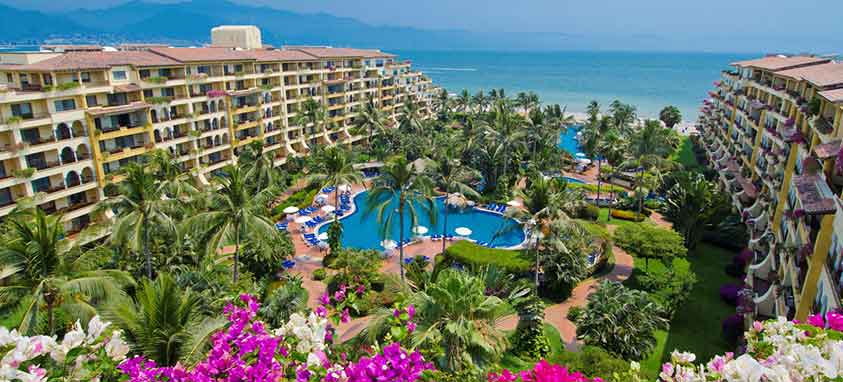
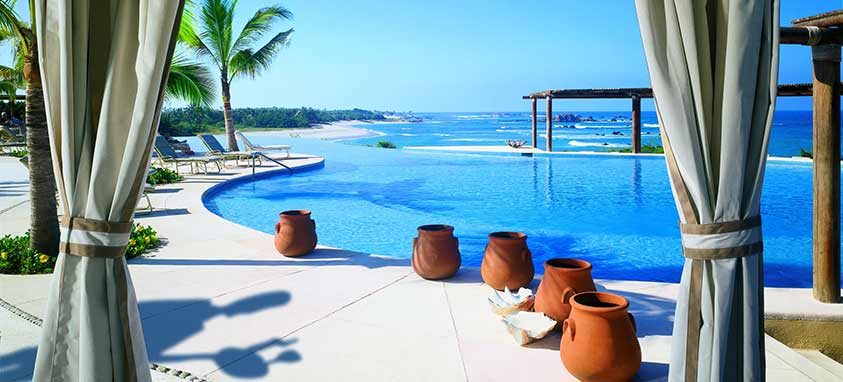
Velas Vallarta Suite Resort

Riviera Nayarit

To supplement the growing meeting, convention and event demands, Riviera Nayarit is opening two new, state-of-the-art convention centers. Vidanta Nuevo Vallarta Convention Center opened in April with 32,378 sq. ft. of meeting space. It features five resort hotels, totaling more than 2,200 guest rooms, 20 restaurants, 18 bars/lounges, 27 pools, luxury spas, boutiques, a mile-long beach and an Aqua Park featuring a Lazy River.

Scheduled to open in June, Bel Air Unique Resort & Convention Center of Vallarta in Flamingos provides 33,906 sq. ft. of indoor and outdoor space, making it the largest event space in Riviera Nayarit. The outdoor space includes Las Tortugas Garden, a garden with over 8,000 sq. ft. of space for up to 860 guests, and Playa de Chacala, a beach with 2,690 sq. ft. of space for 280 attendees. The resort has also undergone a major expansion and renovation, increasing the number of guest rooms to 419 and adding five new pools.

new and renovations

Four Seasons Resort Punta Mita

Rosewood Mandarina, which draws inspiration from the local, prehistoric Huichol and Cora cultures, will open in 2019 and offer 130 guest rooms, suites and villas. Four Seasons Punta Mita completed a multimillion-dollar renovation in November that included renovations to Apaune Spa, suite redesigns and upgrades to its adults-only pool.

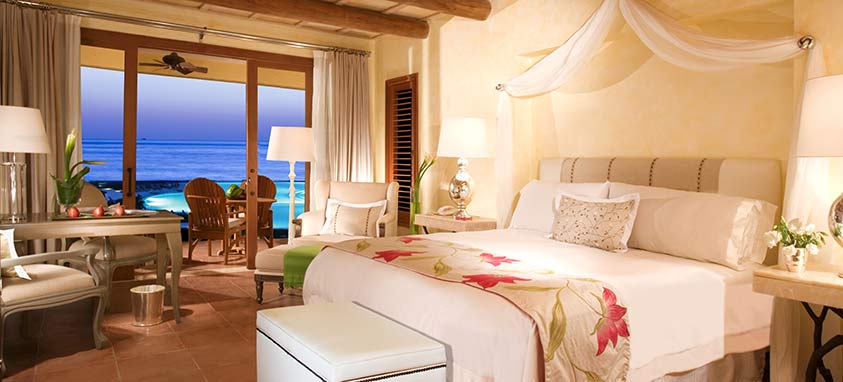
Guest room at St. Regis Punta Mita Resort

Puerto Vallarta 

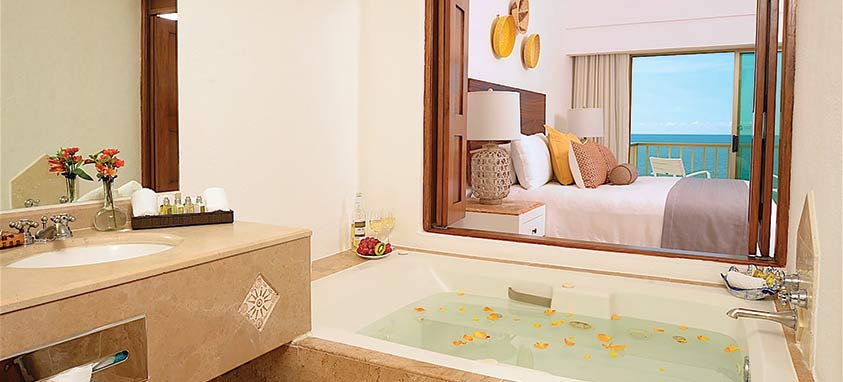
Guest room of Villa Premiere Boutique Hotel & Romantic Getaway, Puerto Vallarta
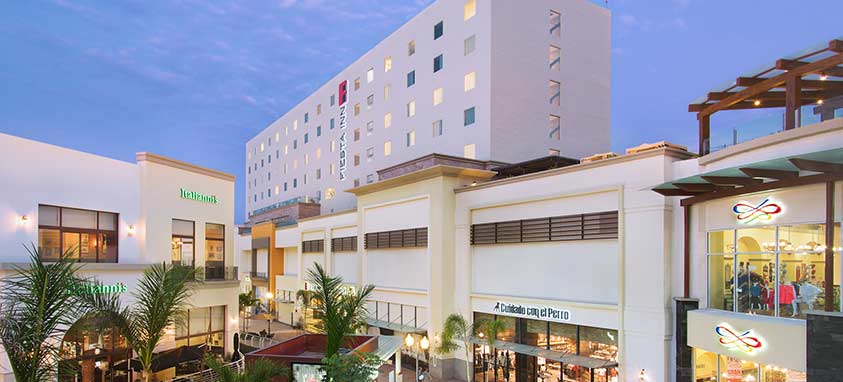
Located in La Isla shopping center, the recently opened Fiesta Inn, La Isla Puerto Vallarta, offers 144 guest rooms and is located in the La Isla Shopping Center. The AAA Four Diamond Villa Premiere Boutique Hotel & Romantic Getaway recently wrapped up a $3.8 million renovation of all 80 guest rooms and facilities. The adults-only hotel features 2,800 sq. ft. of meeting space.

Fiesta Inn, La Isla Puerto Vallarta

Further Reading:

A Meeting Planner’s Guide to Mexico’s Pacific Coast

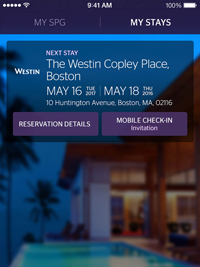
Starwood Preferred Guest (SPG) has launched a mobile service for its members that will enable them to access app features such as check-in, check-out and room ready alerts at 22 hotels across the United States.

The new service, SPG Mobile Check-In, enables members to quickly download the SPG mobile app and then book their travel directly through their smartphone or the SPG website. Once booked, 48 to 72 hours prior to the member’s stay, they will be prompted on how they would like to check-in. On the day of their arrival, they will receive notifications about the readiness of their room.

SPG, a Marriott International loyalty program, first began its mobile journey with a keyless entry system. Available at select hotels such as Aloft, Element and W hotels, it will debut at 500 Marriott Rewards and The Ritz-Carlton Rewards program hotels by the end of this year.

The drive for Marriott International to offer this feature to SPG members stems from the more than 200,000 Marriot Rewards check-ins each week. Marriott has sought to improve the mobile experience of its guests, since half of smartphone owners use its mobile devices for travel.

The convenience of SPG’s mobile app will not stop there. Soon to come are even more features that will allow guests to have the best possible experience during their stay. Members will be able to personalize their visit with more choices and will be able to interact with hotel associates. In 2018, members will be able to make requests through their mobile device. They will be able to choose from a list of frequently requested amenities and services, and even text with hotel associates before, during and after their visit.

Attending an event is an investment, monetarily and timewise. As an event planner, it is important that attendee engagement and satisfaction are high to make it a valuable spend for the delegates. Event technology can be used by facilitating more interactions and experiences onsite without having it be a distraction. Attendees are always looking for new ways to network, learn best practices and obtain new information while meeting new companies and thought leaders. By having this level of insight, the attendee can make the most of their time and have a high-quality event experience they can tell their boss about.

Enhancing the attendee experience

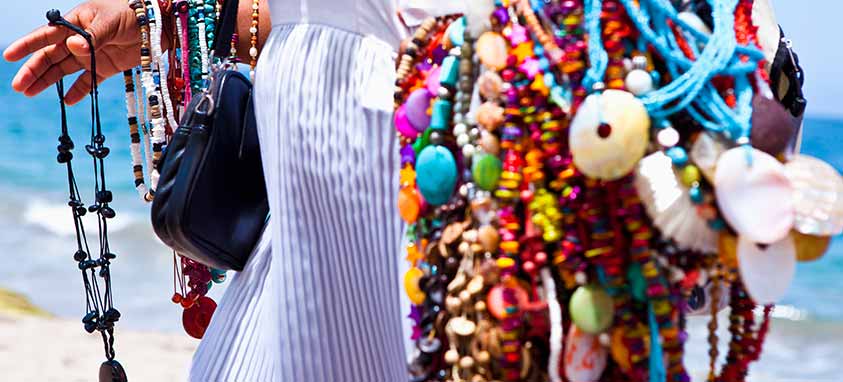
In order to ensure positive attendee engagement at your event, implement technology that will enhance their experience, such as event mobile apps, social walls, and wearable technology. Event mobile apps can give the attendee systematic navigation to a specific session or alert them if someone they want to meet is nearby. Social walls allow attendees to be an active participant in the event and see what other attendees are saying about topics and sessions. Wearable technology such as the LOOPD badge is great way for event gamification, for example a scavenger hunt between the badge and the hubs. Not only can badges and apps be used for gamification but together they can collect and store information such as contact information and marketing collateral.

Data is king

Nowadays, events are all about how to leverage data for the overall marketing strategy. Wearable technology can collect the attendees’ active and passive interactions by measuring session attendance and dwell time for each attendee. It can also see how many attendees have visited specific booths and how long they were there. When an attendee exchanges contact information or receives marketing collateral by pressing a button on their badge, the event planner can understand what their attendees are physically interested in at the event. With event analytics platforms such as LOOPD analytics, event planners can understand what they can do to improve their events. When you use event mobile apps and wearable technology together, event planners can receive digital and physical metrics that can help them evaluate the success of their event in real time. This data can then be used to power future campaigns post event.

Out with the old and in with the new

Attendees want information but they don’t want to carry it around all day. For example, the LOOPD badge can tell an attendee of all the sessions and companies they visited and it can also replace traditional business cards and any type of brochures virtually when the attendee uses their badge to exchange information. Once they press that button on their badge, they can receive the information in their LOOPD app. Overall, event technology should be easy to use, intelligent and valuable for the attendees.