Will the incoming Trump Administration affect the meetings industry? Experts say impacts could be significant, although their precise dimensions will not be known until Trump’s executive team is in place and his policy and legislative changes are actually implemented. That said, medical meetings may be among the meetings most likely to be impacted.

Why? If two of the President-elect’s controversial picks—Robert F. Kennedy Jr. as head of the Department of Health and Human Services (HSS) and Dr. Mehmet Oz as head of Centers for Medicare and Medicaid Services (CMS)—are confirmed by the Senate, major changes could be ahead for the medical sector—and these could easily cascade down to medical meetings.

CMS is part of HHS, and it manages not only Medicare and Medicaid, but also the Affordable Care Act marketplaces for individual insurance that provide health coverage for 155 million Americans. In announcing his choice of Dr. Oz, Trump said the celebrity doctor would work closely with RFK Jr. “to take on the illness industrial complex.”

Among those peering into a crystal ball to attempt to pinpoint the future for medical meetings is Pat Schaumann, CMP, CSEP, DMCP, HMCC. As president of Schaumann Consulting Group, she also serves as a director of MPI. What does she see? For one thing, how the bottom lines of big medical-related corporations and pharmaceutical companies trend as a result of economic policies under Trump could easily translate to less—or greater—investment in medical education, sponsorships, events and conferences.

Another area to watch: Trump has promised lower drug prices. If profits also lower as a result, so might budgets for medical meetings and congresses.

If tensions rise with trading partners and other nations, “some foreign entities might choose non-U.S. destinations for medical congresses, especially in Europe or Asia.” Similarly, tightened policies on visas and immigration could trim attendance at U.S. meetings. And if tariffs or tensions strain cooperation with specific countries, this could imperil sponsorships of medical events and partnerships with international organizations.

On the other hand, the future might not be all bad. If Trump’s America First tilt incentivizes domestic innovation, that could mean “a rise in U.S.-based medical research and meetings showcasing advancements.”

Schaumann concludes, “As the global director of meetings, you might want to prepare for these potential shifts by focusing on flexible planning strategies, monitoring regulatory updates and staying aligned with corporate priorities. Engaging with key stakeholders to assess their perspectives on the political climate will also help in forecasting the potential impacts.”

But Wait, There’s More

Other potential impacts are less obvious but no less important. Take, for instance, any Trump Administration modifications to programs like Open Payments, a transparency initiative under the Affordable Care Act that is managed by CMS. It requires pharma and medical device companies to report financial relationships with physicians and teaching hospitals.

If Trump weakened reporting requirements for Open Payments in the name of reduced bureaucratic oversight, Schaumann notes, this could “influence how pharmaceutical and device companies approach sponsorship and education at medical meetings. Companies may feel less constrained in supporting events or covering expenses like speaker fees, travel and meals.” Conversely, she says, stricter rules could lead to more conservative spending, impacting funding for educational initiatives and collaborations.

Learn more: How to Plan Better Medical Meetings By the Numbers

“The future of Open Payments under Trump would depend on the administration’s prioritization of healthcare reform versus deregulation. It’s a dynamic area to watch closely as shifts could significantly affect compliance, industry behaviors and funding within the medical meeting sector,” Schaumann says. She notes that a less transparent process “could face criticism, potentially affecting trust in the healthcare system and increasing scrutiny at medical meetings.”

The Possible RFK Jr. Affect

Schaumann also weighs in on the potential influence Robert F. Kennedy Jr. could have on the medical meetings industry.

Kennedy’s stance against many vaccines, for one. This, Schaumann says, could trickle down to meeting topics related to immunology, vaccine development and public health. Conferences might feel the need to include debates on vaccine mandates, safety protocols and alternative approaches to public health. The controversial nature of these subjects could well increase polarization through “more dynamic, and possibly contentious, dialogue at medical meetings.” Kennedy’s policies might also create challenges for organizers in maintaining neutrality and inclusivity at events.

Schaumann points to these other possible RFK Jr. impacts:

  • Increased scrutiny of pharma in the form of stricter regulations could affect budgets for sponsorships for events and medical education.
  • Research funding priorities could change to emphasize Kennedy’s priorities of environmental health or alternative medical approaches, which might be reflected in research showcased at meetings.
  • Industry preparedness could dictate that medical meeting planners need to be ready for increased scrutiny and ensure that content is fact-based.

“For planners, the focus should be on fostering balanced, evidence-driven conversations, anticipating audience sensitivities, and staying aligned with emerging trends in public health under Kennedy’s influence,” Schaumann says.

The Possible Dr. Oz Affect

If Dr. Mehmet Oz heads up CMM, his impact on medical meetings could be shaped by his unique background as a physician, media personality and advocate for alternative health practices, Schaumann says.

Working with Kennedy, Dr. Oz’s public health focus on lifestyle medicine, nutrition and alternative therapies could “shift meeting agendas toward wellness, preventive medicine and complementary therapies,” as well as broader public health topics like obesity, mental health and chronic disease prevention. His emphasis on integrative medicine and emerging technologies like AI might lead to “expanded tracks on these topics, potentially attracting new audiences and sparking debate.”

On the other hand, Dr. Oz’s endorsement of some controversial health products and practices could lead to “heightened scrutiny of the content and speakers at meetings, especially on evidence-based medicine” and debates or panels “addressing scientific rigor and misinformation.”

In summary, Schaumann says, if Dr. Oz teams with RFK Jr. at HHS, their influence “could introduce both opportunities and challenges, reshaping medical meetings to emphasize holistic health, innovation, and public engagement while sparking discussions on scientific rigor and public trust in health information.”

The Coalition’s 41st convention emphasized strength and resilience

National Coalition of Black Meeting Professionals (NCBMP) held its 41st annual convention in Birmingham, Alabama, at Sheraton Birmingham Hotel and Westin Birmingham Hotel Nov. 13-16.

This year’s theme, Strength and Resilience, was an acknowledgement that the 2024 elections and the resulting shifts in DEI legislation would engender tension among attendees, says Jason Dunn, CEO at NCBMP. “We knew that a lot of our members were facing that [tension] internally, so we wanted to inspire them to find the inner strength to keep fighting and not to give up, to keep proving themselves and not to be dismayed,” Dunn says.

In addition to going behind-the-scenes of this year’s NCBMP, we also take a look at several of the sessions of which more than 400 attendees took part.

Historical Beginnings

Choir in purple cardigans
Photo by On The Run LLC

The event’s opening night took place at 16th St. Baptist Church in Birmingham, the site of a bombing by members of the KKK, on Sept. 15, 1963, which injured 14 people and caused the deaths of four adolescent girls. Those who spoke at the event included the sister of one of those girls and the brother of one of the surviving victims, in addition to the church’s pastor, Reverend Arthur Price, Jr.

What followed from the moment attendees sat down in the church was a history lesson and the formation of a connection to the city, not only through the retelling of an unforgettable moment in history, but through sitting in the pews next right next to the place  the bombing occurred and listening to those who have a direct connection with that history.

Read More: How to Transform Events with Local Culture

“We wanted to remind people that, unfortunately, hate is real and it’s not some mythical occurrence that happened in a book. This really happened,” Dunn says. “It awakens the consciousness of individuals to remember that some of these organizations were created because some people could not gain entry into other organizations. It also reinstates the spiritual power of forgiveness and the strength that lies within us.

“When you’re on one accord with others in that church, you have no other choice but to remember; to walk in the shoes of those who came to praise, worship and find faith.”

Dunn wanted attendees to live in that moment and show them that although hate is out there, they can prevail. “Your inner strength and faith in the human spirit will drive and continue to push you to find common ways to push past the hate, but also find the courage that our ancestors and descendants had to make things right.”

The Sessions

Over the next couple of days, attendees would be able to further their cultural and event industry education through insightful general sessions and breakouts.

Opening Session

Dr. Eddie S. Glaude, Jr., photo by On The Run LLC

Dr. Eddie S. Glaude, Jr., presented the opening session on the following day at Sheraton Birmingham. His discussion, “We Are the Leaders We’ve Been Looking For,” was a deep reflection of the issues of race and inequality in the United States. Quoting American writer James Baldwin throughout, Glaude stated, “Baldwin is perhaps one of the most insightful American writers about the American project.”

Breakouts

After a heavy opening session, members and attendees headed to their respective breakout sessions. One of them, “Must Have Contract Clauses,” was led by attorney Joshua Grimes, who touched on the latest in contract negotiations, such as force majeure clause changes, F&B cost increases, security issues and new laws ahead.

The breakout was nearly an hour long, but one notable change made to force majeures that Grimes mentioned is the removal of the words “illegal,” “impossible,” “commercially impracticable” or “inadvisable.”

Joshua Grimes speaking in front of group
Joshua Grimes, photo by On The Run LLC

“Those words are gone from most hotel contracts,” he says. “You can negotiate it back in, but what’s the difference? Let’s look at Covid. If you want to cancel because it’s illegal or impossible to have your meeting, you must have the government say you cannot meet, or the hotel, vendor or convention center must be closed. Anything else is not going to be a force majeure. I’m not going to talk about the reasons for that, but it is a purposeful restriction on making it harder to cancel.”

Other sessions included discussions by Dr. Ruha Benjamin, titled “Reckoning with the Future of Technology & Society.” Benjamin discussed taking advantage of other types of AI: ancestral intelligence and abundant imagination, to stop looking without and begin searching within.

Yet, as we can’t fully pull away from technology, there were also sessions on how to better use the event tech we have at hand. One such session was “AI EventXcelerator” presented by PCMA. The interactive session taught participants about PCMA’s AI technology Spark.

Giving Back to the Younger Generation

NCBMP donates to Hueytown High School
NCBMP donates to Hueytown High School, photo by On The Run LLC

Throughout the event, there were several sessions where NCBMP presented donations to high school students to purchase caps and gowns. There were also college-aged attendees at the event, who brought aspirations to work in hospitality, and their presence placed them right next to those with decades of experience in the industry.

For Dunn, the driver of including the younger generation is plain and simple: “I believe what people see is what they will be.”

He highlighted the rarity of seeing a person of color running a hotel, or working in any high-level capacity in hospitality: your CEOs, vice presidents, directors, etc. “We want [the younger generation] to see all the facets of hospitality in every category,” Dunn says. “To do that, we have to show it by inviting them to the conference. In addition, it’s our responsibility to give back to the schools, to ease some of the burdens, and show that we are investing in them. We want them to grow. So if you leave there and we’re paying for your caps and gowns to graduate as a student who’s in hospitality, that just tells you we got your back.”

In addition to donations, NCBMP also provides mentorship for these students. “Some of those students leave [the conference] with job opportunities for when they leave high school, if they don’t want to go to college,” Dunn says. For these opportunities, NCBMP partners with several large hotel companies like Marriott International, MGM International, Memphis Convention and Visitors Bureau, Visit Orlando, Oak View Group and more.

Dunn went on to say they want to battle the misperception that you have to go to school to make six figures or to work in hospitality. That isn’t the route Dunn took, nor is it the route many of NCBMP’s members and attendees took. “We wanted to show them the entry points, different perspectives and categories in the industry, and just keep them inspired…The various schools we work with, we’re going to have long-term relationships with them, not just for the week of the conference.”

Toronto Sees the Vision

table with flowers and small gifts on topWhen Vinita Das, sales director, U.S. market at Destination Toronto, attended NCBMP last year, she knew she needed to come back. This year, she did, with Destination Toronto as a sponsor. “These are meeting professionals that plan and host significant meetings and conferences,” Das says. “So it’s an important audience and I wanted to be in line with them. Toronto is such a multicultural city, and we want to be intentional about engaging with diverse communities in the industry. It’s something we thought would be important to be a part of, and not only be a part, but be a sponsor.”

Das says this event allows her to connect with potential clients she may not have otherwise. “I don’t attend religious conferences. There are a lot of religious planners here, so that allows me to have face-to-face interaction [with them],” she says, going on to speak about the value of friendships and networking found at NCBMP. “People like to do business with people they like, and being here in this show has really strengthened and deepened some of those relationships and elevated them to not just being industry colleagues, but friendships.”

Using the resources they have, Das says she and Destination Toronto must put in strategic thought and planning toward what shows provide the most value. “So, we want to make sure that we are at the right shows, meeting with the right people and connecting with those that have potential business for Toronto, especially those high value customers,” Das says. “I see a lot of high value customers at Coalition, and so it will continue to be a show of importance for us and overall, maintaining our presence as a brand in front of these customers.”

Vinita Das at Toronto booth

Like Das last year, this was Toronto-based event planner Dionne Bishop’s first time at NCBMP. Bishop is the owner of Events by Dionne and does consulting work with Destination Toronto. For Bishop, the event hit on two major elements that made it stand out. “I’ve not been in a space where there’s this many Black professional meeting planners,” she says. “I love education when I go to conferences. So far, it’s been top-tier, they’re talking about topics I don’t normally hear and going in depth.”

As a third-party planner, Bishop found the first breakout she attended, “Mastering RFP Responses: A 3rd Party Planner’s Perspective,” hosted by two meeting professionals from Fruition Consulting, especially helpful in giving her a better understanding of the RFP process. At many events, Dionne says, “We end up talking about how to get more business and how to help other planners advance in their own careers or businesses, but it’s usually superficial…Anyone could Google that. This was a successful company really just peeling back the curtain and breaking down their statistics.”

Bishop says, as a third-party planner, after bidding and bidding and receiving no response, she begins to wonder if the problem is her. Hearing from these other planners about their five- to six-year-long stint of not having much luck was reassuring that she isn’t.

“That was very helpful as a small business owner,” Bishop says, adding that she now has a greater understanding about it really being a numbers game. “One of the key things I learned was even though the RFP asks for a certain amount of information, go overboard, give them more and really explain and demonstrate how you’re different.”

As a planner, Bishop says something important to her is creating a “vibe.” She says in her company and with her clients, when they ask what makes her different, she tells them, “I try to produce events that have a vibe. Sometimes people are like, ‘What do you mean, “Have a vibe?’”

At NCBMP, attendees took part in a perfect example: a brief dance party in the middle of lunch. “I’ve never seen an electric slide in the middle of lunch,” Bishop says, mixed with laughter. The dance party highlighted that, although the purpose of the convention is to do business, adding playful moments here and there has its place in creating connections and lasting memories.

Travel is one of the perks of a meeting prof’s life. Except when it isn’t. Unlike the harsh reality of TSA PreCheck lines that are longer than general queues, the challenges of getting a good night’s sleep are something you do have control over. For best practices to avoid a night of tossing and turning, propping and plumping, we asked Sam Gibbs, lead pillow concierge at The Beatrice Hotel, a boutique property in Providence, Rhode Island.

An Emerging Sleep Movement

Dr. Romie Mushtaq resting head in handLack of sleep can attribute to everything from weight gain and lack of focus to chronic disease, as Dr. Romie Mushtaq, creator of the Busy Brain Test has observed. As for Gibbs, he noticed that during Covid, people started specifically prioritizing health and sleep, even pursuing sleep tourism as a subset of wellness travel. That was when his luxury hotel started investing in a personalized approach to bedroom accouterments.
“A good night’s rest allows you to experience the city and the event to its fullest,” as he puts it.

Since pillows are such a personal preference, it is nearly impossible for any property to select a pillow that will meet all guest preferences. Hence, the pillow menu and the role of pillow concierge, which was born in 2024 at The Hotel Beatrice with support from linen vendors. The property’s Be Rested Sleep Wellness packages include a craft mocktail at Bellini Rooftop, warm robes on heated towel racks, Matouk linens and cozy slippers and Therabody SmartGoggles (more on this enhancement later). And once you do find your perfect cocoon, The hotel’s collective brain will make a note so you can enjoy the same wrappings on subsequent visits.

While Gibbs runs through a list of questions about sleep preferences—side or back-sleeper, injuries, temperature preferences, tendencies toward building a pillow fort to pass the night (we may have made that last one up)—he says there is no best pillow. “Whatever works for you is the right one,” he declares.

Read More: Take Charge of Your Sleep Habits

Establish a Night Ritual

Sam Gibbs
Lead Pillow Concierge Sam Gibbs

Gibbs suggests practicing good sleep hygiene by following a ritual each evening to set yourself up for some healthy rapid eye movement (REM) sleep. That could include a deadline to be in your room with electronics turned off and lights dimmed an hour before your desired bedtime, with at least seven hours before the alarm announces the start of your next happy day (some may need more—your body knows best).

He also suggests enjoying a mocktail or herbal tea to cap off your night, not a “real” drink because alcohol disrupts sleep.

Another accessory that helps move you into the slumber zone is a pair of heated, massaging SmartGoggles. This device can ease facial tension using controls on an app downloaded to your phone.

Hotel Beatrice’s Pillow Menu Cheat Sheet

  • Ultra Slim Gel Memory Foam: “Thin and flat, this pillow aids cervical neck alignment and deeper sleep.”
  • Cooling Memory Foam: “Infused with gel and breathable bamboo, this pillow will make you feel right at home.”
  • Buckwheat Specialty: “If your neck’s begging for a break, this pillow is firm, supportive, and no-nonsense.”
  • Lavender Specialty: “Filled with spelt chaff and sweetly fragrant, experience nirvana nightly.”

Tips for picking a pillow:

  • Choose one that makes you feel at home
  • Determine your biggest need—neck pain, cooling, aromatherapy, etc.
  • When in doubt, don’t be afraid to try them all! We hope this program helps our guests fall in love with the pillow that best suits a good night’s sleep for them.

A current assessment and resources for those affected

Updated 10/29/24: Visit St. Pete-Clearwater is telling the world that the destination is “Still Shining,” and ready to welcome visitors. After recently weathering two major hurricanes, the beach community has worked tirelessly to resume operations at many favorite locations with nearly 80% of the destination now open and eager to welcome guests–including accommodations, attractions, restaurants, museums and shops.

“It’s important for everyone to know that St. Pete-Clearwater is Still Shining and ready as always to welcome residents and visitors to our beautiful beaches, amazing arts and experiences, and delicious coastal dining options,” said Brian Lowack, President & CEO of Visit St. Pete-Clearwater. “While our destination experienced serious impact from the recent storms, the images and videos that have circulated do not represent the entirety of the destination and many of our visitors’ favorites are open and ready to welcome guests. Now is a great time to not just enjoy that walk on the beach, but also explore all the other amazing attributes that make us America’s favorite beaches.”

Updated 10/25/24: As of Oct. 25, VisitNC, using data from North Carolina’s state departments of safety and transportation, Buncombe County, Asheville and Black Mountain have been designated as safe to visit, with a recommendation to “plan ahead.” Weaverville is cleared for safe travel, while Swannanoa remains under a “do not travel” advisory as a high impact area.

Updated 10/16/24: Hotels and resorts across the area that closed are reopening, including Naples Grande Beach Resort, which did not suffer any damage, but did have a few groups cancel during the hurricane. Plans are underway to reschedule for a future date, according to a statement. Power had been restored to all but 77,000 residents by Oct. 16, according to poweroutage.us.


Hurricane Milton made landfall in western Florida yesterday, leaving nine dead and nearly 3.5 million residents and 165 health care facilities without power. Over 80,000 Floridians are currently being supported by nearly 300 operating shelters. In a twist of fate, Hillsborough County, which had offered comfort stations, income eligible hotel assistance and FEMA assistance to those impacted by Hurricane Helene’s September 26 landfall, was suddenly forced to end those services in preparation for incoming Hurricane Milton.

The full damage of Hurricane Milton is currently under assessment, as southeastern states are still reeling from Hurricane Helene’s trail of destruction. In western North Carolina, government agencies and local residents have come together tirelessly to salvage the wreckage and ensure everyone’s safety. The storm resulted in at least 230 fatalities, with unprecedented rainfall causing significant flooding in the region.

In Buncombe County, major infrastructure damage—particularly to the main water plant at North Fork—has created significant challenges in restoring access to basic needs. Residents have shown remarkable resilience and community spirit, from sharing and distributing supplies to performing heroic rescues and supporting one another through heartbreaking recoveries.

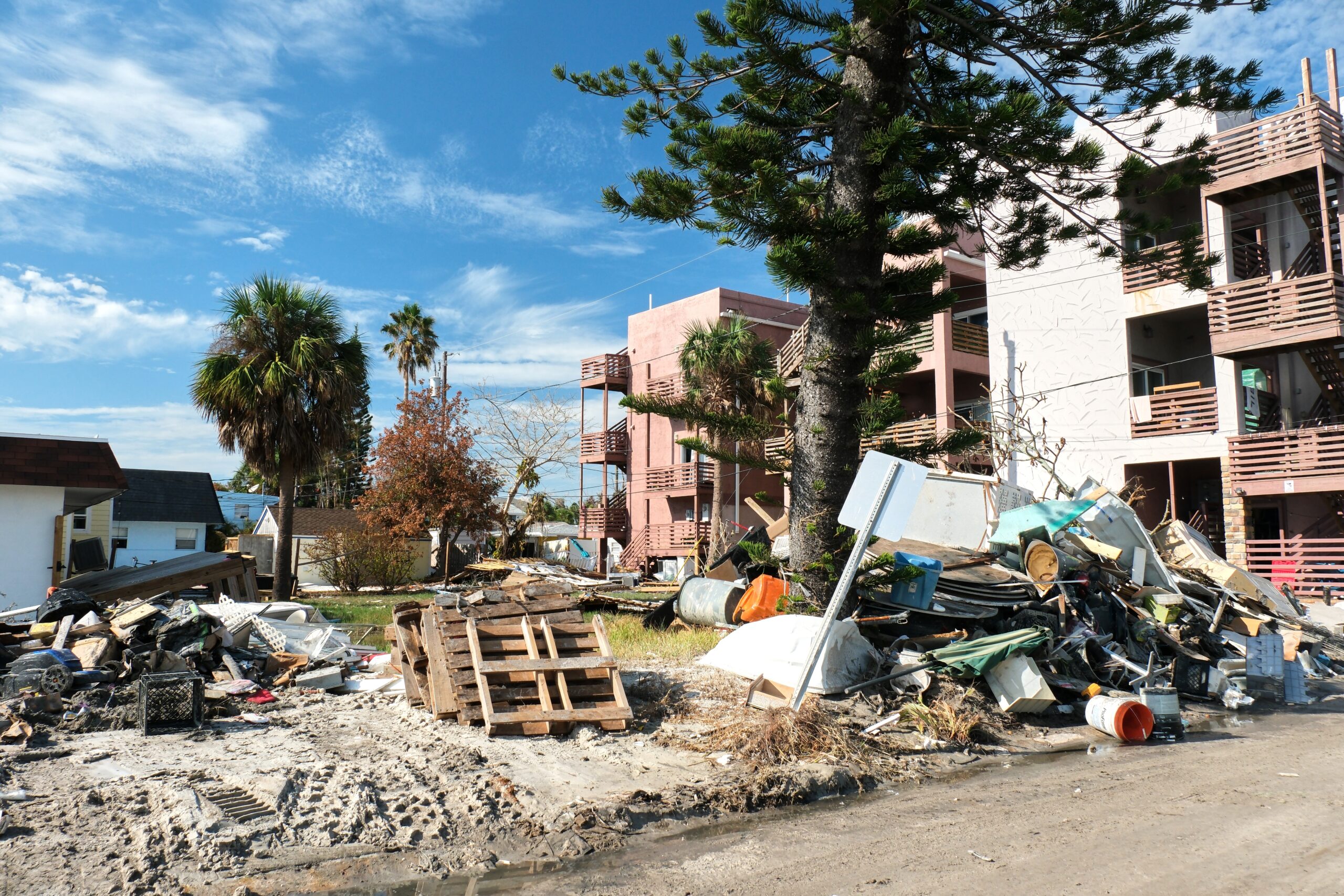
Damage along the Pinellas County beaches in Treasure Island, Florida, from Hurricane Helene
Damage along the Pinellas County beaches in Treasure Island, Florida, from Hurricane Helene, photo by Shutterstock.com/M Julian Photography

Hurricane Helene has left many in distress, and assessments of current needs are ongoing. For immediate assistance, monetary donations to on-the-ground organizations are often recommended, as these funds help those affected manage urgent expenses and prepare for what will be a lengthy restoration process. Asheville Mayor Esther Manheimer candidly stated to reporters, “I can’t even think about a time frame for how long it’s going to take to recover.”

As of Oct. 25, 2024, Asheville Regional Airport (AVL) is open, and Biltmore plans to reopen on Nov. 2. Other local businesses have began to open their doors as well, although some with limited hours or reduced menus.

If you have travel plans to Asheville in early November, Explore Asheville recommends checking with your lodging provider and any businesses you wish to visit to confirm their availability. Additionally, consult DriveNC.gov for information on open roads and safe routes to your destination.

St. Pete/Clearwater is once again ready to welcome visitors, with nearly 80% of the destination now open, including guest rooms, attractions, dining, museums and shops. Beach access to Clearwater Beach is open, and over the coming weeks, the destination is set to open more beaches and parks.

While most of the destination is open Visit St. Pete-Clearwater recommends travelers to contact their hotel or Airbnb to make sure they are up to date.

“It’s important for everyone to know that St. Pete-Clearwater is Still Shining and ready as always to welcome residents and visitors to our beautiful beaches, amazing arts and experiences, and delicious coastal dining options,” said Brian Lowack, president and CEO of Visit St. Pete-Clearwater. “While our destination experienced serious impact from the recent storms, the images and videos that have circulated do not represent the entirety of the destination and many of our visitors’ favorites are open and ready to welcome guests. Now is a great time to not just enjoy that walk on the beach, but also explore all the other amazing attributes that make us America’s favorite beaches.”

On Oct. 17 and 18, six Mainsail Lodging & Development raised $13,500 to help Florida and Georgia communities that have been impacted by the hurricanes.

“We’re incredibly grateful for the support of our communities and our guests,” said Joe Collier, president and founder of Mainsail Lodging & Development. “We partnered with the American Red Cross because of their trusted leadership in disaster relief, and Giving Kitchen because of their commitment to helping food service workers, many of whom were profoundly affected by the hurricanes. These organizations align with our values, and we’re proud to contribute to their efforts in helping our neighbors and the hospitality industry recover and rebuild.”

In Florida, participating venues include EDGE Rooftop Cocktail Lounge at Epicurean Hotel in Tampa), Hi-Fi Rooftop Bar at Fenway Hotel in Dunedin and Beacon Social Drinkery at Luminary Hotel & Co. in downtown Fort Myers. In Georgia, they include Hightales Rooftop Bar at Hotel Forty Five in Macon, Oliver’s Twist Bar & View at Trilith Guesthouse in Fayetteville and The Office Bar at Epicurean Atlanta in Midtown.

This is the third consecutive year Mainsail has held fundraising events following hurricanes, according to Collier.

We’ve researched several ways to assist those in need:

Always Asheville Fund: Established by the nonprofit organization Explore Asheville, the Always Asheville Fund supports small, independent travel and hospitality businesses through grants. “We are committed to supporting the livelihood and vitality of Asheville’s small business owners,” Vic Isley, president and CEO of Explore Asheville and the Buncombe County Tourism and Development Authority, said. “We’ll continue developing innovative and responsive solutions to walk alongside our partners on the road to recovery. It’s our aim that the Asheville area will emerge on the other side of this stronger and more vibrant than ever.”

The SEARCH Foundation: The SEARCH Foundation has been providing event, meetings and catering professionals emergency assistance since 1997, and is accepting applications for crisis funds for those affected by Hurricane Helene. The organization has also compiled additional resource options, such as United Way of North Carolina, Operation Airdrop and Chabad of Asheville.

Businesses large and small are also stepping up to provide aid, such as Marriott International, which is contributing to the American Red Cross and World Central Kitchen, and allowing Marriott Bonvoy members to use their points to make donations.

GlobalGiving partners, a top-rated charity on Charity Navigator, launched Hurricane Milton Relief Fund to meet urgent needs for food, fuel, clean water and shelter.

Love Asheville From Afar: Love Asheville From Afar is a centralized space where people can buy local products and gift cards, and make donations to the Asheville area and Buncombe County businessess

I am grateful every day for the busy hospitality leaders who take the time to share their success secrets with the Smart Meetings Community on the What One Thing? podcast. I have learned so much this year about everything from relationships to the power of persistence and what the next generation of event prof needs to stay engaged.

I asked these event thought leaders for their approach to gratitude during the holiday season and all year long. Sure enough, they schooled me on fresh approaches to appreciating the finer things and passing the joyful gravy.

Kate Patay, Vice President of Global Engagement with Terramar and Chair, SEARCH Foundation

woman wearing black sleeveless shirt in front of pink backgroundI’m so very grateful to have a wonderful husband who supports me in all of my endeavors, both with work and home remodels. His love and support means the world to me.

I’m grateful to work with such strong, creative individuals at a company that takes great care of us—thanks Terramar DMC! I’d be remiss if I didn’t mention the incredible trips we get to take and see friends and colleagues across the globe to collaborate on events together…we’re all pretty fortunate.

I like to practice gratitude by putting my phone down and being in the moment when I’m visiting with friends and loved ones. Time is our greatest and most valuable gift.

Edward Perotti, Edward Perotti Events & Experiences

Edward PerottiI am grateful for many things—though it may sound cliché: my family, my health, which has been unstable over the past five years due to a stroke and cancer, and my friends. To sum it all up, I am grateful for my entire life.
I am grateful to have a career, to have found my voice, and to have been given a platform to express it. I appreciate the clients who continually seek my creativity and expertise to help their businesses grow. Although our industry has not always been kind to me, I am thankful for the opportunity to work towards making it better and more inclusive for the next generation.

I practice gratitude every day. I strive to give back to those who have not had the privileges I’ve experienced and to uplift them. Every day, I look in the mirror and thank myself for never giving up on me.

Read More: Top Meeting Profs Share Stories of Gratitude

Neen James, Luxury Expert, Author, Speaker and Coach

I am so grateful that I have the luxury to do what I love, with people I love, in places I love. That is such a privilege to know that professionally I can serve audiences in the coolest places, working with leaders who are making a huge impact in the world.
Personally, I am so fortunate to be healthy and surrounded by people I love.

My business allows me to serve some of the coolest brands on the planet with the most inspiring leaders in some of the world’s most beautiful locations. Standing in service of an audience on stage and sharing a message that could help improve the personal and professional lives of that audience is something I never take for granted.

Coaching some of the best minds in the industry and working closely with their executive teams is an honor watching them transform their organization and sometimes their industry. The business I have designed allows me the freedom to create, experience travel, and take time to see people I love around the globe—I feel very fortunate.

Gratitude is a daily practice for me and it’s the first thing that occurs. As soon as I wake up (before my feet touch the floor) I list three things in my mind I am grateful for. As part of my morning routine, the first thing I open is my Gratitude Journal, where I write three things I am thankful for and set an intention for the day. This small luxury act feels so special to have time and space to reflect on this and set my mindset for the day. I also write one thank you note every day—it’s one of the systems of elevation in my personal and professional life.

I carry stamped stationery with me when I travel to continue this system. Because I travel so much for work, I make a point of hand-writing thank you notes to front desk team members, housekeeping, the AV crew I work with, and the airline crew. This small act of gratitude can mean the world to someone else. To make it easier for myself, I have implemented systems like a gratitude journal, always having stationery and stamps on hand, and carrying gift cards with me when I travel.

Read More: The Power of Everyday Gratitude

Thomas Whelan, Director of Events, Access DMC

Thomas WhelanI am grateful for my family and friends—my greatest supporters, even when I’m a lot to handle. They could easily ask for less of me, but they never do. As a self-proclaimed yapper, I’ve found my people. Nearly every day, I’m on the phone with a loved one for hours (seriously, two-hour calls are my norm). They know my quirks, like my terrible habit of not replying to texts (maybe a 2025 New Year’s resolution?) and they still love me as I am. Every single day, I wake up grateful to be unapologetically myself—flaws, chatter and all—because they never ask me to be quieter, smaller or less. Instead, they meet me where I am, encouraging me to be the loud, loving, imperfect person I am. For that, I am endlessly grateful.
In my career, I am grateful for my mentors, leaders and industry colleagues—I don’t know if it was luck, chance or coincidence, but I’ve had the absolute honor of being mentored by so many incredible women throughout my career. As the son of a single mother, I often wonder if I was drawn to them or if they were drawn to me. I realized this a few months ago after watching Eleni Granas instruct her Introduction to Hospitality class at Boston University, where I was honored to guest speak.

So many women have turned the adversity they’ve faced in their careers into guidance that helped me embrace my authentic self. They’ve inspired me to be optimistic, passionate and proudly irreverent. These women, perhaps unintentionally, have crafted my driving force: to hold the door open behind me for someone who is different from me as I continue to grow in my career.

I practice gratitude by meeting people where they are and embracing them as their true selves. I make it a point to never accept an apology for someone being authentic—if you’re being you, there’s nothing to apologize for. Whether it’s a friend venting, a colleague showing their vulnerability or a loved one oversharing (my favorite), I remind them their feelings, quirks and truths are valid. Life’s too short to ask anyone to tone themselves down.

I stay present in those moments, listening without judgment and celebrating their unique perspectives. Gratitude, for me, is about recognizing the beauty in people being unapologetically themselves and creating a space where they feel safe to do so. It’s a gift to witness someone’s authenticity, and I’ll always choose to honor it with kindness, support, and zero “I’m sorrys” allowed.

Deborah Gardner, Performance Expert and Speaker

Deborah Gardner sitting on stoolI’m grateful for the people who make my life richer—family, friends and colleagues who bring joy, laughter and support. I’m also thankful for the quiet moments that give me space to reflect and grow, and for the challenges that push me to become better. I cherish the little things, like a cup of coffee in the morning, a beautiful sunset or the rare moments I remember my password. I appreciate the opportunities I’ve had to learn, create and connect with others and I’m grateful for the resilience that helps me navigate life’s ups and downs with a sense of humor and hope.

As a motivational speaker and pro athlete, I’m grateful for the opportunities to work with talented, inspiring people who challenge me to grow, even if I fumble a few times. I appreciate the freedom I have to bring ideas to life, and the sense of fulfillment that comes from making an impact. I’m thankful for the variety my career brings—no two days are the same, which is great because I’m still trying to figure out what I did yesterday. And, for the chance to keep evolving. Someday I will learn how not to schedule back-to-back meetings while running on three hours of sleep. Most of all, I’m grateful for the meaningful connections I’ve made along the way and for the passion I get to bring to my work and training every day. It’s what keeps me excited and driven.

I practice gratitude the way I do most things—imperfectly, but with all the enthusiasm I can muster! I start my day by giving a silent “thank you” to the universe for the little wins, like finding matching earrings or remembering where I left my phone (a true miracle). I love a good “gratitude walk” with my dog, where I reflect on life’s blessings while imagining I’m starring in my inspirational movie montage. Most importantly, I try to remember to laugh at the chaos—because if you can laugh, you’re already winning. So here’s to love, laughter and everything in between.

Michelle Mason, FASAE, CAE, CEO, ASAE

Michelle MasonI am grateful for having having an amazing base of family and friends in my life who provide love, support and keep me grounded to keep maintain my motivation to serve and, professionally, for the opportunity to help others advance themselves and careers through sharing knowledge and experiences.

I practice gratitude five ways:

Tell at least 1-2 people a day that I appreciate them and close with a hug!

Write handwritten notes to express gratitude towards others.

Focus on the value and simple things in life.

Start to journal more.

Volunteer in service to others.

Carina Bauer, CEO IMEX Exhibitions

Carina BauerI’m grateful for my family, friends and health.
In my career, I am grateful for my “frolleagues”, as Hilton’s trends report recently described all those great connections we have across the industry—coworkers, but better!

I do a lot of charity work in my local community—I’m the chair of the Brighton & Hove Albion Foundation whose mission is to improve lives through football; and I’ve also created a homelessness fund through which we are investing in a number of projects to try to reduce the problem of homelessness in our local city of Brighton & Hove.

Exciting refreshes in sought-after destinations

Wherever you go, there you are—especially if that place is a meetings mecca like Washington, D.C., Miami or Las Vegas. These exciting new and renovated properties are not only easily, abundantly Instagrammable; they provide the kind of sought-after experience in sought-after destinations that make for unmatched meetings.

Luxury Among Landmarks

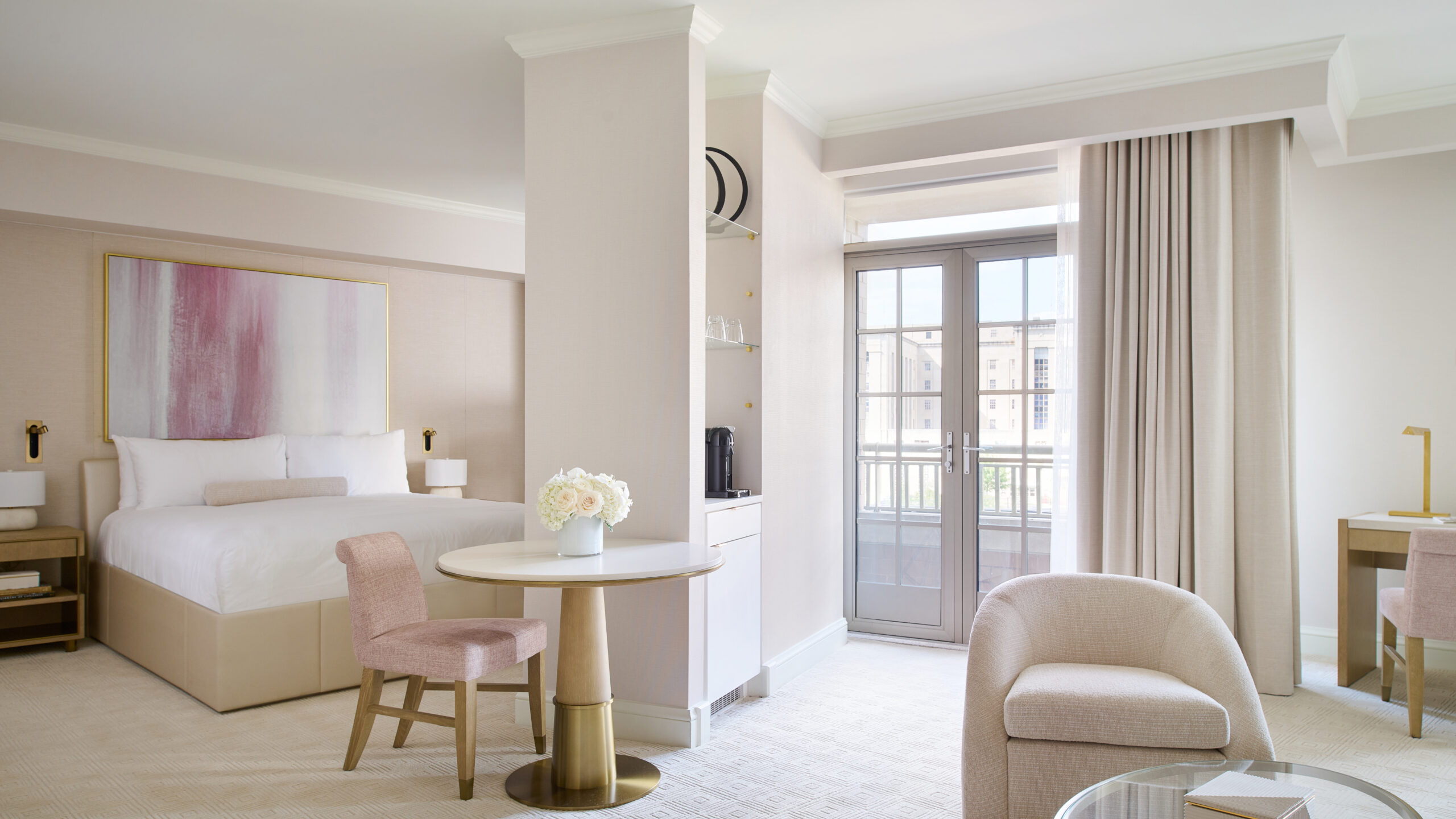
Salamander Washington DC studio suite for New and Renovated
Salamander Washington DC, studio suite.

Salamander Collection revitalizes Salamander Washington DC with a property-wide renovation a newly-debuted spa.

The refresh begins with the arrival experience. As guests step inside a revitalized welcome space of warm whites, soft blue accents and custom lighting inspired by the movement of horses, a nod to Salamander’s Virginia roots. Throughout the hotel, guests will find artworks that reflect the monuments of Washington D.C. and a curated collection of artworks by Black American artists. The hotel’s signature restaurant, Dōgon, offers a concept inspired by West African heritage and the legacy of D.C. surveyor Benjamin Banneker, under the leadership of celebrated Chef Kwame Onwuachi, marking his return to Washington, D.C.

All 51 suites have been refreshed to invite a revitalizing blend of history and modernity. With custom-designed Pheasant Furniture, the new suite design features brushed wood finishes, satin or dark bronze accents, neutral stone surfaces and complementary fabrics. The remodeled two-story Monument Club is also designed by renowned Thomas Pheasant and offers prime views of the city and surrounding monuments.

The Salamander Spa offers enticing new programming. In its unique Relaxation Tea Lounge, guests can enjoy a curated selected of functional mushroom teas, juices and complementary healthy snacks alongside views of the Potomac River. The spa now offers 14 new treatment rooms. The the beauty-dedicated upper level offers esthetic rooms, sound therapy, a nail studio and more. Guests can access the lower level via a sweeping Grand Staircase. There, they’ll find find a holistic sanctuary featuring Salamander’s signature rituals, including massages, body treatments and holistic facials. The spa also includes a state-of-the-art fitness center, a private Movement Studio offering specialized and self-guided classes and an indoor pool with river views.

Read More: Notes from the Road: Washington, D.C.

Living Large in Miami Beach

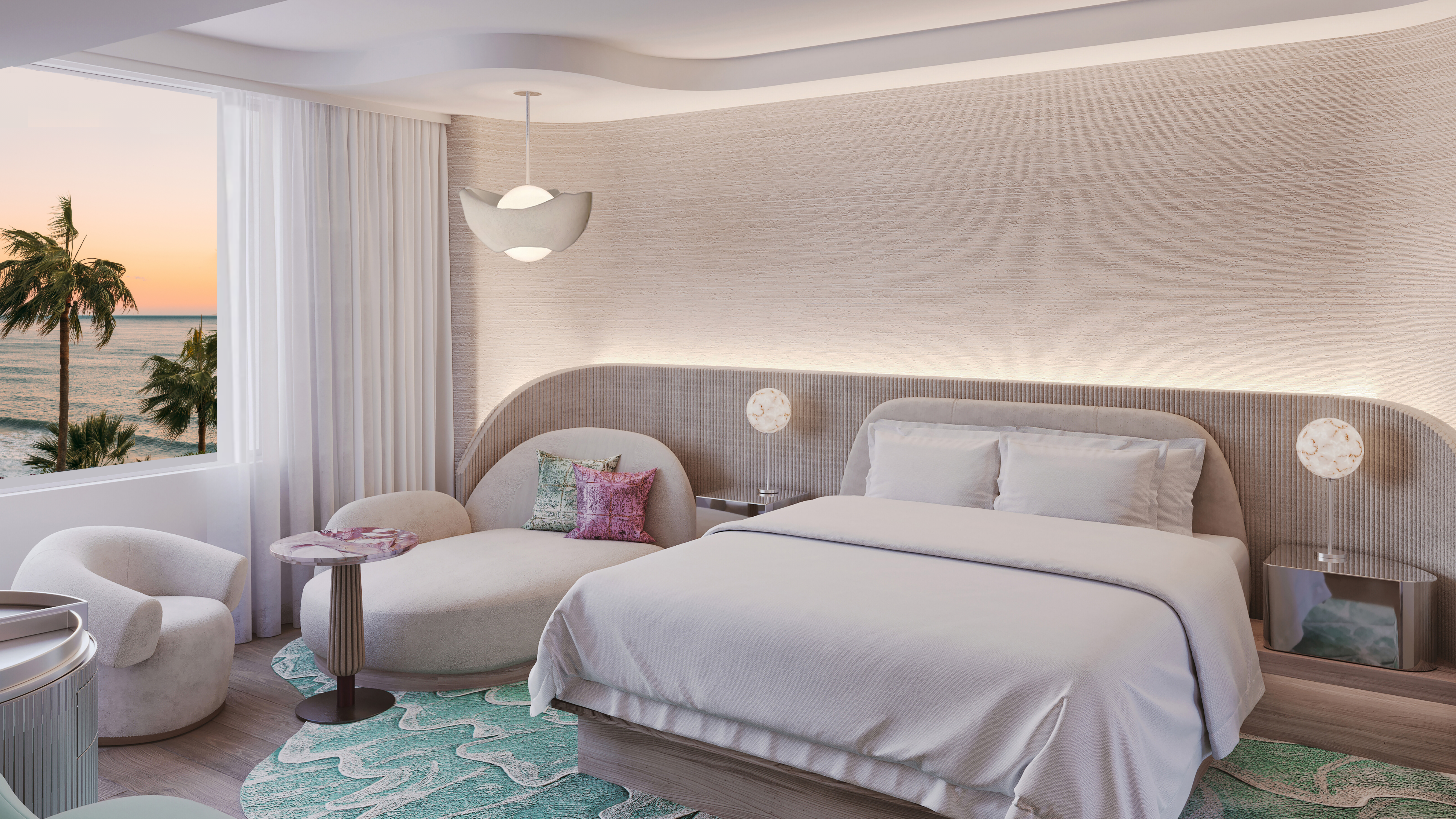
guestroom at Andaz Miami Beach
Andaz Miami Beach, guest room.

Andaz Miami Beach is an exciting 2025 opening as the first Andaz hotel in Florida. With its location in Miami, it stands in one of the world’s leading destinations for tourism and business travel. Andaz Miami Beach transforms what formerly was The Confidante Miami Beach.

As soon as guests step inside to check in, they are greeted by the blue waters that make Miami so enticing, with an ocean-view check-in experience. The property will offer a dynamic mix of Miami-inspired programming and exclusive partnerships, so guests can truly indulge in their meeting destination. Alongside this programming comes highly anticipated culinary collaborations with the world-renowned José Andrés Group, ensuring meals will be just as delicious as it is to meet in Miami.

The property will offer 287 guest rooms and 64 suites, as well as a historic beach house. Miami’s rich cultural atmosphere comes to the forefront in the design, creating a powerful sense of place. The property will offer 25,000 sq. ft. of indoor and outdoor event spaces. Beyond ocean-view ballrooms and many more versatile event spaces, one of the most exciting features is a pool equipped with technology that enables it to transform to a hard surface for gatherings and activations.

Read More: Secrets of Green Miami

Viva Las Vintage!

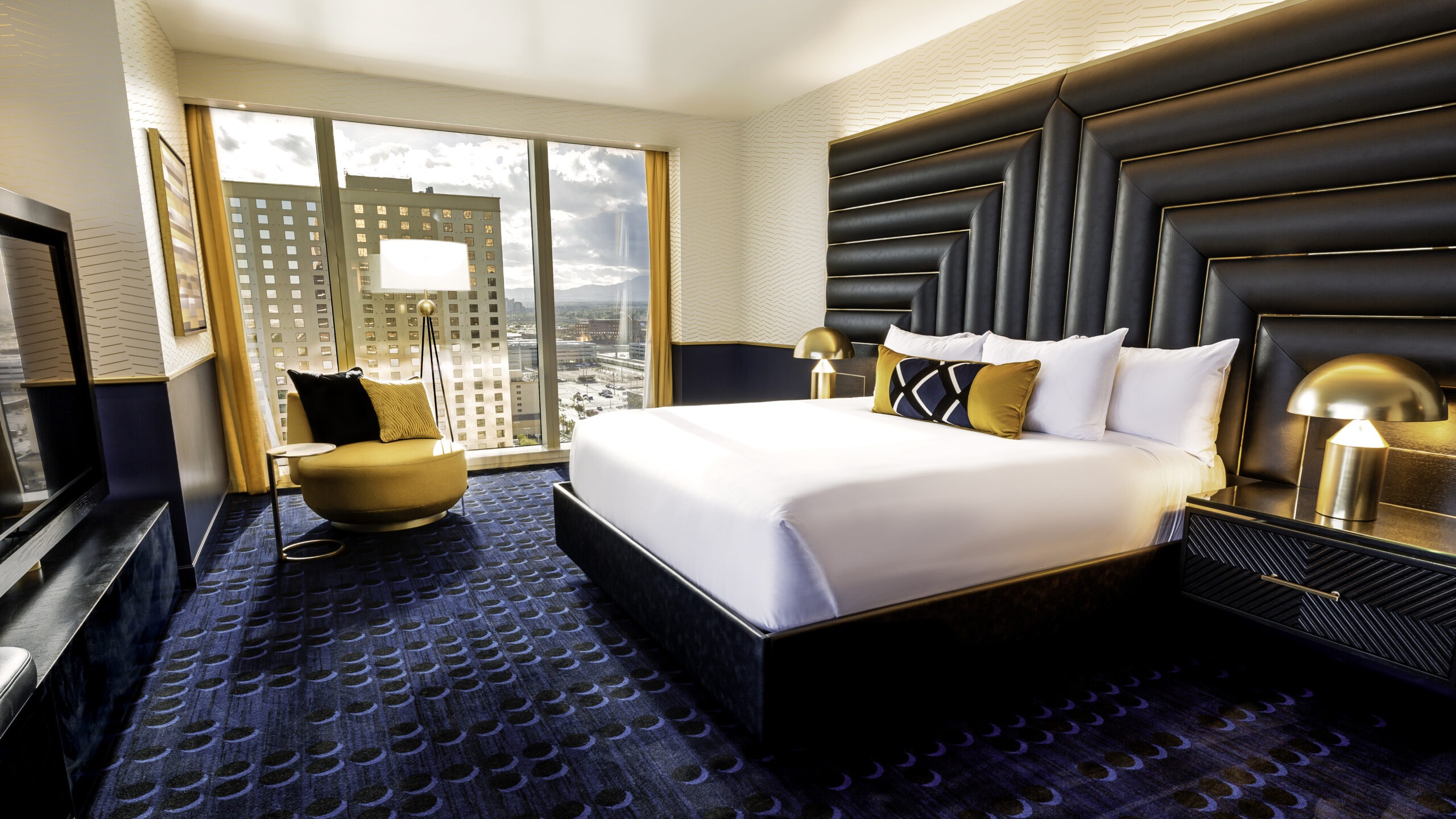
End Suite at Circa Resort & Casino for New and Renovated
Circa Resort & Casino, End Suite. Photo by Black Raven Films.

Downtown Las Vegas’s Circa Resort & Casino introduces 106 new rooms and suites to its hotel tower. This expansion increases the property’s total room inventory by 20 percent. Rooms vary from Panoramic Sunset Suites to Single and Double Kings. All emulate the spirit of vintage Las Vegas, providing a sense of place in the heart of a city known for its abundance of unique, immersive spaces. Within, guests find luxurious king beds, mini refrigerators and other modern amenities.

Guests can take advantage of many other amenities across the resort, including 35,000 sq. ft. of meeting and event space. There, planners will be pleased to find a ballroom, breakout and banquet rooms as well as adjacent pre-function space and a 1,600-square-foot outdoor terrace.

The resort also offers the upscale Vegas experiences guests won’t want to miss out on. Circa’s eclectic dining scene consists of five restaurants, including a 24/7 deli from Detroit restaurateur Paul Saginaw, Saginaw’s Delicatessen; to a 17,000-square-foot steakhouse, Barry’s Downtown Prime; and a classic sports bar concept overlooking the world’s largest sportsbook, Victory Burger & Wings Co.

The sportsbook, operated by Circa Sports, offers visitors a 78-million-pixel, high-definition screen with three stories of viewing. It can accommodate over 1,000 fans. In addition, it offers a dedicated broadcast studio for VSiN, The Sports Betting Network, so bettors have access to real-time analysis from expert broadcasters, athletes and industry professionals.

Circa’s pool amphitheater, Stadium Swim, is an outdoor entertainment destination for everything from watching sports to hosting parties or special events. There, guests can watch sports games and major televised events on a 14-million-pixel standing over Circa’s six temperature-controlled pools and two spas.

Read More: New and Renovated: Your Ultimate Cabin Retreat

Smart Start guests from 2024 share stories of gratitude

This year, we have so much to be grateful for at Smart Meetings; one of those things is that it’s the year our newest podcast, Smart Start: Bright Ideas from Planner’s Toolbox, was born.

Throughout the year, we’ve gone through the process of launching an idea and watching it blossom; Eming and Sara spending hours in the conference room scribbling on the whiteboard to map out a rebrand from Meeting of the Minds to the Smart Start we know and love; and most importantly, those cherished moments of recording brilliant conversations with our outstanding guests.

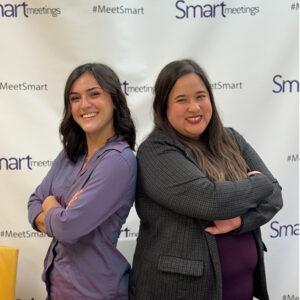
Sara and Eming, hosts of Smart Start
Sara (left) and Eming (right), Smart Start Hosts

Consider this story a highlight reel of gratitude from those very wonderful guests themselves—and while you’re at it, revisit the inspiring conversations they took part in to make sure you’ve filled up your toolbox with every inkling of their insights—or to just have some more fun with us chattering away and celebrating the wonderful industry we get to be a part of.

Read on for expressions of gratitude from some of our esteemed guests-turned-friends as we wrap up 2024 and look towards 2025 equipped with more skills, insights and ideas to build an ever-better and brighter meetings industry.

Last of all, we’d like to share our gratitude for you, meeting prof/listener/reader/friend, for coming along on this journey with us. It’s been an adventure, and we can’t wait to bring you even more content down the road.

With thanks,

Your Smart Start Hosts,

Eming and Sara

Navigating Event Work/Life Balance

Spencer Glazer, event management specialist II, Global Event Management, Wolters Kluwer

Spencer Glazer headshot for Smart Start Gratitude story

  1. What is one thing you are grateful for this year that has helped you excel in your profession?

I’m incredibly grateful for the mentorship and support from industry peers, which has inspired me to bring fresh ideas and innovation to every event I’ve worked on this year.

  1. What are you grateful for that has enriched your ability to have personal time?

I’m grateful for the flexibility offered by hybrid work models in the events industry, enabling me to balance the demands of planning complex events with meaningful personal moments.

  1. What are you most grateful for this year?

I’m most grateful for the opportunity to create experiences that bring people together, sparking connections and collaboration that make a lasting impact.

Discover Professional Growth Secrets

Jaclyn Bernstein, president & owner, Empire Force Events

Jaclyn Bernstein headshot

  1. What is a relationship you’ve developed this year that you are thankful for? 

Sara Robertson of Smart Meetings & being honored by this humbling feature:

“Just as thrilling is meeting those we’ve only so far met digitally (I’m talking to you, Jaclyn Bernstein. This lady and I have been emailing back and forth for months, since we first did a podcast episode together and later when I asked her to submit a journal response for Notes to Self, a self-reflection activity in the back of each magazine. I had never met her in person until today, and it was one of the highlights of my first IMEX experience).”

And, becoming friends in real life with @SubwayCreatures on Instagram, who has 3,000,000 followers—a third of NYC’s population! It truly shows all that happens on NYC’s subway (that I am proud to ride!) and the wild and crazy that is NYC!

  1. What was your biggest win that you are most proud of this year? 

Producing an incentive we started working on in 2019, pre-pandemic!

Highlights include:

  • 18 days onsite
  • Two waves of 500 guests per
  • NYC Mayor’s Office Street Activity Permits for staging vehicles
  • 40 Event Managers/NYC Licensed NYC Tour Guides/Transfer Escorts – Dispatchers – Receivers
  • Two exclusive Breakfast @ Tiffany’s Events
  • Two fireworks shows by the Statue of Liberty
  • Our team, proud of what we accomplished!
    1. What are you most grateful for this year?

    Being here!

    It’s Empire Force Events’ 30th anniversary of buying the Destination Management Company I worked at since college—so still being respected and prominent in our profession means we are resilient, doing Whatever It Takes (an Empire mantra), in servicing our clients and our industry that we love and that gave me my life.

    Alexis Dick, event planner, HARDI

    Alexis Dick headshot for Smart Start Gratitude story

    1. What is a relationship you’ve developed this year that you are thankful for? 

    Thankfully, I’ve met so many wonderful people this year in the events industry who have just taken me under their wing and have been constantly available to chat as friends or colleagues. I’m thankful to be able to run into them at conferences and keep up with everything on LinkedIn.

    1. What was your biggest win that you are most proud of this year? 

    Professionally, I made it through the 1-year marker at HARDI, and I’ve fully seen a calendar year of events. I’m very excited to see everything from its inception in 2025. Personally, I’m proud of myself for getting back into a workout routine even with the craziness of event travel and planning!

    1. What are you most grateful for this year?

    I’m most grateful for my friends and family, and being able to spend an abundant amount of time with them this year!

    Better Together: Championing Women in Events

    Tyra Dyson, CMP, DES, chief events strategist, TDC Events & Hospitality, LLC

    Tyra Dyson headshot for Smart Start Gratitude story

    1. How has a professional relationship inspired you or helped you grow this year?

    This year, my professional relationship with my good friend and industry partner, Eric Kincaid of Choose Chicago, profoundly impacted my career. Because of our relationship, I was afforded the incredible opportunity to join the planning team for the 2024 Democratic National Convention. Living and working in Chicago while contributing to such a historic event has been the pinnacle of my career so far. I’m deeply grateful for Eric’s support and for him putting in a good word on my behalf to be considered for the position. The experience not only enriched my professional journey but also inspired personal growth, reminding me of the power of collaboration and the significance of meaningful connections.

    1. What women inspired you this year and why?

    The woman who inspired me most this year was my mom, who sadly passed away in April.

    Watching her throughout my life, and especially during her 20-year battle with a terminal disease, was nothing short of extraordinary. She faced countless challenges in life and overcame so much, and even in her toughest moments, she stayed true to who she was—vibrant, strong, and graceful. She refused to let her illness define her or accept defeat, and I’ve never seen someone face life, and even death, with so much courage and dignity. Her strength and resilience will always inspire me, and I hope to carry those lessons forward in my own life.

    1. What are you most grateful for this year?

    This year, I am most grateful for my faith, family and friends. My faith has been my anchor, giving me strength to navigate the profound loss of my mom. The unwavering support of my family and friends reminded me that I didn’t have to face grief or life’s challenges alone. Their love and presence filled my heart with gratitude and joy, and I am forever thankful for the way they showed up for me during such a pivotal time.

    Embracing Empathy in Meetings

    Naomi Clare Crellin, founder & CEO, Storycraft Lab

    Naomi Clare Crellin headshot for Smart Start Gratitude

    1. Share a moment from this year that you feel is a good example of how empathy can make a positive difference.

    Earlier this year, I saw Katy Mull, our vice president of creative strategy, create empathy-centered artworks to express each of the Experience Profiles. Katy is someone for whom giving the gift of creativity is a love language. I’ve watched her give her gift to colleagues, clients and partners, and it is beautiful to behold. At our first Storycraft Lab retreat, we printed these on canvas and presented them to team members as a personalized gift. With Katy Mull, empathy is an art, a science and a gift—and I’m thankful for all she does to channel, embody and express the work of empathy.

    Editor’s Note: In the spirit of gratitude, Crellin shared some of Katy Mull’s artworks that she had posted on LinkedIn: one on The Adaptor and The Seeker; one on The Creator and The Explorer; and one on The Harmonizer and The Thinker. Crellin also shared Mull’s fantastic video on how she extends her empathetic mindset throughout the industry.

    1. Share a moment from this past year when someone made space for you when you needed it.

    There have been a few communities this year that have made space for me to share my voice and perspective on belonging and empathy, and I’m deeply appreciative of these gestures of true community. The World Experience Organization, who have encouraged us with heart and gusto as a collective; MPI NJ, who made space for me on their main stage; Sarah Shewey and Happily, who curated me into their Happily Fest this summer; BYU’s Marriott School of Business Alumni Magazine, who featured me in their article on the Experience Economy; and of course Smart Meetings, who reached out to include me to convey my mission and vision—the space to share helps me feel connection through shared purpose, and to feel appreciated for the work we do.

    1. What are you most grateful for this year?

    It’s the Storycraft Lab team. As we grow and evolve, there’s a lot of change and adaptation. Transformation is exciting but it’s not easy—I think often about the butterfly and how what happens in the chrysalis is hard work. We emerge transformed, but getting there can be a testing process. Last week we gathered at our first retreat and shared our belonging stories with one another. It was a moment of love, authenticity and appreciation. 2024 has been a chrysalis year for Storycraft Lab, but the empathy and grace that the team offers to one another in collectively navigating this process leaves my heart so full.

    Elevating Events with Joy

    Jacques Martiquet, The Party Scientist

    Jacques Martiquet headshot


    1. Share a moment from this year where you made a new connection that felt truly genuine.

    While at Google XI’s event in Las Vegas, I had an hour-long conversation with the famed neuroscientist Paul J. Zak. He and I nerded out about the science of behavior change and happiness. Despite his stature, he asked me good questions and took an interest in my latest event business: JoyCamp. I felt heard and valued!

    1. What is one moment from the past year that brought you feelings of pure inspiration and joy?

    I produced my first sober festival this year…I got a sense of the stress and pressure a typical event producer experiences…but here’s the twist: despite torrential downpours and cold weather, everyone stayed together and helped each other. My moment of joy was during the opening ceremony—despite the cold, everyone was participating at 100%, dancing, singing and connecting. It made me think to myself, “If we can create joy in these conditions, we can create joy anywhere.”

    1. What are you most grateful for this year?

    This sounds crazy, but I’m most grateful for negative social media comments. Ever since I went viral on social media, I’ve learned to forgive and love at an exponentially deeper level. The negativity I’ve received for dancing in public and spreading joy has made me a better person…I now accept human suffering so much more. And I want to alleviate it!

    Read More: Event Leaders Share Their Gratitude Practices

    Designing accessible events topped almost all meetings industry event agendas in 2024, but few planners understand what is required to make everyone feel welcome even as equal access moves from the desired to the required column in their job descriptions. Most meeting professionals manage the needs of a small subset of attendees who require food, wheelchair access, sound, language or sensory accommodations. As Megan Henshall, strategic lead for Google’s global events team and co-founder of The Neu Project, explained, helping this majority-minority community participate fully is not a compliance problem; it is a business opportunity.

    We talked to three 2024 Meeting Professional of the Year winners who work with populations that skew toward needing thoughtful adjustments and found that one of the common pieces of advice was to consider access before you submit the RFP. Let’s learn more.

    Ask for Specifics

    Dominique DeWitt, CMP, senior event planner, Wounded Warrior Project

    Dominique Dewitt wearing sleeveless green shirt
    Dominique DeWitt

    Dominique DeWitt grew up thinking about the importance of accessible travel accommodations. Her mother is a full-time wheelchair user who traveled and sometimes would show up as the keynote speaker, but not have a room available with an accessible shower. Her father had cerebral palsy, which brought its own needs. DeWitt also managed her own congenital disability and then married into the military. “I have a soft spot in my heart for military veterans,” she said.

    Read More: Meet the 2024 Meeting Professionals of the Year

    DeWitt studied event management at the University of Central Florida and went on to earn her CMP. “I feel blessed to get to use some of the hardest parts of my life growing up to help others,” she said. Since her mother was traveling in the 1990s, laws have changed to require hotels to contract for ADA rooms, guaranteeing they will be available when the person arrives, rather than making it upon request.

    “Accommodation, to be honest, starts before the RFP with internal stakeholders,” DeWitt explained.

    She works closely with the content team to understand their goals. At a recent training, the team wanted to do away with PowerPoint presentations, but those who were hard of hearing could not follow along without visual aids. That has to be taken into consideration.

    When the time comes to send the RFP, she asks specific questions about the number of hearing-related vs. mobility-related and other accommodations. In addition to knowing how many rooms have roll-in showers and how many have tubs with handlebars, she also asks about the distance of the rooms to the meeting space. Is the carpet too thick for rolling a wheelchair? Are they too far from the elevator? Are there stairs to get up to the lobby?

    When estimating the size of the meeting space, DeWitt adds additional space for wheelchairs to get between tables and service dogs to rest. And if an accessible stage is required, the standard is one foot for every inch in height, so more space will be needed to accommodate a ramp. AV requirements can get pricey fast, as some speakers might not be able to hold a microphone or need assistance.

    “If the salesperson doesn’t understand the requirements, that’s an indication that this property may not be the right fit,” she says with a twinkle of experience in her planner’s eye. “It’s more than just the physical of what they have available. It’s a cultural fit.”

    Once the contract has been signed, the details about the distance to the nearest accessible restroom will determine how long the breaks need to be, especially if an accessible elevator is required and staff may be using the same facilities.

    While most meeting professionals ask about the need for accommodations on the registration form, DeWitt’s team screens every warrior to ensure the right facilities will be in place. “We want everyone to come to every event, but we also know that sometimes, if we can’t accommodate, there’s not much we can do so we have a conversation about how to make it work for the most people,” she explained.

    Transportation is another area where resources and timing are stretched. ADA law requires that hotels offer equal accessible transportation for any other transportation available. That means that if a shuttle runs from the airport every 30 minutes, they can’t say that you have to call three days in advance to arrange an accessible one.

    “It’s important for planners to know those pieces so that you can ensure that hotels are following the law rather than making the group pay for required transportation,” DeWitt stressed.

    This population also includes people who are struggling with PTSD, so she asks about any restrictions for content based on that and often finds that just being able to interact with people facing similar struggles is good for everyone’s mental health. “At the end of the day, seeing everyone come together is rewarding. I feel grateful I get to help and I love talking about it and sharing the insights,” she said.

    Read More: FICP Annual Elevated Conversation Around Meaning

    The biggest lesson DeWitt has learned is that everyone makes mistakes. “I still do not get it perfect every time, even though this is my background,” she admits. For event planners who don’t know where to start, understand that everybody feels that way at first. “It’s ugly and scary. Nobody wants to offend anyone. Just have grace with yourself and ask, ‘How can I support you best?’ People will tell you what they need. It’s not something they haven’t been asked 100 times before,” she said.

    “They would rather you ask than guess,” she added.

    Still have questions? DeWitt suggests checking out the free National Network Hospitality page.

    Go Beyond the Requirements

    Bettyanne Sherrer, vice president and managing partner CanPlan Events & Conference Services Inc., produces World Conference for the Deafblind International Association

    Bettyanne Sherrer wearing glasses and black coatBettyanne Sherrer also started with a very personal perspective. She built her career in her dream field of advertising, working for large national and international agencies. Then she married and gave birth to two children with special needs. “That changed everything,” she said. “I took a step back and my life became about managing their needs and requirements.”
    Read More: How a Central California Town Added Autism Accessibility to Its Meeting Amenity List

    When she was ready to get back to work, she quickly realized that events were where the needs were. She volunteered with associations, met people and learned. Because of her lived experience, she found herself gravitating to human services because it fed her soul.

    Now Sherrer is one of four partners of a large national agency producing events all over the world for 10-60,000 people and she sees how much still needs to be done. In fact, she was a reviewer on the national Canadian accessibility documentation and found the requirements just weren’t cutting it.

    “There’s a lot more involved in understanding the world of accommodations required for people to remain engaged,” said Sherrer.

    Part of the challenge when working with the Deafblind Association is that their needs are multisensory, layered and on a spectrum. Most have multiple impairments, and that includes the audience and the speakers. And because the event was at Rogers Centre Ottawa (formerly Shaw Centre) in Canada’s Capital, all content had to be delivered in French and English.

    Read More: Michigan Accessibility Guide

    High-level production technology that had to be brought in included a telecoil (t-coil) system popular in movie theaters. The transmission wire stretches around the room to provide a direct audio feed to anyone with a hearing aid. “They just flip a little switch on their hearing aid, and it gets rid of all the background. It’s a beautiful thing,” she said. The loop system for microphones was installed in a grid on the ballroom floor, in breakout rooms and at registration at a cost of $80,000. That was in addition to French, Croatian and British live sign language interpreters.

    The event required so many guide dogs that the Centre installed permanent guide dog water stations to serve after the event packed up and left.

    Rogers and many other convention centers have been thoughtful about accommodations, but Sherrer has been talking to meeting professionals looking to master the finer points in venues not as adapted, and she has one piece of advice: “Start with the lens of empathy.”

    Look at everything from the attendee perspective, reviewing your platforms and your registration site. Is it tabbable? Does it work with screen readers? “A lot of technology advanced during Covid was adopted from adaptive technology that had been used serving the disability sector for years,” Sherrer pointed out.

    “Covid brought forth the voice of those with disabilities and impairments and allowed them to engage in a way that they never could before. And once they’re there, they’re not going to be quiet now,” said Sherrer.

    It turns out that these attendees have a lot to contribute, so making accommodations at in-person events is now essential, she explained. The needs will only grow as the general population ages and starts to use advanced levels of assistive devices.

    The industry is at the beginning of evaluating all the touchpoints from marketing and communications to the registration forms from an empathetic eye. “It’s more than a checkbox; you need to personalize the experience to remove barriers,” she said. That might mean sitting a person in a certain part of the ballroom or warning them about conditions so they can prepare.

    Capturing specific mobility needs data, cognitive and physical impairments, and even food allergies will be required. At the same time, meeting professionals have to be thoughtful about how they communicate what will be done with that information.

    Consider readability in content slides. “I can’t tell you how many times I’m looking at pretty slides that are horrible because they have no contrast and the font sizes are wrong and you are alienating a portion of your audience. We can do better,” Sherrer said.

    Training is an often-overlooked part of the accessibility puzzle. Talk in the pre-con about what will be expected from servers and how an intervener works to orient a person to the food on their plate. Let security know what level of assistance might be necessary if someone takes their dog out for a walk in the middle of the night and needs help pushing the right button on the elevator.

    “It’s leveling the playing field so they can come in knowing they will be taken care of instead of being worried,” she said.

    Drop the Ageism

    Courtney Russell, ICAA wellness lifestyle program director, LiveWell Group

    Courtney Russel wearing black sport coatWhat does a theater major mother with a master’s in counseling and experience producing large events for tech companies and social groups do when she moves to a new town and a global pandemic hits? Courtney Russell found that the practices advancing in the active adult community could both inform and benefit from fresh approaches happening in the events industry.
    The International Council on Active Aging supports people living longer, healthier lives. “Social engagement is huge in a time of isolation and loneliness,” she said. By bringing the community together, she helps them be happier and healthier, but it has to be done with some intentionality.

    Russell’s first suggestion is to stop making assumptions about baby boomers. “Do some homework and leave your ageism at the door,” she said.

    Read More: Caesars Launches Wellness Menu

    That includes assumptions about technology. Many in the oldest demographic are comfortable with texting and going to websites for information. They may not be on TikTok, but they may love Facebook. “Engage people where they’re at and don’t assume they won’t use event technology,” she said.

    When planning for all audiences, Russell suggests being mindful of balance and mobility issues. If people are sitting for long periods, schedule movement breaks. “It gives people a chance to stretch, use the restroom and absorb all the information being thrown at them. It is a better experience for all,” she observed.

    “People talk the talk of wellness and self-care, but let’s help people feel comfortable and not guilty about taking time,” Russell said.

    Effective registration forms and marketing websites include inclusive language about accommodations that are available and how to access them without them having to ask. That could mean pointing out locations of speakers or stage line-of-sight, sign language interpreter availability (hearing loss as early as in their 40s is becoming more prevalent) and locations of stairways and elevators without referring to ADA requirements.

    Similarly, gracefully planning healthy menu options without calling attention to the lack of processed food they might be accustomed to could be a passive teaching moment, and it benefits everyone.

    “You’re giving people the opportunity to be healthy without even having to think about it,” Russell said.

    The Hospitality Industry remembers Rosen for his innovative hospitality work and passionate charitable work.

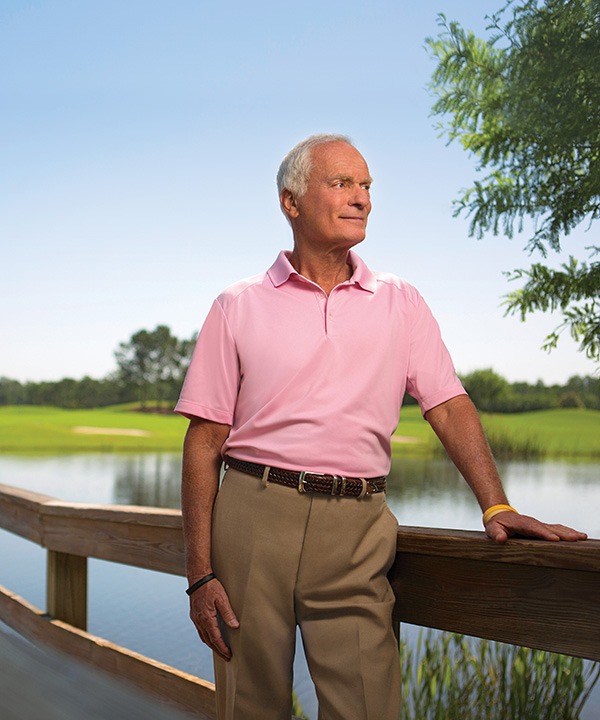
    Harris Rosen at docks. Photo by Isaac Arjonilla.
    Harris Rosen at the dock of Rosen Shingle Creek. Orlando, Florida – 4/24/15 – ©Isaac Arjonilla.

    Harris Rosen, founder and president of Rosen Hotels & Resorts, passed away the morning of Nov. 25, 2024 at the age of 85.

    Frank Santos, vice president of Rosen Hotels & Resorts, released a statement on behalf of the family on Nov. 25. “It is with profound sadness that I announce the passing of Harris Rosen, who left us this morning at the age of 85, surrounded by family and loved ones. Harris was an angel to so many here on earth, and now he takes his place among the angels in heaven. A beloved father, grandfather, and a pillar of our community, his boundless generosity and love touched countless lives through his unwavering commitment to helping underserved communities, promoting education, advancing the fight against cancer and supporting health and wellness initiatives. The family will hold a private Celebration of Life and kindly asks for privacy during this difficult time. Thank you.”

    The Hospitality Industry Responds

    President and CEO of American Hotel and Lodging Association (AHLA) Rosanna Maietta also shared a statement following the news, expressing her admiration for his immense influence and unwavering commitment to the industry.

    “Harris Rosen was an inspirational figure and a shining example of the passion and drive that hoteliers need to succeed. His love for the industry made him the largest independent hotelier in Florida, but he showed us the true meaning of hospitality through his philanthropic work,” she said. “His generous donation to the University of Central Florida built the Rosen College of Hospitality Management, which was just ranked best in the nation for the fifth consecutive year for its hospitality management and tourism program. Harris left an indelible mark on this industry and its people that will be felt for generations. We will miss him.”

    Rosen’s Impact on Hospitality

    Rosen founded Rosen Hotels & Resorts in 1974 and grew to be Florida’s largest independent hotelier. The collection of seven central Florida hotels provided 6% of the guestrooms available in central Florida, at 6,336. The award-winning collection includes celebrated hotels, from leisure to luxury convention properties, including Rosen Shingle Creek.

    The company also owns several subsidiaries, including Millenium Technology Group, which has grown to be a leading provider of quality IT products and telecommunications services for the hospitality industry since it was founded in 1997 as an internal solution for Rosen Hotels & Resorts.

    Rosen’s passion for health and wellness was well-reflected through the Rosen Hotels & Resorts brand, from its celebrated reputation as a result of its innovative and trend-setting associate wellness and preventative care programs in addition to low-cost insurance and on-site, full-service medical facilities, to the trademark Rosen’s Perfect Pizza, a whole-wheat honey crust pizza containing no trans fats sold as Rosen Hotels & Resorts properties, created by Rosen and his culinary team.

    Philanthropist and Advocate

    In addition to his passion for health and wellness, Rosen was a dedicated advocate for education. In 2002, he donated a 20-acre site at the foot of Rosen Shingle Creek alongside $10 million to the University of Central Florida to develop the Rosen College of Hospitality Management, which has gone on to rank as number two among hospitality colleges worldwide.

    His philanthropic work did not stop there. His Tangelo Park Program has provided free preschool to all 2-, 3- and 4-year olds, and all free tuition to all high school graduates in the Tangelo Park Neighborhood moving on to a trade school, community college or 4-year public or private college or university in Florida since 1993. Around 250 Tangelo Park youth have received full college scholarships to date, and the local high school graduation rates have increased from 55% to nearly 100%.

    Rosen founded a similar program in the Parramore neighborhood near downtown Orlando, and in 2017 opened the Rosen Preschool at the Orange County Schools Public Schools Academic Center for Excellence as an extension.

    His impact through these programs and others expands far beyond Florida to many other communities in need, such as Rosen Hotels & Resorts’ longtime contribution to relief in Haiti through on-going medical and school supplies and water filtration devices. The 2010-founded Haiti Relief Rebuild Sustain program raised $650,000 to provide aid to victims affected by the 2010 earthquake through Rosen’s personal funding and charity, and following Hurricane Matthew in 2016, Rosen contributed to efforts to rebuild over 100 Haitian homes.

    Widely Celebrated

    Rosen received numerous awards and accolades throughout his career, including the Shriners Humanitarian Award just last year, in 2023. He was a member of the Cornell Society of Hotelmen as well as the Waldorf Astoria Distinguished Alumni Association, a member of the dean’s advisory board of the Rosen College of Hospitality Management at UCF and the past president of Visit Orlando.

    Rosen was featured on the cover page of Smart Meetings magazine in April 2018, where a profile on his work dug into his immense impact on expanding Orlando into the convention city it is today, as well as his thoughtful approach to hospitality and philanthropic efforts.

    Read More: The Art of Raising an Extended Family

    Mary Kate Cunningham is ASAE’s new Chief Public Policy and Governance Officer

    When the new administration moves into the White House in January, ASAE‘s (American Society of Association Executives) newly promoted Chief Public Policy and Governance Officer Mary Kate Cunningham, CAE, will be ready. She has led the advocacy arm of the 50,000-person-strong association body since 2018.

    Cunningham, who was named a Smart Women in Meetings Innovator Award winner in 2023, started her career as a staffer on the Hill. She worked with Jim Clarke, former ASAE senior vice president of public policy, who was with the organization for more than 20 years.

    Since taking charge of ASAE’s public policy department, Cunningham has seen many successes, including representing associations in pandemic relief measures and tackling issues related to the tax treatment of association revenue streams. As the U.S. looks towards the incoming 119th Congress and its key, highly publicized tax reform agenda, Cunningham is at work leading the formation of an ASAE Tax Reform Coalition to defend the tax-exempt sector.

    Since associations are essentially the largest providers of post-college education and skills training, she advocates for the Power of Associations on everything from conscious inclusion to workforce development.

    As the chief public policy and governance officer, Cunningham will continue to report to ASAE president and CEO Michelle Mason while also taking on the additional responsibility of acting as senior liaison to ASAE’s board of directors.

    “Associations are the backbone of workforce development, economic resilience and community impact,” Cunningham states in a press release. “I am honored to take on this expanded role and look forward to supporting Michelle, ASAE’s board of directors, staff and members to ensure associations have a strong voice in shaping public policy and have favorable conditions to carry out their vital missions.”

    As ASAE continues in its mission to advance association advocacy and empower association leaders, Cunningham’s key position enables ASAE to spearhead a policy environment that creates positive impact for the association sector. Her dual focus in both public policy and governance demonstrates ASAE’s commitment to impactful policy work and organizational governance during a pivotal transition period for associations.

    Read More: ASAE Annual 2024: Uncovering the Key to a Thriving Future