You’ve looked at your schedule, and see that you’re slammed. Then, you receive an email from a client requesting a change to an event proposal. Also, an attendee is wondering if they can call with questions about the program you’re putting on. Soon, your me-time has dissipated and you’re attempting to make the impossible happen.

It’s easy to give up your free time to do more work: After all, this is the life you signed up for. Phone calls throughout the day, meetings peppered throughout the week and incoming messages at all hours may have been a part of your work world from the beginning. But what you may consider compromise can quickly turn into sacrifice, forgetfulness or lack of follow-through—and it may not be worth it.

“Yes” is an important word in the event-planner’s vocabulary. But sometimes “no” is just as necessary. It can seem scary at first. What if you lose business or miss out on networking at happy hour? But avoiding saying yes 100 percent of the time is invaluable—and can lead to greater productivity, rejuvenation the next day and an overall excitement that can fall by the wayside when inundated with responsibilities.

When to Say No

Obviously, you can’t eliminate yes entirely—there are many things that must be done. So, prioritize your tasks. If you need most of the day to fulfill a work commitment, say no to that invitation to lunch. If somebody tries to pass their responsibilities on to you, it’s OK to tell them that it isn’t possible now.

When it comes to meetings, question how necessary it is for you to attend. If you are busy and can send an employee in your place to a meeting that is not high-priority, do it, and request the employee to take notes for you. When that’s not possible, explain that you’re busy and would appreciate having a summary of the meeting emailed to you.

For clients who expect you to make a change that simply can’t be made, politely let them know it can’t be done. Frame it apologetically, such as, “I’m sorry, but the venue won’t allow for a change, since the event is only a few days away.” It indicates that you want to take your client’s change into consideration, but that it simply isn’t possible.

When You’ve Already Said Yes

So, you accepted a lunch date with a friend, only to realize that a looming deadline is near. Say that you won’t be able to get together, and offer to reschedule. Most friends—especially those who work—will understand your time crunch.

Saying yes to clients, only to later realize you cannot fulfill a promise, creates an awkward situation. The potential backlash from bowing out can make planners nervous about changing their response.

If you’re absolutely positive you can’t make it, alert your client as soon as you can. Then come up with solutions you can deliver in the allotted amount of time. The client may be frustrated, but having other options available will lessen the impact of a no and demonstrate that you’re still committed to planning the best event possible. There’s always a possibility the client will pull out—especially if there’s nothing in contracts declaring they can’t—but it’s better to lose business through honesty than claim you’ll accomplish something and then fail to deliver.

Use Me-Time Proactively

If you fall victim to saying yes too often, it’s time to begin filling your calendar with hours you’ll take for yourself. Whether you turn off your phone at 8 p.m. or carve out a few hours to call a family member, knowing that you are free will lighten any potential guilt. By writing this time into your schedule, there’s no way you can double-book. Taking a moment for yourself can clear your mind and provide extra energy when you go back to work.

Sleep is no laughing matter. Lack of zzzs has been linked to everything from increased blood pressure and heart disease to obesity, diabetes and depression. Sleep deprivation also makes it difficult to participate fully at conferences, and even harder to remember what you learned.

The hospitality sector is not taking this problem lying down. A number of brands have adopted measures to help guests get the rest they need, and in the process, teach them something about how to maintain positive, restful hygiene. Here are some examples that could be included in your next event.

Bed Time

Westin introduced Heavenly Beds—ultra-comfortable mattresses, linens, pillows and duvets, in 1999. To spread the healing power of sleep, Westin’s ThreadForward program donates used linens to Clean the World, which recycles the super-soft fabrics by upcycling them into children’s pajamas. Delivering Good, Westin’s nonprofit partner, then distributes the pajamas to those in need. Booking room blocks at a Westin incorporates that CSR mission in the event.

High-Tech Down Time

Sleep is one of AccorHotels’ pillars of wellness. The company partnered with startup neuroscience company Rythm to offer members visiting Pullman Paris Centre-Bercy and Pullman San Francisco Bay Dreem headbands that monitor and facilitate sleep using sound-based cues based on biofeedback data. Sound simulations allow wearers to fall asleep an average of 30 percent faster, increase deep sleep and wake up refreshed, thanks to a smart alarm that prevents sleep inertia by waking guests up during the lightest part of the sleep cycle. Finally, it gives feedback on the sleep journey so participants can work to improve every night’s rest.

Meditation Pose

Sanctuary Spa at Sanctuary on Camelback Mountain Resort & Spa in Paradise Valley, Arizona, offers Yoga Nidra sleep-guided meditation. This quiet practice focuses on breathing to slow the mind, relieve stress and allow the body to release toxins. Participants enter a state of deep relaxation, while maintaining full consciousness and achieving an enhanced level of connection and well-being physically, mentally and emotionally. Yoga International calls this yogic sleep one of the easiest yoga practices to develop and maintain.

Dry Flotation

Pebble Beach Resorts’ The Spa at Pebble Beach offers a dry flotation bed, which suspends guests on a plastic cushion, facilitating the relaxation and warmth of a hot tub without touching the water. Add hydrating Shea butter and jojoba oil infused with lavender to indulge all the senses in the relaxing spirit.

A new report shows that for the first time this year, domestic business travel expansion is projected to outpace tourist activity. The U.S. Travel Association’s Travel Trends Index predicts a 2.5 percent increase in overall domestic travel over the next six months, with rooms booked for business meetings outpacing leisure travelers.

“Business travel has been on an upward trajectory in 2018, and this is expected to continue throughout the rest of the year. This is solid evidence that businesses are optimistic in the current economic environment, and are buoyed by the recent tax legislation,” said U.S. Travel Senior Vice President for Research David Huether in a press release. Total travel to and within the United States grew 3.4 percent year-over-year in May.

Bobby Bowers, senior vice president of operations for research company STR, points to the strength of the economy and returning profitability for the uptick in business meetings. Growing demand for meeting space and ballrooms could have financial consequences for event professionals. “If there is an expansion in large conventions, that could cause a price squeeze,” he said. The hospitality sector has not added as much full-service resort inventory over the last five years as it has added select-service properties, with some exceptions in places such as Las Vegas and Nashville, Tennessee.

“When lenders see the opportunity, convention hotels will get built,” Bowers predicted.

Demand from Abroad

The study showed international inbound travel ticked up in May, outpacing the domestic market. Based on continued strength in forward-looking international travel bookings, Huether predicted a healthy summer travel season. Not all was rosy, however. Possible downside risks included moderating global growth and an unwelcoming political climate. He warned that rising trade tensions and higher oil prices may hinder global activity.

American Express Meetings & Events (AMEX M&E) has some advice for planners trying to orchestrate transformative experiences on a budget: Focus on the “why.” A new AMEX M&E guide defines that approach as the best way to communicate the emotional and functional attributes of the brand.

Smart Meetings asked Stephanie Harris, director of global marketing and event strategy for AMEX M&E, to elaborate on how this finding can become another arrow in the quiver of event professionals. “You have to be able to state what you want the event to achieve—for your organization and for the participant,” she says. That way, if your budget changes—positively or negatively—that statement becomes your guiding star for deciding what to add or subtract.

Harris points to three things a planner must do to put the “why” first.

1. Identify the Desired Outcomes

Whether it’s building customer loyalty, improving new product knowledge, increasing sales or inspiring participants, the mission is important to know upfront—and keep front-and-center as plans evolve. “We have always held that meeting is not a good reason to have a meeting,” Harris said. “There needs to be critical thinking about what you want the meeting to accomplish.”

2. Get to Know Your Participants

Almost all planners, says Harris, start with broad demographics, which can lead to stereotyping. Creating personas can help planners understand more targeted segments of participants, their motivations for attending, and how best to direct their focus on what you want them to take away. That enables personalization.

Harris is a big fan of pre- and post-event surveys. If you want employees of a company to be able to articulate the company’s brand proposition and be ambassadors out in the field, ask them beforehand how well they know the features and services they are being expected to represent. This sets a baseline. Then ask the same question in a post-event survey to see if you met your goals.

Once you know who is going to be in the room and why, you can work on intentionally shifting people’s moods. Inspiration boards of colors, samples and room setups can help visualize the feeling you are trying to create.

3. Choose the Functional Attributes

Now that you have your meaningful survey results, an understanding of who will be attending and what you want them to feel, it is a lot easier to make decisions about what content to present, what type of location will be most effective and how to structure the agenda so everyone gets what they need. Then you can add the “wow” elements to make it memorable and functional from beginning to end. The survey can also guide you about what to include in the next event.

Harris says the focus on attendee experiences revealed in recent AMEX M&E studies shows a growing interest in moving beyond logistics and focusing instead on overarching outcomes. “It is about more than food and beverage or hotel,” she says. “We are now thinking holistically about the experience from invitation to follow-through.”

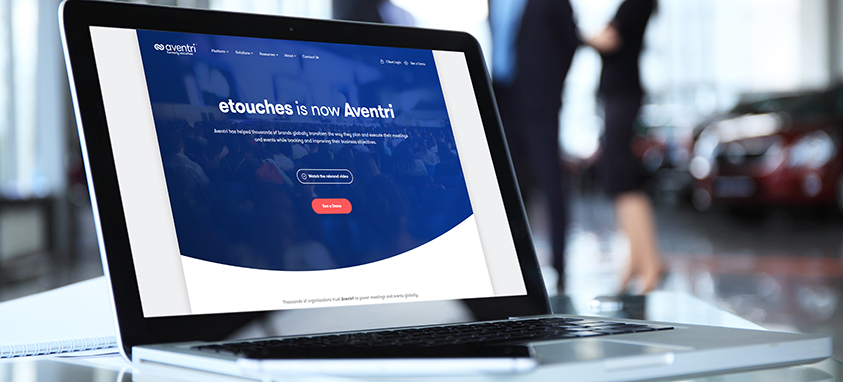
Event software giant etouches, which has been utilized by more than 25,000 meeting professionals since its inception 10 years ago, has changed its name to Aventri, the company announced Thursday.

The business also dons a new tagline, “Connect Better,” to raise the bar in forming connectivity between planners and their colleagues, attendees and clients. It believes this is essential to increasing ROI. The name “Aventri” stems from three separate words—avenue, events and entry—that were merged to form a hybrid title.

“Our rebranding project was ignited by the desire to take our former name and branding to the next level of our successful growth via a more thorough and strategic understanding of what our brand stands for, our commitment to our customers and how we can be truly differentiated as a company in a highly fragmented and competitive market,” says Chalva Tchkotoua, chief marketing officer for Aventri.

The company’s philosophy is summarized by three pillars—curation, navigation and connection. Curation will help to custom-design navigation methods for planners to use the event management software (EMS) with ease. The company pledges to think toward the future when helping clients navigate and map out a path. Again, the connection mission is to boost ROI.

“Aventri conveys our current values, our vision and the future direction of the company,” says CEO Oni Chukwu. “There isn’t a company in the market today that provides event managers and meeting planners with the most innovative solutions and industry leading event management platform the way we do. With Aventri, event and meeting planners are better able to execute world-class events and shape an attendee’s experience, unleashing the power of personal connections through meaningful meetings and events.”

According to Aventri, the EMS industry is worth $9 billion, and the company is a major player in the field, serving more than 1,300 customers. Event spending is increasing at a rate of 6 percent annually, ranking second after a company’s website as the most effective business-to-business marketing method. The company says event spending accounts for 24 percent, or approximately $14 billion, of the $60 billion business-to-business marketing budget.

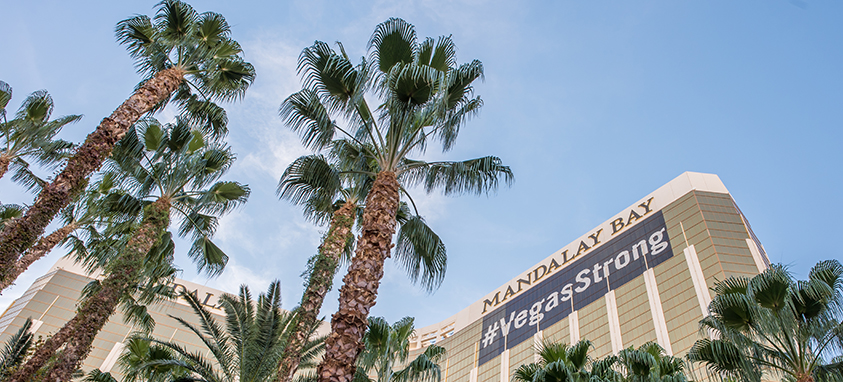
MGM Resorts International, the corporate owners of Mandalay Bay Resort and Casino in Las Vegas, is suing more than 1,000 victims of the shooting that took place from there on Oct. 1. MGM is seeking a release of liability, rather than financial gain—it went to federal courts in California and Nevada and demanded that any claims from victims against the hotel “must be dismissed.”

The shooting took place at the Route 91 Harvest Festival when Stephen Paddock opened fire from his Mandalay Bay hotel room, killing 58 and injuring more than 500 during a concert, making it the deadliest mass shooting in American history.

Read our piece on last year’s tragedy and the strength of Las Vegas

What MGM is Planning

The hotel company is using the 2002 federal SAFETY Act (Support Anti-Terrorism by Fostering Effective Technologies Act), to support its case. The legislation protects corporations affected by mass attacks on U.S. soil if the services used were preapproved by the Department of Homeland Security. Contemporary Services Corporation (CSC), the security company MGM contracted for the concert, was backed by the Department of Homeland Security, potentially releasing MGM of its liability.

Debra DeShong, an MGM spokeswoman, says the claim is an effort to bring the cases to federal court, rather than state court, and ultimately benefit the victims.

“The federal court is an appropriate venue for these cases and provides those affected with the opportunity for a timely resolution,” she said. “Years of drawn-out litigation and hearings are not in the best interest of victims, the community and those still healing.”

Between the Lines

Robert Eglet, a lawyer whose firm is representing hundreds of the Las Vegas victims, deemed MGM’s claim as “outrageous” and pointless. Eglet says the Safety Act would apply to CSC, but not MGM. He added that the issue of jurisdiction is already being debated in court, and MGM is unethically “judge shopping.” It is speculated that by taking the case to federal courts, MGM thinks it might have a better chance of winning, the BBC News Services reported.

“They are trying to find a judge they like,” he said. “All they have done is cause a tremendous amount of stress, pouring gasoline on the fire.”

Public Opposition

MGM’s decision has begun to spark outrage on social media. A survivor of the tragedy, Brian Claypool, told USA Today that MGM’s lawsuit is a “stunt” that will not be successful.

“I am still in therapy once a week, and this is their way of trying to solve the problem,” Claypool said. “It’s shifting responsibility and minimizing their blatant negligence.”

“They didn’t have to take this overly aggressive, outrageous situation where they’re victimizing these people now twice,” Eglet said.

Carl Tobias, a law professor at the University of Richmond, said that despite the outcome, the public repercussions of the case will carry a heavy burden.

“Even if MGM is successful, that may not outweigh the adverse publicity for the company that the suit generates,” Tobias told USA Today.

When most business people think of a corporate business event, they most likely envision suits and ties and the hustle and bustle of Times Square in New York City. The last thing they expect is bits of childhood nostalgia interwoven throughout.

So, it was a pleasant surprise when attendees of Destinations International’s Annual Convention entered Exhibit Hall A and found puppies waiting to be played with. They energized the crowd and helped to break down barriers between them.

Employing aspects of children’s birthday parties may sound strange, but as the puppies’ success shows, they can create an upbeat environment in the corporate events world. You might want to consider implementing popular strategies to give your event an extra dose of fun.

Color It All

Muted-color palettes are in right now, and they’ve become a staple within the meetings world. But bursting through the brown and beige with colors that make a splash at a birthday party can liven up any event. Whether you’re bringing out the bright blue seats at the banquet or a purple couch at an exhibit, it will draw the attention of attendees.

Magic in the Air

You’ll find live music at most events you attend at one point or another. And that’s absolutely fine—except it doesn’t make your entertainment stand out. Penn and Teller’s “Fool Us” invites amateur magicians to try and fool two of the best magicians in the business—and occasionally succeed. You might add one to your next event during downtime.

Game Time

Friendly competition never hurt anyone. Classic multiplayer games will be a hit and bring out attendees’ inner child. Set up a pingpong table or an air hockey station where guests can challenge one another. Not only is it a way to get adrenaline pumping—it can also lead to networking during the post-game handshake. San Francisco’s venue, Spin, taps into this, featuring 19 pingpong tables and the capability of holding up to 600 guests—perfect for larger events.

Themed Foods

The best part of every birthday is the food—pizza and cake are staples. But this may not be realistic, unless you’re hosting a smaller meeting. For large events, create a theme for the food. Whether it’s sprinkles decorating cupcakes and ice cream at the dessert buffet or colorful vegetables coming together for a burst of flavor at dinner, picking foods that look enjoyable will convince attendees that they are truly delicious.

Voting has started for the 2018 Smart Stars Awards. This is your chance to show your gratitude to the brands and companies that host your events. Candidates represent a plethora of categories—including Best City Hotel, Best Hotel Spa and Best Cruise Line—for destinations at the forefront of the hospitality industry.

These properties showcase a dedication to hospitality, a zest for hosting meetings and conferences of all shapes and sizes, strong work ethic and the ability to give you everything you need in order for your event to be a success. Did a thoughtful staff member take your meeting to a higher level? Did the in-house team provide you with innovative tools for presentations? Did the property receive compliments from attendees? We want to hear about it.

Nominations come from industry professionals, and winners will be awarded with recognition in the June edition of Smart Meetings, both print and digital. Their success will be showcased on the website for a full year and featured in a national press release.

VOTE NOW

Smart Meetings is in Las Vegas for the much-anticipated groundbreaking of Caesars Forum, which will open in 2020. The new $375 million conference center will add 300,000 sq. ft. of meeting space to The Strip, including the two largest pillarless ballrooms of all time. Content editor Paige Feigenbaum is in Sin City for the ceremonial first dig. While there, she’s also experiencing top cuisine from Gordon Ramsay and a magic show by Mat Franco, winner of NBC’s America’s Got Talent.