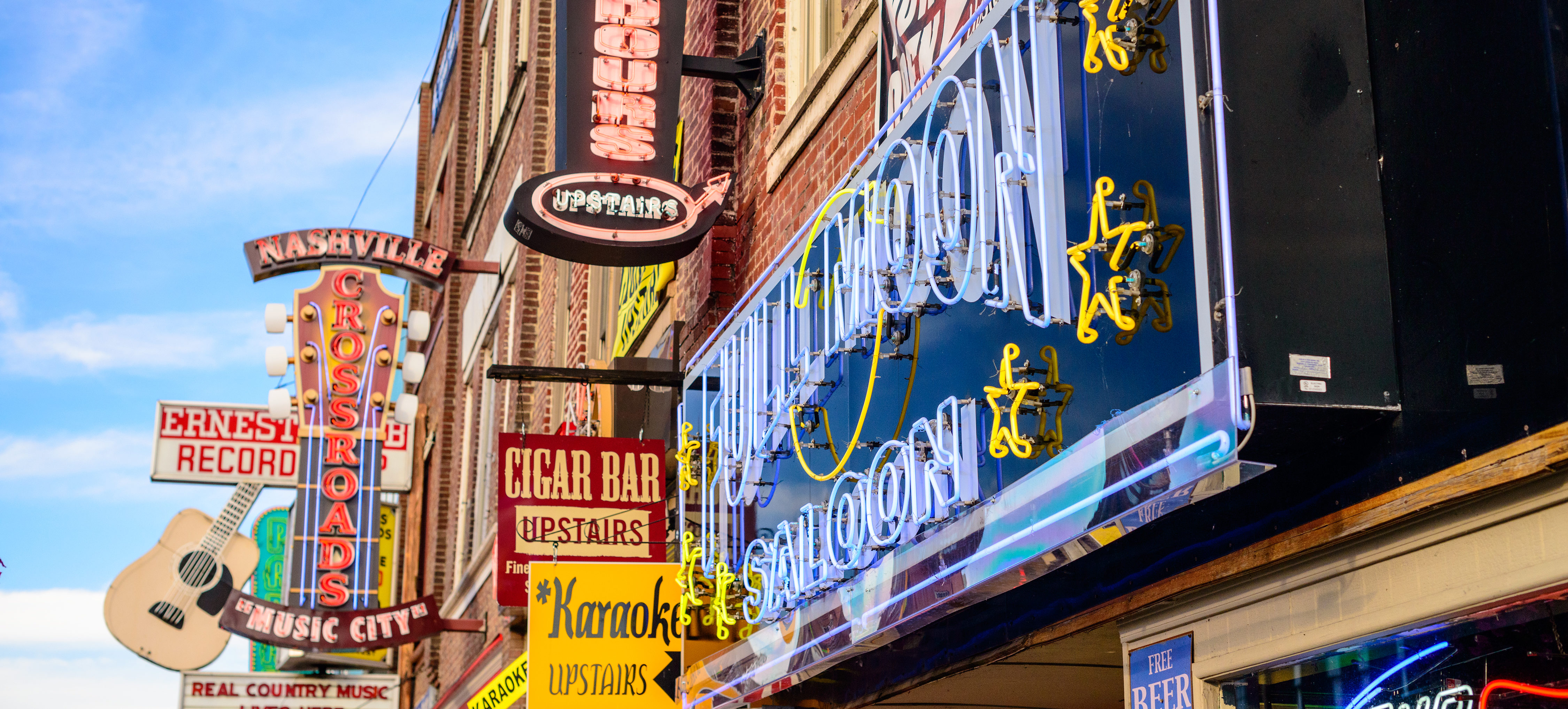
tennessee annual concerts and festivals

Living up to the state slogan, “America at its Best,” Tennessee is home to Elvis Presley’s Graceland, Country Music Hall of Fame & Museum and the Great Smoky Mountains. There’s also Ryman Auditorium, Schermerhorn Symphony Center, Music City Walk of Fame, distilleries and wineries, exciting entertainment, and of course, scrumptious Southern food.

Related6 Winning Sports and Music Halls of Fame

Musical performances throughout Tennessee are also a huge attraction for locals and visitors. The multi-cultural event of the year is Bonnaroo Music & Arts Festival. This four-day event takes place on more than 700 acres in Manchester, with some 150 performances, covering virtually every genre of music, comedy and workshops. Rolling Stone magazine proclaimed Bonnaroo as “one of the 50 Moments that Changed the History of Rock and Roll.”

On Saturdays in early summer and fall, Musician’s Corner in Nashville fills afternoons with live entertainment, food trucks, and a beer and wine garden. July evenings are typically reserved for Bluegrass Nights at the Ryman, where artists such as Vince Gill, Alison Krauss and Ricks Skaggs have performed as a tribute to bluegrass pioneers Bill Monroe and Earl Scruggs.

A fan favorite, CMT Music Awards in Nashville recognize and award the best of the best during “country music’s biggest night” while CMA Music Festival features 200 artists performing live in this four-day event in Nashville. Fans can request autographs from the country music stars and attend their Q&A sessions.

Music City’s largest one-day event, with about 200,000 attendees, is held downtown on the Cumberland River each Fourth of July with free entertainment and fireworks choreographed to the music of the Grammy-winning Nashville Symphony.

Americana Music Association Festival & Conference in Nashville attracts more than 1,000 music professionals and artists worldwide who convene and network. This celebration showcases approximately 165 live performances that include up-and-coming artists along with well-known performers.

Tin Pan South Songwriters Festival is a full week of activity and fun with over 80 performances at quaint club venues throughout Nashville. Past performers include Loretta Lynn, Garth Brooks and Peter Frampton.

Read more about Tennessee in Mona Hayden’s story, “The Tastes and Tunes of Tennessee: One Dish at a Time in Nashville and Memphis,” in the November issue of Smart Meetings magazine.

Eastern Canada might not always be a top-of-mind choice for U.S.-based meeting planners, but this region offers a remarkable array of options for memorable gatherings. The pairing of a distinctly European vibe with Canadian friendliness is enticing enough, yet add in a favorable exchange rate and tax-rebate program for foreign conventions and planners have plenty of reasons to head north. Here are the top three reasons why.

MoreOh, Canada! Rich History, New Hotels and Stunning Backdrops

1. Plenty New to Do

In case you think you’ve “been there, done that,” rest assured, there’s always something new to explore. Need team building? Toronto’s EdgeWalk allows visitors to walk hands-free along the edge of the 1,168-foot-tall CN Tower (gulp). Need a fun activity for kids? In Montreal, visitors can take a ride on La Grande Roue de Montreal, a nearly 200-foot-tall observation wheel overlooking the St. Lawrence River and historic part of the city. Looking for a one-of-a-kind dining experience? An hour north of Halifax, Nova Scotia, your group can eat fresh-as-it-gets seafood on the floor of the Bay of Fundy, home to some of the most extreme tides in the world.

2. Great New Hotels

Eastern Canada’s hotel offerings are constantly evolving as well. In Toronto, for example, this winter will see the opening of The St. Regis Toronto, a 65-story property in the heart of downtown; the boutique Kimpton chain recently opened Kimpton Saint George Hotel, a hip new property located near Royal Conservatory of Music (suites are equipped with turntable systems and albums from Canadian artists, naturally); and the new Hotel X, a 30-story property overlooking Lake Ontario, has a rooftop pool, movie theaters and ample ballrooms and event space.

MoreImmerse Yourself in Eastern Canada

3. Affordability

“It’s not only affordable, but the currency exchange right now is advantageous,” says Mark Lorimer, from the Los Angeles-based Eventive Group, who recently organized an event in Quebec City. “Of all the conferences we’ve done in the last 10 years, this was by far the one people said was the most fun—and one they’ll talk about for a long time. It had a Canadian twist to it, and the hospitality in Canada is just wonderful.”

For a taste of something uniquely different, sometimes you need to leave the hotel behind. From restaurants to purpose-built event venues, all kinds of properties can be the perfect, hyper-local setting for your next great event.

More: New & Renovated: In the Heart of the City

The meetings industry is changing, and this is good news. The Fall 2018 Meetings Outlook by Meeting Professionals International (MPI) confirms that the industry is alive, well and thriving. The report described the results of an MPI survey that underscored that these changes could result in events being more impactful for their attendees.

When MPI surveyed 2,200 attendees of an annual meeting for a global Fortune 500 company, two key trends emerged: an uptick in meeting innovation/engagement and a greater focus on corporate social responsibility (CSR). At the meeting in question, attendees peddled bicycle-powered smoothie blenders against a backdrop of infographics and other data about company CSR programs. “It was really a way to build awareness that the company has made these investments, while also getting you active, involved and engaged,” says Brent Turner, senior vice president of solutions for Cramer, the events and experiential marketing agency that came up with the idea.

RelatedPlogging: A New Trend Combining CSR and Wellness

Other survey findings included a trend of shorter, more frequent meetings. Meetings today also tend to be more niched in focus with shorter sessions. “The reason [these changes are] even possible is the meeting industry is in a state of extended growth,” says Bill Voegeli (MPI Georgia Chapter), president of Association Insights, the firm that conducts the research for Meetings Outlook. “The meeting and event industry is healthy and has been for quite some time. Any time we have years of health and growth, we see people are able to be more innovative in their meeting design.”

Of those surveyed:

  • One in five respondents said the duration of events is shorter.
  • 25 percent of respondents said events are more frequent.

The most significant finding was that meetings are more niched, with shorter sessions:

  • More than half (58 percent) of respondents believe meetings to be more niched.
  • 30 percent of respondents say sessions are getting shorter.

An increased number of meetings with a more focused topic creates an environment in which attendees are more deeply engaged, the MPI report says, thus adding greater value to the experience.

When it comes to environmental impact, there is no getting around the rather large footprint the meetings industry has left behind in the past. Add to that the fact that we have been talking about how to throw green events for years, and you’d be forgiven for feeling a little overwhelmed with the ever-growing sustainability checklist. But making your events eco-friendlier is easier now than ever before.

Bonus points if you’re already doing some, or all, of these smart approaches to your next event.

Hydration

Whether it is bottles of water or cans of soda, there can be a lot of waste produced just keeping your attendees hydrated. For smaller events, replacing plastic water bottles with pitchers of water and glasses on the table is a quick and easy step towards sustainability. Meanwhile, branded, reusable water bottles are excellent when paired with refilling stations placed throughout your event.

More: Making Your Event Environmentally Friendly By Planning Ahead

The Amount of Paper

Events technology is exploding, making going paperless a real possibility. Ditch the pamphlets and convention floor maps with an all-in-one app, complete with the event schedule placed online for attendees to reference at any time. While you’re at it, exchange paper plates for biodegradable, more durable—and stylish—bamboo tableware. Better still, insist on table settings that are washable.

Transportation

By far the largest contributor to your event’s footprint is simply getting people there. Being mindful about the destinations you consider, as compared to where the majority of your audience lives, can help a lot. Likewise, arranging carpooling shuttles and including public transit passes for attendees is a reliable way to cut down on greenhouse gasses once people are already there. Why not live-stream to “virtual” ticket holders unable to attend in person? It’s a great way to increase your event’s reach without the extra pollution.

Waste Management

Attendees will recycle…if they can find the right can. More often than not, attendees will look around, only see a trash receptacle, and toss in their recycling so they can get back to the meetings they are there for. Always keep trash and recycling side by side. To go the extra mile, add compost to the grouping (if the local waste management system will accept it). Supplied with clear labeling—a trained can attendant is even better—attendees will take care of the rest.

Food

To give your event more local flavor and reduce potential carbon pollution while you’re at it, pivot toward locally sourced food. Attendees love knowing the local backstory behind the food they eat. Additionally, taking the time to analyze how much food was left unconsumed at previous events can mean the difference between “just right” and “too much.”

The Venue

As the push for more environmentally conscience policies has intensified over the years, many hotels and venues have embraced these changes wholeheartedly. Start by looking for a LEED or other eco-certification (such as EarthCheck, Green Globe and Green Seal), and don’t hesitate to ask a venue about just how sustainable its practices are. And make sure you’re working with partners that share your eco-friendly values.

Planning it All

Despite modern advances, sustainable, green events don’t just happen. You know that. So start the planning early, go in with informed expectations, and celebrate what changes you can make, even if you want to achieve more next time.

Chautauqua Harbor Hotel New York
Photo credit: Chautauqua Harbor Hotel

A new world-class hotel that will enhance the conference and meetings industry in New York’s Southern Tier—home to a range of innovative industries and talent—recently opened in the village of Celoron on the southeastern shores of Chautauqua Lake, 74 miles southwest of Buffalo.

Chautauqua Harbor Hotel will feature an arts and crafts-style facade that is highlighted by rustic stone accents, stunning grounds and large outdoor areas with patios and fire pits. Many of the 135 luxurious guest rooms have balconies that offer panoramic lake views. The rooms also include luxurious bedding, wood floors, plush bathrobes “green” amenities and refrigerators.

RelatedNew York: The Address for Fashionable Fall Meetings

The hotel, which expects to receive AAA Four Diamond accreditation, includes indoor and outdoor pools, a business center and on-site dining at Carousel Bar and Lake House Tap and Grille. The more than 10,000 sq. ft. of meeting space features Pier Ballroom and Conference Center, with inspired settings and natural light.

The lakeside Carousel Bar, which pays tribute to old-fashioned carousels, serves meals and is set in an excellent venue for taking in Lake Chautauqua’s spectacular sunsets. (“Chautauqua” is an Iroquois word that is translated either as “a bag tied in the middle” or “two moccasins tied together,” and describes the shape of Lake Chautauqua.) The bar is connected by footbridge to Sunset Island, which provides an ideal setting for receptions and performances.

Boasting 1,100 feet of lake frontage, the hotel also is ideally suited to lake water sports. It is also near the new National Comedy Center, Lucille Ball Desi Arnaz Museum and Chautauqua Institution. Collaboration with National Comedy Center has resulted in a satellite exhibit in the lobby.

Chautauqua Harbor Hotel is the newest addition to Buffalo-based Hart Hotels’ Harbor Hotel Collection, consisting of properties in unique waterfront destinations chosen for their authentic local character.

Planners have other attractive options nearby in the Southern Tier. Chautauqua Suites Hotel and Expo Center in Mayville offers a casual atmosphere and overlooks Chautauqua Lake. It features 91 recently renovated guest rooms, an Italian restaurant and bar, live music, a business center, tennis courts and access to Chautauqua Golf Club. The expo center has 18,000 sq. ft. of meeting space, divided among eight rooms.

DoubleTree by Hilton Jamestown, located near the center of town, has 117 guest rooms, Pearl City Hops—a gastro-inspired pub and restaurant—an indoor saltwater pool and 9,000 sq. ft. of meeting space, including a grand ballroom.

Risk Management

Risk management is a dedicated preparedness rather than simply a mental exercise, according to Lisa Sommer Devlin, the most recent Smart Meetings webinar host. In her talk, “Risk Management 101,” she outlined strategies for dealing with the risks of the industry, as well as how to actively avoid them.

“Your job, when dealing with risk management, is to protect your organization,” Devlin said. A lawyer with 25 years of experience in hotel and group contracts, she doesn’t mince words when it comes to planners needing to take the steps necessary to handle any complications that might arise.

“Risk management is the process of assessing and controlling threats to your capital and earnings,” she said. That includes accidents and natural disasters as well as anything else that can keep your event from making the money it should and being successful, in general.

Financial Risks

The most common risk in the meetings industry is cancellations. If a hotel or venue cancels, it can derail an entire event. Likewise, there is always the question of what compensation the venue expects. In these cases, Delvin said, it all comes down to making sure the contract covers every eventuality. “A contract is an allocation of who assumes the financial risk of things happening,” she said.

Lisa-Sommer-Devlin
Lisa Sommer Devlin

While “hotel will not cancel” clauses may seem like the answer, they aren’t enforceable. Instead, Devlin recommends standard liquidated damage provisions, stating exactly how much each party will pay, according to the date they cancel. It is much clearer for all parties. Plus, being able to understand and accurately evaluate your risk is the first key to managing it.

The same can be said from the hotel side for placing minimum commitments in contracts, with groups promising a specific number of booked rooms. Though it may seem antithetical, Devlin contends that meeting hotels halfway, and acknowledging their risk, can lead to better negotiations and deals overall.

Legal Risks

Beyond contracts however, things begin to get murky. While breach of contract could result in legal liability, legal action just as often applies to cases of negligence, defamation and harassment. “Negligence generally means carelessness,” Devlin said. “That’s the essence of what it is.”

Not being prepared and showing a careless attitude with an event or the safety of attendees will lead to a problem every time. Doing walkthroughs of venues, personally checking the credentials of staff and intelligently vetting the type of security your event requires are all part of the equation.

In the end, there is little a planner or an organization can do to prevent from being sued. The best practice is to focus on building the best position to win any lawsuit. Strong oversight and smart decisions about exactly what you take on can be the difference between effective risk management and leaving yourself open to liability.

“Don’t assume a duty,” Devlin said. “If you take on a responsibility, you will be held responsible if you do it wrong.” Instead, planners need to know what they can handle. For example, with data security—especially with the looming regulations of GDPR—it is best to avoid the situation all together. “The safest information is the information that’s not shared,” she said.

Accidents and Disasters

Unfortunately, natural disasters are a growing issue for some of the world’s top destinations. But whether dealing with a hurricane, a fire or an accident at an event, the strategy is the same: Have a plan in place, know whose job it is to address the issue and follow the agreed upon procedures.

Having event cancellation insurance is the safest step to take. But investing in apps to quickly and efficiently communicate with attendees, while also working with your insurance company to find and mitigate problems, is the next level of risk management. Attendees will be safer and planners won’t be nearly as liable.

Association management company SmithBucklin’s acquisition of Washington, D.C.-based 360 Live Media expands the reach of the professional services firm, which currently has offices in Chicago and D.C. It also brings a new focus to the production of live events.

“We want to be the go-to resource for associations seeking innovation,” SmithBucklin President and CEO Matt Sanderson says. “Live events are critical to so many associations because of the significance of event-related revenue and because events bring association brands to life.”

360 Live Media is a marketing and experience strategy company. It specializes in everything from event design and theme development to membership research. Through rebranding, more targeted marketing strategies, and what the company calls “reinvention” of client events, it has seen marked success in raising attendance and revenue.

Don Neal, founder and CEO of 360 Live Media, says the timing of the acquisition is a result to the current state of the industry surrounding professional associations and societies. As technology and changes in demographics have disrupted the status quo, management and strategy companies such as SmithBucklin and 360 Live Media are reevaluating and adapting. He says, “Associations are more important than ever in terms of their contributions to commercial progress, professional development, industry advocacy and community engagement.” And the two companies hope to push that influence even further.

“Both 360 Live Media and SmithBucklin have been successful by hiring great people who believe in the impact of associations and want to make a difference,” Sanderson says. “Joining forces, we will serve as a catalyst for associations.”

Neal will continue as the head of 360 Live Media, and the company will operate out of its current Washington office. But it will be a wholly owned subsidiary of SmithBucklin.

Cvent 83 report RFPs

Bad news for planners: Venue selection may be getting more competitive. Cvent’s first quarterly Group Business Outlook found that a significantly higher number of RFPs for future bookings were submitted in the third quarter of 2018 than during the same period last year. The report analyzed group booking behavior among meeting professionals who use Cvent Supplier Network to predict trends for the next two years.

On average, RFPs have grown by 11.4 percent in the past 12 months. The third quarter saw an even higher growth rate—14.7 percent. This is consistent with findings from another recently released study, American Express Meetings & Events’ 2019 Global Meetings and Events Forecast, which projects meetings will be on the rise in the new year. As meeting demand goes up, so do RFPs—and prices often follow.

The conclusions of the Cvent report support the notion that site selection is much like pumpkin picking. If you go to the pumpkin patch early in the season, there’s a whole field of beautiful, plump pumpkins. If you wait until closer to Halloween, you might be left with only pumpkins that aren’t in ideal shape or condition. In other words, prime hotel bookings for your group’s meeting may require signing on the dotted line sooner rather than later, before someone else beats you to it.

Shorter Windows and Smaller Groups

The Cvent report also found that booking windows continue to decrease. Currently, planners lock in a hotel approximately six months in advance of an event.

MoreCrunch Time: 3 Tips For Pulling Off an Eleventh-Hour Event

The report states that average group block size decreased consistently over the last 12 months. However, in the third quarter of this year, total and peak-room nights leveled out. This could mean fewer people are attending meetings, more attendees are opting to share rooms or attendees are finding alternative lodging off-site.

Cvent offers the new report as a tool for hoteliers to use to determine room-block allotment and pricing, which directly impacts planners and the organizations they plan for.