It seems at first blush a sensible way to reassure groups about returning to the trade show floor, live events, and even a commercial airliner or cruise ship. A vaccine or health passport, it’s being called, although it’s really just a record of your Covid-19 vaccination and Covid-19 testing. Most likely accessible, as most things are these days, via smartphone.

If an event or business decides to require proof of a recent virus test or vaccinated immunity, you flash it at the door.

Simple, right? Everything after that gets murky.

Before diving into the murk, let’s note that a form of vaccination passport has been around for many years. It’s the yellow booklet familiar to any U.S. traveler to foreign countries that require visitors to show proof of vaccination against specific diseases like typhoid fever, yellow fever and hepatitis. The booklet is issued by the U.S. government as an International Certificate of Vaccination and states that it is approved by the World Health Organization.

No one seems to think these “passports” are a problem.

State vs. State
Only one state, New York, has moved forward so far with its own vaccine passport. Called Excelsior Pass, it’s a government-sponsored smartphone app that Democratic Gov. Andrew Cuomo has promoted as a way, for instance, for ticket-takers at events to use their own phones to scan attendees’ passports.

New York officials have not released other specifics about how the app will work, protect users’ personal information or shield the location where their code was scanned, reported AP. The app’s privacy policy says data will be “maintained in a secure manner” and won’t be used for sales or marketing purposes or shared with a third party. But some privacy experts have worried aloud about the potential for privacy and data breaches.

At the same time, a number of elected officials around the country, primarily Republicans, are raising the alarm—and hitting the brakes—over adoption of such measures in their states. This week, Republican Texas Gov. Greg Abbott signed an executive order prohibiting vaccine passports to be required by any “state agency or entity” that receives public funds in his state. This follows a similar order last week by Republican Florida Gov. Ron DeSantis, who also banned businesses in his state from requiring them. As a major port of call for cruise ships, DeSantis was especially adamant about not requiring such passports for boarding a cruiser in Florida.

Both orders would seem to preclude use of vaccine passports for admission to convention centers and other major meeting venues.

Bills forbidding use of vaccine passports have been introduced and are being advanced in the legislatures of several Republican-controlled states, including Montana and Louisiana.

Yet in California, while Gov. Gavin Newsom, a Democrat, announced yesterday that the state plans to reopen by June 15, it will still prohibit convention centers from hosting events of 5,000 or more people until October unless they can prove all attendees have been vaccinated, reports the San Francisco Chronicle. That would suggest a form of vaccine passport would be necessary for large gatherings, at least temporarily.

In short, having to prove you are free of Covid infection has become the latest flashpoint in the culture war that has swirled around masking, distancing and getting vaccinated. And it adds to the confusing landscape for meeting venues and planners as they attempt to restart in-person gatherings—and reassure potential attendees that showing up is safe.

A Complex Issue

“The conversation around a health pass is a complex issue and not necessarily a yes or no answer,” is the assessment of Michael Dominguez, president and CEO of Associated Luxury Hotels International (ALHI) and co-chair of EIC’s Apex, Covid-19 Business Recovery Task Force. “From an international perspective, a health pass in lieu of required testing will be extremely helpful to lift the restrictive bans that currently exist. As it relates to professional meetings and events, I would favor this process in lieu of a required test only when those tests are required. It is important to not restrict participation due solely to the health pass.”

Dominguez notes that the World Health Organization (WHO) warned against vaccine passports. WHO’s primary fear is that these passports will create inequities across the globe, because 85 percent of shots worldwide have been administered in wealthier countries. Despite potential ethical questions, Israel has already introduced its own vaccination passport, a Green Pass, that allows vaccinated citizens to go to restaurants, concerts and sporting events, and the EU and China have also announced plans for a version of a vaccination passport, according to The New York Times.

The Times also reported that Cathay Pacific airlines, in hopes that digital proof of coronavirus vaccination will speed return of international travel, asked its pilots and crew to try out a new mobile app that showed their vaccination status on a recent flight from Hong Kong to Los Angeles.

Other private-sector developments include Walmart, which is offering electronic verification apps to patients vaccinated in its stores so they “can easily access their vaccine status as needed,” the company says. Universities like Rutgers, Brown and Cornell have already said they will require proof of vaccination for students this fall. The Miami Heat this week became the first team in the N.B.A. to open special “vaccinated only” sections.

No Federal Mandate

stimulus billThe big question is, will the Biden administration override state-level efforts and push for national passport standards or requirements? It doesn’t appear likely.

Many months ago, Dr. Anthony Fauci, director of the National Institute of Allergy and Infectious Diseases, said that, while requiring vaccine passports was a possibility in some business sectors, they would not be mandated by the federal government. He reiterated that position this week, but the question was seemingly put to rest when Jen Psaki, the White House press secretary, said on Tuesday, “The government is not now nor will we be supporting a system that requires Americans to carry a credential. There will be no federal vaccinations database and no federal mandate requiring everyone to obtain a single vaccination credential.”

Instead, as Andy Slavitt, acting administrator of the Centers for Medicare and Medicaid Services, announced, the government is considering federal guidelines to steer the process surrounding such passports. Concerns to be addressed, he went on, include the fact not everyone has a smartphone; that passports should be free and in multiple languages; and private health information must be protected.

Among efforts underway is the Vaccination Credential Initiative (VCI), a coalition of public and private organizations formed to “harmonize the standards and support development of implementation guides needed to issue, share and validate vaccination records.” It envisions a secure “SMART Health Card” that stores and protects health-care information and other vital medical data. Those without a smartphone could produce a paper printout of a QR code that leads to their data.

“Individuals can then use those verifiable credentials for medical purposes and to demonstrate their vaccination status to safely return to work, school and travel,” states the organization’s website.

Mayo Clinic, Salesforce, Microsoft and Oracle are participating in VCI, as are dozens of other companies.
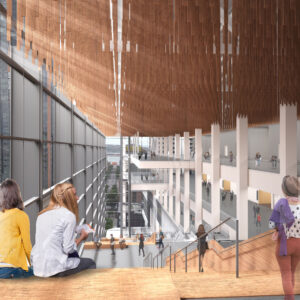
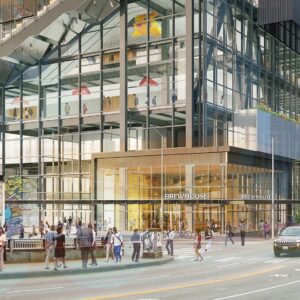
What’s in the Pacific Northwest, just secured final funding and will add more than 550,000 sq. ft. of meetings space to its facility? Answer: Washington State Convention Center (WSCC)’s Summit building, in Seattle.

Last month, developers for WSCC confirmed the sale of $342 million in municipal bonds. This funding enables the completion of WSCC’s Summit Building, scheduled for mid-2022. Summit will be an addition to the 434,080-square-foot Arch building, which is a block and a half away.

See alsoEssential Seattle: A Post-COVID Site Inspection

“Our optimism around the future of Seattle grows as the final funding for Summit is secured with construction well underway. Having two buildings to offer for future conventions, both in the heart of our vibrant downtown, is an incredible and unique asset,” says Kelly Saling, vice president of convention sales and services for Visit Seattle. “This is one of the vital sparks Seattle needs to sustain the resilience and innovation of our downtown.”

The GBAC STAR-accredited facility is already booked to host 32 conventions from 2022-2026, including American Society of Landscape Architects, Materials Research Society, Society for the Advancement of Material and Process Engineering, and Best Western International, Inc.

The facility also serves as a vessel for a $93 million community benefits package which will “create better mobility in the downtown core, enhance economic opportunities and provide affordable housing for residents in the greater community,” according to a press release. The package will also fund projects for improvements to Pike and Pine between downtown Seattle and Capitol Hill, and bicycling infrastructure.


In addition, the package will pay for the Lid I-5 Study, a feasibility study designed to lay out the benefits of building a “lid” over Interstate 5, which, if created, will run through downtown Seattle, connecting this area, as well as Capitol Hill and First Hill. “In addition to connecting those crucial areas, the lid would create opportunities for affordable housing sites, public open space, civic facilities like schools and community centers, and other public and private infrastructure,” Saling says.

Washington is now in phase three of reopening, which allows small groups to meet in person. Saling says the state hopes to welcome conventions in the second half of 2021.

Sponsorship is not a creation of meeting organizers or even the modern capitalist economy. A quick history lesson uncovers this: The first sponsorships date back to the 5th century BC in Ancient Greece. Rich citizens paid a voluntary tax to finance major competitions and public festivities.

In the The New Sports Sponsorship Arena, we learn that sports sponsorships are well over a hundred years old: “The modern understanding of sports sponsorship can be traced back to the 19th century with the birth of the baseball card. As the American pastime, baseball continued to drive sports sponsorship. Radio broadcasting of the American League in the 1930s helped make Babe Ruth a national star and drove some of the first sponsor advertisements. That same decade saw Lou Gehrig become the first athlete to appear on a cereal box, a new General Mills product called Wheaties. Sports television broadcasts altered sponsorship relationships through exposure. Radio only allowed for sponsorship to exist when mentioned. But on television, a company logo or name could be seen for long periods of time. As a result, sports sponsorships exploded. In 1984, Nike broke records by signing a young Michael Jordan to a shoe sponsorship deal for $500,000 a year. At the time, the company was small, and the number was astronomical. It turned out to be perhaps the most influential sponsorship deal of all time.”

ROI to ROO to ROE

Did the Greeks ask about their return on investment? And how does Nike feel about its $500,000.00 investment in a young Michael Jordan? The notion of ROI, Return On Investment, began in the early stages of sponsorship where companies bought space to advertise their brands. Behind home plate, in stadiums, concert venues etc. sponsorships are bought, sold, negotiated and measured based on paid broadcast value.

MoreHow to Prove the Business Value of Meetings and Events

When the stakes grew into 7- and 8-figure contracts and more, the scales were tipped and companies needed additional metrics to justify their investments. ROI became ROO–Return on Objectives. Simply put, ROO became a broader definition of what was trying to be accomplished beyond eyeballs.

As companies and organizations were experiencing the increasing pressure on showing viable business returns on marketing investments, another shift in the marketplace was happening. That shift was the marriage of advertising and innovative technologies that ushered in the era of AdTech-based business model and the advent of Big Data.

The AdTech boom created a new kind of business environment: objectives and the associated tactical initiatives became sharper because data-driven analytics could track conversion. Eyeballs became a vehicle to deliver to engagement. I call this ROE, Return on Engagement, though some prefer Return on Experience. Books were written on the topic, most notably, “The Experience Economy,” and companies fundamentally shifted their sales and marketing approach based on the value of face-to-face meetings.

Pandemic Shifts

Last March, when the global pandemic hit, in person experiences stopped. They ceased to exist. The world shut down. All engagement became virtual and relegated to a variety of 2D platforms that crippled the ability to foster relationships that honor the human experience.

While in-person, live experiences, stopped during the pandemic, measurement and the pressures on return on investment increased. Why? Because all social and commercial activity began to take place in the digital environmentwhere everything can be evaluated and analyzed.

This is an entrepreneur’s moment. The pandemic is a once-in-a-lifetime innovation opportunity. And with that comes new challenges. Now, because of many new technologies, including Linkroom, Spatial, Virbella, Hub and many other virtual meeting platforms, we have the ability to meet face-to-face, actively participate, move, network, sell and conduct business in a human matter in a digital environment.

ROV Emerges

What is next? Another emerging technology on the minds of both advertisers and consumers is virtual reality. Much has been written about the potential of VR for consumers, and brands are already jumping on board. As a part of IBM’s relationship with the Masters golf tournament, the computer giant offered the first foray into VR with views on two holes of the golf course. This is just the tip of the iceberg of what brands believe they can accomplish in the future.

With a new set of analytics and transactions to prove conversion, the next evolution of how we think about returns on investment in the digital space will be ROV, or Return on Virtual, as the world works to meet again in person one day.

Virtual is truly the next frontier. ROV is here to stay.

For the past 35 years, Lisa Furfine has built a network of colleagues and clients in the sports, hospitality and entertainment industries. After helping several new businesses launch utilizing live events as the business development catalyst, Furfine has now turned her energies to applying fundamental live event principles to the virtual world, as co-founder of Linkroom™ and CEO of Bogotash, LLC.

The sixth anniversary of Global Meetings Industry Day on April 8 will be particularly poignant. It follows a year when the world literally experienced the painful hole left when gathering was not possible. GMID21

Meetings Mean Business Coalition, the group behind the event, launched it in 2009, in the wake of a financial and public relations crisis that threatened the viability of the meetings industry. But even after 11 years of advocacy, research and storytelling, leaders have found more still needs to be done—to explain to lawmakers the essential role meetings play in everything from business deals to medical advancement and mental health.

Getting venues and their employees included in relief bills, so they will be there when it is time to rebuild the economy, has proved to require unceasing effort.

Read the history of MMB Coalition here.

The talking points focused on the outsized impact and the devastating suffering of the 5.9 million American jobs supported by meeting activities. Those hard-working professionals delivered hundreds of billions of dollars in annual revenue.

Leisure and hospitality jobs accounted for almost 40 percent of all U.S. jobs lost during the pandemic, according to statistics from U.S. Travel Association.

The services those absent workers provide are sorely missed. A February survey for MMB Coalition by the research firm APCO Worldwide found that eight in 10 Americans who attended in-person meetings and conventions before the pandemic miss doing so—and are just as likely, if not more so, to attend them in the future. There is increasing recognition among employers, even after adapting to the digital workplace, that face-to-face interaction is necessary for building teams, networking effectively and growing the bottom line at a rate that can’t be replicated by a Zoom call.

Read about industry advocacy efforts during the pandemic here.

Show Me

That is why on Thursday we will be celebrating all the ways events add value to our businesses and our lives. To that end, we asked the Smart Meetings’ social media community to show us (not tell us) that “Meetings Mean Business.” We would have accepted any number of responses, from coming together to elect a president to sharing research to develop a vaccine or making sales and getting business done. As usual, the community went above and beyond and responded with some classic posts.

Record Breaking

Anh Nguyen

Anh Nguyen, head of community engagement with Twine and the instigator behind last year’s #GMIDGoesVirtual that brought together 12,500 online attendees for an attempt to break the Guinness World Records title for largest audience for a virtual conference, pointed to how the industry rallied together during those first few months of lockdown to support each other and try new things.

She was also the force behind Global Events Collective, which has been gathering stories about Moments that Matter and will debut the documentary results on GMID 2021.

In 2020, Meeting Professionals International offered a full day of virtual education for some 10,000 event evangelists. Industry leaders shared strategies and stepped up to provide services for their communities when it was needed most.

F2F Rules

JWO Marketing pointed to Center for Exhibition Industry Research (CEIR) that showed in-person persuasiveness is 34 times more effective compared with other forms of communicating. The top motivators for trade show attendees are things difficult to deliver through a screen: learning about new products and trends in the industry, and meeting and interacting with people.

Aligned on People Power

Corporate Peaks—the destination event specialist—focused on the human element with the following quote: “Connecting and engaging with people on a personal level is unparalleled. Conversations can be forgotten but experiences will never be.”

Ready and Able

Lisa Macleod

Lisa Macleod, Ontario Minister of Heritage, Sport, Tourism and Culture Industries, said “We’re Ready” is the theme of her group’s event, and that she is looking forward to exchanging ideas on how to innovate and create opportunities to succeed in a post-pandemic world.

“Our government acknowledges the unprecedented and devastating impacts that Covid-19 has had on Ontario’s tourism sector and on the province as a whole. Our No. 1 priority remains the health and well-being of the people of Ontario—including our economic health,” she said.

The city released a white paper, “Reconnecting Ontarians: Re-emerging as a Global Leader,” that includes broad-based recovery proposals for the tourism sector that could pave the way for a five-year strategy to restore Ontario tourism and take it to new heights.

Hospitality Day

Eduardo Chaillo, global general manager for Latin America with Maritz Global Events and Smart Meetings Editorial Advisory Board member, highlighted the international reach of the meetings industry in his post, sharing that he would be reporting from Zacatecas, Mexico, where a Meetings Industry Museum will be inaugurated as part of Hospitality Today Live. Also on hand will be speaker Deborah Gardner, Voices in Advocacy podcast host Roger Rickard, Talley Management Group Director of Virtual Events Derrick Johnson, IMEX CEO Carina Bauer, PCMA president and CEO Sherrif Karamat, Cincinnati USA Convention & Visitors Bureau Group Vice President of Diversity Sales and Inclusion Jason Dunn, Events Industry Council CEO Amy Calvert and consultant Tamela Blalock.

Join the GMID Movement

Still looking for the best way to show your support on April 8? Meetings Mean Business acts as a clearinghouse for opportunities to engage in whatever way is most comfortable. GMID 2021 will highlight “Meet Safe” precautions while bringing the industry together “stronger and more united than ever, to demonstrate the unwavering value of our industry with leaders in business, government and the media.”

After a year of sitting in front of our computers for everything from town halls to awards ceremonies, creating digital experiences that get people excited takes a little extra effort. We asked experts for their top-secret strategies for turning the keyboard into a magnet to draw audiences. And holds their attention even when many other demands try to pull them away.

Mix It Up

Lamar Engel, experience producer and owner of The Wine Militia, knows the novelty of virtual networking may have worn off for corporate audiences. An advanced certified sommelier, his business leading team-building experiences at events suddenly evaporated last year. So, he quickly transformed into an audiovisual company producing field-to-vase farm tours (with flowers sent to participant homes for days of enjoyment), virtual king’s table dinners in vineyards and, of course, virtual tastings.

“We are telling stories,” he says. “That hasn’t changed.”

When it comes to groups, his tendency is to mix the agenda up. He has managed to pull off creative wine and cheese pairings and ever-popular chocolate tastings. “The secret,” he confides, “is to add an element of surprise.”

Amanda Cox, director of sales and marketing at JW Marriott Marco Island in Florida, did just that this month when she shared wines from Ario, one of 12 restaurants at the resort, with clients and friends as part of a winemakers tasting. Three wines from Napa’s Gamble Family Vineyards in California were shipped, along with pairing bites. Just as the tasting started, the winery proprietor, Tom Gamble, a third-generation farmer, ambled onto the screen and started telling his story and answering questions, glass in hand and farm dog Koa at his side. Everyone was transported to wine country as they swirled, sipped and smiled.

Add a Competitive Element

Roxanne Langer, founder of WineForward, suggests turning the event into a game with trivia and wine-related prizes. The author of The 60-Minute Wine MBA, who was director of sales and marketing with Moraga Bel Air Winery in Los Angeles, has had success with panels of winemakers, but suggests having the moderator get the audience involved whether the event is in person or through a screen.

One of The Wine Militia’s specialties is sending wine-blending chemistry kits that let attendees be “a wine maker for a minute.” Participants share the proportions of their concoctions with “judges,” who recreate and sample their selections, naming a winner. “It breaks down the pretention,” Engel says.

The key to any of these physical exercises is to turn the experience on its head. Rather than sitting and listening, participants are actively discovering new ideas and connecting with others on a whole new level.

Kill It

One way to add drama is by pitting teams against each other in strategic puzzles based on murder-mystery escape-room experiences. Monica Hammond, founder of Broadway Murder Mysteries, is a former actor as well as a marketer and serial entrepreneur. She created Broadway Murder Mysteries to challenge groups to find their way out of themed rooms in a virtual theater, with clues from Broadway actors who lead them through exercises that deliver a code so they can move forward. Hammond likes to mix people who don’t usually work together to solve problems as a group: marketing paired with the interns, the CEO with operations. She suggests keeping the fun going even after the event with communications that refer back to the shared exercise.

“People are craving post-conference interactions,” she says.

Wrap It Up

Unboxing is an art in itself. Engel is a big believer in playful packaging with emphasis on little touches, such as hand-written cards and unexpected elements. Like many meeting professionals, his team has become expert in logistics, perfecting the branded gift-box delivery dance. “When you think you have done too much, do a little more,” he says.

“The last year contained a lot of sadness, but we also learned a lot,” Engel says. “Now the industry is resurging, and we are prepared to deliver more.”

When everyone returns to meeting venues again, meeting professionals will have a whole new list of concerns on their checklists. From virus contagion to computer bugs, planning for the worst will be essential for delivering the best experience. Smart Meetings asked RJ Frasca, vice president of marketing and product with background screening company EBI for a shortlist of proactive steps that could save heartache later.

RJ Frasca

1. What will meetings and events look like in 2021 and beyond?

There has been a lot of speculation that hybrid events are here to stay, allowing attendees to choose whether to attend in person or virtually. People will be expecting shows to provide that hybrid option and deliver an equally valuable experience on both fronts. From a marketing perspective, replacing the value of face-to-face meetings may seem daunting; but technology companies have heard these concerns and are constantly striving to deliver solutions that work.

Our research indicates convention planners are beginning to plan out what types of health and safety tools they’d like to incorporate into hybrid and in-person events. We’ve spoken to at least one conference provider who will be having an on-site Chief Safety Officer who will manage the protocols being put in place.

2. The risk of transmitting illness stopped events from occurring. What are key lessons venues and planners should take away from the past year?

Venues and planners experienced enormous revenue loss in 2020. The convention industry was worth $1 billion annually before the pandemic. Moving forward, I would say venues should very carefully map out how they will handle health and safety best practices to mitigate risk. Defining and executing a well-thought-out health and safety plan will protect the venue from liability and give confidence to attendees and sponsors that it is okay to attend the event in person.

MoreHow to Budget Realistically for Hybrid Meetings

When it comes to planners, I would say the biggest lesson from 2020 should be always to have a Plan B. Contingency planning is key, as uncontrollable events and decisions could significantly impact a show. By having options and alternatives available for both attendees and sponsors, you can minimize the impact on revenue.

3. How can technology help venues and conference centers amplify social distancing during a busy event?

Whereas social distancing is the most effective means of avoiding exposure, many supplemental technology-based solutions can help keep everyone safe. For instance, conference apps can include a daily questionnaire to determine symptoms or potential exposure to COVID-19 or another illness. The app could pass/fail attendees for entrance to exhibit halls or breakout sessions. Entry points could then capture temperature, further eliminating chances of a potential breakout occurring. Distance monitoring and contact tracing solutions can be implemented by simply including an ultra-wideband tracker tile in lanyards worn at the show.

4. What is the best approach to contact tracing should an outbreak occur during or after an event or conference?

Contact tracing can be a huge undertaking when done manually. Data shows more than 70 percent of critical contacts may be missed without a digital tracing solution as part of an interview-based contact tracing protocol, which is a staggering statistic.

Solutions are available that automate the contact tracing process and decrease the notification time for those potentially exposed from days to mere minutes, stemming the spread of illness that much faster. One of the most reliable contact tracing devices is an extremely lightweight distance-monitoring sensor (15 grams) that uses ultra-wideband technology to pinpoint attendees’ proximity to one another. The device sends an alert when people are too close to one another. The technology also allows for accurate and efficient contact tracing.

Three out of four users feel safer at work while wearing an ultra-wideband contact tracing device. The numbers speak for themselves.

5. How can we best utilize technology to ensure hybrid events are safe and successful?

Technology will be key in all areas to ensure both safety and success. For those attending in person, technology can minimize potential exposure, measure symptoms or notify those who may have been potentially exposed. Finding a system that consolidates all the health and safety data is key when it comes to management and deployment.

Start communicating early! Continue to educate and explain exactly how you will be keeping everyone safe. Communication is key in making everyone more confident about getting back to conferences and feeling safe doing so. Utilizing a customizable app can help you populate messages to registered attendees long before the conference begins so they are well-informed about health and safety guidelines. This includes what personal protection equipment will be required throughout the venue. People are now accustomed to wearing masks, social distancing and using hand sanitizer. By following the same practices they’ve been using for more than a year, there is no reason people can’t safely network and meet face-to-face at shows.

RJ Frasca is vice president of marketing and product of EBI, a leading background screening provider and EBI Workplace Health & Safety, its comprehensive monitoring, tracing and data insights platform. Frasca brings over 20 years of marketing and product experience with companies such as Yahoo, Microsoft, Time Warner and Verizon.

New and renovated properties in Florida, California and Chicago.

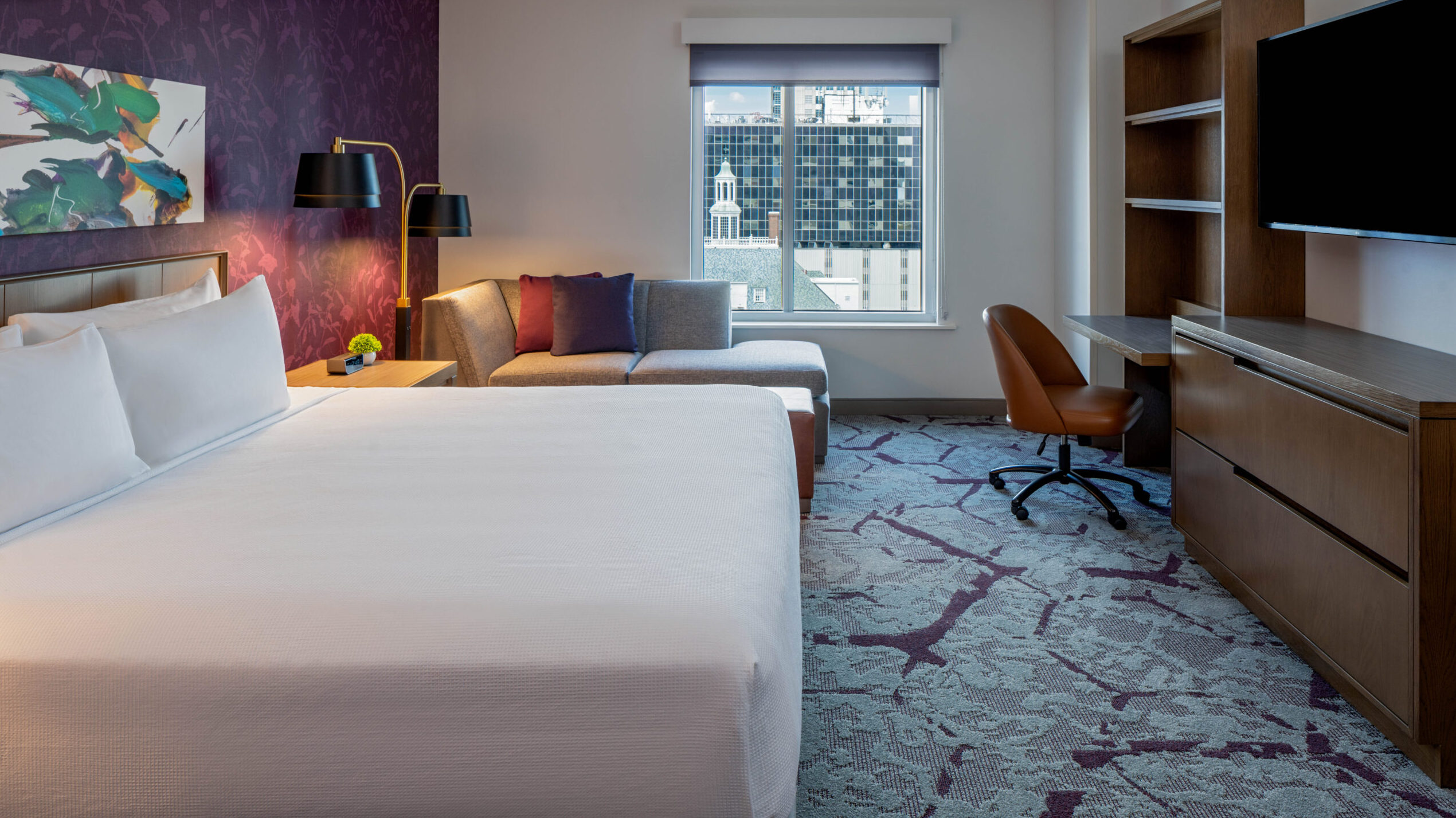
Hyatt Place and Hyatt House Tampa Downtown, Florida

The 17-story building just across from Tampa’s city hall offers guests a unique layout with a single lobby serving both the 230-room Hyatt Place and the 115-room Hyatt House. Design harkens to the area’s Havana influences, with jewel and citrus shades, tropical leaf motifs and vintage Cuban movie posters. The property has 3,600 sq. ft. of event space, a heated rooftop pool, fitness center and lobby floor restaurant. Its proximity to downtown Tampa, Tampa Convention Center and Tampa Riverwalk is a further plus.

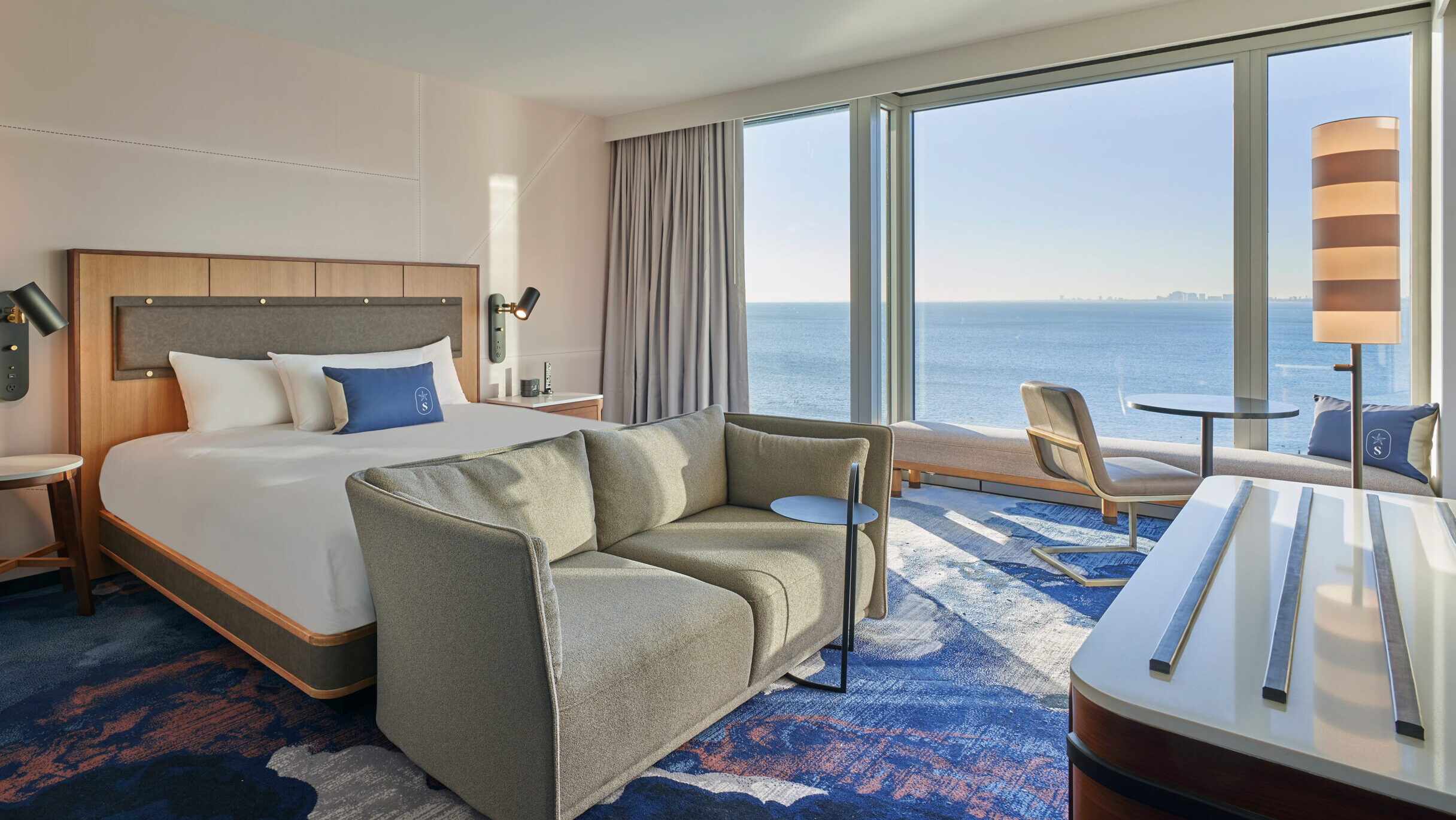
Sable at Navy Pier, Curio Collection by Hilton, Chicago

Just opened as the 100th Curio Collection property, the new hotel brings 223 guest rooms with floor-to-ceiling windows and views of Lake Michigan in a nautical styling that celebrates the city’s historic pier. The property was designed with three separate towers so guests hosting events can reserve an entire wing of the property for ease and privacy. For meetings, 43,000 sq. ft. of event space is on offer. Dine on crab maki rolls and craft cocktails on site at Offshore, recognized by Guinness Book of World Records as the largest rooftop and bar.

Novotel Miami Brickell, Florida

This downtown property recently revitalized the lobby, restaurant and rooftop bar with upgraded furniture and decor, including redesigned arrangements that allows guests to choose their level of comfortable distancing. The lobby greets with midcentury inspiration in hues of blush, greys and rust that bring the nearby beach’s warmth and water to mind. Succulents, planters, velvet and ottomans all lend texture and flexibility to the refreshed common areas. Six meeting rooms, plus a 2,070-square-foot Skyline Ballroom provide for small to medium gatherings.

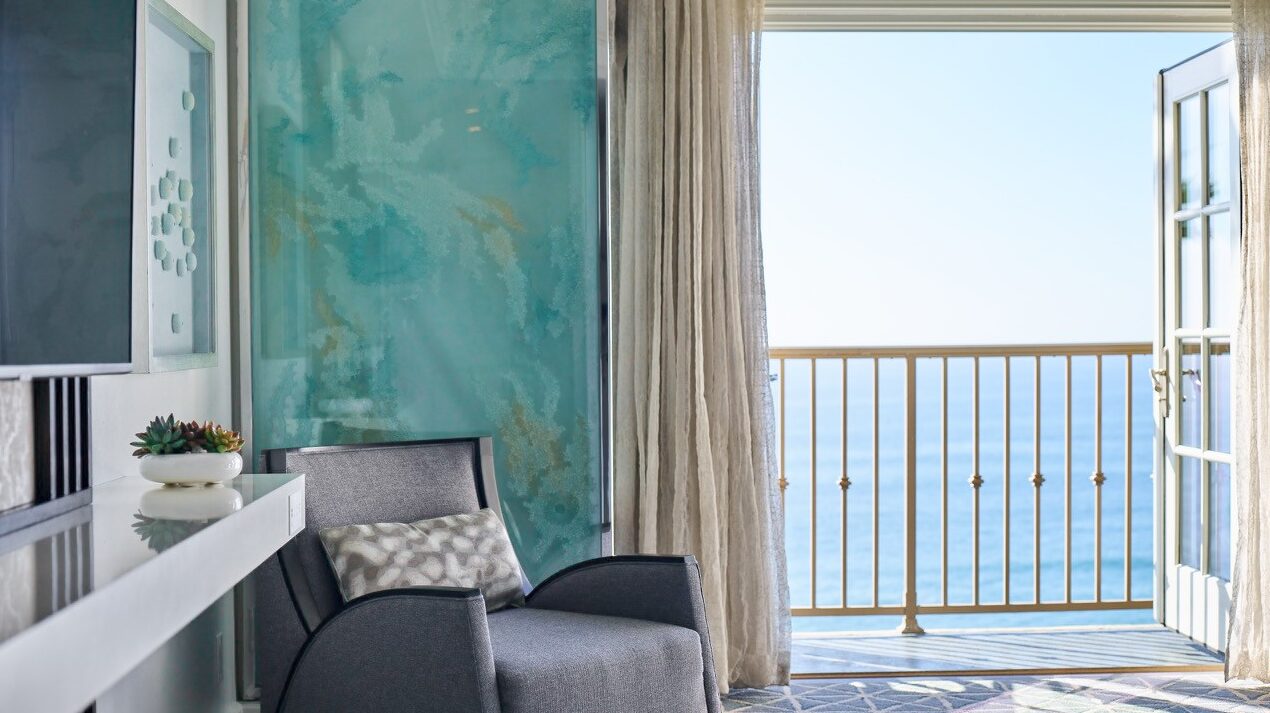
Ritz-Carlton Laguna Niguel, California

The Dana Point oceanfront resort recently upgraded all 396 luxury guest rooms and suites as well as its Ritz-Carlton Club Level Lounge. The refresh was undertaken by Wimberly Interiors, which also designed Ritz-Carlton Naples and JW Marriott Casablanca in Morocco. The oceanic redesign encompasses all, from shell-colored carpet and crisp grey and blue walls to a new “floating” entertainment center. Every room or suite has a private patio or balcony with views of the sparkling shore or lush gardens. The resort has 56,000 sq. ft. of outdoor event space with seaside views, plus 26,000 sq. ft of indoor meeting options.

As the meeting industry has found inventive ways to evolve and adapt in the face of the global pandemic, taking events out of the ballroom and into the great outdoors continues to be one of the most popular industry trends in 2021.

Cory Baum

Not only can outdoor functions help to ensure attendee safety during this unconventional time, a natural and scenic setting can help to inspire attendees, drive creativity and provide unforgettable meeting moments that help to forge lasting bonds.

When coordinating an outdoor function, it is important for planners to work closely with their venue to ensure every detail and prepare for the unexpected. I’ve included my top tips for hosting an outdoor meeting below.

Leverage your Setting for a One-of-a-Kind Event

Hosting an event in a spacious natural setting allows planners unlimited opportunities to use the space in creative and unique ways. Based on my experience attending and planning events, I’ve noticed that outdoor spaces tend to create a unique sense of atmosphere that can really impact the overall success of a function.

Meeting technology has come a long way in recent years, making it easy to take an entire schedule of events outdoors with portable lighting, audiovisual equipment and Wi-Fi connection. Thanks to the convenience of outdoor tech, I’ve worked with planners to create one-of-a-kind meeting set-ups, from presentations overlooking the Colorado River and keynote speeches from the golf course, to receptions and galas set up in a “glamping” style with twinkling lights under giant pecan trees.

Have a Back-up Plan

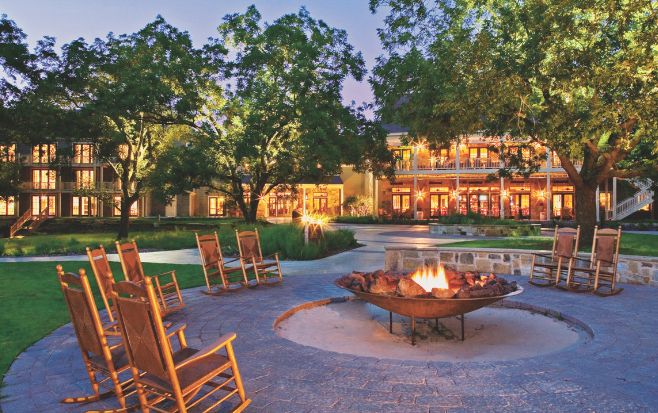
Hyatt Regency Lost Pines

The most important aspect of planning an outdoor event is to have a back-up plan. Although planners and venues will go above and beyond to plan every single detail of a function, there is no way to predict or control mother nature.

I recommend developing a contingency plan for inclement weather and doing a full run-through of the back-up scenario before the event. I also suggest considering a venue with both indoor and outdoor functionality so the meeting can continue uninterrupted without a change in location. For example, at Hyatt Regency Lost Pines, we have several multifunctional venues including the LBJ Pavilion and Wildflower Pavilion that are enclosed by sliding glass walls that can be opened for a fully open-air ambience, or remain closed for climate control purposes as needed.

Make it Experiential

In addition to taking the general meeting sessions outdoors, I also recommend that planners coordinate experiential activities that showcase the great outdoors. Nothing is more impactful in facilitating lasting connections among attendees than getting outside, enjoying the fresh air and taking part in fun and exciting activities together. Whether it’s playing a friendly scramble-style golf tournament or partaking in wellness-inspired experiences such as guided yoga or meditation classes, allowing time for attendees relax and connect with nature together helps to drive connections for a successful event.

I encourage planners to really do their research and pick a venue that specializes in providing outdoor experiences.

Cory Baum is the director of sales and marketing at Hyatt Regency Lost Pines Resort and Spa.

The pandemic has forced corporate event organizers to completely reimagine their events as travel restrictions and crowd limitations brought unimaginable obstacles. Through it all, corporate planners were able to get creative and continue to evolve their events for this new normal. As the event industry progresses and sees the light at the end of the tunnel with crowd restrictions lifting, travel interest increasing and vaccine distribution continuing to roll out, more corporate events will emerge to bring workforces together in unique ways. But, don’t expect the pandemic’s influence to fade away in the immediate future as we head into spring and summer. The future of corporate events will still have the imprint of the pandemic, but will make room for new ways of approaching these work gatherings for the better. 

Outdoor Gatherings Emerge

Corporate event planners already know our immediate future for employee gatherings will still have a virtual component. With some in-person restrictions still in place across the country, and the varying comfort levels of teams, planners will need to acclimate to this hybrid model to accommodate everyone. With warmer temperatures arriving across the country, the option for more outdoor gatherings will provide a welcomed opportunity to recreate in-person meetings and events. The added layers of planning for corporate teams will give way to the utilization of new technology platforms that can oversee the varying levels of details, timelines, budgets and checklists now needed for running successful hybrid events.

With this hybrid approach to corporate gatherings, the lessons learned from the past year will only make virtual events run more smoothly and efficiently as we continue with this trend. Consider how the recent Atlanta Jewish Film Festival was able to host a successful hybrid event featuring virtual screenings paired with various in-person meetups. This dual event brought the best of both worlds together, and the approach is one planners can learn from when planning corporate events for the hybrid era.

The planners and organizers behind the festival carefully coordinated the event elements best suited for both a virtual and physical event. On the virtual end, interactive Q&As and open-forum conversations took place to connect guests, while VIP mailers were sent to select guests participating remotely for an added touchpoint. On-site, attendees were directed to a drive-in movie theater experience, capitalizing on the trendy resurgence while maintaining safe distances between guests. The event successfully captivated the attention of their invites both virtually and on-site, proving the ability to run both simultaneously.

Corporate Retreats are Coming Back; Sizes will Vary

Travel restrictions are lifting, and with that will be an increase in corporate retreats. Add the rise of outdoor gatherings from warmer temperatures and mask mandates lifting, corporate planners can now engage work teams in new activities for team building and bonding that go beyond virtual happy hours behind our blue screens. Activities that look to bring small groups together outside for healthy activities will be the focus to provide the needed reset many will be looking for after a long year of quarantine and work-from-home orders. We can expect to see yoga, healthy cooking or nutrition classes, and mental health initiatives take center stage in corporate gatherings.
The emergence of “pod travel” will also make traditional corporate retreats more approachable. By creating a corporate travel pod, planners can continue to provide the same level of detail and poise as before, but with smaller groups of colleagues who work in tandem. Leaderships teams can take advantage of the hospitality industry’s moves to accommodate these events, such as The Ritz-Carlton of Waikiki Beach in Hawaii who debuted its own Pod Travel Concierge program, which allows smaller groups to reserve their own floor for a block of rooms, coordinate private meals and safely execute private excursions.

While these smaller corporate events will take place this year, it certainly won’t slow down plans to continue to expand into larger events for the year ahead. Industry partners are gearing up for the return to normal already, including Renaissance Dallas Addison Hotel in Texas which unveiled an upgraded meetings and events space with more than 37 rooms built across 100,000 square feet. Small might be the status quo this year, but our traditional big corporate plans are not far behind.

Attention to Detail; Elevating Corporate Experiences Regardless of Size or Screens

Businesses and corporations have welcomed a hybrid workforce, allowing team members to spread out across the country vs. a single building. While this structure may guide our virtual and pod-sized corporate events in the immediate future, it has also allowed corporate planners to get more granular on the attention to details for each meeting, event or trip they plan. Just as we saw in the wedding industry, “welcome packages” for virtual ceremonies that aim to provide a similar experience to attending a wedding have played the same role in the corporate setting, and caterers have taken note with offerings at scale.

From team-building events, board to shareholder meetings and product launch events, planners can now elevate these experiences virtually. Businesses in Austin, Texas, have leaned on the likes of Austin Fig Catering, which creates individual boxes of seasonal menu items with home delivery, to mimics the experience of traditional in-person meetings with a catered lunch, but personalized for each participant. Added attention to detail leverages the power of software platforms to organize and track workflow, log daily and weekly checklist tasks and budgets to manage all the moving pieces.

Katherine Frost

The year ahead brings new opportunities as we look to the virtual-hybrid work model, smaller retreats, and the ability to bring added attention to details to corporate events.

Katherine Frost is the founder and CEO of event planning software ORO, a tech platform for professional event planners to streamline their workflow for speed and productivity by consolidating all of the spreadsheets, binders and contracts into one easy-to-use tool.

Across the hospitality and meetings industry, women are stepping up to move their organizations forward in the wake of the coronavirus pandemic. This month, National Coalition of Black Meeting Professionals (NCBMP) announced that it would be installing two women in top roles for the first time in its 38-year history. Marlinda A. Henry will serve as board chair and Dzidra Junior will serve as president of the association that advocates on behalf of the $109 billion black travel sector. Other officers include: Vice President Nicholas Wiggins, Treasurer Lori Burke, Secretary Mona Hudson and Immediate-Past Chairman Jason Dunn.

Smart Meetings reached out to these pioneering women and asked them to share lessons from their past and vision for the future of women in the hospitality industry.

Meet the 2021 Smart Women in Meetings Award winners and read their pandemic stories.

Marlinda A. Henry, CEP, Director of Events and Planning, Full Gospel Conference
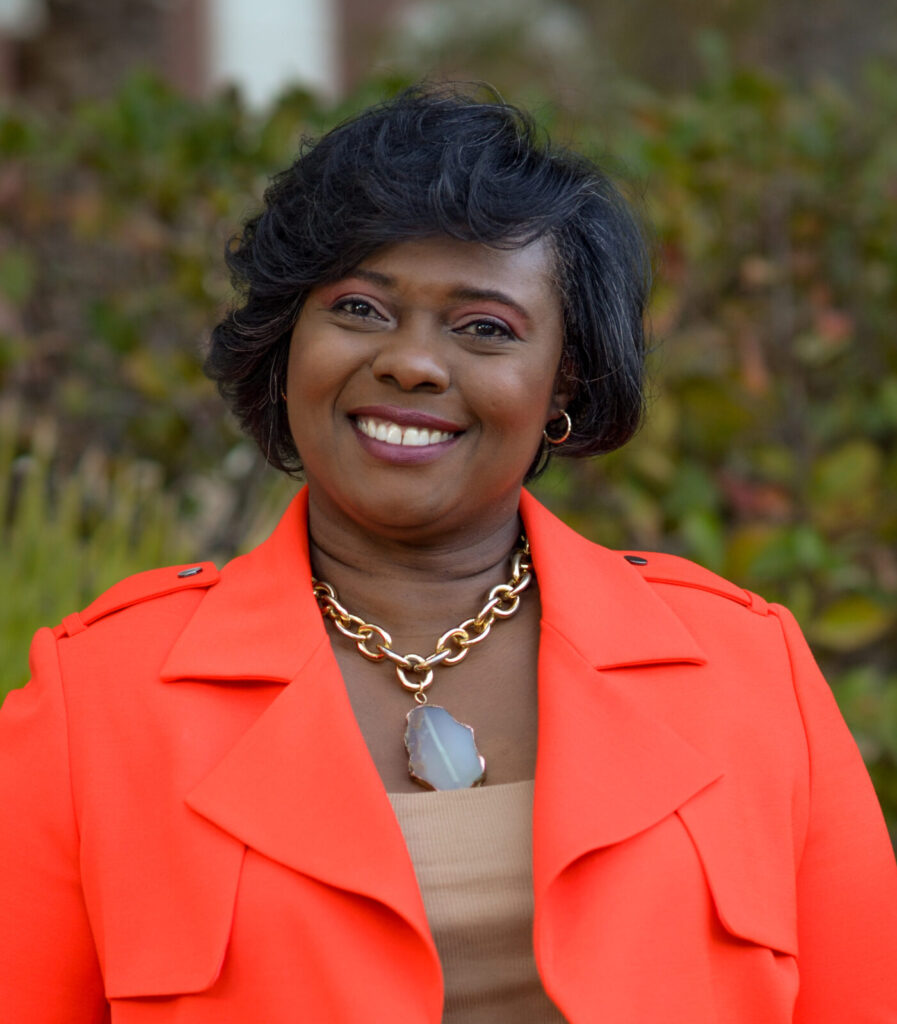
Chairwoman, NCBMP

In the beginning: I started in the hospitality field serving in my late father’s church as his coordinator for a number of events that we put on each year. When he was promoted to the Regional Bishop for Full Gospel Baptist Church Fellowship for the entire denomination, I advanced to Regional Event Planner. My career took off from there in this fantastic industry with over 20 years.

Pandemic lesson: This time of shelter in place has altered my entire busy life and has put into perspective what matters and what I have taken for granted, which is time. Things I considered to be a necessity are no longer required. Having good health in this climate is what really matters and not the latest shoes. Making sure that my family is good and that we have enough food; my neighbors are OK—those are the transformative lessons I have learned during this pandemic.

Biggest opportunity for women in the hospitality industry as we emerge from the pause: The most significant opportunity for women in the hospitality industry now is that we are steadily emerging and seeing more women at boardroom tables. We are now in the Oval Office, making great strides as we continue to break the glass ceiling. We support each other more than ever. We are pushing our sisters to the top to find new ways to ‘Yes’ when that pathway has been ‘No.’  “If they don’t give you a seat at the table, bring a folding chair.” —Shirley Chisholm

Meet the NYC Female leaders who shared their pandemic lessons.

Dzidra Junior, CMP, Vice President of Business Development, YMCA of the Rockies

President, NCBMP 2021
In the beginning: I was extended the opportunity to work as a temp in the sales office of a hotel in Las Vegas. Once the temporary position was over, I’d done so well the company ask me to come on board as a banquet clerk. In that role I was exposed to a number of convention roles. I made an assumption about what I thought sales managers did and decided that one day I would become a sales executive. It took nine years of dedication and hard work to get my start in convention sales.

Pandemic lesson: Having time during the pandemic to be still and shut out the noise gave me the opportunity to hear myself more clearly. I reconnected with what was truly important to me in all aspects of my life. This was also a time to reexamine my friendships and with whom I was giving my time and talents. The lesson was twofold. I am now in alignment and living with a renewed purpose that resulted in an entirely new career path. And I purged those toxic relationships that held me back and no longer served a purpose in my life.

Biggest opportunity for women in the hospitality industry as we emerge from the pause: The biggest opportunity for women is to re-evaluate their stance on how they are supporting other women and whether they are only supporting women who look like them. They must also ask themselves, “Do I know what it truly means to be a champion, sponsor, mentor?” “Am I advocating for other women behind closed doors?” “What women are on the company’s succession plan?” “Do those women I champion only look like me?” I will end my thoughts on our biggest opportunity with this quote by Madeline Albright: “There is a special place in hell for women that don’t help other women.”