On May 4, Washington, D.C., Mayor Muriel E. Bowser and Destination DC President and CEO Elliott L. Ferguson came together at Union Market for its annual Travel Rally, held during U.S. Travel Association’s National Travel and Tourism Week—which happened this past week—where they discussed the region’s forecast and data from 2021.

While there was plenty of great news about D.C.’s visitation level, it still isn’t as it used to be.

Research by MMGY Travel Intelligence, HIS Markit, Travel Market Insights, National Travel & Tourism and U.S. Department of Commerce found that in 2021, D.C.’s domestic visitation was 18.8 million—a 44% increase from 2020, but a 17.5% decrease from 2019—and supported 57,933 local jobs. Before the pandemic, the district saw 24.6 million visitors, 1.8 million of which were international.

“We’re focused now on making sure people know D.C. is open and bringing [those] tourists back,” said Mayor Bowser. “And while tourism is good for our economy, this is also about bringing people back together and enjoying all the things that make living in and visiting our beautiful city a great experience.”

Mayor Bowser is hopeful, but it may be some time before those tourists come back in full swing. According to U.S. Travel, overseas visitation will likely not reach 2019 levels until 2025.

But over in Europe, travel between countries is expected to come back a little sooner. According to SchengenVisaInfo.com, which focuses on the EU passport-free zone which cover most of the European countries, international passenger numbers are expected to surpass pre-pandemic levels in 2023; in 2022, it’s expected to recover 88%, as compared to 2019.

Read MoreCarina Bauer: European IMEX Marks Return to Normal

“Travel is crucial to driving an economic and jobs recovery here in DC and in communities around the country, but such a recovery is only possible if all sectors of travel come back quickly and evenly,” said U.S. Travel Association President and CEO Roger Dow. “International and business travel, in particular, have been slow to return, and [the Travel Rally] highlights the need to advance policies to more broadly reopen travel and restore all components of this industry.”

In 2022, D.C. is scheduled to have 19 citywide conventions, bringing in an economic impact of $265 million. Participants of these conventions will have newly Michelin Guide christened restaurants to go to, as well.

Four of the 24 restaurants recently added to the Michelin Guide list are based in D.C.: The Middle Eastern Albi, Latin American Imperfecto, vegetarian Oyster Oyster and Reverie, which serves contemporary Mid-Atlantic dishes. In all, the D.C. area now has 40 One Michelin Star restaurants. Despite the district seeing relatively low visitation, this can serve as a testament to continual investment in its hospitality sector.

Much like D.C., Cincinnati has not yet reached 2019 levels, but its visitation is trending positively. According to Andy Conklin, executive vice president of sales and marketing for Visit Cincy, the city is fully open to groups without any restrictions.

“Our inquires for new group meetings and events is steadily increasing including the corporate market which is very beneficial in the short term,” Conklin said. “As for our larger group conventions, the attendance is also improving nicely, but not quite back to the 90%-100% range since some travelers still have restrictions based on their company or geographic location. Additionally, offering virtual or hybrid options is still popular and can encourage some attendees to join remotely instead of in person.”

Read MoreDI Study: Gen Z Doesn’t Believe There Are Good Jobs in Tourism Industry

Cincinnati recently held two events in the city: Zeta Phi Beta Sorority Inc., founded at Howard University, at the 750,000-square-foot Duke Energy Convention Center and the National Black Marathoners Association at the National Underground Railroad Museum’s Harriet Tubman University. Cincinnati is also scheduled to host Zeta Phi Beta Sorority’s International Boule conference, estimated to bring in more than 3,000 attendees, accounting for $5.3 million dollars to the region.

“Occupancy is Cincinnati is not back to 2019 but it is getting much closer,” Conklin said. “In addition to the group trends mentioned, leisure is very strong and thankfully business travel is starting to increase, which really helps midweek and is the contribution needed to get back to 2019 levels. However, ADR (average daily rate) is growing significantly, which is lifting overall RevPar much closer to 2019, [but we’re not] not quite there yet.”
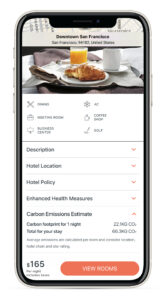

B2B travel management platform CWT recently launched a point-of-sale carbon footprint indicator for its myCWT mobile and web app, as part of the company’s $100 million investment in its myCWT platform.

“We surveyed our global customer base at the end of 2021, and an overwhelming 87% expressed that they would like information provided to their employees at point-of-booking to help reinforce responsible travel choices,” said Erik Magnuson, vice president of product management, travel content and connectivity for CWT. “CWT’s new carbon footprint indicators will help customers and their travelers understand their corporate and personal travel footprints and reduce their impact on the environment.”

A picture of an iPhone displaying the CWT Carbon Footprint Indicator app.
CWT Carbon Footprint Indicator

Alongside flight and hotel stay information, this CO2 indicator will let travelers know how much carbon they’ve produced from each activity. This service by CWT is in collaboration with carbon intelligence platform Thrust Carbon. This company also offers other features, like letting employers buy and sell carbon offsets along with flight purchases, such as donating to the reforestation of a forest around the globe or the purchase of solar panels for a school.

Read MoreHotels Are Zero-ing Their Game

Carbon Footprints and Big Business

Efforts to reduce our collective carbon footprint is by no means new, but it has been driven to the forefront in the last few years, as a response to climate change concerns.

Mark Corbett, founder and director of Thrust Carbon, believes that if travelers aren’t able to see their emissions when making transactions, it won’t factor in their decision-making. “We are rapidly moving to a world where emissions data will be valued side by side with financial data. Together with our partners at CWT, we have made a giant leap towards delivering this for business travelers around the world,” he said.

It’s hard to quantify the number of travelers tracking their emissions but various hotels brands and other travel-related companies have taken heed. In 2016, Dallas Fort Worth International Airport (DFW) was the first airport in North America to become carbon neutral, at the time it was one of only 23 airports, most of which were in Europe.

Since then, that number has reached more than 50, the bulk of which remains in Europe, including Hamburg Airport in Germany, Gatwick Airport in London and Austin-Bergstrom International Airport in Texas, which became carbon-neutral in 2021, only one of four in North America. In a resolution by Airports Council International (ACI) Europe and its members, more than 100 European airports have committed to going carbon neutral by 2030, as part of the Net Zero by 2050 pledge.

Marriott International also committed itself to net zero by 2050, as well. MGM Resorts International hasn’t gone quite as far, but the launch of a 100-megawatt solar array in the Nevada desert, which has enough power to produce up to 90 percent of MGM Resorts’ Las Vegas daytime needs and power roughly 27,000 U.S. homes, is a step in the right direction.

Read MoreHealthy World: Walking the Talk

Companies at a Crossroads

What exactly should the next step be? On one hand, there is the vital nature of the face-to-face meeting; on the other, the ever-increasing carbon footprint that is its by-product. Eric Friedrichsen, CEO of travel and expense management company Emburse, said employee travel is one of the world’s greatest contributors of emissions, in a 2021 article by World Economic Forum.

In a study by Emburse, it was found that only a quarter of organizations considered their carbon footprint a priority; the top three were duty of care, cost control and employee satisfaction. And while six of out 10 companies reported having a sustainability policy, only three out of 10 had a policy that included business travel.

He goes as far as to say simply measuring one’s carbon footprint is not enough, encouraging companies to focus on behavioral changes “that would have a real impact.” According to the Emburse study, only a quarter of companies rolled out any other initiative, including behavioral-related changes. These types of initiatives would include things like encouraging more sustainable transportation or accommodation, or even incentivizing employees to choose from these options.

He concluded the reason for this is that companies simply find it too hard and too expensive to implement these changes.

Overhauling the way in which a company operates and approaches business travel isn’t easy but CWT’s global survey shows that more employers want to do their part.


Have you returned to planning live events? You might not want to throw out the tools we used to get through the last two years virtually so fast. Out of necessity, we mastered snazzy new ways to connect, play games, exercise, entertain, make lunch/dinner/drinks and build things through platforms online.

Just because we can meet in person, doesn’t mean that is the only solution. Given all the technology and our experience and understanding of the virtual space, why would our meetings and events ever remain the same?

Reasons to Hybrid

Hybrid meetings incorporating virtual tools are here to stay for some powerful reasons. Offering a hybrid format for your meetings and events may:

  1. Bring you more attendees, as well as greater community engagement between and with the virtual and in-person audiences
  2. Increase your membership
  3. Give your organization a global audience
  4. Provide an opportunity to package the meeting content for your digital library
  5. Generate more revenue through new and existing streams

Read More: Make Hybrid Events Worth Every Dollar for Virtual Attendees

How to Make the Most of This Inconvenient Truth

Start by understanding that your organization’s meeting goals and objectives are critically important to the overall program and must be determined before beginning the planning process. To build momentum and community, entice people to attend, and reach your fiscal objectives, you’ll also need a strategic marketing and communication plan that integrates into your end-to-end planning and production process.

You should ask:

  • Why is your program important?
  • How are you delivering on the member or attendee value proposition?
  • How can you engage participants who may not have previously attended?
  • How will you infuse energy, engage and help all participants experience your meetings at the highest level?
  • Can you offer one-day registration options or join now/membership with registration as a combination option?
  • Does it make sense to package your meeting content, add it to the digital library, and monetize it for post-event viewing?
  • Most importantly: How can we energize participants, facilitate togetherness and collaborate differently?

Try a New Approach to Engagement With Hybrid Meetings

Focus on producing innovative, immersive experiences that allow people to feel closer together while engaging them virtually and live through ‘hub and spoke-style’ events occurring simultaneously in different formats and locations.

Consider creating options for attendees to collaborate in meet-up groups, use gamification, LED walls that include space for writing/drawing/coloring, and social responsibility and engagement activities that impact local communities.

As producers, we should scale experiences that elicit togetherness. Unique experiences can be designed for live or virtual audiences and include group size, attendees’ interests, abilities, and engagement levels. Asynchronous programming—offering various content at different times in unique platforms to extend the duration of the impact—can also help facilitate this approach.

Another engagement idea includes building micro-communities, which allows attendees during live meetings to sit comfortably in pods similar to a community room with a lounge set. Establish activation sites throughout your program and make the meeting app your friend. This is also a great way to engage partners and activate their sponsorship through health/wellness activities, games, puzzle collaboration, art projects and in many other ways.

Get Strategic

Attendees want memorable programs with meeting content and experiences that energize.

The meetings and events industry knows how to bring the community together and create phenomenal experiences.

Thriving in any environment involves a strategic, thoughtful approach that includes planning and producing programs differently. The answer to the cocktail party question “What’s new?” is now: “The meetings and events experience” for five very good reason that will make hybrid meetings and strategic engagement a part of our toolkit going forward.

Shelli Vasser Gilliam, CMP, SEPC, is the Principal of Vasser Gilliam LLC, a woman-owned consulting company that bridges the gap in resources and makes connections for clients and collaborates on events and programs to raise awareness and increase support for their work. Connect with Shelli on Linkedin.

The pandemic has driven event planners to rethink their strategies for events of all sizes so that health and wellness is at the forefront of almost every decision—a trend that is likely to continue and, if executed carefully, could also help optimize content delivery in the age of TikTok-sized attention spans.

We have all heard that Microsoft estimates focus time has gone from 12 seconds in 2000 to eight today, less than the 9 seconds experts think a goldfish can pay attention. What event designers are learning is that exposing participants to micro-stimulants can ease the process of reaching their ultimate satisfaction during the event by winning their attention over and over again. Actively participating in the event’s itinerary will ultimately save their energy and increase their motivation.

Read More: How hotels are supporting wellness goals.

Focusing resources on four primary areas—food, break sessions, the setting and culture—is the most efficient way to harness a health program that boosts attentiveness at your events. Following are the secrets for achieving a well-balanced experience for your attendees by maintaining their well-being!

Incorporate Short Physical Activity

A group of people doing yoga in the desertAdding early morning running, yoga sessions or Tai Chi classes into conference agendas is becoming the norm. No wonder, considering that 1 in six workers suffer from mental health issues such as anxiety, depression and stress, according to Mind’s Mental Health at Work research.

While separate training sessions are an excellent trend, exercise between and during conferences can be powerful additions. Here are more methods to incorporate exercise into an event, using a broad definition of “exercise.”

As blood flow to our brain begins to drop after 10 minutes of sitting still, exercise during events is essential. Any movement included in sessions helps restore attentiveness to where it was when participants first sat down. So, ask them to stand up and suggest doing the following:

  • Standing on tip-toes (standing calf raises/toe-stand exercise)
  • Hips stretches (a high lunge forward with one foot in front of the other)
  • Shoulder rolls or shrugs (engaged core, soft neck)
  • Neck pain relief stretches (turning head to left then right slowly)

To connect with the audience and make the activity even more inclusive, take part in exercises yourself. Guide, and inspire participants by taking the first step out of your comfort zone.

A participants’ state of mind plays a crucial role in keeping them engaged. You can improve their mental state by hosting mindfulness sessions, such as meditation or goal setting, deep breathing gatherings, or even nap spheres. You might be surprised how a simple snooze will give you an energy boost, improve your memory, cognitive skills and creativity.

But how do you approach wellness and well-being in the area of online events? Hybrid fitness solutions are what you’re looking for. As much as Zumba, dancing and workouts are best experienced in person, allowing individuals to engage online provides a much broader reach.

Create a Relaxing Off-grid Zone

Various healthy produce, grains and nuts from aboveScreen-free zones have become popular at conferences. Studies on secondhand screen time and the use of technology in lecture halls, such as a cell phone or a laptop, have reduced attendees’ long-term recall of knowledge.

Although adaptations made during the Covid-19 pandemic have proven that it’s possible to keep our focus as much as necessary using mobile devices to uphold work and study responsibilities, it hasn’t necessarily helped our overall wellbeing. Consider setting up screen-free breakout sessions, networking events, or screen-free zones at your next event to enhance participant retention and let them live in the moment.

With a no-device rule, these relaxing zones could be filled with ambient music, dimmed lights, and fresh but not overwhelming smells. It’s your call whether you wish to make it a “silence zone” as well, or whether you prefer to encourage conference attendees to integrate without electronic disturbance.

Additionally, opting for healthy, local food and beverages and reducing alcohol consumption to a minimum can enhance group wellness. Instead of donuts, candies and fried meals, provide locally grown, nutritious food and drink options. Providing your attendees with water, complex carbs, proteins and a modest quantity of saturated fats is crucial to keeping their minds attentive and active.

Leverage Non-obvious Solutions

If your event is being held on a mobile device, you could utilize the push notification capability to provide tailored “healthy tips of the day” to attendees.

Read more: 6 tips to deliver more productive virtual meetings.

This could involve any of the following positive messages:

  • “Have you already had your energy-boosting walk today?”
  • “There’s no better time than now—take a moment, close your eyes, and breathe.”
  • “Make sure to sip as you sit.”
  • “You took a solid dose of knowledge—take a break and dream a little,” followed by sharing directions towards the relax-dedicated zone.

You could also consider incorporating a focus-retrieve exercise to win back your attendees’ awareness of the present. Ask your listeners to either write down the following:

  • Five objects that caught your attention.
  • Four things that you can feel.
  • Three things that you can hear.
  • Two green items you can see.

This easy sensory countdown practice will help them refocus and get participants’ minds in a more alert and responsive condition.

What would make people come back next year to your event? The answer is positive associations. As Hilton EventReady Playbook observes, a wow” moment surprises visitors and sears a positive image into their memories.

Wellness at conferences needs one vital ingredient—hype. Without promotion, guidance and continuous improvements, these essential elements of a meeting can be lost and forgotten. Don’t let that happen at your event.

Nina Zhang is CEO and Founder of KalaVita.

Events and communications professionals were forced to innovate under the immense pressure of the pandemic. Companies around the world successfully adapted their operations to produce ever-improving hybrid and online events that made sure people could continue to connect as restrictions came into force.

Now, it’s vital that the industry continues to strive for events that create environments, which foster communication with no barriers and enhance connectivity.  A chief strategy officer is probably best placed to deliver this objective and will play a pivotal role in ensuring it is this at the heart of how future events are designed and delivered.

Growing Need for Chief Strategy Officers

A portrait of Stephen D. Pickett, author of this article and chief strategy officer at a communications company. He is a white man with short brown hair and a dark blue suit.
Stephen D. Pickett

Businesses should now begin to view events through a different lens. Firstly, they should be seen as integral elements of long-term communications strategies, rather than one-off occurrences. Events can be a powerful tool for delivering sustained engagement when they are considered as part of a series, with each individual function feeding into an invaluable central pool of content and audience data. Appointing a chief strategy officer not only helps to develop a company’s vision and strategy, but also gives a focal point to drive and oversee this process.

Secondly, it is increasingly being recognized that the primary strength of events is that they provide an arena for connectivity. Regardless of the format—virtual, in-person or hybrid—each brings important value to audiences. Aside from the benefits of face-to-face interactions and the resultant rapport firms can build with their audiences, in-person formats provide fantastic data collection opportunities and insights to aid continued improvement of a firm’s event offering.

Equally, sophisticated virtual event platforms can create an environment where communication can be most effective among all levels of stakeholders. There is mutual interaction between several audiences, including the host business, potential clients, and other delegates. This is crucial for driving return on event investment.

Desire to Connect

Many people spread out on pavement with digital lines connecting them.

The desire for connection has developed slowly over the course of the pandemic. More people have used technology for both personal and professional interactions: from 2019 to the end of 2021, an estimated 782 million additional people went online. This “connectivity boost” has meant more than just an influx of new internet users. It has also resulted in audiences becoming accustomed to making instant but important social connections via digital channels, increasing expectation.

The events industry is in a prime place to take advantage of this behavioral shift. A high level of connectivity has now been normalized. As part of a long-term communications strategy, events are the best environment for satisfying the need for consistent and meaningful interactions. Crucially, this can be among all levels of audiences.

Wide Stakeholder Engagement

It is increasingly important to engage with both internal and external stakeholders to ensure that safe environments can be created where communication can thrive. For a chief strategy officer, this means engaging with departments outside the traditional ‘marketing and events” teams.

Recently, I have been speaking much more regularly with our clients’ Heads of Employee Engagement, who would perhaps fall under the HR department. By partnering with these colleagues, we can ensure consistency of messaging and clarity of communication that will be crucial to both workforce retention and—in the long-term—expansion of our audiences.

Moreover, we can work with these teams to ensure that messaging is delivered effectively during events like company town halls and new starter onboarding. This will ensure that communications have the prolonged impact that is so important to business growth.

A New Opportunity

The new level of connectivity that we became used to during the pandemic is now part of our DNA. So, it is vital that businesses recognize this fundamental change and use it to their advantage. This is an opportunity to recalibrate how we view events, so that they can be used to drive more meaningful interactions and deliver messaging with a much longer and greater impact.

The events sector has typically been resistant to change, comfortable with tried and tested formats and the option to return to these traditional platforms will be considerable as the pandemic recedes. This will be a huge waste of the knowledge and skills gained over the last two years.

We have seen how events innovation can build global communities and harness invaluable audience data; now is the time to challenge ourselves to continue this momentum and strive towards the enhanced connectivity that can help businesses build those commercial relationships that help drive their success.

Stephen D. Pickett is chief strategy officer at the U.K.-based Live Group, an events and communications agency that creates powerful communication strategies designed to bring audiences closer together.

Anna Olson

A portrait of Anna Olson. She is an older white woman with a brown pixie cut and a tan suit jacket.

Hotel Cerro in San Luis Obispo, California, appointed Olson general manager. Most recently, the 27-year hospitality and business development veteran was CEO at Central Coast Distillery, aiding in the launch of  the boutique distillery. Olson is also a lecturer at California Polytechnic State University, San Luis Obispo in extended education and guest service for business development. She has held leadership roles at Allegretto Vineyard Resort, Inn at Morro Bay by Pacifica Host Hotels and more.

Tim Keough

A portrait of Tim Keough. He is a white man with spiked brown hair, a gray suit jacket and a pink collared shirt.

The Scottsdale Resort at McCormick Ranch in Arizona welcomed Keough as director of sales and marketing. Keough brings 18 years of hotel sales experience to his new role, most recently working for Pointe Hilton Tapatio Cliffs Resort in Phoenix as its director of sales and marketing. He has held sales and marketing directorships at Crescent Hotels & Resorts, Destination Hotels, Starwood Hotels & Resorts and Hyatt Regency properties in Arizona, California and Massachusetts.

Kulbhushan Tyagi

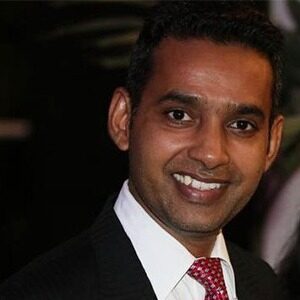
A portrait of Kulbhushan Tyagi. He is a South Asian man with a black suit and a red tie.

Grace Bay Resorts, the luxury Turks and Caicos-based resorts brand, promoted Tyagi to general manager of Grace Bay Club, a waterfront resort property on Providenciales island. Tyagi has been in the hospitality industry for 23 years and has held roles in food and beverage, restaurant and hotel management. Previously, Tyagi was resort manager for Grace Bay Club, and he’s served as a leader at Fairmont Hotels and Resorts properties, Four Seasons Hotels and Resorts properties and more.

Read More: Smart Moves in Portland, Minneapolis and More

Paul Jansen

A black and white portrait of Paul Jansen. He is a white man with short combed hair and a black suit.

Mayo Civic Center in Rochester, Minnesota, appointed Jansen general manager. A 34-year facility management veteran, Jansen most recently held an executive role in wealth advisory at Milwaukee’s First Business Bank, but he has spent 30 years of his career at Bradley Center Sports & Entertainment Corporation in Milwaukee. While at Bradley Center, Jansen ultimately served 10 years as its senior vice president of sales, marketing and business development.

Cohco Harbour

A portrait of Cohco Harbour. She is a young Asian woman with long brown hair.

The Ritz-Carlton Residences, Waikiki Beach welcomed Harbour as sales manager. Harbour brings with her a decade of hospitality sales experience, most recently working for Aulani, A Disney Resort & Spa and JTB Hawaii, a local DMC. She previously held the role of front desk supervisor at The Ritz-Carlton Residences, Waikiki Beach and has received laurels for her exemplary leadership at the property.

Saundra Briggs Robertson, CTIS, CTA, and Destiny Monyhan, CMP, CTA

Two portraits of Saundra Briggs Robertson and Destiny Monyhan. Robertson is a black woman with long curly hair and a white cardigan, and Monyhan is a white woman with shoulder-length brown hair and a magenta blouse.

Louisville Tourism promoted Robertson to senior tourism manager and Monyhan to senior destination services manager.

Robertson has been at the DMO since 2007, most recently serving as tourism sales manager. She currently sits on the Southwest Dream Team (SWDT) board and remains a member of West Louisville Urban Coalition and Leadership Louisville, community-centric initiatives.

Monyhan joined Louisville Tourism in 2010 as its destination services manager and, for the past 11 years, has led the DMO’s Green Meetings initiative. She has also held leadership and management positions at Kentucky Science Center.

Read More: Louisville Experience Checked All the Boxes

Tony Mira

A portrait of Tony Mira. He is an older white man with a black suit and red tie.

The Ritz-Carlton, Turks & Caicos appointed Mira general manager. Mira brings 36 years of hotel management experience to his new role. He was previously general manager of The Ritz-Carlton, Marina del Rey, where he served for eight years. Mira has also been general manager for two other The Ritz-Carlton properties, as well as for Renaissance St. Louis Airport Hotel and Residence Inn by Marriott Chicago Oak Brook.

Mike Powers

A portrait of Mike Powers. He is a white man with short combed hair, a short beard and a black suit jacket.

Powers is now general manager of Hotel Indigo Los Angeles Downtown. For 17 years, Powers has been a leader in Los Angeles hotel management. He was most recently general manager of DoubleTree by Hilton Hotel Los Angeles Downtown. Powers has also been general manager for DoubleTree by Hilton Hotel San Pedro in California and Hilton Garden Inn LAX/El Segundo.

Ann Durso

A portrait of Ann Durso. She is a tan white woman with a silver chain and a black blouse.

Florida’s Hillsboro Beach Resort appointed Durso general manager. Durso most recently worked for Menin Hospitality’s Gale Chicago property as general manager. For eight years, she was in management at IHG Hotels, ultimately serving as regional manager. A hospitality leader with almost 30 years of hotel management experience, Durso has also been Chicago area general manager for Interstate Hotels & Resorts and hotel manager at InterContinental Chicago Magnificent Mile.

Ashley Stokes, HMCC

A portrait of Ashley Stokes. She is a woman with shoulder-length curly hair and a cheetah print blouse.

Miraval Berkshires Resort & Spa in Lenox, Massachusetts, welcomed Stokes as director of group sales and events. With over a decade of experience in northeastern U.S. sales, Stokes most recently held the role of director of sales and marketing at The Newport Harbor Hotel and Marina in Rhode Island. She has been a leader in sales at Kimpton Hotels; Triumph Hotels; InterContinental New York Times Square and more.

Jon McGaunn

A portrait of Jon McGaunn. He is an older white man with a gray plaid suit jacket.

McGaunn is now general manager of Montage Palmetto Bluff in Bluffton, South Carolina. Bringing 30 years of hospitality leadership experience to his new role, McGaunn previously held the role of hotel manager at The Ritz-Carlton, Naples in Florida. He also has served as rooms executive at The Ritz-Carlton in Atlanta, Boston and Boston Common, and Amelia Island and Palm Beach in Florida; as well as director of rooms at Omni Hotels & Resorts.

Ryan Smith

A portrait of Ryan Smith. He is a white man with a short brown beard and a blue suit jacket.

The Seabird Resort in Oceanside, California, welcomed Smith as hotel manager. Most recently, the 12-year hospitality veteran was director of operations at Hyatt Regency La Jolla at Aventine in California. Smith has a long history of leadership at Hyatt Hotels, including directorships and management roles at Grand Hyatt Baha Mar in Nassau, Bahamas; Park Hyatt properties in Southern California; and Grand Hyatt Seattle.

Tracey Koehler and Kate Labbe

Two portraits of Tracey Koehler and Kate Labbe. They are both white women with long brown hair.

Switch, the St. Louis experience agency, appointed Koehler director of business development and Labbe marketing manager.

Bringing over 12 years of sales experience, Koehler was most recently a senior sales leader at Informa Markets in New York. Koehler has held roles throughout the industry, including head of sales, lead account manager, director of partner experience, vice president of sales and marketing for North America and more.

Labbe has been in events, sales and marketing for seven years. She most recently served as digital marketing and virtual events manager at Handled. By Hayden & Co., headquartered in New Hampshire, and, prior to this, was marketing specialist for Thompson Coburn LLP in St. Louis.

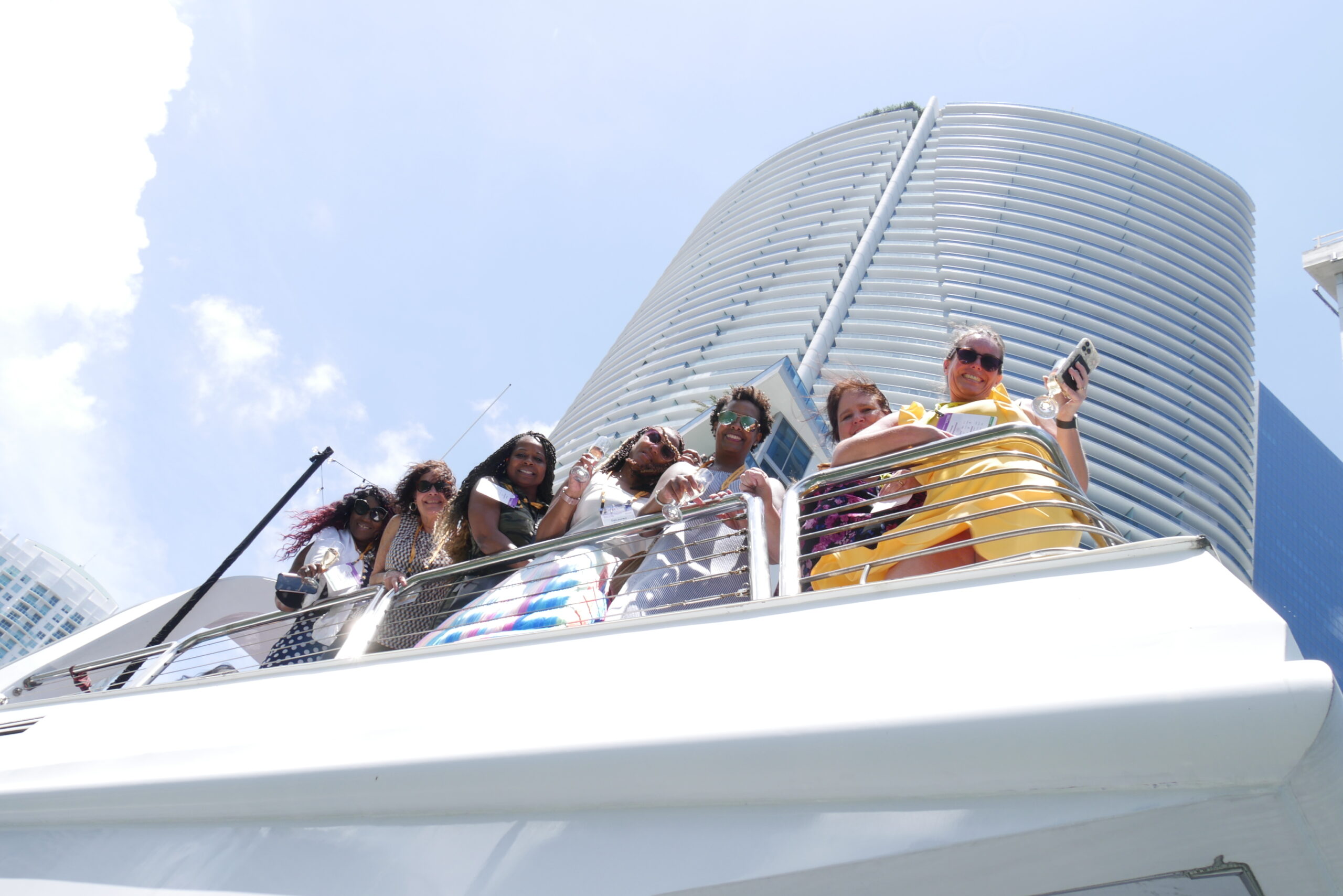
When in Miami, the best course of action is to make a splash. Smart Meetings 3-Day National Experience at Kimpton EPIC Hotel leveraged the best of the sunny, water-adjacent location to bring everyone together memorably.

The specialty of the house in this newly renovated 411-room property was mixing elevated service with elegant surroundings, inspiring ideas and top-shelf meeting professionals from around the country. An off-site on the Biscayne Lady, a three-story yacht that serves catered meals, sports a DJ and a themed bar, showed off the fast-growing city.

A group of people on a boat with the Kimpton EPIC Hotel in the background.

A quick sprinter van ride to Kimpton sister property Surfcomber Hotel opened the door to all-new cabanas with an outdoor performance stage and an Art Deco, South Beach vibe only found in Miami.

Here are some lessons learned from three days in Magic City.

Ask ‘What If?’

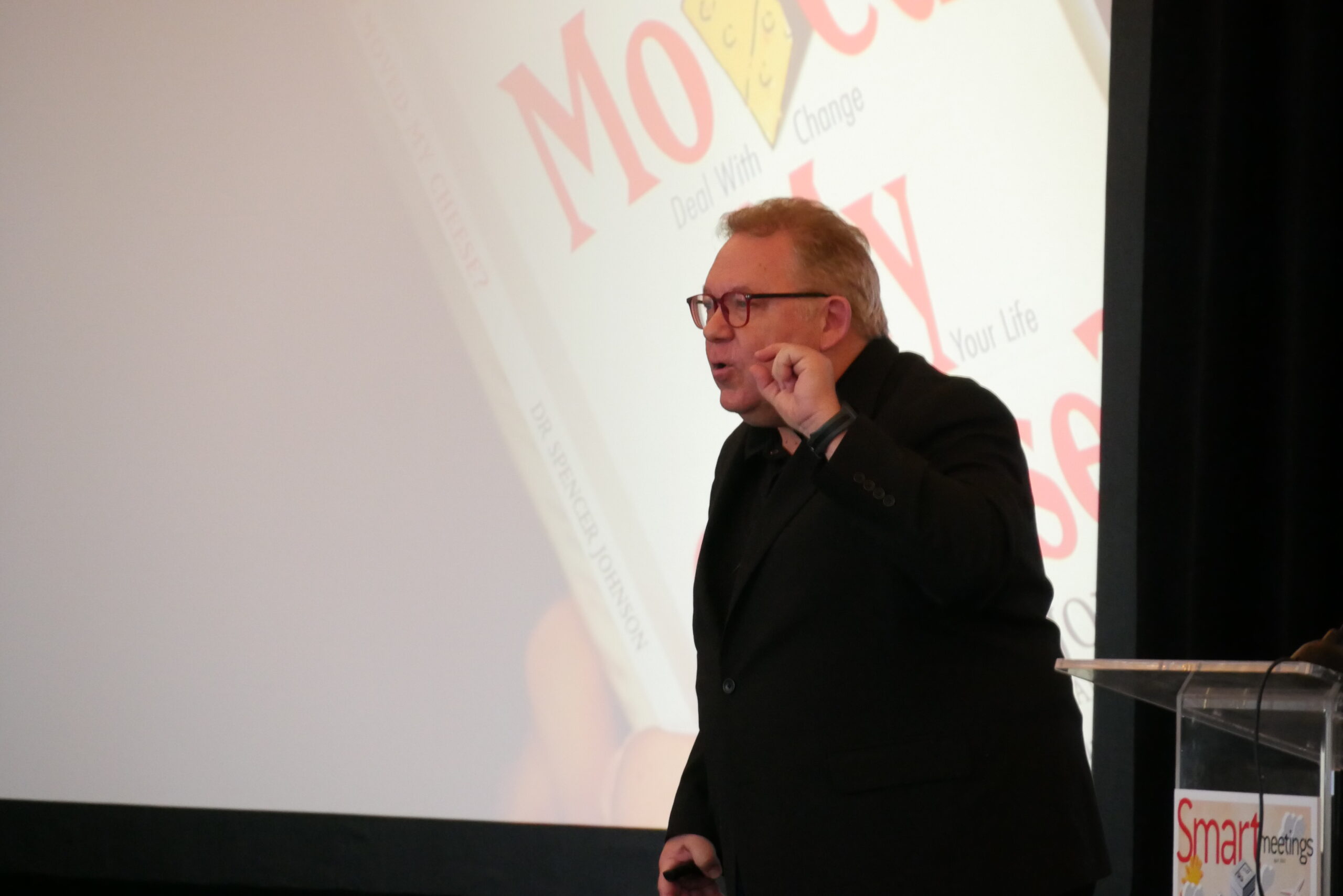
Another crisis will come. It may not be a pandemic, but something can happen at any time. Are you ready? SmartStorming author Keith Harmeyer suggested that meeting professionals practice asking, “What if,” on repeat.

“How you deal with change begins with how you deal with ideas,” he said. “We live in a world driven by innovation; nothing is around long enough to become ‘business as usual.’”

He ran attendees through a series of exercises to help them channel their inner Elon Musk.

“There is no such thing as a bad idea; sometimes it just needs a tweak, so give it time to gel,” he said. His secret to generating groundbreaking innovations? “Go for quantity. For every 100 ideas, only three or four may be ultimately viable, so let your mind roam free.”

A picture of Keith Harmeyer speaking onstage in front of a projector.
Keith Harmeyer

He led mini-brainstorming sessions, where everyone was instructed to go for wild, crazy, audacious ideas. “You never know how far you can go until you have gone too far,” he said. It’s easier to take an extreme idea and pull it back than to make that same old tired idea more interesting.

Read MoreHot Tips for Visiting Miami

Play Through the Fouls

In another nod to the inevitability of setbacks, author, sports commentator and communication coach Vera Jones shared her powerful story and strategies for dropping fear and developing faith, focus and fortitude. Her secret for rebounding when she is blindsided by life’s fouls? Empathy. “You have to focus on the goal,” she said.

Loud and Clear

To avoid upsets at in-person, hybrid and virtual meetings, Smart Meetings Event Tech correspondent Brandt Krueger shared tips for helping everyone put their best digital foot forward as we “reincorporate live audiences into meetings,” a term he thinks is preferable to “going back to meeting,” since it acknowledges that we want to bring along all the people who were not able to join meetings previous to the pandemic and the fact that we have mastered some new tools that could help us meet better in the future.

“Showing up to a tech check with professional lighting, audio and background is the new three-piece suit,” he said. “We need to model that so our speakers and attendees will see how much more powerful a high-quality connection can be.”

Catch more thought-provoking lessons and networking opportunities with other like-minded meeting professionals at the next Smart Meetings Experience at AT&T Stadium in Arlington, Texas, May 18.

No one really knows what events will look like in a post Covid-19 world and it’s difficult to see how things will pan out over the coming year. The most recent seasons have taught us that venues with the ability to quickly adapt to their environment and their experiential offerings were the most resilient in a time of peak uncertainty.

The reality is likely that for the foreseeable future, most attendees will be split between those willing and able to attend in person and those who cannot and will have to attend virtually. Regardless of where events are being viewed, quality assurance is key.

Superb Sanitation Measures

Having a clean venue is an element that contributes to the atmosphere and attractiveness of an event. An untidy or littered venue may not attract guests to return in the future.

People may not remember the awesome sound from the speakers of your event, or the incredible food and beverage. They might also forget all about the transitions between dynamics and games or events, but they’ll most certainly remember if they attended your event and it appeared unsanitary or messy.

Perception on cleanliness will continue far into the upcoming years. People want to feel safe as soon as they walk in the door, and they want to actively see staff cleaning.  At our facility, we have taken steps to undergo a rigorous cleaning process that include regular facility inspections and other high-level cleaning commitments to obtain the Global Biorisk Advisory Council (GBAC) STAR-accreditation—the only outbreak prevention, response and recovery accreditation in the facilities industry.

Read MoreWhat Keeps Attendees Safe in a Pandemic and What Doesn’t

Take This Opportunity to Recreate Your Event  

Virtual experiences that reached peak heights of popularity amid the isolation caused from the Covid-19 pandemic are now being barred for the bright lights of in-person gatherings. With so much uncertainty about what our future holds, many are taking the opportunity to re-imagine their events and trying something new.

Having a Plan A and Plan B is important for planners going into their events. While they have committed to running their event in-person, there is a good chance it will change shape as the planning process goes forward. Having a backup plan in mind in case the unexpected happens will be crucial in delivering the best experience possible given all the circumstances.

With that, I would consider streaming and recording services as part of the program scope. Whether you are live streaming your event to a virtual audience or taping your event to provide attendees who did not attend in-person a chance to invest in the content.

With the onset of the pandemic, organizers were forced to move quickly to online events and discovered they were reaching brand new audiences. I predict rapid growth and change with many events to come catering to many individuals across the globe.

Clear Communication with Clients and Attendees

Clear and precise communication is crucial in producing a successful event during these unpredictable times. Attendees will need to know what to expect, so it helps to provide them with updates while keeping Covid policies and procedures in mind. As times are constantly changing, it is important to have your board, staff or associations review everything prior to planning your event to make sure you are in line with the current atmosphere and regulations.

For example, there is a good chance proof of a negative Covid test or proof of vaccination will be a requirement that we might see for a while. This prerequisite is another one of those factors that when communicated effectively, can help clients feel safe about attending.

Flexible Contract Language

Two people holding a clipboard. One is holding a pen to sign a contract.

Now more than ever, clients are looking to work with facilities on their contract language and overall flexibility so that there is a partnership with the agreement and a clear understanding on cancellation fees, etc. Given the continued uncertain times, being clear and concise on contract negotiations and rules and policies will be critical in forming a safe and enjoyable event for all.

Read MoreA Breakdown of Post-Pandemic Contract Clauses

By following these practices, we hope to bring ease and peace of mind when planning your next event. It’s unclear where the industry will be over the next several months and years so it will continue to be important to be flexible but not let restrictions or unexpected changes derail your planning. There is always a solution so get creative and communicate with your partners on the best path forward.

Shannon Licygiewicz is general manager of the Albany Capital Center in New York.

Across the pond, the U.K. events industry is picking up the pace. ExCel London exhibition center, at London’s Royal Docks, detailed the rapid regrowth it’s seeing as an events industry hub and the creation of an “events superhighway”—the Elizabeth line—in two of its recent press releases.

A venue with its more than 1.1 million sq. ft. of meeting space, ExCel is leading London and the wider events industry back to profit and progress.

Business Takes ExCel by Storm

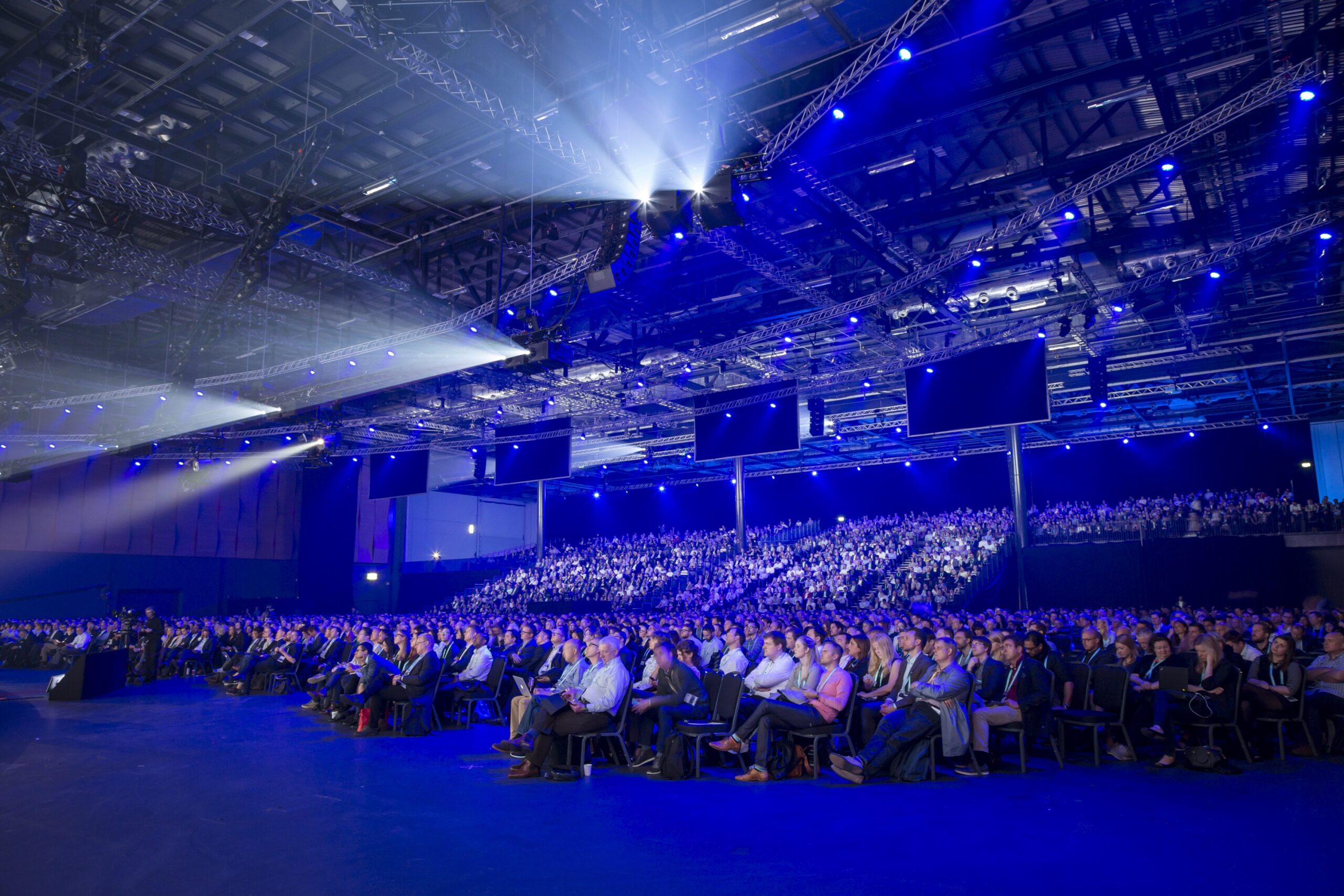
A large crowd in the ExCel event center. Stage lights above them give everything a blue tint.
Event at ExCel

At ExCel, international, big businesses are pouring in, marking a quick and strong return to events, said ICCA President and ExCel London CEO James Rees. “Back-to-back, major events” have been scheduled to run from this April through the end of this year, including Amazon, International Society for Magnetic Resonance in Medicine (ISMRM) and the Formula E championship for electric cars, the venue reported in a press release March 31.

According to the company’s May 4 press release, ExCel officially reopened last summer and has since been visited by over 1.5 million business and meeting professionals. This year, the venue plans to host 350 events and announced March 31 the expansion of its in-house conference and events team. With the addition of Jamie Ades and Katy Gough, the center’s two senior account managers; and the return of Head of Business Development Jane Hague, ExCel is restacked and ready to roll.

Read MoreCarina Bauer: European IMEX Marks Return to Normal

An Industry “Game-Changer”

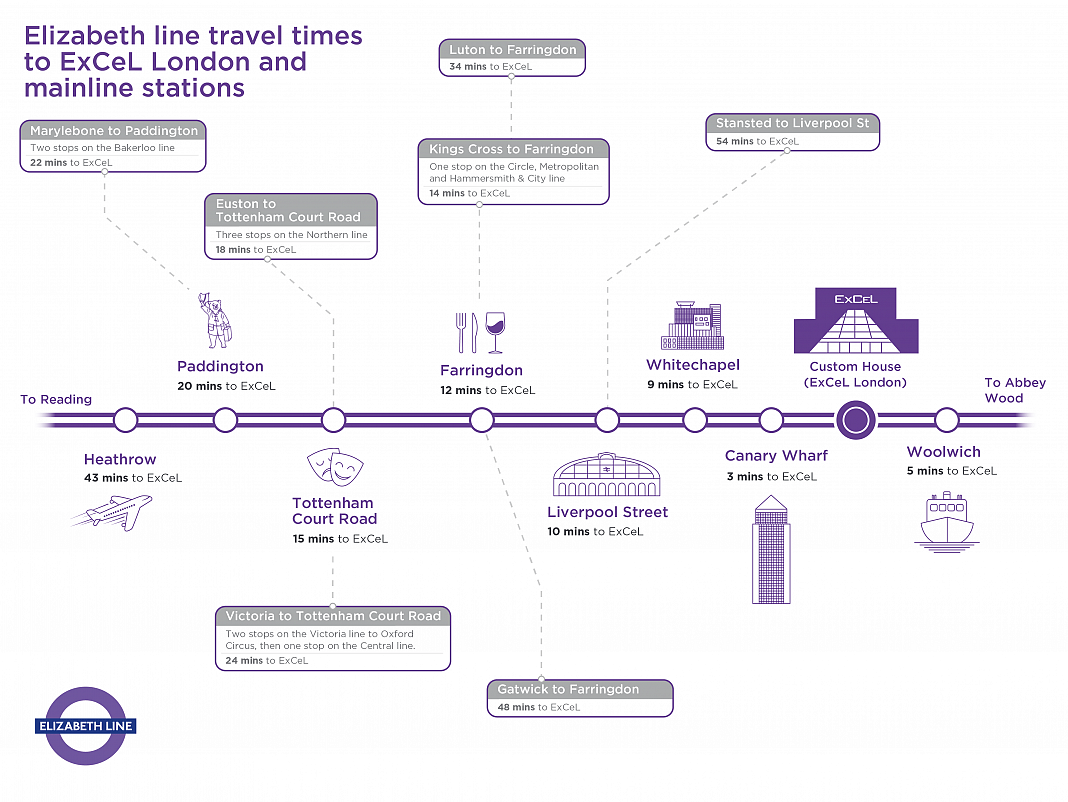
On May 4, ExCel announced the Elizabeth line, an events-centric railway line connected to the city’s Transport for London (TFL) railway system and extending the Docklands Light Railway (DLR). The Elizabeth line will open May 24, as will ExCel’s own station at London’s Custom House.

A chart by ExCel London explaining travel times to different destinations when using London's Elizabeth line.

Deeming this development a “game-changer” for the continued recovery of London events, Rees stated, “ExCeL is now arguably the world’s most connected event venue, with two underground lines, one mainline station, an airport, road links, bus services, water taxis and even a cable car all within earshot.”

The Elizabeth line is a high-speed railway that will provide cross-city, express access to the mega events venue for 9.2 million Londoners now living within 120 minutes of ExCel by rail travel. The line is set to have 24 trains running per hour each day, increasing the number of travelers in a 45-minute radius of the venue by rail by 68%, the press release stated.

Visitors arriving at Heathrow Airport (LHR) will be able to directly reach ExCel in 43 minutes. Reducing travel time to the center by two-thirds, the Elizabeth line makes it a 12-minute trip from the city center.

“In short, the Elizabeth line will give people more of that most precious of commodities—time—allowing them increased opportunities to network, learn and, of course, trade,” said Rees in the statement. The railway extension adds an impressive aspect of convenience and efficiency to events at ExCel and for business travelers that positions the now 34 billion-dollar U.K. events industry for steady upward movement.

In the meantime, the London events venue makes progress on a 269,000-square-foot expansion to facilities, the press release stated.

Learn More

The Wisconsin Center District is located in the heart of downtown Milwaukee, placing attendees within walking distance of top attractions, dining, and nightlife. The convention center will even nearly double in size to 445,000 total sq. ft. following a 2024 expansion that includes a 300,000 contiguous square-foot exhibit hall and rooftop ballroom with an outdoor terrace. Additionally, these convention campus-area districts are perfect for after-hours fun during Milwaukee meetings and events.

Wisconsin Avenue

Milwaukee’s convention center sits on the city’s main street that leads to the lakefront as well as museums such as Discovery World and the Milwaukee Art Museum. Along Wisconsin Avenue, visitors can experience Sculpture Milwaukee, an annual exhibition bringing stunning museum-quality sculptures out on the streets of downtown.

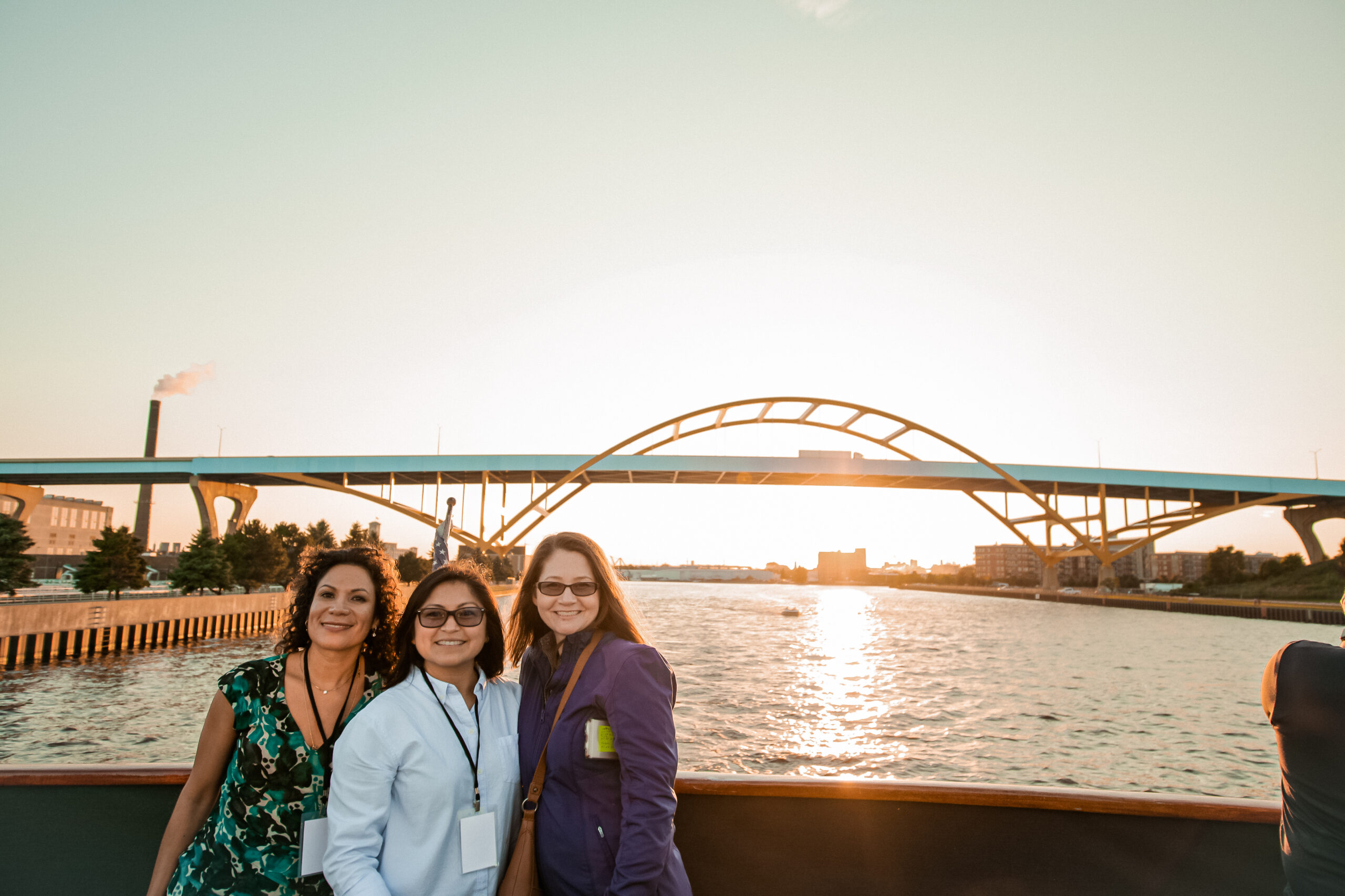
Wisconsin Avenue bridges rise over the Milwaukee River, which has a gorgeous riverwalk for visitors and locals alike. The Milwaukee RiverWalk winds through three riverfront neighborhoods bringing guests to the doorstep of some of the city’s best restaurants, brewpubs, shops, and nightlife.

Chain restaurants are hard to find in downtown Milwaukee because of the city’s focus on local flavor and cuisine. Taste it all at the new 3rd Street Market Hall featuring local vendors, games, activities, and a selfie museum.

Old World Third Street Entertainment District

Once the heart of Milwaukee’s German community, today the Old World Third Street Entertainment District maintains a traditional vibe with some modern nightlife mixed in.

Local landmark Mader’s German restaurant provides a true taste of Milwaukee history. Old German Beer Hall serves up a full menu of German bier and traditional fare. Traditional shopping is also popular in this district at shops such as The Spice House, Wisconsin Cheese Mart, and Usinger’s Famous Sausage.

Don’t forget to head to the docks in this district for boat tours along the Milwaukee River and out onto Lake Michigan from local boat companies like Edelweiss Boats and Milwaukee Boat Line.

A crowd in front of the Old World Third Street Entertainment District. A banner is on the side of the building with five basketball players and text reading, "History in the making."

Deer District

One of the hottest new areas in Milwaukee to eat, drink, and play is Deer District. Built on the 30 acres surrounding Fiserv Forum arena—home of the Milwaukee Bucks—this district is filled with restaurants, entertainment, and events.

The Beer Garden features a versatile collection of craft beers as well as outdoor big-screens on game nights. The Mecca Sports Bar & Grill gets attendees as close to watching the game in person as you’ll get without a ticket. Good City Brewing features its signature taps in addition to small-batch and experimental brews, as well as popular stone-fired pizzas. And enjoy a corner pub vibe that’s totally Wisconsin at Drink Wisconsinbly.

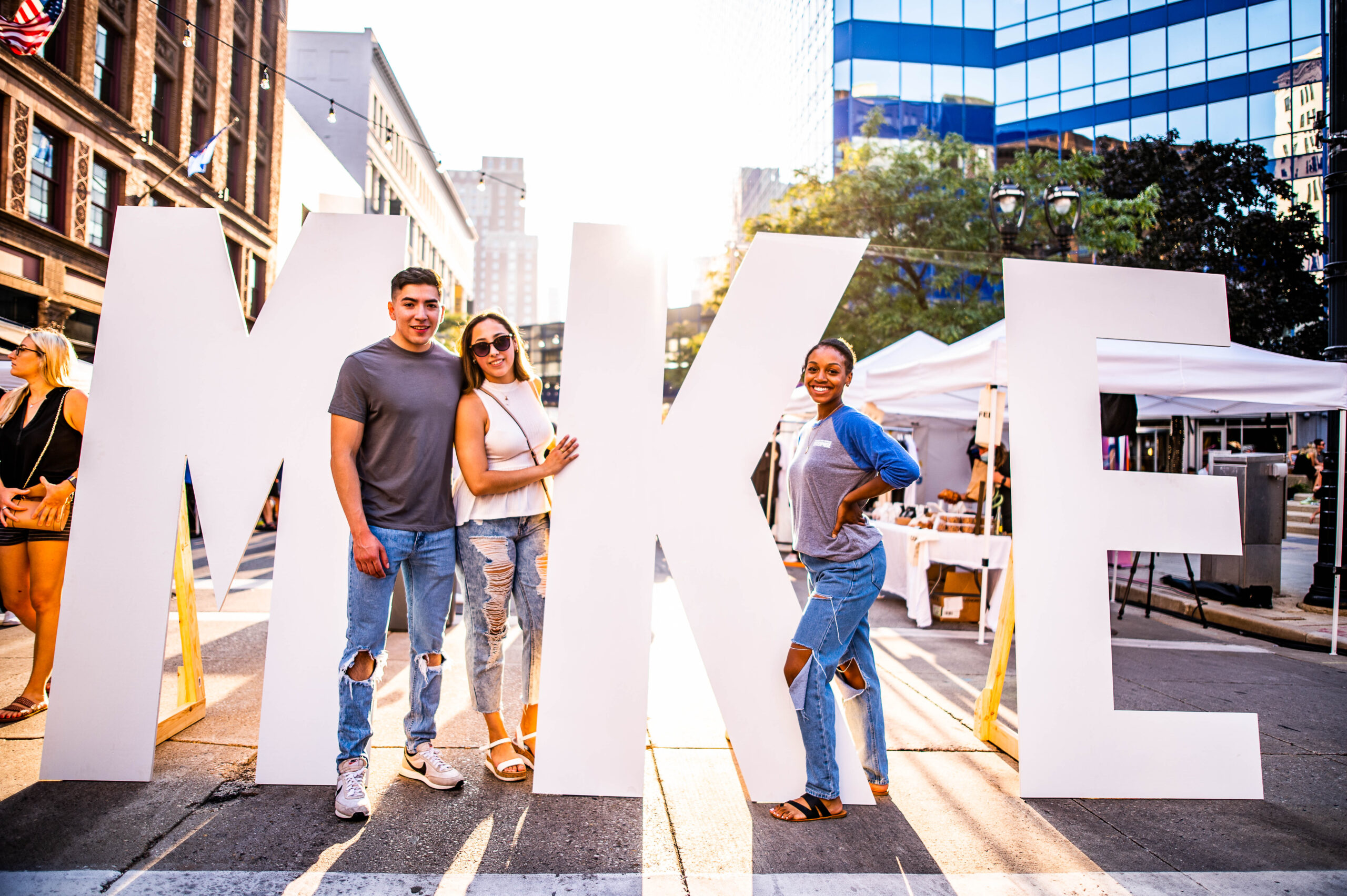
Three young adults posing in Milwaukee's Deer District with three large letters M K E.

Pabst Brewery District

The 21-acre historic Pabst Brewing Company campus is now the unique Brewery District combining historic preservation with sustainable new developments.

Best Place at the Historic Pabst Brewery has a retro-cool tour that includes your choice of an ice-cold Pabst, Schlitz, or root beer as you explore Captain Pabst’s office, Blue Ribbon Hall, and the Captain’s Courtyard. Take a more modern beer-in-hand tour at Milwaukee Brewing Company, where you’ll learn about the craft brewery in addition to sampling new and seasonal beers.

Founded by Oscar-winning Milwaukee native John Ridley, Nō Studios is an artist haven boasting the Skyline Bar + Lounge. Bottle House 42 is an approachable and modern restaurant serving upscale brewhouse favorites, great beers, and craft cocktails. On Tap at The Brewhouse Inn & Suites is a new gastropub with Wisconsin-inspired pub food as well as a large selection of local brews and crafty cocktails.

In Milwaukee—the place where Unique Unites—attendees are engaged during meetings and long after sessions have ended. Start planning today at VisitMilwaukee.org/Meet.