Why demographics are less effective for building meeting agendas than values

In Canada, where I reside, each week brings a new influx of forms and documents from the government. Mostly, these are tax forms. They arrive in an array of colors: green, pink, blue and sometimes just plain white. For the longest time, I filed them based on color, until a savvy financial advisor highlighted the folly of my system. Grouping items by the color of their paper was illogical. Obviously, the color of the paper had no bearing on the content contained within, and as a result, I was merely assembling forms into categories that shared no meaningful commonalities.

Drawing parallels to people, categorizing individuals solely based on their generations is equally nonsensical. Just because people have orbited the sun on this rock we call home an equivalent number of times doesn’t imply they share anything else in common. When organizing a meeting, conference or any event, the idea that generational profiling—or as I like to call it, generational stereotyping—will somehow enhance its success is unfounded.

To substantiate this, we can refer to our research. Over the past seven years, we’ve surveyed more than 750,000 individuals worldwide, in 152 languages, with a team of academic researchers. We’ve been profiling peoples’ wants, needs and expectations, but most uniquely their core human values. Why? Because values shape every decision, behavior and emotion that humans possess. If you understand what people value, you understand people.

Read MoreLeading and Learning From the Next Generation of Meeting Profs

The data indicates that understanding people’s values instead of their generation is a more intelligent approach to planning an effective meeting. For instance, if the attendees share values such as personal growth, ambition and social standing, this would steer an event strategy in a certain direction. Conversely, if their shared values involve relationships, environmentalism and creativity, your event strategy would look completely different.

We refer to this practice of grouping people based on their values as “valuegraphics,” distinguishing it from demographics. Demographics remain useful in identifying what people are, which can sometimes be important, but they are incapable of conveying who people are. And if you aim to organize a resonant, transformative and engaging event where people feel a true sense of belonging, wouldn’t you prefer knowing who they truly are, deep inside, where it counts?

Profiling groups of people is a service that my company, Valuegraphics Research Company, offers. However, you don’t need to hire us. To get a rough idea on your own, you can simply ask a set of three rigorously tested questions we’ve developed specifically to help everyone harness the immense power of shared human values. The short video below explains the “Three Telltale Questions,” and how you can use them to understand the values of the people for whom you’re planning an event.

How to Plan Events Your Attendees Want

But there’s something bigger at stake than effectiveness and efficiency. The more we rely on demographics to understand people, the more we reinforce demographic stereotypes that lead to ageism, racism, sexism, homophobia and a host of other issues. By merely changing how we look at people, several wonderful outcomes materialize.

Read MoreElevating Engagement

It’s far more effective in achieving our work objectives. People with similar values are as much as eight times more aligned on everything in their lives, making them a more targetable group. People who share demographics alone are, on average, only 10.5% aligned. In other words, creating an event for a demographically defined audience gives you roughly a 10% chance of success, whereas using values as a guide to find your audience improves your chances to as much as 80%. Personally, I’d rather stack the odds in my favor, whether planning an event, a product launch or anything at all!

From a macro perspective, it’s quite uplifting. Our research worldwide indicates that there are only 56 core human values uniting us all on this beautiful planet. If we concentrate on these—rather than demographics that divide us into arbitrary, artificial and antiquated groups—we can build values-driven events, products, services, brands, ideas…and, indeed, a values-driven world.

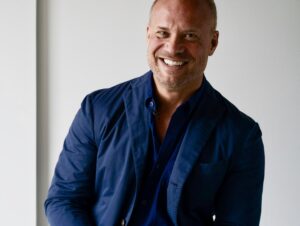
man wearing blue suit, smilingDavid Allison, founder of The Valuegraphics Project, presented research on this topic at IMEX in Frankfurt and Vegas, as well as to ASAE, MPI’s WEC, and at SITE global events. Our data is used by brands like PayPal, lululemon, the United Nations Foundation and Five Star school supplies. We’ve partnered with Google to release the Belonging Index to help event planners understand how to plan events so different kinds of people around the world feel like they belong.

Tips to create a memorable F&B experience

In the meeting and event industry, a thoughtful and robust food and beverage program can be the cornerstone of delighting guests, and is necessary to ensure the experience is both memorable and complete. Meeting planners have the opportunity to truly showcase their destination through the food experiences they curate for attendees, from “farm-to-table” presentations to culinary-inspired teambuilding activities.

While curating a delicious dining experience can seem like a simple task given the right team in place, it’s important to take into consideration the current trends and important topics that are impacting the industry. From the importance of sustainability and locally sourced products, to the return of the buffet and how to lessen food waste through action stations, I’ve copied my top tips below on hosting an impressive food-driven event.

Sustainability Is a Mainstay

Sustainability is a trend that has infiltrated the food and beverage industry in various ways, ranging from locally sourcing provisions with an emphasis on more vegan-friendly options to more robust recycling programs and even outfitting restaurants with reclaimed materials including repurposed wood.

Read MoreReduce and Reuse: Meeting Spaces Go Green

I recommend planners have an open dialogue with their venue to learn where their food is being sourced. For example, at Hyatt Regency Chesapeake Bay we have access to some of the best seafood in the country right outside our resort. We also prioritize additional seafood, meat and produce from a 250-mile radius locally and within a 500-mile radius regionally. For events, I like to add menu labels and table cards that show exactly where each item is from so guests have easy access to the information.

Additionally, I’ve seen a major uptick in requests for meat substitutes, including Impossible Burgers and plant-based alternatives. Climatarian menus have also become increasingly popular this year for obvious reasons, as the concept prioritizes the consumption of local fruits and vegetables, eliminating produce that has traveled long distances or is not in season.

Customizable Buffet Dining Is Back

It’s no secret that consumers are eager to revisit the habits and routines that were an ordinary way of life prior to the pandemic. Buffets have come back in a big way and we’re seeing that groups really enjoy having access to choose what they put on their plate.

The trend of action stations or “build your own” options also continue to be a hit as it allows guests to personalize their meal. The option to “create your own” lends itself to a social experience, as guests are often seen interacting and discussing their selections with those around them. This option also helps eliminate waste, as guests can thoughtfully select what they want to eat and how much of it they prefer.

Sharing Local Culture Through Food

Given today’s focus on sustainability and locally sourced ingredients, consumers are asking more questions about where the food is coming from. I love seeing this dialogue as it gives our colleagues a unique conversation-starter and they are able to share a taste of the local culture with guests, ultimately providing an education, while also fostering a connection.

: How a Storied F&B Kitchen Went Halal to Accommodate Allies

I encourage my team to spend quality time engaging with our guests to talk about where our food is sourced. For example, I love to show our guests how local seafood such as the local Rockfish pulled directly from the water, and how it was then fileted, and carefully encrusted in salt and egg whites, a local style of cooking that makes the fish super tender and delicious. We also have interactive local food showcases that groups can take part in including Maryland Blue Crab picking dining experience.

An International Take on Cuisine

While many groups like to showcase the local flavor of the destination, I always recommend mixing it up with a diverse menu featuring influences from around the world. Many popular cuisines right now are those with a penchant for flavors that hail from Hawaii, Thailand and the Caribbean – think barbecued meats with spicy peri peri rub, a blend of chili pepper, paprika, garlic, lemon, and onion; Korean galbi or ribs, and use of Mediterranean spices on foods such as shawarma.

Indian cuisine has also been a popular request this year. For example, we have had planners opt for an Indian Gravy Station, which featured the four main sauces that are native to Indian cuisine; onion tomato masala, Makhni, white gravy and hariyali gravy. Historically, we have had multiple stations throughout an event that feature cuisine and celebrate cultures from all over the world. To be able to showcase international fare that’s been carefully prepared by a team of chefs from across the globe, has been a home run.

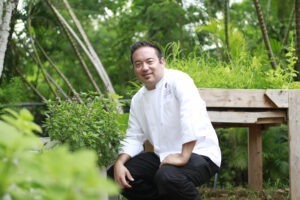
man in chef shirt sitting down among bushes
Chef Aki Robertson

Chef Aki Robertson has been with Hyatt Hotels for a decade, where he’s held various leadership roles in food and beverage. Currently, Robertson is the executive chef at Hyatt Regency Chesapeake Bay in Cambridge, Maryland, where he oversees the resort’s culinary experience and in-house restaurants.

Previously, Robertson held a similar position at Hyatt Regency Waikiki Resort and Spa in Honolulu. In his spare time, he enjoys spending time with his wife, three children and golden retriever; spending time outdoors whether it’s his garden, playing in the mountains or down by the water.

How public art makes for the best host cities

Public art does more than sit pretty on the side of a building or light up the inside of a parking garage. Public art unifies the vast diversity of people in a metropolis as they share the same visual experience in their everyday lives. It connects a visitor, previously a stranger to their host city, to the culture, history and personality of their newly discovered destination. It is a representation of the city’s culture and their dedication to improving their communities. Public art creates desirable destinations for meetings for its contribution to cultural representation, urban functionality and beautifying a visitor’s overall experience.

The term “public art” is a term that can refer to many different visual experiences in a city. Whether it is a government-funded installation, a private business owner who hired a local kid to paint a mural, or a graffiti artist establishing their presence in their own city when they feel invisible, public art has a much deeper meaning than many understand. It is the manifestation of the identity and culture of a city—you walk by the same pieces of art as everybody else and everyone learns more about that city and humanity every day. If nothing else connects you to a city, visual representations of people’s life experiences and creativity will.

Honolulu, Hawaii

Hawaii was the first state to implement a percent-for-art law with the Art in State Buildings Law enacted in 1967. This law mandated that 1% of the budget dedicated to the construction of new buildings be allocated to public art, whether those works were commissioned by the Art in Public Places Program (APP) or purchased privately. This legislation was expanded on in 1989 with the Works of Art Special Fund to have public art in all state public places. Without these acts, long-term commissioning, planning and installation of public art would not be possible in Hawaii and the mainland followed the state’s lead shortly after.

Makua and Kila

Inspired by a children’s book named “Makua Lives on the Beach” by Fred Van Dyke, this bronze sculpture by Holly Young is a highly celebrated public art statue in Waikiki. Depicting a young boy befriending a seal while on his surfboard, many consider it to be a representation of the Hawaiian culture of love, respect for nature and, of course, surfing. Both locals and visitors alike routinely adorn the seal and boy with leis and it has become almost an altar for public art and the spirit of the island.
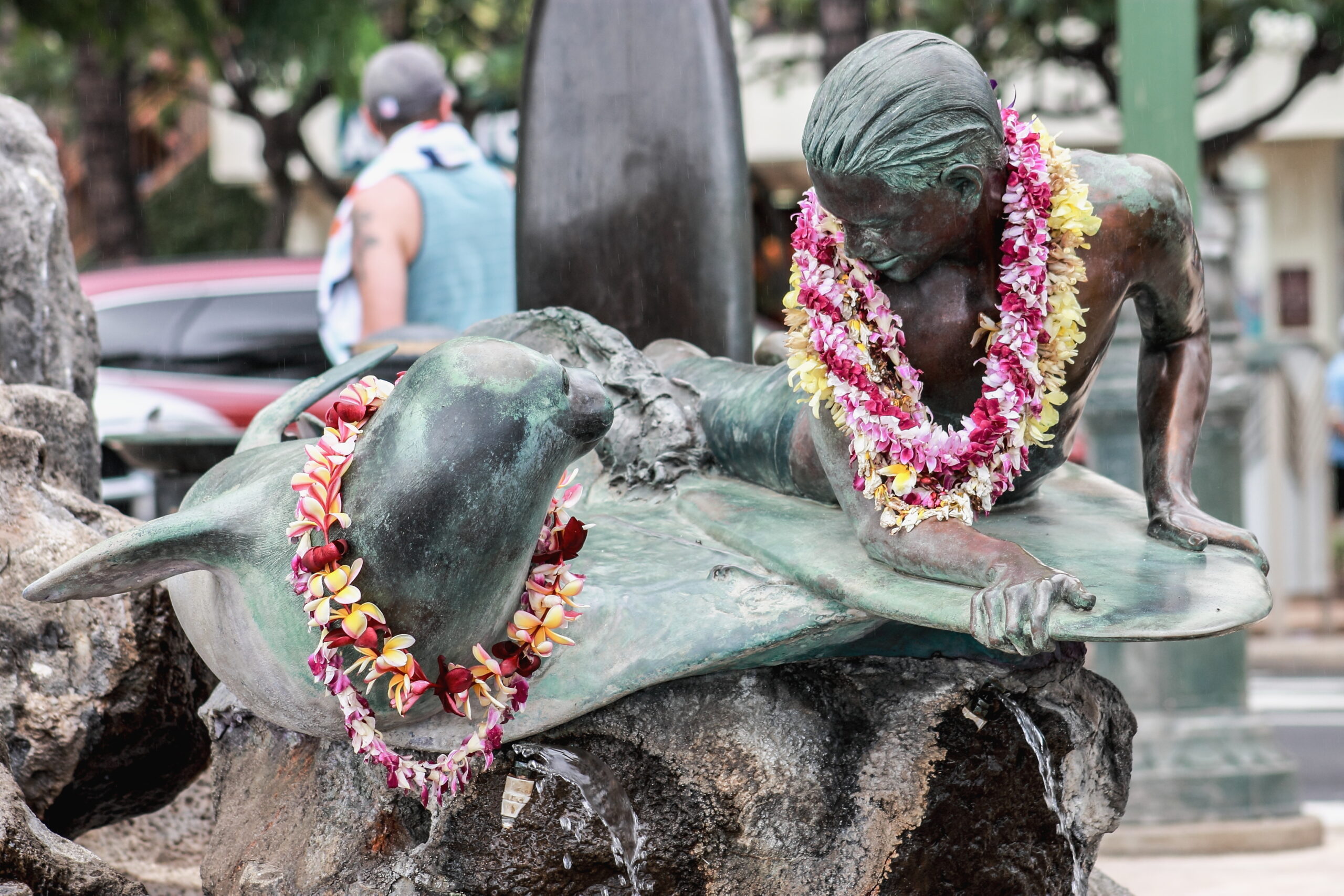
Makua and Kila

Miami

Known for its vibrant colors and diverse culture, public art is everywhere in Miami but nowhere more so than Miami’s Wynwood neighborhood. Branded as “one giant art installation” by Greater Miami Convention & Visitors Bureau, the Wynwood neighborhood has transformed their streets and architecture to create its own public art museum with rotating murals by some of the most well-known street and graffiti artists in the world. Only minutes from downtown Miami, artists saw buildings in the Wynwood neighborhood as blank canvases and brought Miami’s colorful culture to the urban public.

Wynwood Walls

The Wynwood Walls began as a strategy to revitalize the previously downtrodden neighborhood with large scale murals spanning across six buildings by talented artists. These large-scale works sparked a movement in Wynwood, and public art began to become a part of the neighborhood’s identity. While the Wynwood Walls are preserved, other public artworks are rotated to create a new experience for Wynwood’s monthly art walk. Guided tours are also available for groups to explore the many shops and restaurants in Wynwood—all while being in an outdoor public art museum.

Mana Wynwood Convention Center

The multi-use campus offers a variety of facilities in the heart of Wynwood and has been host to a variety of events. Food festivals, music concerts, conferences and private events have all utilized the convention center for its flexibility and its surrounding hotels, restaurants and nightlife. The White Room Event Hall is the larger indoor facility with 50,000 sq. ft. while the slightly smaller Black Room Sound Stadium is impressive with 45,000 sq. ft. The third facility couldn’t be more Wynwood. A repurposed RC Cola factory is now RC Coola Plant, the convention center’s outdoor event space. The industrial area is now covered with local art and authentic graffiti, making it ideal for large outdoor events that represent Miami culture. The open lot and the covered roof area together give meeting professionals 137,977 sq. ft. of art for their outdoor event.
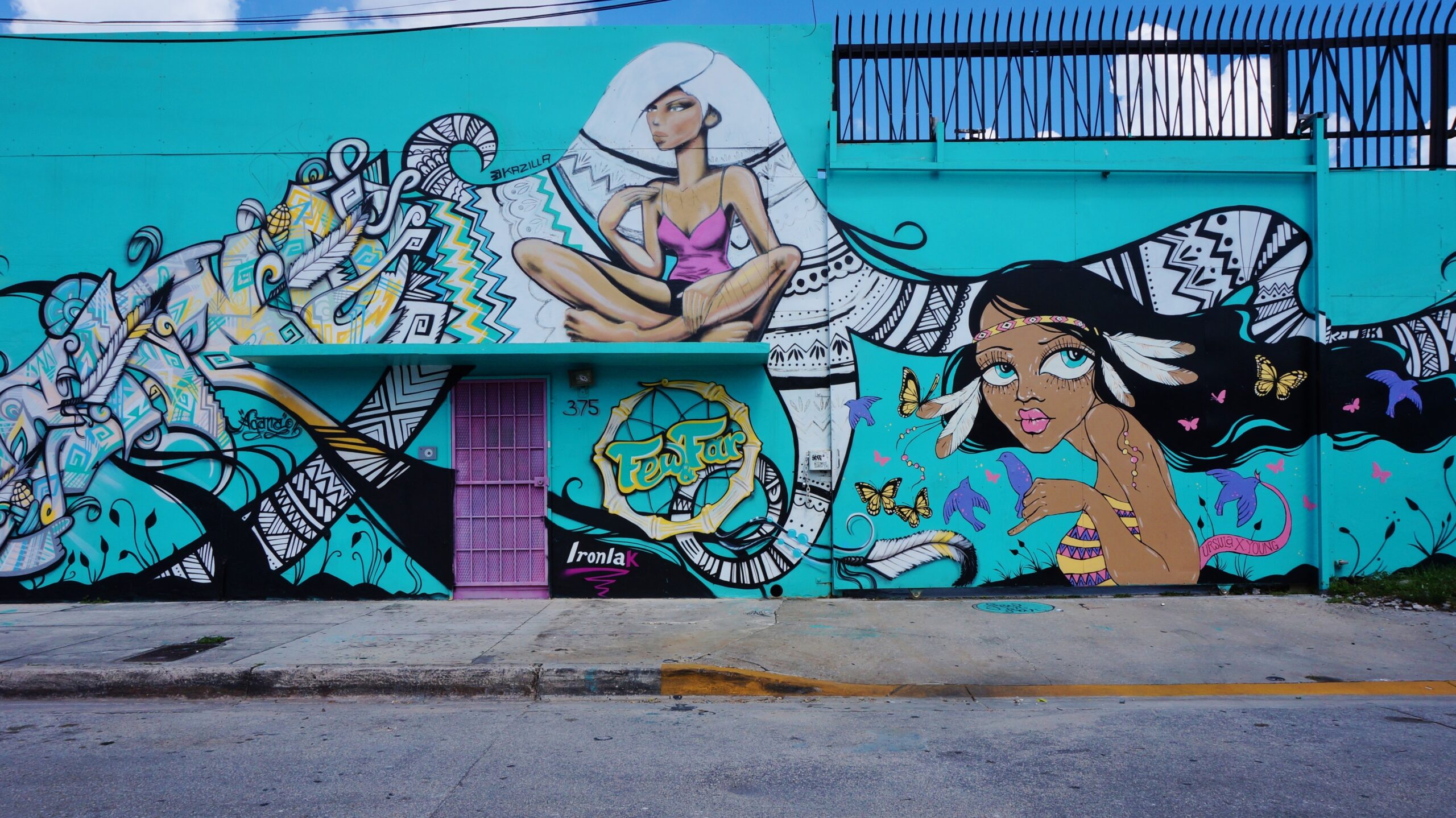
Wynwood, Miami

Durham, North Carolina

As one of North Carolina’s eight SmART Communities, Durham has implemented the SmART Vision Plan to not only beautify the downtown streets with public art but use art to represent the city’s personality with projects that not engage pedestrians but guide visitors through the meetings venues and hotels of the walkable downtown streets.

SmART crosswalks

The downtown district is more pedestrian friendly due to both vibrant and functional public artwork which functions as the neighborhood’s crosswalks. Connecting meeting and tourism venues such as the American Tobacco Campus at Blackwell/Vivian St. Durham Armory to Marriott Durham City Center and Durham Central Park at the Farmers’ Market. Artist Mary Carter Taub names the pedestrian crosswalk installations Snapping!, Crackling!, and Popping! This reference to the Rice Krispies cereal cartoon characters reflects both the geometric Art Deco era popular in the time of their creation in the 1930s as well as the artist’s memories of eating the cereal in the neon vibrance that was the 1980s. The bright geometrical sidewalks guide groups easily and joyously through the major downtown meeting venues and tourist attractions.

Durham Convention Center

A collaboration between City of Durham’s Cultural and Public Art Program and the North Carolina Museum of Art (NCMA) resulted into the previously basic garage doors of the Durham Convention Center (DCC) becoming vibrant cultural murals celebrating the city of Durham’s Hispanic community. Initially installed to promote the NCMA exhibit featuring Frida Kahlo, Diego Rivera and other artists in 2019, the artwork has remained on the convention center and continues to bring color, culture and beauty to the city of Durham.

“Public art helps people who are coming to experience the space, understand the history of the space and also the future of what the community is looking for.”

– Rebecca Brown, cultural and public art manager, City of Durham

“These convention center bay doors were just boring and gray,” says Rebecca Brown, Cultural & Public Art Manager, City of Durham. “Now they’re beautiful and vibrant. One of the murals has an AR interaction. The butterflies will come out of the mural, which is really fun.”
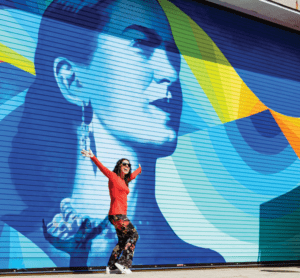
Durham Convention Center

San Francisco, California

Even as a major metropolitan city, San Francisco has previously struggled with being as easily navigable on public transportation as cities like New York or London. That is all changing and art is incorporated into every facet of the expanding public transportation network. From the airport to the shuttle systems transporting travelers to hotels to the city’s trains and buses, public art brings the culture and beauty of San Francisco into a resident’s everyday life and a visitor’s experience.

Art and public transportation

Visitors experience San Francisco’s elite public art program before even leaving the airport. The Arts Commission and its 2%-for-art fund working to ensure anyone landing in San Francisco International Airport (SFO) is greeted by pieces from one of the nation’s largest public art collections.

And it doesn’t end in the airport! The AirTrain station connecting the airport terminals to Grand Hyatt Hotel is beautified by stained glass art from commissioned artist Sarah Cain. And the art in public transportation continues. With the expansion of the Central Subway connecting Chinatown to Union Square came the Central Subway Public Art Master Plan. Site-specific works of art along the trajectory of the train.

Even the bus stops in San Francisco are public works of art. Renowned artist Jorge Pardo was commissioned to design installations of tall luminated structures at the rapid transit bus stations down Van Ness, one of San Francisco’s busiest streets. Colorful, functional and modern, the light installations create a whimsical, industrial and illuminating forest of color to turn public transportation stops into public art galleries.
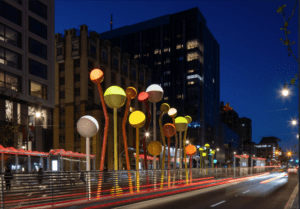
Jorge Pardo

Moscone Convention Center

The largest convention center in San Francisco is the Moscone Center and is surrounded by public art and incorporates art into its interior design. The expansion of the center completed in 2003 added 600,000 sq. ft. of exhibition space for a total of 502,440 sq. ft. of contiguous space. With the addition of Moscone West, there is another 195,848 sq. ft. of flexible exhibit space. But the real reason to plan an event at the Moscone Center is the incorporation of art.

One of the most iconic and internationally recognized pieces is the sculpture outside of the Moscone Center. An untitled installation created by Keith Haring commonly referred to as “Three Dancing Men” stands proudly outside of the center’s doors on Howard and 3rd street. With vibrant primary colors as the choice for the large-scale faceless sculptures, the message is diversity as a strength and the joy of collaboration. As one of the most famous artists contributing to San Francisco’s public art scene, Haring also contributed to the city’s social activism. He was an honoree in the inaugural Rainbow Honor Walk of San Francisco. His sculpture for the Moscone Center demonstrates his activism and gives people a sense of the spirit of San Francisco.


Santa Ana, California

This Southern California town has transformed its municipal structures into public art representing the culture of the region. From celebrating established artists to showcasing up and comers on the most unlikely public platforms, Santa Ana has seamlessly blended art into their city.

Unexpected beautification

Who would think public bathrooms could be beautiful? The City of Santa Ana did and made it a reality. Eight panels of artwork were installed in the downtown area of the city and are displayed on the exterior walls of public restrooms on East 3rd and North Bush. Select artists were chosen after the Santa Ana Arts & Culture Commission reviewed their proposals. Their works were then transformed into vinyl and metal panels and illuminated with lighting fixtures. Not only do the works beautify public restrooms, the colors and light create a safer environment for visitors unfamiliar with the city.

An even more obscure canvas for artwork – the city’s utility boxes. The Utility Box Art Program was created to beautify the otherwise dull and industrial yet necessary fixtures into a public art feature for up-and-coming artists in the area. Chosen by the City Staff, the City Commissioners and local community representatives, artists proved that any surface provides an opportunity to create something beautiful.
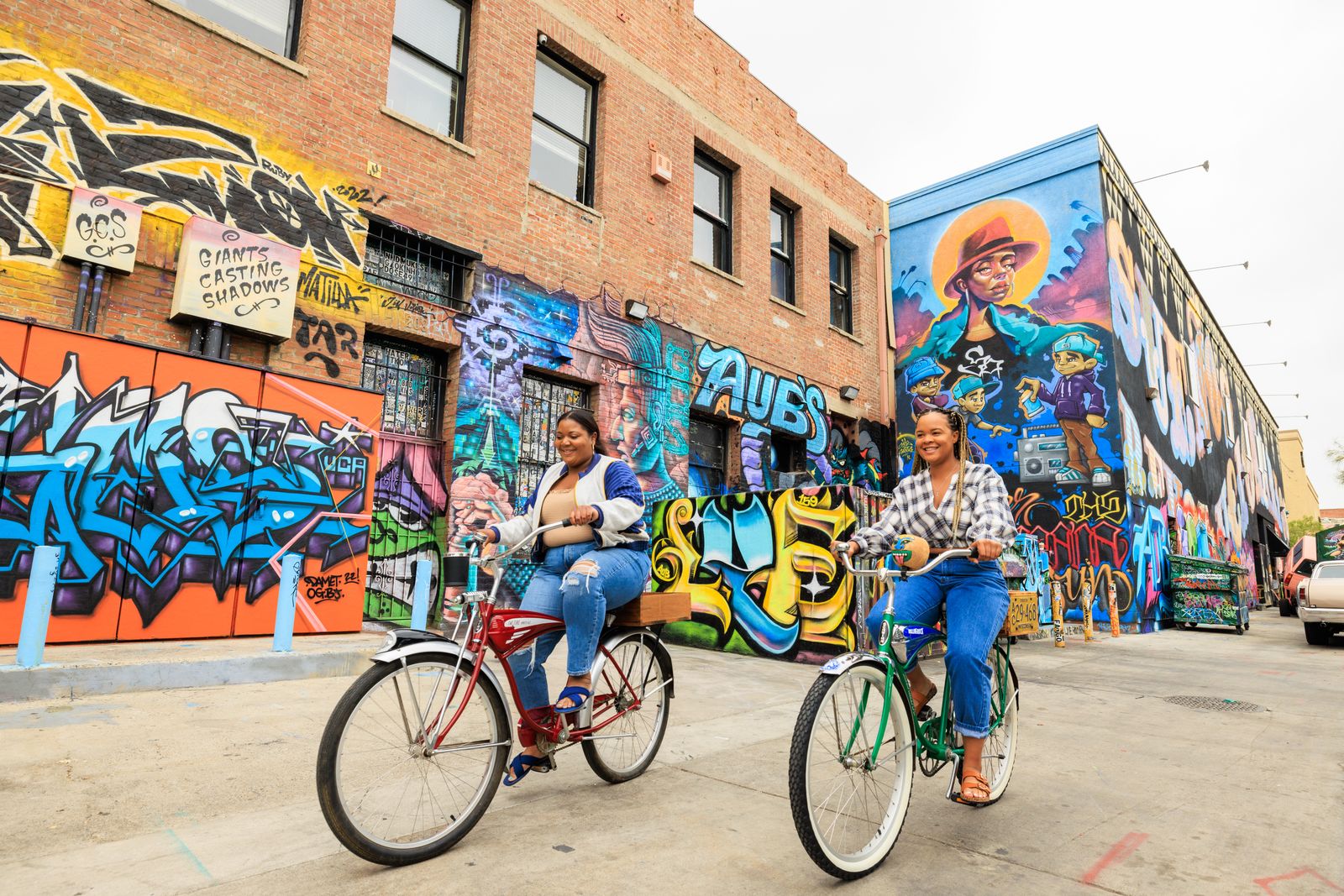
Santa Ana

Austin, Texas

The Economic Development Department’s Art in Public Places (AIPP) program in Austin Texas is commissioning public artworks on all media platforms to reflect the culture and community of the city’s diverse neighborhoods. Just like San Francisco, Austin is dedicating 2% of eligible city budgets to public artwork and purchasing artwork to install in city-owned establishments.

Art in Parks

Austin’s rich culture and warm weather make public parks a perfect place for resident families and visitors exploring the city to absorb its personality through its art installations. For no cost at all, visitors can walk through Austin’s parks for team bonding experiences as they learn about the city through it’s public art.

Artist Gigi Miller created a large mosaic sculpture named “Corazon de Oro” to stand tall and colorful in Ricky Guerrero Pocket Park. The son of Raul Guerrero, the superintendent of recreation for the City of Austin, Ricky Guerrero passed away tragically after a football injury in 1970. The tall mosaic multi-animal structure represents Ricky, the Mexican culture prevalent in Austin and humanity uniting to honor the family of a civil servant through public art.

In honor of Austin’s diversity, artist Brian Joseph installed a series of four artworks in Springwoods Park on the sides of recreational buildings depicting people of different backgrounds and ages enjoying different park activities together. It is a true testament to how public art can represent not only the current culture of a city but inform visitors about the sense of community and celebration of diversity Austin has now and will continue to work towards in the future.
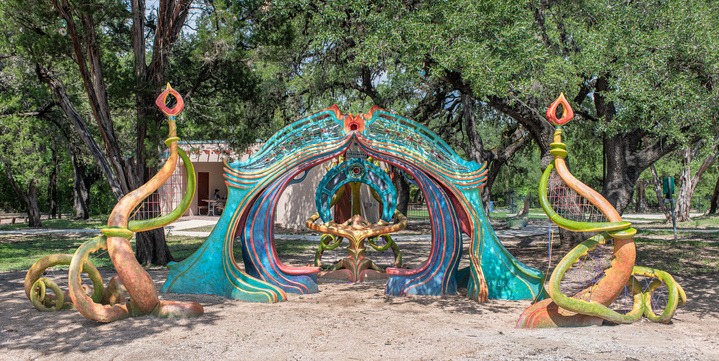
Austin parks

Boise, Idaho

As an up-and-coming destination in the Rocky Mountains, Idaho has significantly increased its budget for public art. Without competing with the stunning and picturesque Rocky Mountains that provide the backdrop of the big city with a small town charm, public art downtown has become a focus.

Freak Alley

In the heart of Downtown Boise is the largest public multi-artist mural gallery in the city and has been nicknamed Freak Alley. The graffiti inspired artwork has become a local and tourist attraction to the restaurants, bars and art galleries in Downtown Boise.
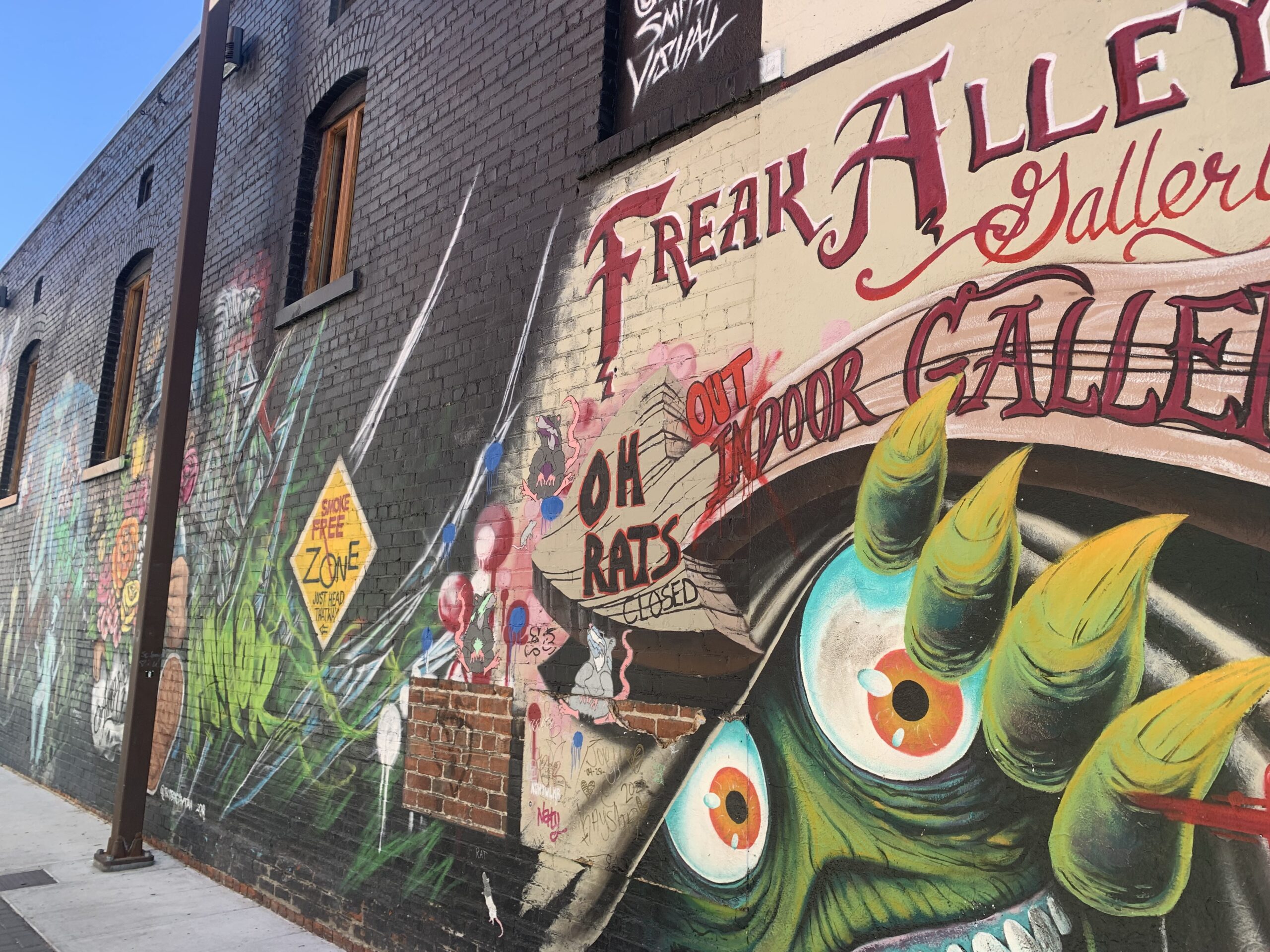
Freak Alley, Boise, Idaho

Gonzague “G” Sallo

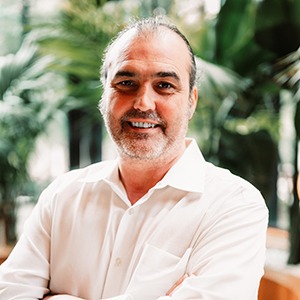
A man in a white shirt smiles into the camera
Gonzague Sallo

The C. Baldwin Hotel in downtown Houston welcomes Sallo as general manager of food and beverage. Sallo will oversee all of C. Baldwin’s culinary operations and work closely with Chef Chris Cosentino to develop Italian-American dishes at Rosalie Italian Soul. Born in northern France, Sallo grew up watching his grandparents run a restaurant. Their passion inspired his career of over two decades in F&B hospitality.

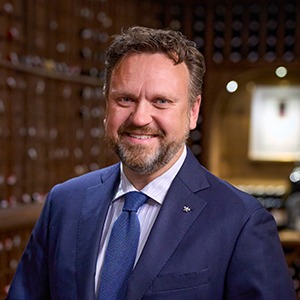
Erik Bergman

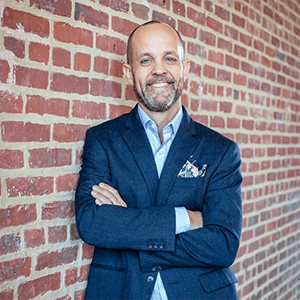
A man in a blue suit smiles into the camera
Erik Bergman

Bergman is director of restaurants and bars at The Watermark Hotel, bringing over 20 years of experience in F&B. He will lead operations at the hotel’s 11th floor Japanese restaurant, Wren, their retro bar, Perch Putt, and their rotating lineup of local food trucks, the Aviary, as well as their banquet and catering services.

Gabriella Costanzi

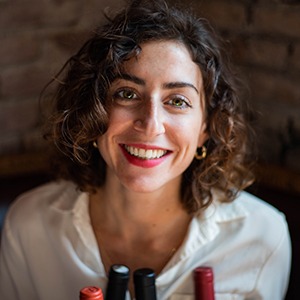
A woman in a white shirt smiles into the camera
Gabriella Costanzi

Costanzi is appointed as service and beverage director of Wythe Hotel’s restaurant, Le Crocodile. She brings over a decade of experience in the culinary and hospitality industry to her goals of establishing Le Crocodile as a premier wine destination in New York and of prioritizing staff education as she joins the team in overseeing the restaurant’s daily operations and quality guest service.

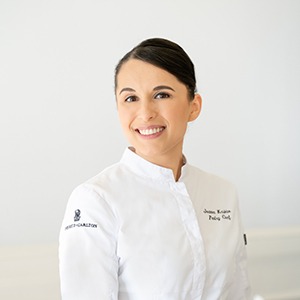
Joanna Kaskiw

A woman in a chef's uniform smiles into the camera
Joanna Kaskiw

The Ritz-Carlton Half Moon Bay appoints Kaskiw as executive pastry chef. Her career has brought her numerous accolades, including earning The Ritz-Carlton brand’s Five Star recognition in 2015. She arrives from her role as pastry chef at The Ritz-Carlton and JW Marriott. In this role, she will manage culinary teams across the resort’s dining venues and will design dessert menus for large-scale events and daily dining.

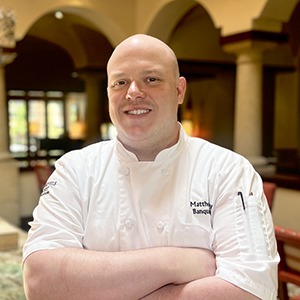
Matthew Levy

A man in a chef's uniform smiles into the camera
Matthew Levy

Levy joins Spanish-inspired restaurant, Prado, as chef de cuisine at The Omni Scottsdale Resort & Spa at Montelucia, in Paradise Valley, Arizona. He brings his culinary expertise rooted in his own family tradition and a passion for creating innovative dishes to his new role, where he will work under Executive Chef Herve Cuyeu.

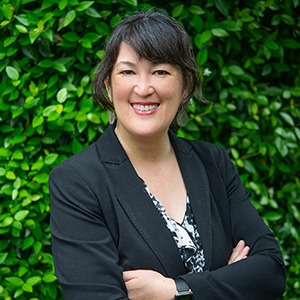
Elaine Heide

A woman in a black suit smiles into the camera
Elaine Heide

As wine director at The Allison Inn & Spa, in Oregon Wine Country, Heide will lead all wine programming and the wine service at the resort’s restaurant JORY. She brings over 20 years of experience as a skilled wine professional, holding Levels 3 and 4 certifications from Wine & Spirit Education, as well as the Certified Specialist of Wine (CSW) from the Society of Wine Educators.

Rick Edge

A man in a chef uniform smiles into the camera
Rick Edge

Edge joins Bardessono Hotel & Spa and Hotel Yountville Resort & Spa in Napa Valley as executive chef. He will oversee all outlets and banquets at both hotels. With over 30 years of experience at hotels and restaurants across the west coast, as well as in Boston and New York City, he plans to roll out stunning new menus based on his seasoned understanding of California cuisine.

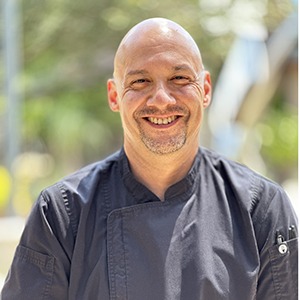
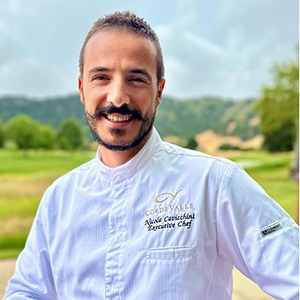
Nicola Cavicchini

A man in a chef uniform smiles into the camera
Nicola Cavicchini

Cavicchini joins northern California destination resort CordeValle with a new vision for their three restaurants. He has worked at luxury resorts for over 8 years, including as senior chef de cuisine at Rosewood Miramar Beach. In this role, he seeks to blend farm-to-table California cuisine with Northern Italian influences, and will work to implement themed culinary classes and other interactive guest and member programming.

Matthew MacCartney

A man in a blue suit smiles into the camera
Matthew MacCartney

Ocean House Collection welcomes MacCartney as group wine director to oversee their award-winning wine program at the Forbes Five-Star Ocean House and Weekapaug Inn, and will work to refine the fantastic culinary and wine experiences at Ocean House’s Center for Wine & Culinary Arts. He has received numerous accolades for his work, including being named “Best Wine Director” by Time Out.

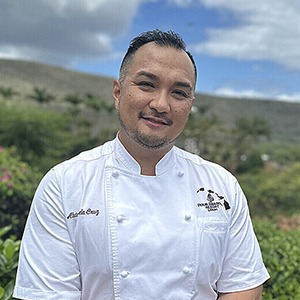
Alvin Dela Cruz

A man in a chef uniform smiles into the camera
Alvin Dela Cruz

Dela Cruz takes on the role of executive chef at Four Seasons Resort Lanai. He holds a degree from the University of California Culinary Academy, Le Cordon Bleu, and has worked in positions in the Montage Los Cabos, Waldorf Astoria Beverly Hills, and multiple Ritz-Carlton locations. He will oversee the resort’s dining and catering as well as their top-of-the-line American-Hawaiian steakhouse and seafood restaurant ONE FORTY.

Traveling safe is not just about gadgets and GPS, it’s also about common sense, say these experts

Laura S. is a travel planner who often finds herself in unfamiliar cities in the US and abroad on hotel site inspections and destination FAMs.

“I always ask for a room between floors three and seven—not ground floor and not too high,” she says. On one occasion, however, the hotel had booked her on the ground floor of a hotel which was also near the garage, a security no-go because of its easy proximity to possible bad actors. The hotel was making it difficult for her to move rooms so she moved to a different hotel across town.

“If I don’t feel safe that’s a deal breaker,” she says.

Watch More: The Art of Badassery author Jennifer Cassetta presents the shortest women’s self defense class ever

Women on the road often find themselves making similar decisions. Recently, social media has featured examples of women taking security issues into their own hands: using luggage trackers in their shoes to make sure they are always on a known grid, adding extra security to bolt locks with various devices and even just using chair jams.

An Ex-Navy Seal On Staying Safe

“Women traveling alone are definitely targeted more than men,” says Harding Bush, senior manager for security operations, Global Rescue and former Navy Seal. He shared the statistics that 50% of business travelers are women and 80% say they have some security issue during travel.

Bush says one of the most important things a woman can do to ensure her safety is to “do your research before you travel, especially when it’s an international trip. Talk to people who have been there and be specific with your questions: ask what were the three best things that happened and what are three things you could have done better.”

Read More: Tips to Stay Secure on the Road

Bush also says it’s important to make sure you are aware of cultural differences and legal issues in different parts of the world. “The Middle East has been doing business with the West forever, but you have to be aware of women’s issues in those countries, especially when it comes to legal rights. When you travel in those countries you are under their legal system.”

He also says bluntly, “Try not to travel alone if you can help it. I’m an ex-Navy seal and I’m not traveling alone.”

Other tips: business class gets you out of the airport more quickly and airports are where potential wrong doers are scouting for opportunities. Ask your car service to have your company name, not your personal name on the arrival card.

Read More: Event Safety PSA: Failing to Prepare Could Cost You

If you are planning on taking an Uber and you are arriving in an unfamiliar destination, rethink that option and get a car service arranged.

“I am not a big fan of Uber,” Bush says, noting the fact that drivers are not employees of the company but free agents.  “Uber is convenient,” he says, “but the most dangerous thing you’ll do anywhere in the world is get into a car.” He says if you must take an uber, use a GPS app like Waze which can show you where you are in real time as the driver progresses.

“Hacks like using a luggage tracker in your shoe is not proactive enough,” he says. “And by the time someone finds you, the damage can have been done. We want to avoid the conflict not manage it. It’s all about making good decisions all along the way.”

When staying at a hotel, Bush says to choose a known quantity: a brand that has a reputation for caring about solo female travelers’ safety.

“You should be given your key by a staffer who does not say your room number out loud. You want to be in a hotel where you have to swipe your room key in the elevator to access your floor and elevators from the garage should not access room floors.”

The old adage about not staying on ground floors is true, Bush says. “Ground floor has easier access. You also don’t want a room at the end of a corridor if you can help it or near the elevator.”

Another way to choose safe stays is to stay away from hotels that function as social spots for non-hotel guests: whether it be a beach, restaurant or bar. These places are fun to socialize in but they increase the likelihood of being hassled or interfered with by someone who is not staying at the property.

When you are in your room, Bush says, stay secure by using the door stopper in the room door along with the deadbolt. Make sure your balcony doors are always shut and locked when you leave the room or go to sleep at night.

Advice from a Woman Expert

Erika Weisbrod is security director of intelligence and assistance at International SOS. “The level of risk associated with any kind of travel varies depending on a person’s travel profile and their destination. When female travelers embark on a business trip, there are multiple precautions that should take place and it starts when booking travel,” she says.

“The first step to ensuring a safe trip as a female traveler is to research your location to understand the risks of the destination. Research should include the local security risks such as crime or civil unrest, mapping out where there might be hot spots or no-go zones within the location and identifying secure modes of transportation for getting from A to B. It is also important to be aware of any local holidays, sensitive dates, planned or ongoing developments, such as protests, and the risk of natural hazards. Cultural etiquette should also be factored in as it can help determine the appropriate attire to pack, and the role of women in the local society.

Read More: When Mother Nature Is an Unwanted Attendee at Your Meeting or Event

“When booking travel, it is always advised to plan to arrive to the destination during daylight hours, so that the traveler can more easily orient to their new environment. The next step is to choose a hotel and select a room with security in mind. When business travel managers or business travelers are researching accommodations, they should consider the vicinity of the hotel, and the hotel’s security measures relevant to the local risk environment.

At a minimum, this should include a 24/7 reception and security surveillance of entrances, the lobby and the property grounds. Consideration should be given to on-property dining or room service options in case it is not safe, or the traveler does not feel comfortable, to leave the hotel after dark. Choosing a hotel with multilingual staff will also help a traveler that is unfamiliar with the native language if they need anything, or in case anything goes wrong.

“When checking into the hotel, female travelers should request a room that is on the 4th-7th floors. Lower-level floors, especially the ground floor, can be more easily accessed by others; higher floors can prove more difficult to escape if needed due to fire or other emergency. Hotel rooms should include a working deadbolt lock, a chain or latch, a peephole, a safe and an in-room telephone. An additional measure to deter unwanted entry is to bring a door stop on your trip and place it on the inside of the front door to prevent forced entry.”

Weisbrod says that once at your accommodation, female travelers should be sure to conduct the following protocols:

  • Avoid sharing information: When traveling, you may meet many different people. It is important to not share your personal information, accommodations or room number, or if you are traveling alone, including with hotel staff.
  • Verify before opening the door: Do not open the door unless you are certain of who is on the other side. If a person claims to be housekeeping or maintenance, but you are unsure, call the front desk to double-check prior to letting them inside.
  • Know what to do in case of an incident/emergency: If something does not seem right, let someone know. Have key numbers, such as local emergency numbers, pre-programmed in your phone and in hard copy. Familiarize yourself with emergency exits and any shelter or assembly areas at the property so you know what to do if you hear an alarm.

Weisbrod says that, “While Duty of Care requires an employer to be responsible for traveler safety, these are simple protocols that a traveler can do to help themselves during a business trip. The more prepared the traveler is, the more opportunities they have to mitigate risks they are likely to encounter.”


JFK’s Terminal 8 to Get Upgraded Food and Shopping Hall

The Port Authority of New York and New Jersey, in partnership with American Airlines and Unibail-Rodamco-Westfield (URW) Airports have announced a $125-million commercial redevelopment program for Terminal 8 at John F. Kennedy International Airport (JFK) (rendering above). The project features a new great hall and will bring more than 60 new shopping and restaurant offerings to the terminal.

Following the recent completion of a $400-million expansion of Terminal 8, the commercial redevelopment will include a redesign and expansion of the concessions program, including new dining, retail, duty-free shopping, performance space and new digitally enabled experiences for customers.

“Visitors from around the world will get their first taste of what our region has to offer as soon as they step into JFK’s Terminal 8, which, like all of our new airport terminals, will feature a wide range of local dining and shops,” said Port Authority Chairman Kevin O’Toole. “Local businesses help us create a sense of place unique to the region.”

The redevelopment of Terminal 8’s retail and food options will lay emphasis on local food purveyors and sustainability. There will also be a focus on “affordable” food options for travelers.

The commercial development of Terminal 8 is part of “The JFK Vision Plan” to “completely modify and expand existing facilities and infrastructure” at the airport. This includes a $9.5-billion development of a new Terminal 1 which broke ground in September of 2022. The plan also includes a $1.5-billion expansion of Terminal 4, now under construction led by Delta Air Lines. A new $4.2-billion Terminal 6 will connect with Terminal 5, which broke ground in February. The modernization of Terminal 8 is a $400-million project led by American Airlines and British Airways and was completed in November 2022.

Read MoreLodging Econometrics: New Brands and Delayed Projects Swell Hotel Construction Pipeline

United Club Opens at Newark’s New Terminal A

This week, United Airlines opened a United Club location in the new Terminal A at Newark Liberty International Airport (EWR), marking the first of four airport lounges to open in the terminal. The Port Authority of New York and New Jersey announced the operational opening of the $2.7-billion new Terminal A at Newark Liberty earlier this year.

United Club, a 15,000-square-foot space located near gate A27, features a modern, locally inspired design and upgraded amenities, as well as ample space with more than 300 seats, plenty of recliners, couches and chairs across spaces for lounging, working, dining and socializing. 

In addition to its modern amenities and state-of-the-art technology, the United Club location in Newark also features a wellness room to provide a space of comfort for nursing parents or travelers looking to meditate or pray.  

The three other clubs at Terminal AAmerican Airlines Admirals Club, American Express Centurion Lounge and Delta Air Lines Sky Clubare expected to open later this year.  

Air Canada Opens Maple Leaf Lounge at SFO

rendering of people at outdoor space at airport terminal

Air Canada has opened its brand-new Maple Leaf Lounge at San Francisco International Airport (SFO), the airline’s 28th lounge worldwide, and its third Maple Leaf Lounge in the U.S.

In addition to the range of services and amenities, the airline’s Maple Leaf Lounges are known for, the newest Lounge features an expansive outdoor terrace with aircraft and runway views. The 165-seat, 8,168-square-foot (761 sq. m.) airport retreat elevates Air Canada’s flight and airport experience for customers travelling from California to Canada or through to Europe, Asia and Australia via three of the airline’s main hubs: Toronto Pearson International Airports (YYZ), Montreal Trudeau International Airport (YUL), and Vancouver International Airport (YVR).

The new lounge features premium food and drink options including an emphasis on local coastal foods and wines. Local craft beers, a curated cocktail menu and espresso are also available.

Read More5 Best Airports for Layovers

Showers are also available with heated towel racks.

Air Canada has also re-introduced Newark Liberty International Airport to its roster of lounges with the opening of the new United ClubSM location in Newark Terminal A. In this new location, Air Canada will be uniquely co-located within the United Club, offering a dedicated Air Canada customer service desk and an access policy consistent with Air Canada’s Maple Leaf Lounges.

Air Canada’s Maple Leaf lounges, including San Francisco and the new United ClubSM in Newark Terminal A, are available to Air Canada customers who are Aeroplan 50K, 75K, and Aeroplan Super Elite Status members, Star Alliance Gold members, Aeroplan premium co-brand cardholders, and customers departing on a business class ticket with Air Canada or another Star Alliance member.

North America Sees Brand-New Hotels from Hawaii to Florida, and In-Between

From coast to coast across North America, experience the storybook capital of America, a socially and environmentally responsible oceanside resort, and a refreshing beachside retreat.

Beachside Haven

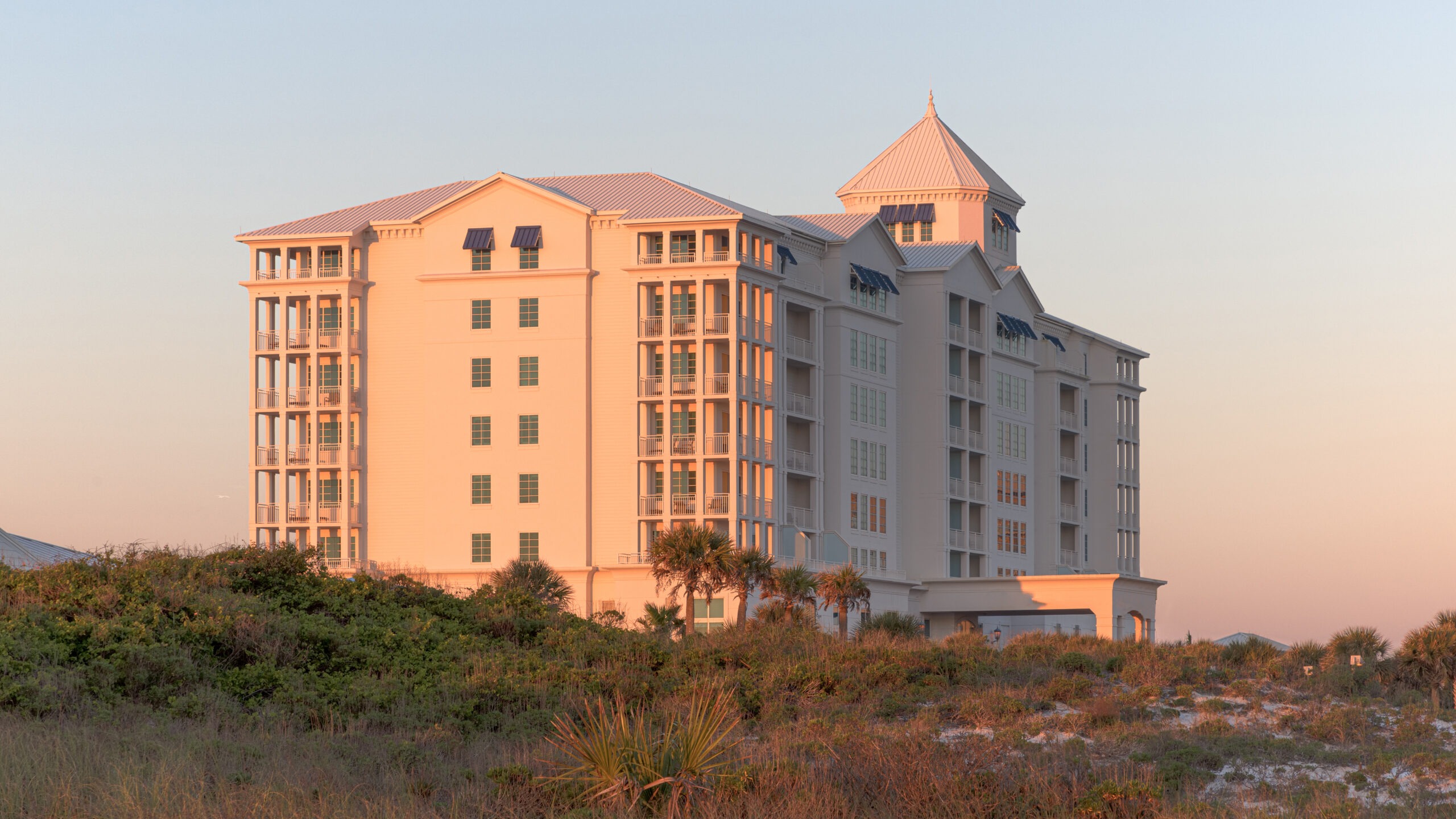
A multi-story resort stands on the beach, reflecting orange light from the setting sun

Pensacola Beach Resort in Pensacola, Florida, opened its doors on June 2, 2023, to unveil 161 guest rooms, including 24 corner king executive rooms boasting balconies with panoramic views of the Gulf of Mexico. The resort’s beachy, minimalist design incorporates blue hues and polished wood against a crisp white backdrop to make the space feel like a breath of fresh air.

The beachside property includes 1200 sq. ft. of customizable meeting spaces, on a combined 1600 sq. ft. of Gulf Front property and space overlooking the Bay Area.

Read More: West Florida: Gulf Coast, Inside and Out

The resort offers onsite fitness amenities and takes pride in their full-service, all-day restaurant, Windrose. Relax at their poolside Tiki Bar, stroll along the beach, or take part in one of their many engaging activities for the whole family to enjoy, from dolphin tours to paddleboarding.

Bring your guests to a whole new adventure, offering them a meeting in a space that invigorates and refreshes the mind.

The Stuff of Fairytales

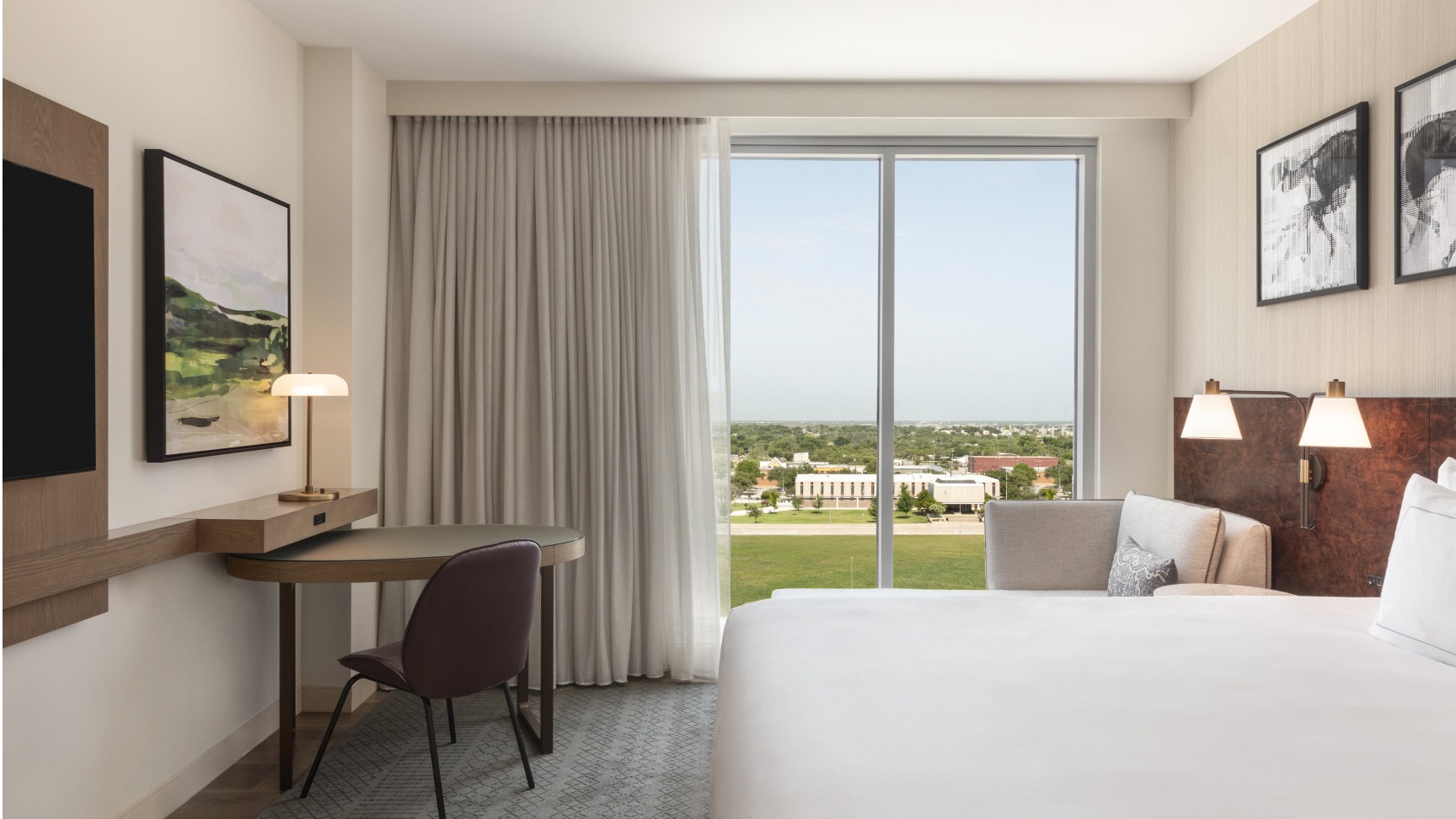
Hilton Abilene Downtown Convention Center standard king bedroom with city view

Hilton has opened the brand new Doubletree by Hilton Abilene Downtown Convention Center, located in the “Storybook Capital of America” in Texas’ Taylor County. 200 guest rooms boast a design inspired by the West Texas Frontier. Dark wooden paneling stands out against a neutral backdrop. A sleek modern finish, roomy workspace and Doubletree’s signature warm chocolate-chip cookie upon check-in give guests the feeling of a home away from home.

The hotel offers access to abundant meeting spaces: 13 meeting spaces of their own providing a total of 23,000 sq. ft. of flexible meeting space, including an 11,600 sq. ft. ballroom—right across the street from the Abilene Convention Center.

A 24-hour fitness center and an outdoor heated pool are just a few of the amenities that guests can enjoy. A visit to their state-of-the-art smokehouse restaurant and cocktail longue, Smokehouse Abilene, is sure to impress.

Read More: Texas: A World Apart

As one of the first markets where Hilton sought to expand, this location in Abilene holds close Hilton’s special spirit of hospitality that will make your event a cherished experience for your guests.

Legacy Reimagined

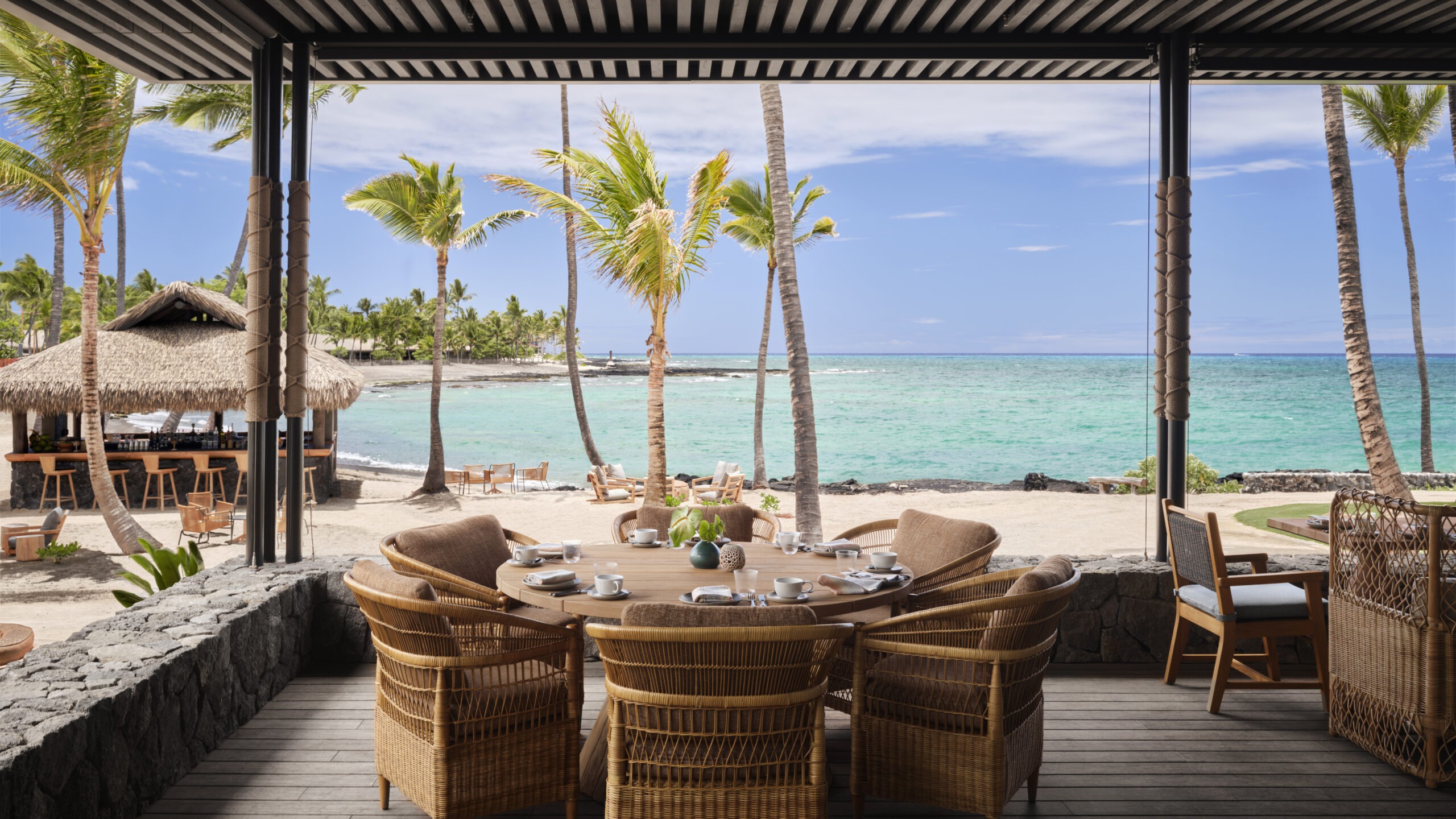
Kona Village Dining Area with a beach view

Kona Village is Rosewood’s newest resort, opened on July 1, 2023, spanning 81 acres across Hawaii’s Kona Coast. The design reimagines the original Kona Village Resort, which opened in the 1960s and shut down in 2011, with an environmentally and culturally responsible emphasis.

The architecture features recycled materials, such as in the thatched roofing, and the landscaping is designed to preserve native plant life and natural lava features. 150 guest hales, traditional Hawaiian structures, are arranged across several crescents around the resort to embody Hawaii’s cultural heritage. A collection of multimedia art by over 60 native Hawaiians or Hawaiian residents decorate the resort space.

Nearly 23,000 sq. ft. of outdoor venue space provides a versatile environment to host your next meeting or event.

Guests can enjoy the resort’s Kilo Kai, or Ocean Pursuits program, where experts will educate them on the appreciation of the ocean through water activities. The resort provides a multitude of recreational facilities, from tennis courts to a state-of-the-art fitness center to the Asaya Spa.

Visitors have their pick of restaurants and bars, all of which focus on fresh, local ingredients, indigenous Hawaiian practices, and international influences. Don’t miss out on the Kona Village lū’au, hosted on the Ho’okipa lawn and stage.

Read More: Reconnect with the Spirit of Hawaii

Saving moments, trimming fat

The nearly overnight advancement of Artificial Intelligence has stirred conversations in nearly every industry, sparking questions like: will AI replace humans in the workplace?

To fully understand the importance and impact of AI on the meetings space, Smart Meetings spoke with Iain McCowan, director of AI at Dubber, to glean some sense of how it can be a helpful tool for planners.

Dubber is a voice recording application that also captures and organizes information. With the use of AI, Dubber captures key moments and insights within an online meeting space.

Our Future with AI

With 25 years of experience in the AI industry, McCowan offers some interesting thoughts on how it’s being perceived by the public and the meetings industry.

“AI should make you better at doing your job, not take your job,” said McCowan. “The big excitement in new AI is that it’s about conversation, its language. That’s what I think is so amazing is that this AI now sounds like a human.”

Read MoreTop 3 DMC Trends as Tracked by an AI Proposal Platform

Dubber’s ultimate focus is on the important moments in meetings while filtering out the nitty-gritty.

“I guess my hope with AI is that we can get rid of some of the mundane stuff that lives around meetings at the moment and make it more about just humans connecting and having conversations,” McCowen said. “Let [it] do the mundane stuff that we don’t like about meetings.”

The Meetings Cycle

A scheduled meeting doesn’t take place in a vacuum and typically has a designated purpose which is to disseminate or gather information. McCowan refers to “meeting cycles” where there is preparation, an agenda, and a format.

“AI can help different parts of that cycle,” McCowan said, pointing to the current focus of Dubber’s product and goal in preserving moments in time. “What we’re focusing on with Dubber currently are the moments.”

If an action was agreed upon in the meeting and further action needs to be taken, or if there was a disagreement on how something should be dealt with, Dubber’s AI is quietly taking in all these important moments to be addressed after the event.

A Silent, Diligent Partner

Including AI within your online meeting space can offer you a silent, supportive co-partner you never knew you needed.

“AI should be in the background. You should be focused on dealing with people. I think that’s the beauty of the latest technology wave is that our speech to text is as accurate as a human. You can trust that it can be recorded. It can be transcribed as accurately as a person would and now with this latest language technology, you can be confident that you can go back and get the key points or summarize what happened.”

Looking at Language

Language is important in everyday moments but is becomes even more important if meeting planners are utilizing AI to deal with customer service communications. It can be unitized by planners in the form of chatbots to analyze what an attendee is saying and determine what they are trying to communicate.

Read MoreLanguage Interpretation Is the Next Wave in Virtual Meetings

“[People] want to know if that customer is not happy with the service we’re providing or we’re not providing a level of service they expect,” McCowan said. “We can transcribe and get the word breakdown, we can break it down into who was speaking, whether it was a staff member or a customer.”

From there, the AI can pinpoint what part of the language used in the conversation made it a complaint, decision, action item, or follow-up.

McCowan notes that they do have AI that looks at voice and can detect changes in a positive or negative tone. “I think it’s going to be exciting to see in the meeting space how people find new ways to improve meetings with this technology.”

Meaningful rewards are more important than ever for Gen Z and remote workers

In the age of Apple, AI, bytes, bits and working from home, incentive travel today is more important than ever. Industries and corporations around the world are seeking to sustain, maintain and recognize their employees and managers not only in front of their peers but in ways that are meaningful to them personally and that will fill them with well-being, a sense of purpose and renewal.

man wearing grey sport coat and white dress shirt
Richard Knight

According to Incentive Research Foundation’s (IRF) latest report, “Attendee Preferences for Incentive Travel,” 91% of respondents surveyed consider group incentive travel as “very” or “extremely” motivating, and notably 64% of Gen Z (21-26 years of age) and Millennials (27-42 years) find group travel awards to be “extremely motivating,” which is particularly encouraging for the future of the industry.

Remote Workforce Driving Demand for Incentives

The Incentive Research Foundation underlines that the U.S. is going through one of the most challenging labor markets in history. Incentives have become an increasingly critical business strategy to help organizations attract, retain and build culture across in-office and remote workers, as well as strengthen channel partnerships.

In a recent IRF survey of incentive travel professionals, nearly two-thirds indicated that travel is trending up for 2023 and beyond. With that appetite for travel comes the opportunity to meet employee needs with today’s top meeting and incentive destinations.

Read MoreBehind the Scenes of Incentive Travel

Since the pandemic, offices, employees and managers have scattered around the country and the world is relying on electronic communication and video conversations to run companies and corporations. Everyday opportunities for personal engagement and conversation, the give-and-take, feedback-and-response, have disappeared. And even though the desire for recognition is as strong as ever, bonuses, raises and stock options are not the carrots they once were. Rising prices and the changing economy have rendered the monetary rewards less powerful as a means of retention and promotion.

There is also a need for people to connect in new ways, a desire to live outside of a commuter train, to appreciate and be appreciated, to work and live in a different way that we never could have imagined four years ago. Even though they are working from home, they may be working harder than ever and they are often juggling multiple roles as family members and caregivers.

The Desire for Meaningful Meetings Comes from the Top

Executives are aware of the world’s pain: war, famine, floods, the impact of climate, global protests and difficult trends and happenings. People realize that the world is not all in a good place and may want to do something about it. Incentive travel comes to the rescue as it offers time and resources for employees to invest in their communities, commit to a social enterprise or take time for voluntourism. This kind of incentive travel may change their lives and perspective.

For executives and managers who are managing work-from-home employees or going the extra mile, a luxurious break from the day-to-day may be their path to renewal and revitalization, and IRF research findings indicate that 78% of survey respondents consider time to relax and disconnect to be the most appealing component of incentive travel. Incentive travel offers an unparalleled opportunity to take a break from it all and relax, meditate, and experience luxurious treatments that are out of the ordinary.

Read MoreIncentivize Attendees to Feel Better 

Meeting professionals are increasingly turning to destinations that are at the crossroads of luxury and purpose and offer hardworking executives, deserving employees, winning salespeople and extraordinary corporate citizens experiences that are memorable, transformational and meaningful.

Journey to Change in Scottland is an example of a destinations that infuses sustainable, innovative solutions and societal transformation into its events and meetings serve to meet the demands for incentive groups. By leveraging the power of the local green hydrogen and vertical farming industries, planners can show executives and attendees that they are aligned in their values and rewards.

Incentive travel to the right destinations offers companies and corporations unique opportunities and chances to strengthen their corporate cultures in today’s demanding, fast-changing, and hyper-speed economy.

Richard Knight is director of marketing for the Americas with VisitScotland Business Events. Stephanie Harris is president of Incentive Research Foundation.


Baseball, Axe Throwing and Whale Watching

In the lead up and cool down from a hectic event, maintaining a solid team connection is vital. Meeting planners who seek to maintain the morale of their team may research local team-building activities to boost the energy and mood of their group.

To explore the team-building activity experience, Smart Meetings spoke with Jason Borchik, vice president of business development, and Colby Smith, director of operations and general manager of Home Run Dugout, based in Katy, Texas. We also chatted with Vanessa Agee, communications director of Frisco, Colorado, and Heather Johnson, executive director of Visit Dana Point.

Home Runs in Katy, Texas

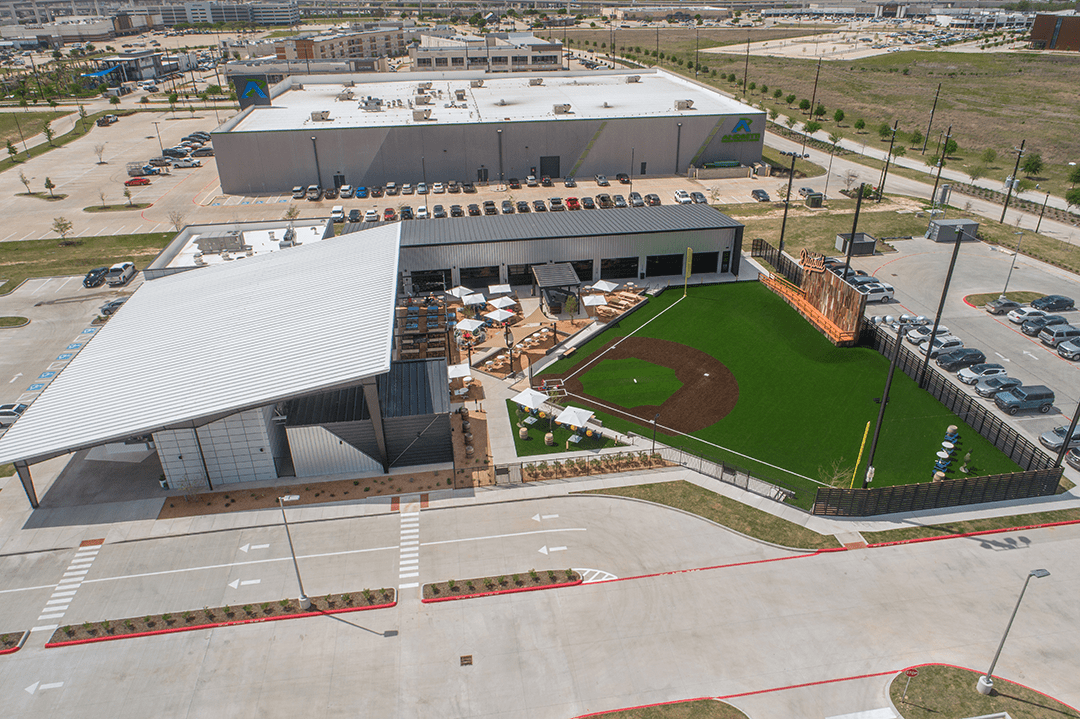
For planners who find themselves near Katy, Texas, may want to check out Home Run Dugout. There, planners will be able to check out the ground up pitching machine, invented by Home Run Dugout founders Nick Hermandorfer and Tyler Bambrick.

“The ball pops out of the ground right in front of home plate, and it just kind of tossed up in the air and it floats there. You take a big swing and hit it into this 20-foot curved screen,” said Borchik. “This is like a big movie theater-style screen. On the screen, we have a simulation of every major league baseball stadium. You can play like it’s whatever ballpark you want.”

The venue includes 12 batting bays, a full-service restaurant and bar as well as a beer garden. The total layout of the venue is 46,000 sq. ft.

Home Run Dugout

“It’s giving everyone the opportunity to step up to the plate and feel like they’re like the star of the show. They’re stepping up to bat at Yankee Stadium,” said Borchik.

Even if the people on your team have never swung a baseball bat in their life, they will still be able to participate. “Groups sometimes come in with the preconceived notion that like, Okay, I’m not a baseball person. I’m not interested in swinging a bat. I’ve never swung a bat before. The way that we have it set up with the easy-to-hit soft toss, with the simulated screen we can manipulate it to make your ball go farther,” said Smith. “We see people here who are like 80-years-old to four-year-olds. I think that’s part of what makes it so fun is not necessarily that like it caters to people who are good at baseball,” said Smith.

Competition can also bring people together. “You’re trying to beat your co-workers you’re trying to get your section to say it’s sales versus marketing,” Smith continued, adding, “You can create competitions within the game, that way you aren’t just trying to win but you’re cheering on your coworkers.”

The space isn’t just limited to sports and team building, according to Borchik the 15 foot-high and 20 foot-wide HD projectors have been used by businesses who have used the venue to do their quarterly planning meetings and corporate training.

Treasure Hunting at Dana Point

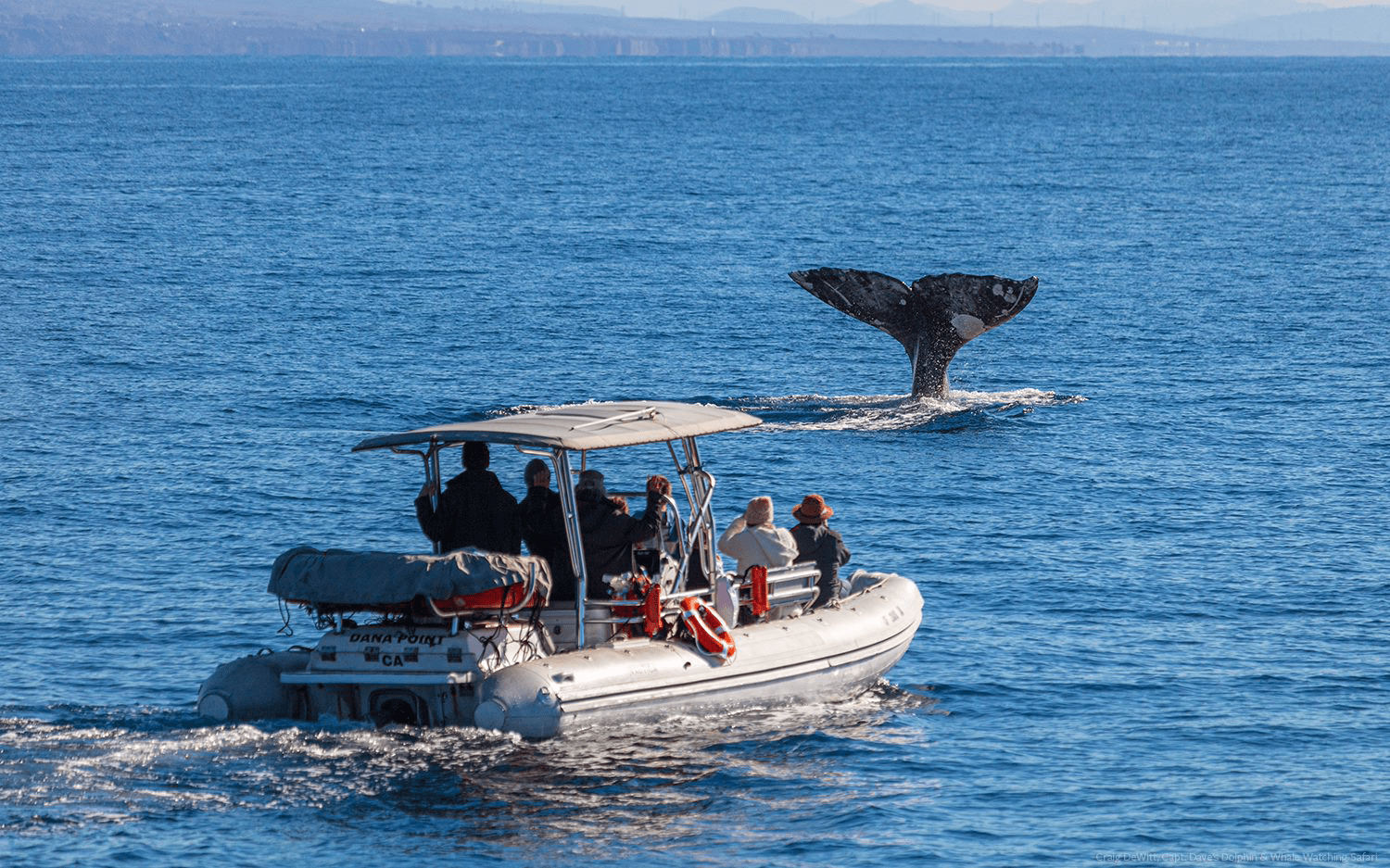
If your next event is in SoCal near Dana Point, planners may want to take the opportunity to take your group out to try and spot some whales. Or, if your team is seeking a little more physical teams can elect to try kayaking or surfing.

Read MorePalm Springs, California: Your Oasis, Your Way

“A lot of people will fly in and go to their conference, and maybe walk the grounds of where they’re staying.  If you come to a place like Dana Point and you want to see the beach, and you want to know about the first American world whale heritage site,” said Heather Johnson, Executive Director of Visit Dana Point.

Visit Dana Point

If planners are seeking a more interactive activity, kayaking in the harbor is a fun option. Groups can do a treasure hunt where they have a list of things they need to take pictures of as they go. “That’s such a fun way to break the ice because even if you’re not a professional kayaker, it’s a very simple thing to do, but it’s also kind of intimidating,” said Johnson. “Everyone’s on an even playing field and a little unsteady at first and not really sure what they’re doing. You’re going past all sorts of different yachts and boats and there’s a lot of times sea lions will be swimming with you.”

Axe Throwing in Frisco, Colorado

For meeting planners hosting smaller retreats in Frisco, Colorado, looking for team-building activities offers a wide variety of excursions.

Thrashin’ Axes allows participants of all ages to partake in the fine art of axe throwing. Groups typically get a 10-minute lesson on how to axe throw prior to the main event. During the training, there are four different positions for throwing. Participants throw the axes at a wall within an enclosed cage area. There is also a selection of different types of axes that are easier and harder to throw depending on the desired difficulty.

Thrashin’ Axes

For culinary fans, Colorado Mountain College offers a full teaching kitchen. Agee offered thoughts on her experience. “I had to make French Fries and use a fryer. Everybody else did a different part of the meal. Then, you all sit together at a long table, and you have the meal together and it’s in fact a cool team building experience,” Agee said. “Team building should be something that doesn’t scare people, and that makes them feel like it’s something that they’re going to have fun doing. I don’t think it’s great to be very uncomfortable when you’re about to do something. This feels like the stuff that’s supposed to bring you closer together.”