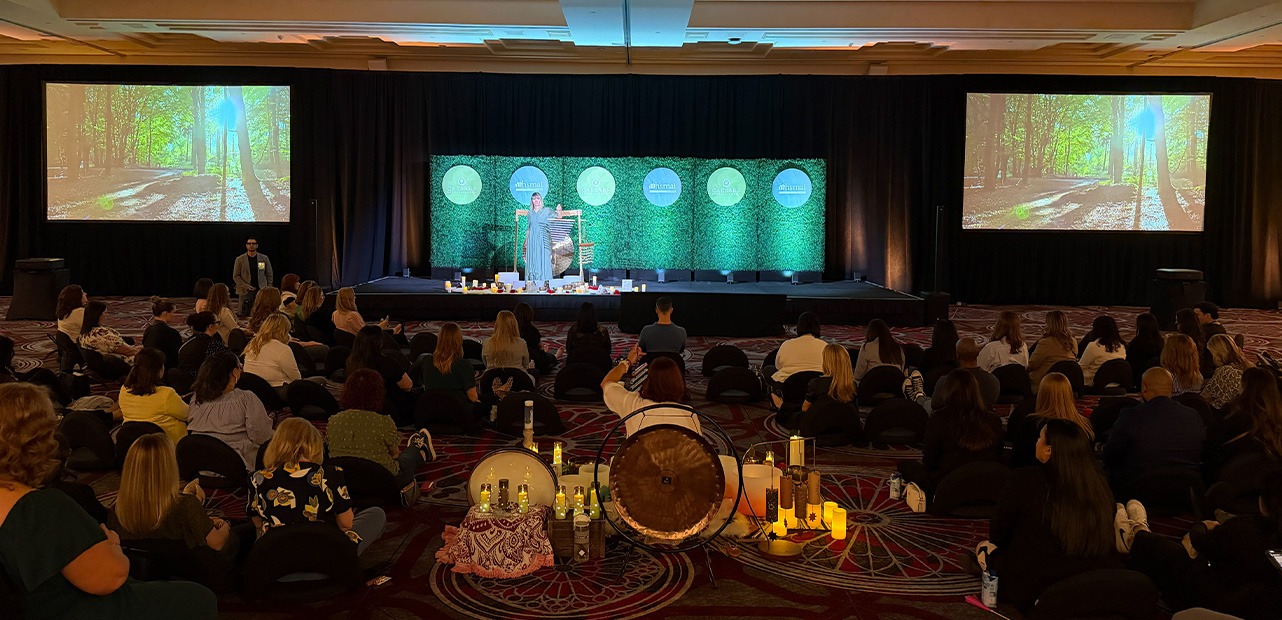
Caesars Entertainment and Hospitality and Sales Management Association International (HSMAI) Las Vegas partnered to host the organizations and Caesars’ first event where wellness was the event’s focus. Held at Caesars Palace in Las Vegas, the event consisted of a panel highlighting the value of incorporating wellness at events, a four-series wellness activation and sound bathing.
Hospitality and Sales Management Association International (HSMAI) Las Vegas recently held an event at Caesars Palace, where wellness was placed front and center.
This was HSMAI Las Vegas and Caesars’ first time hosting an event that moved beyond a brief activation held during a larger event. Encouraged by previous events where wellness was successfully integrated, Caesars decided to apply wellness to the entire event—to resounding success.
Caesars’ Wellness Journey
Caesars Entertainment Meetings & Events began incorporating wellness into its events in 2024, when it debuted its Wellness Menu in conjunction with hosting its inaugural Wellness Summit. Since then, Caesars has incorporated wellness into several multi-day meetings held at Caesars Palace.
“Our approach to wellness has really evolved through partnership and real-world application across a range of programs,” says Reina Herschdorfer, director of marketing, national meetings and events for Caesars Entertainment Meetings & Events. “For example, with AMEX in December [2025], we integrated wellness throughout a large-scale experience for 1,000 conference participants, and similarly with ConferenceDirect last July for 250 participants. In both cases, wellness wasn’t a standalone activity; it was intentionally woven into the overall meeting design to enhance engagement and the overall conference experience.”
At HSMAI last year, Herschdorfer says she and her team took a more progressive step by inserting brief wellness moments, such as five minutes of breathwork, into each meeting. She says the positive feedback from the board and HSMAI members led to a conversation about the expanded role wellness can play, moving from an add-on to a central theme.
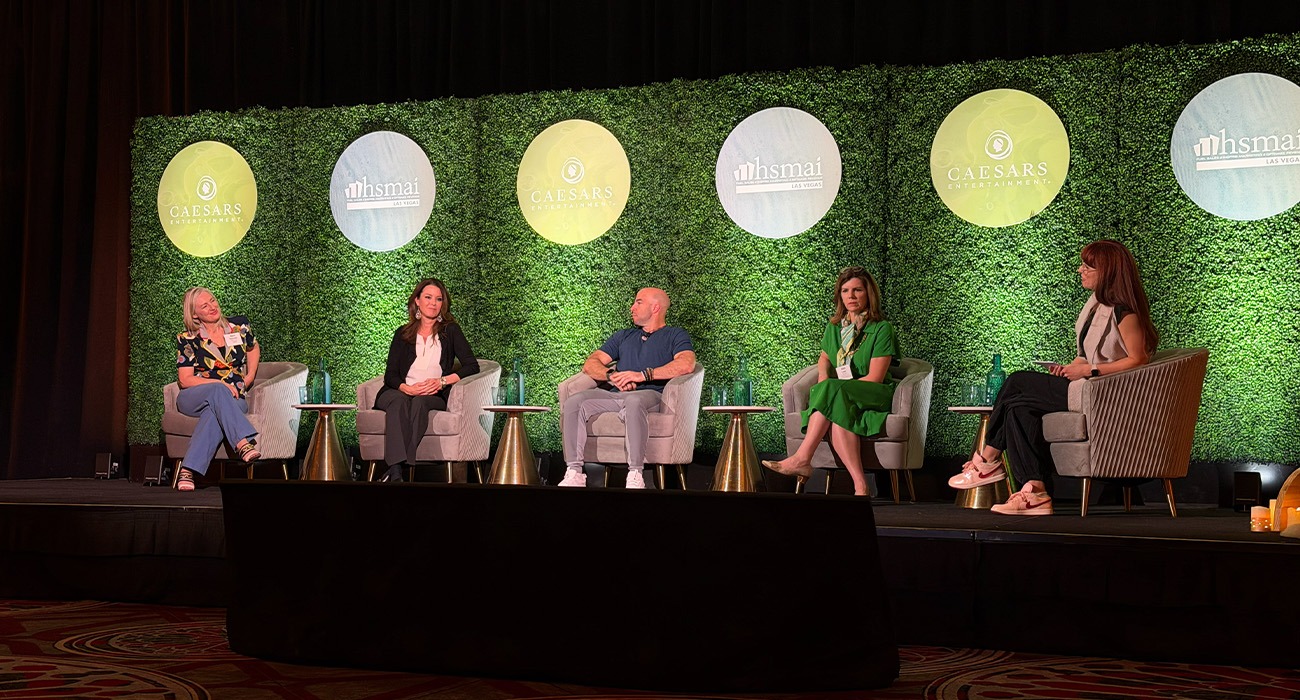
This year’s HSMAI consisted of a panel with David T. Stevens, co-founder of Olympian Meeting; Lisa Starr, task force chair with Global Wellness Institute; Kim Kopetz, president and CEO of The Opus Group; and Rachel Milford, co-founder of Pneuma. Moderated by Megan Wilson, coach and co-founder of Pneuma, the discussion highlighted the value, physically and financially.
Read More: Smart Meetings Wellness Experience Flexed Relationship Muscles
“Wellness is here to stay,” Starr said. “People want it. They want it during the day when they’re working. They want it in the evening during their downtime; they want to know it’s available to them. Ninety-one perfect of companies report positive ROI on the money they spend on bonus activities, 77% say it improves their culture. It’s time to start building your wellness culture in terms of meetings. Audit what you’re doing now, introduce healthy options and make them default. Make it easier for them to be chosen.”
Following the panel, participants engaged in four 10-minute activations: an apothecary bar, which explored various essential oil scents participants chose based on how they want to feel; experience exchange led by Kopets, during which participants shared what wellness-oriented practices have worked for them in the past; performance hydration lab, led by a Pneuma representative, where participants sampled three energy-inducing drinks; and revenue lab, led by Stevens, where participants explored the revenue of potential of introducing wellness options at hotel and events. The event ended with a guided sound bath experience, led by Svetlana Esposito, certified sound therapist, kundalini yoga teacher and children’s meditation teacher, among others.
“Expanding to a fully wellness-focused chapter meeting felt like a natural next step,” Herschdorfer says. “It aligns with what we’re seeing across the industry: wellness is increasingly tied to measurable outcomes like engagement, productivity and overall event ROI. It also resonates strongly with emerging demographics, particularly Gen Z, who place a high value on more holistic and intentional experiences.”
Impact of Wellness
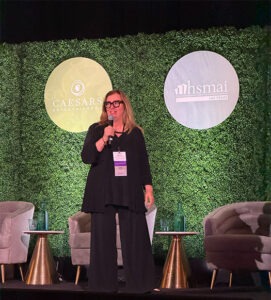
Herschdorfer says what stood out most in participant feedback was how impactful even small, well thought out wellness moments felt.
“Many shared that the breathwork and guided pauses helped them reset, stay present and absorb content more effectively throughout the day, something that’s often a challenge in traditional meeting formats,” she says. “We also heard consistently that participants felt more energized and engaged, rather than depleted, which is a significant shift from the typical conference experience. Beyond that, there was a strong appreciation for the intentionality behind it—that wellness wasn’t an add-on but thoughtfully integrated into the overall design.”
Read More: Global Wellness Institute’s Top 10 Trends
Another element that set the event apart was the interactive nature of the activations. “Providing opportunities for conference participants to ask questions and engage in a more deliberate, intimate setting created a deeper level of connection and personalization,” Herschdorfer says. “That format allowed for more meaningful dialogue and made the experience feel highly relevant to everyone, rather than one-size-fits-all.”
She says the most meaningful was the feedback from participants who said it changed how they thought about meetings altogether. “It reinforced that wellness isn’t just a personal benefit—it enhances connection, focus and overall outcomes for the entire group.”
The Effect of Wellness on Attendee Behavior
“We learned that conference participants are highly receptive to wellness when it’s intentionally built into the experience. They don’t opt out, they lean in,” Herschdorfer says. She even saw how structured moments to pause helped increase focus, engagement and energy throughout the event.
“We also saw the power of more intimate, interactive settings,” Herschdorfer continues. “Giving participants space to ask questions and engage more directly created deeper connection, increased participation and made the experience feel more personal and impactful.”
Lessons Learned
Herschdorfer says this activation reinforced that wellness is most effective when it’s built in and not treated as an add-on.
“We also saw that both format and environment matter,” she says. “Interactive, intimate moments encouraged deeper connection, while design elements—uplighting, meditation chairs, soft seating, essential oils, and nature-based sound—created a more calming, ‘chill’ atmosphere that helped participants relax and be more present.”
For meeting professionals who want to incorporate wellness at their event, Herschdorfer shares some tips:
- Start by being intentional. Wellness doesn’t have to be a large-scale overhaul, but it does need to be thoughtfully integrated into the agenda. Even small, structured moments like breathwork, movement, or guided pauses can have a meaningful impact on focus and engagement.
- Equally important is the environment. Simple design choices—lighting, seating, sound, and scent—can completely shift the energy of a space and help conference participants feel more relaxed and present.
- Think about interaction. Creating opportunities for smaller, more intimate engagement allows participants to connect more deeply, making the experience more personal and memorable. Consider building in longer breaks as well giving participants time to absorb content, reflect, and connect enhances both retention and overall experience.
- Align wellness with your overall objectives. When it’s positioned as a tool to enhance productivity, connection, and ROI and not just a “nice-to-have.” It becomes a natural and impactful part of the meeting experience.