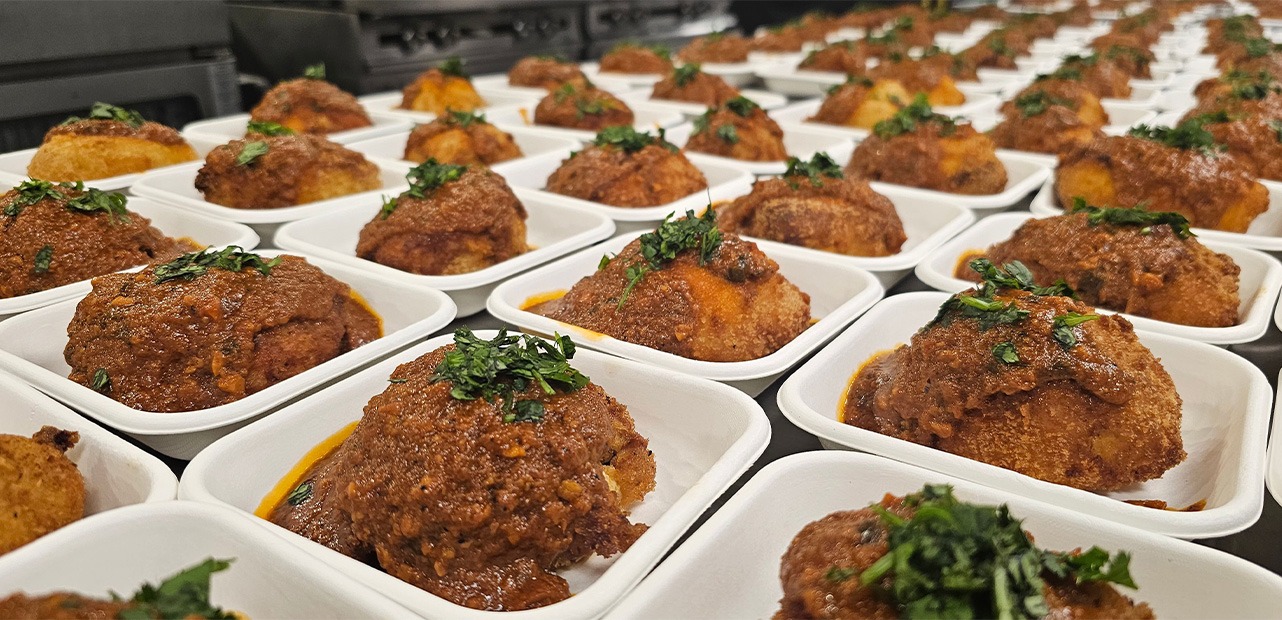
A 2,800-guest Diwali showcase across three of New York’s most prominent corporate cafeterias highlighted the intricacies involved in creating traditional dishes at scale, from centralized creation to distribution. While normally created for sit-down gatherings, the two signature dishes on display, butter chicken bites and Gajar ka Halwa, were created in a passed canapé format.
Three days before Diwali last year—the Hindu festival of lights celebrated by over a billion people worldwide as a time of family, food and the triumph of light over darkness—I threw out thirty-five butter chicken meatballs.
They had been held out of temperature for too long during a training run. The staff working on the dish that morning had never made it before. The protein, the marination, the holding window—none of it lived in their muscle memory yet. So when the temperature drifted out of range, nobody noticed in time. I noticed. I made them discard the batch. Then we redid the sauce, which had broken its texture in the heat, until the consistency was correct. We restarted the line. We trained the protocol back in.
That moment—three days out from a 2,800-guest Diwali showcase across three of New York’s most prominent corporate cafeterias—is the moment most planners never see and never ask about. But it is the moment that determined whether the event landed or failed. By the time guests are walking through the door, the work is done or it is not. The truth of large-scale corporate catering is that the chaos lives in the prep window, and the calmest day in the operation is the day of the event itself, if you have built the architecture correctly underneath it.
Maintaining a Standard at Scale
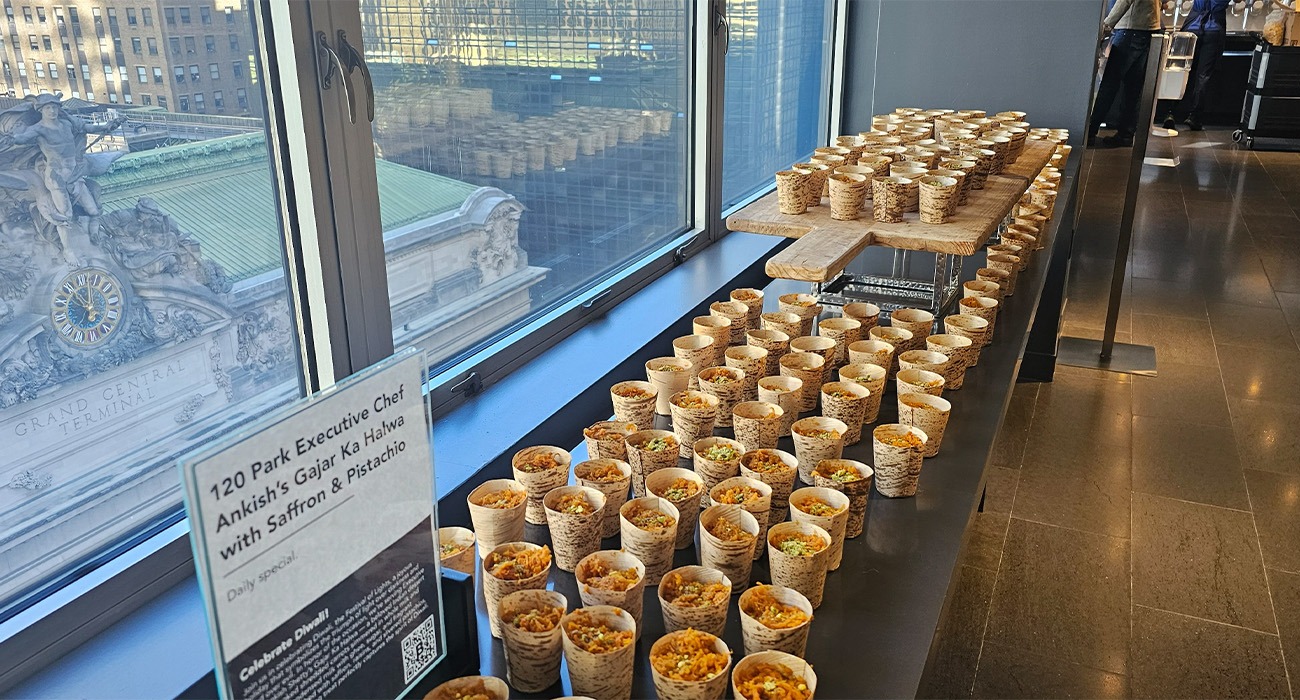
I am corporate executive chef at Restaurant Associates, the Compass Group division that handles the culinary program for one of Wall Street’s most prominent financial firms. Last Diwali, my team—forty people across kitchen and front-of-house—delivered a curated tasting showcase to 2,800 employees during rolling lunchtime service, simultaneously across three of the firm’s NYC cafeterias. The format was passed canapé. The service was rolling, not seated. The audience was the kind of audience that holds Indian food to the standard of home.
Read More: Father-Son Bonding Creates Culinary Magic in Hawaii
Two signature dishes carried the entire program. Butter chicken bites—the traditional dish modified into a bite-sized canapé format that people could eat in one hand while shaking hands with the other. And Gajar ka Halwa—the slow-cooked carrot and milk dessert that every Indian family makes when there is something to celebrate. One dish reimagined. One dish untouched. Both representing a culture, in a building that almost never sees this kind of food, to an audience that knows it intimately.
This is what Michelin-standard execution actually looks like inside a corporate event at this scale. Not the white-tablecloth performance most people imagine when they hear “Michelin.” Something different—quieter, more engineered, more invisible. And almost entirely missing from how the meetings industry talks about food.
Three Kitchens, One System
The operational architecture began three days out. I started production with three prep cooks and four line cooks, and the team scaled from there as we moved from base prep into batch assembly. Every component of both dishes was built at one central location—the marination, the spice blooms, the meatball formation and sear, the makhani sauce reduction, the carrot break-down, the ghee cook-out, the milk reduction. Centralization meant standardization. One kitchen, one chef in the room, one standard for what each component was supposed to taste like before it left the line.
Then we blast-froze almost everything. This is not what most people picture when they hear “Michelin-trained chef,” but blast-freezing is one of the most important pieces of technology in distributed catering at scale, and the reason is texture.
A slow freeze allows ice crystals to grow inside the protein and the dairy, destroying the structure of the food. A blast freeze locks the texture in place. When that meatball comes out of the freezer at the serving site and is brought back to temperature with care, the bite is the bite I built three days earlier in my own kitchen, not a degraded copy of it.
From the central location, the components went out to the three serving sites with written reheating protocols specific to each component. Not verbal guidance, not a phone call, not “reheat until hot.” Written specifications: target internal temperature, finishing equipment, holding window, sauce application timing, plating standard. The location heads at each site received the same document. Each of them was responsible for executing the same dish to the same standard at the same moment, in a kitchen I could not physically be inside.
This is what distributed execution actually means. It is not three chefs improvising in parallel. It is one engineered system, replicated three times, with the cook-on-site steps deliberately simplified so the variability of human execution sits at the smallest possible point in the build. The complexity is upstream, where I controlled it. The simplicity is downstream, where I had to trust the team.
My Culinary Philosophy
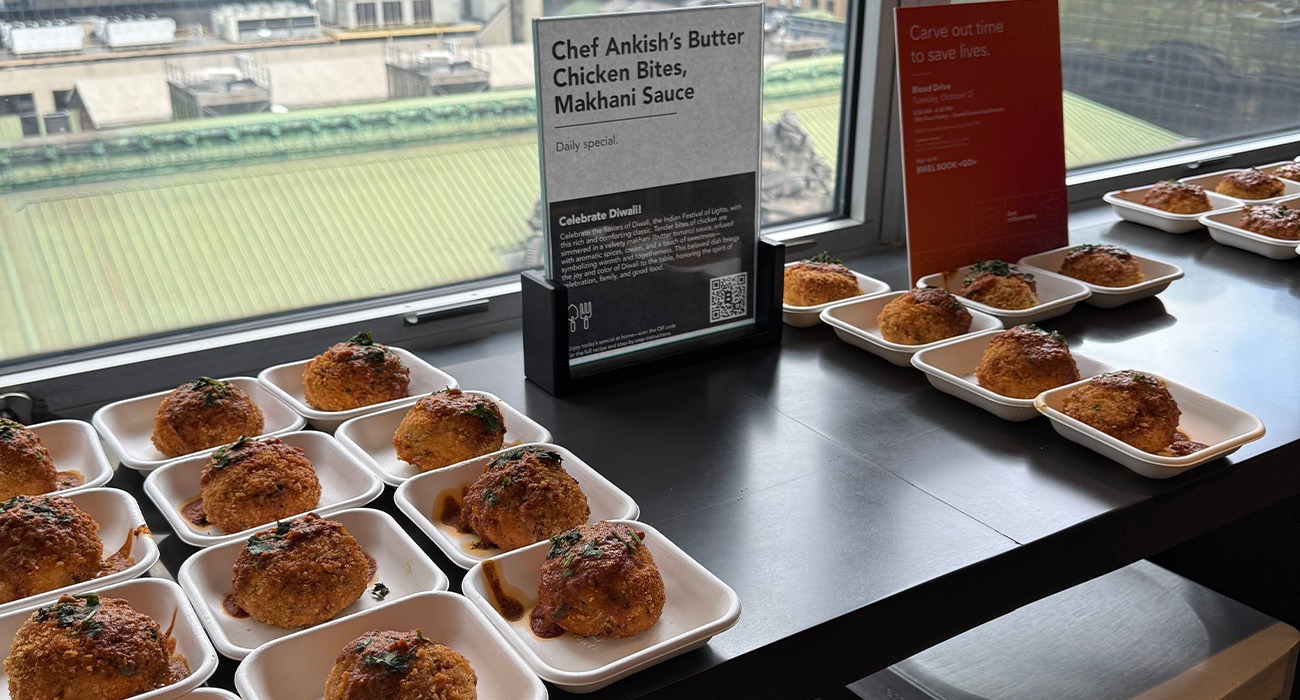
The harder operational decision was not the logistics. It was the menu philosophy.
Gajar ka Halwa stayed traditional. I did not modify the recipe. The carrots stayed grated by hand at the right coarseness, the milk reduced down the slow way, the ghee bloom stayed where it belonged, the cardamom and the nuts and the sugar all sat where my mother and every Indian mother before her would have placed them. The dish does not survive modification. It is what it is, and at any scale, you commit to that or you choose a different dessert. I committed.
Read More: Turning Surplus Into Service: How Food Rescue Strengthens Community and Sustainability
Butter chicken bites were different. The traditional dish is plated, eaten with rice or naan, served with hands and time. None of that was possible here. Given the event’s passed canapé format, I modified it—the meatball-sized bite, the controlled sauce coating, the single-bite portion—without modifying anything that mattered about the flavor architecture. The marination stayed. The smoke stayed. The makhani sauce stayed. The spice depth stayed.
That distinction is what cultural authenticity at scale actually requires. Not refusing all modification—that is the lazy version of authenticity, and it usually ends in a dish that fails the format. The discipline is knowing what can move and what cannot. The format can move. The flavor cannot. If you accept that line, you can take a dish anywhere. If you confuse them, the dish ends up tasting like nothing—generic catering with an exotic name on the card.
And there was one more thing about that menu I thought about almost every day in the lead-up. A meaningful number of the 2,800 employees we were feeding that day were South Asian. They were colleagues at the firm celebrating Diwali away from their own families. For them, the food was not entertainment. It was home.
There is no harder quality assurance process in foodservice than feeding people their own culture. They will tell you, immediately, whether you got it right. They will know in the first bite. Cooking for that audience is the most honest professional pressure I know—and it is why the staff training had to be what it was, and why the discarded meatballs had to be discarded.
Making the Traditional Untraditional
The night before the showcase, I did not sleep well. The fear was not whether we could execute. We had the protocols, the staff training, the central production behind us, the protocols at each site, the three location heads who I trusted. The fear was whether people would actually eat the food.
When you take a traditional dish and present it in an unfamiliar format, you are asking a guest to break a routine. To pick up something they have not seen before and put it in their mouth. To trust the kitchen behind it. Most of our 2,800 guests that day had never seen Butter Chicken Bites in their lives. The traditional version, yes. The canapé version, no. There is no recipe to make people reach for the tray. There is only the chef behind it, and whether they have done the work to earn the trust of the room.
—
They reached for the tray. They came back. The trays moved faster than we had projected, and we adjusted the throughput on the floor in real time. The client at the firm who approves every program we run personally messaged me midway through the day to say the dishes were outstanding. By the time service wound down, my team was tired in the specific way that good service makes a team tired—the kind of tired that is also proud. Butter Chicken Bites now lives on our rotating menu at the firm. It earned its place there because of how that one day landed.
There is one thing I would say to any meeting planner who reads this. The thing that almost nobody from outside the kitchen sees is the labor cost of teaching a team that has never made a non-standard dish how to make a non-standard dish—to the right standard, at volume, under time pressure.
That training is not a thirty-minute briefing the day before. It is days. It is the discarded meatballs and the broken sauce and the line-check that goes wrong twice before it goes right. It is the most expensive and least visible part of cultural cuisine at scale, and it almost never appears in a proposal.
When a planner asks me late in the cycle for a change that sounds verbally small but operationally large, I sometimes have to say it directly: I can make almost any reasonable change you ask for. I cannot bring you the moon when you asked for a landing on Earth. The earlier the conversation, the more I can move. The later the conversation, the more we are both improvising under pressure that we did not have to create.
The questions that produce extraordinary corporate events are not the questions most planners ask their catering partners. The questions on the standard intake form are about dietary restrictions, headcount and dollar-per-head. Those questions matter, but they are the floor, not the ceiling. The ceiling questions are different:
- How does your team handle distributed execution when the chef cannot be in three places?
- What is your pre-service architecture 72 hours out?
- Where is the line between format-modification and flavor-modification on a dish from a culture you are representing?
- What is your quality control across simultaneous service?
- Who, specifically, is in the kitchen on the day?
Asking those questions does not guarantee the event will land. But it is the difference between hoping it will and engineering it to. Last Diwali landed because the questions got asked early—by my team of myself, by myself of my team, by the firm’s planners of all of us. Not all of them on the first try. But early enough, and specifically enough, to matter.
A Dedication to Home
There is one personal note I will add, because the article would be incomplete without it. Diwali is the day Indian families celebrate at home. For the South Asian employees we were feeding that day, home was elsewhere. For me too. Cooking that food, on that day, at that scale, in that building, was a dedication to a home that was not in the room. It came out of childhood—the dishes my mother made, the festivals I grew up inside, the kitchens that shaped me before any Michelin kitchen ever did.
Seeing my name across a dish I had built from scratch, served to a room of people who knew exactly what it was supposed to taste like, was the moment that mattered to me personally. That kind of meaning does not come from a brief. It comes from who is cooking.
The architecture above is repeatable. The meaning underneath it is not. The job of a meeting planner, on the days when the food is supposed to mean something, is to find the catering partner for whom both are true.
Event Credits
Chefs: Ankish Shetty—Corporate Executive Chef; Brian Turkel—Lead Cook; Jude Infante—Prep Cook; Mendoza Perez Elizer—Lead Cook; Robinson Morillo—Prep Cook
Venue: Restaurant Associates Corporate Dining, New York City (3 locations)
Event Coordinator: Stanley Julia—Marketing/Event Head
Other: Fernando Paulino—General Manager
—
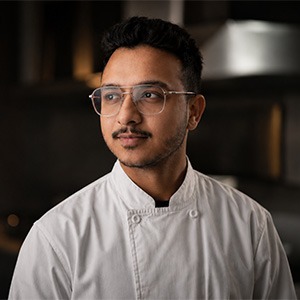 Ankish Shetty is corporate executive chef at Restaurant Associates (Compass Group), running the culinary program for one of Wall Street’s most prominent financial firms in New York.
A Mumbai-born computer science engineer who trained in Michelin-starred kitchens in Switzerland—at Rasoi by Vineet in Geneva and the Kempinski Grand Hotel Des Bains in St. Moritz—he brings an engineering mindset to high-volume institutional kitchen operations. He is a Jury Member for Food in Space 2026. His work has been published in Appetito Magazine, Modern Restaurant Management, Restaurant Technology News, Global Indian Magazine and Total Food Service. You can contact Shetty at [email protected] and linkedin.com/in/ankish-shetty-9b897521b.