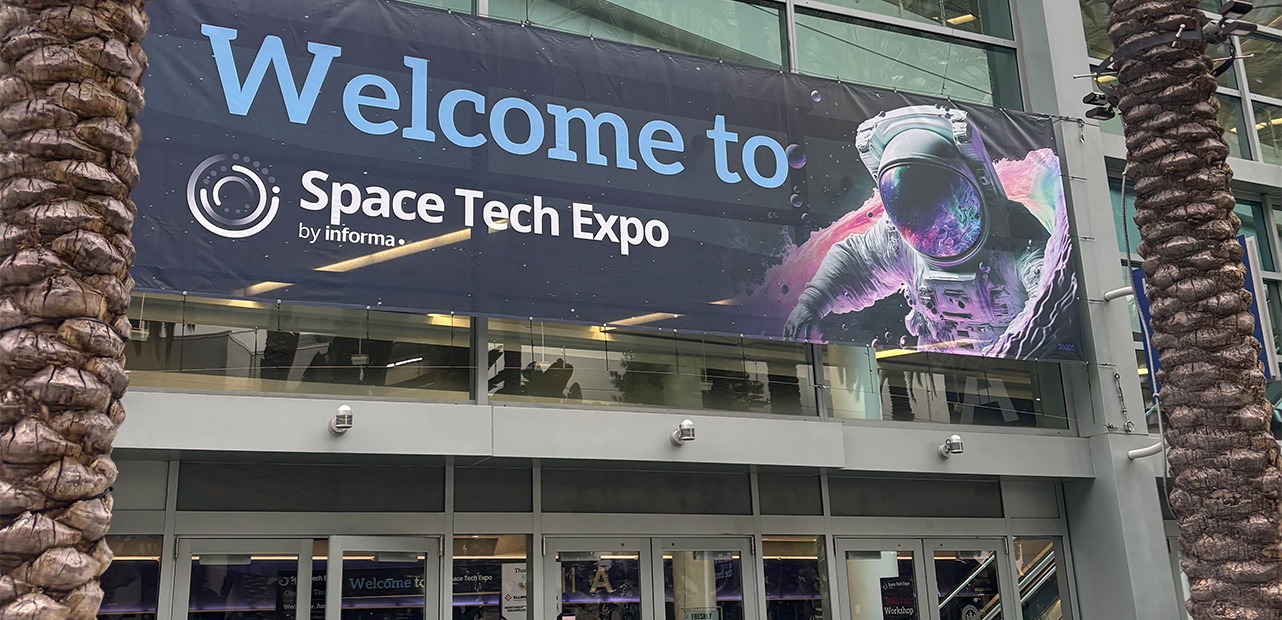
Anaheim Convention Center welcomed Space Tech Expo USA for the first time, bringing more than 350 exhibitors together in the global space supply chain.
“Anaheim stood out as the perfect location thanks to its accessibility, infrastructure and proximity to Southern California’s thriving aerospace ecosystem,” says Harriet Millar, exhibition manager for Space Tech Expo USA. “This region has been a global hub for innovation in space, defense and advanced manufacturing, making it the ideal place to connect engineers, manufacturers, suppliers, government representatives and commercial space leaders.”
She adds that Anaheim Convention Center provided the scale and flexibility to support the event’s continued growth. “Beyond the venue, the city offers excellent hotel capacity, convenient transportation links and a vibrant environment that fosters networking opportunities beyond the show floor,” she says. “And, of course, being close to Disneyland adds an extra layer of appeal, helping to attract a broader national and international audience to Space Tech Expo.”
A combination of new post-Covid employee prospects entering the workforce and employees changing careers or leaving the workforce altogether has resulted in a skills gap, with fresh faces entering an industry without senior-level employees to train them. This conundrum is even more pronounced in an industry such as aerospace, where the developments are fast-paced. Space Tech Expo Europe’s Skills Lab, a series of workshops and masterclasses created to support workforce development and learning, in Bremen, Germany, was made to support this. As a response to its positive reception in Europe, they’ve expanded it to the United States.
Read More: Lessons from a Harmonious Return to Meeting in Anaheim
“One standout [program] is the U.S. Office of Space Commerce Hyper-Interactive Town-Hall Open-Forum, which provides a unique opportunity for attendees to connect with government and industry leaders,” she says. “This session focuses on critical areas such as global scaling, securing funding and turning policy into actionable business strategies. It highlights the event’s dedication to equipping professionals and businesses with the tools they need to succeed in a competitive space ecosystem.”
Beyond Space Tech Expo USA’s Skills Lab, attendees in general are seeking a more hands-on, interactive experience that facilitates direct engagement with technologies, processes and industry experts. “Participants increasingly seek opportunities to ask questions, collaborate with peers, witness solutions in real-world applications and leave with actionable insights rather than just information,” Millar says. “This trend has shaped how we design our conference programming, offering deeper dives and more creative approaches to learning.”
She adds that technical workshops and small group formats have proven that direct engagement is now a crucial part of events, especially in industries such as aerospace and space technology.
To ensure a high-caliber professional audience, Space Tech Expo is committed to keeping the event free to attend for engineers, a unique aspect of the event. Millar says this “creates valuable opportunities for exhibitors and sponsors to connect with the right people. By continuously adapting the event design to align with industry trends and attendee needs, we’ve been able to enhance both engagement and satisfaction.”
Challenges of Hosting Aerospace Events

Event planning is complex; planning for a complex and fast-moving industry comes with its own set of hurdles. “The aerospace and space sectors bring unique challenges due to the nature of the industry,” Millar says.
Given the nature of the industry, exhibitors showcase specialized equipment, advanced manufacturing technologies and complex engineering solutions. “Managing logistics for large-scale exhibits, coordinating technical requirements and ensuring a seamless experience for both exhibitors and attendees requires significant planning and collaboration,” Millar says.
She adds that another challenge is keeping pace with the industry’s rapid growth and innovation. “The sector evolves quickly, with new companies, technologies and market opportunities emerging every year. We need to ensure the event remains relevant, provides meaningful business opportunities, stays ahead of market trends and creates space for both established industry leaders and emerging innovators.”