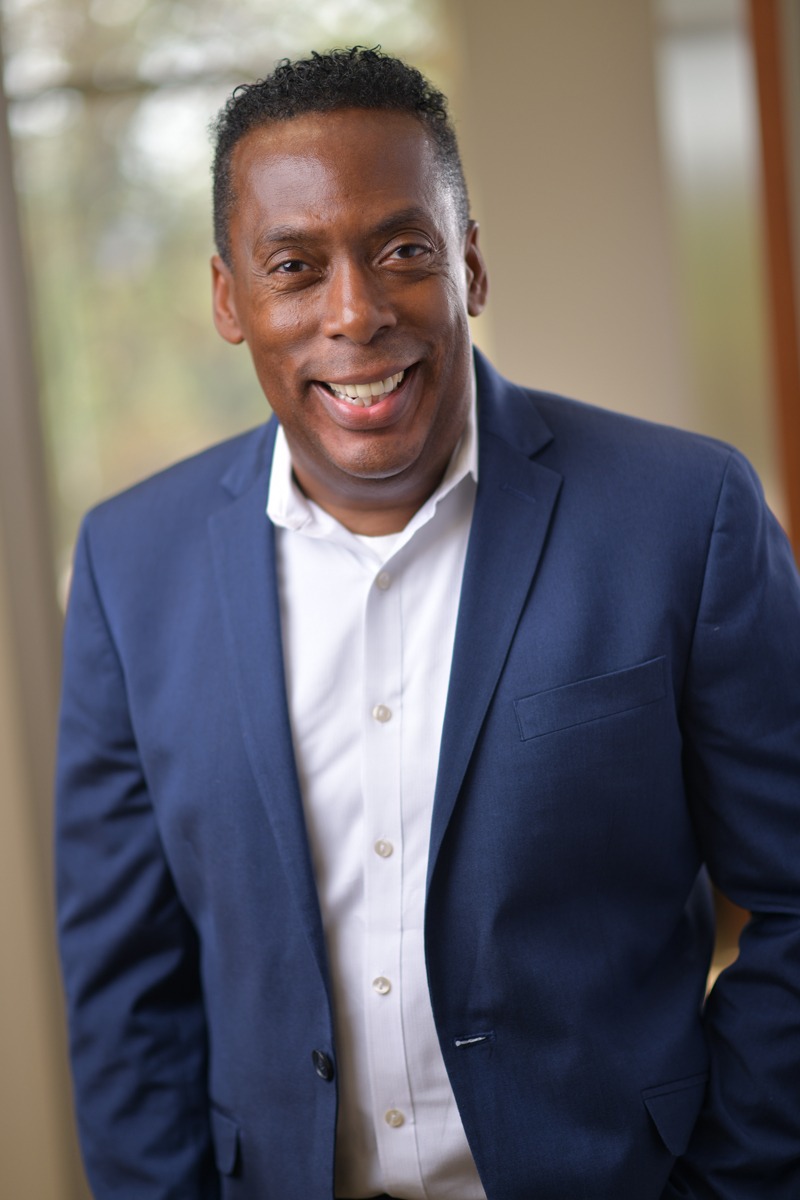
Executive Director of Tourism Diversity Matters Greg DeShields discusses: The Importance of Belonging
The Collective Experience: 2023 Diversity, Equity, and Inclusion Conference, driven by the thought leadership of Tourism Diversity Matters (TDM), is dedicated to exchanging insights and concepts about best practices for Diversity, Equity, Inclusion, and Belonging (DEIB). TDM is the collaborative leader of Diversity, Equity, and Inclusion initiatives and concepts that address the gaps of ethnic disparities providing tactics to develop more effective Diversity & Inclusion strategies. The Collective Experience aims to provide a learning forum focused on strategies to influence corporate social responsibility and create fair treatment, access, and advancement for all, eliminating barriers.
The conference, intentionally designed for CEOs, corporate leaders, Chief Diversity Officers, government officials, and university-level educators and administrators, will include programming that addresses relevant DEIB issues while providing solutions and tactics that leaders can implement. The interactive cross-cultural experience will produce critical dialogue and exchange knowledge of effective strategies.
Read More: Why is DEI critical to the Hospitality Industry?
The Academic Think Tank will serve as a platform for deans, directors, research faculty, and practitioners to examine ideas and recommend the latest strategies and best practices, access a diverse talent pipeline, and produce diverse and inclusive performance metrics for syllabus and staff development. By bringing together a diverse group of academics, the Think Tank aims to foster a culture of inclusivity and broaden perspectives to ensure that the ideas and strategies developed are effective, practical, and applicable to various situations and contexts.
These are a few pressing themes in demand:
STATE OF DEIB IN ACADEMIA—Initiatives at colleges are under attack. The Supreme Court decision ending affirmative action and race-conscious admissions policies has triggered a significant rollback of programs and initiatives targeted at minority students and restricting and eliminating education curricula.
DEIB SMALL ORGANIZATIONS—A critical component of a thriving business is strategy. Many small businesses still believe DEI initiatives are not relevant to them. The reality is that DEI initiatives aren’t just for large corporations – they are also crucial for small businesses.
DEIB POLITICS AND CULTURE—Entangled in political and cultural debates often called “culture wars.” There is a clash of ideology and values, and DEI efforts have become a focal point in these debates.
CEO ROUNDTABLE—Businesses must prioritize diversity in practice, not just a promise. While there has been significant progress, organizations must do more to ensure everyone can achieve their dreams and potential. National business leaders from the private and public sectors will discuss how DEIB must be more than goals to strive for – it’s smart business.
The State of DEIB Initiatives
While DEIB initiatives have gained traction and support in many sectors, they have faced criticism and opposition from various viewpoints. Yet, there are perceptions that DEIB efforts are overly focused on political correctness and censoring certain beliefs, which has led to resistance.
Even before this year, corporate DEIB efforts had come under harsh criticism, including that they’re expensive, performative, and even a source of division. Performative DEI actions for appearance or symbolic purposes rather than for genuine commitment to creating meaningful change is a losing prospect involving superficial actions done to fulfill an image or reputation rather than to drive substantive transformation or address systemic inequalities.
Executives withdraw as politicized attacks on DEIB rapidly make their way into workplaces. In performative participation, some companies merely jumped on the bandwagon to not appear racist. These leaders weren’t committed for the long haul and now seek an exit.
But to be clear, Diversity, Equity, Inclusion, and Belonging is a Business Strategy! These four concepts boost team dynamics, productivity, and innovation. With DEIB at the core of a mission, it will ensure that each team member has equal opportunities to do their best work and feels valued.
Read More: Lessons from Leaders
So, what is Belonging, and why has it risen to evolve the DEI strategy; organizations must address a broader construct of DEIB internally and externally. Fundamentally, this is feeling accepted, valued, and included within a particular group, community, organization, or environment. Why is belonging so important now? The sense of belonging matters because it affects how people deal with adversity. The importance has become significantly pronounced due to various social, cultural, and technological shifts, increased globalization, and greater diversity and multiculturalism in many societies.
DEIB In the Future
As we look ahead, DEIB will significantly shape culture. It will require a paradigm shift in our language, how businesses are run, and profound cultural change that can be highly challenging.
Despite these challenges, DEIB work is essential for creating more equitable and inclusive environments. It’s about ensuring everyone has a fair shot at success, regardless of background, and everyone’s voice is heard and valued. While the work may be challenging, the positive impact on individuals and communities is immeasurable. It requires dedication, perseverance, and a commitment to creating a better future for all.
Efforts will be hard work but also necessary for creating more just and inclusive societies and organizations. However, we can make it happen if we all put in the effort.
Read More: Smart Leaders: Women Rising Up









 Whether attendees want to be better at business, learn more about experience design or how to plan events that are kinder to our planet, they will find the personal and professional development they need.
 Endean explained that while technology keeps changing, often what is new now was new before. “I planned an event with (computer scientist) Ray Kurzweil to talk about what is now AI in 2016,” she recalled. “We’re not exponentially changing the world. We’re just finding a better way to use it.” Information about AI will be woven throughout Smart Monday, the Inspiration Hub and other sessions. Attendees will learn the use cases and what it means for real people. “Don’t be scared of AI,” she advised. “It is not actually going to fundamentally take our jobs, but boy, it can sure save us some time doing onerous tasks. That will give humans more time to be creative.”
 New this year is Event Profs Unplugged, a 90-minute talk show format that will be staged every day from 11:00 a.m. to 12:30 p.m. in the Inspiration Hub. Two hosts will chat with distinguished industry guests about what is really happening right now at events. Audiences can come and go and stay as long as they want. That will be interspersed with some deeper dives, fireside chats that happen at the intersections of those shows. “We don’t know what’s going to happen and that’s what I love about it,” Endean said.
 These meetings offer a chance to showcase the vitality of the business, gain valuable feedback, and secure funding for continued longevity. However, even the best business plans can fall flat if the production value isn’t there.

