meetings industry trends

If you ask someone what keeps them up at night, you’re sure to get a telling response. It’s a great question to ask. It quickly gets to the root of a person’s deepest and most frequent concerns. Meeting planners encounter many types of tasks in their work. That makes the list of possible problems long indeed.

The Events Industry Council delegates, a group containing CEOs of more than 30 industry-leading associations that represent more than 103,500 individuals and 19,5000 firms and properties involved in the industry, answered this question in their latest survey. The results were illuminating. Not only were trends and changes in the industry revealed, but even some political anxiety showed up. Overall, these five trends emerged from their varied responses.

1. Safety and security

A variety of safety concerns arose—anything from natural disasters to terrorism. Planners are responsible for the well-being of their attendees. It’s the most important aspect of an event. So it makes sense that ensuring safety was on the forefront of their minds.

To help ease this anxiety, the International Association for Venue Managers is working on establishing a safety and security guideline for convention centers to meet Department of Homeland Security accreditation. The Events Industry Council also has their own APEX initiative, which was created to provide event professional resources for becoming more informed about safety concerns.

2. Workforce issues

This will always be a relevant topic. As new generations enter the workforce, it keeps getting reshaped. Maintaining good working relationships between baby boomers and millennials is often a concern. Many planners also worry about finding millennials with the right skills to succeed in this profession.

3. Advancing the event profession

The value of your job is entirely contingent on the state of your industry. As the economy fluctuates, technology advances and other changes occur, some planners are concerned about staying relevant.

4. Impact of the U.S. political climate

It seems that most people in the United States are concerned about this heated topic. For meeting planners, this becomes particularly concerning when questions about the global perception of the United States arise. U.S. legislative action can impact various event destinations’ rise and fall in popularity, as well as which attendees show up.

5. Mergers and acquisitions

For businesses in general, mergers and acquisitions are on the upswing. And this has definitely made its way to the events industry. It seems that everywhere, these changes are impacting major players, which in turn impacts the entire event planning industry. One topic of concern for planners is that organization memberships decrease as mergers and acquisitions increase.

delta and lyft

A partnership between Delta Air Lines and rideshare upstart Lyft puts event planners in the drivers’ seat. In a win-win for business travelers, the Atlanta-based airline this week announced that Delta SkyMiles members can earn points when they use Lyft ridesharing services while traveling to and from airports where Delta flies and Lyft drivers operate.

For business travelers, the partnership means they can earn extra mileage points from the moment a Lyft driver picks them up and takes them to the airport terminal and again when they schedule their Lyft ride home. Those points can be used for future Delta Air Line tickets, or to upgrade their seats to business or first-class. SkyMiles points can also be used to purchase memberships to Delta Sky Clubs.

“We’re thinking about our customers’ whole travel experience and it’s important that Delta customers are taken care of, not just in the air, but on the ground,” said Sandeep Dube, Delta’s vice president of customer engagement & Loyalty. “We want Delta customers to choose brands that they love…and be rewarded for it.”

Delta also recently announced that it would be adding new self-service bag drop machines to make the entire experience easier.

Customers who aren’t already enrolled in the SkyMiles program can sign up at delta.com/enroll and link their Delta awards accounts through the Lyft app. After that, they’re eligible to receive 1 mile per dollar they spend on all Lyft rides.

An eligible Lyft ride must originate or terminate at airports where Lyft operates and Delta flies. In addition to Atlanta, some of Delta’s major U.S. hubs include San Francisco, Los Angeles, Seattle, Minneapolis-St. Paul, Dallas, New York City and Orlando, Florida.

gaylord national infinity ballroom

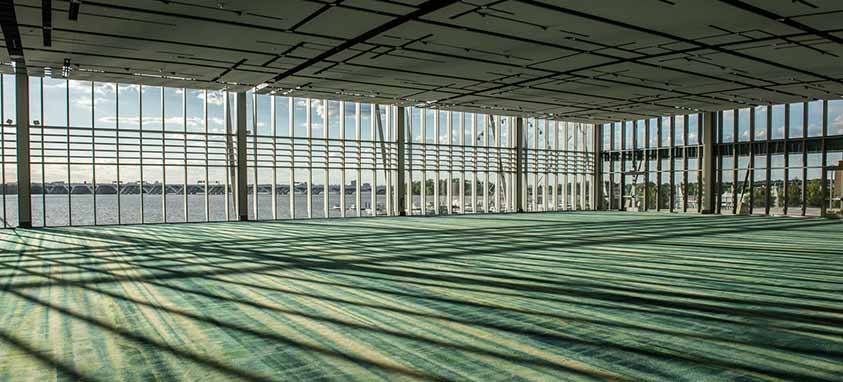
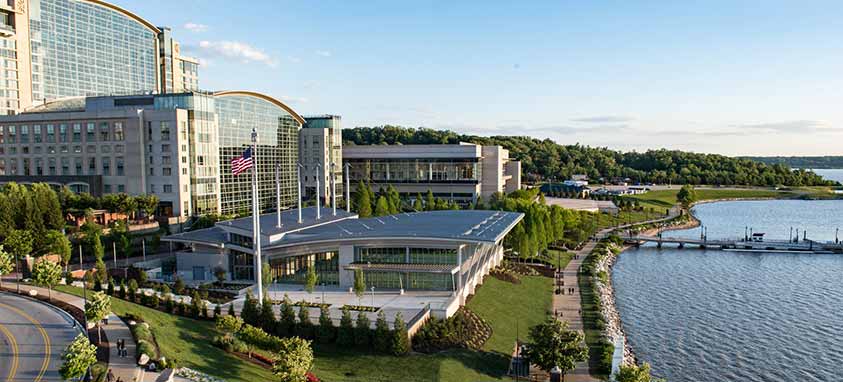
The Washington, D.C., area’s first “infinity ballroom” is now available for corporate events and other functions at Gaylord National Resort and Convention Center, a Smart Stars winner for 2017. The new 16,000-square-foot venue affords impressive, column-free, panoramic views of the Potomac River from its floor-to-ceiling windows.

The contemporary, riverfront ballroom in National Harbor, Maryland, is designed to provide event-goers with a private venue outside of Gaylord National’s main hub of meeting space.

The new ballroom has two outdoor terraces, also with unobstructed water views, which add more than 10,000 sq. ft. of additional space and the option of hosting functions that are both indoor and outdoor.

When it comes to food, planners can choose from new, interactive menu experiences designed around fresh, local fare with a focus on sustainability. Gaylord National’s executive chef curated themed menus that include Penang and Malaysian, Cuban, Southern Barbeque and Chesapeake Bay flavors—all of which offer expert culinarians and mixologists to assist attendees in creating their own dining experience.

With the addition of RiverView Ballroom, Gaylord National now offers five ballrooms and more than 600,000 sq. ft. of indoor and outdoor flexible meeting space, keeping the AAA Four Diamond property the largest nongaming resort and convention center on the East Coast.

Gaylord National, operated by Marriott International, is located eight miles from Washington, D.C. It features a signature, 19-story glass atrium, nearly 2,000 guest rooms, a full-service spa, indoor pool, state-of-the-art fitness center and unique restaurants and shops. The resort was honored as a Smart Star 2017 award winner by the readers of Smart Meetings for Best Convention Hotel.

Convention and leisure travel are more connected than many meeting planners might believe. It’s no surprise that attendees frequently turn their conference trips into vacations. That’s why destination developers are doing more than just shining attention on convention districts and event facilities; they’re also working to shape the neighborhoods that surround them. A good example is Events DC, an organization that’s fueling an urban evolution and has created a renewed energy across the nation’s capital. Three standout neighborhoods surround not just the city’s key convention space, but existing and future venues that will set the city apart when it comes to destination experiences.

Shaw: Growing Neighborhood for Foodies and Retail Shoppers Alike

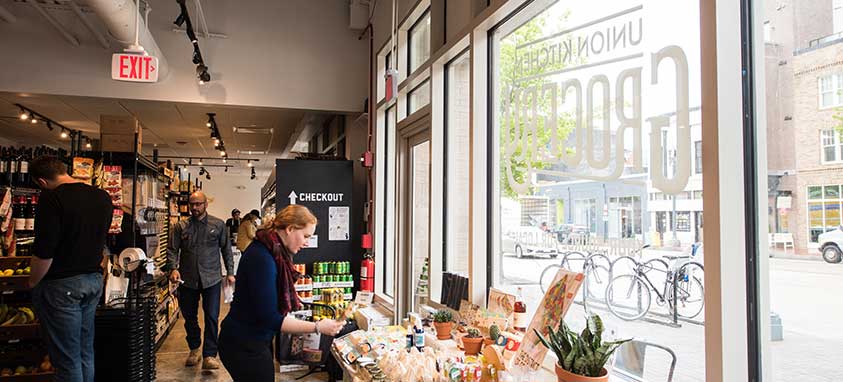
Union Kitchen Grocery

Shaw feels intimate, much like a small town, despite the fact that it’s adjacent to the 2.3 million square foot Walter E. Washington Convention Center. More than just a meeting facility, the Convention Center has become an anchor for the historically significant neighborhood. From farmers’ markets and trendy restaurants, to hop bars and cool galleries all within walking distance, that new vitality is easily approachable after conference programs end.

“Leasing out the Walter E. Washington Convention Center’s retail spaces will further invigorate the Shaw neighborhood – and act as a prime example of how small businesses drive the growth of a city,” said Max Brown, Chairman of the Board of Directors for Events DC.

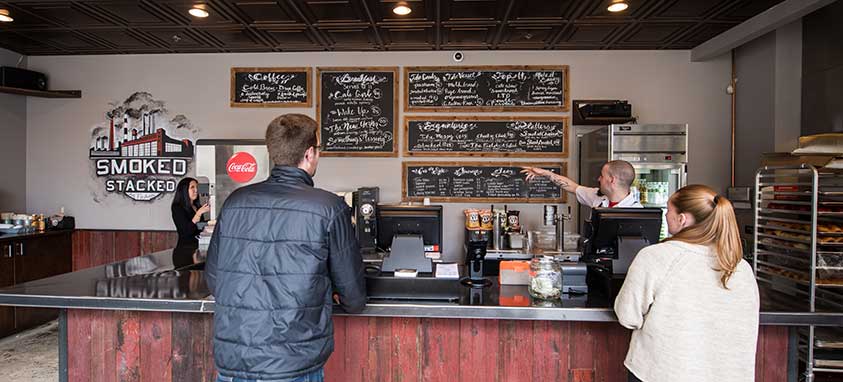
Smoked & Stacked

New retail highlights include, Compass Coffee, a “Made in DC” business, located inside the Convention Center and exterior tenants, Smoked & Stacked, a fast-casual sandwich shop by local top chef, Marjorie Meek-Bradley, Union Kitchen Grocery, Urban Athletic Club, Composition ID and a neighborhood barbershop.  Future additions will include a high-end diner concept, Unconventional Diner and a cocktail bar, in partnership with notable top chef, Spike Mendelsohn.

Capitol Hill/Hill East: A Historic Neighborhood and Home to a Future Reimagined RFK Campus

The big story for the Capitol Hill/Hill East neighborhood is at the intersection of the past and the future – most notably in the redevelopment of the RFK Stadium-Armory Campus. The 190-acre space, formerly home to the Washington Redskins and currently home to D.C. United, is being transformed to include attractions, green space and amenities that will invite both residents and visitors. Short-term development plans include, multipurpose fields, a Sports & Recreation Complex, pedestrian bridges, Market Hall and a memorial named for Robert F. Kennedy.  This area and the proposed amenities will create a new sense of neighborhood for the area – as well as resident and visitor-serving amenities.

Congress Heights: Vibrant Cultural District Located on the Anacostia River

In the heart of Congress Heights is Gateway DC, an innovative and state-of-the-art park and pavilion on the St. Elizabeths East Campus. Key to the rebirth of this neighborhood, the Pavilion provides a venue for local gatherings, a farmers’ market hosted by Whole Foods, and other community, cultural and arts events. Adding to the excitement for Congress Heights has been the announcement of an Entertainment & Sports Arena that will become the new home to the WNBA Washington Mystics and a practice facility for the NBA Washington Wizards.  The arena will open in the fall of 2018.

Events DC Brings It All Together

Events DC is more than just venues, meetings, sports or cultural events – they forge all of those things together to keep Washington, DC’s economic engine running strong while providing positive community benefits for neighborhoods to thrive. For more information and to start planning your event in DC, visit EventsDC.com/Plan.

benefits of conventions

Conventions customarily are viewed as opportunities for people to share and enrich their knowledge about a particular field or interest, network with others and experience some of the top features of the destination.

Actually, conventions play a much greater, more dynamic role as convention and visitors bureaus collaborate with local governments, economic development agencies, academic and scientific institutions, local business improvement districts and others to accelerate economic development and drive innovation.

This was one of the central findings of a new report, Defining Conventions as Urban Innovation and Economic Accelerators, from Meetings Mean Business (MMB) and Skift.

“The meetings industry is becoming a global innovation distribution channel,” says Richard Harper, co-chair of Meetings Mean Business and executive vice president of HelmsBriscoe. “To put it more simply, when destinations host conventions, money is pumped into local economies, helping to drive long-term economic development and innovation. This can lead to the development of advanced and creative industry sectors, as shown by the many case studies throughout the report.”

Many city leaders are working with CVBs as they aggressively attempt to commercialize the innovative ideas that are generated at conventions much more systematically for the benefit of their local community, according to the report. For example, tech, scientific and engineering conferences in Chicago led to the creation of 1871, a tech incubator developed by World Business Chicago that includes hundreds of local organizations.

Some cities—such as Portland, Oregon (clean tech) and Washington, D.C. (health-care IT)—have carved an innovative tech niche for themselves. Conventions give their governments, economic development agencies, academics and researchers an opportunity to have face-to-face interactions with participants, thereby accelerating progress and potentially expanding their talent pools.

CVBs invariably face the challenge of demonstrating the lasting benefits of conventions, however. A majority of the CVB executives surveyed for the report believe that if their CVB was better able to demonstrate the long-term economic impact of conventions, it would validate requests for more public funding.

“[Tracking long-term impacts] is a new area and not as straightforward as the direct economic impact from a conference,” Harper says. “The type of legacy impact also varies by conference and destination, so there isn’t a consistent model we can use. But this report is a big step.”

laptop ban

Business travelers who fly from Europe to the United States will soon be required to store their laptop computers if the Department of Homeland Security (DHS) decides to expand its ban on large personal electronic devices, as anticipated.

Quoting various DHS officials and airline-security spokespersons, media reports—from CBS News to The Daily Beast—state that banning laptops onboard certain European flights to the United States is expected to be announced soon.

“No final decisions made on expanding the restriction on large electronic devices in aircraft cabins; however, it is under consideration,” wrote DHS spokesperson David Lapan on Twitter Wednesday.

Lapan followed up with another tweet stating, “DHS continues to evaluate the threat environment and will make changes when necessary to keep air travelers safe.”

Such a ban has significant implications for professional meeting planners, whose clientele rely heavily on the use of their laptops for business purposes, including writing proposals, refining presentations and reviewing spreadsheets. On long, overseas flights from Europe to the United States, laptop computers are essential to business travelers.

A growing interest in global meetings in key European cities combined with the most active season for tourism, makes the timing of the DHS preannouncement troublesome to some. A ban on laptop computers for U.S. business travelers flying from Europe could hamper the efforts of professional event planners to attract meeting attendees.

Today’s impending restriction on laptops arrives less than two months after the United States and the United Kingdom banned portable computers and other large, mobile PEDs on specific flights from North Africa and the Middle East to the United States and United Kingdom. Citing “evaluated intelligence,” the DHS at the time stated that the new policy was implemented indefinitely because terrorist groups continue to target commercial aviation.

The United States and United Kingdom received considerable backlash from business travelers as a result of the ban on Middle East flights.

Various trade groups, including U.S. Travel Association (USTA), wrote letters on behalf of their members, imploring U.S. regulators to ease restrictions on air travel. In a letter to President Donald Trump, the USTA requested an Open Skies policy asking governments to minimize interference in air travel.

“Airlines that obstruct airport infrastructure improvements and growth or advocate the undoing of our nation’s Open Skies policies should use this moment to consider how to make the system better, not worse, with more choice and connectivity for all,” said Jonathan Grella, executive vice president for public affairs at USTA.

luxury travel on rise

Luxury travel has been doing quite well in recent years. In 2016, the industry experienced a record-breaking 32 percent growth rate. Travel Experts Inc., a host agency for independent luxury travel agents, now predicts a continuing climb throughout 2017. In fact, the company’s luxury travel agents have already reported a 58 percent increase since 2016 numbers were recorded.

Corporate Travel a Key Driver

Travel Experts also highlighted a few trends impacting the luxury travel industry. The study found that luxury travelers travel for both work and pleasure, but work generally takes up much more of their travel time—33 days per year, compared to 18 days per year. Corporate travel for meetings and incentives remains an important driver of luxury travel growth.

Generational Preferences

Examining generational preferences was another area of interest. Generation X continues to dominate the luxury travel market, which makes sense considering their age and ability to travel. Millennials prefer to experience adventure in their travels. However, “soft” adventure, opposed to “extreme,” is becoming more popular amongst older groups as well.

Another key factor to note is that river cruising was the largest growing area in luxury travel and is most popular among baby boomers.

Most Popular Locations

The study ranks the top six continents for luxury travel. Despite safety concerns, Europe remains the most popular luxury travel location—72 percent of Luxury Experts’ requested trips to Europe. North America came in second. Still, exotic locations are still on the rise. Iceland qualified as a “hot” destination trend for 2017 and will likely remain one in the upcoming years.

The full report can be accessed here.

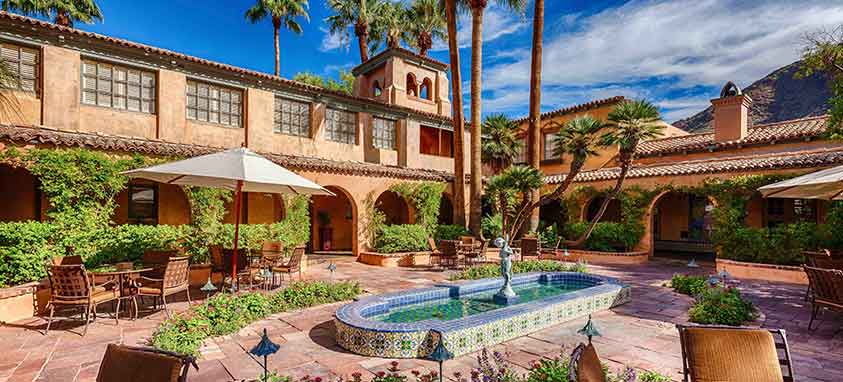
Royal Palms Resort and Spa courtyard and fountain
Royal Palms Resort and Spa

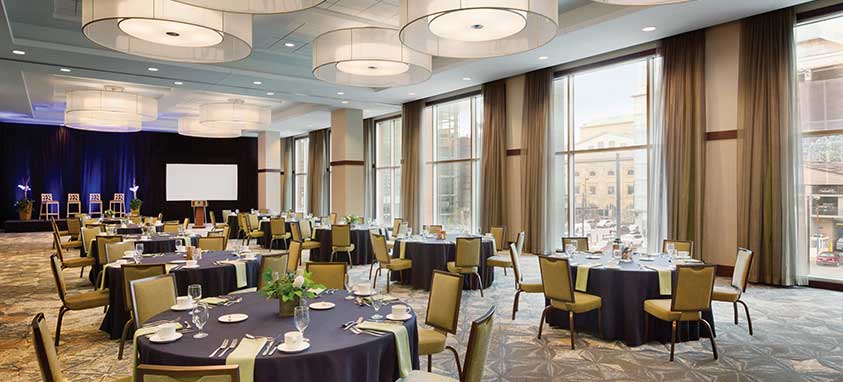
The rise in private, offsite strategy meetings and the growing popularity of Phoenix makes the Royal Palms Resort and Spa a great destination for event planners. The resort is completing a multimillion-dollar renovation of all 119 guest rooms—scheduled to debut in fall 2017. It’s also refurbishing select meeting and event spaces.

Interior design upgrades to the hotel reflect the natural earth tones and rich wood textures of the original Mediterranean-style mansion. Recent improvements have been made to the Mother-of-Pearl-tiled pool and surrounding lounge, outdoor event lawn areas, and landscaping throughout the resort.

Located on nine acres at the foot of Arizona’s Camelback Mountain, the resort has courtyards with trickling fountains and gardens. Stone paths wind through a grove of orange trees and beyond, to the desert landscape that surrounds the once-private property.

“Royal Palms is one of the most celebrated and cherished resorts in the country, and we intend to keep the resort’s distinct character intact,” said Geoff Gray, general manager of Royal Palms Resort and Spa. “As stewards of the estate, we understand the importance of preserving its history and legacy, while providing elegant and sophisticated accommodations.”

The resort has 20,000 sq. ft. of meeting space, with select renovations scheduled to begin early this summer. Event spaces include meeting and boardrooms, private salons for breakout sessions, and outdoor courtyards for business-casual gatherings. Meeting planners have access to event-production services with audiovisual support, as well as group-spa packages for business guests.

Embassy Suites by Hilton Denver Cripple Creek Ballroom (photo from Embassy Suites by Hilton Denver Downtown Convention Center)
Embassy Suites by Hilton Denver

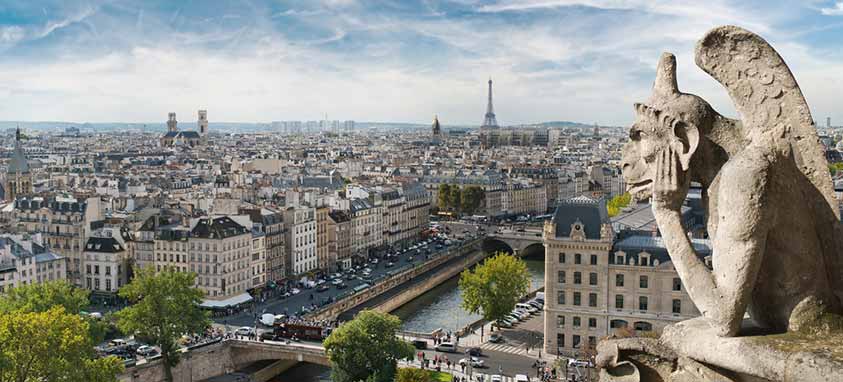
The Embassy Suites by Hilton Denver Downtown Convention Center recently completed a major property renovation.

All 403 guest rooms are upgraded with new, modern furniture, lighting and carpet. A towering art-and-water sculpture greets guests in the lobby, which features a 14-story sky curtain that welcomes visitors with natural light.

The hotel’s 25,000 sq. ft. of redesigned meeting areas host up to 500 people on each floor of the two-level facility, which offers 16 event spaces.

Located in downtown Denver—across from the Colorado Convention Center—the Silver LEED-certified hotel is within walking distance of the Denver Center for Performing Arts. It’s also close to Coors Field, where the Colorado Rockies play baseball; and Pepsi Center, home to pro basketball’s Denver Nuggets and Colorado Avalanche of the National Hockey League. The hotel is close to Denver Union Station and the city’s light-rail public transportation system, RTD.

“With the Denver hotel market booming, this remodel definitely helps to position us as a more upscale downtown hotel with an urban, boutique vibe,” said Ed Blair, general manager for the Embassy Suites by Hilton in Denver. “The mountains and terrain that surround Denver are the basis of the design inspiration…and our staff is happy to recommend their favorite local hiking trail, 14’er [guided views of Colorado’s famous peaks] or mountain getaway.”

The hotel has an indoor, saline-based swimming pool and a 24-hour fitness facility. It also offers guests daily, complimentary cooked-to-order breakfasts and evening reception service with snacks, wine and beer—including select Colorado craft brews.

Beverly Hilton Hotel

Although home to some of Hollywood’s most acclaimed galas and awards-presentations—including the annual Golden Globes ceremonies—the Beverly Hilton is within reach of professional meeting planners.

The famous hotel—located near UCLA’s Wilshire District, Beverly Hills, and Hollywood Boulevard—has introduced a stunning, newly designed outdoor area with 60,000 sq. ft. of interior and exterior event space. Dubbed Wilshire Gardens, the new space accommodates up to 350 guests at round tables, or 600 guests in ceremony-style seating. The area offers meeting planners three options, including an outdoor garden area with a green lawn and terrace walls accented by plants and trees that immerse guests in the alfresco setting.

A wall of retractable windows in the California Terrace provides a smooth transition from the outdoor event space to the Beverly Hills International Ballroom, which spans more than 16,000 sq. ft. and accommodates 850 guests in theater-style seating. The hotel has invested $4 million in a dedicated, behind-the-stage green room, built-in audio system, and state-of-the-art lighting.

For business meetings and association functions, the Beverly Hilton offers an Executive Meeting Center with 11 meeting rooms for up to 100 guests in each. Every meeting room has a registration desk, white board, LCD projector and presentation screen. The largest meeting room is 16,338 sq. ft.

The hotel has 569 guest rooms. It’s within 30 miles of Los Angeles International Airport (LAX) and Long Beach Airport (LGB); and within 17 miles of Hollywood Burbank Airport (BUR).

ICCA, the International Congress and Convention Association, has released its annual rankings of top meeting cities and countries, and there have been quite of a few shake-ups among the top 10 meeting destinations.

Top Meeting Cities

Paris has landed at the top spot with 196 meetings, one more than No. 1 Berlin reported last year. The top five was reshuffled quite a bit, with Vienna rising two places to second, Berlin dropping to fourth, and Barcelona and London staying at third and fifth, respectively.

The biggest rising star this year is Amsterdam, which climbed an impressive five spots to tie Madrid for seventh place. Just two of the top ten cities are located outside of Europe, and they are both in Asia. Singapore rose one place to rank sixth, while Seoul, a newcomer to the top 10, comes in at No. 10.

Rank City Number of Meetings in 2016
1 Paris 196
2 Vienna 186
3 Barcelona 181
4 Berlin 176
5 London 153
6 Singapore 151
7 Amsterdam 144
Madrid 144
9 Lisbon 138
10 Seoul 137
11 Prague 126
12 Bangkok 121
13 Dublin 118
14 Copenhagen 115
15 Beijing 113
16 Budapest 108
17 Buenos Aires 103
18 Stockholm 101
19 Hong Kong 99
20 Rome 96

Top Meeting Countries

On the other hand, ICCA’s top 10 meeting countries did not change much. Though some countries moved up and down the rankings, all of last year’s top ten made an appearance in the new list.

With 934 meetings in 2016, the United States once again ranked first. It has far and away the world’s highest number of international association meetings; second-place Germany had 689 meetings in 2016. The United States hosted 9 more meetings than it did in 2015, but time will tell whether the new administration’s travel policies will boost or damage this year’s numbers.

There is one new entry in the top 10. Portugal rose two places to tie with Canada for tenth place. In the rest of the top 10, France and Spain have swapped spots—France is now fourth, while Spain has come in fifth. China moved up to seventh place, while the Netherlands dropped one spot to ninth.

Rank Country Number of Meetings in 2016
1 U.S.A. 934
2 Germany 689
3 United Kingdom 582
4 France 545
5 Spain 533
6 Italy 468
7 China-P.R. 410
Japan 410
9 Netherlands 368
10 Canada 287
Portugal 287
12 Austria 268
13 Republic of Korea 267
14 Sweden 260
15 Brazil 244
16 Australia 211
17 Poland 195
18 Belgium 194
19 Argentina 188
20 Switzerland 184

Association Meetings Hit New Highs

To create the rankings, ICCA analyzed the international association meetings that were held in 2016. Qualifying meetings must be hosted by associations, held on a regular basis, have more than 50 attendees and rotate between at least three countries.

Under these criteria, the organization recorded 12,212 meetings in 2016, which is an increase of 136 meetings from 2015, and a new record.

In one decade, the number of association meetings has doubled from less than 6,000 in 2006 to more than 12,000 in 2016. ICCA predicts that association meetings will continue to follow this exponential trend, with the number of meetings expected to double every ten years.

“Once again our report provides clear evidence of the resilience and long-term continued growth of the international association meetings sector,” says ICCA CEO Martin Sirk. “…it is not just the traditional association meetings business that is in a healthy state: new association-type events are being created by groups of scientists and doctors, destinations are designing and hosting their own world-class STEM meetings and festivals (science, technology, engineering, maths), online discussions are migrating to the real world of concrete face-to-face interactions, and even corporate events are evolving into community gatherings of suppliers, clients, partners, investors, users, and academics, blurring the lines between the for-profit and not-for-profit sectors.”

Citing recent terror attacks, the United States Department of State has issued a travel alert for the European continent. The State Department specifically states that “widely-reported incidents in France, Russia, Sweden, and the United Kingdom demonstrate that the Islamic State of Iraq and ash-Sham (ISIS or Da’esh), al-Qa’ida, and their affiliates have the ability to plan and execute terrorist attacks in Europe.”

The travel alert warns U.S. citizens to exercise caution in commonly targeted areas such as tourist locations, transport hubs, shopping centers and local government buildings. Travelers should also be vigilant when visiting soft targets, including hotels, clubs, places of worship, high-profile events and airports. Visitors should be especially careful during the upcoming summer travel season, which normally draws large crowds in tourist areas.

The State Department has provided five tips for U.S. citizens who will be traveling in Europe this summer:

1. Be aware of local media updates and follow the instructions of local authorities. Incorporate any updates into your travel plans.

2. Be prepared for additional security screenings or disruptions at airports and other transport hubs. Plan ahead so you don’t miss air or rail connections.

3. Stay in close contact with family and friends. Provide them with contact information to use in case of an emergency.

4. Create a plan of action and be ready to implement it if there is an emergency.

5. Register for the State Department’s Smart Traveler Enrollment Program, a free service which allows U.S. citizens and nationals to register their trip information with the nearest U.S. Embassy or Consulate. This allows the Embassy to provide news updates and assistance, as well as facilitate communication between travelers and their loved ones in the case of an emergency.