American Airlines has announced that it is reducing legroom on economy-class seats to squeeze more passengers onto its new Boeing Max 737 jetliners.

“The seats we’ll use on the Max are designed to maximize personal living space, while allowing more comfort,” a company spokesperson told Skift, an industry intelligence platform.

American will reduce legroom by 2 inches on the new jets (as compared to current 737s) for all but three rows in economy. For those three rows, another inch will be eliminated, to 29 inches.

The 29-inch pitch moves the carrier closer to ultra-low cost competitors such as Spirit and Frontier airlines, where seat pitch is 28 or 29 inches, according to a report in the Dallas News. Pitch is the distance between a point on one seat to the same point on a seat in front or behind. Legroom also is affected by the thickness of seat cushions, and some airlines have been installing skinnier seats.

At Southwest, which operates an all-Boeing 737 fleet, seat pitch ranges from 31 to 33 inches. Delta and United have coach seats with pitch ranging from 30 to 32 inches.

American has 100 Max 737s on order from Boeing, and will begin introducing them on domestic flights later this year.

Something similar is planned for the more than 300 737s that the airline is currently flying, the spokesperson told Skift.

The 29-inch pitch found on a portion of American’s new seats pushes the carrier closer to ultra-low cost competitors such as Spirit and Frontier airlines, where seat pitch is 28 or 29 inches.
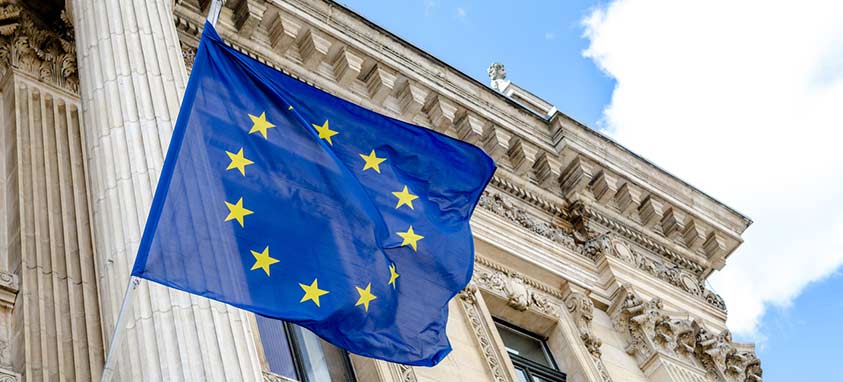
Your next trip to that conference in London just got easier. Despite the urging in March of the European Union Parliament to require visas for American passport holders traveling anywhere in Europe as early as this summer, the European Commission announced May 2 that it would not be taking the step at this time, to avoid “retaliatory measures.”

The threat to add the visa requirement could have had a severe economic impact on the travel and hospitality industry if even a fraction of the 27.4 million Americans who traveled to Europe last year had changed their plans rather than jump through that paperwork hurdle.

The controversy was the result of a U.S. policy requiring visitors from five EU member states—Bulgaria, Croatia, Cyprus, Poland and Romania—to secure visas. Other EU citizens to the states qualify for a reciprocal visa waiver program. The EU requires equal treatment for all its citizens, however, and negotiations reached an impasse over last year.

The New York Times reported that Dimitris Avramopoulos, the commissioner for migration, home affairs and citizenship, was concerned that instating the ban would “have significant negative impacts in a wide range of policy areas, notably on external relations, trade, tourism and the E.U.’s economy.” He is optimistic that diplomatic efforts that have proved successful in Canada will also result in all EU citizens enjoying visa-free travel to the United States.

Meanwhile, President Donald Trump’s revised travel ban on visitors from Syria, Iran, Libya, Somalia, Sudan and Yemen is still on hold based on a decision from a federal judge.

The definition of hospitality has exploded from a company name scrawled on a welcome chalkboard to logos emblazoned in mile-long lights on the skyline. Omni Dallas Hotel announced May 4 that it will be featuring the names of companies visiting the hotel on its signature outdoor skin as part of its “Book a Meeting, Brand the Dallas Skyline” promotion.

The hotel, which opened in 2011, includes an exterior LED lighting system with 6,660, 3-foot light fixtures that cover nearly 20,000 linear feet or 3.8 miles of lights. Like animated images on the supersigns in Times Square in New York, Omni Dallas has used the technology to promote causes and events and celebrate the city with messages that seem to scroll through the night. From Ace Hardware to Nike, the hotel has helped corporations shine. The hotel’s landmark status on the skyline has led to the messages being broadcast nationally as part of news and sports broadcasts.

“From the day we opened this hotel, one of the most frequently asked questions from our meeting planners was how they could get their individual company’s logo or message on our exterior facade,” says Ed Netzhammer, managing director for the Omni Dallas Hotel.

Now all businesses that book meetings at the hotel can sign up to have their name on the Dallas night sky. No other Omni hotels have this feature and there is no limit on the size of the group to be included in the light show according to Omni staff.

“Thanks a lot.” Visit Orlando delivered this message in a big way to the record 68 million visitors to the theme park capital of the world by setting a Guinness World Record for number of hand-written thank you cards collected in one day. More than 900 representatives of the city’s 450 hotels and major attractions wrote 3,144 thank you cards in 24 hours as part of an ongoing #OrlandosBIGThankYou campaign.

The announcement was made as part of National Travel and Tourism Week on May 11 and reinforced the impact the industry has on the greater economy. Tourism supports one-third of all jobs in Orlando and added $109 billion to the economy in 2015, according to a report by Visit Florida.

At the record-celebrating festivities, Orange County Mayor Teresa Jacobs gave major kudos to the people in costume, behind the scenes and manning the check-in desks for making Florida one of the most popular destinations in the country. “What truly makes [visitors’] experience here better than any other community is our culture of hospitality combined with our front-line hospitality workers and welcoming residents.”

Other Guinness World Records of note:

  • World’s tallest hotel is JW Marriott Marquis Dubai in the United Arab Emirates, stretching 1,165 feet over 77 floors. It has 1,608 rooms and 86,000 sq. ft. of event space, four presidential suites, 19 restaurants and a spa.
  • Loudest crowd roar at a sports stadium was awarded to fans of the Kansas City Chiefs at Arrowhead Stadium in Missouri in 2014. The pandemonium clocked in at 142.2 dbA and occurred at the end of the first quarter. The Chiefs went on to defeat the New England Patriots 41-14.
  • Largest gathering of Elvis impersonators went to Harrah’s Cherokee Casino Resort in North Carolina in 2014 after they gathered 895 versions of The King.

melia hotels cuba

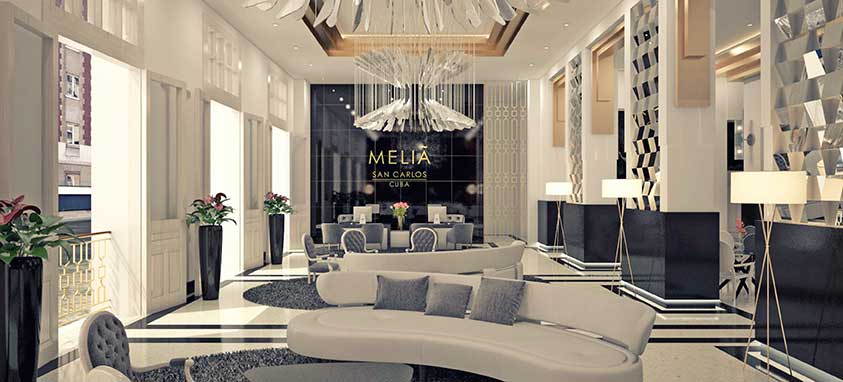
Concrete signs that Cuba will be opening its arms to visitors in a big way—and not just in Havana—towered over the International Tourism Fair in Cuba the first week of May. After the government called for building more than 100,000 new accommodations by 2030, Melia Hotels International announced that it would be adding eight hotels in partnership with Cuban hotel groups for a total of almost 1,000 new rooms in three cities.

The Caribbean island nation is already a popular tourist destination for European and Canadian visitors. It welcomed 4.2 million people in 2016 and boasts more than 62,000 hotel rooms. Those numbers are growing every year. Trips from Germany alone increased 44 percent last year, leading to an increase in the number of flights Condor and Eurowings airlines schedule to the country.

The tourism fair, known as FitCuba 2017, was held in the eastern province of Holguin to promote Gibara as a tourist destination. The organization is committed to highlighting the hospitality industry in areas inside and outside the capital that may not be as well known, but have their own allure. This includes extensive navigable coastline, sparkling bays and almost 2,500 miles of coral reefs and 50 coral species.

Gabriel Escarrer Jaume, Melia vice president, echoed the support for creating travel opportunities island-wide. “We are also taking on a commitment to strengthen the multi-destination vacation segment, guaranteeing the service and quality of the Melia, Innside and Sol House brands from the east to the west of the island,” he said.

Look for Melia-managed hotels in:

Cienfuegos: A 56-room San Carlos Hotel; a 49-room Union Hotel; a 173-room Jagua Hotel under the Innside by Melia brand.

Trinidad: A renovated 279-room Ancon Hotel under the Sol House brand, as well as a new 102-room hotel to be built at the end of the Ancon peninsula.

Camaguey: Three hotels, two in the historic center, including the 72-room Gran Hotel and the 58-room Hotel Colon in conjunction with Islazul hotel group. Innside by Melia will also be the brand applied to the 142-room Hotel Camaguey after a renovation.

LEED-certified hotels

Hotels worldwide are leading with LEED. The U.S. Green Building Council created this program in 1993—an acronym for Leadership in Energy and Environmental Design—to certify that buildings meet standards of energy efficiency, conservation and community sensitivity. USGBC’s rating system has four levels based on points earned: certified, silver, gold and platinum. Certified properties must accumulate at least 40 points. Platinum requires 80 points or above.

Today, LEED-certified hotels of all sizes are found in more than 40 U.S. states, 31 countries and five continents, as Green Building Councils in other countries have instituted similar programs. As of late 2015, LEED standards have been applied to approximately 83,452 projects worldwide, covering around 13.8 billion sq. ft.

For example, Tambo del Inka Resort & Spa, from Starwood’s Luxury Collection property near Machu Picchu, Peru, recently reached the entry threshold of LEED Certified by treating its own wastewater, using recycled water for irrigation and restoring more than 1 million sq. ft. of vegetation along a nearby river, among other eco-friendly measures.

That may seem a high bar, but it’s Sustainability 101 as compared to the highest level, platinum. Little wonder, then, that even in the U.S. only a handful of hotels have achieved it. Among these are:

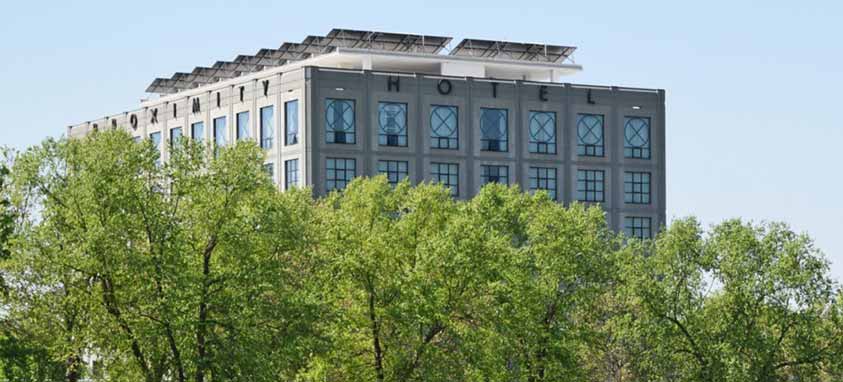
In 2008, The Proximity became the first LEED Platinum-certified hotel in the United States. It calls itself “the greenest hotel in America.” Overall, it uses 41% less energy than a conventional hotel-restaurant.

Does that mean guests must be prepared to sacrifice to support this level of environmental care? Not according to the card found on every bed, which reads, “You won’t sacrifice one iota of luxury or comfort because of our commitment to sustainable practices. We believe that deprivation is not sustainable.”

“I want people to know about it when they are booking the hotel. But I don’t want them to notice it once they’re there,” hotel owner Dennis Quaintance told The Washington Post. “That’s the best of both worlds.”

Quaintance also scoffs at the notion that going green is more expensive for hoteliers. “It’s a myth, absolutely a myth,” he says, noting that higher upfront construction costs were recouped in about four years in tax credits and lower energy costs. “It’s not sustainable to go broke.”

airport therapy dogs

Remember when spotting a dog in an airport terminal meant a red alert? Depending on your recreational habits, it could have been anything but a calming sight. Today, though, so-called therapy dogs are part of the passing parade at more than 30 airports—and counting—in the United States.

At San Francisco International Airport (SFO), for example, more than two dozen canines of varying sizes and breeds make up the Wag Brigade. The local chapter of the Society for the Prevention of Cruelty to Animals selects candidates for their temperament and “airport suitability.” The organization trains the canines in its Animal Assisted Therapy Program to invite passengers to pause, kneel and give them a few moments of doggy love. If the tail wagging isn’t enough, the vests reading “Pet Me!” are.

SFO launched its brigade in December 2013. The first airport to go to the dogs was Mineta San Jose International Airport (SJC), just after 9/11. A volunteer chaplain brought her certified therapy dog named Orion to the airport hoping he would calm travelers’ nerves about the prospect of getting back into an airplane. Now SJC, like SFO, has dogs that wag in the terminals seven days a week.

With positive feedback, the concept has kept growing. San Francisco lived up to its far-out reputation by adding a therapy pig. It’s the 50th anniversary of the Summer of Love, so why not give it up for LiLou, who is said to be hypoallergenic and knows a lot of tricks. According to an SFO website, she “can greet you with her snout or a wave, thank you with her shake, perform with her toy piano and bow at the end.” Apparently tech savvy, too, she even has an Instagram account.

Cincinnati/Northern Kentucky International Airport (CVG) uses therapeutic miniature horses. They’re named Denver and Ruby, and they visit from Seven Oaks Farms in Hamilton, Ohio, to stand still for nuzzles and pets twice a month. Previously, miniature horses with dyed manes were billed as “therapy unicorns” at this airport.

“It’s just to ease anxiety levels, put smiles on faces,” Wendi Orlando, airport customer service senior manager, told National Public Radio. “Clearly, that’s working. When you look at the passengers walking by, it just never gets old. They love seeing the horses.”

Westin Irving Convention Center Las Colinas Hotel
Hotel construction groundbreaking ceremonies were bright spots in the April building report from Dodge Data & Analytics released May 19. Hotel construction starts rose 5 percent from the previous month, according to the report.

Dodge specifically called out the $106 million hotel portion of One Beverly Hills, a mixed-used complex being developed by a partnership of The Wanda Group and The Athens Group, which was also the development partner behind Montage Beverly Hills. The condo-hotel towers will include 134 hotel rooms and could open in 2020.

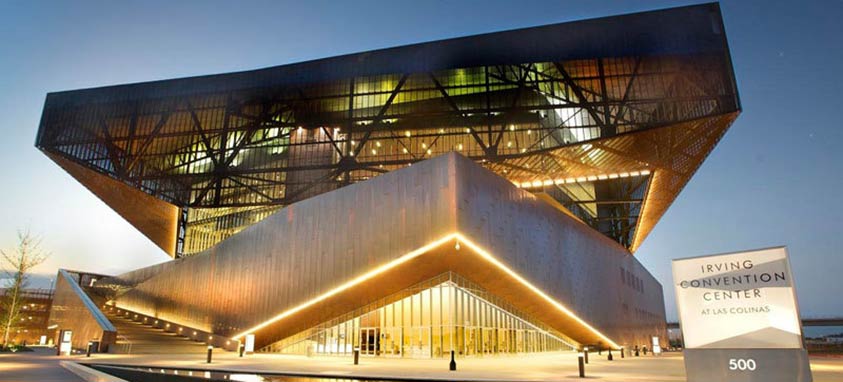
Also mentioned was the $113 million Westin Irving Convention Center Las Colinas Hotel in Texas with plans for 350 guest rooms to open in late 2018. It will be part of a growing entertainment district that includes a 17-acre Irving Music Factory with 200,000 sq. ft. of restaurant and retail space and a 7,000-seat Live Nation amphitheater.

That increase in hospitality construction starts was an isolated bump up in an overall drop of 13 percent in all categories, for a total of $647 billion, after climbing for three months from what the report called a “lackluster” December.

Almost 1,500 hotel projects, including 190,000 rooms, are currently under construction, according to hotel industry research company STR Global, a more than 24 percent increase from the previous year. That is a lot of cranes in the air in a lot of cities.

US hotel demand

During the year’s first three months, consumer confidence drove demand for lodging at the strongest quarterly rate since 2015, reports PricewaterhouseCoopers (PwC). Both occupancy and the average daily room rate saw modest growth, and revenue-per-available room increased 3.4 percent.

Reinforced by rising employment, higher real income and increased household net worth, consumer confidence and sentiment remain optimistic, PwC noted.

“Despite the on-going post-election partisanship, the U.S. economy currently appears to be on firmer footing, compared to the same period last year,” said Scott D. Berman, principal and U.S. industry leader of hospitality and leisure for PwC. “Events such as the presidential inauguration and women’s march in January boosted demand for hotel rooms in the greater Washington, D.C. market.

“This, coupled with other anomalies such as timing of Easter and Passover contributed to a good start in 2017. The industry needs to keep its eye on the prize and make sure this momentum can be sustained throughout the rest of 2017.”

Sustaining momentum may prove challenging. The outlook for the remainder of 2017 is predicted to be tempered by price competition in the lodging sector.

PwC’s outlook is based on an economic forecast from IHS Markit, which anticipates the Trump administration will attempt a more modest agenda in 2017 than initially suggested. This may impact previous expectations for significant tax and regulatory reform this year.

Consumer spending will be key driver of economic growth into 2018. Next year, an increased supply of hotel rooms without a similar increase in demand is anticipated to result in the first annual decline in occupancy since 2009. The decline is expected to be minor. Average daily rate growth of 2.2 percent is expected to drive an increase in revenue-per-available room of 2.0 percent, the slowest growth rate in nine years.

flight laptop ban

The days of flying overseas with your laptop in tow might be numbered. Laptop restrictions could possibly expand to flights departing from the United States to locations in other countries and it will be very broad, with the inclusion of many airports, according to a CNN report.

Homeland Security Secretary John Kelly did not specifically address this speculation point blank, but “we could read between the lines,” said a congressional aide who was present when lawmakers were briefed on implementing bans on electronic devices aboard inbound flights from certain international destinations.

If this prohibition is put in place, passengers would not be able to board the aircraft with an electronic device larger than a cellphone. While flying, many people currently use laptops and tablets to conduct business or for entertainment. Members of Congress are investigating not only safety and security concerns, but also the economic impact it could have on the travel industry.

Although reluctant to enforce such a strict, widespread ban, the aide said Kelly believes it is essential to keep passengers and crewmembers safe from the threat of terror plots. It was a unanimous decision to take such a drastic measure to stay one step ahead of terrorists who have staged attacks on planes in the past, although Kelly did not mention any new intelligence that has been intercepted that would lead to heightened precautionary measures, according to the report.

Some international airlines are coming up with alternate solutions to appease international travelers. Qatar Airways and Etihad Airways offer loaner laptops and iPads for passengers to use while flying, so if you have work to do, you may not need to completely unplug for the duration of your flight.