trump travel ban

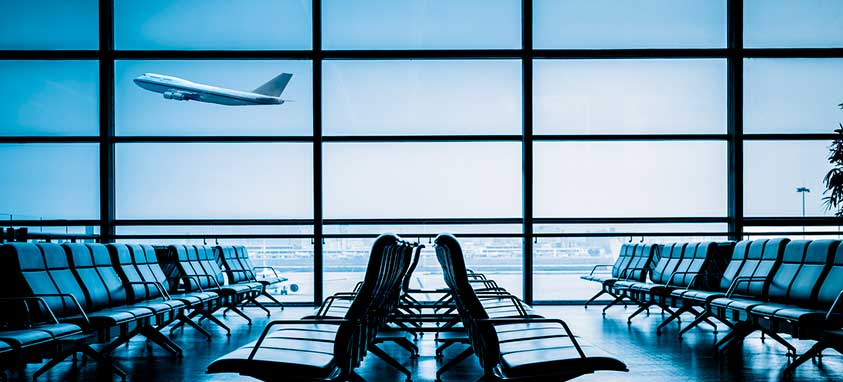
The fog has yet to lift around whether nationals from six Muslim-majority countries will be able to travel freely into the United States for meetings, but meetings industry reaction was positive today as a federal appeals court in Richmond, Virginia, further delayed attempts by the Trump administration to institute the ban.

The U.S. Court of Appeals for the Fourth Circuit ruled 10-3 to uphold a lower court’s decision that barred implementation of the administration’s second attempt at the travel ban. The executive order would prohibit entry into the U.S. for 90 days for citizens of Iran, Libya, Somalia, Sudan, Syria and Yemen unless they have a green card authorizing U.S. residency.

Chief Judge Roger Gregory wrote that the order still unfairly and illegally targeted Muslims even after revisions that removed any mention of religion.

Meetings significantly aid U.S. economy  

Paul Van Deventer, president and CEO of Meeting Professionals International, applauded the court decision. “Today’s ruling reinforces the vision and genius of our nation’s forefathers to have a system of checks and balances to protect our citizens,” said Van Deventer. “While it is critical to ensure the safety and security of our country, we must have the right balance between enhanced security and travel facilitation.”

“Travel and tourism are key drivers of the U.S. economy, representing $865 billion in direct spending—15 percent of which (about $103 billion) is a result of meetings. We must urge our government to support the travel and meeting industries and come up with a solution that considers both national security and the free flow of travel.”

The biting court opinion cited Trump’s own words on the campaign trail and after he was elected president, which it said revealed unconstitutional “animus and [were] directed at a single religious group.” The administration has claimed that the ban was intended only to protect national security, and Justice Department lawyers have argued in court that the president’s statements made during the campaign should not be taken seriously.
TSA checkpoints

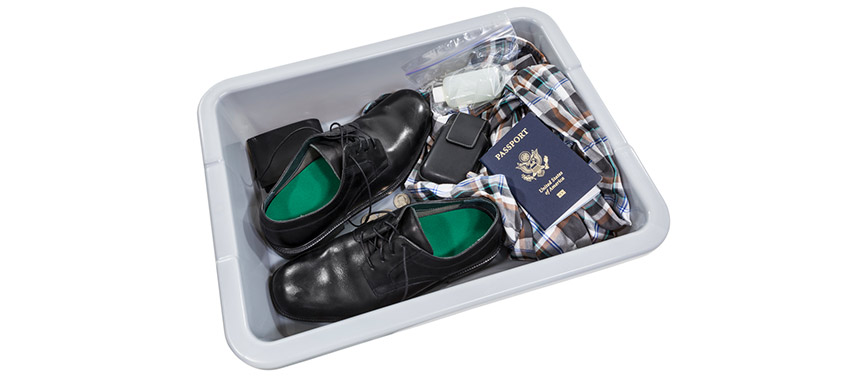
You may need to grab some extra bins and pack your patience at the security checkpoint next time you fly. Ten major U.S. airports are participating in a trial of a new Transportation Security Administration process. Checkpoints at LAX, Boston Logan, Detroit Metropolitan, and more will now require ticketed passengers to remove electronics larger than a cell phone from their carry-on, as well as certain food items, to be inspected by officials, according to ABC News.

This has already been implemented for one year at four airports, but is expanding to ten total. Until now, regulations at most airports stipulated that only laptops and liquids be taken out of bags. The TSA said some electronics and food are mistaken for prohibited items, such as explosives, in the X-ray scanner and then it slows down the line for agents to manually inspect bags. They feel lines will move quicker if these items are already out in plain sight. The new process will only apply to passengers waiting in the regular line and will not impact those who have PreCheck status.

“Although passengers may experience more bag checks, we are testing quicker and more targeted procedures at these locations,” the TSA told ABC News in a statement. Do not grow concerned that this is in response to particular threats or the laptop ban. The TSA insists it’s for the sole purpose of increasing efficiency.

This is not the only change on the horizon. Boarding passes may be going extinct very soon. The TSA also has plans to test a machine to verify IDs, such as licenses and passports, by scanning its barcode. The machine will confirm that the individual is a listed passenger on a departing flight. Four airports will begin testing these machines this week in the PreCheck lane.

X-ray machines already do a relatively sufficient job of flagging dangerous items. The TSA’s blog reported that last week a record number of 82 firearms were discovered at checkpoints around the nation. When packing, familiarize yourself with the latest regulations of what you can bring on board, what you can check and what must be left at home.

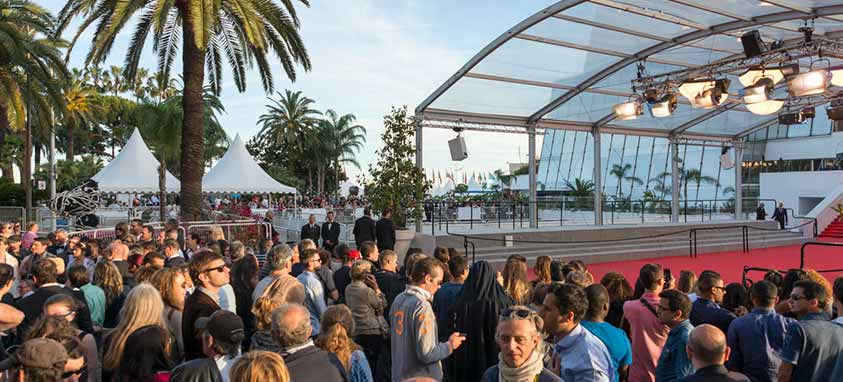
This month’s ongoing 2017 Cannes Film Festival in France is so much more than screening movies, red carpets, and ballgowns. The experience would not be what it is if not for the exquisite food, drinks, décor, and of course the swag bag.

Swag

Hopefully attendees left spare room in their suitcases to fill up with the $70,000 worth of goodies they collected at the gifting suite. While it’s out of reach for most events to give away a $40,000 solar panel system, some of the other items are within reason and practical.

Zumer Sport Backpacks are made from the material used to make tennis balls, soccer balls, baseballs, basketballs, and more. They are valued at $100 and can be customized with a company, brand, or event logo. Zumer also sells wallets, mousepads, eyeglasses cases, and a whole line of products with unique sporting good textures.

At full-day events, attendees often struggle to keep juice in their cell phones when all the power outlets are occupied or they left their charger in their hotel room. Problem solved with the Spyder iPhone extended battery case for a consumer-friendly $100.

When people are at a fun event, they want to document it with the perfect selfie. Give your attendees the gift of the perfectly-lit selfie a la Kim Kardashian. She achieves the shadow-less snapshots with the LuMee iPhone case to brighten up her face for $50.

Party Time

The sky is the limit when it comes to party planning at Cannes International Film Festival.

To kick off festivities on May 18, Chopard celebrated its partnership with popstar Rihanna for the Rihanna ♥ Chopard Haute Joaillerie Collection. The jewelry brand hosted an exclusive rooftop dinner to mark the occasion. Rainbow-colored flowers ran down the center of the beautiful, chic tablescape. Italian interior design firm Flexform created bold and modern lounge areas for guests to mix and mingle.

Cannes Film Festival 2017 Chopard

Guests blasted off to Space at Chopard’s annual soiree at Port Pierre Canto on May 19. The out of this world event was lit in purple and pink hues with a tad of yellow to bring a galactic feel down to Earth. Guests were served dinner aboard a space shuttle while models strutted by. Bruno Mars took the stage to give an intimate live performance for the crowd.

On May 21, lucky guests were transported via helicopter to a villa accessible only by chopper for a party hosted by David Unger and Champagne Armand de Brignac. Overlooking the Antibes peninsula, attendees were wined and dined with Rosé and Gold Brut poured out of chrome pink and gold bottles and filet mignon, grilled langoustine, and caviar.

Food & Beverage

Movies are known for concessions, but at the Cannes Film Festival, it is not about popcorn, soda, and candy.

The Hollywood elite clinked glasses at the Mouton Cadet Wine Bar atop the roof of the Palais des Festivals overlooking the Cannes Bay at sunset. Parisian decorator Mathias Kiss designed the breathtaking space.

Guests stayed hydrated at the festival compliments of the official water sponsor, S.Pellegrino. The H20 brand also debuted the first in a series of three movies about food, design, and fashion.

Even the stars scream for ice cream! Magnum and Moschino collaborated with Cara Delevingne and Moschino Creative Director Jeremy Scott to release two new flavors – Double Cookies & Cream and Double Chocolate Hazelnut – at an event on May 18. The popsicles looked like pieces of art almost too beautiful to eat with a shimmery outer layer. The theme of the campaign and party were Unleash Your Wild Side and Dare to go Double. This was carried out with fierce style and oversized orange, blue, and purple spherical lights arched above the event space.

The Center for Association Leadership, known as ASAE, unveiled Xperience Design Project (XDP) in National Harbor, Maryland, this week at Gaylord National Resort & Convention Center. The two-day event brought together 1,816 association professionals and industry partners.

Their challenge: to collaborate on ideas to reinvent their meetings.


Tuesday was spent in small group meetings led by expert faculty. Collectively dubbed the Lab, the groups brainstormed practical solutions for improving meeting experiences in five key “zones”: experience, learning, location, marketing and technology. On Wednesday morning, faculty shared their own insights as well as takeaways that had bubbled up from the groups.


Faculty included James H. Gilmore, co-founder of Strategic Horizons LLP and adjunct faculty at UVA Darden Business School; Jonathan Finkelstein, chief executive officer of Credly; Michael Dominguez, chief sales officer of MGM Resorts International; Eric Kuhn, chief marketing officer of Layer3 TV Inc., KiKi L’Italien, chief executive officer and founder of Amplified Growth; and Reggie Aggarwal, chief executive officer and founder of Cvent.

Snippets from the insights:

“While we think of location typically as destination, it’s also the airport … and the hotel. It’s those micro-locations within each of those locations that attendees see.”—Michael Dominguez

“Because you look at the lifelong learning of your members, you also can look into the future and see what their needs are and will be as learners. That’s something that an employer or a college or a university can’t do.”—Jonathan Finkelstein

“Live events need make sure that they’re conveying that an attendee’s heart will be fulfilled just as much as the brain.”—Eric Kuhn

XDP host Lisa Kay Solomon summed up with a call to action for attendees: “At the end of the day, we want to create something that your attendees wouldn’t ever be able to get at home. Remember, you have the power to design experiences.”

The next XDP will be April 19-20, 2018 at the Gaylord National Resort.

travel to US

One of the hot current topics in the industry is whether or not President Donald Trump’s campaign rhetoric and Trump administration attempts to ban some foreign travelers from entering the country have had an impact on international tourism to the United States.

Although it may be too early to have a definitive answer, Foursquare CEO Jeff Glueck says data collected by his company indicates foreign travelers are increasingly choosing to spend their travel budgets in countries other than the United States. Foursquare can detect when smartphones of their 50 million users in 190 countries—if they are opted-in to location sharing—walk in or out of 93 million public places around the world.

Overall, he notes, international tourism to the United States is down by double digits. Although business trip activity is up so far this year by about 3 percent (as a share of international traveler global activity), the rest of the world is seeing year-over-year increases of about 10 percent.

“Relative to business travel gains globally, business travel to the U.S. is suffering,” Glueck says. “From our data, residents of the Middle East and Central/South America are avoiding the U.S. more than residents of Asia, Europe and elsewhere. It goes without saying that some of the current administration’s most controversial policies have been focused on countries within the Middle East and Latin America, and that we’re seeing a greater impact in travel from these nations.”

Separately, Kayak.com has reported international air searches to the U.S. are down 12 percent, and Expedia’s CEO has warned of impact from the administration’s policies and tone, as well as from the rise and volatility of the dollar versus other currencies.

“To be clear,” Glueck says, “we do not claim our analysis can tease apart the impact of a new tone or policies versus other factors: The dollar has been up slightly (about 3 percent year-over-year versus the euro during the past two quarters), making travel to the U.S. more expensive at times. The value of the euro is down, making European travel marginally more attractive. There may be other factors, as well.”

Nonetheless, he says that “the share of visits for leisure categories in other countries is up year-over-year by about 6 percent, by definition at the expense of the U.S., since we are talking about market share.” California, in particular Los Angeles and San Diego, has been most impacted. Both cities saw gains in foreign visitors in fall 2016 but sharp drops this year.

The American hospitality sector is especially vulnerable to declines in overseas guests. International visitors purchased about 15 percent of all hotel nights in the fourth quarter of 2016 and the first quarter of 2017.

Others have begun to forecast what a business travel and tourism slowdown could mean. One analysis by the firm Tourism Economics reported that Trump’s travel ban could cost the U.S. economy more than $18 billion and about 107,000 jobs.

Florence Italy summer meetings

Americans love Europe in the summer, but some destinations on the continent offer better value and unique alternatives for event locations, compared to the traditional tourist haunts.

Virtuoso, a network of luxury travel advisors, released its annual report at the end of May of the top 10 global destinations American tourists have planned this summer. At the top of the list was the always-popular Italy. “We know where upscale American travelers are going this summer, and apparently they want pasta and wine,” Virtuoso reports. They see Europe as a particularly appealing option this year because of the relatively strong U.S. dollar compared to the euro and the British pound.

Following are group experiences to consider in each of Virtuoso’s top four featured countries that might be a bit off the beaten track, but worth the trip.

1. Italy: If your sights are set on Florence, consider booking an event at the stunning Cinema Odeon Theater. The 1,500-square-foot great room dating back to 1922 holds almost 600 people. Breakout spaces include Saloncino degli Specchi (literally, Salon of the Mirrors), a perfect annex for meals or meetings.

2. United Kingdom: Get out of London and head to Wasing Park in rural West Berkshire for a private setting that can accommodate 300 people for an environmentally conscious experience. It can include glamping and foraging, or gourmet meals in the castle barn that offer spit-roasted venison, pigeon, trout and locally grown vegetables.

3. France: How about holding a meeting at an out-of-the-way garden only 20 minutes from Paris Charles de Gaulle Airport (CDG) and a half-hour from Paris? Chateau de Montvillargenne offers 21 meeting rooms, Old World charm with full Wi-Fi access and plenty of indoor-outdoor luxury.

4. Spain: For an equestrian vibe, your group of up to 1,000 people can mosey over to Rancho El Rocio in in Seville, Andalusia for local cuisine in the outdoor bullring. Enjoy flamenco, Spanish thoroughbreds and local color you won’t find in the big cities.

The wait time to go through airport security is so unpredictable. Sometimes you breeze right through and other times, you’re left huffing and puffing to race to your gate to avoid missing your flight. The good news is, a new survey conducted by Travel Leaders Group in April 2017 shows that 67.7% of Americans are satisfied with the overall TSA screening process. This is up approximately 4% from last year. Only about 15% of the 2,854 passengers surveyed in this study said they were unsatisfied.

Something that has been consistent for four years running is that of all the security measures the TSA enforces at the checkpoint, passengers would most like to eliminate the requirement to take off their footwear.

Increased enrollment in programs such as TSA PreCheck and Global Entry have contributed to more efficient security. These passengers do not have to remove their shoes, laptops or liquids at 160 U.S. airports. It also creates a shorter mainstream line for other passengers without this designation. More than 50% of passengers surveyed are okay with wait times and less than 5% expressed frustration.

“There were plenty of lessons to be learned from last year’s struggles with extremely long security lines…,” Travel Leaders Group CEO Ninan Chacko said in a press release. “Balancing the safety and security of travelers with their comfort and convenience is not easy. But it appears the system is working better today than it was one year ago.”

For the fastest and least stressful travel experience, arrive at the airport aware of the latest TSA regulations, so you can quickly remove necessary items from your body and carry-on. Your fellow passengers will thank you for helping to move the line along.

Marriott’s Build Your Own Mini Bar

The standard hotel room is changing with the times to better accommodate the needs of the modern guest. Some conveniences travelers have grown accustomed to and take for granted have or will be going the way of the dinosaurs.

Room Service

Room service has been on the endangered species list ever since New York Hilton Midtown did away with it beginning in August 2013, according to The New York Times. Many hotels instead offer a wide variety of grab ‘n’ go options at a convenience store and vending machines. But if you have already changed out of your business attire and don’t want to risk having colleagues see you in pajamas or a robe in the hallway, what are you to do?

Food delivery apps such as Grubhub, Postmates, UberEats, Amazon Prime Now and more can bring you food on demand to your room door, according to Frommer’s. As an added bonus, this will likely come out to a much lower tab than inflated room service of yesteryear and you get the opportunity to taste local cuisine. “[An] increasing number of business hotels will allow food delivery, and I find the best way to sway an undecided front desk is to say I’ll eat my ordered-in meal in the bar with a glass of their wine—no one’s ever refused this request,” said Alexander Lobrano, a Paris-based food writer, restaurant critic and Hungry for Paris newsletter author, in USA Today in January.

Mini Bar

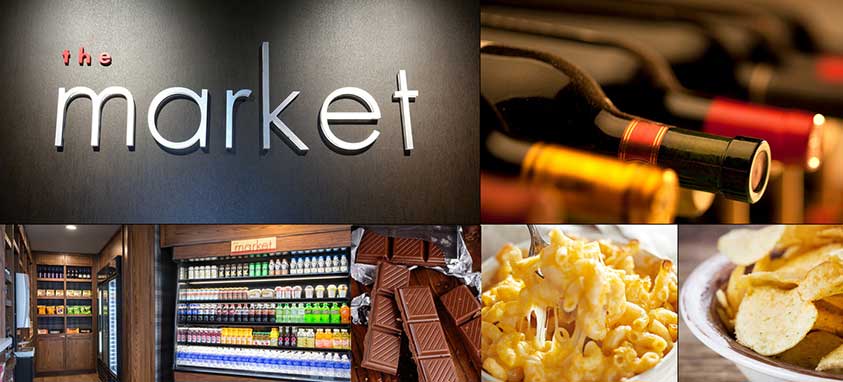
Ever open up the fridge in your hotel room and dislike the options? Problem solved! Marriott announced the Build Your Own Mini Bar in the West Package in May, available at 28 of their properties in California, Colorado, Oregon, Utah and Washington. Guests who book this deal get $20 daily to use towards food and beverage items sold in the hotel’s general store, The Market. Place your order and come back to a room with a mini bar stocked with your personalized selections.

Smaller Room Size

Just as legroom on planes is shrinking, so is the size of hotel rooms. To facilitate the slimmer dimensions, some hotels are doing away with furniture they deemed unnecessary, such as closets, dressers and desks. The removal of these things can cause an inconvenience for business travelers who rely on closet space to hang suits, dresses and blazers.

Marriott International’s Moxy Hotel chain features peg walls in the guest rooms to hang furniture and belongings, so you can customize the flexible room design. Other hotels offer clothing racks or nothing at all. It might be time to invest in the ShelfPack, an innovative piece of luggage with a built-in shelving unit so that you can keep your clothing neatly folded and easily accessible while living out of a suitcase.

People on work trips may have to continue working on their laptops or do paperwork upon returning to their rooms. Desks come in handy, too. The Marriott chain faced backlash after removing desks, so it now has a fresh perspective on the issue. “What we heard from guests is that the solution we provided didn’t meet their needs,” said Matthew Carroll, vice president for global brand management at Marriott Hotels and Resorts in The New York Times in response to the brand’s experiment of swapping traditional desks for tabletop work surfaces. “We responded very quickly. Where we’ve landed is at a place that gives guests multiple points to work within a room.”

In Room Gym

While many things are being eliminated from hotel rooms nowadays, there is one addition. With furniture out of the way, it leaves plenty of floor space to squeeze in an en suite workout. A handful of hotels are now offering exercise equipment, such as stationary bikes, TRX bands, yoga mats and more, along with instructional videos, in the convenience of your room. No more excuses for missing your fitness class while you’re out of town!

At the end of May, Hilton launched its Five Feet to Fitness concept in two hotels and will be rolling it out at several other properties nationwide. “The variety of activity the room enables is motivating,” said Ryan Crabbe, senior director of global wellness for Hilton. “One morning, a guest can decide to roll out of bed for quick guided stretch and yoga poses. Then later that evening, he or she may return from a stressful day and take a brisk bike ride while catching up on a favorite show or the day’s business news. The room is made to suit the varied and evolving wellness habits of our guests.

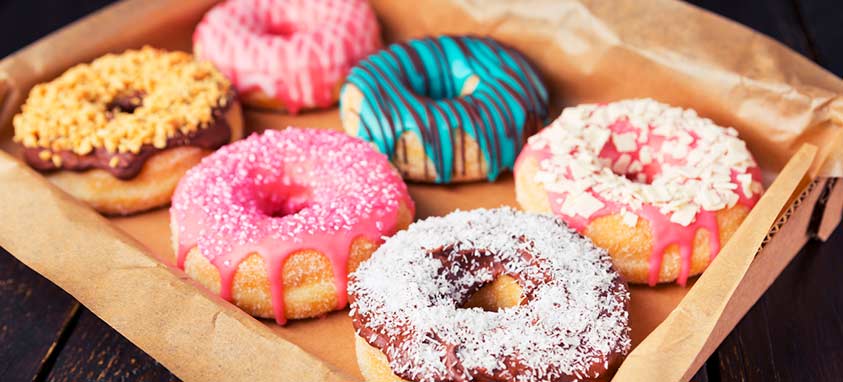
You “donut” want to miss out on National Donut Day today! Here are some fun ways to celebrate at a meeting or on a business trip…and they don’t all require consuming calories. But, hey, it’s Friday and you deserve a cheat day, anyway.

1. Doughnut Wall

Doughnut walls are one of the latest food trends to take over Instagram and Pinterest in 2017. Consider displaying your company or brand’s logo as a wall of donuts. Australia-based The Candy Buffet Company did just that at the 2017 Australian Open by artfully crafting the MasterCard logo.

Can you see the logo? Priceless. #corporatecatering #corporateidentity #donuts

A post shared by The Candy Buffet Company (@candybuffetco) on

2. Trejo’s Donuts

One of Los Angeles’ newest doughnut shops is Trejo’s Coffee & Donuts. Actor Danny Trejo recently opened the eatery, which features unique flavors such as margarita (tequila, lime and salt), nacho (jalapeno, chives, Trejo’s hot sauce and cheddar cheese), maple pig (maple syrup, vanilla, brown sugar and candied bacon) and several vegan options. They’ll soon be offering catering services for your next event.

Come celebrate #NationalDonutDay tomorrow June 2nd at TREJOS COFFEE & DONUTS!! Come early for GIVEAWAYS from @Bigmouthinc

A post shared by Trejo’s Coffee & Donuts (@trejosdonuts) on

3. Sushi Donuts

Doughnuts got a bit fishy in 2017. No, it’s not a sushi flavored doughnut. It’s sushi arranged in the shape of a doughnut. These colorful creations would certainly make quite the impression on the buffet table at a meeting.

4. Doughnut Pool Float

Last weekend was the unofficial start to summer, so if you have time to spare between presentations, take a dip in the hotel pool. Palm Springs, California, is a popular conference destination and The Saguaro Palm Springs hotel has a doughnut-shaped pool float for guests to enjoy.

5. Doughnut Clothing

If you like to wear comfortable clothing on the plane or lounge around your hotel room, brands such as LuLaRoe have buttery-soft leggings and tops with doughnuts printed all over them.

While you’re busy planning your next meeting, you might want to bring your laptop and head to your local doughnut shop for promotions and freebies today.

The ban on laptops in jetliner cabins on flights to the United States from 10 Middle Eastern and African airports has “weighed down” passenger traffic, says the International Air Transport Association (IATA).

Passenger traffic in March on routes by Middle East airlines to the United States fell 2.8 percent compared to a year earlier, IATA reports. This was the first annual decline recorded for this market in at least seven years. The data is especially noteworthy because global passenger traffic data is bullish overall. Demand in April rose by 10.7 percent compared to a year ago (the biggest increase in years), IATA says.

This strong global performance is attributed to an uptick in global economic activity and lower airfares. After adjusting for inflation, the price of air travel in the first quarter was around 10 percent lower than the same period in 2016. IATA estimated that falling airfares accounted for about half the demand growth in April.

Meanwhile, Trump administration lawyers filed with the high court late Thursday, arguing the United States will be safer if the travel ban prohibiting inbound travel by citizens of six Middle Eastern countries is put in place. The attorneys also claim that lower courts that blocked the policy made many errors, including relying on Trump’s 2016 campaign statements.

Under the Trump plan, immigration officials would have 90 days to decide what changes are necessary before people from Iran, Libya, Somalia, Sudan, Syria and Yemen can resume applying for visas. The U.S. refugee program would be halted for 120 days.

It will take a Supreme Court majority of at least five justices to put the policy into effect.