Photo credit: OKC CVB

Oklahoma City is proving to be more than just an O.K. city. New developments have made the once small town a booming meetings destination, an epicenter of everything a planner could dream—including cheap prices and centralized venues.

Here’s what you can expect to find in this Midwestern nook in the next two years.

Gear Up with Ease

Getting to Oklahoma City shouldn’t be much of a problem nowadays. Major airlines continue to add nonstop flights, departing from major cities such as Denver, Atlanta and San Francisco. In the heart of the United States, the city is also accessible by car. In fact, MSN.com deemed it the sixth most drivable city in the country.

A Helping Hand

The Oklahoma City Convention & Visitor Bureau recently launched a website specifically for meeting professionals heading to the metropolis. MeetInOKC.com provides helpful information about venues, suppliers and tips for traveling around.

New Venue on the Block

There is a plethora of shiny meeting venues downtown, such as 21C Museum Hotel and Aloft Oklahoma City Downtown-Bricktown. Castle Falls, built with city building remains and modeled off a Normandy Castle, is an honorable mention. It has 4,000 sq. ft. of regal meeting space, including the rustically ornate Grande Hall. It also boasts a landscaped garden with whimsical waterfalls and cedars.

But don’t miss out on the hot new thing—a $288 million convention center set to open in 2020. The CVB just broke ground on the project on June 15. The urban-designed building featuring trapezoidal patterns will offer a 200,000-square-foot exhibit hall, 30,000-square-foot ballroom with a terrace and 45,000 sq. ft. of additional meeting space.

The building will overlook the growing downtown skyline.

One-Stop Shop

In addition to the convention center, a new Omni headquarter hotel, Oklahoma City Omni, will open. A skywalk will connect the two for easy transfer from bed to ballroom.

There will be no shortage of food for attendees in the Omni’s six restaurants and bars. The AAA Four Diamond Three- to Five-Star-rated dining will cater to attendees on the run, with quick bites they can enjoy at the small lobby bar and grab ’n’ go options. Outdoor bars and cafes serving breakfast, lunch and dinner will also line the hotel.

If you didn’t spend quite enough on your event, you can indulge in the retail space in-house.

When it’s time to rest, Omni’s 600 guest rooms can accommodate any size group. Omni plans to welcome NBA players into its home.

Room to Build

With a rising destination comes opportunity for exhilarating recreation—especially team-building activities. Go west of the convention center and you’ll be greeted by the new Scissortail Park. The 70-acre piece of land will host concerts, picnic sites and interactive water features. The park connects downtown to the Oklahoma River and is set to open in 2019.

If attendees are itching to get out of the area, Oklahoma City is launching a new streetcar system that will connect downtown to the other dynamic neighborhoods.

Extracurriculars

Tap into the beer scene, and drink your way through the city’s recommended beer tour. Coop Ale Works, the oldest craft brewer in the state, provides free tours and samples every Saturday. Many breweries in the area offer the same comfort.

Don’t miss out on the city’s growing food scene, either. Bleu Garten, a food truck park in Midtown, offers a variety of ethnic and American cuisines. Examples include spiced-up Latin plates, soul food and gourmet ramen.

Oklahoma City is home to many outdoor festivities, as well, such as white-water rafting and a wildlife refuge, complete with hiking trails and ethereal marshlands. The interactive Myriad Botanical Garden is just steps away from the convention center.

Community Brands, the leading cloud-based software vendor for associations, has acquired global event technology company Expo Logic, adding advanced onsite registration to its event management suite, which already includes registration, mobile fundraising and video capture for conferences.

Expo Logic specializes in event registration, attendee tracking and retrieval solutions—and the two companies share an integrated system, allowing data to flow between the platforms. This means better event experiences for attendees, and greater insight into attendee behavior for meeting planners. It also makes digit registration pain-free.

“Expo Logic is a major player in the onsite registration space,” says Corbin Ball, international speaker and technology consultant. “[The company] has been doing some cutting-edge work with facial recognition for onsite badge printing, check-in and others.”

Expo Logic recently implemented its onsite facial recognition tool for nearly 1,500 attendees at Xperience 2018. Its services will now extend to the associations, nonprofits, schools and faith-based groups that compose the Community Brands client base.

“This is an important step to increase the value of [the] more than 100,000 events we support each year,” says Jean-Paul (JP) Guilbault, president and CEO of Community Brands. “Our innovative technology will only improve the experience of our customers and their attendees, and we’re excited to see the positive effect our service enhancements will have on these face-to-face events.”

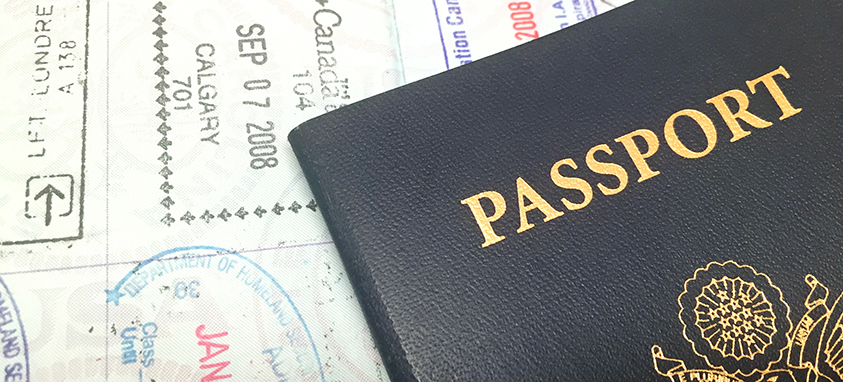
When you arrive in the U.S. from an international trip, the last thing you want to do is fill out forms with personal information about yourself and your trip. Luckily, technology has caught up with paper entry forms through memberships and mobile apps. Global Entry and Mobile Passport are changing the way we get through customs—helping to move you through quickly and without a hassle.

Global Entry vs. Mobile Passport

Global Entry is a program approved by the U.S. Customs and Border Protection (CBP). Rather than fill out paperwork post-arrival, line up at a kiosk, enter your “Trusted Known Traveler number” and scan your fingerprint to receive a receipt to present to the CBP. Following a swift, routine interview, you’ll be cleared to move on. Almost 60 airports internationally have these kiosks available.

Still popular, yet less mainstream than Global Entry, is the free Mobile Passport. Within three hours of arrival, fill out the mobile application—the only app officially authorized by U.S. CPB—with your passport information, including a photo; answer routine questions, such as “are you bringing food into the country?” (if the answer is yes, you might have to discard them). Then head straight to a CBP officer with the receipt, which has an encrypted barcode—no physical check-in required. Currently, it’s available at one cruise port and 25 airports in the U.S.

Sign Me Up

Global Entry requires a few more steps. First, create an account with the Global Online Enrollment System. Fill out an application with your information and pay $100 for five years, then wait for your approval. If the application process goes smoothly and you are approved, you then must schedule an interview at a Global Entry Enrollment Center. Pack a passport and one other form of ID, talk with a CBP agent and receive your Trusted Known Traveler number.

Mobile Passport is, as mentioned above, free. You simply need to fill out your information—passport number, your name as it appears on the passport, birthdate—and you’re good to go. Make sure you have your passport with you and ready when at customs so the CBP officer can double-check your information, then continue on to baggage claim.

Planner On-the-Go

These programs are a no-brainer for those who travel internationally for events, as it removes time dedicated to reciting your information on paper—especially convenient for those racing to connecting flights. Plus, it could be your ticket to breezing through security when long lines build up after a large flight disembarks.

Dedicated sports fans, rejoice: if you’re in New York, there’s a new tour in town. New York Sports Tours is offering a new tour showcasing New York’s history—sports history included. Traveling for three hours in a luxury vehicle, you’ll often be hosted by a greater New York City sports personality, who will then join you for a dinner at Keens Steakhouse. Award-winning sports broadcaster Mary Carillo provides narration for the tour. And what a christening to have a launch address by Brian Cashman, the New York Yankees’ general manager!

For those looking for something a bit more low-key and sports focused, you can still get a taste of what it’s like to wander throughout history. Luckily, many stadiums offer behind-the-scenes group tours. From a VIP tour with a former Cubs player to a hands-on tour at Yankees Stadium, you’ll get your fill of fun history.

Dodgers Stadium, Los Angeles

Your group will be taken all around the stadium, including Dodgers Clubhouse and bullpen. During pre-game tours, you’ll view the club-level memorabilia hall, which delves into the story of Dodger baseball. You’ll also get up-close and personal while watching Dodgers’ batting practice before the real thing—hopefully with a Dodger Dog in hand.

Arsenal (aka Emirates) Stadium, London

If you’re out of the country, you don’t have to worry about missing out on sport exploration. Emirates Stadium—known as Arsenal Stadium during UEFA competitions—offers a VIP experience. Take a guided tour through the stadium, where you’ll be hosted by Arsenal Legends, such as Lee Dixon or Martin Keown. Star struck yet?

Yankee Stadium, Bronx, New York

There are classic tours, in which you can wander through exclusive locations while learning about the history of the stadium and its many games. But for those looking to really experience the history, there’s a Hands-On History tour. Here, you can try on Babe Ruth’s 1927 World Series ring, Mickey Mantle’s game-worn jersey from 1963 and the World Series trophies from ’77 to ’09.

Wrigley Stadium, Chicago

On gameday tours, you’ll head to the upper deck, take a view of the field and check out the Jim Bean patio. Non-gameday tours include views of the visitors’ clubhouse and Cubs’ dugout. For those interested in an inside-look, sign up for the Private Living Legend tour, where a former Cub will share personal stories and anecdotes about his days at the stadium.

AT&T Stadium, Arlington, Texas

Group tours are welcome for the VIP guided tour. Visit a private suite, the print media press box and the Ford Motor Company Fountain. Once you’ve seen these private spaces, your tour guide will lead you to the hot spots of the self-guided tour, where you’ll explore the field, postgame interview room and the Dallas Cowboys’ and Dallas Cowboys Cheerleaders’ locker rooms.

Airplanes: great for travel, not so great for health. Germs are everywhere, and rarely do airplanes get the full wash between flights—just think of all the connections that occur within minutes. You can take your daily vitamins and Emergen-C, but there’s more to preserving your health than supplements. From the time you reach your gate to the time you reach the terminal, there are plenty of ways to put up a personal shield to ward off sickness.

Stay Hydrated

With being miles high comes dry air. But staying hydrated throughout the flight—meaning spurts of drinking, rather than a full water bottle pre-flight—can help your immune system fight any bugs in the air.

Sleep Well Before

Everyone has experienced burn-out, and that lack of sleep, plus stress, makes you all the more likely to catch something. Make sure to get plenty of sleep the night before, if not the week prior. If you still can’t factor in eight hours, try to get some shut-eye on the flight. Earplugs and a sleep mask may be indicated.

Take the Window Seat

Yes, it can be inconvenient on a long flight when you need bathroom breaks. But being on the aisle means sick passengers walk by you more often, and the middle seat invites germs from both sides of you.

Bring Wipes

Once you reach your seat, begin a full wipe-down of your area, from the headrest to the seat buckle to the tray table. Sanitation is your friend. It may make you look paranoid to others, but who’s really winning the sick-game here?

Refuse the Blanket…Unless

Surprise: Blankets aren’t getting washed—unless you’re handed one in a sealed plastic bag. And if you’re unlucky, the blanket you’re handed will have been used on the flight before by someone who had a cold. If you think you’ll be chilly, pack an airplane blanket in your carry-on (they’re available online) and wear a jacket.

Wash Your Hands—Often

And use soap! Sing the happy-birthday song twice, and make sure you’re scrubbing under your fingernails, too. If you can’t wash your hands—though, ahem, there are bathrooms around departure gates and even near the cheap seats—layer on the hand sanitizer.

Wear a Mask (Boo!)

If you’re truly susceptible to getting sick, wearing a mask may help prevent airborne bacteria from reaching you. Take breaks if it gets to be too hot after a while, but blocking some airborne nasties is better than blocking none.

Photo credit: Hudson Yards New York

Groups visiting New York City in 2019 will find even more to love. A wave of new hotels, attractions and restaurants will open their collective doors next year, just as the city is hosting a lineup of new global gatherings.

According to stats released at NYC & Company’s “2019: A Monumental Year” press conference at The Museum of Modern Art on June 6, New York City has the most active hotel development pipeline in the country. Some 117,300 new hotel rooms are expected by the end of 2019. The city currently has the highest average occupancy rate (88 percent) and daily room rate in the nation, so the increased inventory will be welcomed.

The city has experienced 40 consecutive months of increasing room demand and estimates a record 38 million room nights will be booked this year to accommodate 65.1 million visitors.

NYC & Company president and CEO Fred Dixon announced that next June, WorldPride will hold its celebration of the 50th anniversary of the Stonewall Uprising, the first time the event will be held in the United States. Dixon explained that the city’s support for the gay rights movement goes beyond the event and the month. NYC & Company will be promoting 2019 as a Year of Pride with the tagline: “Pride. Uncontained.”

Must-see places set to open in 2019 include:

  • The Museum of Modern Art renovation and expansion, which will increase gallery space by 30 percent.
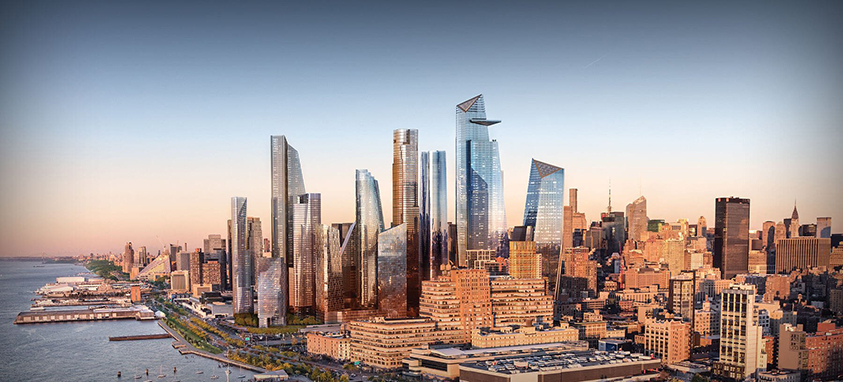
  • Hudson Yards, the largest private real-estate development in the history of the United States, will include an Equinox luxury hotel, 16 dining experiences, the city’s highest outdoor observation deck, an arts center and a flagship Neiman Marcus store.
  • A new, 26,000-square-foot Statue of Liberty Museum.
  • Renovation and expansion of the Lehman Center for the Performing Arts in the Bronx.
  • A TWA Hotel at John F. Kennedy International Airport (JFK).
  • The Glasshouse, one of the city’s largest private event spaces, with two outdoor observation terraces overlooking the Hudson River.
  • Verizon Executive Education Center at the Roosevelt Island Cornell Tech Campus, a 360,000-square-foot space for academic conferences, executive programs and workshops.

This is on the heels of Coney Island’s New York Aquarium—featuring the much-anticipated Ocean Wonders: Sharks! Exhibit—opening this month, and Seaport District’s Pier 17. Javits Center will follow with an expansion planned for opening in 2021.

Mandalay Bay Convention Center, LPETTET

Late Tuesday afternoon, approximately 1,000 attendees of the 2018 ACFE Global Fraud Conference at the Mandalay Bay Convention Center in Las Vegas were relocated to other areas of the hotel due to a water main break. Clark County Fire Department (CCFD) responded to the scene at 4:33 p.m. after a leak in the south convention center building was reported.

Dan Heenan, CFI, assistant fire chief for CCFD tells Smart Meetings that, upon investigation, water was discovered between the first and second level caused by a water main break in the loading dock area. Water showered down onto the first floor of the exhibition area. The fire department says that no injuries were reported and the building did not endure any structural damage.

Luise Odenheimer, audit manager at Seminole Hard Rock Hotel & Casino Tampa, is attending the Fraud Conference, and she credits the ACFE’s conference app for alerting her about the incident while she was in the final session of the day. “I did not see a Tweet, didn’t receive any e-mail, nor did I hear any loudspeaker or hear any alarm. The notification was very specific with what the issue was.”

Upon receiving notification of the flood, she opted to leave the session about 15 minutes early to avoid “a herd of people.” She was guided by staff and police officers to follow an alternate exit route that took her outside by the pool and around the hotel, until reaching a hotel entrance. As she exited, she witnessed “flood water flowing at the base of the escalator and water coming down from the ceiling lights” and the fire department outside.

She was impressed that, despite this slight hiccup in the afternoon, ACFE did not cancel their evening reception. Instead, she believes doors opened a bit early to accommodate guests that had left the conference center ahead of schedule. She also praised the hotel’s response on Twitter. “Even after a water main break occurs at a large luxury hotel, Mandalay Bay staff and support services were outstanding guiding conference attendees to safe walkways and exit areas. Kudos to the MGM brand!” she Tweeted from her handle @HardRockLuise.

Odenheimer’s husband works at the same hotel as she does on the emergency and disaster recovery team. She told him “about the number of staff members and the support services outside…I think the key takeaway for me was, if possible, let the guest see the actual emergency so they don’t jump to any worse case scenario conclusions.

The hotel released the following statement regarding the incident: “Mandalay Bay’s South Convention Center was briefly affected by a water line leak Tuesday evening. There were no injuries or disruption to overall operations. The Convention Center will proceed with its normal events and operations schedule Wednesday morning.”

Despite jokes on social media of sharks being let free, there was never any danger of a real-life Sharknado. Mandalay Bay confirms that the water main break in no way impacted the aquarium exhibit and the shark reef continued normal operation throughout the evening and night.

Airports can be challenging places. The long lines, the removal of items from your carry-ons, the uncomfortable seats and undesirable food. But, they do get us where we need to go, and the fact that we can now get from Los Angeles to New York City in five hours (not including delays or layovers) in a flying metal cylinder is still pretty astounding.

However, some airports are more awe-inspiring—and efficient—than others. In a recent study, the research company J.D. Power released its rankings of airports, from mega to medium, across the country based on factors including airport accessibility, terminal facilities, food and beverage and baggage claim. While some may come as a surprise, frequent travelers may say “I knew it!”

The Good

Landing in first place for mega airports was Orlando International Airport (MCO), with an overall satisfaction rating of five out of five. It only slightly beat out Detroit Metropolitan Wayne County Airport (DTW), which had an overall rating of four out of five, as did McCarran International Airport (LAS).

Large airports competed for a five-way first-place tie, though the award eventually went to John Wayne Airport (SNA) in Orange County, California. Tampa International Airport, Dallas Love Field Airport (DAL), Nashville International Airport (BNA) and Portland International Airport (PDX) all received ratings of five as well.

Medium-size airports also came up with a tie. While Sacramento International Airport (SMF) received the award, Indianapolis International Airport (IND) and Ted Stevens Anchorage International Airport (ANC) were also close to nabbing the gold.

The Ugly

With every “best of” list comes the worst of, and this study is no exception.

Coming in dead last for mega airports was Newark International Airport (EWR). Los Angeles International Airport (LAX) and O’Hare International Airport (ORD) rounded out the bottom three, with low ratings for terminal facilities and check-in/baggage check.

LaGuardia Airport (LGA) was the least popular of large airports, with its two-out-of-five-rating clinching the bottom spot. Slumming it alongside LGA was Philadelphia International Airport (PHL) and Fort Lauderdale-Hollywood International Airport (FLL).

Bradley International Airport (BDL) in Connecticut took last place for medium airports. While many may think of it as paradise, the magic of Hawaii does not extend to Kahului Airport (OGG), which slipped into the bottom three. Cleveland Hopkins International Airport (CLE) was also low on the list, with poor ratings for its terminal facilities and baggage claim, among other categories.

Magnify Money Analyzes Flight Delays

Magnify Money recently released their own rankings of the best and worst airports. The main focus of their study, however, was flight delays. They determined the rankings by studying the 50 busiest U.S. airports and analyzing flight delays during summertime from 2008-2017.

Their best airports included Honolulu International Airport (HNL), Salt Lake City International Airport (SLC) and SNA—which echoes its first-place ranking in the J.D. Power study. This is great news for Orange County meetings.

Surprisingly—or, perhaps, unsurprisingly—Magnify Money’s findings for the worst airports practically mirrored J.D. Power’s study. In last place, with a rating of 67 percent for its multiple and constant delays, was Newark, followed closely by LaGuardia at 68 percent. ORD and PHL also rated toward the bottom, with almost one out of four flights experiencing delays of some sort at each airport.

Everyone knows airline travel can be stressful. There’s the pressure to make your flight, and that antsy feeling when it’s delayed. But don’t think the collective frustration is going unnoticed.

AirHelp, a company that works to get compensation for the victims of flight delays and cancellations into or out of the EU, recently ranked the best and worst airlines. Metrics used include on-time performance, quality of service and quality of claim processing.

And the Award Goes To…

Qatar Airways took first place with an on-time performance of 8.9, a quality of service performance of 9.5, and a claim processing score ringing in at 8.9. This gave the airline’s a total average score of 9.08.

Next was Lufthansa Airlines, based in Germany, with a score of 8.57. Ethihad Airways in the United Arab Emirates took the bronze at 8.43. WOW Air in Iceland came in last with a score of 5.04.

But out of the 72 airlines analyzed, major U.S. carriers failed to steal even a small segment of the show. American Airlines was highest, with a ranking of 23rd and overall score of 7.84. United Airlines came in at 37th, and Delta at 47th. All three scores are lower than years before.

“It is clear the U.S. is in need of significant improvement, with overbooked flights and cancellations making national headlines month after month, and the consistent mistreatment of U.S. consumers,” said AirHelp CEO Henrik Zillmer in the report.

Airports Are No Exception

AirHelp also ranks American airports low.

The company surveyed 147 airports based on quality of service, on-time performance and overall passenger sentiment on Twitter. Hamad International Airport (DOH) in Qatar, Athens International Airport (ATH) in Greece and Haneda Airport (HND) in Tokyo were the best performers.

Seattle-Tacoma International Airport (SEA) was highest performing in the U.S, clocking in at 33rd. It was followed by San Francisco International Airport (SFO) at 45th and Denver International Airport (DEN) at 51st.

In a separate report, AirHelp found that nearly a third of flights to the European Union were disrupted at Newark Liberty International Airport (EWR). Out of the 10 biggest U.S. airports, Newark had the most disruptions. Houston’s George Bush Intercontinental Airport (IAH) had the least, with 81 percent of flights leaving as scheduled. That airport, however, still placed 63rd on this year’s ranking due to low passenger sentiment.

The Effects

AirHelp also found that almost 50 percent of Americans felt mistreated by airlines—and lied to about the cause of flight disruptions. The study surveyed more than 2,000 passengers and found that more than one in 10 had been stranded at the airport after a delay. That same amount also reported missing important events due to the delay or cancellation.

Respondents complained of lack of adequate assistance from airlines.

“For years, there has been an oversupply of airlines flying along the same routes, which leads to price wars, especially on holiday routes,” Zillmer said. “Therefore, airlines reduce customer service offerings in order to maximize profits, frequently leading to the mistreatment of air passengers. As a result, passengers are sometimes faced with rude staff, and are experiencing extreme delays and disruptions that the airlines can avoid or eliminate.”

According to EU regulation EC 261, air passengers, regardless of nationality, are entitled to compensation if an airline based in the EU delays flights more than three hours, cancels it or denies boarding due to overbooking. Exceptions include inclement weather or heated political climates. Under the law, airlines should provide passengers with accommodations at a hotel and transportation there.

Passengers can file claims up to three years after the departure date. AirHelp estimates more than 500,00 U.S. passengers are entitled to nearly $450 million.

“We urge passengers who may have been affected by delays or cancellations this year to read up on their rights to ensure that they’re not missing out on the compensation that they’re legally entitled to,” Zillmer said.

In the United States, airlines are not required to compensate passengers when flights are delayed or cancelled. Individual airlines set their own policies.