More: 5 Smart Moves: Who’s Cooking Edition

financial data revenue

The revenue per available hotel room (RevPAR) across the conference and meetings market is predicted to grow by 3.5 percent by the end of the year, thanks in large part to a sustained rise in occupancy numbers and daily room rates, according to a new report.

By contrast, the quarterly Hotel Horizons report, compiled by IACC and CBRE Hotels’ Americas Research, predicts that the national average will be 3.1 percent.

While the ongoing boom in new properties has led many analysts to predict a turn toward a buyer’s market, with the supply of rooms simply outstripping the demand, the report suggests that the transition isn’t happening in the meetings industry yet. Citing the higher occupancy numbers, IACC CEO Mark Cooper says, “The figures predicted are showing that conference- and meeting-focused venues are, for the first time in at least five years, in line with the wider lodging market when it comes to occupancy rate.”

Unfortunately, this means higher prices for attendees. Forecasts for 2018 in general predicted higher costs across hotels, airlines and venues, and it is a trend that will continue if occupancy remains high.

Those financial winds might change in the next few years. Market-wide, the RevPAR is expected to slow to 3 percent in 2019. But for now, Cooper says, “We’re seeing fantastic growth in group-room revenue pace within IACC certified conference venues, up 8.7 percent, with the strongest group volume results reported in the Midwest and the Northeast.”

Given this growth, more venues are investing in meetings-minded improvements, from creative and flexible meeting spaces to collaborative technology. Overall, the report predicts conference and meeting venues in the United States will range from 64.5 to 66.4 percent occupancy during the next five years.

Packing Light

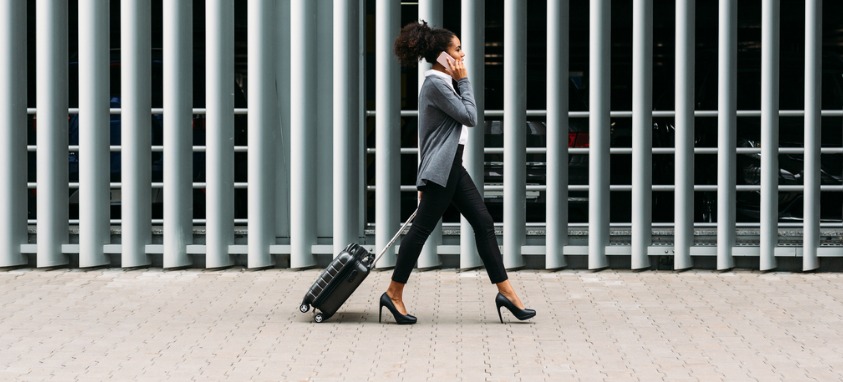
Packing bags simply and efficiently is one of the major challenges for planners, and it is becoming more of a necessity as airlines continue to increase prices for checking bags.

Last month, Delta became the latest airline to raise the price of checking a bag, joining Jet Blue, United, and multiple Canadian airlines. There are plenty of ways to minimize your baggage anxiety, including rolling your clothes instead of folding them, putting the heaviest items near the wheels and even using packing cubes to organize your bag. When it comes to making sure your luggage doesn’t exceed the weight limits and that your carry-on isn’t a lead weight dragging down your trip, there is only one answer, though: pack lighter.

1. Pack What You Need, Not What Fits

When packing a bag, even the most experienced travelers sometimes give into the innate urge to pack until their bag is about to burst. They often have a lot of room in their bag, so why not fill it up? Isn’t that the point? Not if the goal is to pack light. Planners and meeting professionals are an adaptable group that comply with any packing restraint. The trick is implementing that restraint from the very beginning.

Start packing with a bag smaller than the one you plan to take. Ask yourself why you are choosing each item. If the answer is because you might need it instead of you will need it, set the item to the side. Fill that bag completely, then simply transfer those determined essentials to your real bag. Everything that wasn’t important enough to stuff in the first bag is just as unnecessary in the second.

2. Plan Your Outfits Beforehand

Especially when dressing to impress, it’s easy to get carried away. Planning your outfits beforehand, however, will save you time, sanity and space in your bags. The key is to bring clothing that can mix and match within a single-color palette instead of packing multiple standalone, complete outfits.

Combined with the right blouse one day and dressed up with a wrap top and an eye-catching scarf the next, the same pair of pants can work twice as hard for a woman’s wardrobe. Add in some carefully chosen jewelry, and suddenly only a couple pieces of clothing become capable of multiple different looks. Layers and neutral colors are the best bet for making sure some clothes can pull double-duty.

3. Consider Doing Laundry on the Go

If a trip is long, eventually there are only so many times you can wear the same shirt. But instead of packing for days on end, the simplest answer is just to do a bit of laundry midtrip. No matter the length of the trip, never bring more than a single week’s worth of clothes. Preferably, stick to even less than that. You can pay for many hotels to clean your clothes, find a local laundromat or go our personal favorite route by doing it yourself.

Bringing a small bag of concentrated, powder laundry detergent and a few extra ziplock bags is all you need to turn your hotel sink into a quick laundry station. Water, detergent and plenty of shaking in one of the ziplock bags will get your travel wardrobe back in meeting-ready shape. Planning ahead and bringing quick-drying synthetic clothes can make the process even smoother. Materials such as Merino wool are also a great choice. It is specifically designed to be lightweight, soft and “stink-resistant”—meaning it can be worn multiple times without washing.

4. Minimize Toiletries

This may be a hard one for many people, but doing away with even some of the usual toiletries will go a long way toward lightening your load. The vast majority of hotels supply shampoo, conditioner and body wash. Most even provide other essentials, such as razors, toothbrushes and toothpaste, on request. And for the most committed of light-packers, every destination has a convenience or dollar store where you can pick up affordable toiletries.

For those that simply feel more comfortable coming fully prepared, an easy step is switching to solid toiletries. Not only are solid versions usually lighter than their liquid, gel or aerosol equivalents—you don’t waste space on extra bottles, either.

5. Embrace the Digital Revolution, Even if Just for Your Trip

Airports, paperbacks and magazines are a time-honored combination. When it comes to slimming down your bag, however, digital media is your dearest friend. Whether it is reading material for the plane, guide books, translation dictionaries, maps, paperwork or anything else you will need for meetings and events, chances are there is an app for it. The more you can fit onto your phone or tablet, the lighter your bag will be.

If you absolutely need a hard copy of something once you arrive, look into local printing shops beforehand, ask your hotel if guests can print on site and examine your options before trying to load it all into your bag. And if the idea of relying on your phone or tablet so thoroughly is troubling—especially at a conference where it can be a pain to find an outlet to charge your devices—consider investing in a portable charger. They are convenient, can be quite affordable and take the anxiety out of using your devices on the go.

6. Acknowledge the Problem of Shoes and Tackle It Head on

Limit yourself to two or three pairs of shoes. As with the rest of your wardrobe, your shoes are going to be doing a lot of work with the different outfits you assemble, so it is important to think beforehand about how to make the most of every pair.

Likewise, as tempting as it might be to wear your most comfortable shoes while traveling, wearing your bulkiest, heaviest pair on the plane can make a big difference when it comes to your bag. The same can be said for your bulkiest coat.

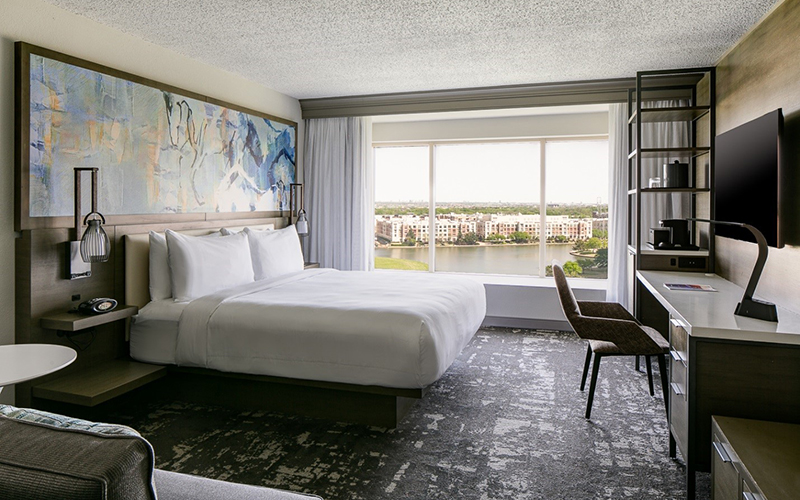
The days of boxed-in, windowless meetings are officially a thing of the past. Attendees want access to nature—whether it’s strolling along a park-like setting or spending time by the water. But what is the best way to designing events that make use of the venue’s indoor and outdoor space to enhance, rather than detract from the business goals?

More: Tech Companies Flee Cubicles, Meet Outdoors

1. Meet in earshot of nature.

Most modern venues offer outdoor terrace spaces attached to indoor meeting rooms or use meeting spaces that have windows overlooking nature. Consider hosting group meals on a property’s covered terrace, where guests can take in fresh air and the sights of nature. Even just the sounds of nature trigger a relaxation response in the brain. Harvard physician Eva M. Selhub, co-author of Your Brain on Nature, says a drop of nature is like a drop of morphine to the brain since it stimulates reward neurons in your brain, turns off the stress response to lower cortisol levels, lower heart rate and blood pressure, and improves immune response. And when stress is low, focus is possible, which fosters more productive meetings.

2. Schedule walking meetings.

Access a nearby public park with walking trails for out-of-the-box teaming. Think of this exercise as a supplement to a large meeting format. When an opportunity for breakouts arises (such as brainstorming), break into small groups (up to five per group) for a set amount of time. Have goals clearly stated and get out into nature to talk it out. My current venue, for example, is next to more than 50 forested acres with walking paths. When team members are literally striding on common ground, hierarchies and work titles diminish, blood circulates, and creativity is boosted.

3. Cast Off.

If the venue is close to water, forge a partnership with a local boat charter for on-the-water opportunities. In Wallace J. Nichols’ book Blue Mind: The Surprising Science That Shows How Being Near, In, On, or Under Water Can Make You Happier, Healthier, More Connected, and Better at What You Do, the author uses science to illustrate how being close to water (oceans, lakes, rivers, waterfalls) can make us not only happier, but also more successful in life, and ultimately in business. Water’s de-stressing and centering effects can be profound for meeting outcomes.

4. Add a touch of green.

Options range from fresh flowers to a decorative water feature (fountain fixture) or a monitor with a water or nature scene, to vibrant snack breaks (think veggie crudites, whole edamame (currently very popular) and healthy lettuce wraps). These uplifting natural touches go the extra step to welcome in the natural world.

Science is backing up what many have long suspected: access to nature boosts productivity. The only thing left to do now is get the outdoors into your next meeting.

Jennifer Grosclaude is the Director of Sales, Marketing and Events for Hyatt Regency Lake Washington, a 347-room, 12-story waterfront hotel at Seattle’s Southport. She has more than 20 years’ experience in planning, catering and event management.

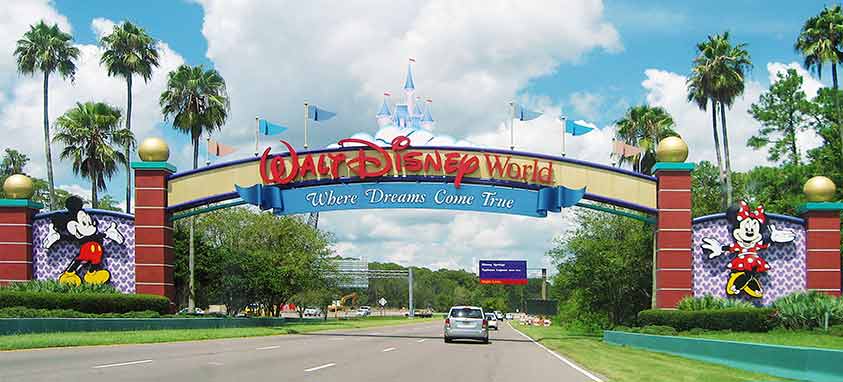
Even though what he does looks like nothing but fun, Mickey Mouse has never worked for nothing. Nor have any of his Magic Kingdom pals. But now they’re on their way to a starting pay boost of more than 50 percent.

Cast members at Walt Disney World Resort in Lake Buena Vista, Florida, overwhelmingly voted to accept a new five-year labor contract that will pay a starting wage of $15 an hour by 2021. A Disney press release dubbed this “one of the highest entry-level wages within the service industry in the United States.”

More than 37,000 Disney workers represented by Services Trades Council Union, including lifeguards, bus drivers and housekeepers, are affected.

Disney World had originally offered a 2.5 percent pay raise and no bump in the starting minimum wage, which union members rejected by a 93 percent margin.

“Our 50 percent wage increase will have a real, meaningful impact on our cast and their families—and is part of our commitment to the thousands of cast members who make magic for our guests each and every day,” said George A. Kalogridis, president of Walt Disney World Resort.

Starting pay for hourly, nontipped Disney workers will increase to $11 an hour in December, and will increase by an additional $1 per year until October 2021, when it reaches $15 an hour. Those workers whose pay is already above $10 an hour will be paid at least $4.75 an hour more by 2021. Eligible cast members will also receive retroactive pay of 50 cents an hour or 3 percent, whichever is greater, dating back to September 2017, and will receive a one-time, $1,000 bonus.

This summer, Disneyland Resort in Anaheim, California, reached agreement with its largest labor unions for a minimum wage rate increase of 40 percent within two years—which puts 9,700 unionized workers there at $15 per hour by 2019.

More: 7 Smart Moves—at Mahekal Beach Resort, Kimpton & More

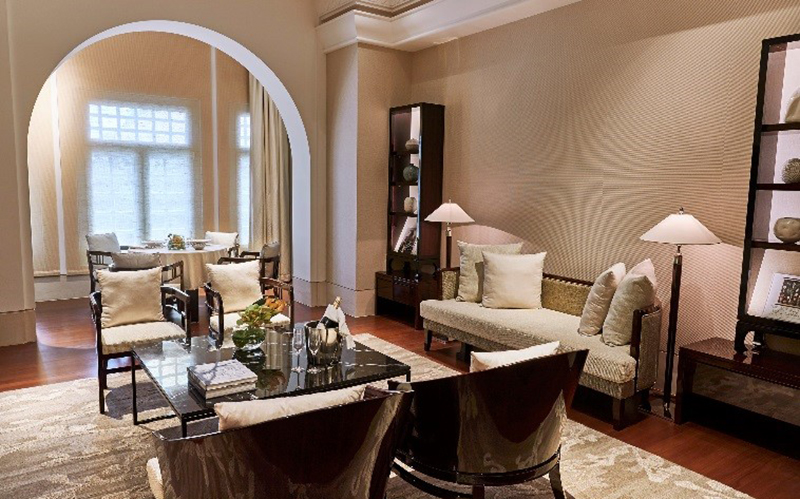
What could be more inspiring for meeting attendees than a luxurious setting? Here is a selection of glam-centric properties.

More: New & Renovated: It’s Summertime Somewhere

social media design trends

The development and decline of trends were previously a straight line—planners could track where they started and grew, and the point when it became time to move on. According to recent Smart Meetings webinar host Kate Patay, however, social media has changed all of that.

Kate Patay

Chief Strategy Officer at Patay Consulting, a firm specializing in creating a brand voice for businesses and individuals, Patay is an industry veteran of nearly 20 years and an expert when it comes to tracking trends. But whereas the timeline of trends was once predictable, now “everything hits at once,” she says.

Referring specifically to fashion and the appearance of certain looks first on the runway at Fashion Week and then at the Emmys, she says, “There’s no longer that lag time. We used to have a season in between. But now it all is hitting instantaneously. So, you have to be paying attention to all of those outlets at the exact same time.” The immediacy of social media platforms such as Twitter and Instagram means new that looks, colors and patterns make an impact and can become implemented far faster than ever before.

Planners also need to recognize the effect social media has on their clients. With a platform such as Pinterest, posts from multiple years ago can surface in a client’s search. And since it is the first time the client has seen it, the idea in a new post is new and fresh to them, even if it is outdated in the eyes of a professional planner.

“This is why we couldn’t get rid of those mason jars for so long,” she jokes. “This is the difference with great planners—being able to embrace that, and understand why, and then maybe tweak and build it to another level, instead of doing the exact same thing.” But one way or another, modern trends last much longer as a result.

Patay’s webinar goes on to include the best ways planners can use social media to support their clients and their brands, down to hashtag practices and what kind of content to post when during the day.

Scott Hermes; photo credit: Irvine Company

Irvine Company Resort Properties in Newport Beach, California, recently appointed Scott Hermes as its president. Hermes has hiring power at Coastal Collection, which encompasses The Resort at Pelican Hill, Fashion Island Hotel and Hotel Irvine.

“Hire people smarter than you. Prepare them for success. Agree on the goals and plans. Then get out of their way,” he says of his approach to selecting his staff. During the on-boarding process, he asks new teammates if they joined the company just for a job or to pursue a career. For those seeking a career with longevity, he tells them they are only limited by two controllable things: the results they can personally deliver and geographic mobility.

He didn’t always have such leadership skills. Hermes says he was put in a management position prematurely in his career. “I was not very good,” he says. “My team sat me down, and very honestly and openly told me so. That was a huge wake-up call.”

It was through joining Meeting Professionals International (MPI) in 1983 that he learned a lot about the industry. Hermes went on to serve as MPI Foundation board of directors and chapter president. His proudest career achievement was receiving recognition by his peers when he was named MPI’s Global Supplier of the Year.

“MPI has been instrumental for me in learning and gaining practical meetings experience. When I began in sales and events, the educational component and networking were amazing,” he says. “Attending a 12-week CMP study group with 25 meeting planners was invaluable. As my engagement grew and I moved into volunteer leadership, I learned ways to work with and motivate people—not because they had to, but because they wanted to. I’m a better leader thanks to MPI.”

In his new role, Hermes vows to work extra hard to familiarize people with independently owned Coastal Collection resorts. He’ll use Orange County’s beaches, culture, shopping golf, water sports, entertainment and gorgeous weather to attract groups. “Each of our hotels is unique and designed to accommodate a wide variety of meetings,” he says. “From the Forbes Five Star The Resort at Pelican Hill to the coastal luxury Fashion Island Hotel, to Hotel Irvine, our lifestyle hotel, each has something different to offer, along with fantastic outdoor event spaces.”

He hopes that by satisfying customers and exceeding expectations, word of mouth will help the property book new business. “My goal in the meetings arena is to find new ways to deliver differentiating experiences for our meeting professionals in support of their meeting or incentive events,” he says. “And if we deliver this well, they might tell a colleague or post on social media. They may even pay us the ultimate compliment by returning to hold another meeting at one of our properties.”

Hermes has also been chairman of the board for San Diego Tourism Authority and San Diego Tourism Marketing District. He spent 15 years at Starwood Hotels, where he was area managing director for St. Regis, Luxury Collection, Westin, Sheraton and W, as well as senior vice president of sales and field marketing for its North American division.

coffee-forward destinations
Photo credit: Visit Indy

Rise and shine, weekenders! This Saturday, Sept. 29, is International Coffee Day—an unofficial day of worship for many meeting professionals. So, put on your comfiest pajamas, set your slippers by your bed and prepare to wake up nice and slow, savoring your favorite brand of beans or cuppa joe. We’ll provide the reading materials. ’Cause the best part of waking up is with three new coffee destinations in your meetings cup.

A Double Shot of Novelty in Austin, Texas

Austin Convention Center is serving up customizable, gourmet local brew—from a self-serve coffee robot. The Coffee Haus, designed by Austin-based coffee solutions company Briggo, is a large, automated coffee bar of sorts, using high-quality ingredients and on-demand service to strike that sweet spot between novelty and efficiency. The concept has already taken off at Austin-Bergstrom International Airport (AUS) and three other Texas locations. It will serve attendees in the north entrance of the convention center during all public and private events. Guests can order ahead using Briggo’s mobile app or customize their order in person and on screen.

A Caffeine Crawl Through Indy’s Indie Coffee Shops

If you haven’t visited Indianapolis lately, you might not be aware that this heartland city has made a name for itself in the realm of serious coffee-making. We’re talking small-batch artisan roasters, community nonprofit shops and latte artists so good that they’re getting the best to come to them. Seriously—Coffee Fest, the B2B trade show for coffee professionals, is coming to Indianapolis in May 2019. As for the industry that most relies on the coffee industry (that’s us, meeting profs!), there are plenty of opportunities to get your attendees buzzing. Book a coffee cupping (tasting) class at Tinker Coffee Co. or get inspired by the 6th annual Caffeine Crawl, taking place in Indianapolis on Oct. 20. There will be 15 stops, at the best coffee, tea and chocolate shops—with jog- and bike-friendly routes available.

Door Delivery in Durham, North Carolina

Nearly adjacent to Durham Convention Center is The Durham, a boutique hotel serving the tech companies and academics that come to meet in the university-framed Research Triangle Region. It’s also serving an alternative to the hotel room coffee experience. You know the one—where gurgling coffee pots resembling relics spit out a nice brown mud for you to doctor up with dehydrated creamer and sugar alternatives. But not at The Durham. The hotel has partnered with local, sustainability focused Counter Culture Coffee to bring guests a selection of freshly ground beans delivered to their hotel room each morning. Wake up and smell the happy attendees.