In Kentucky, where 95 percent of the world’s bourbon is produced, there’s almost as much interest in the process as there is in the finished product. Almost.
According to Kentucky Distiller’s Association, a nonprofit trade group founded in 1880, this spirit production has increased more than 300 percent since 2000, reaching its highest level in more than 50 years. There are approximately 1.5 barrels of bourbon per resident in Kentucky (with a population of 4.45 million), aging gracefully until their debut. Bourbon typically reaches its peak after nine to 12 years.
Kentucky is the only state in the United States with the ideal natural combination of climate, conditions and pure limestone water that is needed for producing the finest bourbon. In the United States, proof is measured on a scale of 200, meaning a 100-proof spirit would contain 50 percent alcohol. Bourbon must be aged at a maximum of 125 proof for at least two years and bottled at a minimum of 80 proof.
Bourbon ages in top-quality barrels made of prime white oak. The interior of the barrel is first charred by setting fire to the wood for less than a minute. This is a complex science involving oak compounds and wood sugars. The goal of charring isn’t to add a smoky flavor, but instead to alter the character of the wood, causing a desirable outcome in the filled barrel. Flavors and color develop as the liquid moves in and out of the charred wood while aging.
The method of charring is divided into various levels, with No. 1 through No. 4 being the most common. A No. 1 char is maintained for just 15 seconds and No. 4 for 55 seconds. These exact conversions help explain why bourbon barrels are used only once. Otherwise, the bourbon’s consistency would be altered with the diluted chemical reaction between the spirit and barrel.
As you sip a fine bourbon, take notice of the distinct flavors, color, aroma and finish that’s achieved only through time and commitment as this liquid gold ages to perfection.
Mix sugar, water and Angostura bitters in an old fashioned glass. Drop in a cherry and an orange wedge. Muddle into a paste using a muddler or the back of a spoon. Pour in bourbon, fill with ice cubes, stir and enjoy.
Derby Day Mint Julep
1 1/2 cups packed chopped mint
1 cup water
1/2 cup sugar
Julep cups or tall glasses
Kentucky bourbon
Mint sprigs
Shaved ice
The day before, make the minted simple syrup: Chop mint, including stems (much of mint’s flavor is in the stems). Put sugar and water in a small, heavy-bottomed saucepan. Bring to a boil and stir until all the sugar is dissolved; add mint. Remove from heat, allow the mixture to come to room temperature, then strain it through a clean cheesecloth to remove any bits of cooked mint.
For each julep, take a cup, or tall glass, and fill with shaved ice. Pour in a jigger of bourbon and top with the simple syrup; stir gently. Add a sprig or two of mint and serve. It yields four to six servings.
Check back for Mona Hayden’s October issue story, “Kentucky Cookery: Celebrated Kitchens and Cocktails in Two Storied Cities,” publishing online this week.
“…people never are alone now. We make them hate solitude; and we arrange their lives so that it’s almost impossible for them ever to have it.”
Dr. Timothy Wilson, a social psychologist at the University of Virginia conducted an experiment to explore the consequences of this new reality that gave participants two options. For 15 un-interrupted minutes they could do nothing. Or, they could give themselves a small, electric shock. Roughly 67 percent of the men and 25 percent of the women in the experiment chose to give themselves shocks, even though earlier, many had proclaimed that they would pay money not to endure such a shock.
Shock it to Me
Why did they opt for the shock? They became increasingly anxious for anything to do over the course of the 15 minutes. Aha, you say! These were probably millennials for whom a 15-minute stretch of doing nothing is virtually impossible. As it turns out, the participants consisted of adults recruited from a farmer’s market and a church.
Why is it becoming so hard to take a few moments throughout the day to simply do nothing? Have we become so driven that we cannot even spare a few minutes for ourselves? Do we no longer recognize the peace of mind that we can experience when we’re not fully occupied every minute of the day?
Three Ways to Wean Yourself
If you are oversubscribed, over-informed and overwhelmed, here are some ideas that you can put into practice:
1. Start small. Rather than attempt a long stretch of doing nothing, see if you can sit still for 60 seconds. Stretch it to 120 seconds if you’re feeling brave. It’s best to attempt this after you finish a task and feel good about your accomplishment. Marinate in your positive feelings. Before you go to lunch or take a break, give yourself the opportunity to pause and, well, simply do nothing.
If you have a 15 minute break, where is it written that you can’t spend the first 60 seconds at your desk doing nothing, take a 13 minute active break, then spend the last 60 seconds at your desk, once again doing nothing?
2. Stretch it out. As you build confidence in your ability to take some time out with no thoughts or activities in mind, strive for three to five minutes. If you arrive at work early, you could spend such time in your car with the radio off, not checking your cell phone, and not doing anything, other than simply sitting there. In your office, perhaps you can spend three minutes undetected in a conference room, corporate library, cafeteria, rooftop terrace or somewhere else.
3. At home, where you have more flexibility, could you attempt a short weekend time out session? Think of all the times you’ve been online, or flicking through the TV channels, and how aimless that can be. Doing nothing can actually be more productive than doing something meaningless.
As time passes, taking time here and there where you don’t have to do anything can become reinforcing. Give yourself permission to take a deep breath, reflect, clear your mind, visualize and just be.
Even if none of these things happen, you still get a chance to slow down. That is worthwhile in itself.
Jeff Davidson is “The Work-Life Balance Expert®” and the premier thought leader on work-life balance issues. He works with organizations that want to enhance their productivity by improving the work-life balance of their people. Jeff is the author of 65 books, including Breathing Space, Dial it Down, Live it Up, Simpler Living, 60 Second Innovator and 60 Second Organizer.
Photo credit: Douglas Barnes/AP Images for Hilton
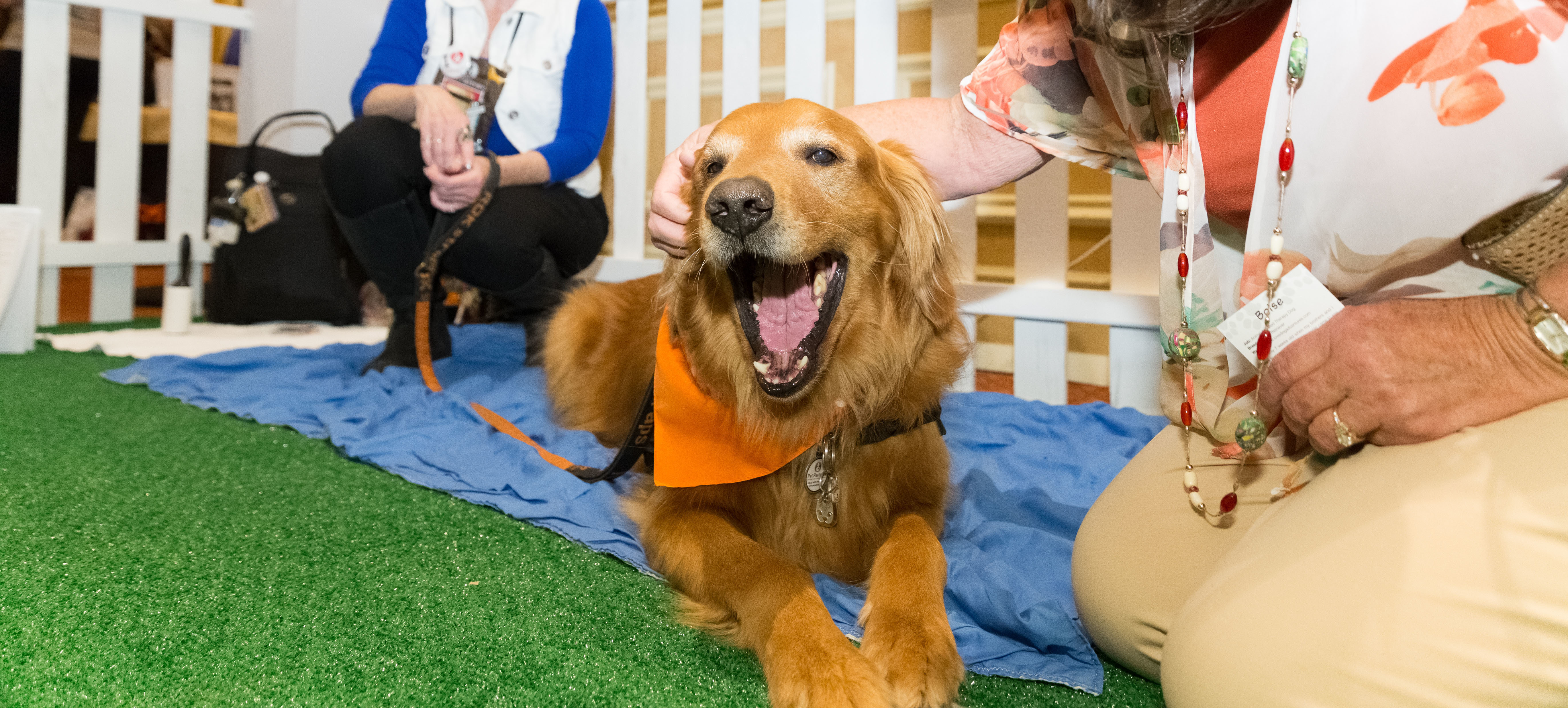
Get your puppy-petting hands ready for Smart Monday at IMEX America on Oct. 15. Courtesy of MPI, Paws for a Break is returning to Level One of Galileo/Marco Polo/Casanova Foyer at The Venetian and The Palazzo Congress Center.
Las Vegas-based Michael’s Angels Paws Therapy Dog Program will have furry friends and their owners present for attendees to play with in between education sessions. The event will be sponsored by Visit Omaha and Century Link Center Omaha, an arena and convention center.
Special Treat
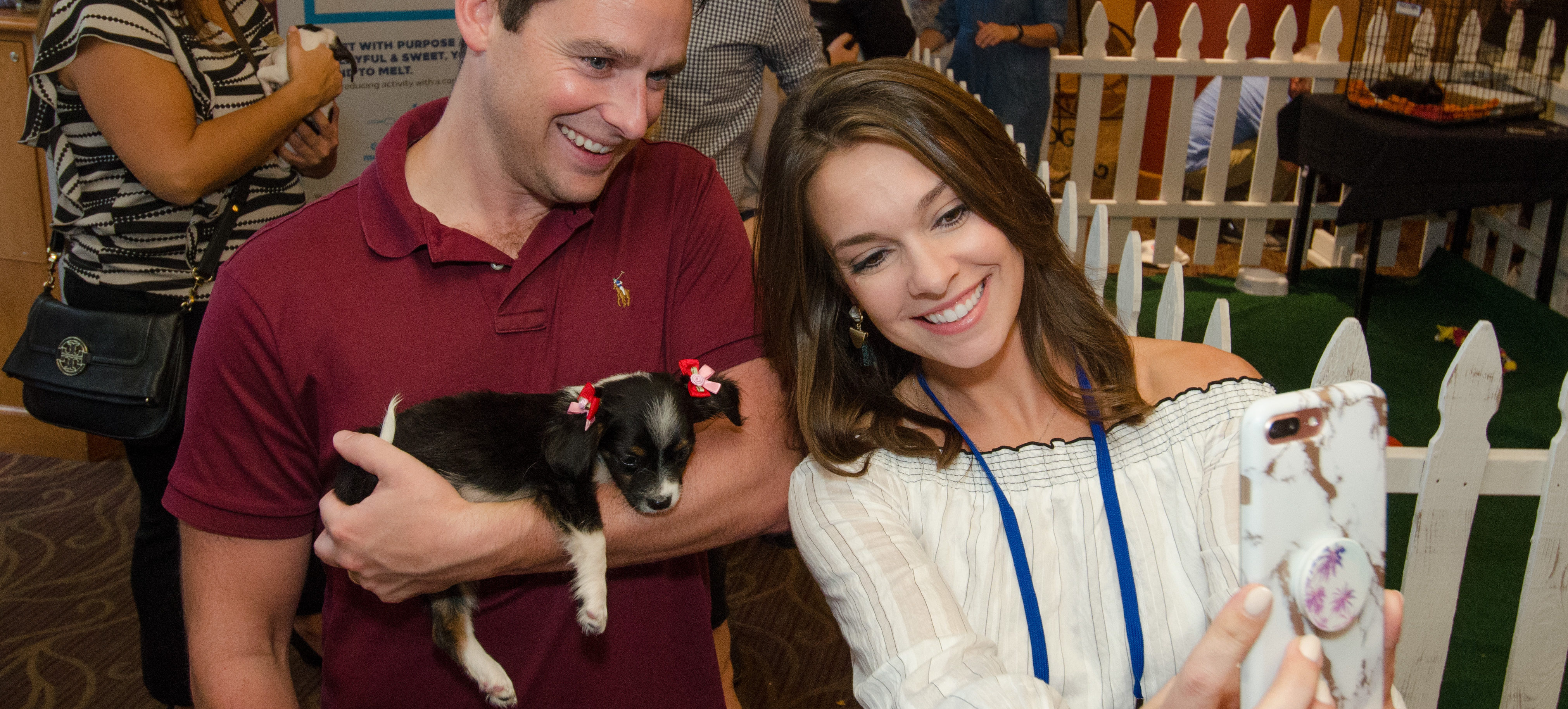
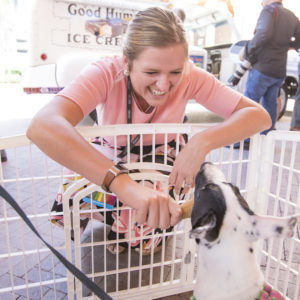
What’s even better than puppies? How about puppies AND ice cream? Hilton’s Meet with Purpose rewards good boys and girls in meetings with a 30-to-60 minute Puppies & Ice Cream break for organizations convening at one of its pet-friendly hotels. The adoptable dogs are from local no-kill shelters and rescue organizations.
A tail wag ahead of National Dog Day in August, Hilton Salt Lake City Center successfully found fur-ever homes for six of eight rescue pups that participated from Salt Lake County Animal Services. “[This] event was created to inspire customers by showcasing the unique ways that they can energize and engage meeting attendees. Between the sweet treats and the even sweeter four-legged friends, the number of smiles and Instagram posts far exceeded expectations,” says Mike Hill, managing director of intermediary and specialty markets group sales at Hilton Worldwide.
Hilton Denver City Center also participates in this meeting enhancement program. The hotel asks groups to make a minimum $500 donation to Denver Animal Shelter, so this can be considered a CSR activity.
Who Let the Dogs Check In?
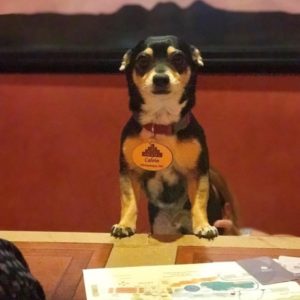
Guests staying at Hyatt Regency Tamaya Resort & Spa in Santa Ana Pueblo, New Mexico, will unleash their excitement as they’re greeted by furry greeters. Many of the hotel’s employees bring their personal pets to work. Help attendees combat homesickness by booking their “Meet the Hotel Dogs” activity.
“Since many meeting attendees miss their pets when they are away on business travel, we are offering the ‘Meet the Hotel Dogs’ activity for our group guests to play and cuddle with the Tamaya dogs while they are away from home,” says Jolene Mauer, the hotel’s marketing manager. “Being a pet-friendly resort, we usually have anywhere from two to ten dogs in our offices at any given time.”
Sitting, sitting and sitting some more in airport terminals is one of the least glamorous parts of traveling. At the Snoopy-themed Charles M. Schulz Sonoma County Airport in Santa Rosa, California, a statue of the cartoon beagle isn’t the only pooch in the lobby. Therapy dogs and their owners can often be found strolling through the airport to keep paws-engers company and provide comfort to those who experience anxiety when flying.
Plan Your Own Doggie Event
If you decide to include dogs for an upcoming event, stock these essentials.
Lint rollers
Hand sanitizer
Pooper scooper and garbage bags
Pee pads
While every hotel or venue has something that makes it unique, some simply go above and beyond. Whether they push against the mold, or shatter it, here are a handful of recently opened or renovated options that are redefining what’s expected in 2018.
Los Angeles Athletic Club
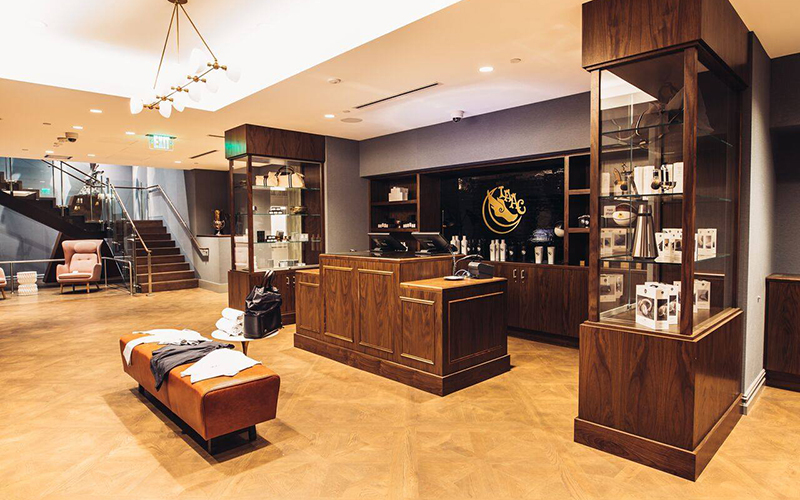
The city’s first private club, dating all the way back to 1880, The Los Angeles Athletics Club offers all the courts, pools, gyms, and athletics facilities you’d expect. But it also features a full hotel, spa and 25,000 sq. ft. of meeting space. In the middle of $10 million of multiphase renovations, the Central Los Angeles venue most recently revealed five new meeting rooms. Next up are further renovations to the spa, featuring a unisex area and treatment rooms with a multipurpose salt room offering yoga, meditation and more.
Los Angeles Athletic Club
Big Cedar Lodge
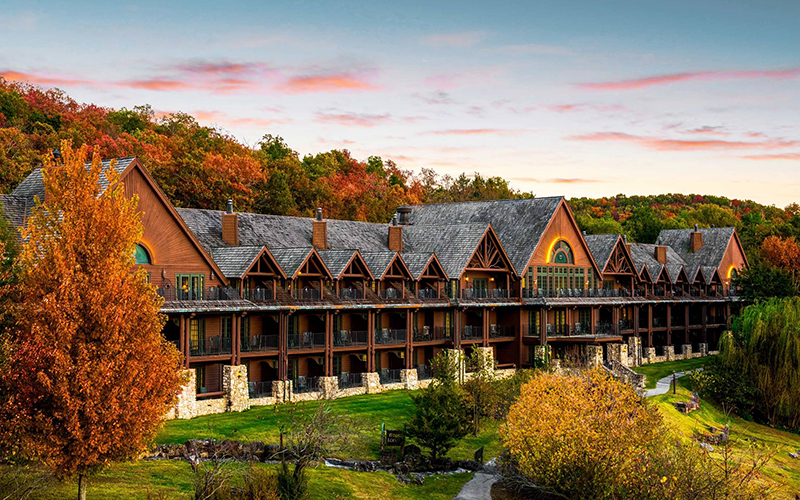
Glamping is nothing new. And the idea of luxury is somewhat built into the concept. But Big Cedar Lodge in Missouri’s Ozarks—featuring 20,000 sq. ft. of meeting space—is taking it a step further. Calling it “luxury glamping,” the resort is opening a high-end, 64-unit campground called Camp Long Creek. Guests can enjoy majestic wilderness along with a king-sized canopy bed positioned beneath a chandelier. The new campground is accepting reservations for spring camping, starting in May. Other recent renovations and additions at Big Cedar Lodge include an activity center with a bowling alley and a four-story ropes course.
Big Cedar Lodge
Sheraton Los Angeles San Gabriel
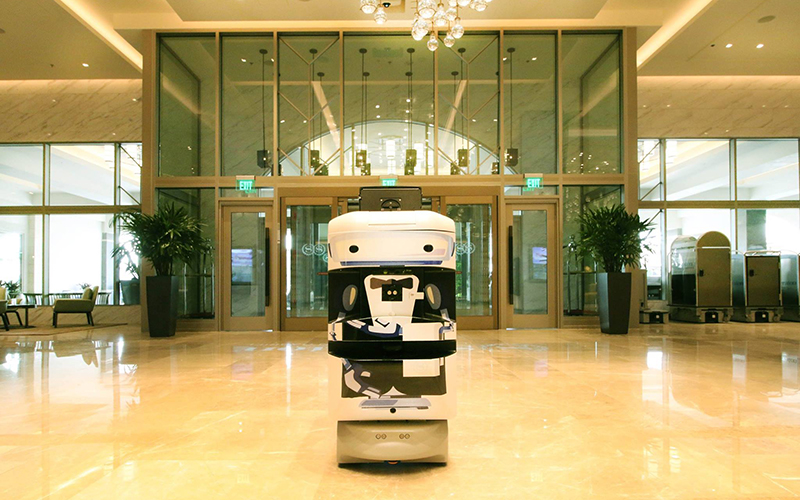
To provide even better service for leisure guests and meetings attendees, Sheraton Los Angeles San Gabriel decided to find the right machine for the job. An eight-member team of arguably adorable, four-foot-tall robots staff the hotel’s halls, carrying luggage, delivering room service, taking the trash and even showing guests to their rooms. The hotel itself is an elegant combination of sleek metal and Spanish Mission-inspired accents. It debuted earlier this year with 19,000 sq. ft. of indoor and outdoor event space, including 11,341-square-foot Grand Imperial Ballroom.
Sheraton Los Angeles San Gabriel
InterContinental Shanghai Wonderland
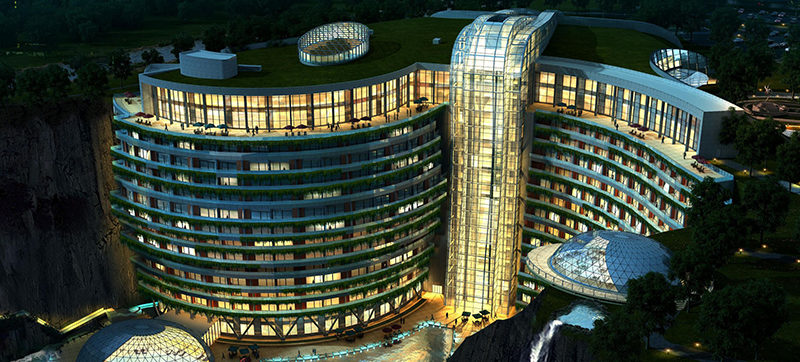
In a league of its own, one of China’s newest hotels isn’t piercing any skylines. That’s because it is built down, not up. Designed into the side of a former quarry, the Wonderland includes 16 below-ground stories, with two of those beneath the manmade lake at the base of the quarry. Waterfalls pour down the sides of the quarry, in full view of the balconied rooms along the wall and the walkways at the bottom. It features four meeting rooms and a grand ballroom, and is scheduled to open its doors to guests by the end of October.
InterContinental Shanghai Wonderland
Planners looking for somewhere new to eat in the San Francisco Bay Area need look no further. That is, if a historic organic ranch amid the oyster beds of West Marin, a Sausalito houseboat dinner event themed to Eastern European food and music and a tasty demonstration kitchen ready for hands-on cooking demos and team-building events in San Francisco’s North Beach will do.
Straus Home Ranch, Marshall
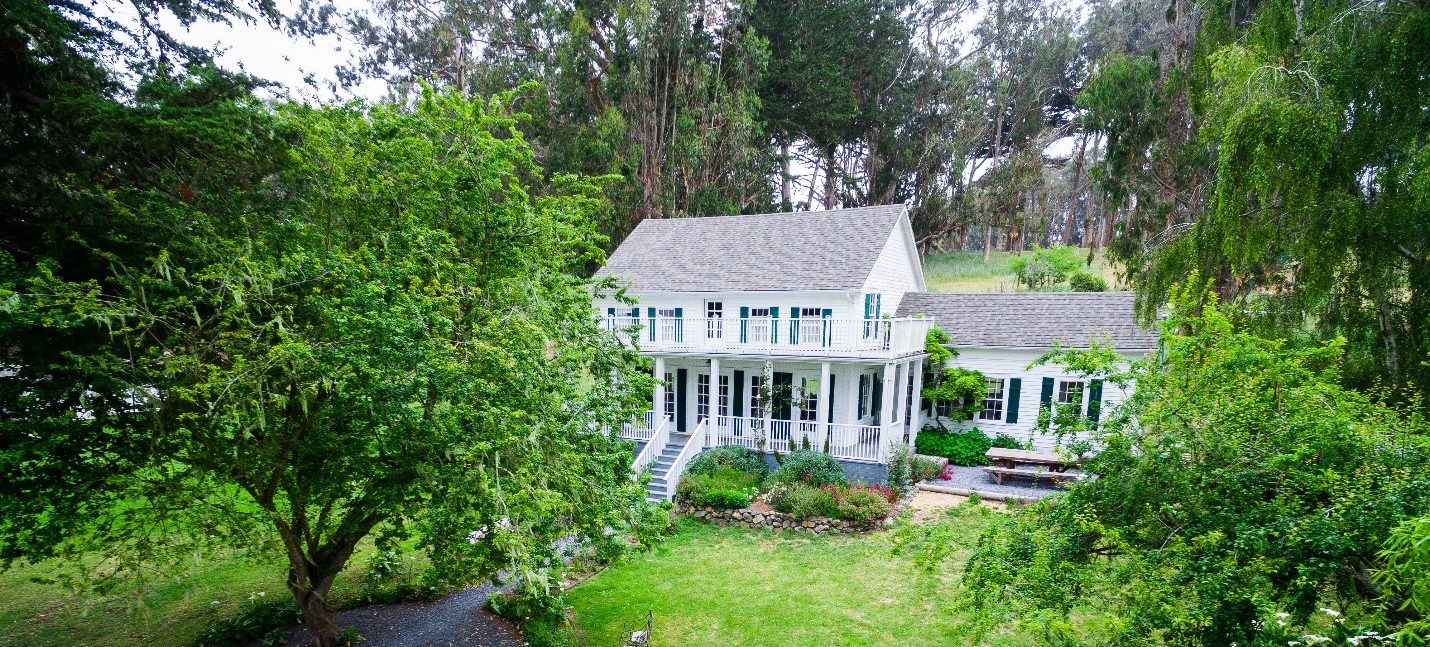
About an hour’s drive up the coast from San Francisco sits a beautifully renovated farmhouse on 166 certified organic acres overlooking Tomales Bay. The Straus family has been farming at Straus Home Ranch since 1941, and it’s still a working dairy cattle operation with heifers (“teenager” cows) grazing contentedly in rolling fields behind the house.
The Straus name is revered in California agricultural history. Straus Family Creamery was the first dairy west of the Mississippi to go organic—the creamery was certified organic in 1994. Members of the family restored the more than 150-year-old farmhouse as rustic-luxury rental that sleeps 10 and offers private chef catering for meals prepared using the area’s local and organic bounty, as well as food and farm tours of the area.
This year, the 19th century hay barn where the Straus kids played in hay bale mazes and their father, Bill, milked his first cows was also completely restored as an event space.
Port & Provisions, Sausalito
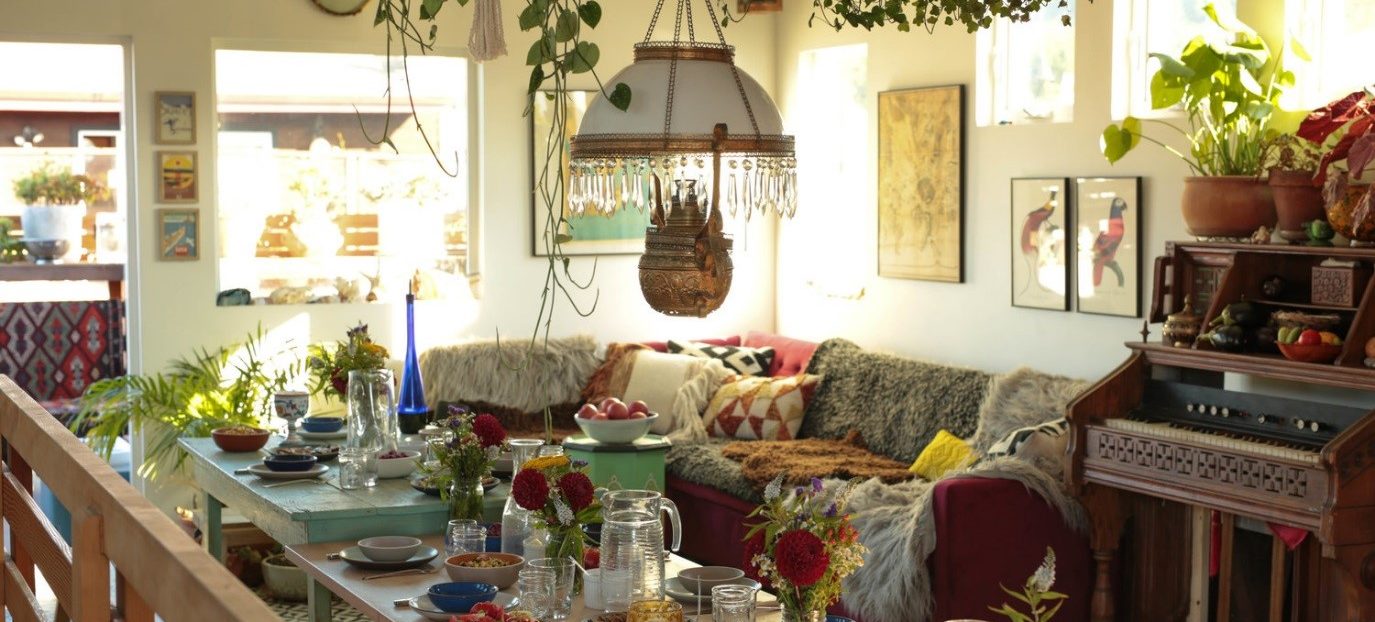
An ancient feast meets the modern supper club at Port & Provisions. The supra, translated “tablecloth,” is a traditional Georgian feast combining all the essential components of East European culture: delicious food, evocative wine, beautiful music, and exceptional hospitality. Situated along ancient trade routes, Georgian cuisine has absorbed culinary influences from such wide-ranging places as China, Iran, the Steppes and the Mediterranean, making it a unique and rich culinary culture.
Guests gather around a long table in a Sausalito houseboat. Chef David Johnson (aka Davey Jones) presents a series of dishes from Georgia and other places along ancient trade routes. His wife, Kristine Barrett, a vocalist specializing in traditional music, performs songs from Georgia, Eastern Europe, Italy, Greece and beyond.
Sprinkled with ritual toasting and poetry throughout, guests enjoy a one-of-a-kind musical culinary experience to the background of the beautiful views and funky atmosphere of the Sausalito houseboats. The venue accommodates 8–17 people.
Parties That Cook, San Francisco
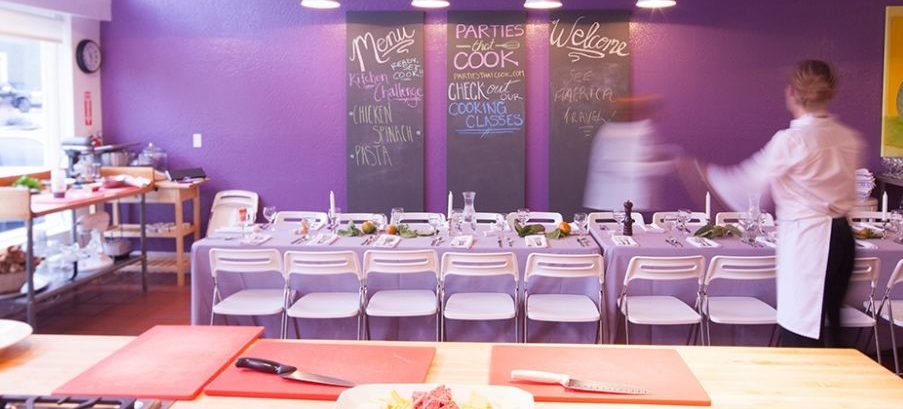
This mobile culinary events company stages corporate team-building cooking competitions and private cooking parties throughout the Bay Area (and Chicago), hosting groups of 15–350. But the venue that’s tailor-made for cooking up a storm is the Parties That Cook Kitchen on Francisco Street, formerly the revered Tante Marie’s Cooking School where culinary greats including James Beard, Julia Child and Alice Waters once taught.
The natural-light-filled space features two fully equipped kitchens with commercial ranges and double ovens, plus dinnerware and glassware for up to 45 guests. Capacity seated is 30 guests.
Founder and CEO Bibby Gignilliat is a graduate of Tante Marie’s, as are many of the staff. The company has four resident chefs in San Francisco, adept at leading events ranging from Small Plates, a reception-style cooking party, to Chefs Table, where teams prepare a four-course, seated meal with formal dining service, to competitions such as Iron Chef-style Kitchen Challenge and Chopped-like Sushi Showdown.
IMEX America begins next week, and once again, it will feature plenty of health and wellness opportunities. Dale Hudson, the knowledge and events director of IMEX Group, took time out recently to discuss IMEX’s emphasis on wellness.
1. How long have you been with IMEX, and in what roles?
Dale Hudson
I’ve been with IMEX for over 17 years, and have focused on programs such as education, the IMEX-MPI-MCI Future Leaders Forum, CSR, sustainability and wellness. During my time, as part of the team, I have seen lots of change and positive growth and served in a variety of roles, including special projects manager, and then director.
Some of my favorite initiatives over the years have included the giving back projects such as helping to create the healing garden at Shade Tree Shelter for women and children in Las Vegas and helping them develop their recycling program. I also love the Future Leaders Forum—it is just amazing to see some of the students who first came through the program doing so well in our industry now.
2. What is your own professional background in the wellness realm?
I have no professional background in wellness, which goes to show that any meeting—with the right partners, of course—can incorporate a wellness element into the events. Personally, I love yoga. My feelings on wellness in the events industry come purely from passion and from seeing the real benefits it can bring to hard-working meeting planners and attendees.
3. What wellness features are planned for 2018 IMEX America?
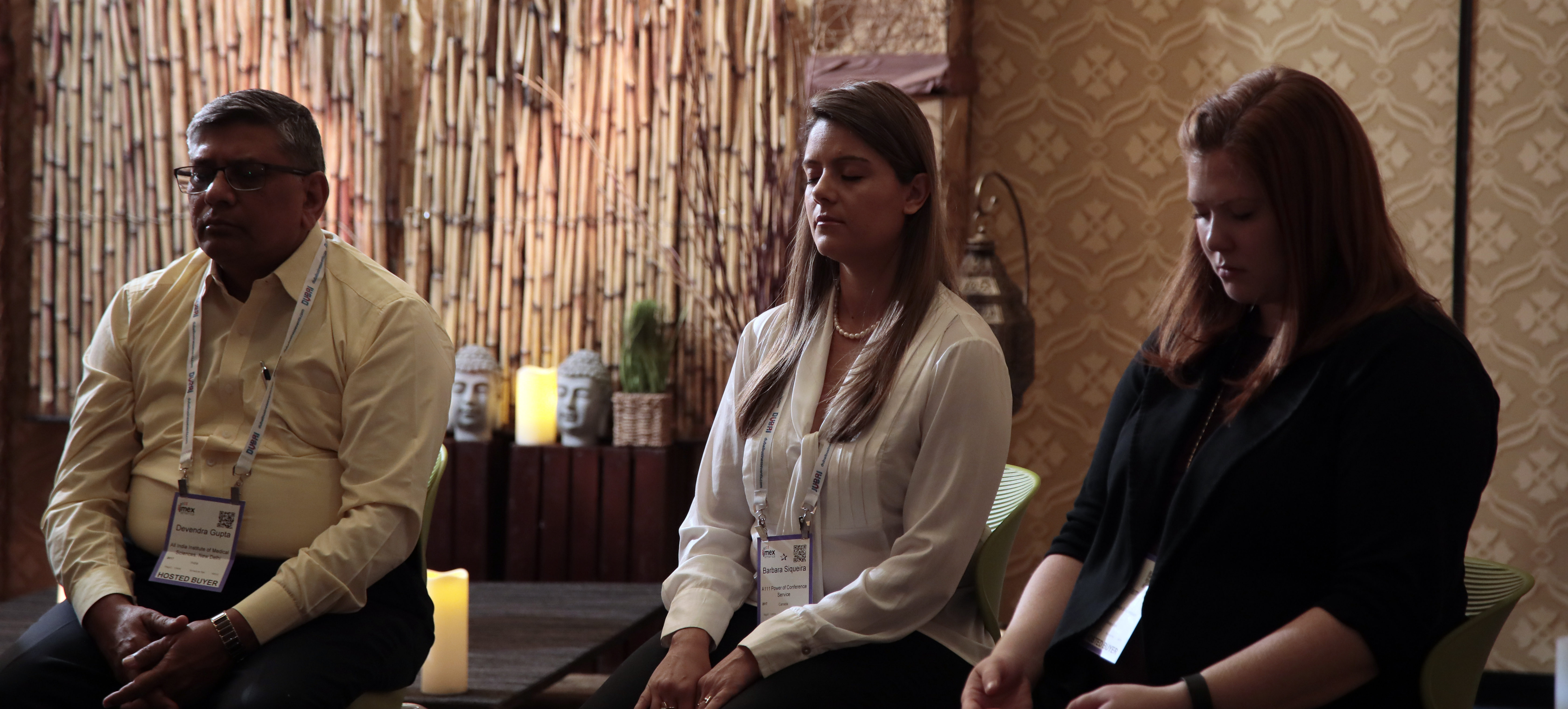
Our Be Well Lounge is back by popular demand and will again offer three full days of meditation and mindful living sessions led by mindfulness expert, trainer, speaker and author Lee Papa, who is just dynamite. For people who can’t do a whole class, the lounge encourages people to take short, quiet breaks from the busy show floor and relax in a Zen space with comfortable seating and mats, smoothing music and chill lighting.
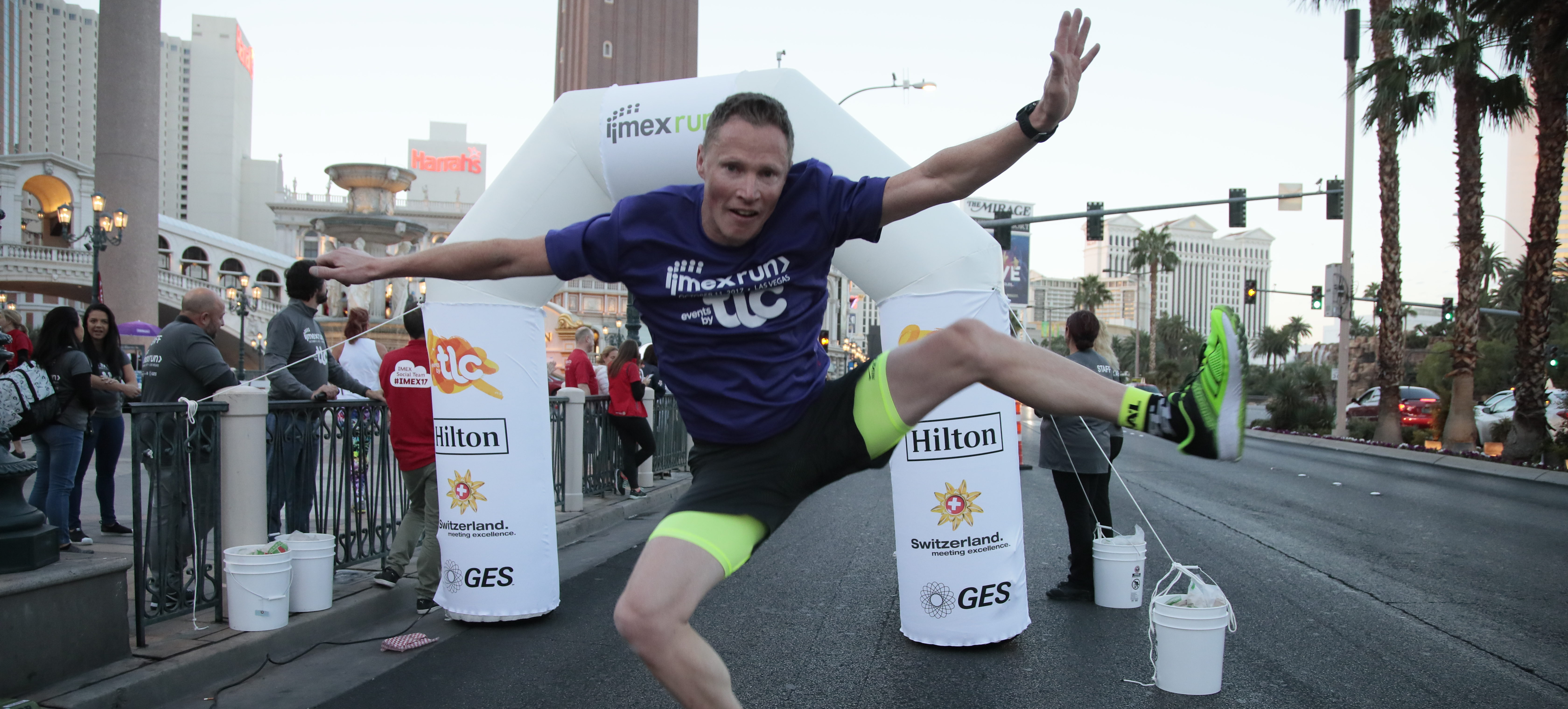
On Wednesday morning, fitness buffs and whole teams can participate in the popular and fun 5K IMEXrun down the Vegas Strip, and we’ll also have a new Walking Challenge this year. We’ll again offer hydration stations around the show floor and make a real effort to provide and promote healthy food options.
Be Well Lounge
4. I’ve heard that puppies will be there. Tell me more about that.
Yes, the dog petting station will once again be at Smart Monday. I can’t wait to have a cuddle myself. The idea is that the dogs get lots of exposure to people, and we know what people get back from dogs. Dogs really do have a relaxing and wonderful vibe about them, and the IMEX attendees love it.
5. Why is wellness important for meetings professionals?
Meeting professionals have extremely busy and often stressful jobs. They’re constantly on the road and taking care everyone else’s needs 24/7…not to mention managing endless details and to-do lists. We think it’s really important that we give them the opportunity at IMEX America—and IMEX in Frankfurt—to take a deep breath, focus on themselves and their health for a bit, and learn about how they can replicate the benefits of a wellness program at their own events and conferences.
6. Have you observed many changes over the years in how IMEX promotes the wellness of participants who attend meetings and conferences, in general?
Wellness has been on our radar a while now. Several years back, we started with a very small wellness room and a few classes at Frankfurt. As more attendees found out about this, took a break and experienced some wellness activities, we’ve continued to grow and evolve our programs.
Planners meticulously manage the attendee experience, but often activity vendors also play a major role in influencing how someone remembers a trip. From giving visitors something to share with friends and family to exposing newcomers to the unique local flavor, the variety and depth of these experiences make up the lifeblood of a destination.
Operating on opposite sides of the United States, Billy Mosleblech from Key West, Florida, and Mike Murray from Honolulu are both resort activity vendors that appreciate the role they play, and their symbiotic relationship with event planners.
“Customer service is the cornerstone of this business and the better that is presented, the more successful the experience will be,” Mosleblech says. The owner of Barefoot Billy’s, he works with the Waldorf Astoria Resorts’ Casa Marina Key West and The Reach Key West, both in Florida, to arrange activities and day trips for groups.
Billy Mosblech
“I always want to get the site visit representatives and event planners out on our activities to show them a good time,” he says. “If they enjoy themselves, then they will return to the group decision-makers and do the selling for you. I want to make everyone else’s job as easy as possible so that when opportunity comes, they will know that I am their guy and will have confidence that I will take care of their clients.”
Going the extra mile for venues and attendees often involves activity vendors to engage in some unorthodox planning of their own. Mike Murray, director of events for Waikiki Beach Activities at Hilton Hawaiian Village Waikiki Beach Resort, says, “Expectations for group experiences have changed over the years. More and more, we have been working with clients seeking authentic island experiences with a twist of modern flair. For example, groups want a rich and authentic luau and an incorporation of EDM DJ entertainment.”
Keeping Activities Fresh
Along with new requests, there is a greater demand for quality. “As prices have risen and more competition has developed, the expectations of our customers have risen, as well,” Mosleblech says. “Operating out of first-class luxury resorts carries a high level of expectation of the overall experience to begin with, and our destination places a high value on the beach and water sports activities as it is.”
To stay competitive and engage with planners as successfully as possible, activity vendors should be flexible. Mosleblech says his company often works with planners to tailor activities to specific groups.
Mike Murray
“Our creativity has always centered more on fulfilling what our customer wants to experience,” he says. “We listen to their requests and customize the trip to accommodate them. One of our favorite trips is to take them to the backcountry to a deserted island and sand bars. We supply drinks, lunch, snorkel gear, floats, towels, etc., and take them out and show them how the locals enjoy their time off. Our creativity lies in our customization.”
According to Murray, the key is much more about including a bit of something for everyone, though. Citing just the activities on offer at the local Duke Kahanamoku Beach and Lagoon, he is proud of the variety. “It appeals to active travelers who want to engage in water activities, or to laid-back attendees,” he says. Those active guests can explore the ocean by taking a surf lesson or stand-up paddling. Other activities include sand volleyball tournaments and a modified Zumba in the warm lagoon, or you can just relax in our chaise lounge as our trade winds are blowing.”
The Group Effect
Murray’s favorite activities center on team building—”events that allow for any skill set of the participants, build confidence and comradery, and are fun at the same time,” he explains. Seeing the effect on people is a return on investment all its own, he says.
Mosleblech agrees, saying, “When I meet a boat or an excursion [group], as they arrive back at the dock or resort, I want to see them closer and more interactive than when they left. I want them to want to tell me how much they enjoyed the trip and our staff. We send them away with memories they will talk about with each other for years to come.”
That type of engagement from attendees is also just good for business, and for a destination in general. “The hotel business is full of measuring sticks, such as TripAdvisor, Yelp, comment cards, surveys, etc.,” Mosleblech says. “Of course, we all hear about our opportunities to do better, but we also strive to hear about our accomplishments. Nothing feels better than when our planning and preparation results in happy, satisfied, most-likely-to-return customers who are anxious to tell anyone who will listen what a great time they just had.”
But that success only comes from plenty of hard work. “It requires multitasking,” Murray says. “Every day begins with getting beach activities underway, opening up all our water activity options, preparing our fleet of boats for multiple daily tours and fulfilling the many needs of DMC elements for our groups.”
Mosleblech adds, “I do a lot of troubleshooting and problem solving to give support to my team in whatever area they need. It is important to me to be hands-on because my expectations are as high or higher than anyone else’s.”
Hyatt Hotels Corporation has agreed to buy Two Roads Hospitality, a lifestyle hotel management company with 85 properties in eight countries, for a base price of $480 million, with the potential for Hyatt to invest an additional $120 million. Two Roads’ brands include Joie de Vivre, Alilia, Destination, Thompson and Tommie.
Two Roads dates to September 2016, when Destination Hotels and Resorts merged with Commune Hotels and Resorts. Private equity firm Geolo Capital, whose founding partner is John Pritzker, owns 40 percent of Two Roads; Lowe Family Trust (LFT) owns 60 percent. Pritzker is the son of Hyatt founder Jay Pritzker and brother of Hyatt’s chairman of the board, Thomas Pritzker.
Geolo and LFT will keep Two Roads’ real estate owned by each entity.
“Two Roads’ passionate team members, strong brands, global footprint and robust development pipeline will expand our lifestyle offerings and grow Hyatt’s brand presence in more places where our guests and World of Hyatt members want to travel,” said Mark Hoplamazian, Hyatt president and chief executive officer. “Importantly, combining Two Roads’ meaningful brand presence and development plans in Asia with Hyatt’s already strong position in this region will allow us to accelerate expansion in this critically important and fast-growing part of the world.”
“We need them, and they need us,” Pritzker said in an interview with Skift. “From a lifestyle perspective, they have Andaz, but this immediately catapults them solidly in the lifestyle space, and they are forming a lifestyle division. Hyatt was small enough to accommodate what Two Roads is, and large enough to be benefited by it.”
The acquisition expands Hyatt’s presence into 23 new markets and brings its total properties to 853. Its chief U.S. competitors, Marriott International and Hilton Hotels and Resorts, operate 6,700 and 5,400 hotels, respectively.
For those busy packing their suitcases and schedules for a week in Las Vegas at IMEX America, deciding what to include and what to leave out of both can be a challenge. Smart Meetings turned to the experts to compile a list of smart tips for this action-packed destination.
Amy Riley, senior director of business sales for Las Vegas Convention and Visitors Authority, advised attendees to “Pack your walking shoes!” Whether this is the attendee’s first IMEX America or a return trip, she predicts visitors will be amazed by all the new things there are to do and see. “Since IMEX 2017, the destination has added an incredible amount of new shopping, dining and entertainment experiences, along with impressive hotel upgrades and renovations.”
Smart Monday
The adventure fittingly starts Monday with a day of interactive, carnival-themed exchanges of knowledge, courtesy of Meeting Professionals International. Some 180 education sessions throughout the week will keep you up to date on 10 hot-topic tracks, including technology, personal development, sustainability, research and trends.
Smart Tip: Check out the Six Star Innovation Lab, where you can introduce yourself to Sophia, the person-robot possibly coming to a property near you in the not-so-distant-future.
Exhibit Central
With more than 3,000 suppliers and destinations from all over the world making announcements, showing off their latest developments and dishing up everything from ice cream to Irish whiskey, you could spend most of Tuesday and Wednesday on the expo floor. Don’t forget AWE’s Women in Events Happy Hour Tuesday at 4:30 p.m. to toast the steps the industry is making to be gender inclusive.
Smart Tip: Set your Fitbit to record your steps and make an initial loop with the exhibit hall floor-plan map to get the lay of the land before visiting your favorite booths.
Speaker Power
Juliet Funt, IMEX America 2017
Daily keynotes from the likes of author Kelly McDonald will share insights on everything from working with people unlike you to creating legacy events. Smart Meetings founder Marin Bright will share her “Secrets to Mastering Your Events Industry Career” tips on Tuesday in the Inspiration Hub. All of these first-person conversations are opportunities to bring back new perspectives that could help you be better at your job—and life.
Smart Tip: Check out The Be Well Lounge, billed as a quiet place to chill out for a few minutes. You can also find mindfulness and guided meditation classes in this wellness-inspired space.
Moving Opportunities
All those dinners and hosted-buyer seat time can catch up with you. #IMEXrun on Wednesday, sponsored by LVCVA, and Caesars Forum Walking Challenge by Heka Health can help you get a healthy start.
Smart Tip: Bring your own thermos and refill at water stations for a sustainable hydration strategy.
Networking Central
From SITE Nite North America, to Association Evening and MPI Foundation Rendezvous, the networking takes center stage at venues up and down The Strip.
Smart Tip: Donald Contursi, president of Lip Smacking Foodie Tours, suggests making reservations for dinners with partners in advance to gain entry to the hottest restaurants during prime time. He advocates taking clients off the beaten path to independent establishments for a taste of authenticity among the locals.
“Vegas offers many different dining experiences, including classic institutions delivering vintage Vegas with old-school dining, uncommonly known chefs’ tables overlooking the best views of The Strip and restaurants where the show is brought to your table through tableside presentations and service,” he says. Contursi’s Lip Smacking Foodie Tours allow you to play musical chairs by sitting next to different key customers at each stop for the ultimate networking over food and drinks.
He even allows you to brand your menus with your company logo and hashtag for easier sharing. “You’ll hear Facebook colleagues the following morning ask how to get on your invite list,” he predicts.
Checklist Please
Tyler Stewart, vice president of convention sales at The Venetian Resort Las Vegas, advises planners to do what they do best—start making lists.Download the IMEX App to navigate the entire week and have a well-thought-out plan on educational offerings and meetings.
For one-on-one meetings, have a clear objective on what you are hoping to accomplish during that time.
Leave a 10-minute buffer between meetings for email, phone calls and coffee.
Bring plenty of business cards.
Bring a portable phone charger or charge up at The Venetian Resort Las Vegas’ coworking lounge; you might make a new connection while you’re there.
Get your day started right with breakfast at Bouchon or one of the other amazing restaurants at The Venetian.
Keep energy levels up with a workout or yoga class at Canyon Ranch.
Make great connections at the networking opportunities that IMEX offers.
Have fun! It goes by fast.
October marks the one-year anniversary of destructive fires that burned through Napa-Sonoma wine country. What began as an ordinary day in the counties on Oct. 8, 2017, turned into an inferno when winds picked up that night. Visitors, residents and business owners were sent fleeing for safety with only the shirts on their backs. Smoke filled the air, making it seem as if an Armageddon-like doom was looming.
Days turned into weeks until the flames were contained, and no one quite knew what to expect upon returning to wine country. Images on the news portrayed complete devastation of homes, piles of rubble, burned cars and fatalities. However, from a meetings, events and tourism perspective, very few venues were lost and 90 percent of the grapes had already been harvested for the season.
In Santa Rosa, two meeting hotels were lost—Hilton Sonoma Wine Country (250 guest rooms and 18,000 sq. ft. of meeting space) and Fountaingrove Inn (124 guest rooms and 10,000 sq. ft.). According to Visit Santa Rosa, both properties remain in the midst of insurance negotiations, so it is yet to be determined if they will rebuild. The CVB and Hilton’s director of human resources each reached out to area restaurants and businesses to find new jobs for displaced employees.
Wine country is relying on group business more than ever—to be its rainbow after the storms. Hotels, wineries, shops and restaurants reopened soon after the fires were extinguished, but the struggle lingered as visitors were hesitant to return under the assumption everything was gone. More than one year later, some out-of-towners still have this misconception.
“The best way to help the Napa Valley is to encourage groups to book their meetings here to see for themselves that the Napa Valley is just as beautiful as ever,” says Teresa Savage, vice president of sales for Visit Napa Valley.
A Close Call
Silverado Resort and Spa
Mere hours after the conclusion of the Safeway Open golf tournament presented by Chevron at Silverado Resort and Spa in Napa last October, the Atlas Peak fires broke out. Attendees came alarmingly close to staring death in the face. Grandstands they had been seated in hours earlier burned.
The resort also lost 14 suites and was temporarily forced to close, but it reopened in late October of last year. The historic 150-year-old mansion, which is undergoing renovations, and conference center were not damaged. Silverado has 340 guest rooms and 100,000 sq. ft. of indoor/outdoor event space.
The annual PGA Tour season opener returned this October and donated 100 percent of the proceeds from ticket sales to relief efforts. The tournament, parent company Albertsons Company and customers previously donated $5.2 million to the cause.
A Hero’s ‘Tail’
Safari West photo by Ray Mabry
Everyone loves a heartwarming story involving animals, and the wildfires in Sonoma County provided just that. Safari West in Santa Rosa is home to a population of more than 900 exotic animals including cheetahs, zebras, flamingos and lemurs. Remarkably, at the age of 76, founder Peter Lang singlehandedly saved the day in an incredible feat, fighting the flames and saving the lives of every one of his beloved animals.
“I don’t consider what I did heroic,” he says. “I did what I needed to do. I used garden hoses, forklifts and anything I could get my hands on, moving from one spot to another, dousing fires that threatened animals… I was protecting the animals, protecting Safari West, doing the best I could with the tools I had available, and I do not confuse expertise with luck. I was very, very lucky.”
Meeting professionals can learn valuable lessons from some of the strategies employed by Safari West and others during the fires. Meeting organizers are responsible for keeping attendees safe, so an emergency contingency plan needs to be well thought out and rehearsed. Safari West safety officer Kimberly Robertson says they have regular drills using various scenarios covering the disasters that could potentially affect them.
“Drills and debriefs are invaluable tools,” she says. “These drills help to commit to muscle memory the things that need to be done during an emergency, when tensions are high. They also help to point out where training [may] be lacking.”
Safari West photo by Jenny Sloat
When the fire spread to Safari West, 100 overnight guests were in its 30 glamping tents and one cottage. All visitors and staff members were safely evacuated in 15 minutes, but Robertson learned valuable lessons she would like to share with planners. She suggests having multiple escape routes and flashlights with spare batteries. In emergency situations, technology often fails. Make sure to have a hard-copy contact list in your car’s glovebox or go-bag to enable communication, Robertson says.
Safari West has 3,750 sq. ft. of event space and offers several unique group tours that pair wine and beer tasting with the safari—Winos and Rhinos as well as Brews and Buffalo. Facebook and Google are just two of the major companies that have held events there. The organization relies on group business to fund research and educational programs.
Just like in The Lion King, the circle of life is on full display at the “Sonoma Serengeti.” Since the fire, the park has celebrated the births of several babies, the latest being Remi the giraffe on Aug. 18.
Not all animals in Napa and Sonoma fared as well. Many were separated from their families and placed up for adoption at animal shelters and rescue organizations. Teresa Savage, vice president of sales for Visit Napa Valley, says groups have coordinated with the ASPCA to arrange for attendees to pet adoptable puppies during meeting breaks, though not necessarily in direct correlation with the wildfire.
The Show Must Go on
Napa Valley Film Festival 2017 photo by Bob McClenahan
A natural or man-made disaster that might derail an event is any planner’s worst nightmare. Napa Valley Film Festival (NVFF) was only 3 1/2 weeks from holding its annual November showcase when the fire ignited. Founder and director Brenda Lhormer was conflicted as to whether or not to proceed.
After assuring her team’s safety, members returned to their smoky office with masks on their faces. They began by reaching out to all their partners—including 100 wineries—screening venues, restaurants and hotels.
“We’ve worked so hard all year to do this, and our community is going to need this more than ever,” Lhormer says. “We want to be part of the healing process. Every one of our partners said the show must go on…we need to convince the rest of the country that Napa Valley is going to be fine.”
Despite losing a crucial week of work before showtime, Lhormer is thrilled to report the festival was its best ever because of the extra dedication, support of the community and positive goodwill. “[NVFF was the] first event to come out of the gate after the fire, and united the valley,” she says.
Because of the discouraging images broadcast and printed in the media, the festival was only at 60 percent capacity. Many would-be attendees decided not to come. Approximately 10,000 to 11,000 people showed up, and Lhormer hopes to up that number by 10 percent next month.
NVFF customizes packages for groups that include private screenings, culinary demos with Napa chefs, meet-and-greets with Hollywood A-listers and wine tasting with vintners. One film groups may be interested in viewing this year is Uncrushable, a documentary produced and directed by Food Network star chef Tyler Florence in response to last year’s wildfires. Prior to the Nov. 9 screening, groups can buy in to an exclusive dinner at Robert Mondavi Winery in Oakville, California. A portion of the proceeds will benefit Napa Community Foundation’s Disaster Relief Fund.
Creative Use of Space
Las Alcobas
The Nov. 7–11 event is a prime example of how a planner can utilize multiple venues in the county for one unified event. Lhormer is super-excited to see a barn at Las Alcobas, a Luxury Collection Hotel, Napa Valley transformed into a movie theater. The St. Helena hotel has 5,480 sq. ft. of meeting space and 68 guest rooms.
“Our venue spaces range from intimate boardrooms to a beautifully appointed event barn, all customizable,” says Alain Negueloua, general manager. “Attendees will feel inspired by the landscape and our intimate details, such as the culinary scene in Acacia House and winding down with a relaxing spa treatment in Atrio Spa will make any meeting feel like a welcomed retreat. Drink our wines, taste our local produce and see why Napa Valley is stronger than it’s ever been.”
Archer Hotel Napa will serve as NVFF’s newest pop-up theater. The 183-room hotel began welcoming guests last November and has more than 17,000 sq. ft. of indoor and outdoor event space. In April, chef Charlie Palmer’s 7,000-square-foot Sky & Vine Rooftop Bar opened on the more than 11,000-square-foot Archer rooftop, a unique space that also features a spa, pool, cabanas and sun deck.
“We recently held a board meeting at the new Archer Hotel in downtown Napa, and my group thoroughly enjoyed the well-appointed guest rooms, the unique lobby area and rooftop bar, which is amazing,” says Donna Leon of CMP Meetings & More, Inc. “We typically bring groups to Napa Valley several times a year and enjoy it each time we go!”
The Culinary Institute of America (CIA) at Copia
NVFF’s red-carpet gala will be held at The Culinary Institute of America (CIA) at Copia in Napa, which has 80,000 sq. ft. of space. CIA at Copia recently opened its 9,000-square-foot Hestan Kitchen to teach cooking and baking classes for groups of up to 60 participants or for a team-building competition. During the fires, CIA at Copia provided food for the community and its other location, CIA at Greystone in St. Helena, prepared meals for first responders.
The festival will also utilize Uptown Theatre Napa (seats 857 people) and Napa Valley Performing Arts Center at Lincoln Theater, a 1,200-seat theater in Yountville that will house film screenings and on-stage interviews with the stars. It is available for planners to book conferences and a consortium of private events in its Grand Foyer (up to 300 people), Upper Foyer (up to 100 people) and Swanson Board Room (up to 45 people).
Additionally, NVFF will have a pop-up drive-in theater at Napa County Fairgrounds in Calistoga. The 27,600-square-foot, covered pavilion will fit about 50 cars.
In the Words Of A Planner
Allan Wright
Allan Wright, owner of Zephyr United, organizes the Wine Marketing & Tourism Conference annually on behalf of Zephyr Conferences. This year, it takes place Oct. 23–25 at Flamingo Conference Resort & Spa in Santa Rosa, which has 170 guest rooms and almost 15,000 sq. ft. of meeting space. He described his post-fire return to wine country.
“We had two meetings scheduled in Santa Rosa for November 2017, a month after the fires: the Wine Bloggers Conference and the Wine Marketing & Tourism Conference,” he says. “A few days after the fires started, we started getting emails and phone calls from our attendees, asking if the conferences would be canceled. Quite a few of the messages we received implied it would be risky and even inappropriate to hold our meetings, since the locals were having to deal with the crisis. We discussed canceling both meetings.
“However, every local we spoke with—our hotel, Sonoma County Tourism, locals on our advisory boards—provided us a united message that Sonoma County was not closed for business and, in fact, wanted us to come and support them with our conferences.
“We made a public statement a few days after the fires started saying that our meetings would proceed as scheduled, which they did. We did experience a drop in registrations, which had a big impact on us, but nothing compared to what the locals had to suffer through. [We] ended up addressing the fires in our content at both conferences. I remember one person in the audience coming up after a session on the fires and crying because he had lived through the fires and was so emotional that we were addressing it.
“We decided to return the Wine Marketing & Tourism Conference to Santa Rosa this year, in part to support the local area again. One year later, one would never know the fires had even happened.”




 Guests staying at